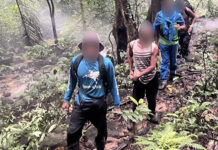
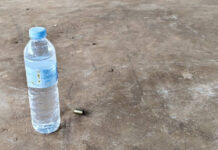
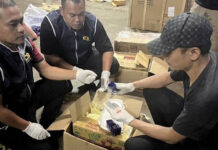
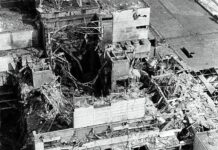
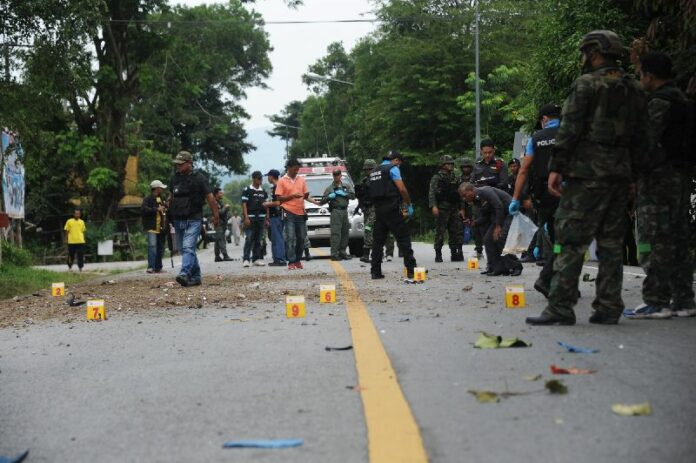
A file photo of the aftermath of an IED attack on soldiers in the Deep South, 21 October 2014.
BANGKOK — More than a dozen grenade and bomb attacks in southern Thailand killed two suspected insurgents whose explosives detonated unexpectedly, officials said Thursday.
Eight other civilians and officials were wounded in the Wednesday night violence, said Pramote Prom-in, a spokesman for Thailand’s Internal Security Operations Command. He identified the dead as “insurgent operation leaders.”
No group has claimed responsibility for the 13 attacks, which targeted police stations and checkpoints in 12 separate districts in Muslim-majority provinces in Thailand’s deep south.
Southern Thailand has been in the grip of a separatist insurgency in this predominantly Buddhist country for years. About 7,000 people have been killed since the conflict flared in 2004. The insurgents regularly carry out bombings and drive-by shootings of civilians and officials.
The attacks were the first major assault since a key rebel group, the BRN – Barisan Revolusi Nasional (National Revolutionary Front) – issued a rare public statement on April 10 appearing to reject talks the Thai government has been holding with them as part of a coalition of insurgent groups known as MARA Patani. The BRN is assumed to be the most militant of the groups, while others have smaller followings.
The statement called for new talks mediated by impartial third parties. Some of the insurgents’ representatives involved in the current talks live in neighboring Malaysia, which hosts the negotiations, and are susceptible to pressure from the government there. The statement also implied that the new talks should not include some current insurgents considered not representative of active groups.
The Thai government has rejected the proposal.
It was the second major set of coordinated attacks in two weeks. On April 7, suspected insurgents set off dozens of bombs in southern Thailand, bringing down power lines and setting tires on fire to block roads, but causing no deaths or injuries.
The spike in violence at the beginning of this month was in response to the March 29 extrajudicial killings of two suspected insurgents, said Don Pathan, a security analyst who lives in the region.
“The militants were hitting both soft and hard targets. But in the incident on Wednesday evening, the combatants wanted to show that they can also go after military and police targets as well. It’s their way of reminding the authorities of their capabilities,” he said.
Pathan said the attacks were aimed at forcing the government to accept the insurgents’ conditions for talks.
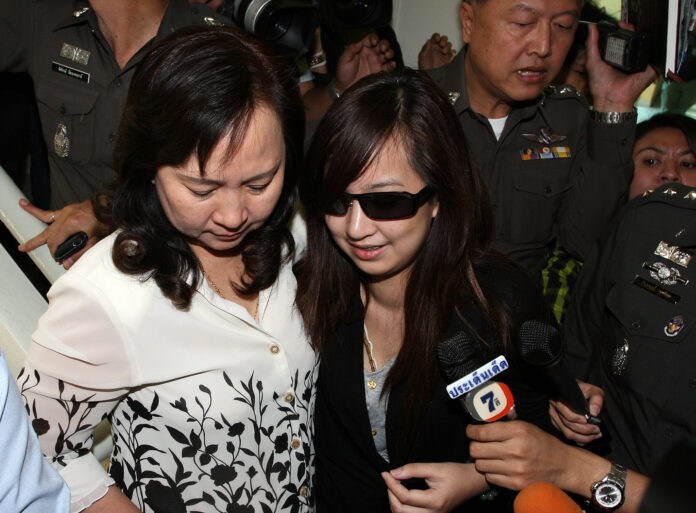
Orachorn ‘Praewa’ Thephasadin Na Ayudhya turns herself in at the Metropolitan Police Bureau headquarters in 2011 in Bangkok.
BANGKOK — A young woman who became a symbol of injustice after killing nine people in a car crash seven years ago had her court-ordered compensation reduced by nearly 10 million baht Wednesday.
Orachorn “Praewa” Thephasadin Na Ayudhya was ordered by the Appeals Court to reduce the compensation paid to nine crash victims’ families by 19.8 million baht, down from the 30 million baht originally ordered by the Civil Court in 2015.
Five years after Praewa was first convicted, the court also deflected some of the blame for the accident by ruling that the van driver she hit and killed, Naruemon Pitatanang, was also to blame for speeding, though it was not the cause of the accident.
The deadly accident took place in 2010, when Praewa – who was 17 and had no license to drive – crashed into a Thammasat University van on the Don Mueang Tollway. The impact sent the van hurtling from the elevated highway and killed nine people, including university students, academics and the van’s driver.
Praewa walked away unhurt, and images of her resting against the guardrail chatting on her phone became yet another symbol of Thailand’s two-tier justice system.
The families originally had asked for her to pay three times what the court ordered. Last August, Praewa finally completed 138 hours of court-ordered community service – four years after it was ordered.
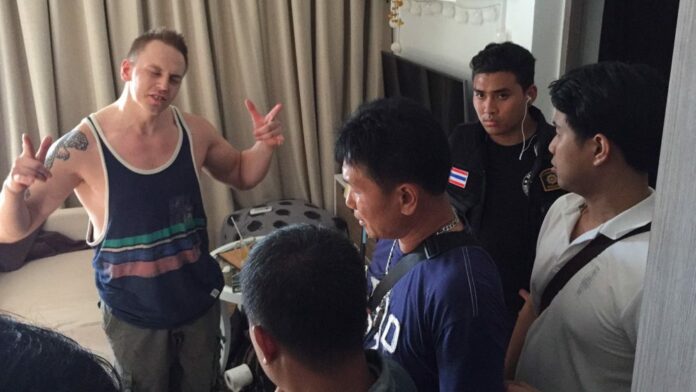
Marcus Sten Tapio Karhapaa, 34, gestures while talking to police Tuesday in Pattaya.
Update: On June 14, Capt. Puttipong Cheunchom of Pattaya City police said Karhapaa was not charged with murder, and his trial for alleged fatal recklessness is ongoing. He also said Karhapaa and Thanawat were married at the time of her death.
PATTAYA — A Swedish man was charged with fatal recklessness Thursday after his girlfriend fell eight stories from a condominium balcony.
At about 6pm on Tuesday, Thanawat Jittiwut, 24, fell from the balcony of a condo on Phra Tamnak Road in Chonburi province. She died soon after. Her boyfriend, Swedish national Marcus Sten Tapio Karhapaa, 34, was found sobbing and kneeling next to her body.
“They were fighting about him having another woman,” Police Col. Chatchapol Pattarasiriporn said Thursday. “They used to love each other very much, since they had been together four years. There’s no solid evidence he pushed her.”
Karhapaa is currently being held at the Pattaya Police Station and will be charged with fatal recklessness, which has a maximum sentence of 10 years.
Thanawat was found in the parking lot holding a blanket, where she was still alive but unconscious. She was sent to Pattaya City Hospital, where she was pronounced dead on arrival. Police found signs of struggle in the eighth floor room she fell from.
The condo manager, Jamreang Glamngeun, said he caught sight of the blanket falling past his office window. He ran out and see Thanawat and quickly called the authorities.
According to Karhapaa, he had been in a relationship and Thanawat, who was mute, for four years. He said during their fight Tuesday, Tanawat had walked onto the balcony and threatened to jump, so he tried to pull her back inside. A shoving match ensued, and Thanawat slipped on water and fell, Karhapaa said.
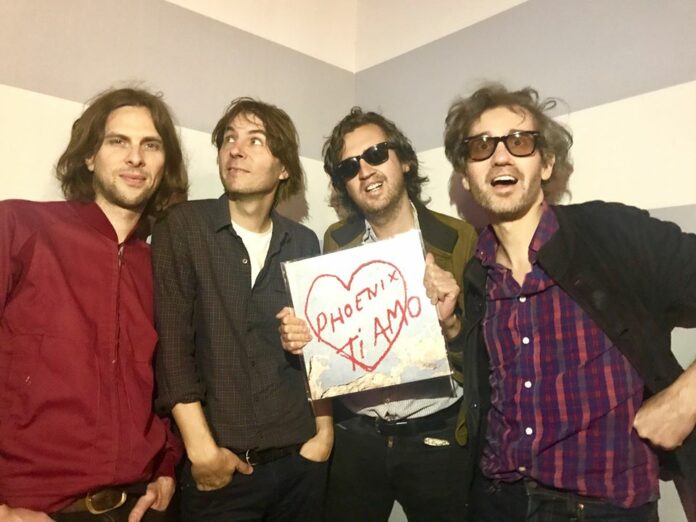
BANGKOK — French indie rock band Phoenix will be soon hitting Bangkok to perform for the first time.
Famous for “1901,” “Lisztomania” and “Lasso,” Phoenix consists of Thomas Mars, Laurent Brancowitz, Christian Mazzalai and Deck D’arcy. They will play in Bangkok in August, announced organizer Have You Heard?.
The concert will take place on Aug. 17 at Moonstar Studio on Soi Ladprao 80. Tickets start at 2,500 baht and will go on saleat 10am on May 30.
Phoenix was formed in 1999. Their 2009 album Wolfgang Amadeus Phoenix won a Grammy Awards for the best alternative music album before single “1901” hit number one on the Billboard music chart’s Hot Alternative Songs, leading the band to become widely popular in the United States and other countries.
Update: The organizer added the second show on June 23.
BANGKOK — After much speculation and a long wait for Britney fans in Thailand, concert promoter BEC-Tero announced Thursday morning the pop diva is coming to “keep on dancing till the world ends” in June.
Spears slaves can prepare for the new millennium’s Princess of Pop, who has been officially confirmed to perform June 24, BEC-Tero Entertainment announced on Facebook.
Among the boyband outbreak of the ‘90s, Spears debuted in 1992 to instant stardom and went on to peak with several multi-platinum albums. She gave voice to several generational anthems including “…Baby One More Time,” “Oops!… I Did It Again,” “Womanizer,” “3” and “Hold It Against Me.”
Tickets start at 3,500 baht to 12,000 baht and go on sale May 6 online at ThaiTicketMajor’s site and store branches.
The concerts will be held on June 23 and June 24 at Impact Arena. The indoor stadium can be reached by van, taxi or Impact Link shuttle via BTS Mo Chit exit No. 4 or MRT Chatuchak Park exit No. 3.
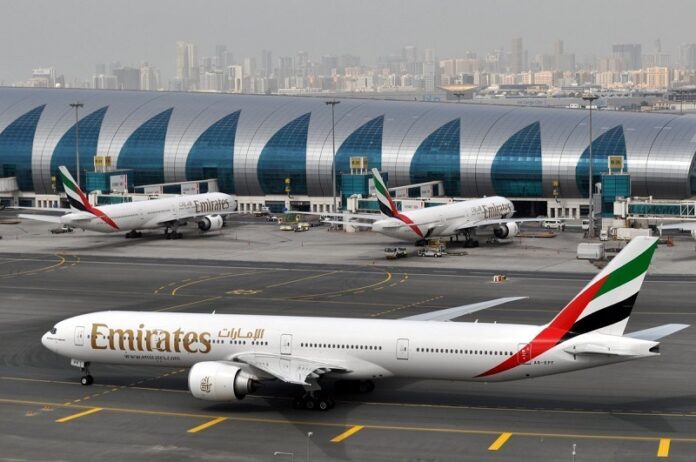
An Emirates plane taxis to a gate at Dubai International Airport in March at Dubai International Airport in Dubai, United Arab Emirates. Photo: Adam Schreck / Associated Press
DUBAI, United Arab Emirates — Emirates, the Middle East’s largest airline, slashed its flights to the United States by 20 percent Wednesday, blaming a drop in demand on tougher U.S. security measures and Trump administration attempts to ban travelers from some Muslim-majority nations.
The Dubai government-owned carrier’s decision is the strongest sign yet that new measures imposed on U.S.-bound travelers from the Mideast could be taking a financial toll on fast-growing Gulf carriers that have expanded rapidly in the U.S.
Dubai was one of 10 cities in Muslim-majority countries affected by a ban on laptops and other personal electronics in carry-on luggage aboard U.S.-bound flights.
Emirates’ hub at Dubai International Airport, the world’s third-busiest, is also a major transit point for travelers who were affected by President Donald Trump’s executive orders temporarily halting entry to citizens of six countries.
The latest travel ban suspended new visas for people from Iran, Libya, Somalia, Sudan, Syria and Yemen, and froze the nation’s refugee program. Like an earlier ban that also included Iraqi citizens, it has been blocked from taking effect by the courts.
Emirates said the flight reductions will affect five of its 12 U.S. destinations, with the first cutbacks starting next month.
“The recent actions taken by the U.S. government relating to the issuance of entry visas, heightened security vetting, and restrictions on electronic devices in aircraft cabins, have had a direct impact on consumer interest and demand for air travel into the U.S.,” the carrier said in a statement.
Emirates does not provide financial data for its U.S. operations or individual routes, but said it had seen “healthy growth and performance” there until the start of the year.
Since Trump has been in office, however, there has been what it called “a significant deterioration in the booking profiles on all our U.S. routes, across all travel segments.”
It said it is responding as “any profit-oriented enterprise would” and will use the capacity freed up by the culled routes elsewhere on its network.
The Americas region, which also includes routes to Canada and Latin America, accounted for 14 percent of the USD $22.75 billion in revenue Emirates pulled in during the fiscal year through the end of March 2016.
Emirates’ half-year profit fell 75 percent to USD $214 million in the last period the company has disclosed, through last September – before the U.S. election. Executives cited increased investments including aircraft purchases and the repayment of bonds, and said a “bleak” economic outlook in many parts of the world was reducing travel demand.
Robert Mann, an aviation consultant in Port Washington, New York, said business travel between the U.S. and the Middle East has clearly been hurt by the ban on gadgets, while the attempted visa bans have put a damper on leisure travel from the countries targeted.
“Neither factor is a good thing for the Middle Eastern carriers who are primarily affected,” he said.
The cuts will reduce the number of U.S.-bound flights from Dubai to 101, down from 126 currently.
Twice daily Emirates flights to Boston, Los Angeles and Seattle will fall to once a day. Daily flights to Fort Lauderdale and Orlando will be pared to five per week.
Andrew Lannon, a Canadian attorney based in Dubai, arrived in Fort Lauderdale for vacation on an Emirates flight Wednesday and said passengers had to check their electronics, which made the 18-hour flight difficult because he couldn’t work.
Passengers were then told upon landing they would have to wait on the plane for an hour while their bags were checked, but were then let off after 20 minutes, Lannon said, adding that it took another hour for most passengers to clear customs.
Kevin Mitchell, head of the Business Travel Coalition in the U.S., said all the Gulf carriers are probably losing business because of the security measures and attempted travel bans, and that will hurt consumers.
“For consumers it means higher prices, fewer choices, less connectivity,” Mitchell said.
Like its smaller Gulf rivals Qatar Airways and Abu Dhabi-based Etihad Airways, Emirates has ramped up its U.S. presence and recently launched a new service to Newark via Athens.
Several big U.S. carriers and their pilot unions have bristled at the Gulf airlines’ U.S. push, accusing them of flooding the market with capacity while receiving billions of dollars of unfair government subsidies.
Emirates and its Gulf rivals deny the allegations.
Despite a vigorous lobbying and public relations campaign, the U.S. carriers were unable to persuade the Obama administration to block further expansion by Gulf airlines. But U.S. airline executives made a personal pitch to restrict their access during a White House meeting with Trump earlier this year.
Jill Zuckman, a spokeswoman for the “Partnership for Open & Fair Skies” campaign opposing more U.S. routes for the Gulf carriers, was quick to seize on Emirates’ decision.
“The fact is, market demand has never played a role when the Gulf carriers decide where to fly. It is well known that the Gulf carriers, including Emirates, lose money on most of their flights to the United States and are propped up by billions of dollars in government cash,” she said.
The U.S. travel industry, already fretting that the ban on travelers from a number of Muslim-majority nations is affecting foreign travel generally to the United States, expressed fresh concern after Emirates’ announcement, however.
“The aftermath of 9/11 taught us that we can’t take either global understanding or U.S. market share for granted,” said Jonathan Grella, executive vice president the U.S. Travel Association. “Every limiting security message needs to be offset by a sincere welcome to legitimate, lawful travelers.”
BANGKOK — It was a few minutes after 10pm last night when Srisuwan Janya was released from a military base in Bangkok. Some soldiers offered to drop him off, but the longtime transparency advocate said he’d rather just take a cab home.
Unlike the 3,000 other times he has filed complaints about every possible governmental wrongdoing, Srisuwan’s latest complaint won him 12 hours in military custody.
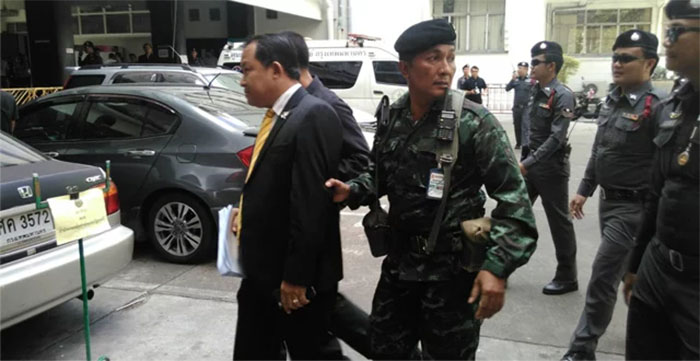
Government transparency activist Srisuwan Janya is taken into military custody Tuesday morning at the military government’s complaint center in Bangkok. Photo: Voice TV / Courtesy
He was taken by soldiers from the government’s petition center after he submitted a letter urging the prime minister to restore the 1932 Revolution plaque to its original place at Royal Plaza, as well as bring those who removed it to justice.
“I told them, ‘You shouldn’t take me, it makes me even more famous!” he said Tuesday night, an hour after being released. “And it makes the story spread more.”
He said he was released without charge and not forced to sign anything except a declaration that he was uninjured while under custody. Srisuwan said he was treated well – and fed well, with two meals.
For more than a decade, Srisuwan has been a familiar face. They know him at the Administrative Court. He’s a frequent guest of the State Ombudsman. He knows his way around the National Anti-Corruption Committee and Office of the Auditor General. He’s filed complaints on a wide range of topics and for this, he’s well-known in newsrooms where his complaints fuel storieson the scandals of the day.
Notably, his contempt for malfeasance doesn’t seem to take any political sides.
And until Tuesday, he’d never backed off from pressing issues, despite being taken in twice before for “attitude adjustment” sessions.
But on this very rare occasion, Srisuwan walked out of the military base Tuesday after agreeing not to press further to find out who was behind the removal of the symbol of the country’s transformation to democracy.
“They asked for cooperation. They said the issue I was trying to kindle was becoming political,” he said. “If I push it forward, some malicious group might exploit it to spark conflict, and it wouldn’t lead to reconciliation.”
Srisuwan made it clear he just wants to protect history, not initiate any political movement.
There was something different about Tuesday’s encounter, as previous brushes with authoritarian pushback have seen him anything but compliant or compromising.
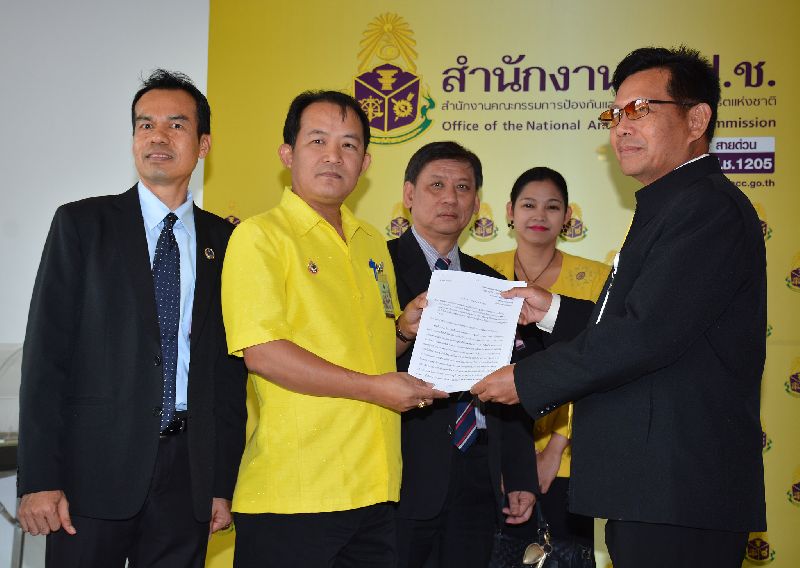
Srisuwan Janya submitted a letter to the National Anti-Corruption Commission, urging the agency to investigate the junta-appointed lawmakers who used the state budget to employ relatives as personal aides on March 3, 2015.
Srisuwan was first brought to the 1st Army Region’s Bangkok base in October 2015, a few days after he filed nepotism complaintsagainst Prime Minister Prayuth Chan-ocha and Deputy Prime Minister Wissanu Krea-ngam. The two had appointed relatives to be members of the junta’s legislative advisory committee.
“They had a thick file of my information. I realized then that they had been keeping track of me,” he told Khaosod English last month. “They asked me to withdraw the complaint. I insisted I wouldn’t. They cannot do anything so they just released me after an hour talk.”
An Apt Pupil
Srisuwan was the only child in his family to attend school. The fourth child of a farmer in the northern province of Phitsanulok said his father paid for his education after deciding he was the best among his siblings at studying.
He didn’t let them down. He got a scholarship to Maejo University in Chiang Mai province. It was there he started down the activist path.
Srisuwan Janya meets with NACC officials on Jan. 5, 2015, to submit a letter accusing the junta of violating national budget procedures and ‘ethics’ when it spent taxpayer money on the production of the virtual ‘stickers.’
As president of the student union, he led students and local residents in shutting down a road for three nights to pressure the governor to make the road in front of the university more safe. It worked.
After graduation, he went to work for the Air Pollution and Environment Protection Foundation, where he found a passion for environmental issues.
But it was hard to eclipse his love for studying. Srisuwan has three bachelor’s degrees and two master’s degrees, including one in law. In 1993, he started advising the Lawyers Council on its environmental cases, mainly assisting residents of at-risk neighborhoods.
After applying himself for some time helping affected people without charge in the name of justice, he began to feel used.
“Sometimes those we sued would negotiate with the locals, who would then come back to ask us to withdraw the case,” Srisuwan said. “It felt like they borrowed our hands for their bargaining. I didn’t think it was fair for my crew.”
That inspired him to found the Stop Global Warming Association in 2007. Since then, he has used the organization to co-file legal complaints, so that even when parties withdraw their cases in exchange for compensation, he can still proceed against the responsible parties.
Srisuwan later stepped away from the Lawyers Council to practice law on his own. He applies the same model of aiding the afflicted without charge. A couple years later, he and some friends founded another organization specifically for political complaints, the Association of Organizations for the Protection of Thailand’s Constitution.
Since then, both the environmental and legal associations have been regular fixtures of the front page, as Srisuwan has proven a tireless petitioner on all topics, from the country’s policy agenda to local conflicts.
“I think those affected shouldn’t stay quiet and just think it is karma or that we are powerless,” Srisuwan said. “I don’t agree with that.”
He’s perhaps best known for petitioning the government of Abhisit Vejjajiva of the Democrat Party in 2010 to hold a public hearing on a planned industrial area in Rayong province.
But asked what he’s proudest of, Srisuwan said it was a complaint that led to hearings over a 350 billion baht water management project proposed by Abhisit’s successor and political rival, Yingluck Shinawatra of the Pheu Thai Party.
While many environmental activists profess to an apolitical interest only in tangible final outcomes, Srisuwan believes it’s impossible to separate the two:
“I think it’s related. Because the environmental effects all result from the politicians’ policies.”
Belief in Law
His frenetic activity and prolific complaints have drawn the curiosity of many, including junta chief Prayuth Chan-ocha, who once publicly asked what Srisuwan does for a living.
His answer was simple. He works as a lawyer supported by donations. Some clients pay him; some don’t, and some donate tens of thousands of baht.
Some may laugh at his organization’s unwieldy name, and others doubt he is the only member. He’s been accused of doing it all for the attention and fame. He invited peak ridicule last year when he filed a complaint after learning a foreign architect designed the MahaNakhon building, a profession limited only to Thais under the law.
But in numerous instances, no investigations into malfeasance or corruption – no matter how glaring – would have happened without complaints from this super gadfly. His recent successes include no-show members of the legislature who failed to meet its attendance requirement, and the Bangkok police chief’s monthly payments from the nation’s largest brewer.
Without Srisuwan, nothing would have happened.
The man, a failed 2014 senate candidate, said the final outcome after the wheels are set in motion does not concern him.
“I think it’s already a success when people know about an issue,” he said. “It doesn’t matter what the investigative outcome is.”
But there is still a price to pay. Apart from last night’s 12-hour detention, he gets paid visits every two weeks by soldiers at his home north of the capital in Pathum Thani’s Lam Luk Ka district. It’s there he works from a home office. Sometimes he stays up until the sun rises to finish a legal complaint, only to rush out the door to file it that morning.
Srisuwan at his home in northern metropolitan Bangkok.
His wife and 2-year-old child live elsewhere. To protect them, he won’t say where.
Srisuwan said he’s not even friends with his wife on Facebook because she would worry if she saw his activities online.
“She sometimes sees it herself in the news,” he said. “My wife doesn’t really like what I’m doing. She doesn’t object. But she worries. So I give her no information at all.”
Since the military government seized power in 2014, Srisuwan said his complaint load has multiplied. But even in an era where the rule of law seems increasingly set aside and ignored, Srisuwan said he has not lost hope for Thailand’s legal system.
“I think there is no other way for us, as Thai citizens, to exercise the right to complain as guaranteed by the constitution,” he said. “What can we believe in if it not the law? Law enforcement might be loose sometimes, but that’s the way things are because our society is a patronage society.”
In fact, he still believes steps forward come with those back.
“When I was a kid, I felt the officials or police were so powerful, everyone must be scared of them,” he said. “Now that I tackled the junta like this, if it was in the past, I might be put in a red bucket and rolled to death. Today, I think that is impossible.”
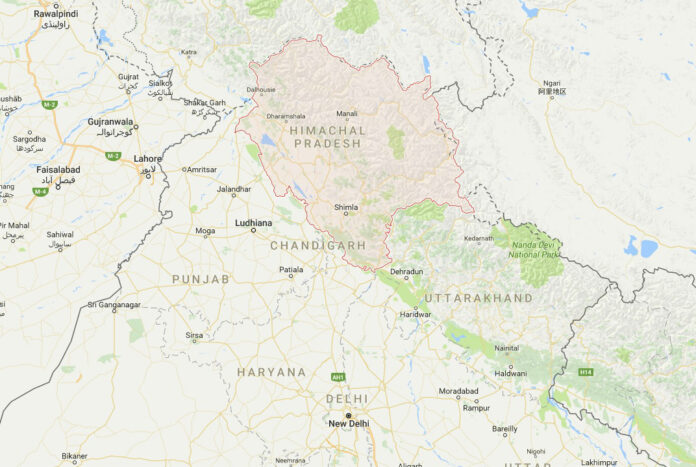
NEW DELHI — 44 people were killed after a bus swerved off a mountain road and plunged into a deep gorge in northern India’s Himachal Pradesh state Wednesday, a senior government official said.
Only two people, including the ticket checker, survived the crash, according to Rohan Chand Thakur, the district magistrate of Shimla district.
Thakur said the bus fell into a 200-meter (657-feet) deep gorge on the Tons river and the cause of the accident wasn’t immediately clear.
He said that rescue teams were working to recover the wreckage from the gorge.
Driver fatigue, negligence, poor quality roads and vehicle maintenance are the usual causes of such accidents in India.
Police figures show India has the world’s highest road accident death toll, with more than 110,000 people dying each year in crashes.
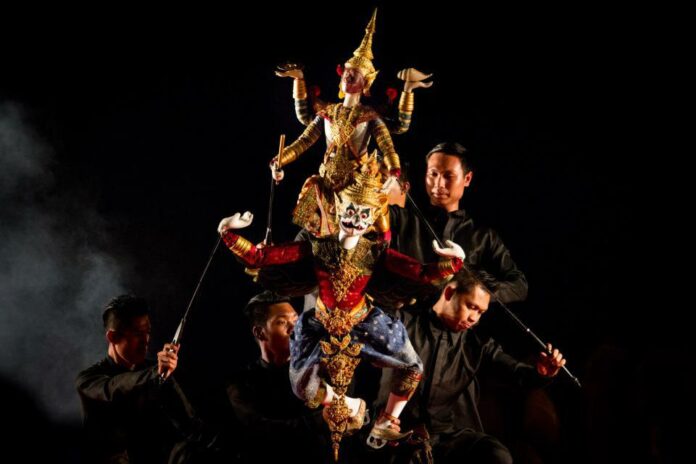
BANGKOK — To celebrate Bangkok’s upcoming 235th anniversary, more than 50 puppet troupes across ASEAN will gather in Thailand for a five-day festival starting Thursday.
One of Thailand’s pioneering small puppet companies Joe Louis Theatre, Khon performances from Fine Arts Department and Nang Yai shadow puppet show by Wat Khanon Nang Yai are leading Thai traditional and contemporary troupes to perform in the upcoming ASEAN Puppet Festival.
The festival will also be joined by puppet theatres from ASEAN countries such as Laos, Cambodia, Indonesia, Singapore, The Philippines and Vietnam.
An exhibition on ASEAN puppets is shown until the end of April at the ASEAN Cultural Centre located on the third floor of Ratchadamnoen Contemporary Art Center. Visitors can also create their puppets or attend a puppet showcase, but only this Saturday and Sunday.
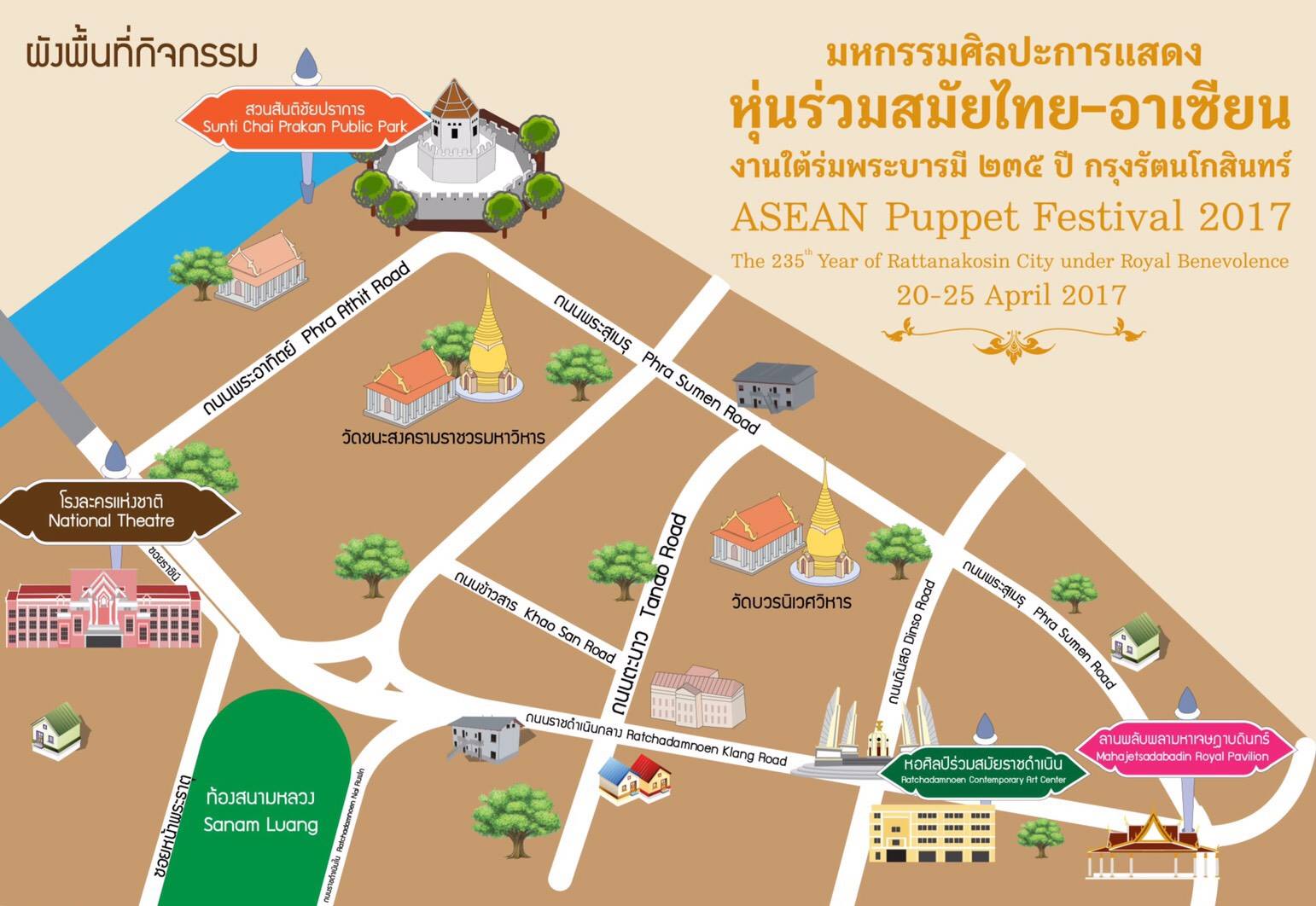
Apart from puppet performances, cultural shows will be performed along with unique products sale from Banglampoo locals at Sunti Chai Prakan Public Park on Phra Athit Road.
The festival will start Thursday and run through April 25 at four venues around Dusit area: National Theatre from 4pm to 9pm, Sunti Chai Prakan Public Park from 7:30pm to 8:30pm, Ratchadamnoen Contemporary Art Center from 1pm to 4pm and Mahajetsadabadin Royal Pavilion from 4pm to 9pm.
Admission is free. Schedule and more information are available online or call 1765.
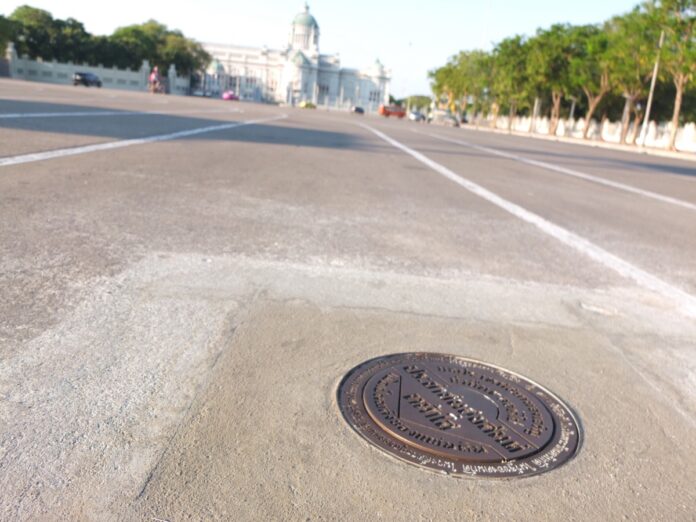
The new plaque that replaced the 1932 revolution marker as seen in April.
BANGKOK — City Hall officials Wednesday morning repeated claims it has no security camera footage to explain what happened to a historic marker which went missing earlier this month.
With the same explanation given to a Khaosod English reporter on Tuesday, Bangkok officials told a group of activists all 11 security cameras trained on the Royal Plaza had been removed just days before the 1932 revolution plaque was exhumed from the pavement.
However, a representative said City Hall did not order the cameras removed, but declined to say which agency was responsible.
“There was construction to improve traffic signaling, so the cameras were taken down,” Yutthaphan Meechai, secretary to Bangkok’s governor, said at a news conference.
Yutthaphan was meeting with two activists who visited the headquarters of the Bangkok Metropolitan Administration, or BMA, to demand footage that could have captured the moment the historic plaque was taken out.
The plaque, laid there in 1936 as a memorial to the bloodless revolution that installed democracy in Thailand four years earlier, was spotted missing last week. It had been replaced with a new, similar brass plaque bearing no reference to those who ushered in democracy. Instead it praised the monarchy and the public’s duty to the king.
One of the two activists, Nuttaa Mahattana, said she was asking for an explanation on behalf of Thailand about the fate of an object that’s not only state property but a historical artifact.
“The state is obligated to protect it,” she said at a police station where she and her companion, Apisit Supnaphaphan, filed a complaint over the missing plaque.
But Yutthapan, the BMA official, said all 11 security cameras at the Royal Plaza have been removed since March 31 because of roadwork and rewiring of traffic signals in the area. The CCTVs were mounted on traffic lights so they had to be taken out, he said.
Yutthapan also said City Hall was only “informed” of the removal. He would not say who or which agency ordered the cameras uninstalled.
Upon hearing the explanation, Nuttaa asked how police could hope to investigate any potential crime that took place there without aid from the cameras. Yutthayapan replied that crimes are unlikely to happen there because of high presence of security officers about the Royal Plaza.
At this point a heckler in the crowd shouted that security cameras always seem useless when something important happens.
“You’re only wasting taxpayers’ money!” said the man, later identified as Ekachai Hongkangwan.
Silence and suppression
When the public and media first sought answers about the missing plaque, state officials responded with silence or denial of any involvement. Their tact has taken an aggressive turn in recent days.
A deputy police commissioner threatened legal action against any protest or symbolic gathering at the site of the former plaque, and on Tuesday night police even put up barricades around the new plaque, which denied access to the public. Reports on social media also claimed police ordered some onlookers to delete their photos of the new plaque.
On Tuesday, Srisuwan Janya, a prominent transparency activist, was detained by soldiers when he arrived at the government complaint center to demand answers about the plaque. He was later released without charge.
Nuttaa and Apisit initially planned to take the media to the Royal Plaza this morning and observe the new plaque, but police told them to abort the plan.
After leaving City Hall, Nuttaa made her way to the plaza on her own, ostensibly to pay respect to the nearby statue of King Rama V. A group of police officers observed her from afar but did not intervene.