30.5 C
Bangkok
Thursday, June 25, 2026
Home Blog Page 2551

Long Arm of Law Pulls Attempted Rapist From Ceiling (Video)

A moment before police prized Seksan Parinyaseri loose from the ceiling of an east Bangkok apartment early Friday morning.

BANGKOK — A man accused of attempted rape sought to evade capture by climbing up above the drop ceiling of an apartment in east Bangkok early Friday morning to hide from police.

Two Vietnamese women, Leung Thi Wan and Au Thi Yu (transcribed from Thai) told police that Seksan Parinyaseri knocked on the door of their shared room in Soi Nuanchan 21 at 3am, saying he wanted to talk. When Lung Thi Wan happened to step outside to take a phone call, Seksan stepped inside, locked the door from within and attempted to assault Au Thi Yu.

Leung Thi Wan called for help from their neighbors, prompting Seksan to climb up into the ceiling and attempt to conceal himself above the acoustic tiling.

When police arrived and told him to come down, the 21-year-old man refused. At that point officers got to work poking and pulling the tiles one by one until Seksan fell from his perch.

“We have not yet charged him, as he is still drunk,” said Capt. Witthaya Kongthong of Khokkram Police Station late Friday Morning.

Witthaya said Seksan will be charged for breaking into private residence at night as well as attempted rape.

ceiling rapist

ceiling rapist

ceiling rapist

Advertisement

Separatists Shoot Toddler in Stomach in Narathiwat

Rescue workers rush Peerapat Laipraditporn, 3, into surgery Thursday night in Narathiwat province.

NARATHIWAT — Police on Friday blamed the shooting of a man and his 3-year-old son at their home in Narathiwat on separatist insurgents.

Prapan Laipraditporn, 32, and Peerapat Laipraditporn were resting on the front porch of their home when gunmen on motorcycles opened fire on them with M16 rifles, according to Patcharapon na Nakhon, chief of Takbai police. The two were later sent to hospital where they’re expected to recover.

“We believe the incident is related to unrest in the region,” Col. Patcharapon said, referring to the secessionist campaign Muslim militants have waged in Natathiwat and its neighboring provinces for over a decade.

Patcharapon believes the militants targeted Prapan and his son because they are Buddhist civilians and therefore “soft targets” to attack.

A bullet grazed Prapan across his back while his toddler son was shot in the stomach, the colonel said, though he said both were making good recovery.

At least 6,500 people have been killed since the separatist violence broke out in early 2004, according to a 2015 estimate by Deep South Watch. Most of those killed were civilians.

Despite calls from authorities and civil rights groups to respect humanitarian rules of war, suspected separatist attacks on civilians and other soft targets have spiked in recent months, including use of a weaponized ambulance to bomb a hotel, the bombing of a night market and a series of bomb and arson attacks across seven provinces in August.

Related stories:

3 Policemen Killed, 1 Injured in Yala Car Bomb Explosion

Regime’s Southern Overtures Met With 19 Attacks, 3 Deaths

Teacher Shot Dead at Pattani School

Advertisement

Leonard Cohen, Singer and Songwriter, 82

Leonard Cohen on stage in 2008 at Edinburgh Castle, Scotland. Photo: jonl1973 / Flickr

LOS ANGELES — Leonard Cohen, the baritone-voiced Canadian singer-songwriter who seamlessly blended spirituality and sexuality in songs like “Hallelujah,” ”Suzanne” and “Bird on a Wire,” has died at age 82, his son said Thursday.

“My father passed away peacefully at his home in Los Angeles,” Adam Cohen said in a statement. “He was writing up until his last moments with his unique brand of humor.”

Cohen, also renowned as a poet, novelist and aspiring Zen monk, blended folk music with a darker, sexual edge that won him fans around the world and among fellow musicians like Bob Dylan and R.E.M.

He remained wildly popular into his 80s, when his deep voice plunged to seriously gravelly depths. He toured as recently as earlier this year and released a new album, “You Want it Darker,” just last month. Adam Cohen said his father died with the knowledge that he’d made one of his greatest records.

Cohen’s “Hallelujah” went from cult hit to modern standard, now an unending staple on movies, TV shows, YouTube videos, reality shows and high school choir concerts.

Cohen, who once said he got into music because he couldn’t make a living as a poet, rose to prominence during the folk music revival of the 1960s. During those years, he traveled the folk circuit with younger artists like Dylan, Joni Mitchell, Joan Baez and others.

His contemporary Kris Kristofferson once said that he wanted the opening lines to Cohen’s “Bird on a Wire,” on his tombstone.

They would be a perfect epitaph for Cohen himself: “Like a bird on a wire, like a drunk in a midnight choir, I have tried in my way to be free.”

“Hamilton” star and creator Lin-Manuel Miranda quoted those lines on Twitter Thursday night as one of many paying tribute to Cohen.

The Montreal-born Cohen never seemed quite as comfortable on stage, however, and he chalked it up in part to being the old man among the group. “I was at least 10 years older than the rest of them,” he told Magazine, a supplement to the Spanish newspaper El Mundo, in 2001.

Judy Collins, who had a hit with Cohen’s song “Suzanne,” once recalled he was so shy that he quit halfway through his first public performance of it and she had to coax him back onstage.

Like Dylan, his voice lacked polish but rang with emotion.

In 2016, Dylan told The New Yorker that Cohen’s best work was “deep and truthful, “multidimensional” and “surprisingly melodic.”

“When people talk about Leonard, they fail to mention his melodies, which to me, along with his lyrics, are his greatest genius,” Dylan said. “Even the counterpoint lines — they give a celestial character and melodic lift to every one of his songs. As far as I know, no one else comes close to this in modern music.”

It was Dylan who first recognized the potential of 1984’s “Hallelujah, performing it twice in concert during the mid-1980s, once in Cohen’s native Canada.

It had gone unnoticed when it came out on an independent-label album that had been rejected by Cohen’s label. He had filled a notebook with some 80 verses before recording the song, which he said despite its religious references to David, Bathseba and Samson was an attempt to give a nonreligious context to hallelujah, an expression of praise.

Cohen recorded four verses, but he sent several more to John Cale, a founding Velvet Underground member who recorded “Hallelujah” for a 1991 tribute album.

It’s the Cale version that has become the standard and was used by its most celebrated singer, the late Jeff Buckley, whose 1994 recording really began the launch of the song as cultural phenomenon.

Cohen was inducted into the Rock and Roll Hall of Fame in 2008, telling the audience: “This is a very unlikely occasion for me. It is not a distinction that I coveted or even dared dream about.”

In songs such as “Sisters of Mercy,” Cohen melded romantic imagery with minimal orchestration to produce music that rang with the authenticity of traditional folk songs. Many had a dark mood, featuring black humor or sardonic social commentary.

“Destroy another fetus now, We don’t like children anyhow,” was one of the lines from his song “The Future.”

Once asked if he was a pessimist, he responded with typical dark humor.

“I don’t consider myself a pessimist at all,’ he told the London Daily Telegraph in 1993. “I think of a pessimist as someone who is waiting for it to rain. And I feel completely soaked to the skin.”

Cohen suffered bouts of depression throughout his life that he sometimes tried to mitigate with alcohol and drugs.

When he gave his first U.S. concert in 15 years in early 2009, the 74-year-old received countless standing ovations from the sold-out crowd at New York’s Beacon Theatre.

“It’s been a long time since I stood up on this stage in New York City,” Cohen said. “I was 60 years old, just a kid with a crazy dream. Since then I’ve taken a lot of Prozac.”

Born Sept. 21, 1934, he formed a country music group called the Buckskin Boys while still in his teens.

He was attending McGill University when his poetry book, “Let Us Compare Mythologies,” was published in 1956 to critical acclaim. It was followed by “The Spice-Box of Earth” in 1961. His first novel, “The Favourite Game,” came out in 1963.

He published several more poetry collections while living on the Greek island of Hydra in the 1960s and began to get wide notice with his experimental novel “Beautiful Losers” in 1966 and his first album, “Songs of Leonard Cohen,” in 1968.

“Leonard Cohen seems on the verge of becoming a major spokesman for the aging pilgrims of his generation,” The New York Times wrote in 1968. He told the Times interviewer: “I don’t even think of myself as a writer, singer or whatever. The occupation of being a man is so much more.”

In all, he published more than a dozen novels and books of poetry and recorded nearly two dozen albums.

Born to a Jewish family, Cohen considered himself both a Jew and a Buddhist.

For decades, Cohen was a student and friend of Joshu Sasaki Roshi, a Zen Buddhist monk, and from 1994 to 1999 he lived as a disciple of Roshi’s at the Mount Baldy Zen Center in Los Angeles.

He claimed not to fully understand Buddhist concepts, but he said the retreat and its hard work gave him a better sense of himself.

“I was the cook up there,” he told Magazine. “My life was filled with great disorder, with chaos, and I achieved a little discipline there. So I decided to return to music.”

He continued to write and produce albums and books.

Cohen never married but he had two children, Adam and Lorca, with artist Suzanne Elrod.

He never won a Grammy, but he won countless other awards, including being named a companion of the Order of Canada in 1991, his native country’s highest civilian honor.

“No other artist’s music felt or sounded like Leonard Cohen’s,” Canadian Prime Minister Justin Trudeau said in a statement Thursday. “Yet his work resonated across generations. Canada and the world will miss him.”

One of Cohen’s most beloved hits was 1967’s “So Long Marianne,” written for former girlfriend and longtime friend Marianne Ihlen, who also inspired his song “Hey, That’s No Way to Say Goodbye.”

In late July of this year, Cohen received an email from a friend of Ihlen’s that she was suffering from cancer, the New Yorker reported last month. Cohen wrote her a letter that read:

“Well Marianne, it’s come to this time when we are really so old and our bodies are falling apart and I think I will follow you very soon. Know that I am so close behind you that if you stretch out your hand, I think you can reach mine.”

Ihlen received the letter two days before her death.

Story: Andrew Dalton and Robert Jablon

Advertisement

Trump Wins Arizona 2 Days After Election Day

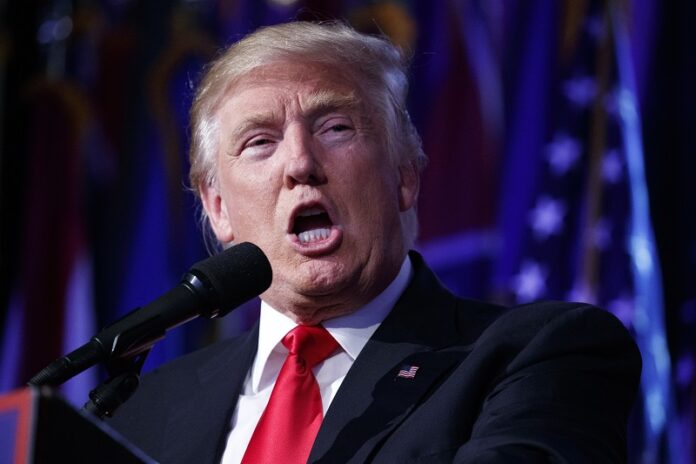
President-elect Donald Trump speaks during an election night rally Nov. 9 in New York. Photo: Evan Vucci / Associated Press

WASHINGTON — Donald Trump has won Arizona’s presidential contest and its 11 electoral votes.

The Republican president-elect had a solid lead over Hillary Clinton on election night, but a winner wasn’t declared because there were so many uncounted votes. The latest batch of returns tabulated Thursday made him the clear winner.

It extends a 20-year winning streak for Republican presidential candidates in Arizona. Bill Clinton was the last Democrat to take the state, winning in 1996.

Hillary Clinton was closer to gaining Arizona than Barack Obama, who lost by more than 9 percentage points during his two runs for president. She is losing by 4 points.

Arizona was one of three races that had yet to be determined from the Tuesday election. Michigan and New Hampshire remain too close to call.

Advertisement

East Asian Media Puzzled and Disturbed by Trump Victory

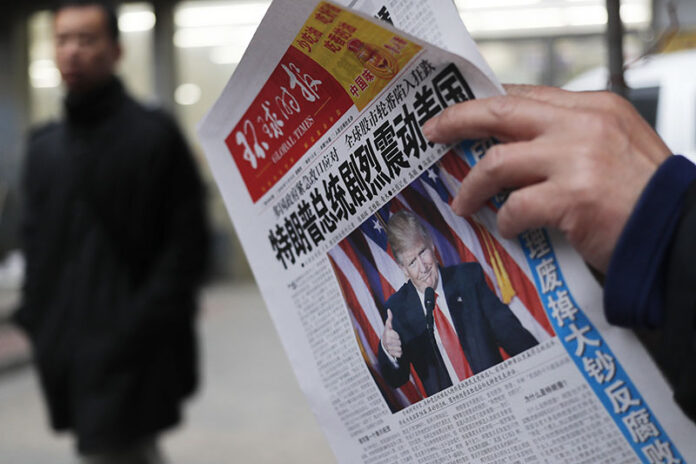
'U.S. President-elect Donald Trump delivers a mighty shock to America' reads the headline of a newspaper on Thursday at a news stand in Beijing. Photo: Andy Wong / Associated Press

BANGKOK — Media outlets in East Asia scrambled Thursday to make sense of Donald Trump’s surprise presidential victory.

A survey of media outlets found uncertainty whether to expect something negative coming to U.S.-Asia relations.

The following are excerpts from some of the media from China, Japan, South Korea and Singapore:


CHINA Anticipates “Sharpened Conflicts of Interests”

Global Times, an English-language Chinese newspaper closely align with the Communist Party expressed confidence in an unsigned editorial Wednesday that China is strong enough to handle the change, in fact the editorial was entitled, “China strong enough to cope with Trump victory.”

It also described President-elect Trump, who has threatened both trade and combat wars against the world’s No. 2 economy, in a less than flattering fashion.

“The new president lacks diplomatic experience. His much touted business experience will in some form penetrate future US foreign policy. In turn, Sino-US relations may see dramatic renegotiations, including sharpened conflicts of interests.

“Trump may be more interested in the new type of China-US relations than outgoing President Barack Obama, who was deeply influenced by Clinton. Trump may not be as strongly adverse to a “win-win” scenario with China as the previous US political establishment. Trump may have to cater to US elite groups, and he will try to be “tough enough” on China all the same.”

The paper discounted fear of isolationism under Trump, however. “In an elite-controlled US, most of those holding power don’t support Trump. And US allies across the world will pressure Washington to restrain Trump from isolationism.”

The paper said China should safeguard its interests with its own strength should Trump make good on his campaign threats.

“If Trump wants to target bilateral trade, he should first weigh the consequences of China’s countermeasures. The election will have a long-term impact on the US, as well as the world. But China is one of the quickest countries to adapt. China is able to cope with the leadership change of the US.”

As for his election’s bigger meaning, the editorial had this to say:

“He was known for being a blowhard and an egomaniac. But if such a person can be president, there is something wrong with the existing political order.”


JAPAN Concerned About Alliance in ‘Uncharted Waters’

Uncharted waters,” is how Japan Times’ staff writer Ayako Mie described Trump’s policy toward Japan and Asia Wednesday when it comes to security issues in “Trump and his policy in Asia remain an unknown for Japan.”

“For Japan, a Trump presidency could mean more headaches, as he is new to politics, to say nothing of diplomatic expertise. In essence, the billionaire businessman represents uncharted waters, a situation that could undermine the Japan-U.S. alliance and upend regional security in Asia.”

The writer noted it’s unclear to what degree Trump understands the importance and role of his nation’s alliances.

“Cooperating and coordinating with Asian nations is crucial in dealing with China’s increasing assertiveness in the South and East China seas.”

More specifically, she questioned whether Washington will continue to recognize Japan’s claim to the disputed Senkaku Islands, administered by Japan but also claimed by China and Taiwan.

During the campaign, the billionaire who’s long blamed Japan for creating a burden on the United States, said he would withdraw military support unless the World War II adversary paid for protection. He also said Japan, the only nation to be attacked with nuclear weapons, should obtain them to defend itself.

Mie cast doubt on whether Trump would demand Japan pay more for the continued presence U.S. troops.

The writer also noted that Tokyo “has not invested much in establishing a connection with the Trump camp,” but said a special advisor to Prime Minister Shinzo Abe will be dispatched to the United States next week.


SOUTH KOREA Wants Full Control of its Troops

The Korea Times, an English-language newspaper based in Seoul, posted an article from wire service Yonhap News Agency examining whether a Trump presidency might speed negotiations for the transfer of control of South Korean troops during wartime.

Like Japan, South Korea should take care of itself, Trump said, by becoming a nuclear power.

In Thursday’s piece “Trump may reduce US commitment to S. Korea’s security,” the media outlet cited a top expert’s argument that Trump move forward with transferring wartime operational control of South Korean forces from Washington to Seoul in order to reduce American security burdens.

“South Korean handed over control of its forces to the U.S. during the 1950-1953 Korean War to defend against invading troops from North Korea. Peacetime control of its forces was returned in 1994, but the wartime control, known as OPCON, still rests with the U.S.,” the paper noted, adding that it was agreed transfer date of 2007 was twice postponed – now indefinitely – in response to threats from North Korea.

The analysis by Yonhap speculated about how Trump would deal with North Korean dictator Kim Jong-un. Citing from Trump’s book “The America We Deserve,” Trump advocated a surgical strike against the North’s nuclear facility before it’s too late.

“Trump has also called the North’s leader a ‘madman,’ a ‘maniac’ and a ‘total nut job,’ but he’s also praised the young dictator, saying it is “amazing” for him to keep control of the country.”

The article cited security expert Victor Cha, Korea chairman at the Center for Strategic and International Studies (CSIS) speculating on whether Trump might be willing to meet Kim in person.

“During the campaign, the president-elect has offered everything from a willingness to sit down with (North Korean leader) Kim Jong-un to putting the problem entirely in China’s hands… It is possible that he could try to cut a grand bargain.”


SINGAPORE Sees a ‘Stunned and Worried’ Asia

The Straits Times ran a commentary by Associate Editor Ravi Velloor. In “Shock result in US presidential election: Trump triumph a sign of the times,” Velloor wrote Wednesday that Asia would have preferred Hillary Clinton.

“Asia would have preferred a more familiar figure in the White House. Mr. Trump’s victory leaves most of the region stunned and worried, reflected in the crumbling financial markets.

“The alarm will be particularly severe in countries like Japan and South Korea, where the US security yoke will come immediately into question. Big nations like China and India have reason to be nervous about his anti-globalisation stands.”

As for the trade impact on Singapore and its neighbors, Velloor had this to say:

“Vietnam, Malaysia and Singapore will be disappointed that the US elected a president who is so opposed to the Trans-Pacific Partnership trade agreement, the economic plank of Mr. Obama’s Asia rebalance.”

Advertisement

Get Seared by the Fiery Photos of ‘Burning Love’ Saturday

A photo from “Burning Love” exhibition. Photo: Ram Kanjanavanit / Courtesy.

BANGKOK — Love may burn the heart in flames, but not in every relationship is serene romance found. A rising photographer reflects on unconventional aspects of love through photos at an exhibition launching Saturday.

As goes the heart, Ram Kanjanavanit’s photos bleed with colors to create mystery, horror – and yet love. He breaks romantic stereotypes to explore its authenticity and instincts, be they through screams, scars or sex.

With a background in commercial event photography and music videos, the 28-year-old photographer will launch his first solo exhibition since graduating from the International Center of Photography in New York.

“Burning Love” will kick off Project New Visions, a series curated by prestigious photographer Manit Sriwanichpoom in search of exciting new photography in Thailand.

The opening reception starts at 6:30 pm on Saturday and runs through Dec. 28 at Kathmandu Photo Gallery located on Pan Road across from the Hindu temple on lower Silom Road. It’s reachable from BTS Surasak, BTS Sala Daeng or MRT Silom.


Advertisement

Vietnam Scraps Plans for First Nuclear Power Plant

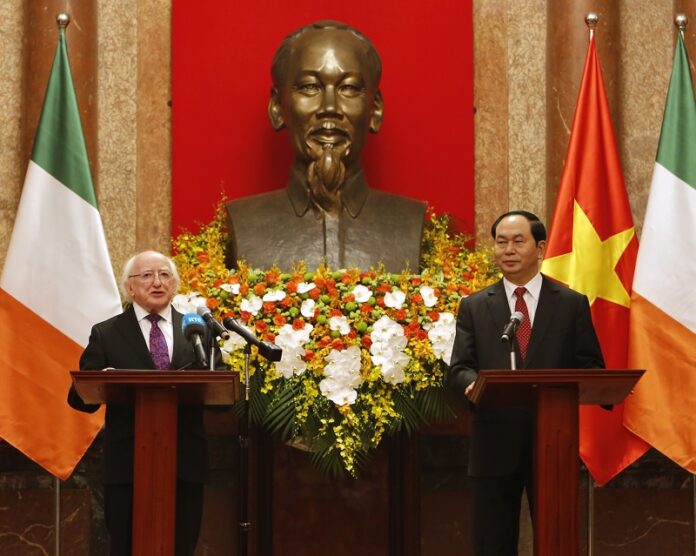
Irish President Michael Higgins, left, speaks in 2016 to reporters as his Vietnamese counterpart Tran Dai Quang listens during a joint press briefing in Hanoi, Vietnam. Photo: Tran Van Minh / Associated Press

HANOI, Vietnam — Vietnam’s government is scrapping plans to construct the country’s first two nuclear power plants, citing slowing demand for electricity and the declining price of other sources of energy, state media reported Thursday.

The state-controlled Tuoi Tre newspaper said the lawmaking National Assembly will ratify the government decision later this month.

In 2009, the assembly approved construction of two nuclear power plants with a combined capacity of 4,000 megawatts. A contract to build the first plant was awarded to companies from Russia and one for the second plant was given to companies from Japan.

Construction was initially scheduled to start in 2014, but has been delayed several times. In early 2014, the government pushed back the plants’ construction to 2020.

The newspaper quoted Duong Quang Thanh, head of the state-run Electricity of Vietnam Group, which was to pay for the plants, as saying they are not economically viable because of other cheaper sources of power.

Thanh said when the plants were approved in 2009, the government had projected power demand growth of 17-20 percent per year, but that has been revised to 11 percent for 2016-2020 and 7-8 percent in 2021-2030.

“Currently, power demand growth is not high, while domestically generated and imported sources of energy are sufficient for social-economic development. In particular, prices of imported sources of energy are much cheaper now,” he said. “Nuclear power, therefore, cannot compete economically with other sources of energy.”

Currently, coal, oil and gas-fired power plants produce about half of Vietnam’s power needs. Much of the rest comes from hydropower.

Tuoi Tre quoted Le Hong Tinh, vice chairman of the National Assembly’s Science, Technology and Environment Committee, as saying that another reason for the government’s decision was that the price tag for the plants had doubled to $18 billion.

Advertisement

American Expats Wail, Cheer, Brace for President Trump

Photo: Peray Stephane / Facebook

BANGKOK — Vindicated was how Dayton Kannon felt when he learned Wednesday that Donald Trump had been elected president of the United States.

For months, the social studies teacher said he’d endured the scorn and derision of his colleagues over his support for the anti-establishment candidate who upset expectations to win the White House.

“Many have been so judgmental toward me for voting for Trump. They said, ‘How could you?’ to me, and I replied that I had the right and the freedom to research the pros and cons of each candidate,” said the 43-year-old who voted by mail in Florida.

Read more: US Expats Mail Votes, Bite Nails, Scream At Each Other

One day after Trump’s surprise win, we checked back in with three partisan expats interviewed just before the election to find out how they felt now as citizens of Trump Nation.

Kannon believed people only thought his candidate would lose because the media had been focused on “demonizing Trump” and “bashing him for expressing his opinion.”

The shock felt by Democratic Party supporters of Hillary Clinton, who went into Election Day a shoe-in according to polling data, was not shared by the Republican.

“I wasn’t surprised at all Trump won. I believed that CNN, NBC, and ABC have not been doing responsible reporting, but telling people what to believe even though they don’t have a monopoly on knowledge,” Kannon said.

He said it was “admirable and clever” for Clinton to encourage Americans to accept the result of the election in her concession speech.

“When Obama won, even though I didn’t want him to win, I accepted it because he deserved respect for winning,” the social studies teacher said. “Now there are some people being salty and protesting and not accepting the election results. This is a judgemental, childish, detrimental, and divisive viewpoint.”

Phil Robertson, the 52-year-old head of Democrats Abroad of Thailand

A day after hosting a viewing party at a Bangkok bar that turned into a sob-fest, Phil Robertson expressed his dismay at the choice for his nation’s 45th president.

“Everybody was absolutely astonished, shocked and angry,” said Robertson, who is also the regional director of Human Rights Watch. “At the viewing party yesterday, we were depressed, astonished and frankly shocked. No one anticipated this.”

The Democrat community in Thailand is feeling “a mixture of disgust and dismay that so many Americans voted for someone that is so fundamentally flawed,” he said.

Read: Donald Trump, New President of the United States

Before the vote, Daryl Allen Holst, a 44-year-old science teacher, said he had voted for conservative independent Evan McMullin. On Thursday he stood by his choice.

“I don’t regret it,” Holst said. “I didn’t feel stressed while watching the election because I didn’t like either candidate. But I was still surprised. I thought Clinton would easily win.”

He doesn’t think people should see it as an endorsement of the former reality television star and businessman, who promised to tear up trade deals, build a wall to keep Mexicans out and require allies to pay for protection.

“While people see Trump’s victory as an acceptance of his bad qualities, I see it more as a rejection of Hillary and the establishment. This election also shows that celebrities and the media can’t really influence America’s votes,” Holst said.

As for those saying a third-party vote was a vote for Trump, Holst said many independent candidates represent stances so different from the two main parties that one cannot assume they took votes from one or the other.

“Still, we can put up with anything for four years,” Holst said, releasing a laugh.

Advertisement

Make Some Noise Outdoors at Charoen Krung Mini Fest

Photo: Honon / Facebook

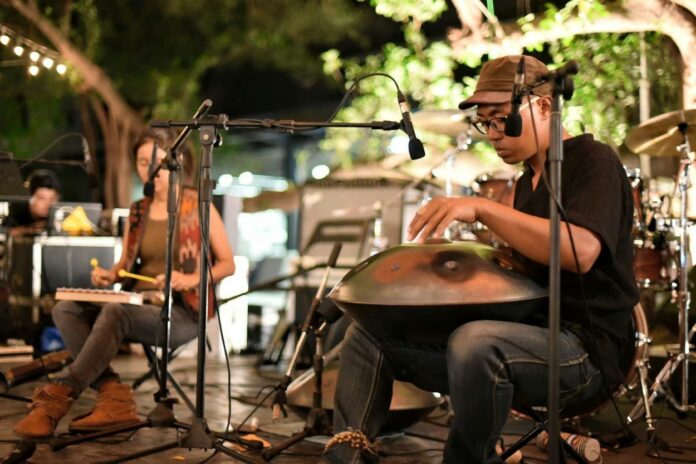
BANGKOK — Discover music from underground labels across the realm on a Saturday later this month when Bangkok’s indie music scene comes alive at a small outdoor venue on Charoen Krung Road.

While Noise Market 6 was postponed to next year, fans of Bangkok’s alt music scene will have several live performances to fill the vibe from the likes of solo free-soul act Sao Moonlight Gypsy, handpan-playing duo Honon and easy-listening duo Ekho.

Also find on sale albums and EPs from labels such as Bangkok’s Newlights Production and Chiang Mai’s oddly named Fuzzy Fuzz Record.

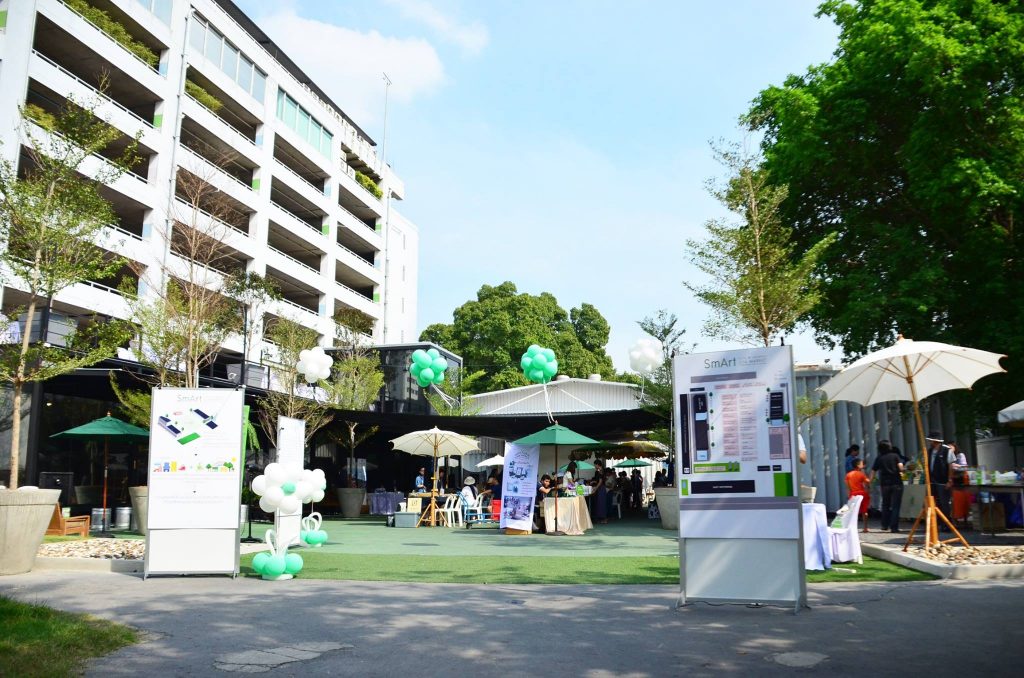
The Noise Pop Music Market runs 1pm to 8pm on Nov. 19 at Laan Baimai of Yip In Tsoi Coffee. The complex is located on Mahaprutharam Road and can be reached from MRT Hua Lamphong and the Si Phraya Pier.

The coffee shop will operate a free tuk-tuk shuttle from the venue to MRT Hua Lamphong and the Si Phraya Pier.

It’s organized by some of the same people behind Noise Market, a music-oriented flea market held since 2010. Its next installation planned for this month was postponed to June after the death of King Bhumibol.

Photo: Laan Baimai / Facebook

Advertisement

Visit the Golden Age of Mexican Cinema with Four Classics

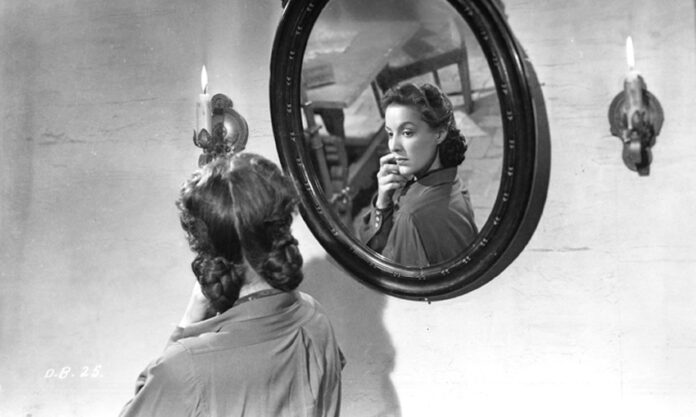
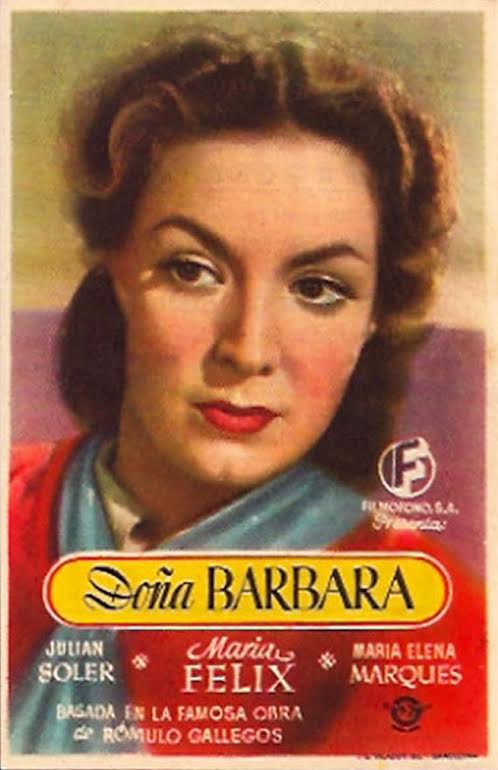
Bombshell actress María Felix is a man-eating femme fatale in 1943’s ‘Doña Barbara.’

NAKHON PATHOM — The most famous actress of Mexico’s Golden Age cinema was coined “La Doña” for her femme fatale character in “Doña Barbara.”

The 1943 film, starring Maria Felix, will show at a free screening along with three other Mexican classics next week.

More than just a wealthy landowner, Doña Barbara is a devourer of men who uses her seductive charms to get what she wants. And no one could realize the role better than Felix, the greatest erotic icon in Mexico at the time. Her performance made a huge success of the 1943 adaptation of a novel written by Venezuelan president Romulo Gallegos.

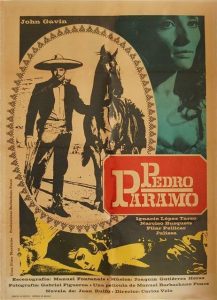
“Doña Barbara” is among four classics to show at “Mexican Film Week: Literature” which will include “Pedro Paramo” (1967), adapted from Juan Rulfo’s work of magical realism.

The 1932 film “Santa” was the first Mexican film with sound. It was based on the novel of Federico Gamboa, the lead novelist of the Naturalism movement, which emphasized a scientific portrayal of reality. The film was listed among the 100 best movies Mexican cinema in 1994.

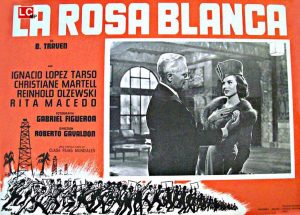
Rounding out the selection is “La Rosa Blanca” (1961). Based on a novel by German writer B. Traven, it tells of an Indian landowner fighting against the greed of American oil company.

All films will show in Spanish with English subtitles. Admission is free.

The films will start at 1pm and 3pm on Nov. 19 and 20 at the Thai Film Archive. It is located on Phutthamonthon Sai 5 Road west of Bangkok in Nakhon Pathom. It can be reached by bus No. 515 from Victory Monument in front of Rajavithi Hospital.

Doña Barbara, 1943
Doña Barbara, 1943
La Rosa Blanca, 1961
Santa, 1932
Santa, 1932
Pedro Paramo, 1967
Pedro Paramo, 1967

Advertisement

Hot News

LATEST NEWS

Bangkok
overcast clouds
30.5 ° C
30.5 °
30.5 °
78 %
6.6kmh
87 %
Thu
31 °
Fri
37 °
Sat
36 °
Sun
37 °
Mon
37 °