































30 C
Bangkok
Friday, June 26, 2026
Home Blog Page 2618

Activists Welcome End to Military Trials – Wish it Applied to Them

A military court denied veteran Redshirt activist and anti-coup leader Sombat Boonngamanong release on bail on June 12, 2014, saying he posed a threat to national security.

BANGKOK — Kittithat Sumalnop became a post child for the pro-democracy movement and won the nickname “Champ 1984” when he was famously arrested one month after the coup for eating a sandwich and reading Orwell.

On Monday, he received news that elated him: The junta would no longer send civilian cases such as his before military tribunals. Then he got a call from his lawyer saying sorry, it doesn’t apply to you.

“No one should have been charged to begin with,” he said Thursday.

Read: Junta Revokes Military Trials for Civilians

Though Kittithat says he doesn’t want the junta’s illegitimate powers used to do so, he’s among several pro-democracy activists facing military trials who said their cases should be returned to civilian justice now that the junta has ended the practice.

Rangsiman Rome of the New Democracy Movement said he’s among those unconvinced by the rationale that though the practice has been suspended, it would be too complicated to apply it to their cases.

“Transferring my cases to the court of justice would have been very simple,” Rangsiman said.

He faces multiple counts including sedition, violating a ban on political gatherings, and violating a law which criminalized virtually any campaigning in the run-up to last month’s charter referendum.

Rangsiman, despite being held in pre-trial detention for 12 days, said his cases are still with the Attorney General.

“If they wanted to transfer it, they could definitely do that. It may be a little inconvenient, but nothing compared to how civilians would benefit. No civilians should have been put on military trial to begin with,” said 24-year-old Rangsiman, a graduate law student at Thammasat University.

Sombat Boonngam-anong, charged with calling for the overthrow of the junta, which calls itself the National Council for Peace and Order, said the junta should even go further by dismissing all sentences and charges for politically related crimes.

While welcoming the news that no more civilians will be tried by the military, Sombat said the junta cannot whitewash its human rights violations as approximately 1,500 cases have already gone for military prosecution since the 2014 coup. That includes his cases: Sombat is charged with sedition and violating the Computer Crime Act for calling on people to oppose the coup.

On Monday, the junta announced it would revoke orders under which civilians accused of crimes deemed matters of national security – including insulting the monarchy – would be tried by the military, where defendants have much fewer rights than in civilian courts.

It said conditions had improved in Thailand since it seized power and that the public was now “cooperating” with its agenda.

The activists read in the decision the coup makers’ confidence in their hold on power and a desire to play to court of world opinion.

Sombat thinks the junta wants to reduce pressure from the international community. He also suspects such cases were inundating and overwhelming military judges.

Rangsiman cited a number of factors he believes were at play, including a less insecure regime confident in its grip on power after the public last month approved the constitution it had backed.

“If they think they cannot deal with internal [resistance], they won’t end the practice even if there are pressures from abroad,” Rangsiman said.

Kittithat agreed international pressure was a factor.

The junta thinks there will be no problem now, and those who still defy it can still be arrested and released later,” the 34 year old said. “They may also think all the big figures are already facing military courts. I don’t know which factors are more important, however.”

Kittihat said despite his travails, he would not be comfortable with junta leader Prayuth Chan-ocha transferring his and 500 other civilian cases to civilian courts because he refuses to recognize the retired general’s authority. He would rather see the junta-appointed legislature pass a general amnesty bill absolving all those politically charged under the junta.

Rangsiman said he wouldn’t go asking.

“I won’t be making demands of the NCPO, because the NCPO has no legitimacy,” said the activist, who faces up to 10 years in prison for campaigning against the charter. “I insist that the NCPO illegally seized power, and we cannot ask people who have violated the law to rectify the matter.”

Advertisement

Riverside Design Dropped Under Cloud of Plagiarism Charges

At top, a rendering of the proposed Viman Phra In (Paradise of Indra) as presented by the Chao Phraya boardwalk design team. At bottom, a rendered image of Crystal Island as designed by British architect Norman Foster.

BANGKOK — The architectural team behind an already controversial riverside redevelopment project announced Wednesday it would withdraw a design critics said was copied from a famous international architect.

Though it steadfastly denied copying the design of a massive project designed by Norman Foster for Moscow, the project’s design team said it killed the proposed Viman Phra In (Paradise of Indra) structure due to “public doubts.”

“To be honest, we just saw the work in Russia and Japan for the first time,” said spokeswoman Antika Sawadsri, referring to a monument in Nagoya, Japan, others said their design resembled. “But no matter what reason we say, people still think that we copied the design, so we decided not to continue with it.”

Read: Top Architect Says River Project Plagiarized Design

Watchara Chongsuwat, the principal at architectural firm A-Seven, earlier questioned why Foster wasn’t blamed for copying the building style from Thailand.

The firm was contracted by King Mongkut’s Institute of Technology Ladkrabang and Khon Kaen University as part of a sprawling project to redevelop land on both sides of the Chao Phraya River for seven kilometers. Its design was prepared as part of a brief feasibility and design phase said to cost 120 million baht.

Despite the setback, Antika said a new proposal would be prepared to somehow meet the original deadline in nine days on Sept. 26.

On Sunday a group opposed to the project pointed out striking similarities between A-Seven’s design and that of Foster and Partners for the Crystal Island in Moscow, which has yet to be built. On Monday famed architect Duangrit Bunnag called for legal proceedings against A-Seven, saying it was a violation of architectural principles and possibly the practice’s by-laws in Thailand.

The head of the project denied repeatedly they are copycats and said critics were being “disrespectful.”

“I insist that we did this for the country, not for our personal benefit. And I insist that we didn’t plagiarize. We didn’t plagiarize,” said Sakul Hovanotayan of King Mongkut’s. “What will happen from this project is not useful only for people in our generation, but it’ll be also passed on to the next ones. So you have to reduce your biased opinions and be respectful.”

Duangrit, who brought attention to it Monday, thanked the university-led design team for killing the plan. He remains deeply opposed to the redevelopment project which the junta has hurried to push through since announcing it.

“What society has to ask is, what is the necessity and the reasons behind this megacity project, and whether we really want it” Duangrit wrote. “What would we choose between: a beautiful riverside walkway or less crowded roads, no floods and better education?”

Advertisement

Bangkok Bombing Trial in Limbo Without Interpreter

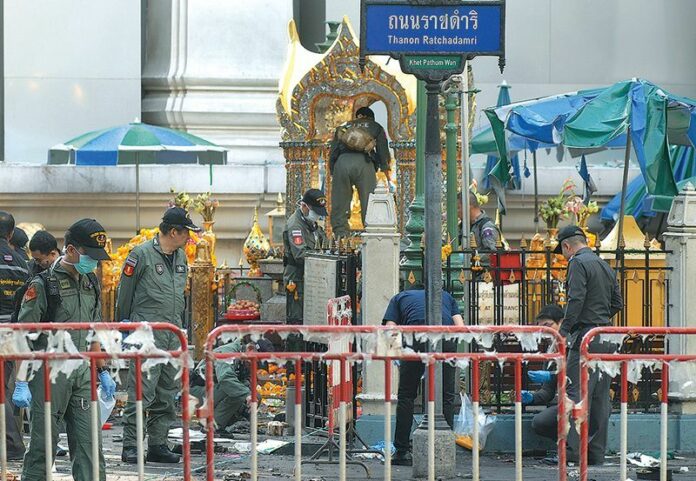
Investigators canvas the scene after the 17-Aug bombing of Bangkok's Erawan Shrine.

BANGKOK — One of Thailand’s biggest criminal trials remains on hold after a military court turned down an organization’s offer to use a professional translator, and another prisoner recruited for the job only spoke Uzbek.

The military tribunal trying two Uighur men for last year’s bombing of the Erawan Shrine on Thursday rejected an interpreter offered by an organization in Europe to translate testimony for the pair accused of orchestrating the attack which killed 20 people.

“The prosecutor said the interpreter was sent from an organization which has a problem involving national security,” said defense lawyer Schoochart Kanpai. “We respect and agree with the court’s decision.”

The court did not elaborate on its decision to not accept the offer from the Munich-based World Uyghur Congress. The generally accepted motive for the August 2015 bombing was revenge for Thailand’s forcible repatriation of more than 100 Uighurs to China under pressure from Beijing. Chinese state media has described the World Uyghur Congress as a terrorist organization.

Instead, it brought into the chamber a woman wearing a shirt that said “Detainee” to do the job. The woman, who was already in custody on immigration charges, is Uzbek and could not speak Uighur.

“An earlier report said this interpreter was able to speak Uighur,” Schoochart said. “It turned out today she only speaks Uzbek, so the defendants cannot understand.”

That means the trial, which was paused after losing a previous volunteer translator in June, cannot resume. At the previous hearing on Aug. 23, Schoochart told the court the World Uyghur Congress in Germany had offered to dispatch the Uighur translator at its cost if the judges approved.

The case has been delayed since amateur, volunteer interpreter Sirojdolin Bakhodirov was arrested on drug-related charges and went into hiding. He had been translating between English and Uighur for the two suspects since they were arrested in September 2015.

The Uzbek woman and defendants today explained to the court that though Uzbek and Uighur are both Turkic languages, they are not the same.

Read: Angry Victims and Families of Shrine Bombing Still Wait for Justice 1 Year Later

Thursday’s hearing was to hear from the first witness, a high-profile officer from the circuitous investigation into the attack: English interpreter Lt. Col. Thuaythep David Wiboonsilp. His testimony was rescheduled to begin Oct.13.

Thuayhtep once helped translate into English for the defendants, who speak little of the language. As Thuayhtep will now be testifying against them, the court appointed a new English interpreter, Uraiwan Dumrongsunan, for the defendants.

Schoochart today said his client, Adem Karadag, is okay with being held on the same military base where he earlier alleged that he was tortured after his arrest.

The hearing today did not end with a concrete solution, though Schoochart said from now on he would leave it to the court to find an interpreter of its choice.

Advertisement

Invade French Ambassador Gilles Garachon’s Home Sunday

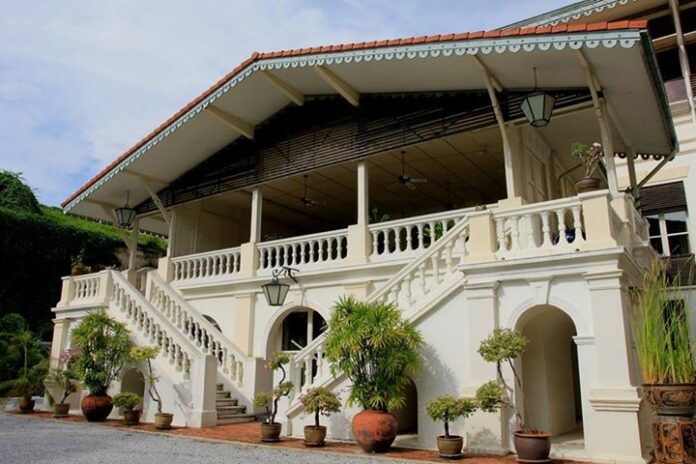
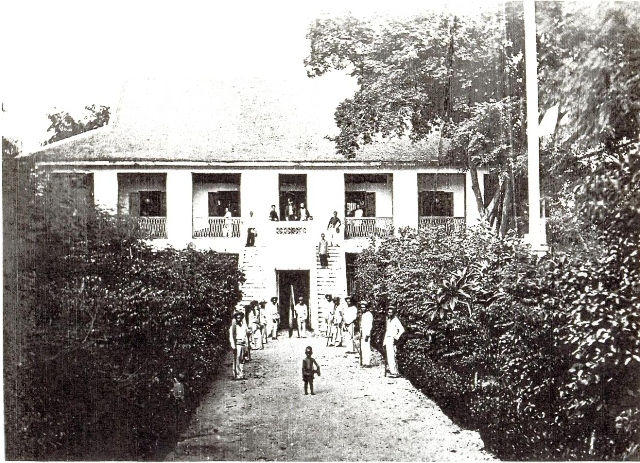
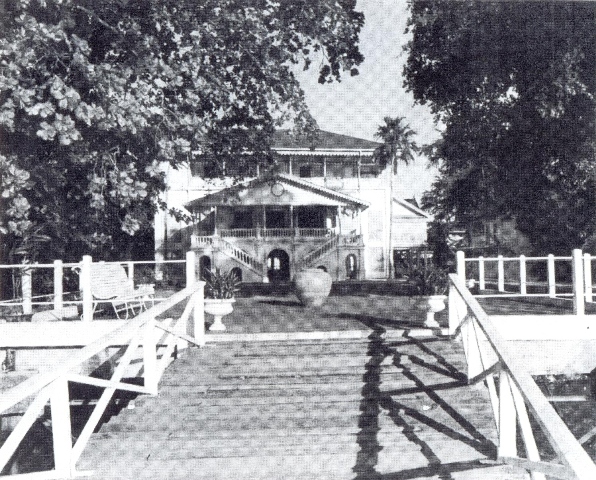
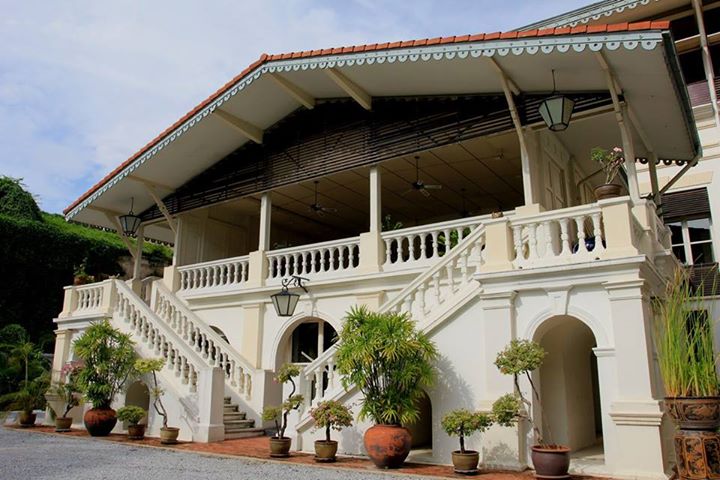
The exterior of the French Ambassador Residence. Photo: Embassy of France in Bangkok, Thailand / Courtesy

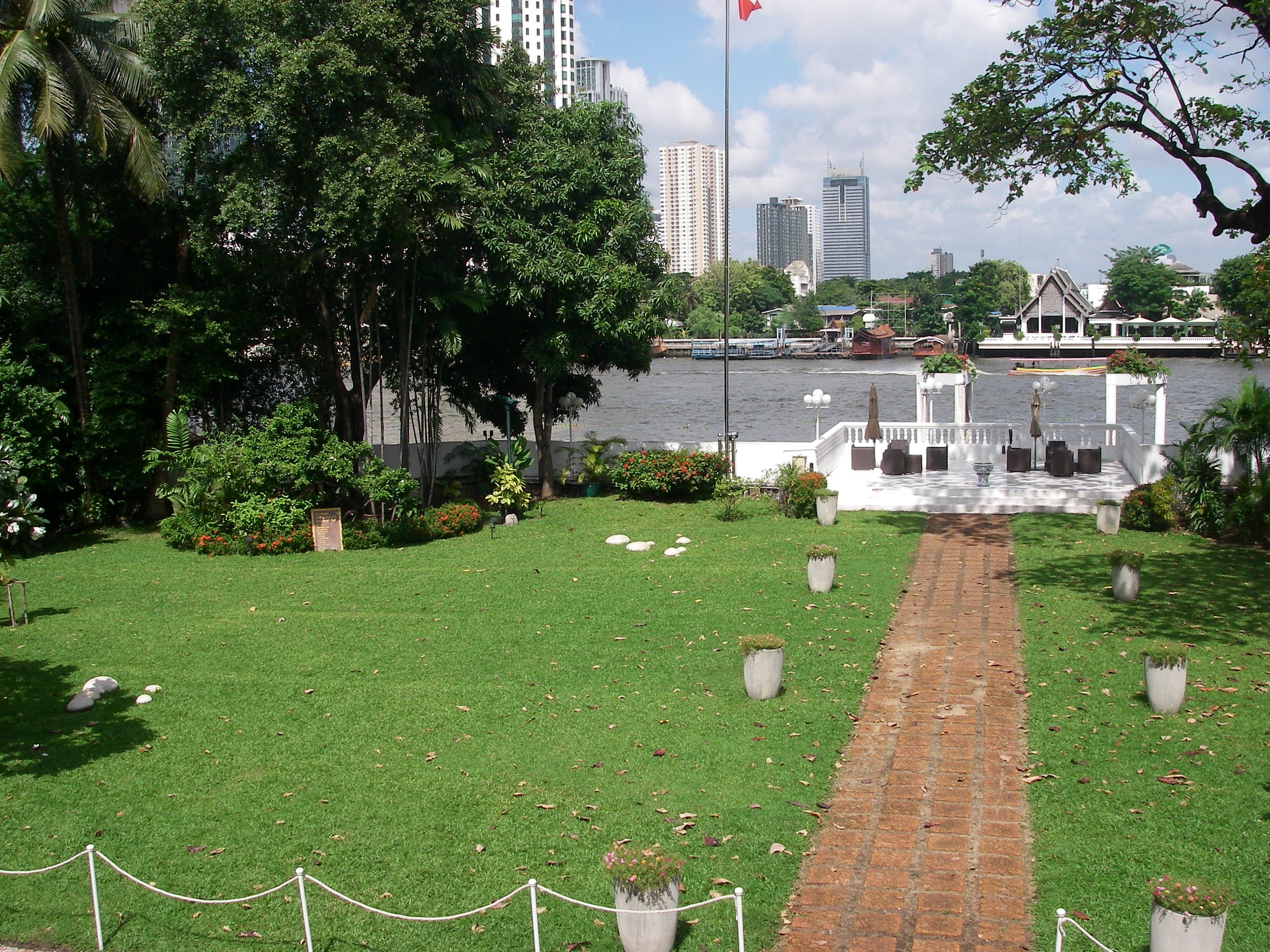
BANGKOK — Tour a century-old timber building on Rue de Brest aka Soi Charoen Krung 36  – Sunday, that technically sits on French soil.

Once a year, the French Ambassador’s Residence in Thailand opens to the public to explore the early-19th century building to celebrate European Heritage Day. It will open its doors to the public for the 33rd year running to check out its unique colonial style designed by a now-forgotten Italian architect.

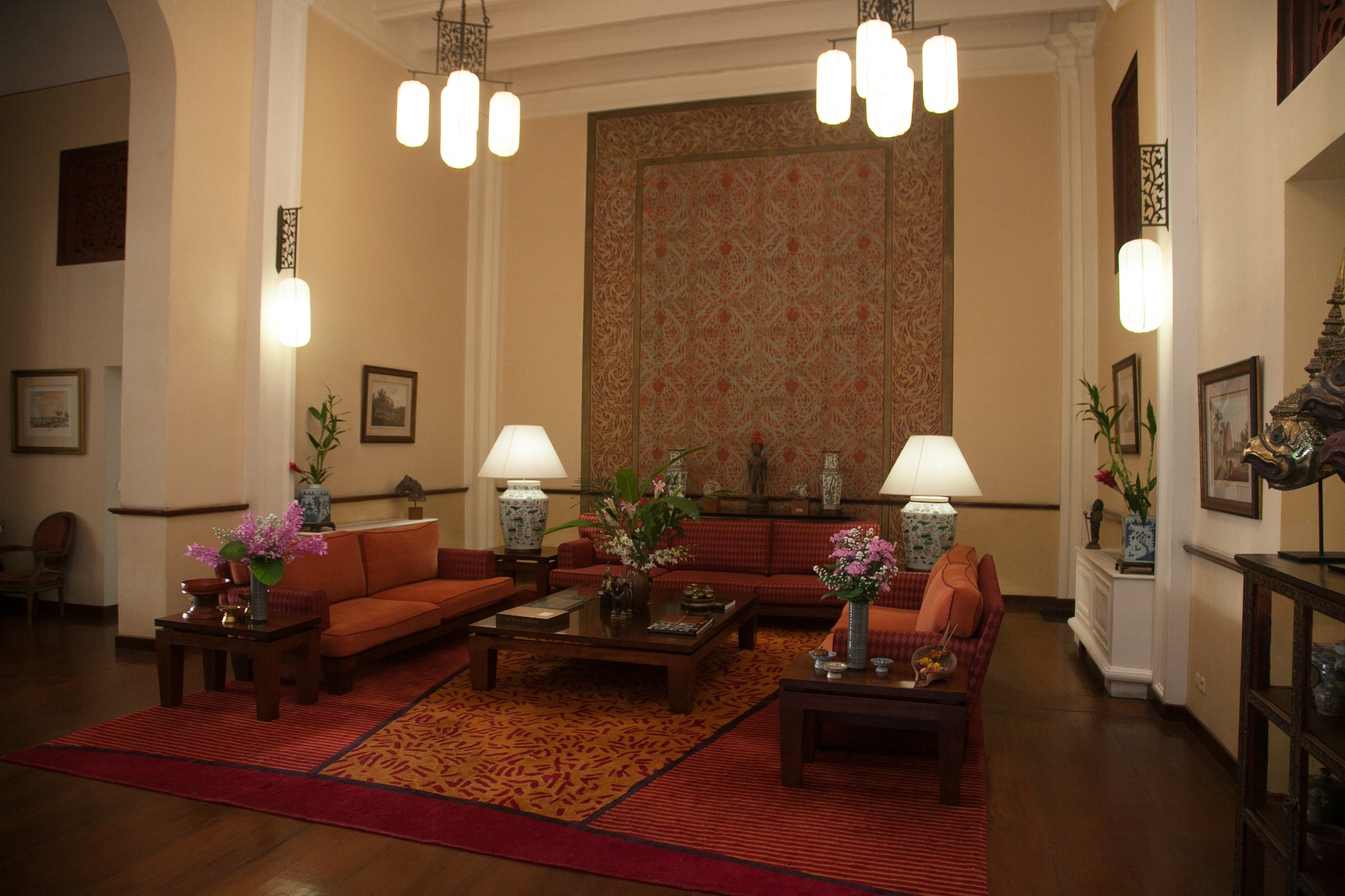
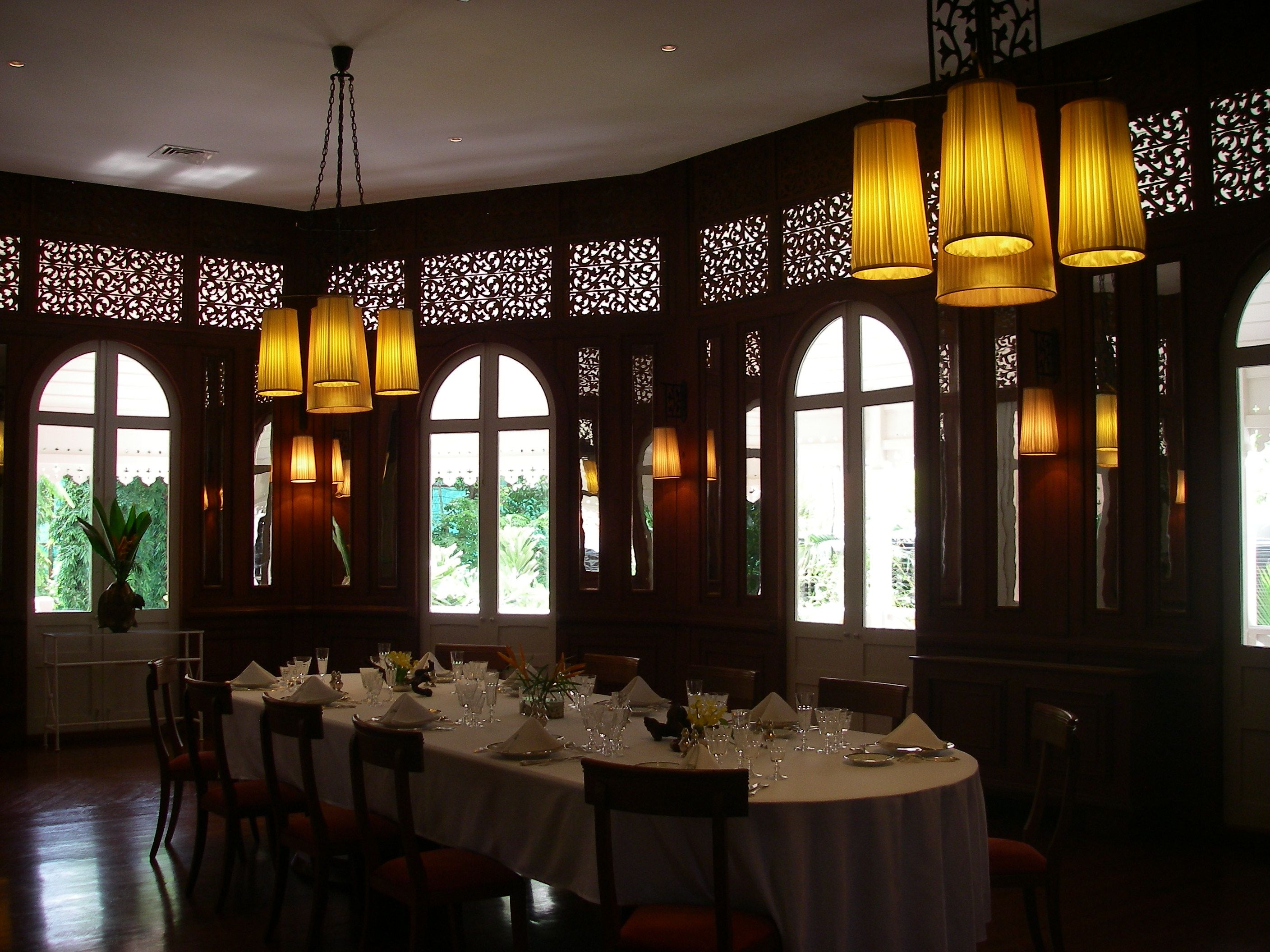
Tours of the former three-story customs house located along the the Chao Phraya River start on the ground floor where a grand kitchen is located. Walk up to the second floor to find the living room, reading room, workroom and elegant wooden dining room. The third floor bedroom of Amb. Gilles Garachon, unfortunately, will be off limits.

Photographs and films about its construction and the 160th anniversary of French-Thai diplomatic relations will be shown, while the work such as “La Forêt” by contemporary artist Jacques Vieille will show nearby at the  embassy.

Guided tours of the residence are available and limited to 20 people per round. French-language tours are at 10:30am, 11:30am, 2pm and 3pm. For tours in Thai, be ready at 10:40am, 11:40am, 2:10pm and 3:10pm. Only speak English? Try 10:50am, 11:50am, 2:20pm and 3:20pm.

Feel free to explore the residence from 10am to 4pm on Sunday. The residence, located near the French Embassy, on Rue de Brest, better known as Soi Charoen Krung 36, can be reached by taxi or motorcycle taxi from BTS Saphan Taksin.


Advertisement

2 Dead, 20 Injured as Speedboat Explodes in Bali

Police investigators examine the Gili Cat 2 boat on Thursday following an explosion while it was enroute to nearby island of Lombok, at Padangbai Port in Karangasem, Bali, Indonesia. Photo: Associated Press

BALI, Indonesia  — Two foreign tourists were killed and about 20 other people were injured in an explosion Thursday on a speedboat that was ferrying them from the Indonesian tourist island of Bali to neighboring Lombok, police said.

Karangasem district police chief Sugeng Sudarso said the “Gili Cat 2” fast boat had about 40 people including crew on board. He said all the passengers have been evacuated and the injured are being treated on the island.

He said the dead are an Austrian woman and a woman of European nationality who police initially said was German.

Police have not yet determined the cause of the explosion, but a member of the forensics team investigating the scene said initial indications are it was an accident. The officer didn’t want to be named because he is not an official police spokesman.

Sudarso said the explosion occurred after smoke was seen billowing from an engine.

Ferry accidents are common in Indonesia, a sprawling archipelago made up of thousands of islands where regulation of boat services is often lax.

Sudarso said the explosion, which occurred when the boat was about 200 meters (220 yards) from the port of departure, shattered its rear windows and upended seating.

“We are still questioning the boat captain while a forensic team is examining the scene to find of cause of the explosion,” he said.

“One of the passengers died from bad injuries after being hit by boat debris that also caused injuries to others,” Sudarso said.

A manifest showed that passengers were from several countries including Britain, France, Italy, Portugal, Ireland and Spain.

Bali became a byword for tragedy in 2002 when bombings by Jemaah Islamiyah militants killed 202 people, mostly foreigners.

A sustained security crackdown since then has weakened JI but counter-terrorism officials say there is still a threat of attacks from militants inspired by the Islamic State group.

Advertisement

Meat Loaf Criticizes Coverage of His Stage Collapse

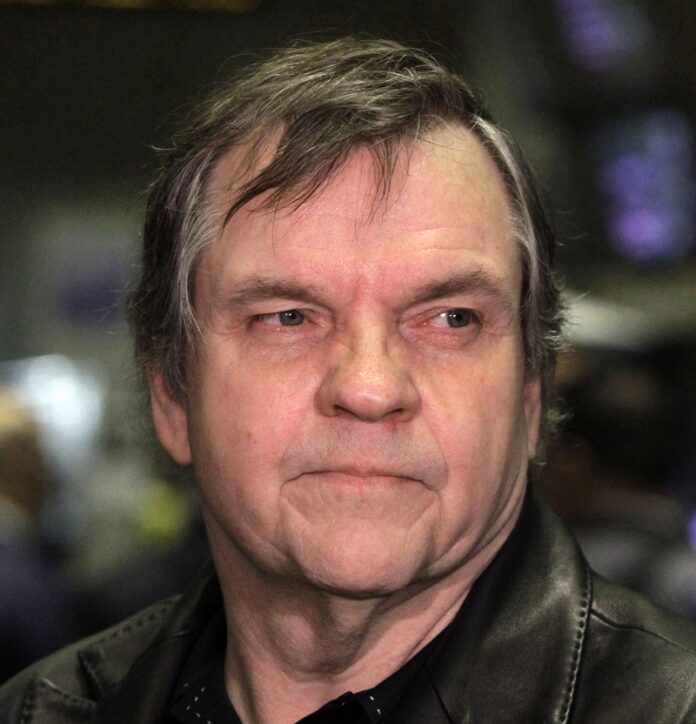
Rock singer Meat Loaf in 2010 on the floor of the New York Stock Exchange before ringing the opening bell. Photo: Richard Drew / Associated Press

LONDON, England — Meat Loaf made headlines when he collapsed on tour, something which surprised him more than the actual fall.

That was June and the international interest still astounds him.

“What floored me was the fact that it literally went around the world,” he says.

“I did an interview with a woman from Japan and that was her first question. Then I did an interview with someone from Thailand and that was their first question. I finally said, ‘There’s a lot more to report about in the world than me falling down on the stage in Edmonton.'”

The reason for the fall, he says, was dehydration.

“We don’t have the kind of show where we play a song, the singer goes back and gets a drink of water or whatever. The music never stops and so I have very little chance to get back.”

His new album “Braver Than We Are,” out on Friday in the U.S. and released last week in Europe, features old and new songs written by Jim Steinman. It’s the latest collaboration from the partnership which started over 40 years ago and includes 1977’s “Bat Out Of Hell” and “Bat Out of Hell II: Back Into Hell” (1993).

In an interview with The Associated Press, Meat Loaf talked about the legacy of the “Bat” albums and the collapse.

On the collapse

“It was dehydration. That’s all it was. … I don’t remember being scared. … I kind of woke up on stage, but I don’t remember what was going on.”

On what would happen if he died on stage

“I have a plan if I die. The band plays, ‘When the Saints Go Marching In,’ and then they all get off their instruments and they lead the audience in a song, ‘Take Me Out To The Ball Game.’ And if it was too morbid to leave me on the stage, take me off the stage and still do the same thing.”

On the “Bat Out of Hell” musical

“That has been Jim Steinman’s dream, before he met me. And that’s what ‘Who Needs The Young’ (opening album track) was written for. Every song that Jim Steinman has ever written has been for this musical. I won’t give anything away but I’m just happy that my friend and someone who I love dearly and have worked with for over 40 years is finally seeing his dream come true.

On the new album

“Every album I’ve ever done; get a song, record it, done — down the line. But with this one, we wanted it to be cohesive. I tried to never finalize a song so that it flowed right to the next one so it’s a very hypnotic record. It also fits in the same category as ‘Bat Out Of Hell’ — nothing like ‘Bat Out Of Hell’ — but there is nothing else out there in the world musically like this piece of music.

On his sense of humor (and whether people get it)

“They don’t because, take a song like ‘Bat Out of Hell’ — it’s really silly. That I’m dying in the bottom of a pit in the blazing sun, torn and twisted. it’s funny. If you’re doing a comedy, you have to play that character real and the minute you go for comedy, it’s never funny. So on songs like ‘Bat,’ you have to be honest and you have to be truthful and you have to be in that moment so it works.”

On touring

“We will get this (pinched nerve in his back) taken care of and then we will sort out the tour dates.

(On tour), I’m really disciplined. After a show I try not to talk. Days off I don’t talk. I never leave my room. I stay by myself most of the time. Frances (his assistant) – her ritual is at 4 o’clock in the afternoon she comes in and checks on me, on a day off, like a nurse in an old folk’s home.” (He laughs)

Story: Hilary Fox

Advertisement

Broken Promises: BTS Still Off Limits to Disabled

Top: Watch ‘Inaccessible’ above at full 4K high-def resolution

BANGKOK — To ascend to BTS Mo Chit, one must first climb 45 steps. They might as well be a million for Manit Inpim, a wheelchair-bound activist who for years has fought for access to the popular rail service.

Twenty-one months after a landmark court decision gave the city a year to install elevators at all stations, a review by Khaosod English found that while many stations had what appear to be elevators – they don’t work.

After failing to comply with a Supreme Court order in January and asking for nine more months, the city now admits it has failed again to make good on its promise to make all stations accessible, faulting its contractor for being unable to complete the work.

Manit, one of the activists who has tracked progress and pushed for the policy, also blamed contractor Seri Construction along with the Bangkok Metropolitan Administration, which owns the system, and its contracted operator.

“The developer is not professional,” said Manit, who attends monthly meetings between City Hall and the contractor, Seri Construction. “And the BMA and BTS lack unity of cooperation to work.”

He said his group is weighing how to respond.

Read: Disabled Rights Group Weighs New Suit Over BTS Stations

For its part, Seri Construction admitted the elevators won’t be available even by year’s end.

“We could make 60 percent progress by the end of September,” the manager of the project, Itthiphol Boonrak, said Sept. 7. “Probably almost 80 percent before Christmas.”

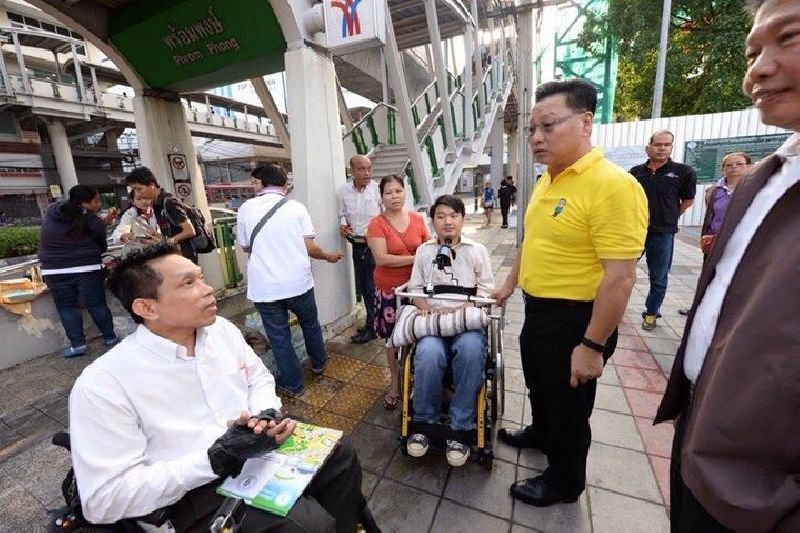
Disabled rights activist Manit Inpim, who spearheaded efforts to make the rail system accessible with Transportation for All, talks to Deputy Bangkok Gov. Amorn Kijchawengkul on Jan. 21 at BTS Phrom Phong in Bangkok.

He didn’t explain the basis for those numbers, nor could he say when it would reach 100.

City Hall said they were aware the elevators would not be ready before the extended deadline.

“The developer cannot finish the work in time,” Deputy Bangkok Gov. Amorn Kijchawengkul said in a recent interview. “They can only work four hours a day – after midnight to 4am, when the BTS is closed.”

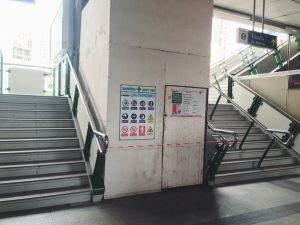
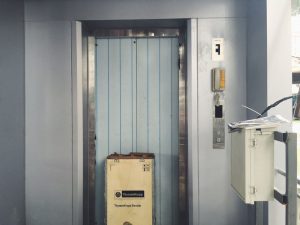
Visits to a number of stations found some elevator shafts in varying degrees of completion. Signs posted outside of them prohibited entrance and still promised they would be usable this month.

Hollow Victory

It was a phenomenal and historic victory when disability rights group Transportation For All prevailed against City Hall in January 2015. Ruling that access was a basic right and not a special accommodation, the Supreme Administrative Court ordered the city to install elevators and other facilities for the disabled at all of the elevated rail system’s original 23 stations. Judges gave them one year to comply.

The activists thought their 15 years of being denied the right to use Bangkok’s celebrated commuter rail line were over, eliminating their reliance on more expensive travel by taxi.

Unfinished structure for a street level elevator at BTS Ari was roped off with a sign saying it would be ready in September.

But that didn’t happen.

When the year was up this past January, the BMA admitted its failure, apologized and promised to complete it by September. The activists said they would be reasonable and wait nine more months.

Design-Limited

Recent extensions have stations with elevators, though they are not automatic and require a staff member to respond to a request.

Of the original 23 Skytrain stations that opened in 1999 – Mo Chit to On Nut on the Sukhumvit Line and National Stadium to Saphan Taksin on the Silom Line – elevators were later added to five: Siam, Asoke, Mo Chit, On Nut and Chong Nonsi.

Unfinished installation of a street-level elevator at BTS Ari as seen Sept. 7.

The activists say it hardly helps. Some have bells they’re required to ring in hope a staff member responds to their need for the elevator.

At BTS Siam, passengers were observed calling and using the elevator successfully. On Tuesday, a reporter found the elevator open and usable from street level at BTS Mo Chit. To get back down, security guards had to unlock the doors to use elevators down from the platform and concourse levels. Some activists say having to depend on staff doesn’t always work.

When staff are attentive, they are helpful and professional. A reporter traveling alone on crutches Wednesday was escorted up escalators at BTS National Stadium, and a staff member was waiting when he stepped onto the platform at BTS Asoke to lead him to the elevator there.

Up on the platforms, the trains pose their own limitations. Only the first car of each can accommodate a wheelchair.

Under the 2015 ruling, three elevators were to be installed at each BTS station: one connecting street to concourse level and two from there to each side of the platform.

Itthiphol said his company has finished street-level work, including the elevator housing and shaft, at 14 stations. He expected seven stations would have fully operational systems by the end of this month.

He said retrofitting the original, late 1990s infrastructure with elevators is problematic.

“I admit it is very difficult to add the elevators years after the BTS was built without a plan for it,” said the project manager.

The developer also acknowledged that only having one elevator at the street level for stations with typically four exits is not optimal.

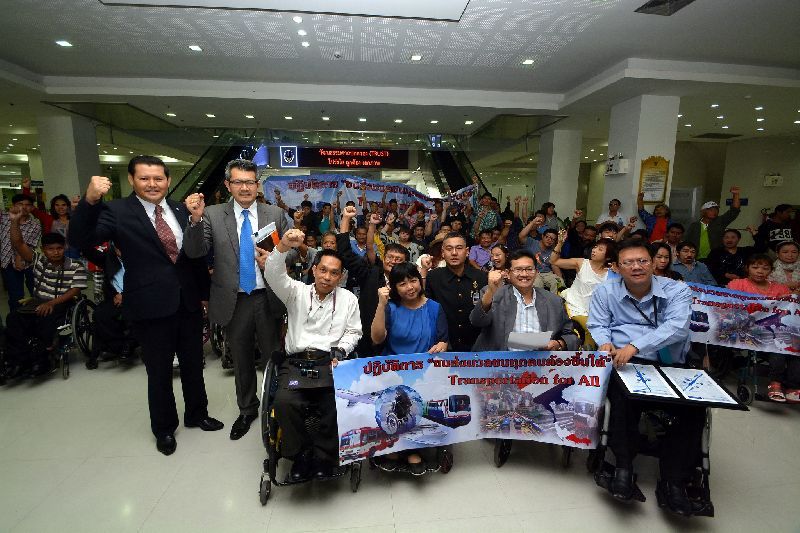
Disabled citizens who filed lawsuit against BTS gather to hear the verdict at the Supreme Administrative Court, Jan. 21, 2015.

People on the wrong side of the street will have to cross the road to reach the elevator – something that can pose a serious challenge in itself at some stations.

The activists said they have been consulted on occasion.

In July, they were invited to test the first set of elevators being installed at five stations.

“And when we tested, we found some problems needed to be fixed,” Manit said.

Among those stations was BTS Phrom Phong, which the city promised in January would be one of the first finished – by April. It remains unavailable today. On a recent visit, two elevator shafts in the station were unfinished.

The elevator shafts inside BTS Phrom Phong station leading to both sides of the platforms are still under construction despite the promise that it will be completed in April.

Sign of Things to Come?

‘Filing for compensation is the last option we want to consider’

At the most recent monthly joint meeting to discuss the project, Manit said no one from the city told him of the delay.

“I know that BMA submitted a letter to the court about the delay, but they have not yet informed us,” he said.

Rather than return to court, they’d hoped the power of the court order would see it done.

“Filing for compensation is the last option we want to consider,” he said.

Amorn said City Hall is trying to negotiate with its operator for the system to let work crews work longer than four hours per day. He said the activists would be informed once an agreement was reached.

He said BMA will also consider seeking financial compensation from Seri Construction.

According to a lawyer with the Law Reform Commission of Thailand, the burden is on the activists, who prevailed in their lawsuit, to notify the court that City Hall failed to satisfy the order.

Apichart Pongsawat said the court would then pursue legal remedy such as fining City Hall daily until it completes the construction.

Activists worry that today’s disappointment will be tomorrow’s disaster.

Beyond demonstrating a failure in legal measures, they say the inaccessibility of the BTS provides a glimpse of how the city’s ambitious rail network will look like when 10 more commuter extensions are completed

By then, Thailand will have an older population which will face the same challenges in a rail service they say was never truly built for everyone – not the disabled and not senior citizens.

“The rail system will then become a disaster for the country,” Manit said.

Related stories:

Disabled Rights Group Weighs New Suit Over BTS Stations

BTS Stations Remain Inaccessible to Disabled, a Year After Landmark Ruling

Court Orders Skytrain to Accommodate Disabled Passengers

Advertisement

US Will Lift All Sanctions on Myanmar: Obama

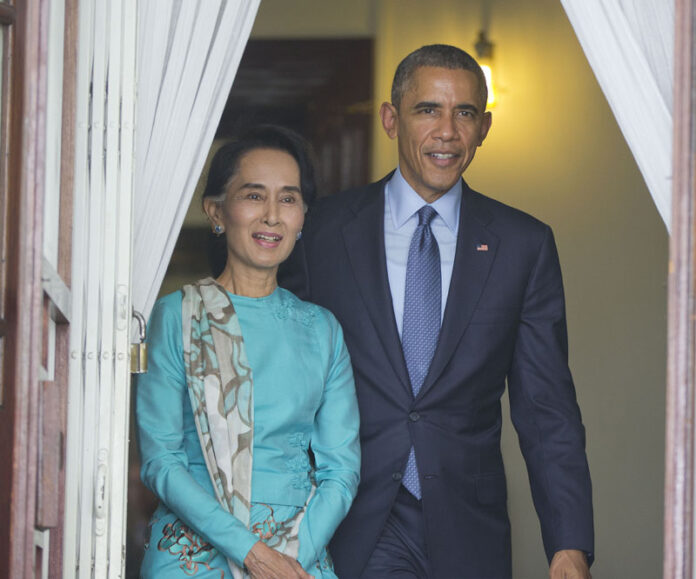
US President Barack Obama, walks with Myanmar's Aung San Suu Kyi at her home before the start of a joint news conference on Nov. 14, 2014, in Yangon. Photo: Pablo Martinez Monsivais / Associated Press

WASHINGTON — President Barack Obama said Wednesday the U.S. is lifting economic sanctions and restoring trade benefits to former pariah state Myanmar as he met with Aung San Suu Kyi, a former political prisoner who is now the nation’s de facto leader.

Obama hailed a “remarkable” transformation in the country also known as Burma, which spent five decades under oppressive military rule. Suu Kyi’s party swept historic elections last November, and the visit by the 71-year-old Nobel Peace Prize laureate, deeply respected in Washington, is a crowning occasion in the Obama administration’s support forMyanmar’s shift to democracy, which the administration views as a major foreign policy achievement.

The U.S. has eased broad economic sanctions since political reforms began five years ago and Obama has visited the country twice. But the U.S. has retained more targeted restrictions on military-owned companies and officials and associates of the former ruling junta. U.S. companies and banks have remained leery of involvement in one of Asia’s last untapped markets.

“The United States is now prepared to lift sanctions that we have imposed on Burma for quite some time,” Obama said as he sat alongside Suu Kyi in the Oval Office. He said it was “the right thing to do” to ensure Myanmar benefits from its transition. Asked by a reporter when sanctions would be lifted, Obama said “soon.”

Suu Kyi concurred it was time to remove all the sanctions that had hurt the economy. She urged Americans to come to the country and “to make profits.”

Congressional aides said that Suu Kyi requested the removal of the national emergency with respect to Myanmar — the executive order authorizing sanctions that has been renewed annually by U.S. presidents for two decades.

The Treasury Department said that Obama’s decision will be legally effective when he issues a new executive order to terminate the emergency. A U.S. official said that 111 Myanmar individuals and companies will be dropped from a Treasury blacklist and restrictions will be lifted on new investment with military and on the imports of rubies and jade. But penalties intended to block the drug trade and to bar military trade with North Korea would still apply, as would a visa ban barring some former and current members of the military from traveling to the U.S.

The official and aides spoke on condition of anonymity as they were not authorized to discuss the matter publicly.

The U.S. Chamber of Commerce hailed the announcement as “historic.” But human rights groups say there are powerful reasons for retaining sanctions. Military abuses continue in ethnic minority regions. Rohingya Muslims remain displaced by sectarian violence and denied citizenship. The military and its associates still have huge stakes in the economy.

“Obama and Suu Kyi just took important tools out of their collective tool kit for dealing with the Burmese military, and threw them into the garbage,” said John Sifton, deputy Washington director for Human Rights Watch.

Transparency watchdog Global Witness says Myanmar’s jade industry, based in a northern region plagued by civil conflict, is dominated by a military elite, U.S.-sanctioned drug lords and crony companies. It estimates the industry is worth nearly half of the nation’s economic output.

Suu Kyi addressed problems in western Rakhine state, where more than 100,000 Rohingyas remain stuck in camps, separated from Buddhists who are the majority in Myanmar. She said everyone entitled to citizenship in Myanmar should get it.

“We are sincere in trying to bring together the different communities,” Suu Kyi said.

The White House also notified Congress on Wednesday it would be reinstating in November trade benefits to Myanmarbecause of its progress on workers’ rights. The benefits were suspended in 1989, a year after the bloody crackdown on democracy protesters by the military.

Suu Kyi last visited Washington in 2012 when she was still opposition leader. On that occasion, she was presented with the Congressional Gold Medal, the legislature’s highest civilian honor, which she had been awarded in 2008 while under house arrest.

Now she is de facto leader of the country with the title of state counsellor although a junta-era constitution still enshrines the military’s role in politics and bars her from the presidency.

White House spokesman Josh Earnest pushed back on the notion the U.S. was undercutting its leverage over Myanmar on human rights and constitutional reforms by lifting sanctions. He said greater U.S. engagement would promote its ability to promote change.

Story: Matthew Pennington

Advertisement

Schoolgirl Disfigured by Mug-Throwing Teacher Seeks Treatment

Naruedee Jodsanthia, 17, seen before and after she suffered nerve damage caused by a teacher at her school. Original images: Zaii Naruedee / Facebook

KORAT — “I will get my smile back one day,” Naruedee Chotsanthia, a 17-year-old student in Korat, wrote recently in her Facebook bio.

The Matthayom 5 student used to smile. Now, because of damage to her facial nerves that left her face half-paralyzed, she can only manage a grimace. Her left eye cannot fully close, and the left side of her mouth doesn’t move with the right.

Naruedee’s disfigurement happened the moment a coffee mug thrown by her PE teacher struck her in the head at Chokechaisamakkhee School last month.

“Doctors told us that if she had arrived there a bit later, it would have been permanent,” Naruedee’s aunt, Matchima Supaeng, said Wednesday. “But doctors said it’s still a severe injury. It was rather grave. It’s been a month now, but she hasn’t gotten better.”

The latest example of casual brutality in Thailand’s schools wouldn’t have come to light had the family, which is asking for compensation, not gone public with what happened.

The school has demurred, offering to pay a small portion of her expensive medical bills, saying the teacher didn’t intend for the mug to hit her.

That teacher, 58-year-old Paithoon Klaengkrathok, is now under investigation for the Aug. 8 assault by the local education board.

“I have instructed them to report the conclusion of the investigation within seven days,” said Chookiat Wisetsena, director of District 31 Matthayom Suksa Office in Nakhon Ratchasima province.

The school said Paithoon threw the mug because he was irritated by their loud behavior. Naruedee said the cup hit her face, after which she couldn’t move the left side of her visage. Doctors determined that a pair of nerves were damaged, she said.

Naruedee posted the story about her injury on social media earlier this week, drawing widespread attention. Her aunt said Naruedee waited a month because she thought the school would pay for her medical expenses and she didn’t want to cause a stir. She changed her mind when the school balked at paying.

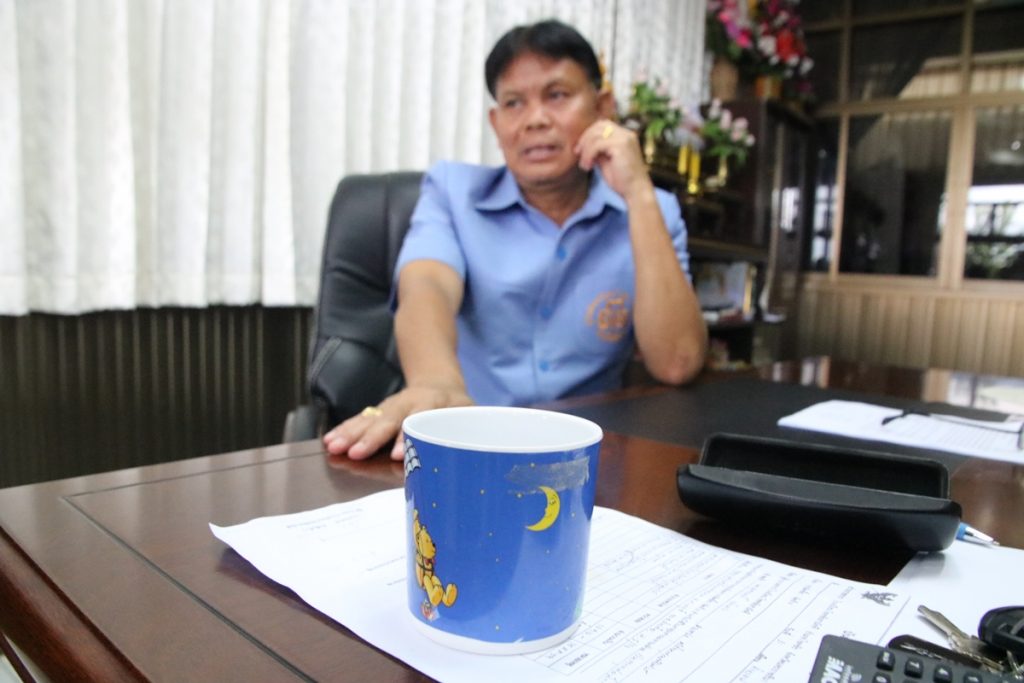
School administration on Tuesday shows reporters the coffee mug thrown by Paithoon Klaengkrathok.

“Doctors said they needed to operate on her. They estimate it will be at least 300,000 baht. So we demanded money from the school,” Matichima said.

The school, she said, pleaded a lack of resources and offered to pay 80,000 baht.

She said her family and the state-owned school are negotiating. Naruedee has also filed a charge of assault against Paithoon.

In an interview with reporters Tuesday, school director Nipon Pakdeekaew said Paithoon merely wanted to discipline his students, who were getting rowdy in lines outside the teacher’s office, and he didn’t mean to score a direct hit with his coffee mug.

“After the incident, the PE teacher admitted that it was his fault, but he didn’t intend to hit the student,” Nipon said.

Paithoon has been suspended from teaching duties until investigation is concluded, Samak added.

Naruedee tries to go to school as often as she can, juggling her time between hospital and the police station, according to her aunt Matchima. She has exams next week.

“I’m worried for her,” Matchima said.

Physical and violent punishment in the name of discipline are commonplace in public schools and considered acceptable by many segments of society. In February, a Bangkok school teacher was disciplined for slapping schoolgirls, while a teacher in Mae Hong Son reportedly sawed off a 4-year-old boy’s ear in 2014.

Advertisement

Sleeping Around: Volunteers Invited to Snooze With London Artist Friday at BACC

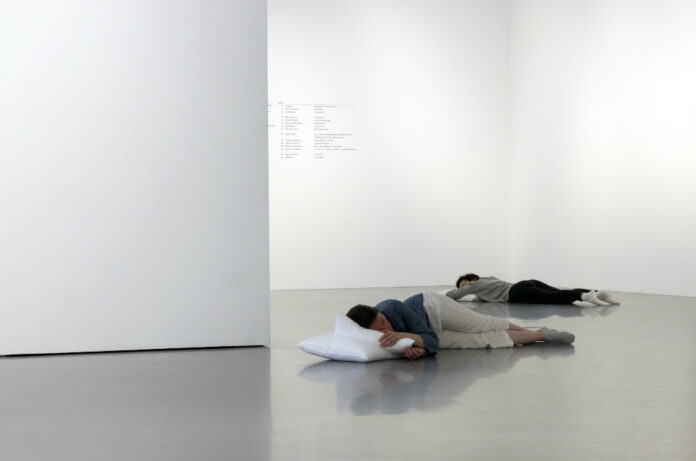
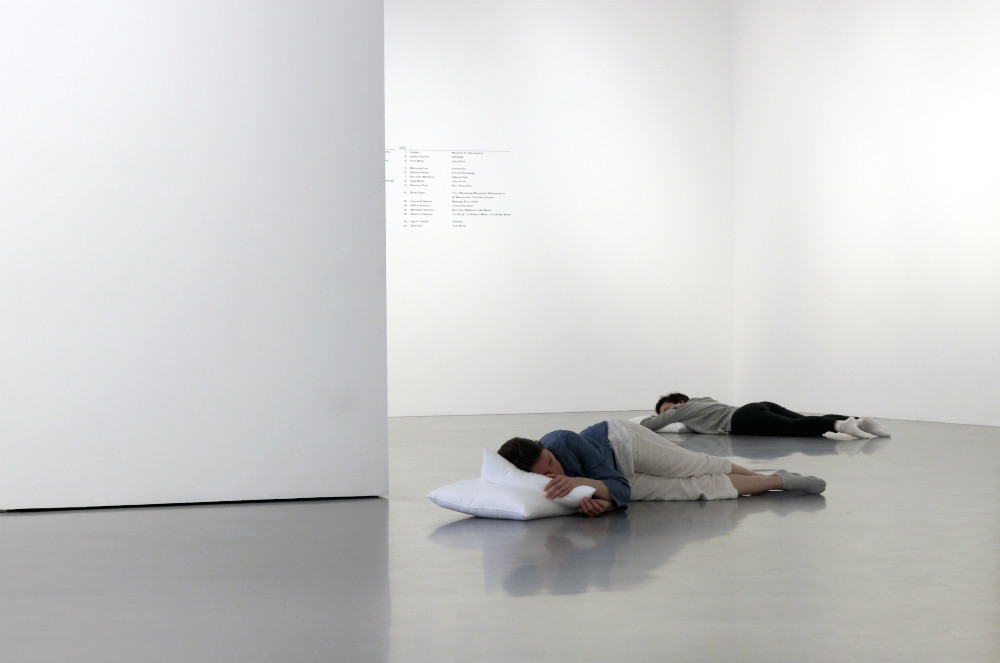
‘Sleep’ performance at Nahmad Project art space in London. Photo: Maria Katsika / Courtesy.

BANGKOK — Walking through the Bangkok Art and Cultural Centre this Friday, don’t be shocked to see people sleeping there and don’t be shy to join them.

What may look like victims of some future economic collapse are actually participating in making a high-concept statement on our changing urban  life rhythms.

“Conceptually this performance is a comment on the phenomenon of napping in public spaces in big cities,” London-based artist Anna Fafaliou said by email.

She said it’s commentary on changing lifestyles, especially in big capitals where people sleep less to work more, and the increase in public napping on the train or in the coffee shop as their bodies tell them “get some rest now.”

To explore what happens to the body and how people’s energy could be shared during sleep, the artist came up with the art project “Sleep.” Since launching earlier this year in London, the exhibition has a snooze-date in Bangkok on Friday.

Fafaliou, who’s doing a residency at HOF Art Bangkok this month, plans to take the show on the road elsewhere to observe different responses from different cultures.

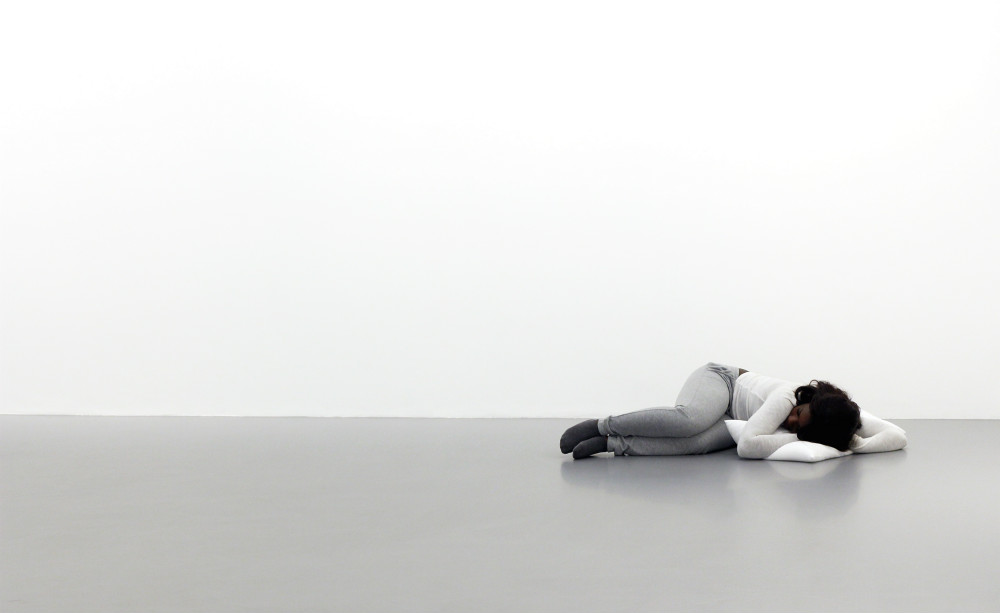
She will nap solo, while the audience can participate by having their own nap time, or just observe the choreography of sleep from the sidelines.

“I’m part of the performance, so I can’t really stare or observe the audience. But I’m lying on the floor with them, and their energy in this shared moment of tranquility is really incredible. You can feel the tension, the hesitation and the complete looseness. It’s been a great experience so far,” Fafaliou wrote.

Beginning her art career in 2015, Fafaliou has produced 11 performances and installation pieces that deal with human existence and behavior in relation to environment, with consumerism and capitalism as the central focus.

Feel free to join the performance from 12pm to 6pm on Sept. 16, at the L floor next to the library at Bangkok Art and Cultural Centre which can be reached via skywalk of BTS National Stadium Station.

Pillows will be provided.


Advertisement

Hot News

LATEST NEWS

Bangkok
scattered clouds
30 ° C
32.2 °
30 °
80 %
2kmh
48 %
Fri
31 °
Sat
36 °
Sun
36 °
Mon
36 °
Tue
34 °