
































27.7 C
Bangkok
Friday, June 26, 2026
Home Blog Page 2661

Seeking Wider Digital Audience, Verizon Buys Yahoo For $4.8B

Logos are seen on a laptop, Monday, July 25, 2016, in North Andover, Mass. Verizon is buying Yahoo for $4.83 billion, marking the end of an era for a company that once defined the internet. Photo: Elise Amendola

SAN FRANCISCO — Seeking a wider digital audience, Verizon is buying Yahoo for USD$4.83 billion (about 170 billion baht) in a deal that marks the end of an era for a company that defined much of the early internet but struggled to stay relevant in an online world dominated by Google and Facebook.

It’s the second time in as many years that Verizon has snapped up the remnants of a fallen internet star. The nation’s largest wireless carrier paid USD$4.4 billion (about 150 billion baht) for AOL last year. The two brands will be rolled into the same operation.

“We have enormous respect for what Yahoo has accomplished: This transaction is about unleashing Yahoo’s full potential,” AOL CEO Tim Armstrong said in a statement.

Despite Yahoo’s travails, its operations are a prize for Verizon, which wants to capitalize on the growing number of people living their digital lives on smartphones. The company already profits from the data plans that connect more than 100 million people and their devices to the internet. Now it’s making plans to control more of the advertising on those devices.

Most analysts expect the deal to end the four-year reign of Yahoo’s Mayer, who flopped in her much-watched attempt to turn around the company that was once a titan valued at USD$130 billion (about 4.5 trillion baht).

However, Mayer told employees Monday in an email that she intends to stay “to see Yahoo into its next chapter” without specifying for how long. In a later interview with The Associated Press, she said it’s too early to know whether there will still be a desirable role for her after Yahoo and AOL are combined.

“It would be premature and presumptive of me to discuss what Verizon may or may not want to do. I will be open-minded,” said Mayer, who could receive a severance package valued at $55 million (1.9 billion baht) If she leaves following the sale.

In its announcement, Verizon did not discuss Mayer’s future or its long-term plans for Yahoo.

Shareholders fed up with a steep downturn in the company’s revenue over the past eight years pressured Yahoo Inc. to part with its email service and still-popular websites devoted to news, finance and sports, in addition to its advertising tools.

The slump deepened even as advertisers poured torrents of cash into what is now a $160 billion (around 5.6 trillion baht) market for digital advertising, according to research firm eMarketer.

But most of that money has flowed to Google and Facebook, two companies that eclipsed Yahoo during its long slide from a sensation to a dysfunctional also-ran.

The sale could result in thousands of layoffs as Verizon eliminates overlapping jobs and services in Yahoo and AOL. Mayer has already jettisoned 1,900 Yahoo workers since last September.

The merging of Yahoo’s online operations with AOL’s sets up a potential reunion between Mayer and Armstrong, who were both executives at Google for years. Armstrong tried unsuccessfully to persuade Mayer to combine the two companies when they both still independent.

“It makes a little less sense now than it did two or three years ago” when Yahoo and AOL were stronger,” said Gartner analyst Andrew Frank. “But better late than never.”

When the sale is complete early next year, Yahoo will become a holding company for its two stakes in China’s e-commerce leader, Alibaba Group, and Yahoo Japan. Those investments, made more than a decade ago, are worth more than $40 billion (around 1.4 trillion baht) before taxes, making them by far the most valuable pieces of Yahoo. The holding company will drop the Yahoo name and adopt a new identify after Verizon takes control of the operating business.

The name change is a strong indication that Verizon intends to retain the Yahoo brand on many services, an idea that Mayer told the AP came up in the preliminary discussions leading up to the deal.

“The Yahoo brand still holds a lot of consumer-affinity” and could help Verizon overcome the lukewarm feelings that many subscribers have toward their wireless service providers, said Forrester Research analyst Shar VanBoskirk.

Until the sale is done, Yahoo’s users should not see any major changes in the company’s mobile apps or websites.

Verizon, based in Basking Ridge, New Jersey, is buying Yahoo’s online operations and its real estate. The Sunnyvale, California, company also has a patent portfolio that it intends to sell, and about $7.7 billion (around 26 billion baht) in cash.

Mayer, 41, is the latest in a succession of Yahoo CEOs who could not engineer a comeback. Yahoo’s annual revenue, after subtracting ad commissions, has declined by about 20 percent from $4.4 billion (around 15 billion baht) before Mayer’s arrival to a projected $3.5 billion (around 12 billion baht) this year.

But Mayer told the AP she does not consider her tenure to be a failure. She pointed to a 50 percent increase in Yahoo’s total worldwide audience to more than 1 billion users, including 600 million people who now visit on mobile device, three times more than before her arrival.

“If you look at the state of products today, they are orders of magnitude better, more viable, better designed,” Mayer said. “I am incredibly proud of all that. The next chapter is around how we can increase our relevance on mobile.”

Yahoo’s stock fell $1.06 (37 baht) Monday to close at $38.32 (around 1330 baht). The shares have more than doubled since Mayer became Yahoo’s CEO, largely because of the rising value of the Alibaba stake.,

When millions of people began to flock to the internet with the advent of graphical web browsers in the 1990s, Yahoo was king. Co-founders Jerry Yang and David Filo began building a web directory as Stanford University graduate students in 1994, and Yahoo quickly established itself as the online hub for tens of millions of people. It proved that internet companies could indeed be profitable as other dot-com startups burned through millions of dollars.

But Yahoo strayed from internet search in an attempt to build a multimedia business, clearing Google’s path to supremacy. To make matters worse, Yahoo failed to recognize the importance of social networking and was slow to make the leap into mobile devices such as smartphones and tablets. Yahoo attempted to buy Google and Facebook in their formative years, but it was rebuffed and then later dwarfed by them.

Story by: Michael Liedtke, Tali Arbel
Advertisement

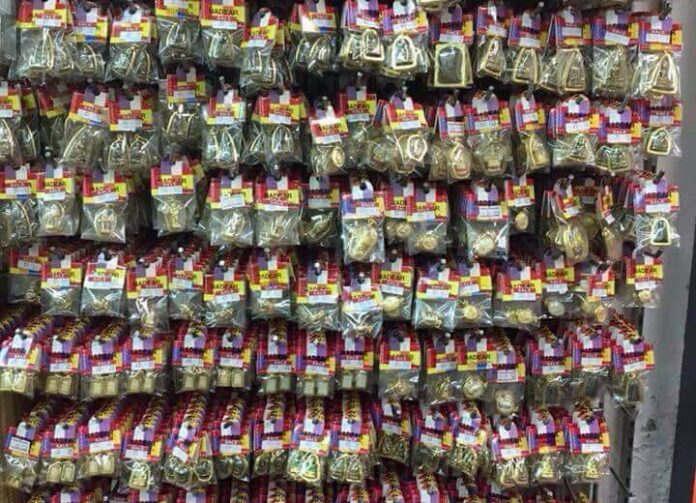
Contrary to What Internet Says, Shop Denies These Thai Amulets Made in China

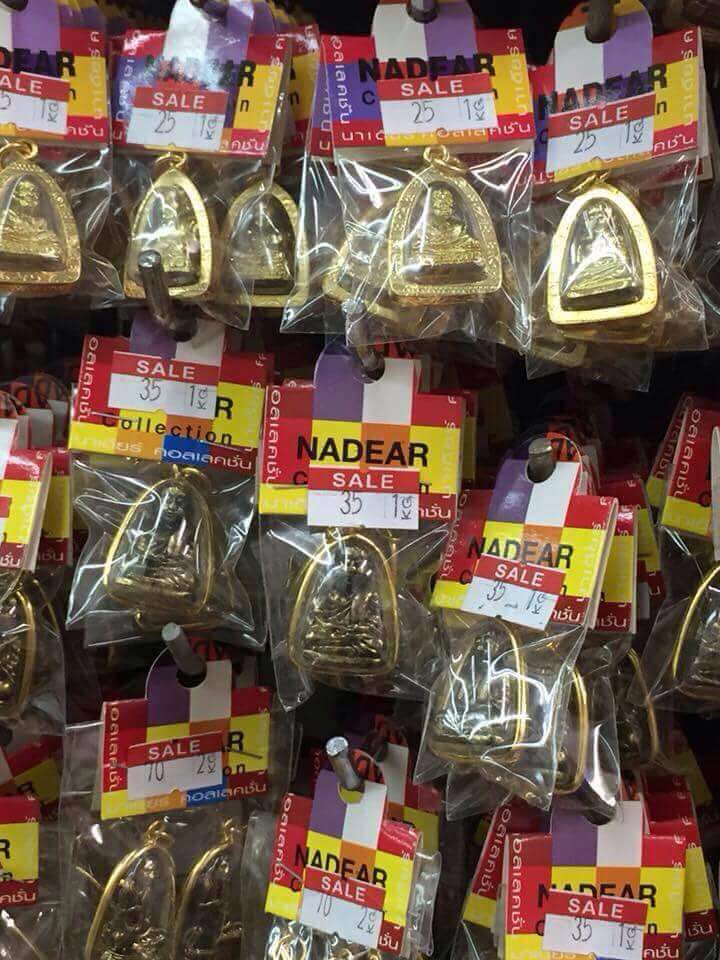
Amulets sold at the Boom Collection shop in Bangkok were identified Sunday by internet users as cheap Chinese knockoffs. Photo: Socialhithit / Facebook

BANGKOK — When someone posted photos supposedly of a shop in Chinatown selling counterfeit Buddhist amulets made en masse in a Chinese factory, all hell broke loose, with netizens screaming: Is nothing sacred or exclusively Thai anymore?

“Has the national religion entered such a dark age?” Facebook user Ongart Leepaipal wrote in reply Sunday. “Responsible officials, please help do something about this, before it gets any worse.”

Another Facebook user, called an Chayanisa, was slightly more circumspect.

“Right now Thai things are popular among Chinese people, such as dramas, movies, music and Thai products,” Chayanisa said. “So it’s not strange that people in China make Thai goods and sell them. But the importer! They shouldn’t import it. They should know what’s appropriate and what’s not.”

Media outlets soon picked up the story and highlighted it as yet another example of China’s economic dominance over Thailand. The only problem with that narrative was, according to the the shopkeeper, not a single Chinese person was involved.

“We are a Thai company,” Rattanapracha Lamlaila-or said by telephone Monday. “All of our workers are Thai. Not one of us is from China.”

Amulets sold at the Boom Collection shop in Bangkok were identified Sunday by internet users as cheap Chinese knockoffs. Photo: Socialhithit / Facebook

According to Rattanapracha, the shop bought the amulets from Tha Prachan, a famous market for talismans and other magical objects, then packaged and sold them individually. He’s been doing this for 10 years, Rattanapracha said, and nearly all customers are Thai.

So, the shopkeeper said, he’s surprised when posts started circulating on social media accusing his shop, Boom Collection, located in Chinatown’s Sampeng market, of buying “fake” amulets from China and reselling them to Thais.

“New buyers beware: Fake amulets from China are flooding Sampeng market, starting at 20 baht,” wrote Facebook user Chatchana Ountiw, who appeared to be the first person to share the story in a post since deleted.

Other Facebook pages shared the posts, drawing much criticism from internet users, and media sites like Thairath, Manager and Post Today publicized the story.

Thairath even went so far as to ask an amulet expert what he thought about it all. Of course, he was angry.

“It’s not right. It doesn’t benefit the religion in any way, because amulets are sacred objects,” Payap Khamphan, president of Thai Buddha Image Admiration Association, told Thairath.

Rattanapracha, the shop manager, said he’s concerned that his shop is being wrongly portrayed on the internet and accused of blasphemy, but he believes he did nothing wrong.

“They acted like when a foreigner used a Buddha figure as decoration, in the news that we see time to time,” said Rattanapracha. “But in my opinion, people have been doing this for a long time. It’s a normal thing to do.”

Related stories:

Say Goodbye to Bangkok’s Famous Tha Prachan Amulet Market

Amulets 101: An Interview with Amulet Master Taan Tha Prachan

Photo Essay: A Journey Through Bangkok’s Amulet Markets

Advertisement

Paranoia Fueling Increasingly Surreal Crackdown, Critics Say

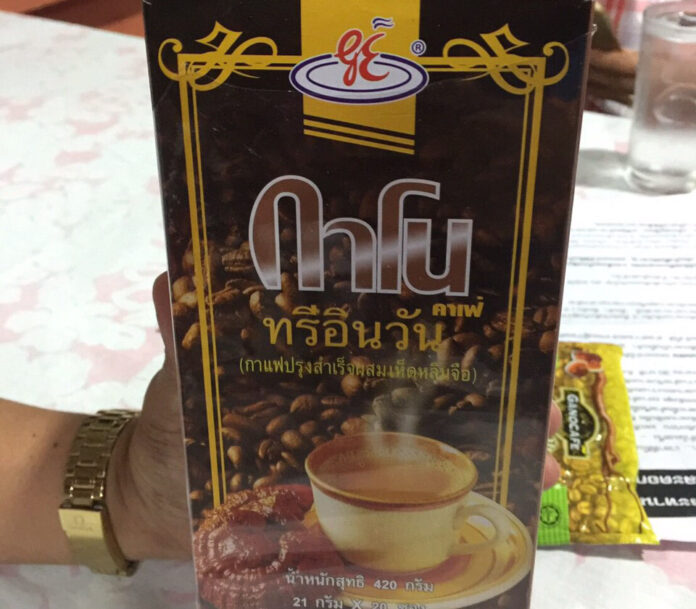
'Gano' brand coffee was branded a threat to the constitution referendum for the remote possibility someone might misinterpret its name to suggest 'Vote No.'

BANGKOK — Critics of military rule said overreactions such as arresting children for tearing a voter list and ordering a coffee brand to stop advertising because of its name, exemplifies new levels of paranoia and irrationality on behalf of the military regime.

Asked what they thought of recent eyebrow-raising incidents in which two second-graders were charged with violating the Referendum Act and then released, or an order from Si Saket Gov. Thawat Surabai that a coffee maker “stop all PR activity for their coffee brand” due to its potentially “risky” name, critics such as political science instructor Uchen Cheangsen said it reflects the irrationality born of being under military dictatorship.

One of the schoolgirls signs a report Monday at the Khanu Woralaksaburi Police Station in Kampheng Phet province.
One of the schoolgirls signs a report July 18 at the Khanu Woralaksaburi Police Station in Kampheng Phet province.

“They will continue to do bizarre things,” said Uchen, who teaches at Nakorn Sri Thammarat’s Wailalak University. “Other organizations such as the Election Commission also obey the dictatorship, which is unreasonable. In the end, the military dictatorship is really afraid. They don’t think it will be easy for them to win anymore.”

International Relations instructor, Puangthong Pawakapan said actions like shutting down Ga No coffee because its name (a reduction of “Americano”) might sound like “tick no” in Thai, are evidence that paranoia has become commonplace with officials nationwide.

“This phenomena can be explained away by the junta as the actions of various officials, but it shows the officials … just follow the orders of those in power without taking into consideration others’ rights,” said Puangthong, who teaches at Bangkok’s Chulalongkorn University. “This is self-preservation, and it psychologically serves those in power.”

Puangthong also predicted “such irrational phenomena will continue until the referendum” is held Aug. 7.

For their part, those organizing the election say they are upholding the law as set forth under the Referendum Act, which criminalized a slew of typically allowed behaviors such as open campaigning before the vote.

To pro-democracy activist and Red Sunday Group leader Sombat Boon-ngamanong, the strict adherence to the referendum rules reflects how fraught the situation has become.

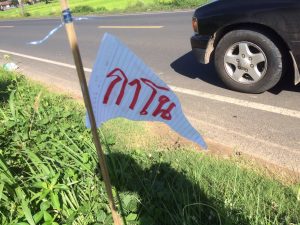
Small flags promoting 'Ga No' coffee found Sunday along a Si Saket province road.
Small flags promoting ‘Ga No’ coffee found Sunday along a Si Saket province road.

“Perhaps the National Council for Peace and Order didn’t want to go that far, but the officials can sense the severity of the situation,” said Sombat, referring to the formal name of the junta which staged the May 2014 coup. “The arrests of the schoolchildren led to news reflecting the senselessness of the situation and the lack of consideration to the point where officials can no longer differentiate things,” he said.

Others such as Payao Akhad, the activist mother of a volunteer nurse slain during the 2010 military crackdown in Bangkok, said the whole thing invites laughter from the world for Thailand and its junta.

“Would 8-year-old kids know what they did? Do they know about the constitution or the infighting between adults?” she said. “This makes me feel as if it’s harder for us to live. It’s as we have to even be careful as to how to breathe. Other countries may also ask, is this an advanced society they’re looking at?”

Clarification: This article has been clarified to indicate that although the two 8-year-old schoolgirls were arrested and charged, they were then freed. Under the law, they are unlikely to face further legal consequences as minors.

Advertisement

Authorities: 2 Killed, 17 Shot at Florida Nightclub

In this frame from video, people gather near the scene of a fatal shooting at Club Blu nightclub in Fort Myers, Fla., Monday, July 25, 2016. Photo: Associated Press

FORT MYERS, Florida — A shooting at a Florida nightclub early Monday morning killed two people and wounded as many as 17, police said. The attack apparently occurred at a teen party, billed as a “Swimsuit Glow Party,” at Club Blu in Fort Myers, according to local media.

Police detained three people and said the area around the club had been deemed safe, police Capt. Jim Mulligan said in a statement. Four people remained hospitalized with serious injuries, local station WINK-TV reported. One of the victims was 12 years old, Cherly Garn, a spokeswoman for Lee Memorial Health System, told WINK.

The shooting came more than a month after a nightclub shooting in Orlando that was the deadliest shooting in modern U.S. history. The shooting at the Pulse nightclub on June 12 left 49 victims dead and 53 others wounded.

The violence at Club Blu erupted about 12:30 a.m. Monday, Mulligan said. As many as 17 people were shot, and there were two active crime scenes, police said. Several hours later a street in the area remained closed as police investigated.

The area was later deemed safe, but Mulligan said a street was still closed as authorities investigated.

In a statement, authorities said the Fort Myers police and the Lee County Sheriff’s Office were “actively canvassing the area looking for other persons who may be involved in this incident.”

The names of the victims were not immediately available.


Advertisement

No, 2,000 Teak Trees Won’t Be Cut For New Parliament – More Like 5,000

An architectural rendering of the new 12 billion baht parliament building which its poles will be made of teak trees. Image: Arsomsilp Institute of the Arts

BANGKOK — Despite an outcry from the public over the destruction of a teak forest in the north of Thailand, the head of the junta-appointed legislature said Monday it will go ahead despite a claim the junta leader had ordered the trees protected.

Though the junta last week denied ordering 2,000 Chiang Mai teak trees cut, saying they would instead be conferred protected status, National Legislative Assembly Chairman Phonphet Wichitchonlachai said the 12 billion baht complex will need 5,018 teak trees for their wood because it represents the “DNA” of Thailand.

The announcement came after the assembly conferred with the temple-like parliament building’s design team and developer. Phonphet said they would not cut any wild trees but only use those grown on land managed as a plantation by the Forest Industry Organization – like that in Chiang Mai the public rallied to preserve.

Once plentiful in Southeast Asia, teak stands have been devastated, and wild teak logging is illegal in many places, Thailand included.

The new riverside parliament building, called Sappaya Sapasathan, was designed by the Arsom Silp Institute of the Art to look like a temple in order to remind politicians about “Thainess” and morality.

It is being built along the Chao Phraya River near Bangkok’s Kiak Kai intersection by Sino-Thai Engineering & Construction PCL.

The completion of the building is now expected in 2019 due to a land dispute.


Related stories:

Junta Denies Ordering 2,000 Teak Trees for New Parliament

Advertisement

Blood, Sweat, Tears and Beers: Our Suffering on Display Friday

Blood Sweat and Beers Exhibition

BANGKOK — Be it stress or fatigue on Blue Monday or any of the usual working days, seven artists offer relief through their blood, sweat and beers.

“Either you’re broke or stressed. Let’s drink,” isn’t just a catchy advertising tagline but a common refrain in heavy-drinking Thailand, where alcohol is a default to both celebration and suffering, or just making the day pass faster.

Seven visual artists will offer their takes on booze and other short-lived forms of happiness along with visualizations of their alternatives in about 20 works to be displayed as part of “Blood, Sweat & Beers.”

“Some people might not wake up to the work they like and drinking is their only way out,” said a drawing artist Pongpetch Keaw-On AKA Petch Pmp. “Through art, we tell the similar story and try to offer a solution. But the alternatives suggested might not be applicable to everyone.”

That’s possibly understatement, as some of darker alternatives seem to suggest greater miseries or even more permanent forms of release such as a noose.

Pongpetch, 32, chose to present the theme via eight melancholic black-and-white pieces and a large patchwork quilt.

“If you’re burdened with work and life stress, taking a look at the works may help you get through it or see that there’s many people who suffer more than you,” Pongpetch said.

Blood Sweat & Beers opens at 8pm on Friday and runs through Aug. 31, at Kalwit Studio & Gallery on Wireless Road. It’s a moto ride or 15-minute walk from BTS Ploen Chit.


Advertisement

Junta’s Charter Drafters Backtrack on Debate Challenge

A blind man on Saturday reads a Braille version of the constitution draft in Korat.

BANGKOK — The drafters of Thailand’s proposed constitution did an about-face on Sunday, reversing a pledge made by its spokesmen to engage in a public debate with their critics.

Saying such a debate could be seen as a “conflict of interest,” Chatchai na Chiang Mai of the Constitution Drafting Committee said officials would therefore have to decline the debate proposed by one another spokesman to members of the New Democracy Movement, a group opposed to the charter.

“There won’t be a televised debate for us to argue with anyone, because the law doesn’t assign us that duty,” spokesman Chatchai na Chiang Mai said Sunday. “If we do so, we may be at risk of being seen as engaging in a conflict of interest.”

Authors of Constitution Won’t Debate Critics

He likened such a debate to chefs arguing with customers over their meals.

“It’s like we cooked the food for diners, and the diners say it’s not delicious, but we argue with them that it’s really delicious,” he said. “That is not possible.”

Chatchai’s announcement comes as state media agencies are busily promoting the charter as an attractive option and all but directly urging the public to vote yes on Aug. 7.

It followed a taunt earlier this month by charter drafter Amorn Chantarasomboon that the New Democracy Movement was distorting the charter’s contents and misleading the public to vote against it.

When the activists responded July 17 by challenging Amorn to a debate, the official accepted their challenge.

“I welcome all invitations for all forums, but I have to wait for the Election Commission to deliberate first how to proceed,” Amorn said “And I think it should be an academic forum rather than sitting down to pick a fight and starting conflict with each other.”

He also lashed out at the movement’s members, most of whom are university students.

“I’d to ask them: When they study, are they this diligent?” he said. “If they used the time to focus on their studies and be this diligent, they would have As for all of their classes.”

Related stories:

UN Rights Chief Urges Thailand to Allow Debate of Draft Charter

Charter Drafters Say They Accept Some Contentious Junta Points

Redshirts Take Grievance Over Voting Watchdog Campaign to UN

Officials Powerless to Halt Assaults on Referendum by Schoolboys, Monkeys, Coffee Brand

Advertisement

Ekkamai’s Moose Says Buh-Bye with Final Party

Photo: Moose Bangkok / Facebook

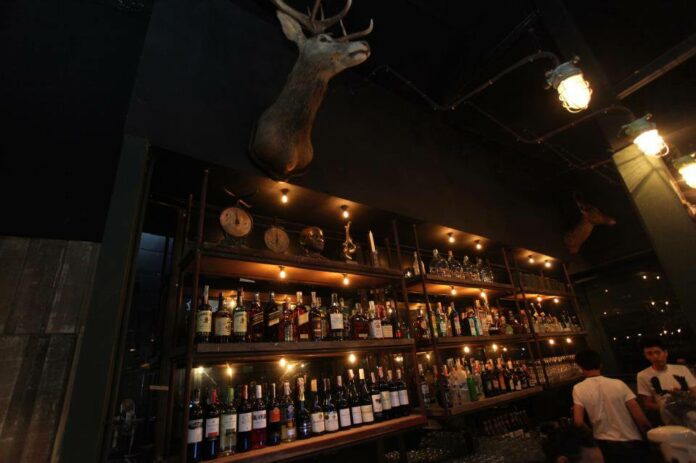
BANGKOK — Bad news for the nighthounds of Ekkamai who will have to say goodbye to a vibrant venue for fine cocktails and local gigs: Moose Bangkok is closing for good.

A hangout known for local music and the stuffed animal head – not moose but deer – hanging over the bar, the restaurant bar has announced it will be close its doors.

Owner Kongpol Chuanprateep, who opened the bar four years ago with folks from former beloved venues Cosmic Cafe and Sonic Bangkok, said he was getting out of the nightlife business “because I’m worried about my health.”

Join the home of signatures cocktails such as the Ekamai Jungle and Moose Baron for a farewell party with indie darlings Yellow Fang, progressive punk trio Plot and dream-poppy Fwends.

The bar’s electronic vibes will be set in motion by Gorn Clw and solo sound artist The Black Codes.

After midnight, DJ Kova O’Sarin will go scratchy and spinny on the decks.

Admission is 200 baht and includes one drink. The party starts at 7:30pm on Sunday.

Moose Bangkok is located on Soi Ekkamai 20 (Soi Chaem Chan).

13606489_1069977006382694_2883421731047054181_n

Advertisement

Iraq Bans Same Fake Bomb Detectors Used in Thailand

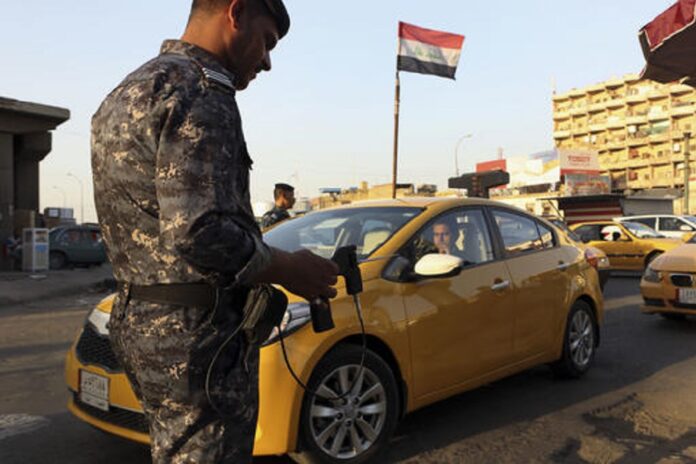
In this Thursday, July 14, 2016 picture, an Iraqi policeman uses a hand-held device that is supposed to detect bombs at a checkpoint in Basra, 340 miles (550 kilometers) southeast of Baghdad, Iraq. Photo: Nabil al-Jurani

BAGHDAD — For nearly a decade, anyone driving through one of Baghdad’s many checkpoints was subjected to a search by a soldier pointing a security wand at their vehicle and watching the device intently to see if its antenna moved. If it pointed at the car, it had supposedly detected a possible bomb.

The wands were completely bogus. It had been proven years ago, even before 2013 when two British men were convicted in separate trials on fraud charges for selling the detectors. The devices, sold under various names for thousands of dollars each, apparently were based on a product that sold for about USD$20 (700 baht) and claimed to find golf balls.

Read: Auditor-General Revives Probe on Bogus Bomb Detectors

Yet the Iraqi government continued to use the devices, spending nearly USD$60 million (about 2.1 billion baht) on them despite warnings by U.S. military commanders and the wands’ proven failure to stop near-daily bombings in Baghdad.

Thailand bought the same devices for 900,000 baht to 1.2 million baht each. A total of 772 devices were purchased. When the deals were done, Thailand had spent more than 1 billion baht. A test staged by the government in 2011 found the devices as inaccurate, and security forces were ordered to stop using the equipment.

In Iraq, it took a massive suicide bombing that killed almost 300 people in Baghdad on July 3 — the deadliest single attack in the capital in 13 years of war — for Prime Minister Haider al-Abadi to finally ban their use.

The reason it took so long is likely the widespread corruption in the government. Iraqis mocked the device from the start, joking that too much aftershave could set off the antenna.

Now there are accusations that plans to start using newly imported explosives-detecting scanners were intentionally held up as part of the political wrangling over which faction — the military or the police — will control security in Baghdad.

Since the wands were banned, soldiers at Baghdad checkpoints largely wave motorists through, occasionally asking for vehicle registrations and driver’s licenses and taking a quick look inside. Plainclothes intelligence agents scrutinize drivers and passengers. Police dogs have been used at some checkpoints, but that has proven to be time-consuming and contributing to traffic congestion.

In some places, the wands are still being used — at some checkpoints in Baghdad and in the southern port city of Basra, Iraq’s third-largest city — nearly two weeks after the Baghdad bombing. They also were used across the holy city of Najaf south of Baghdad for at least a week after al-Abadi’s order before they were finally recalled.

“The withdrawal of the device is continuing, but it’s still in use here and there, for now,” Brig. Gen. Saad Maan, the Interior Ministry’s chief spokesman, told The Associated Press. He said the new vehicles equipped with scanners have been deployed at checkpoints on major roads leading to the capital.

“All this will have a positive impact on Baghdad’s security,” he said.

Officials say the explosives-laden minibus used in the July 3 attack in Baghdad’s central Karradah district started its journey in Diyala province, traveling 50 kilometers (31 miles) to the capital. The vehicle, a type used as communal taxis in Iraq, would have encountered at least half a dozen checkpoints, most of which likely used the wand. Investigators say the vehicle carried a 250-kilogram (550-pound) bomb.

Four days after the Karradah bombing, three suicide bombers struck a Shiite shrine in Balad, north of Baghdad, killing 37 people. A series of small bombings also rocked the capital, killing about two dozen people.

When Iraqi security forces first began using the ADE-651 wands, U.S. and British military commanders in Iraq dismissed the devices as useless and counseled the government to stop using them.

Faced with mounting criticism, former Prime Minister Nouri al-Maliki ordered an investigation into the effectiveness of the devices in 2010. The outcome was inconclusive, and they continued to be used.

The head of the Interior Ministry’s bomb squad department, Jihad al-Jabri, was convicted in 2012 and sentenced to four years in prison for accepting a bribe from the British manufacturers. But the case against him did not address whether the wands were effective. Many Iraqis believe he was a scapegoat to protect more senior Iraqi officials from prosecution.

Politics also may have played a role.

After the July 3 blast, al-Abadi fired the military officer in charge of Baghdad’s security and accepted the resignation of Interior Minister Mohammed Salem al-Ghabban, who was in charge of police.

Al-Abadi also ordered an investigation into why nearly 70 vehicles equipped with explosives-detecting scanners that were imported last year were left in Interior Ministry garages and had not been deployed.

Al-Ghabban had been demanding for months that his ministry be given complete control over security in Baghdad. Al-Abadi had resisted, however, keeping the military in charge. Since al-Ghabban is close to one of the most powerful Shiite militias, his opponents feared his demand aimed to give militias control over Baghdad.

Speaking to the AP, the chairman of parliament’s security and defense committee accused al-Ghabban of intentionally failing to deploy the scanner vehicles as a political ploy.

“It’s due to the minister’s demands that security control of Baghdad be given to the ministry,” said Hakim al-Zamli. “If it were given to him, he would use them (the vehicles). If not, he won’t use them.”

Al-Ghabban, in turn, has said he was stymied in attempts to protect Baghdad. After his dismissal, he said al-Abadi repeatedly ignored his proposals for bolstering security. He complained that too many security and intelligence agencies were involved in protecting Baghdad.

“I wanted the entire security file to be left in the hands of the Interior Ministry so it can be fully accountable,” he said. “My job was emptied of genuine tasks, tools and powers, and became ceremonial.”

Qais Adil Faraj, the father of one of the Karradah victims, blames “corruption” and “treason” among the security forces for the bombing. He said he has no faith in the new security measures in the capital.

“More and more bombings will follow the one in Karradah,” he said. “This government will never maintain security nationwide or even just in Baghdad.”

Story by: Hamza Hendawi / Khaosod English

Advertisement

Junta Takes Another Go at Clearing Vans From Victory Monument

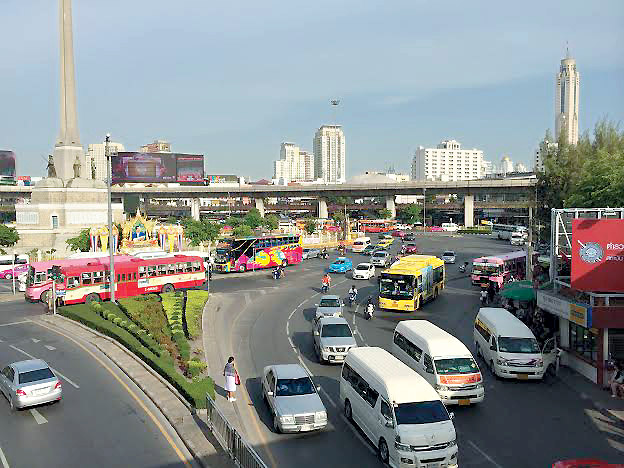
Privately owned transportation vans at Victory Monument, which for decades has served as a transportation hub for the interprovincial vans in an undated photo.

BANGKOK — A renewed bid to untangle the Victory Monument by removing the interprovincial vans will go to trial in September, an officer in charge of the junta effort said Monday.

After decades providing transport throughout central Thailand, the more than 4,000 vans departing daily from Victory Monument have been given until Oct. 25 to clear out. A trial will be held for the last week in September during which free shuttles will take passengers from Victory Monument to the three official bus terminals located.

The Ministry of Transport said removing the vans will help solve traffic problems in the area, which slows to a crawl most days, and also be the first step toward better regulation of fares and safety on the ubiquitous white and silver vans.

The trial will run Sept. 21 to Sept. 28. Shuttles will be available to take travelers to the Northern, Eastern and Southern bus terminals located in the Mo Chit, Ekkamai and Borommaratchachonnani Road areas, where the privately operated vans will be told to relocate.

The junta has tried and failed before to end the roundabout’s use as a transit hub. Shortly after seizing power in 2014, the military government tried to push the interprovincial vans out to a space under the Airport Rail Link Makkasan station.

Though the vans came back and prices didn’t fall, the effort did succeed in regulating ticket booths to display uniform information and get drivers to wear uniforms.

Advertisement

Hot News

LATEST NEWS

Bangkok
broken clouds
27.7 ° C
27.7 °
27.7 °
81 %
2.7kmh
67 %
Fri
36 °
Sat
36 °
Sun
37 °
Mon
36 °
Tue
35 °