




























32.8 C
Bangkok
Saturday, June 27, 2026
Home Blog Page 1822

Review: ‘A Star Is Born’ Is Dizzyingly Wonderful

This image released by Warner Bros. Pictures shows Lady Gaga, left, and Bradley Cooper in a scene from "A Star is Born." Photo: Clay Enos / Warner Bros. Pictures via AP

It’s hard not to go into ”A Star Is Born ” without a lot of prejudgments. Even if you haven’t seen the other three versions, the mere fact that they exist, and with such formidable talent, is enough to make anyone scoff at the fact that Hollywood keeps dusting off this well-worn story about fame and love and addiction.

And then you throw in the fact that it was made by a first-time director, who also happens to be a movie star, no less, and the whole thing seems even more dubious. Leave that all at the door, though, because “A Star Is Born,” is simply terrific — a big-scale cinematic delight that will have the masses singing, swooning and sobbing along with it.

It’s quite a feat from Bradley Cooper, who directed, co-wrote, produced and stars in the film. Cooper plays Jackson Maine, a massively popular singer-songwriter whose path intersects with an unknown and overlooked talent named Ally (a magnificent Lady Gaga) and the two become entangled as his star fades and hers rises.

When the film starts, Jackson is at the height of his fame, the type of fame where grocery store cashiers take photos of you without asking, where you can send a private jet to usher a girl you just met to your concert and where you can be an alcoholic teetering on the edge because you’re talented and charismatic and you make too many people too much money and, besides, you’re basically functioning aside from the tinnitus.

Cooper puts the viewer right with Jackson as he takes the stage at a big festival. His routine, you imagine, doesn’t alter that much: Pop the pills. Drink the drink. Take the hat off. Play. Sing. Exit stage left to drink some more. Only this night, he ends up somewhere a little off his regular path, at a drag bar where Ally, in full Edith Piaf costume, wakes him out of his ambling stupor with “La Vie En Rose.” And with a star-making close-up of Ally, Jackson, and the audience, falls in love.

Cooper and Gaga have incredible chemistry, the kind that makes you believe that two strangers would know in a night that they’re made for each other. Before you know it, he’s asking her to come up on stage with him to sing her song, “Shallow,” which someone films, puts on YouTube and creates a viral sensation.

The first hour of “A Star Is Born” is downright electrifying — funny, exciting, sexy and wholly lived-in. Characters you just met feel like old friends, from the drag queens at the club to Ally’s father (Andrew Dice Clay) and his fellow drivers. Sam Elliott, as Jackson’s brother, might only have 15 minutes of screen time, but it’s enough to break your heart (and probably earn him some awards love too). “A Star Is Born” is that rare film that makes you actually feel part of a world, and not just like an observer on the other side of a screen.

But like all good things, the engine of that first hour only gets the film so far, and the second half has its shortcomings. Cooper rushes through an enormous amount of story to wrap things up in a reasonable runtime. While he does accomplish this, it comes at the expense of Ally as a character who goes from earthy singer-songwriter to a Katy Perry-like pop diva in an instant without much inquiry.

This film wears its thesis on its sleeve and is trying to make a point about being an artist with “something to say” and making use of the time when people are listening. Jackson values authenticity above all else, but we never get to learn what Ally wants out of her career — all we know is that Jackson, and presumably Cooper, disapprove of the artifice.

But the actors and the filmmaking hold up “A Star Is Born” where the story cannot. Gaga is a gifted actress, natural, vulnerable and strong as she goes toe-to-toe with Cooper in what might be his best performance — the man truly disappears into Jackson Maine. And as a director, well, he is the real deal and, with this sort of introduction, definitely far from the shallow now.

“A Star Is Born,” a Warner Bros. release, is rated R by the Motion Picture Association of America for “language throughout, some sexuality/nudity and substance abuse.” Running time: 135 minutes. Three and a half stars out of four.

Story: Lindsey Bahr
Advertisement

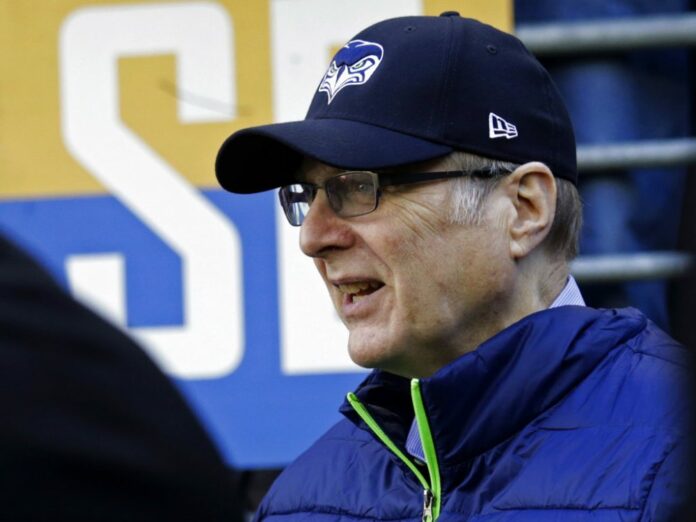
Paul Allen, Microsoft Co-Founder, Dies at 65

In this Dec. 31, 2017 photo, Seattle Seahawks owner Paul Allen stands near the field before an NFL football game against the Arizona Cardinals in Seattle. Photo: John Froschauer / Associated Press

SEATTLE — Paul G. Allen, who co-founded Microsoft with his childhood friend Bill Gates before becoming a billionaire philanthropist who invested in conservation, space travel, arts and culture and professional sports, died Monday. He was 65.

He died in Seattle from complications of non-Hodgkin’s lymphoma, his company Vulcan Inc. announced.

Gates said he was heartbroken about the loss of one of his “oldest and dearest friends.”

“Personal computing would not have existed without him,” Gates said in a statement.

“But Paul wasn’t content with starting one company. He channeled his intellect and compassion into a second act focused on improving people’s lives and strengthening communities in Seattle and around the world. He was fond of saying, ‘If it has the potential to do good, then we should do it,'” Gates wrote.

Microsoft CEO Satya Nadella called Allen’s contributions to the company, community and industry “indispensable.”

“As co-founder of Microsoft, in his own quiet and persistent way, he created magical products, experiences and institutions, and in doing so, he changed the world,” Nadella wrote on Twitter.

Allen, an avid sports fan, owned the Portland Trail Blazers and Seattle Seahawks.

Over the course of several decades, Allen gave more than $2 billion to a wide range of interests, including ocean health, homelessness and advancing scientific research.

“Millions of people were touched by his generosity, his persistence in pursuit of a better world, and his drive to accomplish as much as he could with the time and resources at his disposal,” Vulcan CEO Bill Hilf said in a statement.

Allen was on the list of America’s wealthiest people who pledged to give away the bulk of their fortunes to charity. “Those fortunate to achieve great wealth should put it to work for the good of humanity,” he said.

Allen and Gates met while attending a private school in north Seattle. The two friends would later drop out of college to pursue the future they envisioned: A world with a computer in every home.

Gates so strongly believed it that he left Harvard University in his junior year to devote himself full-time to his and Allen’s startup, originally called Micro-Soft. Allen spent two years at Washington State University before dropping out as well.

They founded the company in Albuquerque, New Mexico, and their first product was a computer language for the Altair hobby-kit personal computer, giving hobbyists a basic way to program and operate the machine.

After Gates and Allen found some success selling their programming language, MS-Basic, the Seattle natives moved their business in 1979 to Bellevue, Washington, not far from its eventual home in Redmond.

Microsoft’s big break came in 1980, when IBM Corp. decided to move into personal computers and asked Microsoft to provide the operating system.

Gates and Allen didn’t invent the operating system. To meet IBM’s needs, they spent $50,000 to buy one known as QDOS from another programmer, Tim Paterson. Eventually the product refined by Microsoft — and renamed DOS, for Disk Operating System — became the core of IBM PCs and their clones, catapulting Microsoft into its dominant position in the PC industry.

The first versions of two classic Microsoft products, Microsoft Word and the Windows operating system, were released in 1983. By 1991, Microsoft’s operating systems were used by 93 percent of the world’s personal computers.

The Windows operating system is now used on most of the world’s desktop computers, and Word is the cornerstone of the company’s prevalent Office products.

Gates and Allen became billionaires when Microsoft was thrust onto the throne of technology.

With his sister Jody Allen in 1986, Paul Allen founded Vulcan, the investment firm that oversees his business and philanthropic efforts. He founded the Allen Institute for Brain Science and the aerospace firm Stratolaunch, which has built a colossal airplane designed to launch satellites into orbit. He has also backed research into nuclear-fusion power.

Allen also funded maverick aerospace designer Burt Rutan’s SpaceShipOne, which in 2004 became the first privately developed manned spacecraft to reach space.

The SpaceShipOne technology was licensed by Sir Richard Branson for Virgin Galactic, which is testing a successor design to carry tourists on brief hops into lower regions of space.

Branson tweeted Monday: “So sad to hear about the passing of Paul Allen. Among many other things he was a pioneer of commercial space travel. We shared a belief that by exploring space in new ways we can improve life on Earth.”

When Allen released his 2011 memoir, “Idea Man,” he allowed 60 Minutes inside his home on Lake Washington, across the water from Seattle, revealing collections that included the guitar Jimi Hendrix played at Woodstock to vintage war planes and a 300-foot yacht with its own submarine.

Allen served as Microsoft’s executive vice president of research and new product development until 1983, when he resigned after being diagnosed with Hodgkin’s lymphoma.

“To be 30 years old and have that kind of shock — to face your mortality — really makes you feel like you should do some of the things that you haven’t done yet,” Allen said in a 2000 book, “Inside Out: Microsoft in Our Own Words.”

Two weeks ago, Allen announced that the non-Hodgkin’s lymphoma that he was treated for in 2009 had returned and he planned to fight it aggressively.

“My brother was a remarkable individual on every level,” his sister Jody Allen said in a statement. “Paul’s family and friends were blessed to experience his wit, warmth, his generosity and deep concern,” she added.

Allen never married or had children.

His influence is firmly imprinted on the cultural landscape of Seattle and the Pacific Northwest, from the bright metallic Museum of Pop Culture designed by architect Frank Gehry to the computer science center at the University of Washington that bears his name.

In 1988 at 35, he bought the Portland Trail Blazers professional basketball team. He told The Associated Press that “for a true fan of the game, this is a dream come true.”

He also was a part owner of the Seattle Sounders FC, a major league soccer team, and bought the Seattle Seahawks. Allen could sometimes be seen at games or chatting in the locker room with players.

Advertisement

When Embassies Become Places of Terror, Not Sanctuaries

Protesters rally in 2014 in front of the Israeli embassy in Bangkok to voice their anger at Israeli air strikes in Gaza, despite the Thai military junta’s existing ban on public gatherings.

CAIRO — Embassies, consulates and diplomatic missions worldwide are often considered places of sanctuary, however, not all have been impervious to horrific incidents.

When Saudi journalist Jamal Khashoggi vanished after entering the Saudi Consulate in Istanbul last week it prompted Turkish officials and media to claim he may have been killed and even dismembered by a squad of assassins on the premises. The macabre mystery stirred memories of instances when diplomatic missions turned into places of terror.

Brutal killings, suicide bombings, militant raids and hostage crises – embassies and consulates have seen plenty of tragedy and bloodshed.

Here are just some of many examples:


Benghazi, Attack on US Compounds in Libya

Libyan extremists from the militant Ansar al-Shariah group attacked two U.S. compounds – a diplomatic post and a CIA annex nearby – in the city of Benghazi on Sept. 11, 2012, setting off a night of rampage that killed four Americans, including Ambassador Chris Stevens, and gutted the buildings. Last year, a jury in Washington convicted 47-year-old Libyan militant Ahmed Abu Khattala on multiple terrorism-related charges for his role in the attacks.


Australian Embassy Bombing in Jakarta

Suspected Muslim militants detonated a car bomb outside the Australian Embassy in Jakarta, Indonesia, on Sept. 9, 2004, killing eight people, including an embassy guard, policemen on duty, two embassy workers and a visa applicant.


Myanmar Embassy Siege in Bangkok

A shadowy group known as the Vigorous Burmese Student Warriors stormed the Myanmar Embassy in Bangkok on Oct. 7, 1999. They took 38 hostages to demand democracy in their country, also known as Burma. Thailand allowed them to fly to the border, angering Myanmar but ending the standoff without bloodshed.


US Bombing of Chinese Embassy in Belgrade

NATO bombs hit the Chinese Embassy in Belgrade by mistake on May 8, 1999, killing three Chinese reporters. In China, protesters retaliated by attacking U.S. missions.


Al-Qaida Bombings of US Embassies in East Africa

Al-Qaida launched near-simultaneous truck bombings on Aug. 7, 1998, targeting U.S. embassies in Kenya and Tanzania, killing 224 people. Most of the victims were Kenyans but 12 Americans also died. The mastermind behind the attacks, Fazul Abdullah Mohammed, eluded capture for 13 years before he was gunned down at a security checkpoint in Somalia’s capital, Mogadishu, a month after al-Qaida leader Osama bin Laden was killed by Navy SEALs in Pakistan in May 2011.


Islamic Jihad’s Attack on Egyptian Embassy in Pakistan

A suicide bomber rammed his explosive-packed truck into the Egyptian Embassy in Islamabad on Nov. 19, 1995, killing 15 people, including the second secretary of the embassy and three Egyptian security guards. Egypt handed down a death sentence in absentia to its citizen Ayman al-Zawahri, who led the militant group and later merged it with al-Qaida, for this attack. Al-Zawahri succeeded bin Laden as al-Qaida’s chief.


Japanese Embassy Hostage Crisis in Peru

Leftist Tupac Amaru rebels seized the Japanese ambassador’s residence in Lima, Peru, on Dec. 17, 1996, during a party celebrating Emperor Akihito’s birthday, taking diplomats, guests and government officials hostage and demanding the release of their imprisoned comrades. The rebels held 72 hostages for 126 days before government troops stormed the premises; one hostage, two commandos and all rebels were killed. The story inspired the best-seller “Bel Canto” by U.S. author Ann Patchett.


Attacks on Israeli Embassy, Jewish Center in Argentina

A bomb flattened the Israeli Embassy in Buenos Aires on March 18, 1992, killing 29 people, including four Israelis. Two years later, a Jewish community center in the city was bombed, killing 85 people – the deadliest bombing ever in Argentina. Israel and Argentina have long accused Iran of being behind the bombings. Iran has denied any role in the attacks.


Beirut, US Embassy Bombing 

A suicide bombing on April 18, 1983, at the U.S. Embassy in Beirut killed 63 people, including 17 Americans. The victims were mostly embassy and CIA staff, but also several U.S. soldiers and a Marine. It was the deadliest attack on an American diplomatic mission up to that time. A shadowy Shiite group calling itself Islamic Holy War took responsibility.


Iran, US Embassy in Tehran

Militant Iranian students stormed the U.S. Embassy in Tehran on Nov. 4, 1979, and took 52 Americans hostages. The attackers demanded the return of the shah to Iran to face trial. President Jimmy Carter refused and launched a failed commando raid to free the captives. Six Americans who fled the initial takeover and found refuge with the Canadian ambassador later escaped Iran with the CIA’s help. Their escape was dramatized in the 2012 film “Argo.” Iran held the hostages for 444 days, releasing them only after the 1981 inauguration of President Ronald Reagan.


West German Embassy Siege in Stockholm

German anarchists of the Red Army Faction shot their way into the West German Embassy in Stockholm on April 24, 1975, demanding the release of their comrades from prisons back home. They took 12 embassy staff hostage, including Ambassador Dietrich Stoecher. During the standoff with the Swedish police, the attackers killed the military and the economic attachés before accidentally blowing up a part of the building.


Attack on Saudi Embassy in Khartoum

The Palestinian terror group Black September attacked the Saudi Embassy in the Sudanese capital, Khartoum, during a formal reception on March 1, 1973 and took 10 diplomats hostage. After President Richard Nixon refused to negotiate with the attackers, three Western hostages were killed, including George Curtis Moore, the U.S. chargé d’affaires.


Israeli Embassy in Bangkok Hostage Crisis

The Black September faction took over the Israeli Embassy in Bangkok on Dec. 28, 1972, and held six Israeli embassy staff hostage. The hijackers agreed after negotiations to leave in exchange for safe conduct to Egypt.


Yugoslav Embassy in Stockholm

Two Croatian separatists stormed the Yugoslav Embassy in Stockholm on April 7, 1971, where they held and mortally wounded Ambassador Vladimir Rolovic. The attackers were later caught and convicted in Sweden. One of them, Miro Baresic, was released in 1972 as part of demands by Croatian hijackers of a Swedish domestic flight. He was later extradited from Paraguay to Sweden to serve the remainder of his sentence.

Story: Katarina Kratovac

Advertisement

Czech Arrested On Koh Tao After Overstaying Visa 6 Years

A Surat Thani immigration police officer points at Josef Ruzicka, who was arrested Monday on Koh Tao.

SURAT THANI — A european man was arrested and charged Monday with overstaying his visa for six years on Koh Tao.

As part of a nationwide crackdown on illegal immigrants, police arrested Czech national Josef Ruzicka, 47, who had overstayed his tourist visa more than 2,000 days. The operation was led by Col. Wanchana Boworaboon of Surat Thani immigration police.

“We were checking his immigration records. Usually foreigners’ records will say when they exited or entered the country. This man was already in the records, but he didn’t exit the country to go anywhere,” Police Capt. Ampai Meemattu said.

Ruzicka’s arrest is part of the “X-Ray Outlaw Foreigner” operation, in which police have targeted areas with large tourist populations to arrest foreigners overstaying their visas. The raids – first started by recently appointed Immigration Bureau commander Maj. Gen. Surachet Hakpan – began in and around Bangkok, but have since spread nationwide.

Police say they received an anonymous tip who said Ruzicka had been living on Koh Tao for six years without leaving the country. Ruzicka was caught at Sai Review Resort, where he was living with his Thai girlfriend in a hotel room.

Ruzicka overstayed his tourist visa for 2,266 days after it expired on July 2, 2012. He has been placed under Koh Tao police custody and will be deported, authorities said. The Czech national was blacklisted and banned from entering Thailand for 10 years. Ampai said Ruzicka will be fined no more than 20,000 baht.

Those who overstay their visa by less than a year face five years on the blacklist. Those who overstay for more than a year, such as Ruzicka, are blacklisted for 10 years.

Foreigners who willingly contact authorities after overstaying their visa face shorter periods on the blacklist: Those who overstay less than 90 days are not blacklisted. Overstaying one’s visa 90 to 365 days results in a one year ban. One to three years bans offenders three years, while three to five years results in a five-year ban. Overstays of five years or more result in a decade-long ban.

Related stories:

500+ Foreigners Arrested in New Nationwide Raids

Cop Behind Foreigner Crackdown Gets Top Immigration Job

Police to Investigate ‘All Nigerians’ in Thailand

74 Arrests in This Week’s Edition of ‘X-Ray Outlaw Foreigner’

35 Foreigners Arrested In This Week’s ‘X-Ray Outlaw’ Raid

Germans, Russians Netted in This Week’s ‘X-Ray’ Foreigner Raids

Advertisement

Lineup Set for Epic Indie Music Fest ‘Maho Rasop’

BANGKOK — The capital city’s music fans are more than ready for an epic 12-hour outdoor music festival which will welcome nearly 20 acts next month.

Organizers behind Maho Rasop Music Festival (“entertainment” in Thai) on Saturday announced a complete lineup consisting of 19 international and local musical acts who will take an outdoor stage in November in Phra Ram IX area.

The marquee talent among them is London quartet The Vaccines, who opened for world-famous acts such as The Rolling Stones, Muse and Arctic Monkeys. Check out some of their best songs “If You Wanna,” “Post Break-Up Sex” and “Norgaard.”

More reasons not to miss the event: UK shoegaze icons Slowdive will show off their skills through nostalgic ‘90s tracks “When the Sun Hits,” “Alison” and the recent mesmerizing “Sugar for the Pill.” American singer-songwriter Ernest Greene, known professionally as Washed Out, will bring out everything from bedroom pop to chillwave.

Upbeat Melbournian electronic group Miami Horror, soul-infused pop outfit PREP and Taiwanese three-piece math rock Elephant Gym will also join.

R&B sensation Dean, dubbed a dark horse talent among internationally famous South Korean artists, will make a comeback after performing in Bangkok last year.

The list continues with local acts highlighting tropical-inspired indie pop Gym and Swim, shoegaze group Hariguem Zaboy and up-and-coming pop quintet Temp.

The one-day event runs from noon through midnight on Nov. 17 at Live Park Rama 9, located on Rama IX Road. Tickets, which have been selling in phases, are available online for 3,990 baht.

The event was first announced in July, with 200 blind tickets sold out.

The organizers of Maho Rasop are Bangkok-based gig promoters Have You Heard?, Seen Scene Space and music streaming service Fungjai.

Related stories:

The Vaccines, Miami Horror to Play Bangkok Indie Fest

‘Maho Rasop’ Music Fest to Feature 15+ Indie Acts

Advertisement

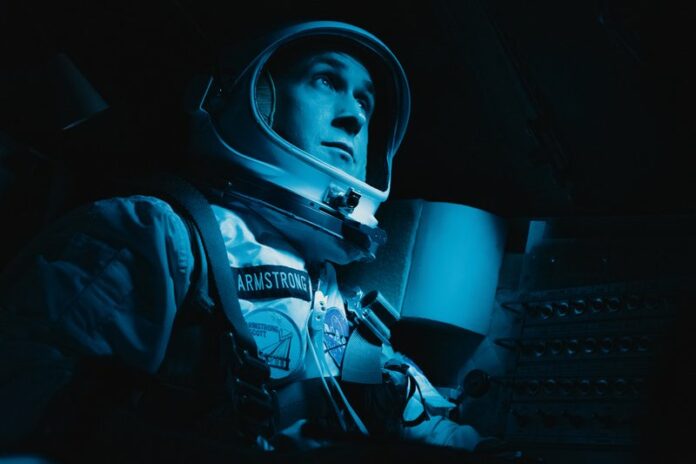
Review: Chazelle’s ‘First Man’ Is at Once Intimate and Grand

This image released by Universal Pictures shows Ryan Gosling in a scene from 'First Man'

Nearly a half-century has passed since the majestic moment when Neil Armstrong stepped carefully onto the lunar landscape, left foot first, taking that giant leap for mankind.

Whether you were alive then and glued to the TV, or relived it later through that iconic, grainy NASA footage, what you probably remember is just that: The majesty.

You’re probably not thinking much about the deafening noise, the claustrophobia, the terror of blasting off in a rickety sardine can that could fail at any moment for any of a thousand reasons. Or the fact that Armstrong and Buzz Aldrin could have ended up stranded, left to die on the moon; President Richard Nixon had a speech ready for that dark scenario.

You will, though, be thinking of these things as you watch “First Man,” the latest installment in director Damien Chazelle’s meteoric career — and sorry for the space pun, but it’s entirely apt. An intimate character study that somehow becomes grand just when it needs to, “First Man,” based on the book by James R. Hansen with a script by Josh Singer, is a worthy successor not only to Chazelle’s “Whiplash” and “La La Land,” but to the astronaut films that precede it, like “Apollo 13″ and especially “The Right Stuff.”

It’s also, amazingly, the first feature film about Armstrong. Chazelle’s partner here is Ryan Gosling, who dials down his obvious star wattage to give an internalized, fully committed performance as the “reluctant hero,” as Armstrong’s own family described him.

Gosling’s task here is not merely to give dimension to a mythical American hero. He also has to play a man who famously kept his emotions in check. That may not be an asset for a movie character, but sure was an asset for the first human to set foot on another world.

And that’s because this stuff was, well, terrifying! We begin in 1961, during Armstrong’s test pilot days. Taking a hypersonic X-15 up for a spin, he’s suddenly in trouble; he can’t get back down. “Neil, you’re bouncing off the atmosphere,” comes the rather concerned voice from below.

He makes it back, though, barely breaking a sweat. As for us, we’re irretrievably rattled.

From the heavens we go to a small home office, where Armstrong is on the phone, trying to find help for his toddler daughter, ill with cancer. His grief over her fate will remain a theme of the film until the end. But it remains unspoken, even to his stoic wife, Janet, played here with subtlety and grit by the wonderful Claire Foy.

Seeking a fresh start, Armstrong becomes an astronaut in NASA’s Gemini program. On Gemini 8, he successfully docks his spacecraft with another before suffering a harrowing in-flight emergency.

The split-second that separates giddy success from terrifying failure, the tiny, claustrophobic spaces, the flimsy materials, the shaking, the roaring, the positively ancient-looking technology — Chazelle illustrates all of this, indelibly. And we’re forced to wonder: How did they ever make it into space even once?

On the ground, meanwhile, we see what it’s like to be a loved one. During Gemini, Janet explodes at Armstrong’s boss, Deke Slayton (an excellent Kyle Chandler): “You’re a bunch of boys making models out of balsa wood! You don’t have ANYTHING under control.”

Then there’s the devastating launchpad testing disaster that killed Armstrong’s fellow astronauts, Gus Grissom, Roger Chaffee and Ed White. Hearing the news on the phone, Armstrong clutches a wine glass so tightly, he breaks it and gashes his hand.

But if he has qualms about going forward, he doesn’t show it. “Your dad’s going to the moon,” Janet tells their boys. Does that mean he’ll miss the swim meet, one of them asks? Foy’s eyes flare with anger as Janet insists — indeed, commands — that Neil sit down and tell the kids he may never come home.

She’s right: One of the more chilling scenes is a brief look at NASA bosses reviewing the speech Nixon will give if the men can’t get off the moon, and what he’ll say to the “soon-to-be widows.”

And then, the mission. That famous walk to the launchpad, the astronauts waving, the applause. You hold your breath imagining how Chazelle will pull off the landing itself. With a granite quarry in Georgia standing in for the moonscape, it’s as grand and beautiful as you’d want. And yet it’s not a mere recreation of what we’ve seen before.

There’s been a distracting controversy over whether Chazelle “ignores” the precise moment when astronauts planted a flag. It’s silly for many reasons, but especially because this isn’t a movie about symbols, or myths.

It’s about men — especially one man. After the grandeur of the moon landing, an event that still boggles the mind, the movie ends on a note of extreme quiet: just two people staring at each other.

It’s a bold choice, but it feels right. Sometimes a movie feels biggest when it goes small. And this one feels big. Chazelle is only 33. One can only imagine how far he’ll travel.

“First Man,” a Universal Studios release, has been rated PG-13 by the Motion Picture Association of America “for some thematic content involving peril, and brief strong language.” Running time: 141 minutes. Three and a half stars out of four.

Advertisement

Elusive Satirist ‘Kai Maew’ to Host 1st Art Exhibit

Image: KaiMaew / Facebook

BANGKOK — An online cartoonist famed for his adorable characters lampooning Thai politics will have his works displayed in public for the first time at an artspace next month.

A curator said the event will celebrate his prolific works as an artist who touches on various subjects that made the news.

“Kai Maew has been publishing his works for years now, so it’s time we compile his works for a display,” Lalita Hanwong said in an interview. “Many of his works don’t only reflect politics, but they also involve social and economic issues.”

She added that the event would include exclusive content. However, the author himself will likely be absent.

“I don’t think he would come,” Lalita said. “He’s cautious.”

Despite the huge popularity of his webcomics, Kai Maew’s identity remains an elusive subject. In an interview with Khaosod English a year ago, the author would only say he’s a man in his 30s.

His characters mirror real figures in the circus of Thai politics and current events, from “General” and his sidekick spokesman to a square-face man who seems to be hiding in nearly every national controversy.   

Considering the political nature of Kai Maew’s works, security officers are surely expected to pay a visit, Lalita said, though she believes the event itself won’t be forced to cancel.

“If we organize it in the name of art, it should be okay,” she said. “Kai Maew’s works are also open to many ways of interpretation.”

“Khai Maew X: Kalaland” will run 1pm to 6pm from Nov. 7 through Nov. 22 at Artist+Run gallery in Yannawa district. An opening night is set for 6pm on Nov. 10. The gallery can be reached from BTS Chong Nonsi and BRT Thanon Chan. Entry is free.

Advertisement

Prayuth Now Officially on Facebook, Twitter, Instagram

Gen. Prayuth Chan-ocha’s official Facebook cover page.

BANGKOK — Gen. Prayuth Chan-ocha is now officially on Facebook, Twitter and Instagram, a junta deputy secretary said Sunday.

Prayuth’s Deputy Secretary-General Puttipong Punnakan said the accounts are directly overseen by the junta leader.

“The prime minister wants to connect to citizens in a simple, relaxed way that’s not too stressful,” he said. “He wants to communicate with citizens up-close without issuing statements that are too formal, but wants to show that he cares.”

The social media blasts are what critics consider yet another form of campaigning for elections slated for Feb. 24. In the past few months, he’s visited various provinces, chatted with people on the BTS, exercised in Lumpini Park, met with AKB48 girl group, posted slogans used by Thaksin Shinawatra – and on Friday even told a Tokyo audience to stand up and stretch.

Though parties aren’t allowed to campaign for the elections until mid-December, some have criticized the government for allowing pro-junta politicians – who are reportedly convincing MPs to join the pro-junta Palang Pracharat party – off the hook. Just last week, three of Prayuth’s ministers joined the pro-junta party.

Read: Rivals Left Fuming as Serving Ministers Join Pro-Junta Party

Puttipong said social media posts would be only once or twice a week.

“The page will publicize his work and more relaxed sides and lifestyle that people may not have seen before,” Puttipong said.

Although Prayuth did open a Facebook page in August 2017, posts in his new page will be written by himself. The page is also linked to an Instagram and Twitter page and a website. The first post on the new Prayut Chan-o-cha Facebook page came Sunday night.

“Since most of us communicate through Facebook regularly, I decided to open my personal account to communicate my policies and the government’s work, as well as give helpful information,” it reads. “If you have suggestions, want to exchange opinions or need me to fix any problems, you can write to me here.”

The page, which by Monday had garnered more than 47,000 likes, shows a photo of Prayuth holding an “I Love You” sign with a crowd of children, along with a logo of a checkmark in Thai flag colors.

“Prayuth Chan-ocha. Stable, prosperous, enduring for our Thailand,” reads the accompanying slogan.

Prayuth’s official website is the sleekly-designed PrayutChan-o-cha.com. There’s an interactive timeline feature about the general’s life, galleries of Prayuth stock photos and even a poll about what policies people would like to see enacted.

The English version of the website is under construction.

His official Instagram and Twitter accounts are also set up.

“Hello to my beloved citizens on the Twitterverse. You can tweet to me and exchange opinions about social problems. I also have a website at prayutchan-o-cha.com so click to see it when you have time,” His first tweet read Monday morning.

“Please stay for a long time, Uncle Tuu,” Facebook user Pimchanok Pornsukjantra wrote on his page, referring to his nickname. “I promise to be a good student, and to grow up to be a good citizen who doesn’t cheat others.”

Of course, social media is a double-edged sword, and though some posted words of encouragement, there was also scathing criticism.

“Don’t cheat on the elections. If you’re going to take advantage of other parties this much, why don’t you just make yourself the winner? If you’re going to be shameless, go all the way and make your mark in Thai history,” Facebook user Akgnit Peacharat wrote on Prayuth’s Facebook post.

Related stories:

Thais React as Prayuth Tells Tokyo Forum to Stretch ‘Japanese Style’

Prayuth Exercises With Park Goers, Denies Campaigning

For First Time, Prayuth Confirms ‘Interest’ in Politics

Army Borrows Thaksin Slogan to Promote Prayuth

Prayuth Goes Full Otaku in Meeting With Japan’s AKB48

Thailand’s Politicians Will Have About 2 Months to Campaign. Will They Be Ready?

Watching Prayuth and ‘Three Friends’ Campaign No Fun for Others

Pro-Junta Party Confident It Will Lead Next Govt

Advertisement

Chiang Mai Busker Arrested for Showing Penis to Tourists

Photos of Anusorn Peraket released by Chiang Mai police. Some details have been censored.

CHIANG MAI — Police arrested a street musician accused of exposing himself to multiple foreign tourists in Chiang Mai town center, an investigator said Monday.

Anusorn Keraket, 54, was apprehended after police received complaints that he showed his genitals to many Thai and foreign tourists, Maj. Arnon Cherdchutrakulthong of Chiang Mai City Police told reporters.

Arnon said CCTV footage caught Anusorn during one of his acts, prompting police to track him down and arrest him. He was charged with indecent exposure.

Advertisement

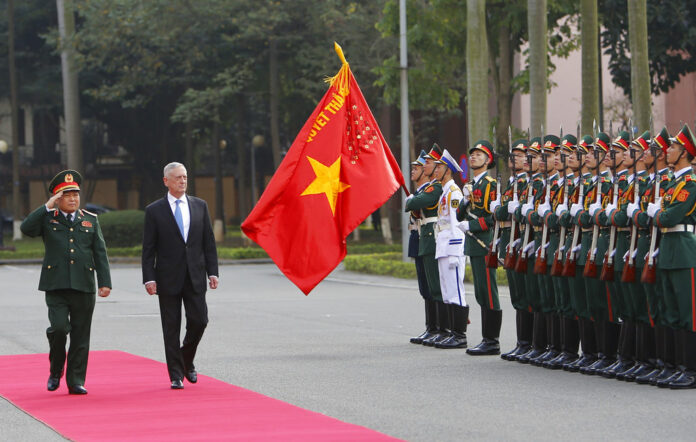
Mattis Trip to Vietnam Aimed at Countering China’s Influence

U.S. Defense Secretary Jim Mattis and his Vietnamese counterpart Ngo Xuan Lich, left, review an honor guard in January in Hanoi, Vietnam. Photo: Tran Van Minh / Associated Press

WASHINGTON — By making a rare second trip this year to Vietnam, Defense Secretary Jim Mattis is signaling how intensively the Trump administration is trying to counter China’s military assertiveness by cozying up to smaller nations in the region that share American wariness about Chinese intentions.

The visit beginning Tuesday also shows how far U.S.-Vietnamese relations have advanced since the tumultuous years of the Vietnam War.

Mattis, a retired general who entered the Marine Corps during Vietnam but did not serve there, visited Hanoi in January. By coincidence, that stop came just days before the 50th anniversary of the Tet Offensive in 1968. Tet was a turning point when North Vietnamese fighters attacked an array of key objectives in the South, surprising Washington and feeding anti-war sentiment even though the North’s offensive turned out to be a tactical military failure.

Three months after the Mattis visit, an U.S. Navy aircraft carrier, the USS Carl Vinson, made a port call at Da Nang. It was the first such visit since the war and a reminder to China that the U.S. is intent on strengthening partnerships in the region as a counterweight to China’s growing military might.

The most vivid expression of Chinese assertiveness is its transformation of contested islets and other features in the South China Sea into strategic military outposts. The Trump administration has sharply criticized China for deploying surface-to-air missiles and other weapons on some of these outposts. In June, Mattis said the placement of these weapons is “tied directly to military use for the purposes of intimidation and coercion.”

This time Mattis is visiting Ho Chi Minh City, Vietnam’s most populous city and its economic center. Known as Saigon during the period before the communists took over the Republic of South Vietnam in 1975, the city was renamed for the man who led the Vietnamese nationalist movement.

Mattis also plans to visit a Vietnamese air base, Bien Hoa, a major air station for American forces during the war, and meet with the defense minister, Ngo Xuan Lich.

The visit comes amid a leadership transition after the death in September of Vietnam’s president, Tran Dai Quang. Earlier this month, Vietnam’s ruling Communist Party nominated its general secretary, Nguyen Phu Trong, for the additional post of president. He is expected to be approved by the National Assembly.

Although Vietnam has become a common destination for American secretaries of defense, two visits in one year is unusual, and Ho Chi Minh City is rarely on the itinerary. The last Pentagon chief to visit Ho Chi Minh City was William Cohen in the year 2000; he was the first U.S. defense secretary to visit Vietnam since the war. Formal diplomatic relations were restored in 1995 and the U.S. lifted its war-era arms embargo in 2016.

The Mattis trip originally was to include a visit to Beijing, but that stop was canceled amid rising tensions over trade and defense issues. China recently rejected a request for a Hong Kong port visit by an American warship, and last summer Mattis disinvited China from a major maritime exercise in the Pacific. China in September scrapped a Pentagon visit by its navy chief and demanded that Washington cancel an arms sale to Taiwan.

These tensions have served to accentuate the potential for a stronger U.S. partnership with Vietnam.

Josh Kurlantzick, a senior fellow and Asia specialist at the Council on Foreign Relations, said in an interview that Vietnam in recent years has shifted from a foreign and defense policy that carefully balanced relations with China and the United States to one that shades in the direction of Washington.

“I do see Vietnam very much aligned with some of Trump’s policies,” he said, referring to what the administration calls its “free and open Indo-Pacific strategy.” It emphasizes ensuring all countries in the region are free from coercion and keeping sea lanes, especially the contested South China Sea, open for international trade.

“Vietnam, leaving aside Singapore, is the country the most skeptical of China’s Southeast Asia policy and makes the most natural partner for the U.S.,” Kurlantzick said.

Vietnam’s proximity to the South China Sea makes it an important player in disputes with China over territorial claims to islets, shoals and other small land formations in the sea. Vietnam also fought a border war with China in 1979.

Traditionally wary of its huge northern neighbor, Vietnam shares China’s system of single-party rule. Vietnam has increasingly cracked down on dissidents and corruption, with scores of high-ranking officials and executives jailed since 2016 on Trong’s watch.

Sweeping economic changes over the past 30 years have opened Vietnam to foreign investment and trade, and made it one of fastest growing economies in Southeast Asia. But the Communist Party tolerates no challenge to its one-party rule. Even so, the Trump administration has made a focused effort to draw closer to Vietnam.

When he left Hanoi in January, Mattis said his visit made clear that Americans and Vietnamese have shared interests that in some cases predate the dark period of the Vietnam War.

“Neither of us liked being colonized,” he said.

Story: Robert Burns

Advertisement

Hot News

LATEST NEWS

Bangkok
overcast clouds
32.8 ° C
36.6 °
32.7 °
68 %
3.3kmh
100 %
Sat
37 °
Sun
36 °
Mon
35 °
Tue
34 °
Wed
33 °