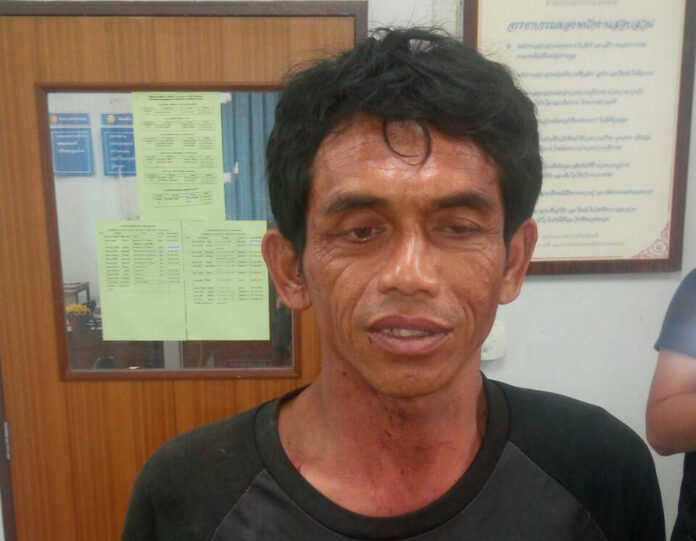
Krissana Jutacheun in police custody Thursday in March.
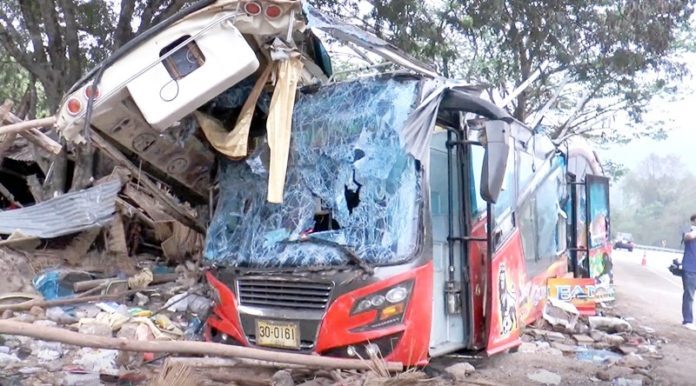
NAKHON RATCHASIMA — A court Wednesday convicted and sentenced the driver of a tour bus that crashed and killed 18 people in Nakhon Ratchasima province earlier this year.
Krissana Jutacheun, 45, was sentenced by the Nakhon Ratchasima Provincial Court to 8 years and 2 months in prison after the court returned guilty verdicts on several counts including driving while on methamphetamines and fleeing the accident. The court reduced his sentence to 4 years and 1 month on the grounds that he confessed.
The court also ordered his driving license revoked permanently. It was reported that both the defendant and plaintiffs are unlikely to file an appeal.
Krissana crashed a double-decker bus in March on a remote road in the Wang Nam Khiao district. Eighteen people were killed and 32 injured.
The owner of bus company Gun Eng Tours, Sayan Boonsanam, had been charged soon after the accident for allegedly allowing one of his employees to drive a bus under the influence of drugs. There is no record of a trial or conviction.
The bus operator’s insurer has been ordered to pay the victims’ families 24 million baht in compensation.
Krissana had a record of multiple drug-related infractions prior to the accident.
BANGKOK — The court on Wednesday cleared a man convicted in a bomb plot of defaming the royal family, citing insufficient evidence.
The defendant, Sakan Saengfueng, walked free today after spending nearly five years in jail, though prosecutors have 30 days to file an appeal, according to his lawyer.
“We really don’t know whether they will do that,” Supanut Boonhod, his attorney, said by phone.
Four of those years were for his original, unrelated jail sentence. Sakan was then held in custody after other inmates accused him of royal insult.
Sakan was arrested in April 2009 with two other Redshirts on suspicion of plotting to bomb the head office of Charoen Pokphand, Thailand’s largest conglomerate. He was convicted and given five years.
But while he was serving the jail term, a group of cellmates in 2014 complained to guards that Sakan insulted the monarchy while watching a TV documentary on King Rama IX. Sakan was eventually charged with lese majeste and detained shortly after his release in 2017. He was denied bail and sent back to jail for the next seven months.
Any action deemed negative toward the monarchy is punishable by up to 15 years in jail under Section 112 of the penal code, a law also known as lese majeste.
Sakan initially pleaded not guilty but later entered a guilty plea, though the court today said Sakan’s remarks “needed interpretation” and were not evidently critical of the Royal Family as alleged by the plaintiffs.
Due to insufficient evidence of guilt, the court subsequently acquitted him of the charge.
Sakan’s lawyer said he would file for state compensation of 500 baht per day spent behind bars during the trial.
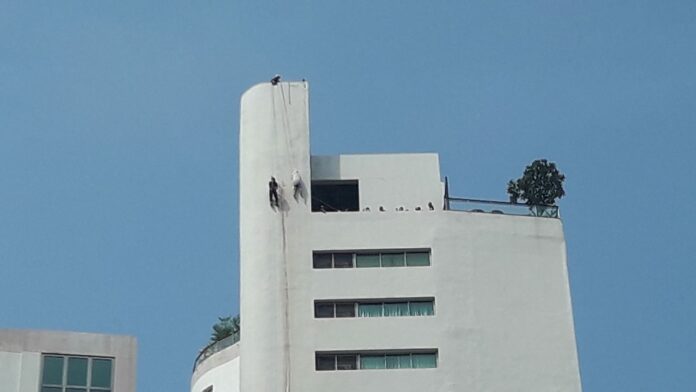
Rescue workers retrieve the body of an unidentified man found hanged in Pattaya. Image: Rampai Kongkoed / Facebook
PATTAYA — Police say a Norwegian man found hanged from atop a highrise in Pattaya city center this morning most likely committed suicide.
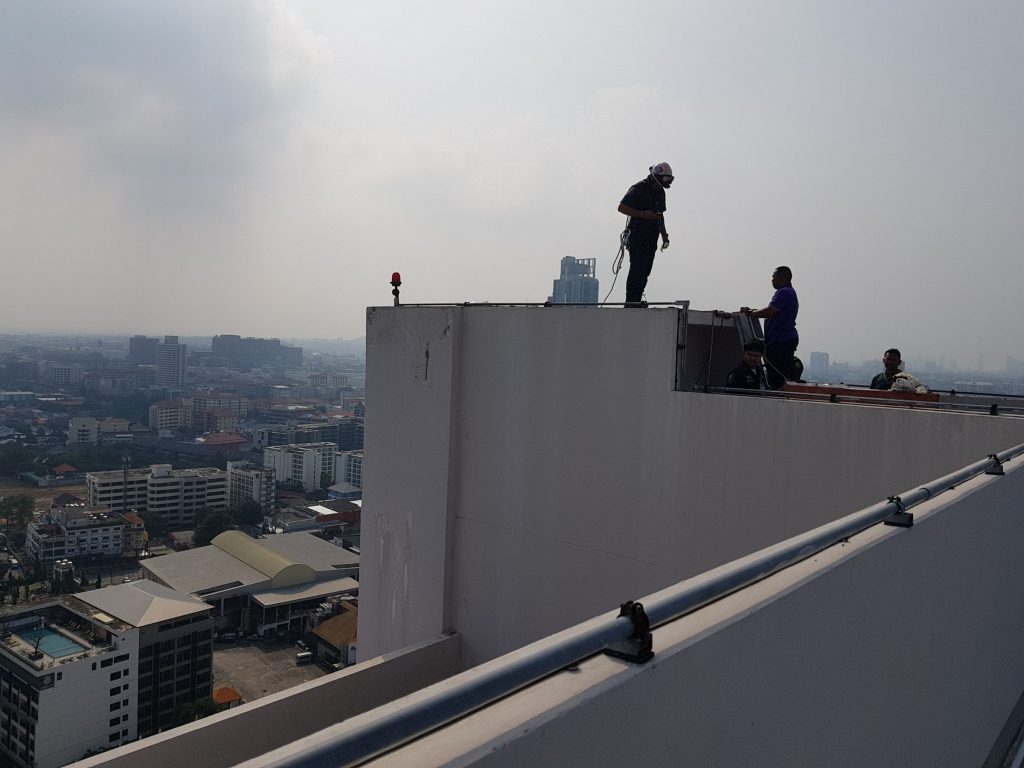
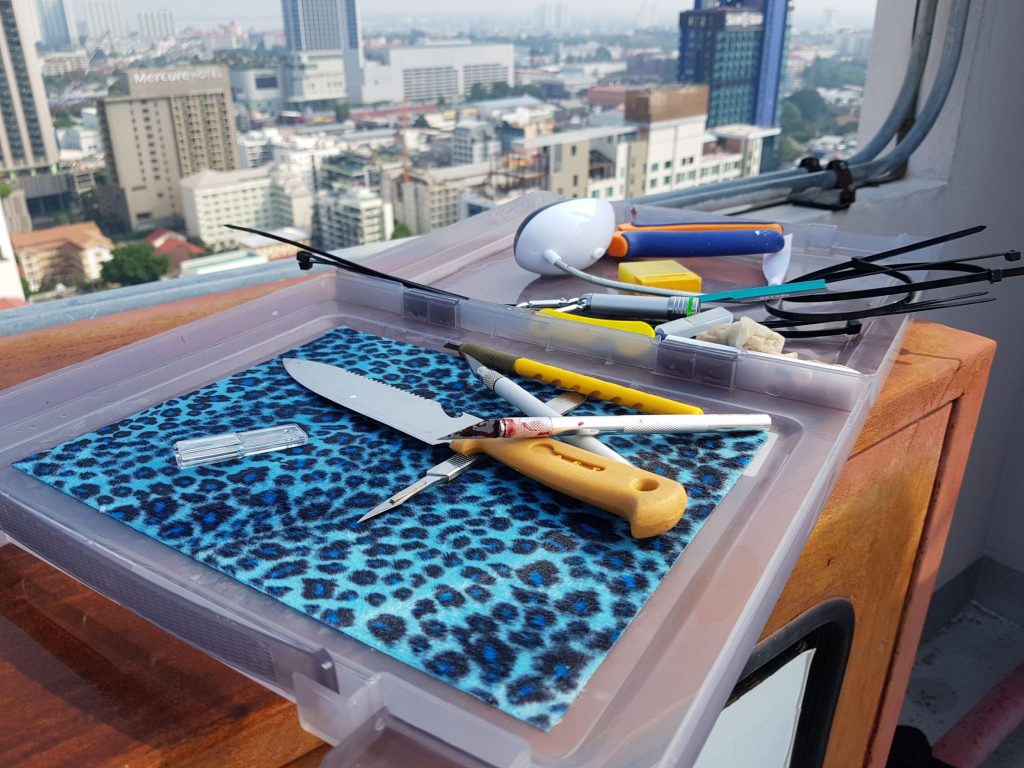
The 69-year-old man is believed to have shot himself with a homemade firearm while standing on the edge of his condominium’s rooftop with a noose around his neck, Lt. Col. Kosala Ngampong from the Pattaya City Police Station told reporters.
The nylon rope was tied at the other end to a fire hydrant. Several knives were also found on the rooftop, along with what appeared to be a suicide note, Kosala said.
The sight of the body, which could be seen kilometers away, horrified Pattaya residents who shared videos and photos online. Rescue workers took several hours to retrieve the body from the side of the 31-floor condominium. The deceased was wearing only shorts.
Police said the body was taken for a forensic examination.
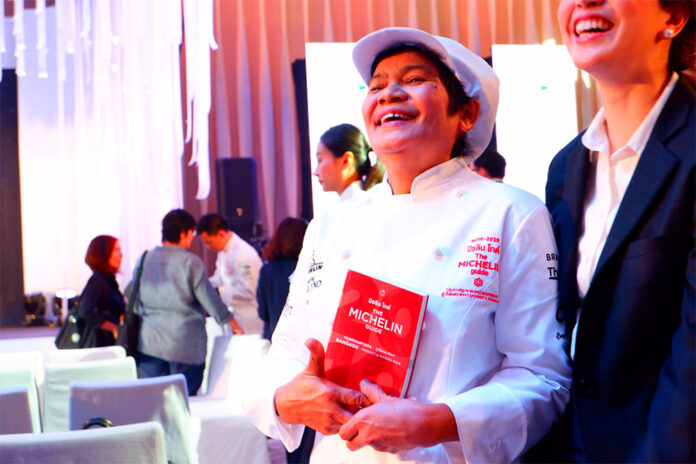
Banyen Ruangsantheia laughs as she receives a Michelin Star on Wednesday for her Nonthaburi restaurant, Suan Thip.
BANGKOK — Banyen Ruangsantheia said she hadn’t even heard of the Michelin Guide and its treasured constellation of stars until someone called recently to say she might be getting one.
Of the 11 new recipients in Thailand awarded Michelin stars, Banyen was the least-restrained in down-to-earth, gee-whiz happiness at the award for the Thai fare she takes great pride in making by the river in northwest metro Bangkok.
“I was so shocked when they called me. I thought they were kidding; I couldn’t believe it was true. They said I had to be free on the 14th. ‘For what?’ I asked. They said it was an award,” Banyen said after being awarded her Michelin star. “I didn’t even know what it was, much less that I would get one!”
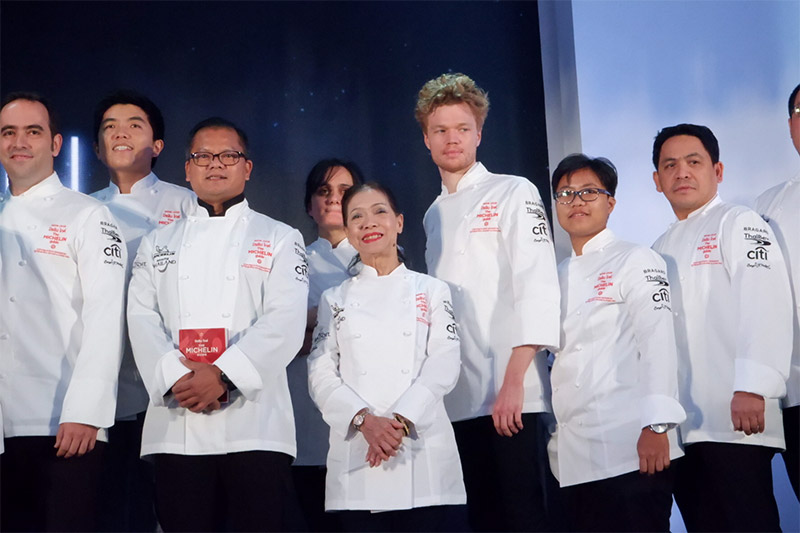
Banyen, 62, took the stage Wednesday at the Park Hyatt Bangkok alongside the likes of Gaggan Anand and the Suhring Bros. to pick up what in the restaurant world is akin to winning an Oscar.
The Korat native came to the capital at 18 to work at Suan Thip, which serves traditional fare in Nonthaburi province.
“At that time, my salary was 1,300 per month. I loved to taste food. So I taste the food they made and then I thought, nope, I have to fix it,” Banyen said, who refers to herself as paa, or aunty. “I like Thai food and Thainess. So I’ve never thought of leaving to work elsewhere.”
Indeed, even at the awards event, all Banyen could talk about was her food: How mackerel has to be brined with bergamot and grilled instead of just fried; and how proud she is of her kaeng kee lek, or Siamese cassia curry.
“I cook with my heart,” Banyen said. “I tell customers there’s kaeng kee lek for them. I prepare it by boiling the vegetable first though, or else it will be bitter.”
Gwendal Poullennec, international director of the Michelin Guide, said that Suan Thip made “royal recipes” with “attention to detail and authentic Thai flavors.”
Indeed, 50 percent of the starred restaurants serve Thai fare.
Ruean Panya’s Suthep Ganisthanaka, 67, seemed unsurprised to nab a star. His Thai seafood restaurant in the southwestern metro province of Samut Sakhon serves his family’s recipes. Their proudest is lhon puu, or crab coconut dip.
I finish cooking, shower and then go to sleep around 1 to 2am every day. I don’t try to think too much. I’ve got no diseases, and I know my limits.
“It’s different from any other lhon,” Suthep said. “Actually I feel normal about about getting this star. We just got the Thai Select award, too. My life will continue to go on normally.”
Crab omelette superstar Jay Fai, is still the only street food to have a star, which she retains for another year now.
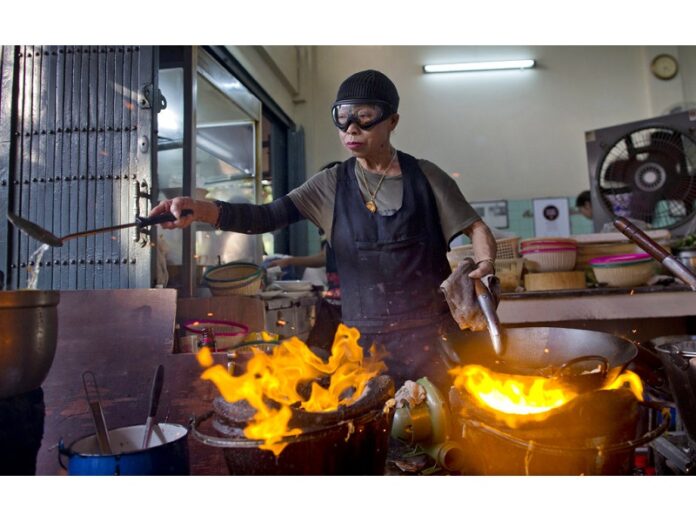
Supinya “Jay Fai” Junsuta said that although she was swamped with queues of neverending customers, daily — “I don’t know how they can wait in line for six, seven hours” — said that she was “relieved and sabai jai that they still put trust in me” by the decision.
The 75-year-old woman said that her health is still good and allows her to don her protective goggles to fry up fiery omelettes. “I finish cooking, shower and then go to sleep around 1 to 2am every day. I don’t try to think too much. I’ve got no diseases, and I know my limits.”
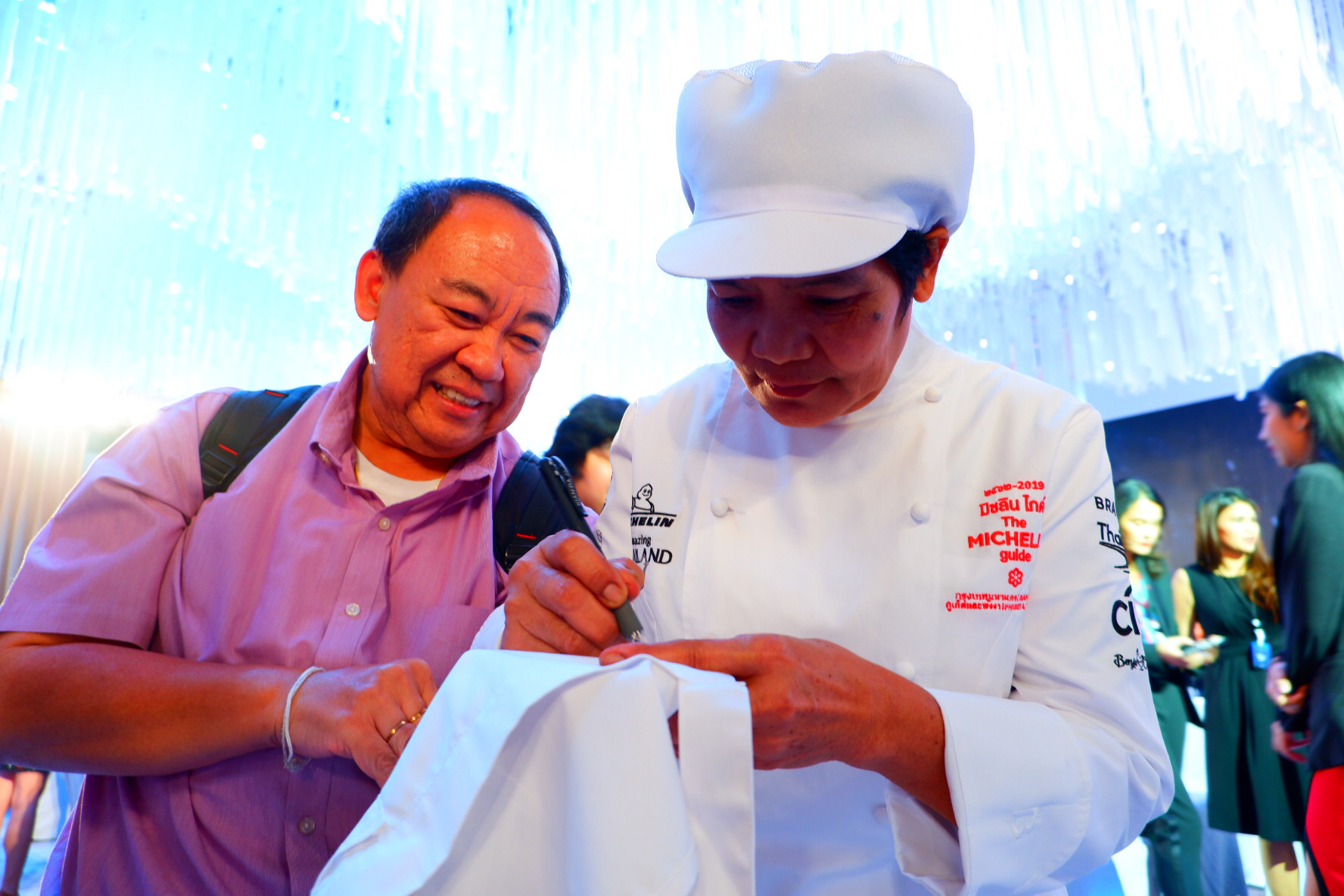
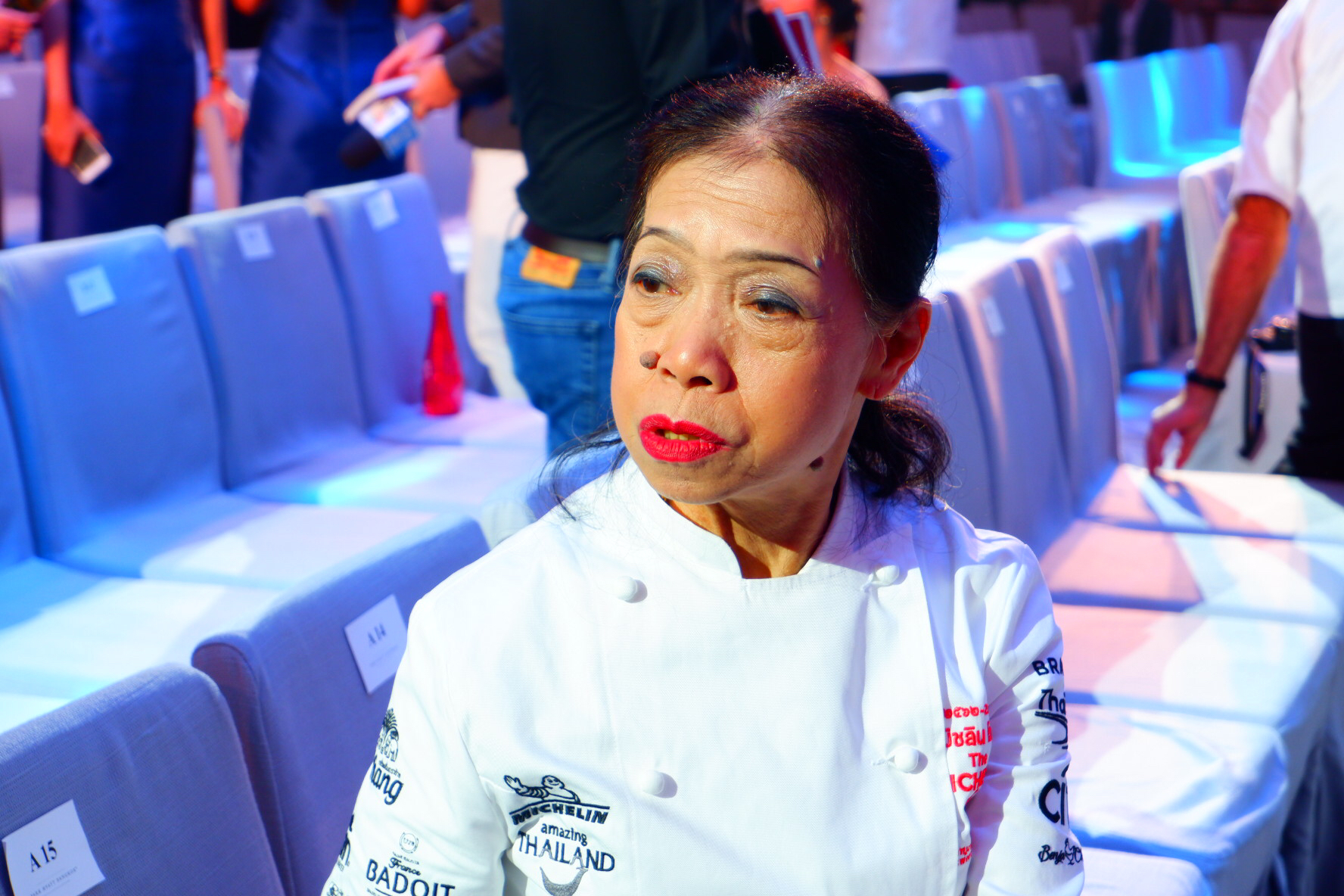
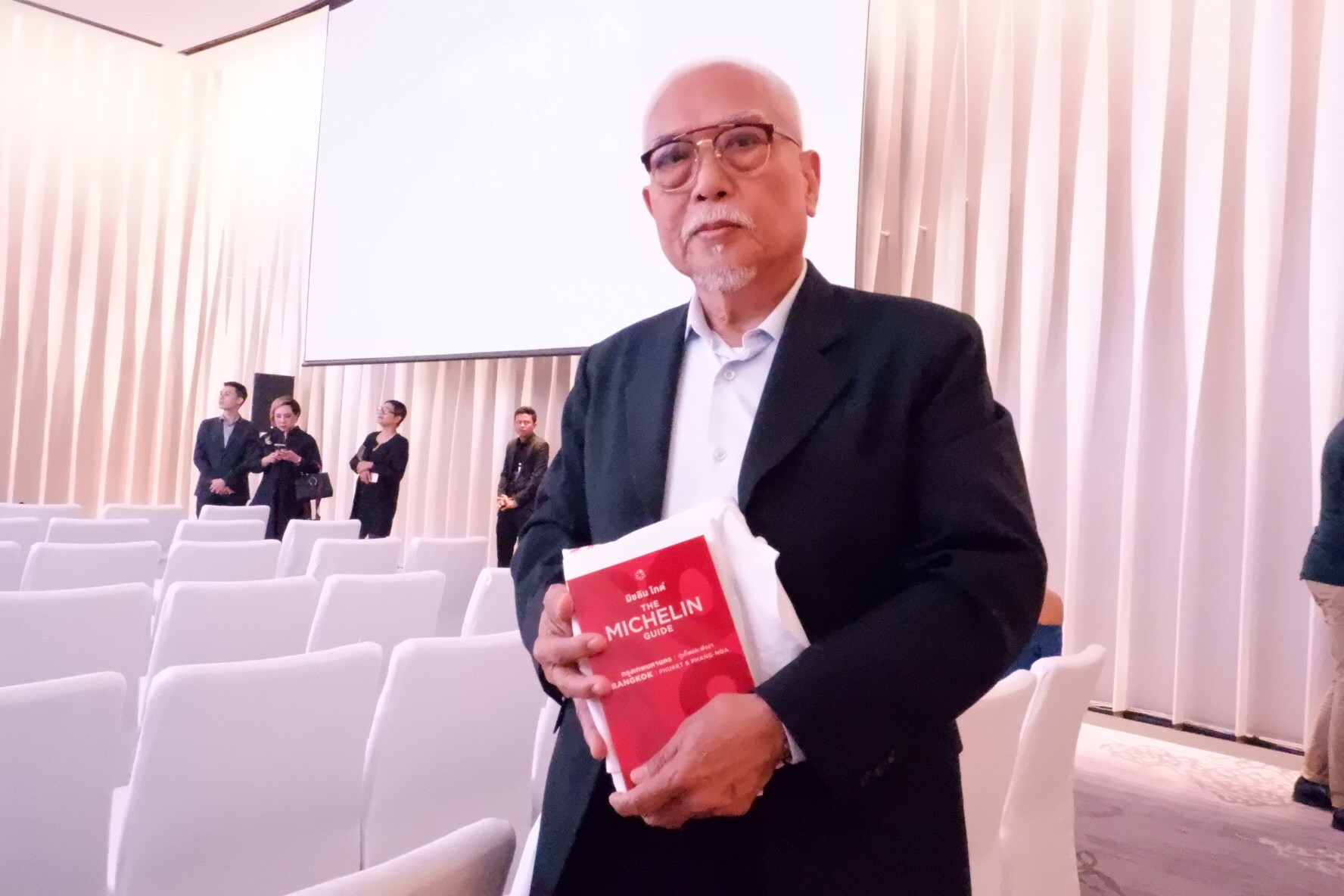
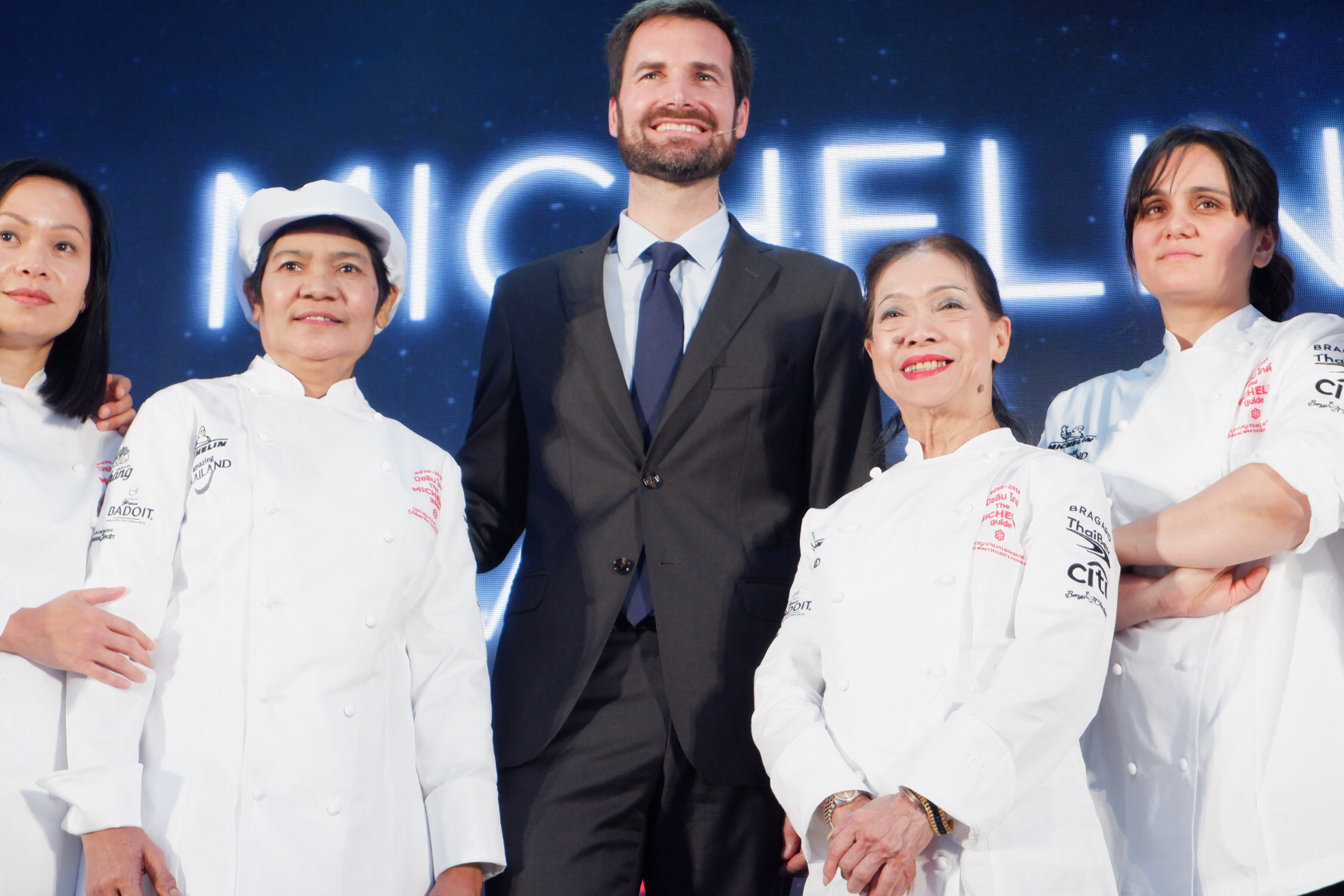
Banyen signs a chef’s jacket for a fan.Supinya Junsuta, of “Jay Fay,” the only street food stall to get a Michelin star, talks about retaining said star on Wednesday.Suthep Ganisthanaka of Ruean Panya.Female chefs who won a Michelin Star, including Banyen and Jay Fay, smile for the cameras Wednesday.
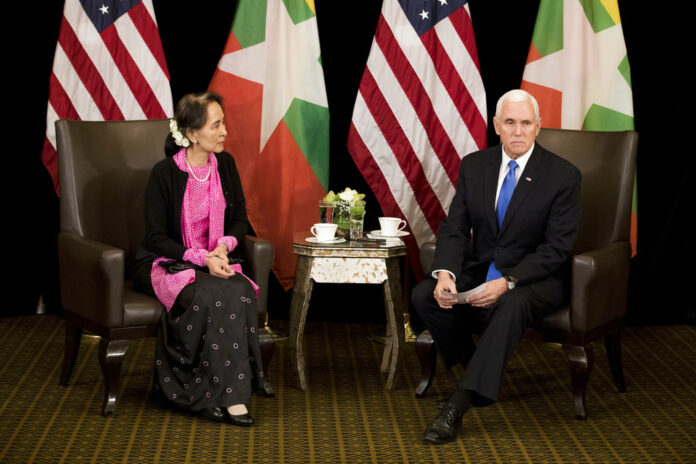
U.S. Vice President Mike Pence, right, meets Myanmar leader Aung San Suu Kyi on Wednesday in Singapore. Photo: Bernat Armangue / Associated Press
SINGAPORE — Myanmar’s leader Aung San Suu Kyi has rebuffed criticism over her government’s treatment of its ethnic Rohingya Muslims.
U.S. Vice President Mike Pence told Suu Kyi on Wednesday that the violence, which led more than 700,000 of the country’s Rohingya minority to flee for Bangladesh since August 2017, was “without excuse.”
Pence also said Myanmar’s arrests and convictions of two Reuters journalists was “deeply troubling” to millions of Americans.
Pence and Suu Kyi met on the sidelines of the annual summit of the Association of Southeast Asian Nations in Singapore. Pence said the meeting was at Suu Kyi’s request.
Suu Kyi said only Myanmar was in a position to explain what happened and how it saw things, just as Americans could best understand what is happening there.
Cook Supinya Jansuta, 72, better known as "Jay Fai," wearing goggles, cooks with two flaming woks last December at her eatery in Bangkok. Photo: Gemunu Amarasinghe / Associated Press
BANGKOK — The first restaurant outside of Bangkok, the first Southern Thai cuisine restaurant and the first restaurant whose kitchen is headed by an Indian woman won Michelin stars when the awardees for the culinary guide were announced Wednesday.
The Michelin 2019 guide for the first time included Phuket and Phang Nga provinces. Pru, in Phuket and run by Jimmy Ophorst, was the first non-Bangkok restaurant to get a star.
Of the 27 restaurants awarded stars, six were run by women chefs.
No restaurants in Phang Nga received any stars, and no restaurant in Thailand received three stars.
Gaa, headed by Garima Arora, won one star. Street crab omelet master Jay Fai held onto its star, among other repeat recipients included the perennial favorites Gaggan and Bo.lan.
New entries to the list included modern German cuisine restaurant Suhring, run by brothers Thomas Suhring and Mathias Suhring, which won two stars. Traditional Thai restaurant Suan Thip also won. It’s headed by 62-year-old chef Banyen Ruangsantheia from Korat, who was visibly happy and surprised upon hearing the news.
Gwendal Poullennec, the International director of the Michelin Guide, said that around 50 percent of starred restaurants are Thai restaurants. Michelin inspectors tested 27 different cuisines and listed a total of 217 different restaurants in the guide this year, an increase over 2018’s 136.
Michelin-star recipients Wednesday in Bangkok.
Here’s the full list:
Two stars
Gaggan, Le Normandie and Mezzaluna all retained their two stars from the 2018 guide. The only new two star addition was Suhring.
Gaggan topped Asia’s 50 best restaurants for the fourth year in a row, including this year.
One star
American chef Riley Sanders won a star for heading Canvas. Gaa won a star, as did Le Du, headed by Thitid Tassanakajohn’s hand of modern Thai cuisine. R-Haan, Methavalai Sorndaeng, Ruan Panya, Saawaan and Suanthip, all located in Bangkok, received one star for their Thai food as well. Sorn by chef Supaksorn Ice Jongsiri, was the first-ever Southern cuisine Thai restaurant awarded.
Pru, in Phuket, was the only restaurant outside Bangkok to win a star.
All 13 restaurants that won one star last year retained their award: Bo.lan, Chim, Elements, Ginza Sushi Ichi, J’aime by Jean-Michel Loran, Jay Fai, L’Atelier de Joal Robuchon, Nahm, Paste, Saneh Jaan, Savelberg, Sra Bua and Upstairs by Mikkeller.
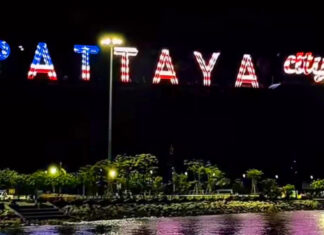
The man, later identified as a Norwegian national by Channel 3, was found hanged by a long rope from the top of a residential building in Soi Pattaya 5. The body could be seen from kilometers away across the popular tourist town.
Pattaya’s police chief and his deputies could not be reached for comment as of publication time, but media reports said investigators were looking into whether it was a suicide or murder.
Rescue workers had to rappel down from the rooftop to retrieve the body.
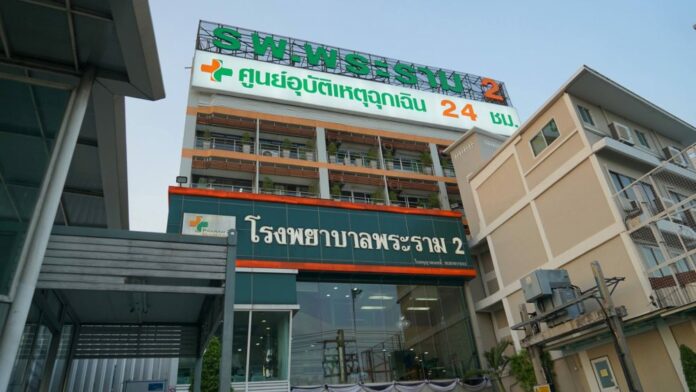
‘Emergency room services 24 hours a day,’ reads the sign outside the Praram 2 Hospital. Photo: Praram 2 Hospital / Facebook
BANGKOK — Praram 2 Hospital admins face criminal prosecution over substandard services after it was accused of refusing to treat a patient whose daughter said her face was melting from acid poured on her head.
Nattawuth Prasertsiripong, director general of the Health Ministry’s Health Service Support Department, said an initial investigation found the hospital guilty on counts related to the death of Chorladda Tarawan, who suffered a severe acid burn for which her husband has been arrested.
He declined to elaborate on the details, saying only that the full results are expected this week.
“There are some serious violations that come with high penalties,” he said. “We still can’t tell the public because they still need to be reviewed by the investigative committee.”
He only said that the hospital executives face fines and jail time for failing to maintain standards. The ministry’s probe results will be handed over to the police when concluded.
Chorladda, 38, died at Bangmod Hospital on Saturday after her 12-year-old daughter says they were turned away from the emergency room at Praram 2. Chorladda was splashed with soldering acid by her husband Kamtan Singhanat in her sleep.
In the most recent in a series of shifting accounts, the hospital said in a statement Monday that Chorladda was only scalded with hot water and refused treatment so she could go to another hospital where she could use her public health benefits. Her daughter Techinee Tarawan, who had taken her mother to the hospital, said she begged nurses to admit Chorladda only to be turned away. They went to Bangmod Hospital by taxi where Chorladda was soon pronounced dead.
Nattawuth said the committee has received contradictory statements from both hospitals. He said initial autopsy results indicate Chorladda died from respiratory failure.
He said security camera footage shows Praram 2 staff rendered first aid to Chorladda, but further review is needed to see if her condition upon arrival and departure are consistent with the hospitals’ statements.
The victim’s family however is not eligible for state compensation as Praram 2 Hospital is privately owned, Nattawuth said.
Founded in 1994, the hospital is operated by the Praram 2 Medical Group, which also owns a number of medical clinics in the capital.
Nattawuth said the hospital also faces investigation regarding the standards of its facilities which could cost its license.
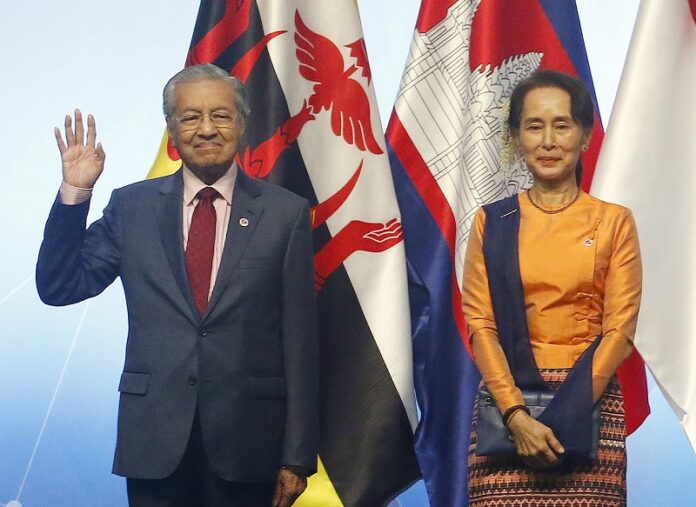
Prime Minister Mahathir Mohamad of Malaysia and Myanmar Leader Aung San Suu Kyi, pose for a group photo during the opening ceremony for the 33rd ASEAN Summit and Related Summits Tuesday, Nov. 13, 2018, in Singapore. Photo: Bullit Marquez / Associated Press
SINGAPORE — Malaysian Prime Minister Mahathir Mohamed sharply criticized Myanmar leader Aung San Suu Kyi on Tuesday for her handling of an ethnic crisis that led to mass killings and the exodus of more than 700,000 Rohingya Muslims from her country.
Mahathir said Nobel Peace Prize laureate Suu Kyi was “trying to defend the indefensible” in justifying violence by Myanmar security forces against Rohingya in Rakhine state.
Hundreds of thousands of Rohingya have fled to neighboring Bangladesh since August 2017.
“They are actually oppressing these people to the point of, well, killing them, mass killing, and burial in graves dug by the victims and that kind of thing. That may be relevant in ancient times, but in modern days, we don’t do that kind of thing,” said Mahathir, a 93-year-old political veteran whose own past treatment of dissidents at times drew opprobrium.
Asked about the issue at a news conference on the sidelines of a summit of the Association of Southeast Asian Nations in Singapore, Mahathir said that as a former political prisoner, Suu Kyi should understand suffering.
It is unusual for leaders in the 10-nation group to publicly criticize each other.
Suu Kyi became an icon for democracy after spending about 15 years under house arrest for opposing Myanmar’s earlier military dictatorship. She and her Buddhist-majority government have been widely criticized for the way they have treated the Muslim Rohingya.
In Geneva, the U.N. human rights chief said Tuesday that Bangladesh should halt plans to repatriate over 2,200 of the Rohingya refugees to Myanmar, saying such a move would endanger their lives.
Michelle Bachelet’s comments are among the strongest yet from a top United Nations official about the planned repatriation this week of some Rohingya.
Bachelet’s office said it continues to receive reports of rights violations in Rakhine state, “which include allegations of killings, disappearances and arbitrary arrests.” It said some 130,000 people, including many Rohingya, remain internally displaced in central Rakhine.
On Monday, the U.N. refugee agency UNHCR advised against the returns, saying safety should be assessed first. But it did not call for a halt to the repatriation plans.
Amnesty International announced on Monday that it has withdrawn its highest honor from Suu Kyi because of her “shameful betrayal of the values she once stood for.”
“Today, we are profoundly dismayed that you no longer represent a symbol of hope, courage, and the undying defense of human rights. Amnesty International cannot justify your continued status as a recipient of the Ambassador of Conscience award and so with great sadness we are hereby withdrawing it from you,” it said in a letter to Suu Kyi.
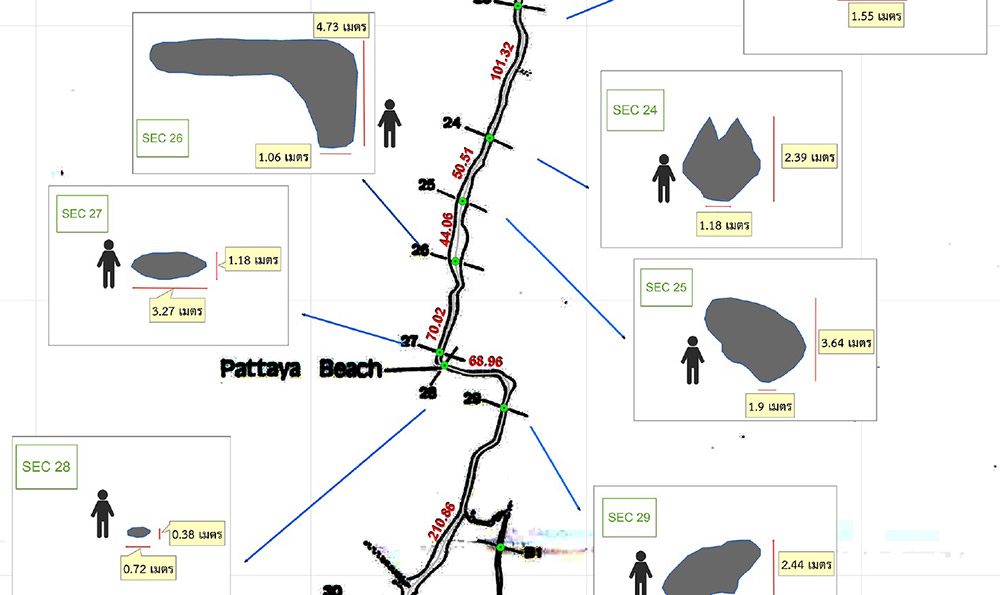
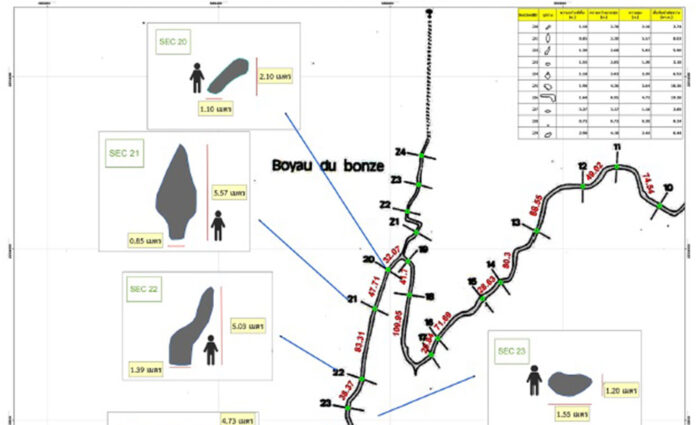
Portion of the composite map based on a 1987 French map and more recent English-made maps prepared by GIS Co. Ltd. Image and used for the rescue operation. Image: Courtesy
The rescue operation to bring back to the surface the 12 Wild Boars and their football coach in July was a story of divers, brave rescuers, self-sacrificing Navy SEALs and related experts.
Less known, the story was also one of cartographers. The painstaking task of creating accurate maps for divers to locate and retrieve those trapped inside Luang Cave relied on digitally compiling hand-drawn maps penned by past French and British explorers. Those maps proved a crucial, if little-known element in the successful rescue.
When news that the children were likely trapped in the cave located in Chiang Rai province broke June 23, there were no complete maps of the cave for immediate use. Thus, there was a need to make a composite map based on those that existed – an effort that involved Thai, French and English experts before it was completed and proved pivotal in the three-day evacuation two weeks later.
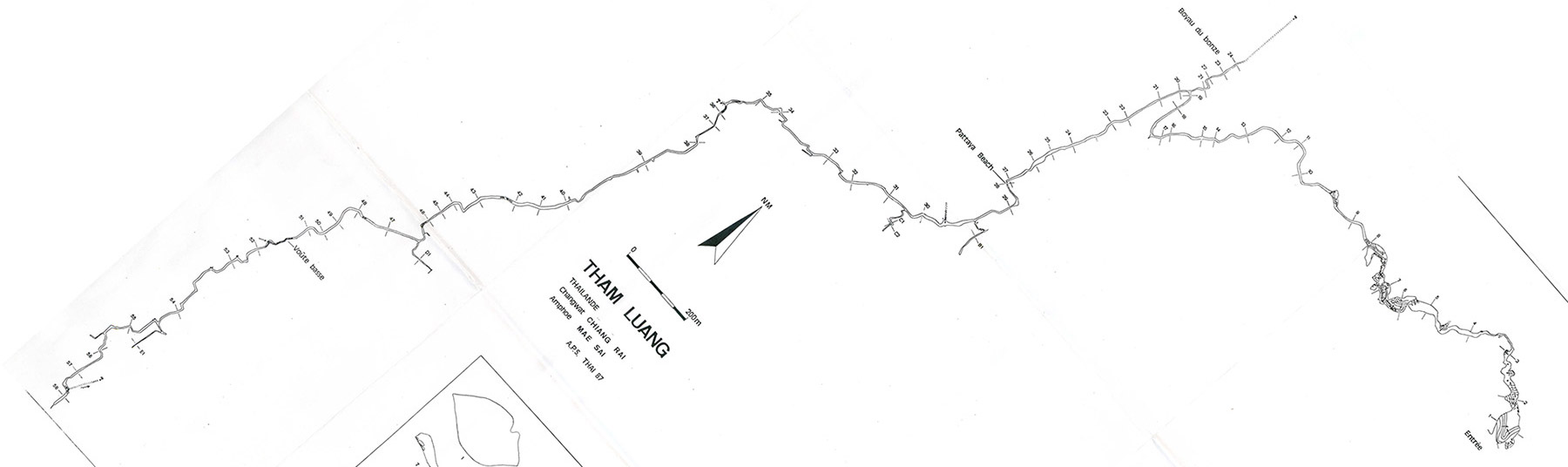
The first map of Luang Cave was published in 1988 by the French Association Pyreneenne de Speleologie (Pyrenean Association of Speleology) one year after a mission touring caves in Southeast Asia passed through.
“There were speleologists and scientists, some of them very serious. They were six or seven camping in my home, in the living room, on the sofa,” said Louis Gabaude, a member of Ecole Francaise d’Extreme-Orient (French School of the Far-East), who accommodated the team at his Chiang Mai house. The team included Louis Deharveng, Anne Bedos, Didier Rigal and Daniel Dalger.
“For us, it was a hobby,” Deharveng said. “We were exploring caves because we liked it, but we had no financial support whatsoever, we were using our own money”.
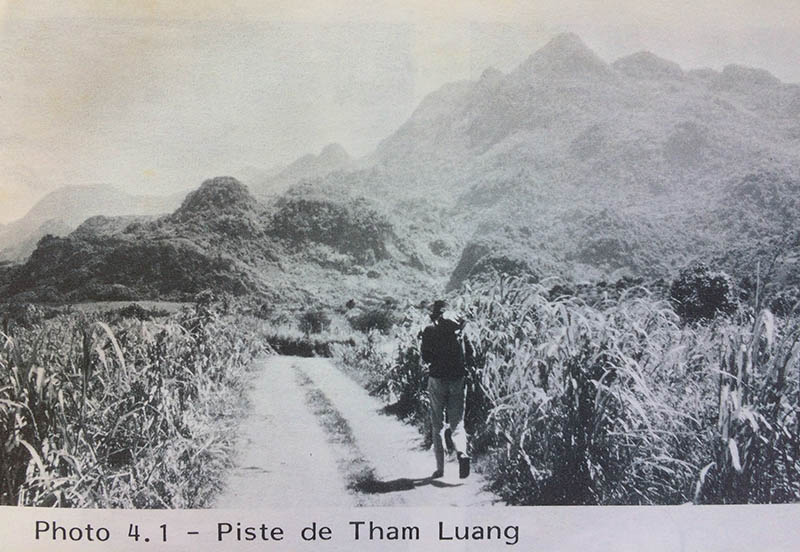
Despite this lack of resources, the 1987 expedition was a milestone: The team surveyed most of the Luang Cave and drew a map with descriptions which were crucial for future cave surveyors. This first exploration was not without its excitement.
We were exploring caves because we liked it, but we had no financial support whatsoever
A member of the French team during the exploration of Tham Luang in 1987. Image: Pyrenean Association of Speleology / Courtesy
“We went into the cave with a village chief and an extraordinary Buddhist monk, inquisitive and athletic. He walked for about 4 kilometers inside the cave, barefoot and without helmet. When he exited the cave, he had several bleeding wounds,” Deharveng said.
The main characteristics of the cave, about 8 kilometers long, were established: It was not labyrinthine, but rather a single path following a river course. The surveyors noted it “still runs during the dry season and rises during the rainy season,” the conditions which would create the boys’ predicament three decades later.
But the cave was not completely surveyed. English speleologists completed the job between 2012 and 2016. Several English missions to Luang Cave; which involved cave experts Vern Unsworth, Rob Harper, Phil Collet and Martin Ellis; made it possible to map the unfinished sections, including the cave’s entrance, under the name Sai Thong Cave.
“The British could cross sections which we were not able to cross. They added 200 or 300 meters of surveyed cave area in the south and about 200 meters in the north,” Deharveng said.
More specifically, Martin Ellis said the English missions allowed exploration and survey of “the Nang Non series (between the cave entrance and the Sam Yaek junction), the Monk’s series and the main caves extensions; [Sai Thong Cave] was also re-surveyed in this period.”
Navigating those locales inside the cave would prove critical for rescuers who had to not only traverse them to find those lost inside, but also be able to make the return trip with them in tow.
A portion of the original 1987 map produced by the French team.
Martin Ellis, who has written several books on Thai caves and maintains a blog on the topic, was a key figure in making the final map used for the rescue. On June 26, three days after the footballers went missing, he was contacted by the Mineral Resources Department.
“They had found the cave surveys on my website,” he said via email.
Ellis supplied the department with scans of the original French survey, Rob Harper’s survey of the main cave extensions and his own composite survey, including of Sai Thong Cave, as well as digital models of the cave created from the surveys.
Ellis says he remains a bit skeptical about the accuracy of the 1987 French survey.
“The biggest problem is that there is no elevation data for the main part of the cave – it is two-dimensional,” he said.
On June 30, two days before the boys would be found alive inside, he wrote a warning on his blog.
“It must be stressed that the [Luang Cave] survey is very inaccurate and cannot be used, on its own, to select drilling targets.”
Portion of the composite map based on a 1987 French map and more recent English-made maps prepared by GIS Co. Ltd. Image and used for the rescue operation. Image: Courtesy
In any case, geographers with digital cartography firm GIS Co. Ltd. were willing to digitize the French and other maps for use by rescuers.
That created a need to translate the map and French notations into Thai, very technical work that had to be completed urgently. Napadol Wirakan, who holds a doctorate in French literature, was contacted and began work immediately.
“I translated the description of the cave; it was about two pages. Some words were very specific, and I could not understand with a usual dictionary. A friend provided me with a lexicon of speleology,” Napadol said. A team of Thai-French translators was set up next under the supervision of a Chulalongkorn University, as well as a team of translators for the English surveys.
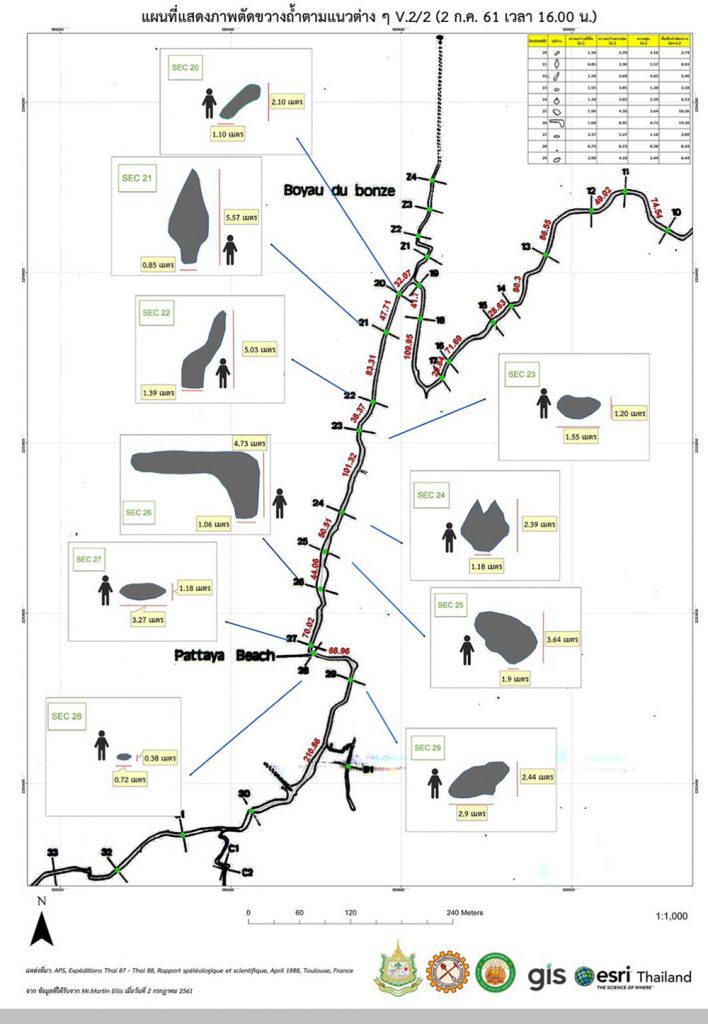
The original and translated maps were given to the cartography company GIS Co Ltd, which compose a final map to be used in the rescue operation and which contributed to its success.
“This final map was very important. It helped a lot the rescuers and divers to make decisions,” said Napadol, who was granted – as well as his fellow translators – a certificate of thanks by the ministry of natural resources and environment. “At that time, I felt that it was like a moment of national union. Everyone was joining forces to save these children. It showed the unification of Thai people.”
The composite map based on a 1987 French map and more recent English-made maps prepared by GIS Co. Ltd. Image and used for the rescue operation. Image: Courtesy
























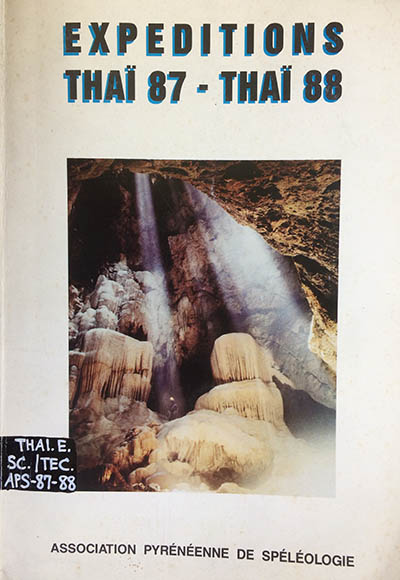 The first map of Luang Cave was published in 1988 by the French Association Pyreneenne de Speleologie (Pyrenean Association of Speleology) one year after a mission touring caves in Southeast Asia passed through.