

























27.5 C
Bangkok
Thursday, September 17, 2026
Home Blog Page 1979

Too Bad for India as Iran Wins Asian Games Kabaddi Gold

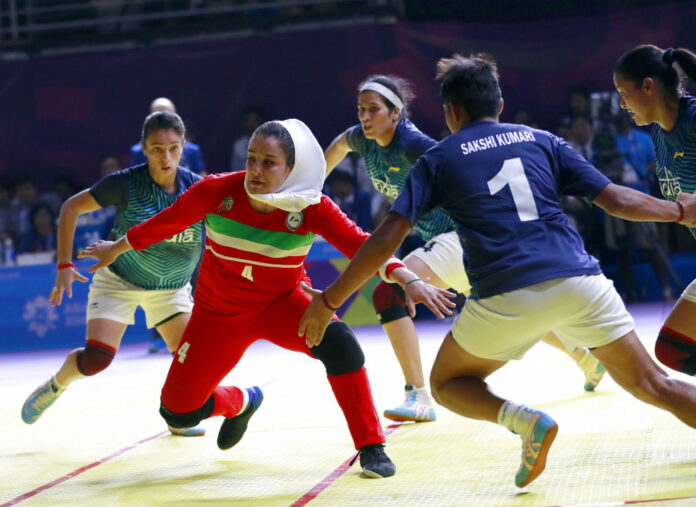
Iran's Saeideh Jafarikoochi, in red, tries to score a point as India's team defend during the women's team Kabaddi gold medal match Friday at the 18th Asian Games in Jakarta, Indonesia. Photo: Tatan Syuflana / Associated Press

JAKARTA — In what would have been unthinkable in India before the Asian Games, there’ll be no kabaddi gold medals for the spiritual home of the sport.

A day after Iran stunned the seven-time champion Indian men in the semifinals, the Iranians won the women’s title with a 27-24 thriller over India on Friday.

Too bad for India, which has long dominated a sport that blends tag and tackle with wrestling moves.

The Indian women took an early 7-3 lead but Iran rallied to take a 17-13 margin and eventually held on in a tense finish for victory.

The Iranian men were playing for gold against South Korea later Friday. The Koreans in the group stage became the first team ever to beat India’s men’s team at the Asian Games. This is the first time since the sport was introduced in 1990 that India won’t win a gold.

India’s woes continued when former No. 1-ranked Kidambi Srikanth was upset 23-21, 21-19 in the second round of men’s singles in the badminton by Vincent Wong of Hong Kong.

The sixth day of competition was expected to be headlined by Japanese teenager Rikako Ikee and her bid for a sixth gold medal, and a record-equaling eighth medal at a single Asian Games.

Ikee led qualifiers in the heats of the women’s 50-meter freestyle.

China’s three-time Olympic champion Sun Yang was aiming for his fourth freestyle gold medal of the games, hoping to add the 1,500 title to his victories in the 200, 400 and 800.

Until Friday, no cyclist had won both the road race and the individual time trial at the same Asian Games. Now two cyclists have done it.

Two days after her road race victory, South Korea’s Na Ah-reum won the women’s time trial at Subang in West Java from Eri Yonamine of Japan and Leung Wing Yee of Hong Kong.

Kazakstan’s Alexey Lutsenko made it back-to-back golds on back-to-back days by winning the men’s time trial from Muradjan Khalmuratov of Uzbekistan and Japan’s Fumiyuki Beppu, whom he edged in a sprint finish to the road race 24 hours earlier.

Japan won its fifth consecutive Asian Games softball gold medal with a 7-0 shutout against Taiwan.

The first Asian Games gold medal ever awarded the Asian Games, and Cambodia’s first medal for the 2018 games, went to Jessa Khan, who beat Mahra Alhinaai of the United Arab Emirates in the women’s 49-kilogram class.

Kim Hyo Sim won North Korea’s fifth gold medal in weightlifting with victory in the women’s 63-kilogram division.

Kim collected gold with a total of 250 kilograms, well clear of fellow North Korean Choe Hyo Sim, who was a silver medalist at the 2016 Olympics and the 2015 world championships.

With China barred from the weightlifting competition for doping violations, the North Koreans are atop the standings in the sport.

The first doping case of the Jakarta-Palembang games was registered against a wrestler from Turkmenistan. The Olympic Council of Asia said Rustem Nazarov, who lost in the quarterfinals of the 57-kilogram division, was disqualified from the games after testing positive for the banned diuretic furosemide in a test on the eve of the opening ceremony.

There were six doping cases at the last Asian Games held at Incheon, South Korea, in 2014.

Story: Josh Pye
Advertisement

Taiwan – by Whatever Name – Still Winning at Asian Games

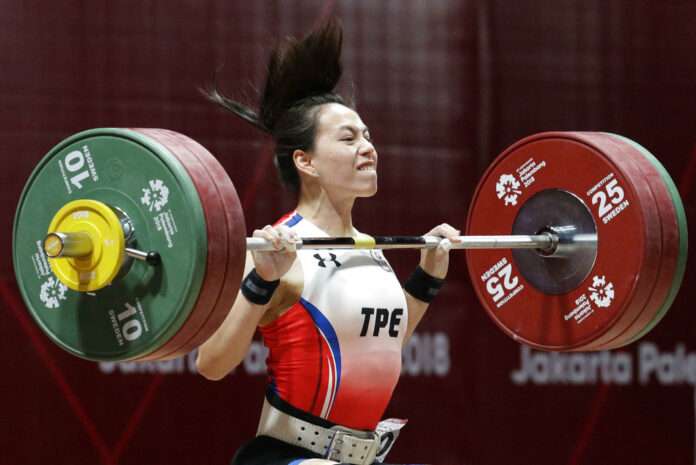
Gold medalist Taiwan's Hsingchun Kuo makes her last attempt to beat her own record during the women's 58kg weightlifting at the 18th Asian Games on Thursday in Jakarta, Indonesia. Photo: Aaron Favila / Associated Press

JAKARTA — Imagine if the United States could not compete under its real name at the Olympics. Or Japan, or Spain or India.

That’s the reality for Taiwan, which is also formally known as the Republic of China.

But at the on-going Asian Games in Indonesia – as well as the Olympics – the island is listed officially as Chinese Taipei, and marches under a white flag adorned with the Olympic rings.

Its own red, blue and white flag is banned.

“This gives us a chance to compete and make our strength known internationally, so we accept the pity that we have to compete under the name of Chinese Taipei,” Jacqueline Yi-ting Shen, the secretary general of Taiwan’s Olympic committee, told The Associated Press.

This is due primarily to pressure from the People’s Republic of China, which regards self-governing Taiwan as a break-away province – a remnant of the Chinese civil war.

Mainland China, with a population of 1.4 billion, dominates the Asian Games along with Japan and South Korea. But Taiwan, with only 23.5 million, is also a player. Its delegation of 558 ranks among the largest, and through five days it was ranked No. 8 in the medal table with 22 medals – five gold.

China led with 116 overall, followed by Japan (86), South Korea (63) and Iran (27).

Mainland China in recent months has also forced many major airlines to show on their websites that they fly to Taipei – not Taiwan – or face possible sanctions.

“I’m sure that many people (in Taiwan) feel dismayed,” Shen said. “But quite a lot understand that it is the reality in the international sporting realm. If we use our own name, we will lose the chance for our athletes. They will lose the playground, or the showcase they have. The right of our athletes to compete is our utmost concern. And I think most Taiwanese understand that.”

Taiwan won 10 gold medals in the 2014 Asian Games, and is on track to match that. It claimed one gold medal in the last three Olympics, and a high of two in Athens in 2004.

“Our aim is to win more than one gold in Tokyo,” Shen said.

The 1972 Olympics in Munich was the last in which Taiwan competed under the name of the Republic of China. It boycotted the next several games and did not return until 1984, agreeing to use the name Chinese Taipei, an illustration of China’s rising diplomatic clout.

Taiwan did not compete in the Asian Games in 1962 when they were last held in Indonesia. Indonesia declined to issue visas, under pressure from China.

Taiwan has won medals this week in almost a dozen sports at the Asian Games – badminton, kabaddi, canoe/kayak, bowling, mountain bikes, shooting, rowing, tennis, taekwondo, wushu, and weightlifting. At the Olympics its best chances may come in archery, weightlifting, badminton, taekwondo and shooting.

Taiwan is capable of holding large events like the Asian Games, though China would surely oppose it. Last year it held the Summer University Games with about 7,500 athletes. China declined to participate in the opening ceremony, but competed in the events.

Athletes from several countries waved Taiwan’s red, blue and white flag at the closing ceremony, and athletes from Argentina were reportedly reprimanded for it by Summer University Games officials.

“We are very much interested in hosting games like this,” Shen said. “I think we are more than capable.”

She said Taiwan was awarded the 2019 East Asian Youth Games, then later stripped of the honor by the East Asian Olympic Committee.

Reports say China demanded the change, increasingly angered by Taiwanese President Tsai Ing-wen and her independence-leaning party. China views the island as its possession.

“Political reasons, whatever,” Shen said. “Our athletes just want a space undisturbed by political issues. They just want to concentrate on their sports.”

Story: Stephen Wade

Advertisement

Cambodia Court Views Footage of Accused Australian Filmmaker

Australian filmmaker James Ricketson sits in a police truck upon his arrival Monday at Phnom Penh Municipal Court in Phnom Penh, Cambodia. Photo: Heng Sinith / Associated Press

PHNOM PENH — A court in Cambodia has viewed some of the footage shot by an Australian filmmaker charged with endangering national security for flying a drone over an opposition party rally last year.

The judge in the case of James Ricketson announced Friday that his trial will end Monday, though it was not clear if the verdict will be delivered then.

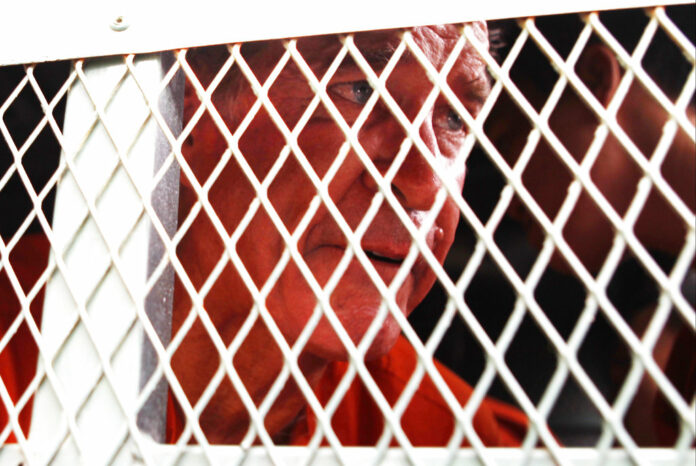
The 69-year-old Ricketson has been detained since he was arrested in June last year. The charge against him is tantamount in legal terms to espionage, punishable by up to 10 years in prison.

Ricketson’s lawyer questioned him about his career Friday, and showed excerpts from films he had made since the 1970s.

Ricketson testified Thursday that he is not a spy and was engaged in the normal work of a journalist.

Advertisement

Boy Whose Paper Planes Soared Into Nation’s Heart May Get Citizenship

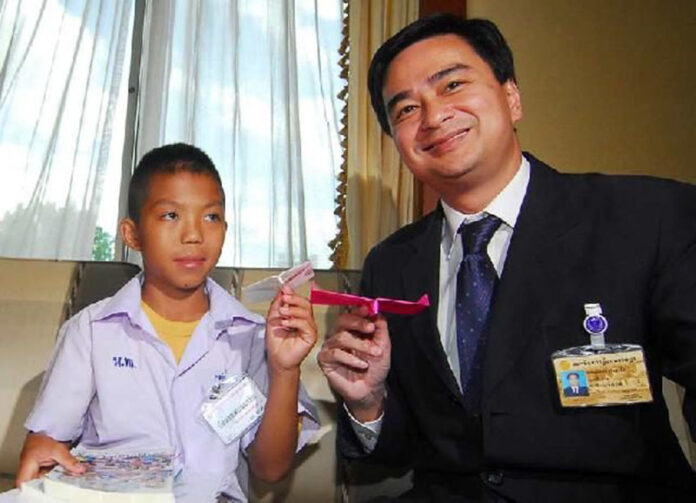
Mong Thongdee, then 12, with Abhisit Vejjajiva in 2009.

CHIANG MAI — Nine years ago, a 12-year-old boy made headlines and drew international sympathy. After winning a paper airplane competition, he had to turn down a life-changing invitation to represent the kingdom in Japan for a reason beyond his control – he was not a citizen.

But there were people who could help, and the ensuing uproar over the perceived injustice eventually got the ear of then-PM Abhisit Vejjajiva, who granted Mong Thongdee a temporary passport to travel and made a promise to make him a Thai citizen.

“Abhisit Vejjajiva had given me his word that if I became a champion, I would become a citizen,” Mong said in a May interview.

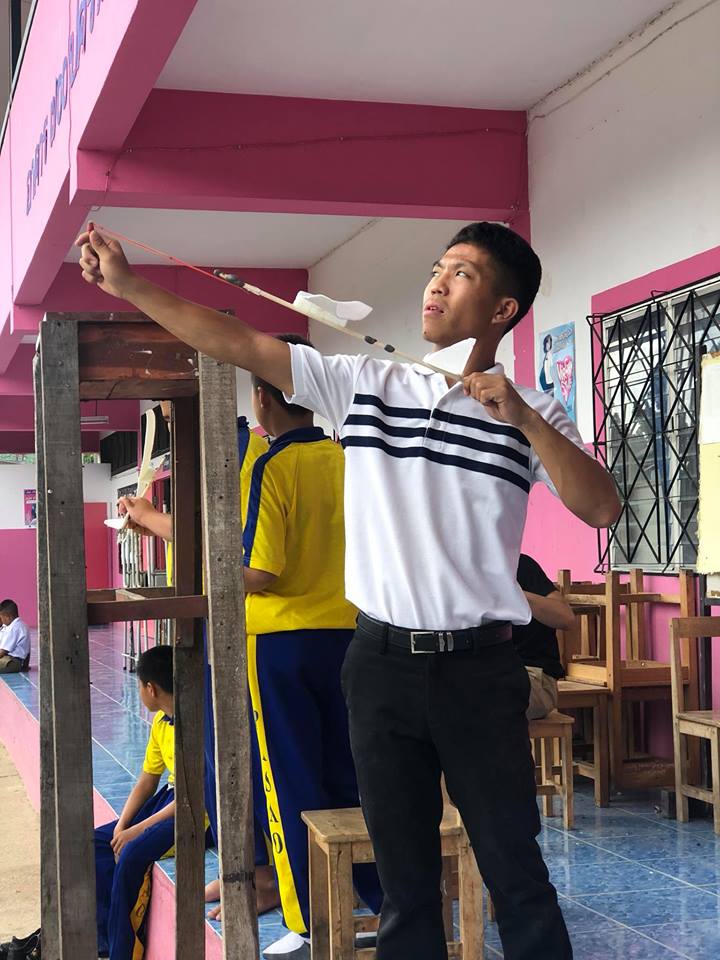
36517369 1054900591342989 886410327099441152 n
Mong Thongdee.

Mong, who was born in Thailand to undocumented Burmese migrants, made good on his half of the deal, bringing home the gold for his team and a personal bronze. Thailand’s government did not, despite occasionally renewing its vow.

Nine years later, Mong is 21, and weeks after another set of famous boys were conferred citizenship after their harrowing ordeal inside a flooded cave, he may now be on the cusp of getting what he’s waited so long for.

Mong submitted his latest set of documents one month ago to officials in Chiang Mai. Today, Friday, they approved his request for citizenship, prompting a torrent of headlines screaming Mong was finally made Thai.

“Nine Years On, Mong Thongdee’s Dream Comes True! Thai Citizenship Received,” Thairath wrote.

Not quite, as Mong is far from obtaining his national ID card.

“We’re not there yet. We’re at about step seven of 10,” said Nirinthon Saengpanna, Mong’s 19-year-old girlfriend. She said the remaining three steps – she isn’t exactly sure what they are – will take up most of another year.

Still it’s progress for a boy – now man – who’s waited so long. He was among the first to welcome the news the Wild Boars who had been made citizens earlier in August.

“I’m happy for them. They should hurry up and do it, because the news about it quickly fades and may be forgotten,” Mong said on July 16 before the announcement was made the stateless members of the Wild Boars football team would/had been made citizens, a process that can drag on for years in the bureaucracy.

Some said it was unfair to suggest one – the boys who survived a horrifying ordeal – was more deserving than the other, who was just really good at making paper toys.

Read: 4 Wild Boars Granted Thai Citizenship: Official

“Only the uninformed are throwing shade at the Wild Boars. Stateless ethnic groups have the right to get citizenship, but the process is very complicated and slow. Tens of thousands of people are waiting in the queue,” wrote Facebooker Nillavan Nguamukos on a Khaosod news story Friday. “It’s not about societal pressure.”

Criticism that they were handled unevenly won a response from the Interior Ministry.

Officials said the four Wild Boars members were naturalized quickly because the law has made it easier for stateless, ethnic minorities to obtain citizenship. Mong was born to Burmese migrants.

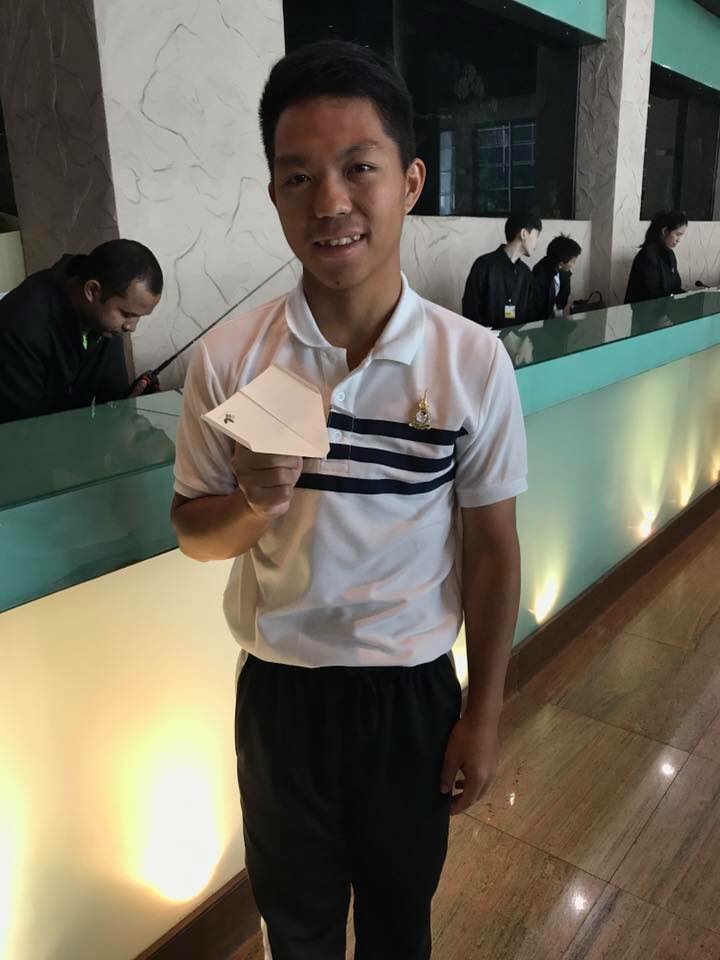
38795768 2043998382286729 5787406094204665856 n
Mong Thongdee in August. Photo: Thapanee Ietsrichai / Facebook

Hope Flies

Many still remember the interview with the small boy with the impressive airplane-throwing arm professing his dreams of becoming a pilot as one of the top human interest stories of 2009.

State officials repeated promises to grant him citizenship to secure his future – non-citizens can’t train as pilots – but, as they do, the story fell off the page.

Mong’s citizenship request go lost in the dark corners of the bureaucracy, while promises from pooyai kept coming up empty. Almost annually nearly a decade, stories have revisited Mong’s citizenship status to find no progress had been made.

Meanwhile his penchant for flight hasn’t abated. Today Mong trains drone operators and works as an aerial photographer.

So will he get his golden ticket to legal status? That depends on clearing what was described as yet another set of bureaucratic hurdles.

Venus Srisook, director of Chiang Mai’s provincial registrar, said Friday that Mong still has to submit documents approved by the Interior Ministry to his district office in Chiang Mai again, which will then be submitted by the director of Chiang Mai City government and then forwarded to Chiang Mai’s governor for another level of approval.

“He’s not so stressed now, but happy,” Nironthorn, who is also a drone and paper airplane flyer, said.

The pair met at a drone competition in Sakon Nakhon.

“He’s waited nine years. He can wait another nine months,” she said.

Additional reporting Jintamas Saksornchai

Correction: The previous version of this article wrote the name of Mong Tongdee’s girlfriend as Nirinthon Haentanna. In fact, her name is Nirinthon Saengpanna.

Related stories:

4 Wild Boars Granted Thai Citizenship: Official

Advertisement

Train Under a Brazilian Jiu-Jitsu Master in October in Bangkok

BANGKOK — Learn Brazil’s famed martial art later this year when an instructor trained by the discipline’s pioneers comes to the capital.

Brazilian jiu-jitsu instructor Pedro Sauer will conduct a seminar to teach the martial art’s essential techniques at a downtown mixed martial arts center in October.

Having trained under Brazilian compatriot Helio Gracie – one of two masters who started the form in ‘20s – Sauer is an 8th degree coral belt master and remains among its most prominent figures.

The seminar is limited to 75 people. Participants will be required to wear a gi, the attire used in Brazilian jiu-jitsu. They can be rented at the venue for 200 baht.

Master Pedro Sauer Gracie Jiu-Jitsu Seminar will take place Oct. 23 at Bangkok Fight Lab, reachable by foot from BTS On Nut, at a time to be announced.

Admission is 1,500 baht, which can be paid at the venue or via bank transfer. More information is available online.

Advertisement

In ‘Body Politic,’ The Audience is The Art

BANGKOK — An unusual street display turns the audience itself into the spectacle. Through performance art, an artist encourages not only physical participation but asks the audience to question their daily assumptions.

As part of his work for Bangkok’s first ever Art Biennial, performance artist Taweesak Molsawat hopes that involving his audience at public locations in Bangkok will encourage them to question their perceptions of society and interpret his art for themselves with their own personal meaning.

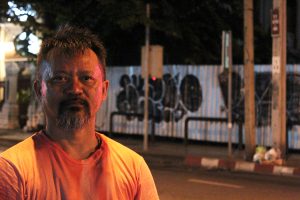
TaweesakPortrait2 1
Taweesak Molsawat after his performance “Blind Leading the Blind” as a part of his political commentary performance art series “Body Politic.” Photo: Taylor McAvoy

“I think we cannot really separate art from life,” he said. “It is influenced one way or another by daily life. You grow up, the way you think, your attitude is influenced by society.”

No two performances will be the same as he surprises bystanders weekly from July to September at popular spots such as Siam Center, Victory Monument, Democracy Monument, Hua Lamphong, the Bangkok Art and Culture Centre. Even motorcycle taxis are his stage.

His ongoing series, called “Body Politic,” focuses on political commentary by using his own body to convey his message. For example, Taweesak held a performance Saturday, July 21, 2018 entitled “How is the Taste of My Body?” where he created edible works shaped like hearts, kidneys or even feet.

“Art is about politics,” he said. “The human body is about politics. You make art to express something.”

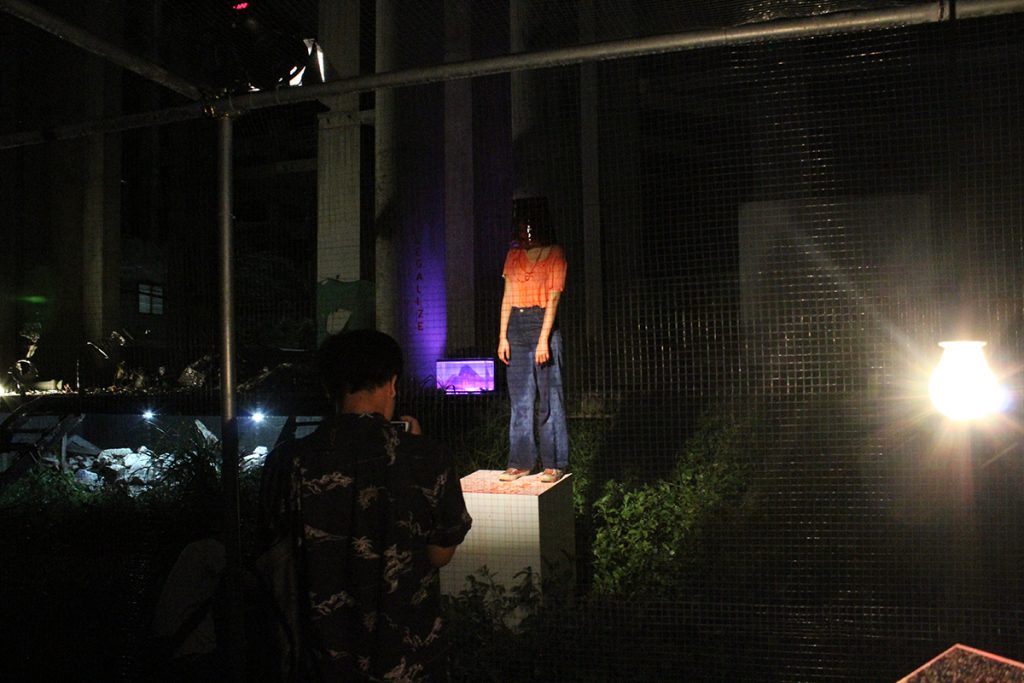
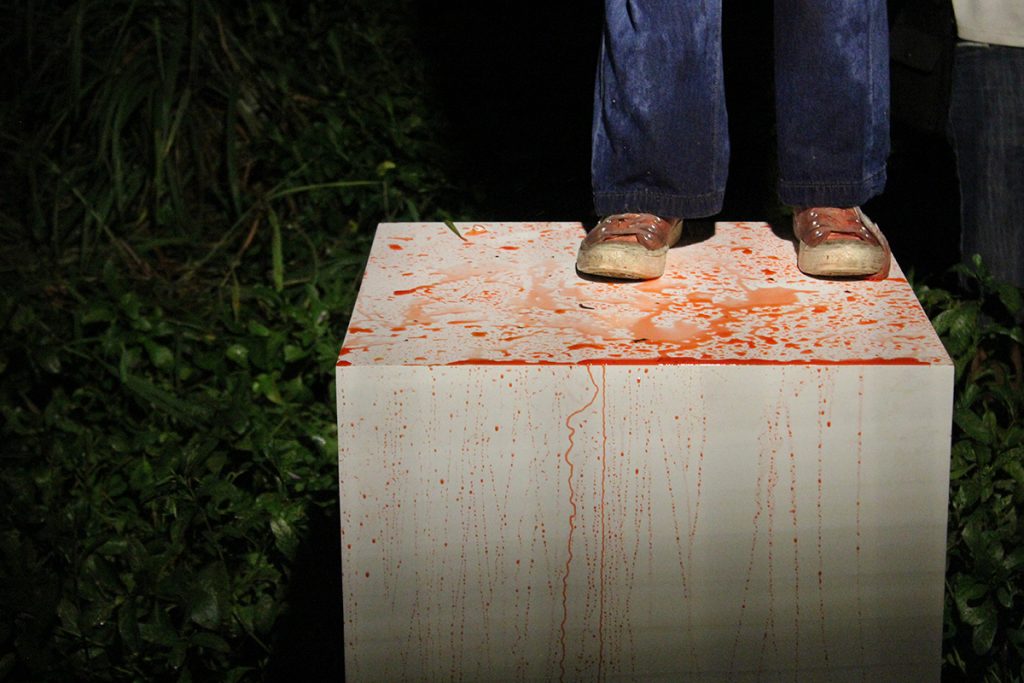
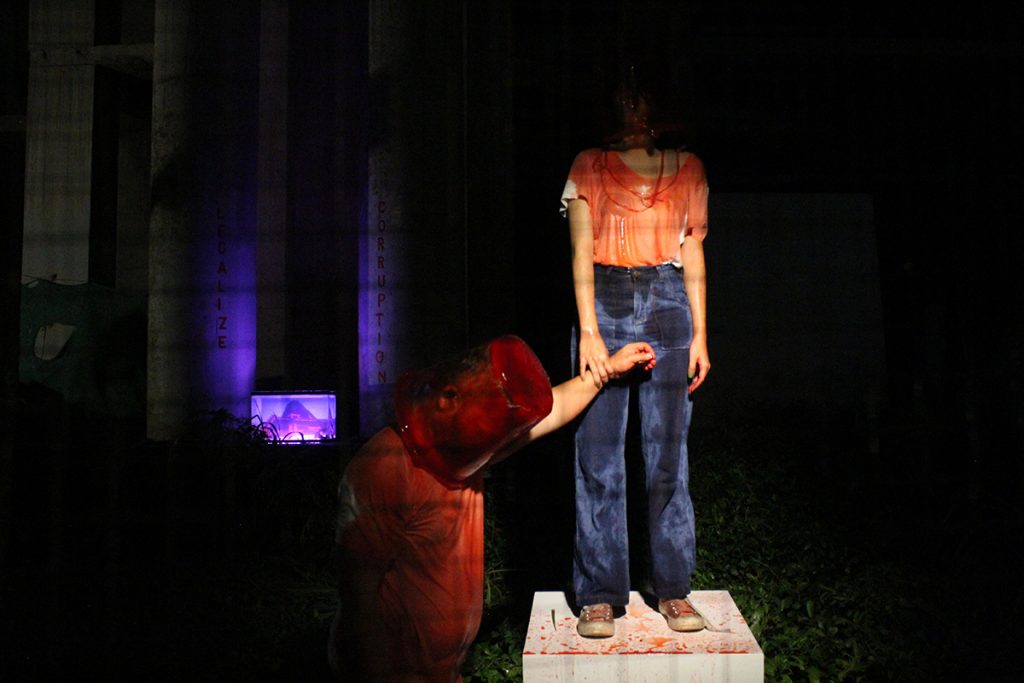
In a performance this past weekend entitled “Blind Leading the Blind,” Taweesak and his assistant wore buckets on their heads made of ice and red food coloring. They walked along the street outside of Bridge Art Space, and as the ice melted, their white T-shirts were stained red.

Then they walked to the gallery’s exhibit “A/Part” displaying in the back. The audience stood outside in a covered metal cage only accessible through the gallery as Taweesak and his assistant stood facing them on a pedestal.

The building behind the exhibition was itself a part of the art. Sathorn Tower, aka the Ghost Tower, is an unfinished residential skyscraper abandoned during the 1997 economic crisis. The backdrop contributed to a haunting mood during Taweesak’s performance.

“It’s about the opportunity to be a part of the conversation,” he said of his performances afterward.

Blind1
Taweesak Molsawat’s performance ‘Blind Leading the Blind’ at Bridge Art Space on Saturday Aug. 18, 2018. Photo: Taylor McAvoy

Taweesak, 49 of Phitsanulok, got his start in jewelry and metalwork. But instead of the usual way to think about jewelry, he focused on using jewelry as a way to communicate. From there, he began thinking about what jewelry would be like if there was no body.

He kicked off his performance art in 2015 with a jewelry and metalwork exhibition at his first Biennial titled “Radiant Pavilion” in Melbourne, Australia.

“I approached them about the disappearance of objects and focused on the memory of wearing,” he said. “That’s kind of the starting point of my interest in performance, particularly the body as an art form or the body as a medium and also as a cultural signifier that I’m really interested in.”

From there he began challenging both society and the law; performing in spaces that would usually not allow this type of art.

He also has an international background, teaching at American colleges and holding art exhibitions there. When he came back to Thailand, he said he found new ideas in conceptualizing a sense of belonging and place.

“I started to realize that it is not about what group you belong to,” he said. “It’s about who you are; how you would like to present yourself to others.”

Photos by Taylor McAvoy

Blind2
Taweesak Molsawat’s performance ‘Blind Leading the Blind’ at Bridge Art Space on Saturday Aug. 18, 2018. Photo: Taylor McAvoy
Blind3
Taweesak Molsawat’s performance ‘Blind Leading the Blind’ at Bridge Art Space on Saturday Aug. 18, 2018. Photo: Taylor McAvoy
Advertisement

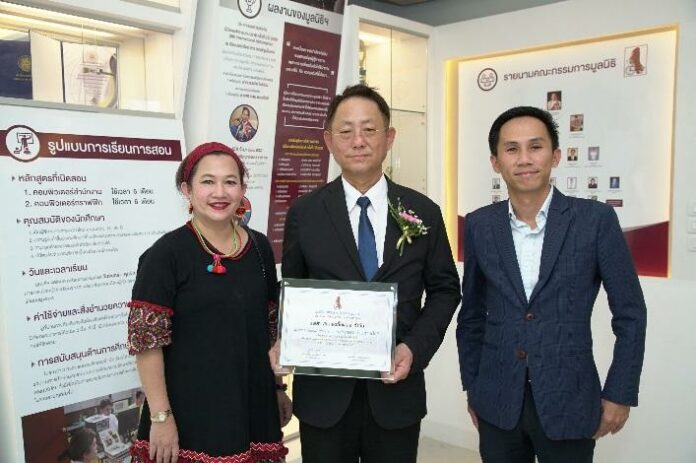
Daikin Donates Air Conditioners to Thai With Disability Foundation (Sponsored)

NONTHABURI — To continue its mission of forging a good society, Daikin, a world-class expert in air  conditioners, today announced that it donated air conditioners to the Thai With Disability Foundation in Nonthaburi for use in the Thai with Disability Foundation’s new multi-purpose building titled “Ruam Thang Fun”. The corporate social responsibility activity was in accordance with the company’s core mission of elevating Thailand to a quality society.

C:\Users\dell\Downloads\khaosodenglish64100\3.JPG

Mr. Bundit Srivallapanondh, Managing Director of Siam Daikin Sales Co., Ltd, represented his company at the opening ceremony of the Ruam Thang Fun multi-purpose building of the Thai with Disability Foundation (TDF). On hand to welcome Bundit and receive the donated air conditioners was Mr.Theerawat Thanyalakpark, President of the TDF.

Mr. Bundit commented, “This activity is part of an important mission that Daikin is committed to – that is to provide networks of people with disabilities with an opportunity to access and utilize the learning space of the Ruam Thang Fun building that is located in the premises of the Thai with Disability Foundation.  We are ready to continue helping create a quality society. On this occasion, Daikin donated 10 air conditioners costing 47,900 baht each and totaling 479,000 baht.”

C:\Users\dell\Downloads\khaosodenglish64100\4.JPG

The two-story Ruam Thang Fun multi-purpose building provides disabled learners with all the comfort and convenience of a universal design. The building houses a computer room, two lecture rooms, a multi-purpose learning room, library and other facilities that are key to vocational education about computing.

The goal of this 2,000-square meter building is to provide the physically disabled with education activities such as computer training workshops  in the convenient and standardized facilities. Other networks and organizations of the physically challenged are eligible to access the building’s facilities that have a wide range of educational uses to develop potential of the physically challenged.

C:\Users\dell\Downloads\khaosodenglish64100\5.JPG

Founded in 1995, the Thai with Disability Foundation engages in developing the potential of the physically handicapped and people with mobility impairments. The foundation provides disabled people them with careers support and prepares them for careers in computing services by organizing computer training workshops that have so far produced 1,500 graduates.

Advertisement

Police Say Brit Tourist Filed Theft Complaint, Not Rape

File photo.

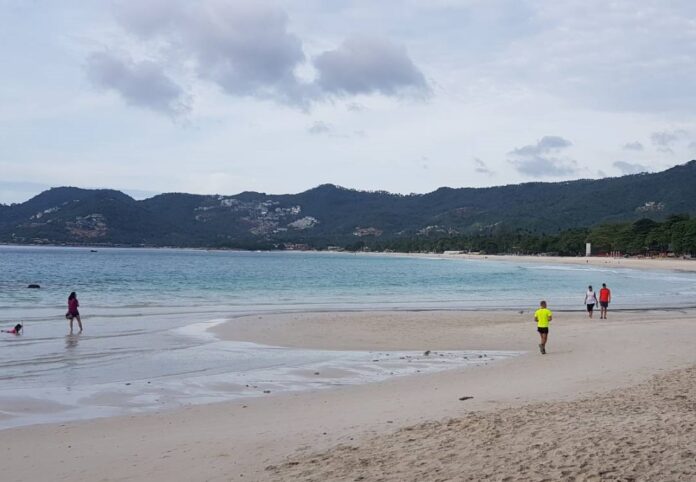
KOH TAO — Police on Friday denied media reports that they refused to investigate a rape complaint filed by a British tourist on Koh Tao.

While several media accounts say the 19-year-old backpacker tried to make a sexual assault report to police, an officer who said he met the woman said she only filed a complaint over the theft of her phone on June 27 and did not mention an assault.

“She didn’t talk about it,” Capt. Krissada Thongsakul, who works on the nearby island of Koh Phangan, said by phone Friday. “She only filed a report about the theft of her belongings.”

Krissada said the woman, accompanied by a foreign man at the station, told him she lost her mobile phone and debit card the previous night on Koh Tao. The tourist also said she chose to make a complaint at Koh Phangan because she happened to be visiting the island that afternoon, according to Krissada.

Read: Koh Tao Cops Unaware of Reported Rape of British Tourist

The police captain said the woman filed the complaint at about 1pm on June 27. A copy of a police report seen by Khaosod English said the victim told Krissada she lost a mobile phone, four debit cards and 3,000 baht in cash.

According to several published accounts, the teen’s mother said her daughter was drugged at the Leo Bar and assaulted later on a nearby beach the night of June 26. The beach, Sairee, is the same place where British tourists David Miller and Hannah Witheridge were murdered in September 2014.

The victim’s mother accused police of refusing to accept the rape complaint and covering up the incident.

Koh Tao police chief Piyapong Boonkaew dismissed the accusation Friday. He said no British tourist had filed any sexual assault report at his station in recent months.

Reached for comment, the British Embassy on Friday referred inquiries to the UK Foreign Office. Krissada said he spoke to embassy staff about the matter today.

“Someone from the embassy phoned me moments ago, too,” he said. “The embassy asked the same questions you’re asking me right now, and I gave them the same answers.”

Koh Tao, once known as a laid back resort isle, gained an unsavory reputation after the brutal 2014 murders. Two migrant Burmese workers were convicted of the killing, but many remain convinced they were scapegoats police used to cover up the crime and protect the real killers.

Advertisement

Kanchanaburi Monk Beats Young Novice to Death

Suppachai Boonlakka, who has been expelled from the monkhood after allegedly assaulting a novice, appears Sunday at a local police station in Kanchanaburi province.

KANCHANABURI — A 9-year-old novice died in Kanchanaburi province Thursday night, five days after he was beaten severely at the temple where he was ordained.

Wattanapol Srisawad had been in a coma since Saturday under treatment for a cerebral hemorrhage, broken arm and wrist as well as a deep wound to his chin. Suppachai Boonlakka, a 64-year-old monk at Wat Don Khamin has been expelled from the order and faces a charge of manslaughter pending the outcome of an autopsy.

A rescue foundation was initially informed that Wattanapol had a fever and needed transport to a hospital. The rescue worker who responded to the call found the novice unresponsive and having a seizure. There were bruises all over his body.

The local hospital transferred him to a larger hospital in Kanchanaburi city due to his critical condition. He was immediately admitted to intensive care unit and placed on life support.

Investigators said witness testimony led to Suppachai’s arrest Sunday. He has been held at the Kanchanaburi Provincial Court and has been charged with grievous assault.

Suppachai, who was assigned to supervise Wattanapol, reportedly confessed to beating the boy with a wooden stick because he misbehaved.

Wattana Srisawad, Wattanapol’s father, has said his son had told him he wanted to leave the temple because of Suppachai’s beatings, but he didn’t expect things to escalate this far.

Advertisement

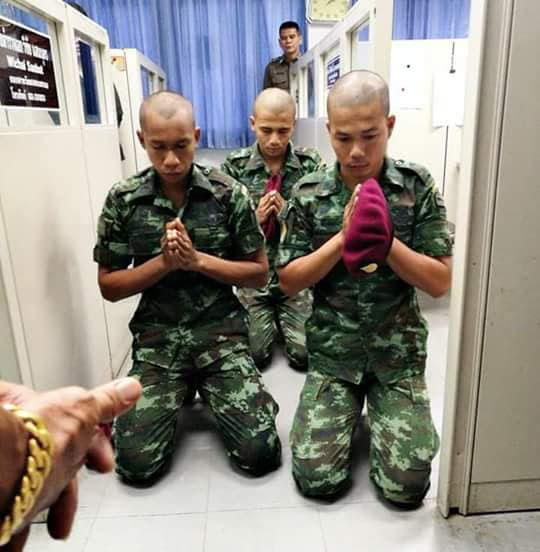
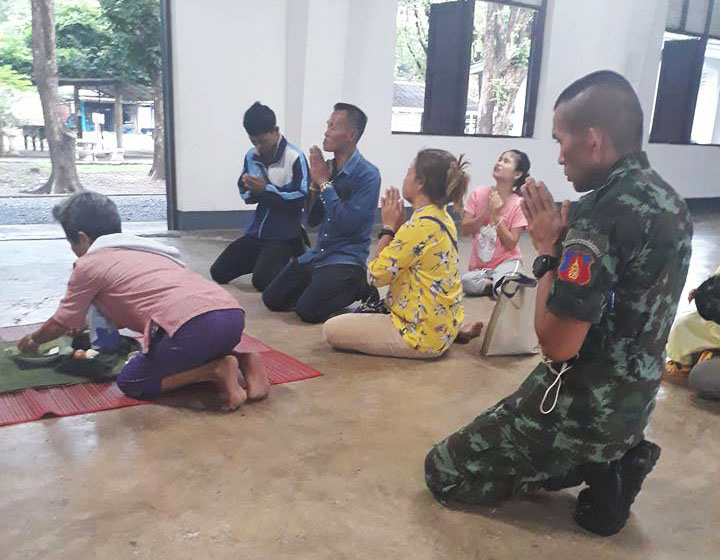
Senior Soldiers Apologize for Beating Private into Coma

Pvt. Kacha Pacha, hospitalized as of Thursday. Photo: Weerapon Sihawong / Facebook

Update Sept. 14: Pvt. Kacha Pacha died at a hospital on Sept. 14 after he spent weeks in a coma.

LOPBURI — A young soldier beaten into a coma by his superior officers earlier this week is now brain dead, his family said Friday.

Hope that Pvt. Kacha Pacha, 22, who was beaten senseless in an army barracks Tuesday, would recover from his injuries dimmed after brain activity could no longer be detected on his third day of hospitalization.

“I heard on Thursday morning he was getting better, moving his hands and feet. I was happy all day, but after his brain stopped working, I still can’t come to terms with it,” his 48-year-old father, Komchun Pacha, said.

Komchun was among Kacha’s relatives who visited the barracks Friday morning where he was assaulted to hold a tearful ceremony calling out to the deceased 22-year-old husband and father.

“Come back to your wife and kids, come see your parents, my child,” his mother, who was not named, can be heard crying out in a live-stream video of their visit.

Wansina Boonta, pregnant with their second child, told the media yesterday they forgave three senior soldiers, who prostrated and plead for forgiveness at Kacha’s hospital bedside Thursday, saying that they “did not intend for this to happen.”

He said the family forgave them because they did not want vengeance. The army commander of the unit Kacha was in, Lt. Col. Monchai Yimyoo, admitted to not taking care of his unit well enough.

“I’m not vengeful, angry or blaming Lt. Col. Monchai,” Kacha’s father, 48-year-old Komchun Pacha, said Thursday night. “I see it as an unavoidable accident that stemmed from fleeting emotions that weren’t handled maturely. I would like to thank Lt. Col. Monchai for coming to help take care of Kacha and us all day.”

The three soldiers asked the Pacha family not to go public with the story, but the family said they talked to the media for fear no justice would be served, as happened after the death of 19-year-old cadet Pakapong Tanyakan last year. His family cried foul after his body was returned by the military missing vital organs – including tissue paper stuffed into his skull. The army has denied responsibility and said he fell down some stairs.

Nine months after his death, the investigation is going nowhere, according to his sister, Supicha Tanyakan. His cause of death hasn’t even been officially confirmed.

39935747 2079644692350436 3412708570188218368 n
Lt. Col. Monchai Yimyoo and two other soldiers who confessed to assaulting Kacha apologize to his family Thursday. Photo: Phalrot Bunma / Facebook

Komchun, Kacha’s father, said he understood the soldiers had been annoyed and jealous of his son. The soldiers would video call Kacha while he was having dinner at home and demand he do pushups on camera for them. Still, Komchun, who had also been a soldier, said he was been beaten like that while in the army.

“I understand if training is harsh because I was a draft soldier at Camp Navamin, 21st Regiment,” the distraught father said. “I was trained harder than this, but upperclassmen never beat me up. If we had conflicts, we talked it out.”

Violence against lower-ranking soldiers and recruits are a perennial problem in Thailand’s military. Each year, several stories enter the national conversation to be dismissed by senior military leaders and little serious effort at reform.

Army higher-ups have tried to distance Kacha’s assault from the organization.

“It’s not hazing. The army has no hazing these days. This is a personal dispute between young men,” Gen. Chalermchai Sitthisart, army commander-in-chief said. “Don’t worry. Physical abuse happens when soldiers fight, but if someone is wrong we will proceed accordingly.”

39973396 1633811973414070 78991981946077184 n
Kacha’s family Friday morning call out for his spirit. Photo: Kanjanaporn Lek / Facebook

39999728 1891445337823968 845129699905503232 n
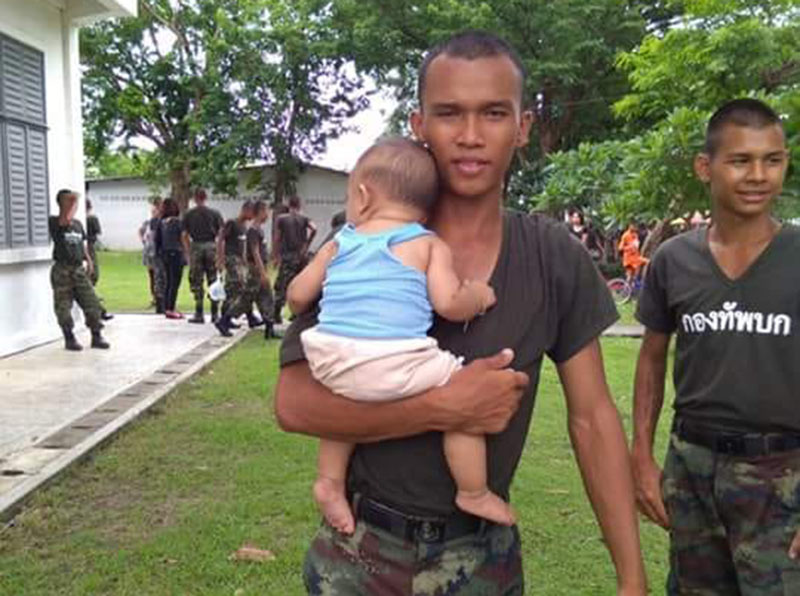
Kacha Pacha holding his child. Photo: Boy Krungkao / Facebook

Correction: A previous version of the story misidentified an assaulter.

Advertisement

Hot News

LATEST NEWS

Bangkok
overcast clouds
27.5 ° C
28.3 °
25.9 °
85 %
2.3kmh
100 %
Wed
29 °
Thu
34 °
Fri
34 °
Sat
31 °
Sun
31 °