


































29.4 C
Bangkok
Monday, June 22, 2026
Home Blog Page 2096

Fresh Voices Lead the Way In Oscar Nominations

This image released by A24 Films shows director Greta Gerwig, right, and Saoirse Ronan on the set of "Lady Bird." Gerwig is expected to be the fifth woman nominated for an Oscar for best director when the nominations for the 90th annual Academy Awards are announced on Tuesday. (Merie Wallace/A24 via AP)

NEW YORK — The Academy Awards showered outsiders, on screen and off, with milestone-setting nominations that celebrated Guillermo del Toro’s full-hearted ode to outcasts “The Shape of Water,” embraced first-time filmmakers like Greta Gerwig and Jordan Peele, and made “Mudbound” director of photography Rachel Morrison the first woman ever nominated for best cinematography.

In nominations that spanned young and old, studio blockbusters and passion-fueled indies, the 90th annual Academy Awards on Tuesday gave many who have long been shunned by the movie business — women directors, transgender filmmakers, minority actors, even Netflix — something to cheer about.

Leading all nominees with 13 nods, including best picture, was “The Shape of Water,” by veteran Mexican filmmaker del Toro, whose Cold War-era fantasy is about a mute office cleaner (Sally Hawkins) who falls in love with an amphibious creature. But the nominations also carried forward some of the ongoing reckoning of the Me Too movement that has been felt especially acutely in Hollywood, where male filmmakers outnumber women by a ratio of approximately 12-to-1.

Gerwig, the writer-director of the nuanced coming-of-age tale “Lady Bird,” became just the fifth woman nominated for best director, following Lina Wertmuller, Jane Campion, Sofia Coppola and Kathryn Bigelow, the sole woman to win, for “The Hurt Locker.” Speaking by phone Tuesday from Los Angeles, Gerwig said the distinction was extremely meaningful.

“When I think about Kathryn Bigelow winning and me sitting there watching it and feeling suddenly like, ‘It’s possible,'” said Gerwig. “To be nominated as the fifth woman, I hope that what it does is that women of all ages look at it and they also find the spark within themselves that says: ‘Now I have to go make my movie.’ That’s what I want. And I want it selfishly because I want to see their stories.”

Morrison posted Twitter of her nomination: “I hope it tells all the dreamers out there (especially the young girls with cameras in their hands) that ANYTHING IS POSSIBLE.”

In what’s been a wide-open awards season, Oscar voters chose nine best-picture nominees, including four with female protagonists: “The Shape of Water,” ”Lady Bird,” Martin McDonaugh’s rage-fueled comic drama “Three Billboards Outside Ebbing, Missouri,” Jordan Peele’s horror sensation “Get Out,” Joe Wright’s Winston Churchill drama “Darkest Hour,” Steven Spielberg’s timely newspaper drama “The Post,” Christopher Nolan’s World War II epic “Dunkirk,” Luca Guadagnino’s tender love story “Call Me By Your Name” and Paul Thomas Anderson’s twisted romance “Phantom Thread.”

One of Gerwig’s first calls of congratulations was to another first-time filmmaker, Peele. The two have been brought together by Hollywood’s months-long Oscar campaigning and their mutual rookie status. (Gerwig previously co-directed a small feature.)

Peele becomes the fifth black filmmaker nominated for best director, and the third to helm a best-picture nominee, following Barry Jenkins last year for “Moonlight.” He’s also the third person to receive best picture, director and writing nods for his first feature film after Warren Beatty (“Heaven Can Wait”) and James L. Brooks (“Terms of Endearment”).

“I’m going to write. I’m now going to get hard at work on the next one,” Peele said by phone. “One of the greatest things that I get from this whole process is this faith in my voice. It’s like jet fuel. It makes me want to make as many movies that I can in my life.

AP17342060846180
This image released by Sony Pictures Classics shows Timothee Chalamet in a scene from “Call Me By Your Name.” Chalamet was nominated for an Oscar for best actor on Tuesday, Jan. 23, 2018. The 90th Oscars will air live on ABC on Sunday, March 4. (Sony Pictures Classics via AP)

“The Shape of Water” landed just shy of tying the record of 14 nominations, scoring a wide array for nominations for its cast (Sally Hawkins, Richard Jenkins, Octavia Spencer), del Toro’s directing, its sumptuous score (by Alexandre Desplat) and its technical craft. Del Toro said in an interview Tuesday that he would celebrate with an extra chicken sausage for breakfast: “That will be my indulgence for the day.”

“You realize that we are all, in some way or another, a bit of an outsider in different ways,” said del Toro of his film’s resonance. “Not fearing the other but embracing the other is the only way to go as a race. The urgency of that message of hope and emotion is what sustained the faith for roughly half a decade that the movie needed to be made.”

All of the acting front-runners — Frances McDormand (“Three Billboards”), Gary Oldman (“Darkest Hour”), Allison Janney (“I, Tonya”), Sam Rockwell (“Three Billboards”) — landed their expected nominations. But there were plenty of surprises and more than a few landmarks in the nominations announced from Los Angeles ahead of the March 4 ceremony, to be hosted by Jimmy Kimmel.

Meryl Streep scored her 21st nomination, for “The Post,” and John Williams (“Star Wars: The Last Jedi”) his 51st. Two 89-year-old legends became the oldest nominees: Agnes Varda (“Faces Places,” best documentary) and James Ivory (“Call Me By Your Name,” for adapted screenplay). There were eight first-time acting nominees, including 22-year-old “Call Me By Your Name” breakthrough Timothee Chalamet and Daniel Kaluuya, 28, of “Get Out.” Saoirse Ronan, that grizzled 23-year-old, landed her third Oscar nom, for “Lady Bird.”

Denzel Washington (“Roman J. Israel, Esq.”) was nominated for best actor, likely eclipsing James Franco (“Disaster Artist”). Franco was accused of sexual misconduct, which he denied, just days before Oscar voting closed.

Christopher Plummer, who replaced Kevin Spacey in Ridley Scott’s “All the Money in the World,” also sneaked into the best supporting actor category. Added to the film in reshoots little more than a month before the film’s release, 88-year-old Plummer is the oldest acting nominee ever. “Everything has happened so quickly of late that I am still a trifled stunned but excited by it all,” said Plummer.

Perhaps most unexpected was the broad success of Paul Thomas Anderson’s “Phantom Thread,” which scored not only nods for Daniel Day-Lewis for best actor and Lesley Manville, for best supporting actress, but also nominations for best picture, Anderson’s direction, costume design and Johnny Greenwood’s score.

Anderson likely displaced Steven Spielberg (“The Post”) and Martin McDonagh, the director of the film many have tapped to win best picture, “Three Billboards.” His absence is a major knock for a film that has endured the harshest backlash of the contenders, with many claiming it’s out of touch in matters of race.

Still, “Three Billboards” scored seven nominations Tuesday, behind only “The Shape of Water” and Christopher Nolan’s “Dunkirk.” The World War II epic, thus far little-honored in Hollywood’s awards season, emerged especially strong with Oscar voters, taking eight nominations, many of them in technical categories. It’s Nolan’s first nomination for best director.

Though the favorites are largely independent films, a number of blockbusters fared well, including five nods for “Blade Runner 2049,” four for “Star Wars: The Last Jedi,” three for “Baby Driver,” two for “Beauty and the Beast” and two for Pixar’s “Coco,” which is up for best animated feature. The Wolverine film “Logan” even notched a screenplay nod, a first for a superhero movie.

Yet Patty Jenkins’ “Wonder Woman,” which became the highest grossing movie ever directed by a woman, failed to receive any Oscar nods despite an awards campaign. Sean Baker’s far lower budgeted “The Florida Project” also managed only a supporting actor nomination for Willem Dafoe despite hopes for more.

Though some minorities were still absent from the acting categories, the film academy, which has worked to diversify its membership in recent years, voted for a field of nominees almost as diverse as last year when “Moonlight,” ”Fences” and “Hidden Figures” powered a rebuttal to the “Oscars So White” backlash of the two years prior. Four black actors — Washington, Daniel Kaluuya, Spencer and Mary J. Blige (“Mudbound”) — were among the 20 acting nominees.

The documentary category — also including “Abacus: Small Enough to Jail,” ”Last Men in Aleppo” and two Netflix entries: “Icarus” and “Strong Island” — likewise contained history. Yance Ford, the director of “Strong Island,” about Ford’s investigation into his brother’s 1992 murder, became the first transgender filmmaker nominated for an Oscar.

Some had lobbied for “A Fantastic Woman” star Daniela Vega to become the first transgender actor nominated. While Vega didn’t garner a nomination, her film, from Chile, landed in the best foreign language category. The other nominees are: “The Insult,” from Lebanon; “Loveless,” from Russia; “On Body and Soul,” from Hungary; and the Palme d’Or winner “The Square,” from Sweden.

Last year’s Oscars broadcast drew 32.9 million viewers for ABC, a four percent drop from the prior year. More worrisome, however, was a steeper slide in the key demographic of adults aged 18-49, whose viewership was down 14 percent from 2016.

Though the show ran especially long, at three hours and 49 minutes, it finished with a bang: the infamous envelope mix-up that led to “La La Land” being incorrectly announced as the best picture before “Moonlight” was crowned.

This year, the academy has prohibited the PwC accountants who handle the envelopes from using cellphones or social media during the show. The accounting firm on Monday also unveiled several reforms including the addition of a third balloting partner in the show’s control room. But the movie business has larger accounting problems. Attendance hit a 24-year low in 2017.

It was a dominant if bittersweet day for 20th Century Fox. Its specialty label, Fox Searchlight, is behind both “Three Billboards” and “The Shape of Water,” and Fox released “The Post.” Yet Fox’s leading 27 nominations may soon count for the Walt Disney Co., which last month reached a deal to purchase Fox for $52.4 billion.

Both Amazon and Netflix failed to crack the best picture category but earned nominations elsewhere. Netflix’s “Mudbound” scored four nods and Amazon’s “The Big Sick” grabbed a nomination for Kumail Nanjiani and Emily V. Gordon’s original screenplay about their real-life romance.

“At times we worried it would be insurmountable, or would rip us apart, or even worse — that no one would like it,” Nanjiani and Gordon said in a joint statement. “The fact that it connected with audiences is exhilarating, and this nomination proves that our love is real. We have decided to stay married.”


Advertisement

Indonesian Troops Show Off Snake-Handling Skills for Mattis

JAKARTA — U.S. Defense Secretary Jim Mattis got an up-close look at Indonesian commandos – including soldiers walking on fire and breaking bricks with their heads.

The commandos performed for Mattis at the conclusion of a two-day visit in which Mattis expressed interest in closer U.S. contacts with Indonesia special forces.

With music as a backdrop, Mattis looked on in silence as the commandos demonstrated their hostage-rescue skills, snake-handling and hand-to-hand combat training.

Afterward, Mattis was flying to Hanoi for his first visit to Vietnam.

Story: Robert Burns

Advertisement

Children of Youngest Province Share Their Dreams for Bueng Kan

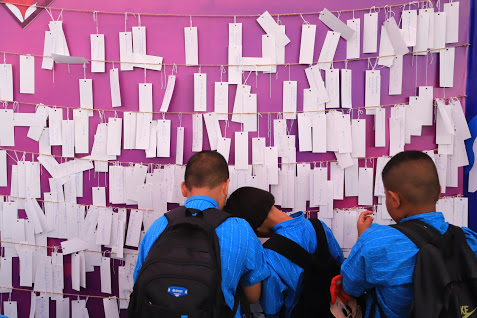
Children in Bueng Kan province show the messages they wrote for their hometown Thursday at the annual Red Cross and Rubber Day event.

BUENG KAN — When the law establishing Bueng Kan province came into effect, Sirintra Thongdee was only in kindergarten. Then 6, she was told by her family that she was no longer of Nong Khai province but now a citizen of Bueng Kan.

Seven years later, the 13-year-old says she has yet seen any drastic changes except for her own sense of place.

“When there was yet Bueng Kan province, I wanted to go to Nong Khai city because it is a big district,” she said. “But when Bueng Kan became a province, I feel better that I am already living in the city. Things are more convenient, and I feel no need to move.”

Kanyavee e1516710205903
Kanyavee Ravi

While adults are trying their best to make Thailand’s youngest province self-sustaining, the youth of Bueng Kan play a crucial role in its future. Therefore, nurturing a sense of community belonging is one of the top obligations Bueng Kan has to its children. So the Red Cross and Rubber Day festival, the province’s biggest annual event that ran Jan. 17 to 23 this year, provided a significant opportunity to do so.

Though the first attempt to separate from Nong Khai province was undertaken two decades ago, Bueng Kan and the other seven districts only managed to become a new province in the northeastern region in 2011. The rationale was that its location was too far from Nong Khai city.

If forced to name the most obvious change, Sirintra said it was a road along the Mekong River which has been extended and improved. From a small riverside lane, it is now a recreational area for local residents providing sunrise viewpoints for tourists and a venue for Bueng Kan’s weekend walking street.

Sirintra
Sirintra Thongdee

It is probably beyond the ability of the young girl to realize the land value her province is accruing as more projects head here, including a special economic zone and the construction of a fifth bridge linking Thailand to Laos. Lying along the mighty Mekong opposite to Laos’ Bolikhamxay province, this northernmost town of the Isaan region is strategically located for a connection to Vietnam as well.

Besides learning about Dinosaurs in Isaan, tapping the rubber trees now at the heart of Bueng Kan’s economy, the exhibition at the Red Cross and Rubber Day event presented visions for Bueng Kan and encouraged children to write down what they want to see in their hometowns.

“I wish Bueng Kan had an amusement park.”
“I wish Bueng Kan became a trade center and had a cinema.”
“I want Bueng Kan to have so so many big libraries.”
“I want a zoo.”

Pakjira
Pakjira Thongtheeradech

These are among hundreds of messages written by children that were displayed on the board alongside adult opinions. The most popular comment was, perhaps, “Wish Bueng Kan had an airport,” to which Sirintra nodded her approval. She said that if she wants to fly to Bangkok now, she has to ride three hours to Udon Thani International Airport. The 13-year-old girl also suggested a train station.

“Right now, I have to use public bus or a private car if I want to go to another province,” she said. “If there was an airport, it would be easier.”

Sirintra’s dream could come true as the Civil Aviation Authority of Thailand has begun a feasibility study and identified an area for construction, 25 kilometers from the city center.

While the journey to the province remains inconvenient, another young resident of Bueng Kan suggested they eliminate the reasons to travel. Pakjira Thongtheeradech said, “I wish Bueng Kan had a university like Khon Kaen. Now we only have colleges.”

Kanyavee e1516710205903
Kanyavee Ravi

Pakjira, a Matthayom 1 student, said education is one of the main reason children leave Bueng Kan to the nearby towns. Although there is currently the Bueng Kan Campus of Udon Thani Rajabhat University, the choices of available programs are very limited.

Building an airport or a university cannot be done in a month, so some kids came up with more doable requests.

“I want a pedestrian flyover in front of our Bueng Kan School,” Kanyavee Ravi said. “We have a zebra crossing but cars usually come too fast and don’t stop when they are told to.”

Either taking years or months, these are voices of the new generation who hold the future of Thailand’s newest province and it can only become possible if adults are willing to listen to them.

IMG 5853
Children put the message they wrote for Bueng Kan province on a display.
IMG 5801
A child tries tapping a rubber tree Thursday at the Rubber Day event in Bueng Kan province. Rubber industry now plays a crucial role in the Bueng Kan’s economy.
Advertisement

Dead Cadet Inquiry Upholds December Results: Family

Cadet Pakapong Tanyakan poses for a picture with his mother on Aug. 16, 2017. Image: Sukanya Tanyakan / Facebook

BANGKOK — A long-awaited investigation into the death of a cadet in October concluded he died of health conditions, his family told reporters Tuesday.

Behind a closed door meeting at the armed forces headquarters which reporters were not allowed to observe, army officers briefed the parents and relatives of Pakapong Tanyakan about findings that took more than two months to compile.

Pakapong’s sister told reporters after the meeting that the military repeated the same explanation given in December, when the army blamed Pakapong’s death on sudden heart failure.

“The military’s explanation is similar to what they have said in previous news conference,” Supicha Tanyakan told reporters in a brief interview.

She added that the family’s criminal case against the military will continue. Supicha could not be reached for comment as of press time.

Gen. Chawarat Marungruang, head of the committee that oversees the investigation, said he expects the two sides will have more conversations in the future.

He also said the inquiry result is not final and that the military would consult with forensic scientists and doctors for a more complete picture, Chawarat said.

“We are not drawing a deadline on when the work will be completed,” the air force general said. “But we are doing everything quickly.”

The 19-year-old cadet died during training at an armed forces academy in Nakhon Nayok province in October. The military initially blamed “sudden heart failure” and other health conditions for his death, but his family protested those findings on suspicion Pakapong might have died from physical mistreatment.

After the news drew widespread attention and anger from the public, the armed forces announced they would investigate the chain of events that led to Pakapong’s death.

Pakapong’s family was also shocked to discover that some of the cadet’s internal organs had gone missing from his body. The military later admitted to keeping them without the family’s knowledge and returned them to his parents following social media outcry.

Shortly after today’s briefing started, Pakapong’s family was seen storming out of the meeting room and driving away. They told reporters they were angry at the military’s insistence that only Pakapong’s parents would be allowed in.

They returned about 20 minutes later, saying military officers had changed their mind and would allow the entire family into the meeting room.

Advertisement

Possible Election Deferment is Plot to Benefit Junta: Critics

Then-army chief Prayuth Chan-ocha on March 30, 2014, casts his ballot for a Senate election in Bangkok.

BANGKOK — An attempt to defer elections until next year by the junta-appointed National Legislative Assembly could be intended to give the military regime a better chance of returning to power after polls take place, critics said Tuesday.

The National Legislative Assembly, NLA, on Thursday will cast the second and third votes on a proposed amendment to defer by 90 days the enforcement of an organic bill that would push elections back to February 2019.

Prime Minister Gen. Prayuth Chan-ocha – who also leads the junta known as the National Council for Peace and Order, or NCPO – denied on Monday that he had anything to do with the move.

“There is no order,” Prayuth said, seeking to refute claims his government was involved.

But critics said the move aimed to give the junta a better chance at returning to power after elections.

“I think the real motive can be detected by society – to defer the elections as long as possible,” said Chaithawat Tulathon, Chiang Mai-based editor of Same Sky Magazine, a left-wing journal.

Chaithawat said the NCPO likely wants to secure greater support to give Prayuth a better opportunity of returning as prime minister after the promised November elections.

“To rush the elections may not be in the best interest of the military party,” Chaithawat said, referring to the much-speculated formation of a pro-military or military party to compete in the next elections.

Student activist Netiwit Chotiphatphaisal said Tuesday that the junta will have to make sure it has an adequate voter base before plunging into polls.

“They won’t earn many votes if elections are held this year,” said Netiwit, adding that the military regime’s is now unpopular due to the more than two-dozen undeclared luxury watch scandal plaguing Deputy Prime Minister Gen. Prawit Wongsuwan. “They want to secure their power and heighten their chances of forming a [post-election] government.”

Expressing similar views, Siripan Nogsuan Sawasdee, a political scientist at Chulalongkorn University, said the main rationale behind the move was the fact that the pro-military party is not ready to compete in elections.

“They will do all it takes to ensure the NCPO will continue to be in power,” Siripan said.

Some of those who agree with such logic warned however that the move could backfire.

Political analyst Chamnan Chanruang said that nearly four years after the 2014 coup, the junta appears to be facing a Catch 22. He said the junta will likely lose if they try to compete in elections scheduled for November.

“If they stay on, they also risk being in ruins. There will be a lot of counter reactions if they prolong their stay in power,” Chamnan said, adding that if the voice of the opposition is loud enough, the NLA may retreat on Thursday.

Meanwhile, Netiwit said that whether people will accept another deferment of elections is up to society.

“Nevertheless, if people do not accept it, how can they express themselves?” Netiwit said, referring to the ban on political gatherings and restricted press which makes it difficult for dissent to manifest.

Advertisement

Hugh Masekela, Father of South African Jazz, 78

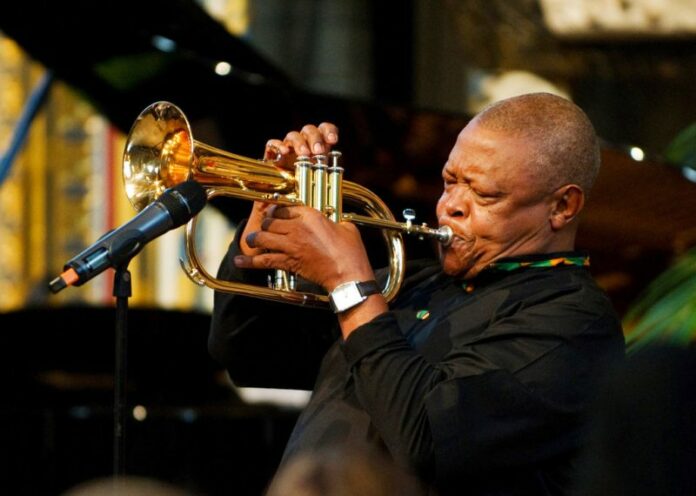
FILE - In this March 2012 file photo, South African jazz musician Hugh Masekela performs during the Observance for Commonwealth Day service at Westminster Abbey in central London. A family statement issued on Twitter Tuesday Jan. 23, 2018, says South African jazz musician and anti-apartheid activist Hugh Masekela, 78, passed away in Johannesburg after a lengthy battle against prostate cancer. (Leon Neal/Pool Photo via AP, File)

JOHANNESBURG — Legendary South African jazz musician Hugh Masekela has died at the age of 78 after a decade-long fight with cancer, according to a statement from his family on Tuesday.

Often called the “Father of South African jazz,” Masekela died in Johannesburg after what his family said was a “protracted and courageous battle with prostate cancer.”

Trumpeter, singer and composer Masekela, affectionately known locally as “Bra Hugh,” started playing the horn at 14 and quickly became an integral part of the 1950s jazz scene in Johannesburg as a member of the Jazz Epistles.

In the 1960s he went into exile in the United Kingdom and the United States, where he collaborated with American jazz legend Harry Belafonte and used his music to spread awareness about the oppressive system of white-minority rule in South Africa. He also scored an international number one hit in 1968 with “Grazing In The Grass.”

He collaborated with many musicians including Paul Simon and Herb Alpert. He was married to South African singer and activist Miriam Makeba for two years.

Many of his compositions were about the struggle for majority rule and full democratic rights in South Africa. Masekela’s catchy composition “Bring Him Back Home” calling for Nelson Mandela to be released from prison became an international anthem for the anti-apartheid movement.

“Hugh’s global and activist contribution to and participation in the areas of music, theatre, and the arts in general is contained in the minds and memory of millions across six continents,” the family statement read.

In October last year, Masekela issued a statement that he had been fighting prostate cancer since 2008 and would have to cancel his professional commitments to focus on his health. He said he started treatment after doctors found a “small ‘speck'” on his bladder, and had surgery in March 2016 after the cancer spread.

Masekela also said he felt an “imbalance” and had an eye problem after a fall in April in Morocco in which he sprained his shoulder. He said another tumor was then discovered and he had surgery.

“I’m in a good space, as I battle this stealthy disease, and I urge all men to have regular tests to check your own condition,” his statement said, asking the media for privacy.

Condolences from fans poured out Tuesday on social media paying tribute to the influential musician’s career.

“A baobob tree has fallen,” Nathi Mthethwa, South Africa’s minister for arts and culture, wrote on Twitter. “The nation has lost a one of a kind musician . We can safely say Bra Hugh was one of the great architects of Afro-Jazz and he uplifted the soul of our nation through his timeless music.”

South African President Jacob Zuma expressed his condolences, saying Masekela “kept the torch of freedom alive globally, fighting apartheid through his music and mobilizing international support for the struggle for liberation and raising awareness of the evils of apartheid … His contribution to the struggle for liberation will never be forgotten.”

Masekela inspired generations of musicians in jazz and beyond and collaborated in recent years with South African house music DJ Black Coffee and others. “I have no words,” the DJ said Tuesday on Twitter.

Story: Krista Mahr

Advertisement

Assailant Assaults Activist Protesting Prawit’s Watches

Ekachai Hongkanwan holds a book on Thai democracy last June. Photo: Ekachai Hongkangwan / Facebook

BANGKOK — An activist was physically assaulted Tuesday afternoon after returning from holding a protest to denounce the deputy prime minister over a series of undeclared luxury watches.

Speaking on the phone less than an hour after the attack, activist Ekachai Hongkangwan said a man ambushed him at about 2pm at a public bus station on Soi Lat Phrao 107 and repeatedly punched him in the face, causing him minor injuries.

Ekachai claims the attacker was the same man who police apprehended as he tried to assault him last week.

Read: Activist Assaulted While Protesting Prawit’s Luxury Watches

“He threw many punches and two to three landed on my face,” said Ekachai, adding that the attacker then shouted, “You anti-monarchist” and “you are doing it for Redshirts,” referencing the fact that Ekachai is a former lese majeste convict.

Photo: Ekachai Hongkangwan / Facebook

The activist said he believes the attack was well-planned and involved more than one person as the man knew the time and place he was getting off.

“I wonder why they have to resort to this level of violence,” Ekachai said as he was visiting a hospital to have a check up.

He said he would subsequently file a complaint for assault at a local police station.

Asked if the attack would discourage him from condemning Gen. Prawit – whose more than two dozen undeclared luxury watches are being investigated by an anti-corruption agency – Ekachai said he would not stop, since he felt the reaction to his protest meant it was having a strong impact.

Prawit last week insisted he borrowed the watches from his best friend – something many continue to question. Junta leader Gen. Prayuth Chan-ocha said his deputy was not contemplating resigning from his post.

Police identified the man who attempted to assault Ekachai on Friday as 56-year-old Rittikrai Chaiwannasan.

Advertisement

Boozy Slushie Bar Freezes Bangkok Brains

BANGKOK — Parich “Joh” Sanguamkul, 28, is as fun as the drinks he peddles: boozy slushies.

Joh is the portly, shy and smiling co-owner of Brain Freeze, a slushie and fizzy cocktail bar at Thonglor’s Arena 10. One of his employees pulses out a Long Island slushie from one of the four machines spinning its formula in the neon-lit bar.

“The Thai bar scene is getting kind of the same. You need to dress formally in a wooden place and go drink craft beers,” Joh said. “I wanted to bring something different, more textured, more fun.”

“When I saw slushie machines in events, it made me want to have a place full of slushies” he said, grinning as he sipped a Daifreezi slushie.

The bar only opened at the end of November, fits about 20 people and is still largely unknown except to partiers from the area who walk in – first at 9pm and again in the wee hours.

Joh hopes that instead of coming just for pre-drinks, people will start slurping slushies at his place throughout the night.

As a bar owner, Joh wanted to serve fast cocktails that he and his staff could easily pump out.

“A bartender can only shake so many drinks an hour,” he said.

DSCF8179
The bartender sprays absinthe onto the LGBT (260 baht) fizzy cocktail.

Consistency is key in the slurpee idea, he said. While a bartender might make a drink heavier on the booze than the next due to human error, slushie machines and fizzy taps make sure all drinks are equally alcoholic.

“There’s no need to wait for a bartender to shake your drink and then wait 15 minutes for the waiter to bring it to you,” Joh said. “In 30 seconds we can just pump out a consistent drink.”

While Brain Freeze’s flagship drinks are its four slushies, the bar also serves cocktails from the tap.

The slushies are easy to drink and yet (reporter certified) surprisingly strong: the Daifreezi (280 baht), Margarita (310 baht), Long Island (330 baht) and Milky Whey (310 baht). The Long Island, a slushie of gin, rum, tequila, vodka, citrus juice and cola, comes topped with playful gummy colas.

There are two types of tap cocktails: “fizzy” ones with oxygen bubbles and “fluffy” ones with nitrogen bubbles without the “ahhh”-inducing fizz in the former.

Try the Rumble Rasp (330 baht) for a fluffy cocktail with gin, lemon, elderflower and raspberry. For a fizzy cocktail, down the LGBT (260 baht), named after its mix of lychee, gin, basil and tonic – the absinthe spray on top really gives this one an extra kick.

After finishing a slushie (or three) you’ll understand why the shop is named Brain Freeze. Be careful for slushie booze effects: before you know it, you’ve downed three yummy, yet strong drinks and all that vodka and absinthe is freezing your veins with joy or rage – or both.

Brain Freeze, located at Arena 10 and is reachable by a short motorcycle ride from either BTS Thong Lo or BTS Ekkamai. It’s open from 7pm to 2:30am daily.

DSCF8172
Parich “Joh” Sanguamkul, 28, behind the bar at Brain Freeze.

DSCF8145

DSCF8157 e1516773384427
The Long Island (330 baht) slushie of gin, rum, tequila, vodka, citrus juice and cola.
DSCF8166 e1516773313904
The Cuban Bubble (280 baht) fizzy cocktail of white rum, peach, lime and mint.

DSCF8197

DSCF8158

DSCF8148

DSCF8167


Advertisement

Army Inquiry of Cadet’s Death Out Today

An army officer gestures at reporters Tuesday as family members of the late cadet Pakapong Tanyakan arrives to hear the investigation result

BANGKOK — A long-awaited military investigation into the death of a cadet was released to his family Tuesday.

Parents and relatives of Pakapong Tanyakan were being briefed by military officers about the inquiry results as of Tuesday afternoon. Reporters were not allowed to observe the meeting.

Cadet Death: Little Progress in Police Inquiry

The 19-year-old cadet died during training at an armed forces academy in Nakhon Nayok province in October. The military initially blamed “sudden heart failure” and other health conditions for his death, but his family protested those findings on suspicion Pakapong might have died from physical mistreatment.

After the news drew widespread attention and anger from the public, the armed forces announced they would investigate the chain of events that led to Pakapong’s death.

Shortly after today’s briefing started, Pakapong’s family was seen storming out of the meeting room and driving away. They told reporters they were angry at the military’s insistence that only Pakapong’s parents would be allowed in.

They returned about 20 minutes later, saying military officers had changed their mind and would permit the entire family into the meeting room.

Note: This is a developing story and may be updated without notice.

Related stories:

Family of Dead Cadet File Police Complaint

Organs Missing From Military Academy Cadet’s Body

Advertisement

Army Wants Civil Rights March Organizers Prosecuted

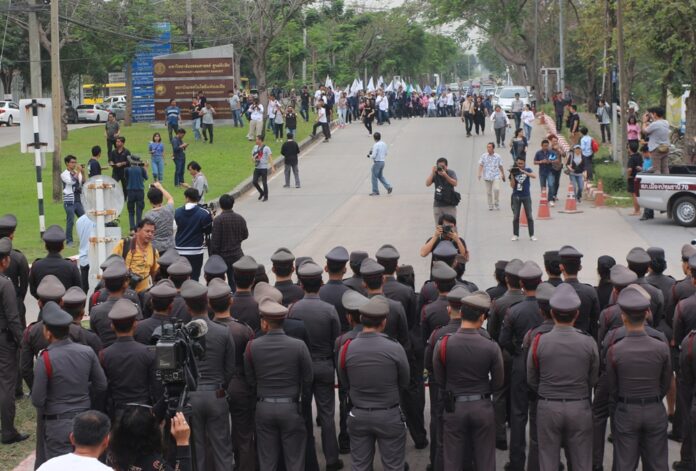
Police form lines Saturday to block demonstrators in Pathum Thani province

BANGKOK — Activists behind an ongoing cross-country march to demand greater civil rights face charges of violating the junta’s ban on public protests, police said Tuesday.

An army officer representing the military filed complaints against eight activists identified as organizers of the march Monday. Police said they have yet to formally charge the campaigners, and one of them pledged to fight the case.

“We have been expecting this,” Anusorn Unno, who works as a university lecturer, said in an interview. “We have prepared for this.”

Read: BKK – Khon Kaen Marchers to Sue Police

Anusorn and seven others are accused of flouting the junta’s ban on political activities by helping organize a march from Bangkok to Khon Kaen province to call for protection of free speech, universal healthcare and other rights.

The march – set to cover a distance of 450 kilometers – got off to a rough start Saturday when lines of police blocked the marchers’ path in Pathum Thani province. A standoff followed for hours until the activists resumed the walk by setting out in small groups.

Anusorn said some campaigners were told by police on Saturday that the military was gathering evidence to take legal action at a later time. He said the move will not affect the march.

“Their complaints are about what happened on Saturday. They are not related to the walk,” Anusorn said. “People who walk are still walking. They take turns on the walk.”

Pathum Thani police chief Surapong Thanormjit said he had yet to charge the eight activists with any crime as of today. He did not say when they would be charged, citing the need for further investigation.

Maj. Gen. Surapong is one of the police commanders named in a lawsuit filed by march organizers to the administrative court Monday, which accused them of unlawfully obstructing the demonstration. Surapong said he would defend himself in the court.

“If they are confident in what they’re doing, then let them do it,” Surapong said. “They’re trying to bring their opponents to court, so let everyone state their facts in front of the judges.”

The marchers are in Saraburi province as of Tuesday. They expect to reach Khon Kaen by Feb. 19.

Advertisement

Hot News

LATEST NEWS

Bangkok
overcast clouds
29.4 ° C
31.6 °
29.4 °
73 %
1.7kmh
100 %
Mon
36 °
Tue
37 °
Wed
37 °
Thu
36 °
Fri
36 °