



























31.1 C
Bangkok
Tuesday, June 9, 2026
Home Blog Page 2351

Why Was the 1932 Revolution Plaque So Important?

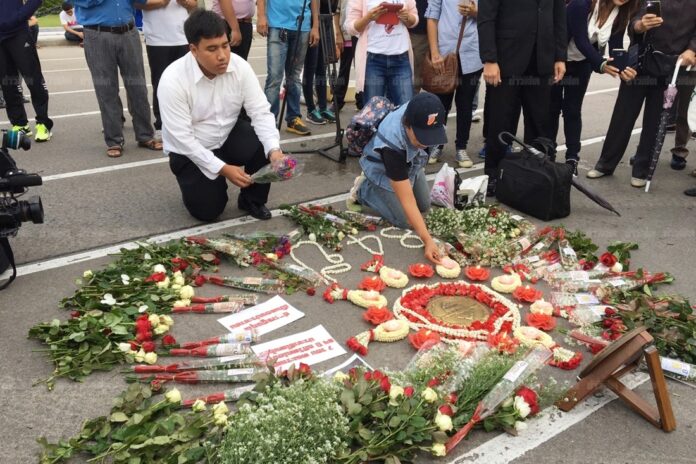
A pro-democracy activist on June 24, 2016, lays down flowers about the 1932 revolution plaque at the Royal Plaza in Bangkok

BANGKOK — Historians and citizens alike were stunned to learn on Friday afternoon that a small plaque in the middle of a road in Bangkok had gone missing.

Local media subsequently gave extensive coverage about it, while social media was abuzz with speculation about who replaced the historic symbol and why. Some readers unfamiliar with this niche of Thai political history might ask: What’s the big deal about it?

It’s where Thai democracy started

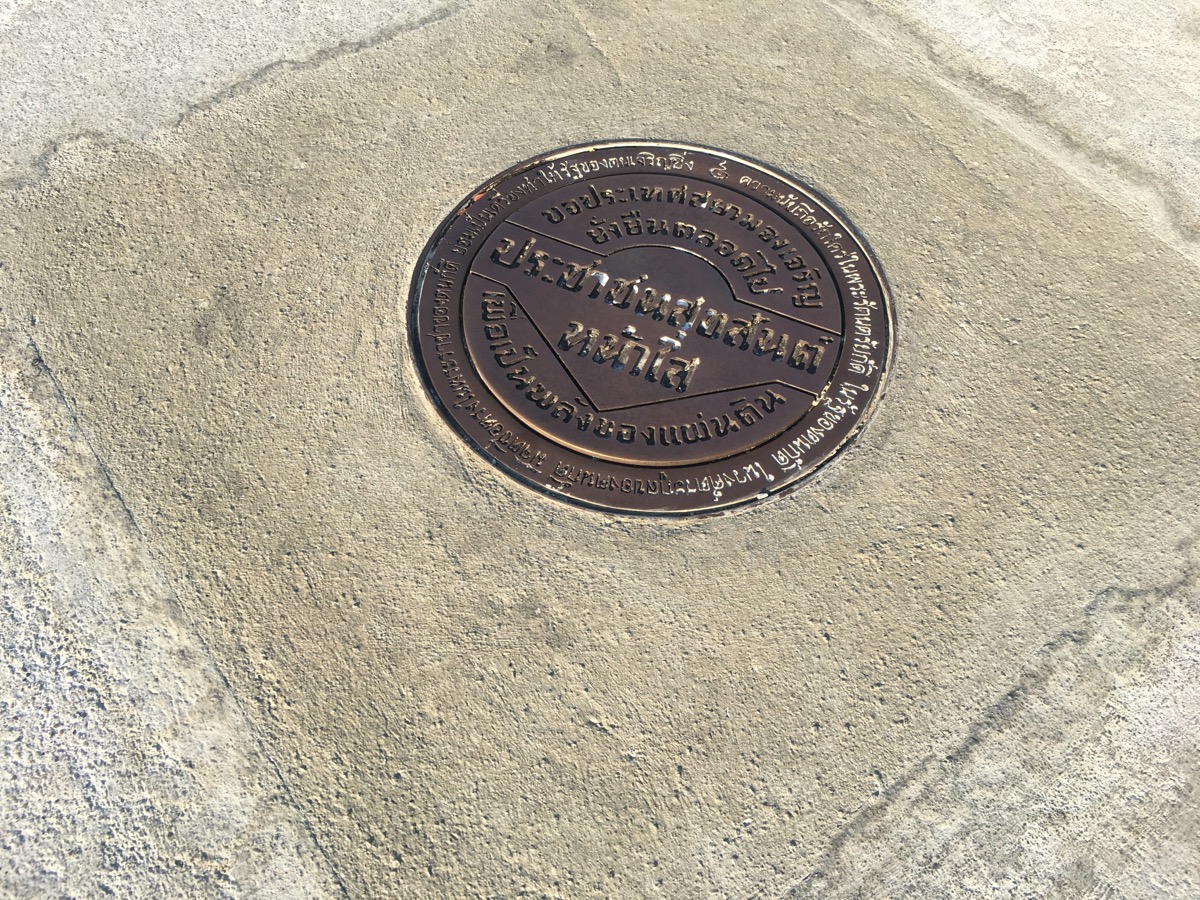
Despite its small size – only 30 centimeters in diameter – the brass plaque marked the historic moment Thailand transitioned from absolute monarchy to parliamentary democracy in 1932.

More precisely, It marked the spot where the leader of the People’s Party – a coalition of progressive military officers and bureaucrats – rallied his troops in the Royal Plaza and read out a statement declaring that the king’s direct rule over the country was over.

While Phraya Phahon Phonphayuhasena faced the nearby throne hall and read out those words under the dawning sun, soldiers loyal to the plotters seized control of Bangkok and arrested key members of the royal government. King Rama VII, who was golfing in Hua Hin at the time, agreed to give up his absolute power later that day.

Four years later, in December 1936, Phraya Phahon and his fellow revolutionaries returned to the plaza and laid down a plaque to preserve the memory of the fateful day.

“At this place, on the dawn of June 24, 1932 we the People’s Party have birthed the Constitution for the nation’s progress,” it read.

Read: Why is Popular Culture Afraid of the 1932 Revolution?

Speaking to those present at the plaque inauguration ceremony, Phraya Phahon said the object was placed there to always remind people of the history.

“Do you still remember where we joined our hands and hearts and thoughts to bring about liberty to the people of Siam?” the general said. “I believe that we Siamese should not ever forget this important spot.”

Only several memorials to the Revolution still survive

The revolutionary government went on to construct other monuments and implemented holidays to the June 24 coup.

But as the palace figures and their royalist supporters gradually won back power in the following decades, those symbolic legacies of the 1932 revolution were also rolled back. The National Day was changed from June 24 to December 5, the birthday of King Rama IX. The narrative for Constitution Day, observed every December 10, became free of any reference to the People’s Party who fought for the charter in the first place.

At least two landmarks associated with 1932 were also destroyed. The modernist Supreme Court building, which bore numerical references to the 1932 coup, was demolished in 2013 and replaced with a traditional look. Citing the need to improve traffic flow, officials in 2014 in Buriram tore down a monument dedicated to the revolution.

The plaque’s removal adds to this list of disappearing history.

Several other memorials of the June 24 coup still stand. One is the Defense of the Constitution Monument, which honors the revolutionary victory over the royalist counter-coup in 1933. Another is Wat Prasri Mahadhat Worawihan in northern Bangkok, where ashes of key members in the People’s Party are interred.

But the most prominent of them all is the iconic Democracy Monument on Ratchadamnoen Avenue, of course.

Beloved by Redshirts and progressives

Apart from historical value, the plaque also held sentimental value for progressives and supporters of the Redshirt movement.

Since the authorities barely made any mention to the 1932 Revolution, the plaque was largely forgotten by the general public for decades. Only a small group of activists showed up every June 24 at dawn to lay down candles and read poetry in remembrance of the revolution.

But interest in the plaque surged in recent years among Redshirts, many of whom saw the 1932 coup and the People’s Party as the history’s heroes who introduced Thailand to the first steps of democracy. Some Redshirt rallies have been held at these historic sites related to 1932.

As expected in polarized Thailand, the Redshirts’ newfound love for the revolutionaries who lived eight decades ago became a subject of ire for some of the hardline Yellowshirts, who viewed the coup plotters as traitors against the monarchy. One famous Yellowshirt even made a public threat to destroy the June 24 plaque for this reason.

The color-coded divide was apparent in the wake of the plaque’s disappearance: Redshirts naturally lament it, while Yellowshirts welcome it.

Correction: An earlier version of this article incorrectly said the plaque was installed in 1940. In fact, it was placed there in 1936.

Related stories: 

1932 Revolt Plaque Removal Greeted With Mixed Reactions

Historic Constitution Monument Torn Down In Buriram

Constitution Monument Pushed Aside for Rail Line

On Anniversary of Democracy, Cops Intercept and Arrest Observers (Photos)
Advertisement

Vandalism Reported at Khon Kaen Naga Shrine

Photo: Nagaramantra / Facebook

KHON KAEN — A shrine dedicated to the mythical Naga creature was torched and smashed to pieces earlier this week, according to a religious group that manages it.

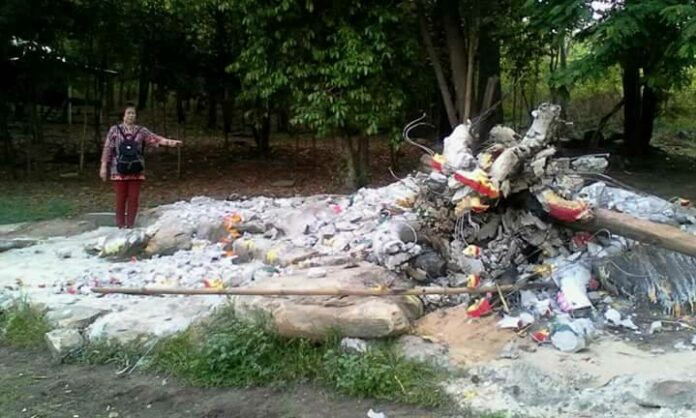
Photos posted online by Wat Tham Phupa Daeng in Khon Kaen province showed remnants of what used to be statues of the water serpent god Naga. The temple condemned the incident as blasphemous vandalism, while police suspect it might be related to a past conflict between the Naga faithful and local communities.

“We condemn those … who destroyed our nine Nagas at Wat Tham Phupa Daeng,” the temple wrote in a Tuesday post. “They did not only smash the statues, they also set them on fire.”

Naga is a mythical creature in Buddhist cosmology associated with water and good fortune. The Naga shrine complex at Wat Tham Phupa Daeng opened in December to much fanfare, drawing worshipers from many parts of the country to its supposedly miraculous blessing.

Pachorndej Chanthornwongsa, head of Khok Phochai Police Station, said no one from Wat Tham Phupa Daeng had filed any complaint about the alleged vandalism so far.

The police colonel said some local residents have enmity toward the temple and its belief in the Naga, which had previously led to disputes. For example, protests from the community forced the temple to cancel its plan to hold a large gathering and ritual to ask for the Naga’s blessing several months ago, Pachorndej said.

Advertisement

1932 Revolt Plaque Removal Greeted With Mixed Reactions

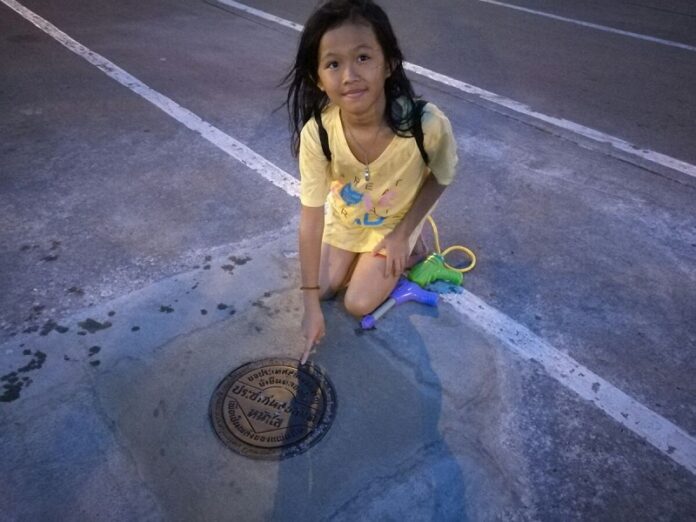
A girl points at the new plaque Friday afternoon.

BANGKOK — Social media users on Friday reacted differently as they learned that one of the kingdom’s few historical relics of the 1932 Revolution – which marked the end of the country’s absolute monarchy – had been mysteriously removed with no one claiming responsibility.

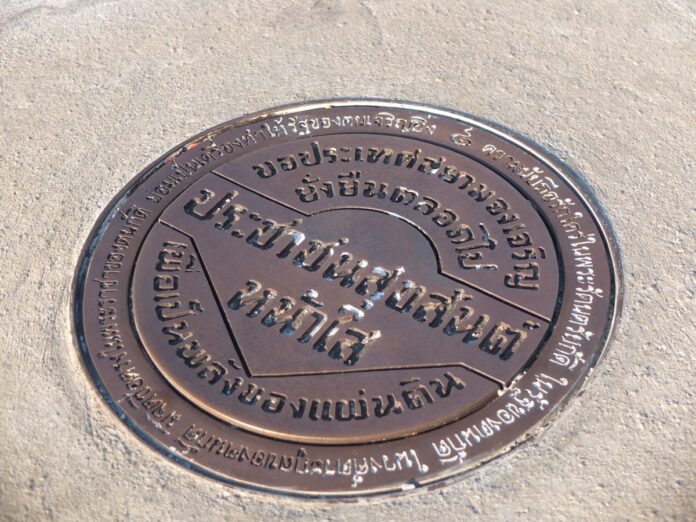
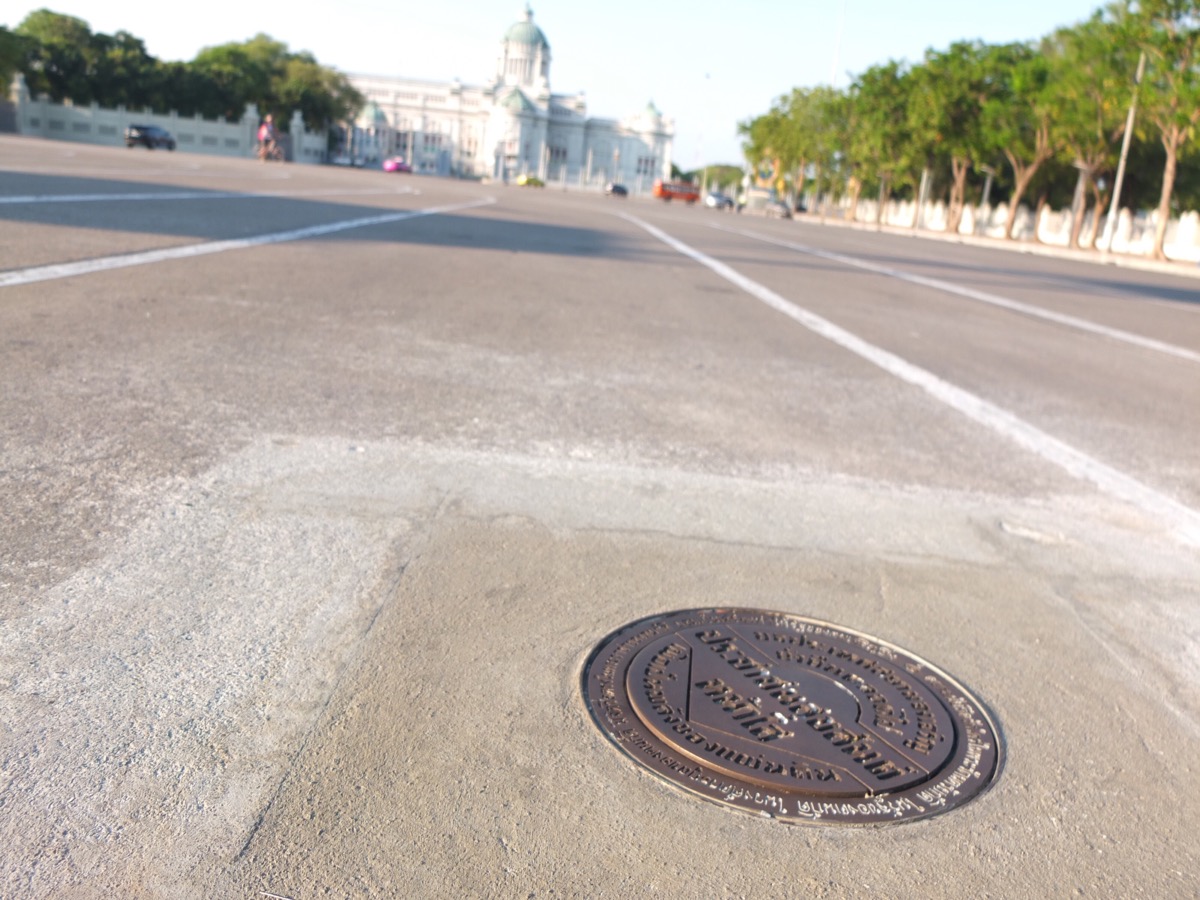
The disappearance of the 1932 Revolution plaque, 30 centimeters across and made of brass embedded on a concrete street pavement, came to public attention Friday afternoon. It had been replaced by a different plaque of similar diameter. This time, part of it contained a proverb of the Chakri Dynasty’s motto: “Loyalty and love for the Triple Gem, one’s clan and having an honest heart for one’s king is good. These are the tools to make one’s state prosper!”

Read: 1932 Democratic Revolution Plaque Removed

Despite both the Bangkok Metropolitan Administration and the Fine Arts Department insisting yesterday that they were not involved or had any knowledge about it, a Thammasat University historian demanded the Fine Arts Department investigate and find the stolen plaque.

Historian Pipat Krajaechan said on Friday that the plaque is a national historical object over 50 years old, thus adding that it was the responsibility of the Fine Arts Department to pursue the stolen item. He said the Fine Arts Department must provide the public with an explanation as to what happened to the bronze plaque, which is very close to the Equestrian Monument of King Rama V and marked the exact spot where soldiers gathered to stage the revolt which ended absolute monarchy. Pipat stressed that the plaque is important to the collective historical memory of all Thais.

Social media reactions on Friday were mixed, with some expressing outrage while others said it was the right move.

On Facebook, Chulalongkorn University Professor of Philosophy Soraj Hongladarom, posted saying that the act was akin to “the destruction of a national treasure.”

Student activist Parit Chiwarak posted saying the act was like the destruction of Thai history.

Pro-democracy activist and member of Resistant Citizen Pansak Sripthep resorted to making a nonchalant joke:

“Could it be possible that those responsible for the plaque removal were the Taliban?,” the post read.

Others such as Facebook user Suntariya Muanpawong, an environmentalist, noted today the challenges that lie ahead.

“A nation can move forward or backward. The challenge is now upon our generation,” Suntariya said.

Not all were upset. On Twitter, a number of Thais said the move was justified since The Promoters stole power from the monarchy by staging a revolt to begin with.

Twitter user @songseang0196 tweeted yesterday saying this was a plaque put up by those wanting to destroy the monarchic institution.

Twitter user @FirefoxChorme tweeted: “What’s historical about it? It was the promoters who seized power then embedded the plaque. And someone who didn’t like it removed it…”

Another Twitter user said there’s nothing to be remorseful about.

“It’s just a piece of brass that would better be sold as scrap metal to make it more useful,” tweeted @NapaphatJampa1, a lawyer, Saturday morning. “The past is the past.”

As reactions continued, some began speculating as to who might have been behind the act of vandalism and its motives.

Some said it was meant as an attempt to remove history from Thais’ collective memory, others said it could be driven by superstitious belief among some ultra-royalists. No matter who did it, the work appeared professional, a Facebook user noted.

“To steal the plaque would have required a lot of time, a jackhammer (or a sledgehammer, which would have taken even more time), bags of cement and several people to do the work,” comment Claudia Intama, an LGBT educator, on Facebook Saturday. “Even if it was at night, that is a busy area and it seems like surely someone would have noticed something. What about CCTV cameras in the area? Have they been checked? I don’t want to be a conspiracy theorist, but I wonder if this theft was sanctioned from someone higher up, or if nothing else, that they turned a blind eye. It seems suspicious.”

Related stories:

Tiny, Faded Marker Looms Large Over Thailand’s Democracy Debate

Ultra-Royalists Threaten To Destroy 1932 Revolution Plaque

Correction: This article previously stated that the plaque was replaced Friday afternoon. The plaque had been replaced as early as Wednesday but only caught public attention Friday.

Advertisement

US Releases Footage of Biggest Non-Nuclear Bomb Dropped (Video)

A GBU-43/B Massive Ordnance Air Blast bomb strike on an Islamic State militant cave and tunnel systems Thursday in the Achin district of the Nangarhar Province in eastern Afghanistan. Photo: Associated Press

KABUL, Afghanistan — The biggest non-nuclear bomb ever dropped in combat by the U.S. military killed 36 militants in eastern Afghanistan, officials said Friday, and villagers in the remote, mountainous area described being terrified by the “earsplitting blast.”

The strike using the Massive Ordnance Air Blast bomb, or MOAB, was carried out Thursday morning against an Islamic State group tunnel complex carved in the mountains that Afghan forces have tried to assault repeatedly in recent weeks in fierce fighting in Nangarhar province, Afghan officials said.

U.S. and Afghan forces have been battling the Taliban insurgency for more than 15 years. But the U.S. military brought out the biggest conventional bomb in its arsenal for the first time to hit the Islamic State, which has a far smaller but growing presence in Afghanistan. That apparently reflects President Donald Trump’s vow for a more aggressive campaign against the group.

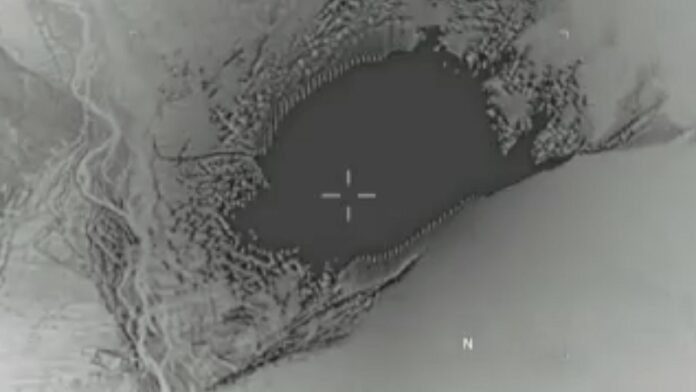
The bomb – known officially as a GBU-43B but nicknamed the “mother of all bombs” – unleashes 11 tons of explosives. Pentagon video showed the bomb striking a mountainside overlooking a river valley with a giant blast that overwhelms the landscape and sent up a massive column of black smoke. Agricultural terraces are visible in the footage, but no population centers.

The Afghan Defense Ministry said in a statement that the bomb destroyed several IS caves and ammunition caches.

Gen. Daulat Waziri, a ministry spokesman, said 36 IS fighters were killed, and that the death toll could likely rise. He said Afghan forces were at the tunnel complex assessing the damage.

The Islamic State group’s Aamaq news agency denied that any of its fighters were killed or wounded, citing a source within the group.

Waziri said the bombing was necessary because the complex was extremely hard to penetrate, with some tunnels as deep as 40 meters (over 130 feet). He called it a “strong position,” with troops attacking it four times without advancing, adding that the complex “was full of mines.”

“This was the right weapon for the right target,” said U.S. Gen. John W. Nicholson, NATO commander in Afghanistan, at a news conference. He added that there were no reports of civilian casualties.

Nicholson said the bomb was intended to eliminate the militants’ sanctuary in southern Nangarhar, “and this weapon was very effective in that use.”

The office of President Ashraf Ghani said there was “close coordination” between the U.S. military and the Afghan government over the operation, and they were careful to prevent any civilian casualties.

But the massive blast still terrified villagers 20 miles away across the border in Pakistan.

Pakistani villagers living near the frontier said the explosion was so loud they thought a bomb had been dropped in their village by U.S. warplanes targeting militants in Pakistan.

“I was sleeping when we heard a loud explosion. It was an earsplitting blast,” said Shah Wali, 46, who lives in the village of Goor Gari, 15 kilometers (9 miles) from the border with Nangarhar. “I jumped from my bed and came out of my home to see what has gone wrong in our village.”

Dozens of other villagers also came out of their homes, Wali said. He later went near the border, where he met with other residents. He said he could see smoke in the sky.

“The whole house was shaking,” said Mufti Khan of Achin district in Nangarhar. “When I came out of my house, I saw a large fire and the whole area was burning.”

Another Achin resident, Mohammad Hakim, approved of the strike.

“We are very happy, and these kinds of bombs should be used in future as well, so Daesh is rooted out from here,” he said, using the Arabic acronym for the Islamic State group.

“They killed our women, youths and elders, sitting them on mines,” Hakim added. “We also ask the Kabul government to use even stronger weapons against them.”

The U.S. estimates 600-800 IS fighters are in Afghanistan, mostly in Nangarhar. The U.S. has concentrated on fighting them while also supporting Afghan forces against the Taliban.

Trump called Thursday’s operation a “very, very successful mission.”

“I want a hundred times more bombings on this group,” said Hakim Khan, a 50-year-old a resident of Achin.

Inamullah Meyakhil, spokesman for the central hospital in eastern Nangarhar province, said no dead or wounded had been brought to the facility from the attack.

District Gov. Ismail Shinwari added that there was no civilian property near the location of the airstrike.

The Site Intelligence Group, which tracks extremist organizations, reported Friday on a statement from the Afghan Taliban that condemned the U.S. for its “terrorist” attack.

The statement said it is the responsibility of Afghans, not the U.S., to remove the Islamic State group from the country. The two militant movements are rivals.

The U.S. has more than 8,000 troops in Afghanistan, training local forces and conducting counterterrorism operations. In the past year, they have largely concentrated on thwarting a surge of attacks by the Taliban, who have captured key districts, such as Helmand province, which U.S. and British troops had fought bitterly to return to the government.

Story: Amir Shah

Advertisement

1932 Democratic Revolution Plaque Removed

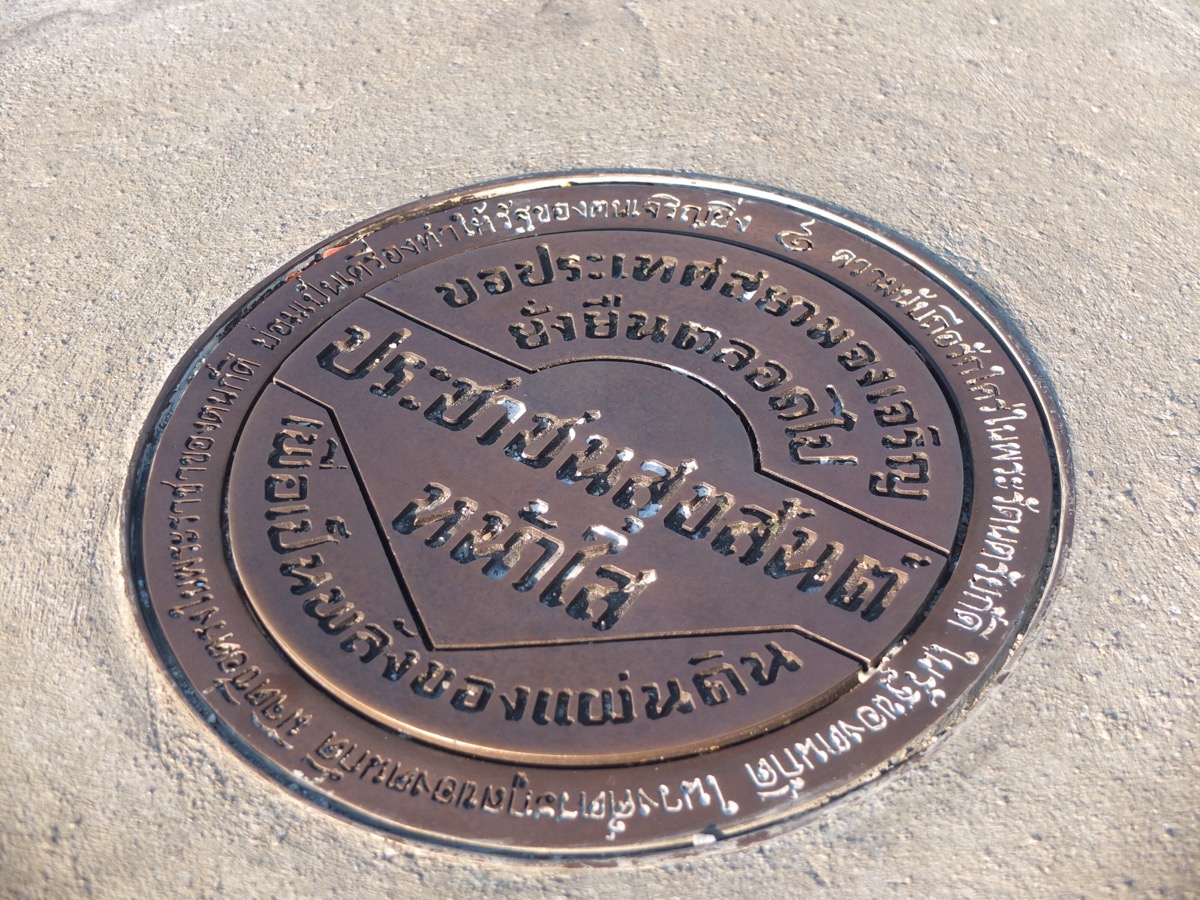
The new plaque in the Royal Plaza Friday.

Update: A Facebook page dedicated to the plaque said on Saturday it received evidence that the historic object was removed with the state’s support on the night of April 5.

In an online post, the group included a photo of the barricades being placed around the plaque with a sign that reads “No Entry.”

“Many people passed us the information that the removal of the People’s Party Plaque took place on the night of 5 April 2017 with support from state officials,” the post said. It did not mention which agency was responsible for the work.

BANGKOK — One of the nation’s few remaining acknowledgments of the birth of its democracy had gone missing Friday.

A brass plaque honoring the bloodless 1932 revolution, the removal of which had been threatened by revanchist ultraroyalists, was dug up and replaced with a message asserting a nation at ease.

“Long live Siam forever! Happy, fresh-faced citizens build up the power of the land!” the replacement reads. “Happy, fresh-faced citizens” takes up the most place in the middle.

Circling the plaque, the text quotes the proverb of Chakri Dynasty’s motto: “Loyalty and love for the Triple Gem, one’s clan and having a honest heart for one’s king is good. These are the tools to make one’s state prosper!”

Before it was replaced, the plaque paid tribute to what are regarded as “the promoters” who lead a bloodshed-free revolt that directly resulted in Thailand becoming a democratic constitutional monarchy.

The 1932 Revolution plaque, made of brass and about 30 centimeters across, was embedded in the asphalt road that is the Royal Plaza, less than 10 meters from the equestrian statue depicting King Rama V. It’s where the revolt took place on June 24, 1932, where a declaration condemning absolute monarchy was read.

The old plaque read, “At this place, on the dawn of June 24, 1932 we the People’s Party have birthed the Constitution for the nation’s progress.”

Col. Montri Tessakan of Dusit Police said the police were unaware that the plaque had been removed.

Ultraroyalist groups had threatened to remove the plaque in recent months.

History buff Thepmontri Limpaphayorm posted Oct. 31 said if no one claimed ownership of the small marker, his group would remove or destroy it.

No one has yet to take credit for the vandalism.

Sinsawat Yodbangtoey, former manager of the Pridi Banomyong Institute, said although the plaque has been stolen, history cannot be destroyed.

“Nobody can erase the historical fact made 85 years ago. It will always be remembered,” Sinsawat said.

Pro-democracy activist Chotisak Onsoong, who earlier this year launched a debate on how to preserve the plaque, said he believes the plaque removal is the work of a right-wing reactionary group.

He added that the group realised the importance of The Promoters but wanted its history erased. “It won’t discourage the pro-democracy movement, however,” said Chotisak, who called on authorities to find those responsible.

IMG 7672.JPG IMG 7667.JPG 1 IMG 7671.JPG


Story: Todd Ruiz, Sasiwan Mokkhasen, Pravit Rojanaphruk, Asaree Thaitrakulpanich and Keawta Ketbungkan


Related stories:

Tiny, Faded Marker Looms Large Over Thailand’s Democracy Debate

Ultra-Royalists Threaten To Destroy 1932 Revolution Plaque

Advertisement

Englishman Falls 3 Stories to His Death in Pattaya

Photo: Walking Street Guest House / Facebook

PATTAYA — An Englishman fell to his death in the early hours of Friday morning at Walking Street in Pattaya.

A 31-year-old Briton fell three stories from a guesthouse in Walking Street at about 4:30am, landing naked among hundreds of Songkran revelers.

“We found no signs of struggle in the room he was staying at, so we suspect that he was drunk when he fell, rather than suicide,” police Col. Apichai Krobpet said Friday. “He was a tourist who was staying here alone.”

Apichai said the man was staying in room A26 on the third floor of Walking Street Guest House in Walking Street, Pattaya. The bottom floor of the guesthouse is a go go bar.

Police said the Embassy of the United Kingdom had been informed of the man’s death.

Khaosod English is withholding his name until his family can be notified.

Advertisement

Songkran Saved: Urine-Pelting Provokers Arrested, Charged

Local Chonburi police hold up bags of fish sauce used by a group of men who threw them at motorists Thursday.

CHONBURI — Those who feared being pelted with fish sauce, urine and motor oil during Songkran in Chonburi can now rest easy, as 10 people suspected of having caused the distasteful incident were arrested Thursday and charged Friday.

Read: Happy Songkran? Motorists Pelted With Urine, Fish, Motor Oil

Ten men, aged between 17 and 33 years old, were caught by police on suspicion of being the perpetrators behind Thursday’s unsavory behavior toward motorists and passersby. Six men over 18 were charged Friday with causing a public nuisance by throwing filthy objects, and were sentenced Friday to 15 days in jail, a 5,000 baht fine, 12 hours of community service and the need for mandatory reporting to the police every three months.

“The court handed down their sentence to the six people over 18 today,” Police Col. Somchoke Taphol said Friday. “The four youths were warned and they promised to not do it again.”

In addition to the bags of urine, motor oil, pla-raa and fish sauce thrown by the group of men, Somchoke also said he found bags of shrimp paste, or kapi.

Social media users seemed relieved about the arrest.

“Serves you right. Let this be an example to any troublemakers. No one rejoices in your actions, other than people as disgusting as you!,” wrote Facebook user Charawan Lennaam. “It’s not too late to change your ways.”

17948251 10211001438704529 1051457796 o e1492156183106
The group of youths tossing bags of filth at motorists Wednesday night in Chonburi.
Advertisement

Jutanugarn, Kim Share Lead in Suspended 2nd Round in Hawaii

Ariya Jutanugarn, of Thailand, watches her tee shot on the fifth hole during the second round of the 2017 Lotte Championship on Thursday. Photo: Craig T. Kojima / AP.

KAPOLEI, Hawaii — Ariya Jutanugarn and In-Kyung Kim each birdied their final hole Thursday to share the lead during the suspended second round of the LPGA Lotte Championship.

Jutanugarn had a bogey-free 6-under 66, and Kim shot 64 to reach 9-under 135 at Ko Olina Golf Club. Jutanugarn won five times last season and was the LPGA Tour’s player of the year.

Su-Yeon Jang, among the 15 players still on the course when play was halted due to darkness, was also at 9-under with two holes remaining. Jang doesn’t have a bogey in her first 34 holes of the tournament.

The cut will be determined after the completion of the round Friday morning.

Stacy Lewis (68), first-round co-leader Mi Hyang Lee (70), Alena Sharp (69) and Becky Morgan, who also has two holes remaining, share fourth place at 8 under. There are five golfers at 7 under, including second-ranked So Yeon Ryu (69), coming off a victory in the major ANA Inspiration, and Olympic champion Inbee Park.

Play was also halted for nearly 90 minutes earlier in the day when the course was cleared due to the threat of lightning.

Paula Creamer, co-leader after an opening 66, bogeyed both par 5s on the front nine and had a double bogey on the par-3 eighth in a 74. Defending champion Minjee Lee rallied for a 68 and is six back, while top-ranked Lydia Ko moved up 45 spots, to 40th, with a 69. Hawaii’s Michelle Wie, who won here in 2014, is tied for 60th at 1 under.

Kim, a 28-year-old from Seoul who already has a pair of top-5 finishes here, had five consecutive birdies during one stretch for the lowest round of the day.

For the second straight day, a morning tee time was a huge advantage. Winds began gusting up to 20 mph as the morning groups finished. When the wind stopped, thunder, lightning and rain followed.

Lewis birdied four of her first five holes to get to 8 under early. She bogeyed the 10th just before play was suspended, but got it back with her sixth birdie of the day, at the 13th. The two-time LPGA Player of the Year is winless in her last 69 starts. — and 8 under on Ko Olina’s front nine this week.

Lotte announced a three-year extension this week, which will take it through 2020.

Advertisement

Photo Phriday: Songkran, Songkran and Songkran

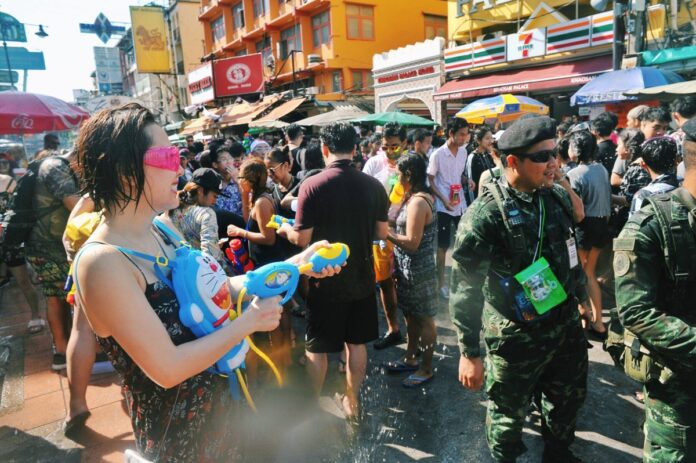
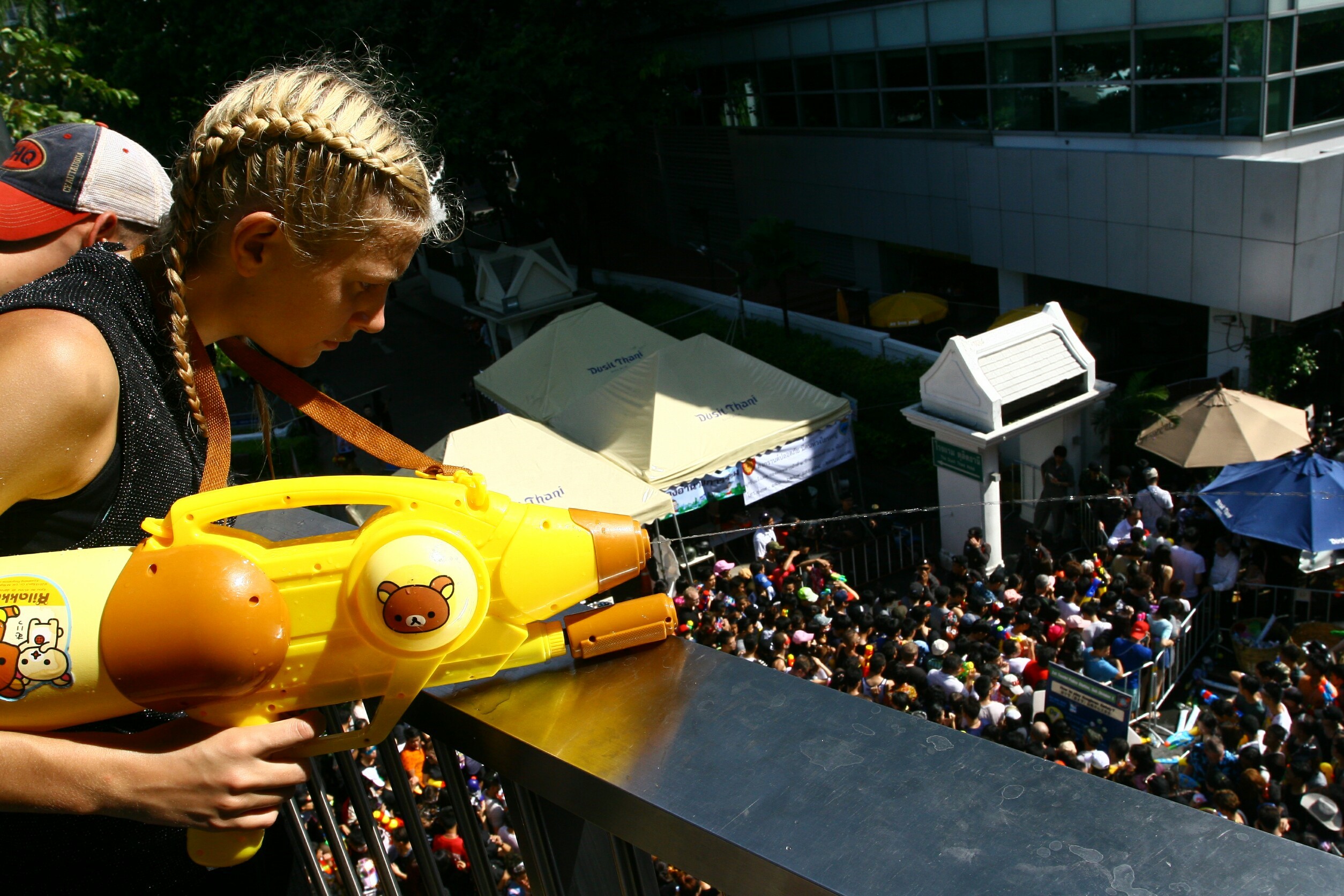
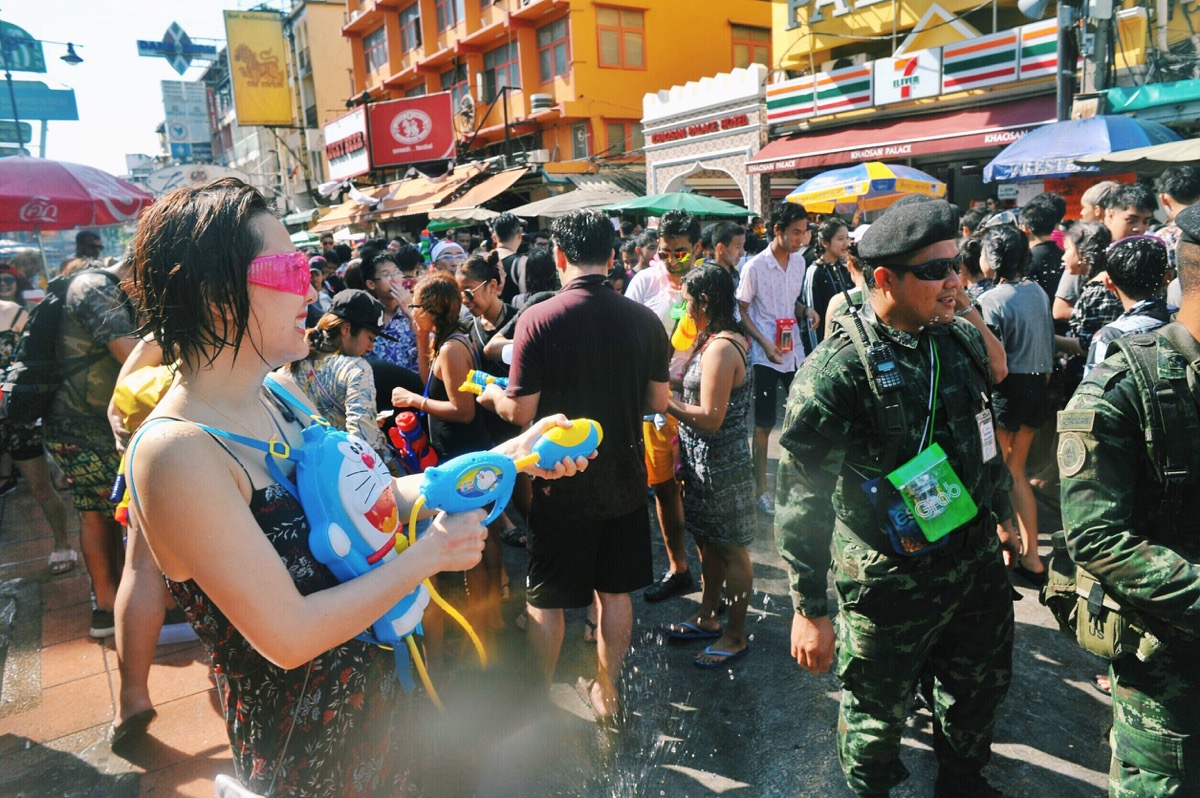
A woman with a Doraemon water gun backpack sprays soldiers during 2017 Songkran celebrations on Khaosan Road.

Top: A woman with a Doraemon water gun backpack sprays soldiers Friday during Songkran celebrations at Khaosan Road

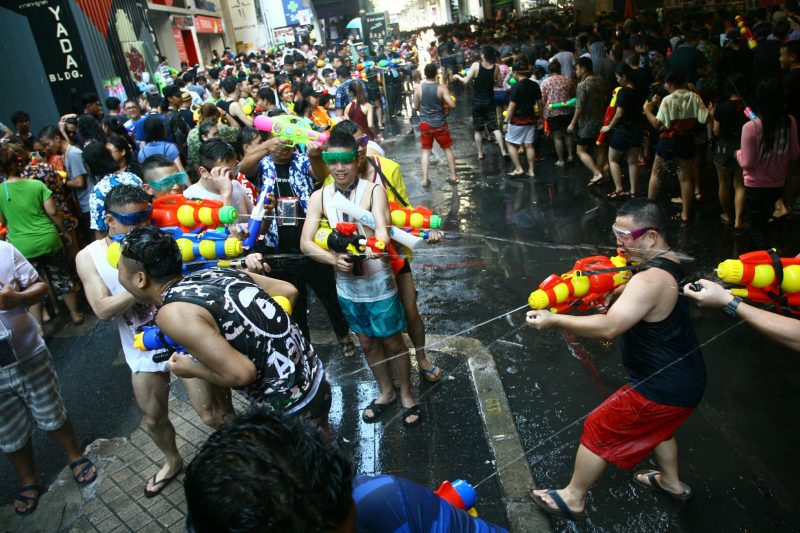
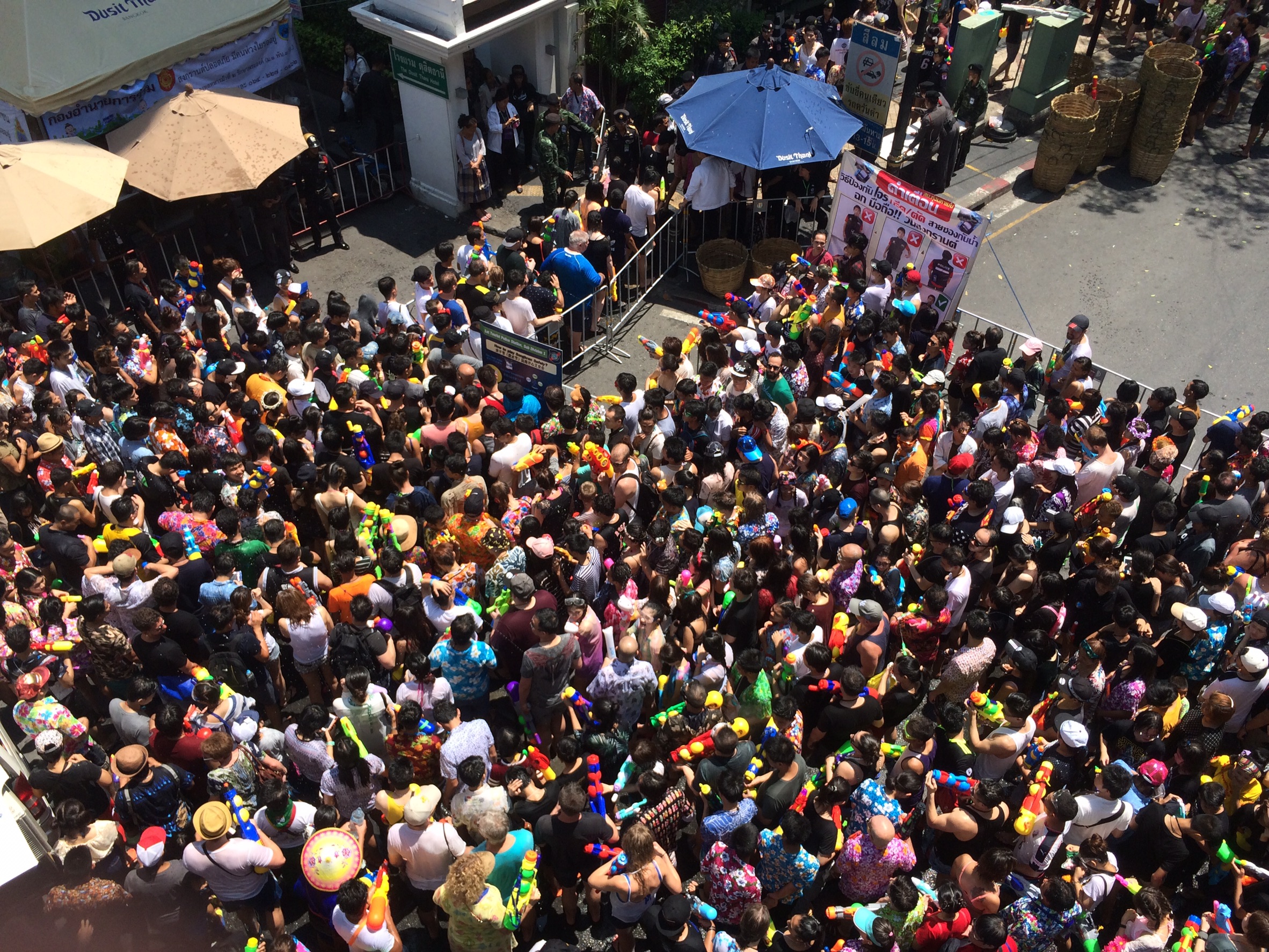
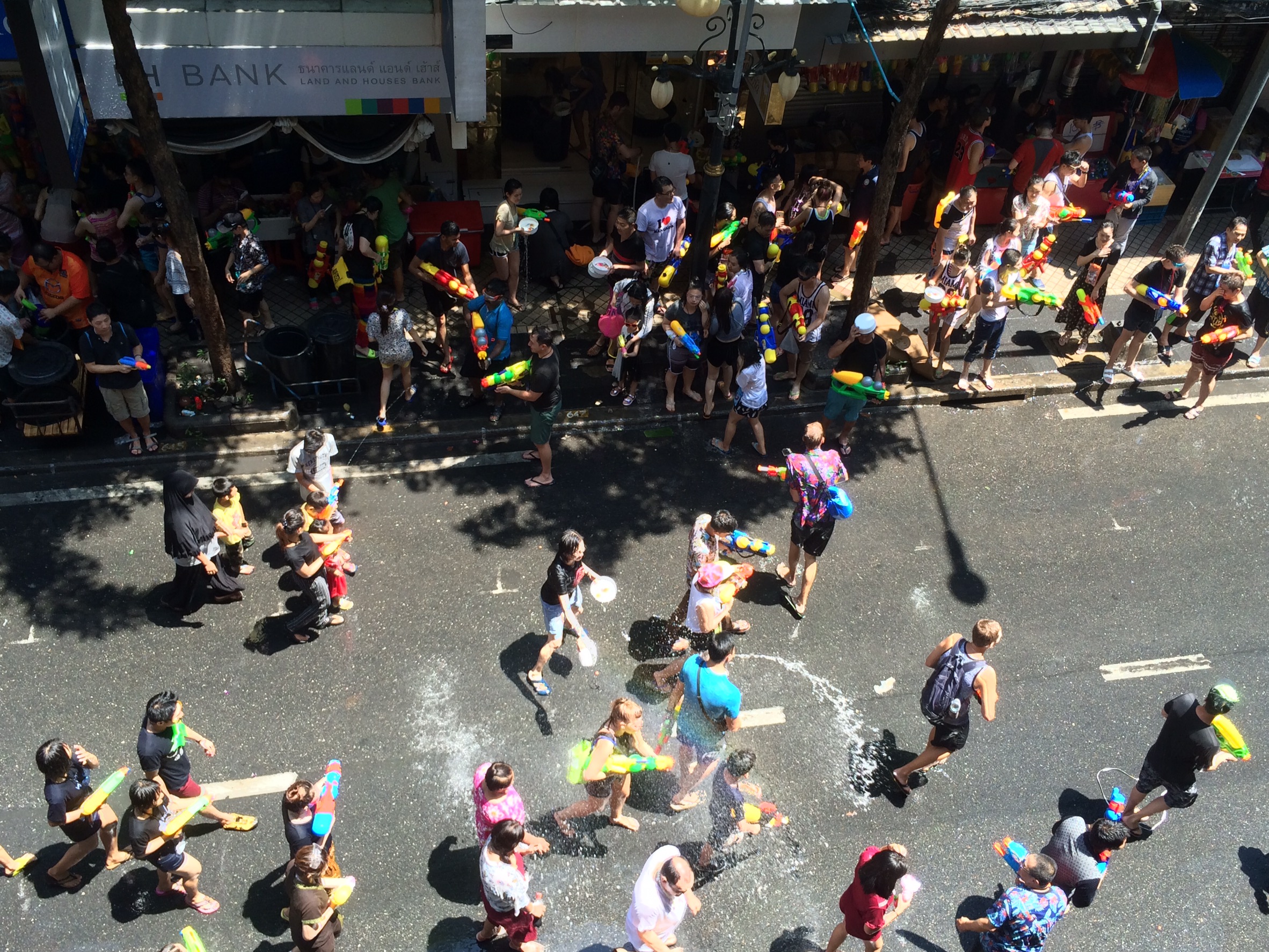
Here’s how Thailand and Songkran looked this past week. Find more on our Facebook, Twitter, YouTube and Instagram.


Send us your photos! Wherever you enjoy Songkran, please tag us with hashtag #KhaosodEnglish on Twitter, a public Facebook or Instagram post, or email us at [email protected], and we will include your images in a photo gallery!


IMG 1266.PNG
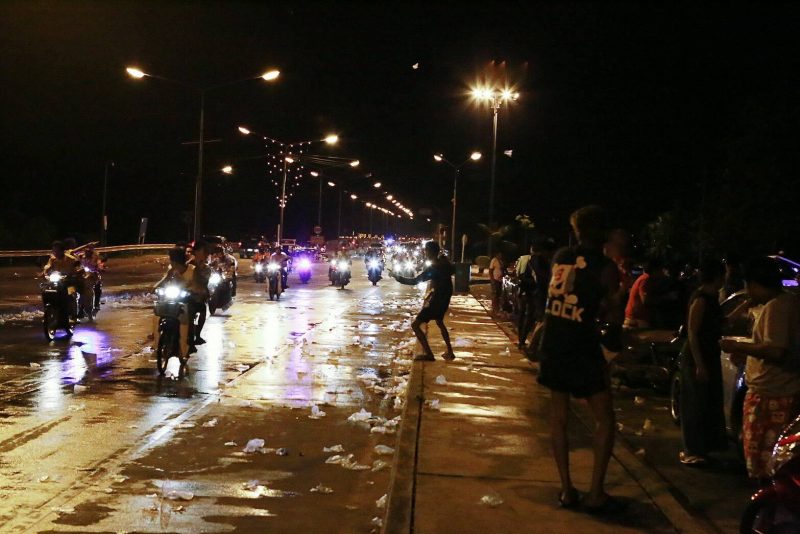
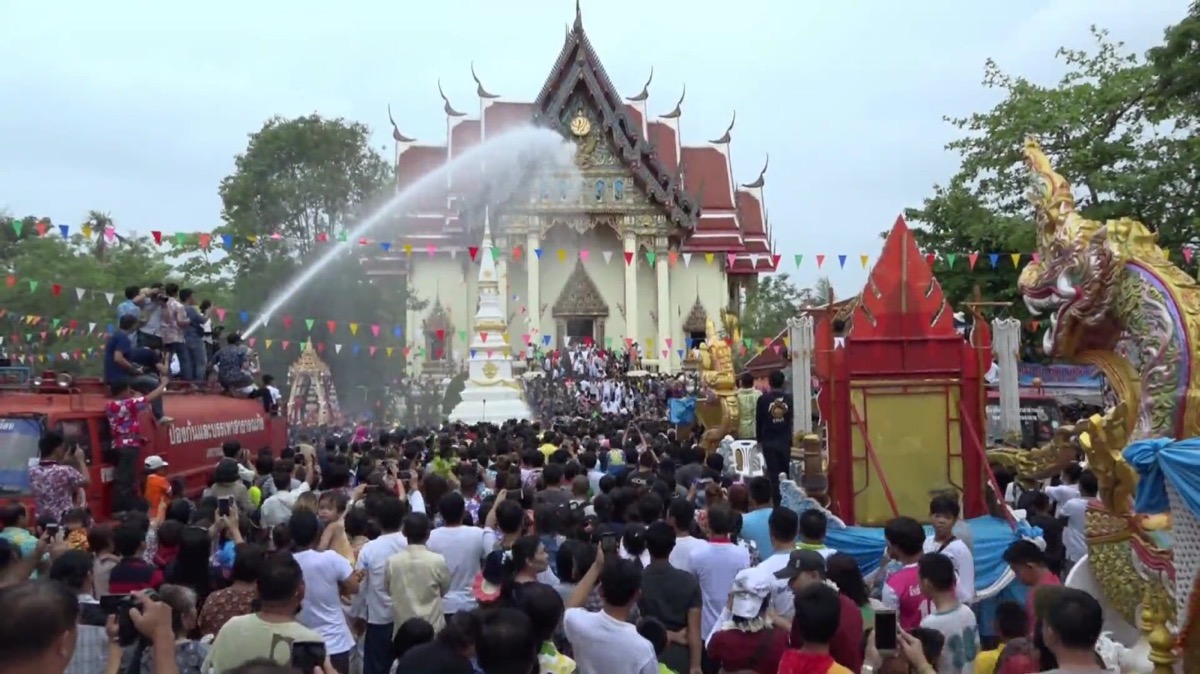
Tourists and locals gathered Thursday at Wat Pho Chai in Nong Khai to pay respect to the sacred Buddha image of Luangpho Phra Sai. During a procession around the temple, people sprinkled water onto the buddha image under heavy rain. Read: Wet and Wild Songkran Splashes Throughout Thailand (Photos)

17834003 1486741011344826 3612824232629537801 o
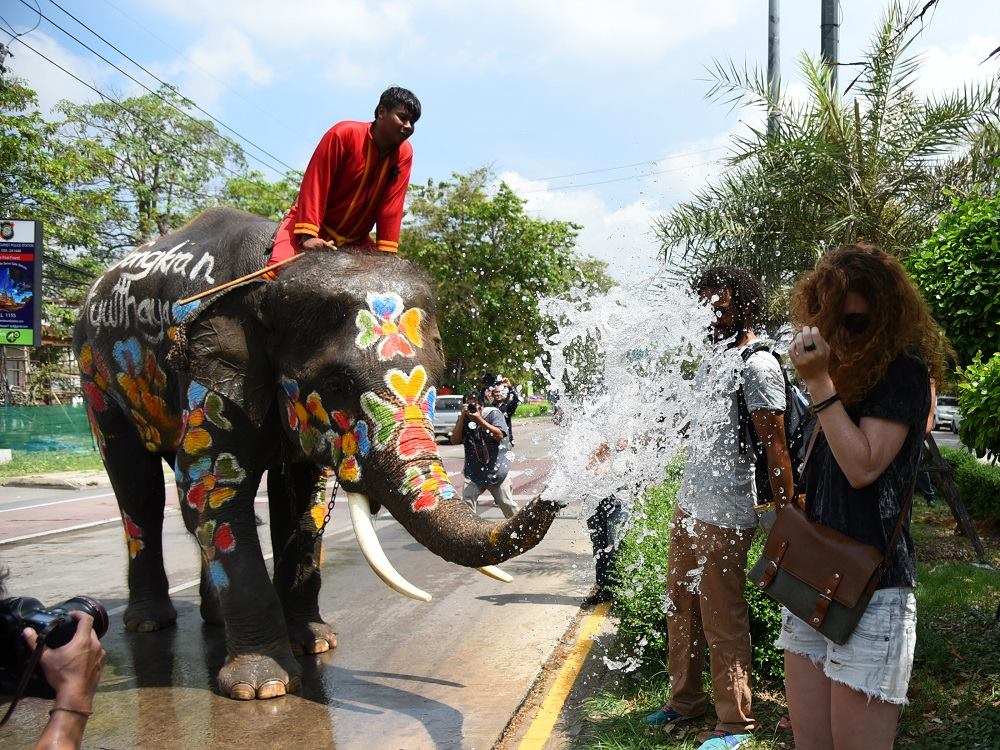
Elephants in Ayutthaya got an early start to Songkran Tuesday spraying tourists with water.
๑๗๐๔๑๓ 0027 e1492147486797
Songkran observants spray water guns as part of their celebration. Has Songkran always been full of water-splashing? Read: Miss the Good Ole Days? Songkran Was Wild Then Too
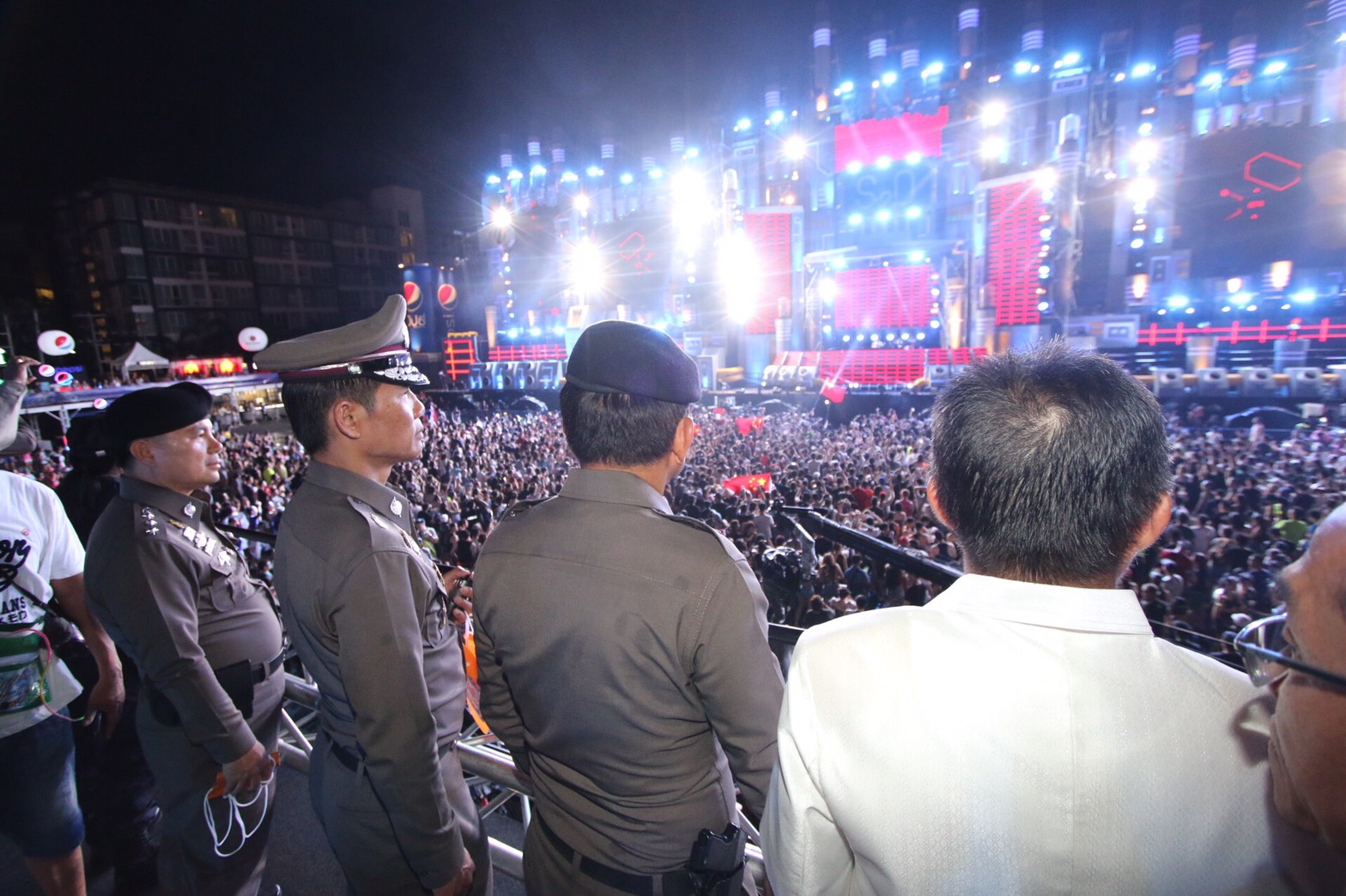
Lt. Gen. Sanit Mahathavorn watches the festivities with other policemen Thursday night at the S20 Songkran Music Festival in Bangkok.
Silom revelers dress up for the Songkran parade Thursday. Read: See Silom Celebrate Songkran in Style (Photos)

Songkran revelers in Silom Thursday.
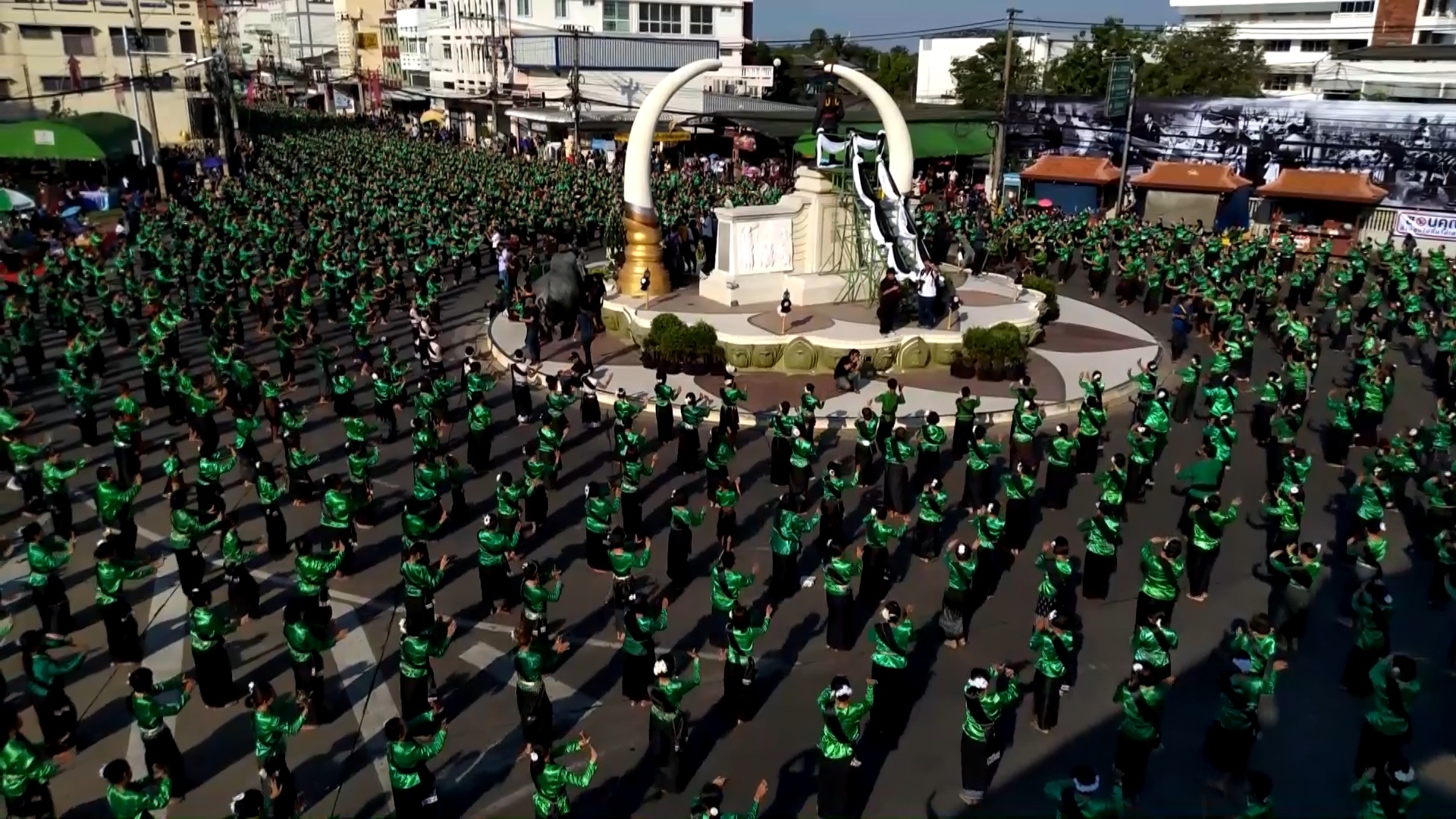
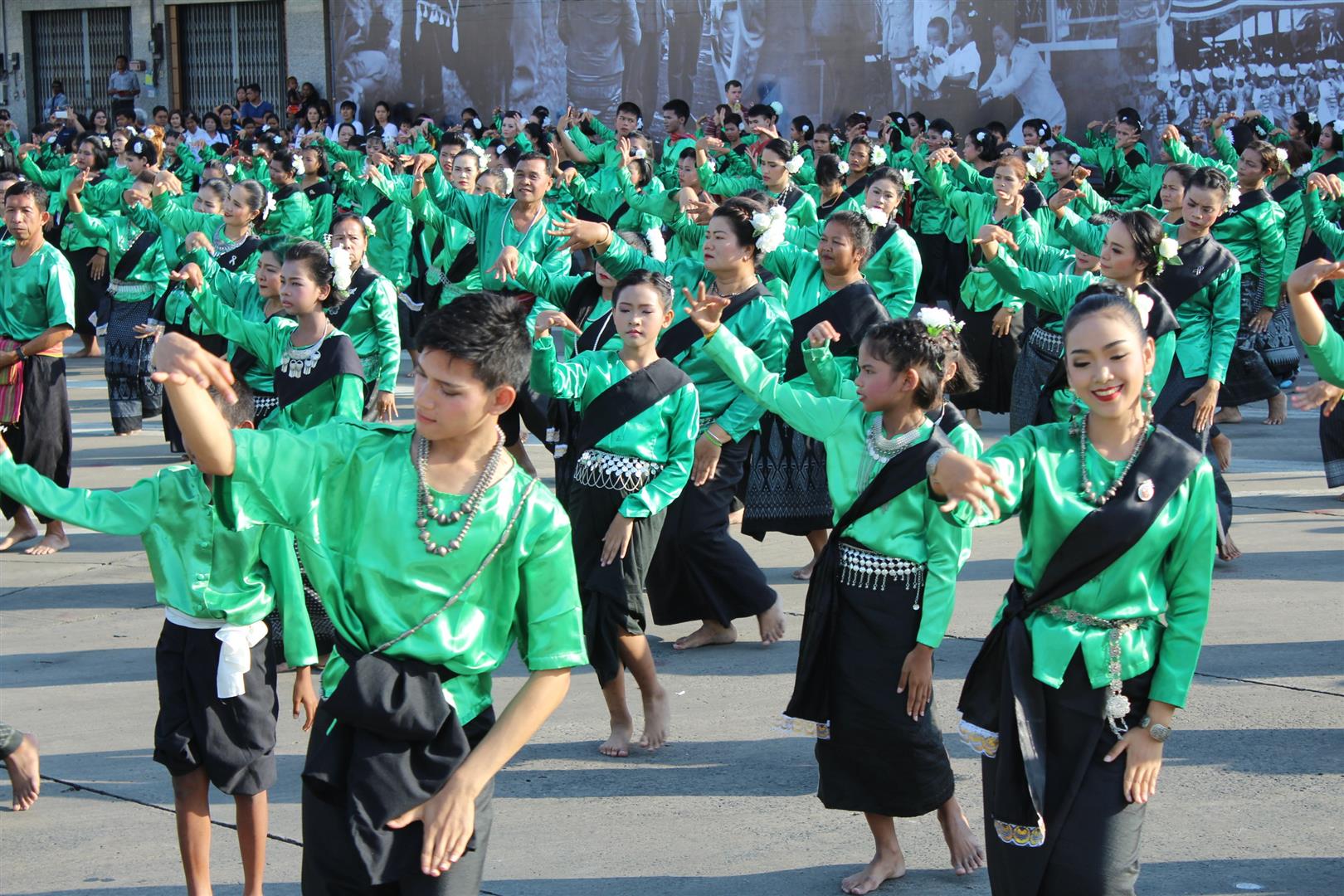
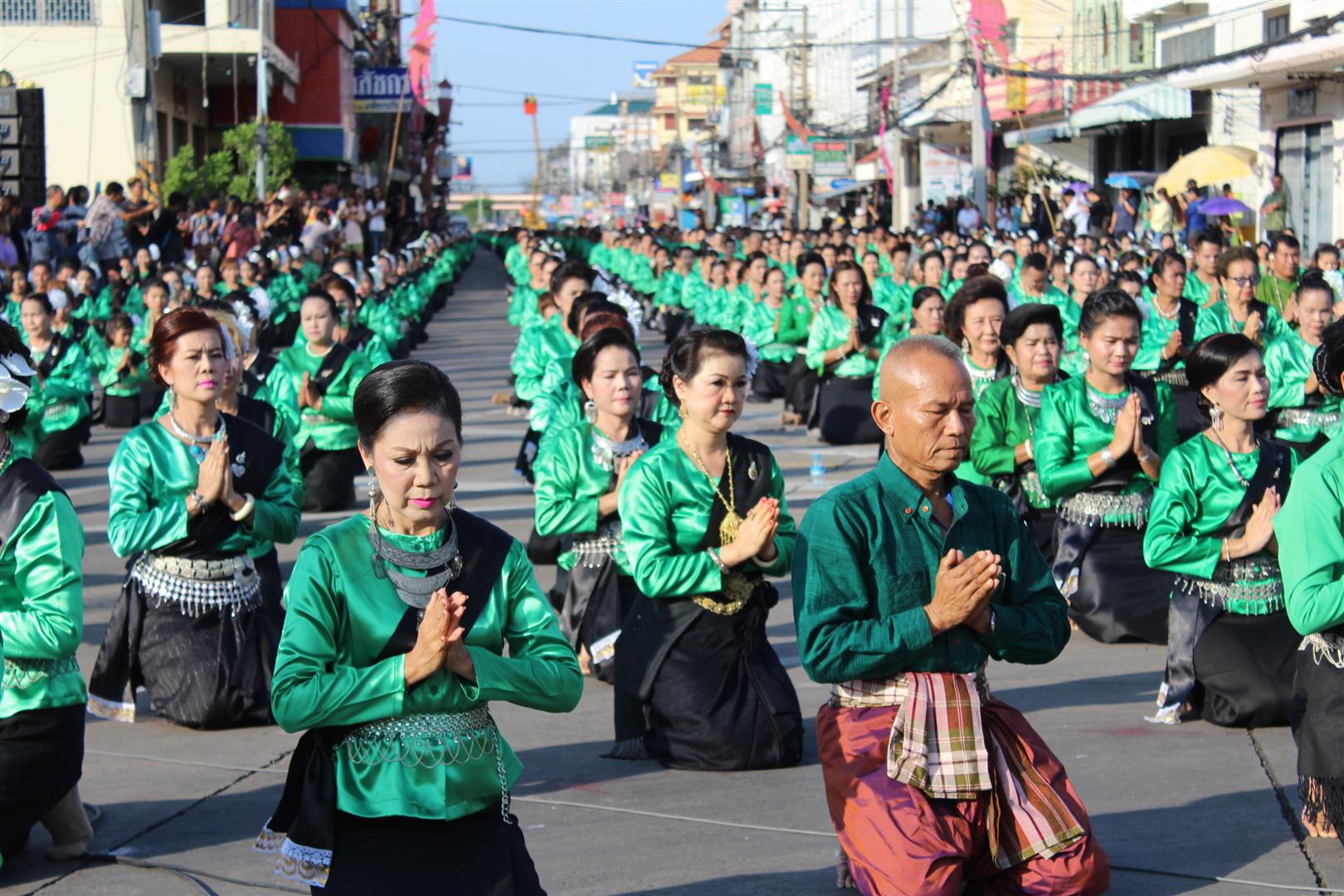
Hundreds of Surin city residents dance Tuesday in honor of 18th century provincial founder Phakdi Si Narong Changwang at his monument.
People purchase Songkran flower-patterned shirts Monday in Korat. Black shirts with white flowers are popular choices this year, vendors said.

Related stories:

Show us Your #Songkran! Share Your Photos With #KhaosodEnglish

See Silom Celebrate Songkran in Style (Photos)

Wet and Wild Songkran Splashes Throughout Thailand (Photos)

Miss the Good Ole Days? Songkran Was Wild Then Too

Stormy Songkran Set to Hit Bangkok

Too Soon to Talk About Songkran? How About This Weekend?

Samui Raises ‘Paradise Island’ for Songkran with Hip-Hop, Electro and More

Advertisement

N. Korean Official: US More Vicious, Aggressive Under Trump

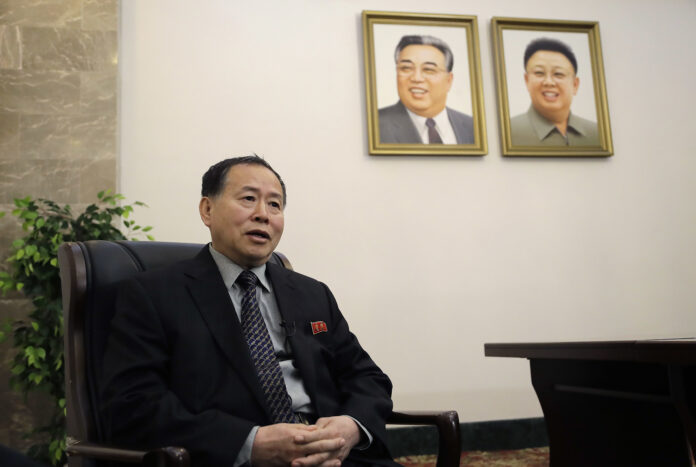
Han Song Ryol, North Korea's vice minister of foreign affairs speaks during an interview with The Associated Press on Friday in Pyongyang, North Korea. Photo: Wong Maye-E / AP.

PYONGYANG, North Korea — North Korea’s vice foreign minister on Friday blamed President Donald Trump for escalating tensions on the Korean Peninsula through his tweets and expansion of military exercises, saying the U.S. was becoming “more vicious and more aggressive” under his leadership than it had been under President Barack Obama.

In an exclusive interview with The Associated Press in Pyongyang, Vice Minister Han Song Ryol also warned the U.S. against provoking North Korea militarily. “We will go to war if they choose,” he said.

“Now we are comparing Trump’s policy toward the DPRK with the former administration’s and we have concluded that it’s becoming more vicious and more aggressive,” Han said, referring to North Korea by its official name, the Democratic People’s Republic of Korea.

“Whatever comes from U.S. politicians, if their words are designed to overthrow the DPRK system and government, we will categorically reject them,” he said.

Speaking through an interpreter provided by the foreign ministry, Han was calm and polite but forceful throughout the 40-minute interview.

Tensions are deepening as the U.S. has sent an aircraft carrier to waters off the peninsula and is conducting its biggest-ever joint military exercises with South Korea. Pyongyang, meanwhile, recently launched a ballistic missile and some experts say it could conduct another nuclear test at virtually anytime.

“That is something that our headquarters decides,” Han said of what would be North Korea’s sixth nuclear test. “At a time and at a place where the headquarters deems necessary, it will take place.”

Regarding prospects for war, Han said, “If the U.S. comes with reckless military maneuvers, then we will confront it with the DPRK’s pre-emptive strike.

“We’ve got a powerful nuclear deterrent already in our hands, and we certainly will not keep our arms crossed in the face of a U.S. pre-emptive strike.”

Many North Korea watchers believe North Korea could have a viable nuclear warhead and a ballistic missile capable of hitting the U.S. mainland on Trump’s watch as president — within the next few years.

Han, however, said North Korea blames Trump and the U.S. for the rising tensions. He cited not only the U.S.-South Korean wargames and the deployment of the aircraft carrier, the USS Carl Vinson, but also a tweet Trump posted Tuesday in which he said the North is “looking for trouble.” Trump also tweeted that if China doesn’t do its part to rein in Pyongyang’s nuclear ambitions, the U.S. can handle it.

“Trump is always making provocations with his aggressive words,” Han said. “So that’s why. It’s not the DPRK but the U.S. and Trump that makes trouble.”

He dismissed the suggestion Trump made last year during his presidential campaign that he was willing to meet Kim Jong Un, possibly over hamburgers.

“I think that was nothing more than lip service during the campaign to make himself more popular,” Han said.

The annual U.S.-South Korean military exercises have consistently infuriated the North, which views them as rehearsals for an invasion. Washington and Seoul deny that, but reports that exercises have included “decapitation strikes” aimed at the North’s leadership have fanned Pyongyang’s anger.

“As long as the nuclear threats and blackmail go on with the military exercises, we will carry forward with our national defense buildup, the core of which is the nuclear arms buildup,” Han said.

“Whatever comes from the U.S., we will cope with it. We are fully prepared to handle it.”

Outwardly, there are few signs of concern in North Korea despite the political back and forth. Instead, the country is gearing up for its biggest holiday of the year, the 105th anniversary of the birth of the late Kim Il Sung, the country’s founder and leader Kim Jong Un’s grandfather.

The Saturday anniversary may provide the world with a look at some of that arsenal. Expectations are high the North may put its newest missiles on display during a military parade that could be held to mark the event.

Story: Eric Talmadge

Advertisement

Hot News

LATEST NEWS

Bangkok
overcast clouds
31.1 ° C
31.6 °
28.3 °
73 %
3.7kmh
100 %
Mon
29 °
Tue
35 °
Wed
34 °
Thu
34 °
Fri
28 °