























28.8 C
Bangkok
Monday, June 29, 2026
Home Blog Page 2515

Australian Firm to Give Up Thai Gold Mines

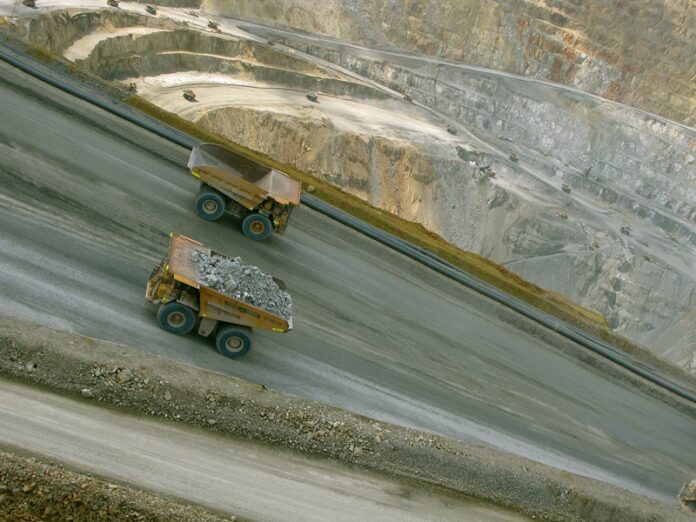
A road to an exploration field of gold, cooper and silver mine in 2009 in West Nusa Tenggara, Indonesia. Photo: Randi Ang / Flickr

BANGKOK — An Australian mining company said Wednesday it was shutting down its gold mines in Thailand, laying off more than 1,000 workers and focusing on projects in Chile. It said and will not come back unless it gets an “ironclad guarantee” from the government that it will be allowed to operate without interruptions.

A cabinet resolution and an executive decree citing environmental and health have forced Kingsgate to shut down its Chatree mine in central Thailand, owned through a Thai subsidiary, Akara Resources. But recently, a sliver of hope emerged when the Thai parliament passed legislation that could allow mining with a lesser degree of regulation.

Also, the government said separately it will form a committee with powers that could possibly allow gold mining to resume at a later date.

But Kingsgate executives say they are once bitten, twice shy.

“We’d need an ironclad guarantee of tenure,” Ross Smyth-Kirk, chairman of Kingsgate, told The Associated Press in a telephone interview. “It’s been a disgrace. There’s still a lot of gold there still to be taken out, needing expertise of people like ourselves who are prepared to spend big investments to get it out. It’s not some tin-pot operation.”

He said Kingsgate is planning a new mine in Chile, and hopes to launch operations there after they finish paying off their debt, which now stands at about USD$10 million, by the end of the year.

“Chile has a government that understands mining and that understands its importance to the economy,” Smyth-Kirk said. “We’ll see how negotiations go.”

Operations at Kingsgate’s mine in Phichit province were first shut down in January 2015 after a government body conducting blood tests on nearby residents found high levels of arsenic and manganese. Though the mines were reopened, the government announced again in May of this year they must be shut down by Jan. 1, according to a Cabinet order issued amid claims by residents that chemical and heavy metal runoff from the mine was making them ill.

However, Thailand’s parliament last week passed a bill that could in theory allow gold mines to continue operations by suspending a regulatory requirement. The legislation must be signed by King Vajiralongkorn to become law, and would come into effect only four months after the signing.

In an evident move to allay concerns of residents and activists that the new law could give Kingsgate a chance to reopen, Prime Minister Prayuth Chan-ocha on Tuesday issued an executive order halting all gold mining in Thailand from Jan.1.

However, the order also mandates creating a new committee to manage and oversee the country’s mineral resources, with power to allow gold mining to resume at a later date. Prayuth acted under Article 44, a provision giving him absolute power that was part of an interim constitution adopted after the army seized power in May 2014 from an elected government.

Given the series of seemingly contradictory developments, Kingsgate’s Smyth-Kirk said his company cannot work in Thailand anymore and is letting go of more than 1,000 employees and contractors.

“We will want to be compensated,” he added. Kingsgate says there’s no evidence of substantial health or environmental damage caused by its activities.

Environmentalists also remain wary, and have vowed to protest any move to resume mining.

“This (executive) order is a good thing but we don’t know how long it will last,” said Penchom Saetang, director of a Thai environmental group protesting the mines. She said that if the bill easing regulations becomes law, the mining company could resume operations and mine even more than before.

Story: Dake Kang, Kaweewit Kaewjinda
Advertisement

Police Confirm Australian Tourist Raped, Issue Arrest Warrant

BANGKOK — Police said Wednesday an arrest warrant had been issued for a man who allegedly sexually assaulted a 23-year-old Australian woman earlier this month.

After authorities and extensive media coverage cast doubt on the woman’s claims, police said the woman was sexually assaulted by Eakaburut Ritrakkhaphan, a 32-year-old motorcycle taxi driver. He was allegedly seen in security camera footage picking up the Australian woman from the Khok Wua junction near Khaosan Road before taking her to the abandoned building she earlier claimed he and a friend attacked her.

Taling Chan police commander Col. Thanawat Taraka said he could not give more details about the suspect because of the ongoing investigation.

Read: Police Weigh Australian Tourist’s Tuk-Tuk Rape Allegation

On Dec. 5, the 23-year-old Australian tourist told police she had been lured by the driver of a tuk-tuk she had allegedly grabbed to return to the guesthouse where she was staying after drinking at Khaosan Road.

She said the driver, along with a friend waiting at the deserted building in Soi Borommaratchachonnani 43, west of Bangkok, sexually assaulted her. Police cast doubt on her story after social media discussions pressured them into action. They said she was heavily intoxicated and pointed out that she was seen in another security camera kissing another foreign male.

Police also questioned the time frame during which the incident took place, as the woman appeared on the CCTV footage near Khaosan Road 37 minutes before she arrived at the police station.

Bangkok Police Chief Sanit Mahatavorn said they now believed she was raped after it was confirmed by the results of a hospital examination.

The suspect was said to have just been released from prison two months prior after serving a sentence for sexual assault, police spokesman Krissana Pattanacharoen said.

Advertisement

Single Gateway ‘Still Necessary,’ Deputy PM Prawit Says

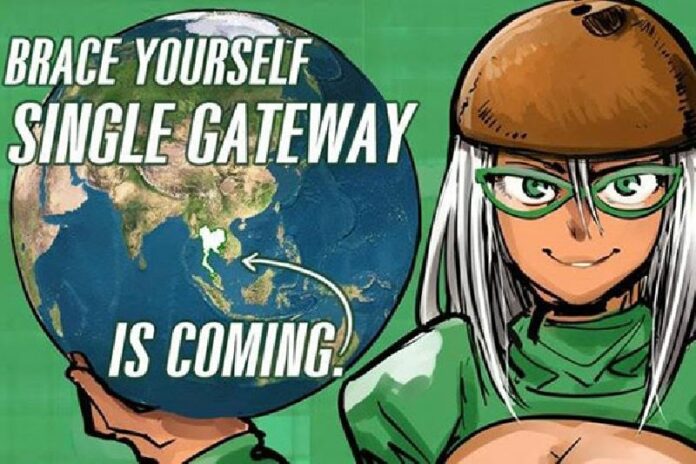
Opponents of Thailand’s single gateway project have adopted a personification of the project called Nong Kalaland by artist Wisaruth Wisidh.

BANGKOK — Confirming the fears of digital rights activists who said a plan to bring the internet  under direct government control never went away, a member of the junta said Wednesday that a single internet gateway was still necessary.

Citing Redshirt internet radio channels operating from Laos as an example, Deputy Prime Minister Prawit Wongsuwan said the single point of control for all internet traffic, a project widely known as single gateway, remains necessary for the sake of national security.

Speaking to reporters, Gen. Pravit, who is also a junta member, said the military regime was “trying our best” to not trample on rights.

“We are trying our best to take care about it,” he said. “Everyone must be under the same law.”

His comments came as advocates of online freedom campaign against the latest draft of the Computer Crime Act, which is expected to be approved Thursday by the junta’s rubber stamp legislature.

If approved, the draft will be submitted to the King for his endorsement in 20 days.

Gaining control of the kingdom online, one of the last semi-public venues for open expression and dissent, has been a goal of the military government since it seized power in 2014.

Officials announced last year they had scrapped the plan after it was met with public outrage. It instead rebranded the effort as part of a digital economy initiative while moving forward parallel efforts such as rewriting cybercrime law to grant broader powers to authorities to intercept and censor communications without due process.

Rights groups such as the Thai Netizen Network, Amnesty International Thailand and Internet Law Reform Dialogue, or iLaw, have urged people to campaign against it. The number of people signing an online petition to stop the law on Change.org has soared in the past few days to more than 120,000 names.

Those rewriting the law heard a range of suggestions from activists and the private sector at a public hearing on Nov. 23, none of which were addressed in the latest draft released Friday.

Related stories:

‘Back Door’ in CCA Not Trojan Horse for Single Gateway, Drafters Say

New Cybercrime Regs Would Open Back Door to Censorship

Website Shutdowns Soar After King’s Death

Why Thailand Should Worry About an Improved(?) Computer Crime Act

Thailand’s Draconian Cyberlaws Tipping Toward Totalitarian

Computer Crime Act Has Issues, Google Tells Censorship Committee

Online Freedom to Slide Further, Online Activists Predict

Advertisement

Fox Sues Bangkok Bank Over 2.5B Baht Licensing Deal

BANGKOK — One of the world’s largest media conglomerates filed suit against one of Thailand’s biggest commercial banks Wednesday, accusing it of failing to make good on obligations it guaranteed under a multi-billion baht digital media deal.

Fox Networks Group Asia, a division of 21st Century Fox, alleges that Bangkok Bank breached contract under the terms of a 2013 licensing agreement the network made with two domestic media companies to license its programming.

The suit alleges that the bank guaranteed the deal with GMM Grammy and CTH and failed to honor the contract when those companies stopped making payments.

“It’s a severe disappointment to us that a major Thai bank is failing to honor its guarantees, and its consequences go well beyond my own company, especially at a time of heightened sensitivity for investor confidence,” Zubin Gandevia, Fox Networks regional president, said in a statement.

The suit was filed in both Hong Kong and Bangkok.

Bangkok Bank underwrote the approximately 2.5 billion baht deal with GMM Grammy and CTH, conglomerates which own everything from production studios to cable television channels and licenses to several digital television channels.

Digital television, hailed as a market boom several years ago, has proven a bust. CTH, a pay-tv operator and internet service provider, filed for bankruptcy in October.

Fox said it hasn’t received payment since 2015.

Fox Networks Group produces and licenses programming such as National Geographic documentaries and American Horror Story to be shown in markets around the world.

Additional reporting Chayanit Itthipongmaetee

Advertisement

Review: ‘Rogue One’ is a Dark, Exhilarating Blast

Rogue One: A Star Wars Story” seemed suspicious on paper, like any film saddled with the dreaded “spinoff” label. For a while all the odds looked stacked against it too — reshoots, script changes and a director in Gareth Edwards whose last blockbuster “Godzilla” had visual flair but no humanity, not to mention the fact that the film would be asking us to learn a dozen new characters with strange names, none of which were Skywalker or Solo. And of course as with any franchise there’s that ever-present knowledge that, in some ways, this is another line-item on a corporate profit sheet.

As it turns out, those should-be liabilities were only assets in the end. “Rogue One” is a bold and stirring adventure film that will have both fans and casual observers spellbound. It is easily the most exciting blockbuster in recent memory this side of “Mad Max: Fury Road,” and that includes “The Force Awakens,” which now looks lazy and bloated with sentimentality and fan service in comparison to the subversive ingenuity of “Rogue One.”

How refreshing it is to have a truly contained film that doesn’t have any objective beyond the story at hand. There is nothing to advance, nothing to tease, no “maybe we’ll find answers in the next movie in 2 years” here. It is just allowed to be what it is, which is an intense and visually engrossing powder keg of a film.

It’s a simple idea, really: Who are the rebels who stole the plans for the Death Star? That pivotal action kicked off the original “Star Wars” and it’s pretty inherently dramatic.

Loosely, “Rogue One” is rooted around the plight of Jyn Erso, whose father Galen Erso (Mads Mikkelsen) is a scientist who once worked for the Empire. He gets drawn back in by the ambitious Orson Krennic (Ben Mendelsohn) to help finish the Death Star, leaving Jyn, played by Beau and Dolly Gadsdon as a young girl, and Felicity Jones as an adult, to survive on her own. Jyn is sort of raised by a rebel extremist in Saw Gerrera (an over-the-top Forest Whitaker), but much of this is left both unseen and unexplained.

What we know is she’s a child of war, and an almost apathetic one at that, until she’s rescued from imprisonment by a group of rebels hoping her familial connections might help with their efforts against the Empire. There she’s put together with a deadpan droid K-2S0 (Alan Tudyk) and a spy, Cassian (Diego Luna), who’s given a secret mission within the mission. Eventually they meet the blind Jedi Chirrut (Donnie Yen), his decidedly more practical companion Baze Malbus (Wen Jiang) and the conflicted pilot (Riz Ahmed), forming a motley crew of unlikely heroes.

The real feat of “Rogue One” is that Edwards and screenwriters Chris Weitz and Tony Gilroy create a world with actual stakes, making the audience feel for and worry about characters we’ve just met. It doesn’t rely on decades old nostalgia, although there is a bit of that too in mostly unobtrusive ways. There’s also some CGI that veers pretty dramatically into the uncanny valley. But like the somewhat slow and disjointed beginning, eventually it all just washes over you, especially as the riveting action kicks in, taking you from the trenches to space and back again. The only downside of the thrilling battles in the third act is that it means less time with the leads — especially Jones, Luna and Mendelsohn, whose performances make up for the script’s occasional deficiencies.

“Rogue One: A Star Wars Story” is one of the best Star Wars films ever made. Only time will tell if it will surpass “The Empire Strikes Back” as the franchise standard bearer. There’s a compelling case to be made.

“Rogue One: A Star Wars Story,” a Walt Disney Studios release, is rated PG-13 by the Motion Picture Association of America for “extended sequences of sci-fi violence and action.” Running time: 133 minutes. Three and a half stars out of four.

Story: Lindsey Bahr

Advertisement

Six More Arrests in Alleged Bangkok Terror Plot

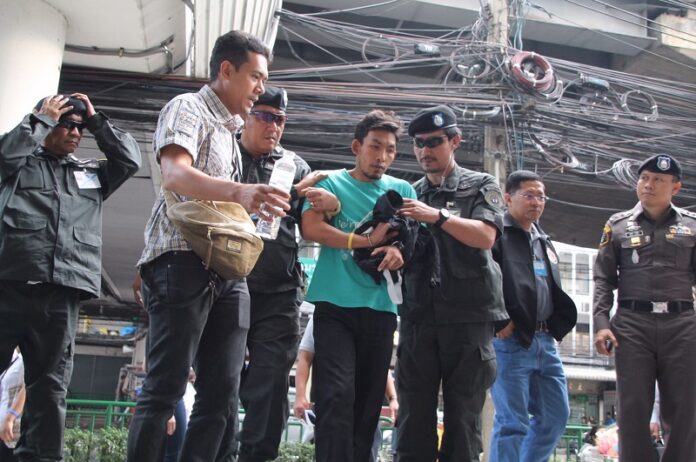
Niheng Yeening, 27, one of six suspects charged Tuesday, is taken for a police “reenactment” at Big C Ramkhamhaeng.

BANGKOK — Police disclosed Wednesday the arrests of six more people accused of plotting bomb attacks in Bangkok but had yet to say they were linked to southern separatists.

“Primarily we did not find their history with the movement yet,” said Maj. Gen. Chayapol Chatchaidej. “But we are still investigating.”

In their announcement, police did not say when the group was arrested, but indicated they had been held under special policing powers granted to the military by the junta before being charged on Tuesday. Officials said they had confessed to planning a series of bomb attacks in the capital.

Few details of the plot were made public apart from warnings put out in October listing several possible targets in the capital. In October, police issued a memo warning of possible car bomb attacks at landmarks locations such as Suvarnabhumi Airport.

On Dec. 1, police arrested three people from the southern border province of Narathiwat they accused of being involved in the plot. They were said to have links to the southern insurgency movement.

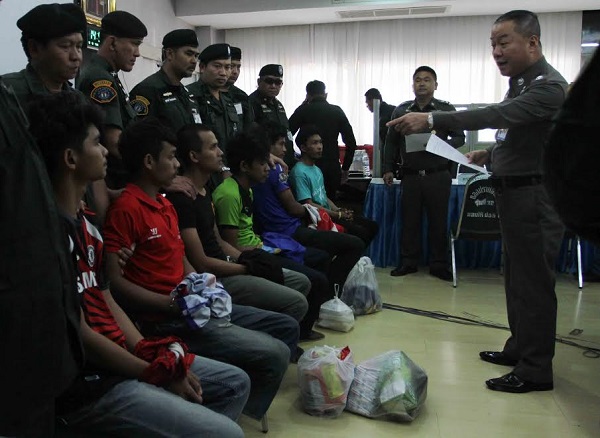
 Maj. Gen. Chayapol Chatchaidej of Bangkok metro police talks to six men Tuesday  accused of plotting bomb attacks in Bangkok at the office of Crime Suppression Division.
Maj. Gen. Chayapol Chatchaidej of Bangkok metro police talks to six men Tuesday accused of plotting bomb attacks in Bangkok at the office of Crime Suppression Division.

They were also said to be connected to 14 other people, including the six new arrests: Niheng Yeeing, 27, Usman Jor-ngor, 41, Meeseh Jehha, 19, Patomporn Mihi-ae,19, Umrum Mayee, 23 and Wirat Hami, 23.

They now stand charged with possessing explosives and being part of a criminal conspiracy. They will be tried in civilian court.

Read: Bangkok Bomb Plotters Linked to Southern Insurgency: Police

One of the six, Niheng, was taken to one of the alleged targets, a Big C store in the Ramkhamhaeng area and an apartment in Soi Ramkhamhaeng 53/1 where they believe the attacks were planned. Police declined to divulge further details on how the locations were linked to the plot, citing the ongoing investigation.

Five of the suspects were arrested in the southern border provinces, while one was taken into custody in Bangkok.

Police said they were tracking down eight other suspects.

The past year has seen several attacks security analysts attribute to separatists seeking to widen the longstanding conflict outside of the three southernmost provinces associated with attacks and the deaths of thousands over the past dozen years.

In August, four people were killed when fire and bomb attacks hit seven provinces at the outset of the Mother’s Day holidays. Authorities have stopped short of saying it was carried out by separatists, despite physical evidence and an apparent claim of responsibility made.

Related stories:

Bangkok Bomb Plotters Linked to Southern Insurgency: Police

Police Release Photos of Two Possible Car Bombs

Police Memo Warns of Car Bomb Plot at Suvarnabhumi Airport

Sweeping Bangkok Terror Raids Prompt Fears of Secret Detention

Car Bomb Plot Leads Police Back to Suspected 2015 Bomb Lair

Advertisement

Residents of Syria’s Aleppo Share Tormented Goodbyes Online

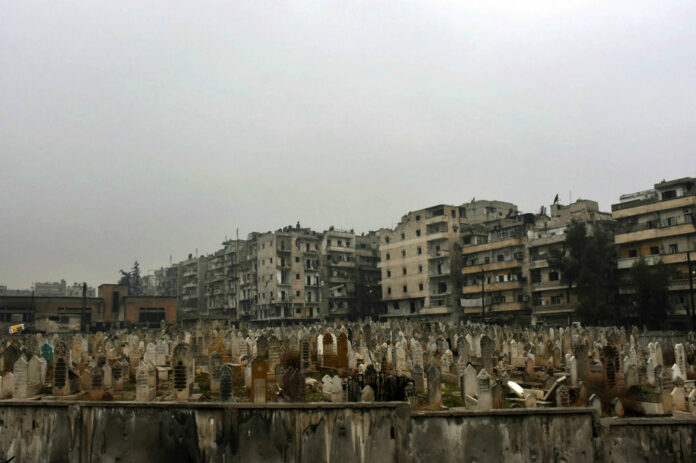
This photo released by the Syrian official news agency SANA, shows a graveyard in east Aleppo, Syria, Dec. 13, 2016. Syrian rebels said Tuesday that they reached a cease-fire deal with Moscow to evacuate civilians and fighters from eastern Aleppo, after the U.N. and opposition activists reported possible mass killings by government forces closing in on the rebels' last enclave. Photo: AP

BEIRUT — First came the distress calls from doctors in underground shelters and morgues. Then residents under relentless bombardment in the few remaining blocks under rebel control in Aleppo began posting emotional goodbyes on social media and in widely circulated messages.

They wanted to have the final say in the merciless civil war.

“There is a problem with this planet,” said Monther Etaky, a 28-year old graphic designer. “This planet doesn’t want people to live as free or to live as humans.”

The world’s view of the Syria conflict has been largely driven by YouTube, Twitter and Facebook— making it one of the world’s most documented wars through amateur videos and coverage. This has given the activists a major role in chronicling the war, and in lobbying for the world’s response.

Nearly six years into the conflict, they complained the world has been looking the other way.

“Why is this silence? People are being eliminated,” tweeted Abdulkafi Alhamdo, an English teacher who has been a vocal critic of President Bashar Assad’s government. Then, he wrote: “The last (message). Thanks for Everything. We shared many moments. The last tweets were from an emotional father. Farewell #Aleppo.”

Alhamdo later went live on the video-streaming Periscope to say government troops were approaching. “I hope you can remember us,” he said.

A local aid worker, who gave only his first name, Omar, sent an emotional recorded message that was widely shared on Whatsapp.

“The government forces are at the end of the street. Forgive us,” he said in issuing a tormented apology for failing to protect the rebel enclave, once seen as the jewel of Syria’s rebellion.

After four years of holding onto nearly half of what was once Syria’s largest city and commercial center, thousands of residents of rebel-held Aleppo had been cornered in a one-square-mile sliver of land for days as Syrian government troops, backed by Russia, resisted calls for a cease-fire, pushing into the territory as rebel defenses crumbled.

Hospitals were knocked out and civil defense vehicles were bombed. Thousands of residents fled to government areas, but thousands more, likely die-hard government opponents, squeezed with the rebels into the ever-shrinking enclave.

Etaky said the fast buckling of rebel defenses shocked him at first.

“But when I turned on my brain and thought about what is happening and the cause of what is happening, I knew,” he said.

After months of siege imposed since July the rebels had no more power to go on, he said. With their families trapped in the city with them, many fighters left the front lines to tend to their relatives’ safety.

But most importantly, he said, “it was the world silence.”

Etaky said that as a witness of the grueling war, he thought he had become numbed by the violence years earlier. Since moving to the rebel-held sector in 2012, he said he had lost about 50 friends.

“When I was saying the last goodbyes, this was the first time I was affected because it was the last time,” he said.

He said he was proud of his role in documenting the war. There was no record, he said, of previous Syrian government crackdowns, including in the 1980s in Hama and Aleppo.

“If my son grows up and just explores the internet he can see his father, and what he was documenting and be proud that his father was a hero,” Etaky said, choking back tears.

Speaking to the Associated Press shortly after a cease-fire was announced late Tuesday, he added: “It is quiet in Aleppo right now. And it looks so sad to be saying goodbye to its residents, who will leave it forever.”

Story: Sarah El Deeb 

Advertisement

Kanye West Returns to Twitter to Talk About Trump Meeting

President-elect Donald Trump and Kanye West pose for a picture in the lobby of Trump Tower in New York, Dec. 13, 2016. Photo: Seth Wenig / AP.

NEW YORK — Kanye West returned to social media for the first time since his hospitalization to talk about his meeting with Donald Trump.

West wrote on Twitter that he met with Trump Tuesday to “discuss multicultural issues” that included “bullying, supporting teachers, modernizing curriculums, and violence in Chicago.”

“I feel it is important to have a direct line of communication with our future President if we truly want change,” West wrote. He followed with a post that read “#2024,” an apparent reference to a revised plan to run for president in 2024, instead of 2020, when Trump could seek a second term.

Trump said after the Tuesday meeting that he and West were “just friends” and called the musician a “good man.” He said they discussed “life.” The two did not answer questions about whether West would perform at the inauguration.

West stood silently next to the president-elect for photos in the lobby of Trump Tower after their meeting. Asked why he wasn’t speaking, West said, “I just want to take a picture right now.”

He spoke out on Twitter after the meeting.

West entered the building shortly after 9 a.m. with a large entourage. He was not accompanied by wife Kim Kardashian West.

The 39-year-old recently spent over a week in Ronald Reagan UCLA Medical Center in Los Angeles for stress and exhaustion. Days before his hospitalization, he abruptly canceled his U.S. concert tour.

Last month during a concert in San Jose, California, West said he didn’t vote for president, but if he had, he would have cast a ballot for Trump. He also praised the president-elect’s “method of communication” as “very futuristic” and spoke about his plans to run for that office, saying that he will become “a different kind of president.”

Trump also was shown in a video for West’s single “Famous,” released last year. It also featured Rihanna, former President George W. Bush, Anna Wintour and Bill Cosby.

Advertisement

US Military Osprey Crash-Lands Off Okinawa, No Fatalities

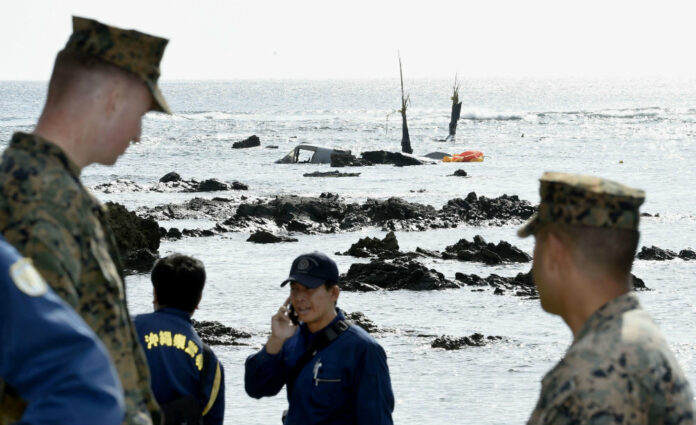
Officers of Okinawa Prefectural Police and U.S. military investigate the site where debris of a U.S. military MV-22 Osprey, background, was spotted in shallow waters off Nago, Okinawa, southern Japan, Dec. 14, 2016, after its crash-landing. Photo: Takumi Sato/ AP.

TOKYO — U.S. military Osprey aircraft has crash-landed off Japan’s southern island of Okinawa, but its five crewmembers were safely rescued.

The U.S. Marine Corps. said Wednesday that an MV-22 Osprey tilt-rotor aircraft landed in shallow water off Okinawa’s east coast late Tuesday. They said in a statement that the crewmembers were airlifted to a Navy hospital at the Kadena Air Base for treatment. Japanese defense officials said two of them sustained injuries that were not life-threatening.

It also comes one week after a Marine Corps pilot died after his F/A-18 fighter jet crashed off western Japan.

The crash just off Nago City triggered protests on Okinawa, where anti-U.S. military sentiment is already strong. Many Okinawans were opposed to deploying the Osprey on the island due to safety concerns following a string of crashes outside Japan, including one in Hawaii last year.

“This is what we have feared might happen someday,” Nago Mayor Susumu Inamine, told Japan’s NHK public TV from near the crash scene. “We can never live safely here.”

TV footage on TV showed pieces of a mangled aircraft on the coast.

The Ospreys was based at the Marine Corps Air Station Futenma. The base in a crowded residential area in central Okinawa is to be relocated to another site on the east coast of the island called Henoko, in Nago, where residents oppose the plan, and Wednesday’s crash added to their anger.

Japan’s Defense Minister Tomomi Inada has asked the U.S. military to suspend Osprey flights until the cause of the accident is known.

Prime Minister Shinzo Abe told reporters the crash was extremely regrettable, and said that safety must be guaranteed.

More than half of the 50,000 American troops in Japan are stationed on Okinawa — less than 1 percent of Japanese land mass — under the Japan-U.S. security treaty. Many on the island complain about noise, pollution and crime linked to the U.S. military and has demanded their burden reduced.

Story: Mari Yamaguchi

Advertisement

Myanmar Reporter Killed While Investigating Illegal Logging

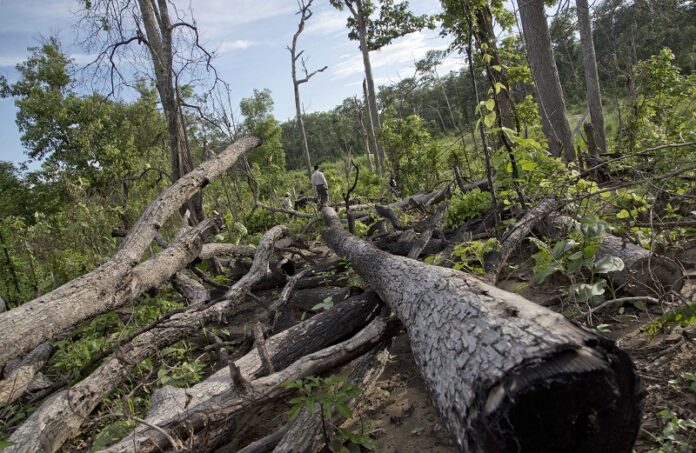
Myanmar is struggling to stop illegal logging, which has erased one-quarter of the country’s valuable forests in a generation. Photo: Gemunu Amarasinghe / Associated Press

YANGON — A Myanmar journalist was killed Tuesday while reporting on illegal logging in the northwest of the country, police said.

“The journalist who was killed was working for the local newspaper the Daily Eleven. We found bruises and injuries on his face and head. We are still investigating the incident and for the culprit,” said Thein Swe Myint, a local police officer.

The journalist, Soe Moe Tun, was a local-based journalist in Monywa in the Sagaing region where he was killed. He had worked for the Daily Eleven, part of Eleven Media Group, since early 2015.

The Myanmar Journalist Network that represents journalists across the country released a statement expressing condolences to Soe Moe Tun’s family. It urged the government to investigate the killing.

Journalists are often threatened in Myanmar because of their reporting, and the United Nations Educational, Scientific and Cultural Organization (UNESCO) said a statement last month that “ending impunity on all the harassment against journalists is the most important step toward guaranteeing the safety of journalists.”

In 2014, a freelance journalist Aung Kyaw Naing was shot dead by the military after being arrested while reporting on clashes between the military and an ethnic armed group on the Myanmar-Thai border. At least three other journalists have been killed recently in Myanmar, according to the US-based Committee to Protect Journalists.

“This is the fifth case that a journalist has been killed since 1999,” said Zayar Hlaing, a member of the Myanmar Press Council. “The government must make sure there is no impunity for the culprits and the rule of law should be implemented.”

The council said there have been life threats against another journalist reporting on illegal logging, and that local police had failed to act.

Zayar Hlaing said the police must act quickly “because there had been examples of impunity in the past.”

Story: Esther Htusan

Advertisement

Hot News

LATEST NEWS

Bangkok
overcast clouds
28.8 ° C
28.8 °
28.8 °
74 %
2.5kmh
97 %
Mon
33 °
Tue
32 °
Wed
33 °
Thu
35 °
Fri
27 °