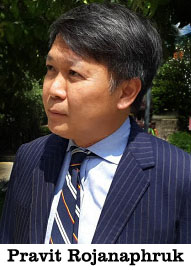
Saran Chuichai, aka Aum Neko, speaks to a reporter on Dec. 8, 2013, in Bangkok. Image: Fah SK / YouTube
BANGKOK — Police said Friday a court has issued an arrest warrant for a firebrand anti-royalist detractor living in French exile on a charge of insulting the monarchy, a count that carries a maximum penalty of 15 years in jail.
The warrant for Saran Chuichai, aka Aum Neko, was approved by the court on Oct. 14, but technology crime police only told reporters about it on Friday, when a hardline royalist went to the cybercrime headquarters to demand a speedy extradition and prosecution of the former student activist.
“Our commanders have instructed us to proceed with this case swiftly,” said Lt. Col. Uthai Laosil, an officer at Technology Crime Suppression Division.
Uthai said the warrant was approved after Saran, who’s better known by her nom de guerre Aum Neko, posted a video mocking the death of His Majesty the King, who died on Oct. 13 at 88. The video drew widespread outrage from supporters of the monarchy.
Saran, who rose to fame as a transgender student activist, is charged with royal defamation, a law also known as lese majeste. After the military staged a coup in May 2014, Saran fled to France, where she has since been residing as an asylum seeker.
Ponnipa Supatnukul, a television talk show host who filed an earlier lese majeste charge against Saran in 2013, complained in a meeting with Uthai on Friday that police should have acted faster to apprehend Saran before she managed to escape the country.
“If [police] had prosecuted the case quickly and if they had not dawdled back then, Mr. Saran [sic] would not have had an opportunity to flee overseas and commit actions that hurt the hearts of Thai people to this day,” Ponnipa said.
She also threatened to take legal action against police if they failed to bring Saran back to Thailand.
A number of Thai activists and academics have fled Thailand since the May 2014 coup to avoid punishment on lese majeste charges. Thai authorities have repeatedly pledged to bring these critics of the monarchy to stand trial in Thailand, but no country has agreed to an extradition so far.
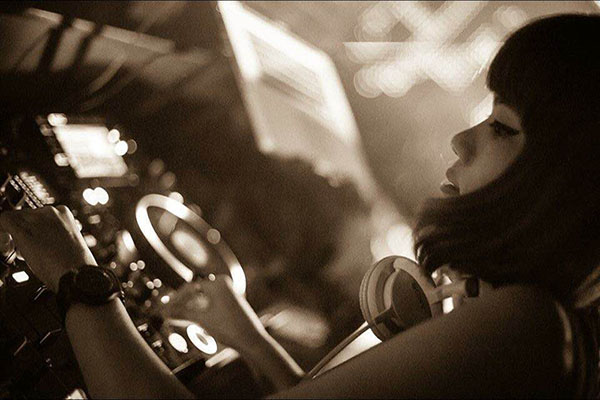
Electronic music in Thailand is, like everywhere, a male-dominated industry. When it comes to mixing or making beats it’s usually us guys at the helm.
Anyhoo, I grew up in a family where most of the women were artists and it was this upbringing that inspired to me to do what I do. Not to sound too SJW, but the experience opened my eyes to the discrimination that women face every day, especially in the music and entertainment industry.
Unfortunately with the commercialization of DJ and rave culture have come image DJs: brawny, fist-pumping dudebros and scantily clad women in the booth. I don’t care what they do, but it doesn’t help anyone trying to be taken seriously.
There are a few Thai women DJs who have represented us at the international level such as Nakadia and Mendy Indigo. At the opposite end of the spectrum, in our Drum ‘n Bass scene, DJ Pichy reigns supreme.
“There aren’t that many of us, but what I really think is cool is that for the ones that are here, they all have their own unique style of playing music,” said Pichy, a DJ and event organizer who helped nurture the scene from its start.
Here are a few of the best and most badass women to take it to crowds in Bangkok and beyond.
“I started out seven years ago, and I was fortunate enough to be given the chance to play for a crowd,” explains Pazinee Sri-Aram, aka DJ Rabbit Disco. “Now more women are interested in this art. It’s best to be yourself and get into this business because you love it.”
Originally a graduate of culinary studies from Suan Dusit University, in 2009 the DJ who always had a passion for music decided to take a different path. Choosing a life of rocking crowds from behind the decks, her career so far has taken her to cities all over the kingdom and landed her residences at Bangkok’s ultra chic Distill Skybar and Mellow in Thonglor. The DJ’s warm attitude has given her a positive outlook toward the scene.
She says with all the competition, DJs must be serious.
“If you really want to walk on this career path, you must be passionate about your craft. Respect yourself and be considerate,” she said.“It’s important to be punctual, patient and flexible. Be yourself and don’t let ego get in the way.”
Red Bull’s Thre3style competition is where the world’s best DJs get 15 minutes to showcase their mixing, scratching and beat-juggling skills. The level of artistry required to perform is in no way trivial to pull off, and Pakawan Ngamlamiad, or DJ Paka, was the only one of two female competitors this year.
“The experience was very exciting and stressful at the same time, because the competitors are required to use their equipment to the fullest and be able to combine tone and word play when transitioning from track to track,” she said.
She recommends newbie DJs learn how to scratch.
“I think it’s important for all DJs to learn the basics first,” she said. “Even if you’re not into scratching, it will add an extra dimension to your style.”
Paka’s unique style of progressive house, electro and chill trap has garnered her the attention of many promoters throughout the city and residencies at DNA Club and Zion Night Club in Thonglor.
Rissara Ongkositporn or NT66, has risen through the ranks since the EDM craze ignited her passion and got her on the decks over a year ago, starting off by honing her mixing skills on a controller. Eventually her mixing skills and song selection caught the attention of scene veterans Pichy and Bunny Man from Zoo Studio, who invited her to play at their monthly event Code Naa at Light room. The next session takes place Dec. 17 at Dark Bar, where the 26-year-old NT66 is set to get back on the decks.
Though many DJs take years of practice, apprenticeship and networking to get a slot in a club night, NT66 credits part of her fast track to success in recording mixes. This, she highly recommends to any DJ starting out in the business.
“I think it’s important to know what kind of music you are passionate about, then it’s really up to you to practice and record your mixes, the last stage is to promote your own mixes on social media,” Rissara said.
Nongnud Praphai aka DJ Bplar is the resident DJ at W Hotel’s ultra trendy Woobar. Specialising in deep house and afro house, the 29-year-old can be seen there every Wednesday. Although she is making her mark in the club circuit she is most notably known as the co-founder of Goja Gallery, an art gallery she established in 2014 with business partner DJ Toru from Japan. Their venue is famed for hosting exhibitions from some of Asia’s most renowned artists.
“I’ve always loved street art and wanted to have a place where artists and people could meet and hang out,” she said. “We originally wanted to showcase street art, but since we’ve opened, the venue has showcased works from too many other styles of artists,” the DJ explained.
Working as an in-demand DJ and as creative director for Goja is no easy feat, but she has a passion for it and gives advice to women who wish to follow in her footsteps.
“If you really love this scene and want to get into this business try not to rush things or take any shortcuts,” Nongnud said. “You need to be able to enjoy the hurdles as well as the successes.”
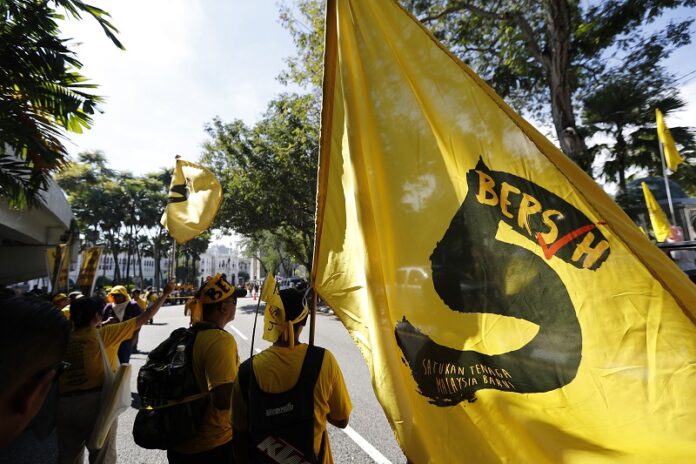
Protesters gathers outside national mosque during the Coalition for Free and Fair Elections (Bersih) rally Saturday in Kuala Lumpur, Malaysia. Photo: Vincent Thian / Associated Press
KUALA LUMPUR — Malaysian police detained 12 activists and tightened security ahead of a rally Saturday by electoral reform group Bersih seeking Prime Minister Najib Razak’s resignation over a financial scandal.
Police barricaded key roads in downtown Kuala Lumpur and put water-cannon trucks on standby, but it did not stop protesters who began trickling in. Some were chanting “Save Democracy” and “Bersih, Bersih”— which means “clean” in the Malay language.
The protesters were gathering at several meeting points and plan to march on Independent Square, the main venue that was locked down.
Bersih said on Twitter that police raided its office on Friday and detained its chairwoman Maria Chin and another official Mandeep Singh. It said at least seven others including several politicians have also been held. It said police also confiscated laptops, mobile phones and bank statements.
“Despite the authorities’ desperate measures to stop us, (the rally) will go on,” the group tweeted.
Lawyer Melissa Sasidaran said Chin was being held for “activities detrimental to parliamentary democracy” and Singh for alleged rioting. She said a student leader and three politicians had also been detained.
Ruling party politician Jamal Mohamad Yunos, who planned to lead a counter rally, also was detained with two other anti-Bersih activists, Jamal’s group said in a statement.
Both the rallies have been banned amid fears of a clash between Bersih’s yellow shirt supporters and Jamal’s red shirt group.
Najib, who is attending an Asia-Pacific summit in Lima, Peru, has kept an iron grip since graft allegations emerged two years ago involving the indebted 1MDB state fund that he founded. 1MDB is at the center of investigations in the U.S. and several other countries.
A rally that Bersih organized in August 2015 also demanding Najib’s resignation brought together 50,000 people, according to police estimates. Bersih said the number was much higher.
Najib, who has denied any wrongdoing, has said he won’t be cowed by the rallies.
In a statement on his blog, Najib called Bersih “deceitful” and said it has become a tool for opposition parties to unseat a democratically elected government.
Human rights group Amnesty International slammed the crackdown and called for the immediate release of the Bersih activists, describing them as prisoners of conscience.
“These arrests are the latest in a series of crude and heavy-handed attempts to intimidate Malaysian civil society activists and other human rights defenders,” Amnesty said in a statement.
The investigations into 1MDB fund are centered on allegations of a global embezzlement and money-laundering scheme. Najib started the fund shortly after taking office in 2009 to promote economic development projects, but the fund accumulated billions in debt over the years.
The U.S. Justice Department said that at least $3.5 billion had been stolen from 1MDB by people close to Najib and initiated action in July to seize $1.3 billion it said was taken from the fund to buy assets in the U.S.
The U.S. government complaints also said that more than $700 million had landed in the accounts of “Malaysian Official 1.” They did not name the official, but appear to be referring to Najib.
A worker puts the final touches on rubber masks depicting President-elect Donald Trump on Tuesday at the Ogawa Studio in Saitama, north of Tokyo. Photo: Eugene Hoshiko / Associated Press
Will Thailand face greater trade barriers from the United States under Donald Trump? Will President Trump care less about human rights violations under the Thai military junta? Will junta leader Gen. Prayuth Chan-ocha finally get a state visit to the White House to meet Trump now that the junta leader has praised his victory as “remarkable” and expressed his desire to work with him in a statement published by the Foreign Ministry?
Not a day has passed since Trump defeated Hillary Clinton 10 days ago without Thai pundits offering their take on what the Trump presidency will mean to Thailand.
In the bigger picture, some people fear a global trade war, if not World War III.
Before we fall deeper into Trumpophobia and become too quick to blame everything that hasn’t happened under Trump yet, let me cite a paragraph from page 147 of Chris Baker and Pasuk Phongpaichit’s book “A History of Thailand” about the U.S. government and then-dictator Field Marshal Sarit Thanarat.
“On Oct. 20, 1958, [Sarit] carried out a second coup, declared martial law, annulled parliament, discarded the constitution, banned political parties, and arrested hundreds of politicians, journalists, intellectuals, and activists. The U.S. cheered and granted USD$20 million in economic aid. The State Department memorialized that this was not a coup but ‘an orderly attempt by the present ruling group to solidify its position.’ Sarit called it a ‘revolution.’”
Who was then in charge at the White House? Another Republican by the name of Dwight David “Ike” Eisenhower. If Eisenhower’s support for Sarit’s coup wasn’t enough to impress you, consider that Wikipedia also listed him as having ordered coups in Iran and Guatemala, as well as aiding the French in their fail bid to keep Vietnam as a colony.
My point is that when it suits the U.S. government to turn a blind eye to injustice and human rights violations, they are very blatant at it, and they continue to practice it on and off, in various parts of the world. There is no domestic coup in the U.S., yet the it helps others stage coups when they stand to gain.
Be naive at your own risk when it comes to realpolitik. The failings of the United States don’t mean that suddenly Russia’s Putin or China’s Xi is Mother Theresa, either.
Thailand should thus deal with these powerful states with caution, and Thais should not become emotional and delusional when it comes to international relations.
As for Trump, whatever reactions we are getting mostly in Thailand so far were based on analysis focused on state-to-state relations. This leaves out people-to-people relations and the many Americans who over the years contributed to not just the betterment of U.S.-Thai relations but Thailand itself.
As a newspaperman I think of the role of Dan Beach Bradley (1804 – 1873), the American Protestant missionary who started the first Siamese newspaper, brought the first Thai-script printing press to Siam, advocated for Siamese equality and lived in the kingdom from 1835 until his death.
Today, there are Americans who are true friends of Thailand and the Thai people, and vice versa. Here in Thailand, I think of Father Joe Maier, the American Redemptorist priest who has lived and worked for the betterment of Khlong Toei slum children for four decades. Scholars like Khon Kaen-based David Streckfuss, who penned the most authoritative book on the controversial lese majeste laws, as well as American activists and journalists who wish well for the kingdom and more.
Let us not be too fixated on the faceless state-to-state posturing to the exclusion of people-to-people relations.
Trump or no Trump, Prayuth or no Prayuth, the relations between the people of Thailand and the United States, which predated the oft-cited 183 years of formal diplomatic ties, itself the oldest in Asia, shall endure, and hopefully positively when we look beyond the narrow mindset of nationalism.
First and foremost, we are all human beings, not Thai or American. Lest we forget.
People walk in 2011 on the streets of Twante, Myanmar, where three girls were murdered Friday by an exorcist. Photo: Ken Marshall / Flickr
TWANTE, Myanmar — A Burmese exorcist on Friday pleaded guilty to murder charges in the deaths of three children he is accused of beating and injuring another after telling their parents they were possessed by evil spirits.
“I lost control of my mind and I killed them,” Tun Naing told the court in Twante, south of Yangon.
After telling the parents that their children were possessed, Naing punched and kicked two girls aged 8 months and 2 years and a 3-year-old boy during an exorcism ritual Oct. 18, police said, adding that he also hid the bodies.
Two days later, Naing severely injured a 4-year-old girl in a nearby village in another ritual that prompted residents to call authorities to arrest him.
Superstition and belief in sprits is common in Buddhist-majority Myanmar.
Naing could face death sentence if found guilty on all counts. It wasn’t immediately clear when his trial will resume.
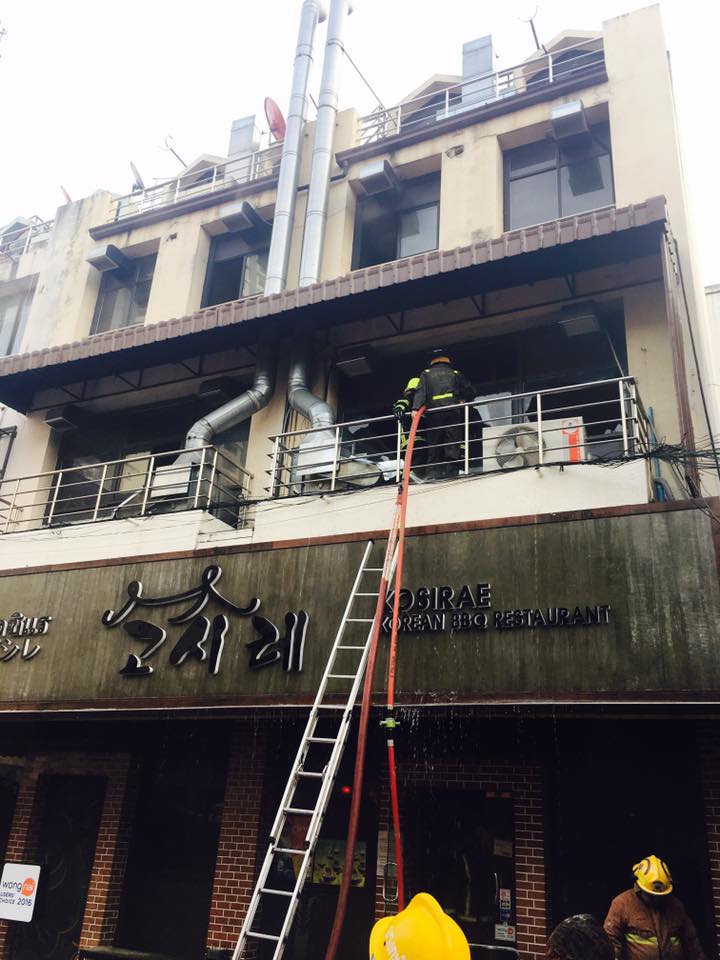
BANGKOK— A fire broke out late Friday afternoon at a Korean restaurant in Soi Thong Lor 2. No injuries were reported.
Staff and customers inside the shophouse-restaurant Koshirae ran outside as a flames erupted before fire trucks arrived at the place and quickly extinguished the fire.
No one was injured and police were investigating the cause, Lt. Col. Jiirakrit Jarunpat of Thonglor police said by phone.
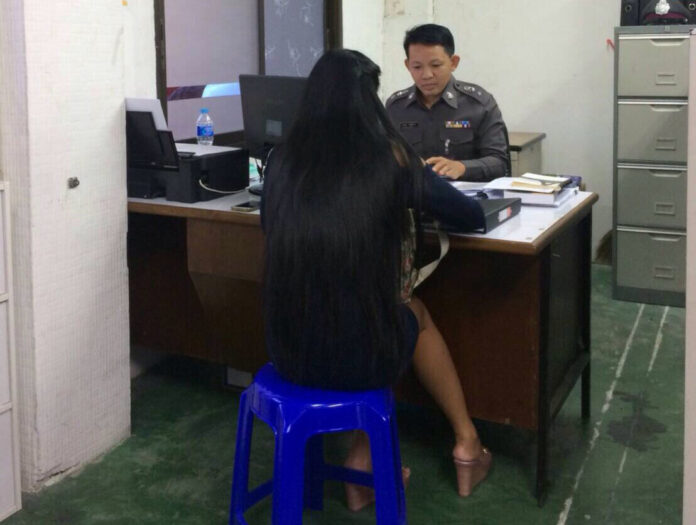
The ‘ghost rider’ turns herself in for clinging to a moving vehicle Thursday afternoon at the Hua Mak Police Station.
BANGKOK — Hitchhiking ghost? Guerilla marketing stunt? Nope, the mystery of a woman perched on the back of a speeding car that’s gripped netizens all week was solved Friday.
It was a marital dispute.
On Sunday, a 47-year-old man was driving his 29-year-old wife to work when they got into a heated argument while driving through Bangkok’s Wang Thonglang district. It got so bad she called her workplace and got the day off as her husband was driving into the Pattanakarn area.
When she angrily got out of the car, he immediately locked the doors on her. There was one problem: she left her bag inside. He tried to drive away, but she wanted the bag so badly she leaped atop the trunk. The rest, as they say, is history.
“She came to the station yesterday and wished to remain anonymous,” Maj. Gen. Nantachart Suppamongkol of the Fourth Division of the Metropolitan Police Bureau said Friday. “They got into a fight over family issues, and he drove away. She wouldn’t let it go, so she jumped up on the back of the car.”
Apparently it turned into a test of wills with neither party able to relent – for hours.
“She rode up there a while, since 5pm. That’s why three clips surfaced. She even got down from the car and they got angry at each other when the car stopped,” Nantachart said laughing, referring to a brief clip of the woman whacking the car’s window.
The woman came to the Hua Mak police station on Thursday, has been charged with clinging to a moving vehicle (this is a crime), a minor infraction a fine of no more than 500 baht.
An arrest warrant has been filed for her husband, who has agreed to meet police next week. He is charged with reckless driving, a crime punishable by up to three years in jail and a 10,000 baht fine.
HUA HIN —Post-rock duoStylish Nonsense headlines the upcoming Grass on The Moon mini music fest which will go down where few fests have gone down before: the rooftop of a beachfront mall.
Feel the sea breeze and enjoy the sun give way to moonshine with good music from nine indie bands including Stylish Nonsense, pop-folk duo Selina & Sirinya and the fresh psychedelia of Jinda John.
Tickets are 300 baht and include one drink.
The festival starts at 2pm on Nov. 26 at the new beachfront mall Seenspace Rooftop on Soi Hua Hin 35.
PATTAYA — Pattaya police said Friday they were investigating a street melee between two women in the city’s red light district captured on film.
In the footage first published Thursday night online, two women are seen slapping and kicking each other while a foreign man tries to separate them. According to a caption posted with the video, the pair were bar workers fighting over “a farang customer.” The video had been watched more than 1 million times by Friday afternoon.
The fight is broken up by a Thai man who throws one woman to the ground and slaps the other.
Col. Apichai Klobpetch, chief of Pattaya City police, said by telephone that officers were working to find out when the incident took place and who was involved.
“No one has filed any report with us,” the police colonel said. “Our officers were also on Walking Street last night, and they didn’t see any incident. Many units were there.”
BANGKOK — We may soon see a great wall along our southern border, and we will make Malaysia pay for it. Or at least a portion of it.
The plan to erect a Thai-Malaysian border fence was unveiled Friday by Defense Minister Prawit Wongsuwan, who said he got the idea from a recent meeting in Laos with his Malaysian counterparts.
“We recommended setting up a joint committee with Malaysia for discussions of issues scuh as problems about transnational crime, human trafficking and a border fence,” Gen. Prawit told reporters at Government House.
The general, who also serves as deputy junta chairman, said the fence project would be jointly funded by Bangkok and Kuala Lumpur.
Elaborating on Prawit’s remark, defense spokesman Kongcheep Tantravanich said the idea of a joint border fence would build upon existing structures. There are already fences and walls along the border, but they were built separately by the two nations, leaving a no man’s land in between, and the governments would prefer a single fence managed by both sides, Maj. Kongcheep said by telephone.
The two governments also want to extend the existing fence to cover the rest of the border, portions of which pass through undemarcated jungles and mountains, the spokesman said.
“We want to extend the line. Both sides agreed on this. In the area that is clearly defined, we can build it,” Maj. Kongcheep said. “For areas that are still not clear, we will rely on patrols, and we will send teams to demarcate it first. Then we will build it when things are certain.”
The idea is not new. As early as 2013, the counterinsurgency agency Internal Security Operations Command submitted a proposal to the central government for a fortified border defense, which would have included a 6.5-kilometer concrete wall topped with barbed wire. The project never took off.
Gen. Prawit reportedly discussed the latest plan with the Malaysian defense minister during an informal meeting that took place on Wednesday and Thursday in Vientiane.
A timeframe for building the barrier and its costs pend further discussion between both governments, Kongcheep said.
“We have a joint committee working on it together because it involves the border. It may affect the demarcation line, so we have to be cautious,” he said.