28.8 C
Bangkok
Saturday, June 27, 2026
Home Blog Page 2565

Islamic Authority Says Muslim Mourners Can’t Wear Black or Prostrate Themselves

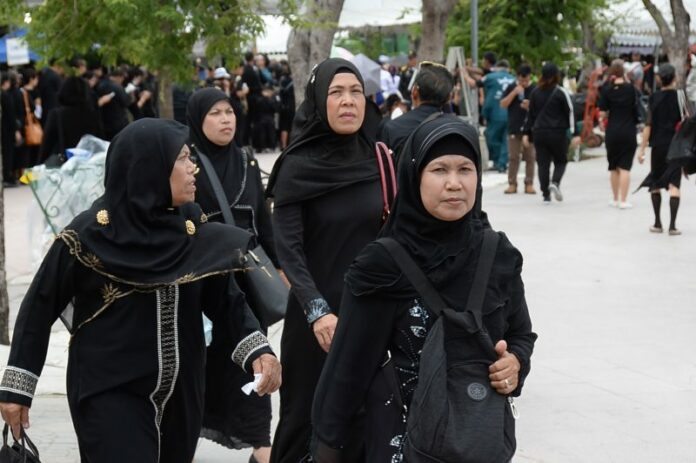
Muslim women at the Sanam Luang on Wednesday in Bangkok.

BANGKOK — The national authority on Islam announced Wednesday that Muslim mourners paying their respects to His Majesty the Late King cannot prostrate themselves or even wear black while doing so.

Three weeks into mourning for King Bhumibol, the Sheikhul Islam Office issued protocols to address the questions that arise from balancing its stringent monotheism with regard for a figure held up by many as a demi-god – though its guidelines were met with mixed reactions from the faithful.

Wisut Binlateh, director of the state agency’s southern region, said prostrating oneself on the ground was not okay.

“Prostrating is to be done to God only, no other,” he said, adding that such an act could lead to someone to be excommunicated.

Instead, Muslims approaching the royal coffin should stand still but may bow their heads. Their torsos, however, should not be parallel to the floor, according to the announcement first published Friday, Wisut said.

It also stated that wearing black in mourning went against Islam.

“One’s sadness should be kept inside, not emphasized through exterior displays,” Wisut said.

Instead, Muslim mourners at the palace should dress conservatively. Muslim, male officials can wear their regular white uniforms, while female bureaucrats should dress modestly as they would for state ceremonies – just not in all black.

Regular Muslims should dress modestly and politely in muted tones.

“Our cultures are different, we can’t force them to be the same,” Wisut said.

Some online suggested the regulations were unnecessary and lacked a credible basis.

“It’s just black clothes, what more do you want? Give us exact evidence from the Quran,” Facebook user Rarai Thedngamtuan wrote in reply. “Don’t just interpret stuff to take your own side. Those of us who have to work with people from other religions will be looked at badly.”

On the other hand, Yaikalon Sunaree found comfort in the announcement.

“I’m a government worker, and I get asked every day why I’m not wearing black. I was too frustrated to explain. With the announcement of these regulations, I feel a burden has been lifted.”

Abdul Mahamad said he’d rather take the heat from mortals than from the almighty.

“If we do things that go against humanity’s eyes, we are just clowns or weirdos,” he wrote. “But if we do things that go against the commands of Allah, it is sin, and we will be punished. So, which will you choose?”

Advertisement

Prosecutors to Contest Jenphop’s Insanity Defense

Jenphop Viraporn is ordained as a monk in a ceremony on May 9 at Wat Soontorn Thamtan in Bangkok. He left the monkhood several weeks later.

BANGKOK — Prosecutors will ask the court to dismiss Jenphop Viraporn’s claim he is mentally unfit to stand trial for double vehicular manslaughter, a lawyer for one of the victims’ families said Wednesday.

In the aftermath of the high-speed crash that killed two graduate students in March on an Ayutthaya highway, Jenphop confessed to all charges except reckless driving under the influence of drugs or alcohol. The millionaire’s insanity defense means the court case against him could go on for several years.

Read: Claiming Insanity, Fatal Crash Suspect Jenphop Wants Trial Shelved

“He can drag the case on for one or two years,” said Prinya Sanitchone, an attorney representing the family of Krissana Thaworn, one of the victims killed in the crash, said by telephone. “There’s a way for him to ask the court to suspend the trial.”

Jenphop is due to appear at the Ayutthaya Provincial Court on Nov. 14, where judges will hear testimony from a doctor who declared Jenphop mentally incompetent. Prinya said his team will ask the court to dismiss the physician’s claim and appoint an independent expert to evaluate Jenphop.

“We will contest it, because it’s impossible. Why did he go insane all of sudden after the incident?” Prinya said.

Someone answering the phone at Lenso Group, an auto company owned by Jenphop’s family, said Jenphop’s father Jessada Viraporn was unavailable for comment.

Jenphop was charged with refusing a sobriety test for the March 13 crash that killed Krissana, 32, and his classmate Thantapat Horsaengchai, 34, which automatically led to another offense: driving under the influence of drugs or alcohol. He also faces charges of fatal reckless driving, driving over the speed limit and resisting law enforcement officers.

Jenphop was previously scheduled to appear before judges on Aug. 15, but failed to show up. His lawyer said the businessman suffered a mental breakdown and had to be admitted to a psychiatric hospital.

If Jenphop’s lawyers convince the court he is unfit for trial, it would be suspended until he’s fully recovered from that condition. Prinya, the lawyer for Krissana’s family, said such a scenario is unlikely.

“The prosecutors won’t let him off the hook, because puu yai are keeping close watch in the case,” Prinya said, referring to senior bureaucrats.

The most serious charge laid against Jenphop – fatal DUI – carries a maximum penalty of 10 years in prison.

The accident drew widespread attention because police initially allowed Jenphop to waive a sobriety test and did not charge him with any crime until four days later.

The delayed investigation led to accusations on social media that police were attempting to shield the millionaire from justice as in other high-profile cases involving the wealthy and well-connected.

Related stories:

Cops Reprimanded for Bungling Fatal Benz Crash Case

Top Cop Apologizes for Delay in Jenphop Case

Jenphop Plowed Through Toll Booth Before Deadly Crash (Video)

Advertisement

As Development Cannibalizes Chinatown, French Artist Preserves Pieces

A room inside an abandoned building where artist Francois Langella found objects to be used in a forthcoming exhibition. Photo: Francois Langella / Courtesy

BANGKOK — See the speed of change as years of development are compressed into a month in a room full of discarded materials.

Struck with conflicting feelings while wandering through Bangkok’s abandoned buildings over the years, Francois Langella started picking up things he found. Now he’s putting it to use in an installation of his found objects throughout the month at Junked.

A faded poster of a pop singer and paraphernalia from a Chinese gambling den will be among the items on display Saturday through Dec. 1 at Speedy Grandma.

Langella, who works from a Chinatown studio, said he’s observed the tremendous changes transforming his historic neighborhood. The co-founder of multimedia art space NACC thought it was the right time to put the objects to use as symbols of the sense of inevitable obsolescence.

“I think people feel that things are changing,” Langella said. Some feel a sense of urgency or immediacy in experiencing old places now made precarious because they are bound to be replaced by something else.”

A room inside a neglected building where the French artist Francois Langella picked up objects. Photo: Francois Langella / Courtesy

Unlike other exhibitions, Langella’s will close with a hired disposal team coming to clear it out, just like the many soon-to-be deserted properties.

“Audiences should not look at them as usual artworks in the sense that they are meant to be ‘preserved,” Langella said. “The artworks will be destroyed at some point during the show.”

Bar-shophouse-gallery Speedy Grandma is located in the historic Charoen Krung area just one kilometer from MRT Hua Lamphong.

Advertisement

Prayuth Named ‘Press Freedom Predator’ – Again

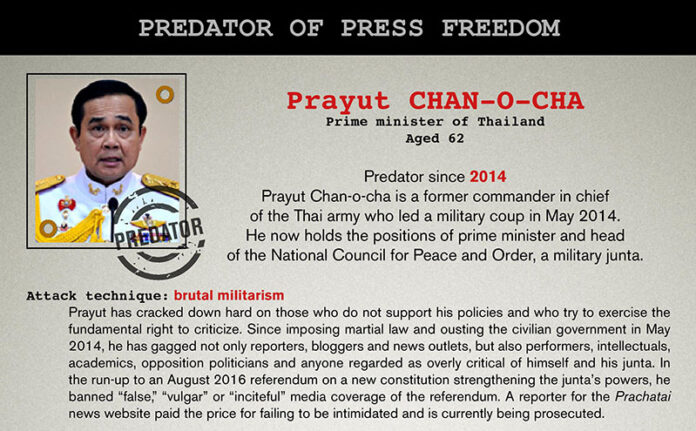
A faux hunting license prepared by Reporters Without Borders for Gen. Prayuth Chan-ocha, which it named a ‘press freedom predator’ for a second year on Wednesday.

BANGKOK — Junta leader Gen. Prayuth Chan-ocha was named a “press freedom predator” for a second year by Paris-based Reporters Without Borders on Wednesday, largely for suppressing media coverage and expression in the run-up to August’s charter referendum.

Prayuth, who also installed himself as prime minister, was listed in the report along with 34 world leaders and dictators such as Turkish President Recep Tayyip Erdogan for seizing control of that nation’s media, Egypt coup leader-turned-president Abdel Fattah Al-Sisi, North Korean dictator Kim Jong-un and Singaporean Prime Minister Lee Hsian Loong.

“Prayuth Chan-ocha, Thailand’s junta chief and prime minister, has been gagging not only journalists, media outlets and bloggers, but also performers, intellectuals, academics and his political opponents ever since he introduced martial law in May 2014,” the group said in a statement.

Read: ‘Reporters Without Borders’ Bashes Junta on Press Freedom

Ratcheting up its salty rhetoric, the nonprofit mocked up a “hunting permit” for Prayuth and the others named in its list.

A junta spokesman said he had no comment on the matter.

The group’s critique of Prayuth referenced arrests of journalists and restrictions imposed on the media and society at large earlier this year as the junta sought public support for a new, less democratic constitution written under its supervision.

“In the run-up to an August 2016 referendum on a new constitution strengthening the junta’s powers, he banned ‘false’, ‘vulgar’ or ‘inciteful’ media coverage of the referendum,” the faux hunting permit reads. “A reporter for the Prachatai news website paid the price for failing to be intimidated and is currently being prosecuted.”

Prachatai journalist Taweesak Kerdpoka was charged earlier this year under an April law which criminalized the “dissemination of false information” when he was found traveling inside an anti-charter activist’s car which contained materials opposed to its adoption.

The report also noted Thailand has plummeted in the group’s World Press Freedom Index from 59 in 2004 to 136 out of 180 countries in 2016.

Reached for comment Wednesday, junta spokesman Col. Winthai Suvari said he had no comment of the matter and wished to focus instead on other matters.

“I don’t have an opinion because we don’t have details. I would rather focus on domestic affairs. It would be too much to focus on the many [foreign] organizations, so I wish to refrain from commenting,” Winthai said.

The list released Wednesday was part of Reporters Without Borders’ recognition of the United Nation’s International Day to End Impunity for Crimes Against Journalists. It noted three Thai journalists who have been charged under the lese majeste law: Somsak Pakdeedech of Thai E-News arrested November 2014, Kathawut Boonpitak of Kon-thai.net arrested in June 2015, and prior to the coup, Voice of Taksin editor Somyos Prueksakasemsuk’s arrest in April 2011.

Related stories:

’Watch Yourself,’ Prayuth Tells Reporter on World Press Freedom Day (Video)

Watchdog: Thailand Sinks as Press Freedom Declines Globally

Advertisement

Vietnam Seizes Ivory Hidden in Timber Shipment From Nigeria

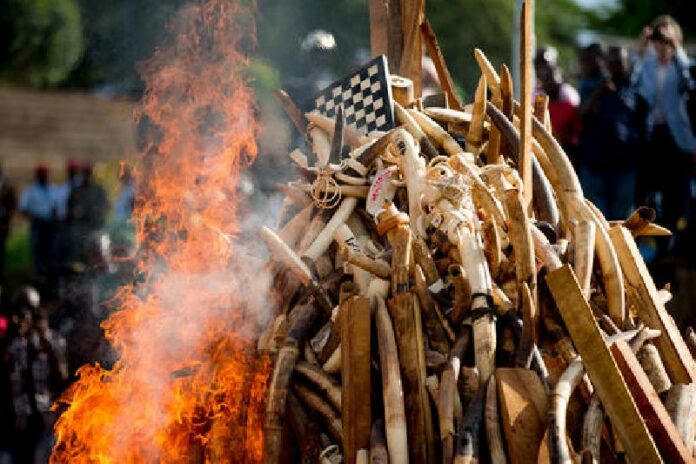
Heavily armed guards stand next to a pile of illegally trafficked elephant tusks and hundreds of finished ivory products as they prepare to destroy them at the Palais des Congres, in Yaounde, Cameroon, Tuesday, April 19, 2016 Photo: Andrew Harnik / Associated Press

HANOI — Vietnamese authorities have seized 446 kilograms (981 pounds) of ivory illegally shipped from Nigeria after finding 3.5 tons at the same port last month, an official said Wednesday.

The ivory seized Tuesday had been hidden in timber in a container at Cat Lai port in the southern commercial hub of Ho Chi Minh City, Customs official Le Dinh Loi said.

Authorities seized 3.5 tons of ivory in three shipments smuggled from Africa at the same port last month.

State media say 1 ton of ivory costs USD $1.8 million on the black market.

Vietnam will host an international conference on illegal wildlife trade in Hanoi later this month that is expected to be attended by Britain’s Prince William, a vocal critic of the trade.

Elephant ivory is used as jewelry and home decorations in Vietnam, which bans hunting of its own dwindling population of elephants.

Advertisement

Suu Kyi in Japan as Myanmar faces pressure on Rohingya

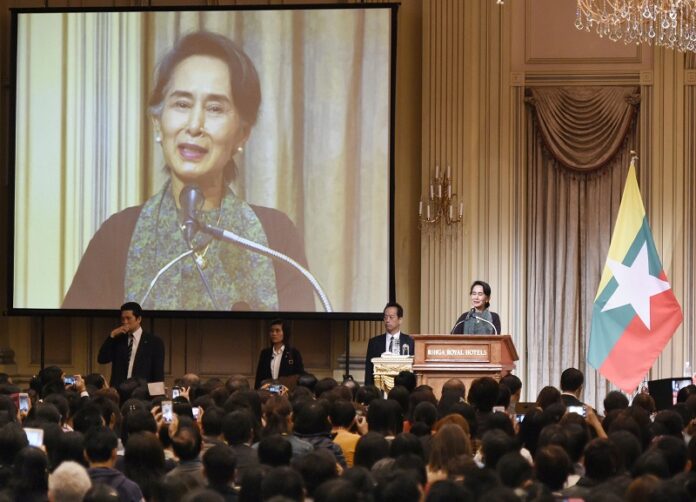
Myanmar's Foreign Minister Aung San Suu Kyi delivers a speech on Nov. 2 during a meeting with Myanmar residents in Japan, at a hotel in Tokyo. Photo: Takumi Sato / Associated Press

TOKYO — Myanmar leader Aung San Suu Kyi received a passionate welcome Wednesday by hundreds of her countrymen in Japan, where she sought their support for promoting development of their country.

Suu Kyi told the audience at a packed meeting in Tokyo that hardworking people could help improve Myanmar’s image and encourage foreign investment.

It takes time to reform the Myanmar government, but she is continuing to work on it, Suu Kyi said, asking that her people do utmost to help the country become one that receives respect from the international community.

Many Myanmar residents in Japan had fled their country during more than five decades of military rule, which ended when Suu Kyi’s party took power more than five months. But despite recent political changes, many of them say they are still cautious.

Suu Kyi arrived late Tuesday for a five-day visit amid growing international pressure on her government to get a grip on violence against the persecuted Rohingya Muslim minority following reports of army attacks on the civilian population.

She didn’t mention the issue at the meeting.

Myanmar government officials deny the reports of attacks, and presidential spokesman Zaw Htay said Monday that United Nations representatives should visit “and see the actual situation in that region.” The government has long made access to the region a challenge, generally banning foreign aid workers and journalists.

Suu Kyi will meet Japanese Prime Minister Shinzo Abe later Wednesday and sign Japan’s economic and humanitarian assistance agreements.

During her visit, she will also meet with business leaders to seek investment in Myanmar. She will also travel to Kyoto to be awarded an honorary doctorate from Kyoto University, where she was a visiting scholar for one year.

Story: Mari Yamaguchi

Advertisement

Indonesian Women Raped, Killed in Hong Kong, Forgotten at Home

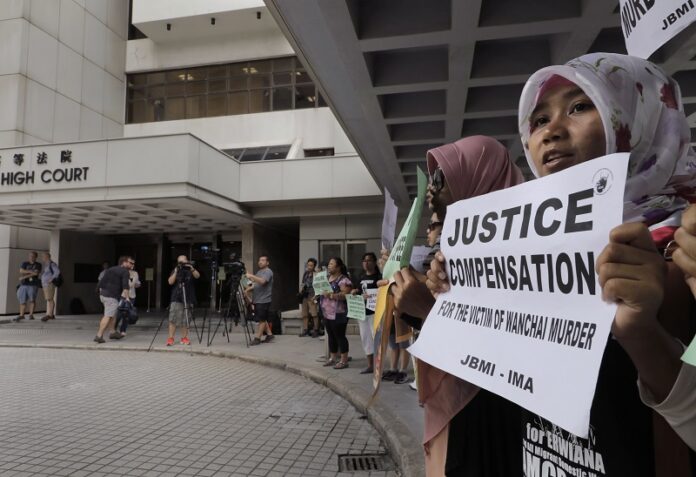
A migrant workers alliance group holds placards last October to protest the killings of two Indonesian women in 2014 outside the High Court in Hong Kong. Photo: Vincent Yu / Associated Press

JAKARTA — The Hong Kong trial of a British stock trader who murdered two Indonesian women and horrifically tortured one of them, recording the three-day ordeal on his phone, has barely registered in the victims’ home country, let alone elicited shock or sympathy.

Poor and vulnerable, nobodies in a sophisticated and clinical metropolis far from their humble villages on the islands of Java and Sulawesi, they were brutalized by a member of the global 1 percent, a Cambridge University-educated 31-year-old who boasted that he spent his half-million-dollar salary on drugs and prostitutes.

The prosecution’s evidence last week made headlines in international media: Three days of escalating torture for the first victim, Sumarti Ningsih, with repeated rape, the battering of her genitalia with fists, mutilation of her body with pliers and the slow cutting of her throat with a serrated knife. A juror wept as defendant Rurik Jutting’s smartphone videos were played.

“I’ve never seen anyone that scared,” Jutting said of Ningsih in one of the videos. “She would voluntarily eat feces out of the toilet and then smile and thank me afterward. That’s how scared she was. She would just do anything.”

And in Indonesia, the reaction: Scarcely anything.

Social media didn’t stir. There were no dramatic headlines or outraged editorials about the plight of the millions of vulnerable Indonesian women compelled by poverty to work abroad. Broadcasters did, on the other hand, devote hours of live coverage to the Indonesian trial of a privileged young woman accused of murdering her friend with cyanide-laced coffee, allegedly because she was angry about a tiff over boyfriends.

“We find no support from the government and media in our own country,” said Ningsih’s brother Suyit Khaliman. “We don’t understand, maybe because she was a maid or whatever. No matter how she worked for her family, she deserves justice,” he said.

In the two years since Ningsih was killed, no one from the government has been in touch with the family, Khaliman said. They heard the trial had started from reporters and some online news reports.

The family is also grappling with the future of Ningsih’s son, now 7.

One day, Khaliman said, “The boy will know how his mother died, perhaps from the internet, and we are worried about that.”

Closing arguments in Jutting’s murder trial are expected by the end of this week. He has pleaded not guilty.

Ningsih, 23, and the second victim, 26-year-old Seneng Mujiasih, were among the legions of Indonesians working abroad, many of them undocumented, and vulnerable to exploitation.

The International Labour Organization estimated their numbers at 4.3 million in 2012. Migrant Care, an Indonesian advocacy group, says most are not educated beyond primary school and 85 percent are women. It says government commitments to bolster protections are still mainly only on paper.

Ningsih had worked in Hong Kong for several years and was on a visitor pass at the time of her murder. Jutting had paid her for sex on a previous occasion. Her family, who she was in regular contact with, believed her most recent job was working as a waitress.

Mujiasih had an employment pass to work as a maid but also worked at a bar where Jutting met her and offered her a large sum of money for sex. At his apartment, Jutting cut her throat during a struggle after she saw a rope gag he tried to hide under a cushion, according to the police summary of facts.

Mujiharjo, the 56-year-old father of Mujiasih, said daily life for the family was difficult, emotionally and financially, but they tried to accept what happened and move on. Money she sent every month had helped pay to build a new house for the family in South Sulawesi, he said.

Khaliman, Ningsih’s 27-year-old brother, said the family was surprised to learn the source of the money she sent back to Indonesia.

But it is relatively common for earnings from the sex industry to keep families back home afloat, an unpalatable fact in Indonesia, a predominantly Muslim, socially conservative country of more than 250 million people.

Dina Damayanti, an Indonesian reporter living in Hong Kong who covered the trial for Suara, a newspaper aimed at the city’s large Indonesian community, said she was disheartened by the lack of interest back home.

Distance was one factor, she said, and the attention given to the cyanide trial.

“I feel a little bit sad because this is a very important case for me,” said Damayanti. “Indonesia is so complex. There are so many cases in my country.”

Anis Hidayah, the executive director of Migrant Care, said the murders, which occurred within days of each other, made headlines in Indonesia two years ago.

But with many migrant worker deaths abroad from suicides, killings, accidents in dangerous workplaces and other causes, the case was quickly forgotten. The victims were also stigmatized because of their involvement in prostitution and were wrongly blamed as contributing to their own misfortune, said Hidayah.

“We should think of how migrant workers are the economic backbone of their families,” said Hidayah. “Most of their families at home are very poor and their lives are very dependent on the sweat of migrant workers.”

Story: Niniek Karmini, Stephen Right

Advertisement

20 Dead, 39 Rescued in Indonesian Boat Capsizing

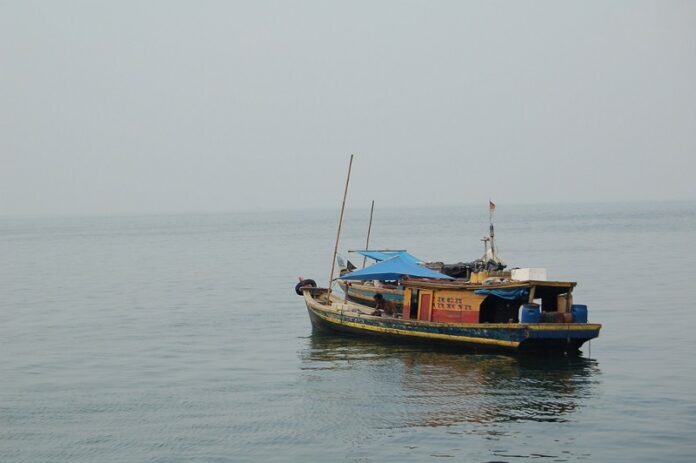
A ferry is seen at sea in Indonesia in 2006. Photo: kulo / Flickr

JAKARTA — A boat carrying Indonesian workers home from Malaysia capsized Wednesday in stormy weather, and Indonesian police said at least 20 people have died.

About 90 people were on the vessel that capsized off the island of Batam about 5 a.m, the island’s police chief Sambudi Gusdian said.

A search effort underway for hours has rescued 39 people so far.

Haryanto, a 51-year-old survivor, said the speedboat capsized amid heavy rains and high waves about two hours after it left Johor Bahru in Malaysia.

He said the boat was overcrowded with standing room only.

A police helicopter and more than a dozen boats are involved in the search and rescue effort.

Speedboats and ferries are a common form of transport in Indonesia, a sprawling archipelago.

Sinkings are common due to poorly enforced safety regulations.

One of the worst ferry sinkings in recent years occurred off Sulawesi in 2009, killing more than 330 people.

Advertisement

Superbugs Threaten Puppet Extinction in Play Fusing Art, Science

BANGKOK — Some people believe in the power of pills, popping them without hesitation at the slightest hint of illness. Yet through the power of puppets a collaboration between art and science hopes to teach a cautionary tale of a pending medical crisis.

In conjunction medical researchers fighting infectious diseases, B-Floor Theatre produced a performance about the endless arms race between human medicine and diseases.

In “Fishy Clouds,” a strange, sickening rain comes down and no medicine can provide a cure. A war between hyper-evolved, indestructible bacteria and antibiotics erupts with the survival of all puppet-kind on the line.

It’s the second time B-Floor has brought its avant garde sensibilities to fusing science with art, 2011 was its first collaboration with the Mahidol-Oxford Tropical Medicine Research Unit for “Survival Games.”

The research unit reported in September that drug-resistant bacterial infections were on the rise in Thailand.

Edu-taining performances of “Fishy Clouds” will travel around Bangkok and Tak province free of charge.

See it Nov. 12 at the Baan Ma Community in Prawet district. On Nov 18, it will be staged at Ramathibodi Hospital’s Chakri Sirindhorn Medical Center. Weekend performances on Nov. 26 and 27 will be held inside the Democrazy Theatre Studio, a 10-minute walk from exit No.1 of MRT Lumphini.

The play will travel around the Mae Sot district of Tak province Dec. 12, 13 and 14, landing at the Wattana Village Resort, Shoklo Malaria Research Unit in Wang Pa Clinic and Mawker Thai Clinic, respectively.

More information can be found online.

Advertisement

Army Opens Cyber Center to Fight 112, ‘Distorted’ Info

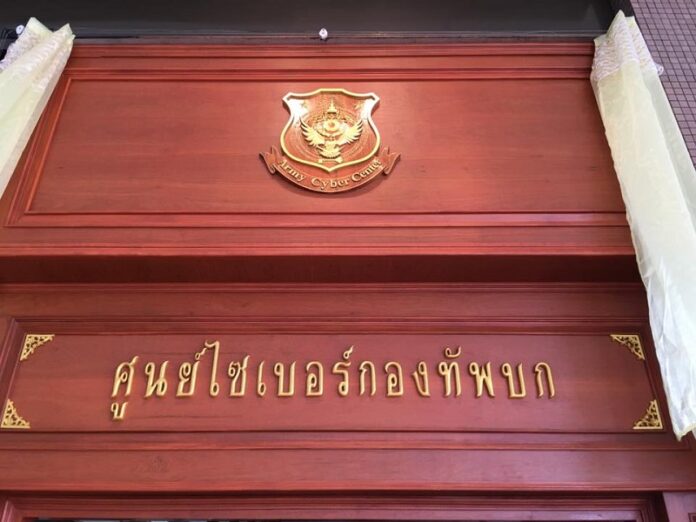
The new Army Cyber Center located inside the Royal Thai Army base in Bangkok is officially opened Tuesday. Photo: Matichon

BANGKOK — The Army opened a new Army Cyber Center on Tuesday tasked with combating and suppressing information deemed illegal or undesirable.

Formerly the Military Technology Center, the rebranded agency will be used against external and internal threats, from transnational hackers to suppressing information the military regime considers “distorted.”

Newly appointed army chief Gen. Chalermchai Sittisart said threats included information deemed insulting the monarchy and other matters deemed threats to national security.

“The current issue we are concerned the most is the disseminated information that affects national security,” he said. “The information operations of those who oppose [the government].”

Chalermchai said social media users share information critical of the government without “checking the facts.”

Read: Thailand’s New Online Fad: Social Surveillance

Since seizing power in 2014, the military has conflated national security with defense of the monarchy and dissent to its rule.

The army chief said the aim was to “create better understanding” with people on social media. Social media has remained one forum for free expression out of reach of the junta, which has largely quashed dissent and opposition in the public sphere.

It was unclear what tools and techniques would be employed, but the army said it was developing its own and improving its capacity. In the past, the military has reportedly imported intrusion software but relied more heavily on what’s been described as social surveillance.

Asked whether the suppression against royal defamation included academic content or discussion, Chalermchai did not hesitate.

“We deal with whatever is insulting to the monarchy,” he said.


Related stories:

Rejecting Vigilantism, Regime Ramps Up 112 Crackdown

Netizens Instructed to Report ‘Inappropriate Content’ by ISPs

Thailand’s New Online Fad: Social Surveillance

Advertisement

Hot News

LATEST NEWS

Bangkok
overcast clouds
28.8 ° C
28.8 °
28.8 °
83 %
3.2kmh
100 %
Fri
29 °
Sat
37 °
Sun
36 °
Mon
36 °
Tue
33 °