30.5 C
Bangkok
Saturday, June 27, 2026
Home Blog Page 2612

CP Board Member Didn’t Infringe on Forest – His Assistants Did

Officials from the Department of Marine and Coastal Resources on Wednesday inspect the property owned by CP executive Jaran Chiaravanont in Trat province.

TRAT — Though the holiday home of a board member of Thailand’s largest conglomerate infringes on protected forest area, he won’t be charged because the work was done without his knowledge, an official said Thursday.

Instead two assistants of Jaran Chiaravanont assigned to oversee the property in his absence said they were solely responsible for its encroachment onto 54 rai (8.64 hectares) of the Tha Som Protected Forest in Trat province. The infringing plot was used to dock yachts and farm fish.

Read: Home of CP Chairman’s Brother Found to Infringe on Forest

Jaran, 86, the eldest of four brothers comprising Thailand’s wealthiest family, is brother to CP Group CEO Dhanin Chearavanont and serves on the conglomerate’s board. Forbes pegs his wealth at USD$2.9 billion (100.8 billion baht).

In a phone interview, Ratchai Pornpha, who led the team which inspected the property Wednesday, expressed his frustration that authorities say there is no evidence to prosecute anyone beyond the two men, Anant Sawangwai and Chaiwat Thanompan.

“They said they did it on their own. They didn’t leave any trace of evidence,” said Ratchai, who heads the Marine and Coastal Resources Department’s local unit of maritime inspectors known as the White Sharks. “Anyone knows their behavior. Locals know what this is about. But we can’t make accusations without evidence.”

‘That’s All We Could Do’
According to Ratchai, his department began investigating Jaran’s property in April for suspected infringement on the neighboring forest land before Wednesday’s inspection.

However Anant and Chaiwat identified themselves as owners of the infringing plot of land, and said Jaran was not involved in their offense, despite the extensive structures built on the plot, such as boat docks and a yacht repair station.

After immediately taking responsibility for the crime, Anant and Chaiwat were charged with violating several forest protection laws.

“At this stage of the arrest, that is all we could do,” Ratchai said. “We cannot implicate anyone else beyond Mr. Anant [and Chaiwat].”

He said police and public prosecutors may choose to further investigate the case and file additional charges.

The operation in Trat was the latest in a high-profile effort by the authorities to curb illegal development of public lands around the country that has seen dozens of resorts demolished throughout Thailand, some linked to wealthy and well-connected people.

Stopping land encroachment was one of the priorities announced by the military government shortly after it seized power in May 2014.

Related stories:

Sister of Former Princess Convicted of Forest Encroachment

Bogus ‘ISIS’ Bomb Threat Fails to Stop Demolition of Encroaching Resorts

Advertisement

Suttichai Yoon Steps Down as Editor in Chief of The Nation

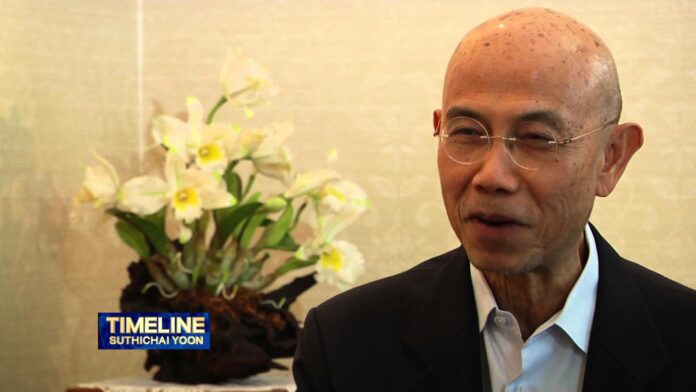
Sutthichai Yoon in a March episode of his ‘Timeline’ program on Nation TV. Image: Timeline / YouTube

BANGKOK — A longtime media personality and co-founder of The Nation newspaper has resigned as chief editor and chairman of the Nation Multimedia Group, effective Wednesday.

No reason was given for Sutthichai Yoon’s abrupt departure in a report filed Tuesday with the Stock Exchange of Thailand disclosing the news he would be leaving his multiple positions with the media conglomerate.

Calls to The Nation were unreturned Thursday, and Sutthichai could not be reached for comment. A prolific voice on social media, he’s made no mention of his resignation online since Tuesday.

Sutthichai said the media must improve its quality and do original investigative work in a story on the decline of traditional media published Sunday by The Nation.

“With the collapse of the traditional media, we will have to blame ourselves if we fail to adapt,” he said in the report.

On Tuesday the paper announced he would head up an “innovation center” to “regain the group’s position as a trendsetter in the industry.”

According to filings with the Stock Exchange of Thailand, Nation Multimedia Group lost 341.8 million baht in the second quarter of this year.

Suthichai, who co-founded the pro-establishment English language daily in 1971, has long been a mass media presence known for his provocative editorials, distinctive appearance and interviews with high-profile international figures.

Advertisement

No Compensation for Thai Shrimp Industry Slaves

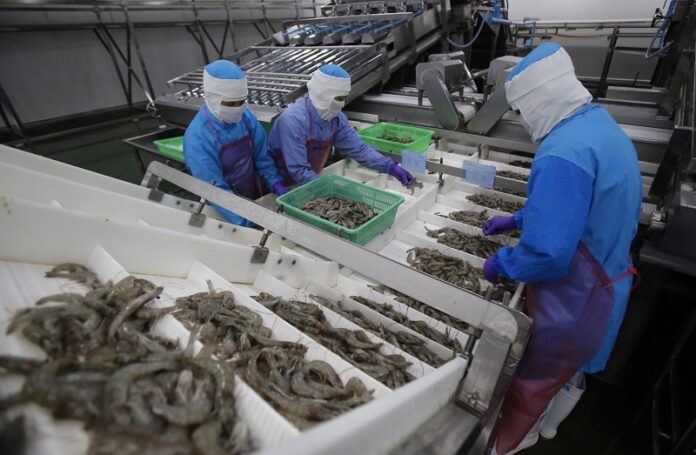
Workers size shrimp in August at Thai Union factory in Samut Sakhon, Thailand. Photo: Sakchai Lalit / Associated Press

SAMUT SAKHON, Thailand — Facing international pressure for failing to stop human trafficking in its seafood sector,Thailand promised almost a year ago to compensate victims of slavery and industry leaders vowed to bring all shrimp processing in-house.

That hasn’t always happened. Instead, some formerly enslaved shrimp peelers have been deported. And some shrimp peeling sheds are being inspected and authorized to keep operating.

Tin Nyo Win, who escaped slavery and alerted police to abuses, was deported to Myanmar this month, along with his pregnant wife and a half-dozen others, after being held almost a year in a Thai government shelter. Authorities said that although the couple were victims of modern-day slavery, they had illegally entered Thailand to begin with.

“They don’t treat us like humans. They treat us like dogs,” Tin Nyo Win said hours before Thai authorities took them away. “They just try to bully those of us who are victims already.”

Nattamon Punbhochar at the Thai foreign ministry said the couple never requested compensation and were deported in accordance with a memorandum of understanding Thailand has with Myanmar.

“They don’t want any wages from their employer,” he said. “They just want to return to their home.”

Win denies this. He said he is broke, tried to get compensated, and would have actually appreciated a decent job processing seafood in Thailand.

The Associated Press also found that while some Thai companies that export shrimp to the U.S. have given formerly entrapped workers better jobs in-house, others still use middlemen who employ laborers in remote, guarded warehouses. That’s despite industry vows to end outside shrimp processing by the end of last year after human trafficking was exposed in the sheds.

Shed owners frequently break environmental, labor or safety laws. Seventy-five percent of the 109 inspected so far this year were cited for violations, and 24 were ordered to close.

Human-rights and media reports documenting abuse in Thailand’s $7 billion annual seafood export industry have brought international pressure. Last year, the AP reported on fishermen locked in a cage on the remote Indonesian island village of Benjina and traced their catch to Thailand, then on to the U.S., leading to more than 2,000 slaves being freed .

AP also focused on slavery inside the Gig Peeling shed outside Bangkok in Samut Sakhon, where Tin Nyo Win, 22, and his wife were locked inside and forced to work 16 hours a day, ripping guts, heads and tails off shrimp that entered supply chains of most major U.S. supermarkets and companies including Red Lobster, Whole Foods and Wal-Mart.

Win was a whistleblower — he ran away and told police, who raided the factory and rescued more than 100 people.

In response, the Thai government said victims and witnesses of human trafficking could stay and work in Thailand for up to one year while their cases were investigated. This year the U.S. State Department commended Thailand for reforms and took the country off a global human trafficking blacklist .

Those Thai reforms — on paper — include paying whistleblowers like Win as much as $2,800, and providing victims compensation, education, employment and other assistance. Empty promises, said Win, who said he and his wife weren’t even given food sometimes.

Col. Prasert Siriphanapitat, Samut Sakhon deputy police commander, said five people including a shed owner have been charged in Tin Nyo Win’s case. All are out on bail.

Last year, facing a boycott over abuses, major seafood groups and certifiers decided to protect workers by moving all labor in-house, banning outsourcing of shrimp pre-processing. Yet dozens of pre-processing sheds continue to operate, doing work for at least some of those exporters.

The shrimp-peeling sheds are hidden in plain sight. Some are large factories, others nothing more than a large garage. Labor advocates say workers can become mired in debt by paying for the jobs in the first place and then being charged room and board. There’s little oversight to ensure they’re not being forced to work.

The AP recently visited a handful of Samut Sakhon shrimp sheds — some now rebranded as shrimp factories — buzzing with workers hand-peeling truckloads of shrimp on residential streets or behind walls.

“We prepare many tons of shrimp here every day,” said Boonchai Seafood director Taweesak Suralertrungson. “We’re following rules 100 percent.”

Documents at Boonchai show it processes shrimp for May Ao Food Co., one of Thailand’s leading exporters to the U.S. May Ao touts major U.S. importers as customers, including Aqua Star and H&N Foods International. May Ao’s own “May Brand” shrimp has been sold at Kroger and other supermarkets.

Boonchai on this day had 107 shrimp peelers who were gutting, deveining and tearing heads off shrimp in icy buckets; Taweesak said each is paid the daily minimum wage of 300 baht ($8.50). Standing in a cooled warehouse, workers in gloves, aprons and boots worked at stainless-steel tables.

With new government oversight, Boonchai’s workers this year got insurance, housing support and hourly pay, Taweesak said. But a colleague complained that once workers get legitimate papers, most leave.

“They don’t want to work in this wet and smelly place if they don’t have to,” said assistant Jamras Goyari.

While Boonchai’s operations passed a government inspection, the industry had vowed to eliminate middlemen.

Shrimp peeled by Boonchai which enters the supply chains of seafood exported by May Ao carries the Global Aquaculture Alliance’s Best Aquaculture Practices certification — which says “peeling and heading of shrimp must occur in facilities owned by and completely controlled by” the processing plants. May Ao is also a member of the Thai Frozen Foods Association, which promised last year “to eradicate third-party pre-processing.”

Officials at May Ao and TFFA initially insisted that all shrimp peeling is in-house. When pressed, TFFA President Poj Aramwattananont said May Ao’s factory is too small to handle all the labor. He said there’s nothing illegal about pre-processing in independent warehouses, and that the media has unfairly singled out his industry.

“We are not 100 percent clean. You will always find some problems, but those are rare,” he said.

Global Aquaculture Alliance president George Chamberlain said his organization is gravely concerned and asked for more details for further investigation.

“Clearly, this is a difficult long-term issue, but we take it very seriously, and we are working hard on it,” he said.

At May Ao, an official who spoke on condition of anonymity because he was not authorized to talk to the media said that while Boonchai isn’t “in-house,” they are allowed to do business with each other because they are part of the same association. Boonchai officials said they weren’t yet TFFA members but were taking steps to join.

Clearly some Thai seafood exporters have improved working conditions. One of the biggest, Thai Union, opened a large, clean peeling warehouse at its packing and exporting facility. The 1,200 workers get subsidized meals and opportunities for bonuses.

“I have more rights. I like it,” said Thet Paing Oo, 23, a migrant from Myanmar having lunch in Thai Union’s cafeteria. He said he spent six years working 15-hour shifts at shrimp sheds without a day off.

Now his salary has increased, and he gets one day off a week.

Yu Wa, 35, also from Myanmar, teared up at the memory of her previous shed, where she was locked inside and paid by the kilogram no matter how long the work took. Now she gets a daily wage.

“Workers don’t need to buy our gloves and uniforms. We have a shuttle pick us up for work,” she said. “I am treated well and the boss is good. It’s much better.”

Thai Union was among the companies found last year to be getting their shrimp peeled at Gig Peeling shed, where Tin Nyo Win and others were enslaved.

Thai Union spokeswoman Whitney Small said Thai Union offered everyone at Gig positions, accommodations, food and money. She said none of those workers ended up at Thai Union. She didn’t know why.

Tin Nyo Win, reached by phone back in Myanmar, said life is difficult. They have no money, and his wife is about to give birth.

When AP tried to call him back, a woman answered. She said he had pawned the cellphone to her. She didn’t know where he had gone.

Story: Martha Mendoza

Advertisement

Kitten-Killing Thonglor Moto Taxi Gets 18 Months

Panuwat Singhsahat, at right, is escorted by an officer at the Wang Thonglang police station in August. Photo: Matichon

BANGKOK — A Thonglor motorbike taxi driver was sent to jail for 18 months Thursday morning for killing nine kittens he adopted online.

Panuwat Singhsahat was sent immediately to begin serving his sentence after the Phra Nakhon Nua District Court found him guilty of animal cruelty.

Read: Suspected Serial Cat-Killer is Thong Lor Moto Taxi Driver

Panuwat was found guilty of adopting cats through online pet groups which he then killed by strangling or smashing against walls. He was arrested Aug. 15 after police found over a dozen dead kitten bodies and remains near his apartment. Although he was suspected of killing many more, Panuwat confessed to killing only nine.


Advertisement

Hells Angels Beat Thai Man Senseless in Pattaya Street (VIDEO)

PATTAYA — Pattaya police are looking for members of the Hells Angels motorcycle gang who assaulted two Thai men Saturday in a road rage incident.

The attack, recorded on security camera footage, knocked Polrat Chartbutr unconscious and left his friend Nattapong Pooncharoen bruised. Pattaya City police chief Apichai Klobpetch said they expect to arrest them soon.

“We have their identities now. They are Australian nationals,” Apichai said Thursday without identifying their names. “They belong to a biker gang that has members around the world called Hells Angels.”

He said his department has notified Immigration Police.

“We believe we will have them soon,” he said.

The victim, Polrat, told reporters he was having dinner at a market in South Pattaya on Saturday when a pickup truck crashed into his parked motorcycle. Polrat and he and Nattapong then gave chase to the truck until it stopped in front of a bar, at which time four “well-built” Caucasian men emerged and assaulted them.

Polrat was knocked unconscious and was later sent to hospital. He also had a slash wound on his face, while Nattapong’s body had extensive bruising.

Hells Angels made headlines in Thailand last year when a former member was found dead in Pattaya. An American man named Tyler Gerard is currently on trial for the murder of Wayne Schneider.

Advertisement

Khon Can’t Kart: Tourism Video Latest Front in Culture Wars

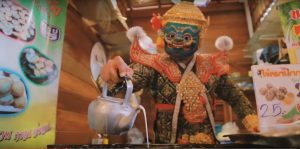
Masked demons ride go-karts in the music video “Tiew Thai Me Hey (Travel in Thailand is Fun)”

BANGKOK — Masked demons ride go-karts, take selfies and make coconut pudding in a new music video from the tourism authority that a former cultural watchdog has deemed offensive.

“Tiew Thai Me Hey (Travel in Thailand is Fun)” was released earlier this month to promote domestic travel among Thais with a wacky depiction of traditional khon characters having fun. But it will be re-edited after Ladda Thangsupachai, who once headed a government agency tasked with going after “inappropriate” culture, said the video “defamed” tradition.

It’s director, Bhandit Thongdee, who heads the Thai Film Director Association, said that he can’t win as an artist when different sides are actively battling over what is “acceptable” culture.

Masked demons make coconut pudding in the music video “Tiew Thai Me Hey (Travel in Thailand is Fun)”

Although he couldn’t be reached for comment, Bundit complained online Monday that he’s been threatened with legal action as a “culture destroyer” in the same day others called him “too conservative” for his film committee’s selection of “Arpat,” a film about a troubled monk, for Oscar consideration.

He decried the notion that traditions are immutable things that cannot be updated, recontextualized or driven around in a go-kart.

“Cultural values should be kept only on the shelf and cannot be developed in other ways to benefit the nation?” he wrote.

But soon after Ladda complained, the government-backed traditional arts school whose performers Bundit used in the video issued a critical statement. The board of Bunditpatanasilpa Institute said the character of Thotsakan – the demon king abductor of women – should not be portrayed doing “undignified” activities such as go karting or taking selfies.

A master of khon who himself once enraged the establishment by contemporizing it wrote that traditions need no protection.

Masked demons take selfies in the music video “Tiew Thai Me Hey (Travel in Thailand is Fun)”

“To block others’ opinion reflects the diminished intellect of the speaker,” Pichet Klunchun wrote on Facebook. “Traditional art needs no protection under discussion or social restrictions.”

There’s been an outpouring of support for the video by many who say Ladda is out of touch.

A Change.org petition posted Wednesday has already drawn more than 30,000 signatures by today.

“I agree with the MV. After I watched it, I liked it and love Thailand. Still, I don’t agree with Ladda Thangsupachai because I think the MV doesn’t destroy Thai culture in any way,” wrote Arak Suwanrat of Nonthaburi.

Supachai Manoonpatarachai from Rayong wrote that it may generate interest among children and link the past to the present.

“Thai kids who watch this MV might ask what the name of the giant is and find out more information about it afterward. And foreigners can see applied cultural arts that blend with contemporary society,” Supachai wrote.

During her years at the Culture Surveillance Bureau, Ladda famously went after double entendre in music (such as itchy ears) and pushed for stricter censorship, such as a film which depicted a nontraditional family.


Advertisement

Human DNA Tied to Mass African Exodus Long Ago

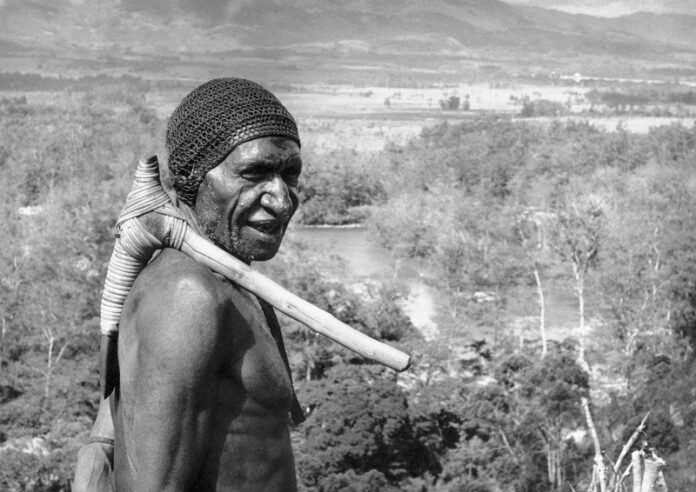
An elder warrior with a stone axe over his shoulder stands in 1962 over the Baliem Valley in the central mountain range of Papua New Guinea. Photo: Associated Press

NEW YORK — The genetic ancestry of people living outside Africa can be traced almost completely to a single exodus of humans from that continent long ago, new studies suggest.

Still, a tiny legacy from an earlier exit may persist in some native islanders in the southwestern Pacific Ocean.

That’s the conclusion from three studies of modern DNA from around the world, released Wednesday by the journal Nature.

Our species, Homo sapiens, arose about 200,000 years ago in Africa. From there, it colonized the world, and scientists are still trying to understand the timing of that expansion.

The new work takes advantage of the fact that human DNA accumulates tiny changes over time. That can be used like a clock to estimate how long ago two populations split off from each other. The approach can’t reveal every migration out of Africa, just those that left a genetic legacy that has been handed down to this day.

Scientists have long traced one such exit to a single population that left around 40,000 to 80,000 years ago, probably over time rather than all at once. But some other work has turned up potential signs of a previous migration as early as 120,000 to 130,000 years ago.

One of the new papers says it found a trace of an earlier migration in native people of Papua New Guinea, which lies north of Australia. At least 2 percent of their DNA may come from a population that split off from Africans about 120,000 years ago, reported researchers from the Estonian Biocentre in Tartu, Estonia, and other institutions. The study analyzed the DNA of 483 people from 148 populations worldwide, including six Papuans.

The two other papers concluded that if there was a genetic contribution from an earlier migration, it must be tiny. One studied the DNA of 300 people from 142 diverse populations, while the other examined the genetic codes of 25 Papuans and 83 aboriginal Australians.

Overall, the evidence shows that the vast majority of modern human ancestry outside of Africa comes from a single exit from Africa, said David Reich of Harvard Medical School, an author of the 142-population paper.

Joshua Akey of the University of Washington in Seattle, who co-wrote a Nature commentary on the papers, said linking that vast majority of ancestry to just one departure seems settled.

Todd Disotell of New York University, who didn’t participate in the research, said the reported hint in Papuans of an earlier migration might actually be due to something else. The analyses in all three papers are very complex, he noted.

Story: Malcom Ritter

Advertisement

Appeal Begins for Sentenced Government Critic in Vietnam

Prominent Vietnamese blogger Nguyen Huu Vinh, left, and his colleague Nguyen Thi Minh Thuy stand Thursday at the dock during their trial at the Higher People’s Court in Hanoi, Vietnam. Photo: Doan Tan / Associated Press

HANOI, Vietnam — A court in Hanoi began hearing an appeal Thursday from a prominent Vietnamese blogger who was sentenced earlier this year to five years in prison for anti-state writings.

Nguyen Huu Vinh, better known as Anh Ba Sam, was convicted of abusing democratic freedoms to infringe on the interests of the state at a one-day trial in March.

Vinh’s colleague Nguyen Thi Minh Thuy, who was given a three-year jail term on the same charge, is also appealing her sentence.

Security around the Higher People’s Court near downtown Hanoi was tight, with roads blocked off.

New York-based Human Rights Watch has called for the release of both defendants.

Diplomats and international media were allowed to follow the proceedings in a separate room via closed circuit TV.

Vinh, 60, quit the police force and set up a private investigation firm. He then launched the blog Dan Quyen, or Citizens’ Rights, in 2013, and Chep Su Viet, or Writing Vietnamese History, in early 2014. The blogs provided links to news on political, social, economic and cultural issues from state media as well as from activists.

At his trial, prosecutors said the two blogs posted 2,397 articles and generated more than 3.7 million hits, and that 24 of the articles had “untruthful and groundless contents” which tarnished the country’s image.

International human rights groups and Western governments including the United States have criticized Vietnam for jailing dissidents. Hanoi denies that, saying it only detains those who break the law.

U.S. officials say Vietnam has made some progress in its human rights record with fewer arrests, but that more needs to be done if it wants to expand bilateral ties.

Advertisement

WiFi Access to Expand in Cuba

A WiFi symbol juxtaposed with a Cuban flag is shown on graffiti art in 2014 in the streets of Havana, Cuba. Photo: Eric Vernier / Flickr

HAVANA, Cuba — The Cuban government says it will make five miles of Havana’s iconic seafront boulevard, the Malecon, into the largest WiFi hotspot in one of the world’s least-connected nations.

State media said Wednesday that WiFi will be installed along the most popular stretch of the Malecon by the end of the year. The seafront is a favored spot for Cubans to gather at night to talk, drink and listen to music.

Home internet remains illegal for most Cubans. Since last year, the government has installed dozens of WiFi spots in public areas, charging $2 an hour in a country where the average state salary remains about $25 a month.

Cuba said last year that it had 65 WiFi spots in service and expected 80 more to open in 2016.

Advertisement

No More Big Lizards in Lumphini Park?

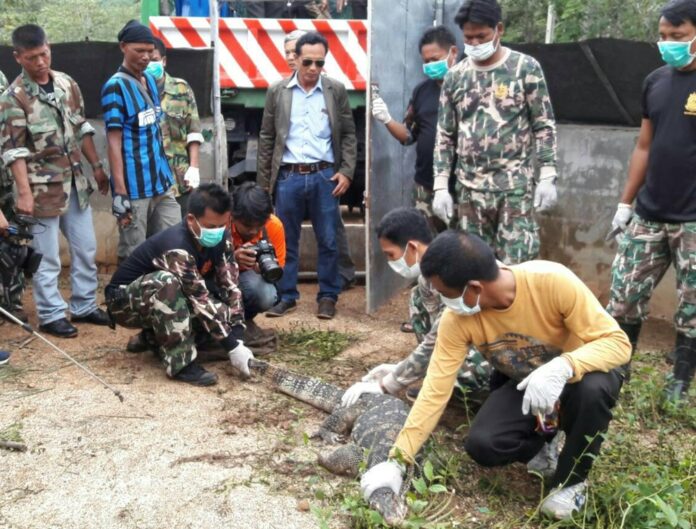
A Lumpini Park water monitor arrives Wednesday at the Khaozon Wildlife Breeding Center in Ratchaburi province.

RATCHABURI — More than 200 water lizards taken from a park in the center of Bangkok arrived Wednesday to live out their rest of their days in captivity west of Bangkok.

The ongoing operation to reduce the population of the monitor lizards in Lumpini Park has beenwas suspended for now while the city considers whether to continue, and the director of the facility to which they were moved said he was told to prepare to accept twice as many animals – the estimated number living in the park.

Hiaaaaa! Lizard Cowboys Kidnap Lumphini Park Residents (Photos)

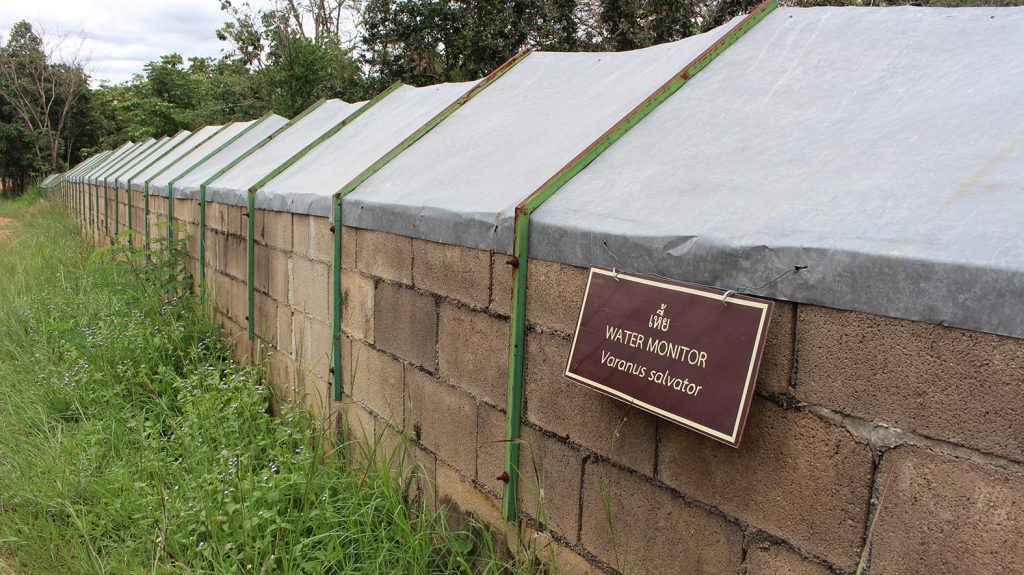
“Today veterinarians sprayed disinfectant in the enclosure and checked the animals’ health. There was no problem,” said Winan Wirana, director of the Khaozon Wildlife Breeding Center in Ratchaburi province, where the formerly free lizards of Lumpini Park will be held in captivity.

A total of 203 water lizards have been moved to the station so far, Winan said, adding that he thought they were adjusting well to their new homes.

Winan said he was told to prepare space for 400 big lizards, but he told reporters Wednesday that he agreed with those who said city hall overreacted. He said the city should not relocate more lizards because they benefit the park’s ecological diversity.

The city said it would consult with biologists on whether to resume the removal.

The water lizards have been a common sight in Lumpini Park for years, but this week Bangkok city workers started clearing them out. Officials said their population has become too high to the point of damaging the park’s ecology and causing a nuisance to park-goers.

A cage for the water lizards at Khaozon Wildlife Breeding Center. Photo: Matichon

The story has dominated headlines not only for the animals’ status as familiar icons of the park but also for abundant use of their name – hia – which is closest to the English exclamation “fuck” or “fuckers” in Thai.

Some park regulars have posted on social media complaining the park’s charms won’t be the same without the hia crawling and frolicking in the ponds.

Advertisement

Hot News

LATEST NEWS

Bangkok
overcast clouds
30.5 ° C
32.2 °
30.5 °
76 %
4.9kmh
100 %
Sat
30 °
Sun
35 °
Mon
35 °
Tue
33 °
Wed
32 °