



























25.5 C
Bangkok
Friday, June 19, 2026
Home Blog Page 2629

Italy Earthquake Kills At Least 159, Reduces Towns to Rubble

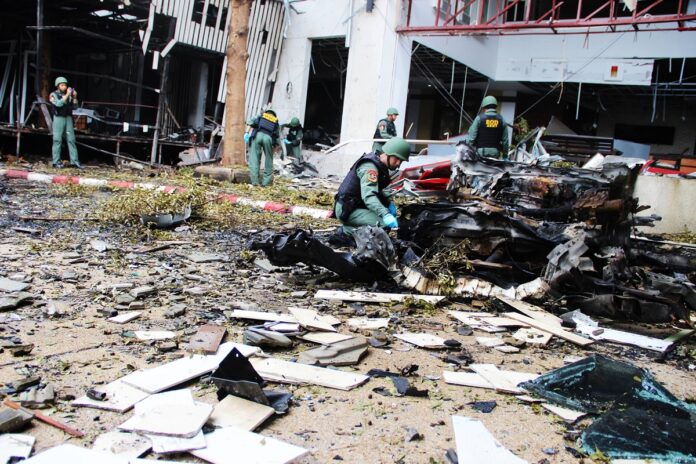
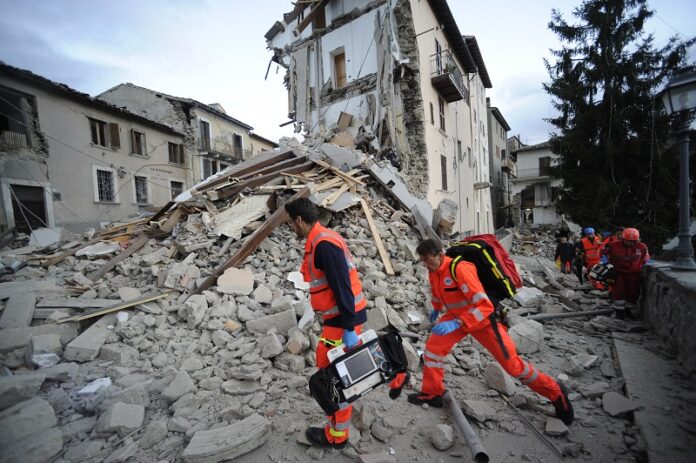
Rescuers search a crumbled building in Arcuata del Tronto, central Italy where a 6.1 earthquake struck on Wednesday. Photo: Sandro Perozzi / Associated Press

AMATRICE, Italy — Rescue crews using bulldozers and their bare hands raced to dig out survivors from a strong earthquake that reduced three central Italian towns to rubble Wednesday. The death toll stood at 159, but the number of dead and missing was uncertain given the thousands of vacationers in the area for summer’s final days.

Residents wakened before dawn by the temblor emerged from their crumbled homes to find what they described as apocalyptic scenes “like Dante’s Inferno,” with entire blocks of buildings turned into piles of sand and rock, thick dust choking the air and a putrid smell of gas.

“The town isn’t here anymore,” said Sergio Pirozzi, the mayor of the hardest-hit town, Amatrice. “I believe the toll will rise.”

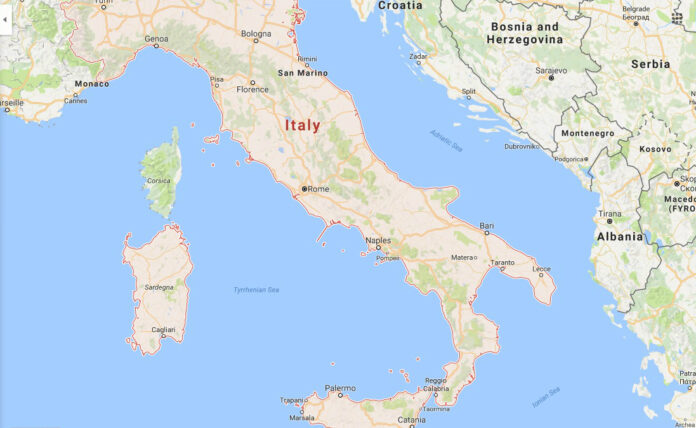
The magnitude 6.2 quake struck at 3:36 a.m. and was felt across a broad swath of central Italy, including Rome, where residents woke to a long swaying followed by aftershocks. The temblor shook the Lazio region and Umbria and Le Marche on the Adriatic coast, a highly seismic area that has witnessed major quakes in the past.

Dozens of people were pulled out alive by rescue teams and volunteers that poured in from around Italy.

In the evening, about 17 hours after the quake struck, firefighters pulled a 10-year-old girl alive from the rubble in Pescara del Tronto.

“You can hear something under here. Quiet, quiet,” one rescue worker said, before soon urging her on: “Come on, Giulia, come on, Giulia.”

Cheers broke out when she was pulled out.

And there were wails when bodies emerged.

“Unfortunately, 90 percent we pull out are dead, but some make it, that’s why we are here,” said Christian Bianchetti, a volunteer from Rieti who was working in devastated Amatrice where flood lights were set up so the rescue could continue through the night.

Premier Matteo Renzi visited the zone Wednesday, greeted rescue teams and survivors, and pledged that “No family, no city, no hamlet will be left behind.” Italy’s civil protection agency reported the death toll had risen to 159 by late Wednesday; at least 368 others were injured.

Worst affected were the tiny towns of Amatrice and Accumoli near Rieti, some 100 kilometers (60 miles) northeast of Rome, and Pescara del Tronto, some 25 kilometers further east. Italy’s civil protection agency set up tent cities around each hamlet to accommodate the thousands of homeless.

Italy’s health minister, Beatrice Lorenzin, visiting the devastated area, said many of the victims were children: The quake zone is a popular spot for Romans with second homes, and the population swells in August when most Italians take their summer holiday before school resumes.

The medieval center of Amatrice was devastated, with the hardest-hit half of the city cut off by rescue crews digging by hand to get to trapped residents.

The birthplace of the famed spaghetti all’amatriciana bacon and tomato sauce, the city was full for this weekend’s planned festival honoring its native dish. Guests filled its top Hotel Roma, famed for its amatriciana, where five bodies were pulled from the rubble before the operation was suspended when conditions became too dangerous late Wednesday. Among those killed was an 11-year-old boy who had initially shown signs of life.

Officials initially said about 70 guests were staying at the hotel, but later lowered the number to about 35, many of whom got out in time.

Carlo Cardinali, a local fire official taking part in the search efforts at the hotel, told Sky TG24 that about 10 guests were still missing.

Amatrice is made up of 69 hamlets that teams from around Italy were working to reach with sniffer dogs, earth movers and other heavy equipment. In the city center, rocks and metal tumbled onto the streets and dazed residents huddled in piazzas as more than 200 aftershocks jolted the region throughout the day, some as strong as magnitude 5.1.

“The whole ceiling fell but did not hit me,” marveled resident Maria Gianni. “I just managed to put a pillow on my head and I wasn’t hit, luckily, just slightly injured my leg.”

Another woman, sitting in front of her destroyed home with a blanket over her shoulders, said she didn’t know what had become of her loved ones.

“It was one of the most beautiful towns of Italy and now there’s nothing left,” she said, too distraught to give her name. “I don’t know what we’ll do.”

As the August sun turned into a nighttime chill, residents, civil protection workers and even priests dug with shovels, bulldozers and their bare hands to reach survivors. A steady column of dump trucks brought tons of twisted metal, rock and cement down the hill and onto the highway toward Rome, along with a handful of ambulances bringing the injured to Rome hospitals.

“We need chain saws, shears to cut iron bars and jacks to remove beams. Everything, we need everything,” civil protection worker Andrea Gentili told The Associated Press in the early hours of the recovery. Italy’snational blood drive association appealed for donations to Rieti’s hospital.

Despite a massive rescue and relief effort — with army, Alpine crews, carabineri, firefighters, Red Cross crews and volunteers, it wasn’t enough: A few miles (kilometers) north of Amatrice, in Illica, residents complained that rescue workers were slow to arrive and that loved ones were trapped.

“We are waiting for the military,” said resident Alessandra Cappellanti. “There is a base in Ascoli, one in Rieti, and in L’Aquila. And we have not seen a single soldier. We pay! It’s disgusting!”

Agostino Severo, a Rome resident visiting Illica, said workers eventually arrived after an hour or so. “We came out to the piazza, and it looked like Dante’s Inferno,” he said. “People crying for help, help.”

The U.S. Geological Survey reported the quake’s magnitude was 6.2, while the Italian geological service put it at 6 and the European Mediterranean Seismological Center at 6.1. The quake had a shallow depth of between four and 10 kilometers, the agencies said. Generally, shallow earthquakes pack a bigger punch and tend to be more damaging than deeper quakes.

“The Apennine mountains in central Italy have the highest seismic hazard in Western Europe and earthquakes of this magnitude are common,” noted Richard Walters, a lecturer in Earth sciences at Durham University in Britain.

The devastation harked back to the 2009 quake that killed more than 300 people in and around L’Aquila, about 90 kilometers (55 miles) south of the latest quake. The town, which still hasn’t fully recovered, sent emergency teams Wednesday to help with the rescue and set up tent camps for residents unwilling to stay indoors because of aftershocks.

“I don’t know what to say. We are living this immense tragedy,” said a tearful Rev. Savino D’Amelio, a parish priest in Amatrice. “We are only hoping there will be the least number of victims possible and that we all have the courage to move on.”

Another hard-hit town was Pescara del Tronto, in the Le Marche region, where the main road was covered in debris.

Residents were digging their neighbors out by hand before emergency crews arrived. Aerial photos taken by regional firefighters showed the town essentially flattened and under a thick gray coat of dust; Italy requested EU satellite images of the whole area to get the scope of the damage.

“There are broken liquor bottles all over the place,” said Gino Petrucci, owner of a bar in nearby Arquata Del Tronto where he was beginning the long cleanup.

One rescue was particularly delicate as a ranger in Capodacqua, in the Marche province of Ascoli Piceno, diplomatically tried to keep an 80-year-old woman calm as she begged to get to a toilet, even though she was trapped in the rubble.

“Listen, I know it’s not nice to say but if you need to pee you just do it,” he said. “Now I move away a little bit and you do pee, please.”

The mayor of Accumoli, Stefano Petrucci, said a family of four had died there, one of the few young families who had decided to stay in the area. He wept as he noted that the tiny hamlet of 700 swells to 2,000 in the summer months, and that he feared for the future of the town.

“I hope they don’t forget us,” he told Sky TG24.

President Barack Obama, speaking by telephone to Italian President Sergio Mattarella, said the U.S. sent its thoughts and prayers to the quake victims and saluted the “quick action” by first responders, White House spokesman Josh Earnest said.

A 1997 quake killed a dozen people in central Italy and severely damaged one of the jewels of Umbria, the Basilica of St. Francis in Assisi, filled with Giotto frescoes. The Franciscan friars who are the custodians of the basilica reported no immediate damage from Wednesday’s temblor.

Pope Francis skipped his traditional catechism for his Wednesday general audience and instead invited the thousands of pilgrims in St. Peter’s Square to recite the rosary with him. He also sent a six-man squad from the Vatican’s fire department to help with the rescue.

Story: Paolo Santalucia, Frances D’Emilio and Nicole Winfield

Advertisement

Columbia, FARC Reach Deal to End Long, Bloody War

People celebrate in a park as they listen to the announcement from Havana, Cuba, that delegates of Colombia's government and leaders of the Revolutionary Armed Forces of Colombia reached a peace accord to end their half-century civil war, in Bogota, Colombia, Wednesday, Aug. 24, 2016.

HAVANA — Colombia’s government and the country’s biggest rebel group reached a historic deal Wednesday evening for ending a half-century of hostilities in one of the world’s longest-running and bloodiest armed conflicts.

President Juan Manuel Santos hailed the agreement with the Revolutionary Armed Forces of Colombia as an opportunity to turn the page on decades of political violence that has claimed more than 220,000 lives and driven more than 5 million people from their homes. He said he would hold a plebiscite on Oct. 2 to give Colombians the chance to vote on the accord. Without their approval implementation can’t begin.

In Colombia’s capital of Bogota, some 400 people gathered in a plaza to watch on giant screen the agreement being announced by negotiators in Havana who have been working around the clock in recent days to hammer out the final sensitive details left to the end of the four years of talks.

“We’ve won the most beautiful of all battles: the peace of Colombia,” the chief FARC negotiator, Ivan Marquez, said at the announcement in Havana.

As soon as his speech finished, bringing the televised event to an end, the emotional crowd on the plaza sang the national anthem and shouted “Viva Colombia! Yes to Peace!”

“I can die in peace because finally I’ll see my country without violence with a future for my children,” said Orlando Guevara, 57, crying as white flags symbolizing peace waved behind him.

The accord, whose final text has yet to be published, commits Colombia’s government to carrying out aggressive land reform, overhauling its anti-narcotics strategy and greatly expanding the state’s presence in long-neglected areas of the country.

Negotiations began in November 2012 and were plagued by distrust built up during decades of war propaganda on both sides.

Polls say most Colombians loathe the rebel group known as the FARCand show no hesitation labeling them “narco-terrorists” for their heavy involvement in Colombia’s cocaine trade, an association for which members of the group’s top leadership have been indicted in the U.S. Meanwhile, the FARC held onto a Cold War view of Colombia’s political and economic establishment as “oligarchs” at the service of the U.S.

The rebel army was forced to the negotiating table after a decade of heavy battlefield losses that saw a succession of top rebel commanders killed by the U.S.-backed military and the its ranks thinned by half to the current 7,000 troops.

Santos, an unlikely peacemaker given his role as architect of the military offensive, throughout maintained a steady pulse even as he was labeled a traitor by his conservative former allies and suffered a plunge in approval ratings.

The most contentious breakthrough came in September when the president traveled to Havana to lay out with FARC commander Rodrigo Londono a framework for investigating atrocities, punishing guerrillas for involvement in those abuses and offering compensation to victims.

Opponents of Santos and some human rights groups harshly criticized a key part of that deal: guerrillas who confess their crimes won’t spend any time in prison and will instead be allowed to serve out reduced sentences of no more than eight years helping rebuild communities hit by the conflict.

Another toad to swallow, as Santos calls the concessions he’s had to make, will be the sight of former rebel leaders occupying seats in congress specially reserved for the FARC’s still unnamed political movement. In one of the last details brokered in marathon, 18-hour sessions, both sides agreed to guarantee the FARC a minimum of five seats in the lower house and five in the Senate for two legislative periods lasting until 2026. After that the former rebels will have to prove their political relevancy at the ballot box.

Santos’ plebiscite is not without risks. While polls say Colombians will likely endorse a deal in a simple yes or no vote, the stunning Brexit vote in Britain to leave the European Union is a cautionary tale.

Colombia’s opposition is likely to try to convert the vote into a referendum on Santos, whose approval rating plummeted to 21 percent in May, according to a Gallup poll. That is the lowest since he took office in 2010. Low voter turnout is also a concern because a minimum of 13 percent of the electorate, or about 4.4 million voters, must vote in favor for the accord to be ratified.

“We think we’ve done the best possible job, but it’s the Colombians who will judge us,” chief government negotiator Humberto de la Calle said. “We have to wait for the citizens’ verdict.”

After the agreement is signed — the date is still unknown — the FARCwill begin mobilizing its troops to 31 zones scattered across the country, and 90 days later they are supposed to begin handing their weapons over to United Nations-sponsored monitors.

But don’t expect any immediate peace dividend or security improvements in Colombia’s blood-splattered countryside.

Over the last 13 months, since the FARC declared a unilateral cease-fire and the government reciprocated with a truce of its own in all but name, violence has fallen to the lowest level since the FARC was created 52 years ago by outlaw peasant groups joined by communist activists. Only four deaths attributed to the FARC have been reported during that period and in the last 68 days the group hasn’t carried out a single offensive action, according to a report last week by the Bogota-based Conflict Analysis Resource Center.

Analysts are concerned that as the rebels integrate into Colombian society, well-organized criminal gangs will fill the void and fight among themselves for control of the lucrative cocaine trade that kept the FARCwell-armed much longer than other Latin American insurgencies.

While Colombia’s homicide rate has fallen sharply over the years, it remains among the world’s deadliest countries, with violence driven largely by its status as the world’s top supplier of cocaine.

The much-smaller National Liberation Army will also remain active, although it’s pursuing a peace deal of its own.

Story: Andrea Rodriguez, Joshua Goodman

Advertisement

Myanmar Quake Shakes Up Bangkok

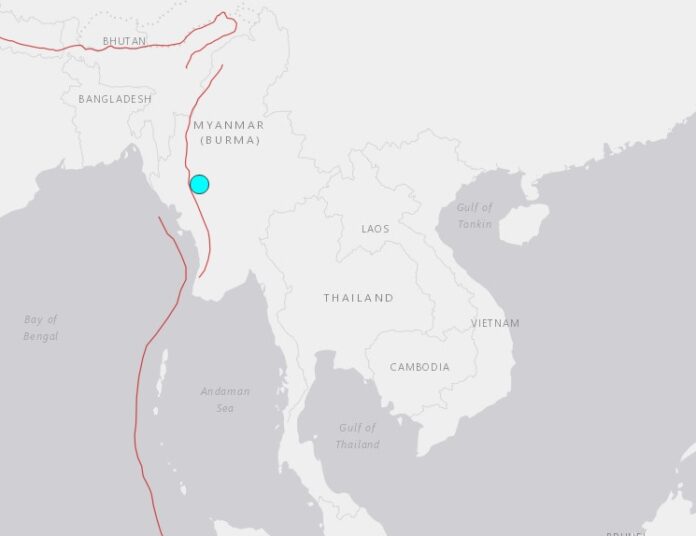
Location of Wednesday's quake in Myanmar. Image: United States Geological Survey

BANGKOK — People in tall buildings in Bangkok took to social media to describe their surprise at feeling tremors from a powerful quake which killed four in Myanmar at about 5:30pm on Wednesday.

The U.S. Geological Survey put the quake’s magnitude at 6.8. The epicenter was approximately 25 kilometers from the north-central city of Chauk.

In Bangkok, employees at some buildings were briefly evacuated from the structure.

According to reports, the temblor was felt most strongly in downtown areas such as Sam Yan, Asoke, Sukhumvit and Ratchadapisek.

https://twitter.com/a_o_b2/status/768398722073886721

In Myanmar, Associated Press reports the quake damaged nearly 100 ancient Buddhist pagodas in the former capital of Bagan, a major tourist site, officials said.

At least 185 brick pagodas in Bagan were damaged, the state newspaper reported. Bagan, also known as Pagan, has more than 2,200 structures including pagodas and temples constructed from the 10th to the 14th centuries. Many are in disrepair while others have been restored in recent years, aided by the U.N. cultural agency UNESCO.

Police officer Htay Win in Pakokku, about 70 kilometers (45 miles) from the epicenter, said one person there had been killed and one injured. “The person was killed by falling bricks from a building,” he said.

Additional reporting: Esther Htusan, Min Kyi Thien, Associated Press

Advertisement

Purple Line Train Offers Discount, But Not For Everyone

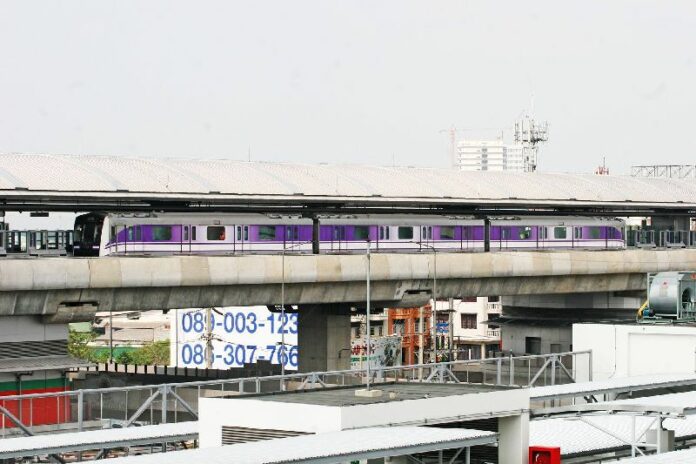
A test train runs between the MRT Khlong Bang Phai and Talad Bang Yai stations on March 25 for the new Purple Line.

BANGKOK — Bangkok’s newest train line is cutting its fare by half, but only for those who hold the latest pass issued by the company that runs the trains, and not general passengers.

The discount is one of several measures being implemented in the bid to draw more users for the MRT’s Purple Line, after number shows that only 20,000 people use it per day, far below the expected figure of 70,000 per day.

Starting from Sept., the fare that currently costs two baht per kilometer will be decreased to one baht, the transit authorities and the Purple Line private operator agreed Wednesday. But it will only apply to passengers who ride the trains by MRT Plus card, which was just launched in June.

Passengers who travel by single journey token will have to pay the normal fare.

Under the discount, eligible passengers traveling through all of the line’s 16 stations will pay 29 baht instead of the current fare of 42 baht.

With the same discount, traveling from MRT Khlong Bang Phai, the beginning of Purple Line, to the end of the current Blue Line, MRT Hua Lamphong, will cost 54 baht instead of 76 baht. Students who hold the MRT Plus Card will receive a further 10 percent more discount.

MRT Plus was launched to mark the opening of Purple Line. Like its former version, called MRT Card, it can be used for both Purple and Blue Line. The only difference is the new pass can also be used with the park-and-ride structures along the Purple Line.

A Wednesday’s meeting between Mass Rapid Transit Authority and the operator Bangkok Expressway and Metro PLC. also agreed to reduce parking fees along the Purple Line stations by half.

They hoped that the discount will bring them 30 percent more passengers.

Advertisement

Bangkok ‘Fight Club’ Ignores Police Chief

BANGKOK — Organizers of underground street fights said they won’t end their pugilistic bouts despite threats from the chief of Bangkok’s police force.

Those behind “Fight Club Thailand,” which like the eponymous 1999 cult film involves strangers punching each other in spontaneous matches, said what they do breaks no laws.

“What have we done wrong?” wrote Facebook user Joe Madcow KS, an admin of the group’s Facebook page, where matches are organized. “We are a sport like other sports. How are we different from takraw, futsal, basketball? What are you going to arrest us for?”

The group made headlines and attracted police attention after it posted videos online of boxing matches among members said to come people from all walks of life looking for a good fight.

Bangkok Metropolitan Police commander Sanit Mahatavorn said such fights are violation of a 1999 law on boxing because they were not sanctioned by state regulators.

“Let me ask you, what’s in the videos, is that boxing?” Lt. Gen. Sanit said at Tuesday’s news conference. “Everyone who’s seen it knows whether it’s boxing or not. If they want to dispute that, they can contest their cases in court.”

He said he’s instructed police to investigate the group and prosecute those found violating the law.

Joe said the law don’t pertain to their brawls but only boxing bouts that involve competition and rankings, while his group has nothing so fancy as tournaments or prizes.

Another organizer, 32-year-old Chakkrapong Pirom, said in a television interview Tuesday that they make sure that the fights are safe.

“We only have one round, which lasts for three minutes,” Chakkrapong said on Amarin TV. “As for medical aid, if there were injuries during the boxing, we would give them first aid, but if they were serious, we would send them to hospital right away.”

The last match set up by Fight Club Thailand appeared to be on Monday somewhere under a Bangkok bridge. Their Facebook group does not mention any future dates at this time. There’s no mention of Project Mayhem being planned either.

Comments on their online videos vary from supportive to concerned.

“I agree with this. It’s a stage for people to test their might, especially those who like to chase and brawl with each other in the streets,” wrote YouTube user Noom Teerarbsoong, referring to street gangs that often clash in Bangkok. “But they should improve the stage to be safe, and the boxing gloves should be adjusted for safety.”

At least one comment pointed out the very obvious.

“Y’all broke the first rule of Fight Club,” wrote Agent2724 2724.

Advertisement

Senate Will Only Nominate a PM in Event of Deadlock, Lawmakers Say

Yingluck Shinawatra on Aug. 5, 2011, thanks her party members moments after majority of the parliament voted her as Thailand’s 28th Prime Minister. In the new charter, the Senate will also have a say in selecting a Prime Minister. Photo: Matichon

BANGKOK — The Senate under the new constitution will have the authority to nominate its own candidates for prime minister only if the upper and lower houses fail to choose one, leading members of the current parliament said.

The clarification came in response to media reports in the past week that the lawmakers were interpreting the referendum’s second question to mean the Senate, whose members would be appointed by the military junta, can make its own nominations at the outset without consulting the elected parliament.

Read: Prayuth Promises 2017 Election

“I really don’t know how the news came about,” said National Legislative Assembly member Taweesak Sutkwatin, who complained he was misquoted by several media outlets on the matter.

According to his colleague Jate Sirataranont, who sits on the assembly commission for interpreting the new charter, the next upper and lower houses will jointly vote for a new prime minister, which requires two-thirs of votes to pass.

“We agreed that only MPs should have the right to nominate Prime Minister candidate in the first round,” Jate of the National Legislative Assembly, or NLA, said by telephone Tuesday.

In Thailand’s previous charter, which was dissolved when the junta seized power in May 2014, only Members of Parliament voted for a Prime Minister, and the Senate was not involved. The previous charter also required the Prime Minister to be a Member of the Parliament, while the new charter does not.

If no majority has been reached, then the Senate would have the right to nominate its own list of candidate for the top job and offer it for another round of vote, Jate said.

He said this is in perfect alignment with second questions approved by voters in the Aug. 7 referendum, which asks them whether they consent to the possibility of the Senate working with the Parliament to appoint a non-MP as Prime Minister.

Previous media reports quote Jate and Taweesak as saying that the referendum question meant that the Senate can bypass the elected Parliament and nominate its own Prime Minister candidate right away.

“I think there’s a movement trying to distort us and the NCPO, making it sounds as if the NLA have made such proposal,” Jate said, referring to the junta’s National Council for Peace and Order.

He added that the assembly will stage a news conference on Aug. 28 to clarify the matter once and for all.

Related stories:

Disappointed Charter Opponents Take Landslide Defeat in Stride

Northerners Say Provinces Where Charter Adopted Are No Less Red

Advertisement

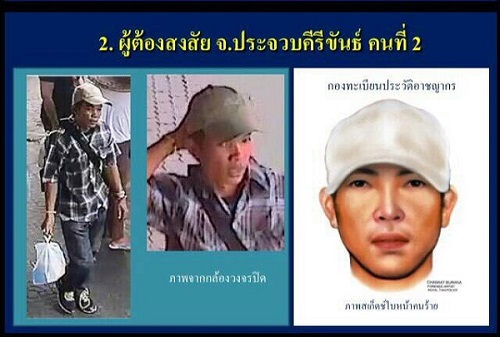
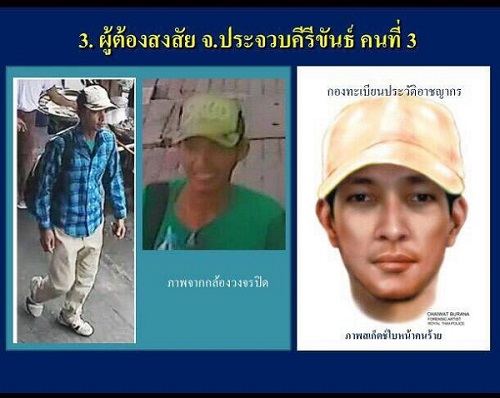
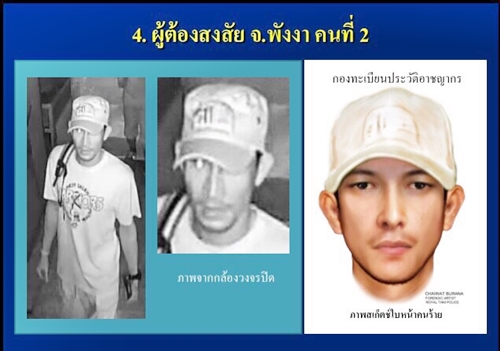
Police Release Bombers’ Sketches, Will Seek Warrants

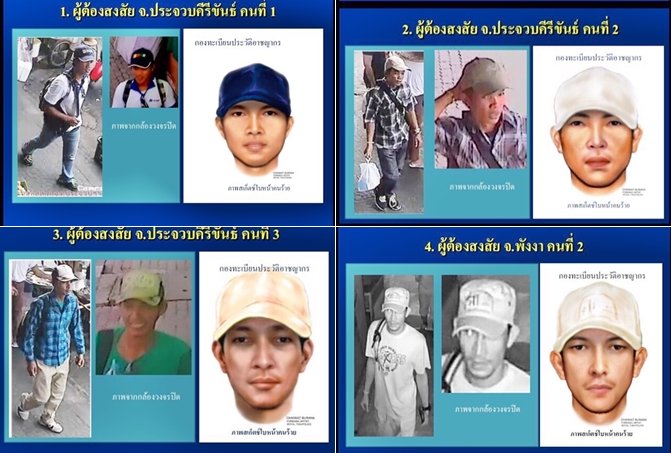
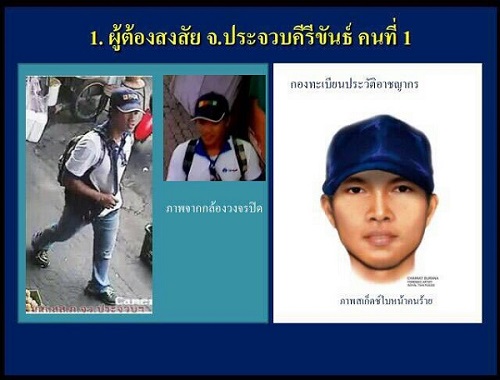
A collection of sketches of alleged bombers behind the Aug. 11-12 terror attacks released by police on Wednesday.

BANGKOK — Police on Wednesday released sketched drawings of four men responsible for the bomb attacks in the resort town of Hua Hin and southern province of Phang Nga during the Mother’s Day vacation two weeks ago.

A top police investigator is also said to be seeking arrest warrants for three of the suspected bombers seen in the sketches, who staged the attacks in coordination with other explosions and arsons across the southern region on Aug. 11-12. Four people died in the violence.

According to police, officers drafted the sketches based on description from witnesses who saw the three men in Hua Hin on Aug. 10. The sketches matched security footage of the three suspects, police said.

Four explosions struck Hua Hin in the attacks: two in a nightclub area on Aug. 11 and other two in front of the city clock tower on Aug. 12.

The fourth image belonged to a man who allegedly carried out the bomb attack at Bang Niang Market in Phang Nga province on Aug. 12.


All four images were released to the media by police on Wednesday.

Read : These Are People Accused of Carrying Out Southern Bombings

The head of police investigation team, Srivara Ransibrahmanakul, was reportedly traveling on Wednesday morning to a military court in Phetchaburi province, whose jurisdiction covers Hua Hin, to request arrest warrants for the three Hua Hin bombers.

Nearly two weeks after the attacks, police still have only one arrest warrant issued for one of the alleged perpetrators, a Narathiwat resident called Ahama Lengha.

Their investigation is marked by contradictory and confusing remarks made by different high-ranking officers, and by their insistence that the motives behind the attacks were still unclear, despite some evidence and analyses pointing to the separatist movement in the Deep South.

The latest example of such disarray in police’s communication with the public is a statement by a spokesman who said he couldn’t endorse the sketches of the four suspects as official police work, even though they were released by the police themselves.

“I cannot confirm that,” deputy spokesman Piyaphan Pingmuang answered when asked by reporters whether the sketches are genuine.

201608241237001-20131003134427 201608241237002-20131003134427 201608241237003-20131003134427

Phang Nga

Advertisement

Govt Condemns ‘Barbaric’ Bomb Attack on Deep South Hotel

Police officers on Wedneday morning inspect the site of the deadly twin car bomb that struck a hotel in Pattani province.

PATTANI — The government on Wednesday condemned a twin car bomb at a hotel in the southern border province of Pattani that left one person dead and at least 30 others injured, including women and children.

The attacks, which included a use of stolen ambulance, came nearly two weeks after the wave of explosions and firebombs across seven provinces that some experts believe were works of the same separatists based in Pattani and its neighboring provinces.

Here’s Why Experts Believe BRN Was Behind Attacks

“This action was intended to harm innocent civilians that include children and women, Buddhists and Muslims,” Col. Pramote Prom-in, the spokesman of the Internal Security Operation Command, told reporters Wednesday morning. “It’s barbaric.”

According to police report, the first car bomb went off at the parking lot of Southern Views Hotel in Pattani’s suburb at around 10.30pm Tuesday night, though no one was injured. Another car bomb exploded about half an hour later in front of the hotel, causing a large number of casualties and inflicting severe damages to nearby buildings.

One woman from Ubon Ratchathani province was killed in the bombing, while at least 30 other people were wounded, police said.

Col. Pramote said the vehicle used in the latter attack was an ambulance reported stolen from another hospital in Pattani province.

“This action is something that all sides find unacceptable, because an ambulance is a symbol of humanitarian aid, yet it was used by perpetrators of violence as an instrument of their wrongdoing,” the spokesman said.

Like other numerous other bombing and shooting attacks that plague the Deep South, no group has claimed responsibility for last night’s car bombs so far.

At least 6,000 people have died in the Muslim-majority region since the secessionist violence broke out there in January 2004.

Related stories:

Separatist Violence Surged as Thailand Voted

Referendum Graffiti Puzzles Deep South Observers

Bombings Won’t Stall Peace Talks, Army Says

Advertisement

Swiss Charge 3 Suspects Arrested in Thailand for Global Phishing Case

Photo: frankieleon / Flickr

GENEVA — Swiss prosecutors say they’ve charged three people accused of illegally obtaining data on at least 133,600 credit cards with computer fraud following their extradition from Thailand.

The Swiss attorney general’s office said Tuesday that the group for years earned a living from the unlawful procurement and fraudulent online use of credit card data. It said that “credit card holders around the world and Swiss financial institutions” were affected.

The three allegedly obtained the data through so-called phishing attacks, using emails, websites and text messages.

Prosecutors say they operated from October 2009 until they were arrested in 2014 and 2015 in Bangkok. They were then extradited to Switzerland, where they are currently in pretrial custody.

The Swiss say it’s the first indictment in the country in a global phishing case.

Advertisement

Magnitude 6.1 Quake Rattles Rome, Central Italy

ROME — An earthquake with a preliminary magnitude estimated at 6.1 has rattled Rome and central Italy in the middle of the night.

There were no immediate reports of damage early Wednesday, but state-run RAI radio said people ran into the streets in central Umbria and Le Marche regions shortly after the quake struck just after 3:30am.

The European Mediterranean Seismological Center put the magnitude at 6.1 and said the epicenter was northeast of Rome, near Rieti. The U.S. Geological Survey put the magnitude at 6.2. It was felt in central Rome, as people in homes in the city’s historic center felt a long swaying.

The mayor of the Umbrian town of Amatrice, hit hard by the 6.1 magnitude quake, says at 5am Wednesday that residents are buried under the debris of collapsed buildings and that “the town isn’t here anymore.”

Sergio Pirozzi told state-run RAI radio and Sky TG24 that he needs heavy equipment to clear rubble-clogged streets to get to the injured.

Asked if there were any dead he said: “Look there are houses that aren’t here anymore. I hope we get some help.”

The quake struck central Italy, near Rieti, shortly after 3:30 a.m. and was followed by several aftershocks.

Advertisement

Hot News

LATEST NEWS

Bangkok
overcast clouds
25.5 ° C
25.5 °
25.5 °
93 %
3.2kmh
100 %
Fri
25 °
Sat
32 °
Sun
35 °
Mon
37 °
Tue
37 °