PASADENA, California — solar-powered spacecraft is circling Jupiter on a mission to map the giant planet from the inside out.
NASA mission control received a radio signal Monday night from the Juno spacecraft confirming that it’s in orbit around the biggest planet in the solar system.
Because Juno’s camera and other instruments were turned off during the highly anticipated arrival, there won’t be pictures of the key moment.
The trip took nearly five years and 1.8 billion miles (2.8 billion kilometers). Juno is the first spacecraft to venture so far from Earth powered by the sun.
It’ll spend 20 months circling Jupiter’s poles, peering through thick clouds and studying the planet’s gravity and magnetic fields.
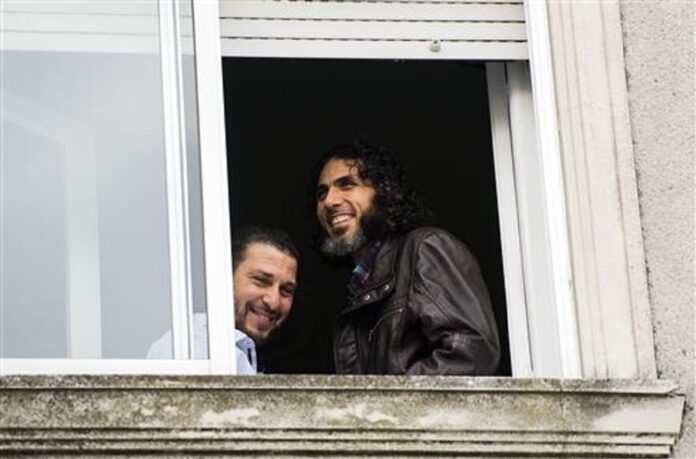
In this June 5, 2015 file photo, Abu Wa'el Dhiab, from Syria, right, and Adel bin Muhammad El Ouerghi, of Tunisia, both freed Guantanamo Bay detainees, stand next to the window of their shared home in Montevideo, Uruguay.
RIO DE JANEIRO — A South American airline is asking its employees to be on the lookout for a former Guantanamo Bay detainee who was resettled in Uruguay after being freed by U.S. authorities.
The alert about Syrian native Abu Wa’el Dhiab adds to a growing mystery about his whereabouts. Uruguayan authorities have insisted for weeks that he is visiting neighboring Brazil and that as a refugee he is entitled to leave Uruguay, but the Brazilian government has said there is no record of Dhiab entering the country.
Danilo Alves, a spokesman for Colombia-based Avianca Airlines in Sao Paulo, told The Associated Press on Monday that the alert was issued internally to employees, but declined to give any more details.
The alert, published by the Argentine web news portal Infobae, warns employees that Dhiab may be using a fake passport. The image of the alert posted by Infobae says the information came from Brazil’s anti-terrorism police.
Belela Herrera, a former Uruguayan deputy foreign minister who is a human rights activist, said “this is crazy” to use the word terrorism in relation to Dhiab, who was never charged by U.S. officials and cleared for release. She also questioned media interest in his whereabouts.
She said Dhiab had told friends in Uruguay’s capital that he planned to keep to himself while spending the about-to-end Muslim holy month of Ramadan in the Uruguay-Brazil border region, where there is a Muslim community and mosques.
“He has a valid identity card, issued by the Uruguayan government, that allows him to go to other countries. He is not a fugitive from justice,” Herrera told the AP over the weekend.
Dhiab is one of six former Guantanamo detainees resettled in Uruguay in late 2014.
Then President Jose Mujica invited them as a humanitarian gesture, but for several of the men, their time in Uruguay has been fraught with problems. They initially complained the government wasn’t helping them enough and they also refused to get jobs, drawing criticism from Uruguayans.
Dhiab, who suffers several health problems related to hunger strikes he undertook while held at the U.S. military’s Guantanamo base on Cuba, has been particularly vocal about his unhappiness in Uruguay.
Several weeks ago, Uruguayan media began reporting that he had left the country. Government officials said he had traveled to Brazil and insisted he had a right to do so. They said he had not broken any law and was not being sought.
However, last week the U.S. Embassy in Uruguay said American authorities were “collaborating” with Brazilian and Uruguayan authorities to locate Dhiab.
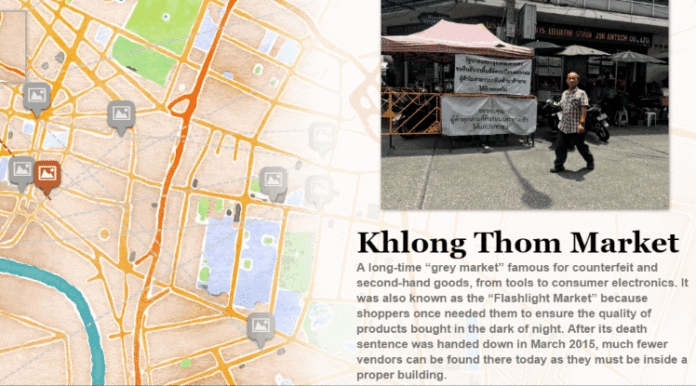
BANGKOK — From Saphan Lek’s labyrinth of toys to the blooming sidewalks of the Pak Khlong Talad flower market and on and on across the capital, some of the best examples of Bangkok’s vibrant street life are being swept away.
The messy charm of street markets touted in the pages of travel guides has been the target of a cleanliness and order campaign taken up by City Hall almost immediately after the military seized power in the 2014 coup d’etat. When anyone complains, officials repeat they are merely carrying out junta policy to restore public space.
Explore the changing face of Bangkok with our interactive map. Story continues below.
Some see it as trading away the Thai capital’s charms for what is actually a giveaway to developers. They point to the fact that the targeted areas lie along routes where commuter rail lines system are set to expand; land that will see its value explode.
For those who find “vibrant street life” synonymous with bumper-to-bumper traffic, hip-to-hip sidewalks and general chaos, the campaign is a long overdue attempt to make the city more livable.
What’s not clear from the conversations taking place, is what kind of city Bangkok is striving to become in another decade or three. What is the master plan?
No one can answer best these questions like Vallop Suwandee, who has headed what the city calls its “reorganization” campaign since it began in 2014. Vallop, who holds the title, chairman of Advisers to the Governor of Bangkok, said he and the Bangkok Metropolitan Administration are only guided by one principal: pedestrians rights.
Where critics see a top-down approach that ignores the markets’ place in the social ecosystem, Vallop argues the street offensive is for society’s benefit.
“Imagine if there is an attack like the one at Ratchaprasong, the BMA would have difficulty getting to the spot,” he said. “Moving the victims, controlling fire – all would be tough because the street is covered by stalls.”
What City Hall is trying to get rid of, Vallop said, is not a way of life, but the selfishness of street vendors who never pay neither rent nor taxes yet invade public sidewalks, obstruct traffic and pour pollution down city drains.
In addition to worrying about terrorism, he said people should be concerned about the morality of some products sold in the street.
“Khlong Thom and Saphan Lek were full of untaxed products or goods that promoted bad sexual behavior,” he said. “Are these things considered ways of life? I say no.”
Even more, he played to anti-immigrant sentiments to make his case.
“Furthermore, there is also an issue about national security,” Vallop said. “Street vendors now are not Thais but immigrants hired by stall owners.”
Unseen Function
Given basic economics, there would be no street stalls if there was no demand for them.
‘Footpaths should be walkable. But there should also be a right to accessible food.’
In an expensive city where the majority earn the 300 baht minimum wage or less, and people often have to hurry to beat the traffic, an architecture urban design thinker argued street stalls serve important functions, such as providing food at an accessible price and time.
“Footpaths should be walkable,” Yanyong Boon-Long, who is researching means for linking the khlong and rail systems for the Rockefeller Foundation, said. “But there should also be a right to accessible food.”
The lack of time or money to sit down in a proper restaurant for every meal has created what Yanyong describes as the DNA of the city.
Moreover, Bangkok is a safer place as the vendors out day and night provide a natural surveillance system.
“They are eyes on the street,” he said. “People feel safer at night when there are street shops around.”
The writer of the book “Bangkok: Handmade Transit” said knocking it all down is not an optimum solution. Instead, government should regulate and make use of its economic function.
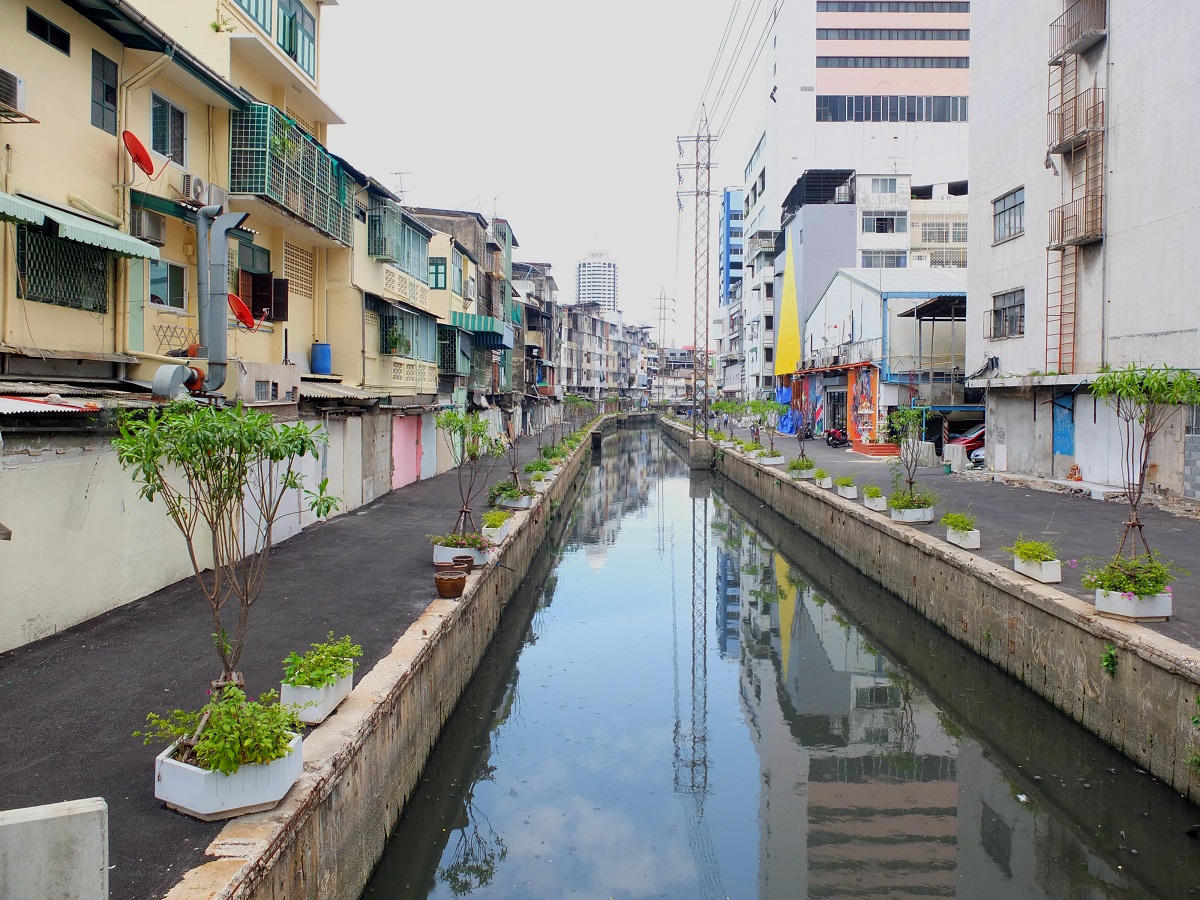
Though Saphan Lek market located over the canal were evicted since October, Khlong Ong Ang is left undeveloped up until now.
Top-Down Policy
Those affected aren’t just street vendors, but historic communities that happened to rise over what is now considered public property in Bangkok.
‘Instead of looking at the present context, they bring what they want and try to force it into an area’
One controversial case is Pom Mahakan, where a number of families have been living for over a century behind the walls of a historic fort in the old quarters. They’ve been living on borrowed time for a quarter of that century, fighting eviction by the city. Late last month city officials sat down to talk to them for the first time in a historic meeting after their most recent eviction notice was served in April.
Sanon Wangsrangboon, who owns a hostel nearby, was struck by the problem and recently got involved in helping the community protect their neighborhood. It did not take long for the 26-year-old to see problems with the way urban development is being carried out.
“It is very conventional,” he said. “Instead of looking at the present context, they bring what they want and try to force it into an area.”
Not only is the top-down policy executed by decree without any consulting with the people and communities affected, Sanon said there’s also no proof for the public to see that what the BMA does is part of an intelligent vision for the city’s future development.
Instead, the obvious example is Khlong Ong Ang, an old waterway reclaimed “for the public” late last year when workers demolished Saphan Lek and the stalls squatting over it.
“And it now has become useless space,” he said. “There were a lot of areas that they could have developed without affecting people,” Sanon said. “If they can prove that benefit would be made, they will be able to create legitimacy to removing people.”
The part-time community development advocate agreed that the city needs regulation. But as everywhere is always a home for someone, those policies should be based on human needs.
“What I want to see is a changed vision of governance, from top-down to bottom-up,” he said.
BANGKOK — After staging a series of farewell parties last week and checking out from its 59-year venue, one of Bangkok’s oldest nightclubs will reopen not so far away with upgraded facilities.
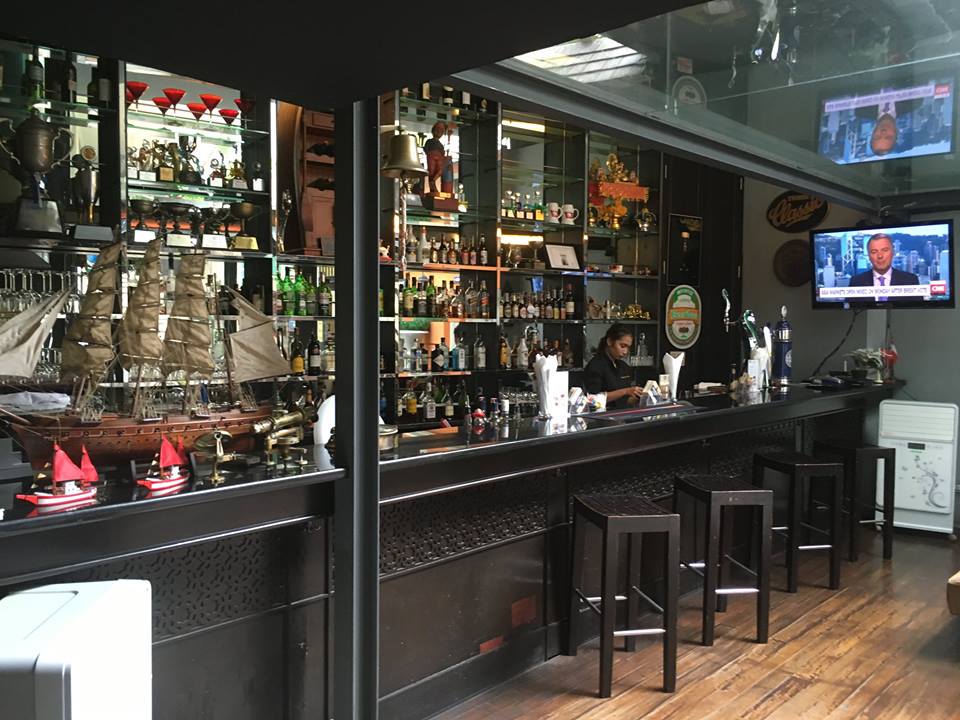
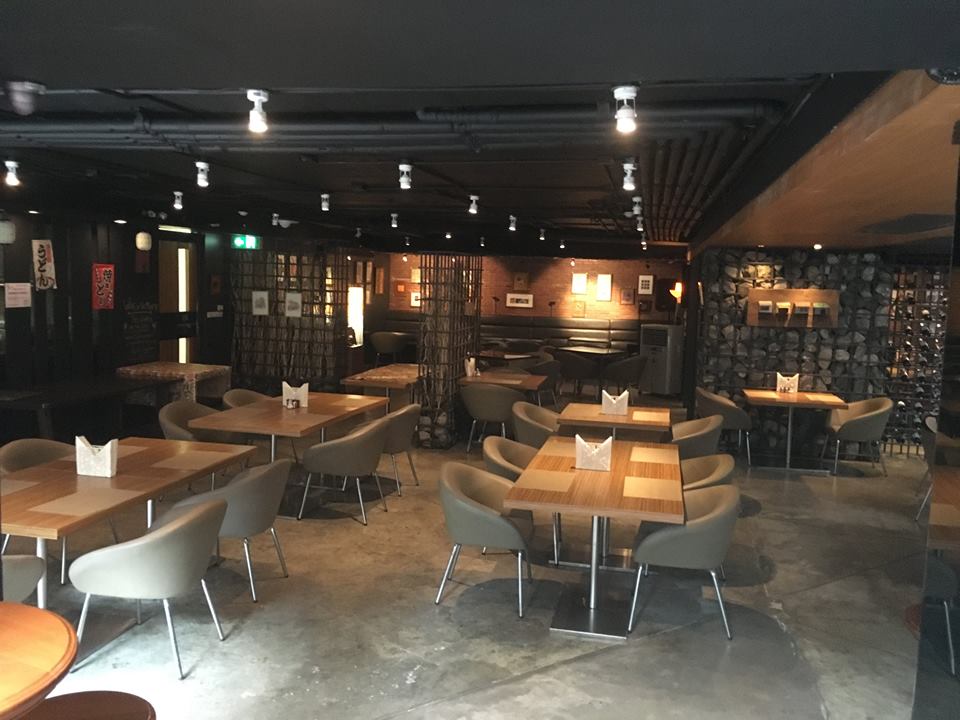
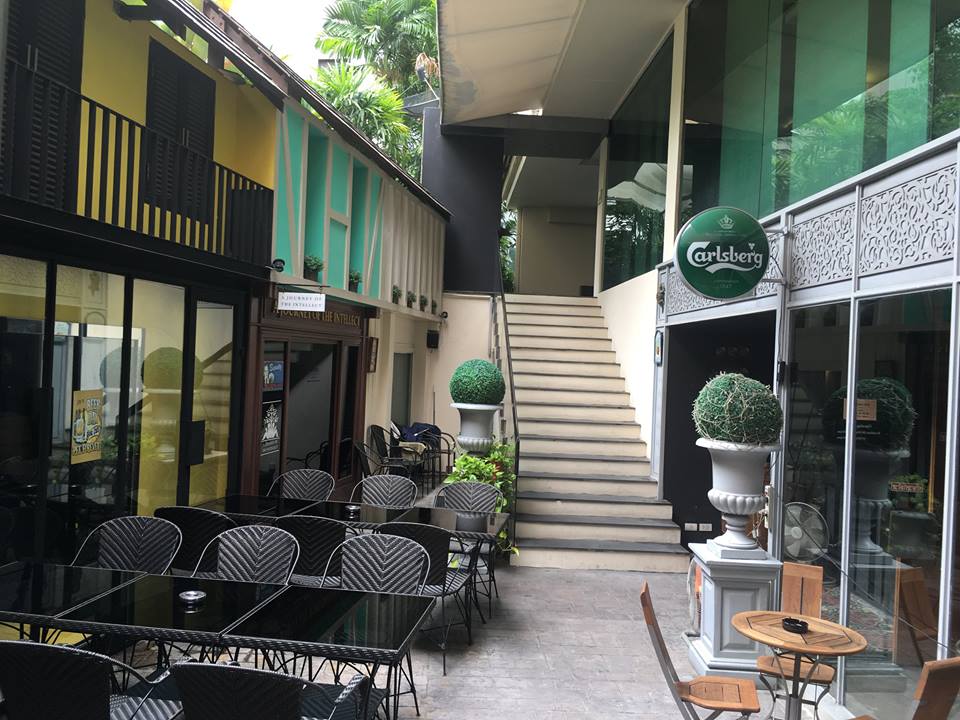
Check Inn 99 will reopen Sunday in its new home in a basement on Soi Sukhumvit 24, according to owner Chris Catto-Smith. After he was given a month’s eviction notice from his previous landlord, Catto-Smith said he had no luck finding a new facility until a former owner, Bent Peter Laasholdt, jumped in with a suggestion.
Laasholdt now owns the Admiral’s Pub, located in the same building as the new venue.
Apart from a spacious interior, rooftop bar and parking lot, Catto-Smith also hopes to bring in new customers from the surrounding neighborhoods.
“It’s a very good option,” said the owner who took over the Check Inn brand in 2011. “It’s probably the best we could’ve asked for.”
The “basement bar” will reopen with a soft jazz session Sunday afternoon. And fans of the former establishment will be happy to know house band Music of the Heart will get back to belting them out a few days onward.
Check Inn 99 will be located on Soi Sukhumvit Soi 24, next to the Admiral’s Pub, close to the Hilton Hotel. It can be reached by walking 200 meters from BTS Phrom Phong.
Photo: Chris Catto-Smith / CourtesyPhoto: Chris Catto-Smith / CourtesyPhoto: Chris Catto-Smith / Courtesy
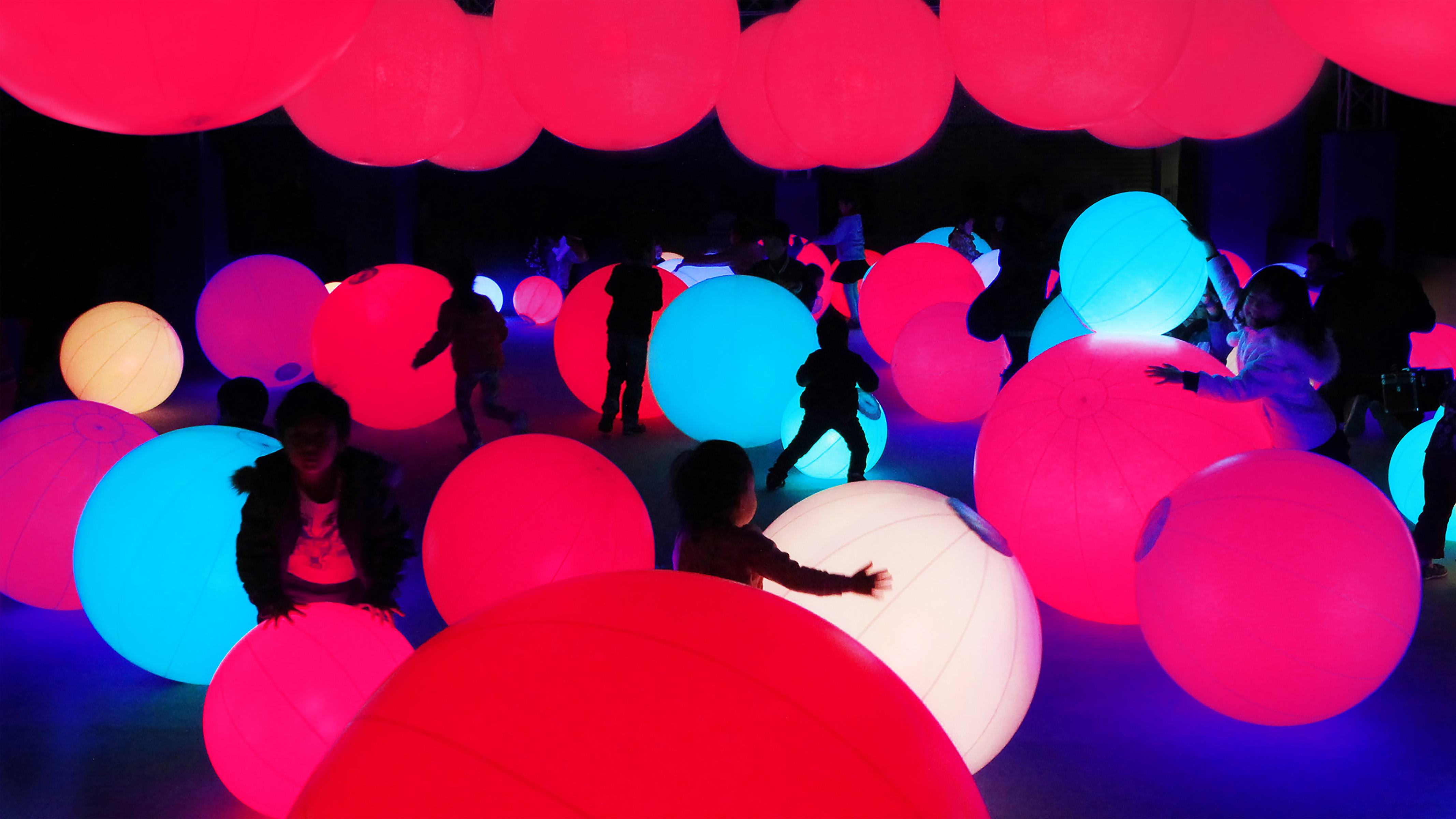
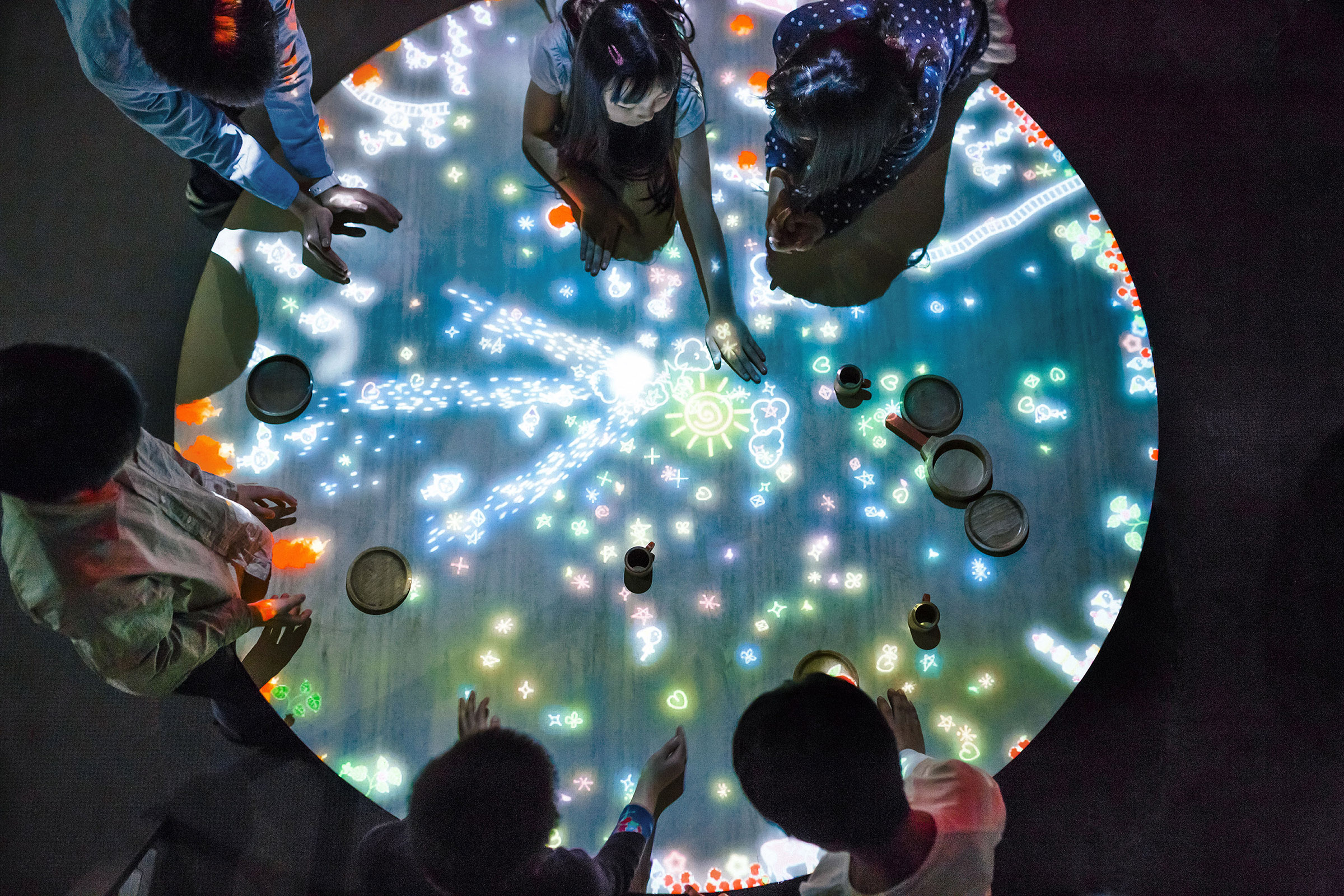
BANGKOK — See jellyfish drawings come to life and swim in a giant virtual aquarium, roll a light ball to change its color and sound, learn about changing sea levels and take spectacular selfies at CentralWorld.
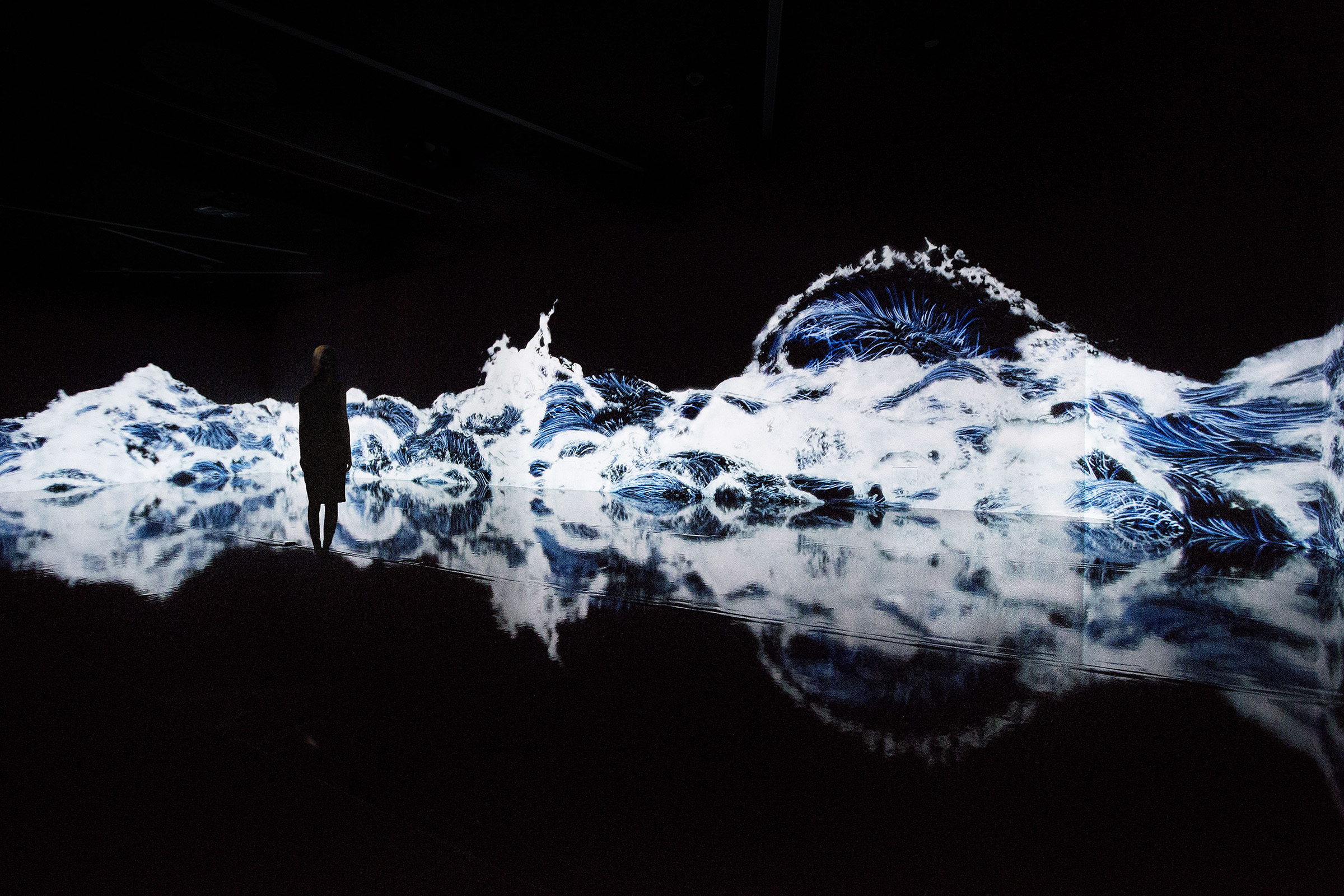
The Japanese “ultratechnologists” of TeamLab have dreamed up uses for digital technology to expand the realm of art at “Dance! Art Museum, Learn & Play! Interactive Theme Park.” At the exhibition – running now through the end of July – artists, architects, and engineers have married the worlds of art and creativity to science and technology for everyone to have fun co-creating.
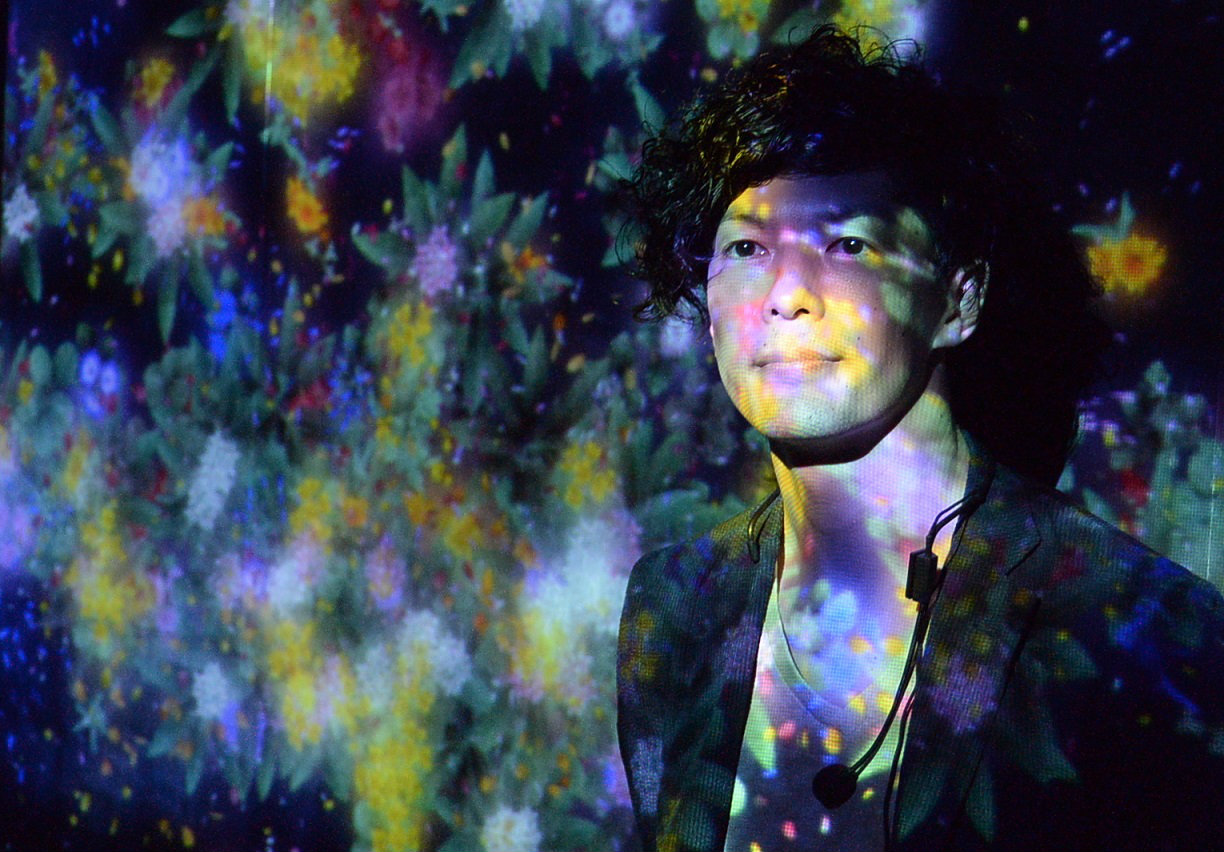
“As technology rapidly develops, many jobs will soon be taken by robots. Creativity is the only trait humans possess and can’t be replaced,” said the group’s regional director, Takei Takuya. “But today’s tests make us rely more and more on individualism, when in fact we learn best through interaction with others and by sharing experiences. That’s why collaborative creativity is now very important and that’s why we encourage people to move their bodies, be creative, and interact with strangers who are in the same space at the exhibition.”
Takei Takuya, Asia Regional Director of TeamLab
The large-scale experimental lab, which claims to be the world’s first interactive theme park, is separated into two zones: an art museum and interactive theme park.
As for the art zone, there are five installations to explore. Step first into the most popular photo-taking spot to find an interactive installation of flowers continuouslychanging with the seasons to reflect the human life cycle. Then see Japanese traditional flat paintings come alive in perspective animation, heavenly paintings created with virtual 3D effects, and rising sea levels within this century before entering dark rooms equipped with seven large screens presenting a story of chasing crows.
Dance! Art Museum
1 of 7
Dance! Art Museum
Dance! Art Museum
Dance! Art Museum
Dance! Art Museum
Dance! Art Museum
Dance! Art Museum
Dance! Art Museum
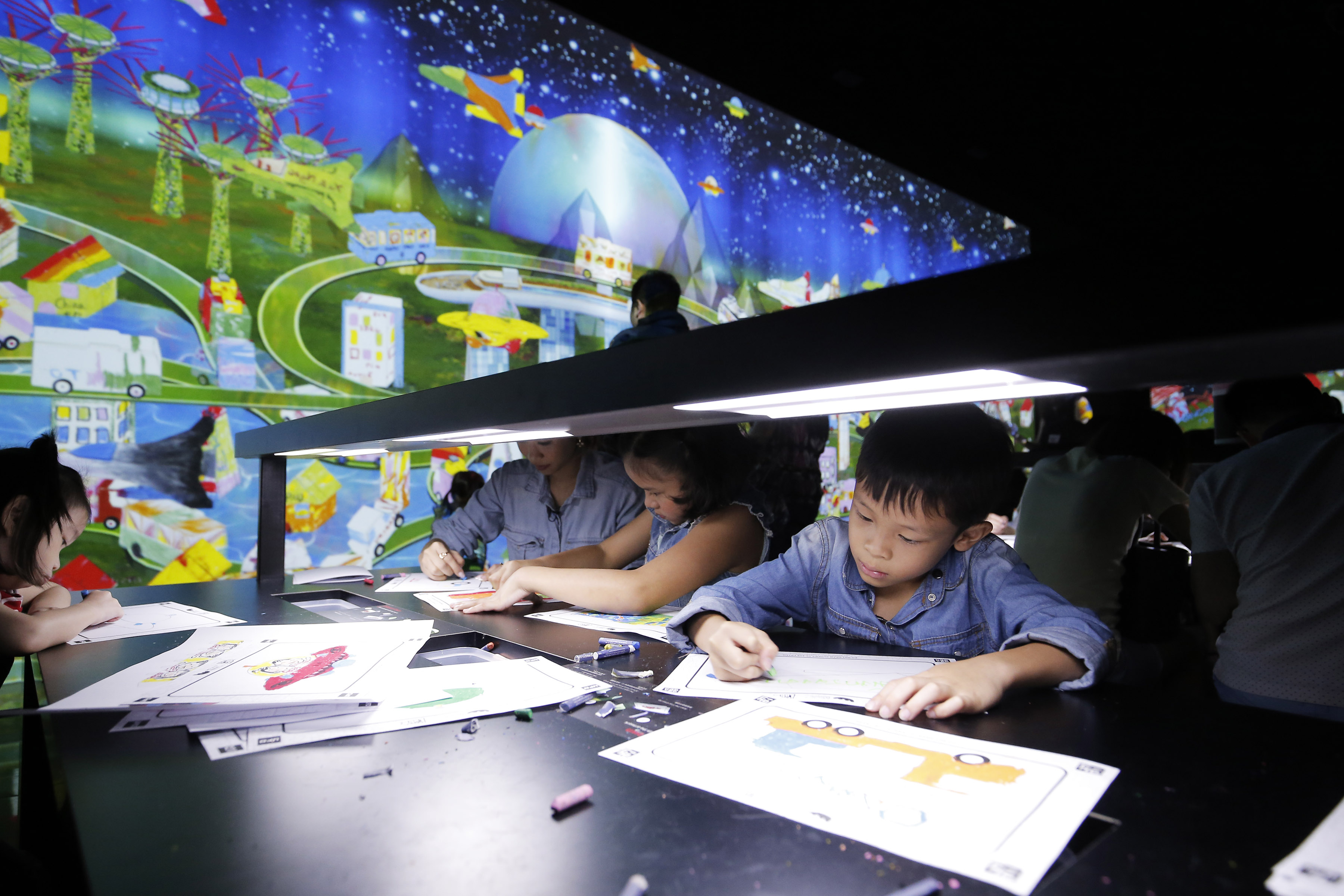
After that, enter an interactive theme park separated into eight zones. Release the power of your imagination coloring sea creatures by scanning paper drawings and watch them swim in a virtual aquarium alongside others’ creations. Or create a unique city by sketching cars and buildings. You can also join other visitors in making music by rolling a light ball which changes its color and sound when touched.
Learn & Play Interactive Theme Park
1 of 4
Learn & Play Interactive Theme Park
Learn & Play Interactive Theme Park
Learn & Play Interactive Theme Park
Learn & Play Interactive Theme Park
TeamLab’s digital artworks were first exhibited in Murakami’s Kaikai Kiki Gallery in Taipei back in 2011 before expanding its experimental innovation to Japan, Singapore, England, France and the United States.
“We want to break the physical limits of art. If an artist wants to make anything happen, they can simply draw it on a limitless digital canvas which allows the artist to be more honest to their original concept,” Takuya said.
The event has been a hit with the youth demographic, according to an organizer.
“Sixty percent of the visitors are teenagers and adults who come on their own or accompanying their children,” said Rungrath Chaipol of organizer BEC-Tero Entertainment PLC. “We want people, especially children, to learn by interacting with other people and technology. That was why we brought TeamLab Islands to Bangkok’s major department store so that everyone can enjoy.”
Tickets for TeamLab Islands are 350 baht and can be purchased online.
The exhibition continues until July 31 at The Space on the third floor of CentralWorld, which can be reached via skywalk from BTS Siam or Chit Lom.
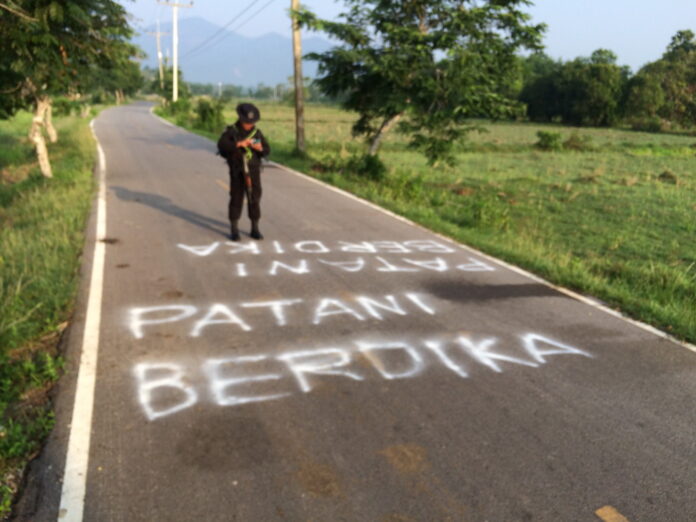
'Self-determination for Patani,' proclaims graffiti Monday on a road in Pattani province.
YALA — Authorities are beefing up security for this Thursday’s Eid al-Fitr celebration in the wake of a spate of deadly bombings in the restive southern border provinces over the weekend.
The latest surge of separatist violence left three dead and crippled the railway route that connects Bangkok with the Malaysian border just days before tens of thousands of commuters are expected to travel to home to mark the end of Ramadan.
A spokesman for the counterinsurgency taskforce blamed the violence on “heretics” – a common euphemism for Muslim separatists – intent on harassing local Muslims in their final week of the Holy Month.
“[It’s a time] in which our Thai Muslim brothers and sisters must be most strict in their religious activities, yet the perpetrators still try to create chaos in many forms in many areas,” Col. Pramote Prom-in of the Internal Security Operation Command said Monday. “They acted in accordance with their distorted belief that they will receive more glory if they create chaos in this period.”
He continued, “This behavior is the behavior of heretics who will be punished by God.”
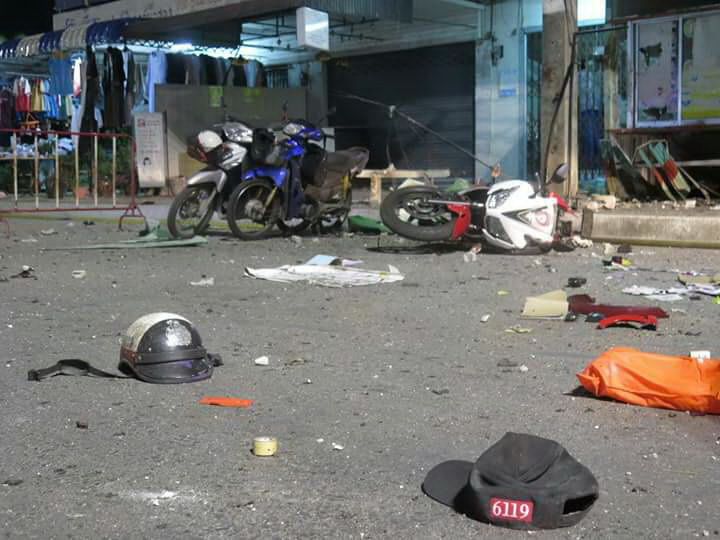
On Sunday night a bomb exploded close to the Central Mosque of Pattani, killing one police officer and wounding three others. Earlier that day another bomb, said to weigh more than 100 kilograms, struck the railroad near Rueso Railway Station.
The scene of the Sunday’s explosion near the Central Mosque of Pattani.
No one was injured in the latter attack, but the bomb managed to damage the tracks and caused major disruption to the southern railway network.
As of Monday afternoon, all trains had to stop at Yala Railway Station, where passengers were made to complete their journeys by bus. Railway officials announced they’re working to fix the tracks, but did not say when the work would be done.
Also on Sunday, two people on motorcycle were killed when a roadside bomb went off in Yala. Police said the one of the victims used to work for law enforcement officers.
Although no one has claimed responsibility for the attacks, officials believe it was staged by the same separatist militants who have been waging a bloody secessionist campaign in the region, known as the Deep South, since 2004.
The insurgents aim to secede the three Muslim-majority provinces and revive the Islamic nation of Patani, which was annexed by Bangkok in the early 20th century.
Col. Pramote said security forces will implement several measures for Eid, such as setting up more checkpoints and deploying more troops in “vulnerable areas.”
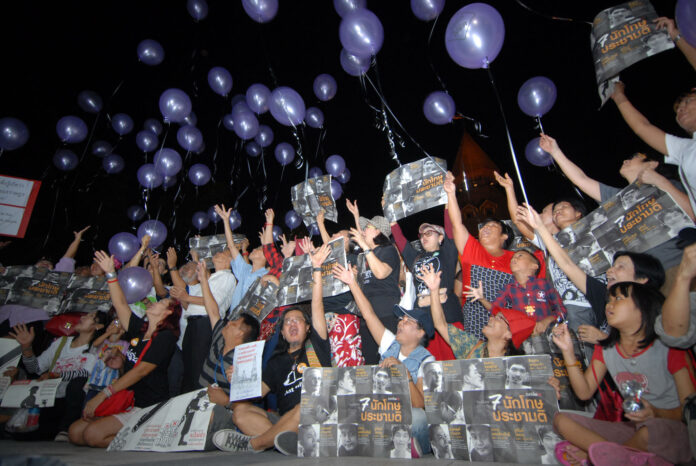
Activists release balloons during a “Vote No” protest on Sunday at Thammasat University in Bangkok.
BANGKOK — Twenty-five months after the coup makers rolled out their tanks and armed soldiers to seize power, pro-democracy student activists have secured tanks, guns and soldiers of their own. The only catch is those on the pro-democracy side are much smaller, made of plastic, and only cost 2,000 baht so far.
On Sunday, their absurdist approach to civil disobedience soared to new heights over Thammasat University in the form of about 100 balloons carrying the message “voting no is not a crime.”
Yet those dispatching the toys and balloons say their symbolic resistance is not a joke, but the latest tactics in the spirit of the three-finger “Hunger Games” salute, eating sandwiches, reading “1984,” and more used in the past.
Chonthicha Jangrew, a pro-democracy activist accused of sedition in June 2015, said a symbolic campaign was a new way to usher in change.
Anyone can participate, she said, without risking arrest by hitting the streets to protest.
“Floating balloons is the latest move. The balloons don’t need to contain the same messages,” Chonticha said. “The strength of symbolic struggle is in turning the little things into symbols and showing how dictators try to increasingly control our daily lives.”
As more than 500 people listened Sunday to prominent activists express opposition to the draft charter call for the right to campaign openly against it and condemn the arrests of those who have, some student activists were busy deploying soldiers and floating balloons.
“After our friends came out to campaign and got arrested and imprisoned, we may not be able to campaign publicly or show our faces, so we employ toys in order to express ourselves,” said the 23-year-old senior Thammasat student who came up with the idea.
She asked that her name not be used because she has suffered harassment and intimidation from junta supporters.
She’s a member of the League of Liberal Thammasat for Democracy, whose members have made #FreeDollsforFreedom a thing on social media.
The Absurdity Game
It’s a tactic of provocation. The more the junta goes after seemingly harmless and trivial actions, its proponents say, the smaller they will appear.
“The more they crack down and shut down such spaces, the more the regime looks absurd in the eyes of the public,” said Rackchart Wong-arthicart, a Thammasat postgraduate student. He was among the 13 accused of campaigning against the draft charter and arrested late last month. He’s among the six to be released on bail; seven remain jailed for refusing to seek bail.
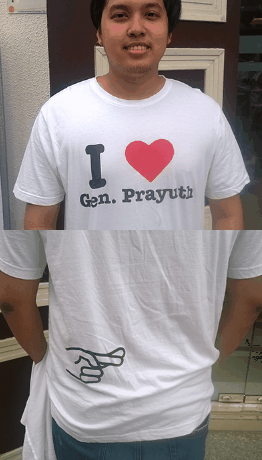
On Sunday Rackchart wore his own designer T-shirt.
“We Love [heart] Gen. Prayuth,” the front read in English in reference to junta leader Prayuth Chan-ocha. On the back, a twist lying in a lower corner: two fingers crossed. Rackchart said he has sold 50 of the 100 he printed over Facebook for 300 baht each.
Rackchart Wong-arthicart wears his sarcastic I Love Gen. Prayuth shirt.
“If I can’t hate him, I will express my ‘love’ for him,” Rakchart said. “It’s like we’re being forced to say it.”
Seeing such small things treated as threats to national security, he said, is the point of symbolic resistance.
Cute, But Effective?
Are toys, T-shirts and balloons just gimmicks used by a middle class movement to tweak the junta’s nose without any real punch?
Those involved say no, but admit the strategy is born of necessity.
“The more they prevent us, the weaker [the junta] becomes… People will feel that the growing list of what cannot be done has become unbearable,” Rackchart said.
Kittithat Sumalnop, known as “Champ 1984” for the indelible images of him being dragged away in June 2014 for reading Orwell’s seminal book, said symbolic struggle should catch on.
However mass street protests, he said, are more likely to oust a regime.
“At a time when dictators strictly control citizens, even compared to the 2006 coup makers, we can’t do things on a grand scale… Those who tried right after the [2014 coup] were arrested,” Kittithat said. “This is why symbolic protests have been employed to retaliate,” Kittithat said, before retiring to attend to his assembled army of toy soldiers.
Next to his miniature army, a quote from the People’s Party Proclamation issued during the 1932 democratic revolution:
“All people should know that this country of ours belongs to the people.”
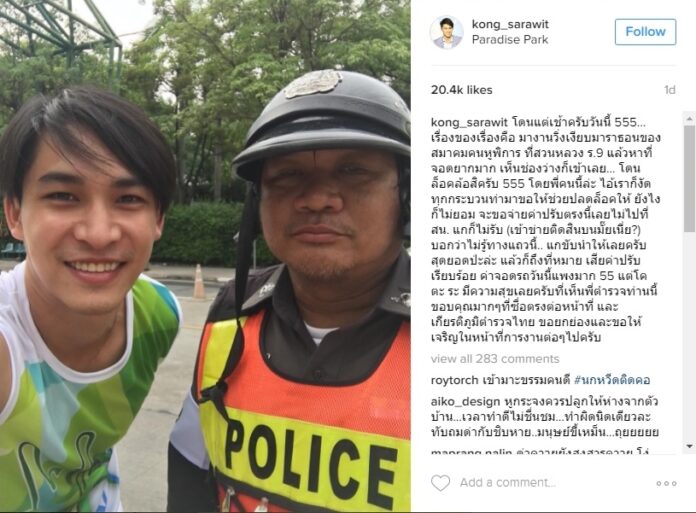
A screencap of Sarawit “Kong” Subun’s Instagram post on Sunday.
BANGKOK — A soap opera star who’s spoken out against corruption failed to impress his fanclub Sunday by boasting online that he tried to bribe a police officer.
In a post to his Instagram account’s 640,000 followers, Sarawit “Kong” Subun recounted how a traffic cop clamped his illegally parked car at Rama IX Park and then refused to take a bribe to remove it.
“I used every trick to have him unlock the wheel, but he wouldn’t budge,” Sarawit wrote. “I begged to just pay the fine right there instead of going to the police station, but he wouldn’t accept it (is this considered bribery?).”
Attempting to bribe an officer is a crime punishable by up to five years in prison.
The 32-year-old actor went on to praise the unnamed officer for his honesty and for upholding “the dignity of Thai police.” he also posted an obligatory selfie of himself with the cop.
Traffic laws state that fines must be paid at police stations, but many motorists choose to save the journey by paying money to the officers on the spot in return for not being cited.
Because the money goes to the officers’ pockets, this option is considered bribery under the law, a fact raised in many replies to Sarawit’s post.
“Well, this is how it is, police and citizens are equally bad,” wrote user Balltmclive. “This story teaches us that sometimes police do evil because the citizens want an easy way out.”
Some also accused Sarawit of hypocrisy, as he was publicly decried corruption as one of the leading figures of the 2014 anti-government protests which were styled as an anti-corruption crusade.
“So you don’t campaign against corruption anymore?” wrote user Suwannasaroj1980.
Police gave no signal they would take any action against Sarawit, who rose to fame for starring in Channel 3 lakorn series. Police spokesman Piyaphan Pingmuang said by telephone that he’s not aware of the incident and declined to comment further.
Bribery is so endemic in the symbiotic relationship between police and the public that in 2014 Bangkok police force briefly paid bounties to traffic cops for refusing bribes.
In this June 3, 2016, photo, Republican presidential candidate Donald Trump gestures to a his camouflaged "Make America Great" hat as he discuses his support by the National Rifle Association at a campaign rally at the Redding Municipal Airport in Redding, Calif. Photo: Associated Press
WASHINGTON— Donald Trump’s tweet that featured Hillary Clinton and a six-pointed star atop a pile of money has also appeared on a white supremacist website.
Trump’s account on Saturday tweeted the so-called “meme” — then deleted it and replaced it substituting a circle for the star symbol that resembles the Jewish Star of David. The change came after a social media uproar about the star tweet’s potentially anti-Semitic implications.
An image of the now-deleted tweet by U.S. Presidential Candidate Donald Trump
The meme first appears to have hit the Internet on June 15, when it was posted by the Twitter user @FishBoneHead1. The account, which described itself as belonging to a comedian, regularly tweeted out anti-Clinton and right-leaning messages and images.
The image also appeared on June 22, on /pol/, an active neo-Nazi Internet message board that features many anti-Semitic posts.
It remains unclear where Trump’s campaign obtained the image. A spokeswoman for the campaign did not immediately respond to questions about the original tweet or who was responsible for sending it out. Trump’s twitter account remained silent on the issue Sunday.
The @FishBoneHead1 account was deleted amid the uproar on Sunday afternoon. The person who operated the feed did not respond to a request for comment before it was deleted. The post itself was deleted from the /pol/ message board, but its existence was confirmed by The Associated Press through an internet search engine that combs internet archives.
The image’s appearance on /pol/ and @FishBoneHead1’s twitter feed was first reported by the website mic.com.
Trump, who is running for president as a Republican, has repeatedly said that he would remain a staunch defender of Israel and last week shot down a question from a town hall attendee who questioned the U.S.’s defense of the Jewish state. His daughter, Ivanka, converted to Judaism and is raising her children Jewish.
Trump has been criticized in the past for repeatedly re-tweeting posts from white supremacists’ accounts and failing to immediately denounce the support of former Ku Klux Klan grand wizard David Duke. Trump has a loyal following on white supremacist message boards and has been endorsed by several prominent white nationalist leaders who have credited him for invigorating their cause. Among them are William Johnson, chair of the American Freedom Party, which ran pro-Trump robo-calls during the GOP primary.
Trump’s former campaign manager, Corey Lewandowski, dismissed the controversy in an interview with CNN Sunday, accusing the media of trying to create something out of nothing.
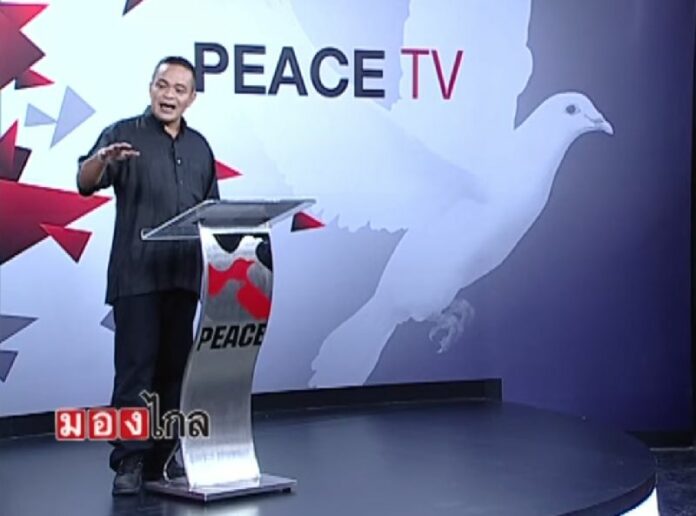
Readshirt leader Jatuporn Prompan in a YouTube segment uploaded by Peace TV on May 19, 2015.
BANGKOK — A Redshirt television station will be ordered to shut down for 30 days according to a source at the telecommunications regulator.
The National Broadcasting and Telecommunications Commission will suspend the license of Peace TV, a Redshirt satellite station, for allegedly violating a junta order not to incite social unrest or misinform the public, according to an commission staff member who asked not to be identified as a formal announcement was yet issued.
Weng Tojirakarn, a Redshirt leader and program host, denied the station has violated junta orders.
The shutdown order won’t be immediately effective but was said to go into effect July 10. That would keep the station off the air until after the Aug. 7 charter referendum during a time authorities have aggressively suppressed any dissent against the proposed constitution backed by the junta.
Peace TV is a 24-hour satellite network mostly consisting of talk shows hosted by figures from the Redshirt movement. One year ago it won a reprieve after the junta attempted to shut it down.
Weng contends the NBTC decision would violate that injunction granted in July 2015 by the courts in favor of the station. He said Peace TV will petition the Administrative Court on Tuesday to overturn the order on that basis.
For now, the station will continue to distribute its programming over Facebook and YouTube.