This combination of synthetic aperture radar images taken by JAXA's ALOS-2 satellite and analyzed by Geospatial Information Authority of Japan shows Indonesia's Anak Krakatau volcano, center in images, before and after the Dec. 22, 2018, eruption. Image: Associated Press
Top: This combination of synthetic aperture radar images taken by JAXA’s ALOS-2 satellite and analyzed by Geospatial Information Authority of Japan shows Indonesia’s Anak Krakatau volcano, center in images, before and after the Dec. 22, 2018, eruption. Image: Associated Press
JAKARTA — Radar data from satellites, converted into images, shows Indonesia’s Anak Krakatau island volcano is dramatically smaller following a weekend eruption that triggered a deadly tsunami.
Satellite photos aren’t available because of cloud cover but radar images from a Japan Aerospace Exploration Agency satellite taken before and after the eruption show the volcano’s southwestern flank has disappeared.
Dave Petley, head of research and innovation at Sheffield University who analyzed similar images from a European Space Agency satellite, said they support the theory that a landslide, most of it undersea, caused the tsunami that killed at least 430 people on Saturday evening.
“The challenge now is to interpret what might be happening on the volcano, and what might happen next,” he wrote in a blog.
Indonesian authorities are warning people to stay away a kilometer (less than a mile) from the Sunda Strait coastline because of the risk of another tsunami.
JAXA’s post-eruption image shows concentric waves radiating from the island, which experts say is caused by ongoing eruptions.
Anak Krakatau, which means child of Krakatau, is the offspring of the infamous Krakatau volcano that affected global climate with a massive eruption in 1883.
Anak Krakatau first rose above sea level in 1929, according to Indonesia’s volcanology agency, and has been increasing its land mass since then.
This Dec. 9, 2018, selfie provided by Colin O'Brady, of Portland., Oregon, shows himself in Antarctica. Photo: Colin O'Brady / Associated Press
An Oregon man became the first person to traverse Antarctica alone without any assistance on Wednesday, trekking across the polar continent in an epic 54-day journey that was previously deemed impossible.
Colin O’Brady, of Portland, finished the bone-chilling, 930-mile (1,500-kilometer) journey as friends, family and fans tracked the endurance athlete’s progress in real time online.
“I did it!” a tearful O’Brady said on a call to his family gathered in Portland for the holidays, according to his wife, Jenna Besaw.
“It was an emotional call,” she said. “He seemed overwhelmed by love and gratitude, and he really wanted to say ‘Thank you’ to all of us.”
O’Brady was sleeping near the finish line in Antarctica late Wednesday and could not immediately be reached for comment.
The 33-year-old O’Brady documented his nearly entirely uphill journey – which he called The Impossible First – on his Instagram page. He wrote Wednesday that he covered the last roughly 80 miles (129 kilometers) in one big, impromptu final push to the finish line that took well over an entire day.
“While the last 32 hours were some of the most challenging hours of my life, they have quite honestly been some of the best moments I have ever experienced,” O’Brady posted.
The day before, he posted that he was “in the zone” and thought he could make it to the end in one go.
“I’m listening to my body and taking care of the details to keep myself safe,” he wrote. “I called home and talked to my mom, sister and wife – I promised them I will stop when I need to.”
Though others have traversed Antarctica, they either had assistance with reinforced supplies or kites that helped propel them forward.
In 2016, British explorer Henry Worsley died attempting an unassisted solo trip across Antarctica, collapsing from exhaustion toward the end of the trek. Worsley’s friend and fellow English adventurer Louis Rudd is currently attempting an unaided solo in Worsley’s honor and was competing against O’Brady to be the first to do it.
Besaw said O’Brady plans to stay on Antarctica until Rudd finishes his trek, hopefully in the next few days.
“It’s a small club,” she joked. “His intention is to wait for Louis and have kind of a celebratory moment with the only other person on the planet to have accomplished this same thing.”
O’Brady described in detail the ups and downs along the way since he began the trek on Nov. 3. He had to haul 375 pounds (170 kilograms) of gear largely uphill and over sastrugi, wave-like ridges created by wind.
“Not only am I pulling my … sled all day, but I’m pulling it up and over thousands of these sastrugi speed bumps created by the violent wind,” he wrote in an Instagram post on Nov. 12. “It’s a frustrating process at times to say the least.”
On Nov. 18, he wrote that he awoke to find his sled completely buried from an all-night blasting of wind and snow. That day he battled a 30 mph (48 kph) headwind for eight hours as he trudged along.
“There were several times I considered stopping, putting my tent back up and calling it a day,” he wrote. “I wanted so badly to quit today as I was feeling exhausted and alone, but remembering all of the positivity that so many people have been sending, I took a deep breath and focused on maintaining forward progress one step at a time and managed to finish a full day.”
On Day 37, or Dec. 9, O’Brady wrote about how much he’s changed, along with a selfie in which he looks almost in pain, snow gathered around his furry hat.
“I’m no longer the same person I was when I left on the journey, can you see it in my face?” he wrote. “I’ve suffered, been deathly afraid, cold and alone. I’ve laughed and danced, cried tears of joy and been awestruck with love and inspiration.”
Though O’Brady had initially thought he’d want a cheeseburger at the end of his nearly impossible journey, Besaw said her husband has been fantasizing about fresh fish and salad because he has mostly been eating freeze-dried foods.
As for what’s next for O’Brady, who also has summited Mount Everest, Besaw said she’s not entirely sure.
“We are just so in the moment celebrating this right now,” she said. “Then we’ll see what’s next on the horizon.”
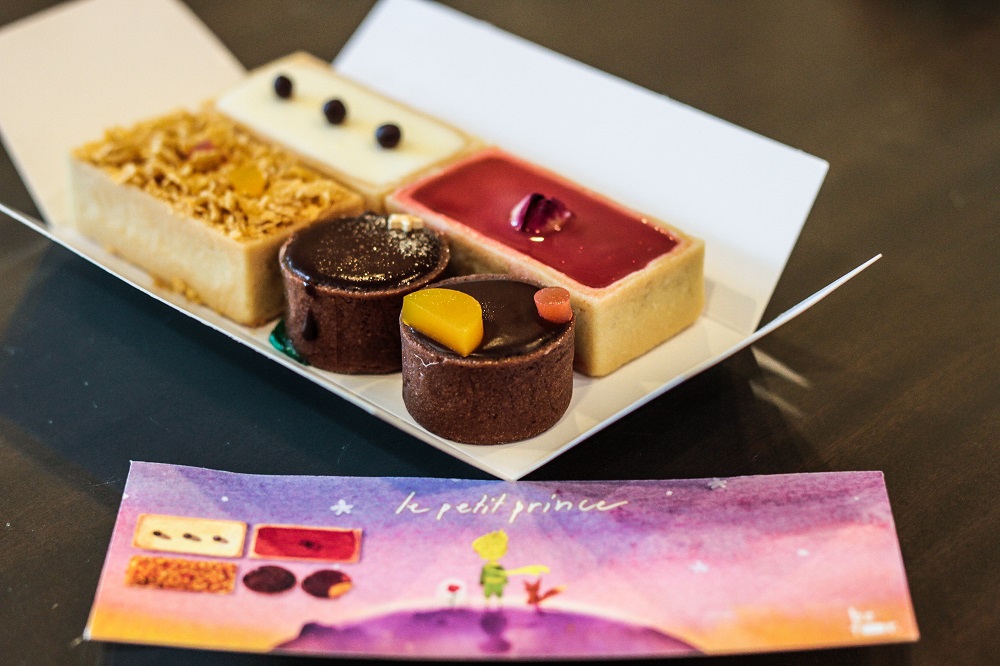
Inside the box is a pilot who’s crashed in the Sahara, a delicate rose with only four thorns, a wise fox and an elusive sheep. There’s also a little planet-hopping prince in green.
Antoine de Saint-Exupery’s memorable cast of characters are baked into the world’s culture, millions of minds and now the delicious fare of one Bangkok pastry chef.
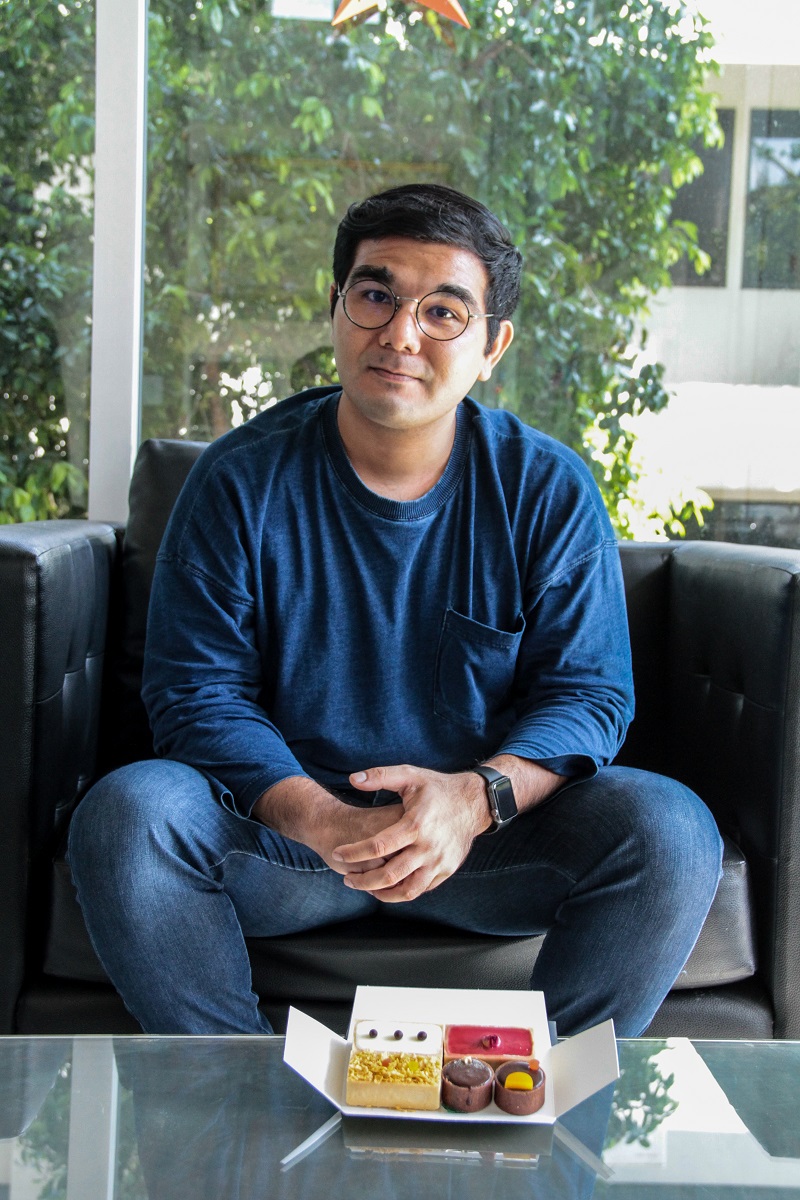
Pop culture has been deliciously interpreted by Surat Shikari ever since he quit his job at a Michelin-starred restaurant and started Befor.Tart, an online shop where he combines his years of baking experience and favorite pastime.
Recently, to pay tribute to the 75th anniversary of classic children’s book “The Little Prince,” he whipped up a unique collection of four mini-tarts, or tartlets.
The first is pleasantly sweet and made from sheep’s milk to capture the innocence of the pilot when, in the story, he draws a box-as-sheep. The central object of the prince’s love, a lovely yet haughty rose, is represented by a rose jam-filled raspberry tart. Fox – his moral guide – becomes wheat flakes topped with a green apple cream. Twin dark chocolate tarts filled with mint gel evoke the bittersweet farewell between the young prince and the pilot.
Since late 2016, Surat has woken before dawn to bake pastries – adding buttery, sweet and sour fillings to his own designs – that he will personally put into his customers’ hands before noon.
A geography graduate, the 34-year-old took a leap by chasing a career in cuisine. He apprenticed for one year at The Oriental Hotel before interning for another at a hotel in the United States. He returned to Bangkok and worked as a pastry chef at a few restaurants including Michelin-starred Gaggan and world-renowned L’Atelier de Joël Robuchon.
And then he quit.
“I wanted to have something of my own,” Surat said, reasoning that fine dining wasn’t the destination he’d set out for. “After some time, I realized I didn’t want to be a chef at a restaurant because it has other duties such as ordering ingredients and managing colleagues’ work schedules.”
“So I was thinking, ‘What should I do so I can bake all the time?’” Surat said.
A self-confessed cinephile, Surat revisited his own obsession. He brought the idea of the movie handbills he’d collected since his teen years to the kitchen counter. “Each handbill has a unique design dedicated to that a specific movie, so I went, ‘Okay, let’s do that with sweet dishes,’” Surat said.
Surat Shikari
The business scheme was met with frowns from his friends who didn’t see the sense in it. It didn’t help that Surat chose a niche arthouse movie franchise – Richard Linklater’s “Before” trilogy – as the theme for his first tart collection.
“Some friends told me I was daydreaming. Others encouraged me, but I could see their disbelief,” Surat said, laughing.
So far Surat has created eight collections. They include Christopher Nolan’s sci-fi mindbender “Inception,” the futuristic Siri-alike “Her,” Hong Kong cult classic “Comrades: Almost a Love Story” and the Oscar-winning “La La Land.”
Completing each collection – getting the texture, flavors and presentation just right – requires heavy, detailed research.
“I went to cinemas and watched “La La Land” almost 10 times, sometimes just to see the colors of the costumes the characters wore,” Surat said. “I bought the movie’s soundtrack CD and listened to it in the car over and over.”
The efforts culminated in four pieces of art tarts, each dedicated to a song from the film. “Someone in the Crowd,” heard when Emma Stone’s Mia and her girlfriends sashay in colorful dresses, is represented by a “feminine sweet” blueberry and matched with cream cheese.
Mia and Sebastian’s tap dance routine set to “A Lovely Night” becomes a panna cotta with two flavors: mango for Emma Stone’s yellow dress and coconut for Ryan Gosling’s white shirt. The two fruit jams slope down each side of the tart to meet in the middle. “When you eat it from one side to another, you can feel the change of tastes, just like Mia and Sebastian’s shifting moves back and forth,” said Surat.
“Every story is hidden in each layer. Every single piece of tart is like my own child,” Surat said, smiling.
While one boxed collection is 350 baht, Surat also offers custom, made-to-order desserts he sells for 750 baht.
Photo: before.tart / Facebook
The high prices are matched by the tough tasks he must tackle, such as when customers challenge him with material he is unfamiliar with. One fangirl ordered tarts to portray the life of a K-pop idol Surat had never heard of.
Another time, an art enthusiast asked Surat to incorporate Macbeth-inspired, immersive play “Sleep No More” into the dessert. Surat took about a week to gather information by reading interviews with the producer and watching footage from a New York production. He came up with three sets of tarts containing five flavors to mimic the actual play, which loops three times a day simultaneously on each floor of a five-story hotel.
“I don’t make the most delicious tarts, but I put an experience in them,” he says.
What’s next? Surat will keep making tarts until he can afford to open his own shop. Of course, making that dream complete means also hosting movie screenings for everyone enjoying the tarts.
Photo: Department of Marine and Coastal Resources / Facebook
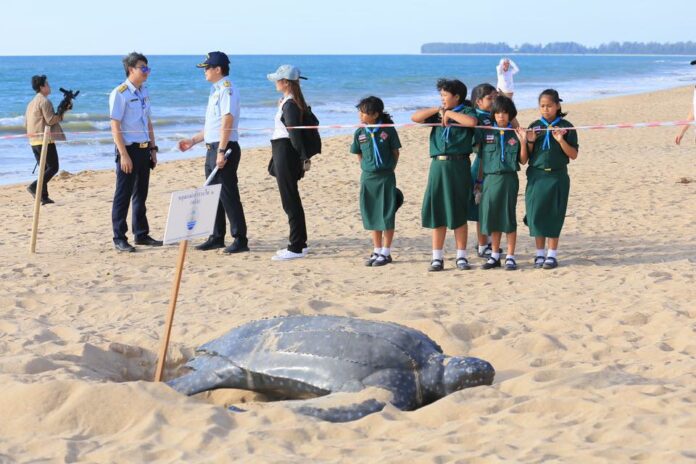
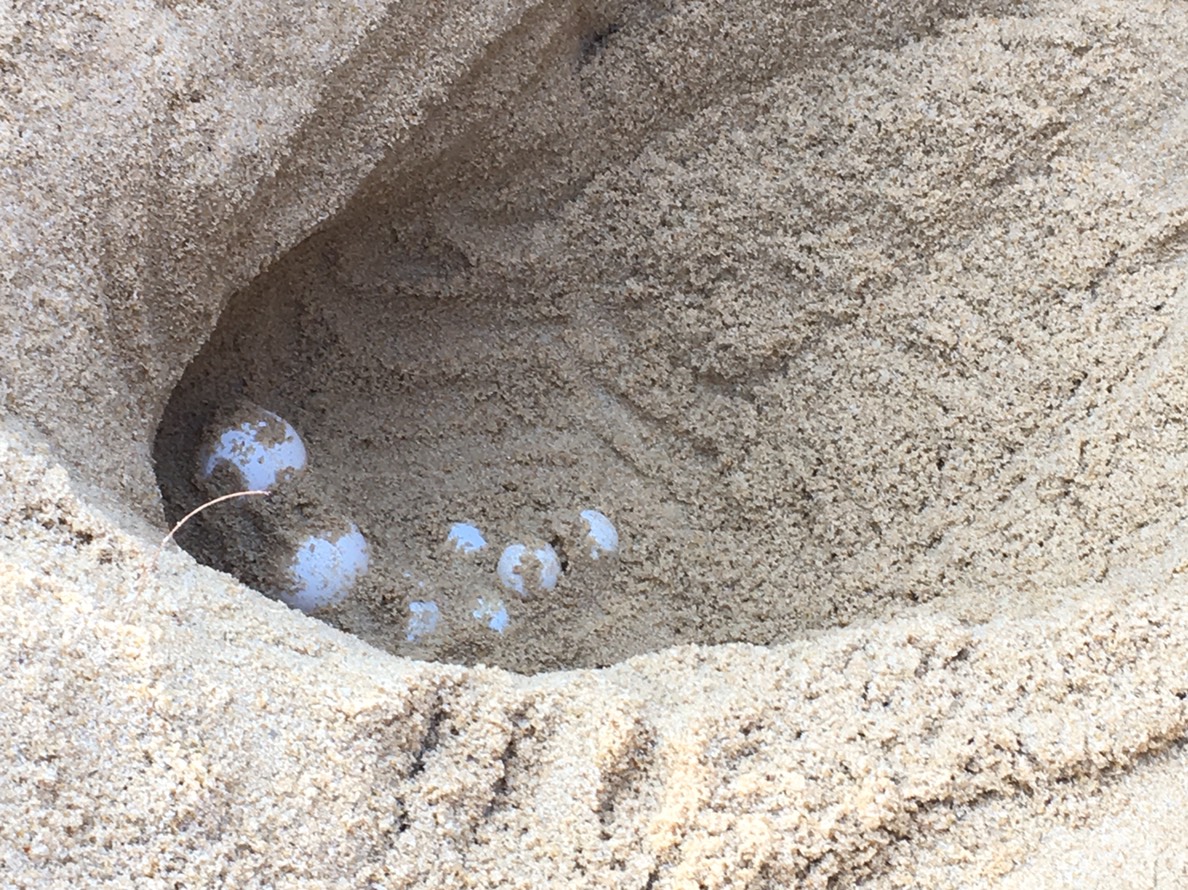
PHANG NGA — A rare sea turtle laid about 100 eggs on a Thai beach fewer than 10 days after another did so at another beach for the first time in five years.
Marine officials are rejoicing at what they hope is a trend: leatherback sea turtles returning to the beaches of Phang Nga province to lay their eggs. Now they’re moving to safeguard them from egg thieves by setting up a video feed.
“Finding leatherback turtles is a lucky sign that natural resources are recovering,” Jatuporn Burutpat, marine department director, said Thursday. “They are one of the hardest animals to find, and one that we give up hope looking for that has a worrying tendency to go extinct.”
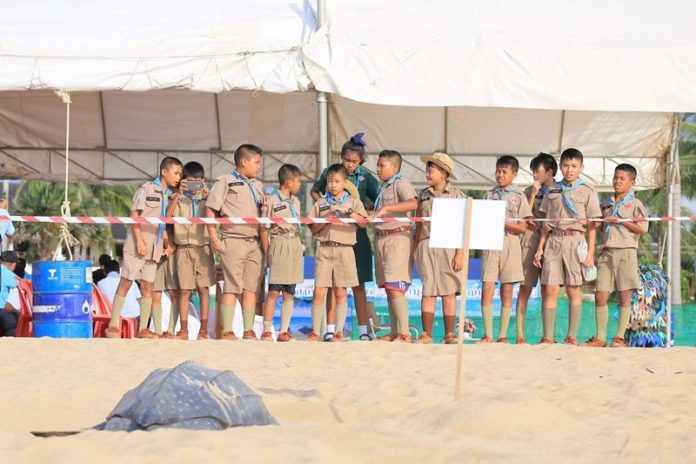
On Dec. 17, a leatherback sea turtle laid 93 eggs on a Thai beach for the first time since 2013. According to Jatuporn, a meter-deep hole containing a second clutch of up to 100 eggs appeared Wednesday morning at Tai Muang Beach, about 30 kilometers from from the first at Khuk Khak Beach.
Marine officials fenced off both to prevent the public – and possible thieves, including other animals – from disturbing the gestating eggs. There are now six CCTVs monitoring the two clutches.
Photo: Department of Marine and Coastal Resources / Facebook
Jatuporn urged people at the beaches to pick up trash, especially plastic bags, which sea turtles mistake for jellyfish. He said that after the 2004 tsunami, leatherback turtle sightings on Thai beaches sharply decreased, though they have not been registered as a protected species yet.
“Leatherback turtles are still waiting in the queue to become a protected animal,” he said. “So I’d like citizens to help keep an eye on the eggs.”
Anyone can watch and help monitor the eggs until they hatch in about two months, at the marine department’s Love Sea Turtles page.
Kasetsart University professor Thon Thamrongnawasawat, who alerted the public to the first clutch 10 days ago, expressed his excitement about the Turtle Cam on Facebook.
“I’ve never seen anywhere set up this kind of viewing for turtle eggs,” Thon wrote. “It’s cool. It’s awesome. The more I watch, the more awesome it gets.”
According to the IUCN Red List, leatherback sea turtles are considered a vulnerable species.
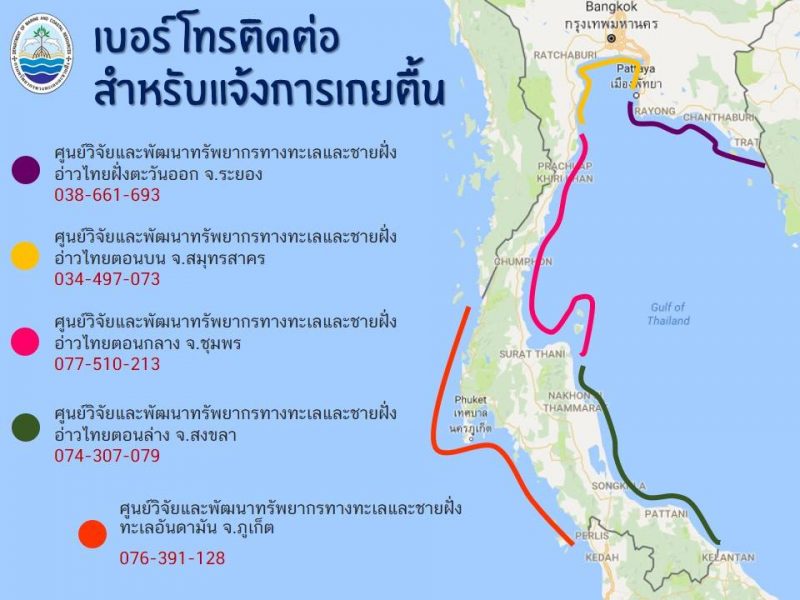
See any mischief on the turtle cam? Contact the Department of Marine and Coastal Resource’s Phuket branch at 076-391-128 to alert them.
Photo: Department of Marine and Coastal Resources / FacebookContact information for the Department of Marine Resources’ research branches in Rayong, Samut Sakhon, Chumphon, Songkhla and Phuket, from top to bottom. Image: Thailand Marine Endangered Species Stranding Network / Facebook
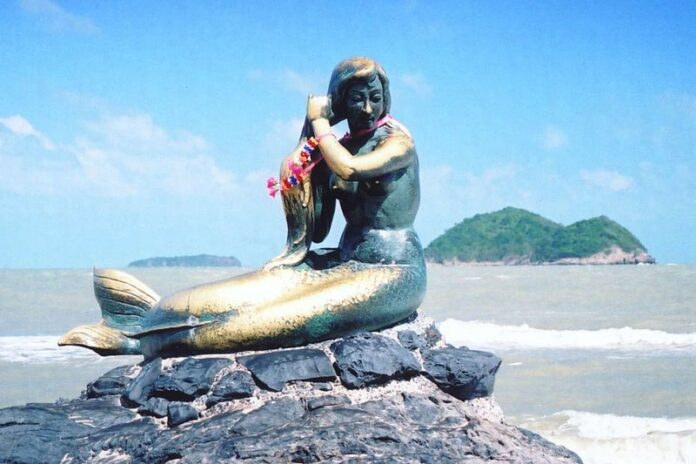
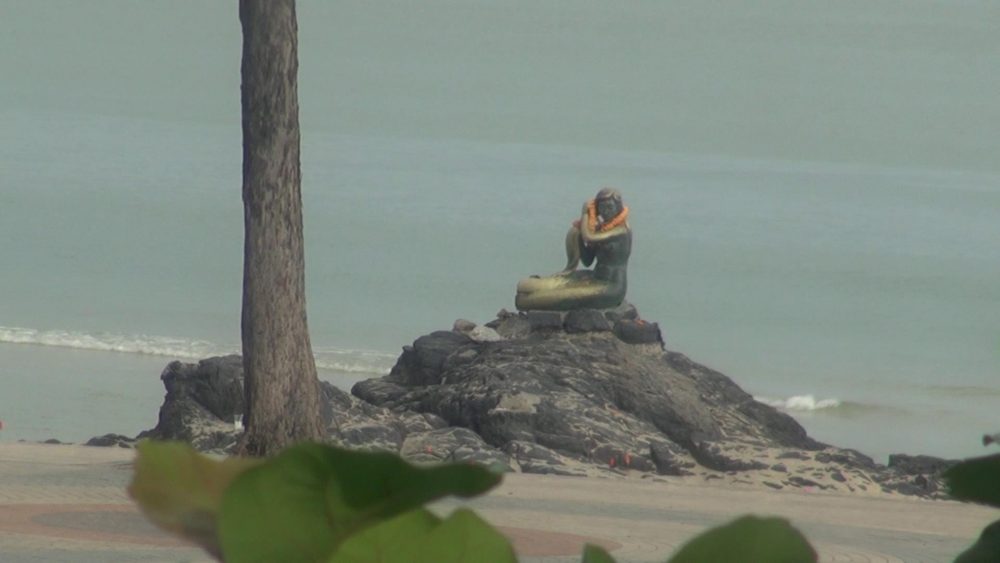
The Golden Mermaid Statue on Samila Beach in Songkhla province. Photo: Ahoerstemeier / Wikimedia Commons
SONGKHLA — A beach in the southern province of Songkhla has been closed to the public after a popular landmark was damaged by one of at least five pipe bombs planted in the area.
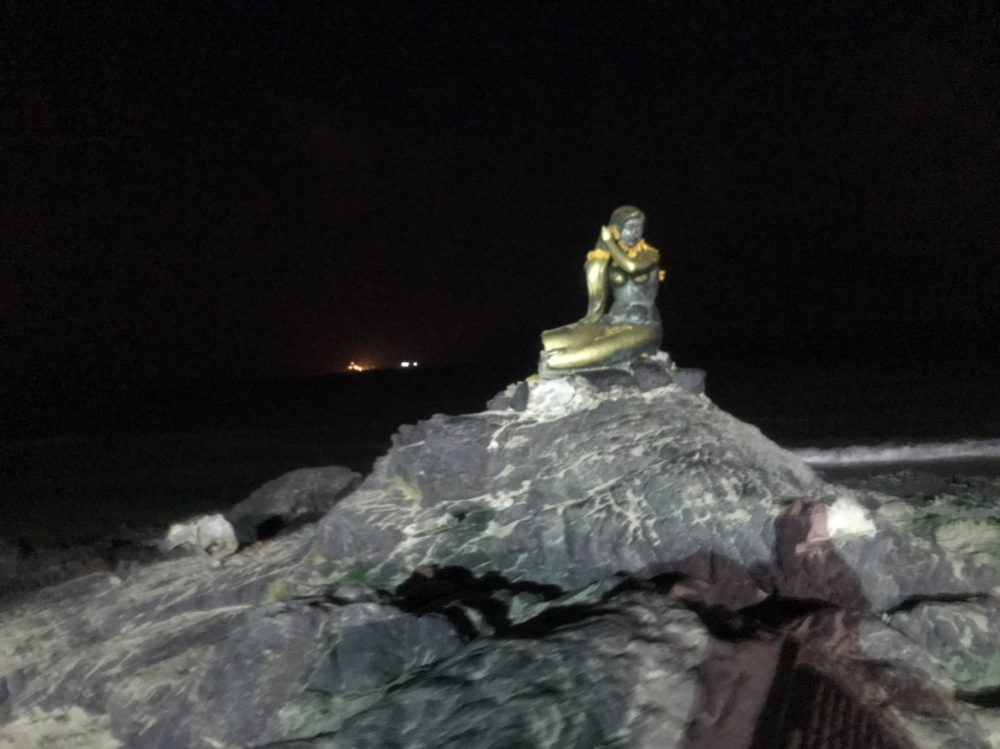
At around 10pm last night, police were alerted to two blasts near the Golden Mermaid Statue and Cat and Mouse sculpture on Samila Beach. No one was injured in any of the blasts, according to Lt. Gen. Ronnasilp Poosara, provincial police commander.
One of the bombs which exploded last night damaged the tail of the mermaid statue.
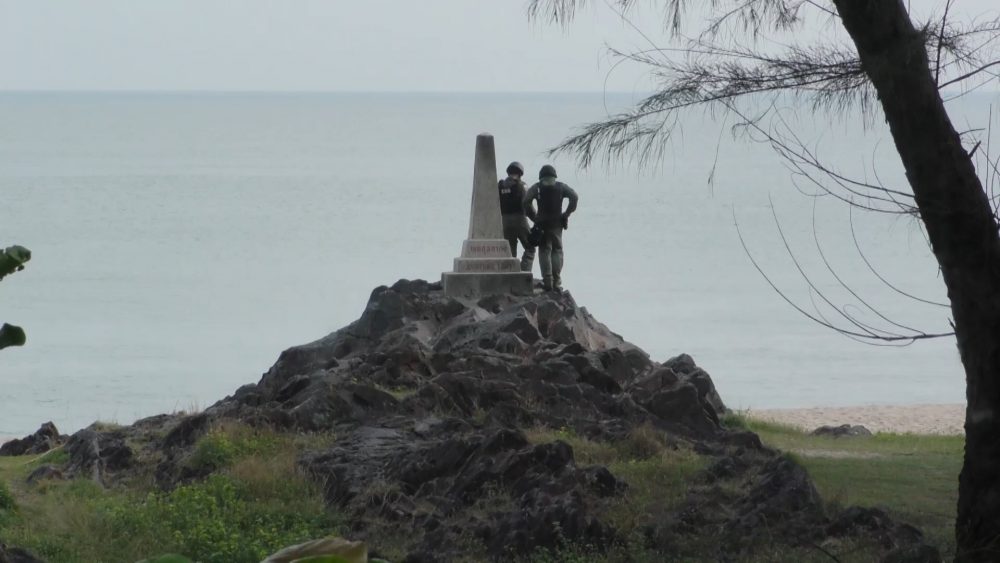
After another bomb exploded near the beach Thursday morning, bomb squad officers located two more improvised explosive devices in the same area.
The Golden Mermaid statue was created by sculptor Jitr Buabus in 1966 to commemorate a famous saga written by Sunthorn Phu, a poet to King Rama II. It is one of several statues and monuments along the beach.
Samila Beach has been temporarily closed since last night. Songkhla Gov. Weeranan Pengchan said security measures in the province, especially in the Hat Yai district, have been increased for the safety of residents and tourists.
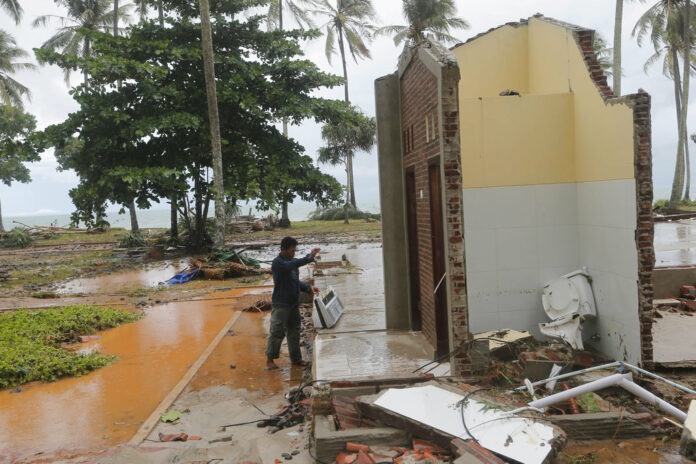
A resident looks for a usable item Monday following a tsunami at a cottage in Tanjung Lesung, Indonesia. Photo: Tatan Syuflana / Associated Press
JAKARTA — Indonesia has widened the no-go zone around an island volcano that triggered a tsunami on the weekend, killing at least 430 people in Sumatra and Java.
The country’s volcanology agency said Thursday that the Anak Krakatau volcano’s alert status had been raised to the second highest level and the exclusion zone more than doubled to a 5-kilometer (3-mile) radius.
The eruption on Saturday evening caused part of the island in the Sunda Strait to collapse into the sea, apparently generating tsunami waves of more than 2 meters (6 1/2 feet).
The government has warned Sunda Strait communities to stay a kilometer (less than a mile) away from the coastline because of the risk of another tsunami.
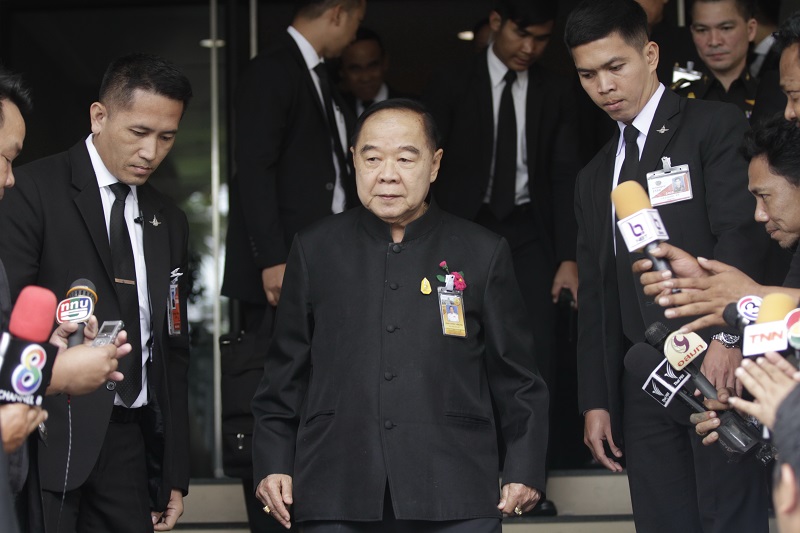
Gen. Prawit Wongsuwan raises a hand to shield his eyes from sunlight Dec. 4, 2017, in a cabinet photoshoot at the Government House which launched a scandal over the many multi-million baht, ultra-luxury timepieces he often wears.
Top: Gen. Prawit Wongsuwan raises a hand to shield his eyes from sunlight Dec. 4, 2017, in a cabinet photoshoot at the Government House which launched a scandal over the many multi-million baht, ultra-luxury timepieces he often wears.
Deputy junta chairman Prawit Wongsuwan, aka Big Pom, sure gave his critics and the media a lot to talk about throughout 2018.
There was the collection of undeclared luxury watches he never fully explained – animating memes and mockery from Thais of all political affiliations.
Then there was the time he blamed the sinking of a ferry that killed 47 Chinese tourists – Thailand’s worst maritime tragedy in decades – on the Chinese travelers themselves. His remarks caused tremendous outrage in China, and the number of Chinese visitors plunged for the first time in years. The lost revenues are estimated to be in tens of billions of baht.
That’s not to mention the countless times the 73-year-old general, who also serves as defense minister and deputy prime minister, picked fights with reporters, criticized a former prime minister, defended pro-junta politicians, lashed out at activists in a fury of profanity and banter that always made for colorful headlines.
“We have a saying that Big Pom is the shell impact area,” said Wassana Nanuam, a reporter who attends Prawit’s daily news conference, using army jargon for an area marked for artillery barrage. “He has always been at the center of controversies.”
But despite a turbulent personality that has been an embarrassment to the government, political observers recognize Prawit as the “Big Brother” of the ruling junta, a powerful army man who wields respect across an institution usually known for squabbling factionalism.
Wassana, who’s written multiple books and columns on military affairs, went as far as to suggest Prawit was responsible for keeping junta chairman Prayuth Chan-ocha – nine years his junior – in power.
“We can say that Prayuth is still here today because Prawit is his Big Brother,” she said. “His baramee [influence] is not only limited to the government or the junta, but also over the armed forces and police. His influence is far-reaching. He can use it to settle any dispute.”
Even his chief opponent gives the same assessment. Pro-democracy activist Ekachai Hongkangwan has been staging a one-man protest at the Government House for the past year that’s mostly aimed at Prawit. Ekachai said he deliberately singled out Prawit because he sees the general as the real power behind the junta.
“In all the military right now, Prawit has the biggest influence,” Ekachai said. “Even Prayuth, who used to be the army chief, didn’t have the same influence. All the military and police reshuffles were dictated by Prawit.”
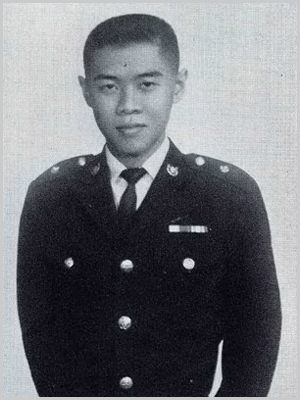
Born 1945 in the capital, Prawit spent his school years at the elite all-male St. Gabriel College and went on to attend the armed forces academy (Prawit famously said despite being bullied there, he “didn’t die” after a young cadet was killed) before getting his first job as an infantryman based in the east in 1969.
Thanks to his connections to the army’s Eastern Tigers faction, Prawit gradually rose through the ranks. He was an officer by 1976, a battalion commander in 1981, a regiment commander in 1989, a division commander in 1996 and army chief in 2004. Big Pom was also close to the palace circle, having served in the royal bodyguards that protect the king’s summer palace in Hua Hin.
As the junta’s second in command, Prawit, especially this past year, at times matched or eclipsed the prominence of his boss, Prayuth. Both men are always the first to comment on the nation’s issues of the day, especially those involving national security and politics.
Prawit Wongsuwan as a military cadet.
And, as Wassana said, both men tend to lose their tempers – not always a helpful quality when leading a country.
“Prawit likes to blurt out his thoughts all of sudden,” the writer said. “Big Pom sees reporters as his subordinates … sometimes he feels personally close to reporters, and then he airs his personal thoughts into a microphone.”
It’s unclear how other officials in the government view Prawit, who has caused so much controversy, but after Prawit declined to quit in the wake of the watch scandal, even one of his cabinet colleagues openly criticized him in an interview to the BBC, an unprecedented move in the buttoned-down regime.
According to Wassana, the general is under no delusion that he is much liked.
“He once complained out loud that he was dragging down the government. He knew what he did,” she said.
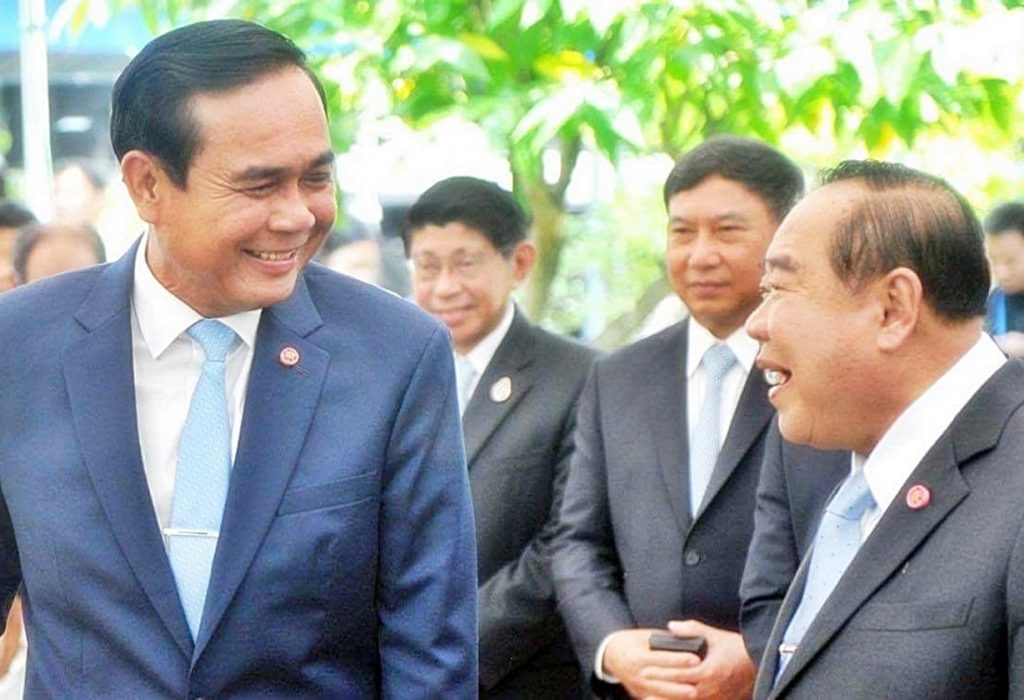
Junta chief Prayuth Chan-ocha shares a laugh with his deputy Prawit Wongsuwan in an undated file photo.
Ekachai, the activist who has been assaulted by street assailants he believes dispatched by Prawit’s underlings, grudgingly accepts that the powerful man, often photographed in mirthful laughter, is not of sterner stuff like tyrants in other countries.
“If he wanted to kill me, he would have done so already,” Ekachai said. “Even though he is a dictator, he is not cruel like the dictators in Africa. He doesn’t go that far.”
As the regime’s term is about to end – at least officially – with an election in February, Prawit’s future is yet unknown, but one thing is certain: No matter who makes the next government, they will have to acknowledge Prawit’s place in the military.
“He can play a Big Brother from behind the scenes and spare himself the spotlight,” Wassana said. “I think anyone would still know that Pom is the man behind the military. He is the real power.”
Ekachai suspects Prawit might have an even bigger ambitions: to supersede 98-year-old former army chief Prem Tinsulanonda as the most respected elder statesman after his death.
“I think he’s trying to compete with Prem,” Ekachai said. “He’s the only person who dares to.”
Ed. Note: Hours after this story was published, the National Anti-Corruption Commission announced it had cleared Prawit of any wrongdoing in the watch scandal.
HONORABLE MENTIONS
Cave Rescue Team
A man poses for photos in front of a mural depicting the “Heroes of Tham Luang.”
Cave explorers, rescue divers, a governor in his last days on the job and hundreds of volunteers from the world over won international renown after they managed to pull off the “impossible” task of saving 12 boys and their coach from a flooded cave in July.
Nuttaa “Bow” Mahattana
Security officers bar activists Nuttaa Mahattana from entering the parliament on June 14, 2018.
Not a single week passed by without resistance and open criticism of some form against the ruling junta from Nuttaa, who’s a single mother of one. Her next protest is planned for Thursday.
Surachate “Big Joke” Hakparn
Police Deputy Commissioner Maj. Gen. Surachet Hakpal points some arrested foreigners.
From crimes against tourists to scams and raids on undocumented foreigners, Surachate always manages to insert himself in the news. Rumor has it that he’s eyeing the top post of police commissioner – not a far-fetched prediction: Big Joke has 13 years left before he’s retired out.
Chanyawee Sompreeda
Chanyawee Sompreeda speaks at a panel about Love Destiny.
An obscure 2010 novel set in Ayutthaya era by Chanyawee (an archaeology graduate) became a cultural phenomenon this year after it was adapted into TV lakorn “Love Destiny,” reviving interest in Thai history.
Premchai Karnasuta, far left, sits in the campsite where he was found on Feb. 5, 2018, with the remains of a leopard, panther and other wildlife in the Thungyai Naresuan Wildlife Sanctuary in Kanchanaburi province.
KANCHANABURI — The verdict in the black panther poaching case will be delivered in March after the trial concluded today with the last defendant taking the stand.
Prosecutors said both sides will file their final statements to the Thong Pha Phum Provincial Court in Kanchanaburi province by Jan. 25. The court on Wednesday scheduled the date for its ruling at 9am on March 19.
Premchai Karnasuta, president of Italian-Thai Development and the primary defendant at the center of the case, did not appear in court today.
Specialist Peter Mazza, left, and trader Thomas Cicciari work in 2017 on the floor of the New York Stock Exchange. Photo: Richard Drew / Associated Press
SINGAPORE — Asian markets were mostly lower on Wednesday after President Donald Trump said that there was “nothing new” in efforts to end the partial government shutdown over a U.S.-Mexico border wall.
Traders had no fresh leads from Wall Street, which was closed on Christmas. U.S. stocks are headed for their worst December since the Great Depression in 1931.
Keeping Score
Thailand’s SET was down a marginal 0.04 percent Wednesday afternoon at 1,556.06. South Korea’s Kospi gave up 1.6 percent to 2,022.36 and the Shanghai Composite index shed 0.1 percent to 2,503.05. Japan’s Nikkei 225 index, which plunged 5 percent on Tuesday, picked up 0.5 percent to 19,241.87. Shares rose in Taiwan but fell in Singapore, Indonesia and the Philippines. Markets in Hong Kong and Australia were closed.
US Shutdown
The partial shutdown of the U.S. government that started Saturday shows no signs of abating. “Nothing new. Nothing new on the shutdown. Nothing new. Except we need border security,” Trump told reporters. The White House said Trump will reject any deal that does not include any funding for a wall or a fence. The Democrats have opposed this and are offering USD$1.3 billion for security. The routines of 800,000 federal employees are expected to be disrupted by the shutdown, but essential services will keep running.
FED Criticism
Trump’s criticism of the U.S. central bank triggered a drop in Asian equities on Tuesday. “The only problem our economy has is the Fed,” the president said on Twitter. “They don’t have a feel for the Market, they don’t understand necessary Trade Wars or Strong Dollars or even Democrat Shutdowns over Borders.” Trump has since said the hikes were a “form of safety” for an economy that was doing well, while stressing that the Fed was raising interest rates too quickly.
Analyst’s Take
“The outsized moves are not reflective of the current U.S. economic landscape, but that seems to matter little so far as fear mongering continues to permeate every pocket of global capital markets,” Stephen Innes of OANDA said in a market commentary.
Energy
Benchmark U.S. crude added 15 cents to $42.68 a barrel in electronic trading on the New York Mercantile Exchange. The contract settled at $42.53 a barrel in New York on Monday. Brent crude, used to price international oils, dropped 19 cents to $50.28 a barrel.
Currencies
The dollar strengthened to 110.45 yen from 110.31 yen. The euro rose to $1.1414 from $1.1392.
KOH SAMUI — Island police are on the lookout for a repeat wildlife offender who farms tourists for money by charging them for photos with a gibbon.
Koh Samui police were looking Wednesday for Ismail Thalang, 35, after someone posted a video clip of him approaching beach-goers with a small ape slung over his shoulder earlier in the week on Chaweng Beach.
“It won’t be hard to capture him. I caught him myself a couple of months ago,” Col. Thongchana Hankittikanjana of Bo Phut police said. “Police are looking for him since this morning, after reporters told me about the story that farangs first reported on.”
In July, police arrested Ismail at his home on the island for illegally possessing a protected animal and seized a 2-year-old gibbon. Evidence there led the authorities to arrest his gibbon supplier, 23-year-old Ruengwit Aolueknoi, in the Sooksamran district of Ranong province. There they found two more gibbons.
Thongchana said he does not remember what Ismail was fined.
The popularity of wildlife tourism produces an unseemly market for exploitation of wildlife for the sake of tourists often unaware or indifferent to the circumstances. Despite efforts to rein in trafficking and illegal exploitation of wildlife, they are still widely practiced.
Thongchana said that the “same group of people” are using gibbons to ply money from tourists, and they all hail form Ranong, like Ismail. They are also suspected of exploiting iguanas for photos.
A clip of Ismail pitching animal selfies first appeared Monday on a local Koh Samui Facebook group.
“The SAME guys were seen back on the SAME beach. With what looks like the SAME gibbon,” Arkadiy Kulev wrote.
Gibbons, which do not breed in captivity and therefore must be poached from the wild by killing their mothers, have a short work life, Kulev also wrote. Handlers often kill them when they reach the age of 6 or 7 when they develop teeth and become aggressive.
Gibbons are protected under Thai law, and possessing them alive or dead without authorization is punishable by four years in prison and a fine of 40,000 baht.