26.1 C
Bangkok
Saturday, June 20, 2026
Home Blog Page 1791

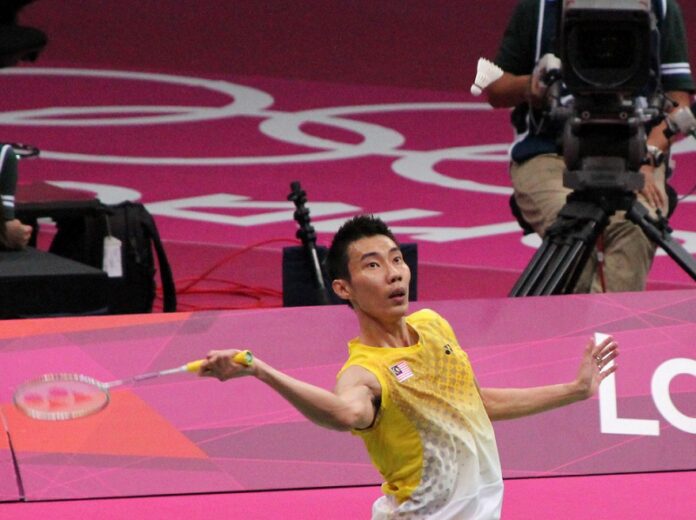
After Battling Cancer, Lee Chong Wei Seeks Olympic Gold

Photo: Antony Stanley / Flickr

KUALA LUMPUR — His cancer in remission after intensive treatment, former No. 1-ranked Lee Chong Wei is setting his sights on winning an Olympic gold in badminton.

In his first public appearance since his diagnosis, the three-time Olympic silver medalist said health is his top priority, but he isn’t ready yet to hang up his racket.

Lee said doctors gave him a clean bill of health after more than two months of intensive treatment for nose cancer in Taiwan. Already into light fitness training, Lee hopes to return to the court next month.

“I love badminton … I cannot say 100 percent that I can comeback, see how my body is,” Lee told a news conference Thursday. “If I can play, it’s the last track for me.”

Lee is regarded as a sporting hero in Malaysia after a lengthy career that has included the Olympic medals and 69 titles around the world. He was suspended for eight months in 2015 after testing positive for a banned anti-inflammatory drug in the World Championships, but returned to elite competition.

The cancer came as a shock after he went for a medical checkup because he felt unwell during the Indonesian Open in July.

He said he couldn’t eat or sleep for days after discovering his illness, but support from family and friends pushed him to be positive.

The treatment was intense, and he couldn’t eat or talk for several days.

Lee said his medical condition is “back to normal” now but that he needed to return to Taiwan every three months for evaluation. Now regaining some weight and his appetite, Lee said he’d follow medical advice not to rush back into intense competition.

But with the next Olympics in Tokyo in 2020, he hasn’t given up hopes of winning that elusive gold medal.

Advertisement

Secret ‘Kai Maew’ Satirist Won’t Make Exhibition Appearance

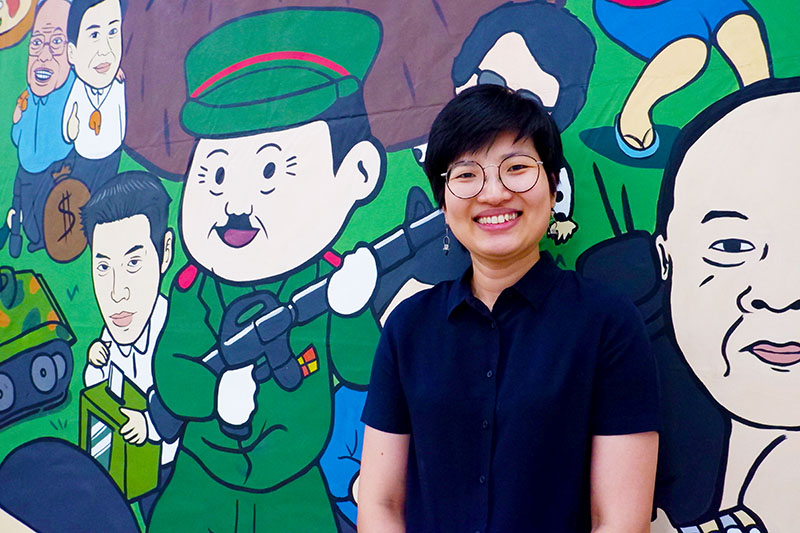
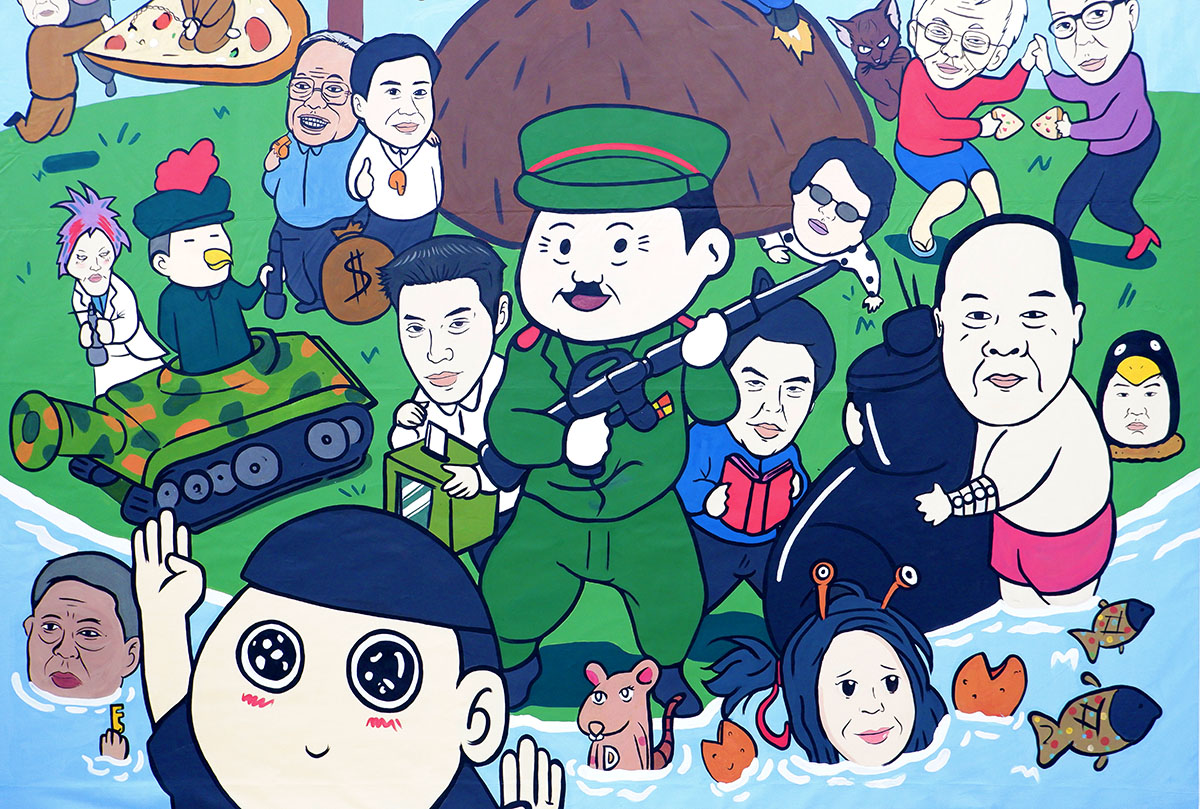
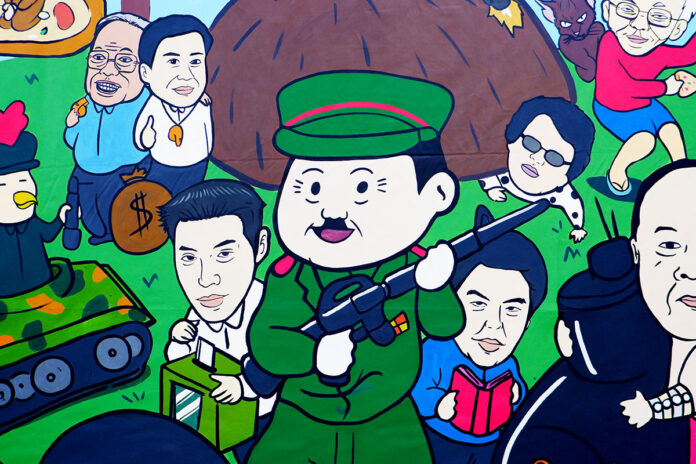
Detail from a mural designed by Kai Maew’s anonymous artist shows ‘Kalaland’ populated by figures ripped from political headlines.

Top: Detail from a mural designed by Kai Maew’s anonymous artist shows ‘Kalaland’ populated by figures ripped from political headlines.

BANGKOK — The anonymous creator of Thailand’s most biting online political satire is holding an exhibition in the heart of the capital – but don’t expect to meet him there.

The man who for four years has drawn Kai Maew, a series of webcomics skewering Thai politics, is bringing his work into the light while choosing to remain in the shadows for fear of political persecution.

“This is the first and it’s probably the last Kai Maew exhibition ever,” said curator Lalita Hanwong. “He’s not a political cartoonist, like Joan Cornella, who’s open about who he is. He keeps to himself a lot and is very scared of being followed by the authorities. But being anonymous is part of his charm and power.”

Read: Dangerously Funny Webcomic Satirizes Thai Politics

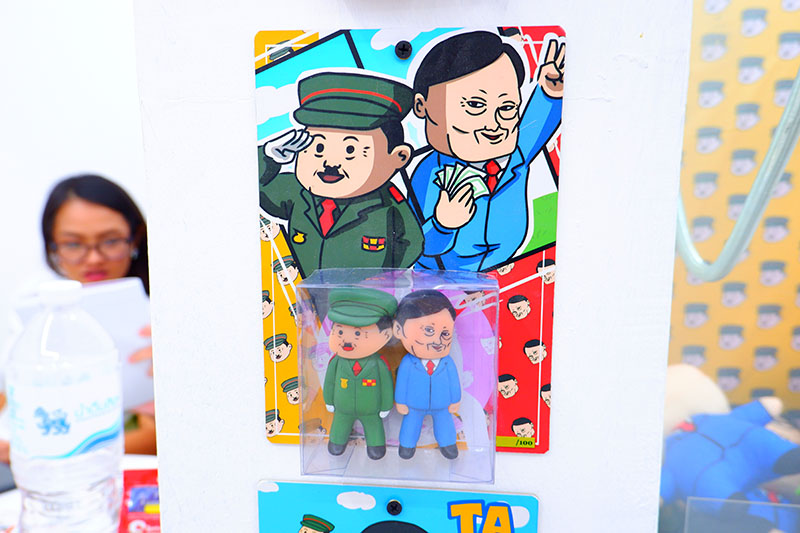
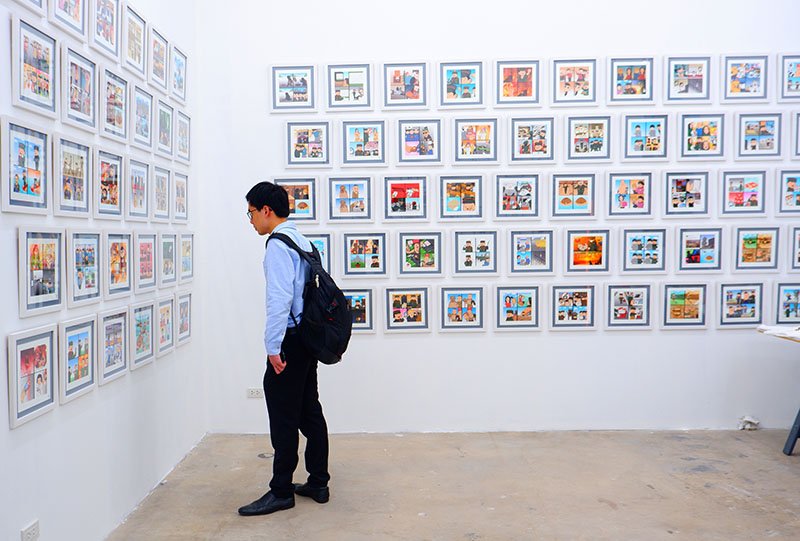
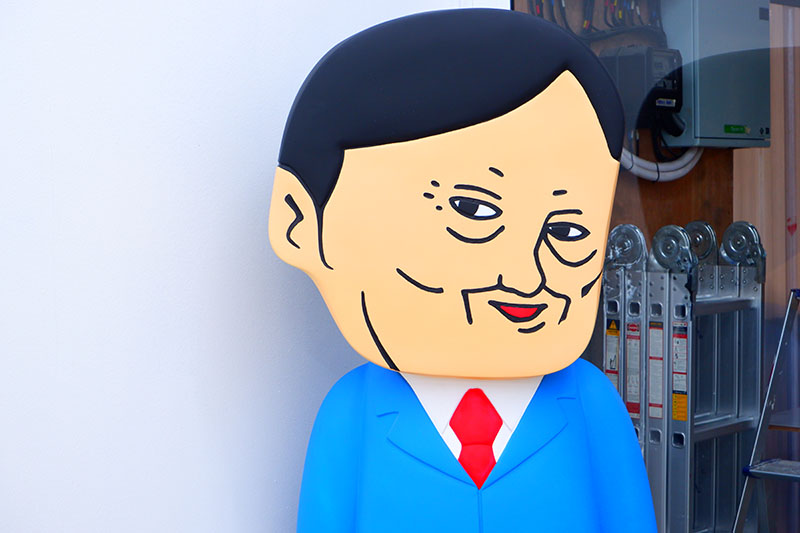
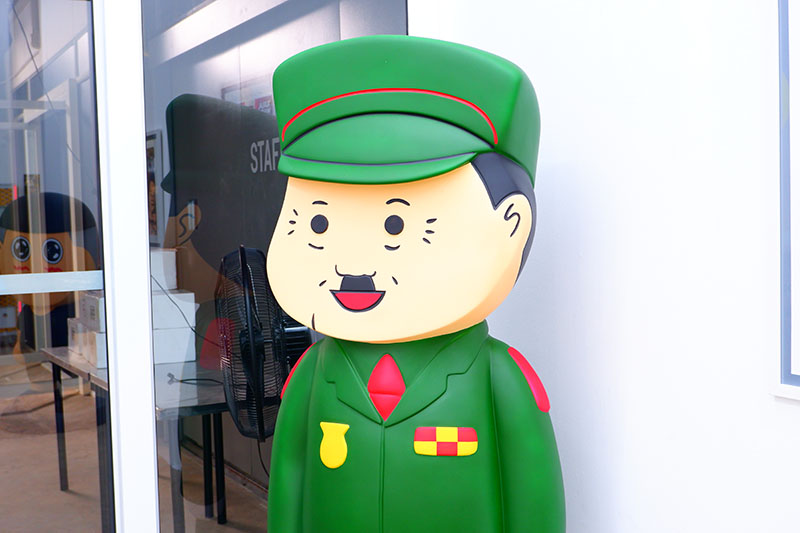
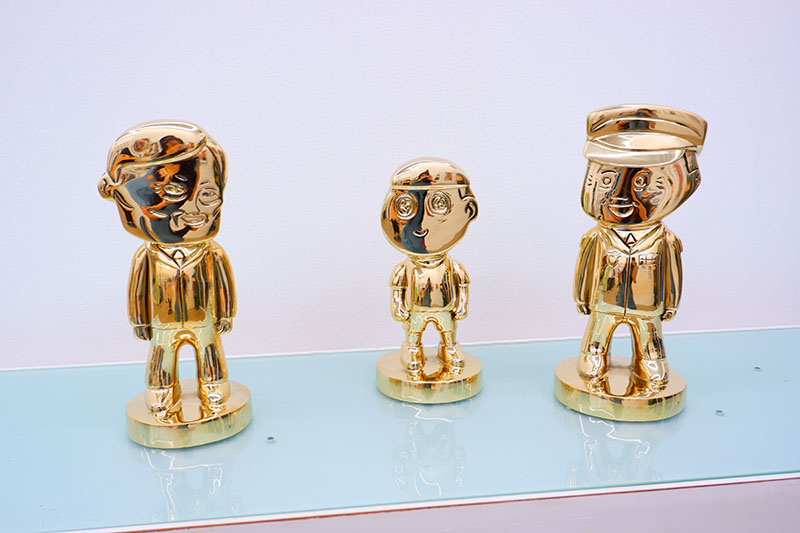
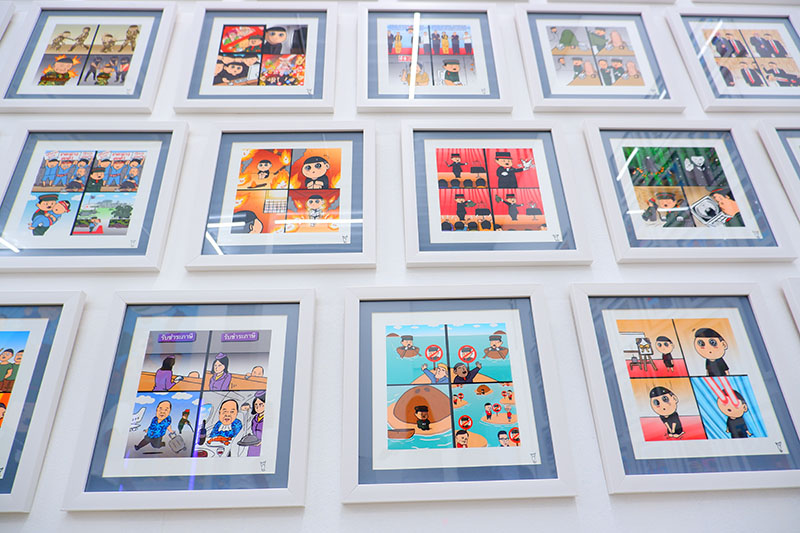
The exhibition, curated by Lalita and Pandit Chanrochanakit, features dozens of framed Kai Maew comics, a giant mural, cast figures of his characters and even fan merch.

With a government that has shown a lack of good humor by taking satirists into custody, the artist is very secretive about his identity. Even when speaking anonymously, it can be difficult to get a straight answer from him, as we learned last year.

DSCF4190
Figures ripped from political headlines populate ‘Kalaland’ in a mural designed by Kai Maew’s anonymous artist.

“You will never find him here. Or if he does come here, no one would know it was him,” Lalita said. “If he stays anonymous, he has the power and independence to send difficult messages that someone with an identity wouldn’t be able to.”

Of course, this has posed difficulties for Lalita and her team’s task of translating the online images – mostly sketched by finger on an iPhone or iPad – into physical form.

“He’s someone I know, but we don’t meet often and mostly communicate by message,” she said. “I had to be the one to go get the figures made and everything printed.”

Even the large mural on the wall wasn’t painted by the illustrator. He designed it; other artists painted it.

The exhibit, running through late November, is the first chance to meet characters ripped from the screen and cast in giant resin form. There’s Loong Kai, or Uncle Egg, the obvious stand-in for junta leader Prayuth Chan-ocha. Jack Maew, the square-faced politician shown openly or hidden behind the scenes in every comic, is Prayuth’s arch-nemesis Thaksin Shinawatra. Taa Sai is the starry-eyed boy staring on agape at the absurdity.

DSCF4158
Curator Lalita Hanwong knows the artist – but she ain’t tellin’.

“Everyone can identify with Kai Maew; everyone is Kai Maew. We all passed the stage from being innocent and naive to waking up politically,” Lalita said.

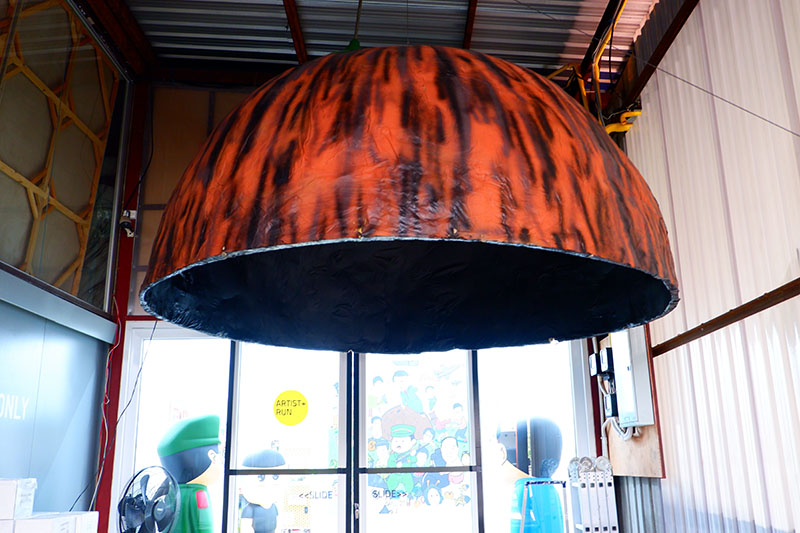
Visitors must pass through a giant coconut shell before entering the exhibition to metaphorically exit the “kala.” In Thai idiom, those living under the kala, or coconut shell, are “ignorant, not very smart, or unaware of things in general,” as Lalita described it.

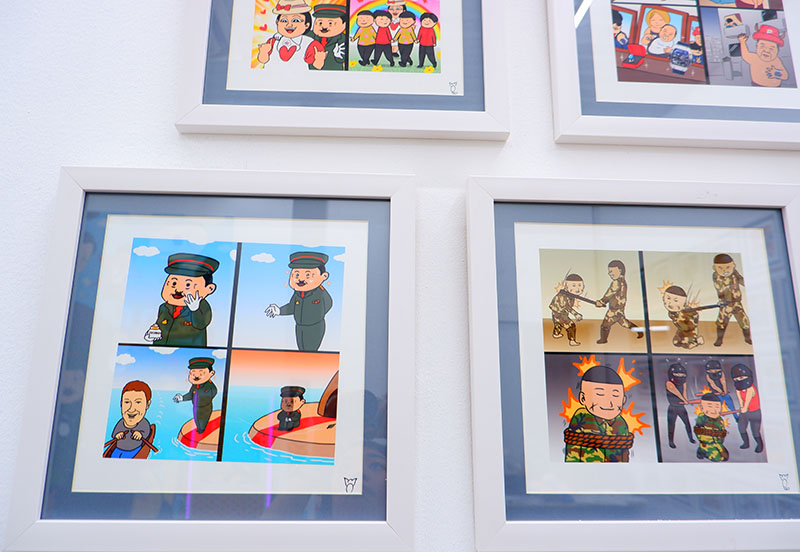
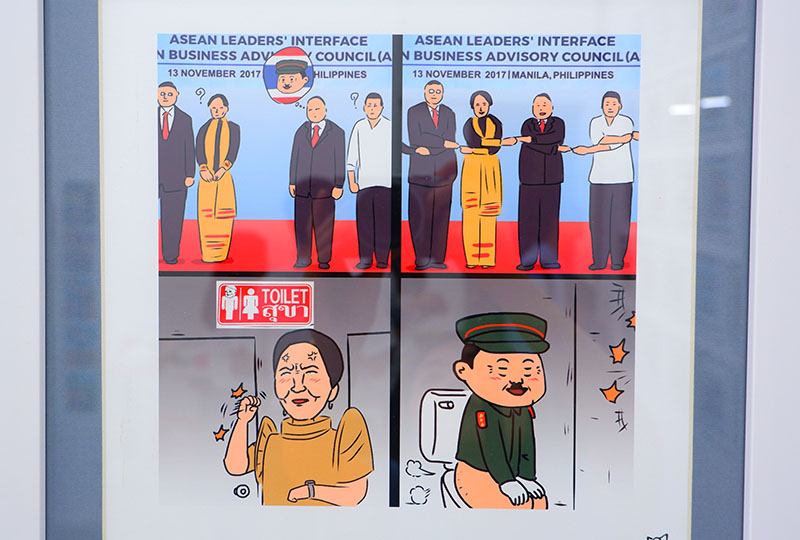
The dozens of comics on display are Kai Maew’s signature, dialog-free, polyptychs satirizing current events. Sometimes they address insidery political scuttlebutt. At other times, the artist hijacks the most popular topics of the day, inserting his cast of political misfits.

DSCF4187

The comic has mocked that one time Mark Zuckerberg didn’t actually visit, a very unappealing military mascot and deputy junta leader’s affinity for fine watches. They’re sprinkled liberally with Gen Y-and-up references from pop and internet culture, remixing scenes with imagery borrowed from Doraemon, One Piece, Star Wars and The Matrix, to name a few.

“There’s both older and newer events here, but we chose ones people remember,” Lalita said of the dozens of works printed for the exhibition.

Lalita thinks the comic’s popularity is the sign of a society getting more comfortable with debate.

A recent Kai Maew comic satirizes Suthep Thaugsuban, a politician widely heckled since coming out of ‘retirement’ to rebuild his political fortunes.

“I think Thai society is maturing. People are questioning what’s going on and not being castigated as aggressive contrarians,” Lalita said. “Kai Maew is definitely a part of this process.”

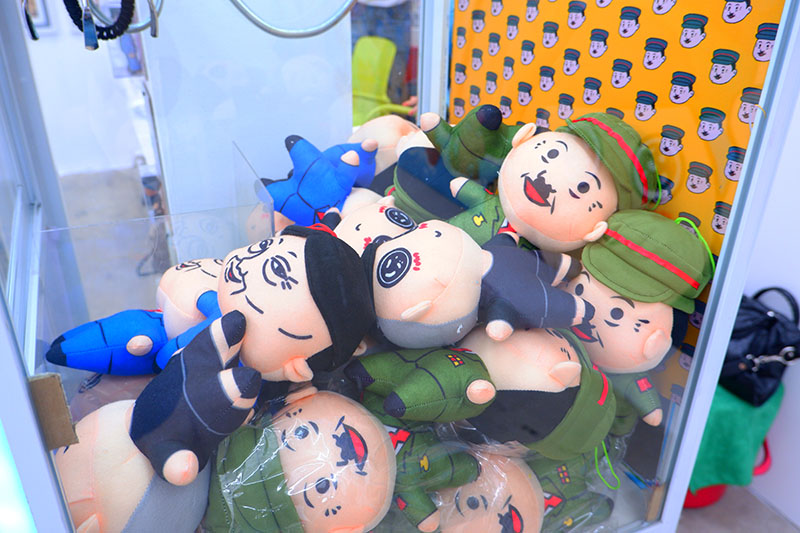
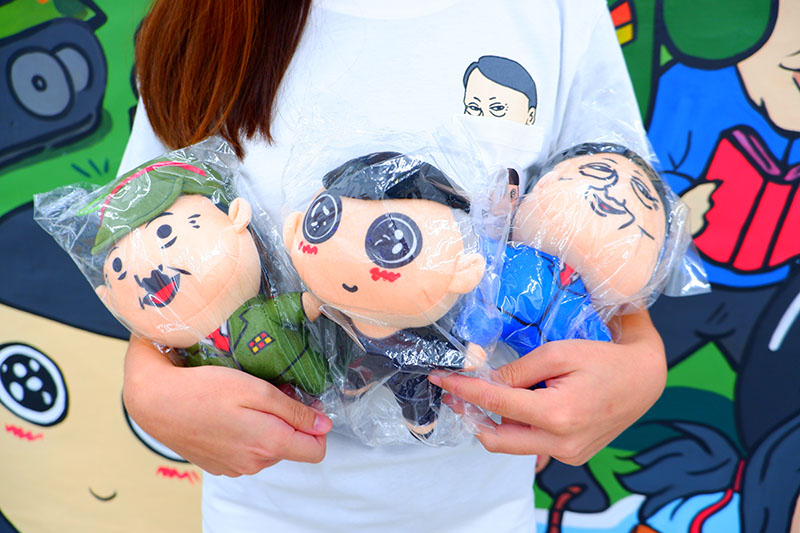
Rare Kai Maew merchandise is also available for fans: Character dolls sell for 300 baht, a canvas bag is 500 baht, and T-shirts go for 400 baht. Information about the exhibition and Kai Maew is available online in both Thai and English.

DSCF4193

“Khai Maew X: Kalaland” runs through Nov. 22 at Artist+Run gallery in Bangkok’s Yannawa district. The gallery is open 1pm to 6pm daily with an opening reception set for 6pm on Saturday. The gallery can be reached by taxi from BTS Chong Nonsi or a five-minute walk from BRT Thanon Chan. Entry is free.

DSCF4181 DSCF4188

DSCF4220
A gallery attendant holds wrapped Kai Maew dolls.

DSCF4213 DSCF4195DSCF4199 DSCF4200DSCF4202 DSCF4204 DSCF4205 DSCF4209DSCF4211DSCF4218

Related stories:

Elusive Satirist ‘Kai Maew’ to Host 1st Art Exhibit

Master of Thai Satire ‘Kai Maew’ Disappears (Updated)

Dangerously Funny Webcomic Satirizes Thai Politics

Advertisement

21 Nations Can Fly Into Thailand, Get Free Visa For Two Months

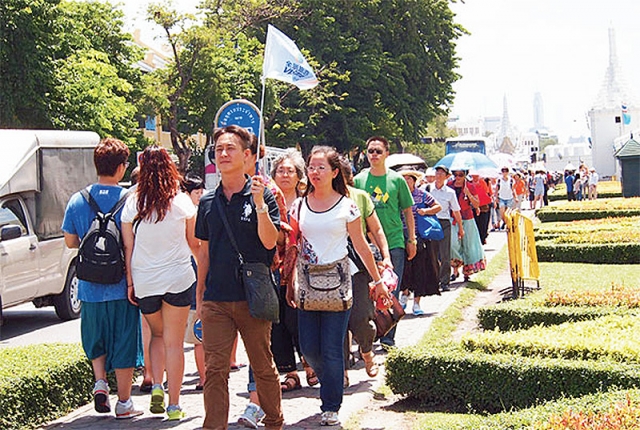
A file photo of Chinese tourists in front of the Grand Palace.

BANGKOK — Visitors from 21 nations including China won’t have to pay for visas on arrival for two months during the new year period, the interim cabinet agreed Tuesday.

Meant to attract more tourists, the 2,000-baht fee waiver will be in place Nov. 15 to Jan. 13, according to the Immigration Bureau. Government spokesman Puttipong Punnakanta said the number of tourists coming to Thailand has declined since 2016, and the measure is expected to boost arrivals by nearly a third.

“Waving the visa fee for tourists will cut the falling number of tourists, especially those of the Chinese, which have sharply dropped,” he said. “I believe it will attract tourists close to our target this year.”

Passports receiving the privilege? China, Taiwan, India, Maldives, Bhutan, Saudi Arabia, Andorra, Bulgaria, Cyprus, Ethiopia, Fiji, Kazakhstan, Uzbekistan, Latvia, Lithuania, Malta, Mauritius, Papua New Guinea, Romania, San Marino and Ukraine.

For the first time, arrivals from China are predicted to fall 10 percent this year. The tourism authority cited factors such as concerns over China’s domestic economy and events such as the July capsizing of a ferry off Phuket that killed 47 Chinese tourists.

In one of the latest embarrassing incidents, a Don Mueang Airport security guard was caught on camera assaulting a Chinese tourist. The airport security chief was transferred shortly after when he was accused of extorting bribes from Chinese travelers.

A number of measures have been launched to attract the largest source of foreign tourists, who altogether generated 561 billion baht of economic activity last year. They include special lanes for airport immigration queues and immigration police joining Chinese social media Sina Weibo as a confidence-building measure. The tourism minister also said double-entry visas for Chinese visitors were being considered.

Yuthasak Supasorn, tourism authority director, said the temporary waiver is expected to bring 1.65 million Chinese tourists during the two months, bringing the year-end total to 10.77 million to reach hoped-for growth of 8 percent this year.

He added that the department’s forecast of 7.1 million visitors during the two months would make for a total 38.4 million tourists this year, reaching their original annual forecast of 8 percent.

Update: After originally announcing the waiver would be in effect December to January, the Immigration Bureau now says it will run Nov. 15 to Jan. 13.

Advertisement

Two Redshirts With ‘Illegal’ Calendars Held on Army Base

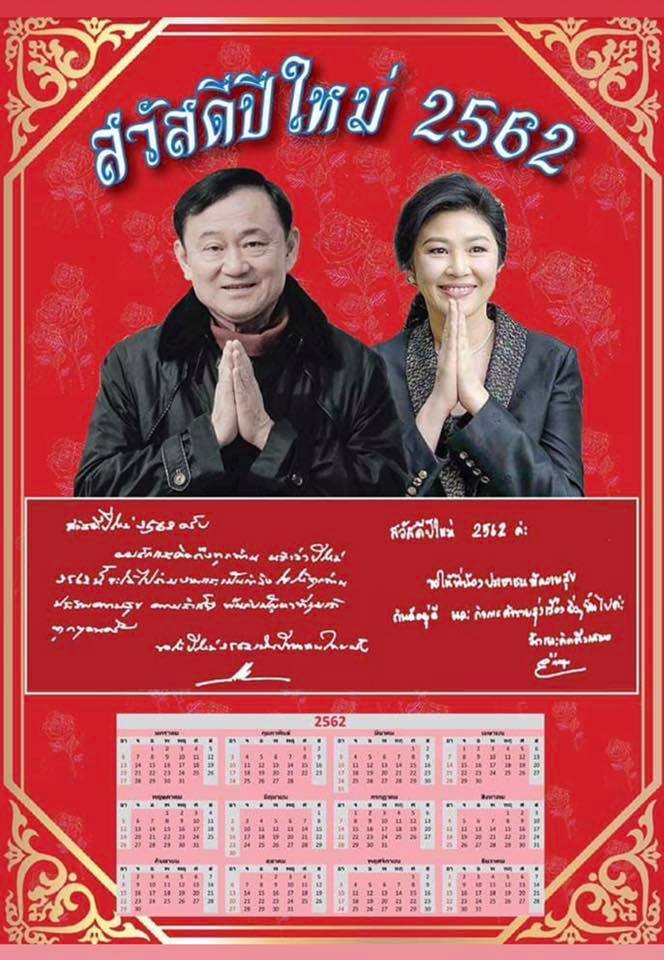
An image of a 2019 Thaksin-Yingluck calendar.

BANGKOK — Soldiers briefly detained and questioned two Redshirt activists about calendars showing faces of former leaders Thaksin and Yingluck Shinawatra, a local police chief said Thursday.

Pornpitak Chantadee and his wife Ratthawee Puiprom were taken to the 22nd Army Circle base in Ubon Ratchathani province after security forces discovered piles of the at their home there province, according to civil rights attorneys. Police said the calendars violate a publishing regulation requiring their source be clearly labeled.

“According to the Publishing Act, there must be clear information about publishers. Otherwise they are illegal pamphlets,” Col. Adithep Pichadul, chief of Warin Chamlap Police Station, said by phone. “Even wedding cards and ordination invitations say who they are from.”

Section 8 of the law says materials printed “in large volume” must clearly identify the publisher with contact information. Violators of the widely unenforced regulation face a fine of up to 10,000 baht.

The otherwise unremarkable single-sheet calendars have caused quite a stir among the authorities, leading a deputy police commissioner earlier this week to instruct police to see whether they violated any law.

45548043 1596710970430660 1033215315753828352 n

The one-page calendar bears photos of the two former leaders on a red background. One version shows them performing a wai. It also shows what appear to be handwritten New Year greetings from the two siblings.

“Sawasdee New Year’s 2019. I love and miss you all,” reads part of Thaksin’s message.

“I wish all the people happiness, good living and successful commerce,” Yingluck’s greeting says. Both messages include reproductions of their signatures.

Soldiers visited Pornpitak and Ratthawee at their residence Wednesday morning, a day after a search uncovered about 3,500 Thaksin-Yingluck calendars there, according to a report posted online by Thai Lawyers for Human Rights.

The pair was then brought to the base and interrogated about the calendars before they were later released. Ratthawee told the legal group that the military forbid them from using their phones or contacting their attorney.

Ratthawee, identified by the watchdogs as a longtime Redshirt activist, also said the soldiers instructed her and her husband not to mention their detention to the media.

Base commander Lt. Gen. Ath Singhatsathit could not be reached for comment. Adithep said the two Redshirts maintained they didn’t know who made the calendars.

“I think they knew,” the police colonel said. “Our intel also knows.”

He declined to identify the people responsible. When a reporter asked whether it was Pheu Thai Party, founded by Thaksin and later led by Yingluck, Adithep replied, “Everyone knows the answer to that. There is no mystery.”

While the pair has yet to be charged with any crime, investigators are planning to fine the calendar makers for violating the Publishing Act, Adithep added.

Advertisement

Boys-Only Club: Halls of Power Barred to Thai Women

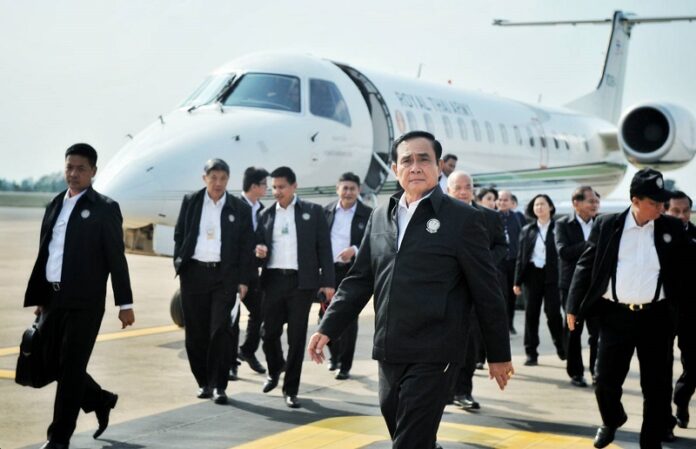
Prime Minister Prayuth Chan-ocha arrives Oct. 31, 2017, to Khon Kaen province with members of his cabinet to inspect flood damage.

BANGKOK — Ninety-five percent of all seats in the interim assembly are held by men, making Thai women the world’s 10th least represented in the world.

That ratio of women in power is the lowest in over a decade and a significant slide from the pre-coup level, when women accounted for nearly one in six representatives. With the first election in nearly five years looming, a group of female politicians debating the issue agreed changing that remains difficult due to society’s deep-running misogyny and patriarchy.

The eight women drawn from eight different parties discussed ways to achieve more inclusive national politics this week at an event organized in Bangkok by UN Women and the European Union. They took turns calling for more women to step up as they discussed the importance of increased political participation and the social conditions thwarting it.

“We have several social issues that need to be addressed. Having only men in the administration leaves women’s issues unsolved,” said former Olympic taekwondo fighter Yaowapa Boorapolchai of the Chart Pattana Party.

Only 5 percent of the interim parliament – 13 seats – belong to women, according to the Inter-Parliamentary Union, which ranked the kingdom’s female representation 184th of 194 nations. That puts it at the bottom of the barrel in ASEAN behind Myanmar, which ranked 161th with 10 percent representation.

We need more women in to change things, because men don’t understand why some issues need to be fixed.

Five months before the 2014 coup, Thailand ranked 87th, with women comprising 15.8 percent of the House of Representatives and 15.4 percent of the Senate.

Even with those higher ratios, Thailand was still among the lowest in the region, only ahead of Malaysia (112th) and Myanmar (129th). The highest was found in the Philippines (38th).

Women politicians speaking Tuesday blamed cultural values that sustain male dominance.

“I’ve been working in politics for six months, and I’ve already seen that gender inequality is real and severe,” said Future Forward Party spokeswoman Pannika Wanich. “The patriarchy places female politicians with less seniority or people from the LGBT community in a difficult position, having to work much harder to prove themselves.”

Women’s Place

Not that the situation of gender parity in power is much better worldwide.

UN statistics from 2017 showed 80 percent of the world’s representatives were men, with only 6 percent of the world’s governments led by women.

Power plays and the male-dominated political culture contribute to politics being perceived as a “scary space” for women to enter, said Alison Davidian of UN Women’s Asia Pacific office.

Despite all the Thai women panelists saying their parties are open-minded and fully support gender equality, they believe women are generally discouraged from working in politics, or even thinking about entering the field, because society expects them to stay in subordinate roles.

“Thai people have been taught that women’s roles are only domestic. Politics is seen as men’s business, which lessens the chance for women to work in this field,” said Pateemoh Pohitaedaoh of the Action Coalition for Thailand Party. “There is less space for women.”

It then creates hostility toward women who do defy those values and rise to dominant positions.

Veteran politician and former Labor Minister Ladawan Wongsriwong of the Pheu Thai Party, which seven years ago gave Thailand its first female prime minister, said women in high-ranking positions are often targeted and shamed sexually, which likely scares others away from following in their footsteps.

“They’re scared that their reputation will be tainted,” she said. “Society still defames them, discredits them using sexual matters. Women are taught to be timid and shy. … It builds up fear among them.”

Misogynistic rants were aired against former PM Yingluck Shinawatra routinely from protest stages at the height of the anti-government rallies that brought her government down. She was called a “stupid bitch” and “treasonous whore” by her opponents, language even employed in the mainstream media. She was severely reprimanded for appearing “flirty” while meeting US President Barack Obama in 2012.

Yingluck was also often branded as being only a “puppet” of her brother Thaksin Shinawatra. One of the most controversial figures in Thailand’s political history, Thaksin earned nicknames far less vile, such as “square face,” “fraud of the nation” and “the usurper.”

Future Forward’s Pannika said she has experienced discrimination firsthand of late while hitting the streets to recruit new party members.

“I’ve heard many things indicating that Thai society still looks down upon female Thai politicians,” she said. “When I finish introducing myself and the party, someone will thank me and say ‘I fully support such a pretty face like yours.’ They don’t think much about these words, but it reflects that women are still seen as sexual objects in this society.”

“Thai people keep attacking others using their sexuality, although it’s irrelevant to whether they’re a good politician or not,” she said.

Pateemoh of the ACT said the law also doesn’t give much value to gender equality and fails to support women who aspire to become politicians.

Ratchadaa Thanadirek, who represents the Democrat Party, said she is more troubled by the weak enforcement of the small number of laws and policies meant to address the issue.

“We already have the Gender Equality Act. We have the national plan supporting women’s development. But do these things genuinely bring about equality?” she said, citing the police academy’s recent announcement it will no longer accept female cadets.

“What’s the point of having these laws in place? Which agencies oversee the enforcement?” she said. “We need more women in to change things, because men don’t understand why some issues need to be fixed.”

At the same time, the former MP also said the main hurdle keeping women away from political careers is their own level of comfort and readiness.

“I think there’s no obstacle for women who really want to enter politics,” Ratchadaa said. “However, there are challenges. First is themselves. … Political careers bear a lot of risks. It depends on how ready they are to take those risks.”

Pheu Thai’s Ladawan voiced similar opinions, saying a supportive family and self-esteem are among the most important factors.

“If the family doesn’t allow them, then it’s over,” she said. “More importantly, they don’t believe in their own potentials.”

That viewpoint was shared by several others, including Natee Ratchakitprakan from the Bhumjaithai Party, who said there are always opportunities for women determined to enter politics, but they need to be “strong, convicted, patient and hardworking.”

Filling the Binders

So, with elections possibly less than four months away, what can be done to increase female participation?

The women discussed different solutions, but disagreed strongly on whether seats should be reserved for women.

Pannika and Ladawan said their parties, Future Forward and Pheu Thai, do not impose quotas as they don’t belong in democratic elections. Pannika specifically said her party doesn’t believe it’s the right way to solve the problem.

“It was discussed a lot in our party, but we finally agreed that a quota system is a short-term solution based on the wrong idea,” she said. “When there’s a quota, it means you already accept the inequality.”

The Democrats’ Ratchadaa and ACT’s Pateemoh said their parties adopted quota systems to ensure enough women enter the political pipeline.

“Finding female politicians is our party’s aspiration. If their qualifications are the same, the woman will be chosen immediately,” Ratchadaa said. “The constitution should require women representatives in each [locality].”

Pannika said both legal and social systems need change in order to bring more women into politics.

“Social awareness is needed to open up spaces for diversity, especially through education. It’s slow and difficult, but it’s the right solution,” she said. “We need laws that support women to leave home and work.”

Most importantly, Pannika thinks change will come when gender is removed from the equation and women politicians are just seen as politicians.

“When female politicians are no longer perceived as only women’s representatives, that’s when we will have true equality,” she said.


Advertisement

Asian Shares Rally on US Midterms, Soothing Fears of Shifts

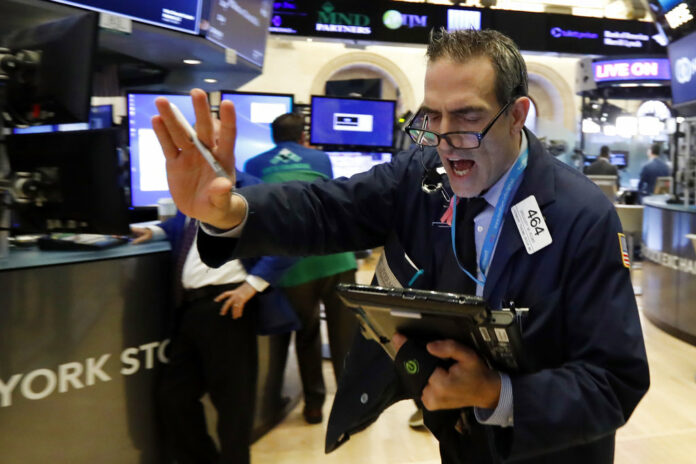
Trader Gregory Rowe works Nov. 7 on the floor of the New York Stock Exchange. Photo: Richard Drew / Associated Press

SINGAPORE — Asian markets rose on Thursday after the U.S. midterm elections went as expected, soothing fears of a sudden shift on trade and economic policies.


Keeping Score

Thailand’s set traded at 1,686.59 Thursday morning, a 0.7 percent increase. Japan’s benchmark Nikkei 225 rallied 1.9 percent to 22,509.10, even as machinery orders slid a record 18.3 percent in September from the previous month because of natural disasters. South Korea’s Kospi rose 1.4 percent to 2,107.90. Hong Kong’s Hang Seng added 0.7 percent to 26,331.35 and the Shanghai Composite was up 0.6 percent at 2,658.29. Australia’s S&P/ASX 200 edged 0.5 percent higher to 5,924.60. Shares were higher in Taiwan, Singapore and Indonesia but fell in the Philippines.


Wall Street

Asian investors took the lead from a rebound on Wall Street. Large technology and consumer companies rallied and three-quarters of the stocks on the New York Stock Exchange traded higher as results from the U.S. midterm elections streamed in. The S&P 500 index jumped 2.1 percent to 2,813.89, its highest level in four weeks. The Dow Jones Industrial Average was 2.1 percent higher at 26,180.30 and the Nasdaq composite advanced 2.6 percent to 7,570.75. The Russell 2000 index of smaller-company stocks added 1.7 percent to 1,582.16.


US Midterms

In line with most polls, the Democrats took control of the House of Representatives while the Republicans held on to a majority in the Senate. Traders were hopeful that a larger Democrat presence could act as a check on President Donald Trump, but it is unlikely to change his position on China, which which he is locked in an escalating trade dispute. Because the possibilities for compromise and big agenda items seem limited, politics is that much less likely to crowd out the performance of the strong U.S. economy.


Analyst’s Take

“The overwhelming boon to Wall Street overnight sets the stage for Asia markets to power ahead in the latest rebound,” Jingyi Pan of IG said in a market commentary. “Perhaps having grown wary of the results and reactions from the likes of Brexit and the 2016 U.S. Presidential elections, markets were seen for once playing according to script as the elimination of the midterms risks brought about newfound confidence in the equity space,” she added.


Energy

Benchmark U.S. crude oil gained 1 cent to USD$61.68 in electronic trading on the New York Mercantile Exchange. It fell 54 cents to $61.67 a barrel in New York. Brent crude fell 10 cents to $71.97. The contract dropped 6 cents to $72.07 in the previous session.


Currencies

The dollar rose to 113.66 yen from 113.57 yen late Wednesday. The euro strengthened to $1.1430 from $1.1426.

Story: Annabelle Liang

Advertisement

Vietnam, US Complete Cleanup of Toxic Chemical From Airport

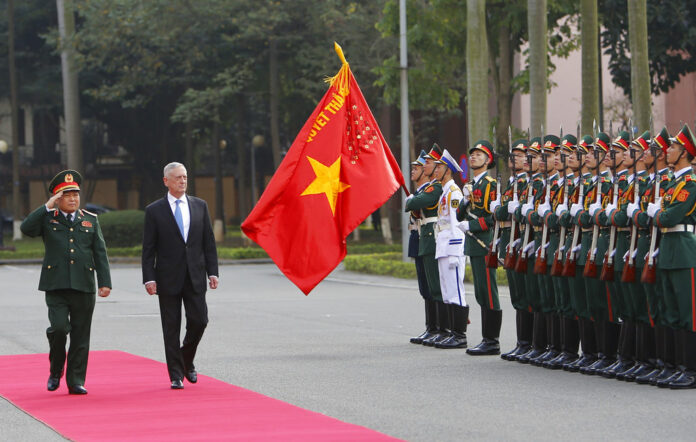
U.S. Defense Secretary Jim Mattis and his Vietnamese counterpart Ngo Xuan Lich, left, review an honor guard in January in Hanoi, Vietnam. Photo: Tran Van Minh / Associated Press

HANOI — Vietnam and the United States have finished the cleanup of dioxin contamination at Danang airport caused by the transport and storage of the herbicide Agent Orange during the Vietnam War.

The 30 hectares (74 acres) of land cleansed of the toxic chemical were handed over to Vietnam at a ceremony Wednesday where Vice Defense Minister Nguyen Chi Vinh praised the U.S. government’s involvement in the cleanup.

“It is proof that we are opening a future of good cooperation between the governments of Vietnam and the United States,” Vinh said. “Today marks the day that Danang airport is no longer known as a dioxin hotspot, the day that Danang people can be assured that their health will not be destroyed by chemicals left over from the war.”

Large amounts of Agent Orange, which contains dioxin, were stored at Danang airport during the war and sprayed by U.S. forces to defoliate the countryside and deny communist fighters jungle cover. Vietnamese still suffer from the effects of the spraying.

U.S. Ambassador Daniel Kritenbrink called the joint cleanup a significant milestone in the expanding partnership between the two countries.

“This project truly is a hallmark of our countries’ shared vision to be honest about the past, deal responsibly with remaining legacy issues and turn a point of contention into one of collaboration,” he said.

Kritenbrink said working together on the issues of the past “builds strategic trust and enables us to further strengthen our forward-looking partnership that advances shared interests and strong people-to-people ties.”

Between 1962 and 1971, the U.S. military sprayed roughly 11 million gallons of Agent Orange across large swaths of southern Vietnam. Dioxin stays in the soil and in the sediment at the bottom of lakes and rivers for generations. It can enter the food supply through the fat of fish and other animals.

Vietnam says as many as 4 million of its citizens were exposed to the herbicide and as many as 3 million have suffered illnesses caused by it – including the children of people who were exposed during the war.

The U.S. government says the actual number of people affected is much lower and that Vietnamese are too quick to blame Agent Orange for birth defects that can be caused by malnutrition or other factors.

Last month, U.S. Defense Secretary Jim Mattis visited Bien Hoa air base north of Ho Chi Minh City, the former Saigon, another dioxin hotspot.

The U.S. Agency for International Development will soon begin a soil restoration project at the base that is estimated to take several years and cost USD$390 million.

Advertisement

UN Rights Resolution Would Condemn Abuses Against Rohingyas

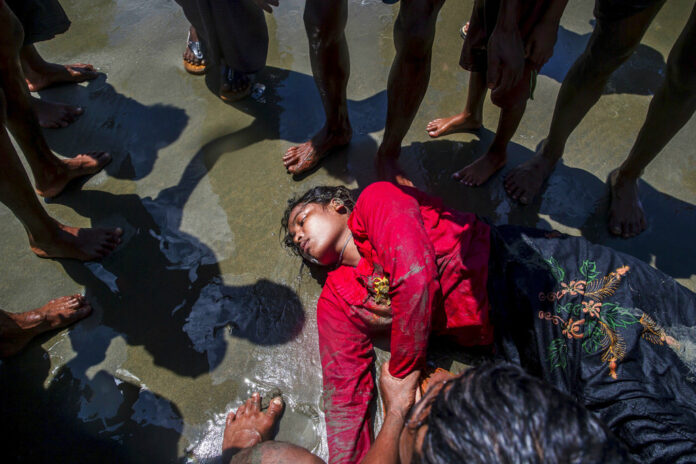
A Rohingya Muslim woman, who crossed over from Myanmar into Bangladesh, lies unconscious on the shore of the Bay of Bangal in 2017 after the boat she was traveling in capsized at Shah Porir Dwip, Bangladesh. Photo: Dar Yasin / Associated Press

UNITED NATIONS — A draft U.N. resolution would strongly condemn the continuing “gross human rights violations and abuses” against Rohingya Muslims and urgently call on Myanmar’s government to end discrimination and provide a path to citizenship for the embattled minority.

The draft resolution, sponsored by the 57-nation Organization of Islamic Cooperation, more than 25 European countries and Canada, was officially circulated Wednesday. The General Assembly’s human rights committee is expected to vote on the measure on Nov. 15.

The draft expresses deep concern that violence against the Rohingya has forced over 723,000 people to flee to Bangladesh since August 2017.

The Rohingya have long been treated as outsiders in Buddhist-majority Myanmar, even though their families have lived in the country for generations. Nearly all have been denied citizenship since 1982, effectively rendering them stateless, and they are also denied freedom of movement and other basic rights.

The latest crisis began with attacks by an underground Rohingya insurgent group on Myanmar security personnel in August 2017 in northern Rakhine State. Myanmar’s military responded with a brutal campaign and is accused of mass rape, killings and setting fire to thousands of homes.

The draft resolution reiterates “deep distress” at reports that unarmed Rohingyas are still being subjected to excessive use of force and rights violations by Myanmar’s military and security forces including killings and rapes. And it expresses “deep concern” at the continuing departure of the remaining Rohingya population as well as members of other minorities.

The proposed resolution expresses “grave concern” at the findings of the U.N. fact-finding mission on Myanmar, which concluded that some top Myanmar military leaders should be prosecuted for war crimes, crimes against humanity and genocide against the Rohingya.

It strongly condemns all rights abuses set out in the commission’s report and calls for “a full and independent investigation” of human rights abuses against the Rohingya and other minorities.

The draft notes Myanmar’s establishment of an independent commission to investigate alleged violations, but stresses that it must work “with independence, impartiality, transparency and objectivity in a credible way in line with international standards” — unlike its previous national investigations. And it encouraged the government commission “to seek support and expertise from the United Nations and the international community.”

The proposed resolution would also reiterate an urgent call on Myanmar’s government to take measures “to address the spread of discrimination and prejudice and to combat the incitement of hatred against Rohingya Muslims and other persons belonging to minorities, including Kachin and Shan.”

And the government should “expedite efforts to eliminate statelessness and the systematic and institutionalized discrimination against members of ethnic and religious minorities,” the draft says.

The draft resolution also addresses the military’s control over much of Myanmar’s government.

“To sustain the democratic transition of Myanmar by bringing all national institutions, including the military, under the democratically elected civilian government,” it says.

Advertisement

Boeing Plane Crashed in Indonesia After Key Sensor Replaced

Image: Dj's Aviation / YouTube

JAKARTA — A crucial sensor was replaced on a Lion Air jet the day before it plunged into the Java Sea, and that sensor replacement may have exacerbated other problems with the plane, Indonesian investigators said Wednesday.

That sensor, known as the “angle of attack” sensor, keeps track of the angle of the aircraft nose to help prevent the plane from stalling and diving.

Earlier this week, Indonesian officials hinted that airspeed indicators played a role in the deadly Oct. 29 crash that killed all 189 people on board.

Read: Boeing Warns 737 Max May Plunge Due to Error After Lion Air Crash

The jet’s airspeed indicator malfunctioned on its last four flights, and that problem was related to the sensor issue, said Soerjanto Tjahjono, chairman of Indonesia’s National Transportation Safety Committee, on Wednesday.

Lion Air’s first two attempts to address the airspeed indicator problem didn’t work, and for the Boeing 737 MAX 8 plane’s second-to-last flight on Oct. 28, the angle of attack sensors were replaced, Tjahjono said.

On the Oct. 28 flight, from Bali to Jakarta, the pilot’s and copilot’s sensors disagreed. The 2-month-old plane went into a sudden dive minutes after takeoff, which the pilots were able to recover from. They decided to fly on to Jakarta at a lower-than-normal altitude.

The next day, during the deadly crash, the plane hit the water at very high speed just 13 minutes after takeoff from Jakarta. Its flight crew had requested permission to return to the airport several minutes after taking off.

“The point is that after the AOA (sensor) is replaced, the problem is not solved but the problem might even increase. Is this fatal? NTSC (National Transportation Safety Committee) wants to explore this,” he said.

Even if an angle of attack sensor on a jet is faulty, there’s generally a backup system in place for the critical component, and pilots are trained to handle a plane safely if those sensors fail, airline safety experts said.

There are audio signals and physical warnings that can alert the pilot to malfunctioning equipment or other dangers, said Todd Curtis, director of the Airsafe.com Foundation.

“They should have been completely engaged in what was going on inside that cockpit, and any kind of warning that came up, they would have been wise to pay attention to it,” Curtis said.

Investigators are likely focused on how a single sensor’s failure resulted in a faulty command that didn’t take into account information from a second sensor, said John Cox, CEO of Safety Operating Systems.

“We don’t know what the crew knew and didn’t know yet,” Cox said. “We will.”

Boeing, which manufactured the Lion Air plane, issues safety-related bulletins, and had previously circulated instructions about what flight crews should do if sensors fail.

Indonesia’s National Transportation Safety Committee said it had agreed with Boeing on procedures that the airplane manufacturer should distribute globally on how flight crews can deal with “angle of attack” sensor problems.

But a Boeing statement said a safety bulletin, sent to airlines on Tuesday, directs flight crews to existing guidelines on how they should respond to erroneous “angle of attack” data. It wasn’t immediately clear if it plans an update, though comments from Indonesian officials indicate they expect one.

Indonesian investigators said their flight procedure recommendations to Boeing were based on how the flight crew responded to problems on the Bali-to-Jakarta flight.

“The draft of what will be conveyed by Boeing this morning has been presented to us,” said air accident investigator Nurcahyo Utomo.

“There are some things that we ask for explanation and some that we ask to be removed, and there has been an agreement between the NTSC and Boeing to release a new procedure to all Boeing 737 MAX users in the world,” he said.
Indonesia’s search and rescue agency on Wednesday extended the search effort for a second time, saying it will continue until Sunday. Body parts are still being recovered and searchers continue to hunt for the cockpit voice recorder.

The Lion Air crash is the worst airline disaster in Indonesia since 1997, when 234 people died on a Garuda flight near Medan. In December 2014, an AirAsia flight from Surabaya to Singapore plunged into the sea, killing all 162 on board.
Lion Air is one of Indonesia’s youngest airlines but has grown rapidly, flying to dozens of domestic and international destinations. It has been expanding aggressively in Southeast Asia, a fast-growing region of more than 600 million people.

Story: Niniek Karmini, Andi Jatmiko

Advertisement

Red Bull Drawn in Indonesian Cave Dated to 40,000 Years Ago

This composite image from the book
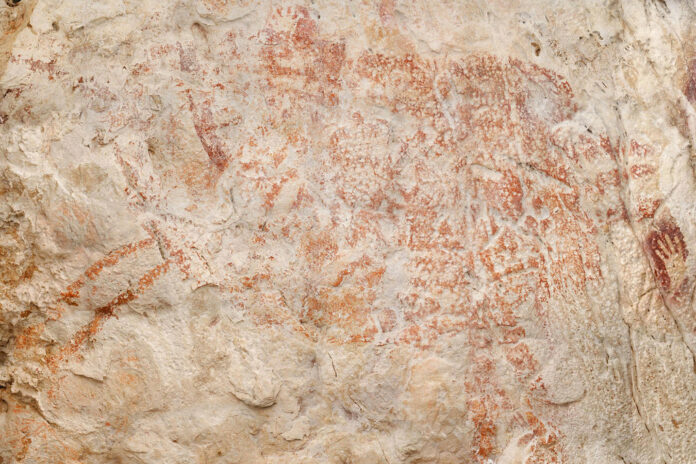
This composite image from the book "Borneo, Memory of the Caves" shows the world's oldest figurative artwork dated to a minimum of 40,000 years, in a limestone cave in the Indonesian part of the island of Borneo. Photo: Luc-Henri / Associated Press

WASHINGTON — Scientists have found the oldest known example of an animal drawing: a red silhouette of a bull-like beast on the wall of an Indonesian cave.

The sketch is at least 40,000 years old, slightly older than similar animal paintings found in famous caves in France and Spain. Until a few years ago, experts believed Europe was where our ancestors started drawing animals and other figures.

But the age of the drawing reported Wednesday in the journal Nature, along with previous discoveries in Southeast Asia, suggest that figurative drawing appeared in both continents about the same time.

The new findings fuel discussions about whether historical or evolutionary events prompted this near-simultaneous “burst of human creativity,” said lead author Maxime Aubert, an archaeologist and geochemist at Griffith University in Australia.

The remote limestones caves on Borneo have been known to contain prehistoric drawings since the 1990s. To reach them, Aubert and his team used machetes to hack through thick jungle in a verdant corner of the island.

Strapping on miners’ helmets to illuminate the darkness, they walked and crawled through miles of caves decorated with hundreds of ancient designs, looking for artwork that could be dated. They needed to find specific mineral deposits on the drawings to determine their age with technology that measures decay of the element uranium.

“Most of the paintings we actually can’t sample,” said Aubert.

Aubert and his fellow researchers reported in 2014 on cave art from the neighboring Indonesian island of Sulawesi. They dated hand stencils, created by blowing red dye through a tube to capture the outline of a hand pressed against rock, to almost 40,000 years ago.

Now, with the Borneo cave art, the scientists are able to construct a rough timeline of how art developed in the area. In addition to the bull, which is about 5 feet (1.5 meters) wide, they dated red- and purple-colored hand stencils and cave paintings of human scenes.

After large animal drawings and stencils, “It seems the focus shifted to showing the human world,” Aubert said.

Around 14,000 years ago, the cave-dwellers began to regularly sketch human figures doing things like dancing and hunting, often wearing large headdresses. A similar transition in rock art subjects happened in the caves of Europe.

“That’s very cool, from a human point of view,” said Peter Veth, an archaeologist at the University of Western Australia, who was not involved in the study. “People adopted similar strategies in different environments as they became more modern.”

The island of Borneo was still connected to mainland Southeast Asia when the first figurative drawings were made about 40,000 years ago – which is also about the time that the first modern humans arrived in Europe. The earliest drawings of animals in the French cave of Chauvet have been dated to about 33,500 to 37,000 years ago.

Whether new waves of people migrating from Africa brought the skills of figurative cave painting with them, or whether these arts emerged later, remains unclear. Scientists have only a partial record of global rock art. The earliest cave etchings have been found in Africa and include abstract designs, like crosshatches, dating to around 73,000 years ago.

The next stage of research in Indonesia will include excavations to learn more about the people who made these paintings. A few sites have already been identified, containing human bones, prehistoric jewelry and remains of small animals.

As for the red bull, its meaning remains a mystery.

“We think it wasn’t just food for them – it meant something special,” said Aubert.

Story: Christina Larson

Advertisement

Hot News

LATEST NEWS

Bangkok
overcast clouds
26.1 ° C
26.1 °
22.7 °
93 %
1.9kmh
100 %
Fri
25 °
Sat
33 °
Sun
35 °
Mon
37 °
Tue
37 °