36.1 C
Bangkok
Saturday, June 27, 2026
Home Blog Page 1823

Elusive Satirist ‘Kai Maew’ to Host 1st Art Exhibit

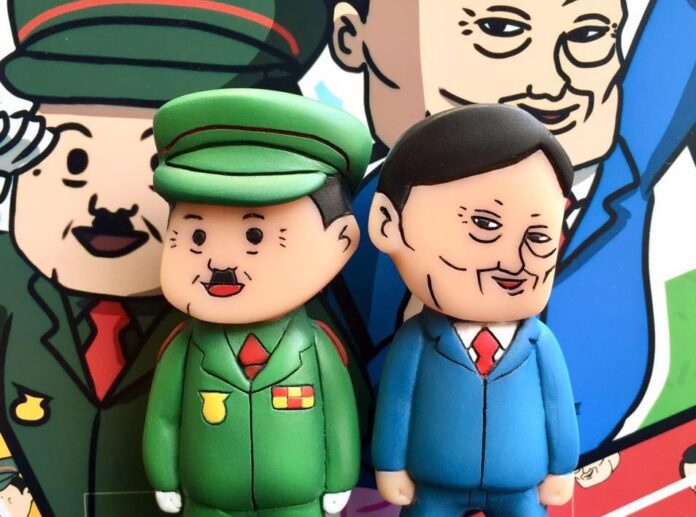
Image: KaiMaew / Facebook

BANGKOK — An online cartoonist famed for his adorable characters lampooning Thai politics will have his works displayed in public for the first time at an artspace next month.

A curator said the event will celebrate his prolific works as an artist who touches on various subjects that made the news.

“Kai Maew has been publishing his works for years now, so it’s time we compile his works for a display,” Lalita Hanwong said in an interview. “Many of his works don’t only reflect politics, but they also involve social and economic issues.”

She added that the event would include exclusive content. However, the author himself will likely be absent.

“I don’t think he would come,” Lalita said. “He’s cautious.”

Despite the huge popularity of his webcomics, Kai Maew’s identity remains an elusive subject. In an interview with Khaosod English a year ago, the author would only say he’s a man in his 30s.

His characters mirror real figures in the circus of Thai politics and current events, from “General” and his sidekick spokesman to a square-face man who seems to be hiding in nearly every national controversy.   

Considering the political nature of Kai Maew’s works, security officers are surely expected to pay a visit, Lalita said, though she believes the event itself won’t be forced to cancel.

“If we organize it in the name of art, it should be okay,” she said. “Kai Maew’s works are also open to many ways of interpretation.”

“Khai Maew X: Kalaland” will run 1pm to 6pm from Nov. 7 through Nov. 22 at Artist+Run gallery in Yannawa district. An opening night is set for 6pm on Nov. 10. The gallery can be reached from BTS Chong Nonsi and BRT Thanon Chan. Entry is free.

Advertisement

Prayuth Now Officially on Facebook, Twitter, Instagram

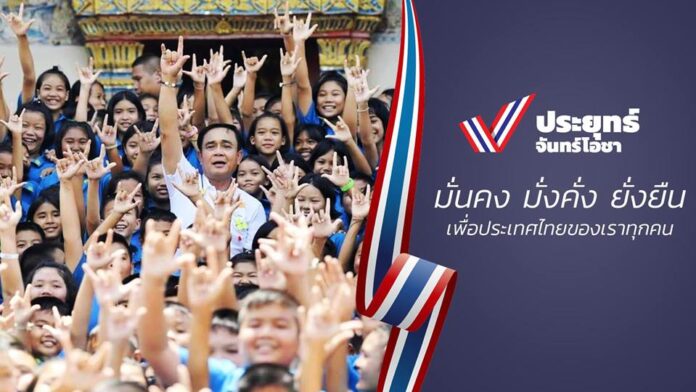
Gen. Prayuth Chan-ocha’s official Facebook cover page.

BANGKOK — Gen. Prayuth Chan-ocha is now officially on Facebook, Twitter and Instagram, a junta deputy secretary said Sunday.

Prayuth’s Deputy Secretary-General Puttipong Punnakan said the accounts are directly overseen by the junta leader.

“The prime minister wants to connect to citizens in a simple, relaxed way that’s not too stressful,” he said. “He wants to communicate with citizens up-close without issuing statements that are too formal, but wants to show that he cares.”

The social media blasts are what critics consider yet another form of campaigning for elections slated for Feb. 24. In the past few months, he’s visited various provinces, chatted with people on the BTS, exercised in Lumpini Park, met with AKB48 girl group, posted slogans used by Thaksin Shinawatra – and on Friday even told a Tokyo audience to stand up and stretch.

Though parties aren’t allowed to campaign for the elections until mid-December, some have criticized the government for allowing pro-junta politicians – who are reportedly convincing MPs to join the pro-junta Palang Pracharat party – off the hook. Just last week, three of Prayuth’s ministers joined the pro-junta party.

Read: Rivals Left Fuming as Serving Ministers Join Pro-Junta Party

Puttipong said social media posts would be only once or twice a week.

“The page will publicize his work and more relaxed sides and lifestyle that people may not have seen before,” Puttipong said.

Although Prayuth did open a Facebook page in August 2017, posts in his new page will be written by himself. The page is also linked to an Instagram and Twitter page and a website. The first post on the new Prayut Chan-o-cha Facebook page came Sunday night.

“Since most of us communicate through Facebook regularly, I decided to open my personal account to communicate my policies and the government’s work, as well as give helpful information,” it reads. “If you have suggestions, want to exchange opinions or need me to fix any problems, you can write to me here.”

The page, which by Monday had garnered more than 47,000 likes, shows a photo of Prayuth holding an “I Love You” sign with a crowd of children, along with a logo of a checkmark in Thai flag colors.

“Prayuth Chan-ocha. Stable, prosperous, enduring for our Thailand,” reads the accompanying slogan.

Prayuth’s official website is the sleekly-designed PrayutChan-o-cha.com. There’s an interactive timeline feature about the general’s life, galleries of Prayuth stock photos and even a poll about what policies people would like to see enacted.

The English version of the website is under construction.

His official Instagram and Twitter accounts are also set up.

“Hello to my beloved citizens on the Twitterverse. You can tweet to me and exchange opinions about social problems. I also have a website at prayutchan-o-cha.com so click to see it when you have time,” His first tweet read Monday morning.

“Please stay for a long time, Uncle Tuu,” Facebook user Pimchanok Pornsukjantra wrote on his page, referring to his nickname. “I promise to be a good student, and to grow up to be a good citizen who doesn’t cheat others.”

Of course, social media is a double-edged sword, and though some posted words of encouragement, there was also scathing criticism.

“Don’t cheat on the elections. If you’re going to take advantage of other parties this much, why don’t you just make yourself the winner? If you’re going to be shameless, go all the way and make your mark in Thai history,” Facebook user Akgnit Peacharat wrote on Prayuth’s Facebook post.

Related stories:

Thais React as Prayuth Tells Tokyo Forum to Stretch ‘Japanese Style’

Prayuth Exercises With Park Goers, Denies Campaigning

For First Time, Prayuth Confirms ‘Interest’ in Politics

Army Borrows Thaksin Slogan to Promote Prayuth

Prayuth Goes Full Otaku in Meeting With Japan’s AKB48

Thailand’s Politicians Will Have About 2 Months to Campaign. Will They Be Ready?

Watching Prayuth and ‘Three Friends’ Campaign No Fun for Others

Pro-Junta Party Confident It Will Lead Next Govt

Advertisement

Chiang Mai Busker Arrested for Showing Penis to Tourists

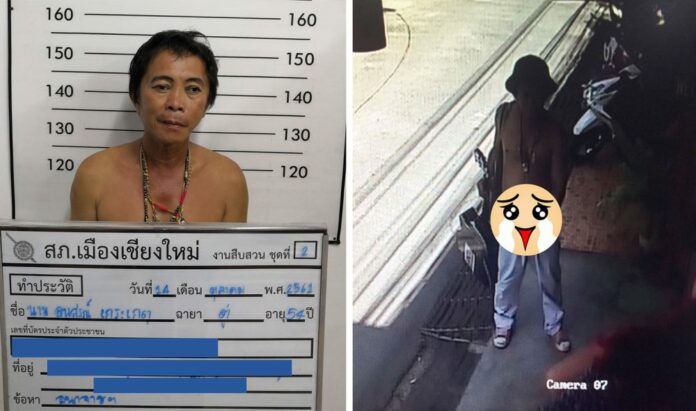
Photos of Anusorn Peraket released by Chiang Mai police. Some details have been censored.

CHIANG MAI — Police arrested a street musician accused of exposing himself to multiple foreign tourists in Chiang Mai town center, an investigator said Monday.

Anusorn Keraket, 54, was apprehended after police received complaints that he showed his genitals to many Thai and foreign tourists, Maj. Arnon Cherdchutrakulthong of Chiang Mai City Police told reporters.

Arnon said CCTV footage caught Anusorn during one of his acts, prompting police to track him down and arrest him. He was charged with indecent exposure.

Advertisement

Mattis Trip to Vietnam Aimed at Countering China’s Influence

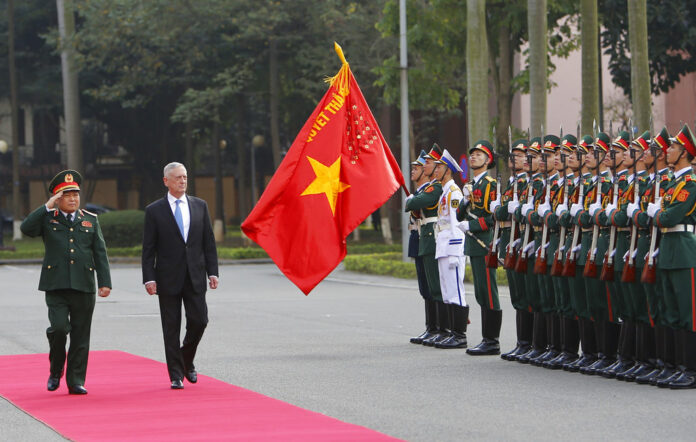
U.S. Defense Secretary Jim Mattis and his Vietnamese counterpart Ngo Xuan Lich, left, review an honor guard in January in Hanoi, Vietnam. Photo: Tran Van Minh / Associated Press

WASHINGTON — By making a rare second trip this year to Vietnam, Defense Secretary Jim Mattis is signaling how intensively the Trump administration is trying to counter China’s military assertiveness by cozying up to smaller nations in the region that share American wariness about Chinese intentions.

The visit beginning Tuesday also shows how far U.S.-Vietnamese relations have advanced since the tumultuous years of the Vietnam War.

Mattis, a retired general who entered the Marine Corps during Vietnam but did not serve there, visited Hanoi in January. By coincidence, that stop came just days before the 50th anniversary of the Tet Offensive in 1968. Tet was a turning point when North Vietnamese fighters attacked an array of key objectives in the South, surprising Washington and feeding anti-war sentiment even though the North’s offensive turned out to be a tactical military failure.

Three months after the Mattis visit, an U.S. Navy aircraft carrier, the USS Carl Vinson, made a port call at Da Nang. It was the first such visit since the war and a reminder to China that the U.S. is intent on strengthening partnerships in the region as a counterweight to China’s growing military might.

The most vivid expression of Chinese assertiveness is its transformation of contested islets and other features in the South China Sea into strategic military outposts. The Trump administration has sharply criticized China for deploying surface-to-air missiles and other weapons on some of these outposts. In June, Mattis said the placement of these weapons is “tied directly to military use for the purposes of intimidation and coercion.”

This time Mattis is visiting Ho Chi Minh City, Vietnam’s most populous city and its economic center. Known as Saigon during the period before the communists took over the Republic of South Vietnam in 1975, the city was renamed for the man who led the Vietnamese nationalist movement.

Mattis also plans to visit a Vietnamese air base, Bien Hoa, a major air station for American forces during the war, and meet with the defense minister, Ngo Xuan Lich.

The visit comes amid a leadership transition after the death in September of Vietnam’s president, Tran Dai Quang. Earlier this month, Vietnam’s ruling Communist Party nominated its general secretary, Nguyen Phu Trong, for the additional post of president. He is expected to be approved by the National Assembly.

Although Vietnam has become a common destination for American secretaries of defense, two visits in one year is unusual, and Ho Chi Minh City is rarely on the itinerary. The last Pentagon chief to visit Ho Chi Minh City was William Cohen in the year 2000; he was the first U.S. defense secretary to visit Vietnam since the war. Formal diplomatic relations were restored in 1995 and the U.S. lifted its war-era arms embargo in 2016.

The Mattis trip originally was to include a visit to Beijing, but that stop was canceled amid rising tensions over trade and defense issues. China recently rejected a request for a Hong Kong port visit by an American warship, and last summer Mattis disinvited China from a major maritime exercise in the Pacific. China in September scrapped a Pentagon visit by its navy chief and demanded that Washington cancel an arms sale to Taiwan.

These tensions have served to accentuate the potential for a stronger U.S. partnership with Vietnam.

Josh Kurlantzick, a senior fellow and Asia specialist at the Council on Foreign Relations, said in an interview that Vietnam in recent years has shifted from a foreign and defense policy that carefully balanced relations with China and the United States to one that shades in the direction of Washington.

“I do see Vietnam very much aligned with some of Trump’s policies,” he said, referring to what the administration calls its “free and open Indo-Pacific strategy.” It emphasizes ensuring all countries in the region are free from coercion and keeping sea lanes, especially the contested South China Sea, open for international trade.

“Vietnam, leaving aside Singapore, is the country the most skeptical of China’s Southeast Asia policy and makes the most natural partner for the U.S.,” Kurlantzick said.

Vietnam’s proximity to the South China Sea makes it an important player in disputes with China over territorial claims to islets, shoals and other small land formations in the sea. Vietnam also fought a border war with China in 1979.

Traditionally wary of its huge northern neighbor, Vietnam shares China’s system of single-party rule. Vietnam has increasingly cracked down on dissidents and corruption, with scores of high-ranking officials and executives jailed since 2016 on Trong’s watch.

Sweeping economic changes over the past 30 years have opened Vietnam to foreign investment and trade, and made it one of fastest growing economies in Southeast Asia. But the Communist Party tolerates no challenge to its one-party rule. Even so, the Trump administration has made a focused effort to draw closer to Vietnam.

When he left Hanoi in January, Mattis said his visit made clear that Americans and Vietnamese have shared interests that in some cases predate the dark period of the Vietnam War.

“Neither of us liked being colonized,” he said.

Story: Robert Burns

Advertisement

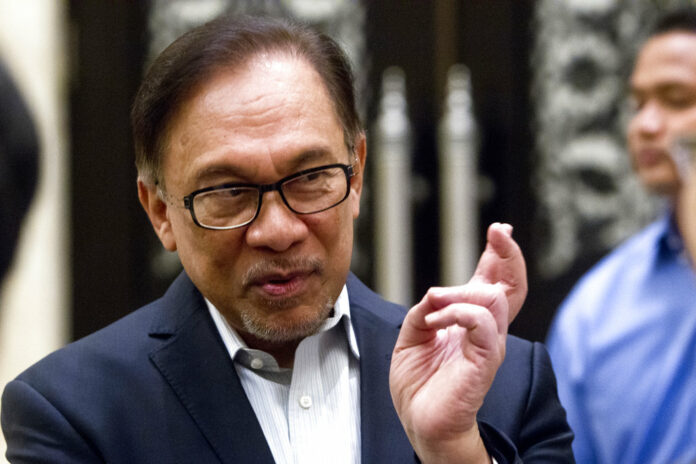
Malaysian PM-in-Waiting Anwar Takes Oath as Lawmaker

Malaysian politician Anwar Ibrahim speaks before a court hearing at Federal Court in September in Putrajaya, Malaysia. Photo: Yam G-Jun / Associated Press

KUALA LUMPUR — Malaysian Prime Minister-in-waiting Anwar Ibrahim has taken his oath as a lawmaker, marking his return to active politics three years after he was imprisoned for sodomy in a charge critics said was politically motivated.

The swearing-in ceremony in parliament Monday followed Anwar’s huge win in a by-election Saturday in the southern coastal town of Port Dickson. The seat was vacated after a lawmaker from his party quit to pave the way for Anwar’s political comeback.

Anwar, 71, was designated as successor to Prime Minister Mahathir Mohamad after the two men set aside a bitter feud and united to capture a stunning victory in May’s general election. Anwar was freed and received a royal pardon days after the polls. Mahathir has said he expects to step down in two years.

Advertisement

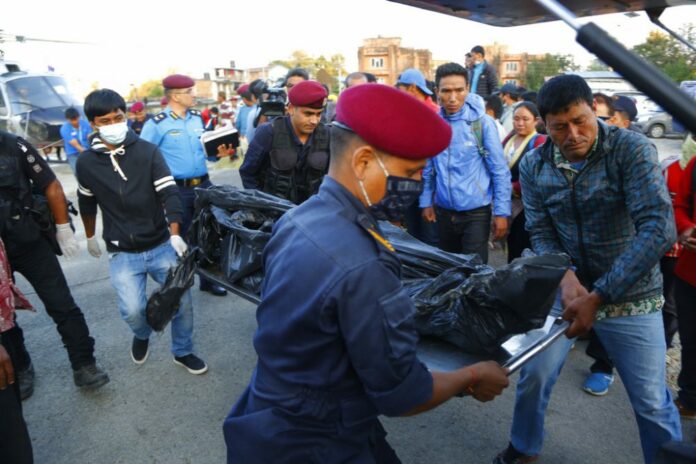
Bodies of 5 South Koreans, 4 Nepalese Retrieved From Mountain

Officials on Sunday unload the bodies after a helicopter carrying bodies of those killed in Gurja Himal mountain arrives at the Teaching hospital in Kathmandu, Nepal. Photo: Niranjan Shrestha / Associated Press

KATHMANDU — The nine climbers who died during a storm on a Nepal mountain included the first South Korean to summit all 14 Himalayan peaks over 8,000 meters without using supplemental oxygen.

Seoul’s Foreign Ministry confirmed on Monday that Kim Chang-ho was among the dead but has not yet disclosed the names of the four other South Koreans. Four Nepalese guides also were killed when a storm swept the climbers’ base camp on Gurja Himal mountain Friday.

Rescuers had retrieved the climbers’ bodies on Sunday after weather cleared. The body of one of the guides was taken to his village, while the eight others were flown to Kathmandu.

Grieving family members gathered at the Tribhuvan University Teaching Hospital in Nepal’s capital where the bodies were to be autopsied before being handed to their families.

The South Korean ministry told reporters strong winds during the storm blew the victims from their base camp off a steep cliff on Friday. Word of the destruction got out Saturday morning, and helicopters were sent. They were not able to land due to the continuing bad weather but spotted the bodies, which were retrieved Sunday.

The climbers were attempting to scale the 7,193-meter (23,590-foot) peak during the autumn climbing season. Spring and autumn are the optimal climbing seasons in Nepal in between the harsh winter and summer monsoon.
The Himalayan mountain range includes all 14 of the world’s peaks that rise above 8,000 meters, and only a few dozen climbers have made verified, successful ascents of them all.
Kim achieved his feat in 2013.

Advertisement

20-Year National Strategy Plan Comes Into Effect

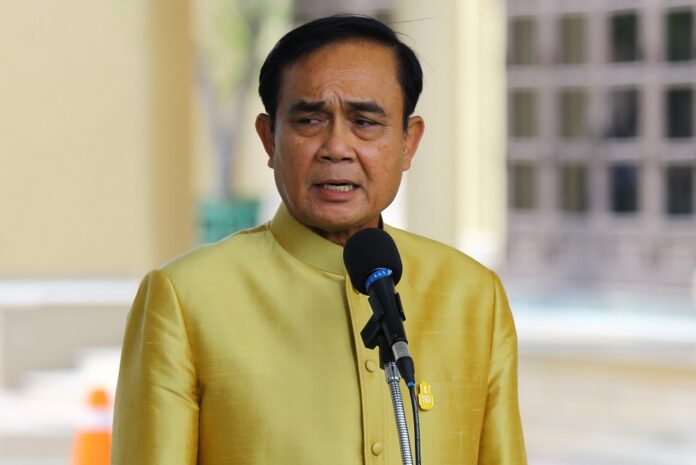
Junta chairman Gen. Prayuth Chan-ocha in September in Bangkok.

BANGKOK — The junta’s 20-year National Strategy was announced with immediate effect Saturday on the Royal Gazette.

It requires that governments between 2018 to 2038 adhere to strategies detailed by a committee appointed by junta leader Gen. Prayuth Chan-ocha.

The plan covers six areas, namely national security, national competitiveness, human resources development, social equality, quality of life and the environment and development of state administrative systems.

Critics have said the plan is a tool to prolong the power of the military junta – which staged a coup in 2014 – for 20 more years.

“This junta strategy will restrict life for the next 20 years. The plan was drafted by a handful of people,” iLaw, a law-reform advocacy group, wrote on its Facebook page Saturday shortly after the plan came into effect.

The group added that the plan would come in handy if a pro-junta government emerged after the promised February elections.

“If the next government is not from the junta, then the strategy committee members can use the national strategy plan to control the government,” it said.

Advertisement

New Directive Bans Expulsion of Pregnant Students

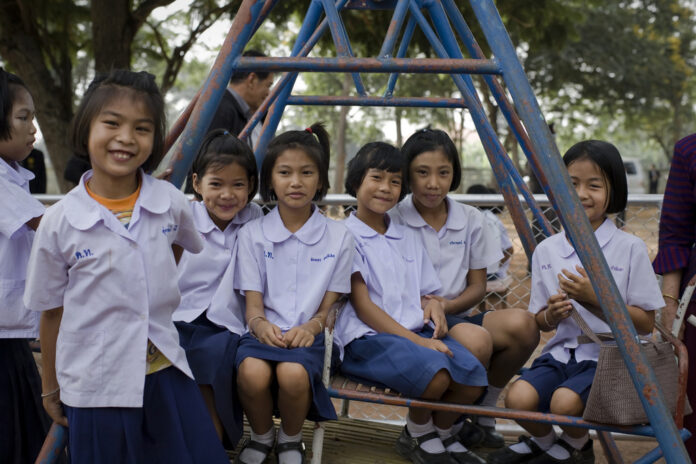
Primary students at a Ratchaburi school in a February 2011 file photo. Photo: Office of the Prime Minister.

BANGKOK – A new ministerial directive was announced Friday banning the expulsion of pregnant students and allowing them pregnancy leave.

The directive, announced Friday on the Royal Gazette – covers all schools, colleges and universities in the kingdom.

The new education ministry directive requires that all educational institutions provide support for pregnant students by offering them flexible education programs and counselling.

Pregnant students may also be allowed to transfer to another institution if it suits them.

Until the new regulation passed Friday, schools would commonly expect pregnant students to drop out, with some even being expelled.

The new directive also includes providing sex education to prevent pregnancy among students.

Advertisement

The Thai General Elections: A Catch 22

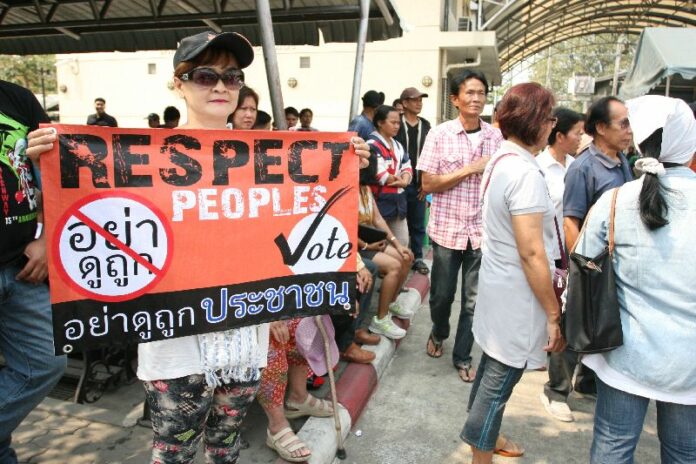
A pro-election demonstrator holds up a sign in 2014 at a polling station in Bangkok.

Re•tention: Pravit Rojanaphruk

The much anticipated general elections – slated for February are generating considerable relief, but also doubt about how free and fair they may be.

To what extent can they be considered free and fair? When do they become bogus elections?

If elections turn out to be bogus, then what do we do? If they’re unfair, will people boycott them or reject the results?

Thailand is caught in a Catch 22 scenario because rejecting increasingly unfair elections could mean the military junta would simply stay in power longer – unless there’s a popular uprising that ousts it.

The other option – accepting the election results if they turn out to be massively unfair – could be tantamount to laundering the junta’s illegitimate power under the guise of a new elected government.

To begin with, election rules have been set by men and women who have been appointed by junta leader Gen. Prayuth Chan-ocha.

The most obvious unfair competition starts with a senate wholly appointed by the junta, 250 senators for the first five years, that would play a crucial role in deciding who becomes the next prime minister.

Having 250 out of 750 parliamentarians means the pro-junta faction only needs 126 out of 500 MPs to secure a majority and reinstall Prayuth at the helm.

Then there’s also the redrawing of constituencies in such a way that parties dominant in the northeast and Bangkok will have less MPs. The northeast is the bastion of the Pheu Thai party and will see 10 fewer MPs, while Bangkok – a stronghold of the Democrat Party – will have three MPs less.

New political parties are also struggling under the junta’s rules.

On Wednesday, the new Election Commission – approved by the junta-appointed rubber-stamp National Legislative Assembly – informed Future Forward party that it needs to seek permission from the military junta before accepting public donations.

This came after the party boasted of having raised baht 20 million in one day on Oct. 6 when it accepted membership registrations for the first time. It is unclear what will happen to the 20 million – whether they will have to return the money or be penalized – but the commission insists this is in accordance to the law.

But whose laws are we talking about? It’s the junta’s law and the continued ban on political activity imposed four years ago after it staged a coup in May 2014.

With just four months to go before the promised Feb. 24 polls, it makes no sense for political parties to be banned from raising public funds.

The commission’s interpretation of the junta’s ban on political activity makes us wonder if it’s more concerned about organizing free and fair elections or stumping the development of political parties and electoral democracy in Thailand.

With these twisted rules, some may feel tempted to call this elections bogus outright. But again, Thais who are so fed up of direct military rule feel desperate enough that the prospect of unfair elections will do.

They still hope there will be a miracle and that somehow the junta will be out of the political scene by early next year.

Talking about desperation in Juntaland Thailand.

Advertisement

Rain Saves Svitolina in Hong Kong QFs, Luksika Out

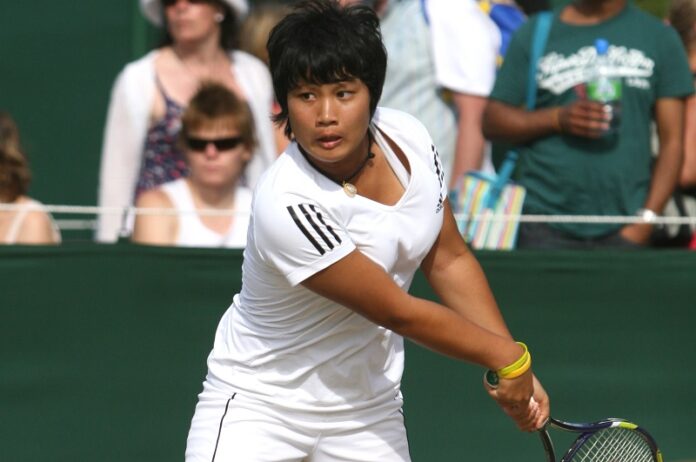
Luksika Kumkhum in the first round girls doubles at Wimbledon in 2010 in London, England. Photo: Rowland Goodman / Wikimedia Commons

HONG KONG — Top-seeded Elina Svitolina of the Ukraine was close to bowing out of the Hong Kong Open when rain disrupted the quarterfinals on Friday.

Sixth-seeded Wang Qiang of China was leading Svitolina 6-2, 5-2, and serving at 15-30, when their match was suspended until Saturday.

Svitolina entered this week as one of five players still in contention to earn a place in the eight-player WTA Finals in Singapore.

Even if she ends up losing the quarterfinal to Wang, she could still possibly land a berth in the WTA Finals. In order to do that, she would need to play the Moscow tournament next week. She’s currently not entered, but could request a main draw wild card.

Fourth-seed Garbine Muguruza is into her first semifinal since the French Open in June after beating Luksika Kumkhum of Thailand 6-2, 7-5.

Muguruza has played seven tournaments since the French Open and this marks the first time she’s strung together three match wins. She’s yet to drop a set this week en route to the semifinals.

Zhang Shuai of China knocked out seventh-seed Daria Gavrilova of Australia 6-1, 6-3. Gavrilova was a finalist in Hong Kong last year.

Zhang will play 18-year-old Dayana Yastremska of Ukraine in the semifinals. Yastremska got past Kristina Kucova of Slovakia 7-6 (6), 6-2.

Advertisement

Hot News

LATEST NEWS

Bangkok
overcast clouds
36.1 ° C
36.6 °
35 °
61 %
3.6kmh
100 %
Sat
37 °
Sun
36 °
Mon
35 °
Tue
33 °
Wed
32 °