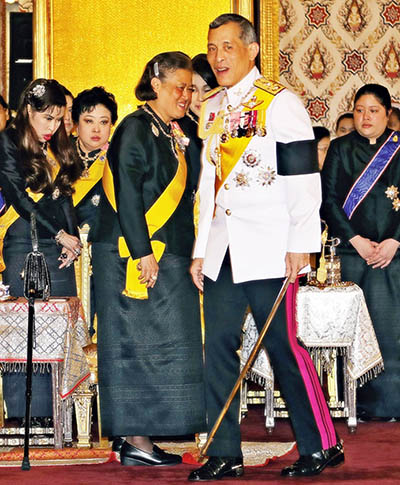
Bauru's volleyball player Tiffany Abreu celebrates her team's victory at the end of a Brazilian volleyball league match Tuesday in Bauru, Brazil. Photo: Andre Penner / Associated Press
BAURU, Brazil — While playing in men’s professional volleyball leagues in Europe, heavy-hitting Brazilian player Tiffany Abreu accumulated dozens of trophies.
But she says that among her most important accolades was being named most valuable player for a match with a countryside team Tuesday night as rain leaked from the roof in a half empty gymnasium.
“I had two of those (MVP) awards playing in the men’s league. But this is a special one,” Abreu told The Associated Press in an interview after the match. “I didn’t even know until recently that I could play volleyball again.”
Abreu, 33, is the first transgender athlete in Brazil’s Superliga, the country’s top women’s volleyball tournament. She is sure to turn heads in Brazil, Latin America’s most populous nation that has often struggled to curb violence against gay and transgender people.
Abreu’s first game as a starter Tuesday was a strong effort: she had 25 points for Volei Bauru in its 3-sets-to-1 victory over Pinheiros.
Abreu played in men’s leagues in Brazil, Portugal, France, Indonesia, Spain, France, Holland and Belgium. In 2012, the volleyball player decided to stop her career and become a woman.
In Italy, She went through hormonal treatment to control the levels of testosterone in her blood stream, had sex reassignment surgery and changed all her previous identification to her new name.
Soon after, she was informed she could play again.
“I took every needed step after my agent said I could play women’s volleyball. He knows the rules and said other transsexual athletes play in smaller leagues. So I decided to come back,” she said. “I am obeying the rules, it is not as if I could just say I am a transsexual athlete and want to play.”
After her transition process was finished, Abreu got authorization from the International Volleyball Federation in 2017 to play in women’s teams.
In January 2016 the International Olympic Committee (IOC) decided that “transgender athletes should be allowed to compete in the Olympics and other international events without undergoing sex reassignment surgery.”
“It is necessary to ensure insofar as possible that trans athletes are not excluded from the opportunity to participate in sporting competition,” the IOC document says.
Earlier this year, Abreu played for a second division team in Italy. While she found support, she also said she felt pressure from heavy criticism, from fans and even teammates. She decided to return to Brazil to be closer to her family, who live in the rural state of Goias.
“Sometimes my mom still calls me Rodrigo,” Abreu said in a TV interview. “I never had to break it to my mom, I just said I was starting my transition. She loves me just as much as before.” Abreu has never met her father.
Abreu trained for months at the 2,000-seat stadium in Bauru, a conservative stronghold about 200 miles (340 kilometers) northwest of Sao Paulo. Earlier this month, she signed a contract with Volei Bauru, a team that ended the first half of the season in 9th place among 12 competitors. The top eight make it to the playoffs next year.
Abreu hopes veteran Brazil coach Jose Roberto Guimaraes takes her to the Tokyo Olympics.
“I know he is watching all of us, I want to be prepared if that opportunity presents itself,” she said.
Guimaraes told newspaper Estado de S.Paulo he doesn’t see a reason why Abreu could not be on his team — provided she earns a spot.
“Tiffany is legally apt to play in the Superliga, I don’t see any problem in calling her (to play for Brazil),” the three-time Olympic champion coach said.
She would likely receive resistance, from volleyball fans and players alike. Former Brazil player and Olympic medalist Ana Paula Henkel says Abreu should not play among women.
“It is not a matter of prejudice, it is physiology,” she said on twitter. “Most players don’t think it is fair for transsexuals to play against women. And it is not. (Abreu’s) body was built with testosterone all life long.”
Volei Bauru coach Fernando Bonatto believes Abreu is a brave woman who does not have special advantages.
“I met her much before when she played with the men,” said Bonatto. “She was much stronger then. Her power has gone down a lot because of her transition.”
Fan Mariana Florenzani, 24, says Abreu deserves to play among women.
“Yes, she is stronger than her adversaries,” said Florenzani. “But her mobility is much reduced, she is not as quick and that evens things out.”
“I think we can’t fight intolerance being intolerant,” she added.
Abreu says she shrugs off criticism and promises to keep working hard to develop as a female player.
“I say to other transgender athletes that they need to work hard because as long as their harmonization is correct, the rules are on their side,” said Abreu. “They have the right to be happy, too.”
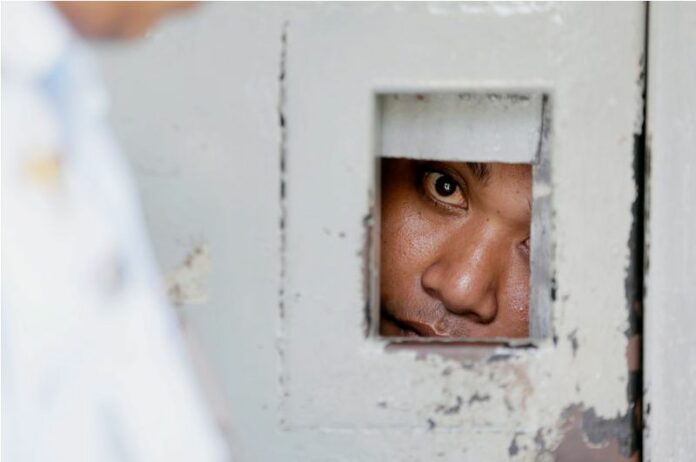
A prison guard looks through the front gate of Kerobokan prison, where death-row prisoners Australian Myuran Sukumaran and Andrew Chan were jailed in 2015 in Bali, Indonesia. EPA/MADE NAGI
BALI, Indonesia— An American man who was recaptured after escaping from an overcrowded prison on the Indonesian resort island of Bali said Wednesday he fled because of extortion by other inmates.
Christian Beasley escaped with compatriot Paul Anthony Hoffman during heavy rain on Dec. 10 from the Kerobokan penitentiary in Bali’s provincial capital by sawing through a ceiling and then climbing over a 6-meter (20-foot) -high wall behind the prison.
Hoffman, 57, from New York, who has been serving a 20-month sentence since July for robbery, was captured while trying to escape, while Beasley managed to flee and hired a motorbike driver to take him to Ubud, where he hid in a bush near a museum until midnight.
He then rode in a car to Padang Bay, a ferry port where he hired a speedboat to take him to Lombok. The 32-year-old Californian was recaptured on Saturday in an alley near a Lombok beach.
Beasley was arrested in August while allegedly trying to pick up a package containing 5.7 grams of hashish. He stood trial and the verdict was due last Tuesday, a day after his escape.
He said he has a license to use marijuana for medical reasons, but Indonesian authorities wanted him sentenced to four years or more in jail.
Appearing at a news conference Wednesday at the Badung Police station, Beasley said he was told by other inmates to pay USD $370 for security but he could not afford it and was punched in the stomach.
“They threatened me to pay protection money, that was why I left,” said Beasley, whose legs were cuffed.
“I need help, I really need help … Please help me, please help me. In my country (it) is not a crime use ganja (marijuana),” he shouted to journalists while being taken back into the jail by police.
Bali police detective Made Pramasetia said Beasley had planned to travel to East Timor before police discovered he was in Lombok through emails he sent to his mother and girlfriend.
Jailbreaks are common in Indonesia, where prisons are overcrowded with people convicted of drug crimes as part of the government’s anti-drug crusade.
Beasley’s escape was the second in Bali since June, when four foreign inmates fled through a drainage tunnel.
Two of them, Bulgarian Dimitar Nikolov Iliev and Indian Sayed Mohammed Said, were recaptured in East Timor days later and were returned to Bali. Two others, Shaun Edward Davidson of Australia and Tee Koko King bin Tee Kim Sai of Malaysia, are still at large.
Five luxury watches have been spotted on the arm of junta deputy leader Prawit Wongsuwan.
BANGKOK — An online watchdog on Wednesday spotted what looks like a fifth pricey watch on deputy junta chairman Prawit Wongsuwan’s wrist.
The discovery was made on CSI LA, a popular Facebook page that crowd-sources amateur investigations, even as the general continues to stay mum about how he acquired his multi-million baht collection of timepieces – their combined value would add up to at least 10.2 million baht – and why none of them were declared in a mandatory assets report.
“Here’s another one: Audemars Piguet Royal Oak Chronograph Automatic Blue Dial,” CSI LA wrote. “The retail price is 24,300 USD.”
An Audemars Piguet boutique at CentralEmbassy sells the watch for 613,100 baht, making it possibly the least spendy watch spotted.
Others have price tags starting at up to 3.6 million baht.
CSI LA said Prawit found it in a Matichon video of Prawit speaking at a news conference back in April.
The scandal and daily drip-drip revelations of more luxury watches have attracted widespread ridicule online.
“He’s already ‘takin’ it easy.’ From millions of baht, now it’s down to hundreds of thousands,” joked user Sanisha Net Kwanmuang, in a mocking reference to junta chairman Prayuth Chan-ocha’s demand that the media to “take it easy” on his deputy.
SURIN — A Dutch national was in police custody Wednesday on allegations he murdered his ex-girlfriend’s mother and brother in Surin province.
Rene Meeuwisser allegedly stabbed the two in a fit of jealous rage after he could not find his former partner at her family home Monday, according to the investigating officer. He said Meeuwisser denied culpability and refused to answer questions.
“There is only one possible motive for the murders,” Chetsucha Kraikaewchotiat of Sawai Police Station said. “They used to date.”
Police said the Thai woman, whose name was not released, recently broke up with Meeuwisser and cut contact with him. The Dutchman then went to her home on Monday but could not locate her, Lt. Col. Chetsucha said. An argument broke out, and police said that’s when Meeuwisser stabbed his ex’s mother and brother to death.
Officers found Meeuwisser at the hospital where he was being treated for what appeared to be deep cut wounds on his left arm, Chetsucha said, adding that the suspect blamed the injury on a motorcycle accident.
“But the wounds don’t look like it,” the lieutenant colonel said. “We have more than 90 percent of evidence tying him to the crime. Now we are waiting for DNA results. Once it’s out, it will be 100 percent.”
Meeuwisser remains hospitalized for his wounds and under police watch, he said.
Junta chairman Prayuth Chan-ocha poses for a photo Jan. 26 during his trip to Surat Thani province.
BANGKOK — Three proposals are the moving pieces which may decide how the next election plays out, who goes into it at an advantage and ultimately could allow the junta to maintain its hold on power.
The maybes in play include establishing a proxy party to represent the junta, disbanding existing political parties and allowing candidates can run as independents without any party affiliation.
All of this is making waves as familiar and controversial figures like Suthep Thaugsuban, who nominally “retired” from politics after leading the movement that paved the way for the 2014 coup, take positions in the fray.
Here’s a breakdown of the three.
Military Party
If 250 votes from junta-appointed senators aren’t enough to tip the balance in favor of re-appointing Gen. Prayuth Chan-ocha to be prime minister of a post-election government, it’s best to have the help of a real political party.
Speculation the junta and its backers are planning to roll out a new party to further their interests persists despite repeated denials and evasions by lead regime figures – most recently by Gen. Prayuth Chan-ocha on Tuesday.
Paiboon Nititawan, a former senator and member of the defunct junta-appointed National Reform Council, announced back in August 2016 that he intended to set up a new political party supporting people such as Prayuth.
Suthep Thuagsubhan, former leader of the People’s Committee for Absolute Democracy with the King as Head of State, or PCAD, has dove back in despite vowing to leave politics for good after the 2014 military coup he played an instrumental role in provoking.
Now Suthep is behind a proposal to disband all existing political parties. On Friday, he’s set to speak to the junta-appointed legislature about the need to change the law.
To build a political vehicle for itself, the junta would need a proper political platform including seasoned politicians with proven track records of delivering votes and MPs.
But that effort is unlikely to be limited only to the Paiboons of the world. It may require poaching former MPs from the Democrat Party, where once all-powerful Secretary General Suthep has long been a kingmaker.
One possible key executive in a new party could be Somsak Thepsuthin, the former head of the defunct Matchima Party (Neutral Democrat Party) who went on to hold posts as a member of the Pheu Thai Party.
Despite once being detained for a junta “attitude adjustment” session – during which he stayed well-supplied with expensive food and wine to share with other detainees and the military commanders – the influential former Sukhothai rep left Pheu Thai and recently changed his tune.
He announced Monday he was available to be recruited. Incidentally, Prayuth and his military cabinet – which has been touring the nation – will happen to be in Somsak’s Sukhothai political stronghold on Christmas Day.
Deputy Prime Minister Somkid Jatusripitak – who has a strong and enduring relationship with politicians who served former premier Thaksin Shinawatra – has been the object of speculation of heading a military proxy party. Both Somsak and Somkid have been evasive on their futures.
Somkid noted Monday that he’s over 60, suggesting he may be too old for the post, a fact which hasn’t stopped 63-year-old Prayuth, his 72-year-old deputy Prawit Wongsuwan – or speculation that Somkid would be perfect for the job.
Political commentator Chamnarn Chanruang told Khaosod English’s sister publication Matichon that Somkid is a suitable choice because he is a civilian specialized economic matters. Chamarn added that we will have to wait and see how the economy under the junta performs in the months leading to the election slated for November.
Chamnarn added that there may be more than one pro-junta or proxy party established, just in case one or two fails to be a ballot box magnet.
Party’s Over
Although Democrat Party leader Abhisit Vejjajiva said Monday that it’s okay to form a political party that supports the military, the same cannot be said about his views on rewriting elections law to disband existing parties, as his former right-hand man Suthep has resurfaced to call for.
Both Abhisit, his party and their archrivals in Pheu Thai – who were ousted in the 2014 coup – have cried foul, seeking explanations and assurances.
According to Paiboon, who is a major advocate of the move, amending the law to force all political parties to disband and register again before the election would level the playing field for newly registered parties.
The proposal has been criticized by the two major political forces as a bid to undermine their strength, particularly the Democrat Party, which claims 2.8 million members.
The party rightly fears it would be unable to reconstitute and re-register that many people in a short span of time – from whenever the junta lifts its ban hammer from politics until Election Day.
It would also be competing for members with every other party new and old trying to lure people to sign on.
Maybe this is fair. Or, maybe it is unfair for parties which have invested years – seven decades for the Democrats – to get where they are.
Going Party-Free
The third proposal – arguably the wildest – seeks to amend laws governing political parties to exempt MPs from any party membership to run as independents. Those with long memories see this taking Thai politics back to pre-1974.
Backers say such a move would free MPs from the party hegemony that dictates which way they vote. Critics say this is no liberation, as unshackling MPs from their parties would simply open them and their votes up to the highest bidder. Even weaker parties would result.
Although the media has initially linked the idea to Paiboon, the former senator disassociated himself from it Monday, saying he is not the one pushing for the move.
None of these outcomes are set, but for now, the genie seems to be out of the junta’s lamp and these factors will continue to drive the debate and speculation being put to regime leaders and pundits on a daily basis for the weeks and months to come.
Pro-democracy activists on Tuesday filed a legal challenge to the court to have the junta’s ban on political activities overturned
BANGKOK — Only newly formed political parties will be able to engage in political activities under a Tuesday order approved by the ruling junta.
The partial exemption would allow newcomer parties – such as one aligned with the military – to register and meet, whereas existing parties could not. A Democrat Party spokesman Wednesday slammed the uneven approach for benefiting new parties, especially any formed to support the current regime.
“The government must be careful not to favor newly established parties,” Ramet Rattanachaweng said in an interview. “A democracy must come with equality … I think this is not equal.”
He also urged the military to come clean whether it is forming proxy parties to run in the next election on its behalf.
“There are rumors that the military is setting up parties. The military should have courage and clarify which parties it is setting up for the election,” Remet said. “They should declare their intention to the public.”
Since seizing power in the 2014 coup, the junta has outlawed all protests and political activity. Due to the ban, political parties cannot hold executive meetings, vote on policies or recruit new members, despite an election slated to take place in less than a year.
Speaking Tuesday, junta chairman Prayuth Chan-ocha said he would use the absolute power granted to him by the new constitution to exempt newly formed parties from the ban he put in place over three years ago. He will use the same provision to amend election law to extend the deadline for political parties to submit their membership lists.
A government spokesman later said the move does not lift the politics ban.
Ramet said Prayuth should have amended the law via parliament instead of circumventing the legislative process with his absolute power.
“The law was already clearly defined and settled. It was approved by the legislative branch,” the Democrat said. “Such laws must be amended in parliament.”
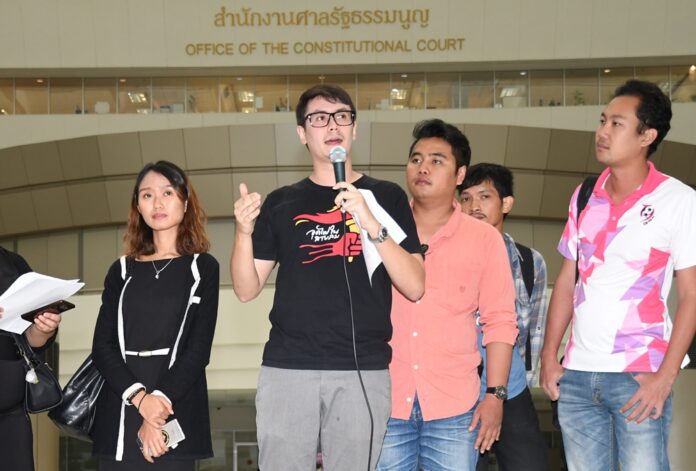
A group of activists on Tuesday filed a legal challenge to the court to have the junta’s ban overturned. The group, led by pro-democracy campaigner Rangsiman Rome, said the ban violates constitutionally guaranteed civil liberties.
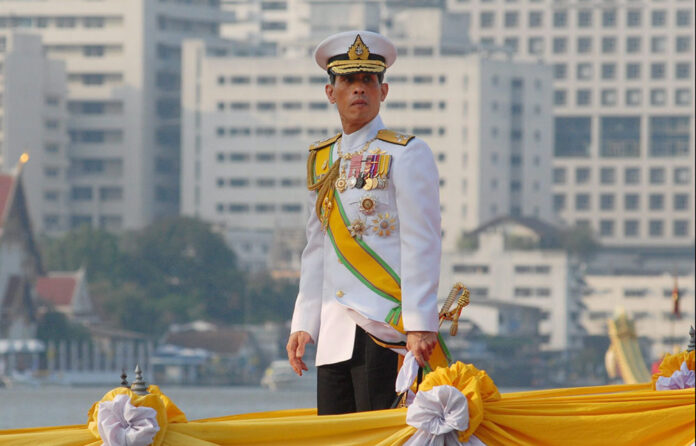
King Vajiralongkorn, 65, ruled Thailand for all of 2017. It was the first time in over seven decades that Thais have lived under a monarch other than King Bhumibol, who died in October 2016 at 88.
As the royally designated heir, Crown Prince Vajiralongkorn assumed the throne after his father’s death in December following a nearly two month interregnum. He is commonly known as King Rama X, the 10th ruler of the Chakri dynasty.
Although he has not been formally crowned – an elaborate coronation is expected to take place next year – King Vajiralongkorn has already made his presence known and reshaped some of Thailand’s institutions.
Under King Rama X, palace affairs have also been centralized, with the monarch assuming direct control over state agencies related to the palace, including the gigantic Crown Property Bureau, the largest landowner in the country.
Political scientist Pitch Pongsawat said King Rama X’s first year has been notable for his interest in solving the bloody insurgency in the three southern provinces, as seen in the number of development initiatives and projects he’s established.
In fact, just a week after Rama X assumed kingship in December 2016, he made his first trip outside Bangkok as king to the Deep South region.
“I think His Majesty gives more importance to the Deep South than Bangkok society does,” said Pitch, who teaches at Chulalongkorn University.
Veera Somkwamkid, a transparency activist who has campaigned politically on a pro-palace platform, said the most apparent change brought about by the new king is increased discipline in the armed forces.
“Since he ascended the throne, we can see that discipline in the military has become more strict,” Veera said.
And His Majesty appears to be more prone to intervention than his predecessor. In January, the king ordered the government to change portions of the new constitution regarding royal power, even though there were no existing legal mechanisms for doing so.
To solve the dilemma, the interim parliament had to retroactively amend a clause that would allow the king’s wishes to be satisfied.
In a sign that his influence will likely extend to the armed forces as well, the king introduced a new form of salute and stricter haircut to the military and police. A new police uniform color has been implemented per his royal wishes.
With an election looming in 2018, political observers are also anticipating what role, if any, King Vajiralongkorn will play in shaping the civilian government set to replace the junta after more than four years in power.
Pitch, the Chulalongkorn lecturer, said it’s a “challenge” for King Rama X to assume kingship at a time of transition marred by decade-long political conflicts that broke out during his father’s final years.
“We have to overcome it together,” he said. “It’s an important mission for His Majesty that he must be part of an institution to bring the country back to democracy.”
Other figures defined 2017 as well, including a big-hearted rockstar, a community that made life more delicious and an activist who society – and justice – all but forgot.
Toon Bodyslam
Artiwara “Toon” Kongmalai first rose to fame as the frontman of pop rock band Bodyslam just after the turn of the millenium. But he’s even more famous now for his feet.
His name dominated news coverage in the final weeks of the year because he embarked on a 2,191-kilometer charity run from the southernmost tip of Thailand to its northernmost point to raise funds for 11 public hospitals.
He’s become an inspiration for many – even a Messiah-like figure for some – but questions remain as to his motives.
His team denied he received a single baht from his main sponsor, Nike, even though its logo has been plastered all over the campaign. A Nike press officer also blocked reporters from asking Artiwara whether he had any political ambition.
Craft Beer Brewers
If 2016 was the year the craft beer movement made its name as underground guerillas, 2017 was the year they go overground and evolve.
Throughout the year, craft beer bars have been popping up on many streets and sois, like Bad Taste Cafe in Lad Prao area, DogStep on Sukhumvit 50, Yolo on Phra Atit Road and Dok Kaew House Bar on Rama VI Road. Novel drinks like Nonthaburi Mead and “beer cocktails” were also introduced this year.
Even longtime lager brewer like Boonrawd is eyeing the market, with reports that it’s slated to launch its own weizen next year.
Pai Dao Din
Image: New Democracy Movement / Facebook
A day little noted, Dec. 3 marked a full year in prison for activist Jatupat Boonpattaraksa, aka Pai Dao Din. His crime consisted of posting a link to a BBC Thai biography of King Vajiralongkorn to Facebook which the authorities deemed offensive.
He sat in jail for months, denied bail and missing his final university year before being found guilty of royal defamation in August. He was sentenced to two and a half years in jail.
The 26 year old, who eventually completed his law degree behind bars, had first campaigned on land rights and environmental issues before the May 2014 coup prompted him to take up the pro-democracy cause. His supporters and a number of rights agencies such as Amnesty International, spent 2017 campaigning for his release. Jatupat’s name has become synonymous with increasingly severe punishment under the lese majeste law.
Story by Teeranai Charuvastra
Correction: An earlier version of this article stated King Vajiralongkorn’s age as 66. He’s 65. We regret the error.
It’s been an anxious year. Turning on the internet has meant numbing threats of thermonuclear war, heartbreaking mass murders, global political instability and no end to stories of the abuse and injustice experienced by women.
But the internet also delivered moments of delight. From animated politicos working up a sweat to bizarre soi stunts, there were moments of joy that could only have come from Thai netizens. So thank you, Thainet, and please keep it up for 2018.
Have you seen the Attitude Adjusters or Article 44s in action? After Gen. Prayuth dictated mandatory Wednesday workout sessions for government employees, he really got into his role as exerciser-in-chief, with the media providing blow-by-blow coverage of the action.
Facebook user Ui Ratchasit Ketkeaw dives into a flooded Bangkok street Tuesday.
Bangkok got a small taste in May of the flood misery which devastated much of the nation this year. Where most city folk saw inconvenience and hazard, one resident saw an Olympic-sized opportunity.
Abdulhakim Kasing risks rapid floodwaters to deliver his take on the situation on the ground in Narathiwat province. Image: Abdulhakim Kasing / Facebook
Maybe it was the sheer scope of the flooding that made people just lose it a little. Down south in Narathiwat, an intrepid Facebooker found a way to turn the murk into mirth by filming a parody video of a disaster news report that went viral.
This head-bobbing pigeon from Syd Weiler’s Trash Doves Facebook sticker set has gone viral in Thailand since its Feb. 1 release.
Remember the purple bird sticker spamming every comment thread? Still see it, head-banging with abandon?
In February, the Thai net became obsessed with a Facebook sticker drawn by an American artist of a purple pigeon, particularly one in which it thrashes its head. Was the bird in agony or ecstasy?
Under all the tubes and chutes and ladders, the foundations of the internet are built on cat – cute cats, specifically. For World Cat Day on Aug. 8, Thai netizens built upon that foundation with adorable pics of their own fur-friends.
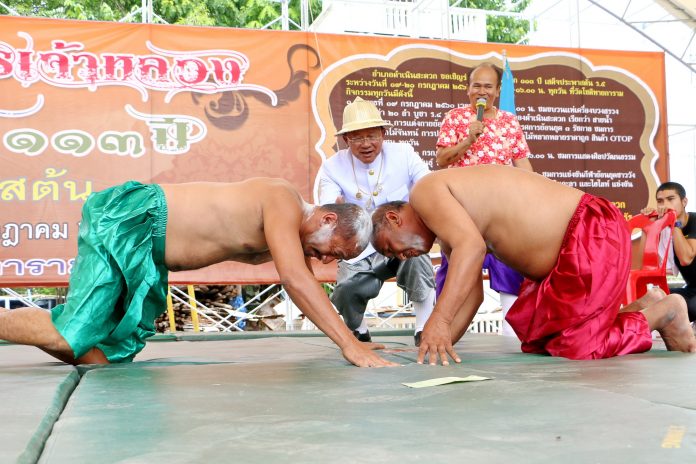
Mid-July in Ratchaburi province, things get hot. Hot enough for it to be a totally normal thing for bald men to powder their egg-tops and wrestle for the glory of being named “Mr. Baldy of Damnoen Saduak.” The annual wrestling match lends a fun splash of provincial color.
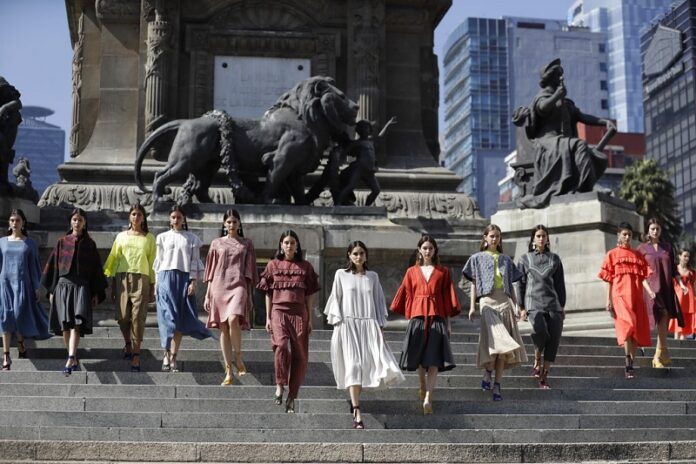
Models displays creations by Mexican fashion house Yakampot during a fashion show at the Angel of Independence monument, in November in Mexico City. Mexico City has been designated a World Design Capital for 2018 by the International Council of Societies of Industrial Design. Photo: Rebecca Blackwell / Associated Press
NEW YORK — From Malta to Minneapolis, here’s a look at some destinations around the world that will be making news in 2018. They include designated culture capitals, places hosting sporting events and even a couple of cities – San Antonio, Texas, and New Orleans – celebrating their 300th birthdays.
Sport
Minneapolis hosts the Super Bowl on Feb. 4 in Minneapolis. The city is encouraging visitors to embrace winter with 10 days of “Bold North” events and activities leading up to the big game. On the other side of the world, the snowy mountains of Pyeongchang, South Korea, host the Winter Olympic Games, Feb. 9-25.
Eleven cities in Russia – including Moscow and Sochi – host the FIFA World Cup, June 14-July 15. The dates coincide with St. Petersburg’s “white nights,” the summer solstice season when city skies never get completely dark. FIFA reports strong ticket sales from the United States even though the U.S. national team failed to qualify for the games. Host cities include lesser-known gems like Nizhny Novgorod and Kazan, while Yekaterinburg is a good jumping-off point for an adventure in Siberia.
Tricentennials
Two American cities mark tri-centennials in 2018. San Antonio plans a commemoration week in May, a “Summer of Spain” marketplace highlighting Spanish food, art and culture, Day of the Dead events Oct. 29-30 and a Witte Museum exhibition about the city’s frontier history under the flags of many countries. The exhibit will include the keys to the Alamo and Davy Crockett’s fiddle.
In New Orleans, tricentennial events include the Prospect.4 art exhibition, which is already underway; a blow-out Mardi Gras, Feb. 13, with the Krewe of Rex procession themed on New Orleans’ history; various spring festivals; Luna Fete next December; and a New Orleans Museum of Art exhibition showcasing works by Raphael, Titian, Rembrandt and others from the Duke of Orleans’ collection.
Culture and Design Capitals
Despite the recent car bomb murder of an investigative journalist in Malta, the island is on many “where to go” lists for 2018. Its capital, Valletta, is one of Europe’s 2018 capitals of culture and a UNESCO World Heritage Site with 7,000 years of history. Attractions include festivals, nightlife, ancient stone architecture, a rollicking Carnival in February and other festivals, plus World War II history, including scuba diving to wartime wrecks.
The other European capital of culture for 2018 is Leeuwarden in the Netherlands’ province of Friesland. Cultural extravaganzas include an Aug. 31-Sept. 1 event expanding an annual marathon across 23 villages with music, art, theater and unusual pop-up hotels.
Mexico City has been designated the sixth World Design Capital and the first city in the Americas to receive the title. It’s being recognized for sustainable design-led initiatives like bike-sharing, urban gardens, parks and playgrounds. Events will include exhibits, conferences and installations.
From England to Ethiopia
Elsewhere around the world, destinations on the travel industry’s radar for 2018 range from England to Ethiopia.
England is suddenly a pop culture darling. Fans of the Netflix series “The Crown” can visit one of Queen Elizabeth’s favorite places, Sandringham House, April-November, while those intrigued by the May 2018 wedding of American actress Meghan Markle to Prince Harry can tour their wedding site, Windsor Castle. Oscar-watchers interested in “The Darkest Hour,” starring Gary Oldman as Prime Minister Winston Churchill during World War II, should visit the Churchill War Rooms museum in London. Also to keep in mind: The Lake District was just named a UNESCO World Heritage site. Visits by Americans to England were up 31 percent January-June 2017 compared with the same period in 2016, thanks in part to the U.S. dollar’s strength against the British pound.
Concerns about terror attacks and unrest have dampened travel to Egypt, Turkey and other destinations in North Africa and the Middle East. But that’s prompted interest in places in the region that are perceived as safe and just as compelling culturally, including Morocco and Jordan. In Africa, Ethiopia also popped up on a couple of where-to-go lists. Its magical attractions include the churches in Lalibela, carved from soft stone and dating to the 12th century.
Asia
U.S. visitors to Japan increased 10 percent January-October 2017 compared with the same period in 2016, and the upward trend is expected to continue as Japan pushes tourism ahead of the 2020 Summer Olympics. Where-to-go lists are highlighting not just Tokyo but also places like Sapporo and the Kii Peninsula, honored as a UNESCO World Heritage site for its pilgrimage routes and sacred mountains.
These days, many well-traveled millennials have already hopscotched around Western Europe by the time they’re done with college, so it makes sense that they’re turning to Asia for spring breaks and backpacking trips with stops in Thailand, Vietnam, Cambodia, China, India and Singapore. The youth-oriented travel company StudentUniverse says bookings for 18- to 25-year-old U.S. passport holders to Asia from the U.S. have risen more than 700 percent since 2014. And many of those travelers stay in Asia three weeks or more.
Another area that’s starting to intrigue travelers as they expand bucket lists beyond familiar destinations is Central Asia, which includes the countries of Kazakhstan, Uzbekistan and others with names ending in “-stan.” The country of Georgia also turns up on several where-to-go-in-2018 lists. Geographically it’s considered part of Asia but culturally it’s more Eastern European.
People walks past Sinarmas Land Plaza during a car-free day at the main business district in October in Jakarta, Indonesia. Photo: Dita Alangkara / Associated Press
JAKARTA — Despite its denials, one of the world’s biggest paper producers has extensive behind-the-scenes ties and significant influence over wood suppliers linked to fires and deforestation that have degraded Indonesia’s stunning natural environment, The Associated Press has found.
Indonesia’s Sinarmas – better known by its international trade name, Asia Pulp & Paper – has insisted in company publications, public events and to the media that most of the companies that supply it with wood are “independent,” not owned by it or in other ways affiliated with it.
But the AP has found links between Sinarmas, its pulp and paper arm and nearly all the 27 plantation companies that it has told the outside world are independent. The company’s apparent aim: to “greenwash” its image for the global market.
The AP reviewed nearly 1,100 pages of corporate records related to the purportedly independent plantation companies, which show they are owned by 10 individuals. Six are employees of the Sinarmas group and two are former employees, one with links to the Widjaja family, which owns Sinarmas. Several work in the finance department of Sinarmas Forestry.
The AP identified the eight by matching biographical details in the documents, including birth dates, to information in social media profiles, news reports, forestry industry documents and other sources.
The ownership of 25 of the 27 suppliers is exercised through layers of shareholding companies that are almost always based in Sinarmas offices and in most cases have Sinarmas employees, ranging from top executives to humble IT workers and accountants, as their directors and commissioners.
At times, the documents show, the directors have included the adult children and grandchildren of the Sinarmas founder, all of whom have prominent roles in the Sinarmas empire. It acknowledges it owns six other suppliers.
An internal Asia Pulp & Paper document seen by AP states it has “significant influence” over an unspecified number of its wood suppliers through the provision of loans, assets and services, long-term wood purchasing agreements and “unusual trading relationships.” The same document still insists these companies are “independent.”
The AP also found that a company owned by two employees of Sinarmas Forestry has been cutting down tropical forest on the island of Borneo since 2014. Official forestry and industry production reports seen by AP show some of that wood has been sold on the local market and some has been sold to a company that is turning it into pellets marketed as a sustainable energy source. Sinarmas vowed in 2013 to stop deforestation.
And despite another 2013 commitment to gain prior and informed consent of local communities for new plantations, Sinarmas is pressing ahead with plans to turn 66,000 hectares (163,000 acres) of state land in the Bangka Belitung island chain off Sumatra into industrial forestry plantations despite substantial opposition from locals. The move puts the company on a collision course with villages that farm on the land and which some 100,000 people call home.
AP outlined its findings to Sinarmas five days ago. A spokeswoman said it would respond “shortly,” which was later amended to promising a response to questions by Tuesday. As of Wednesday, it had not responded.
Indonesia is cutting down its rainforests faster than any other country, swelling the profits of a handful of paper and palm oil conglomerates while causing massive social and environmental problems. The rapid forest loss combined with its greenhouse gas emissions has made Indonesia the fourth biggest contributor to global warming after China, U.S. and India.
Its emissions swelled dramatically in 2015 when record dry season fires burned 2.6 million hectares (10,000 square miles). The fires blanketed much of Indonesia, Singapore, Malaysia and southern Thailand in health-damaging haze that a Harvard and Columbia study estimated hastened 100,000 deaths in the region. The World Bank said the fires cost Indonesia USD $16 billion.
Part of the reason for the disaster: the drainage of swampy forest land by palm oil and pulp companies including Sinarmas suppliers for industrial plantations, making it highly combustible. Some fires – set by villagers to clear land for planting, or by plantation workers – spread wildly because of this drainage.
Sinarmas is one of Asia’s major conglomerates and its products touch consumers and businesses around the world, from photocopy paper, tissue and cigarette boxes to bottle labels, burger wrappers and noodle cups. To U.S. giants such as Office Depot it supplies notebooks, for Dollar General it makes writing pads and self-sealing envelopes, and to American Greetings it supplies colorful gift bags. Its Livi brand tissues and toilet paper are sold on Amazon.
The 96-year-old family patriarch, Eka Tjipta Widjaja, the son of migrants from Fujian in China, built Sinarmas from scratch in the 1930s when he was a coconut oil trader on the Indonesian island of Sulawesi. He had several wives and according to some reports as many as 40 children.
The family-owned empire’s finances are mostly opaque, but it has yearly sales of more than USD $7 billion through just one of its five major business arms: palm oil producer Golden-Agri Resources, which trades on Singapore’s stock exchange. Some of its pulp and paper mills are traded on Jakarta’s stock exchange and had sales of USD $3.7 billion last year.
For years Sinarmas was notorious for land grabs and deforestation but after a worldwide campaign by Greenpeace that caused it to hemorrhage sales, it vowed in 2013 to become a paragon of sustainability. Its Asia Pulp & Paper and Sinarmas Forestry arms declared in an agreement with Greenpeace they would end the clearing of natural forests and resolve land conflicts with dozens of villages.
Now it is seeking a good-behavior seal of approval from the influential Forest Stewardship Council, which withdrew its endorsement a decade ago but is now reassessing it. Re-endorsement could convince still wary customers to return just when the company needs buyers for the output of a giant new pulp mill in south Sumatra that it financed with Chinese loans.
Evidence Sinarmas is indirectly violating its no-deforestation pledge comes from drone photos and satellite images of 13,000 hectares of forest in Borneo that a plantation company, Muara Sungai Landak, has a government permit to exploit. Government records that track levies companies pay when cutting tropical timber on such so-called concession lands also show the deforestation is taking place.
Muara Sungai Landak is owned through layers of holding companies by a 36-year-old IT employee of Sinarmas Forestry and a 43-year-old auditor at Sinarmas Forestry.
This combination of satellite images taken on July 7, 2015, June 29, 2016, and March 13, 2017 provided by DigitalGlobe shows the progress of deforestation that show further exploitation will occur on land managed by by PT Muara Sungai Landak, a company with links to Indonesian conglomerate Sinarmas, near Jungkat, West Kalimantan, Indonesia. Despite its denials, Sinarmas, one of the world’s biggest paper producers, has extensive behind-the-scenes ties and significant influence over wood suppliers linked to fires and deforestation that have degraded Indonesia’s stunning natural environment. Photo: Associated Press
The full picture of what benefits Sinarmas obtains by obscuring the true extent of its ties to the plantation companies is unclear. But the perception that these suppliers are independent has been a crucial public relations weapon in the past few years, allowing it to minimize responsibility whenever controversy strikes.
The AP findings suggest Sinarmas has a greater degree of responsibility for Indonesia’s annual dry-season fires than previously known.
Indonesia sanctioned five Sinarmas suppliers for burning their land in 2015 and Singapore’s National Environment Agency is investigating four companies that Sinarmas characterizes as independent suppliers for contributing to unhealthy levels of haze in the city-state in 2015.
Singapore retailers pulled Sinarmas products such as tissue from shelves during the haze and Sinarmas bought ads in the city’s media declaring the fires unacceptable and asserting, “We do not burn our land.”
In an email to the AP, the agency said its investigation has made little progress due to lack of information from the companies and Asia Pulp & Paper. Earlier this year, it obtained a court warrant to detain an unnamed director of one of the accused companies if he enters Singapore.
During the fires, Asia Pulp & Paper said it temporarily stopped doing business with two of them, telling Singapore’s state media that they were “independently owned and operated entities.” But AP found all those companies were owned by Sinarmas employees and based in Sinarmas offices.
One of the companies, Bumi Mekar Hijau, which in English means “Blooming Green Earth,” was found guilty by an Indonesian appeals court last year of burning land in 2014 and fined 78.5 billion rupiah (USD $5.9 million), a sliver of the 7.8 trillion rupiah (USD $5.9 billion) sought by the Ministry of Environment and Forestry. No fine has been paid because both sides are appealing to the Supreme Court.
The two defendants in the case were directors of Bumi Mekar Hijau but did not include its owner, a U.S.-educated 37-year-old Indonesian who has worked at Asia Pulp & Paper since at least 2008.
In corporate filings related to Bumi Mekar Hijau, the address of the 37-year-old father of two is given as the staff dormitory of a Sinarmas pulp and paper mill on the outskirts of Jakarta. People who answered the phones at the dormitory didn’t recognize his name.
One of the defendants was part of a group photo of Sinarmas Forestry finance department employees posted on Facebook earlier this year.
Also in the photo: Three of the other men identified by the AP as the owners of other plantation companies that Sinarmas claims it doesn’t control.





































 The discovery