37.7 C
Bangkok
Thursday, June 25, 2026
Home Blog Page 2478

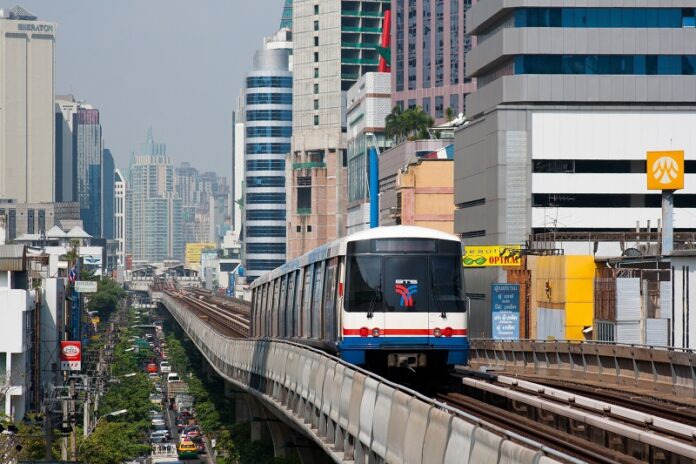
Asokhumvit? BTS and MRT Stations May Get Same Name

Bangkok's BTS Skystrain seen here in 2010. Photo: Ilya Plekhanov / Wikimedia Commons

BANGKOK — After more than a decade confusing commuters, two stations at the same location may be renamed.

As public rail continues expanding, officials discussed devising a system for naming stations and raised the issue that BTS Asok and MRT Sukhumvit, located at an interchange between the Skytrain and subway, should also share the same name.

They agreed Friday to conduct an online public hearing on whether adjacent Skytrain and subway stations should be changed to have the same names.

Examples of such include BTS Asok and MRT Sukhumvit, BTS Sala Daeng and MRT Silom, BTS Mo Chit and MRT Chatuchak Park, and MRT Phetchaburi and Airport Rail Link Makkasan.

The original rationale was simply because the BTS, MRT and Airport Rail Link systems are run by different operators.

“The survey will be conducted by the Office of Transport and Traffic Policy and Planning to see whether it will be confusing to change the names, and what name should each station be called,” said Jirut Wisanjit of the Transport Ministry.

The survey is expected to be completed in two months.

To avoid confusion, Jirut added, the names should come from the area and not the road.

Authorities said they realized some roads are long and have more than one station located along them. MRT Sukhumvit was one of the best examples, as Sukhumvit Road actually runs out from eastern Bangkok over 400 kilometers. Most of the Sukhumvit Line stations are found along it.

Meanwhile authorities issued guidelines for naming stations along future rail lines. It said stations that share the same structure or are located less than 50 meters away from each other must be called by the same name.

Advertisement

J-Fest 2017: Japanageddon to Strike CentralWorld

BANGKOK — Bring all your pineapple pens to CentralWorld next month for three days of internet idols, manga artists, cosplayers, Samurai photo studio, wrestling matches and more from the Land of the Rising Fun.

Comedian Pikotaro from last year’s last-minute viral hit single “Pen-Pineapple-Apple-Pen” and the all-singing, all-bouncing girl idols of AKB48 are the top-billed appearances at the annual Japan Expo for Bangkok J-fans to unleash their over-9,000 level otaku-ness.

Other highlights include three-stringed shamisen artist Hanazono Naomichi, the Ryoma Quartet and the Uguisudani Phil Harmony, which will fuse the traditional and contemporary sounds of Japan on one stage.

Find every other Japanese-defined thing including pop dance troupes, cosplayers, calligraphy and floral arrangements.

Craving some Tokyo Banana or want to try the eel-flavored confections of Unagi Pie? More than 30 stalls will be selling popular Japanese food and desserts.

The former nasty queen of Japanese professional wrestling, Dump Matsumoto, will be among fighters from Michinoku Pro-Wrestling to demonstrate their ferocity in the ring.

Admission is free. The event runs Feb. 10 to Feb. 12 at CentralWorld.

Advertisement

Baby Golden Turtle Rubbed for Lucky Lottery Numbers

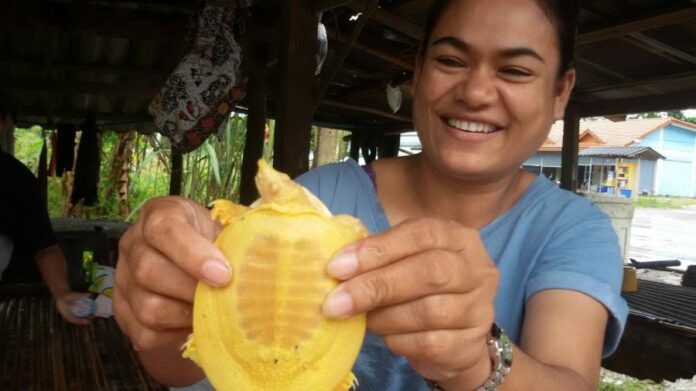
Lirapan Junjamsiri with the baby gold softback turtle she found in her backyard after a flood in Krabi province.

KRABI — When a baby golden softshell turtle emerged from rising floodwaters to crawl into Lirapan Junjamsri’s backyard, she took it as a sign of good fortune.

So too did the community members who flocked to see the palm-size turtle Monday and rub powder on its belly in hope its luck would rub off on the eve of the national lottery.

Seeing the 300-gram creature emerge from the same floodwaters which have claimed at least 43 lives as a measure of hope, some people rubbed powder on its belly in hope that it would magically reveal lucky lottery numbers. No success had been reported as of the time of publication.

Lirapan, 40, found the baby gold softshell on Jan. 7 when her home flooded in the Lam Thap district of Krabi province. While moving things out from her home, she stumbled across the little golden wonder hiding under a palm tree in her backyard.

Because of the turtle’s auspicious color, she took it as a sign things would get better for her family. Lirapan has been keeping the little turtle in a bucket ever since, feeding it water spinach.

Lirapan Junjamsiri with the baby gold softback turtle she found in her backyard after a flood in Krabi province. Lirapan Junjamsiri with the baby gold softback turtle she found in her backyard after a flood in Krabi province.

Related stories:

This Giant Snake Ate 5 Chickens. Now They Hope it Will Make Them Rich.

‘Chosen’ by Sun God, Man’s Quest for Lottery Wealth Ends in Melee (Video)

Lottery Winner Thanks The King’s Late Dog for Her Luck

Advertisement

Inspired by Nepalese, UK Architect Rebuilds Ancient Temple

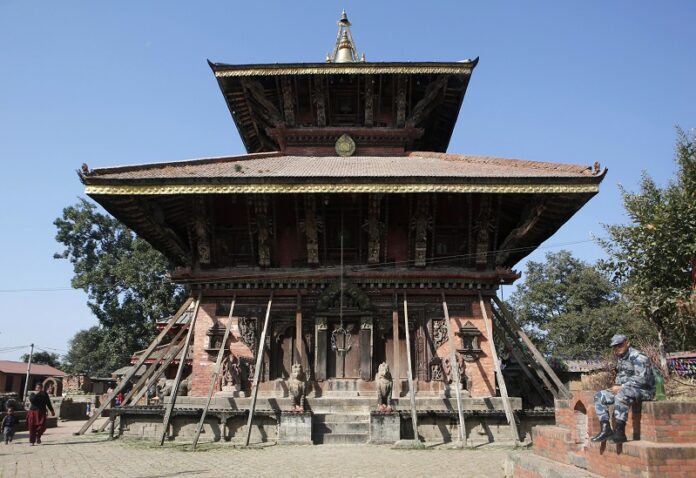
A Nepalese policeman rests last November in front of Changu Narayan, a temple dedicated to Lord Vishnu, at Changu Village, 20 kilometers (12.5 miles) east of Kathmandu, Nepal. Photo: Niranjan Shrestha / Associated Press

CHANGU NARAYAN, Nepal — When a 7.8 magnitude earthquake rocked Nepal last year, villagers in Changu Narayan ran up the steep rocky path that cuts through their town to their renowned temple. Seeing the piles of rubble, they figured their lives were over.

Less than two years later, the community is cleaning up their World Heritage Site themselves, and one of the world’s leading architects has taken on the recovery as his pet project.

“I see now our world coming back alive,” said Gyan Bahadur Bhadal, 61, one of many villagers who share responsibility for the temple’s upkeep.

In a country where locals say there are more gods than people and more temples than houses, Changu Narayan still manages to stand out among the ancient holy places. It’s believed to be the oldest Hindu place of worship in the country, its wooden walls intricately carved with hundreds of deities, perched atop a steep hill overlooking the Kathmandu Valley.

The 5th century temple is dedicated to Lord Vishnu, who locals say appeared there once. His image, in about a dozen incarnations, is carved into struts that hold up the roof. Stone lions with eagle heads guard the doors. Inside has long been a mystery: Only priests enter the two-tiered pagoda, and they don’t explore.

An April 2015 temblor that killed 9,000 people in Nepal also damaged details in Changu Narayan’s wood, stone and metal. A sharp aftershock one day later twisted the entire structure, knocking piles of bricks out of the walls, filling the courtyard.

Anish Bhatta’s family has been living and leading worship at the temple for 10 generations — some 325 years. After the earthquake, Anish did the unthinkable: He went all the way inside.

“We saw things we never imagined,” he said. “Statues as big as me, swords, so many sculptures, gold plated with big gems.”

Today the temple is guarded by military police, and propped up with questionable temporary beams.

British architect John Sanday, who led the World Monuments Fund restoration of Cambodia’s Angkor Wat, the largest religious monument in the world, fell in love with the place decades ago. After the earthquake, he came up the Changu path with trepidation.

“I was very emotional walking into this place. The whole of the courtyard was littered with rubble. I thought, ‘Come on, John, you’ve got to pull yourself together,'” he recalled.

But then Sanday noticed wooden supports exposed by the missing brick. He saw what looked like a bedrock foundation. And he decided that of the 600 historical temples, monuments and palaces damaged by the earthquake in Nepal, this one would be his project.

“Sure, it’s peanuts, a little temple, so why is it so special?” said Sanday. “The detail. The grace. It’s one of the few World Heritage Sites that hasn’t been completely destroyed by development.”

But what really drew him to step in as technical adviser were the people of this village.

Among tourists and pilgrims, Changu Narayan’s residents pray there at dusk, kneel at the deities, bow to the gods, offer alms to the priests who stand duty at the door.

Three people died and 100 homes were damaged in Changu Village, a 30-minute drive from downtown Kathmandu, during the earthquake. Like families in the city 12.5 miles (20 kilometers) away, the Changu community grieved, cried and cleaned up rubble.

But in the hilltop village the community did something else: With rags and water, little picks and brushes, they cleaned the ancient and exotic carved brackets and facades, cleaning and repairing, bit by bit, so they could resume their worship. Now Sanday says their dedication is his inspiration. He will not allow their culture to disappear with the damaged building.

Conserving an ancient building means solving a series of incredibly complicated puzzles. Rotted or mice-chewed timbers must be replaced. An unstable and stretched government bureaucracy must remain in charge. And there’s $300,000 to raise.

For starters, with $30,000 of German support, he helped the community rebuild one of Changu’s shrines, the size of a little guardhouse. Now he’s looking at the larger temple a few yards away.

“This is a place we can save, no doubt,” said Sanday. “The people here will make sure of that.”

Story: Martha Mendoza

Advertisement

Ride the Rails to 2 Nights of Art, Music, Meet-Ups in Bangkok (And Chiang Mai)

Image: Galleries Night / Facebook

BANGKOK — Hop on, hop off, grasshopper. By BTS Skytrain, river ferry or tuk-tuk, go exploring at 45 galleries and art spaces next month at the fourth annual Galleries Night.

Whether committed art snob or casual, take a map and keep busy for two nights discovering exhibitions, performances, screenings, live music and chances to meet the artists, all for free. The two-night event is split between two zones: On Feb. 3, the BTS Silom Line night, roam 23 galleries in the Silom, Sathon and riverside areas. The next evening, check out the 22 participating venues along the BTS Sukhumvit Line.
Things start at 5pm on both evenings.

Most venues can be reached by BTS Skytrain or MRT subway.

This year’s edition has a lot of graffiti and street art on display. Here are some interesting selections from the first night.


Bangkok CityCity Gallery

%e0%b8%a2%e0%b8%89-alex-face-_-rachan-klomklieng-_-bangkok-citycity-gallery

Check out Alex Face’s “Alive” at Bangkok CityCity, where the graffiti guru will present a documentary “In The Flow” that gives a behind-the-scenes look at his work process for the exhibition, followed by a talk.


Cho Why

Photo: Landry Dunand / Courtesy

See the photos taken by French artist Landry Dunand with his camera obscura, but also get a chance to pose for one yourself at Cho Why.


ยฉ Ciao Art Sathorn 11 Art SpaceSathorn 11 Art Space

This small art space in Soi Sathorn 11 will host a live street art demonstration and give everyone a chance to be a graffiti artist by spraying some paint there.


For children and family, fun art activities start at 2pm on Feb. 4 on the ninth floor of the Bangkok Art and Culture Centre.

Up in Chiang Mai, Galleries’ Night will also see its second outing a week earlier, with 26 galleries participating Jan. 27-28.

More information on participating galleries and map routes will be available online and also via a GalleriesNight app for Android and iOS. There will also be volunteers helping out with information at the venues.

GN keyvisual

Advertisement

More Floods Feared in South as 1.6 Million Affected

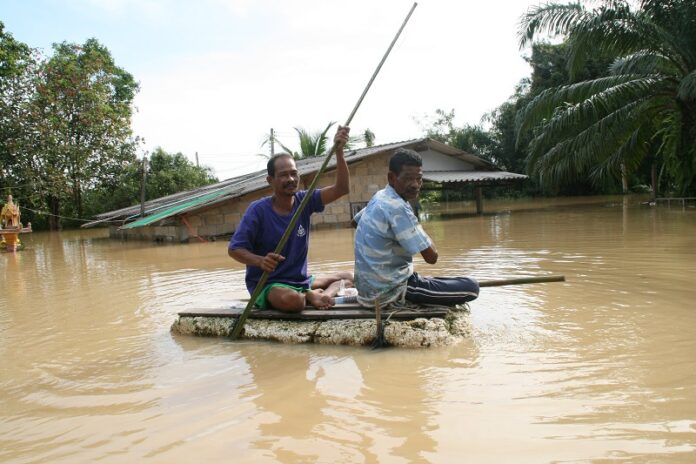
Men paddle a foam raft through their submerged community Sunday in Surat Thani province.

BANGKOK — The southern region isn’t out of danger yet as the death toll continues to rise from massive flooding and heavy rain is forecast for throughout the week.

Flash flood and landslide warnings were issued Monday for the southern region due to stronger monsoon conditions, just four days after officials said the situation was returning to normal.

The worst flooding in a decade has inundated 12 southern provinces since the beginning of the year, killing at least 43 people and affecting more than 1.6 million people.

Though water levels have fallen across the area, the situation remains critical in the six provinces of Phatthalung, Songkhla, Trang, Surat Thani, Nakhon Si Thammarat and Prachuap Khiri Khan.

Most of the roads in the south have reopened to normal traffic, according to transportation officials.

Disaster officials said Sunday they instructed their staff to prepare for more mass flooding.

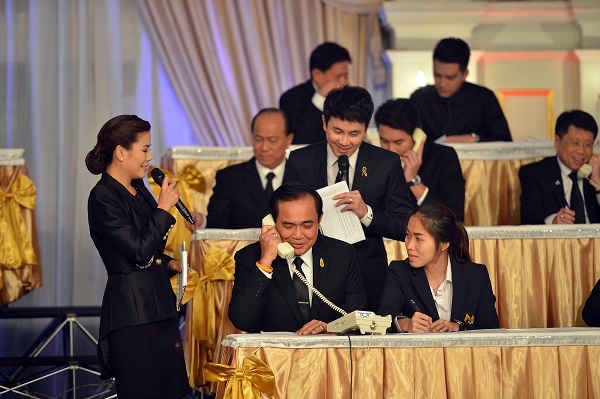
The military government on Sunday held a two-hour telethon which raised 329 million baht in relief funds from the public. Government spokesman Sansern Kaewkamnerd said the money would be sent to support southern residents, with an additional 100 million baht per affected province.

 Prime Minister Prayuth Chan-ocha takes a call during a Sunday telethon to raise funds for the southern flood relief effort.

Prime Minister Prayuth Chan-ocha takes a call during a Sunday telethon to raise funds for the southern flood relief effort.

Related stories:

As Southern Flooding Eases, 22B Baht Price Tag For Repairs

More Flash Floods Expected as North-to-South Road Reopens

Young Girl Drowns in Southern Flooding, Surprise Storm Lashes Bangkok

Reform Assembly Members Donate 5,000 Baht Each to Aid Flood Relief Efforts

19 Die as Floods Continue to Submerge South

Malls, Airport Closed as Worst Flood in Decades Hit South

Advertisement

Air Force to Keep Flying During Investigation of Gripen Crash

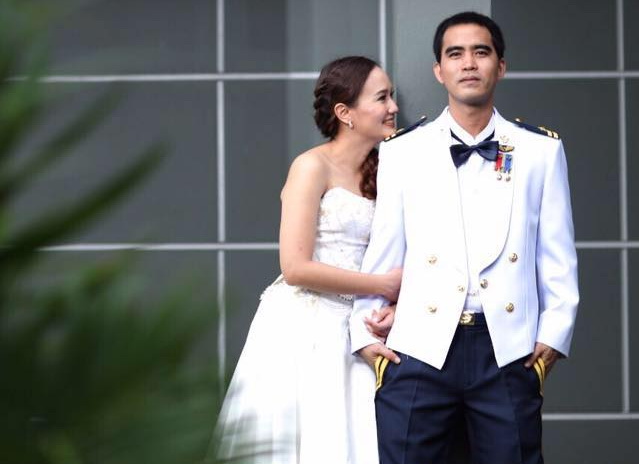
Squadron Leader Dilokrit Pattawee poses with his bride in a Sept. 4, 2015, photo. Image: Dilokrit Pattawee / Facebook

BANGKOK — All military aircraft will operate normally while the Air Force finds out why one of its Gripen jet fighters crashed during an airshow, killing its pilot, a defense spokesman said Monday.

With the funeral for Squadron Leader Dilokrit Pattawee set to take place in Bangkok today, the spokesman defended safety standards of the Thai Armed Forces, despite a string of deadly mishaps through the years. He urged the public not to come to any premature conclusions while the inquiry is ongoing.

“We will check all the details. We cannot make unsubstantiated comments,” Maj. Gen. Kongcheep Tantravanich said by telephone. “Otherwise, the [reputation of the] company that sold us the Gripens might be damaged, or the pilot might be damaged.”

Read: Gripen Fighter Jet Crashes at Hat Yai Air Show, Pilot Killed

Officials earlier said both pilot and plane had checked out prior to Saturday’s incident, which happened during an airshow for Children’s Day in Songkhla province.

Kongcheep said the Air Force will spend “a month or two” investigating. As of this moment he could not say whether the crash was due to a human error or an engine failure.

Dilokrit, 34, died Saturday as he demonstrated an assault maneuver of the Swedish-made jet fighter over an airport in Songkhla province. The deadly crash unfolded before hundreds of terrified children.

His JAS 39 Gripen was one of 12 acquired by the air force in 2008.

Dilokrit was posthumously promoted to the rank of air marshal.

‘We Have to Live With Risk’
The military is fraught with a history of faulty or poorly maintained equipment, which has occasionally resulted in fatalities, or even bogus gear, such as a set of fake bomb detectors sold by a now-convicted British conman.

Five soldiers died when their helicopter went down close to Doi Inthanon in August. Five years earlier, three army helicopters crashed within a space of four days, killing 17 soldiers and one reporter onboard.

Maj. Gen. Kongcheep said the military trains its personnel rigorously in safety measure and takes all necessary maintenance to make sure that its vehicles work safely. He blamed “unforeseeable factors” like weather and engine malfunction for the accidents.

Read: Sweden Denies Discussing Sale of Fighter Jets to Thai Junta

“It’s like if you drive a car, and the engine suddenly stop in the middle of the road,” Kongcheep said. “We do our best, but there are some unforeseeable factors that we cannot predict. For example, when helicopters crash, it is because the pilots encountered severe weather. No one wanted it to happen.”

However, the spokesman conceded that much of the equipment in the arsenal is aging and military personnel have no choice but to work with it.

“To speak frankly, every weaponry in our service is rather outdated, so we have to live with the risk,” Kongcheep said. “We want new things, but there’s always problem when we want to buy something. So we have to live with the same, old military hardware. For example, when it rains heavily, we still have to use helicopters that are really old.”

But critics of the Thai armed forces said the military already accounts for a massive and ever-growing budget. Spending for 2017 is set at 200 billion baht, an increase of 4 percent over the previous year. The Defense Ministry is also seeking to buy tanks and submarines from China, a project that could cost billions of baht.

Related stories:

Army’s 350 Mil Baht Airship Breaks Down Again After Re-launch

Army Downplays Concern Over Old Choppers After Deadly Crash

Fake Bomb Detectors in Attacked Pakistani Airport Used By Thai Army

Advertisement

8 Men as Rich as Half the World, Latest Inequality Study Finds

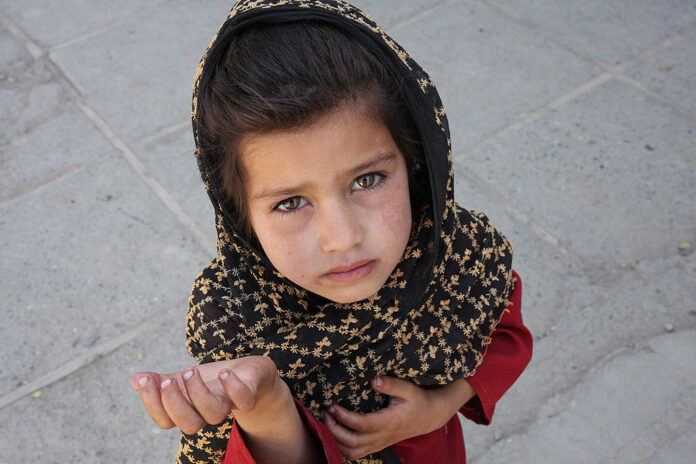
A young Afghan girl begging in the street in 2008 Kabul, Afghanistan. Photo: Mikhail Evstafiev / Wikimedia Commons

DAVOS, Switzerland — The gap between the super-rich and the poorest half of the global population is starker than previously thought, with just eight men, from Bill Gates to Michael Bloomberg, owning as much wealth as 3.6 billion people, according to an analysis by Oxfam released Monday.

Presenting its findings on the dawn of the annual gathering of the global political and business elites in the Swiss ski resort of Davos, anti-poverty organization Oxfam says the gap between the very rich and poor is far greater than just a year ago. It’s urging leaders to do more than pay lip-service to the problem.

If not, it warns, public anger against this kind of inequality will continue to grow and lead to more seismic political changes akin to last year’s election of Donald Trump as U.S. president and Britain’s vote to leave the European Union.

“It is obscene for so much wealth to be held in the hands of so few when 1 in 10 people survive on less than USD $2 a day,” said Winnie Byanyima, executive director of Oxfam International, who will be attending the meeting in Davos. “Inequality is trapping hundreds of millions in poverty; it is fracturing our societies and undermining democracy.”

The same report a year earlier said that the richest 62 people on the planet owned as much wealth as the bottom half of the population. However, Oxfam has revised that figure down to eight following new information gathered by Swiss bank Credit Suisse.

Oxfam used Forbes’ billionaires list that was last published in March 2016 to make its headline claim. According to the Forbes list, Microsoft founder Gates is the richest individual with a net worth of USD $75 billion. The others, in order of ranking, are Amancio Ortega, the Spanish founder of fashion house Inditex, financier Warren Buffett, Mexican business magnate Carlos Slim Helu, Amazon boss Jeff Bezos, Facebook creator Mark Zuckerberg, Oracle’s Larry Ellison and Bloomberg, the former mayor of New York.

Oxfam outlined measures that it hopes will be enacted to help reduce the inequality.

They include higher taxes on wealth and income to ensure a more level playing field and to fund investments in public services and jobs, greater cooperation among governments on ensuring workers are paid decently and the rich don’t dodge their taxes. And business leaders should commit to paying their fair share of taxes and a living wage to employees.

Max Lawson, Oxfam’s policy adviser, urged billionaires to “do the right thing,” and to do “what Bill Gates has called on them to do, which is pay their taxes.”

The ability of the rich to avoid paying their fair share of taxes was vividly exposed last year in the so-called “Panama Papers,” a leaked trove of data that revealed details on offshore accounts that helped individuals shelter their wealth.

“We have a situation where billionaires are paying less tax often than their cleaner or their secretary,” Lawson told The Associated Press. “That’s crazy.”

It’s because of this kind of inequality that trust in institutions has fallen sharply since the global financial crisis of 2008, according to Edelman, one of the world’s biggest marketing firms.

In its own pre-Davos survey of more than 33,000 people across 28 markets, Edelman found the largest-ever drop in trust across government, business, media and even non-governmental organizations. CEO credibility is at an all-time low and government leaders are the least trusted group, according to the survey.

The firm’s 2017 Trust Barometer found that 53 percent of respondents believe the current system has failed them in that it is unfair and offers few hopes for the future, with only 15 percent believing it is working. That belief was evident for both the general population and those with college education.

“The implications of the global trust crisis are deep and wide-ranging,” said Richard Edelman, the firm’s president and CEO. “It began with the Great Recession of 2008, but like the second and third waves of a tsunami, globalization and technological change have further weakened people’s trust in global institutions. The consequence is virulent populism and nationalism as the mass population has taken control away from the elites.”

Edelman highlighted how “the emergence of a media echo chamber” that reinforces personal beliefs while shutting out opposing views has magnified this “cycle of distrust.” According to the survey, search engines are trusted more as an information tool than traditional news editors, 59 percent to 41 percent.

“People now view media as part of the elite,” said Edelman. “The result is a proclivity for self-referential media and reliance on peers. The lack of trust in media has also given rise to the fake news phenomenon and politicians speaking directly to the masses.”

Edelman said business may be best-placed to help improve trust. Companies need to be transparent and honest with their employees about the changes taking place in the work-place, improve skills and pay fairly, he said.

The online survey was conducted between Oct. 13 and Nov. 16, 2016.

Story: Pan Pylas

Advertisement

Monster-Croc Nadia Found in Zoo’s Deer Exhibit

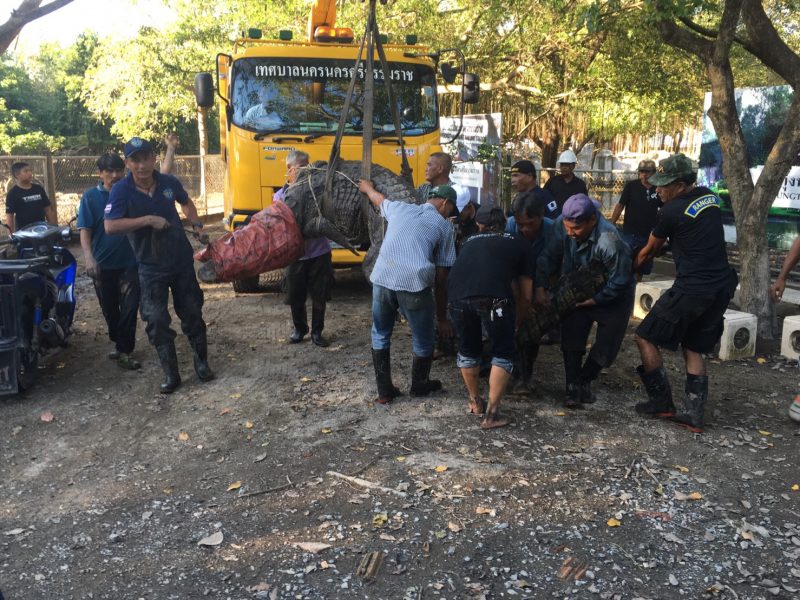
Nadia, a five-meter croc, is wrangled back into captivity on Saturday at Nakhon Si Thammarat’s Tha Lad Zoo.

NAKHON SI THAMMARAT — A giant reptile whose escape from a flooded southern zoo sparked an anxious croc-hunt was back in her enclosure Monday.

Four days after she swam to liberty from the Tha Lad Zoo in Nakhon Si Thammarat province, Nadia was tracked down Saturday when the crocodile-hunting team assembled to find her spotted her lying low in the zoo’s flooded deer exhibit. No deer were present at the time.

The 5-meter crocodile had slipped out on Wednesday when the flooding crisis, now blamed for the deaths of at least 43 people, left the zoo underwater. Officials feared she had escaped into residential areas.

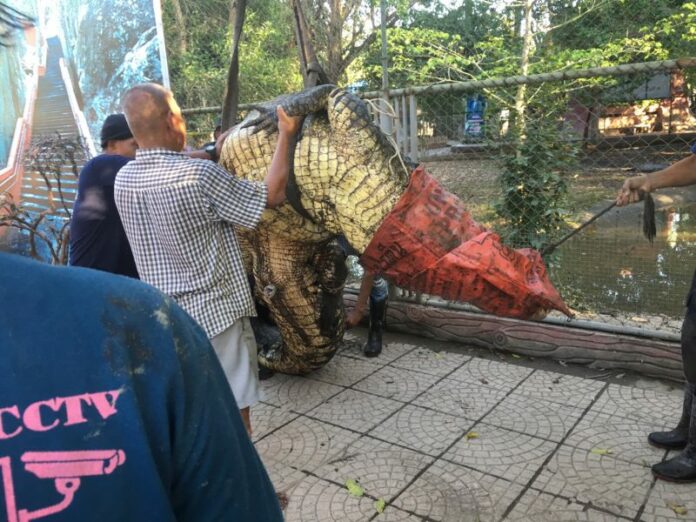
A team of zookeepers, local fishermen and fishery officials used a crane and their combined manpower to lift the Indian-born Nadia from the flooded deer exhibit and haul her back to the crocodile enclosure.

While finding Nadia was a relief, local residents remain on alert since the zoo’s other, smaller crocs, which range from one to two meters, remain on the loose. The crocodiles may try to harm people, officials said, if they cannot find food in the floodwaters and reach the point of starvation.

Nadia is lowered from a mobile crane Saturday at Nakhon Si Thammarat’s Tha Lad Zoo.

Related stories:

Monster-Croc Nadia Swims Free From Flooded Zoo

As Southern Flooding Eases, 22B Baht Price Tag For Repairs

More Flash Floods Expected as North-to-South Road Reopens

Young Girl Drowns in Southern Flooding, Surprise Storm Lashes Bangkok

Reform Assembly Members Donate 5,000 Baht Each to Aid Flood Relief Efforts

19 Die as Floods Continue to Submerge South

Malls, Airport Closed as Worst Flood in Decades Hit South

Absurd News Parody Brings Smiles to Flood-Ravaged South (Photos)

Advertisement

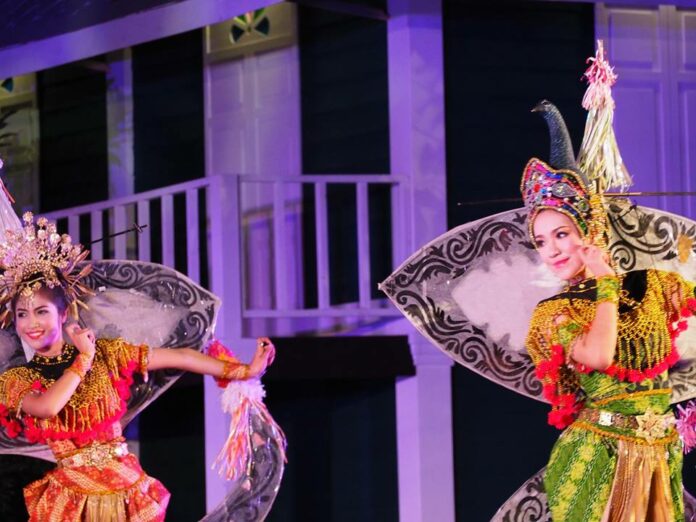
All the Thainess: Tourism Fest Returns to Lumphini Park

Thailand Tourism Festival 2016. Photo: Amazing Thailand / Facebook

BANGKOK — An annual tourist festival returns later this month to Bangkok’s largest downtown park with maximum Thainess.

Traditional culture and food from different regions will be on display in 10 zones at the Thailand Tourism Festival, sponsored by the national tourism authority. Expect tourism-promoting activities such as classical dances and local cuisines, as well as adventure sport demonstrations such as rock climbing or paintballing.

The five main regions will show off what they’ve got to brag about. A northern community will come down to teach about its hill tribes, hosting stalls for Doi Tung coffee and organic vegetables, while southerners will offer seafood dishes, spicy curry and showcase their way of life. There will also be exhibitions of Chanthaburi province’s famous gems and stalls of popular foods from the 50 districts in Bangkok.

The main stage will feature live music and cultural plays and performances.

The festival gets a digital update with a virtual reality tour of where dinosaur fossils have been discovered in the country.

Admission is free. The festival runs 2pm to 10pm, Jan. 25 through Jan. 29 at Lumphini Park.

Advertisement

Hot News

LATEST NEWS

Bangkok
overcast clouds
37.7 ° C
37.8 °
36.1 °
53 %
4.6kmh
92 %
Thu
38 °
Fri
37 °
Sat
36 °
Sun
36 °
Mon
37 °