31.1 C
Bangkok
Tuesday, June 9, 2026
Home Blog Page 2551

Graffiti Artists Join Forces to Pay Tribute to Late King (Photos)

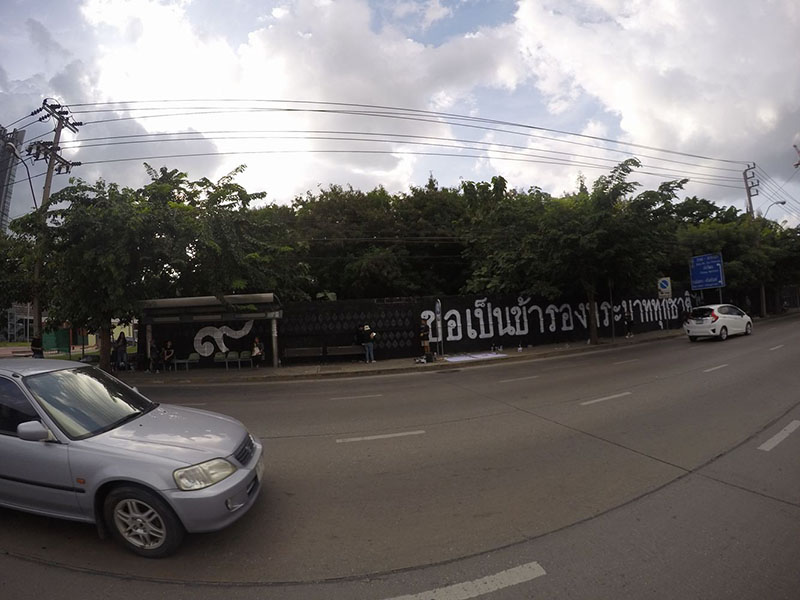
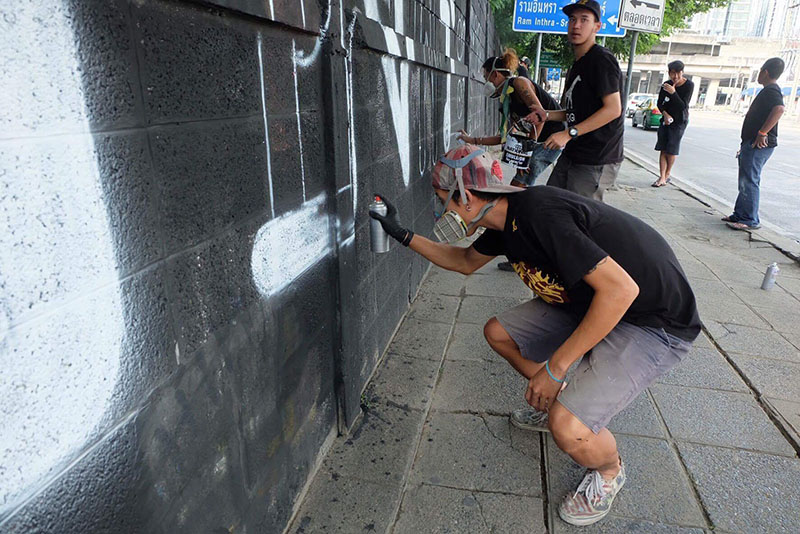
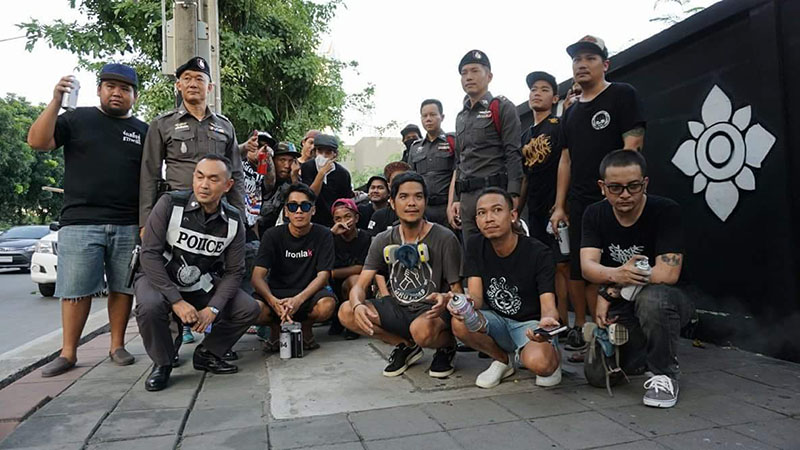
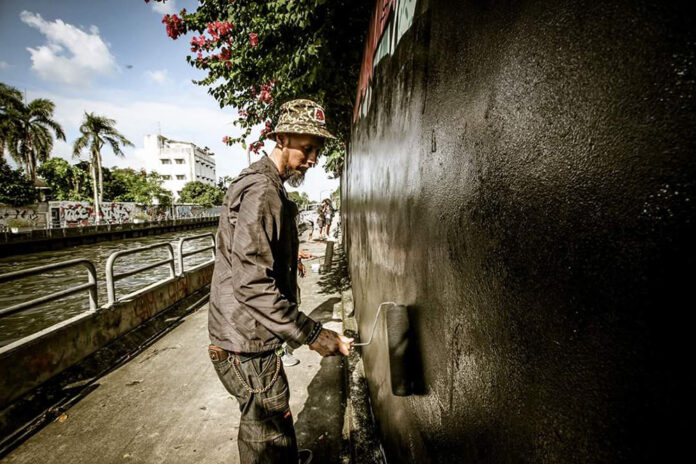
Pakorn Bna paints a wall near MRT Phetchaburi in Bangkok. Photo: TK Penpak Omer

Top: Pakorn Bna paints a wall Oct. 22 along the Khlong Saen Saep in Bangkok. Photo: TK Phenpak Omer

Artists who for most of their careers have remained elusive and worked under cover of darkness came out in broad daylight this past week where they drew interest from curious onlookers – including the police.

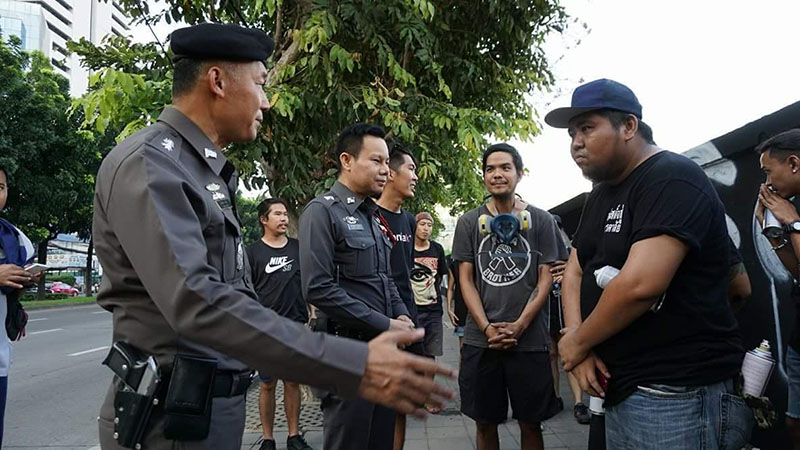
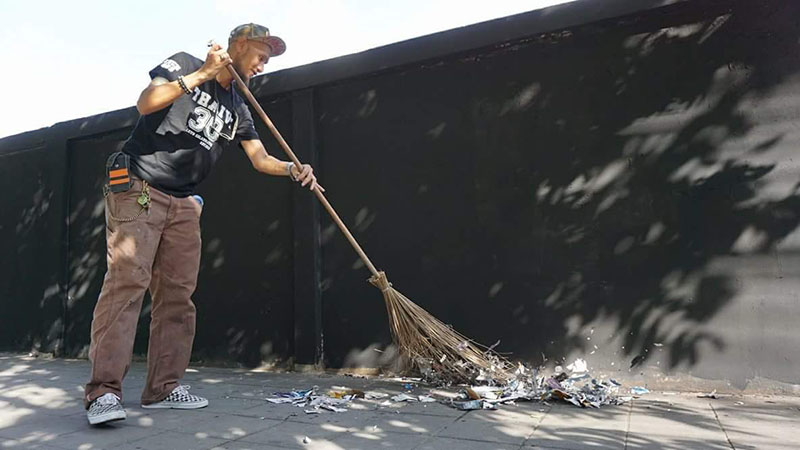
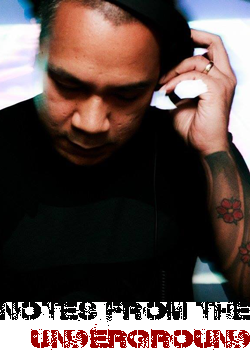
Notes from the Underground - Mongkorn 'DJ Dragon' Timkul“The police stopped us once, but we told them what we wanted to show our respects and promised to clean up after. They were cool with it,” Pakorn Bna said of a mural he and a group of graffiti artists put up Saturday in tribute to His Majesty King Bhumibol, who died Oct. 13 at 88.

A number of Bangkok graffiti artists have banded together to paint murals around the city. Though technically vandals under the law, they chose walls left to ruin and or eyesores forgotten by the city

The most popular and perhaps biggest was carried out by 20 Bangkok muralists. Their street homage went down next to MRT Phetchaburi with Jecks, Zionburi and scene veteran Pakorn Bna, some of the capital city’s most prominent artists.

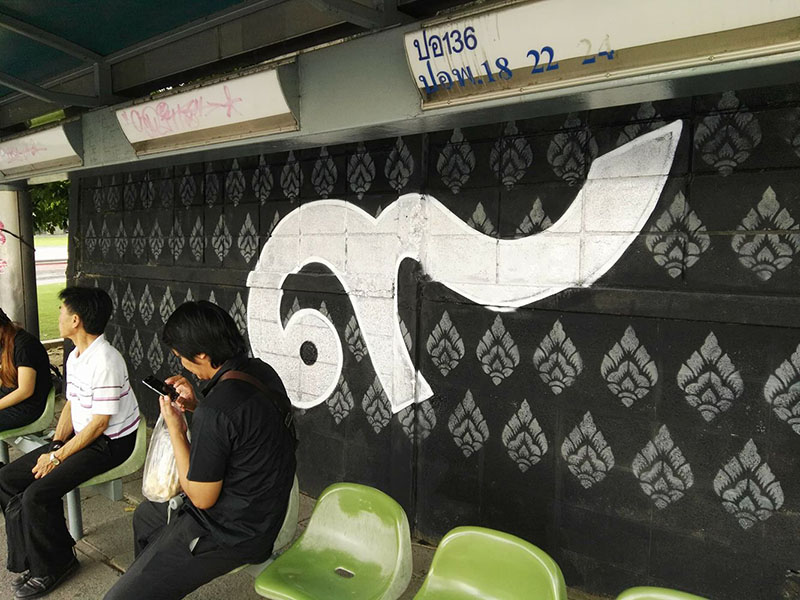
The murals are a city block in length and painted in simple white lettering on black background:

“Ka kor pen ka long prabat tuk chatr pai,” a slogan widely used on social media since the King’s death Oct. 13 which means, “May I serve underneath your feet in all future lives.”

While local street artists such as Alex Face and Mamafaka have landed in art galleries around the world, Thais should be proud of how far the kingdom’s scene has come along. Unlike North America and Europe, where there’s an abundance of information and ideas, artists in Bangkok did not have the tools and many learned their technique through trial and error.

“In the ‘90s, I was inspired by the artwork in skate magazines,” Pakorn said about how he honed his skills. “I didn’t really know how to paint back then. It wasn’t until after 2000 that we could learn spray techniques from the internet.”

The group is planning a few more murals throughout the city, Pakorn said.

“This is a group effort and we wanted to pay our respects to His Majesty, but we plan on drawing some of our own original pieces in honor of His Majesty later on in the year.”

Photo: Pakorn Bna
Photo: Pakorn Bna
Photo: TK Phenpak Omer
Advertisement

Cops Take Down Suspected Bangkok Auto Burglary Ring ‘Jakhoos’

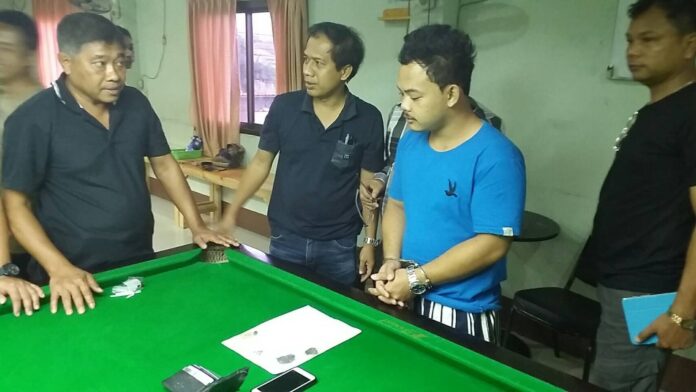
Chaiwat Prangmat, in blue, being apprehended at a sports club at Nakhon Nayok Thursday night.

BANGKOK — A month-long hunt for a motorcycle gang that stole millions of baht worth of valuables from a policeman’s car ended with two arrests Thursday night northeast of Bangkok in Nakhon Nayok province.

Chaiwat Prangmat, 24, was arrested at 10pm at the Sivanart Sports Center along with Laksaman “Tao” Glinampai, 24. They were named in warrants issued Oct. 19 in connection with the robbery earlier this month in the capital.

Chaiwat and his gang are accused of smashing the window of Lt. Col. Kriangkrai Ariyaying’s car parked behind a restaurant on Oct. 1 in Bangkok’s Bang Khen district. They allegedly stole dozens of rare Buddha images, 150,000 baht in cash and a Rolex watch. The goods had an estimated value of several million baht.

Police posted security camera images of the suspects fleeing the scene on a police Facebook page which they said led to tips resulting in the arrests.

Chaiwat’s accused of leading a gang called Jakhoo which carried out auto burglaries, according to Col. Teerachai Chamnanmhor of the metro police force. He said each person in the gang had specialized roles and would target cars parked near restaurants in the Bang Khen, Khan Na Yao, Suan Luang, and Sai Mai districts.

The gang reportedly split the loot to party and buy drugs, police said.

Teerachai said Chaiwat and Laksaman will be charged with theft and likely face jail time. Police are still looking for more members of their gang and the property they stole.

On the street, Chaiwat went by the name Nhoeng Ramkamhaeng. As to why they stylized themselves “Jakhoo” in English, Teerachai remained puzzled.

“I don’t know why they named their gang Jakhoo,” Teerachai said. “It’s just something young people do,” Teerachai said.

Advertisement

Duterte Says God Told Him to Stop Cursing

Philippine President Rodrigo Duterte gestures while addressing the Philippine Army Scout Rangers at their headquarters at Camp Tecson in San Miguel township, north of Manila. Photo: Bullit Marquez / Associated Press

MANILA — The foul-mouthed Philippine president, who once called the pope a “son of a bitch” and told Barack Obama to “go to hell,” says he has promised to God he won’t spew expletives again.

President Rodrigo Duterte’s profanities have become a trademark of his political persona, especially when threatening to kill drugs dealers as part of his war on illegal drugs that has left thousands dead since he took office at the end of June.

Duterte made the stunning pledge on arrival in in his southern hometown of Davao city late Thursday from a trip to Japan.

He said that while flying home, he was looking at the sky while everyone was sound asleep and he heard a voice that said “‘if you don’t stop epithets, I will bring this plane down now.”

“And I said, ‘Who is this?’ So, of course, ‘it’s God,'” he said.

“So, I promise God to … not express slang, cuss words and everything. So you guys hear me right always because (a) promise to God is a promise to the Filipino people.”

Duterte’s vow was met with applause, but he cautioned: “Don’t clap too much or else this may get derailed.”

Story: Jim Gomez

Advertisement

Thailand Seeks 3 Returned From Cambodia Over Alleged Insults

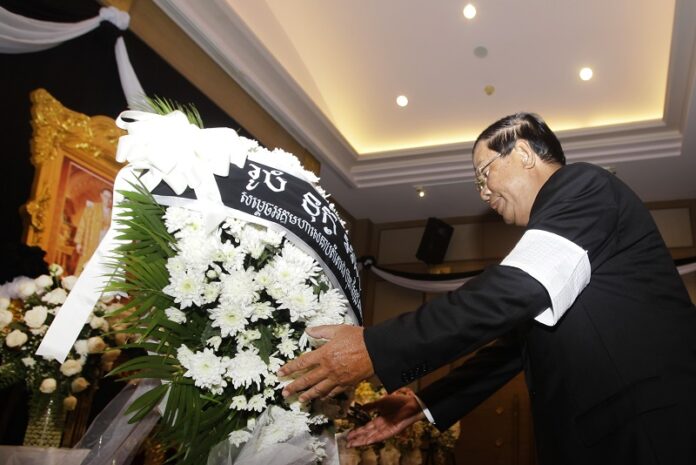
Cambodian Prime Minister Hun Sen places flowers as he pays respect to late Thailand's King Bhumibol Adulyadej Oct. 17 at the Thai Embassy, in Phnom Penh, Cambodia. Photo: Heng Sinith / Associated Press

PHNOM PENH — A Cambodian official says authorities are working on a request from Thailand’s government to extradite three Thais accused of insulting the monarchy.

Foreign Ministry spokesman Chum Sounary told reporters Thursday that the Thai junta recently told Cambodia that the three Thais are believed to be in hiding in Cambodia.

He says the Cambodian government “is processing the extradition request.”

No details of their alleged offense were known. Since the death of King Bhumibol Adulyadej on Oct. 13, the Thai government has reportedly asked several nations to extradite Thais to face charges of insulting the monarchy, which in Thailand is punishable by prison sentences.

In recent days police have charged 20 people in Thailand for insulting the monarchy.

Advertisement

Indonesian Woman Given 20-year Jail Term in Cyanide Murder

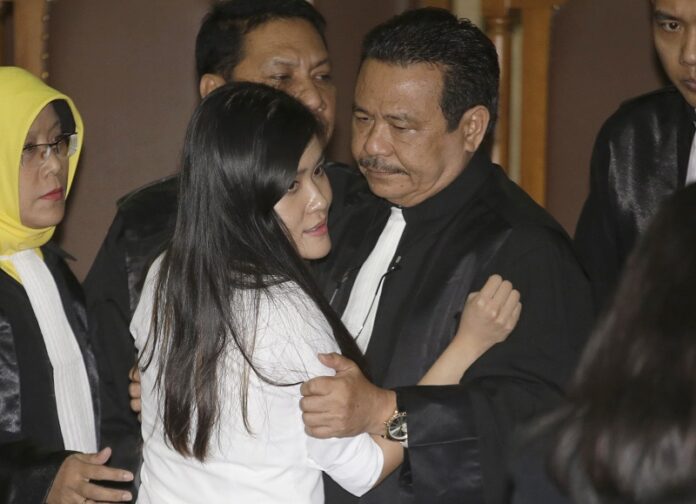
Jessica Kumala Wongso is comforted Thursday by her lawyer Otto Hasibuan after her sentence at a courtroom of Central Jakarta District Court in Jakarta, Indonesia. Photo: Tatan Syuflana / Associated Press

JAKARTA — A Jakarta court sentenced an Indonesian woman accused of killing a former classmate with cyanide-laced coffee to 20 years in prison on Thursday, in a dramatic climax to a trial that was broadcast live and became a national spectacle.

The Central Jakarta District Court found Jessica Kumala Wongso, 28, guilty of murdering Wayan Mirna Salihin at an upmarket Jakarta cafe in January. Salihin collapsed and died after sipping iced coffee at the cafe while Wongso was present.

The two had been classmates at Billy Blue College of Design in Sydney, Australia. Wongso’s lawyers said they would appeal.

Blanket television coverage of the trial transfixed Indonesians with its window into the lives of privileged young women and the country’s often arbitrary legal system. There were several unsuccessful attempts to bring the case to trial before it finally began in June, reflecting the weakness of the evidence and questions over the alleged motive for the murder.

The judges, however, agreed with the prosecutors’ contention that Wongso was angry that Salihin had suggested she break up with a troublesome boyfriend and was jealous of Salihin’s own relationship. The alleged motive, however, was ridiculed by defense lawyers who said it “could not be accepted by common sense.”

The case had other failings, including that Salihin’s body was not autopsied and several overseas experts testified that the tiny amount of cyanide detected by tests may not have been the cause of death or could have been introduced by contamination after her death.

The judges said other evidence indicated the victim died of poisoning.

“Jessica Kumala Wongso has been legally and convincingly proven guilty of committing premeditated murder,” said presiding judge Kisworo, who uses a single name, in reading the 377-page verdict over about four hours.

The panel of judges concluded that Wongso plotted the murder and showed no regret for what it called a “vile and sadistic” crime.

A total of 46 witnesses including the victim’s father, husband and twin sister as well cafe employees testified at the trial.

Advertisement

7-Eleven Dumps AIS Services

BANGKOK — Those looking to top up their 1-2-Call cards and other AIS services will need to be more creative than walking into 7-Eleven.

The convenience store giant has stopped offering all services nationwide related to the mobile phone operator, Advanced Info Service PCL announced Thursday.

The two parties severed their business agreement after AIS balked at 7-Eleven’s desire to increase its marginal costs to 6 percent from 4 percent, according to a report in Prachachat. In response, the convenience store chain managed by conglomerate CP Group in Thailand stopped AIS products at the beginning of the month.

AIS services remain available at several locations: its retail storefronts; Boonterm top-up machines (often found outside 7-Eleven); ATMs; and markets such as Tops, Big C, Tesco Lotus and Family Mart.

Advertisement

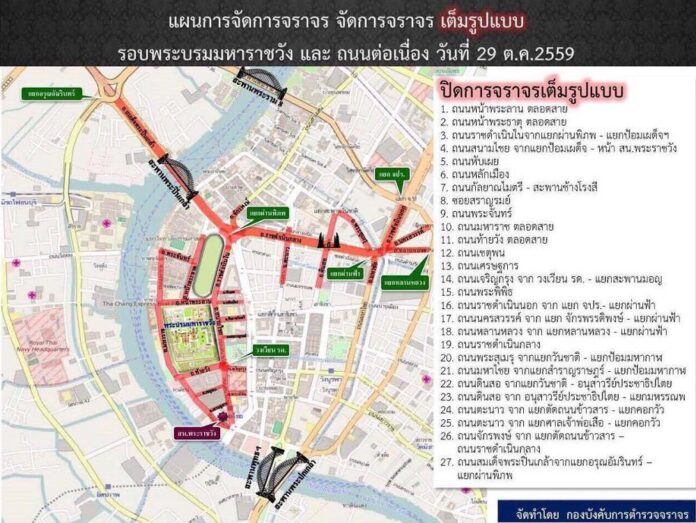
Dozens of Roads Closed This Weekend Around Grand Palace

A map shows roads to be closed Saturday. Image: Traffic Police

BANGKOK — Roads throughout much of Bangkok’s old quarter will be closed Saturday for the first day of public access to the palace hall where His Majesty the Late King lies in state.

A total of 27 Roads around and leading to the Grand Palace will close at 7am until late at night as mourners arrive, many traveling from across the country. Some free shuttle services will continue.

From the northwest side of the river, the closures start from the Arun Amarin junction and across the Phra Pinklao Bridge and Ratchadamnoen Avenue to the Lan Luang junction. The shutdown also covers roads around the Sanam Luang and the Grand Palace between the river and Rop Krung canal Maha Rat Road.

Read: What We Can Expect For King Bhumibol’s Funeral Rites

Closures are expected to continue Sunday, with the possibility some smaller roads around the palace remaining closed Monday.

Two weeks after the royal funeral began, Saturday will be the first day the public is inside the Dusit Maha Prasat, where the body of King Bhumibol is kept, to pay respects in front of the symbolic royal urn. Crowds will be allowed inside between 8am and 9pm.

The palace has been accommodating crowds up to 40,000 people per day, about 30,000 of which have entered to sign their condolences in a book there.

Starting Saturday, no more than 10,000 people will be allowed to enter the hall.

The Grand Palace and Wat Phra Kaew will reopen for tourists again Tuesday.


Related stories:

The Resting Place of Flowers for King Bhumibol (Photos)

Free Food Curfew as Trash Floods Sanam Luang

Sea of Voices Rise in Tribute for Late King

Huge Turnout for Mass Singing Tribute to King Bhumibol

Altruism, Youth Dominate at Grand Palace as Nation Mourns

For Nation in Mourning, All Roads Lead to Sanam Luang

What We Can Expect For King Bhumibol’s Funeral Rites (Updated)

Advertisement

Queue Chaos For Japanese Cheese Tarts at Paragon

Customers line up for Pablo Cheesetarts on Thursday afternoon at Bangkok’s Siam Paragon shopping mall. Photo: Pablo Cheesetart Thailand / Facebook

BANGKOK — The latest food fad has hit Bangkok with throngs of people lining up since this morning for a sweet taste of Japanese cheese tarts.

In the spirit of the nation’s first branches of Krispy Kreme, Garrett’s Popcorn and Ben & Jerry’s, Pablo Cheesetart is the latest craze to stir appetites and patience at Siam Paragon, where black-clad patrons spilled out from the mall’s ground floor onto the sidewalks this morning for opening day.

As with previous feeding frenzies, one should expect to wait hours for a taste of the Osaka-based cheese tart chain and possibly weeks for the hype to die down to buy a tart without need of a numbered ticket.

The official Facebook page of Pablo Cheesetart Thailand has been hyping the grand opening of their first branch in Thailand since August.

Pablo Cheesetarts, founded by Masamitsu Sakimoto, gained a cult following in Japan among both tourists and foreigners because you can order your cheesecake as “rare” (gooey) or “medium” (set). Branches have now opened in South Korea, Taiwan, the Phillippines, and most recently, Thailand.

Advertisement

King’s Death Left ‘Hole in Heart’ of Loyalist Critic Sulak

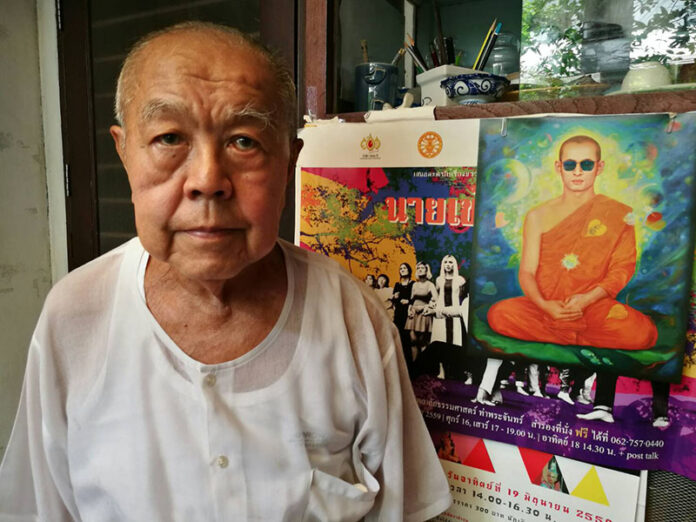
Historian Sulak Sivaraksa before a painting of King Bhumibol on Oct. 26, 2016, at his home in Bangkok's Bang Rak district.

BANGKOK — For 100 days, the old man will wear white, even at home. He will observe basic Buddhist precepts and avoid meat, all in honor of His Majesty King Bhumibol Adulyadej, who passed away two weeks ago.

This is Sulak Sivaraksa, however, a noted royalist scholar for whom criticism is inseparable from his loyalty to the monarchy, a position that has gotten him into trouble time and again.

In fact much of what Sulak had to say during the course of a Wednesday interview about the legacy of King Bhumibol cannot be published. That’s due to the same lese majeste law he’s been charged with more than once, a law that’s been so liberally applied beyond its statutory scope it now effectively prohibits any discussion of the monarchy short of adulation.

Not that Sulak is too worried. At 83, he beat the rap before in 1995, when he managed to convince a court to clear him of wrongdoing after a four-year legal battle. In 2014 he was accused again for suggesting an ancient elephant battle probably didn’t go down as remembered. An investigation stemming from charges filed over a year ago is ongoing.

Put simply, Sulak is that very rare breed of Thai royalist that believes loyalty demands dissent.

As for his legal challenges, it hasn’t hurt that he enjoys some privilege as a member of the elite.

With a backdrop of classical Western music and not the royal compositions prevalent now during the period of mourning, Sulak said he was thankful the royal physicians didn’t artificially prolong the life of the late King, who was suffering from kidney failure and other complications.

“I am grateful that His Majesty didn’t have to suffer,” Sulak said. “I must commend the doctors, but surely [His Majesty’s death] left a hole in my heart.”

Sulak, who is known for critical essays and speeches about the monarchy, praised the late King for what he believed was an intervention to quash his first lese majeste charge in 1984. Yet he was equally critical about the late monarch, who passed away Oct. 13 at 88. Sulak pointed out it’s impossible to properly scrutinize the more than 4,000 royal projects initiated by the King, which he acknowledges were done with good intentions toward his subjects.

“Some of these projects could not be [made] properly accountable,” said Sulak, whose elaboration cannot be published.

Informed that much of what he had to say would likely not be published, Sulak pointed out that the law, Article 112 of the Penal Code, doesn’t protect past monarchs as it is written.

“Legally, Article 112 only applies to the present King. Once he passed away, Article 112 is no longer applicable. But unfortunately, this country doesn’t uphold the spirit of the law. Recently, the Supreme Court convicted a person who defamed King Rama IV.”

As a historian, he said the implication is that history cannot be taught if one cannot honestly assess Kings of the past.

“If Article 112 is taken as it stands, then you can criticize the late King Rama the IX legally. And to honor the late King, those in power should also do away with Article 112,” Sulak said.

Despite the King’s own objections to the law, his kingdom has moved in the other direction. More than 60 lese majeste cases have been filed since the May 2014 coup, according to Pirongrong Ramasoota Rananand, a journalism instructor at Chulalongkorn University.

Sulak recited the late King’s opinion on the matter, made in a royal speech in 2005.

“And to honor the late King, those in power should also do away with Article 112, as his late Majesty openly said any case of lese majeste harms him personally and undermines the monarchy,” Sulak said. “If the powers that be really respect the King and honor the King, they should do away with Article 112.

He pointed to wounds which have long festered in silence, such as those traumatized by the Oct. 6, 1976, massacre of students at Thammasat University at the hands of ultra-royalist militias.

“Those who suffered on the 6th of October, many still hold grudges against the King, rightly or wrongly,” he said. “This should be discussed openly, for the benefit of the King and the truth.”

For the sake of the monarchy’s future, he said it must work for the people.

“Do we want the monarchy to be sacred and untouchable or indeed divine?” he said. “Some may wish that … but for most people in the 21st century, the monarchy can only survive if it serves the people.”

“The monarchy must be accountable to the people. It must be strictly under the constitution. The King must be an ordinary person, with a sense of humor, especially at his own expense, otherwise the monarchy will not last.”

Advertisement

Manhunt Continues for Cop-Killing Policeman in Yala

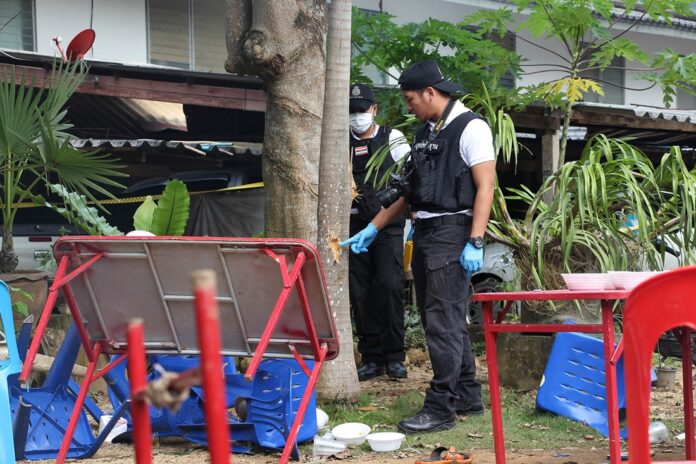
A forensic police officer on Wednesday examines a bullet hole allegedly left by Cpl. Hassapol Soprakon’s assault rifle at Batutamong Police Station.

YALA — When someone opened fire on policemen dining in Yala province, killing two and wounding 16, it wasn’t the separatists who’ve battled security forces there for over a decade, but one of their own, prompting a massive manhunt still underway Thursday.

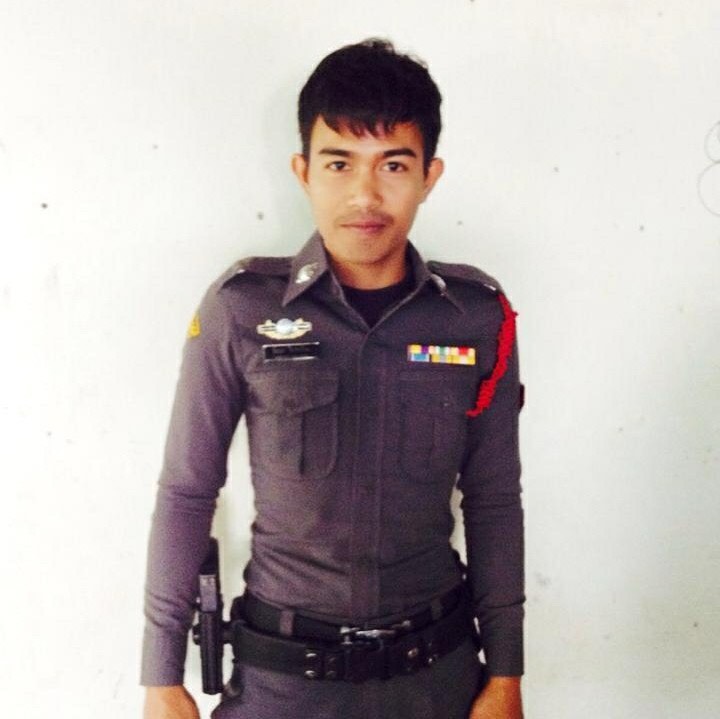
The alleged gunman, Cpl. Hassapol Soprakon, was described by his commanders as a troubled policeman who finally snapped Tuesday night after his supervisors refused his request to be reassigned away from the region where insurgents stage attacks on a near-daily basis.

Crude Cluster Bomb Kills 1 in Night Market, Injures Dozens

“We haven’t found him yet, but he turns on his phone sometimes to call his friends, so we have asked them to help convince him to surrender,” Col. Kritsada Kaewchandee, acting commander of the Yala police force, said. “They are telling him to think about his kid.”
Hassapol, 28, is likely still armed with the M-16 assault rifle he used in the shooting rampage two nights earlier. “He’s very dangerous,” Kritsada said.
The shooting took place in the garden of Batutamong Police Station, where policemen and their families were eating and drinking together Tuesday night. Witnesses said they saw Hassapol – who served as a squad leader – retrieve the assault rifle earlier from the armory, but they thought he was heading out on patrol.

A witness, the wife of another officer, also heard Hassapol muttering to himself.

“You damned lot are all so happy right?” Kritsada said he was reportedly heard grousing as he left the building.

Photo of Cpl. Hassapol Soprakon provided by Yala police.

Seconds later, Hassapol discharged his rifle at the policemen and their families, killing two officers and wounding 16 people, including four women. He soon fled the scene.

Kritsada blamed Hassapol’s actions on stress. The policeman had asked to be transferred out of Yala, only to be denied by his supervisors. Kritsada said the commanders only learned recently that Hassapol’s wife back in his home province of Buriram left him for a foreign man, leaving his 4-year-old son in the care of his parents.

“He should have told his commanding officer about his problems, so the commander could solve them,” Kritsada said. “Perhaps they could have moved him back to Buriram.”

Hardship Post
Members of the police force universally dread being posted in the southern border provinces of Pattani, Yala and Narathiwat, where police stations and officers are prime targets for militants fighting for independence from Thailand.

More than 6,500 people are believed to have died in the region since secessionist violence broke out in early 2004.

Kritsada said he sympathized with Hassapol and other officers who want to work somewhere safe “I wanted to move out, too, but my boss asked me to stay and help,” he said with a laugh.

But regulations don’t allow policemen to choose their assignments.

“They don’t have right to transfer themselves, otherwise all of the cops would be gone,” Col. Kritsada said. “It reflects the reality that this area is a dangerous place. Puu Yai (senior bureaucrats) should give importance to this issue.”

In the aftermath of Tuesday night’s rampage on, all police stations in Yala were ordered to ask their officers whether any of them have any stress issue. Anyone who wishes to take days off would have their wishes granted, Kritsada said.

“But some people like to keep their stress secret,” the colonel said. “They’re afraid that if they report their stress, they will be considered unfit for duty and expelled from the force. So he kept it inside. And in the end, it exploded like this.”

Advertisement

Hot News

LATEST NEWS

Bangkok
overcast clouds
31.1 ° C
31.6 °
28.3 °
73 %
3.7kmh
100 %
Mon
29 °
Tue
35 °
Wed
34 °
Thu
34 °
Fri
28 °