31.7 C
Bangkok
Tuesday, June 9, 2026
Home Blog Page 1724

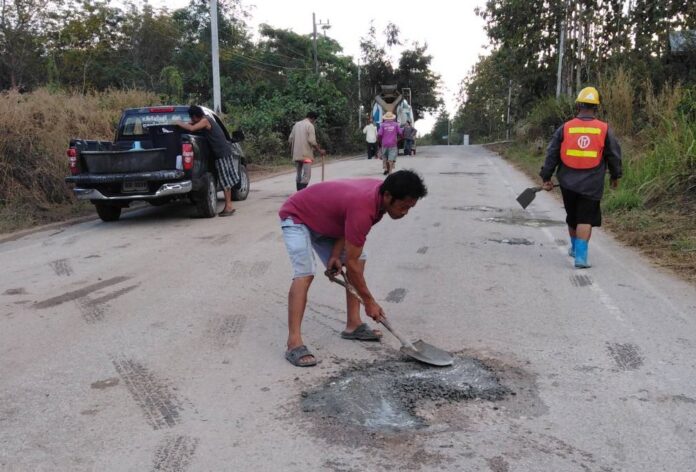
Worried by Tourist Injuries, Loei Residents Fix Road Themselves

Baan Noi residents repair a stretch of road Saturday.

LOEI — Tired of waiting for officials to fix a treacherous stretch of road known for causing frequent accidents, a group of neighbors in the northeast did the work themselves Saturday.

Armed with cement and tools, more than 50 residents of Baan Noi in Loei province filled the potholes along 900 meters of road this morning. Community leader Adul Polkham said they decided to act after many Japanese tourists had accidents riding motorcycles through their community in recent weeks.

“Many tourists ride past here each day,” Adul told reporters, adding that the residents also fear more accidents will take place during the New Year holidays if they didn’t do something.

According to Adul, the community repeatedly asked provincial authorities to repair the road for several years, only to be told work could start as early as 2019. So they decided they were done waiting, pooled 7,000 baht and bought equipment to fix the road themselves.

The road is a popular trail for riders of large motorcycles, as it leads to a scenic viewpoint of the Mekong River along the border with Laos.

Delayed state funds for road and other infrastructure maintenance in the countryside are notorious in the top-down bureaucracy, which experts have long urged to decentralize.

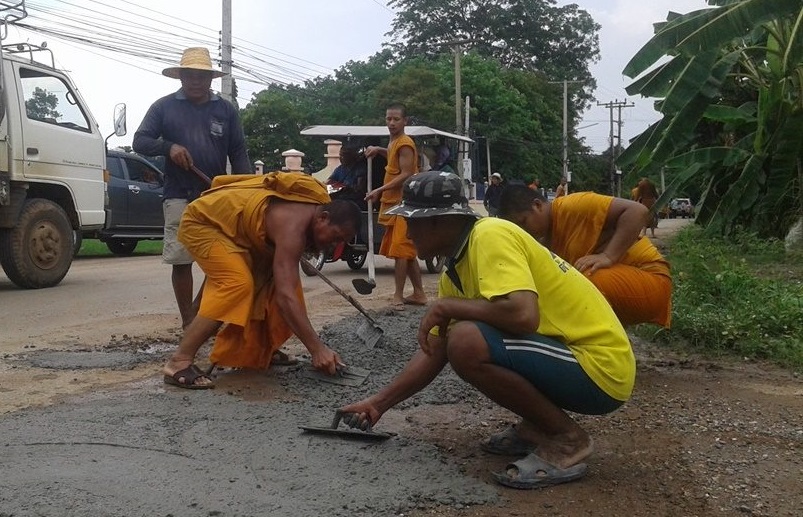
In May, monks in the Chok Chai district of Nakhon Ratchasima left their solitude for a day to help local residents fix a road. They reportedly had waited for authorities to approve repairs for nearly 10 years, to no avail.

20180521 151332
Monks and residents fix a road in Nakhon Ratchasima province in May.
Advertisement

Opinion: Fear and Foreboding in Laos

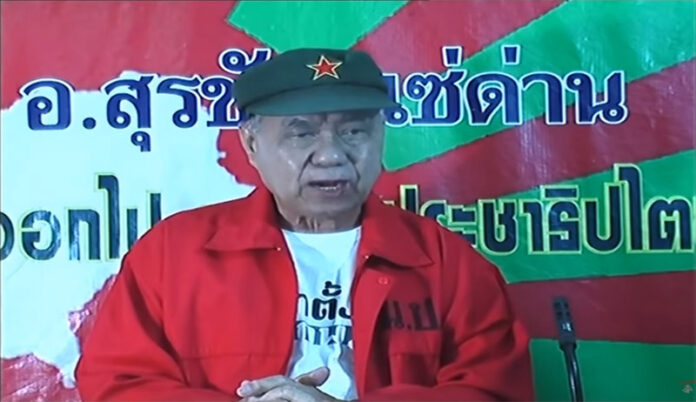
Surachai Danwattananusorn hosts an online talk show Nov. 27, 2018. Image: HaunT89s / YouTube

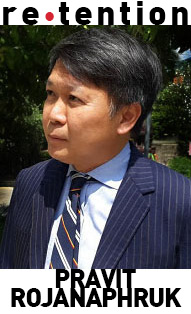
Re•tention: Pravit RojanaphrukThe disappearance of Surachai Danwattananusorn has sent shivers among exiled anti-monarchists, particularly in neighboring countries.

Surachai went missing Dec. 10 in Laos, where he had fled since martial law was declared two days prior to the 2014 coup. His wife Pranee told me this past Monday she fears the worst for her 77-year-old husband and pleaded for his captors to release him unharmed.

Others in Laos; a dictatorial, one-party communist state; are not taking chances as Surachai was not the first but third to disappear there without a trace.

There was anti-monarchist Koh Tee, Wuthipong Kochathamakun, who vanished in July 2017 and is largely presumed to have been abducted and killed. Ittiphon Sukpaen, an underground internet program host better known as DJ Sun Ho, also went missing around the same time last year. Ittiphon in fact used to co-produce underground programs with Surachai calling for change to the Thai political system from a kingdom to a republic.

About 31 lese majeste fugitives are in exile. Those who made it to France, other parts of Europe or the United States have much more security compare to those trapped in Laos and Cambodia.

One young anti-monarchist in Laos told me this week that over four years since fleeing Thailand, he has given up hope of making it to a third country.

“I am not prominent enough,” he said on condition his name not be used due for fear of his safety.

He said the United Nations has failed to offer tangible assistance and Western embassies have declined his asylum application. He also alleged that one European embassy in Vientiane eventually told him they lost his Thai passport after refusing to grant him political asylum.

Now, without a passport, the man said he just has to keep fighting for his cause from Laos and trust his life in Lao officials who who have monitored him for the past four years.

He pointed out that junta leader Gen. Prayuth Chan-ocha briefly visited the Laos capital to meet with government leaders. and He believes exiled dissidents are now in real danger.

Another anti-monarchist and a former lese majeste convict in Laos has chosen a different path.

Thantawut Twewarodomgul, a prominent anti-junta Redshirt activist and former lese majeste detainee, wrote online Tuesday that he has decided to end his activism to survive.

Thantawut, better known as Nuem Red Nont, asked rhetorically if he made the wrong decision by choosing to lie low and focus on earning a livelihood and surviving in Laos.

He said his parents in Thailand became depressed during the past three years as a result of officers “checking on them for news” about him every week and end up having to be hospitalized.

“Do not expect me to be a fighter. I am not a fighter. I am just a citizen who saw injustice during that period and joined the movement and ended up being imprisoned. … I fled because I did not want to live under dictatorship or any illegitimate power, not even for a second, because three years and four months and 15 days in prison was more than enough,” Thantawut wrote.

“I have never changed but I have to keep quiet because this country and that country are next to one another,” he added, referring to fears that junta security forces conduct reconnaissance in Laos to exfiltrate or abduct their enemies, charges repeatedly denied by the Thai junta.

No matter the truth, these people have paid a high price for their ideology. With elections promised just two months from now, no political party will touch the lese majeste law, not even Future Forward with its progressive platform that includes pushing for freedom of expression, and not the Commoner Party, which claims to champion participatory democracy and egalitarianism.

These political parties don’t want to attract strong opposition or be branded as anti-monarchist for touching the draconian lese majeste law, which carries prison terms of up to 15 years.

Anti-monarchist dissidents in Laos are trapped. With less prosecution for lese majeste under the new king, they waited forlorn to return to Thailand as free people or to leave for a third country where there’s more freedom and opportunities than Laos or Cambodia.

This is the story of the another Thailand that some would rather ignore.

Advertisement

Politician Wants Watch Scandal Probers Removed From Office

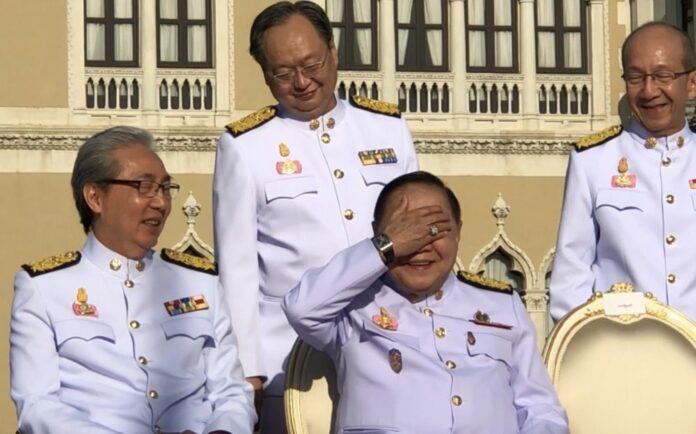
Gen. Prawit Wongsuwan raises a hand to shield his eyes from sunlight Dec. 4, 2017, in a cabinet photoshoot at the Government House which launched a scandal over the many multi-million baht, ultra-luxury timepieces he often wears.

By Teeranai Charuvastra and Pravit Rojanaphruk

BANGKOK — Citing a lack of partiality, a former minister said Friday the entire national anti-corruption body should be removed from office once a civilian government is in place.

Chaturon Chaisang said the National Anti-Corruption Commission, or NACC, lost all credibility after a majority voted to clear deputy chairman Prawit Wongsuwan of wrongdoing for possessing nearly two dozen ultra-luxury watches without disclosing them. Chaturon called it proof of intervention by the ruling junta.

Read: Fury Over Watch Scandal Ruling Prompts Impeachment Drive

“All of this was problematic since the appointment of NACC executives under intervention by the government and the NCPO,” Chaturon, who’s currently an advisor to Thai Raksa Chart Party, told reporters, using the acronym of the junta’s formal name.

On Tuesday the commission voted 5-3 to find Gen. Prawit not guilty of any crime, accepting the general’s claim that all 22 watches were loaned to him by a now-deceased friend. All five members who voted in favor of Prawit were appointed by the junta.

“I think that society does not concur with the majority of the NACC,” Chaturon continued. “It shows that the system to scrutinize corruption in this country is problematic and lacks credibility. We have to live with [a system] that we cannot trust to be straightforward.”

He went on to call upon the next civilian government to select a new set of commissioners and amend the constitution to rid the junta of its any influence over the commission.

There’s also a separate effort to collect 20,000 signatures for a petition to impeach the five commissioners who voted to exonerate Prawit.

Speaking to reporters after the ruling, Gen. Prawit maintained he was innocent.

“It’s the truth,” Prawit said. “They didn’t belong to me, so why should I disclose them?”

Pheu Thai spokesman Anusorm Iamsa-ard called on the commission to reveal how they rationalized their votes.

Calling it “the miracle of 2018,” Anusorn said Saturday that in the past two years, except for in Prawit’s case, no single military officer has been found corrupt by the commission despite 350 cases against non-military officials and political office-holders.

He said Prawit’s case has diminish the military regime’s claim of tackling corruption.

Anusorn said the investigation by the anti-corruption commission should continue as they themselves admitted that there is no record as to how most of these watches have been purchased, no proof of ownership and that they should not just willing accept Prawit’s account of the event.

Anusorn also questioned how one of the 22 watches, a Rolex Yacht Master in Everose Gold and rubber strap could have been borrowed since Prawit’s friend passed away in early 2017 and the watch was released in late 2016.

Anusorn claims that he learned that the minority votes within the commission concluded that the investigation was not yet complete and questioned why it wasn’t continued.

Related stories:

Our Person of the Year 2018: Prawit Wongsuwan, Military’s ‘Real Power’

Advertisement

Bangladesh’s Iron Lady Seeks Re-Election, Promises Growth

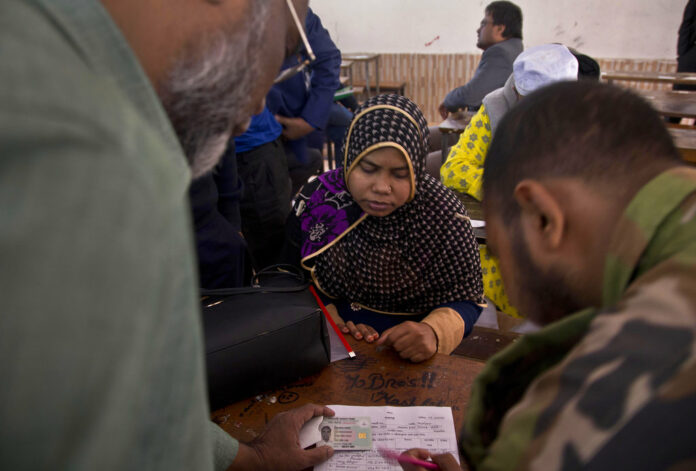
Bangladeshi election officials help a woman to find name of her family member in the voters list at a polling station ahead of the general elections Thursday in Dhaka, Bangladesh. Photo: Anupam Nath / Associated Press

DHAKA, Bangladesh — Bangladesh Prime Minister Sheikh Hasina is poised to win a record fourth term in Sunday’s elections, drumming up support by promising a development bonanza as her critics question if the South Asian nation’s tremendous economic success has come at the expense of its already fragile democracy.

The polls, the 11th since Bangladesh won independence from Pakistan in 1971, pit 71-year-old Hasina against a united opposition helmed by Kamal Hossain, 82, an Oxford-educated lawyer and former foreign minister. Notably absent is former Prime Minister Khaleda Zia, 74, Hasina’s archrival and the head of the Bangladesh Nationalist Party. Courts ruled she was ineligible to run from her colonial-era Dhaka jail cell, where she’s serving a 17-year sentence for corruption.

Hasina and Zia have been in and out of power and prison for decades, vying to run the young Muslim-majority country of 160 million. Zia’s BNP boycotted the 2014 polls. As a result, voter turnout was only 22 percent, according to Bangladesh’s Election Commission. More than half of the 300 seats in Parliament were uncontested. Dozens of people died in post-election violence.

This time, more than 104 million people are eligible to vote. Nearly one in 10 are young voters, including many first-time voters, in one of the world’s largest democratic exercises.

After a decade of rule by Hasina’s Awami League party and in Zia’s absence, Hossain, once a close aide to Hasina’s father, Bangladesh’s founding president, has risen as the primary challenger, attracting the interest of Bangladesh’s growing middle class and Western diplomats not wholly convinced Hasina’s development gains justify her increasingly heavy-handed rule.

“Development is not only economic growth, it has a far broader meaning which includes human rights, rule of law, inclusivity, accountability and good governance, all (of which) seem to be missing here,” said Illinois State University politics professor Ali Riaz.

The run-up to the election has been marred by allegations from Hossain supporters of arrests and jailing of thousands of Hasina opponents. About 600,000 security personnel including thousands of military soldiers and paramilitary border guards have been deployed. State police have barred opposition marches and foiled rallies.

At least six people have been killed in campaign-related clashes that local media report were mostly perpetrated by ruling-party activists backed by police. BNP spokesman Ruhul Kabir Rizvi said more than 12,000 opposition activists have been injured.

Facebook last week shut down a series of fake news sites spreading false information about the opposition that a threat intelligence consultancy determined were created and managed by government associates.

Earlier this year, Hasina spearheaded a draconian new digital law that journalists and some academics charged could be wielded to silence government critics.

Hasina defended it in Parliament as a tool to combat dangerous propaganda. “Journalism is surely not for increasing conflict, or for tarnishing the image of the country,” she said.

With Hasina’s hold on the state machinery increasingly clear, doubts have arisen about the fairness of the vote. The opposition this week demanded the resignation of the Election Commission chief.

“So far the indications do not suggest we have a level playing field in place for the election to be fully free and fair,” said Iftekhar Zaman, head of Paris-based corruption watchdog Transparency International’s Bangladesh chapter.

While rights groups sound the alarms about the erosion of democracy, Hasina has promoted a different narrative, highlighting an ambitious economic agenda that has propelled Bangladesh past larger neighbors Pakistan and India by some development measures.

Bangladesh ranked 136 out of 189 countries on the U.N. Human Development Index, which factors in life expectancy, years of education and gross national income, jumping 7 spots from 2012. The World Bank has praised the country for sharply reducing the percentage of its people living in extreme poverty.

Hasina embarked on a two-story, 5-kilometer (3.1-mile) bridge tapping government coffers rather than the World Bank’s proffered loans. She has formed joint ventures with Japan, India, China and Russia, all clamoring for access to the northern Bay of Bengal. India and Russia jointly built Bangladesh’s first nuclear power plant. Bangladesh launched its first commercial satellite earlier this year.

Bangladesh’s garment industry exports $30 billion a year to supply the racks of Zara, H&M, Uniqlo and other fashion retailers, making it the second-largest in the world after China.

After an assault by Islamic militants in 2016 in which 20 hostages, including 17 foreigners from Italy, Japan and India, were killed, security officials under Hasina launched a massive crackdown, apparently destroying their network. Again, Hasina elected to handle the crisis in-house rather than engaging international players, and successfully suppressed claims that the Islamic State was behind the attack.

Hasina’s security officials have killed more than 60 radical Islamists including some commanders since 2016 in a zero-tolerance campaign against hard-liners.

The same groups who criticize Hasina’s heavy-handedness in civil matters have lauded her treatment of Muslim Rohingya refugees fleeing a military assault in neighboring Myanmar. She ordered border guards to open the frontier for Rohingya fleeing what many call a campaign of ethnic cleansing in August 2017, allowing more than 700,000 refugees to take shelter in camps near the city of Cox’s Bazar. Despite some external pressure, she has maintained a policy of voluntary return.

Still, Hasina’s profile of courage has been tarnished by her intolerance of domestic critics.

And on Thursday, Hossain urged supporters who might fear violence and intimation and stay away from the polls.

“My appeal to the people: Be brave, this is our right,” he said.

Story: Julhas Alam

Advertisement

UK Honors Thai Cave Divers, Twiggy, Monty Python’s Palin

Coach 'Ake' Ekkapol Janthawong, at left, speaks July 18, 2018, on behalf of the 12 boys and himself about their rescue from a flooded cave in Chiang Rai. Photo: Vincent Thian

LONDON — British divers who rescued young soccer players trapped in a flooded cave in Thailand are among those being recognized in Britain’s New Year’s Honors List, along with 1960s model Twiggy and Monty Python star Michael Palin.

Twiggy, a model who shot to stardom during the Beatles era, will become a “dame” — the female equivalent of a knight — while Palin, whose second career has seen him become an acclaimed travel documentary maker, receives a knighthood.

Jim Carter, who played the acerbic Mr. Carson in “Downton Abbey,” was also recognized, as was filmmaker Christopher Nolan, director of “Inception” and “Dunkirk,” and best-selling author Philip Pullman, creator of the Dark Materials trilogy.

The list released Friday also named 43 people who responded quickly to the extremist attacks in Manchester and London in 2017.

The honors process starts with nominations from the public, which are winnowed down by committees and sent to the prime minister before the various honors are bestowed by Queen Elizabeth II or senior royals next year.

The 92-year-old monarch has increasingly called on her children and grandchildren to hand out the coveted awards.

Divers Joshua Bratchley, Lance Corporal Connor Roe and Vernon Unsworth will be made Members of the Order of the British Empire for their roles in the risky Thai cave rescue last summer.

Four other British cave divers will receive civilian gallantry awards for their roles in the thrilling rescue of 12 boys and their coach, who were trapped in the cave for more than two weeks.

Richard Stanton and John Volanthen, the first to reach the stranded children and their coach, have been awarded the George Medal, while Christopher Jewell and Jason Mallinson received the Queen’s Gallantry Medal.

Twiggy, whose modeling career lasted for decades, burst on the London Mod scene as one of the original “It” girls. She earned worldwide fame by 17 and went on to a career in theater and films.

“It’s wonderful, but it makes me giggle,” said Twiggy, 69, whose real name is Lesley Lawson. “The hardest thing has been keeping it a secret.”

Palin’s knighthood recognizes his contribution to travel, culture and geography. He said the news had not sunk in yet but noted “I have been a knight before, in Python films. I have been several knights, including Sir Galahad.”

“I don’t think it will (sink in) until I see the envelopes addressing me as Sir Michael Palin,” said the 75-year-old.

Advertisement

Fury Over Watch Scandal Ruling Prompts Impeachment Drive

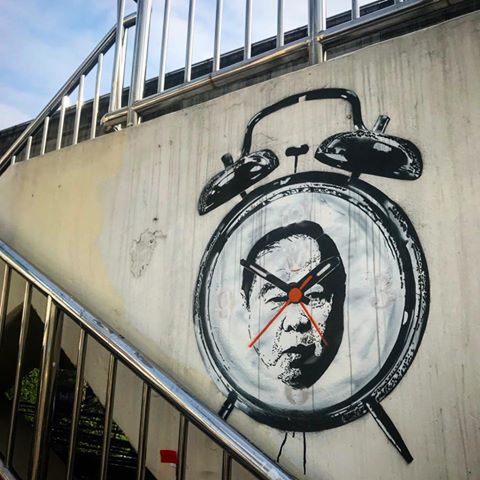
A street mural up temporarily in February. Photo: Headache Stencil / Facebook

BANGKOK — A good-government activist said Friday he will launch a campaign to impeach the five anti-corruption commissioners who voted to clear the deputy junta leader of wrongdoing.

Srisuwan Janya said he would collect 20,000 signatures to bring an independent impeachment action against the five members of the National Anti-Corruption Commission who Tuesday voted that Gen. Prawit Wongsuwan did nothing wrong by failing to declare 22 ultra-luxury watches.

By a simple majority, the eight voting members ruled Prawit had merely borrowed the watches, despite finding numerous irregularities, such as no evidence where most of the watches, some worth millions of baht, were purchased.

Srisuwan said that Article 103 of the anti-corruption law makes it a crime to accept any gift worth more than 3,000 baht.

After a yearlong investigation plagued by delays, the commission announced during the quiet holiday period that Prawit had no intention of hiding any valuables and that it was normal for a good school friend from his youth to loan such watches.

The commission punted the matter of why most of the 22 watches lacked proof they were purchased in Thailand to the Customs Department.

The announcement provoked ripples of discontent.

Former senator Rosana Tositrakoon questioned the basis for the commission’s decision, saying that Prawit had been seen wearing some of his friend’s watches even though that friend, Pattawat Sukriswong, had already died.

She said the watches may have been bought abroad and brought in without declaring to customs, which would mean they should be confiscated.

Pheu Thai politician and party spokeswoman Khattiya Sawasdipol called the vote a charade and accused the commission of setting a new low standard for justice.

Future Forward Party leader Thanathorn Juangroongruangkit said Friday that it came as no surprise as it involved someone so close to the junta’s nexus of power. Deputy party leader Chamnan Chanruang was confident that 20,000 signatures could be collected to impeach the commissioners.

Under the constitution, impeachments proceedings are triggered in the assembly once it receives a petition signed by 20,000 members of the public. After a debate, lawmakers then must then vote by a simple majority to approve or reject the motion.

Mana Nimitmongkol of Anti-Corruption Thailand said the commission needs to explain more details about the 22 watches and let the public know how long Prawit had worn them.

He added the commission has to also explain how borrowing such expensive watches differs from borrowing money, which needs to be declared.

Advertisement

Could Democracy Monument Be Razed? It’s Been Tried Before.

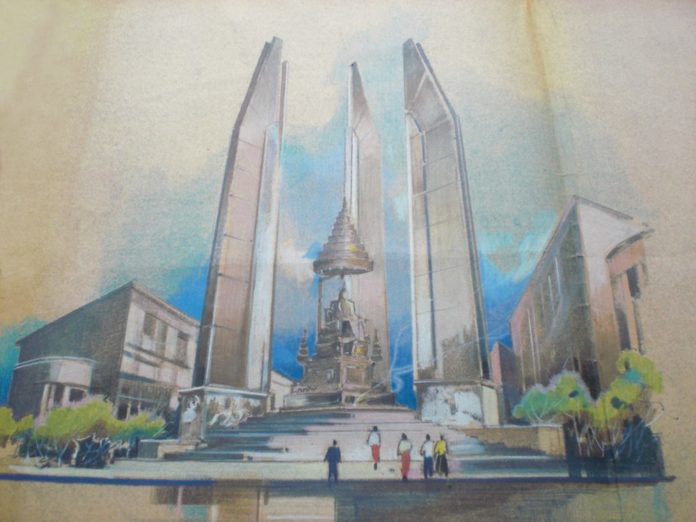
A concept art of a proposed renovation of Democracy Monument

BANGKOK — The recent removals of tributes to the 1932 democratic revolution has some people nervously joking that the iconic Democracy Monument could be next.

The monument, which stands right smack in the middle of picturesque Ratchadamnoen Avenue, is safe for now, but in 1952 it almost met its end after ultraroyalist officials proposed tearing it down and replacing it with the statue of King Rama VII.

Their modest proposal nearly became reality. The project was approved by the cabinet but later killed off by the prime minister before it could happen.

“They said that since Rama VII handed down a constitution to us, why don’t we build a monument displaying that fact instead of an abstract building?” historian and architecture lecturer Chatri Prakitnonthakarn said. “They wanted it dismantled.”

Read: Monument Marking Defeat of Royalist Rebels Removed in Dead of Night

The notion that rule by the people was “royally bestowed” has become a trope of revisionist history. Thailand’s first constitution in fact resulted from a coup staged against King Rama VII’s government in June 1932, which put an end to direct royal rule in favor of a constitutional monarchy.

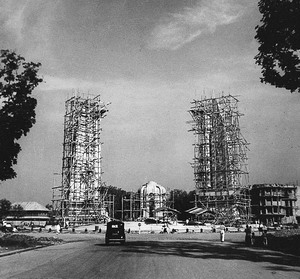
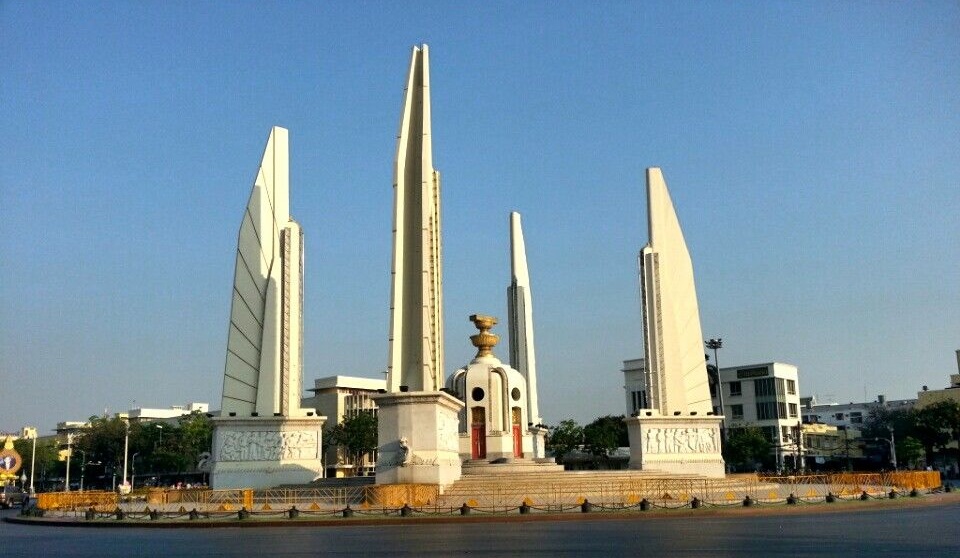
To commemorate the revolt, the coup plotters ordered the Democracy Monument built. It’s full of symbolism. Its radius and height of 24 meters along with 75 partially submerged cannons – what appear fence posts – reference the Buddhist year of 2475 (1932); the Naga figures around the memorial represent 1932’s zodiac, Year of the Dragon.  

M8573747 35
Democracy Monument under construction

But by 1952, after a series of coups, the revolutionaries had been sidelined from power, and the government stacked with royalist generals. They soon set their sights on what to them was a massive eyesore.

A committee was convened to facilitate what the government called a “renovation” project. Led by interior affairs minister Banyat Thephasadin Na Ayutthaya, the group called for a gigantic statue of King Rama VII to be erected in place of the monument.

According to one account, the government wasn’t going alone. Kasetsart University historian Sarunyou Thepsongkraow wrote in Art and Culture Magazine in 2013 that there was evidence the royal household bureau was urging officials to make it happen.

In the end, it was Prime Minister Plaek Pibulsongkram who left us with the monument still highlighted in every travel guide. He simply told the cabinet the treasury couldn’t afford it. In February 1953, the plan was put on indefinite hold.

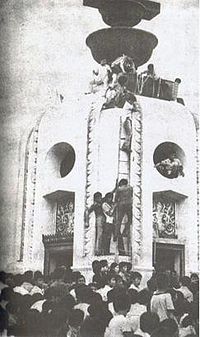
The grand renovation plan was raised again by the military dictators of 1969, but a popular uprising – in which the Democracy Monument was a rallying point – toppled the regime four years later, again killing the idea.

The first fatality of the October 14 incident being winched atop the Democracy Monument
Protesters wince the body of Jira Boonmak, the first fatality of Oct. 14 uprising, onto the top of Democracy Monument.

“After Oct. 14 incident, the monument got a new meaning as a true icon of democracy,” Chatri the historian said. “Its place of prominence was secured.”

The government did end up building the statue of King Rama VII originally designed for the monument, albeit in smaller size. The statue was placed in front of the parliament building, which is closing forever Monday.

So is the Democracy Monument’s future secure? Chatri thinks it would be difficult to remove such an iconic landmark, but after what befell the Constitution Defense Monument, he is less sure now.

“I wasn’t that shocked when I heard the news, actually,” the lecturer said. “I always thought its end would come, eventually.”

Correction: An earlier version of this year misidentified 1932 as the Year of Serpent. In fact, it was the Year of the Dragon.

39 3
Democracy Monument seen in 2016.
Advertisement

From Canada to Thailand, 2018’s Banner Year For Legal Marijuana

Steve Fagan, grower and collective owner of SLOgrown Genetics, attends to his organically cultivated cannabis on Sept. 11 at his farm in the coastal mountain range of San Luis Obispo, California. Photo: Richard Vogel / Associated Press

PORTLAND, Oregon — The last year was a 12-month champagne toast for the legal marijuana industry as the global market exploded and cannabis pushed its way further into the financial and cultural mainstream.

Liberal California became the largest legal U.S. marketplace, conservative Utah and Oklahoma embraced medical marijuana, and the U.S. East Coast got its first commercial pot shops. Canada ushered in broad legalization, Thailand legalized medical use, and Mexico’s Supreme Court set the stage for that country to follow.

U.S. drug regulators approved the first marijuana-based pharmaceutical to treat kids with a form of epilepsy, and billions of investment dollars poured into cannabis companies. Even main street brands like Coca-Cola said they are considering joining the party.

Read: Merry X’Mas! Parliament Unanimously Passes Medical Marijuana

“I have been working on this for decades, and this was the year that the movement crested,” said U.S. Rep. Earl Blumenauer, an Oregon Democrat working to overturn the federal ban on pot. “It’s clear that this is all coming to a head.”

With buzz building across the globe, the momentum will continue into 2019.

Luxembourg is poised to become the first European country to legalize recreational marijuana, and South Africa is moving in that direction. Israel’s Parliament approved a law allowing exports of medical marijuana. After Thailand legalized medicinal use of marijuana, other Southeast Asian countries may follow South Korea’s lead in legalizing cannabidiol, or CBD. It’s a non-psychoactive compound found in marijuana and hemp plants and used for treatment of certain medical problems.

“It’s not just the U.S. now. It’s spreading,” said Ben Curren, CEO of Green Bits, a San Jose, California, company that develops software for marijuana retailers and businesses.

Curren’s firm is one of many that blossomed as the industry grew. He started the company in 2014 with two friends. Now, he has 85 employees, and the company’s software processes USD$2.5 billion in sales transactions a year for more than 1,000 U.S. retail stores and dispensaries.

Green Bits raised $17 million in April, pulling in money from investment firms including Snoop Dogg’s Casa Verde Capital. Curren hopes to expand internationally by 2020.

“A lot of the problem is keeping up with growth,” he said.

Legal marijuana was a $10.4 billion industry in the U.S. in 2018 with a quarter-million jobs devoted just to the handling of marijuana plants, said Beau Whitney, vice president and senior economist at New Frontier Data, a leading cannabis market research and data analysis firm. There are many other jobs that don’t involve direct work with the plants, but they are harder to quantify, Whitney said.

Investors poured $10 billion into cannabis in North America in 2018, twice what was invested in the last three years combined, he said, and the combined North American market is expected to reach more than $16 billion in 2019.

“Investors are getting much savvier when it comes to this space because even just a couple of years ago, you’d throw money at it and hope that something would stick,” he said. “But now investors are much more discerning.”

Increasingly, U.S. lawmakers see that success and want it for their states.

Nearly two-thirds of U.S. states now have legalized some form of medical marijuana.

Voters in November made Michigan the 10th state — and first in the Midwest — to legalize recreational marijuana. Governors in New York and New Jersey are pushing for a similar law in their states next year, and momentum for broad legalization is building in Pennsylvania and Illinois.

“Let’s legalize the adult use of recreational marijuana once and for all,” New York Gov. Andrew Cuomo said last week.

The East Coast’s first recreational pot shops opened in November in Massachusetts.

State lawmakers in Nebraska just formed a campaign committee to put a medical cannabis initiative to voters in 2020. Nebraska shares a border with Colorado, one of the first two states to legalize recreational marijuana, and Iowa, which recently started a limited medical marijuana program.

“Attitudes have been rapidly evolving and changing. I know that my attitude toward it has also changed,” said Nebraska state Sen. Adam Morfeld, a Democrat. “Seeing the medical benefits and seeing other states implement it … has convinced me that it’s not the dangerous drug it’s made out to be.”

With all its success, the U.S. marijuana industry continues to be undercut by a robust black market and federal law that treats marijuana as a controlled substance like heroin. Financial institutions are skittish about cannabis businesses, even in U.S. states where they are legal, and investors until recently have been reluctant to put their money behind pot.

Marijuana businesses can’t deduct their business expenses on their federal taxes and face huge challenges getting insurance and finding real estate for their brick-and-mortar operations.

“Until you have complete federal legalization, you’re going to be living with that structure,” said Marc Press, a New Jersey attorney who advises cannabis businesses.

At the start of the year, the industry was chilled when then-U.S. Attorney General Jeff Sessions rescinded a policy shielding state-licensed medical marijuana operators from federal drug prosecutions. Ultimately the move had minimal impact because federal prosecutors showed little interest in going after legal operators.

Sessions, a staunch marijuana opponent, later lost his job while President Donald Trump said he was inclined to support an effort by U.S. Sen. Cory Gardner, a Colorado Republican, to relax the federal prohibition.

In November, Democrats won control of the U.S. House and want to use it next year to pass legislation that eases federal restrictions on the legal marijuana industry without removing it from the controlled substances list.

Gardner and Massachusetts Democratic Sen. Elizabeth Warren have proposed legislation allowing state-approved commercial cannabis activity under federal law. The bill also would let states and Indian tribes determine how best to regulate marijuana commerce within their boundaries without fear of federal intervention.

If those provisions become law, they could open up banking for the marijuana industry nationwide and make it easier for cannabis companies to secure capital.

Blumenauer’s “blueprint” to legalize marijuana also calls for the federal government to provide medical marijuana for veterans, more equitable taxation for marijuana businesses and rolling back federal prohibitions on marijuana research, among other things.

“We have elected the most pro-cannabis Congress in history and more important, some of the people who were roadblocks to our work … are gone,” Blumenauer said. “If we’re able to jump-start it in the House, I think there will be support in the Senate, particularly if we deal with things that are important, like veterans’ access and banking.”

Story: Gillian Flaccus

Advertisement

Monument Marking Defeat of Royalist Rebels Removed in Dead of Night

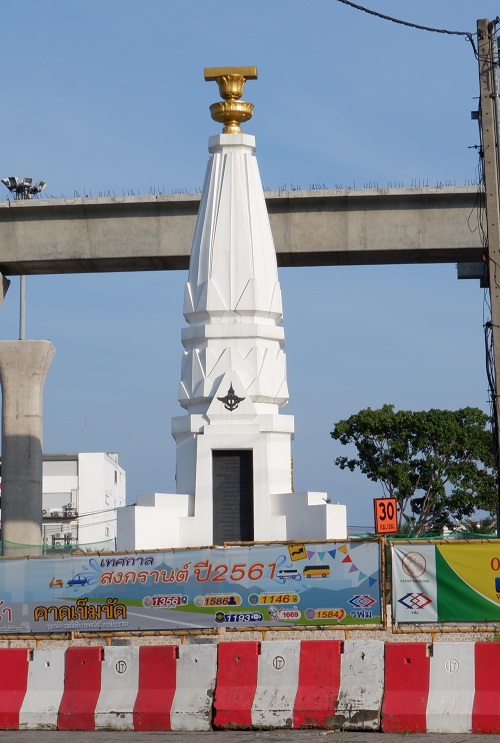
Photos circulated on social media that claim to show the Constitution Defense Monument being taken down on Thursday night.

BANGKOK — A historic monument that commemorated government victory over a pro-monarchy rebellion eight decades ago was removed Thursday night without notice or explanation.

Activists and historians fear that the Constitution Defense Monument, which stood at the Laksi Intersection in northern Bangkok, could be destroyed after security forces were seen taking it away in the early hours. Officials declined to comment on its fate.

“We don’t know where it is now. There’s a risk that the monument will be gone for good,” said Chatri Prakitnonthakarn, a conservationist who teaches history of Thai architecture at Silpakorn University.

Read: Could Democracy Monument Be Razed? It’s Been Tried Before.

It’s the second time in two years a physical reminder of democracy in Thailand has been removed in secret and without explanation. In April 2017, a plaque commemorating the 1932 revolution that ended absolute monarchy disappeared from the Royal Plaza and was replaced with one extolling the monarchy.

DSCF4095
The monument seen in October.

Chatri said he fears that the same fate is befalling the monument as the plaque.

Speaking by phone Friday just hours after the monument was removed, he said he thought there would be no further relocation of the monument after it was already relocated in 2016 to make way for construction of a new skytrain line.

“This was done in haste. Everyone thought the location it was moved [until today] was its new permanent location,” he said.

The memorial was built in 1936 to protect the newly established constitutional democracy from a failed royalist revolt led by Prince Boworadet in 1933. The rebels sought to restore absolute monarchy, which had come to an end a year earlier.

Bang Khen district chief Somboon Homnan maintained he didn’t know anything about the removal. He said the monument was located in an area governed by the state railway, which is building an elevated railway nearby.

“I just heard about this for the first time from you,” Somboon said to a reporter.

MRT deputy governor Surachet Laophulsuk, who oversees the railway construction project, declined to comment. Junta spokesman Col. Winthai Suvari could not be reached as of publication time.

One witness to the monument’s removal was pro-democracy activist Karn Pongpraphapan, who went to the site Thursday night after hearing about the sudden operation.
Karn said police confiscated his phone at about 3am Friday just as he was trying to begin a live video stream via Facebook Live.

In an interview, Karn said one of the soldiers at the scene refused to tell him why the monument was being removed.

“He only said one word: ‘secret,’” said Karn.

In November 2014, months after the May 2014 coup, another monument commemorating Thailand’s first constitution in Buriram province was also torn down. Local officials said the memorial blocked traffic.

Additional reporting Teeranai Charuvastra

Related stories:

Revisit a Time Thailand Celebrated Democracy

No More Annual ‘Plaque Ceremony’ for 1932 Revolt

Why Was the 1932 Revolution Plaque So Important?

Advertisement

Our Reporters on Their Favorite Stories of 2018

From intimate interviews to deep dives on topics we were personally passionate about, here are the stories we were most proud of in 2018.

Each year we ask our staff writers to talk about their favorite stories of the year.

ICYMI: Our Favorites of 2017 and 2016, and our year end coverage

Teeranai Charuvastra

33 Hours of Defiance: The Thai Airmen Who Resisted an Empire

There seems to be a pervasive misunderstanding among some expats that Thais “invited” the Japanese army into their country and willingly joined hands with the Axis power during World War II. This narrative falls apart under the weight of historical evidence on the various acts of resistance against the occupiers, especially this hopeless battle at the little-remembered outset of the invasion in an unremarkable bay.
Asaree Thaitrakulpanich

Go Deep With Thailand’s 1st Female Undersea Relic Hunter

One dives to the ocean floor to look for centuries-old shipwrecks, another boils delectable gaeng bon curry. Whether it was the first Thai woman to become an underwater archaeologist or the fourth-grade graduate who earned a Michelin star, both Jo and Auntie Banyen – relatively unknown to the public – showed Thai women making waves in 2018. They stood out for me, as reporting them required consuming amazing food and throwing up in the Gulf of Thailand.

Auntie Banyen ๑๘๑๑๒๐ 0007

Chayanit Itthipongmaetee

Send in the Queens: Thai Queer Culture Gets Drag Makeover
HEADPIC
From left, drag queens Morrigan, Amadiva, Jaja and Meannie Minaj in Siam Square.

It took almost a decade for RuPaul’s Drag Race to pull into Bangkok and brighten the LGBT scene even more. It was my privilege to interview some of the queens, follow them for weeks to their performances and discover who they really are beneath the wigs, hip pads and corsets.

More or less I hope this article helped improve understanding of these entertainers who don’t just play the clown, but are full of charisma, uniqueness, talent and nerve.

Pravit Rojanaphruk

Opinion: Understanding the Rogue Thai Army
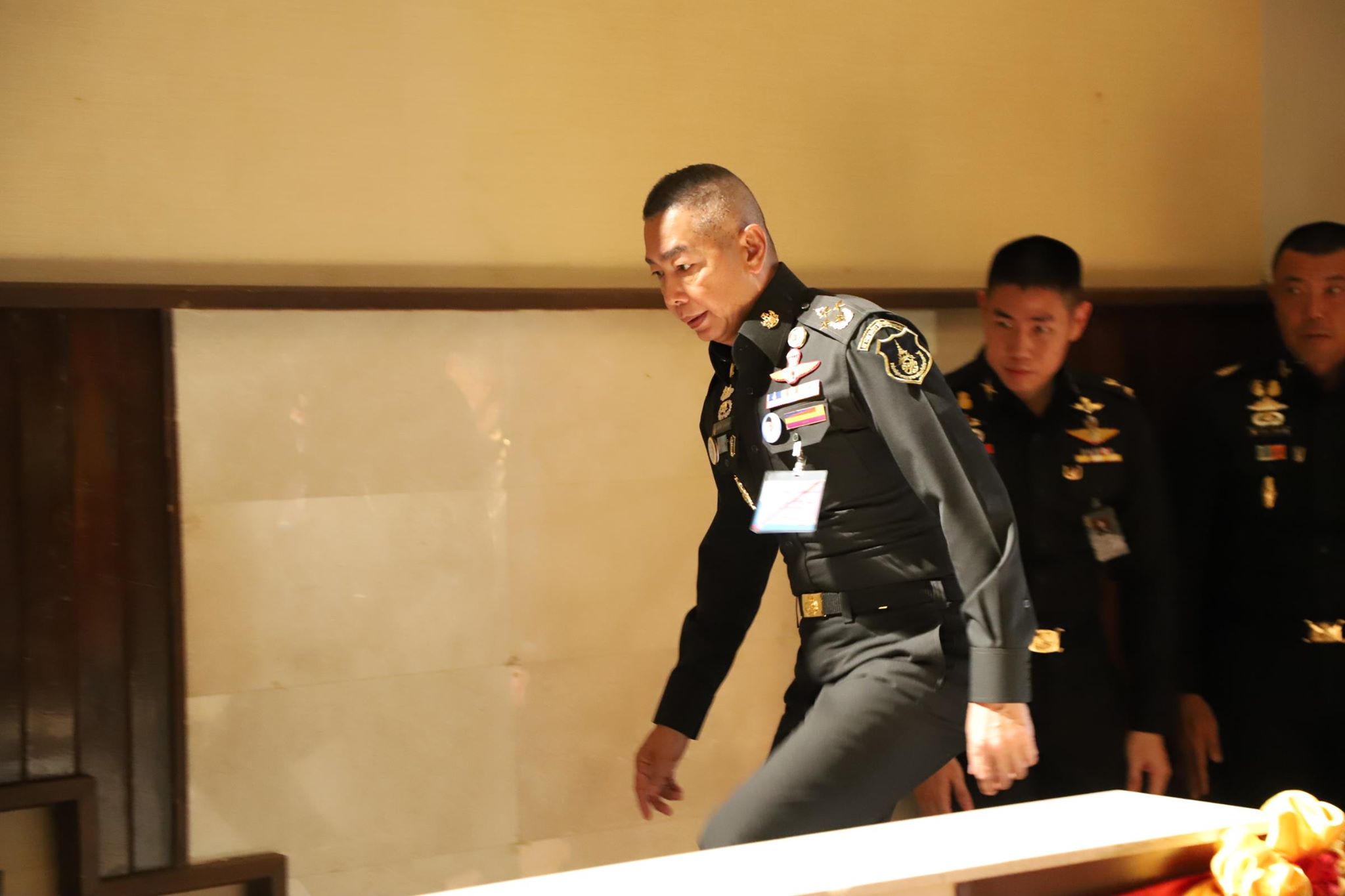
Apirat Kongsompong arrives at a news conference Wednesday at the army headquarters in Bangkok.

Thais may finally get to vote on Feb. 24, but junta leader Gen. Prayuth Chan-ocha will remain in power until the moment the newly elected parliament starts its first day of work. No one knows what may happen between now and then. It would be naive to say military coups will be a thing of the past. Thus the need to understand the rogue army generals and my reason for choosing this opinion piece as my favorite of 2018.
It won’t be outdated anytime soon, unfortunately.

Lobsang Dundup Sherpa Subirana

Far From Belfast, Gaelic Football Keeps Their Irish Up
Top: Lauren Magee, left, Dublin and the 2017 team, in action against Sinead Aherne, Dublin and the 2016 team, during the exhibition match March 17 at the Chulalongkorn University Stadium. Photo: Ladies Gaelic Football / Facebook

What initially seemed a standard event review uncovered a thriving Irish subculture in Thailand that unites the country’s diaspora through their national sport. Interviews with the players, organizers and supporters of Bangkok’s Gaelic football community revealed how much the sporting association means to the lives of the ever-traveling Irish outside Eire – not just in Thailand, but worldwide.

Jintamas Saksornchai

The Secret Suffering of Toxic Thai Med Schools
New students of Siriraj’s medical school participate the 2012 welcome event. Photo: Matichon

The medical community is secluded and clouded by its prestigious social stature, but behind it lie some dark matters rarely discussed in the open. News of doctors and medical students committing suicide are not uncommon, but less has been discussed of what could be done about it. One can speculate on the high pressure and out-of-reach, inhuman expectations placed upon their performance, which has led many into depression, but I hope this article painted a clearer picture of what they go through to be able to become doctors and satisfy that standard, from within their community and society as a whole.

Todd Ruiz

From the Editor: 10 Ways Thai Media Can Fail Less

toddcolumn2 1

Though less fun than chasing down Slav libertines claiming dirt on Trump or as gratifying as being on the cave rescue scene, unpacking a topic that haunts my days and nights – in handy listicle form, nonetheless – was most cathartic.

Advertisement

Hot News

LATEST NEWS

Bangkok
overcast clouds
31.7 ° C
32.2 °
28.8 °
73 %
5.1kmh
100 %
Mon
29 °
Tue
37 °
Wed
35 °
Thu
34 °
Fri
32 °