Local Chinese artists perform a dragon dance during cerebrations to mark Lunar New Year last year in Yangon, Myanmar. Photo: Thein Zaw / Associated Press
BEIJING — Millions in China were boarding trains, planes and automobiles Wednesday as the Lunar New Year travel rush, the world’s largest seasonal human migration, reached its climax.
China’s most important festival falls on Friday and people were traveling to either return to their hometowns or flock to vacation destinations. For many migrant workers in the country’s industrialized east, the holiday may be the only time of year they return home to see family and friends.
Weeks before the rush, many travelers had used smartphone apps to snatch up tickets that later sold out. Some train journeys between cities and rural areas last more than 20 hours, with passengers crowded into cabins that are standing room only.
The state railway operator reported Monday that 98.8 million people rode trains countrywide during the first 12 days of February. China’s official Xinhua news agency said more than 1.1 million were expected to pass through railway stations in Beijing on Tuesday and Wednesday alone.
Increasing numbers of Chinese have also been traveling abroad in recent years, reflecting rising prosperity among the urban middle class.
More than 6.5 million are expected to head overseas this year, according to a joint report from travel agency Ctrip and the China Tourism Academy.
Travelers have booked voyages to more than 68 nations and regions, the report said, with Thailand, Japan, the United Arab Emirates and Nordic countries among the top destinations. The average Chinese tourist spends about 9,500 yuan (USD$1,500) on a Lunar New Year trip, the report said.
Domestic travel is also popular: the National Tourism Administration predicted earlier this month that this year’s holiday period will bring in 476 billion yuan (USD$75 billion) in tourism revenue.
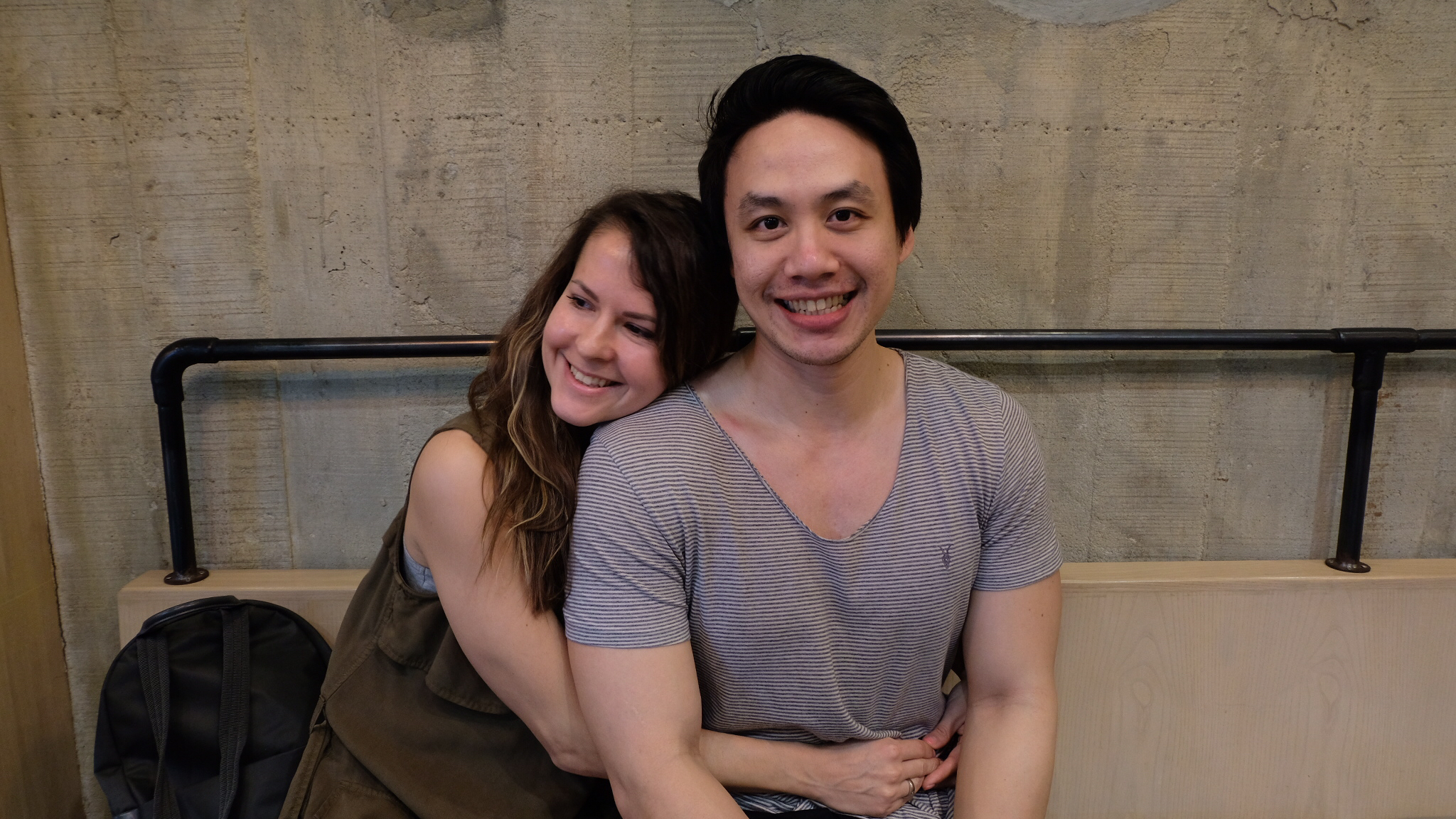
Maria Puntasu and Assawa Puntasu. Photo: Maria Puntasu / Courtesy
Top: Maria Puntasu and Assawa Puntasu. Photo: Maria Puntasu / Courtesy
Maria was visiting Bangkok. Itt worked at a muay thai gym. “Take off your shirt,” she told him as they threw some punches.
He did. She nodded approval at his six pack.
Two days later she flew home and told her husband she wanted a divorce.
Later, as Maria Puntasu and Assawa “Itt” Puntasu, they moved to Kirov, a town 12 hours by train east of Moscow to open their own muay Thai gym. Itt jokes that he was the only Thai man in Kirov (There are 10 Thai women, all spa masseuses).
In Kirov, Russian trolls said Maria’s children would be ugly because she married “a jumping monkey from a palm tree.” They later returned to Bangkok.
But life in Thailand isn’t any more welcoming for couples like Maria and Itt. More than curious glances from Thais, they encounter icy loathing from foreign men. The Thai men battle their own insecurities along with everyone’s assumptions they are serial cheaters and abusers who’ve latched onto a blonde piggy bank. In malls and parks, they’re mistaken for the nannies of their own children.
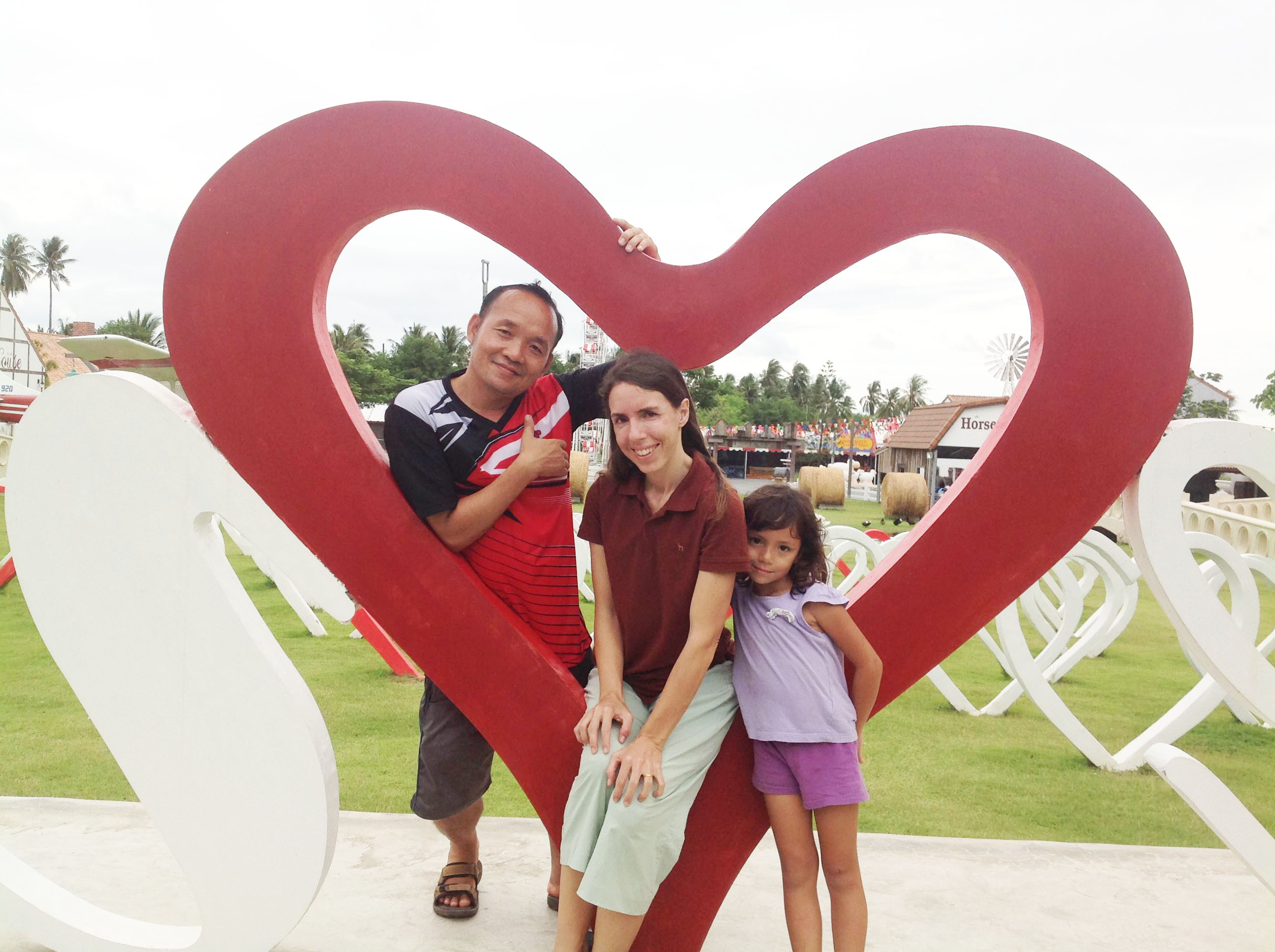
Samantha Rattanawong and her husband Khatawut “Tum” Rattanawong. Photo: Samantha Rattanawong / Courtesy
There is little data on the number of foreign women married to Thai men, but the cases are rare compared to the copious coupling of Thai women with foreign men.
For 35-year-old Maria, it doesn’t matter what others call her husband.
She calls the 31-year-old her Dekabrist, or Decembrist, because he abandoned Thailand’s perennial warmth for the winters of Russia, much like the wives of the 1825 Decembrist revolutionaries who followed their husbands into Siberian exile.
Similar to Maria, Samantha has also faced dirty looks from farang men for being with a Thai man.
Far from the Russian winters, American Samantha and her husband Khatawut “Tum” Rattanawong have lived in sun-blanched Ratchaburi province the past eight years.
Tum was a cadet cutting grass shirtless at the Chulachomklao Royal Military Academy in 2007 when his wife-to-be fell off her motorcycle at the sight of him.
“It was the same guy I had walked past a few days earlier in Future Park Rangsit and felt an inexplicable spark,” Samantha said. “The first time we talked on the phone, it was for 12 hours. We felt like we had known each other forever.”
Some of the farang men here are offended by us, by the presence of farang women. We’re a stopper in their fantasy
Samantha, 39, came forward with her love story after Khaosod English wrote about Thai masculinity, Thai women and foreign men. Her written comment on the article – that there were wonderful Thai men – mostly attracted toxic replies.
They called her a “cash cow” for Thai men who were “all pieces of shit.”
“There’s a jealousy in white guys when white girls are with Asian guys,” Samantha said. “They feel like we’re being stolen.”
Samantha Rattanawong and her husband Khatawut “Tum” Rattanawong. Photo: Samantha Rattanawong / Courtesy
‘Got Yourself a Monkey’
Maria first met Itt in 2014, and though taken aback by the Russian’s request that he disrobe, he followed through. The rest is history.
When I walked on the street with him, some men would look at me really bad because they just couldn’t understand it.
“I abandoned everything for him,” Maria said. “I came to live in Thailand without anything, after having known him for two days.”
Her friends and family thought she was crazy to leave her perfectly fine Russian husband for a Thai man she had met only two days.
“I had been unhappy in my marriage for a long time. And when I met Itt, I knew I had found my soulmate, even if I couldn’t understand what I was doing or why at first,” she said.
Yet her homesickness was too strong, and a year later the couple moved to Moscow and then Kirov.
Her parents met Itt. He charmed them; even making her grim Russian dad crack a smile.
But similar to what Samantha experienced by just mentioning her love story, strangers and followers of Maria’s Russian-language LiveJournal were vicious.
Maria Puntasu and Assawa Puntasu.
“They would send me comments like, ‘You’re beautiful enough, why can’t you find a Russian man? Why are you with a jumping monkey you got from a palm tree? You’ll have ugly kids, and you’ll make your genes worse,’” Maria said, describing messages sent to her blog when she wrote about her romance.
The words manifested into looks of disgust.
“There’s still racism in Russia. When I walked on the street with him, some men would look at me really bad because they just couldn’t understand it. From their looks, I could tell they hated it,” Maria said, pressing her brows over an intense squint and mouth twisted into a snarl of contempt to illustrate the face the haters made.
There’s a jealousy in white guys when white girls are with Asian guys. They feel like we’re being stolen.
Itt, a jolly, muscular boxer, seemed less bothered by the racism, laughing at the fact that he’d get called Bruce Lee or Jackie Chan.
“I knew they thought he was an Alphonse, probably from Kyrgyzstan or Uzbekistan,” Maria said, explaining that Central Asian immigrants are looked down on in urban Russia and referencing a French term for gigolo.
Maria says Itt and her are a “fitness” couple: They love to work out together, and their blog is full of cute gym selfies. As Maria cuddles Itt’s shoulder, a young daughter from her previous marriage runs around the room with Itt’s mom.
Maria and Assawa “Itt” Puntasu’s Thai wedding in November 2016. Photo: Maria Puntasu / Courtesy
“No one believed it was real love,” she said. “But I don’t care. He’s my Dekabrist.”
After she fell off of the motorcycle and into love in 2007, Samantha’s love for Tum blossomed at the cadet school among teasing from his fellow troops for courting a farang teacher eight years his senior.
“Teachers and soldiers lived in the same compound, so we would spend every day together,” she said. “He would leave me flowers and snacks on my table.”
Their love endured when Tum, 32, left to the academy. She wrote him letters. His fellow troops snatched them at mail call and read them aloud.
Now in Ratchaburi, Samantha said she feels unwelcomed by the sexagenarian foreign men inhabiting the city.
“Some of the farang men here are offended by us, by the presence of farang women. We’re a stopper in their fantasy,” she said.
Some of that hostility is mutual.
Both farang men and women, Samantha said, “feel like a prince or princess” when they first arrive in Thailand. The older men, she said, land beautiful young wives in their 20s and live right by the beach instead of scraping by on retirement money in their home country.
“When they see us, we both know that they would be nothing in their own country. Some men will show an attitude and pretend they don’t notice you,” she said. “The nice ones, maybe 20 percent, will say hello.”
Sweet Love Meets Red Tape
All the couples spoke of problems and confusion when applying for marriage documents, due to little precedent.
Natasha Lupina, who’s married to the owner of a second-hand car dealership, said she had no idea how to complete Russian documents for her marriage since information she found online pertained only to foreign men marrying Thai women. She’d have to find out first hand at the embassy.
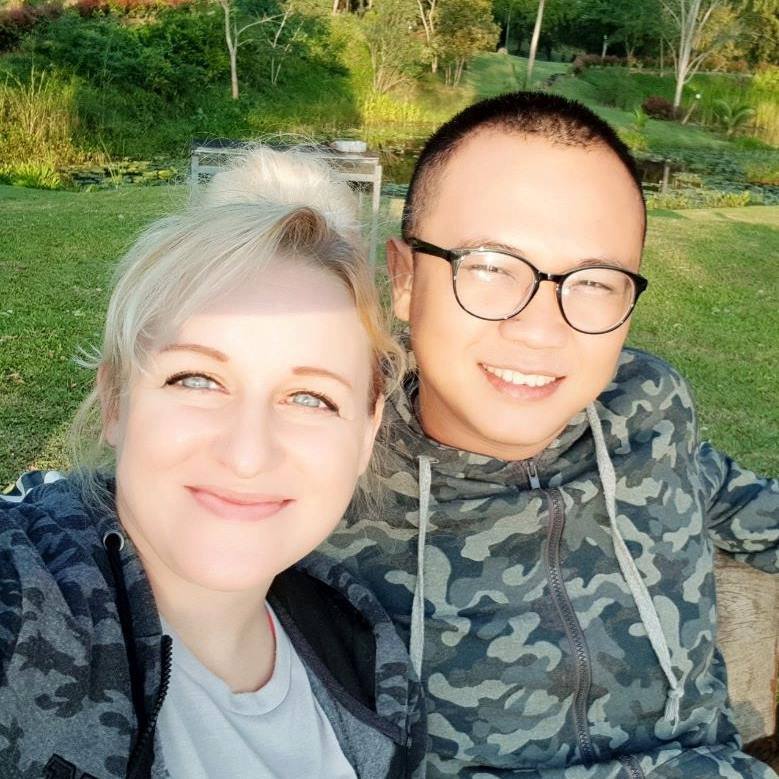
Maaike Van den Winkel and Anuchit “Jae” Sittisarigorn. Photo: Maaike Van den Winkel / Courtesy
Maaike Van den Winkel from Belgium had her own embassy story.
In 2013, Maaike left her home to roam Southeast Asia. She ended up on Koh Mak where she met English-savvy Anuchit “Jae” Sittisarigorn, 40.
“I met her and had a good feeling about it. From something small, we found similarities until it became love,” said Jae, an artist who owns the Koh Mak Art House / bar.
They married by Koh Mak Beach under the stars and swaying palm trees.
At the Belgian Embassy, surprised staff told Maaike she was only the third woman to marry a Thai in the past five years.
“They get Belgian men with Thai women every day,” Maaike, now 29, said. “I was a big exception.”
Love and Language
Tanawat “Eddy” Srisuk is the 41-year-old owner of Vichuda Used Cars in Bangkok and wears a gold ring on his finger. But when he drives Natasha, the Russian, to restaurants with her family, the staff assume he’s their taxi driver.
I used Google Translate to flirt with her.
Like the staff, Eddy and Natasha don’t understand each other much either. But in April, they will marry.
Eddy repeats that he can’t speak English. But as they giggle over cups of coffee in a mixture of Thai, English and Russian, 29-year-old Natasha says they have their “own language.”
“It takes extra patience to understand,” Natasha said in English. “He’ll have his ‘Thai style’ of communication – he’d just nod along to whatever I was saying. I got mad at that. I’d tell him, ‘If you don’t understand, you can ask me 10, 20 times and it’s okay! But I need you to understand!”
Soon after they met, Eddy confessed his love for her.
“I used Google Translate to flirt with her,” he said in Thai.
He asked her out, but couldn’t understand her reply, so he asked again on a different day.
“She said, ‘wait, so what were we before now?’ It turns out, she had already said yes the first time!” Eddy said, laughing.
Fiancees Tanawat “Eddy” Srisuk and Natasha Lupina.
He proved himself to be a man of action, leaning in to kiss Natasha during a sit-down interview with a reporter.
Their proposal, too, relied on actions and feelings more than language.
He prepared Natasha a surprise in the lobby of a hotel where they were staying.
“I told the hotel staff, ‘I’m willing to pay you whatever. But I need the lobby to be empty when she comes to check out,’” Eddy said. “I wanted Natasha to be confused and in a bad mood.”
Indeed Natasha came down to check out and waited for almost an hour in the empty lobby while Eddy ignored calls. Just as she was about to lose it, Eddy walked in with flowers, blaring music and got down on one knee. The hotel staff clapped as she nodded “yes.”
“It’s real love,” the business owner said in Thai. “I can’t even communicate, how can I lie?”
Anuchit “Jae” Sittisarigorn with his daughter James, 1.
Self-Doubt
While Eddy and Natasha shrug off the language barrier, other would-be Thai suitors have to get over great anxiety in approaching foreign women.
At church, Karen pastor Tup Suklertdilokkul asked Canadian teacher Shawna to translate some worship songs for him. As she was listening to them at home, the words changed from “hallelujah” to “I love you.”
“I never, ever used to think I would marry a farang,” soft-spoken Tup said. “When I was at university and farangs would come up and talk to me, I would hide in the bathroom. I was scared because I couldn’t speak English.”
Some people will ask where I got these farang kids from. I have to say, ‘They’re my kids.’
But when Tup, 40, saw Shawna, 38, teaching children English at their local church in 1996, he decided that English and cultural differences were fears that could be surmounted.
Tup took her to his Karen village in the mountains of Chiang Mai.
“I wanted to show her, ‘This is me. This is where I’m from. Can you accept it?’ Even my family thought we would break up,” Tup said.
But they didn’t. The pair married in 2004 and now live in Bangkok with their two children.
When Tup goes out with his daughters, people assume he’s the p’liang, or nanny.
“Some people will ask where I got these farang kids from. I have to say, ‘They’re my kids,’” he said, laughing.
The men interviewed said such couples are rare because of their own insecurities, particularly over issues such as their earning power.
“It’s not that Thai men don’t like farang women,” Tup said.
“The money men earn here can be a lot less than what she earns back home, so few want to get in the same boat as that,” Jae, the artist on Koh Mak married to Belgian Maaike said. “Maybe farang women think Thai men don’t have the earning capacity to take care of their families.”
Tup and Shawna Suklertdilokkul with their daughter, DD, 6. Photo: Shawna Suklertdilokkul / Courtesy
Shawna and Samantha however, blame other attitudes and misconceptions.
Shawna, who was the writer’s elementary school teacher, thinks a Western lack of respect for Thai culture applies to personal relationships.
Samantha said preconceived cultural notions that white women may have about Asian guys are the reason there are few such couples.
“In the US, not a lot of white women like Asian guys, maybe because of old stereotypes like that Asian men want submissive women, or dumb jokes about penis size,” she said. “Because we grow up like that, some women go, ‘Oh, I don’t want to date an Asian.’”
Tuning Out the Haters
For Samantha, Tum defies any negative stereotypes of being in a relationship with a Thai man.
“People like to say to me, ‘I can’t believe you have a Thai husband; they’re all jao choo,’ [cheaters] but my friends that actually know him will say, ‘You’re so lucky to get a honest Thai guy like him,” Samantha said.
Samantha and Tum Rattanawong. Photo: Samantha Rattanawong / Courtesy
When they first started dating, she said Tum gave her all his phone and social media passwords and asked her to chase off women for him.
“Thai women seem to flock to him because he has a white wife, so some think he has something special like money. He will ignore them completely, but I’m a bit protective so I have to say ‘What are you looking at?’ or ‘We’re married’ to her face,” Samantha said.
She’s often told Tum is merely with her for her money. Samantha does earn more than him but says that’s only incidental.
“When I was an army teacher, I made practically nothing, or 14,000 baht per month,” she said. “We would split the cost of things and he would get nervous about it. He said he didn’t want me and other people to think he needed my money.”
Happily Ever After?
Whether in sunny Ratchaburi, blustery Kirov, busy Bangkok or idyllic Koh Mak, all five couples said they’ve carved out a place of happiness.
Samantha and Tum live with their with their 9- and 4-year-old children in a house with a big yard and 10 dogs.
“We live comfortably here,” Samantha said. “Our kids go to the local school and most of the time we speak Thai as a family. On Saturdays, we go hiking.”
Maria and Itt plan to open a Thai massage spa in Kirov.
“I got a Thai massage license so I’m prepared. I can go anywhere with her, no matter how cold it is. Russians have a saying that there’s no feeling cold as long as you have good coats,” Itt said, laughing.
Maria and Assawa “Itt” Puntasu. Photo: Mashkind / Instagram
Eddy tells everyone his April 22 wedding to Natasha will incorporate Thai and Catholic ceremonies.
“I don’t care what nation she’s from. She could be Vietnamese or Russian or anything. I don’t care if she can speak Thai or not. I love her, and that’s all that matters,” Eddy said.
Shawna teaches at International Community School while Tup is a pastor at a local church.
“We just need to love them; no one is perfect. If we put love in the center, everything will turn out to be the best for us,” Tup said.
On Koh Mak, Jae wakes late in the morning, plays with his daughter James Ivonne Sittisarigorn, 1, and does some commissioned paintings before opening his bar at 6pm.
“It’s so magical when someone from two different countries can share a life where what’s mine is hers, and what’s hers is mine,” Jae said. “We met, extended bridges to each other, went through hardships together and from that we grew to love.”
“We’re in love, and we live in paradise,” Maaike said. “I had to decide to spend the rest of my life in Thailand. All this made it easy.”
Dec. 20, 2016, Ahmad Khan Rahimi, center, is led into court in Elizabeth. Photo: Mel Evans
NEW YORK — A New Jersey man who set off small bombs in two states, including a pressure cooker device that blasted shrapnel across a New York City block, was sentenced Tuesday to multiple terms of life in prison by a judge who repeatedly called it a miracle nobody was killed.
Ahmad Khan Rahimi, a naturalized U.S. citizen born in Afghanistan, was criticized by a prosecutor for failing to show remorse and was scolded by a victim for not apologizing to the 30 people he injured.
U.S. District Judge Richard M. Berman in Manhattan said it was hard to reconcile the “reasonable enough” man he saw in court with the terrorist who tried to kill as many people as he could when he left his home early the morning of Sept. 17, 2016, with two pressure-cooker explosives and a bag full of smaller bombs.
“You sound like most people and yet your actions are totally at odds with your voice,” Berman said.
“We saw videos,” he said, referencing multiple videos at his fall trial that showed Rahimi dragging bombs in two suitcases and a backpack through Manhattan streets, setting one down a half hour before it exploded in the upscale Chelsea neighborhood and another a few blocks away that was discovered and disabled before it could explode.
“It’s really hard to square the way you appear in court to that other behavior,” Berman said.
Regardless, the judge said, Rahimi deserved multiple life prison terms. One life term was mandatory but the judge exercised his discretion by imposing life sentences for counts that Rahimi’s defense lawyer said deserved only a 15-year sentence. He also ordered $562,803 in restitution.
Berman called Rahimi, 30, a “clear and present danger” and said it was too big a risk not to impose a life sentence, especially after Rahimi offered “not an ounce of justification” for his crimes.
The Chelsea explosion happened just hours after a small pipe bomb exploded along a Marine Corps road race in Seaside Park, New Jersey, frightening participants but injuring no one.
The bombings triggered a two-day manhunt that ended in a shootout with police in Linden, New Jersey. Rahimi was shot several times but survived. Police officers also were injured.
Given a chance to speak, Rahimi, shackled at the ankles, portrayed himself as a victim, saying he came to America as a 7-year-old boy with no hatred for anyone and was raised by a father in a household where there was no mention of what his father experienced during the Soviet occupation of Afghanistan.
He described how his father went to law enforcement on multiple occasions to report suspicious behavior he had seen in his son, but ultimately felt let down.
“I don’t harbor hate for anyone,” Rahimi said before describing how he believed law enforcement targeted him once he became a practicing Muslim.
Assistant U.S. Attorney Shawn Crowley immediately followed Rahimi, saying he had just “blamed everyone else” after causing so much destruction through crimes “fueled by hate.”
“He has shown no remorse,” Crowley said. “He’s proud of what he has done.”
She described Rahimi’s efforts to radicalize fellow prisoners at the federal jail in New York where he has been imprisoned since his arrest.
Rahimi, prosecutors said, gave inmates copies of terrorist propaganda and jihadist materials, including speeches and lectures by al-Qaida founder Osama bin Laden and Anwar al-Awlaki, a U.S.-born cleric who inspired attacks on America and was killed in a U.S. airstrike in September 2011.
Rahimi also allowed some inmates to view materials on his laptop or provided electronic copies as he spread “The Book of Jihad,” bomb-making instructions and various issues of a propaganda magazine.
Defense attorney Xavier Donaldson called it ironic that his client had once aspired to be a police officer and worked as a security guard after studying criminal justice at a community college.
He urged a sentence not based on what people think terrorists might inspire or the fear they may cause.
After the sentence was announced, Berman invited several victims watching the proceedings to speak.
Pauline Nelson, 48, of Brooklyn, stepped to the podium. She was hospitalized when the car she was driving was jolted by the explosion. She’s still being treated for muscle spasms in her back.
“You never apologized to anyone in the courtroom,” she said, staring at the bearded Rahimi, who sat at the defense table, shackles on his ankles. “You have no remorse for what you did.”
___
This story corrects to show the location of the New Jersey pipe bombing explosion was in Seaside Park, not Seaside Heights.
Water bottles without cap seals. Photo: Thad Zajdowicz / Flickr
BANGKOK — Starting in April, bottles of drinking water will no longer come with plastic seals over them.
Five manufacturers agreed Tuesday to stop affixing plastic over water bottle caps. The agreement is part of a government campaign to eliminate the plastic and will be effective starting April 1.
As a result, authorities expect to see a 520-ton reduction in annual plastic waste.
The authorities behind the initiative include the Pollution Control Department, the Office of the Consumers Protection Board, Thai Beverage Industry Association and Plastic Institute.
The goal is to eliminate all plastic wrapping from water bottles nationwide by 2019, said Wijarn Simachaya, permanent secretary of Natural Resources and Environment Ministry.
Sunee Piyapanpong, director of Pollution Control Department, said Thailand produces roughly 4,600 million bottles of water per year. About 60 percent – 2,600 million bottles – have plastic cap seals.
The plastic reduction, according to Wijarn, will reduce waste and improve marine environments, where they are blamed for sickening and killing animals.
Not all bottles come with cap seals, which were introduced many years ago to combat the reuse and resale of bottles by vendors. In Thailand, brands that do not come with the seals include Namthip, Sprinkle, Nestle Pure Life and Minere.
BANGKOK — Not to be confused with the Lady Gaga single of the same name, a song written by junta leader Prayuth Chan-ocha went viral Wednesday to the derision of netizens.
Gen. Prayuth Chan-ocha, full-time head of government and part-time songwriter, released the potentially inspirational tune “Diamond Heart” a few days ahead of Valentine’s Day, meeting general displeasure by the internet despite sentimental lyricism promising to overcome obstacles with a woman who, ostensibly, is the nation.
The comments have been unsparing.
“How untrendy. He should’ve written ‘Diamond Rings and My Friend’s Watches,’” tweeted @Thetuk12, referring to the scandal involving Deputy Prime Minister Prawit Wongsuwan’s possession of dozens of undeclared luxury watches he claims belonged to a deceased friend.
Though the single was dropped Friday, it was largely unknown until Wednesday. By the morning, the YouTube video had gathered more than 500 likes – and more than 12,000 dislikes.
“Why don’t you go release an album and resign your post. I don’t want a leader who writes songs to make himself feel better,” tweeted @LifeDriven3. “You can have the heart of a goat or a diamond heart, just get out.”
Junta fans, however, praised the song. “So amazing. Such good content. Let’s encourage each other for the happiness of all Thais,” wrote Facebooker Maewmeaw Narakmaak. “No matter if the next prime minister is an outsider or not, it should be Uncle Tuu. I’ll always encourage him,” wrote Maj Sunsun.
Other tweets mocked the song’s meaning of a having a brave, or diamond heart.
“Awwww, did you say you have a diamond heart, or a minnow’s heart?” tweeted @shutup2557, attaching photos of the Democracy Monument fenced off during Saturday’s protest in support of the MBK39 activists.
“The feel when I go on YouTube to see how many unlikes are on Prayuth’s Diamond Heart,” tweeted @Veronica_Lris.
Here’s an unofficial translation of “Diamond Heart.”
“Diamond Heart”
Lyrics by Gen. Prayuth Chan-ocha
Tune and Arrangement by Wichian Tantipimolapan
Vocal Arrangement by Maj. Thanyawapisit Jirakittipasukul
Sung by Sgt. Maj. 1st Class Pongsathorn Porjit
Creative direction by Maj. Gen. Kissada Sarika
(Verse 1) How many years have we gone through together?
There are always new problems,
You are the inspiration that makes me fight for you,
Did you know your smile is my happiness?
(Bridge) No matter how tired or difficult, let’s hold hands and go forward together,
Stable, ready, unrelenting faith.
(Chorus) Make your heart a real diamond, unrelenting,
Side by side today together, obstacles mean nothing,
The lessons we learn are new everyday,
We have to build our hearts’ dream together so it’s resilient.
(Verse 2) The more the sky roars, the more our hearts move forward,
Good hearts never relent,
The strong who fall into waters or fires aren’t troubled,
We’ll avoid them as long as we have goodness.
This image released by Disney shows a scene from Marvel Studios' "Black Panther." Photo: Matt Kennedy/Marvel Studios-Disney
NEW YORK — The supposedly cosmically vast Marvel Cinematic Universe, as it’s called, spans planets peppered throughout the galaxy, but Ryan Coogler’s Earth-bound “Black Panther,” glittering and galvanizing, stands worlds apart.
For those of us who have sometimes felt pummeled by the parade of previous Marvel movies, the sheer richness of Coogler’s film is almost disorienting. Can superhero films, so often a dull mash of effects, be this dazzlingly colorful? Are genuine cultural connections allowed in modern-day comic book blockbuster-making? Is a $20 billion refund in order?
Unlike many of its more hollow predecessors, “Black Panther” has real, honest-to-goodness stakes. As the most earnest and big-budget attempt yet of a black superhero film, “Black Panther” is assured of being an overdue cinematic landmark. But it’s also simply ravishing, grand-scale filmmaking.
There are familiar Marvel beats here. Just as he did in the surprisingly sensational Rocky reboot “Creed,” Coogler hasn’t reinvented the genre so much as electrified it with a new perspective and a rare talent for marrying naturalistic character development with spectacle muscle.
Chadwick Boseman in a scene from Marvel Studios’ “Black Panther.” Photo: Matt Kennedy / Marvel Studios-Disney
“Tell them who you are” is the encouragement shouted at the title character, T’Challa (Chadwick Boseman) prince of the African nation Wakanda. But it could just as well serve as the overarching rally cry of a film that for many symbolizes a big-screen affirmation of African-American identity. “Black Panther” stands for everything that’s been missing from Marvel’s — and Hollywood’s — universe.
Coogler opens with exposition on Wakanda, a mighty African country that appears from the outside, as one Western sneers, as “Third World.” But hidden from sight is a shimmering, technologically advanced metropolis whose stealthy growth has been fueled by vibranium, a cosmic mineral deposited deep in its mountains by a meteorite thousands of years earlier. Vibranium makes up the suit that T’Challa dons as Black Panther, and its power is much guarded. An early flashback, to 1992 Oakland, California, shows one Wakandan’s failed efforts to smuggle Vibranium in order to empower struggling African-Americans.
When the king of Wakanda dies, T’Challa returns home to take the throne, where he finds the country’s five tribes — each with their own distinct color and attire — are beginning to bubble with discord. W’Kabi (Daniel Kaluuya) of the Border Tribe, in particular, would like to see the historically isolationist Wakanda give more in foreign aid and to refugees.
The issue is brought to the fore by an unknown Wakandan exile, Erik “Killmonger” Stevens (Michael B. Jordan), an American-made soldier who aspires to take Wakanda’s power to rebalance black power around the globe. “The world’s gonna start over and this time we’re on top,” he vows in the film’s climactic moments.
But his mission isn’t initially so clear, as he and a band of rogues, led by Andy Serkis’ black-market arms dealer Ulysses Klaue, begin causing havoc for T’Challa. Boseman’s Panther is a politician at heart who’s virtually always flanked by a trio of powerful women: Lupita Nyong’o’s Nakia, part of Wakanda’s all-female special forces, the Dora Milaje; the special forces leader Okoye (Danai Gurira); and his younger sister Shuri (a terrific Letitia Wright, who supplies most of the film’s comic moments).
Lupita Nyong’o, Chadwick Boseman and Danai Gurira in a scene from Marvel Studios’ “Black Panther.” Matt Kennedy / Marvel Studios-Disney
There are the expected special effects set-pieces and a very Bond-like trip to a South Korean casino. But the conflict at the heart of “Black Panther” is between separate factions of an African diaspora in a mythological realm filled with colonizers and racists who curse the Wakandan as “savages.” It’s powerful myth-making not just for its obvious timeliness but for the film’s sincere grappling with heritage and destiny.
The traditional-meets-futuristic costumes and jewelry, by Ruth E. Carter, are ravishingly detailed. T’Challa’s mystical visit to his ancestors is gloriously rendered on a twilight plain beneath a pink-hued sky and the glowing eyes of panthers in a tree. And most of all, Jordan’s bitter, wounded warrior is uncommonly tender. He is a “villain” only in quotes; his means are extreme but his cause is just.
Created by Stan Lee and Jack Kirby, Black Panther first appeared in 1966. But the character has sparked the imaginations of many since, including the filmmaker Reginald Hudlin, the author Ta-Nehisi Coates and Wesley Snipes, who labored for years to adapt the comic into a movie. (Ironically it was Snipes’ 1998 superhero film “Blade” that kicked off Marvel’s box-office success.)
It’s easy to lament how long it took to bring “Black Panther” to the big screen. But at least the wait was worth it.
“Black Panther,” a Walt Disney Co. release, is rated PG-13 by the Motion Picture Association of America for “prolonged sequences of action violence, and a brief rude gesture.” Running time: 134 minutes. Three and a half stars out of four.
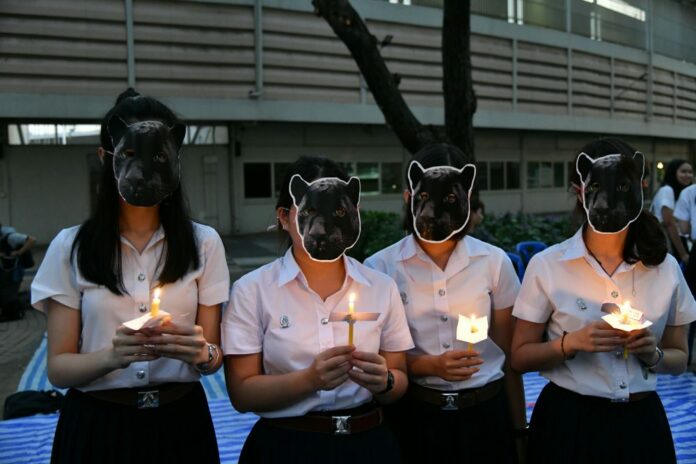
Chulalongkorn students on Tuesday evening wear black panther masks and hold candles to mourn killed animals at the Thungyai Naresuan Wildlife Sanctuary.
BANGKOK — University students held a vigil Tuesday evening to mourn the animals that a powerful businessman is accused of slaughtering inside a wildlife sanctuary recently.
About 50 students from Chulalongkorn University’s Environmental Reservation Club put on black panther masks near a university stadium to mourn the animals Premchai Karnasuta, president of Italian-Thai Development, and another three men allegedly killed during a visit to Thungyai Naresuan Wildlife Sanctuary on Feb. 5.
The vigil took place after a live performance, panel discussion and poetry session to raise awareness of illegal hunting.
Club member Nicha Vejpanich said she was shocked when she learned the black panther had been killed in the sanctuary, as she had been there in May and felt a bond with the nature there.
Nicha said her group would host a seminar Wednesday afternoon at Chulalongkorn University under the topic “Endangered species: An issue that needs to be solved” with five panelists from environmental and other organizations.
Authorities arrested Premchai Karnasuta, president of Italian-Thai Development and another three men at about 2am on Feb. 5 at the park and charged them with six poaching-related crimes. They found them in possession of animal carcasses and hunting weapons.
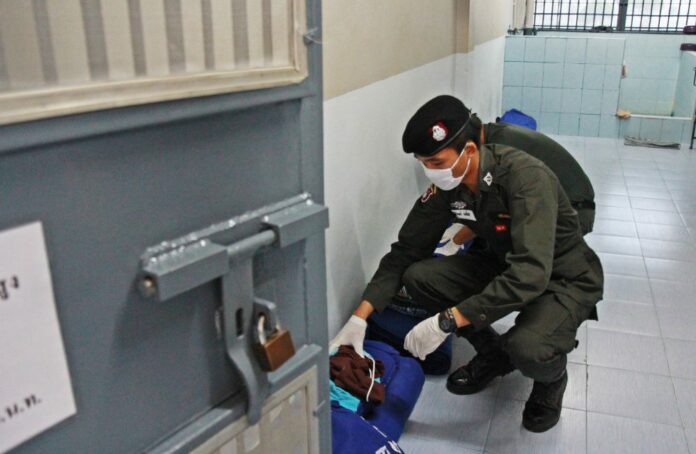
Police search a prison cell in Chumphon province on April 27 to search for contraband
BANGKOK — The military government said Tuesday it would begin devising ways to reduce prison overcrowding.
The promised reforms would solve long-standing problems of not only over-capacity prisons but also people receiving harsh punishment for small crimes, government spokesman Sansern Kaewkamnerd said at a news conference.
“It causes problems in the administration of criminal justice … to accommodate a huge number of cases and a lot of spending,” Lt. Gen. Sansern said. “It causes problems of cases flooding the courts and prisoners overcrowding prisons.”
Council of State member Kanit na Nakorn praised the government’s proposal, adding that the issue has been discussed and proposed for several years now by legal experts. Kanit was among a group of lawyers who petitioned the government in 2017 to take up the reform.
Kanit, whose agency interprets the law for the the state, said the criminal code is often abused to prosecute people and dish out unnecessary jail terms.
“Most of them involve drug charges,” he said. “There are also cases that we lawyers like to call rok rong rok sarn [dumping a mess on the court], like libel and public assembly laws.”
There are now about 330,000 people incarcerated across the country – double the intended capacity, according to the International Federation for Human Rights. Human rights advocates have long criticized Thai prisons for overcrowding, squalid conditions and rampant abuses.
In 2017, the federation called for “urgent reforms” in Thai prisons. In the same year, the United Nations specifically urged Thailand to improve conditions for female prisons, adding that the kingdom has one of the highest rates of female detention in the world.
Sansern said the government would work with the Council of State to implement the reforms to the criminal code.
No specifics were laid out. Kanit said he has yet to see a genuine effort by the military regime to take up the matter, citing recent attempts to jail pro-democracy activists.
“It depends on whether they are really sincere, but throughout these years, I haven’t seen any clear signal from the government that they prioritize unequal access to justice,” the lawyer said. “Police and the military still exercise full power, like in the case of Public Assembly Act”
Thirty-nine people were charged with violating the gathering law for joining a protest on Jan. 27 to demand an election in November. Police also charged nine activists with sedition for allegedly organizing the rally.
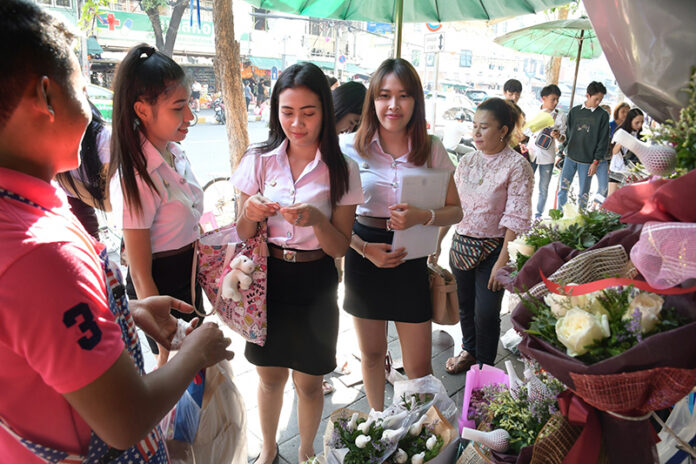
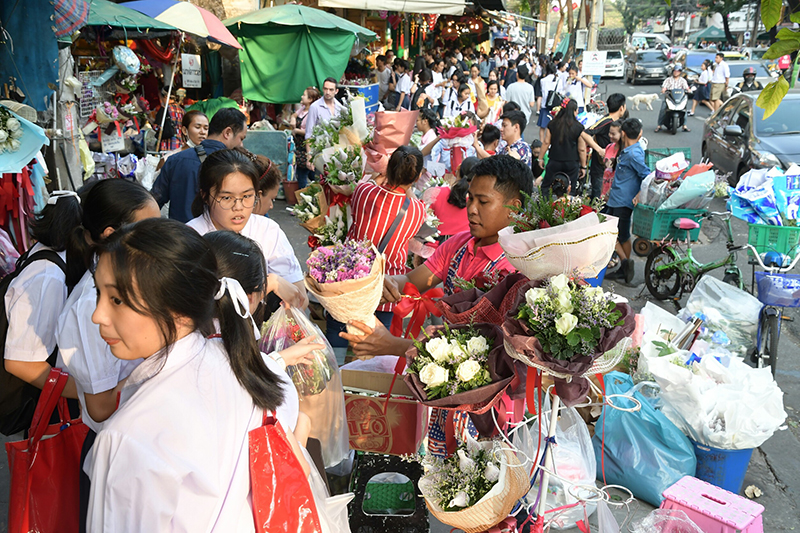
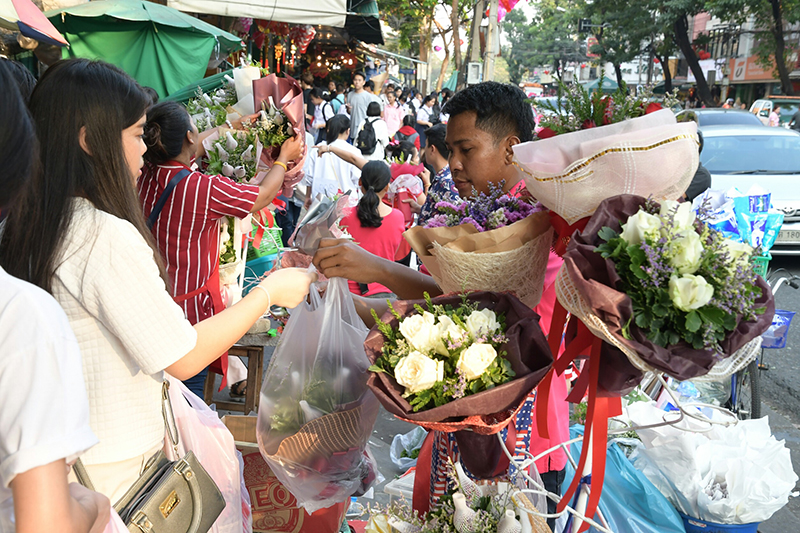
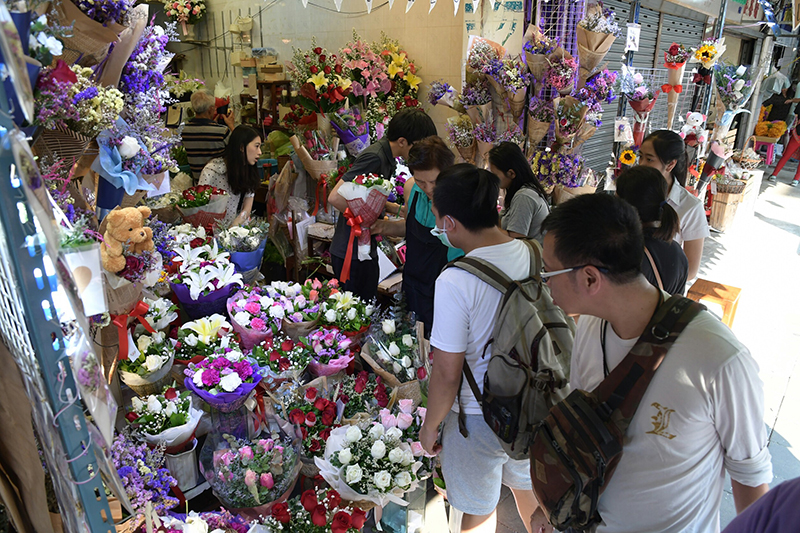
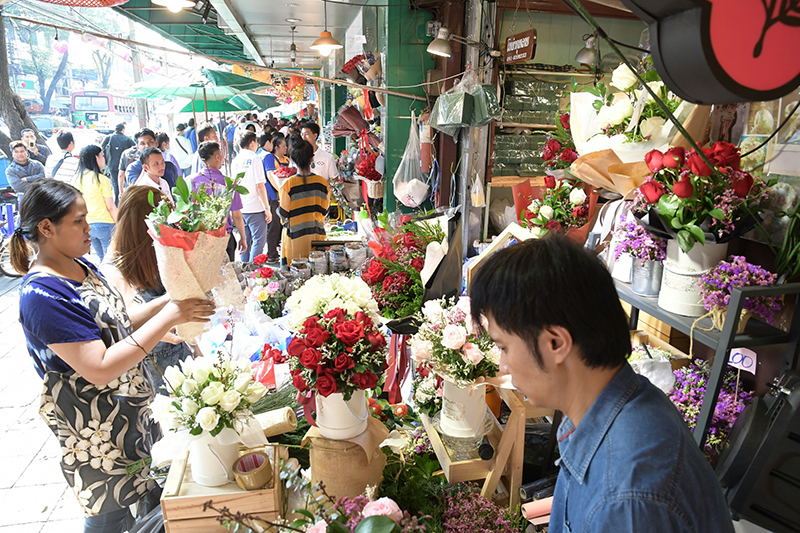
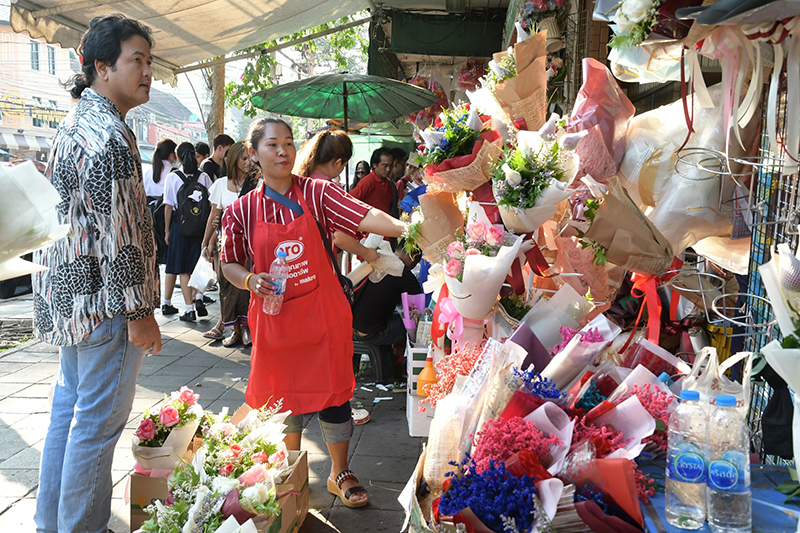
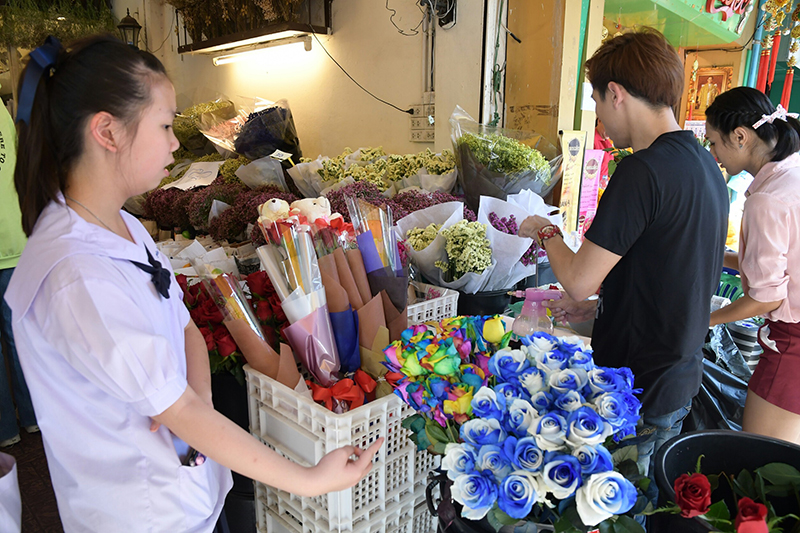
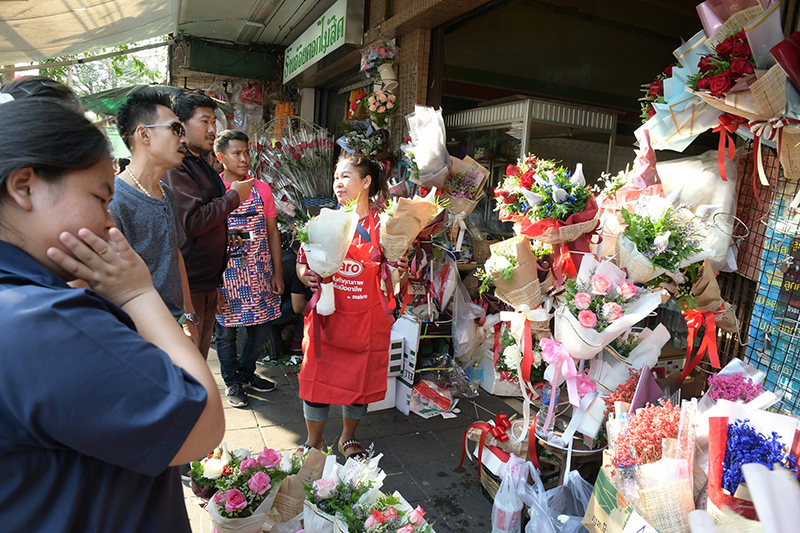
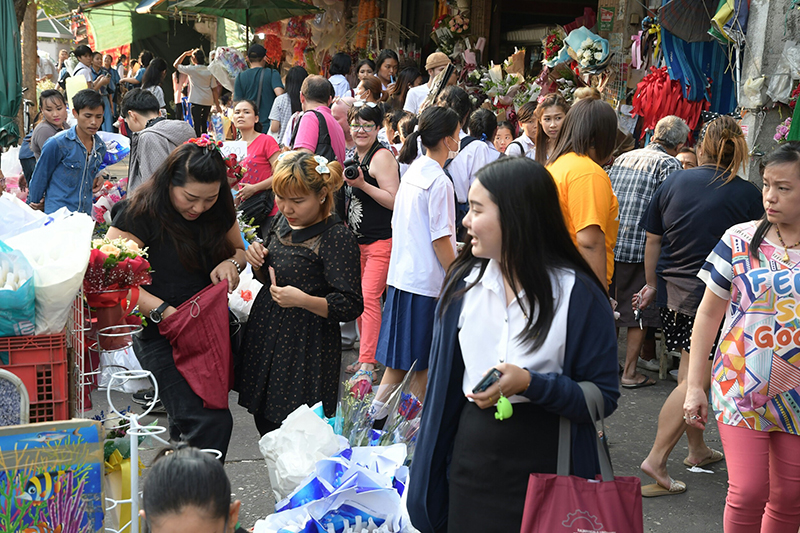
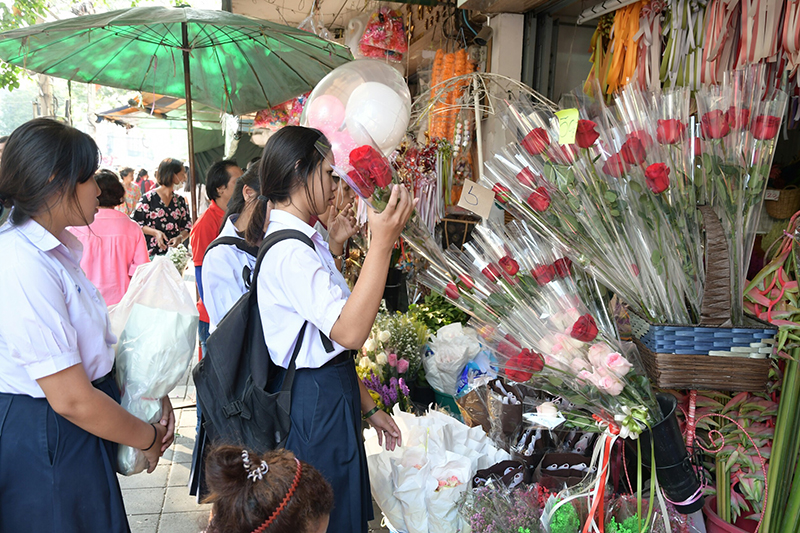
BANGKOK — It’s the busiest day of the year at the nation’s largest flower market, where people streamed in to purchase bouquets and blossoms for Valentine’s Day.
Students, lovers and anyone hankering for an arrangement sped Tuesday to the Pak Khlong Talad in Bangkok’s Phra Nakhon district to stock up for tomorrow’s day of love.
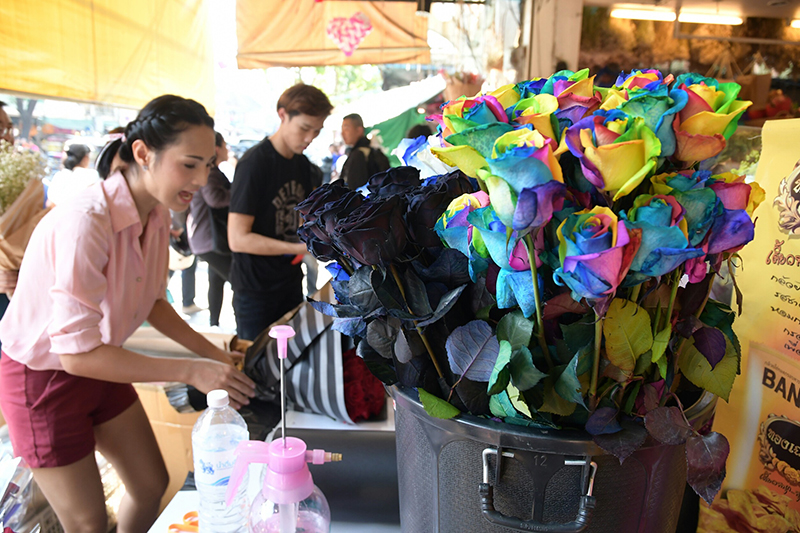
Rainbow roses imported from Holland were especially popular buys despite being 200 baht per flower.
Compared to Feb. 13 last year, when the flower market was less lively due to the mourning of King Bhumibol, this year saw a blooming flower trade for vendors.
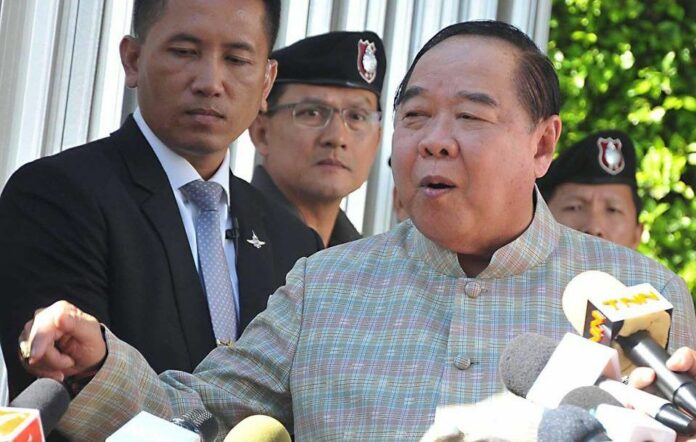
Update: Education minister Teerakiat Jareonsettasin said Tuesday afternoon he had apologized to Prawit Wongsuwan. Contrary to rumors, he added that he would not resign.
BANGKOK — Imagine bad-mouthing a colleague and realizing you’ve got a face-to-face meeting the next day. Awkward much?
That’s exactly what happened to education minister Teerakiat Jareonsettasin, who criticized a fellow cabinet member and deputy prime minister over the collection of luxury watches that have mired him in an embarrassing scandal.
“About these watches, if it’s me who was exposed, I would have quit after the first watch,” Teerakiat said in an interview with BBC Thai, which featured an audio clip of his remarks. “That’s me. As for what other people would say, you have to ask them.”
He continued, “People are too afraid to speak about this. What are they afraid of? Now that I spoke about it, are they going to fire me for it?”
Teerakiat hasn’t been fired. But the interview, published Monday, surprised many on social media, not least because Teerakiat is now the most high-profile figure to come out publicly against the junta No. 2 for the watches scandal. It also came one day before the weekly cabinet meeting both were to attend.
Asked if he feared his comment would spark division, Teerakiat was unapologetic.
“It’s my opinion. It’s not a cabinet opinion. Does it mean I have to always think like other people wherever I am? Even my kids don’t think the same way I do,” the minister told BBC Thai.
But aides said Teerakiat would not attend today’s conference, without citing any reason. Junta chairman Prayuth Chan-ocha and other ministers, including Prawit himself, declined to answer reporters’ questions as they arrived for the meeting whether the interview exposed a rift in the heart of the regime.
Teerakiat could not be reached for comment as of publication time.
Transparency activist Sarinee Achavanuntakul commended Teerakiat for speaking out against the junta strongman.
“It’s good in terms of showing us that people in the cabinet think independently,” Sarinee, a co-founder of investigative news organization ThaiPublica, said in an interview. “We are used to the idea that when someone’s in the government, everyone has to think the same. This proves that’s not always true.”
However, Sarinee said she doesn’t expect Teerakiat’s chiding to have much of an impact on Prawit, because the retired general has so far resisted calls to resign.
“The people have already clearly expressed their opinion, yet he still ignores them,” she said. “This is just an opinion of one person. Why would it be a turning point?”
Starting in December, a crowdsourced investigative group has been identifying luxury watches spotted on Prawit’s watches in multiple public events. The timepieces, which have a combined value of over 35 million baht, were not included in a mandatory asset report he filed.
Another critic of the junta questioned whether Teerakiat would go a step further and resign in protest of Prawit’s tone-deaf persistence.
“Gen. Prawit Wongsuwan definitely won’t quit, but I wonder, would Teerakiat Jareonsettasin continue to stay on without any shame?” activist Thanapol Eawsakul wrote online. “Would he quit from the coupmakers cabinet?”