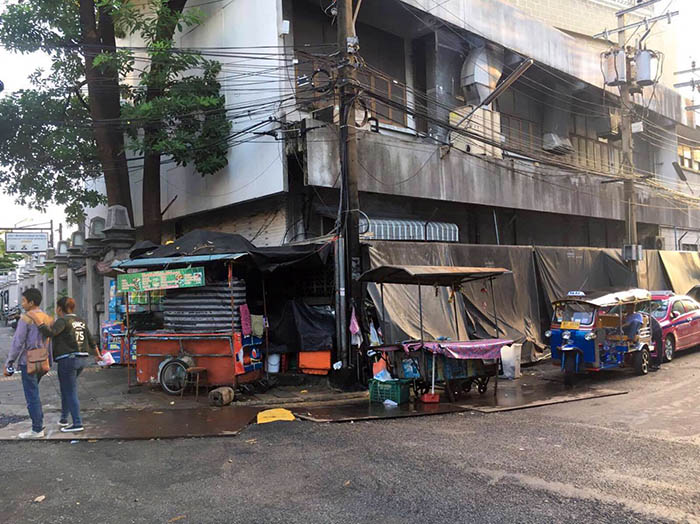
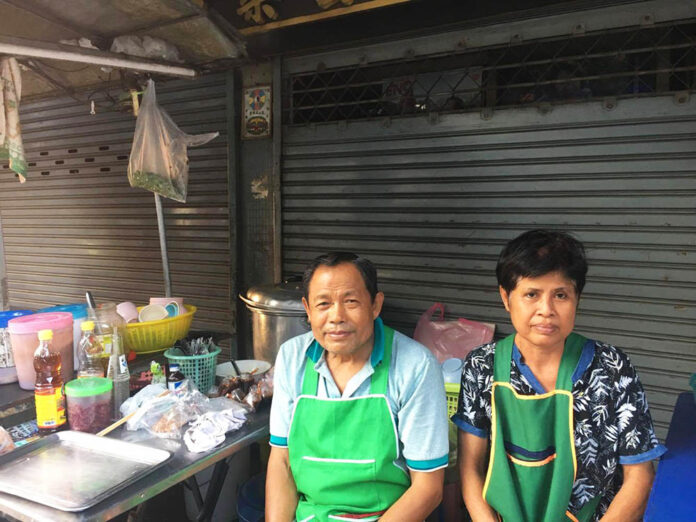
Pa Thongbai and her husband Loong Buntham operate a noodle stall in Bangkok's Bang Rak district.
Top: Thongbai and her husband Buntham operate a noodle stall in Bangkok’s Bang Rak district.
By Sattrawut Bunruecha
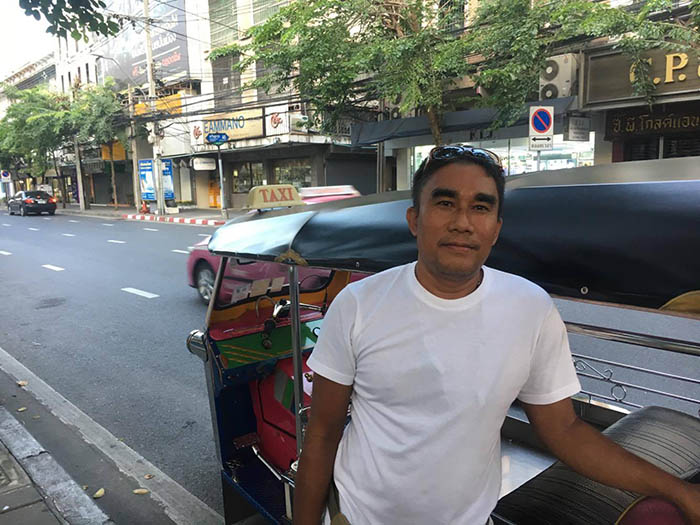
BANGKOK — Tuk-tuk driver Kamruay Dandongmuang used to rent a room in Bangkok’s Bang Rak district but had to move out when the cost of living became too high. After the city swept out many of the sidewalk food vendors, he could no longer find affordable meals.
“Many people come to visit the area,” Kamruay said. “But they are not happy. It’s an illusion!”
Now he plans to move back to his hometown in the northeast to run his own farm and live quietly with his family – once his children graduate from college.
Elsewhere, Thongbai drips with sweat amid the pungent odor of wastewater as she prepares noodles. She laments that, as the area is reinvented as a “creative district,” the moneyed urbanites surging into the area aren’t interested in her fare.
“Those people prefer to eat at luxurious places instead of decrepit food vendors,” she said on a recent visit. “But foreigners don’t care whether it’s an old place or not.”
Indeed, those frequenting her stalls tend to be foreigners, expats, and people living in the area, rather than the new youth hip folk of Bangkok expanding their cosmopolitan frontiers.
Though the goals driving the neighborhood’s makeover are admirable, silent in the conversation about its future are the voices of residents and low-income workers whose ways of life are threatened by the rapid gentrification that is taking hold.
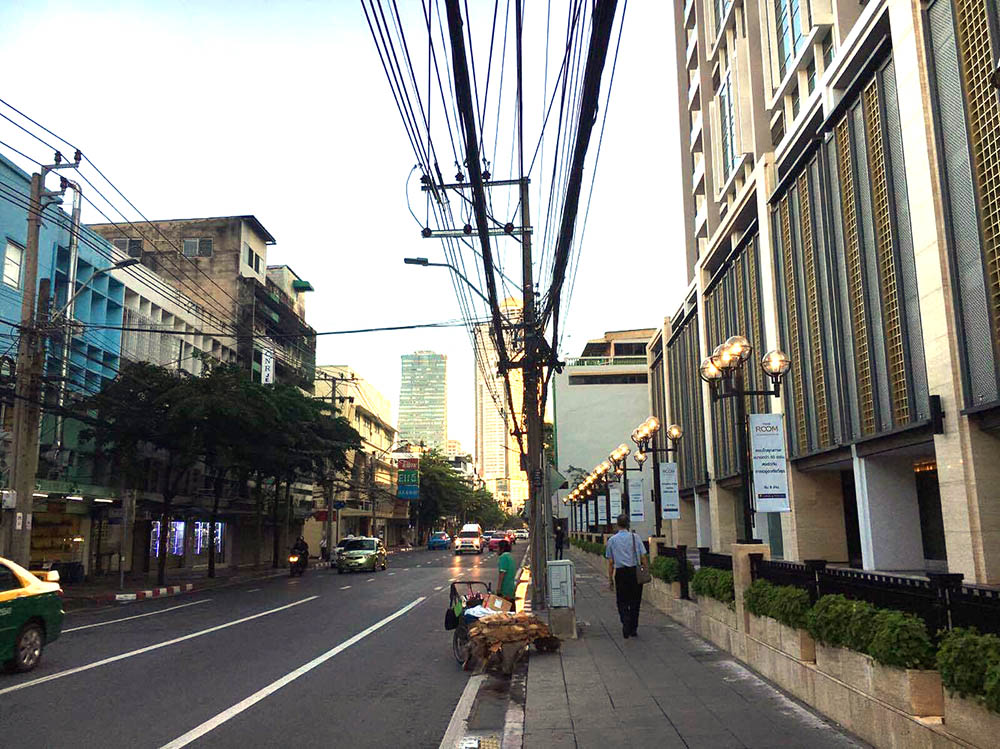
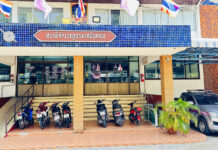
Bang Rak is an area of dramatic contrasts. Stately buildings and five-star riverside hotels are at odds with the cart-pushing street vendors, motorcycle taxis and low-income workers eking out enough for a meal at a time in their shadow.
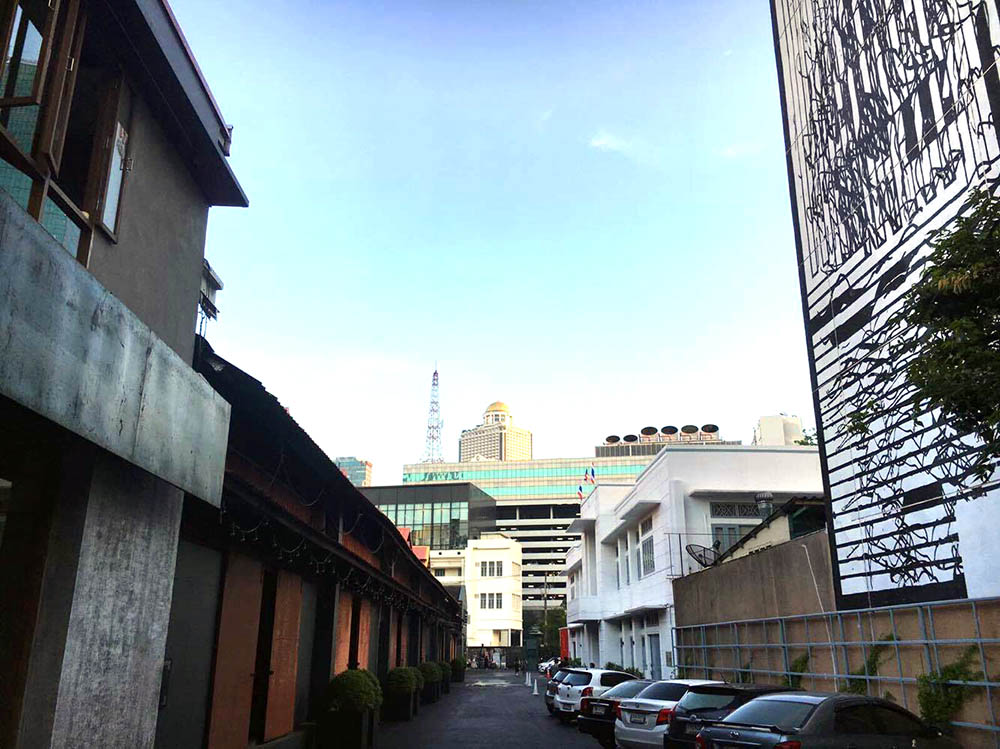
The relocation earlier this year of the Thailand Creative and Design Center to the austere Grand Postal Building on Charoen Krung Road helped breathe new life into what had been an area in decline.
A luxury condo development on Charoen Krung Road, not far from the Thailand Creative and Design Center in the Grand Postal Building.
The explosion of cafes, restaurants, boutiques, galleries and dazzling luxury condos has caused the upwardly mobile to flock to this suddenly hip neighborhood by the thousands every weekend.
The neighborhood’s desirability has gotten a boost from concerted efforts to revive it by turning it into an arts district that is a showcase for creativity that drives economic prosperity.
In Bang Rak, the issue is complicated by many stakeholders. Recently, City Hall forced food vendors out of the street to sanitize the sidewalks. Cultural preservationists see extinction on the horizon for a unique culinary identity.
The vendors who once dominated the street are now almost gone from sight.
“These vendors need to support their children’s education,” Thongbai said.
“We do not want development, we want happiness,” one resident said, asking not to be named for fear of repercussion. “Who knows. The children of these poor people will probably grow up to become the driving force of the nation.”
Paitoon Thepmong held at police station Tuesday night in Nakhon Ratchasima province
NAKHON RATCHASIMA — Police are investigating whether a man accused of firebombing three state buildings in Nakhon Ratchasima is linked to a radical group, the provincial governor said Wednesday.
Paitoon Thepmong, 37, was arrested Tuesday night in Korat after he threw molotov cocktails into a district office, a police station and market guard station within 30 minutes, police said. Although Paitoon reportedly confessed to acting alone, investigators were questioning whether he was helped. He was charged Wednesday morning with arson.
“The provincial police commander is on the way to question him. Is anyone else behind this, is someone secretly involved?” Gov. Wichien Chantharanothai said. “But at this point, it’s likely he did it all by himself, because he did not try to flee.”
Wichien said Paitoon was talking “in circles” and telling “all sort of things” to police officers who detained him last night.
“He said he was poor and that no one helped him. He was saying all sort of things,” the governor said.
He added that police records show Paitoon is supposed to be attending court-ordered drug rehab.
The first attack took place at about 11:30pm at the Khong district offices, when an energy drink bottle filled with gasoline was lit and thrown into the building. The office caught fire and sustained damage. Fifteen minutes later a similar firebomb was hurled into the Khong Police Station, but the concrete floor prevented the fire from spreading, Wichien said.
A few minutes later a guard post at a nearby market was firebombed. A crowd of onlookers and police officers noticed Paitoon riding on a motorcycle and acting suspicious, Wichien said. He was detained, and police reportedly found two more molotov cocktails on him.
A police report said Wichien confessed to the attacks. No injuries were reported.
This photo shows the Snapchat app. Photo: Richard Drew / Associated Press
NEW YORK — Snapchat is getting a redesign to make it easier to use. But the new look will not make the latest earnings report from its parent company any prettier for investors.
Shares in Snap Inc. were down more than 16 percent in after-hours trading Tuesday after the company posted yet another quarter of disappointing growth.
Snap Inc. on Tuesday reported a loss of USD $443.2 million in its third quarter, more than triple its loss a year earlier. The larger loss came with lackluster Snapchat user growth and revenue that was below Wall Street expectations.
The Venice, California-based company said it had a loss of 36 cents per share. Losses, adjusted for stock option expense and non-recurring costs, were 14 cents per share, which was in line with the average estimate of 11 analysts surveyed by Zacks Investment Research.
Snap posted revenue of USD $207.9 million in the period, up from USD $128.2 million a year ago. That was well below the average forecast of 10 analysts surveyed by Zacks of USD $233.1 million.
Snapchat added 4.5 million daily users in the quarter to 178 million, which amounts to a 3 percent growth. The company does not report monthly user figures.
CEO Evan Spiegel said Snapchat needs to grow its user base beyond 13 to 34 year olds in the U.S., France the U.K. and Australia. This, he said in a statement, includes Android users, people older than 34 and what he called “rest of world” markets.
“This means that we will have to make some changes to our product and business,” Spiegel said, adding that this includes redesigning Snapchat to make it easier to use.
Snap’s stock fell USD $2.47 to USD $12.65 in after-hours trading.
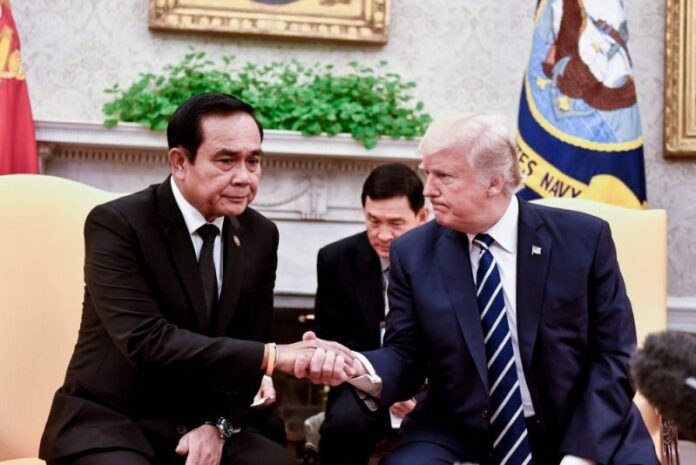
Prime Minister Gen. Prayuth Chan-ocha shakes US President Donald Trump's hand in 2017.
WASHINGTON — When China rolls out the red carpet for Donald Trump, the grandeur of its welcome for the larger-than-life American president will mask a sobering reality.
President Xi Jinping, China’s most powerful figure in a generation, is elevating his nation as a global power. Trump is unpopular and untrusted, pursued by political scandal and questions over his temperament as commander in chief of the world’s most formidable military.
As they compete over shaping the future of the world’s most populous and fastest-growing economic region, the stakes have never been higher.
On Wednesday, Trump begins what Chinese officials are billing as a “state visit plus” to Beijing, the highest-profile stop of his five-nation swing through Asia. He’ll be seeking Chinese action to rebalance trade with the U.S. and to increase pressure on North Korea. Both presidents will then travel to Vietnam and the Philippines for regional summits, where they will bid for support among the continent’s wavering leaders.
Trump is at a distinct disadvantage against Xi.
Xi two weeks ago consolidated his grip over China when he was endorsed for a second five-year term as communist party leader. His philosophy was enshrined in the constitution, arguably making him China’s most powerful leader since Mao Zedong in the 1970s.
Trump congratulated Xi for his “extraordinary elevation” and compared the status of the Chinese president to that of a king – unusually fulsome American praise for an autocrat.
Although questions remain over Xi’s stewardship of the Chinese economy – he faces rising debt and an inefficient state sector – he’s won popular domestic support for a countercorruption drive in the ruling party and gained effective control over disputed areas of the South China Sea through a massive island-building campaign opposed by Washington.
“As Trump heads to China, he will find Xi at the pinnacle of his power with some significant home court advantages,” said Mira Rapp-Hooper, a senior research scholar at Yale Law School.
Xi has big ambitions, too, having told the party congress it is now time for China to take center stage as a world power.
“There’s clearly a confidence that extends from his newly secured position and permeates into the foreign policy realm,” Rapp-Hooper said.
As for Trump, nine months into his presidency, he has alarmed strategists in Asia with his “America First” doctrine. He opposed the universally supported Paris agreement to combat climate change, adopted a protectionist stance on trade and raised doubts over his ability to manage a security crisis by vacillating between threats and conciliation toward North Korean leader Kim Jong Un.
The Republican Trump is also carrying a lot of domestic baggage.
While Xi is lauded like a demigod in China’s fawning, state-run media, Trump is buffeted by a free press and criticism from both Democrats and Republicans. His approval ratings – around 38 percent, according to Gallup – suggest he’s the most unpopular new U.S. president in the history of modern polling.
Reviled by political rivals, he has faced repeated and increasingly acrimonious run-ins with senior members of his own party who have been outraged by his freewheeling use of Twitter, off-the-cuff interview style and penchant for personally attacking those who cross him. Tennessee Sen. Bob Corker, a leading foreign policy voice, recently argued that Trump “debases our nation” with constant untruths and name-calling, accusing the president of setting the U.S. “on the path to World War III.”
More immediately, perhaps, a legal net is closing on former Trump associates as the FBI investigates allegations of collusion between his campaign and Russia during the 2016 presidential election. A former campaign adviser pleaded guilty last week to lying to the FBI in a criminal case that pushed the investigation closer to the president.
Trump denies any collusion. And predictably, he maintains that he’s in Asia “with great negotiating strength because of our tremendous economy.” The latest U.S. jobs report showed unemployment at a 17-year low and the stock market at a record high.
Kurt Campbell, a former top U.S. diplomat for Asia and architect of President Barack Obama’s strategic “pivot,” said domestic woes will shadow Trump on his travels to the region, where the conventional wisdom is of U.S. retrenchment during “a period of dramatic Chinese advancement.”
Nations are likely to “skate a little closer to Beijing,” Campbell said.
However, Thitinan Pongsudhirak at Thailand’s Chulalongkorn University said Trump has clawed back U.S. influence in Southeast Asia after Obama’s human rights criticism pushed some American allies closer to Beijing. With authoritarian leaders in Thailand and the Philippines, in particular, Trump has repaired ties.
But the Trump administration hasn’t helped itself elsewhere with its mixed policy signals, veering from America-centric economic nationalism to more traditional expressions of U.S. engagement in Asia. Recently, Washington outlined a strategy of building ties with democracies across the “Indo-Pacific.”
The idea is similar to the Obama pivot that Beijing always viewed as a China containment policy. The Chinese would prefer the two countries accommodate each other’s interests. It may view the close personal relationship between Trump and Xi as the best way toward that relationship.
“I don’t think anyone would be able to contain China,” Cui Tiankai, China’s U.S. ambassador, told reporters in Washington last week.
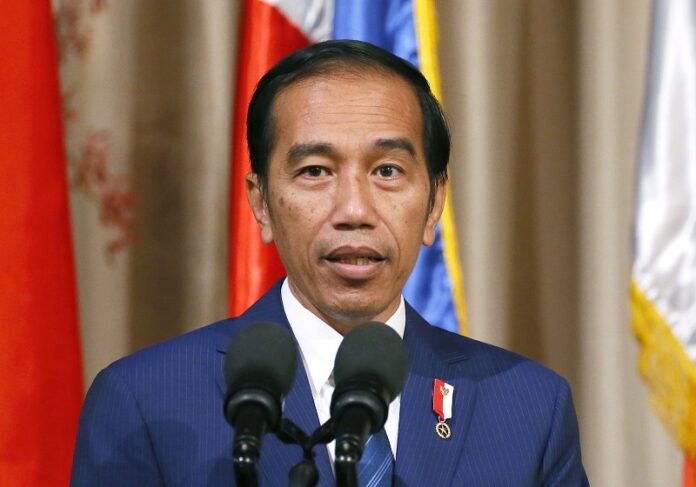
Indonesia's President Joko "Jokowi" Widodo addresses the media in 2017 during a visit to the Malacanang Palace in Manila, Philippines. Photo: Bullit Marquez / Associated Press
JAKARTA — Indonesia’s top court on Tuesday overturned a law that denied recognition and legal rights to followers of indigenous faiths in a surprise advance for religious freedom in the world’s most populous Muslim nation.
The Constitutional Court, in a unanimous ruling from its nine-judge panel, said articles in the 2013 Civil Administration Law were discriminatory and violated the principle of equality before the law.
“These articles are not legally binding as they contradict the 1945 constitution,” presiding judge Arief Hidayat told the court.
The ruling is an unexpected victory for moderates at a time when religious conservatives have demonstrated growing political influence and undermined the country’s reputation for tolerance.
The 2013 law effectively required followers of faiths not among the six recognized by the government to list one of the official religions on their national identity card or be denied basic rights such as marriage registration and land titles.
The ruling, published on the court’s website, said the law caused injustice to followers of native faiths. Difficulties in obtaining national identity cards meant some were deprived of education, access to the justice system and other rights, it said.
Indonesia has for decades recognized only Islam, Protestantism, Catholicism, Buddhism, Hinduism and Confucianism as religions, but millions practice animism and other local faiths.
The Constitutional Court agreed to hear a challenge to the 2013 law last year after being petitioned by four people who said they’d been disadvantaged by it.
The Ministry of Home Affairs said in a statement that the court’s ruling is final and binding. It said it will propose revisions to the 2013 law.
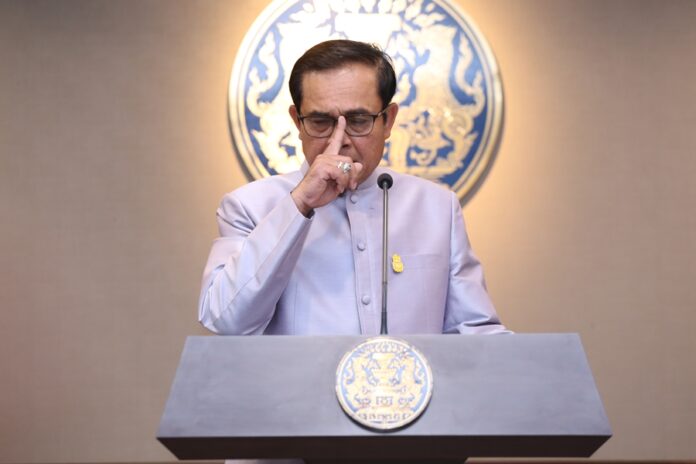
Junta chairman Prayuth Chan-ocha speaks to reporters Tuesday at Government House
BANGKOK — Songklod Thiprat is an army general who once worked for the ruling junta. He’s also presented himself as an “acting chairman” of a political party called Palang Chart Thai (literally, Power of the Thai Nation).
In recent months, he has presided over meetings and banquets, surrounded by party supporters. Media analysis dubbed his clique a “soldier party” or “NCPO party,” meaning that it has pledged to support the junta’s National Council of Peace and Order if its high-ranking members decide to run in the next election, slated to take place in November2018.
But on Monday, Maj. Gen. Songklod told reporters his party was nobody’s ally. In fact, he disputed founding a party in the first place – saying it was the media who misunderstood him.
“I have not done anything. I’m not good with politics,” Songklod was quoted as saying. “I have not disputed the news because I didn’t know anything about it … I think it’s because I seem to know a lot of people, so people connected me to politics.”
Songklod went on to say that his “party” was just a “volunteer group” dedicated to helping the junta and improving the country, and it was not registered with the election authorities.
But the cat is out of the bag. Headlines in recent days have frothed with speculation the junta has chosen Songklod to serve as its proxy in next year’s election. Deputy junta chairman Prawit Wongsuwan declined to outright deny it, while leaders of the two major parties have challenged the junta to show their hands and be done with rumors.
“I’m not against it if they want to run as MPs,” Democrat’s Nipit Intarasombat told reporters Tuesday. “Competing to do good for the country and nation shouldn’t be something to hide. Just announce yourself that you will run. Don’t be embarrassed.”
Anusorn Eiamsa-ard from Pheu Thai shared a similar message, urging the junta to run in the election because at least it’s better than seizing power in a coup.
One junta critic is even against the idea of junta proxies running for office, however. Veera Somkwamkid, an outspoken transparency activist who campaigned against both the junta and its civilian predecessors, said the military regime has no business dabbling in politics.
“It’s not okay! It shows they are intent on perpetuating their power,” Veera said in an interview. “Don’t forget their reasons for seizing power on May 22 … there was no policy about presenting themselves as a choice for the country.”
Veera also laughed at Maj. Gen. Songklod’s insistence that his associates were not allied to the junta.
“It’s so obvious,” the activist said.
Songklod could not be reached for comment. Someone answering his phone said the general was in a meeting and had a flight to catch afterward.
Number Games
With a year left before the latest promised election date, talks about who’s forming which party for whom have been dominating the news cycle and opinion pieces.
The discussion rages on in spite of the junta’s refusal to lift its ban on political activities and allow parties to campaign for the 2018 poll.
On Monday Gen. Prawit, the junta’s No. 2, was asked by reporters whether it’s true that Maj. Gen. Songklod’s party is a junta proxy for the next election. While Prawit denied it, he also left out a possibility of a future plan.
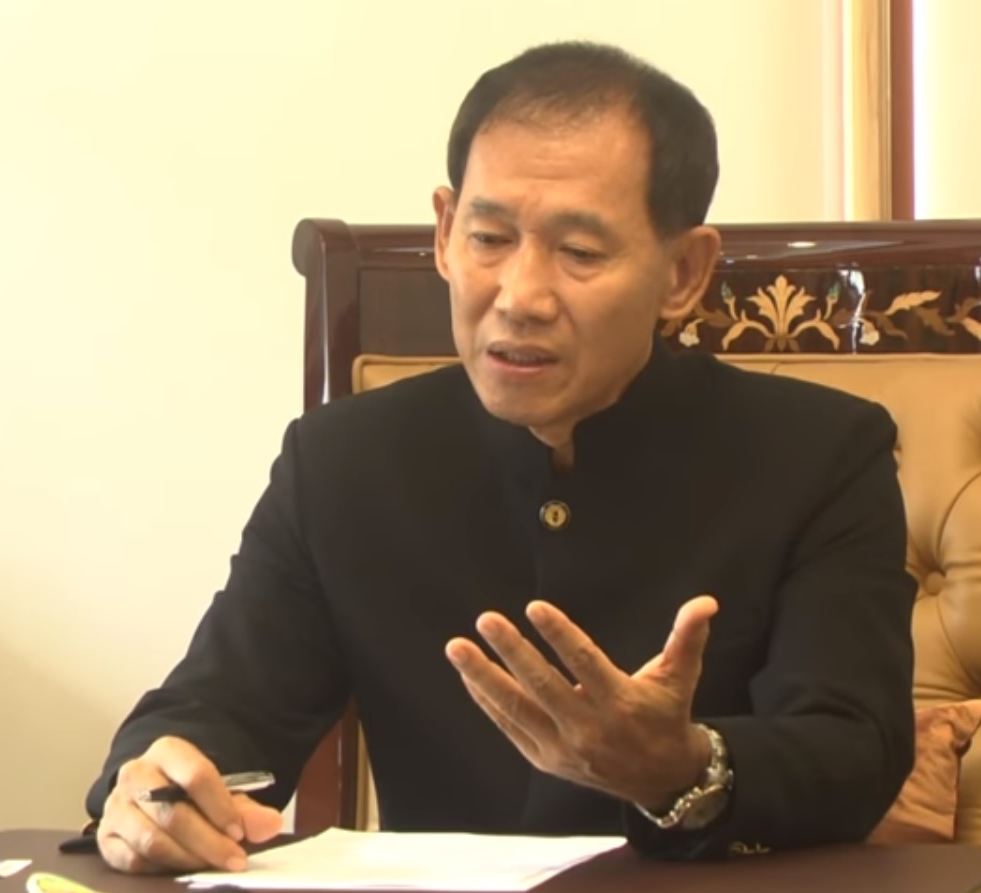
Maj. Gen. Songklod Thiprat. Image: DailyMirror Online / YouTube
“If it’s necessary, then we will set up a party,” the general said, raising even further speculation.
Under a new constitution drafted by junta lawmakers and approved in a 2016 referendum, parties must submit names of potential prime ministers they would vote for before the election. Unlike previous charters, the candidates do not have to be elected MPs.
Veera said Prayuth could return as a prime minister after the new poll if Songklod’s clique and other similar pro-junta parties manage to join hands and outvote Pheu Thai Party in parliament.
How that scenario will play out depends on whose side the Democrats, the second largest party, will throw their votes for.
“We have to see, at that moment, who the Democrats will shake hands with. They are still on the fence right now,” Veera said. “At this moment, I cannot predict. But judging from the past activities, the Democrats don’t seem to be too happy with the military, because the military does everything on its own. If Prayuth is prime minister again, there won’t be a future for them.”
Veera added that another factor of what the next government will look like depends on King Vajiralongkorn, or King Rama X, who succeeded his late father last year.
“If His Majesty wishes to see democracy, he must support a political system based on genuine democracy,” said the activist, who has campaigned alongside the royalist Yellowshirt movement. “But if His Majesty supports military rulers, then it’s undemocratic.”
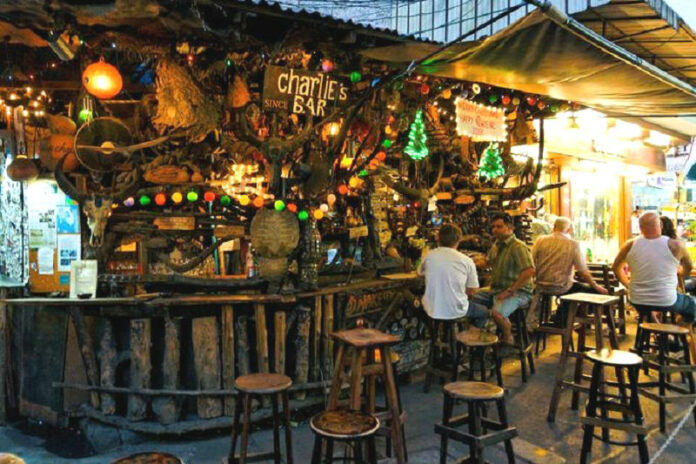
BANGKOK — After its farewell party in March, many expats’ favorite pocket-friendly bar will soon be back in town at a new location.
Cheap Charlie’s, a 35-year-old roadside bar, returns to service at a new home under The Beacon Place on Soi Sukhumvit 50, its owner announced Nov. 7.
The bar owner said Cheap Charlie’s will open on Dec. 1.
The venue was founded by brothers Charlie Budkajang and Satit Budkajang. It and a dozen other venues were forced out of their original Soi Sukhumvit 11 location to make way for a development.
The new location will be a five-minute walk from BTS On Nut.
BANGKOK — This the festive season for a much-needed economic boost, and the military government is bringing back its year-end tax break, this time longer than ever.
It’s time for “Shopping to Save the Nation” (actual name), when up to 15,000 baht of goods and services can be written off per person for purchases made for 23 days – five more than last year – starting Saturday.
The Finance Ministry announced the details Tuesday.
Shoppers should start saving receipts and collecting tax invoices from registered businesses. Purchases of liquor, tobacco, gasoline, hotels and hospital fees are not covered by the program.
Noise Market 6 at Museum Siam. Photo: Museum Siam / Facebook
BANGKOK — So much November left and so many things to do.
Cool weather has descended, the national mourning has ended and the capital is bursting back into to life. On days and nights such as these, it’s a shame to just “Flix & Chill.” Here’s an assorted list of cool things to do this November.
NOISE4ALL: One of the original free creative/music/market events returns for its seventh outing. Find an open-air flea market, music performances andindie shortsstarting at 7:30pm on Nov. 18 & 19 at Noise Market located at Museum Siam.
BEAM ME UP: Nearly 50 world music talents will converge on Thonglor’s nightlife spot Beam for Beamfest, with six days of genre music from electronic and hip-hop to mor lam. Find live art performances and pop-up food stalls at the event broken up over the weekends of Nov. 17 and Nov. 24.
Photo: Beam / Courtesy
GET DRUNK, GET ZINE: A third round of drunken moments and hangovers you hoped would have been forgotten will be served by street photographer Graham Meyer with the launch of his photo zineMao Mak Mag 3. Hundreds of photos, and audio installation and more will be exhibited Saturday through Nov. 26 at Jam near BTS Surasak.
HBD BRIDGE: An art space In the Shadow of the Ghost Tower celebrates its third birthday Saturday with a display of works by underground artists Beerpitch Pitchaya, Liam Morgan, Tae Parvit, Lolay and Yuree Kensaku.
NORLY? See the weird and sometimes humorous takes on the Gen Y generation by artists Sarun Cheurkrung and Mantana Apidet in paintings, videos and installations and more at Gen[whY?] Express[ions]now through Nov. 26 at the Bangkok Art and Culture Centre.
Gen[whY?] Express[ions]COSY/TRASHY: Two Italian photographers with appetites for atrocity, Fabio Polese and Gabriele Orlini, will open Maison Close, a shophouse-gallery with “sexy, cosy and trashy” principles with a creative bang on Nov. 17 at its debut exhibition The Wild Eye. Find it in Soi Charoen Krung 45.
KAFKA-KURIOUS: The biennialUnfolding Kafka Festival’s installations, films, performances and more is ongoing at several Bangkok venues through Nov. 22 and then for a couple days in Chiang Mai.
ASEANLGBT: Three docs on gender and identity issues in three countries – Vietnam, Cambodia and Myanmar – will show at 8pm on Nov. 18 at Club 18, a nightclub in the Nana-zone between sois Sukhumvit 13 and 15.
¡AY, CARAMBA! A tequila bar, outdoor cinema, piñata workshop, salsa classes, flamenco performances and music from Latin bands will transform Thonglor’s The Commons into the Latinorama Festival. The two-day fiesta runs from 10am until late Nov. 18 & 19.
TER-RIFIC: “Die Tomorrow,” the next film by beloved indie director Nawapol “Ter” Thamrongrattanarit, best known for “Mary is Happy, Mary is Happy” and “Freelance” (aka “Heart Attack”) opens Nov. 23 at theaters nationwide. The film is heavy on long takes and comes in six chapters inspired by peculiar fatalities reported in the media.
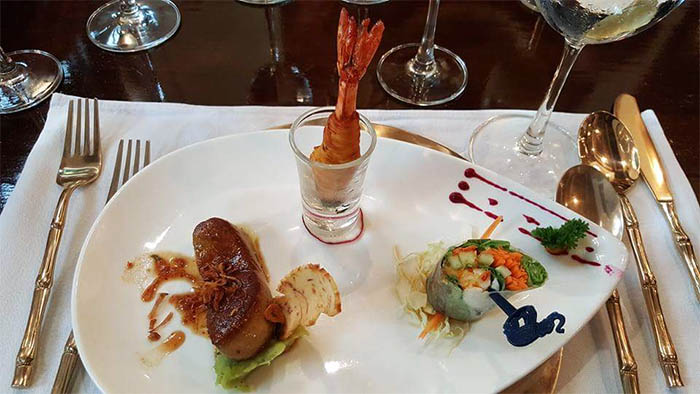
BANGKOK — Top Thai chefs and those in fine dining are sounding modest, reserved yet hopeful in the run-up to the much-anticipated arrival of Michelin Guide ratings to the capital city next month.
Anticipating the Dec. 6 release of the first Michelin Guide book for Bangkok’s restaurants, chefs from top restaurants said they’re pushing to maintain the highest standards, telling staff to be vigilant and exercising the utmost attention to detail in case a reviewer passes through.
“They won’t identify themselves,” said Nooror Somany-Steppe, chef at upscale Thai restaurant Blue Elephant, speaking about the anonymous Michelin inspectors.
At her restaurant, housed in a century-old mansion on South Sathorn Road, Nooror said she has instructed staff to be vigilant about forks or napkins falling from diners’ tables.
This – said the chef who also runs restaurants in Phuket, Brussels and Paris – could be a sign of a food inspector testing the restaurant’s attentiveness.
There is one problem, however. Blue Elephant, popular among Taiwanese diners, serves about 100 to 200 people lunch and dinner daily, so a number of patrons are bound to unintentionally drop utensils by sheer mistake.
Nooror did say that a Western man and Thai woman who dined at her restaurant about three months ago claimed after their meal to work for the famed French culinary guide.
“We don’t expect to get [a star or more] but gaining it would be good,” said Nooror, pointing out that the occasional boisterousness of her large restaurant could hinder the chance of obtaining a Michelin star. “We do our best with the food, however.”
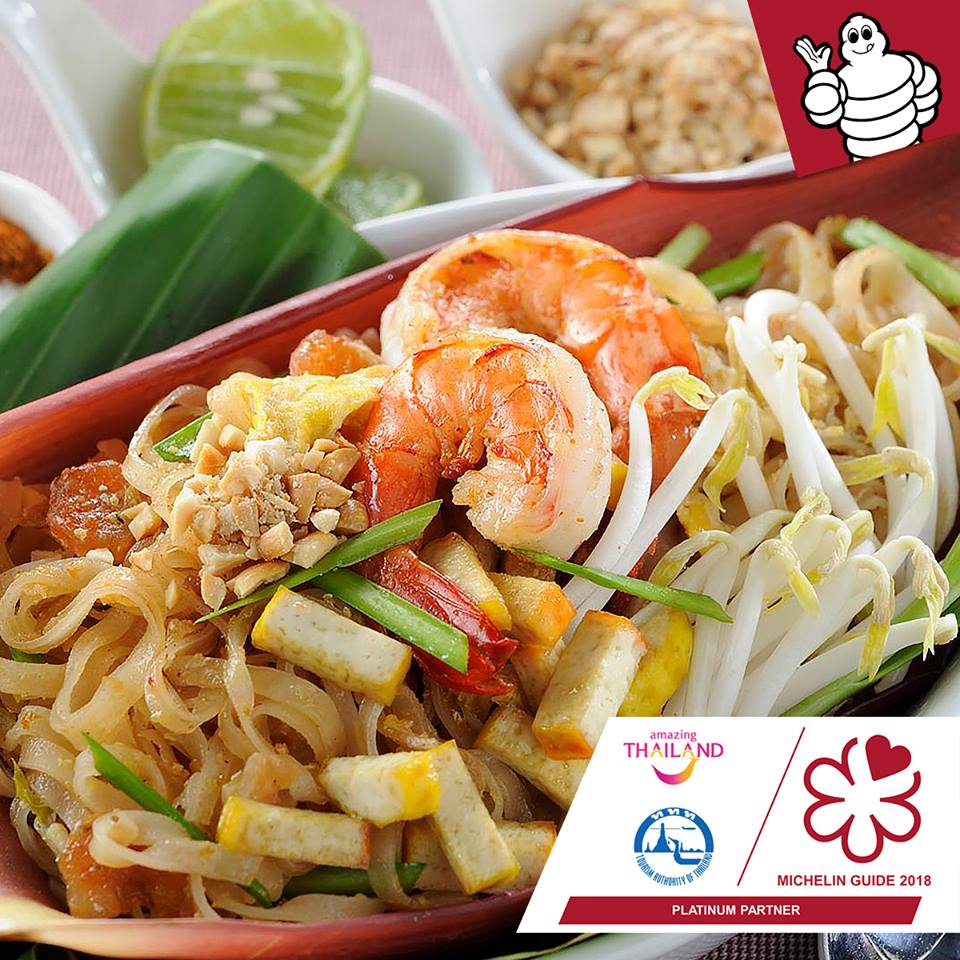
Image: Michelin Guide Thailand / Facebook
At Jok Kitchen, a modest table restaurant in Chinatown and foodie cult place run by chef Somchai Tangsin, or Hia Jok, bookings are normally made 20 days in advance. The place sits only 20 people. One can sense the chef’s excitement when uttering the word Michelin, despite the restaurant already having been recognized by the BBC and National Geographic for its food excellence.
“I believe Michelin is extraordinary,” said 63-year-old Somchai, who serves dishes such as shrimp dumplings and other Thai-Chinese seafood. The chef, known to be a particularly gracious host, does this on a Lazy Susan on two round Chinese tables. “We don’t expect a star, as it could be far-fetched to expect.”
Can Farangs Rate Thai Food?
The guide will be the sixth in Asia after Japan, South Korea, Singapore, China and Hong Kong. But unlike Michelin’s first venture into Japan a decade ago – snubbed by top chefs who believed foreigners lacked the expertise to rate Japanese food – Thai counterparts were much more receptive.
In Bangkok, those interviewed were more open to Western, particularly French, judgment of Thai food. They believe the guide’s advent will be a boom for Thai cuisine and elevate its already world-famous standards.
Kwantip Devakula, who formerly ran the famous Deva Restaurant on Sukhumvit Road before it closed in 2010, said gaining Michelin recognition requires more than just cooking delicious food but ensuring good ambience and nice washrooms. Kwantip, who now runs fine-dining catering services, said judging Thai food requires “knowledge about Thai food.”
Chef Kwantip said it’s possible for Michelin to have enlisted inspectors with expertise in Thai food.
Emails to Michelin representatives inquiring about their rating expertise went unreturned as of publication time.
Chef Kwantip Devakula. Photo: Courtesy
However, Michelin Thailand’s Facebook site lists five aspects in its rating criteria: ingredients, cooking techniques, chef personality, value and consistency.
For the uninitiated, one Michelin star means the restaurant is “very good in its category,” two means “excellence worthy of a detour,” and three stands for “exceptionally worth a long journey.”
Nooror had a different idea about foreigners being able to evaluate Thai food though.
“I think farangs have a taste in fine dining, but they may see Thai food in a different light, say as something to be paired with wine. It may be a bit luxurious,” said Nooror, whose restaurant has a sommelier to advise diners on wine pairing.
“Some may not know how to cook well, but they are gourmand,” said Somchai of Jok Kitchen. Somchai added he has experience with food inspectors from foreign outfits such as the BBC, and is convinced the critic was qualified and trained in food science.
Kittikorn Penrote, operator of Iron Chef Group Thailand – who owns the Iron Chef restaurant in Thonglor – said the criteria stipulated by the century-old guide is comprehensive and sufficient.
“It can be applied to all types of cuisine,” Kittikorn said, adding that if there’s anything he’s worried about, it is whether down-to-earth Thai kitchens will have a chance to meet such criteria at all.
Of several top chefs polled, only one reserved judgement on whether the guide is qualified to judge Thai food.
“I can’t answer … fully because I have yet to see the first results,” wrote chef Thitid Tassanakajohn of Le Du restaurant, which was ranked No. 37 this year in Asia’s Best 50 Restaurants. “[I] will have to wait until next month to be able to say something.”
Higher Profile For Thai Cuisine on World Stage?
All contacted chefs said the guide would help further promote Thai food to the world. They all played down the fact that the Tourism Authority of Thailand, or TAT, spent 143.5 million baht to partner with Michelin to devise an edition for Bangkok and later Thailand for five years.
According to an April news release, the aim was to “allow food lovers to explore Thailand’s culinary scene, raise the profile of Thai restaurants and boost the economy.”
Photo: Blue Elephant / Facebook
“This partnership between TAT and Michelin will boost high-quality tourism in Thailand, while helping visitors to get more out of Thailand’s rich culinary scene,” Top authority official Yuthasak Supasorn said.
For chef Nooror, such partnerships are positive. She added that TAT and Michelin earlier this year chose her Thai restaurant in Paris to publicly launch their partnership.
“I don’t see any problem with that,” Nooror said of the involvement of TAT through its partnership and funding of the red-colored guidebook.
Somchai meanwhile said having a Michelin Guide for Bangkok will mean more status-sensitive foodies will accept places in Bangkok that make the list.
“Places have long futures if they make it into Michelin,” he said.


































 Indeed, those frequenting her stalls tend to be foreigners, expats, and people living in the area, rather than the new youth hip folk of Bangkok expanding their cosmopolitan frontiers.