































27.2 C
Bangkok
Tuesday, June 30, 2026
Home Blog Page 2199

Making Thailand’s Digital Economy ‘Stand Out’

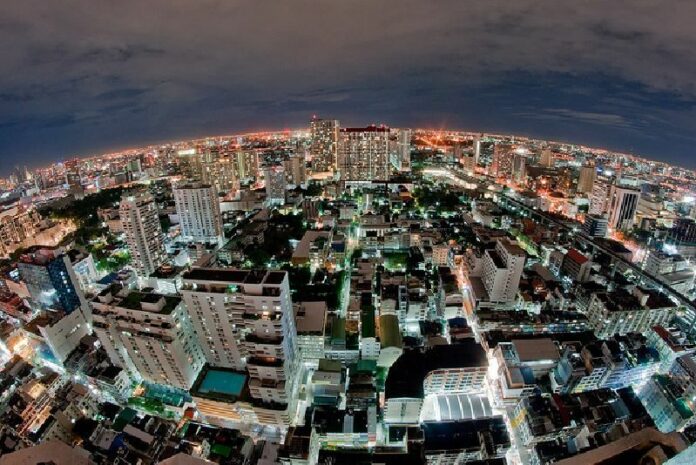
Bangkok from a bird’s eye view in a 2011 photo. Photo: digitalpimp./ flickr

A push toward the digital economy is the cornerstone of the Thailand 4.0 initiative, a little policy I have been writing about here and there. Something that might seem a bit abstract, but it indeed has metrics that can be measured and analyzed.

Developing a digital economy helps a country move into the future, foster job growth and help develop new sectors. My roots in the realm of digital go back to just before this century began. During the Dot Com boom I landed a job with Amazon-backed Kozmo.com in 1999, back when the tech was crude and business models were thin (though that doesn’t seem to have changed). But investor dollars were flowing: The Internet had arrived.

In less than half a decade the internet had gone from AOL chat rooms and dancing raisin icons to large ecommerce companies and startups in all areas of the digital economy. And despite the Dot Com bubble burst of 2001 – which put me out of a job – the growth of the digital economy kept on.

A recent study funded by Mastercard and carried out by the Fletcher School at Tufts University takes a look at countries in which the digital economy has become a key focus and ranks them according to four key metrics identified as vital to it: Supply of internet access and infrastructure, consumer demand for digital technology, institutional environment (government policies and resources) and innovation which includes investments into R7D and digital startups.

All of these metrics were used by the report to rank countries in the index but also to categorize them in four areas:

  • Stand Out: Countries that are leaders in innovation
  • Stall Out: Countries that have had strong growth but are losing momentum
  • Break Out: Countries that have low levels of digital advancement but all the right factors are in place for them to experience growth
  • Watch Out: Countries with low levels of digital advancement and poor growth

While Norway, Sweden and Switzerland top the Digital Index list respectively, they are all classified by the report as being in the Stall Out classification as they have lost momentum in the areas of digital innovation. Singapore, UK and New Zealand round out the top of the stand out section – all three of those countries landing in the top 15 on the Digital evolution index, Singapore and the United Kingdom both being in the top 10.

What’s really interesting is the Break Out classification, which had much more representation from the region seeing China, Malaysia and Saudi Arabia round out that list. These are countries that are not prominent figures in the digital economy at the moment, but have the right pieces in place to really make a run at becoming Stand Out nations. They all fall outside of the top 25, but are on the rise.

So, what does all of this mean for 42nd-ranked Thailand, categorized as one to Watch Out and one that faces “significant challenges with their low state of digitalization and low momentum”? Basically, Thailand is lagging behind. Especially when we see other countries in the region gaining speed with the digital economy, their lead on the kingdom is only going to increase.

But the index doesn’t just stop at its overall score, it’s broken into several subcategories where we can derive a bit more insights. First being the momentum score, the measure of how well countries are advancing into the digital future. We see China and Malaysia top this list respectively, and other players in the region such as the Philippines and Indonesia are in the top 15, while Singapore and Vietnam fall just outside the top 20. This further highlights that Thailand, which ranks in at 41 on the index for momentum has a lot of catching up to do – not just globally, but regionally.

The report doesn’t paint the best picture for Thailand’s digital economy. The kingdom generally finds itself below the halfway mark, which isn’t good no matter how you slice it. Something to keep in mind is that digital economy growth is something the current government is focused on.

If it plays its cards right, enacts some smart policy changes in line with the Thailand 4.0 framework we could see Thailand start to climb this list. Those would involve making it easier to start new businesses and changing some of the rules to obtain work permits for workers that fill skill gaps in digital economy (developers, researchers, executives). It would also be necessary to enact incentives that will attract existing companies in these spaces away from places such as Singapore and Hong Kong.

If not, I wouldn’t be surprised to see the skeptics proven right. Time will tell.
Advertisement

Prayuth’s Latest Poll Promise Draws Praise, Doubt

Anti-government protesters on Dec. 32, 2013, block entrance to a registration venue at Din Daeng Stadium for a snap election called by then-prime minister Yingluck Shinawatra

BANGKOK — Opinions from two rival political camps are divided toward junta chairman Prayuth Chan-ocha’s pledge of holding elections by November of next year.

While those who oppose the military regime led by Prayuth express skepticism, citing similar vows made and broken in the past, those more supportive of the junta believe this election pledge will be kept.

“It’s still not a credible one,” Chaturon Chaisang, who served as a minister under the government toppled in the 2014 coup, said by phone. “Because in the past, it was postponed many times. There were announcements, and then there were postponements.”

Read: Thai Elections in November 2018, Prayuth Promises

Chaturon said there’s still a chance the poll may be delayed on the grounds that organic laws related to the election are not completed in time.

But Ongart Klampaiboon, a senior Democrat Party, said Prayuth’s election pledge fits the timeframe dictated by the current constitution. Ongart, whose party opposed the previous civilian government, said he counted number of maximum days required for writing election laws and came to the same conclusion: November 2018.

“The prime minister did not say anything beyond what the constitution says,” Ongart said by phone. “It’s just the general public doesn’t care to look into details. So we imagine on our own that election will have to be on this date or that. It [Prayuth’s pledge] is not something exciting for me.”

Since the coup, the Prayuth administration has made numerous promises of elections as early as 2015. The date was repeatedly pushed back from Oct. 2015, to early 2016, and again to 2017.

Prayuth renewed his pledge earlier this month while in Washington D.C. meeting US President Donald Trump. The retired general said elections would be announced next year. His deputies soon clarified that the junta leader merely meant a date would be set in 2018 and a poll would not necessarily take place in that year, drawing a torrent of criticism.

Following Prayuth’s confirmation of elections in 2018 at a Tuesday news conference, Thai stocks, which had been reaching two-decade highs in recent days, closed the day up 14 points at 1,706.

Ongart attributed it to the much-awaited electoral pledge.

“We have to admit that investors and businesspeople were not confident in the direction of our country, where we were headed to, especially among the foreigners” he said. “So once there was an announcement of a clearer election time frame, there was confidence.”

The announcement immediately sparked debate on social media.

“No one believes a moronic boy who cries wolf like you anymore,” user Jaturong Suksomran wrote in a Facebook thread on a news report by left-leaning broadcaster Voice TV. “Do whatever you want to do, you lowlife.”

“I still don’t want elections,” Suwanmanee Maneesuwan wrote in a thread on conservative T News. “I’m sick of politicians. I’m afraid they will come back and seek personal gain again.”

Chaturon, the former Pheu Thai minister, said an election pledge would only have credibility if the junta and its appointed lawmakers publicly commit to making it happen.

The head of the commission tasked with writing the election laws said his team will stick to the deadline announced by the junta leader. Jate Sirataranont said he “cannot think of any reason” for delay.

Chaturon also urged the junta to lift a ban on political activities imposed since the 2014 putsch. Such restriction prevents political parties from organizing meetings, accepting new members and drafting election policies, all of which will hinder every party’s ability to campaign, he said.

“Whoever said they are ready to run in the next election means they aren’t being honest to the public,” Chaturon said.

Ongart is more confident. He said his party has been preparing “everything as much as we can, without breaking the law.” The politician also believes the ban will be lifted after the royal cremation ceremony of King Rama IX concludes at the end of this month.

Related stories:

With No Elections in Sight, Why is Prayuth Campaigning So Hard?

Advertisement

Review: ‘Victoria & Abdul’ Illuminates Only Half the Title

Stop us if this sounds familiar: A tall, dark, bearded servant of rough breeding comes from far away to suddenly charm a grumpy, widowed Queen Victoria and thus upend Britain’s royal court at the turn of the 20th century.

You were perhaps thinking of the film “Mrs. Brown,” starring Judi Dench as the monarch and Bill Connolly as her Scottish underling, John Brown? Well, hold on. A new movie has come along exactly 20 years later with an eerily similar plot. Either Victoria was a creature of habit in her attachments or her filmmakers are.

Substitute Connolly with Ali Fazal and you get “Victoria & Abdul,” a film about the then-most powerful woman on earth’s second unusually intimate relationship with a commoner. In this case, a Muslim from India in 1887.

Fascinatingly, Dench is back as the monarch, two decades after she played Victoria and earned an Oscar nomination for it. It’s a privilege to watch her revisit the crusty, we-are-not-amused queen, who is now in the twilight of her life. Dench is riveting, unsentimental, impatient and gloriously brittle. Sometimes all she does is offer an irritated sigh, speaking volumes. “Everyone I loved has died and I just go on and on,” she cries.

Dench is well supported — the cast includes the marvelous Eddie Izzard, the late Tim Pigott-Smith and the imperious Michael Gambon — and the pomp and highly choreographed English ceremonialism is captured beautifully by director Stephen Frears, who knows a thing or two about royalty, having directed Helen Mirren in “The Queen.” Much of this film is composed of stuffy royal banquets with hundreds of servants scurrying about or soaring landscapes with hundreds of servants scurrying around.

There’s only one major problem: The man at the center, Abdul Karim. He remains a blank canvas, his motives unexplored, his interior or domestic life uncaptured. He is called “the brown John Brown” and offers no riposte. The title of the film promises us two people but we only get one.

Perhaps screenwriter Lee Hall (“War Horse,” ”Billy Elliot”) meant to leave him a cypher, allowing the English to try to define him, but that’s being generous. It’s hard to leave this film and not think that Spike Lee’s concept of “magical Negroes” needs to be expanded for other people of color.

The movie is based on journalist Shrabani Basu’s book “Victoria & Abdul: The True Story of the Queen’s Closest Confidant,” which told of Victoria’s close friendship with an Indian servant sent to the court with the sole task of offering a gift of a ceremonial coin. The filmmakers have taken factual liberties — the film is “based on real events… mostly,” which is very cute but meaningless.

Fazal’s Karim smiles a lot, seems absolutely enchanted by English weather and, at their second meeting, without provocation, prostrates himself to kiss Victoria’s feet. Why? He thought it would “cheer her up.”

What does Karim think of colonialism, of English state-sponsored brutality toward his people? We never know. “It is my humble privilege to serve Her Majesty,” he says. Later, he puts on his best Forrest Gump to tell the queen that “Life is like a carpet.” He means that all kinds of things are woven into our fabric but he really comes off as no more than a doormat. (At least Connolly got to show some grit as the queen’s previously adored servant — “Are you deaf as well as stupid?” he told the Prince of Wales in one scene.)

Mid-way through the film, Karim has moved permanently to England and become the queen’s spiritual adviser, startling the court with his outsized influence. She will have none of it, siding always with her strong, silent, Indian beefcake. That also sounds familiar: Check out “The Green Mile” or “The Legend of Bagger Vance,” which also feature non-white characters with mystical powers employed entirely for the benefit of white leads.

The filmmakers knew in 2017 they couldn’t ignore the horrors of empire so it’s left to actor Adeel Akhtar, who plays Karim’s more radicalized companion, to carry the flag of nationalism and anti-colonialism. It’s a pity we never know what his friend, who has the queen under his influence, thinks.

British films seem to be looking backward these days on their legacy in India. “Victoria & Abdul” comes out only a few months after “Viceroy’s House,” which explored how India and Pakistan were carved from the former British Empire in 1947. In that case, England’s Lord Mountbatten came off as honest, loving and decent. In “Victoria & Abdul,” the Empress of India comes off honest, loving and decent. In neither film do Indians tell their story or any story without a gauzy English filter. That seems deaf as well as stupid.

“Victoria & Abdul,” a Focus Features release, is rated PG-13 by the Motion Picture Association of America for “some thematic elements and language” Running time: 111 minutes. Two stars out of four.

Story: Mark Kennedy

Advertisement

Ride Highways For Free During Cremation

BANGKOK — Drive in or around metro Bangkok for free on several major highways during the height of the cremation ceremony later this month.

The interim cabinet approved Tuesday waiving tolls for motorways 7 and 9 from Oct. 24 to 27. On Oct. 26, the day of cremation, no tolls will be collected on the Don Mueang Tollway and Si Rat-Outer Ring Road Expressway.

The Ministry of Transport proposed lifting tolls to accommodate the many mourners expected to converge on the capital to attend the cremation.

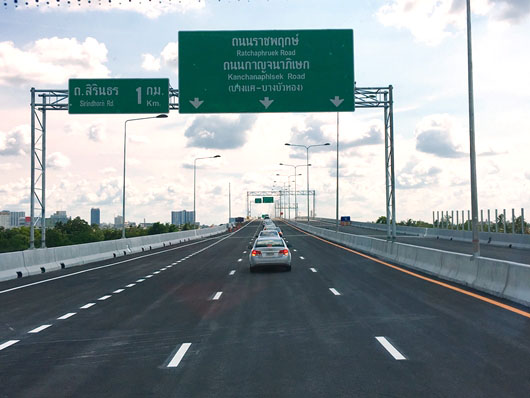
Motorway 7, the Bangkok–Pattaya motorway, stretches 150 kilometers from Suvarnabhumi Airport to Chonburi. Motorway 9, or Kanchanapisek Road, is the outer ring road encircling Greater Bangkok.

Fees for the motorways will be waived starting at 12:01am on Oct. 24 and continue until midnight on the night of Oct. 27.

Advertisement

Play at Dystopia in One-Woman Show ‘Sawan Arcade’

A promotional poster for ‘Sawan Arcade.’ Photo: B-Floor / Facebook

Update Nov. 6: The performances were postponed to Jan. 8 through Jan. 20 as Ornanong suffers a dog bite injury.

BANGKOK — A few years ago, she drew soldiers along with audiences to her land called “Bang La Merd.” Next month, B-Floor Theatre’s Ornanong Thaisriwong will continue her conversation on free expression in a pop-up heaven called “Sawan Arcade.”

Ornanong’s show is a return to solo performance form for the member of the experimental theatre troupe. Through her direction and performance, she will lead audiences to a “paradise” that soon falls under threat before the audience’s eyes.

As with previous B-Floor productions, expect deft puncturing of taboo topics abstracted just enough to avoid censure and Oranong’s signature invitation of audience interaction.

“[Sawan Arcade] is about a city where a group of people shares some norms, morals and values. And that excludes a specific group of people away,” Ornanong said in a Tuesday interview. “[I’m] not sure that the virtue they extol somehow judges the others’ and makes them an opponent? … It’s like granting permission for them to use violence.”

Ornanong is best known for “Bang La Merd,” which she last staged in 2015 in a Thonglor area venue under close watch of the junta. That’s not a metaphor: Soldiers were dispatched to observe and record nightly performances. Later that year, Ornanong was one of 100 artists and journalists from around the world nominated for the Index on Censorship’s Freedom of Expression Award.

Ornanong said she didn’t think the show will draw the military spotlight again.

“I don’t think they’re interested in us anymore,” said the director and actress. “But if they come to see the show again, they’re very welcome.”

The performance, a mix of dialogue and movement, will be in Thai with English surtitles.

The 70-minute solo performance from Jan. 8 through Jan. 20 at Democrazy Theatre Studio, which is a short walk from MRT Lumpini, exit No. 1.

Tickets are 550 baht and the transaction is available online. Theatre-goers are advised to arrive at least 10 minutes before showtime.

Related stories:

Not Here to Entertain You: B-Floor Confronts Thailand in Movement and Meaning

Advertisement

Catalan Leader Stakes Claim to Independence, Then Delays It

Catalan regional President Carles Puigdemont delivers his opening speech Tuesday at the parliament in Barcelona, Spain. Photo: Manu Fernandez / Associated Press

BARCELONA, Spain — Catalan separatists on Tuesday signed what they called a declaration of independence from Spain to cheers and applause in the regional parliament. Catalonia’s president said he would delay implementing it for several weeks to give dialogue a chance.

Spain, however, called an emergency Cabinet meeting for Wednesday morning and gave little indication it is willing to talk.

In his highly anticipated speech, regional President Carles Puigdemont said the landslide victory in a disputed Oct. 1 referendum gave his government the grounds to implement its long-held desire to break century-old ties with Spain.

But he proposed that the regional parliament “suspend the effects of the independence declaration to commence a dialogue, not only for reducing tension but for reaching an accord on a solution to go forward with the demands of the Catalan people.”

“We have to listen to the voices that have asked us to give a chance for dialogue with the Spanish state,” Puigdemont said.

The central government in Madrid responded that it did not accept the declaration of independence by the separatists and did not consider the referendum or its results to be valid. Spanish Deputy Prime Minister Soraya Saenz de Santamaria said an emergency Cabinet meeting had been called for Wednesday.

The Catalan leader “doesn’t know where he is, where he is going and with whom he wants to go,” she said.

Saenz de Santamaria said the government couldn’t accept the Catalan government’s validation of its referendum law because it is suspended by the Constitutional Court, or the results of the Oct. 1 vote because it was illegal and void of guarantees.

She said Puigdemont had put Catalonia “in the greatest level of uncertainty seen yet.”

One of the government’s options at the Wednesday meeting could be to set about applying Article 155 of the Constitution, which allows the central government to take some or total control of any of its 17 regions that don’t comply with their legal obligations. This would begin with a Cabinet meeting and a warning to the regional government to fall into line. Then, the Senate could be called to approve the measure.

Puigdemont also could be called in for questioning in court and possibly arrested.

Following his speech, the Catalan leader was the first to sign the document titled “Declaration of the Representatives of Catalonia.” Dozens of other separatist lawmakers signed it after him.

The signatories said the document was a full declaration of independence.

Joan Barcelo, a researcher on political conflicts at Washington University in St. Louis, said the mixed messages sent by Puigdemont’s speech did little in his effort to rally international support.

“It’s a mess and a mistake in political communication strategy,” Barcelo said. “He was trying not to burn bridges to dialogue, but he’s going to create doubts among his supporters.”

In his remarks, Puigdemont was highly critical of the Spanish government’s response to the referendum and the violent police reaction that left hundreds injured on voting day, but said Catalans have nothing against Spain or Spaniards, and that they want to understand each other better.

“We are not criminals, we are not crazy, we are not pulling off a coup, we are not out of our minds. We are normal people who want to vote,” he said.

Opposition leader Ines Arrimadas of the Ciutadans (Citizens) party slammed the speech.

“This is a coup. Nobody has recognized the result of the referendum. Nobody in Europe supports what you have just done,” she said.

“The majority of Catalans feels they are Catalans, Spanish and European. … We won’t let you break our hearts into bits,” Arrimadas said.

Socialist leader Miquel Iceta also was highly critical.

“You are proposing to suspend a declaration that hasn’t been made, that’s pretty tough,” he said with irony, adding that “you can’t claim a mandate from the Oct. 1 vote … a vote that had no guarantees.”

Puigdemont’s speech marked a critical point in a decade-long standoff between Catalan separatists and Spain’s central authorities. Security was tight in Barcelona and police cordoned off a park surrounding the legislative building.

In Brussels, European Council President Donald Tusk pleaded directly with the Catalan leadership ahead of the speech to choose dialogue rather than a divisive call for independence.

“I ask you to respect in your intentions the constitutional order and not to announce a decision that would make such a dialogue impossible,” he said.

Some 2.3 million Catalans  or 43 percent of the electorate in the northeastern region  voted in the referendum. Regional authorities say 90 percent were in favor and declared the results valid. Those who opposed the referendum had said they would boycott the vote.

Rajoy’s government had repeatedly refused to grant Catalonia permission to hold a referendum on the grounds that it was unconstitutional, since it would only poll a portion of Spain’s 46 million residents.

Catalonia’s separatists camp has grown in recent years, strengthened by Spain’s recent economic crisis and by Madrid’s rejection of attempts to increase self-rule in the region.

The political deadlock has plunged Spain into its deepest political crisis in more than four decades, since democratic rule was restored following the dictatorship of Gen. Francisco Franco.

Thousands rallied in Barcelona’s streets and watched Puigdemont’s speech. For some, his move to not declare outright secession was disappointing.

“I feel a little sad because now is not independence,” said 55-year-old Maria Gill. “We must wait a few weeks, a few weeks we must talk with the government of Spain.”

Others took a more stoic approach.

“Perhaps it isn’t the decisive declaration, declaring the republic and breaking away (from Spain) from today before any negotiation,” said Oscar Baldes. “But it’s a first step and that’s important.”

Any declaration of independence won’t immediately lead to the creation of a new state because the Catalan government will need to figure out how to wrest control of its sovereignty from a Spanish government that has the law, and international support, on its side, said Barcelo, the researcher on political conflicts.

He said any declaration must be viewed through the lens of “the Catalan government’s long-term strategy of provoking an extraordinary and even clumsy reaction from central authorities” to build support.

Hundreds of thousands have turned out for protests in Barcelona and other towns in the past month to back independence and protest against police violence during the vote. Those committed to national unity have also staged separate, large-scale rallies.

Polls indicate that Catalonia’s 7.5 million residents are evenly divided over secession, although a majority support holding a referendum on independence authorized by central authorities.

The tension has already affected the economy, with dozens of companies relocating their corporate addresses to remain under Spanish and European laws if Catalonia secedes. The moves of the firms’ bases have not so far affected jobs or investments, but they don’t send a message of confidence in the Puigdemont government.

Story: Aritz Parra, Joseph Wilson

Advertisement

Video in Malaysian Court Shows Practice Before Kim Attack

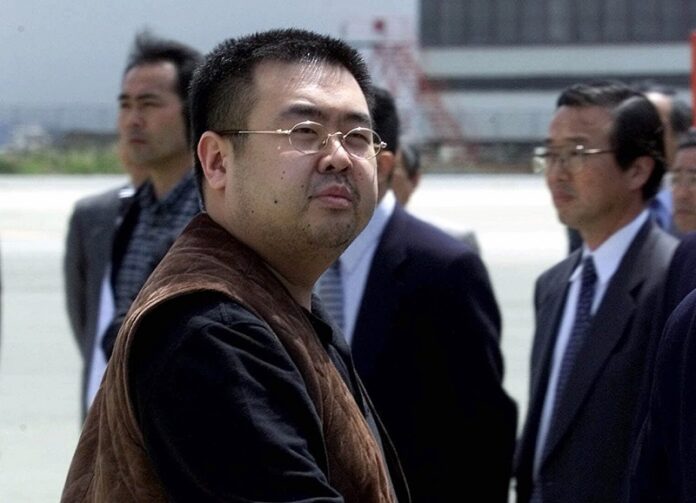
A man believed to be Kim Jong Nam, the eldest son of then North Korean leader Kim Jong Il, looks at a battery of photographers as he exits a police van to board a plane to Beijing at Narita international airport in Narita, northeast of Tokyo, Japan. Photo: Shizuo Kambayashi / Associated Press

SHAH ALAM, Malaysia — A Malaysian court has been shown airport security video where a Vietnamese murder suspect smeared something on a person’s face two days before she allegedly attacked the half brother of North Korea’s leader in the same manner.

The footage seen in court Wednesday showed Doan Thi Huong running toward a person from behind and wiping his face, then slightly bowing before moving away.

Police officer Wan Azirul Nizam Che Wan Aziz testified Huong was more “aggressive” approaching Kim Jong Nam compared to the practice.

Wan Azirul said Huong hurried away from Kim and “her hand gestures showed she was uncomfortable.” She walked swiftly to a restroom, keeping her hands partially raised and away from her body.

Prosecutors said previously the women knew they were handling poison when they killed Kim.

Story: Eileen Ng

Advertisement

Thailand’s First Microbus Runs Tomorrow

RATCHABURI — The country’s “first minibus” will hit the road Wednesday morning.

Leaving the Ratchaburi Bus Terminal 2 at 9:09am on Wednesday, the Bangkok-Ratchaburi microbus will be en route to Bangkok Bus Terminal (Chatuchak or Mo Chit). The vehicle is billed as Thailand’s first licensed microbus approved by the Land Transport Department.

The first phase of the microbus will see a vehicle with 20 passenger seats. Early 2018 expects to have one more van, according to Saowaluk Rattanakon, president of Ratchaburi-Bangkok Transport Company.

In the morning the minivan will run about 120 kilometers from Ratchaburi to Bangkok, to make its way back in the afternoon.

The fee is 120 baht per passenger.

Microbus is a brainchild of the new policy of the Land Transport Department. For the sake of road safety, the plan intends to replace the current van network, which covers more than 300 kilometers across the country’s provinces.

Advertisement

Foreign Volunteer Cops Accused of Extorting Phuket Businesses

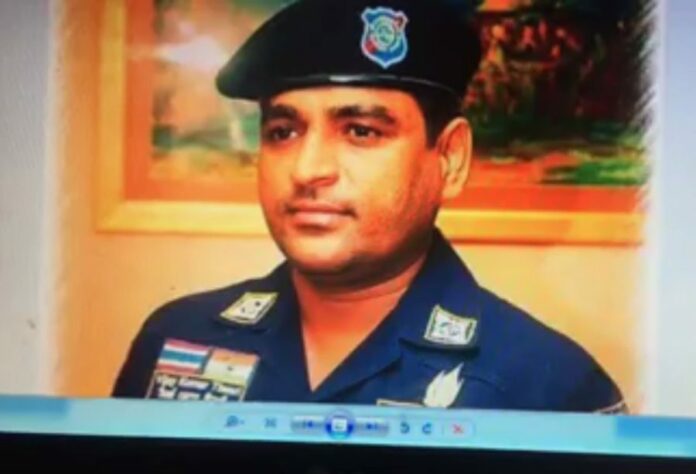
A video screencap of one of two men accused of extorting bribes from business owners in Phuket province. Image: Spotlight Phuket

PHUKET — The chief of tourist police on Phuket on Tuesday declined to discuss accusations that two volunteer members of his force targeted foreign business owners and migrant workers in a racketeering scheme.

Reached for comment on the accusations made in a video published Sunday to Facebook, tourist police commander Col. Thongchai Wilaiprom said he had work to do and ended the call. The provincial immigration police commander said Monday he had instructed his deputies to look into the accusations.

In the video, which had been watched more than 35,000 times as of Tuesday afternoon, a whistleblower accuses two volunteers of extorting “protection money” from business owners and collecting bribes for their Thai supervisors on the force.

“Do you want to become mafia in Thailand? Do you want to control Indian people in Patong?” the admin of Spotlight Phuket says in the video in English before switching to Thai. “If you are angry at me, go ahead and sue me. I have evidence. There are estimates of your bribe collection. They are darlings of the Tourist Police.”

But his Bangkok counterpart, Maj. Gen. Prasert Ngernyuang, said Tourist Police would not tolerate foreign volunteers abusing their positions.

“If anyone has engaged in wrongful behavior, and if an investigation confirms it’s true, they will be stripped of their status and removed from duty,” Prasert said by phone.

According to Spotlight Phuket’s video, two Indian men identified only as “Veejay” and Deeval” extort businesses owned by Indian, Nepalese, Bangladeshi and Pakistani nationals on Phuket island.

“Thais extorting Indians, I’m not very [surprised]. But I just learned there are Indians extorting Indians!” says the narrator, who only identifies himself as “Joe.”

He goes on to allege that the pair often dressed in volunteer police uniforms, which looked similar to actual sworn officers of the law and can easily mislead unsuspecting victims.

“You see them dressed like this, are you afraid?” he told his audience. “And do you think the Indians would be afraid of them? Of course they would! Piss their pants!”

Foreign volunteers are part of the Tourist Police’s effort to communicate with foreigners and help patrol the streets in tourist destinations.

Maj. Gen. Prasert said there are about “500-600” foreign tourist police volunteers across Thailand. The force needs their unpaid assistance because the enlisted personnel – only 1,700 in a country that welcomes more than 30 million tourists per year – are not enough.

The Spotlight Phuket admin went on to accuse the two Indians of identifying which business hires undocumented foreign workers and colluded with a local policeman named “Aon” who then extorts bribes from those business owners.

Some restaurants owned by the nationals of the four countries were also forced to pay bribes to tourist and immigration police, the admin alleged.

Southern regional immigration police commander Jessada Yaisoon said Monday he had instructed his deputies to look into the claims.

“We already saw the reports from Facebook,” Maj. Gen. Jessada said by phone. “It’s a good thing, sometimes people complained to us. We are investigating the issue. We try not to allow this kind of behavior.”

Advertisement

Smoking to be Banned on All Beaches

Phuket Marine Biological Center staff search for cigarette stubs in a 9sqm sample area at a depth of 10 centimeters on Patong beach in Phuket province in an undated photo.

BANGKOK — After unearthing a large number of cigarette butts on Patong Beach, the Department of Marine and Coastal announced Monday that smoking will be banned at all beaches nationwide.

The ban will first be imposed on 20 popular beaches in places such as Hua Hin, Pattaya and Patong starting in November. The decision was made after Phuket Marine Biological Center found an average of three cigarette butts for every 4sqm they sampled in an area of Patong beach. They extrapolated that to mean there were just under 139,000 butts along the 2.5-kilometer stretch of beach.

Smoking areas will be designated.

cig2
Phuket Marine Biological Center staff search for cigarette stubs in a 9sqm sample area at a depth of 10 centimeters on Patong beach in Phuket province in an undated photo.

“We are not completely banning smoking on the beach, but we will arrange a smoking area with bins where cigarette butts can be disposed,” said the department’s Director-General Jatuporn Buruspat. “But we will not allow smoking while strolling on the beach because eventually, there is a high chance they will be thrown on the beach.”

The measure will be presented Oct. 22-23 during a summit of ASEAN countries about marine debris to be held in Phuket province.

Thailand is the sixth worst polluter of seas in the world, Jatuporn said.

Jatuporn said the enforcement will be done under the power of Article 17 of the 2015 Act on the Promotion of Marine and Coastal Resources Management, which grants him the power to issue any measures to stop actions that cause severe environmental damage.

He said those who violate the law will face a maximum of one year in jail or a fine up to 100,000 baht, or both.

The ban is eventually expected to be enforced on all beaches nationwide. The first 20 beaches that will enforce it include Hua Hin, Cha-am, Bang Saen, Pattaya, Jomtien, Patong, Bophut on Koh Samui, Sairee, Mae Phim, Laem Sing, Khao Takiab, Koh Khai Nai and Samila.

To prevent throwing cigarette butts into the sea, Jatuporn said he would seek cooperation from the Marine Department to ban smoking on boats.

Related stories:

Tougher Smoking Laws Come Into Effect Today

Higher Smoking Age, Tobacco Advertising Ban Approved

Tobacco Monopoly Readies Cigarettes for the Poor

Advertisement

Hot News

LATEST NEWS

Bangkok
overcast clouds
27.2 ° C
27.2 °
27.2 °
78 %
3.5kmh
100 %
Tue
33 °
Wed
32 °
Thu
34 °
Fri
31 °
Sat
26 °