






























28.3 C
Bangkok
Tuesday, June 23, 2026
Home Blog Page 2250

Chula Professors Tackle Student Trying to Leave Initiation (Video)

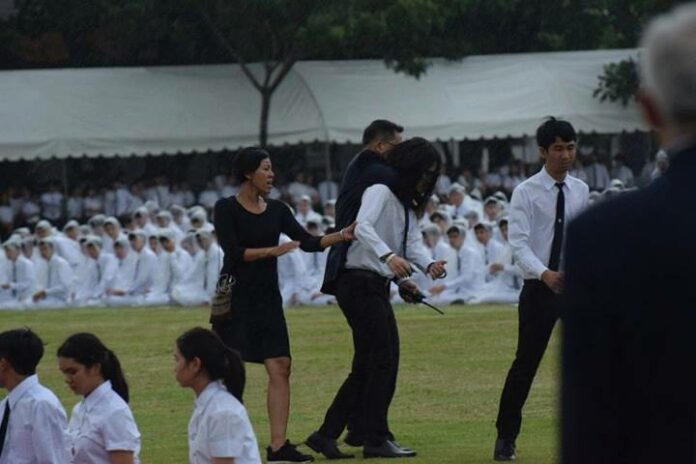
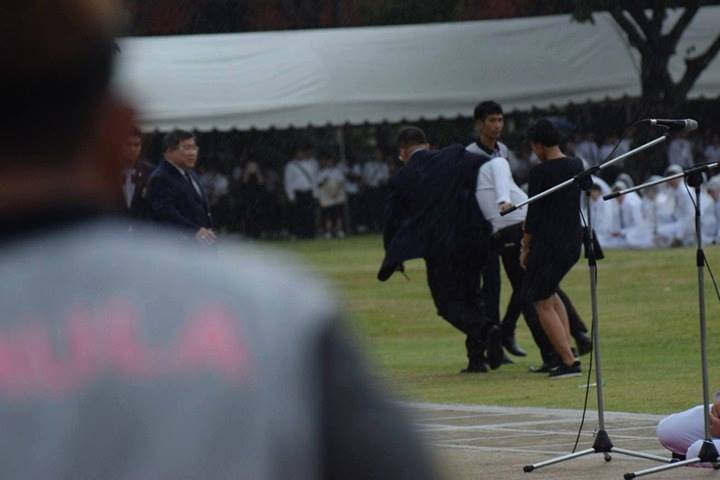
Chulalongkorn University professor Ruengwit Bunjongrat holds fourth-year student Supalak Damrongjit in a headlock on Aug. 4, 2017, at a university initiation ceremony held on campus. Photo: Netiwit Chotiphatchaisal

BANGKOK — Students who attempted to leave a freshmen initiation ceremony Thursday afternoon at Chulalongkorn University were tackled by professors, some of whom then tried to take the phones away from students who filmed the incident.

During the ceremony, in which all incoming freshmen prostrate themselves before statues of past kings, a fourth-year student attempting to leave was placed in a headlock by a professor, according to witnesses. They said another professor attempted to confiscate the phones of those filming what happened.

“My friends and I couldn’t stand it, so we walked out,” activist and student council president Netiwit Chotiphatphaisal wrote in a post Thursday describing what happened. “A professor assaulted my friend and headlocked another of my friends. He pulled his hair and yelled at him like he wasn’t a professor.”

The university vice president in charge of student affairs acknowledged what happened but disputed the circumstances that led up to the professor restraining the student, Supalak Damrongjit, a fourth-year student at the Faculty of Economics and vice president of student council.

“The freshmen paid respects three times, recited their oath and sang the song. But during the ceremony, Netiwit and his friends came out to pay respects in an awkward way as the student council. This made the officials overseeing the ceremony come out and pull them aside, and thought it looks like an assault, it wasn’t,” Bancha Chalapirom said.

Bancha identified the professor who put the student in a headlock as assistant professor Ruengwit Bunjongrat, who he said was hospitalized for stress after the incident went public.

“He’s a person who loves students and didn’t want anything to happen, so he went to pull out the students. Since the video leaked, he’s been very stressed and is recuperating at Chulalongkorn Hospital.”

Netiwit said by phone that the student who was headlocked plans to file a complaint with the police.

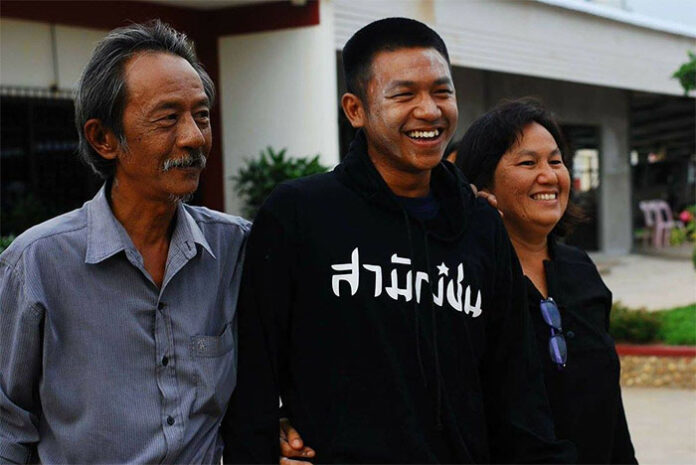
Netiwit became a campus lightning rod when he declined to participate in the ceremony last year as a freshman, citing past royal admonishments against groveling. He was elected student president earlier this year.

According to Netiwit, university vice president of student affairs Bancha promised ahead of time that the event would be cut short if it started to rain. However, when rain began to fall, the professors continued to make the freshmen complete the prostration ritual while passing out sheets of plastic to protect them from the rain.

“We planned that the 2017 initiation ceremony would include three shows of respect without prostrating,” Bancha Chalapirom, vice president of Chulalongkorn and head of student affairs said in a statement Thursday. “While the ceremony was going on, the rain wasn’t falling hard, just in little drops. The kids could still sit down on the ground.”

The complete ceremony involves multiple prostrations, and some students, including sophomore Netiwit, decided to leave.

“You asshole, where’s Nene?!” an angry voice can be heard shouting at the student in the video, asking about Netiwit’s whereabouts.

Today’s incident has been largely panned across social media.

“Is this Chula or a military barracks?” wrote Facebook user Pairach Pansakul in the comment section of a video posted by Fahroong Srikhao of the event. “Confiscating phones, too. I guess this is totally affecting security.”

Chulalongkorn University is the kingdom’s oldest university and a bastion of the conservative elite, although it is not without progressive elements.

The swearing-in ceremony, at which freshmen prostrate to statues of Rama IV and Rama V in a symbolic gesture of fealty, has come to be treated by many as a sacred obligation since it began in the late ‘90s.

“This ceremony is only 20 years old, how sacred can it be? What a cruel, sick joke, having to prostrate to someone who abolished prostration,” wrote Facebooker Kwanchai Phuntee in a comment on Netiwit’s post.

Netiwit Chotiphatphaisal is a famous student activist who infamously walked out on his own swearing-in ceremony, citing that Rama V had banned prostration.

20479750 1509336309130394 7923600641913026390 n
A professor escorts a student away in a headlock.
20525947 1509312492466109 7928370423353174145 n
Netiwit Chotiphatphaisal, standing at right, walks off the central field Thursday on the campus of Chulalongkorn University. Photo: Netiwit Chotiphatchaisal

Related stories:

Thorn in the Pillar: Freshman Makes Enemies Upsetting Tradition. Allies Too.

Chula Students Want #ChulassicPark-Era Uniform Rule to Go Extinct
Advertisement

Money Laundering Charges Dropped Against Actress ‘Patt Napapa’

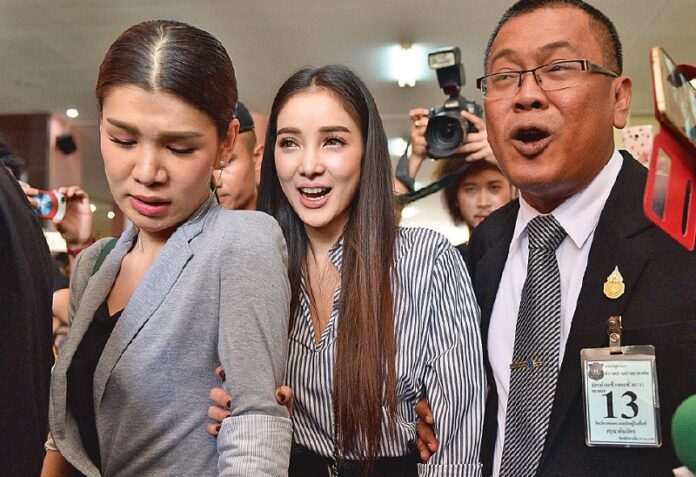
Actress Napapa ‘Patt’ Tantrakul, at center, walks out of the Narcotics Suppression Bureau on May 15 with her lawyer.

BANGKOK — Prosecutor said Thursday they dismissed money laundering charges filed against a famous television actress.

Prosecutors said they could not find a link between 30-year-old Napapa “Patt” Tantrakul and those who laundered money for a regional narcotics kingpin, despite the fact her husband, who was indicted on the same charge, deposited large sums into her bank account 18 times between April 2016 and February.

Read: Actress ‘Patt Napapa’ Meets With Police, Denies Charges

The account has also been long used by Patt to receive payments for her work, said attorney general spokesman Prayuth Phetkhun.

He also said the transactions seemed routine for a couple sharing finances, adding that Patt did not transfer the money received from her husband to other accounts.

Patt’s newlywed husband, Akarakit Worarojcharoendet, aka Benz Racing, was arrested in February for aiding alleged Laotian drug lord Xaysana Keopimpha conceal his illicit wealth. Xaysana was arrested in January at Bangkok’s Suvarnabhumi International Airport. Akarakit remains behind bars without bail.

Patt denied the charges, saying she did not know the 1.9 million baht in her bank account was linked to the cartel, as alleged. She was released May 15 on a 500,000 baht bond after police sent the case to the Criminal Court.

Pat said she only learn about the good news today when a reporter called her.

“I have known all along what I did or did not, that’s why I said since the first day to please trust in me,” she said Thursday. “I don’t know what other people think about me. If they want to judge, I can’t help it.”

Related stories:

Actress ‘Patt Napapa’ Meets With Police, Denies Charges

Actress Defies Summons in Narcotics Ring Probe

‘Benz Racing’ Charged For Lambo Link to Laos Drug Lord

‘Pai One Point’ Denies Link to Drug Lord Suspect as More Celebs Swept Into Net

‘Benz Racing’ Denies Having Connections to Laotian Drug Lord

Advertisement

Alabama Inmates Who Escaped Using Peanut Butter Captured

MIAMI — The last of 12 inmates who escaped an Alabama lockup by tricking a guard with peanut butter is back in jail after persuading his sister to drive him to Florida, a sheriff said.

Martin County Sheriff William D. Snyder announced Tuesday night that investigators “zeroed in” on a house on a quiet street in Tequesta, just north of West Palm Beach, where a car with an Alabama license plate was parked outside.

A short time later, Brady Kilpatrick, 24, was arrested, along with his sister, Jensen Davis Lefan, 18; her boyfriend, Hayden Thomas Mayberry, 24; and Mayberry’s childhood friend, Dakota Anthony, 23.

The last of 12 inmates from an Alabama jail where a guard was fooled by peanut butter into letting them escape has been arrested in Florida. (Aug. 2)

Kilpatrick escaped Sunday from the jail in Walker County, Alabama, where inmates tricked a guard into letting them out by using peanut butter to alter a number over a cell door. Authorities said the inexperienced guard, watching 150 inmates through security cameras from a control room, thought he was opening the cell at an inmate’s request, when in fact, the peanut-buttered number he punched in released a door to the outside.

A dozen inmates fled, throwing off their orange jail uniforms and running in every direction.

“He told us that he never stopped running,” Snyder said. “He actually ran for two hours and never got pinned down.”

Lefan, of Cordova, Alabama, told investigators that her brother called her shortly after the escape, asking for a ride. She and Mayberry borrowed a car from his roommate and picked up Kilpatrick a short time later. He hopped in and told her “Go!” according to an arrest affidavit. Five to 10 minutes later, he told them he’d escaped from jail, cutting his hands when he climbed a 15-foot fence topped with razor wire.

Lefan and Mayberry, of Jasper, Alabama, took turns driving with Kilpatrick in the backseat, she said. They ended up at the home of Anthony, a childhood friend of Mayberry’s, after stopping for food — paying in cash — and sleeping in a Wal-Mart parking lot.

She feared getting caught, but said she had to try to help her brother because “they are family,” the sheriff said.

Mayberry — who told authorities they planned to marry soon — told investigators he knew that what they did was wrong, but said “you do crazy things for love.”

Belinda Ann Weldon, an Alabama attorney representing Kilpatrick on drug and burglary charges that landed him in jail, said she hasn’t talked to him since the jailbreak. He and the other prisoners are being charged in Alabama with escape, she said.

Weldon, who has been in Walker County lockup numerous times, said she can see how a guard watching remotely could be fooled if inmates partially obscure the number that identifies each door.

“That placard has a number on it; it’s an off-white. They covered it in peanut butter. Say the number was an 8; they made it look like a 9,” she said. “He pushed the button for a door that instead of going into a dorm went to an outside door.”

In Florida, Snyder praised his department and other agencies for using a “good tactical approach” once they located the home in Tequesta, where a car with an Alabama license plate was parked outside.

“Let’s suffice it to say we had an overwhelming force and more than adequate resources as he made the unwise decision of trying to escape out of the house,” he said.

Jail records don’t list attorneys for any of the arrestees. Lefan and Mayberry face charges of facilitating escape and hindering apprehension of a fugitive in Alabama, as well as aiding and abetting a fugitive in Florida. Anthony was charged with possessing a controlled substance. Kilpatrick — initially jailed in Alabama on charges of possessing drugs and paraphernalia — now faces prosecution on much tougher crimes.

Walker County Sheriff James Underwood in Alabama did not immediately return a call seeking comment on the arrest of Kilpatrick, which happened only a few hours after he predicted it would. The other 11 fugitives had been rounded up by Monday afternoon.

Kilpatrick appeared in court Wednesday in Stuart, Florida, where a judge ordered him held without bail pending his return to Alabama. Lefan and Mayberry also remained in the jail, with $7,500 bail set for each.

Snyder said he tried to hide in the wrong county.

“Look, I don’t like to brag,” the sheriff told reporters, “but we’ve never had an escape from the Martin County Jail. I can tell you this, he won’t be getting any peanut butter.”

Story: Jay Reeves

Advertisement

Trial of ‘Pai Dao Din’ for Facebook Share Opens in Khon Kaen

Pro-democracy activist Jatupat 'Pai' Boonpattararaksa with his parents in a 2016 file photo.

KHON KAEN — The trial of a recent law school graduate for sharing a biography deemed to defame King Rama X began Thursday in a provincial court in the northeastern city of Khon Kaen.

Held without bail since December, Jatupat “Pai” Boonpattararaksa was arrested for sharing a BBC Thai article on Facebook about the then-new king that contained biographical details that have become unmentionable in the domestic press.

Jatupat was indicted Feb. 10 on counts of lese majeste and violating the Computer Crime Act, to which he pleaded not guilty. He has remained behind bars and repeatedly denied release on bail. The courts proceedings are being conducted in secret, and Jatupat faces up to 15 years in prison on the count of lese majeste alone.

A fourth-year law student at Khon Kaen University at the time of his arrest, Jatupat risked losing out on the opportunity to graduate but was eventually allowed to sit for the necessary exams.

His fellow activists say Jatupat, who belongs to a community rights group called Dao Din, was singled out for his campaigning against the military regime, and they have staged many rallies calling for his freedom in Khon Kaen and Bangkok.

Four of his classmates calling for his release were charged with contempt of court in March.

Note: Some details have been omitted from this story due to fear of prosecution under the lese majeste law.

Related stories:
Activists Calling for Pai Dao Din’s Freedom Charged With Contempt of Court
Cavity Searches and Pending Graduation Worry Jatupat Friends
Jatupat Singled Out to Scare Others, Supporters Say
Prosecutors to Indict ‘Pai Dao Din’ Over BBC Thai Article

Advertisement

College Shut Down After Student Murdered Outside MBK

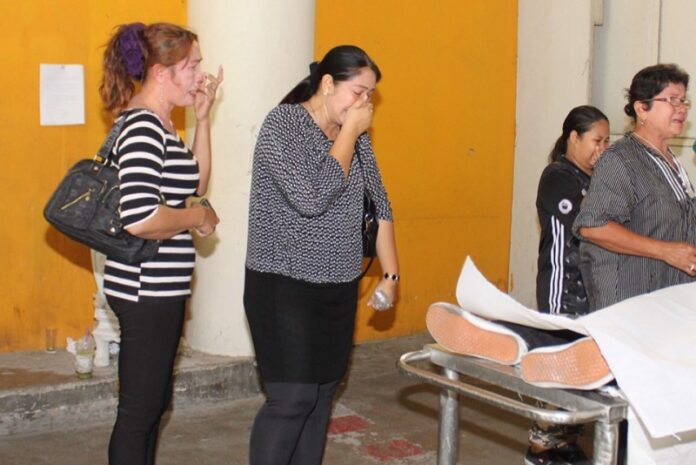
The mother and other family members of slain student Chanon Chuankhunthod, 20, gather Wednesday at the Police General Hospital in Bangkok.

BANGKOK — Police said Thursday they were looking for up to three suspects who stabbed a student from a rival college to death in downtown Bangkok.

Chanon Chuankhunthod, 20, was killed after a fight broke out in front of the popular MBK Center shopping mall Tuesday. Another student was wounded. Chanon was the latest fatality in the long and bloody history of student gang warfare successive governments have tried and failed to stamp out.

Chanon, who enrolled at a polytechnic university known as Uthenthawai, was stabbed to death by a group of students from the nearby Pathumwan Institute of Technology, according to police.

An arrest warrant has been issued for third-year Pathumwan student Sarawuth Soprasit, and police will issue two more warrants soon, according to Phopthorn Chitman, local police chief.

“He has not turned himself in,” Col. Phopthorn said. “Investigators are searching for him.”

Fearing further rounds of bloodshed, the Pathumwan Institute of Technology canceled all of its classes. The university will reopen Monday, it said in a statement.

Another statement released by the university said its administrators were saddened by what happened and are willing to cooperate with the authorities.

Tuesday’s fatal conflict began with scores of students from the two universities clashing on the skywalk connecting BTS National Stadium to the shopping mall. A video filmed by a bystander also shows groups of students rushing into the shopping mall, causing panic to nearby shoppers.

Pathumwan was celebrating its 85th anniversary that day. Bangkok police chief Sanit Mahatavorn said the fight broke out after seven or eight students from the college taunted a group of Uthenthawai students.

Police said Chanon was stabbed in the stomach. He died later at the hospital. Another student from Uthenthawai was also wounded in the fight.

Col. Phopthorn of the Pathumwan Police Station said administrators from both universities will meet Friday to discuss steps to put an end to the deadly gang enmity.

Previous discussions have failed to defuse the feud and cycle of revenge attacks between the two institutions, which have a long history. In 2014, a female student from Uthenthawai was shot dead while waiting for a bus close to the busy Siam Square. A month later, two Pathumwan students were killed in an apparent revenge shooting.

Violent rivalry between vocational college students is common in Thailand. Government after government has pledged to solve the problem, including the current military junta headed by Gen. Prayuth Chan-ocha, who has threatened to shut down universities or schools that fail to stop their students from fighting.

Last year, Bangkok police commissioner Sanit infamously suggested that students perform “love signs” when they encounter rivals to decrease tension.

Advertisement

Turkey and China Pledge Security Cooperation

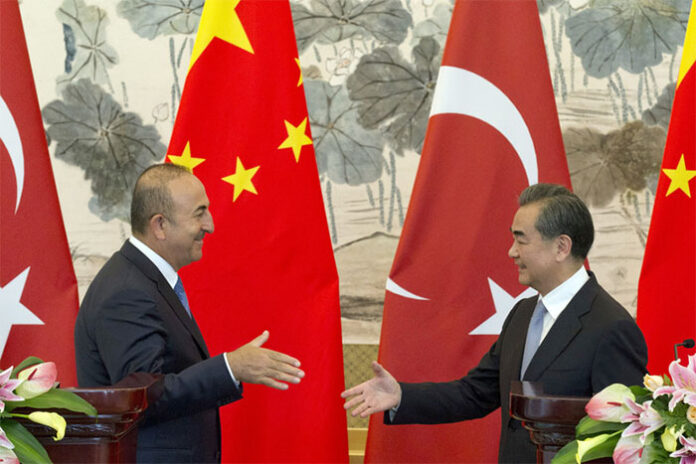
Chinese Foreign Minister Wang Yi, at right, shakes hands with Turkish Foreign Minister Mevlut Cavusoglu after a joint news conference Thursday in Beijing. Photo: Ng Han Guan / Associated Press

BEIJING — Turkey’s top diplomat vowed Thursday to root out militants plotting against China, signaling closer cooperation and a tougher stance against suspected Uighur militants hailing from China’s Xinjiang region who once represented a major irritant in bilateral relations.

Turkish Foreign Minister Mevlut Cavusoglu told reporters during a visit to Beijing that his government would treat threats to China’s security as threats to itself and would not allow any “anti-China activity inside Turkey or territory controlled by Turkey.”

Cavusoglu’s comments, which came after a meeting and warm handshakes with his Chinese counterpart Wang Yi, highlight the stark change in tone from Ankara in recent years regarding China’s Uighur ethnic minority, a Turkic people who share cultural and linguistic ties with Anatolian Turks.

Read: Police: Bangkok Bombing was Revenge for Uighurs

Until recently, relations between Ankara and Beijing had been plagued by distrust largely over Turkey’s campaign to remove Syrian President Bashar al-Assad – a China ally – and its sheltering of Uighur refugees.

Human rights groups have long accused China of oppressing its roughly 10 million Uighurs with severe restrictions on language, culture and religion and inflaming a cycle of resentment and radicalization. Hundreds have died in Xinjiang in violent clashes in recent years and China now keeps the region, with a land area comparable to Iran, under a constant lockdown with massive policing and surveillance efforts that activists say are rife with abuse.

Thousands of Uighurs have fled China in recent years to seek asylum in Turkey, with many traveling on to Syria to join Islamic militant groups or simply to escape persecution and find a new home. In response, China has pressed allies including Russia and Syria to share intelligence about Uighur militants fighting in Syria and help avert their return to strike at China.

Cavusoglu endorsed China’s efforts on Thursday, adding that Turkey “fully appreciated all the actions China has taken” in combating the Islamic State group as well as reaching a political settlement in the Syrian War.

Wang, meanwhile, said that “deepening our collaboration on anti-terror and security is the most central part” of the two countries’ relationship.

Turkish President Tayyip Recep Erdogan had positioned himself as a champion of Turkic peoples and in 2009 accused Beijing of committing “genocide” toward Uighurs. The two governments clashed again in 2015 when Turkey offered asylum to Uighur refugees detained in Thailand whom China had demanded back.

Since then, however, the China-Turkey relationship has recovered swiftly amid a broader political realignment. China, Russia and Turkey have strengthened their partnership while Erdogan has pulled away from the orbit of European governments amid disputes over human rights and other issues.

China has expressed openness toward Turkey joining the Shanghai Cooperation Organization, a security alliance comprised of Russia and several central Asian states that is seen as a counterweight to NATO.

Turkey and Russia have also backed several major Chinese initiatives – including Xi Jinping’s Belt-and-Road project to develop infrastructure spanning the Eurasian continent – that were initially shunned by Western powers.

Story: Gerry Shih

Related stories:
Suspected Uighur Militant in Threat Warning Twice Entered Thailand
Uighur, Chechen Militants in Thailand to Stage Attacks, Memo Warns
Police Link Bomb Attack to Uighurs, Deep South and Thai Politics
Police: Bangkok Bombing was Revenge for Uighurs

Advertisement

Teen Singer’s Critical Tweets Spark Nationalist Backlash

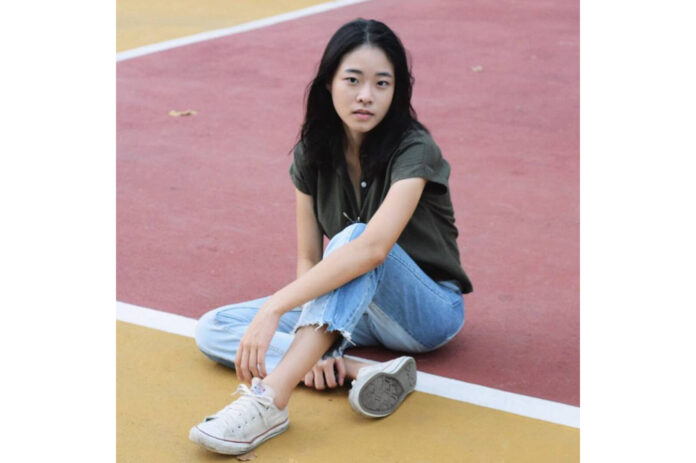
Singer Suthida ‘Image’ Chanachaisuwan, 19. Photo: ImageSwift13 / Instagram

BANGKOK — A singer’s hard-truth tweets about the underdeveloped state of Thailand has sparked debate online Thursday along predictable fault lines.

Suthida “Image” Chanachaisuwan, 19, tweeted Wednesday a series of now-deleted tweets about Thailand and its underdeveloped transportation system.

Heng suai country,” she wrote, using a Sino-Thai word that roughly translates as a casual way to say lousy or no-good. “In 50 or even a 1,000 years, it won’t become more developed. Shoot me!”

Image is a well-liked pop culture figure who rose to fame in 2014 as the second place winner on season three of The Voice Thailand, a reality-television singing competition. She is currently a student at Thammasat University.

She kept up her criticism in another four tweets:

“I don’t know what there is to be proud of, 55555.”
“I would be willing to work hard and pay higher taxes if daily welfare would improve.”
“I’m so tired, I don’t wanna call this place home.”
“Seriously, we can’t even make the buses and vans come on time, so how are we gonna develop?”

Image later deleted the tweets, saying she had written them in anger while waiting for a bus. Still, the game was afoot among the commenting class.

Her comments invited a fierce backlash from nationalists with a firm conviction in Thai exceptionalism.

“I’m not a great person, but I never berate Thailand because it’s my home. In the past, people died so we wouldn’t be colonized. … If you berate or look down on my country, I can’t take it,” wrote Pharunyoo “Tack” Rojanawuthitham, a 32-year-old male model and online personality in a now-deleted Instagram post.

Others agreed with Image’s sentiments, saying the country could be criticized.

“How is Image wrong? Can’t we criticize the crappy parts of our country? Hmm. So you’ve never complained about taxis, Skytrain fares or buses?” presenter Chainon Chantem tweeted.

The hashtag #Image was among Thursday’s top trending tweets, with people largely agreeing with her unsparing criticism.

As Thailand has become more deeply polarized, appeals to nationalism have become de rigeur and criticism is often met with hostility. Outbreaks of online flame fests flare up occasionally  Internet drama about Thailand’s status as an underdeveloped country erupts.

‘You don’t need to be sorry’

‘The reason we’re still this way’

‘Hate people who do something wrong to our country’

Related stories:

On Thainet, Facebook Marks ‘No Wonder We’re an Undeveloped Country’ as Spam

Advertisement

30 Provinces on Flash Flood Alert, Death Toll Climbs to 23

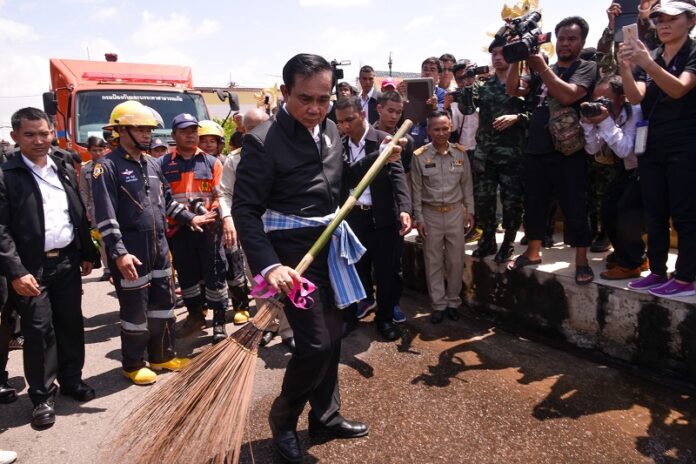
Prime Minister Prayuth Chan-ocha joins a clean-up event after water levels fell Wednesday in Sakon Nakhon province.

BANGKOK — Thirty provinces, many already struck by disaster, are at risk of flash floods and landslides through the weekend, disaster officials warned Thursday, while the death toll from the current crisis rose to 23.

While authorities said Wednesday they expected the crisis in Sakon Nakhon province to be over by Friday, the Department of Disaster Prevention and Mitigation announced today forecast another round of heavy rain hitting the north, east, northeast and southwest regions Friday to Sunday.

The ongoing crisis has affected more than 1.2 million people in 44 provinces. The confirmed death toll doubled this morning to 23 people killed, according to Director-General Chatchai Phromlert. Two people are missing.

While the government blamed the flash floods one week ago on a powerful tropical storm, it has come under stiff criticism for its performance in handling the disaster. Neither flash flood warnings nor life-saving evacuation orders were issued beforehand.

IMG 7973
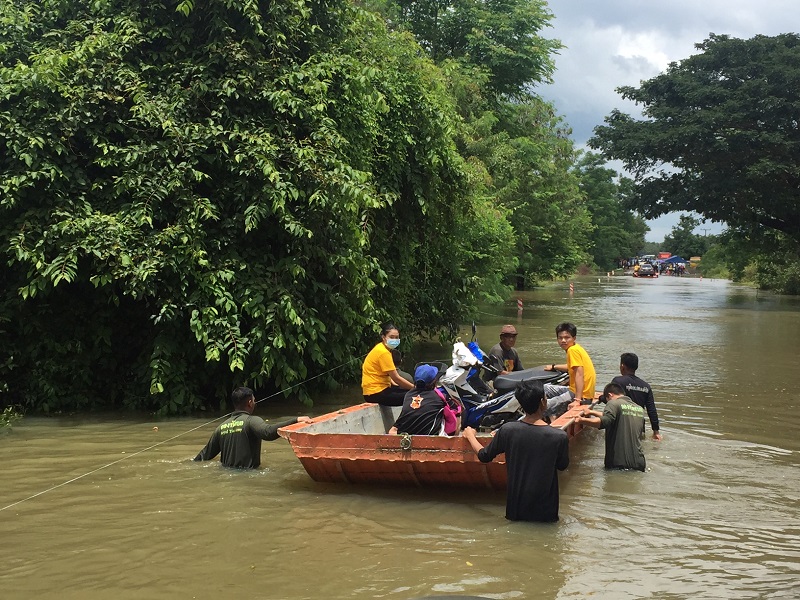
Local residents evacuate by boat Thursday in Nong Khai province.

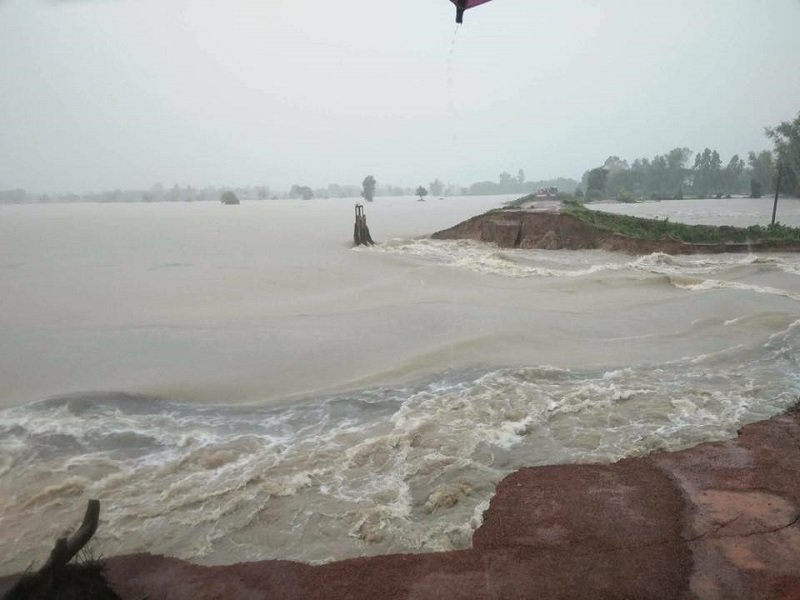
On a Wednesday visit to Sakon Nakhon, Prime Minister Prayuth Chan-ocha visited the Huai Sai reservoir, which was being repaired after an embankment collapsed during the storm. Photos of the breached earthen embankment widely circulated online led many to assume it sent the water that rushed without warning into Sakon Nakhon city.

Niphon Mungkonkeaw, the director of provincial irrigation, said Saturday the 1 million cubic meters of water suddenly poured out after 20 meters of embankment were washed away.

Prayuth dismissed suggestions that infrastructure failure was to blame on Tuesday, saying it was “nonsensical” to worry about placing blame for the crisis.

“It needs to be understood that this was an unusual circumstance,” he said Tuesday. “It’s not that the dam was broken, and so the water flooded. It is flooding everywhere, including the dam, water goes to the lower ground first .”

Huai
The embankment of Huai Sai reservoir in Sakon Nakhon province is seen broken Friday.

Repairs to the Huai Sai reservoir are expected to be complete by Aug.12.

Days after being criticized for not visiting the affected area, Prayuth yesterday joined the clean-up effort and visited people who had been evacuated from their homes.

His weekly televised address Friday night will be used for a telethon to call for the public to make donations at the Government House.

That invited criticism from transparency advocate Srisuwan Janya, who said the government didn’t need to put out its hand, as it already has nearly 200,000 billion baht earmarked for emergencies.

Residents in 30 provinces are advised to listen closely to forecasts and warnings during the next three days.

That includes 12 provinces in the northeast: Sakon Nakhon, Roi Et, Khon Kaen, Kalasin, Ubon Ratchathani, Udon Thani, Nong Bua Lam Phu, Nong Khai, Bueng Kan, Nakhon Phanom, Yasothon and Sisaket.

KIT 8074
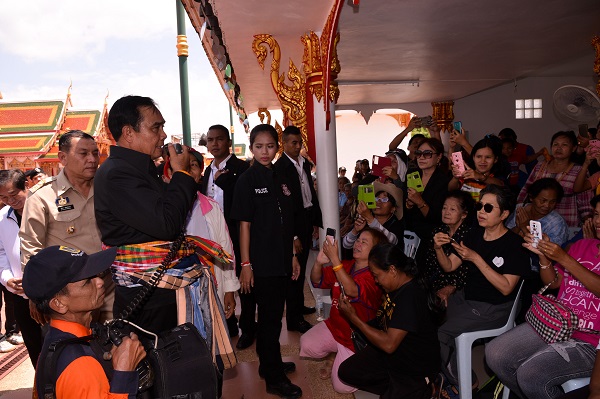
Prime Minister Prayuth Chan-ocha talks to affected people Wednesday in Sakon Nakhon province.

Ten provinces in the north: Chiang Mai, Chiang Rai, Mae Hong Son, Lamphun, Lampang, Phrae, Uttaradit, Sukhothai, Phitsanulok and Phetchabun.

In the east, Chonburi, Rayong, Chanthaburi and Trat provinces are also on alert, while the southern provinces of Ranong, Phang-Nga, Phuket and Krabi were also told to beware flash flooding and landslides caused by heavy rain.

Bangkok will experience moderate to heavy rainfall through Wednesday.

Related stories:

Storm Storms Into Bangkok as Millions Reel From Flooding

Massive Flooding Continues in 19 Provinces (Photos)

Prayuth to Visit Flooded Region as Death Toll Climbs

‘Sonca Storm’ Floods Sink Northeastern Towns

Advertisement

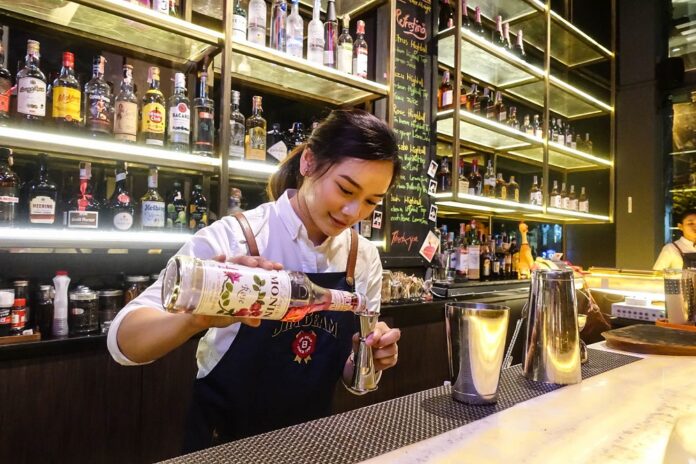
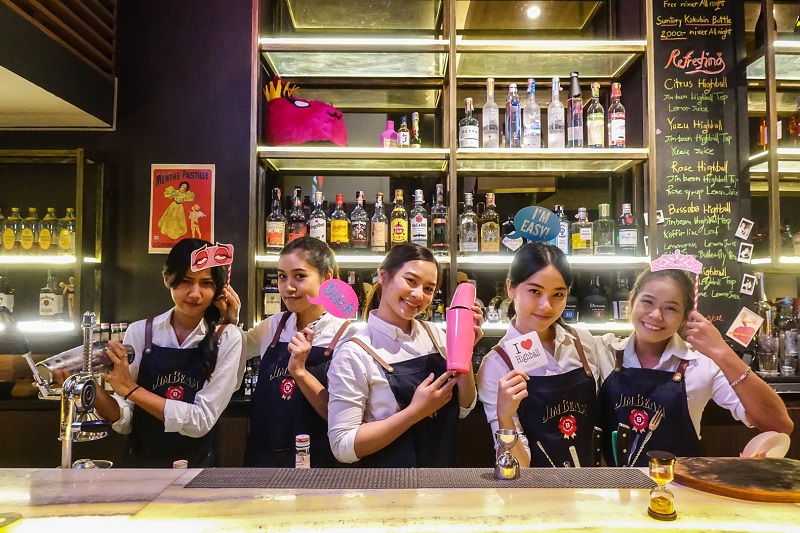
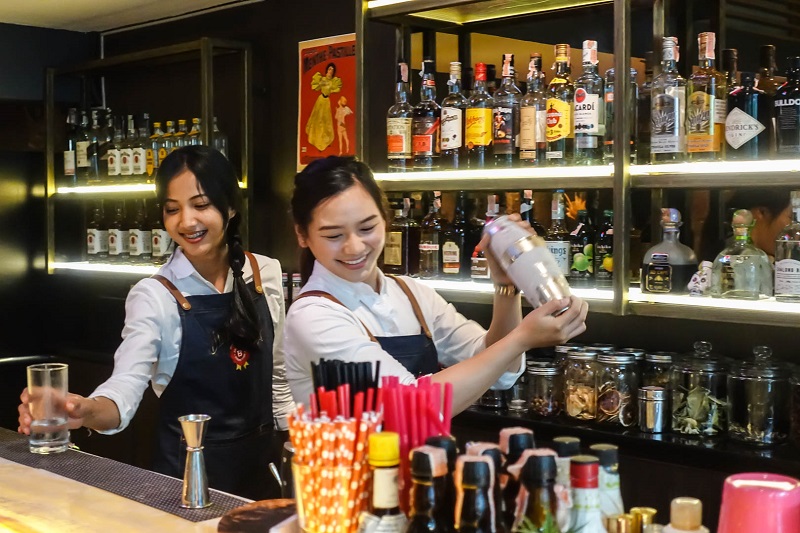
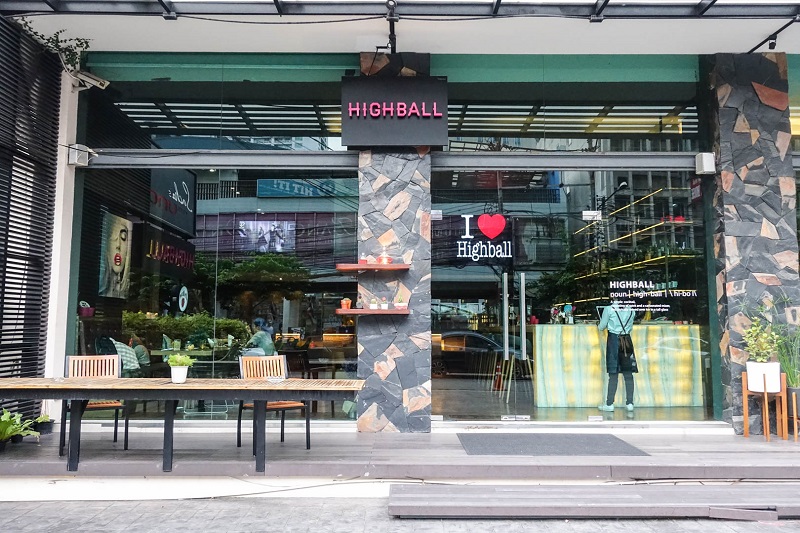
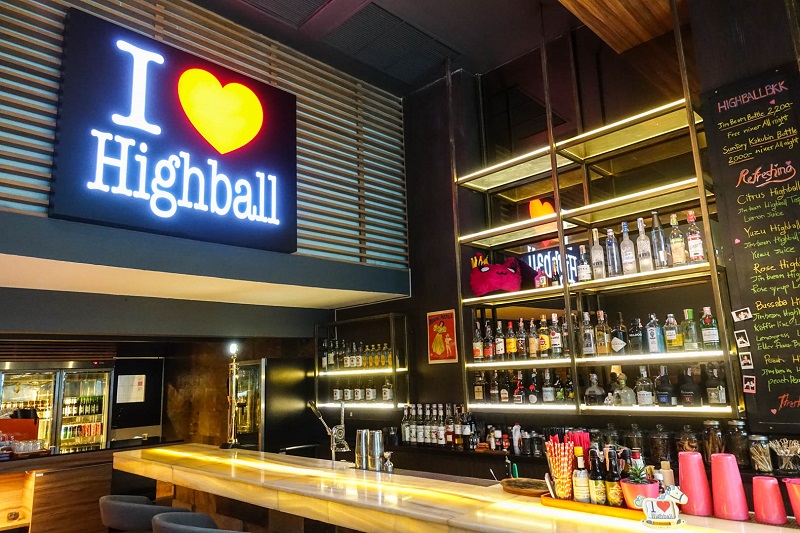
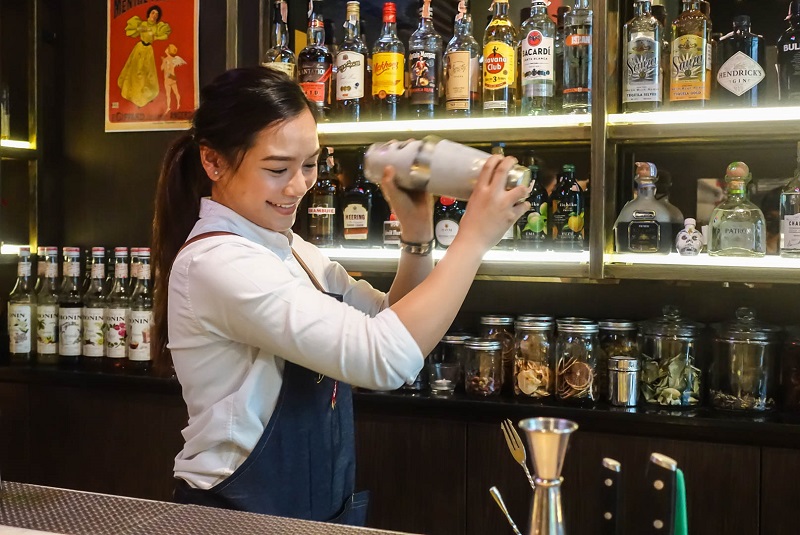
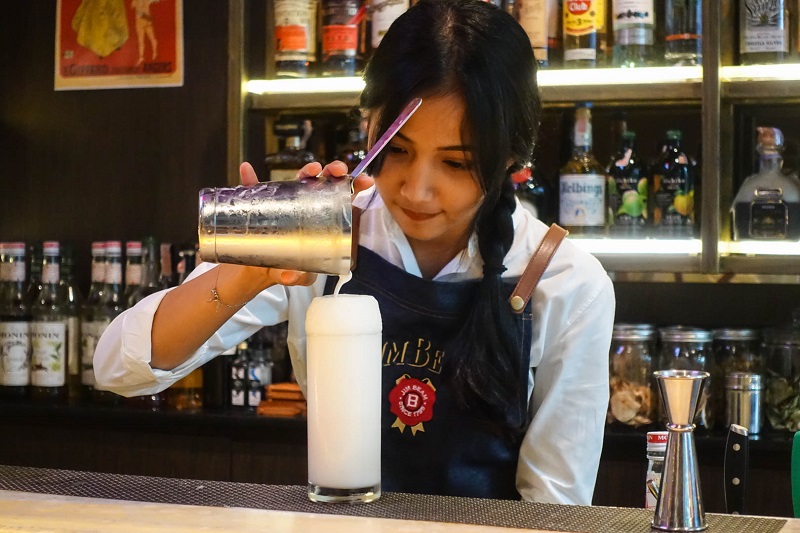
Belles of the Bar: Women Call the Shots at this Bangkok Highball Bar

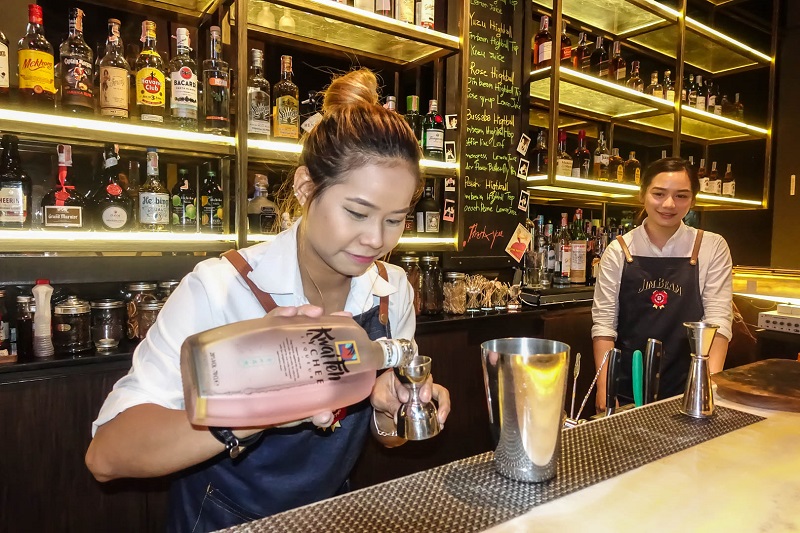
BANGKOK — At this downtown cocktail bar, the women are running the show.

Enter a hotel a few hundred meters from downtown shopping mall Terminal 21 to find Highball Bangkok and a fresh concept for the city’s busy bar scene: only women behind the bar.

In a country where most bartenders are men, Highball Bangkok wants to change that. Not with miniskirt-wearing eye candy with a passing knowledge of the craft, but rather skilled drinksmiths pouring 100-proof talent.

“Bars in Thailand never had this clear of [all-woman bartenders] concept. When talking about bartenders, most of us automatically think about men,” owner Mlinssara Bhumichitr said. “Many overlook that women actually can do the job too, and we want to be the ones to fiercely make the point.”

The laid-back bar shares the same concept as Highball Singapore, which was opened by Kino Soh, who is also head bartender there.

The team pouring and serving behind the bar is led by award-winning bartenders Thananya “Jib” Samoema and Saimai Nantarat. Both are known to be top female bartenders in the country. Jib was one of 12 finalists for the Diageo World Class Thailand Competition in 2016, while Saimai was crowned champion at February’s Bangkok Gin Jubilee.

Saimai was a bar-back when she was a college student and later moved up to full bartender status. She worked at Bunker Bangkok in the Sathon area before moving in June to Highball Bangkok.

“The concept made me apply for the job,” Saimai said. “Women can do so many things as well as men and working here gives me the opportunity to train other women to be able to bartend like I do, or even better.”

While Bangkok has many destinations for craft beer and cocktails, most people would associate Highballs with the Japanese variety. So, apart from challenging the bartending being boys’ club, Mlinssara said another goal is to bring highball culture to a wider audience.

Easy-to-drink options, a friendly environment and affordable prices are no doubt the place’s strong points.

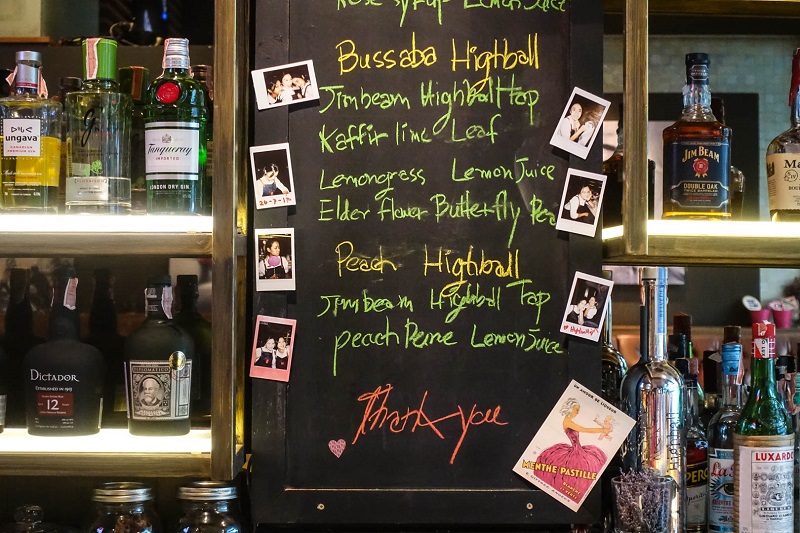
The bar claims its golden, counter-top Jim Beam Highball draft tap is the city’s first. What does it do? It pours out high-pressured soda with a stronger and more durable fizz.

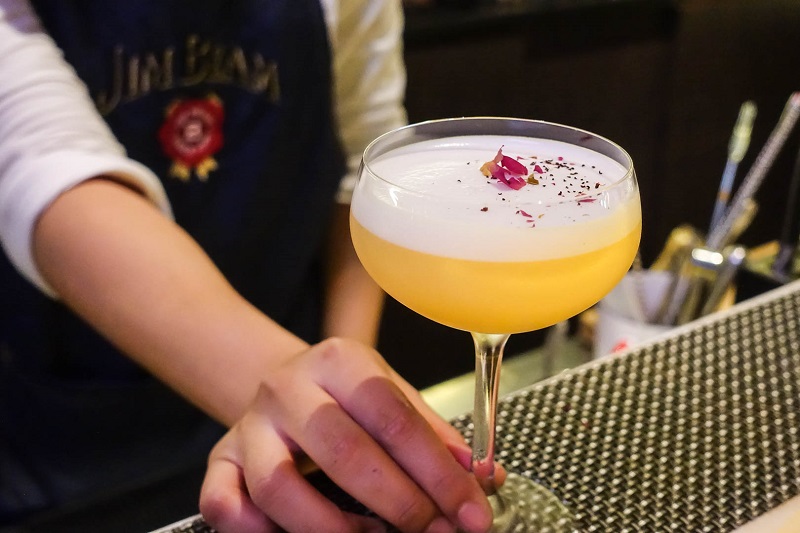
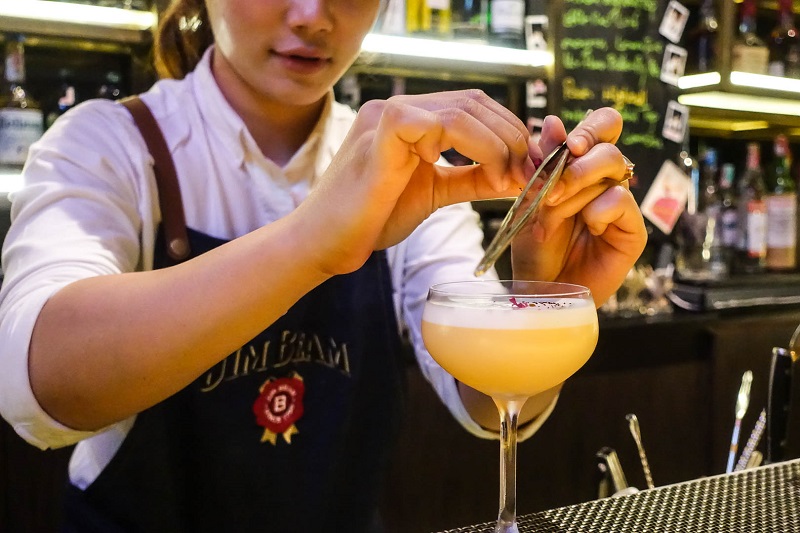
More than 50 choices of drinks are available, including a sparkling Yuzu Highball (220 baht) and the bartenders’ specials. Saimai recommended her self-invented Intanin and the #Highballsour. Jib has hers too: Baby Bomb Highball and Rose Lady.

DSC01435
Yuzu Highball (Jim Beam Highball on Tap with Yuzu Juice, 220 baht)

“You drink a Baby Bomb Highball and you’re reminded of eating popcorn in the cinema,” Jib said, adding that Baby Bomb is her bartending nickname. “I invented the Baby Bomb Highball from my own history, back when I snuck Sangsom rum into a cinema and drank it with popcorn watching the movie.”

Another popular drink is Lychee-Rose Gin Fizz (Tanqueray London Dry, lemon juice, lychee liqueur, egg white, cream, soda and rose syrup for 300 baht). It takes a full eight minutes of shaking to create. A customer even asked to try shaking her own.

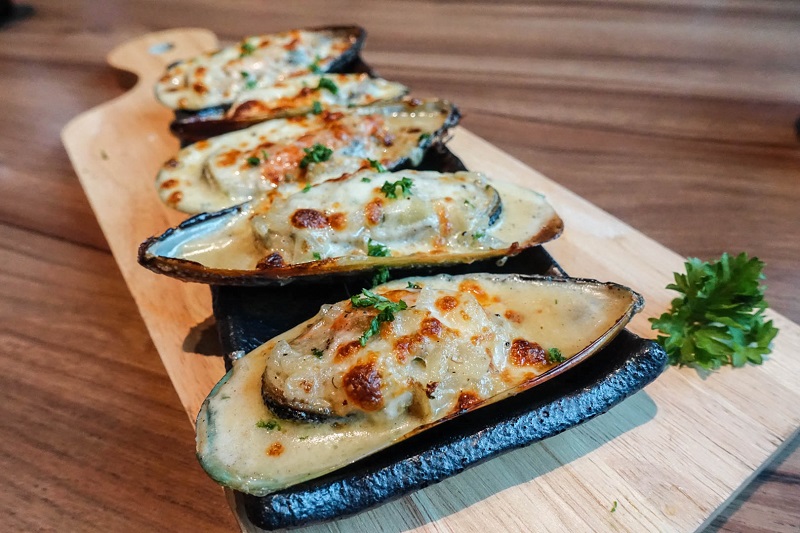
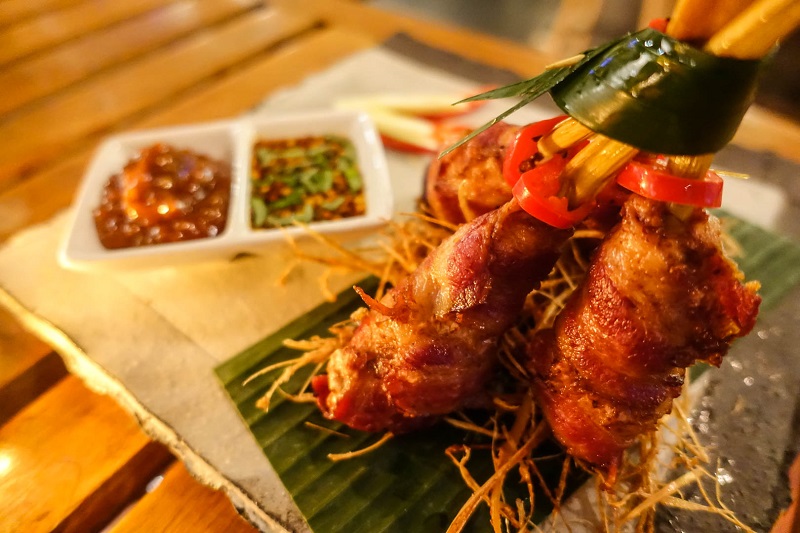
Something to munch while drinking? Sure. The chef serves easy appetizers and fusion dishes such as home-fried cheese sticks (120 baht), baked New Zealand mussel with cheese (220 baht), spaghetti carbonara (220 baht) and bacon-wrapped fried chicken with lemongrass (200 baht). If vegetarians aren’t full after a mushroom soup, they can order more from the non-meat menu items.

Highball will see its grand opening in September. Get there by foot from BTS Asoke. The venue is located on the ground floor of Sacha’s Hotel Uno on Soi Sukhumvit 19.

HB17

HB6

HB15
Rose Lady (Tanquaray London Dry, lychee liqueur, rose syrup, egg white, lemon juice, 300 baht)

DSC01440

HB1

HB2

HB5

HB14

HB7 2

HB9

HB12

HB3

HB10

Advertisement

First Embryo Gene-Repair Holds Promise for Inherited Disease

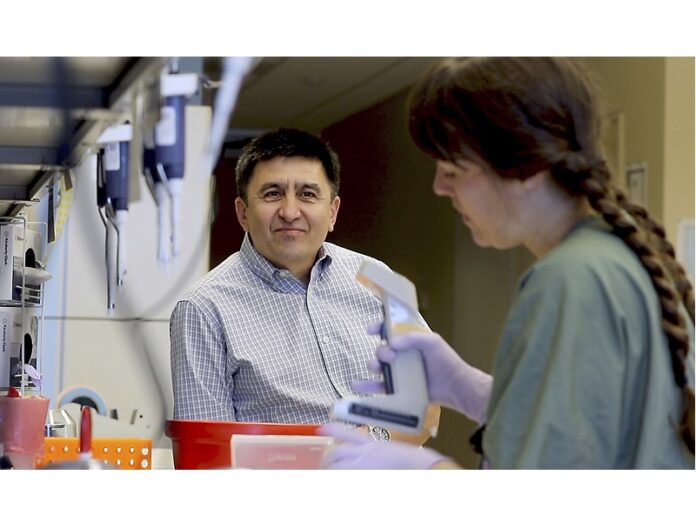
Shoukhrat Mitalipov, left, talks with research assistant Hayley Darby in the Mitalipov Lab at OHSU Monday in Portland, Oregon. Photo: Kristyna Wentz-Graff / Associated Press

WASHINGTON — Altering human heredity? In a first, researchers safely repaired a disease-causing gene in human embryos, targeting a heart defect best known for killing young athletes  a big step toward one day preventing a list of inherited diseases.

In a surprising discovery, a research team led by Oregon Health and & Science University reported Wednesday that embryos can help fix themselves if scientists jump-start the process early enough.

It’s laboratory research only, nowhere near ready to be tried in a pregnancy. But it suggests that scientists might alter DNA in a way that protects not just one baby from a disease that runs in the family, but his or her offspring as well. And that raises ethical questions.

“I for one believe, and this paper supports the view, that ultimately gene editing of human embryos can be made safe. Then the question truly becomes, if we can do it, should we do it?” said Dr. George Daley, a stem cell scientist and dean of Harvard Medical School. He wasn’t involved in the new research and praised it as “quite remarkable.”

“This is definitely a leap forward,” agreed developmental geneticist Robin Lovell-Badge of Britain’s Francis Crick Institute.

Today, couples seeking to avoid passing on a bad gene sometimes have embryos created in fertility clinics so they can discard those that inherit the disease and attempt pregnancy only with healthy ones, if there are any.

Gene editing in theory could rescue diseased embryos. But so-called “germline” changes  altering sperm, eggs or embryos  are controversial because they would be permanent, passed down to future generations. Critics worry about attempts at “designer babies” instead of just preventing disease, and a few previous attempts at learning to edit embryos, in China, didn’t work well and, more importantly, raised safety concerns.

In a series of laboratory experiments reported in the journal Nature, the Oregon researchers tried a different approach.

They targeted a gene mutation that causes a heart-weakening disease, hypertrophic cardiomyopathy, that affects about 1 in 500 people. Inheriting just one copy of the bad gene can cause it.

The team programmed a gene-editing tool, named CRISPR-Cas9, that acts like a pair of molecular scissors to find that mutation  a missing piece of genetic material.

Then came the test. Researchers injected sperm from a patient with the heart condition along with those molecular scissors into healthy donated eggs at the same time. The scissors cut the defective DNA in the sperm.

Normally cells will repair a CRISPR-induced cut in DNA by essentially gluing the ends back together. Or scientists can try delivering the missing DNA in a repair package, like a computer’s cut-and-paste program.

Instead, the newly forming embryos made their own perfect fix without that outside help, reported Oregon Health & Science University senior researcher Shoukhrat Mitalipov.

We all inherit two copies of each gene, one from dad and one from mom  and those embryos just copied the healthy one from the donated egg.

“The embryos are really looking for the blueprint,” Mitalipov, who directs OHSU’s Center for Embryonic Cell and Gene Therapy, said in an interview. “We’re finding embryos will repair themselves if you have another healthy copy.”

It worked 72 percent of the time, in 42 out of 58 embryos. Normally a sick parent has a 50-50 chance of passing on the mutation.

Previous embryo-editing attempts in China found not every cell was repaired, a safety concern called mosaicism. Beginning the process before fertilization avoided that problem: Until now, “everybody was injecting too late,” Mitalipov said.

Nor did intense testing uncover any “off-target” errors, cuts to DNA in the wrong places, reported the team, which also included researchers from the Salk Institute for Biological Studies in California and South Korea’s Institute for Basic Science. The embryos weren’t allowed to develop beyond eight cells, a standard for laboratory research. The experiments were privately funded; U.S. tax dollars aren’t allowed for embryo research.

Genetics and ethics experts not involved in the work say it’s a critical first step  but just one step  toward eventually testing the process in pregnancy, something currently prohibited by U.S. policy.

“This is very elegant lab work,” but it’s moving so fast that society needs to catch up and debate how far it should go, said Johns Hopkins University bioethicist Jeffrey Kahn.

And lots more research is needed to tell if it’s really safe, added Britain’s Lovell-Badge. He and Kahn were part of a National Academy of Sciences report earlier this year that said if germline editing ever were allowed, it should be only for serious diseases with no good alternatives and done with strict oversight.

“What we do not want is for rogue clinicians to start offering treatments” that are unproven, as has happened with some other experimental technologies, he stressed.

Among key questions: Would the technique work if mom, not dad, harbored the mutation? Is repair even possible if both parents pass on a bad gene?

Mitalipov is “pushing a frontier,” but it’s responsible basic research that’s critical for understanding embryos and disease inheritance, noted University of Pittsburgh professor Kyle Orwig.

In fact, Mitalipov said the research should offer critics some reassurance: If embryos prefer self-repair, it would be extremely hard to add traits for “designer babies” rather than just eliminate disease.

“All we did is un-modify the already mutated gene.”

Advertisement

Hot News

LATEST NEWS

Bangkok
scattered clouds
28.3 ° C
28.3 °
25 °
74 %
2.8kmh
46 %
Tue
38 °
Wed
37 °
Thu
36 °
Fri
37 °
Sat
37 °