29.9 C
Bangkok
Saturday, June 27, 2026
Home Blog Page 2469

How Long to Install BTS Elevators? City Hall Says 3 Years.

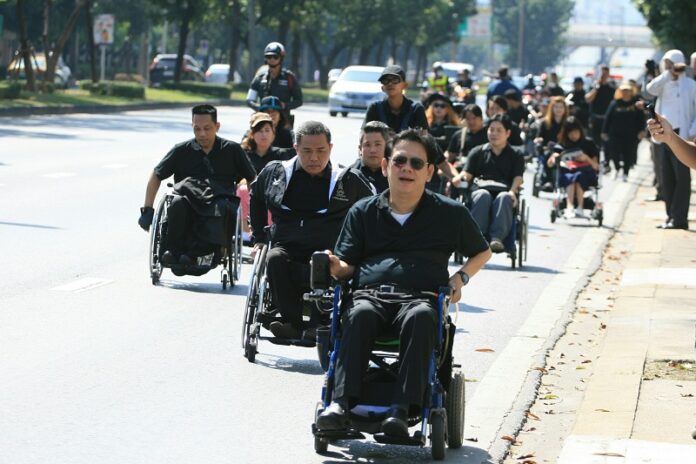
Disabled rights activists and commuters rally along Ratchadapisek Road in Bangkok on their way to the Civil Court on Jan. 20, 2017, to file a class-action lawsuit against the city.

BANGKOK — Days after a class-action lawsuit was filed against City Hall for failing to make the BTS Skytrain accessible to disabled commuters, officials said Monday it will take a year to complete the work which has languished for two years.

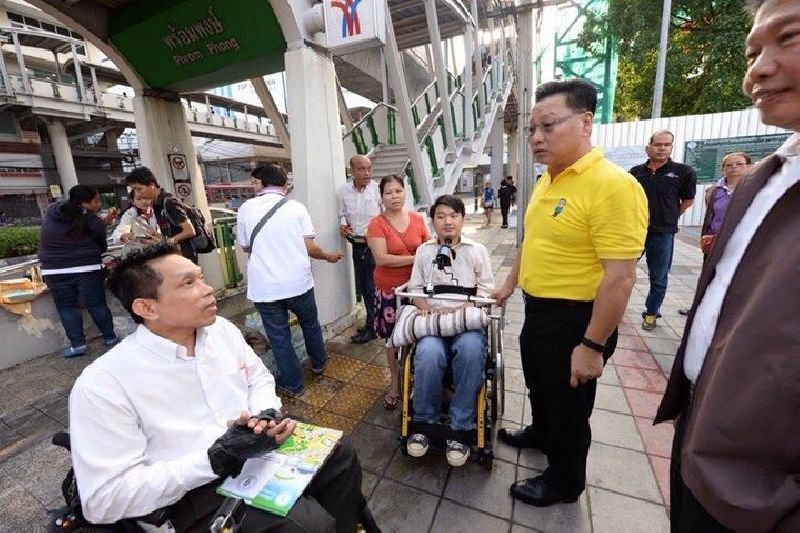
Disabled rights activist Manit Inpim, who spearheaded efforts to make the rail system accessible with Transportation for All, talks to Deputy Bangkok Gov. Amorn Kijchawengkul on Jan. 21 at BTS Phrom Phong in Bangkok.

Monday’s assertion also came with the second apology in two years for not satisfying a court order to make the rail system accessible. Whereas officials one year ago said it would be finished in nine months, the Bangkok Metropolitan Administration, or BMA, today only gave a vague timeframe for completion. It said all stations would be equipped with functioning elevators by the end of the year.

If that comes true, it would mean construction of elevators at the 23 stations along the original BTS lines will have taken three years to complete since the landmark court ruling in January 2015.

“BMA has prioritized this issue and spent 350 billion baht to build the elevators,” newly installed Deputy Bangkok Gov. Amnuay Nimmano said.

Read: Broken Promises: BTS Still Off Limits to Disabled

The Supreme Court ruling in favor of disability rights groups was hailed as a historic victory only to become another piece of paper after City Hall let project developer Seri Construction extend the deadline to complete the installation without fining them as per its contract.

Amnuay promised at least three stations would be accessible to wheelchairs by the end of March. He did not name which.

On Friday, nearly 100 wheelchair users rallied at the Civil Court to file a class-action suit against the city. It seeks 1,000 baht for each plaintiff for each day since the Jan. 21, 2016 court-ordered deadline has passed without compliance.

At Monday’s news conference, City Hall did not address the suit.

Instead, officials repeated the same explanations offered for over a year. They said they’ve been dealing with land ownership issues, complicated underground infrastructure and limited to working during the four hours the system is shut down.

“It is not an excuse. But there really are problems,” Amnuay said. “I will appoint an inspector to look into the case and find out who is at fault.”

Related stories:

Wheelchair Rally to File Class-Action Lawsuit Over BTS Accessibility at Court

Disabled Activists to File Class-Action Lawsuit Over BTS Access

City Hall Fails to Make BTS Accessible 2 Years After Court Ruling

Broken Promises: BTS Still Off Limits to Disabled

Disabled Rights Group Weighs New Suit Over BTS Stations

BTS Stations Remain Inaccessible to Disabled, a Year After Landmark Ruling

Court Orders Skytrain to Accommodate Disabled Passengers

Advertisement

Tourists Leap into Sea to Escape Flaming Diving Boat

Tourists who survived the sinking of their diving boat disembark Monday night on the shore of Satun province.

SATUN — A diving trip in the pristine sea near a world-renowned island turned into a survival nightmare for 18 tourists Monday afternoon when their boat caught fire, forcing them to leave everything behind and swim for their lives.

Although all the tourists and boat crew were safely rescued, most of the visitors are now stranded without passports in Satun province after their Koh Lipe diving trip went awry. Police are debating which station has jurisdiction over the case, which one officer described as a possible case of negligence.

Nipon Kongkwan, chief of La-Ngu Police Station, said the captain of the Charan Tour boat told him the incident happened when the crew was filling oxygen tanks for a dive. They did so too close to an inflammable material, and an accidental spark lit up flames that soon spread across the boat too quickly for the tourists to do anything but leap free.

“They couldn’t pick up anything. They had to jump into the sea,” Col. Nipon said. “No passports. No iPhones. Nothing. They even had to borrow clothes from local fishermen.”

He stressed that story was solely based on the testimony of the captain, and that police must investigate before reaching any conclusions.

The boat reportedly caught fire and sank hours after it departed Lipe on Monday afternoon. Tourists and crew members had to struggle to stay afloat for half an hour before a nearby fishing boat spotted them and came to the rescue, according to a marine police officer in the area.

“They were very lucky,” Lt. Col. Santipong Pansawat said.

He added that some of the tourists and crewmen were slightly burned, but no one was seriously hurt.

The tourists include four from Brazil, four from Finland, two from Russia, two from Sweden, two from Britain, two from Germany, one from Spain and one from Italy, police said.

They were brought to the coast of Satun province in the evening, and representatives from Charan Tour booked a hotel for them to stay while they sort out their missing documents, Col. Nipon said. At least five tourists had filed complaints about their lost passports so they could secure new ones from their embassies, he added.

Charan Tour is expected to file criminal charges against the crew over the incident, but was unable to do so because the boat sank in waters where the jurisdiction of three police stations meet, so officers could not agree which unit is responsible for investigating.

Nipon said he wouldn’t mind taking the case if the company decided to file charges at his station.

“I’m not worried about it,” he said.

Related stories:

Boat with 14 Foreign Tourists Sinks in Krabi

British, German, Chinese Women Die in Yet Another Speedboat Tragedy

8 Tourists Injured in Pattaya Speedboat Collision

2 Tourists Killed in Phi Phi Speedboat Collision

Advertisement

Cabinet to Weigh Extending Free Tourist Visa Program

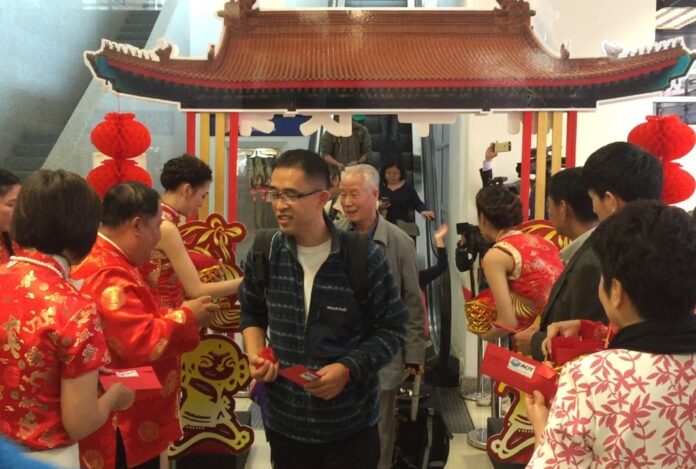
Airport staff dress in traditional Chinese outfits and give Red Packets to arriving Chinese tourists to mark Chinese New Year on Feb 9, 2016, at Chiang Mai International Airport.

BANGKOK — The interim cabinet Tuesday afternoon will consider a request from a top tourism official to extend free tourist visas and discounted visas on arrival for another three months.

Since December, tourists from more than a dozen countries have been able to obtain visas from abroad without paying a 1,000 baht fee and visas on arrival for 1,000 baht instead of 2,000 baht. The three-month policy is set to expire at the end of February.

The extension through May was requested by Tourism Minister Kobkarn Wattanavrangkul in response to sagging tourist arrivals which threaten to further weaken the already lackluster economy.

Two factors have been blamed for the decline: a crackdown on so-called 0-baht Chinese tours in September and the effect of King Bhumibol’s death in October on various celebrations and festivals.

In August, nearly 900,000 Chinese tourists visited Thailand, a number which fell to just above 650,000 the next month and below 500,000 through November before recovering slightly to 535,550 last month.

The November low of about 430,000 tourists was a 30 percent decline from the year prior.

The 21 countries now included in the visa incentive program are: Andorra, Bulgaria, Bhutan, China, Cyprus, Ethiopia, India, Kazakhstan, Latvia, Lithuania, Maldives, Malta, Mauritius, Romania, San Marino, Saudi Arabia, Taiwan, Ukraine, Uzbekistan, Fiji and Papua New Guinea.

Related stories:

Huanying! Tourists From China and 18 Nations Get Visa Discount

Official Optimism on Tourism Tempered by the Numbers


Advertisement

F1 Boss Bernie Ecclestone Steps Down After Almost 40 Years

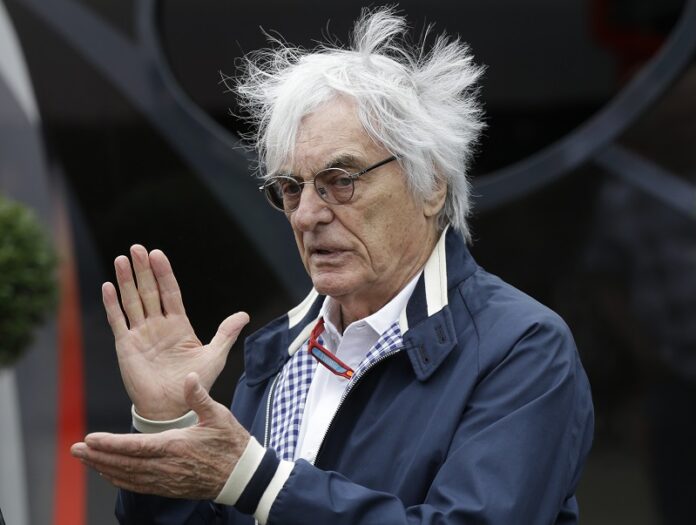
Bernie Ecclestone gestures in a paddock at the Silverstone racetrack, last July in Silverstone, England. Photo: Luca Bruno / Associated Press

Bernie Ecclestone’s reign of Formula One ended after Liberty Media officially completed its takeover of the series on Monday, and named American Chase Carey as the new chief executive.

Carey acted quickly by naming former Mercedes team principal Ross Brawn as managing director of motorsports, a move that was expected to be widely welcomed as the series prepares for rule changes it hopes will win back disgruntled fans.

It also brought the curtain down on Ecclestone’s long and often controversial governance of F1.

In recent years particularly, issues were regularly raised about the top-heavy distribution of wealth in the series and fears raised about the future of famed races such as the Italian Grand Prix and the German GP  which has struggled to host races  in the face of rising track fees.

Ecclestone was criticized for overlooking historic popular races to develop new frontiers in F1 such as Abu Dhabi, Bahrain, Russia, and Azerbaijan, which held its first race last year.

F1 has been indecisive recently, with rule changes imposed and reversed, such as the double points rule on the final day of the 2014 season, and unpopular changes to qualifying that were quickly scrapped.

The overly strong influence of a handful of big teams and Ecclestone in strategy group discussions was seen by many observers as iron-fisted and undemocratic, as well as being unfair on smaller teams like cash-strapped Manor, which is battling against administration.

The takeover on Monday came five days after motor sport’s governing body approved of F1 being sold to Liberty Media, a U.S. company that invests in entertainment and sports. The transaction price represents an enterprise value for F1 of $8 billion and an equity value of $4.4 billion, Liberty said in a statement.

The 86-year-old Ecclestone remains on board as an honorary chairman and will be an F1 adviser, according to Liberty.

“I’m proud of the business that I built over the last 40 years and all that I have achieved with Formula One,” Ecclestone said in Liberty’s statement.

As a TV executive, Carey helped to launch Fox Sports and FoxNews, and took over from Rupert Murdoch as CEO of News Corporation. Carey praised Ecclestone.

“(F1) is what it is today because of him and the talented team of executives he has led, and he will always be part of the F1 family,” he said.

Last September, Liberty Media Corp., which is controlled by 75-year-old tycoon John Malone, ended years of uncertainty about the ownership of F1 when it first announced plans for a takeover. Last week, the FIA’s World Motor Sport Council approved the change of control of Delta Topco, F1’s holding company, from investment fund CVC Capital Partners to Liberty Media Group.

With Liberty’s shareholders having approved the move, an FIA green light was the last regulatory step before the sale. Although Carey was expected to replace Ecclestone, the buyout came sooner than expected and some way ahead of the new F1 season, which starts on March 26 with the Australian GP.

Liberty’s takeover was timely, with the series poised for a shakeup.

Changes such as wider tires, car design, louder engines, and more overtaking opportunities are set to make F1 more exciting again in a bid to win back a large chunk of unhappy fans amid flagging attendances at some races.

“There is an enormous opportunity to grow the sport,” Liberty president Greg Maffei said. “We have every confidence that Chase, with his abilities and experience, is the right person to achieve this.”

Retired world champion Nico Rosberg said the time was right for a new era.

“Bernie, mega job! But a change has been overdue,” Rosberg tweeted. “Mr Carey, all the best in making our sport awesome again.”

The acutely ambitious and driven Ecclestone transformed F1 into a multi-billion business with huge glitz.

He started in the 1970s primarily negotiating with circuits before taking up a position of power as the commercial rights holder in the 1990s, massively increasing the series’ TV exposure.

But he overlooked social media, an area Liberty has expertise and willingness to use. In the short term, Liberty has the capacity to make some changes to the calendar  such as an extra race in the U.S.  promotion, and digital media coverage.

Other, more in-depth changes such as scheduling of race weekends, rules governing car design, and fairer distribution of revenue to teams are governed by the Concorde Agreement between the owners, the teams, and the FIA. That agreement runs through the end of 2020 so big changes could not be made before then.

As well as contracting Brawn, Carey has hired Sean Bratches  formerly of ESPN  as managing director.

Brawn has more than 40 years of experience in engineering and management, helping Ferrari win 11 world titles and seven with Williams and Bennetton. Perhaps his greatest achievement was winning the 2009 F1 title against all odds with his own BrawnGP team  the Honda F1 team he rescued and renamed  with British driver Jenson Button producing the season of his life.

Brawn, who helped develop the career of seven-time champion Michael Schumacher, then helped Mercedes develop the car that won three straight titles from 2014-16.

“I’ve enjoyed consulting with Liberty Media these last few months and I’m looking forward to working with Chase, Sean, and the rest of the Formula One team to help the evolution of the sport,” Brawn said.

Bratches is credited as one of ESPN’s most influential leaders, with over 27 years of experience, most recently as executive vice president of sales and marketing.

With the completion of the acquisition, the Liberty Media Group will shortly be renamed the Formula One Group.

Liberty Media expects the group name change and the symbol change to take place this week.

F1 will remain based in London, and Maffei will be deputy chairman of the board of F1.

Ecclestone is expected to attend some races this season.

Story: Jerome Pugmire

Advertisement

Trump Cuts off Funding for Int’l Groups That Perform Abortions

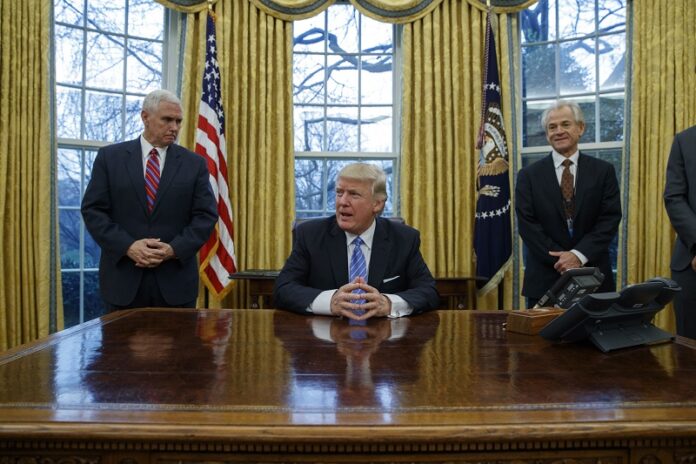
Vice President Mike Pence, left, and National Trade Council adviser Peter Navarro, right, wait for President Donald Trump to sign three executive orders, Monday in the Oval Office of the White House in Washington. Photo: Evan Vucci / Associated Press

WASHINGTON — President Donald Trump signed three executive memorandums on Monday, kicking off his first full week in the White House by undoing parts of his predecessor’s agenda and renewing a longtime Republican priority on abortion funding.

Trump signed a memorandum that freezes hiring for some federal government workers, a notice to abandon the proposed Pacific Rim trade pact known as the Trans-Pacific Partnership, and another executive action to reinstate a ban on providing federal money to international groups that perform abortions or provide information on the option.

Here is a look at his three executive actions:

Trans-Pacific Partnership

As a candidate, Trump often said he could negotiate better trade deals than past administrations, repeating night after night that he would undo the North American Free Trade Agreement, which was signed by President Bill Clinton in 1994, and the Trans-Pacific Partnership, which President Barack Obama championed.

The memorandum signed Monday was a first step toward making good on that pledge.

Since the Pacific trade deal had yet to receive the required Senate ratification, there is scant immediate impact to trade, exports or wages. The deal has been stalled amid bipartisan opposition in the Senate. It was widely viewed as dead even before Trump’s move Monday.

In its place, the White House has said the president plans to focus on seeking individual deals with the 11 other nations in TPP  a group that represents roughly 13.5 percent of the global economy, according to the World Bank.

“We’re going to have trade, but we’re going to have one on one. If someone misbehaves, we’ll send them a letter of termination, 30 days, and they’ll either straighten it out or we’re gone,” Trump said.

The major benefit to Americans from TPP had been the prospect of lower prices. An analysis by the Peterson Institute for International Economics also estimated it would lead to a $131 billion increase in inflation-adjusted incomes by 2030.

But Trump has blamed past trade deals such as NAFTA and China’s entrance into the World Trade Organization for a decline in U.S. factory jobs. He said in his inaugural address that his administration would follow two rules: “Buy American and hire American.”

Federal Workers Freeze

A frequent critic of the size of the federal government, Trump also signed a memorandum that freezes hiring for some federal government workers as a way to reduce payrolls and rein in the size of the workforce.

The freeze does not apply to the military, Trump said. The memorandum signed by Trump’s is similar to one that President George W. Bush signed at the start of his administration in 2001.

The decision was cheered by conservatives, but denounced by the head of one of the unions that represents federal workers.

“This accomplishes nothing for the American taxpayer,” said Randy Erwin, president of the National Federation of Federal Employees. “It only makes it difficult for federal agencies to do the business of the American people.”

Mexico City Policy

Lastly, Trump reinstituted a ban on providing federal money to international groups that perform abortions or provide information about abortions.

The regulation, known as the “Mexico City Policy” or, by critics, the “global gag rule,” has been a political volleyball, instituted by Republican administrations and rescinded by Democratic ones since 1984. Most recently, President Barack Obama ended the ban in 2009.

Trump signed it one day after the 44th anniversary of the Supreme Court’s 1973 Roe vs. Wade decision that legalized abortion in the United States, the date on which presidents traditionally take action on the policy. It also prohibits taxpayer funding for groups that lobby to legalize abortion or promote it as a family planning method.

The move was predictably polarizing.

Republican Sen. Ben Sasse of Nebraska said in a statement that “Americans are humanitarians and the Mexico City Policy reflects our heartfelt compassion for both moms and babies.”

The abortion rights group NARAL condemned the decision as “repressing women.”

“With this action, Donald Trump has turned his anti-women rhetoric into policy, and made it more difficult for women and families all over the world to access vital reproductive care,” said NARAL president Ilyse Hogue. “He really is living up to the lowest of expectations.”

Story: Jonathan Lemire

Advertisement

Trump Withdraws US From TPP

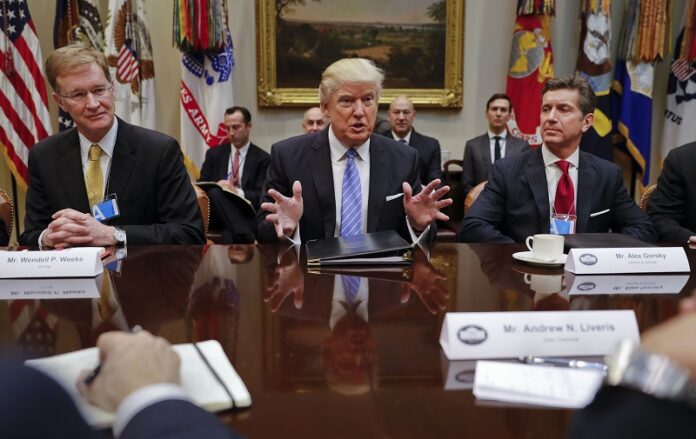
President Donald Trump speaks while hosting a breakfast with business leaders in the Roosevelt Room of the White House in January in Washington. Photo: Pablo Martinez Monsivais / Associated Press

WASHINGTON — Charting a new American course abroad, President Donald Trump withdrew the United States from the sweeping Trans-Pacific Partnership on Monday, using one of his first actions in office to reject a centerpiece of Barack Obama’s attempts to counter China and deepen U.S. ties in Asia.

Trump’s move on trade aimed to fulfill a central campaign promise even as he appeared to be fixated on re-litigating the 2016 election.

In a meeting with congressional leaders on Monday night, Trump claimed that 3 to 5 million immigrants living in the U.S. illegally voted in the election, costing him the popular vote, according to a Democratic aide familiar with the exchange who spoke on condition of anonymity to discuss the private meeting. There has been no evidence to back up that claim.

Trump’s assertions came in a White House meeting with Democratic and Republican congressional leaders. They were similar to claims he made on Twitter in late November that he had won the electoral college in a “landslide” and “won the popular vote if you deduct the millions of people who voted illegally.” Hillary Clinton won the popular vote by nearly 2.9 million votes despite losing the electoral college.

Trump aimed to make jobs and the economy the focal point of his first few days in office. He has repeatedly cast the 12-nation trade pact  which was eagerly sought by U.S. allies in Asia  as detrimental to American businesses.

“Great thing for the American worker that we just did,” Trump said in brief remarks as he signed a notice in the Oval Office.

The Obama administration spent years negotiating the Pacific Rim pact, though the mood in Washington on trade soured over time. Obama never sent the accord to Congress for ratification, making Trump’s actions Monday largely symbolic.

For Trump, the start of his first full week in office amounted to a reset after a tumultuous weekend dominated by his and his spokesman’s false statements about inauguration crowds and their vigorous complaints about media coverage of the celebrations. While Trump’s advisers have long accepted his tendency to become preoccupied by seemingly insignificant issues, some privately conceded that his focus on inauguration crowds was unhelpful on the opening weekend of his presidency.

On Monday, the new president tried to regroup. He spent the day bounding from one ornate room of the White House to another for meetings, often ordering aides to summon journalists from their West Wing workspace at a moment’s notice for unscheduled statements and photo opportunities.

In addition to his executive action on TPP, Trump signed memorandums freezing most federal government hiring  though he noted an exception for the military  and reinstating a ban on providing federal money to international groups that perform abortions or provide information on the option. The regulation, known as the “Mexico City Policy,” has been a political volleyball, instituted by Republican administrations and rescinded by Democratic ones since 1984.

The actions were among the long list of steps candidate Trump pledged to take on his opening day as president. But other “Day One” promises were going unfulfilled Monday, including plans to propose a constitutional amendment imposing term limits on members of Congress and terminating Obama’s executive actions deferring deportations for some people living in the U.S. illegally.

Spokesman Sean Spicer said Monday that Trump intended to follow through on his proposals, though on a more extended timeframe to ensure maximum attention for each move.

Yet he appeared to suggest that Trump would not move quickly  or perhaps at all to reinstate deportations for young immigrants protected from deportation under the Obama administration.

Spicer said Trump’s focus would be on people in the U.S. illegally who have criminal records or who pose a threat.

“That’s where the priority’s going to be, and then we’re going to continue to work through the entire number of folks that are here illegally,” he said.

Spicer  making his first appearance at the briefing room podium since his angry tirade against the press on Saturday  also appeared to back away from Trump’s assertion that he could move the U.S. Embassy in Israel from Tel Aviv to Jerusalem. While presidential candidates have long made similar pledges, all have abandoned the idea over concerns that following through would further inflame tensions in the volatile region.

“We are at the early stages in this decision-making process,” Spicer said of the possible embassy relocation. “If it was already a decision, then we wouldn’t be going through a process.”

Spicer struck a far more conciliatory tone with reporters in Monday’s briefing and attempted to make light of his weekend appearance, which included multiple inaccurate statements about the inauguration. He conceded that he was relying on incomplete information when he used public transportation figures to boast about the crowd size, but stood by his unverifiable claim that Trump’s swearing-in was the most watched in history, counting internet views as well as TV.

The crowd actually in attendance was clearly smaller than for Obama’s 2009 inauguration, though Trump denied that fact.

Monday was mostly a business day for Trump. The new president, who prefers to solicit opinions from numerous people before making decisions, huddled with corporate leaders, including Tesla’s Elon Musk and Marillyn Hewson, and union heads. Eager to show off his new digs, Trump ended both meetings by bringing his guests in to see the Oval Office.

In his discussions with executives, Trump warned that he would impose a “substantial border tax” on companies that move their manufacturing out of the United States. He reiterated his campaign pledge to lower taxes for companies that stay in the U.S., as well as for the middle class, “anywhere from 15 to 25 percent,” although he has not been clear on how he intends to make up for lost tax revenue.

He said of his incentives for businesses, “All you have to do is stay.”

In the evening, Trump hosted a White House reception for lawmakers from both parties and a separate private meeting with House Speaker Paul Ryan to discuss Republicans’ legislative priorities. His choice for CIA director, Mike Pompeo, was sworn in by Vice President Mike Pence on Monday night.

As Trump pressed forward with executive actions, a legal watchdog group filed a lawsuit alleging he is violating the so-called emoluments clause in the Constitution by allowing his business to accept payments from foreign governments. The liberal-funded watchdog group Citizens for Responsibility and Ethics says the clause prohibits Trump from receiving money from diplomats for stays at his hotels or from foreign governments for leases of office space in his buildings.

Asked about the suit, Trump said it was “totally without merit.”

Later Monday, spokesman Spicer said Trump has left his businesses as promised, handing over control to his two adult sons.

Story: Julie Pace

Advertisement

Bodies Electric: Japanese Dancers Bring from Tron-Inspired Show

BANGKOK — More than 20 dancers from Osaka will suit up in LED-lit costumes and show off some free-style moves in the dark for the first time in Bangkok.

Having grown as a YouTube sensation with over 2 million views, Japanese street dance troupes Wrecking Crew Orchestra and El Squad will blast the stage with innovative, splashy hip-hop-style street dance in electroluminescent outfits under the name Beat Bumper.

The dance-based performance is directed by dance artist Yokoi, who is also a member of the Wrecking Crew Orchestra.

Tickets range from 300 baht to 1,300 baht and are available online.

Beat Bumper shows at 7:30pm on Feb. 18 and Feb. 19 at the Siam Pic-Ganesha theater located on the top floor of Siam Square One.

Advertisement

Green Line Link to BTS Mo Chit Won’t Close Lat Phrao Intersection

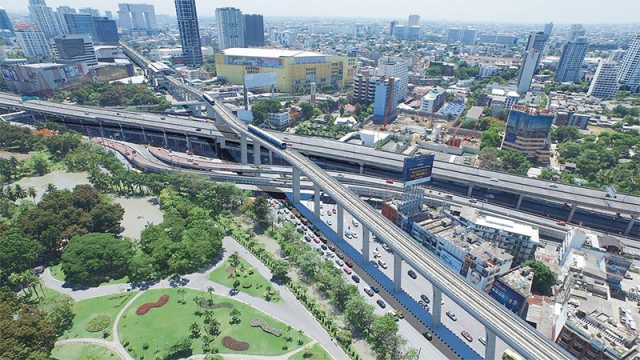
A rendering of the proposed Green Line extension over Lat Phrao intersection. Image: MRTA

BANGKOK — Construction of a bridge between BTS Mo Chit and a new elevated train line will begin in February, a director of the project said Monday.

To avoid closing down traffic at one of the busiest crossroads in the capital, the Green Line extension’s tracks will soar over the tangle of crisscrossing bridges and expressways at Lat Phrao intersection, according to Surachet Laophulsuk of the Mass Rapid Transit Authority, or MRTA, which is building the extension.

“It will slightly affect the traffic, but we won’t shut down the entire intersection,” Surachet said. “We might close down just one lane.”

Dismissing reports on social media that Lat Phrao intersection will be closed during construction, Surachet said the MRTA would take lessons learned late last year from dismantling the Ratchayothin intersection overpass without interfering with the traffic.

“It’s like what we did at Ratchayothin. Let me stress my point: We won’t close down the intersection,” Surachet said.

Starting just north of the three-way intersection, the elevated Green Line will connect Bangkok’s downtown with its northern suburbs. The MRTA hopes to connect its southern terminus at what will be the Lat Phrao Station to BTS Mo Chit, which is just south of the intersection, by August 2018.

The Green Line itself will be finished by February 2019, but when it begins operating depends on negotiations with Bangkok City Hall, Surachet said.

The flyover across Lat Phrao intersection will run 26 meters above the ground, a height of about eight floors, making it one of the tallest rail spans ever built in Thailand, he added.

Related stories:

Phahonyothin Traffic Nightmare to Get Worse for Three Years

Constitution Monument Pushed Aside for Rail Line

Advertisement

Jatupat Singled Out to Scare Others, Supporters Say

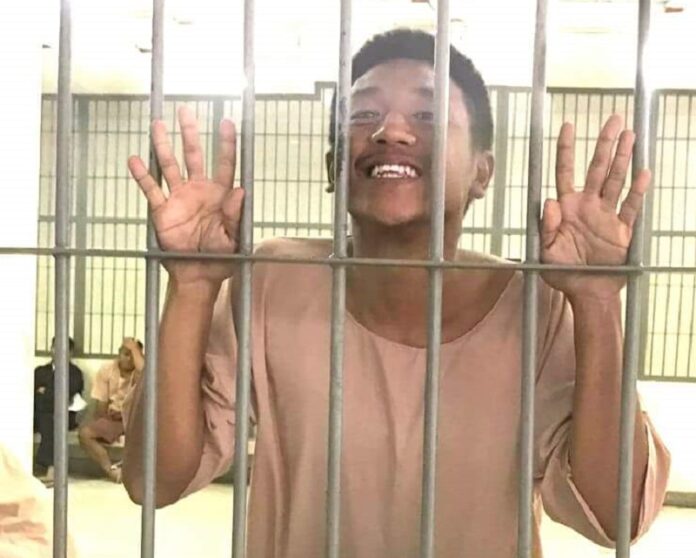
An undated photo of jailed activist Jatupat “Pai” Boonpattararaksa seen in prison while awaiting trial on a charge of royal defamation for sharing a BBC Thai article on Facebook. Photo: Sa-nguan Khumrungroj / Courtesy

BANGKOK — Though more than 2,800 people shared a biography of King Rama X on Facebook in early December, only one was arrested and charged with lese majeste.

Now, days after Jatupat “Pai” Boonpattararaksa said he has given up on justice after two months in jail, his supporters and friends said he’s been singled out to scare others under a draconian but convenient law.

“Pai’s Facebook and many activists have been under surveillance by the authorities,” said Pakorn Areekul, a member of the New Democracy Movement, whose protests Jatupat’s Dao Din group has coordinate with during the past two years. “They even visit and comment on my Facebook sometimes. So whenever I post something that’s risky, they could prosecute me. It can be said that they have been looking for such an opportunity.”

Asked if he shared the same BBC Thai biography on Facebook, Pakorn laughed and said no. He said some people had advised him not to do so, and he chose not to after learning of Jatupat’s arrest.

The authorities arrested Jatupat on Dec. 3, after the biography was published on the occasion of His Majesty King Rama X ascending to the throne. The authorities said it contained defamatory information and blocked internet users in Thailand from accessing it.

No action was taken against anyone else for sharing the article, including the London-based BBC.

On Monday, New York-based Human Rights Watch called for the authorities to immediately release Jatupat.

“The charges against Jatupat show the Thai junta’s misuse of lese majeste laws to persecute dissenters against military rule. Thailand’s military rulers have aggressively clamped down on any speech they find objectionable, including what they arbitrarily deem is critical of the monarchy,” said Brad Adams, the group’s Asia director.

It added that the law should be amended to bar private actions, “including by the military, which have been routinely used for political purposes.”

Jatupat, 25, a seventh-year Khon Kaen University law student and pro-democracy activist, was denied bail for a fifth time Friday. He had earlier been briefly released on bail, but it was revoked after he complained that the 400,000 baht bond was excessive. The court was also unhappy with a photograph shared online of him “dabbing,” or striking a pose popularized online, in front of the court after his release. His bail was revoked.

Jatupat also missed an examination last week because when the court rejected his request to be temporarily released to sit for it.

Anon Nampha, a member of the legal team representing Jatupat, said the 25-year-old student was charged and detained to discourage other activists. He said this would only amplify calls for Jatupat’s release.

What outraged him and his supporters happened Friday when judges held a bail hearing in secret, barring reporters and supporters from the courtroom even though the actual trial had not begun, Anon said. This prompted Jatupat to ask his lawyers to leave the courtroom in protest, saying he didn’t want to legitimize the process.

Jatupat’s trips to court made headlines earlier this month when it was revealed that the activist was allegedly cavity-searched every time he returned to jail from a hearing

Nuttaa Mahattana, the coordinator of an ongoing campaign to win Jatupat’s release, said the activist was targeted because he’s on a junta watchlist for Khon Kaen province.

“We’re always being monitored. If we make a misstep, it’s up to them when they will take action against us,” Nuttaa said.

After a month of weekly actions, Nuttaa said the Free Jatupat campaign has become “very tiring.” But a university anthropologist and coordinator of the Thai Academic Network for Civil Rights, Anusorn Unno, vowed to step up a separate campaign by both Thai and foreign academics for Jatupat’s release. Anusorn said the pressure could be stepped up at a recent press conference.

He warned the military junta, saying the longer it keeps Jatupat behind bars, the more his incarceration will be seen as unjustly aimed at one man.

“We will see various groups come together and linked,” Anusorn said. “It’s up to those in power if that’s what they want to see.”

The next hearing on Jatupat’s pre-trial detention is set for Feb. 1.    

Advertisement

In Lieu of Pending Polls, Elections Official Tones Down Travel Perks

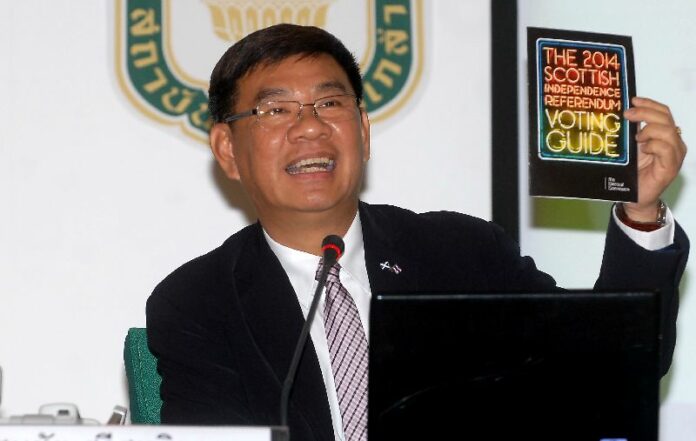
Election Commissioner Somchai Srisutthiyakorn briefs officials on Sept. 23, 2014, about lessons he learned from the 2014 Scottish independence referendum he traveled across the world to observe.

BANGKOK — With the likelihood of general elections this year waning, the nation’s top elections official launched a Facebook offensive to prove he’s busy and earning his salary.

Projecting austerity and accountability, Commissioner Somchai Sritthiyakorn posted five directives regarding upcountry travel on Monday afternoon to Facebook and tagged his subordinates to make the message clear.

“No luxury suite or pool villa … I won’t swim while staying,” Somchai wrote.

Others included purchasing reasonably priced local food and no alcohol. He also insisted on skipping the routine welcome banners put up for official visitors. Perhaps in a nod to a healthy work-life balance, he also said no work-related consultations should be done after 8:30pm. And finally, no souvenirs will be accepted.

“If I want anything, I will ask [you] to take me to purchase it myself,” he wrote.

Although the junta has long insisted elections would be held in 2017, those prospects have dimmed as the nation prepares funerary rites for King Bhumibol, and last-minute amendments to the new constitution were introduced at the request of his successor.

Reached for comment, Somchai said the directives were not formally mandated, but he tagged his colleagues so they could implement the guidelines accordingly.

He said the usual vinyl banners put up to welcome officials upcountry cost between 600 baht and 1,000 baht and are only used once. Instead, officials can be greeted as part of the ubiquitous presentations that come with such visits.

“Just use PowerPoint instead,” said the vocal commissioner, who is set to visit two flood-ravaged southern provinces.

Admitting he doesn’t know when junta-promised elections will take place, Somchai insisted however that his commission is keeping busy.

He said they’ve upgraded their technology, human resources and public relations. They’ve even come up with 18 Key Performance Indicators including a requirement that all provinces engage with civil society and contribute election observers.

For those unconvinced and entertaining the idea that the commission is currently being paid to do nothing, he offered this:

“Feel free to come and observe our work. We have work to do.”

Advertisement

Hot News

LATEST NEWS

Bangkok
overcast clouds
29.9 ° C
31.1 °
28.8 °
90 %
2.8kmh
97 %
Sat
37 °
Sun
36 °
Mon
36 °
Tue
33 °
Wed
34 °