29.4 C
Bangkok
Saturday, June 6, 2026
Home Blog Page 2481

Matcha Tea House Opens Saturday at EmQuartier

Photo: Tsujiri Global / Facebook

BANGKOK — Fancy a Christmas Eve treat?

Get some fresh-brewed matcha when a 156-year-old Japanese green tea brand opens its first branch in the country Saturday in the heart of the capital.

Kyoto-based Tsujiri has finally made its way to Thailand, where people are obsessed with green tea. The Japanese matcha house will serve tea-based desserts Saturday on the occasion of its soft opening at the seventh floor of the EmQuartier shopping mall.

The branch will offer a variety of hot and cold green tea including soft serve, sundaes, chiffon cakes, matcha cappuccino and milk floats.

Tsujiri, famous for its strong, old-school green tea, was established as in the 1860s in Kyoto by Reimon Tsuji before it expanded as a cafe to cities around the world.

Advertisement

Thai Poet’s Hashtags and Verse Win Top Literary Award

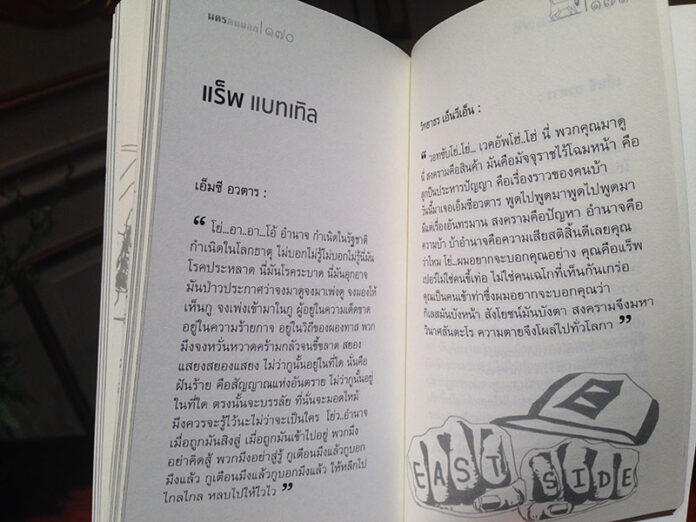
A peek inside 'Nakorn Kon Nok (The Outsider)'
A page 'Nakorn Kon Nok (The Outsider)'
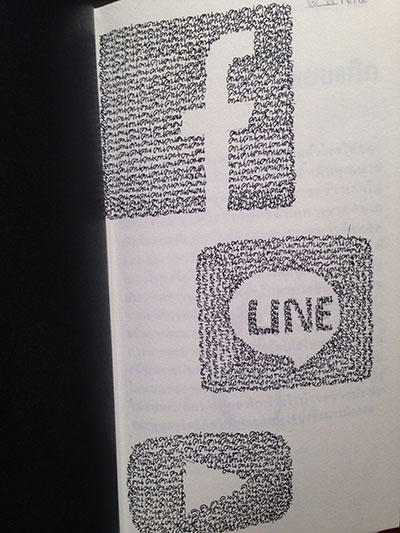
A page ‘Nakorn Kon Nok (The Outsider)’

BANGKOK — With a rap and a hashtag, “Nakorn Kon Nok (The Outsider)” came out on top Friday, winning its author the top Southeast Asian Writers Award.

Among 88 poetic works submitted, “Nakorn Kon Nok,” a collection of poems by Kroeksit Palamart, aka Palang Piangpiroon, was announced this year’s SEA Write Award winner Friday afternoon at the Mandarin Oriental Hotel at a ceremony presided over by former Bangkok Gov. Sukhumbhand Paribatra.
For its brilliant reflection of contemporary society and creative use of language and poetic rhythm, the SEA Write Awards committee chaired by poet Naowarat Pongpaiboon chose “Nakorn Kon Nok,” which broke with convention through the use of hashtag strings and rap to criticize war and power.

It’s the first time Palang, 43, has won Thailand’s most prestigious literature award after being twice nominated since 2013. The writer now lives in Sakon Nakhon province where he writes poems and short stories.

The SEA Write Awards are given annually to prominent Southeast Asian writers. The genres recognized rotate each year between short stories, novels and poetry.

Advertisement

Diver Identified as American, Death Ruled a Suicide

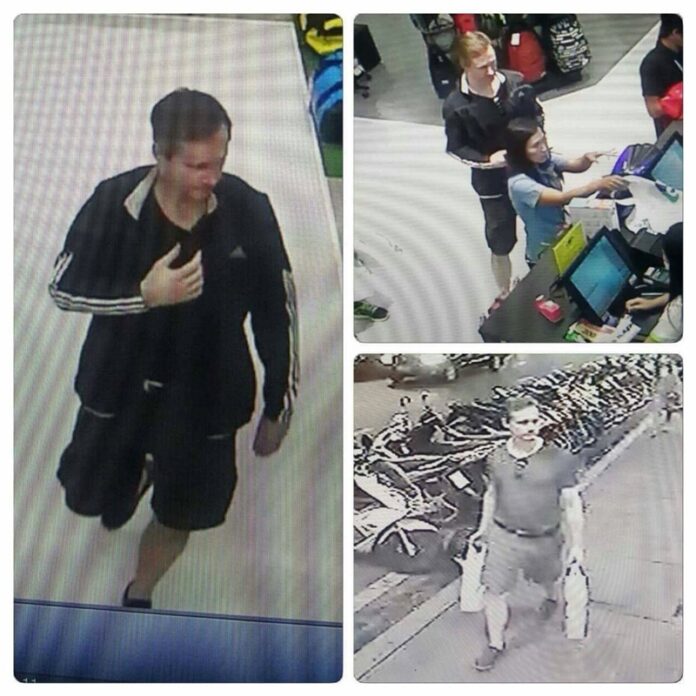
Security camera images released Dec. 20 by Pattaya police.

PATTAYA — An American man found dead off the coast of Pattaya in full diving gear with cut wounds to his neck committed suicide, the local police chief ruled Friday.

Police identified the deceased as Frank Thomas, a 52-year-old American national. The man was said to have entered the kingdom in 2013 and had family here. Thomas’ body was found near Koh Larn on Dec. 16, and police had been pleading for information to determine his identity.

Investigators initially suspected foul play, but Pattaya police deputy chief Somparn Suksamrarn said the man killed himself.

“It was suicide. He cut his own throat. We thought it might have been a murder,” Lt. Col. Somparn said by telephone. “Doctors concluded that his aorta was not cut. His smaller veins were cut.”

Somparn said the man’s Thai wife had confirmed his identity and told investigators that Thomas had sent her farewell messages via Line application before he died.

Somparn said he had not seen the messages.

In the week after the body was found, no one filed a missing-person report for Thomas.

Somparn added that the U.S. FBI had been notified.

Related stories:

Help Pattaya Police Identify Dead Foreign Diver

Advertisement

Berlin Market Suspect Killed in Milan

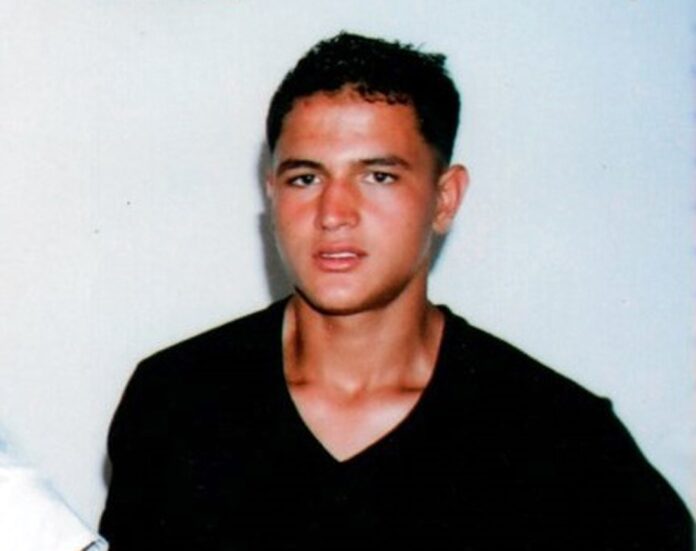
This undated picture provided by Najoua Amri on Thursday, Dec. 22, 2016, shows the fugitive Tunisian suspected in Berlin's deadly Christmas market attack, Anis Amri, posing at his parents' house in Oueslatia, central Tunisia. (Courtesy Najoua Amri to AP)

MILAN — Italian news agency ANSA says a man killed in a shootout with police in Milan is the main suspect in the Berlin Christmas market attack.

The Interior Ministry has called a press conference for Friday morning.

The shootout took place at 3 a.m. in Milan’s Sesto San Giovanni neighborhood during a routine police check.

ANSA says the man pulled out a gun from his backpack after being asked to show his identity papers. The man was killed in the ensuing shootout.

A police officer was injured.

ANSA said various sources in Milan and Rome confirmed that the dead man was Anis Amri, the suspect in the Berlin truck attack on Monday that killed 12 people.

Advertisement

A Look at Christmas Inside North Korea

A Christmas tree stands in the corner of a private room Dec. 12 at a restaurant in Pyongyang, North Korea. Photo: Eric Talmadge / Associated Press

PYONGYANG, North Korea — If Santa Claus stops in North Korea this year, he’ll find some trees and lights and might even hear a Christmas song or two. But he won’t encounter even a hint of what Christmas actually means  not under a regime that sees foreign religion a very real threat.

There are almost no practicing Christians in North Korea. But there used to be. And while the trappings of the holiday season they once celebrated haven’t been completely expunged, any connections they had to the birth of Jesus have been thoroughly erased.

Take Christmas trees, for example.

They aren’t especially hard to find in Pyongyang, especially in upscale restaurants or shops that cater to the local elite and the small community of resident foreigners. A waist-high tree was long a feature at the offices of the Koryolink mobile phone provider.

The trees are often decorated with colorful lights and shiny baubles, but none of the displays have explicitly religious associations. Many are up all year, further diluting their Christmas connotation.

Instrumental versions of “White Christmas” and “Let It Snow” have been in the rotation of mood music piped into the dining room of one of Pyongyang’s ritziest hotels since at least last August. In the countryside, where such pockets of affluence are rare to nonexistent, so too, presumably, are any of these sorts of glitzy decorations.

This wasn’t always the case.

Before the advent of ruling Kim regime, North Korea was fertile ground for missionaries and Pyongyang had more Christians than any other city in Korea. It even had a seated Catholic bishop. Most of that presence was erased by the early 1950s, and the North has kept a tight lid on all Christian activities in the country since.

Article 68 of the North Korean constitution does give a nod to the freedom of religion  with the rather significant proviso that “religion must not be used as a pretext for drawing in foreign forces or for harming the State or social order.” A handful of Christian churches and other religious facilities are allowed to operate, but under tightly restricted conditions.

There are four state-approved Christian churches in Pyongyang  one Russian Orthodox, two Protestant and one Catholic.

Inside the Catholic cathedral are crosses, but no crucifixes. Weekly services feature hymns and prayers offered in a highly formalized manner, but there are no sacraments. State-appointed laymen lead the services, which are not sanctioned by the Vatican. The Protestant churches are reportedly largely unused.

The fact that Christmas-themed music and decorations are allowed at all and, in fact, generally taken for granted almost certainly signals how little association they evoke with the officially frowned-upon and subversive religion that spawned them.

Overt, unsanctioned religious activities are a very different matter.

As one American tourist found out not too long ago, merely leaving a Bible in a public space is enough to land you in jail for a potentially very long time: Jeffrey Fowle was sentenced to 15 years but ended up being released after six months. And Canadian Hyeon Soo Lim, a Christian pastor, was sentenced last year to life in prison with hard labor for alleged anti-state crimes inside the country.

Story: Eric Talmadge

Advertisement

Army Chief Shrugs Off Cyber Assault; Sites Remain Down

An image created as part of a campaign by Chulalongkorn University students who Thursday launched the Free Internet Society of Thailand activist group.

BANGKOK — There are only two ways to deal with those opposed to the Computer Crime Act, according to the army chief. First, try to make them understand. If they don’t, then prosecute them.

Army chief Chalermchai Sittisart on Friday played down the effects of this week’s online attacks on the government, saying they resulted in little damage. He warned the attackers, who he described as mostly youths, that it was not worth losing their futures if caught and punished.

“The junta website was also attacked but was not damaged much,” Chalermchai said at an army event in Bangkok. “It only slowed the site down a little bit.”

The attackers were being tracked down and would be prosecuted under the law, he added.

Online opposition group Citizens Against Single Gateway has continued to call for such attacks throughout the week. They demanded junta chief Prayuth Chan-ocha use his absolute power to cancel the law recently passed despite significant opposition on the grounds of privacy and online freedoms.

While much of the methods are believed to be typical denial-of-service attacks, members of the group have also posted documents they claim prove they have penetrated servers belonging to government agencies, police and the military. Most of the data seemed to consist of staff information.

The group announced it would expose details about army spending at 8pm on Friday.

Traffic police on Thursday confirmed their site had been hacked and was offline until they could fix the problem. The Defense Ministry site, among those attacked since Monday, has remained down all week.

At a conference on the controversial law held Friday at Chulalongkorn University, a lawyer who helped write it said people’s lives will be the same, and possibly better, when it comes into effect in March or April.

“Starting then, the court will dismiss all defamation cases being tried under the Computer Crime Act,” Paiboon Amonpinyokeat said.

Paiboon has maintained throughout the process of rewriting the 2007 cybercrime law that its most problematic section was improved to prevent it from being misused to prosecute online defamation cases. Rights activists and experts say it is still vague and ripe for abuse.

Right activists at the forum said passage of the Computer Crime Act 2.0 was another illustration of problems with the junta-appointed legislature.

Arthit Suriyawongkul of the Thai Netizen Network said the law ultimately places the burden on the courts to decide what is illegal or not, which compromises the supposed separation of powers between the three branches of government.

“We put most of our hopes on law enforcement and the courts,” he said  “Why didn’t we write it more precise in the first place?”

A prominent journalist said the law reflects the thinking behind hundreds of laws being drafted by the military regime.

“It reflects the idea of centralization,” Prasong Lertratanawisute said Friday. “If we can’t defeat this idea, then we have to continue holding forums like this every time they issue a new law.”

Related stories:

Gov’t Payment System Offline As Hacktivists Focus Online Assault

Dismissive Prayuth Tells Hackers to Knock it Off

Computer Crime Act 2.0 Passes Unanimously

Single Gateway ‘Still Necessary,’ Deputy PM Prawit Says

‘Back Door’ in CCA Not Trojan Horse for Single Gateway, Drafters Say

New Cybercrime Regs Would Open Back Door to Censorship

Website Shutdowns Soar After King’s Death

Why Thailand Should Worry About an Improved(?) Computer Crime Act

Thailand’s Draconian Cyberlaws Tipping Toward Totalitarian

Computer Crime Act Has Issues, Google Tells Censorship Committee

Advertisement

Regulator Shuts Down Booze Buffet; Threatens to Prosecute People Sharing Alcohol Pics

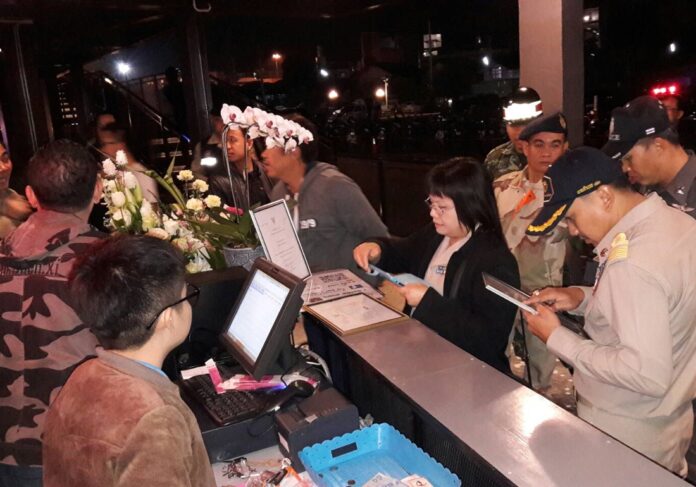
Security officers raid a bar Tuesday in Chiang Rai city for offering a 190 baht all-you-can-drink happy hour special.

BANGKOK — Thailand’s top anti-alcohol crusader is back, and he wants the internet to know even unintentionally promoting alcohol can lead to prosecution.

Following a yearlong media hiatus, Alcohol Control Board director Samarn Futrakul this week shut down a bar advertising all-you-can-drink packages on social media and warned Thursday that any netizen who encourages people to drink could face the same charges, no matter their intentions.

“Just by showing names and brands, whether directly or indirectly, people who post those photos are at risk of violating the same provision,” Samarn said by telephone.

Read: Thai Bar Chides Legal Overreach of Anti-Alcohol Crusader

The provision he referred to is Section 32 of Alcohol Control Act, which bans the display of names or trademarks of alcohol to “induce people to drink such alcoholic beverage either directly or indirectly.”

Samarn’s comments came after he alerted police officers in Chiang Rai province on Tuesday to arrest the owners of a bar offering a happy hour promotion in which customers could drink all they could at the low price of 190 baht. Women didn’t pay anything to drink before 8pm.

Samarn seized headlines for his prohibitionist fervor late last year until he faced a backlash for going too far.

He said Q-Bar violated the law by engaging in alcohol sales promotions and inducing others to drink, criminal offenses under sections 30 and 32, respectively.

The former charge carries a maximum penalty of 10,000 baht fine, while punishment for the latter is much harsher: one year in prison and 500,000 baht fine, along with an additional penalty of 50,000 baht per day offenders remain out of compliance.

Samarn, whose is a physician, said he wanted Q-Bar prosecuted as an example for people on the internet who publicly share photos of alcohol and urge others to drink.

Asked whether this extends to snapping photos of Singha beer at a party and sharing them on Instagram with a caption saying how awesome the beer tastes, Samarn said yes.

“If you don’t set it to private, and it’s out in the public, it’s considered media,” the regulator said. “Because even if I’m not friends with you, I can see your post.”

Whether or not the courts would convict, Samarn wants fear of prosecution to weigh on the minds of drinkers.

He said police can arrest and prosecute any booze-sharing netizens if they wish, and though the court may eventually acquit them on the grounds of insufficient evidence, it’s not worth risking the ire of the law.

“At least members of the public will waste their time going to court to defend themselves and prove they didn’t intend any wrongdoing,” Samarn said. “So I want to warn you: Don’t share that kind of post.”

His warning echoes his previous attempt to prosecute 30 celebrities in 2015 on violation of Section 32 for advertising a new line of Chang Beer on their Instagram accounts. At the time Samarn maintained that anyone posting pictures of alcohol would likewise be prosecuted.

The investigation eventually went quiet.

Samarn, who has said he believes drinking is sinful, also took took further steps to restrict booze sales, such as banning certain words from advertisements, arresting people for making cocktails and threatening to ban the popular beer gardens which open seasonally for open-air drinking.

It appeared the prohibitionist went too far with the last campaign. Growing criticism peaked when junta chairman Prayuth Chan-ocha publicly chided Samarn in November 2015, and he has kept a low profile since.

Related stories:

Make Notoriously Vague Booze Laws More Clear, Trade Group Urges

National Boozebuster Notifies Thailand Pre-Mixed Cocktails are Illegal

On Booze and Buddhism, Culture Warriors Grasp for a Past Already Passed

Thailand Back to the Booze Ban Future

Yes, Beer Pics Were Advertisements, Woonsen Concedes

Booze Regulator Warns Public on ‘Instant Beer’

Thai Bar Chides Legal Overreach of Anti-Alcohol Crusader

Advertisement

355 Threatened Marine Animals Killed in 2016

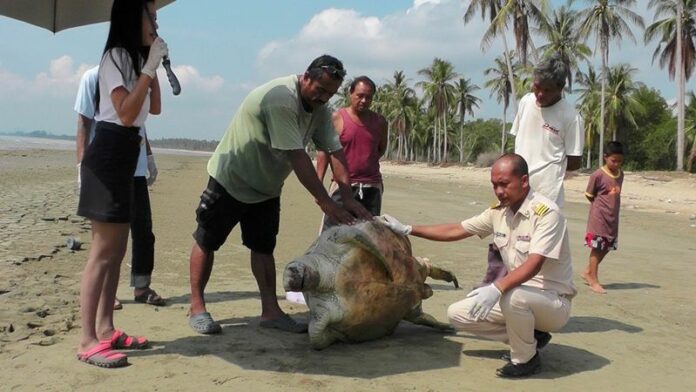
A marine official examines the body of a century-old green sea turtle which died after eating trash off the coast of Chumphon province in May 2016.

BANGKOK — It was a bad year for marine life, officials said Thursday.

In a year that saw the last known member of a manatee-like species die in the gulf, officials have been unable to halt the decline of vulnerable species, 355 of which have died since January in a 10 percent increase over 2015.

“The reason for their deaths are largely the same old reasons which can’t be solved, such as sickness and injury from both natural and man-made causes,” said Pinsak Suraswadi, director of the Marine and Coastal Resources Department. “Man-made causes include eating trash and injury from fishermen’s boats.”

The 355 dead marine animals included 11 dugongs, 180 sea turtles and 164 dolphins and whales.

Late last month the bruised and battered body of the last known dugong, identified by marine biologists as DU-391, was found off the coast of Rayong. No. 391 refers to the fact it was the 391st dead dugong to be found.

About the same number of sea turtles died in the gulf and Andaman Sea, while most dugongs died in the gulf. Twice as many dolphins and whales died in the Gulf of Thailand than the Andaman Sea.

Beached dolphins also had little chance of survival once they flopped ashore.

“Most beached dolphins that people find are severely sick, so their chance of surviving is virtually zero. Only sick dolphins swim to shallow waters near the coast,” Pinsak said.

Beached whales were often found as carcasses, but most beached sea turtles were rescued, Pinsak said.

Pinsak also said that for the past three years his department has been training coastal locals on how to proceed when finding an injured or beached marine animal. Pinsak said that this program helped rescue an increased 10 percent of marine animals, and the program would continue.

Related stories:

Giant Whale Killed by Boat Pulled Ashore in Prachuap Khiri Khan

Huge, Friendly Whale Shark Joins Sea Cleaning Crew (Photos)

Whale Sharks Spotted off Krabi

Advertisement

Cambodia Seizes Ivory, Cheetah Bones Shipped from Mozambique

A cheetah stretches in 2012 in the plains of the Masai Mara, Kenya. Photo: Carine06 / Flickr

PHNOM PENH — Cambodia has made one of its biggest seizures ever of smuggled animal parts, including more than a ton of ivory, a wildlife protection group said Thursday.

The Wildlife Alliance said 1.3 metric tons of ivory, 10 cheetah skulls and 82 kilograms (180 pounds) of cheetah bones, and 137 kilograms (301 pounds) of pangolin scales were found Dec. 16 concealed in three containers shipped from Mozambique.

The group said in a statement that another shipment of illicit ivory by the same company was intercepted in Vietnam in October.

Wildlife Alliance said Cambodia has made 19 seizures of ivory and rhino horn from six African countries since 2014.

A major international conference on wildlife trafficking was held last month in Vietnam, one of the major transit points and consumers of trafficked ivory and rhino horns.

The pangolin is considered the world’s most heavily trafficked mammal, sought for its meat, eaten as a delicacy, and for its scales, which are used in traditional medicine.

Advertisement

Pope Probes Order of Malta Ouster Over Old Condom Scandal

Pope Francis exchanges gifts with President of Malta, Marie Louise Coleiro Preca, left, and her husband Edgar, right, Saturday during a private audience at the Vatican. Photo: Claudio Peri / Associated Press

VATICAN CITY — Pope Francis launched an investigation Thursday into the ouster of a top official at the Order of Malta, the ancient aristocratic religious order, amid evidence that Francis’ own envoy to the group engineered the removal without his blessing over a years-old condom scandal.

Albrecht von Boeselager, a high-ranking official in the order for three decades, was removed as grand chancellor Dec. 8 after he refused to resign.

One charge against him concerned a program that the order’s Malteser International aid group had worked several years ago with other aid groups to help sex slaves in Myanmar. The trafficked women had been forced to work as prostitutes and were given condoms to protect themselves from AIDS, two people familiar with the case said.

An internal investigation was conducted and von Boeselager admitted he knew about the condoms, which were distributed by other aid programs, not his. The Vatican was informed, Malteser International’s participation in the program ended and an ethics committee was launched to ensure that future projects adhered to Catholic Church teaching, the officials said.

Church teaching opposes artificial contraception. However, some Catholic priests and nuns in Africa and elsewhere have condoned the use of condoms to prevent the spread of AIDS. Francis himself has said that “avoiding pregnancy is not an absolute evil” when, for example, women are at risk of the Zika virus.

In a statement, von Boeselager said he had been asked to resign during a Dec. 6 meeting attended by Francis’ ambassador to the order, the conservative Cardinal Raymond Burke. During the meeting, the order’s grand master indicated that the request to resign “was in accordance with the wishes of the Holy See.”

However, no such request was ever made. Von Boeselager said since his ouster, the Holy See has written to the order “confirming that such a wish was never raised.”

By naming an independent commission to look into the case, Francis appears to be seeking an objective assessment of von Boeselager and his ouster without the input of Burke, who has been among Francis’ fiercest critics.

Burke is one of four cardinals who have publicly questioned Francis’ flexible approach to whether civilly remarried Catholics can receive Communion. Burke is a hard-liner on the issue, as well as on the absolute prohibition on the use of artificial contraception.

Francis removed him as the Vatican’s supreme court justice in 2014 and named him to be the patron of the Order of Malta, an ancient Catholic order that runs hospitals and clinics around the world and has an army of volunteers who respond to natural disasters and war zones.

Burke had conveyed to the Order of Malta’s governing council on Dec. 6 that Francis wanted von Boeselager to resign, the two people familiar with the case said. They spoke on condition of anonymity because they weren’t authorized to speak about internal meetings.

Burke warned that if von Boeselager wasn’t removed, the Vatican would take over the order’s properties, they said.

On Dec. 15, a new grand chancellor was elected, John Edward Critien.

In his statement, von Boeselager said he still considers himself the duly elected grand chancellor, albeit one who has been impeded from doing his job because of an ouster that violated the order’s legal norms on several fronts. He said he has always felt bound by the teachings of the church and rejected the “liberal” label that his opponents have given him.

“To contrive an accusation that I do not acknowledge the church’s teaching on sexuality and the family, based on the sequence of events in the Malteser International Myanmar project, is absurd,” the statement said.

The pope’s five-member commission of inquiry is made up of Order of Malta members who have close ties to the German-born von Boeselager. Francis also named a trusted Jesuit canon lawyer as a member.

The knights trace their history to the 11th century with the establishment of an infirmary in Jerusalem that cared for people of all faiths making pilgrimages to the Holy Land.

Story: Nicole Winfield

Advertisement

Hot News

LATEST NEWS

Bangkok
overcast clouds
29.4 ° C
29.4 °
29.4 °
79 %
5kmh
100 %
Sat
29 °
Sun
35 °
Mon
36 °
Tue
35 °
Wed
33 °