30 C
Bangkok
Sunday, June 28, 2026
Home Blog Page 2615

‘Happy Hour’ x 5: See Japanese Women On the Verge Saturday

A scene of ‘Happy Hour’

BANGKOK — Four Japanese women in their late 30s confront midlife when one of them reveals she is having an affair and fighting her husband in divorce court.

Watch the quartet of housewives and friends weather midlife crises in a five-hour-plus film directed by Ryusuke Hamaguchi which has won praise and awards for its four amatueur actors.

“Happy Hours” will show at 2pm on Saturday in the fifth-floor auditorium of the Bangkok Art and Culture Centre.

Tickets are 60 baht and will be available starting at 11am on Saturday. There will be two intermissions and the film will be shown in Japanese with Thai and English subtitles.

BACC is located next to BTS National Stadium.

“Happy Hours” was selected by Pimpaka Towira, director of 2015’s “The Island Funeral,” a drama set among the conflict in deep southern Thailand. She will host a post-film discussion in Thai with an English translator.

The event is a part of an annual program of foreign films selected by Thai directors.

Advertisement

ThaiPublica Sues Army for Details on Rajabhakti Statues

Army officials at the opening ceremony of Rajabhakti Park in Prachuap Kiri Khan province on Aug. 19, 2015.

BANGKOK — A journalism nonprofit said Tuesday it is still waiting for responses from the military and national graft agency after it sued for details about the cost of royal monuments built by the army last year.

Months after the army said its own internal investigation found no graft after scandal hit Rajabhakti Park, believed to have cost 1 billion baht, investigative nonprofit ThaiPublica announced Sunday it had sued the army to disclose more information about its spending process.

“We are using the 1997 Official Information Act as our tool,” Executive Editor Boonlarp Poosuwan said. “They had a press conference, yes. But they never exactly answered the questions and never gave the estimated costs we requested.”

Boonlarp was referring to requests for information made 10 months ago she said the army never satisfied. The investigative news site filed suit in the administrative court on Sept. 9 to reveal the the original cost estimates before the project to erect seven king statues went to bid.

Those estimates were cited by another review by the Anti-Corruption Commission, or NACC, which later determined the project was free of corruption. The army told ThaiPublica it did not have them.

Boonlarp said her team also asked the NACC for its results.

Questions about the park’s lavish spending became an embarrassment for the army soon after it opened in November 2015. Excessive costs and allegations of dodgy commissions paid to middlemen were reported. The army, who oversaw its construction, soon ruled its process transparent and free of graft.

Nearly a year later, the NACC weighed in with its unanimous findings earlier this month on Sept. 8, one day before ThaiPublica filed suit.

ThaiPublica said it first requested on Nov. 24 the cost projections for the statues’ construction. Boonlarp said the army flatly refused to provide the information six months later.

After ThaiPublic appealed the decision, a government body responsible for public information requests ruled last month the army must reveal the information to the public. It responded by saying they didn’t exist.

The problem with that, Boonlarp said, is that a source within the NACC said it had received many of the same documents from the army.

“The army said they didn’t have the estimated costs, but the NACC said they did,” she said.

The editor said Tuesday they are still waiting for responses from both agencies. She believes disclosure of the spending process would help determine whether any corruption occurred.

Whatever happens, Boonlarp said they didn’t expect the disclosure to lead any further formal review or legal process, but that wasn’t ThaiPublica’s purpose.

“We just want the truth to come out,” she said.

Clarification: An earlier version of this story said Boonlarp believed the 14-meter statues were the most expensive cost of the project. After publication she called to say she did not recall making that statement and was not sure it was accurate.

Advertisement

Silpakorn Apologizes for ‘Shameless and Irresponsible’ Sieg-Heiling Students

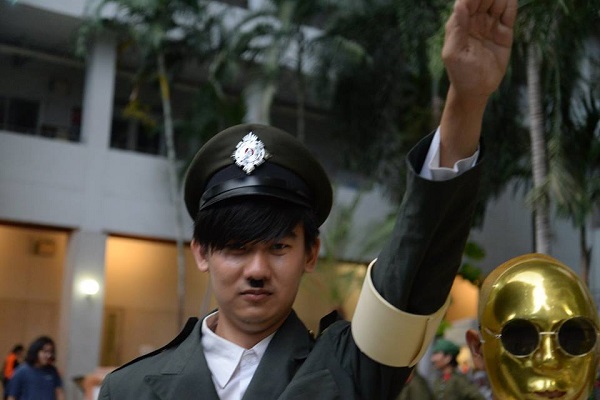
Silpakorn University student in Bangkok dresses recently as Adolf Hitler. Photo: Washirawit Santipiboon / Facebook

BANGKOK — Silpakorn University announced it would investigate students who recently dressed as German Nazis and Chinese Red Guards and apologized for the incident.

University Rector Chaicharn Thavaravej announced late Monday night that the university had sent an apology to the Israeli Embassy after students in Silpakorn’s Faculty of Decorative Arts dressed in Nazi costumes for activities to welcome freshmen.

“Silpakorn University regrets what this group of shameless and irresponsible students did,” he announced via Facebook alongside a link to Monday’s story by Khaosod English. “A committee will be appointed to review what happened, and people involved will all be disciplined.”

It also said the university’s deputy rectors as well as the dean of the faculty would meet with representatives from the Israeli Embassy today.

To prevent similar incidents in the future, the university said it would raise the topic at an administrative meeting and plan an exhibition to further educate students and the public about genocide and world history.

Writing by email, Israeli Ambassador Simon Roded said it was important to note the university took action to “rectify the absence of teaching about the horrors of the Holocaust, by organizing events to raise the awareness of their students.

He said the embassy he leads would collaborate “in any possible way.”


Related stories:

Thai University Students Cosplay as Red Guards and Nazis, Again (Photos)

Director Defends ‘Hitler Scene’ in Thai Junta Film

University ‘Hitler Mural’ Leads To Flurry Of Apologies – And Gag Order


Advertisement

Ferry Captain Charged As More Bodies Pulled From Chao Phraya

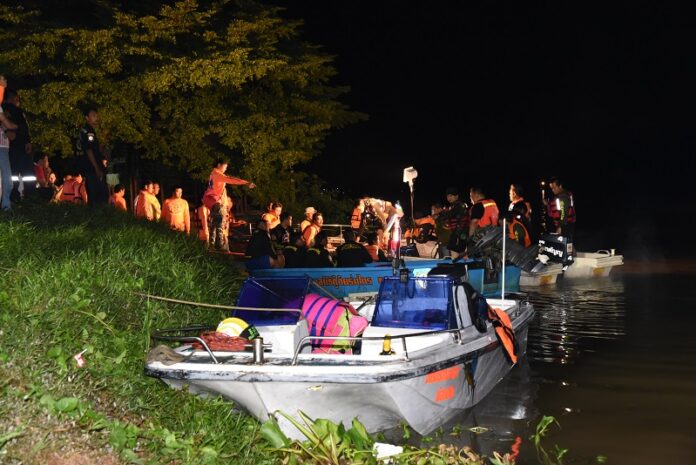
Rescue workers at the scene in Ayutthaya province.

AYUTTHAYA — The skipper of a ferry which sank in the Chao Phraya River was charged with four crimes including fatal recklessness Monday as the death toll from the accident rose to 27 today.

Six more bodies were recovered Tuesday morning from the Chao Phraya River in Ayutthaya province about five kilometers away from the where the accident occurred at Wat Sanamchai. Two passengers remain missing from Sunday’s accident.

Read: Death Toll in River Ferry Accident Rises to 18, Search Goes On

Boat operator Wirat Chaisirikul was charged with recklessness resulting in death and injury, operating the vessel without a valid license and overloading it with too many passengers, officials said.

Wirat was arrested Monday and remains in custody, according to Col. Surapong Thampitak of Phra Nakhon Si Ayutthaya police.

The boat on Sunday was carrying more than 100 Muslims heading to Ayutthaya from a mosque in Nonthaburi province. A video clip of the accident shows the two-level ferry founder after crashing into a concrete berm.

Related stories:

Death Toll in River Ferry Accident Rises to 18, Search Goes On

13 Dead, 39 Injured When Boat Goes Down in Chao Phraya

Advertisement

Labor Activist Hall Found Guilty of Defaming Fruit Company

Andy Hall at the Bangkok South Criminal Court in August 2015. Photo: Andy Hall / Facebook

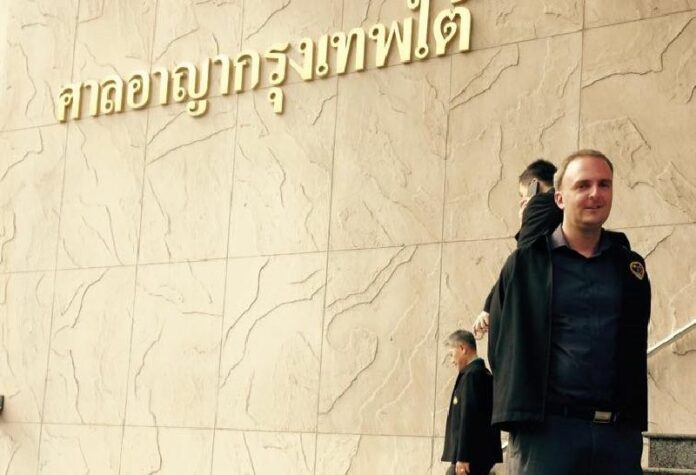
BANGKOK — Migrant rights activist Andy Hall was found guilty Tuesday of defaming a fruit company in a 2013 report for a Finnish NGO on abuse of its workers.

In a ruling that Human Rights Watch said would have a chilling effect on other whistleblowers and activists, the court found Hall guilty of criminal defamation and violating the Computer Crime Act for the report he researched for Finnwatch group.

Hall, who had won two previous court battles over the same offense in 2014 and 2015, was also ordered to publish an apology to Nature Fruit Ltd. in local newspapers and news outlets for up to 30 days. He was given a nominal sentence of four years in prison, but the sentence was suspended so he will not serve jail time.

Sunai Phasuk of Human Rights Watch said the verdict confirmed the fears of many that they could face jail time for speaking out against abuses.

“The consequence is this: Even before today’s ruling, there was already a choking effect and climate of fear,” Sunai said Tuesday. “Today’s verdict affirms that fear.”

Natural Fruit filed charges against Hall for Finnwatch’s 2013 report “Cheap Has a High Price,” in which Hall reported the company’s pineapple plant abused the rights of its migrant workers. The company denied the allegation.

Two lawsuits filed by Natural Fruit against Hall were previously dismissed in 2014 and 2015.

”We are shocked by today’s verdict. The report was authored and published by Finnwatch; we take full responsibility for it. Andy has been made a scapegoat in order to stifle other voices that speak out legitimately in support of migrant worker rights,” said Sonja Vartiala, Executive Director of Finnwatch, in an online statement.

Related stories:

Rights Activist Andy Hall to be Tried for Defamation

Thai Court Drops Defamation Case Against British Activist

Advertisement

Protests Against Eviction Leave 2 Dead in India

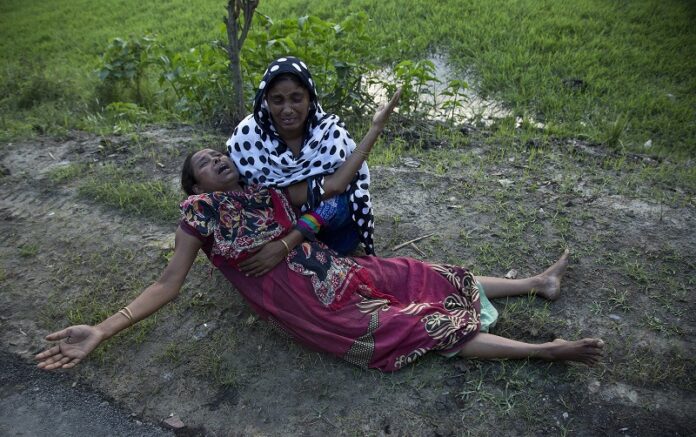
Mazida Beghum, 40, mother of Anjuma Beghum, 18, who was killed on Monday in police firing wails at Bandardubi village on the periphery of the Kaziranga National Park, northeastern Assam state, India. Photo: Anupam Nath / Associated Press

BANDARDUBI, India — Two people were killed and several others were injured Monday as police tried to stop protests against the demolition of homes near an Indian rhino sanctuary, police said.

Authorities had ordered the demolition of around 300 houses in three villages to evict people living on the periphery of Kaziranga National Park in northeastern India to stop rampant poaching of the rare rhinos, said Mukesh Aggarwal, a top police official.

The villagers pelted the police with stones, injuring around 10 policemen, and security forces responded by firing rubber bullets and tear gas to disperse the protesting villagers, said Mukesh Sahay, police chief in Assam state. Two people were killed in the skirmish that followed, Sahay said.

The bodies of two protesters have been sent for an autopsy, police said.

Around 40 people who were injured in the clashes were in hospitals, he said.

Park and district authorities used bulldozers and domesticated elephants, guided by mahouts, to pull down the thatched houses.

Community leaders and conservation groups have long demanded that the boundary areas of the park be cleared of human habitation. Local residents say many of the villagers have illegally settled in the area. Some of the settlers face charges of aiding and abetting poachers to kill rhinos inside Kaziranga.

“Fourteen rhinos were killed by poachers in Kaziranga this year. Last year, 17 rhinos were victims of poaching,” said Subhasis Das, a forest official at the Park, which has the largest number of rhinos in the world.

All five of the world’s rhino species are under constant threat from poachers seeking their horns to sell on the black market. Demand is high in countries such as China and Vietnam, where people mistakenly believe consuming rhino horns can increase male potency.

Kaziranga is hailed by wildlife activists as a conservation success. The reserve had 75 rhinos in 1905. In 1966, the number of rhinos in Kaziranga was put at 366. According to a 2015 estimate, the number has risen to 2,401.

Story: Anupam Nath

Advertisement

Hun Sen Trashes Opposition’s Threat to Stage Protest

Cambodian Prime Minister Hun Sen speaks in April of 2015 during a session at the World Economic Forum on East Asia in Jakarta, Indonesia. Photo: Achmad Ibrahim / Associated Press

PHNOM PENH — Cambodia’s leader responded angrily Monday to the opposition’s threat to hold nationwide demonstrations, saying such protests could sink any chances of resolving political differences through negotiations.

Prime Minister Hun Sen said in a speech to graduating students that the opposition Cambodia National Rescue Party should speak politely and make a positive gesture if they want to ease tensions.

“To be clear about that, don’t threaten to stage a demonstration for the reason of seeking to resume negotiations. That is no way,” Hun Sen said. “I would be a dog if I were to negotiate (with you).”

He said the opposition should be speaking out in parliament, whose sessions it has stopped attending in protest at the ruling Cambodian People’s Party majority voting to lift the parliamentary immunity of its leaders, a move the opposition considers illegal.

The opposition complains of being harassed by politically influenced courts, after legal cases have forced party leader Sam Rainsy to stay in exile to avoid jail and his deputy Kem Sokha to take refuge behind supporters at party headquarters, where state security forces have gathered in armed shows of strength.

Critics of the government have seen its actions as an attempt to disrupt the opposition’s organizing efforts ahead of local elections next June. The next general election is not until mid-2018, but holding power at the local level is an advantage when national polls are held. Hun Sen has led Cambodia for three decades.

In response to the government actions, Kem Sokha said last week that the party is considering calling for nationwide protests. The opposition has strong support in the capital, and street demonstrations have traditionally been an effective form of push-back, but recent efforts to take to the streets have generally fizzled.

Hun Sen said that if talks were resumed with the opposition, the topics would exclude the legal cases of opposition members. He and his government insist these are criminal matters and not political issues.

A statement issued earlier this month by the U.N. High Commissioner for Human Rights expressed concern “about the escalating atmosphere of intimidation of opposition politicians, their supporters, civil society, and peaceful demonstrators inCambodia.” A joint statement issued by several foreign embassies expressed similar concern.

Activists and non-governmental organizations, which are generally critical of the government, have faced similar legal pressures. The murder in July of a prominent social critic, Kem Ley, allegedly by a man to whom he owed money, is widely regarded with suspicion.

On Monday, four prominent land activists were convicted and sentenced to six months each in prison for a protest they held five years ago.

The four women  Tep Vanny, Heng Mom, Bou Chhovy and Kong Chantha  are well known for protesting the eviction of residents from Phnom Penh’s Boeung Kak lake community, which was to be turned into a luxury commercial development. They were convicted of insulting and obstructing civil servants.

The Boeung Kak protesters are among the most tireless of the government’s critics.

Story: Sopheng Cheang

Advertisement

New York Bombing Suspect Arrested

Image released by U.S. FBI of bombing suspect Ahmad Khan Rahami.

LINDEN, New Jersey — An Afghan immigrant wanted for questioning in the bombings that rocked a New York City neighborhood and a New Jersey shore town was captured Monday after being wounded in a gun battle with police that erupted when he was discovered sleeping in the doorway of a bar, authorities said.

WABC-TV footage showed 28-year-old Ahmad Khan Rahami being loaded into an ambulance on a stretcher in Linden. He appeared to be conscious and looking around. His upper right arm looked bandaged and bloodied.

Two officers were wounded in the shootout but were not believed to have been seriously hurt, authorities said.

The arrest came just hours after police issued a bulletin and photo of Rahami, a naturalized U.S. citizen from Afghanistan who lived with family in an apartment in Elizabeth, New Jersey, over a fried-chicken restaurant owned by his father.

Linden Mayor Derek Armstead said that late Monday morning, the owner of a bar reported someone asleep in his doorway. A police officer went to investigate and recognized the man as Rahami, police and the mayor said.

Rahami pulled a gun and shot the officer — who was wearing a bulletproof vest — in the torso, and more officers joined in a running gun battle along the street and brought Rahami down, police Capt. James Sarnicki said.

Police did not disclose how they zeroed in on Rahami as a person of interest in the bombings but were known to be poring over surveillance video. At the same time, five people who were pulled over in a vehicle Sunday night were being questioned by the FBI, officials said.

The shootout came after a weekend of fear and dread in New York and New Jersey, with authorities saying the bombings were looking increasingly like an act of terrorism with a foreign connection.

In addition to the blast that injured 29 people in Manhattan’s Chelsea neighborhood on Saturday, an unexploded pressure cooker bomb was found blocks away, and a pipe bomb exploded in a New Jersey shore town before a charity race. No one was injured there. On Sunday, five explosive devices were discovered in a trash can at an Elizabeth train station.

Also on Saturday, a man who authorities say referred to Allah wounded nine people in a stabbing rampage at a Minnesota mall before being shot to death by an off-duty police officer. The Islamic State group claimed responsibility.

Authorities have not drawn any connection between the violence in Minnesota and the bombings in the New York area.

Citing the FBI, New Jersey State Police said Monday that the bombings in Chelsea and the New Jersey shore town Seaside Park were connected.

New York Gov. Andrew Cuomo said as investigators gathered information, they learned there were “certain commonalities among the bombs,” leading authorities to believe “that there was a common group behind the bombs.”

Before Rahami’s capture, Cuomo said investigators have no reason to believe there are further threats, but the public should “be on constant guard.”

Around the time Rahami was taken into custody, President Barack Obama was in New York on a previously scheduled visit for a meeting of the U.N. General Assembly, and said it was “extremely fortunate” nobody was killed in the bombings.

He called on Americans to show the world “we will never give in to fear.”

“We all have a role to play as citizens to make sure we don’t succumb to that fear. And there’s no better example of that than the people of New York and New Jersey,” the president said. “Folks around here, they don’t get scared.”

Rahami lived with his family on a busy street a few miles from the Newark airport. Early Monday, FBI agents swarmed the apartment.

Elizabeth Mayor Christian Bollwage said Rahami’s father, Mohammad Rahami, and two brothers sued the city after it passed an ordinance requiring the First American Fried Chicken restaurant to close early because of complaints from neighbors that it was a late-night nuisance.

Ryan McCann, of Elizabeth, said that he often ate at the restaurant and recently began seeing the younger Rahami working there more.

“He’s always in there. He’s a very friendly guy, that’s what’s so scary. It’s hard when it’s home,” McCann said.

In the immediate aftermath of the New York bombing, de New York Mayor Bill de Blasio and Cuomo were careful to say there was no evidence of a link to international terrorism. Both said Monday that appeared to be changing.

“The more we learn with each passing hour is it looks more like terrorism,” de Blasio said in an interview on NY1 News. Cuomo said on MSNBC: “Today’s information suggests it may be foreign-related, but we’ll see where it goes.”

On Sunday night, FBI agents in Brooklyn stopped “a vehicle of interest” in the investigation of the Manhattan explosion, according to FBI spokeswoman Kelly Langmesser.

She wouldn’t provide further details, but a government official and a law enforcement official who were briefed on the investigation told The Associated Press that five people in the car were being questioned at an FBI building in Manhattan.

The officials spoke on condition of anonymity because they were not authorized to talk about the investigation.

On Sunday, a federal law enforcement official said the Chelsea bomb contained a residue of Tannerite, an explosive often used for target practice that can be picked up in many sporting goods stores.

Cellphones were discovered at the site of both the New York and New Jersey bombings, but no Tannerite residue was identified in the New Jersey bomb remnants, in which a black powder was detected, said the official, who wasn’t authorized to comment on the investigation and spoke to the AP on condition of anonymity.

The pipe bomb that exploded Saturday in Seaside Park went off before a charity 5K race to benefit Marines and sailors. The race was canceled.

One of the five devices found at the Elizabeth train station exploded while a bomb squad robot tried to disarm it. No one was hurt.

Story: Deepti Hajela. Additional reporting Jake Pearson, Karen Matthews, Maria Sanminiatelli, Michael Balsamo, Dake Kang, Michael Catalini, Eric Tucker, Alicia A. Caldwell and Kevin Freking

Advertisement

Army Decries Smear Campaign Against Prayuth’s Sister-in-Law

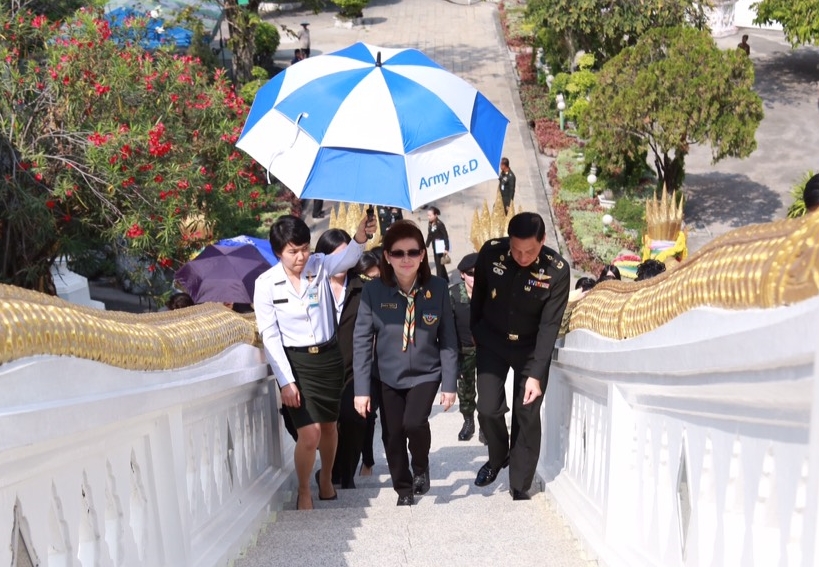
Pongpan Chan-ocha, head of the army wives association, is welcomed on Aug. 24 at an army facility in Nakhon Sawan province. Photo: Wives Association of the Office of the Permanent Secretary for Defense

BANGKOK — When the chairwoman of an army wives’ club toured the countryside and handed out charity to the needy, photos of the event showed officials bow and curtsy to her. She was escorted by a phalanx of uniformed aides, who in one photo obediently held an umbrella for her.

A week ago, a community reservoir was dedicated in Chiang Mai province below a large banner with saying giving thanks and naming it for “Mother Pongpan.”
In recent days, those photos have raised complaints that such kind of reverence and honor is reserved for members of the Royal Family, and that Pongpan Chan-ocha is being treated as one by the military – a serious allegation in Thailand. The army says she is being targeted by a smear campaign.

“Do you guys think that the photos of soldiers holding up an umbrella for her like that is appropriate or similar to xxx?” someone asked on the Pantip webforum, in apparent reference to the royalty. “Please answer me. Is this woman of some royal bloodline? Why is she behaving so highly?”

Reports on Friday indicated the army had removed the banner, though it said through a media proxy the accusation was nothing more than a smear attack.

Pongpan is chairwoman of the Wives Association of the Office of the Permanent Secretary for Defense (WAOPSD), a group that’s been around since 1989. She’s also wife of Gen. Preecha Chan-ocha, whose brother Prayuth Chan-ocha rules the country as the junta chairman and prime minister.

Opponents of the military government have definitely seized on the images.

A banner proclaims Pongpan Chan-ocha the namesake of the Mae Pongpan Pattana dam Sept. 12 in Chiang Mai province. Photo: Wives Association of the Office of the Permanent Secretary for Defense

Photos of Pongpan’s trips, originally published by the Defense Ministry, were picked up by Facebook pages associated with the Redshirt movement and widely shared last week.

“If you didn’t tell me [who she was], I would have thought it’s a new member of the Royal Family,” the anonymous admin of Stop Hypocrisy in Thailand wrote Saturday.

“She’s just a peasant, but she’s behaving like a noblewoman, Her Royal Highness Pongpan Chan-ocha. She deserves to be charged with 112,” wrote Redshirt activist Anurak Jeantawanich on Saturday, referring to royal defamation charge.

Reached for comment by telephone Monday, Gen. Preecha said he and Pongpan had done nothing wrong but would not discuss the matter further.

“I didn’t do anything wrong. My wife didn’t do anything,” said Gen. Preecha, who’s both a member of the junta and permanent secretary of defense. “I don’t know what those people want from me and my wife.”

No one picked up the phone for the Ministry of Defense Wives Club on Monday afternoon.

Pongpan Chan-ocha in a Jan. 18 photo during a visit in Lopburi province. Photo: Wives Association of the Office of the Permanent Secretary for Defense

Wassana Nanuam, a self-styled military reporter for Bangkok Post, wrote on her Facebook she was told by officials that the photos were leaked by insiders who intended to discredit Pongpan.

Wassana said officials suspect the smear campaign was by people who didn’t get the positions they wanted in the latest army shakeup, or people who disliked Pongpan’s personalities.

“She’s a strict person. She’s full of discipline. And she may have criticized someone frankly, so it may have lead to bad feelings,” wrote Wassana, who often disseminates statements from the army.

Related stories:

Activists File Nepotism Complaint Over Prayuth’s Nephew

Prayuth’s Brother Defends Granting His Own Son Officer’s Rank

Junta Leader Fit For Premiership, Says His Lawmaker Brother

Advertisement

100,000 Have Died From Indonesia Haze, Study Finds

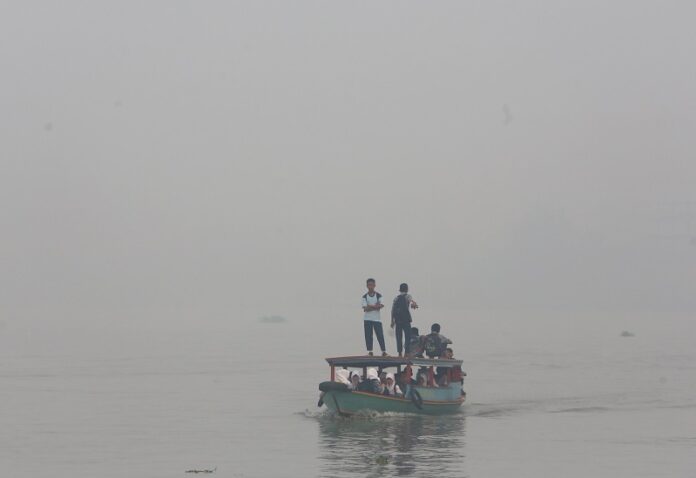
students ride on a boat on their way to school Thursday while haze from wildfires blanket the Musi River in Palembang, South Sumatra, Indonesia. Photo: Tatan Syuflana / Associated Press

JAKARTA — Indonesian forest fires that choked a swath of Southeast Asia with a smoky haze for weeks last year may have caused more than 100,000 deaths, according to new research that will add to pressure on Indonesia’s government to tackle the annual crisis.

The study by scientists from Harvard University and Columbia University to be published in the journal Environmental Research Letters is being welcomed by other researchers and Indonesia’s medical profession as an advance in quantifying the suspected serious public health effects of the fires, which are set to clear land for agriculture and forestry. The number of deaths is an estimate derived from a complex analysis that has not yet been validated by analysis of official data on mortality.

The research has implications for land-use practices and Indonesia’s vast pulp and paper industry. The researchers showed that peatlands within timber concessions, and peatlands overall, were a much bigger proportion of the fires observed by satellite than in 2006, which was another particularly bad year for haze. The researchers surmise that draining of the peatlands to prepare them for pulpwood plantations and other uses made them more vulnerable to fires.

The estimate of early deaths linked to respiratory illness and other causes covers Indonesia and its neighbors Singapore and Malaysia. It dwarfs Indonesia’s official toll of 19 that included deaths from illness and the deaths of firefighters. However, the possible scale of serious health consequences was indicated by a statement from the country’s disaster management agency in October that said more than 43 million Indonesians were exposed to smoke from the fires and half a million suffered acute respiratory infections.

The study considered only the health impact on adults and restricts itself to the effects of health-threatening fine particulate matter, often referred to as PM2.5, rather than all toxins that would be in the smoke from burning peatlands and forests. The bulk of the estimated deaths are in Indonesia, by far the most populous of the three countries and the country with the biggest land area affected by haze.

The fires from July to October last year in southern Sumatra and the Indonesian part of Borneo were the worst since 1997 and exacerbated by El Nino dry conditions. About 261,000 hectares of land burned. Some of the fires started accidently, but many were deliberately set by companies and villagers to clear land for plantations and agriculture.

Rajasekhar Bala, an environmental engineering expert at the National University of Singapore, one of five experts who reviewed the paper for The Associated Press and were not involved in the research, said the study is preliminary and involved a “very challenging” task of analyzing the sources and spread of fine particulate matter over several countries and a lengthy time frame.

Even with caveats, it should serve as a “wake-up call” for firm action in Indonesia to curb peatland and forest fires and for regional cooperation to deal with the fallout on public health, he said.

“Air pollution, especially that caused by atmospheric fine particles, has grave implications for human health,” he said.

Frank Murray, an associate professor of environment science at Australia’s Murdoch University, said the death estimates are not “precise health outcomes” but their overall scale should trigger intensified efforts to deal with the crisis. The study is a major contribution to addressing an international problem, he said.

The study finds there is a high statistical probability that early deaths ranged between 26,300 and 174,300. Its main estimate of 100,300 deaths is the average of those two figures. It predicts 91,600 deaths in Indonesia, another 6,500 in Malaysia and 2,200 in Singapore.

The researchers involved in the study say the model they developed can be combined with satellite and ground station observations to analyze the haze in close to real time. That gives it the potential to be used to direct firefighting efforts in a way that reduces the amount of illness caused, they say.

The annual fires have strained relations between Indonesia and its wealthier neighbors Singapore and Malaysia, who are at the mercy of winds that carry the haze into their territory from Sumatra.

But the brunt of the crisis is faced by millions of Indonesians in Sumatra and Kalimantan, many of them poor and with little or no means to protect themselves from the blanket of smoke.

“Particles penetrate indoors, and housing in Indonesia is very well ventilated, so I don’t think there is any avertive behavior that people there could have taken that would have been effective,” said Joel Schwartz, an air pollution epidemiologist at Harvard who co-authored the study. “In Singapore, if you close all the windows and turn on the air conditioning you get some protection, which may have happened.”

The Indonesian Medical Association’s West Kalimantan chapter said Indonesia faces an overall decline in the health of future generations with social and economic consequences if the situation is not tackled.

“We are the doctors who care for the vulnerable groups exposed to toxic smoke,” said Nursyam Ibrahim, deputy head of the West Kalimantan chapter of the association. “And we know how awful it is to see the disease symptoms experienced by babies and children in our care.”

Howard Frumpkin, dean of the School of Public Health at the University of Washington, said it is possible the health consequences are greater than indicated by the study because higher incidence of certain health problems in developing countries could make populations more susceptible to the effects of fine particulate matter.

Story: Stephen Wright

Advertisement

Hot News

LATEST NEWS

Bangkok
overcast clouds
30 ° C
31.6 °
30 °
75 %
3.5kmh
98 %
Sat
30 °
Sun
34 °
Mon
34 °
Tue
33 °
Wed
32 °