





























28.8 C
Bangkok
Monday, June 29, 2026
Home Blog Page 2639

With Interpreter on the Run, Erawan Bombing Trial is Postponed to September

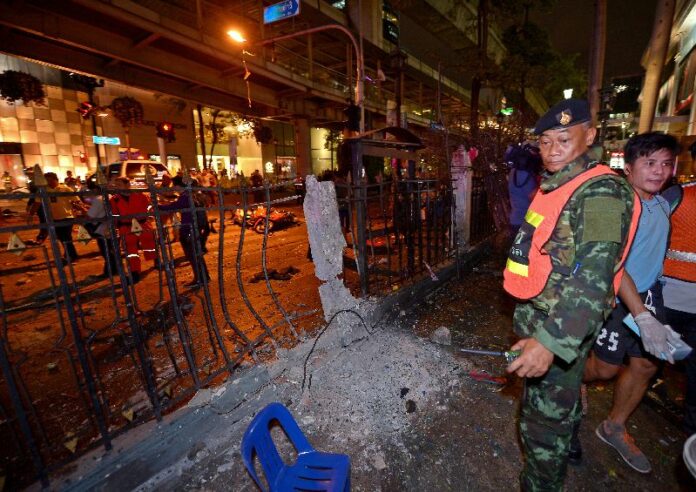
Military and police officers on Aug. 17, 2015, inspect the scene of carnage at Erawan Shrine in Bangkok.

BANGKOK — The first court examination of a witness in the bomb attack that killed 20 people last year was adjourned on Tuesday because an interpreter for the two accused bombers jumped his bail on drug charges.

The delay meant that not a single person has testified to the trial on the Aug. 2015 deadly bombing of Erawan Shrine so far. The lengthy trial has already angered some victims of the attack who felt that the authorities are not doing enough to bring those responsible to justice.

Angry Victims and Families of Shrine Bombing Still Wait for Justice 1 Year Later

“The former interpreter has a case with Lumpini Police Station and he is now running from court warrant. So he cannot go to court today,” said a defense lawyer, Schoochart Kanpai. “The defense team and the court are trying to find a new interpreter.”

Schoochart represents Adem Karadag, one of the two Chinese Uighur men currently on trial for allegedly carrying out Thailand’s worst terror attack in recent memory. Their former interpreter, Sirojdolin Bakhodirov, was pulled out from the court proceedings after he was arrested and charged for drug possession.

Bakhodirov, a 38-year-old Uzbek national, had translated for Karadag and his alleged accomplice Yusufu Mieraili since the investigation began in Sept. He is now being sought by police for jumping his bail.

Schoochart said the World Uyghur Congress has offered to send and finance an Uighur translator for the trial if the judges agree. The interpreter is a Turkish national named Omer Kanet, Schoochart said, adding that the court would take seven days to review the request.

At the same time, the military court will also try to find a new Uighur interpreter on its own.

Two witnesses were originally scheduled to take the stand on Tuesday and Wednesday: a police English interpreter English interpreter Lt. Col. Thuaythep David Wiboonsilp and head of police investigators Lt. Col. Somkiat Ploytubtim.

The examination was adjourned to Sept. 15-16.

Thuaythep is among 447 witnesses prepared by the prosecutor. Like his former counterpart Bakhodirov, the officer had been interpreting in the case since the investigation began.

Transfer Denied
The military court today also rejected the defendants’ request to move from an army detention facility, where they had been held for nearly a year, to a civilian prison.

Both Karadag and Mieraili previously said they were tortured under custody. After being asked by the military court to look into the claim, the Department of Corrections submitted a report to the judges on Tuesday saying the allegation was groundless.

The suspects are being held at the 11th Army Circle base in Bangkok.

“The court said because the case was about national security, it’s not secure to imprison them along with ordinary inmates [in a civilian prison].” Schoochart said.

Schoochart added that the trial may last until the end of 2017.

Related stories:

Bombing Suspects’ Interpreter Says Cops Plant Drugs on Him

Erawan Shrine Reopens After Car Plows Through, Injuring 6

Erawan Shrine Bombers First Targeted Pier for Chinese Tourists

Advertisement

These Are People Accused of Carrying Out Southern Bombings

Photo of an unidentified man believed to have started a fire at a plastic shop in Surat Thani province on Aug. 12. Photo: Surat Thani Police

BANGKOK — The hunt for those responsible for a wave of terror attacks that shook the south two weeks ago goes on, but police have revealed very little about the suspected perpetrators.

While national police commanders in Bangkok say there’s only one suspect so far, local police in some provinces are searching for persons of interest that they believe to have ties to the attacks, which killed four people over the course of Aug. 11-12, which marked Mother’s Day holidays.

Here’s the list of suspected bombers who are being sought by national and local police force so far:

Two Seen in Surat Thani Footage
Police in Surat Thani province on Monday offered 100,00 baht reward for anyone who can hand information about two men believed to have committed an arson at a plastic shop there on Aug.12.

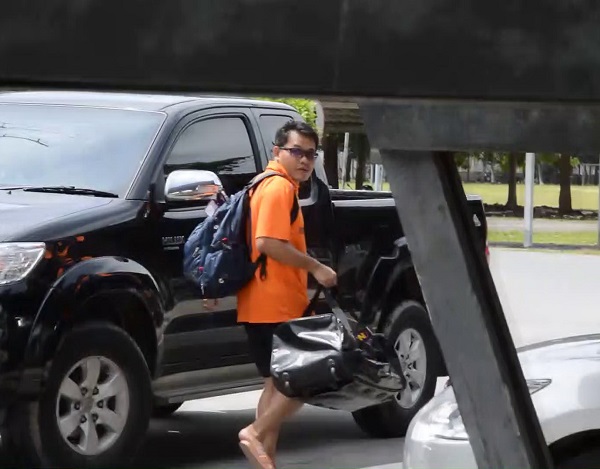
Both men were seen by Taweesin Plastic’s security camera wearing a mask and a hat to conceal their faces. The commander of Surat Thani police force said the pair pretended to enter the shop to buy something before starting the fire.


“We now have total four suspects for all incidents in Surat Thani,” said police Maj.Gen.Apichart Boonsriroj Monday. “But the best pictures which can be released for public to clearly see are only of these two.”

Apichart said he also had information about the other two suspects but cannot disclose details about them.

The arrest warrants for the four cannot are not yet issued because police are still waiting for forensic examination result, Apichart said.

Both suspects in the Taweesin Plastic video are believed to be the same pair seen in another CCTV footage from Aug.10 traveling by a tuk-tuk to Surat Thani City Hall, which is close to where two explosions took place on Aug.12.

Apichart said it is still unclear whether these two men are involved in another set of explosions in front of a police station and the Marine Police Division. The latter attack killed one person.

A Pattani Resident Who May Not Exist
On Saturday afternoon, police and military raided an Islamic boarding school in Pattani’s Yarang district to search for a 24-year-old student believed to have been involved in the Mother’s Day bombings.

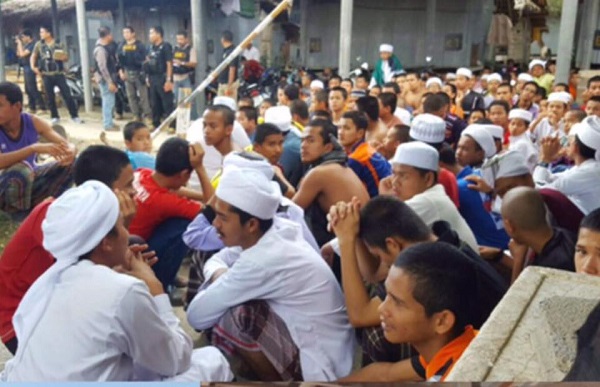
Students of an Islamic boarding school in Pattani on Monday were rounded up while police and military officers searched the buildings for a suspected bomber.

Police and military were told by an informant Saturday morning that someone called Mat Zaifuddin Lomang was a student there, according to chief Anusak Sakdawatcharanon of Yarang Police Station.

Pattani is one of the three southern border provinces, known as the Deep South, where separatists have battled with security forces for over 12 years in their bid for independence. BRN, the most well-armed cell of the movement, is believed by some experts to be the most likely culprit behind the recent attacks.

However, the search didn’t turn up Mat Zaifuddin, and he wasn’t even listed in the school student roster, police said.

“We didn’t have the arrest warrant, just normal searching,” Anusak said Monday.

Beyond the information provided by the informant, he admitted that police cannot yet independently confirm whether Mat Zaifuddin is a real person or not.

The Man Who Would be Arrested Twice
Released on Thursday after spending nearly a week in military detention, Sakarin Karuehat may be arrested again soon; a military court in Nakhon Si Thammarat is expected to approve a new warrant for him by Tuesday afternoon.

The 32-year-old Chiang Mai native is accused by police of planting a firebomb that struck a Tesco Lotus supermarket in the southern province on Aug. 12.

Sakarin Karuehat on Thursday was released from a police station in Nakhon Si Thammarat.

He was first taken from the oil rig where he was working in the Gulf of Thailand into military custody a day after the attack. He was not allowed to see his family or lawyers. His sister denied that he had any involvement in the bombings.

Police later said they have footage of him entering the supermarket with a plastic bag but leaving without it. Investigators also said they had evidences indicating that the fire was caused by explosives.

A civilian court initially approved a warrant for Sakarin on arson charges, so police withdrew the warrant in the light of the forensic investigation, and planned to try him under a military tribunal on explosives-related charges instead.

Man on the Run
Among all these noises, the only one “official” suspect confirmed by national police is Ahama Lengha, a resident of Narathiwat, a Deep South province bordering Malaysia. He was allegedly responsible for the twin bomb attacks in Phuket on Aug. 12.

As of Tuesday morning, he was the only suspect issued with an arrest warrant so far.

The head of police investigation team, Srivara Ransibrahmanakul, said on Aug. 16 Ahama had previous history in the Deep South insurgency but had not since elaborated.

Police could not confirm whether he has already fled the country.

Related stories:

Here’s Why Experts Believe BRN Was Behind Attacks

More Than 20 People Carried Out Southern Bomb Attacks, Police Say

Advertisement

AP Explains: Super Mario’s Global Appeal

In this Sunday, Aug. 21, 2016, file photo, Japanese Prime Minister Shinzo Abe appears as the Nintendo game character Super Mario during the closing ceremony at the 2016 Summer Olympics in Rio de Janeiro, Brazil. (Yu Nakajima/Kyodo News via AP, File)

NEW YORK — Take that, Pokemon. On Sunday, the Japanese prime minister turned up at the Olympics closing ceremonies to promote the 2020 Tokyo games dressed up as Mario , the eponymous hero of the popular video game series created in 1985.

Who is Mario and how did he come by his global appeal? Here’s a closer look.

Japanese animation and game characters from Hello Kitty to Pac Man also made appearances in the closing ceremonies. But none of them may have the global reach of Super Mario, the game franchise that was a hit when Nintendo’s video game system and Game Boy burst onto the scene in the 1980s.

Prime Minister Shinzo Abe’s appearance as Super Mario was a crowd-pleasing reminder of how much the game helped spur on the videogame revolution in the U.S. and globally. Abe emerged from a green pipe in a big red Super Mario cap and costume, holding a glowing red ball kicked to him by famed manga soccer star Captain Tsubasa.

___

HOW DID SUPER MARIO’S APPEARANCE COME ABOUT?

Tokyo 2020 organizers said in a statement that the Super Mario idea came up during a brainstorming session. Staff at Nintendo would say only that the government asked to borrow the character for the show.

In this May 7, 2014, file photo, shoppers walk under the logo of Nintendo and Super Mario character, left, at an electronics store in Tokyo.

___

MARIO’S BACKSTORY

The franchise began in 1981, when Donkey Kong debuted as an arcade game. Donkey Kong soon became the hottest selling arcade game in the business. In that game, a character called “Jumpman,” similar to Mario, tried to save a damsel from a big ape. Super Mario came a long four years later, packaged with the Nintendo Entertainment System, popularizing the side-scrolling videogame format.

Mario’s first job was carpentry, but later he became a plumber, and in many games he travels up and down in a world of underground pipes.

In his book “Game Over: How Nintendo Conquered the World,” David Sheff wrote that Mario was named after Nintendo’s U.S. landlord, who was demanding back rent from the company’s fledgling U.S. arm. Nintendo doesn’t confirm or deny the story.

___

BY THE NUMBERS

There are more than 100 games, for various gaming systems, ranging from Donkey Kong to Super Mario Kart, in which Mario is the primary character, and many more in which he makes appearances. Mario Brothers is the best-selling video franchise of all time, with more than 490 million units sold since 1995, according to research firm NPD.

Advertisement

After Historic Defeat, Fractured Opposition Unlikely to Challenge Junta

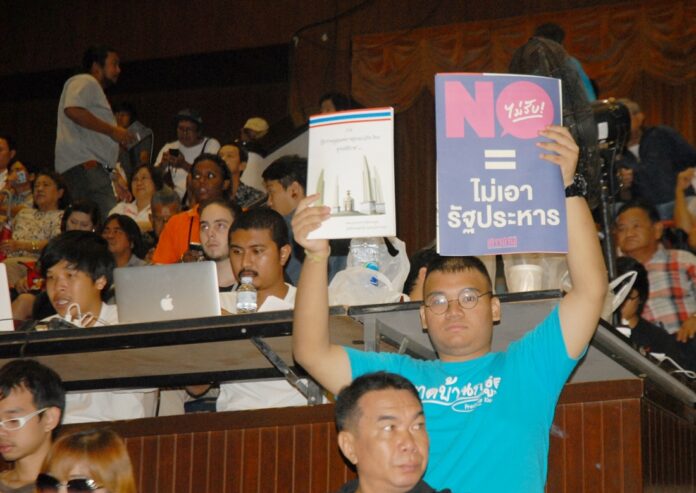
Pro-democracy activists on Aug. 7 gather at an auditorium in Thammasat University’s Tha Prachan campus to await returns after polls closed in the charter referendum.

BANGKOK — Things are looking bleak for opponents of the military regime which has been in power since May 2014.

The first 12 months of the junta’s reign saw several failed attempts to dislodge it. And then, the following year saw a failed campaign to reject the constitution it wanted the public to approve in a referendum.

Now that Aug. 7 vote is well behind, the pro-democracy movement is in disarray, with different camps holding differing objectives for the next year-plus before the election promised by the junta. And their thoughts read like a laundry list of fears about what will become of Thailand in the years ahead.

The United Front for Democracy Against Dictatorship, the umbrella organization of the Redshirts known as the UDD, will monitor the passing of organic laws that may entrench the junta’s power in post-election Thailand, said one of its leaders, Weng Tojirakarn.

The group will also overhaul its own structure, he said.

“This is the time for us to improve our organization and its quality as well as efficacy, Weng said.

Fighting for those prosecuted under the Referendum Act will also be a focus, said Weng, who called on the junta to dismiss all charges in referendum-related cases. As for a longer term plan, Weng said his group would prevent Thailand from succumbing into a full-blown “elected dictatorship” after the next election, which is expected to take place in late 2017.

Another major dissident group is the New Democracy Movement, or NDM, which is mostly run by recent graduates and postgrad students. The group has yet to chart out its future course, said member Pakorn Areekul.

That’s because, Pakorn said, they’re busy trying to help Jatupat Bunpattararaksa, a northeast-based activist arrested a day before the referendum for handing out anti-charter leaflets.

According to Pakorn, several NDM members have said they will take a break to pursue postgraduate studies abroad. Pakorn said he personally thinks the focus should be on raising awareness about democracy among youth.

“We can expect them to be the hope of Thai society,” he said.

At the same time, Pakorn said, any pro-democracy group should pay more attention to taking the democratic fight to the grassroots level to make it more tangible. He cited the struggle for community rights under threat from government infrastructure projects and junta’s evictions of villagers from protected forests as some examples.

“We must look at the issue of democracy from its roots,” said Pakorn, who added that while he still does not recognize the junta, aka the National Council for Peace and Order as legitimate, he has learned to accept that there are a substantial number of Thais who support military dictatorship.

Focus on the Issues
Parit Chiwarak, 18, is arguably the youngest well-known activist to date. As a high school student who will take university entrance exams next year, Parit objected to the charter because it defunded free education through the last year of high school, a guarantee under the previous constitution.

Parit said he will continue to push for education rights while monitoring what he expects to be a trend toward making Thai education more conservative and autocratic.

“I think I can still do something during the next one-and-a-half-years,” Parit said.

One activist not content to wait is 19-year-old Netiwit Chotiphatphaisal. Netiwit is a freshman at Chulalongkorn University’s Faculty of Political Science. Over the past two years, police and military officers often showed up at forums about politics he organized.

Despite his disappointment at the result of the referendum two weeks ago, Netiwit said has no plan to solely focus on his studies.

“I will continue to be active. I’m thinking of what I can do from now on, and it will primarily be focused inside the university,” said Netiwit, who has recently formed a group of Chulalongkorn University students called “New Pink” (After the color of his university, the oldest in the kingdom).

He said he’s planning to mark this year’s anniversary of the Oct. 6, 1976, massacre of students by inviting a certain “high-profile speaker” from abroad to speak. Netiwit said he would only reveal the name of the keynote speaker on Wednesday.

“We must create awareness and make people aware of what’s gonna happen after the new charter is enshrined,” he said.

Long-Term Struggle and Fears
Anurak Jeantawanich, the man known for having campaigned against the charter in his Vote No T-Shirt in public every Sunday, said he sees the struggle for democracy as a long-term one.

“I will continue with my activities,” said Anurak, referring to his work raising funds to assist political prisoners. “I don’t think anti-NCPO activism works any longer. The focus will be now on elections.”

Anurak said pro-democracy movement should use the remaining time under the junta to consolidate itself.

“I also want to see reform in the UDD so they can once again become a uniting figure for the Redshirts,” he said. “As for NDM, I would like to offer them moral support and ask them to be more careful in studying the law and [junta] orders before making any moves, so they can avoid being arrested.”

Ekachai Hongkangwan, a former royal defamation convict who now also works for the welfare of political prisoners, gave a gloomier assessment.

The opposition movement is now in greater disarray, with the Pheu Thai Party and Redshirts just biding time until elections, while the New Democracy Movement is too young and inexperienced to mount any serious dissent to the junta, he said.

The immediate focus, Ekachai said, should be preventing the junta-appointed National Legislative Assembly from enabling he next Senate of junta appointees to elevate any unelected figure to Prime Minister.

Ekachai’s fear is that the pro-democracy movement will be further curbed by the junta to a point where there’s little or no resistance left come election time.

“It seems people have become discouraged and lack long-term planning,” he said.

Advertisement

Northeast Mystique: ‘Forest’ Reaches Deep Into Isaan, Folklore

A boy and a girl among lotus blossoms in ‘The Forest.’ Photo: The Forest / Courtesy

BANGKOK — Next month head northeast on a personal exploration of Thais’ complicated relationships with the spirits in a fully domestic production shot on location in Isaan.

A labor of love directed by filmmaker and long-time Bangkok resident Paul Spurrier, “The Forest” mixes drama, fantasy and horror to chronicle a mute schoolgirl who, tormented by bullies, finds peace and joy in a mysterious young boy who lives in the jungle.

Spurrier doubts spirits would mean harm and says the film cones from the question of whether friendship can live beyond death.

“Many Thai friends have reported that after the death of someone close to them, the spirit returned to visit them … I started to wonder what it would be like to be a spirit trapped on earth. It would probably be rather lonely,” he said. “Would spirits seek friendship with the living?”

Every frame of “The Forest” was shot in Udon Thani and Sakon Nakhon provinces in the northeast, or Isaan. Half of the spoken dialogue is Isaan dialect, as Spurrier said he wanted ‘real Isaan, deepest Isaan.’

“Isaan is a fascinating part of Thailand. It has great landscapes and a unique culture. It also seems to be an area where the spiritual world almost touches the world of reality. Yet few films are shot in Isaan. And the world outside Thailand has seen very little of Isaan,” wrote the 49-year-old director.

Indeed he says that with his crew, they drove over 6,000 kilometers around the northeast hunting perfect locations to shoot the film.

Most surprisingly, the film’s leads— one boy and one girl — are amateurs discovered at a local school.

“We had always thought that we would find them in Bangkok with its strong networks of modelling agencies and drama schools,” he said. “But standing outside the little Isaan school watching the barefoot kids chattering in Isaan dialect, I suddenly realised that two Bangkok kids would stand out ridiculously.”

Wannasa Wintawong as ‘Ja’ and Tanapol Kamkunkam as ‘Boy’ atop a cliff in the Phu Kradueng National Park in a scene from ‘The Forest.’ Photo: The Forest / Courtesy

Whether the film meshes with Thai cultural beliefs, the founder of Soi Sukhumvit 22’s private cinema The Friese-Greene Club will leave to Thai audiences to decide, saying he’ll always be an outsider.

“I realise that I will never look at Thailand in quite the same way as someone who was born here. I will always be a ‘farang’ (foreigner),” Spurrier wrote. “As hard as I try to get beneath the surface of the Thai character, there will always be corners that I cannot see into.”

Paul Spurrier in an undated production photo from ‘The Forest.’ Photo: The Forest / Courtesy

The movie screened earlier this year at the Cinequest Film Festival in San Jose, California, and then at the Ferrara Film Festival in Italy where it brought Spurrier a best director award. It went on to win an award for promoting Asian cinema at South Korea’s Bucheon International Fantastic Film Festival.

The 109-minute feature “The Forest” will be screened in Thai with English subtitles starting from Sept. 15 at SF Central World. Tickets are 250 baht and can be reserved online.

Spurrier’s former works includes horror film “P” (2005), credited as the first Thai-language film directed by a Westerner. Ironically, it showed in dozens of countries except Thailand.


Advertisement

Time Machine Dance Party Returns to Charoen Krung

Photo: Malee Note / Facebook

BANGKOK — Want more retro, swing dance street party?

Get more Sunday when Bangkok Swing brings the party down the road from its last event to shophouse-gallery Cho Why for folks to bang ‘n slide, jump ‘n jive again in a historic neighborhood to set the mood.

Because Bangkok Swing will not rest until it has converted every soul, it will teach noobs a few steps with lessons at 6pm.

Cho Why will transform its gallery space into a dance floor for the retrotastic party to include a period-appropriate movie to swing dance sessions starting at 6:30pm.

The party starts at 4:30pm with dance legend Gene Kelly and friends in 1952’s “Singin’ in the Rain.”

Admission is 100 baht and includes a cold Leo beer. Cho Why is located on Soi Nana 17 near Charoen Krung Road, a 10-minute walk from MRT Hua Lamphong’s exit No. 1.

Advertisement

Indonesia Recovers All 15 Victims From Sinking of Tour Boat

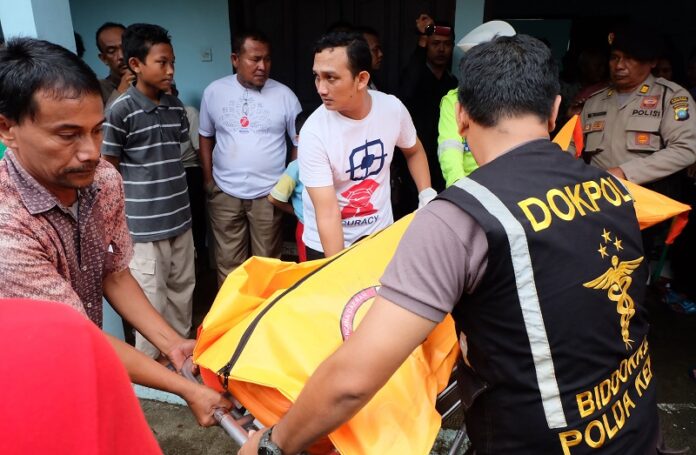
Indonesian police carry a body bag containing a victim of a capsized boat, at a hospital in Tanjungpinang, Bintan island, Indonesia, Sunday. Photo: Albert / AP

JAKARTA, Indonesia — Searchers on Monday found the last five victims of a tourist boat sinking in Indonesia that killed 15 people.

The search was ended with all the victims found, said Agustiawarman, the head of Tanjung Pinang Disaster Management Agency.

Only two of the 17 people on board the small wooden boat were rescued after it capsized in rough seas Sunday off Indonesia’s Bintan island, south of Singapore.

The search and rescue effort involving about 20 ships and 50 fishing boats had been hampered by high waves and strong currents, disaster agency spokesman Sutopo Purwo Nugroho said on Sunday.

He said the people on the boat were local tourists traveling to Penyengat island, about 6 kilometers (4 miles) from the city of Tanjung Pinang on Bintan.

Nugroho said some of the passengers tried to swim but were overcome by 3-meter (10-foot) waves. Two children were among those who died. The boat operator and a female passenger survived.

Boat sinkings are common in Indonesia, an archipelago of some 17,000 islands.

Advertisement

Search for Missing ‘Asian Tourist’ in Chiang Rai Yields No Clues

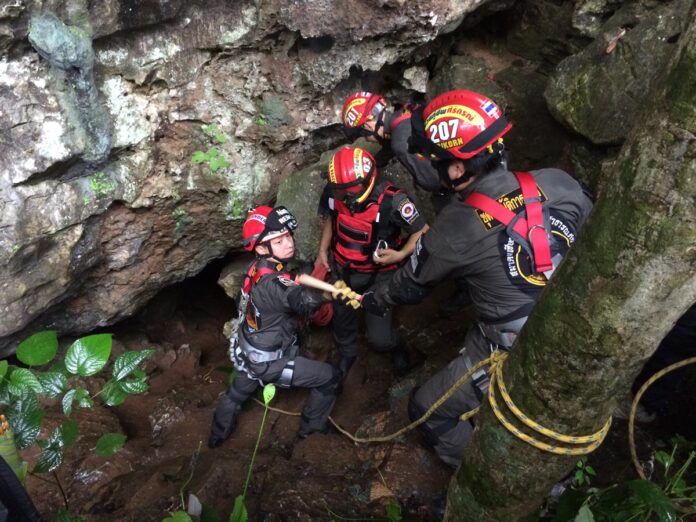
Search parties on Sunday inspect one of many caves in the Tham Luang - Khun Nam Nang Non forest park, where a tourist went missing.

CHIANG RAI — A search for a man who reportedly went missing 10 days ago during a forest meditation trip in Chiang Rai has had no success so far, police said.

Officials have not also confirmed any details about the man, who was described only as “Asian-looking,” such as his name, nationality, and whether he might have left the jungle on his own.

Chiang Rai Rangers Searching for Missing Asian Tourist

“We can’t make any guess about this,” Col. Songkrit Ontrakrai, chief of Mae Sai Police Station, said Monday. “We don’t even know if he’s already left the place, or if he’s gone to meditate at some other spot.”

A local vendor told police she saw the man headed to Tham Luang – Khun Nam Nang Non forest park on Aug. 12 after telling her in passable Thai that he wanted to meditate in one of its many caves for several days. He never returned to retrieve the bicycle he left at her stall, the vendor said.

After news spread, Japanese and Chinese embassies contacted police for information, but could not confirm if the man was one of their citizens, Songkrit said.

“So far we have not received any missing person complaint from of his relatives. None,” the officer said.

Park rangers wee still searching the area on Monday, but they may call off their effort soon if police receive no new information about the man in coming days, Songkrit added.

Advertisement

More Than 20 People Carried Out Southern Bomb Attacks, Police Say

Police officers on Aug. 12 inspect a bomb site in Hua Hin.

BANGKOK — Police believe more than 20 people were involved in the wave of explosions and firebombs that struck seven provinces during Mother’s Day holidays, but only one arrest warrant has been issued so far.

Despite his declaration that police have detailed information on how the perpetrators planned and carried out the attacks that left four people dead, Royal Thai Police chief Chakthip Chaijinda told reporters he has yet to determine their motives.

“I now know all about the process, method, and the meeting points of all perpetrators,” said police Gen. Chakthip Chaijinda Monday. “We believe those who did the incidents in seven provinces concealed their faces and disguised themselves by dressing like tourists.”

In the aftermath of the bombing spree on Aug. 11-12, authorities quickly ruled out any link to separatist violence in the Deep South.

But Chakthip said today that police have not eliminated any possible motives in their investigation, which include discontent over the charter referendum, the southern insurgency and even unknown provocateurs hiring the bombers to cause unrest.

Chakthip did not disclose further information, saying it would affect the case.

Read: Here’s Why Experts Believe BRN Was Behind Attacks

‘Newcomers’

Chakthip said he traveled to the southern province of Pattani on Sunday to personally question relatives of the people believed to be the bombers but did not elaborate.

Only one arrest warrant has been issued in connection with the Mother’s Day attacks for a Narathiwat resident called Ahama Lengha. Police said they couldn’t confirm whether he has already fled the country.

According to Chakthip, most of the perpetrators were “newcomers,” people who had no previous criminal history, which makes it difficult for police to track them down.

Asked whether they, like Ahama, all hail from the Muslim-majority Deep South, Chakthip replied, “Most of them are from that zone.”

Another warrant expected to be issued Tuesday is for Sakarin Karuehat, the oil rig worker taken into military custody under the junta’s special authority but later released on Thursday.

Sakarin, a 32-year-old native of Chiang Mai, is accused of firebombing a Tesco Lotus supermarket in Nakhon Si Thammarat in coordination with bomb attacks in other southern provinces on Aug. 12.

Deputy police commander Srivara Ransibrahmanakul, who heads the investigation into the bombings, will seek the arrest warrant for Sakarin from a military tribunal in Nakhon Sri Thammarat tomorrow, police said.

Meanwhile, deputy Prime Minister Wisanu Krue-Ngam said on Monday that families of the four deceased victims will be given 1.1 million baht in compensation each from the government.

The government will also cover medical bills for the 37 people wounded in the attacks, including 11 foreigners, and the victims will receive additional compensation for their injuries, Wisanu said.

Advertisement

Harambe Lives: Killed Zoo Gorilla Gets a Second Life Online

Alesia Buttrey, of Cincinnati, holds a sign with a picture of the gorilla Harambe during a vigil in his honor outside the Cincinnati Zoo & Botanical Garden, in Cincinnati on May 30. Photo: John Minchillo / AP

CINCINNATI — With online declarations such as “Harambe Lives!” the Ohio zoo gorilla shot and killed after a 3-year-old boy got into his enclosure has taken on life after death.

The late 17-year-old great ape has shown up in tongue-in-cheek petitions to rename the hometown Cincinnati Bengals, to add his face to Mount Rushmore or the Lincoln Memorial, and to put him on the dollar bill. He has grown the angel wings and halo of a deity in social media memorials.

He’s even been mock-nominated for president.

The Harambe phenomenon is fed by genuine sadness over his death, continued controversy over the circumstances that led to it, and the penchant of many social media users for satire — which sometimes turns offensive.

“There is a word we like to use in our discipline, in pop culture studies, and that is ‘polysemic’: has many meanings,” said Jeremy Wallach, a professor of popular culture at Bowling Green State University in Ohio. “Harambe definitely is that, a sign that possesses many different interpretations.”

Harambe remembrances began soberly, with a legitimate “Justice for Harambe” petition seeking to hold the boy’s mother responsible in his May 28 death. The county prosecutor ruled there was no cause for charges. The zoo reopened its gorilla exhibit with a higher, reinforced barrier and urged support for gorilla conservation efforts.

But the zoo’s hopes of moving on have been countered by all the continued reminders.

“We are not amused by the memes, petitions and signs about Harambe,” Thane Maynard, Cincinnati Zoo director, said by email. “Our zoo family is still healing, and the constant mention of Harambe makes moving forward more difficult for us. We are honoring Harambe by redoubling our gorilla conservation efforts and encouraging others to join us .”

Esther Clinton, who also specializes in popular culture at Bowling Green, said the Kong-like proportions of the craze reflect lingering questions.

“There are a lot of people who really do feel bad about what happened to him,” she said. “There’s a sense of here’s this poor guy, just in his cage imprisoned by humans, minding his own business; a kid climbs into his cage and he gets shot. It brings up all sorts of questions: about the zoo model, about the rights of non-human primates, about parenting.”

The Harambe phenomenon turned ugly in June, when images were posted on a Facebook page likening Adam Goodes, a retired Australian football player of indigenous ancestry, to the ape. They were pulled down and the page apologized. Twitter got caught in a similar controversy after racial posts about “Ghostbusters” star Leslie Jones, who is black, included aHarambe comparison. The social media site recently announced two new settings aimed at curbing harassment.

Social media users like to satirize controversies. “Never Forget #Harambe,” read posts accompanying Harambe’s photo superimposed on sculptures, above cityscapes, among famous dead people such as Muhammad Ali or John F. Kennedy. Some Twitter users routinely add the hashtag #RIPHarambe even to posts that have nothing to do with him.

He has surfaced in rewritten song lyrics, comedians’ acts, at sports events and in rap songs.

On Change.org, a recent search turned up 253 references to Harambe. They include the early Justice for Harambe petition and the recent petition to rename the Cincinnati Bengals the Harambes, which has received more than 21,000 signatures. Other petitions want a Harambe emoji, a Harambe character in Pokemon Go, to clone Harambe, even to canonize him.

WCPO-TV web editor James Leggate recently declared that enough was enough, by starting an online petition to end theHarambe online petitions.

“At first, the petitioners had good intentions,” he wrote. “But then the goofuses of the Internet hopped on the Harambetrain for their jollies, and it has gotten out of control.”

Animal rights activist Anthony Seta, who organized a Cincinnati vigil in tribute to Harambe soon after his death, thinks much of the attention in terms of memorials has been a positive.

“For the most part, I’m very happy with it. It shows people are remembering what a wonderful being he was,” he said. “The ones that are mocking and making light of the death of this being, I find incredibly offensive.”

Ashley Byrne, an associate director at PETA, said trolls poking fun at animal-rights activists seem to be in a “distinct minority” when it comes to Harambe.

“This tragic incident really did start a new conversation,” she said. “Most people who saw the video came away with a great degree of empathy for animals forced to live in captivity.”


Story: Julie Carr Smyth and Dan Sewell


Related stories: 

Director: Zoo Safe Despite Shooting of Gorilla to Save Boy (Photos)

Endangered Gorilla Shot Dead After Boy Falls Into Enclosure (Video)

Advertisement

Hot News

LATEST NEWS

Bangkok
overcast clouds
28.8 ° C
28.8 °
28.8 °
74 %
2.5kmh
97 %
Mon
33 °
Tue
32 °
Wed
33 °
Thu
35 °
Fri
27 °