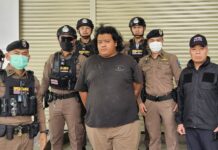
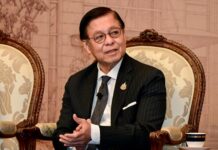
Screencap of the intro music to the Election Commission’s show “August 7, the Referendum That Binds All Hearts.”
BANGKOK — Legal reform advocates sued elections officials today over a state-produced TV show they say has been entirely devoted to praising the proposed constitution that will soon be put to public referendum.
As the Election Commission’s referendum program has so far only featured proponents of the new charter, law reform activists said it’s guilty of violating its own draconian campaign law and overstepping its mandate as an impartial organizer of the Aug. 7 poll.
“We want the show removed because it’s not neutral, and it violates the Election Commission’s own regulations,” said Yingcheep Atchanont, a coordinator of the Internet Law Reform Dialogue, or iLaw.
The suit, filed in Administrative Court on Wednesday, demands the show be taken off the air.
It’s iLaw’s second legal challenge to the Election Commission. On June 29 the Constitutional Court dismissed a lawsuit brought by the group which sought to overturn the commission’s referendum law that has been used to arrest those campaigning against the charter. The law stipulates jail terms for any members of the commission found to act impartially.
The effusively titled show, “August 7, the Referendum That Binds All Hearts,” runs on all state-owned TV and radio stations for 30 minutes every Monday and Wednesday. A final is to air the day before the public goes to vote.
Election Commissioner Somchai Srisutthiyakorn said in response to the suit that his body was not responsible for the guest lineup.
“Each station was instructed to invite speakers and opinionated people from the two sides,” Somchai said at a news conference. “The [commission] will not interfere.”
He also defended the impartiality of the program, saying the final guest list includes representatives from both sides.
Yet so far, only members of the Election Commission, the charter’s drafters and junta-appointed members of the interim legislature have appeared on the three episodes aired since it started June 27.
Wednesday evening’s episode was to feature Chulalongkorn University lecturer and land rights activist Prapart Pintobtang, the first guest not associated with the pro-charter camp.
The episode may be pre-empted by a women’s volleyball game.
A representative from the opposition Pheu Thai Party, which has urged supporters to reject the charter, won’t appear until July 27.
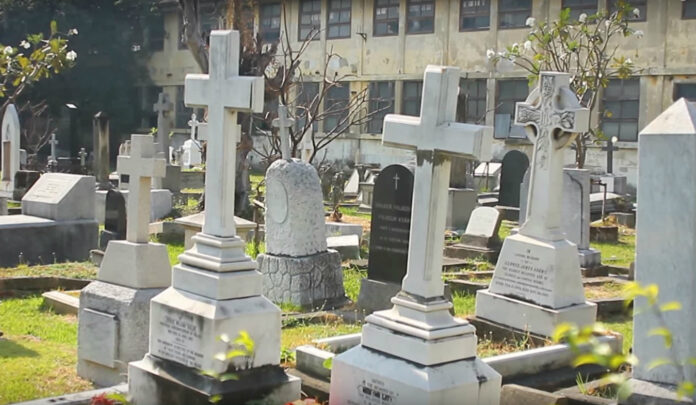
The Bangkok Protestant Cemetery on Soi Charoen Krung 72/5
BANGKOK — Spend Sunday morning (a time the traffic won’t leave you mourning) with a very different kind of activity exploring another side of the capital city: Pedaling through its historic graveyards and learning about them at the same time.
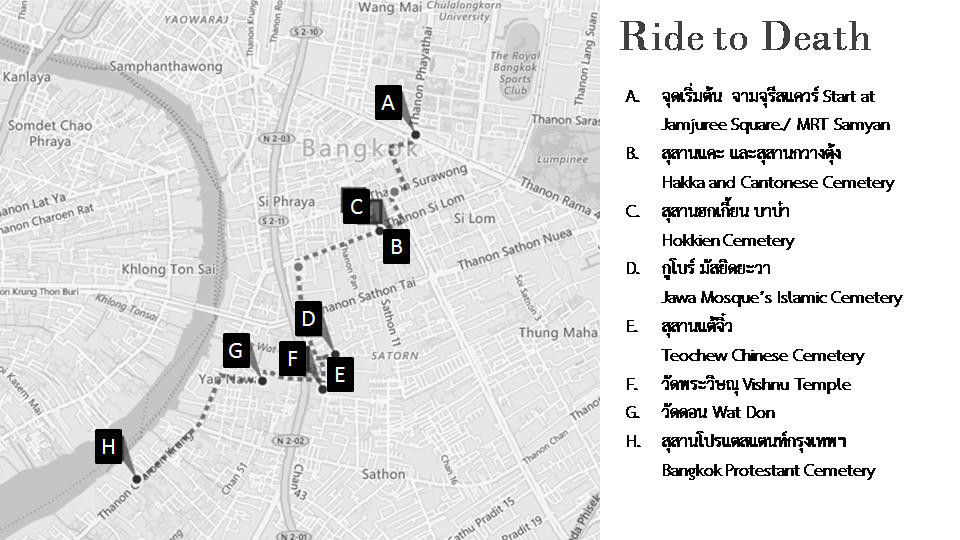
Ride to Death this month will offer a round-the-town cycling expedition to and through local cemeteries in Bangkok to discover their structural and cultural histories.
For over two years Bangkok Architecture Tour on the Bike has taken riders on tours of local neighborhoods and major landmarks, but on July 24 they’ll get a jump on Halloween by taking them to the places people go after death.
“It came from one of our foreign bikers who asked us about funerals in Thailand,” tour co-host Aracha Krasae-in said. “So we finally came up with the idea, since Bangkok is a city where people of many ethnicities and religions live. We want to focus more on the cultural diversity this time.”
Visit a Chinese burial ground founded by immigrants, the Jawa Mosque’s Muslim cemetery, Vishnu Temple and Wat Don along an eight-kilometer “death route” that leaves at 7am on July 24 from Chamchuree Square, located above MRT Samyan.
The final destination is Bangkok Protestant Cemetery where the late Dan Beach Bradley rests in peace. Known to all Thais as “Dr. Bradley,” he was a protestant missionary credited with bringing the first Thai-script printing press to Siam.
The tour will be led in Thai and English by founders Aracha Krasae-in and Surapong Sukhvibul, two cyclists who love sharing their broad knowledge of history and architecture.
Cycling pros and amateurs alike are welcomed to join the ride with their own bikes or rent one from a nearby Pun-Pun bikeshare station.
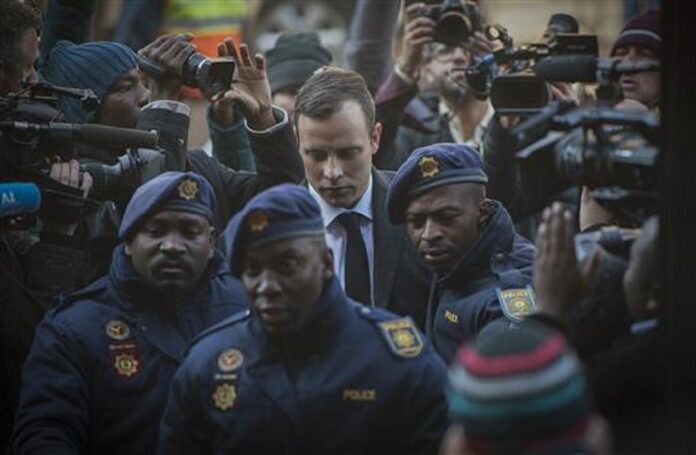
Oscar Pistorius arrives at the High Court in Pretoria, South Africa Wednesday, July 6, 2016. A South Africa judge is expected to announce Pistorius' new sentence after his conviction was changed to murder for shooting girlfriend Reeva Steenkamp in 2013. Photo: Shiraaz Mohamed
PRETORIA, South Africa — Oscar Pistorius has been sentenced to six years in prison for the murder of girlfriend Reeva Steenkamp.
Pistorius stood and faced Judge Thokozile Masipa as she announced the sentence in a South African courtroom on Wednesday.
Pistorius was facing a possible 15-year jail term for shooting Steenkamp through a toilet cubicle door at his home in 2013, but Masipa said substantial and compelling circumstances existed in the double-amputee Olympic runner’s case to give him a lesser sentence.
Steenkamp’s parents, Barry and June, were present in the courtroom, which was packed with relatives of both Pistorius and Steenkamp and other observers.
In reading out the sentence, Judge Masipa said Pistorius was a “fallen hero.”
The judge ordered a recess to give prosecutors and Pistorius’ defense lawyers time to decide if either wanted to appeal the sentence.
BANGKOK — Just when Thais were losing hope of knocking out corruption, the kingdom’s highest budget auditor has came up with a novel solution.
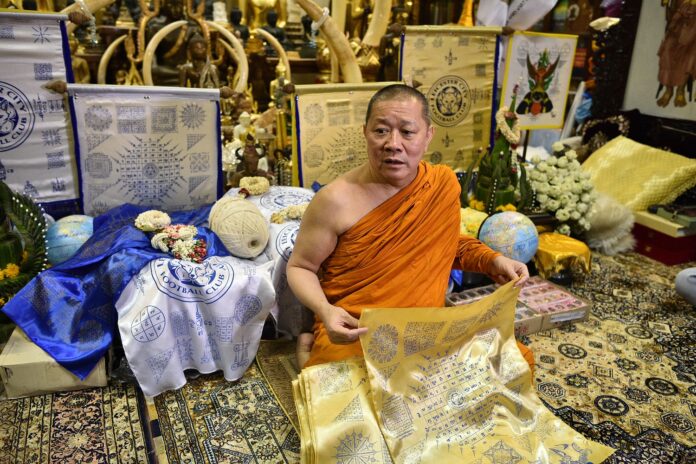
Following the success of Leicester City FC, Office of the Auditor General of Thailand announced it will make a divine appeal for help in their mission protecting public funds by going to the same magic magic monk to bless what they’re calling “corruption-combating spirit cloth.”
“It will be a moral wall protecting the virtuous spending,” the office chairman Pisit Leelavachiropas told Channel 7.
He said a number of pha yant, a mystical cloth to which supernatural powers are ascribed, will be consecrated Saturday at Wat Ratchabophit by nine monks, including the famed assistant abbot of Wat Traimit, who has had a difficult time keeping any cloth in stock since Leicester City FC won the Premier League in May for the first time in its 132-year history.
Though spirit cloths are believed to go back a millennium, they enjoyed a resurgence last year after some football fans credited part of the team’s success to an unbeatable fabric given by Chao Khun Thongchai. During the past season, club owner Vichai Srivaddhanaprabha invited the monk to King Power stadium in England several times to bless the players.
Success is far from guaranteed. In May, the national women’s volleyball team followed the same path to Wat Traimit where the monk said they would prevail in the Summer Olympics qualifiers. They did not.
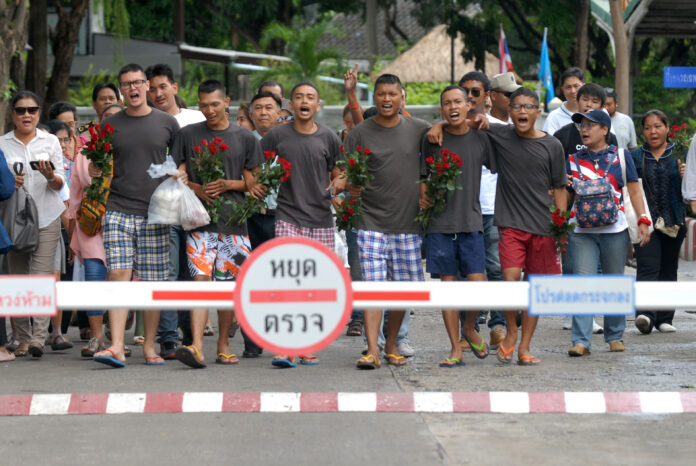
The six activists, in grey shirts, walk out of Bangkok Remand Prison on Wednesday morning. Their friend Korakot Saengyenpan was prevented from leaving with them at the last minute.
Update: Korakot was granted bail Wednesday afternoon on the condition he does not participate in politically oriented activities.
BANGKOK — One of the seven pro-democracy activists set to be released from prison Wednesday was prevented from leaving at the last minute because police had a months-old warrant for his arrest.
Many of Korakot Saengyenpan’s fellow activists expressed shock, as they thought the warrant for the 24-year-old’s had been quietly dropped as in the course of his numerous public appearances as an activist, police never attempted to arrest him
Korakot was one of seven activists to spend 12 days inside Bangkok Remand Prison for campaigning against the junta’s charter draft, all of whom were set free by a military tribunal Tuesday to await trial for violating the referendum law and ban on protests.
On Wednesday morning they left the prison without Korakot, aka Por, to the surprise of supporters waiting outside.
“I was so shocked that I burst out crying right there,” activist Chanoknan Ruamsap said by telephone. “I thought they would all be freed. We were waiting by the gate. Then we saw only six men walking out … and the first thing [activist Rangsiman] Rome did once he got out was to look at me, with a very sad face, and he told me, Por was detained.”
A bail hearing for Korakot was scheduled to take place Wednesday afternoon.
According to Krisadang Nutcharus, the lawyer representing Korakot, police told him that his client is named in an outstanding warrant for activism last year related to alleged corruption in a royal monument project called Rajabhakti Park.
Junta spokesman Piyapong Klinpan said the prolonged detention of Korakot was in accordance with law, and denied that his political activism played any part.
“This has nothing to do with his campaign for the charter referendum. It’s an old issue,” Col. Piyapong said. “It was police who requested that he be detained, because he has an old outstanding case. This is normal police procedure.”
He also insisted that the regime didn’t interfere with the police investigation.
The warrant was issued in February for Korakot and four other activists, yet since then police never made any attempt to arrest them, even though they often organized protests in full view of police officers, according to other people facing the same charge.
“I just knew today that the arrest warrant against me still exists,” 25-year-old Chanoknan said.
Police are taking Korakot to the military court, where they will ask the tribunal to remand him for another 12 days, citing a need to interrogate him while in custody, Krisadang said.
For the activists, the re-arrest of Korakot underscored the uneven application of the law. They said the threat of arrest has been held over them before, only to have it never come to pass.
Activist Chonticha Jaeng-rew said officers told her last year she would be taken into custody for a sit-in she staged on the anniversary of the May 2014 coup.
“I suspect they eventually decided against it because there were many protests at the time, and they wanted to calm the situation,” she said. “This is time, it’s different.”
She added the other activists are now trying to find out how many arrest warrants they face.
“Everyone in our circle is now confused, like, are we wanted by the authorities?” she said with a laugh.
BANGKOK — Canadian jazz musicians, Russian ballet dancers, Chinese acrobats and more performers from around the globe will converge in Bangkok for the International Festival of Dance & Music.
This isn’t a two-day fest. Try 40 days, packed with 17 shows by performing artists from 11 countries.
Flying from Moscow, 90 dancers from the Moscow Stanislavsky Ballet will spread their wings in Tchaikovsky’s “Swan Lake” along with 16 other amazing performances, starting in September.
Classical music lovers should prepare their ears for Turkey’s Presidential Symphony Orchestra, one of the oldest such orchestras in the world. They will perform Rachmaninoff’s Symphony No. 2 and Liszt’s Hungarian Rhapsody, amongst others.
Award-festooned China National Acrobatic Troupe makes their return, combining acrobatics with dance and drama to celebrate their 55th anniversary.
The festival runs Sept. 8 through Oct. 19. All shows will be in the main hall of the Thailand Cultural Centre, which is easy to find because it has an MRT station named after it. Walk just out exit No. 1, and find a free shuttle bus service 5.30pm to 7pm on the performance dates.
In this June 23, 2016 photo, pharmacist Rossana Rilla works at her own drugstore in downtown Montevideo, Uruguay. In her 28 years as a pharmacist, she has been beaten, dragged across the floor and threatened by thieves at gunpoint and with a grenade. Photo: Associated Press
MONTEVIDEO, Uruguay — Rossana Rilla could sell marijuana under Uruguay’s pioneering law that lets pharmacies distribute pot. But she says there is no way she will.
In her 28 years as a pharmacist, she has been beaten, dragged across the floor and threatened by thieves at gunpoint and with a grenade. She fears that selling marijuana would only make her store a bigger target for robbers and burglars.
“You see their faces and you can tell right away that they are not consumers who are here just to buy” marijuana, Rilla said about the “suspicious people” who have recently been coming into her Montevideo pharmacy asking if she sells pot.
She isn’t alone in avoiding the government’s marijuana program. Most of the country’s pharmacists haven’t signed on, citing security concerns and complaining of paperwork, cost increases or opposition from customers to selling legalized pot.
Uruguay legalized the cultivation and sale of marijuana in 2013 in a bid to create the world’s first government-regulated national marketplace for pot. The goal was to fight rising homicide and crime rates associated with drug trafficking in the South American country.
But while the government wants to start selling marijuana at pharmacies in the coming weeks, so far only 50 out of 1,200 pharmacies are registered, stoking a debate over how the drug should be distributed.
“I don’t see the need to get into a conflict with people who are already selling weed in the neighborhoods,” said Marcelo Trujillo, who owns three pharmacies in Montevideo’s Cerro neighborhood.
“I just don’t want to expose myself or my employees,” he said. Next to him, a worker repaired a glass that was shattered during a recent robbery attempt.
The law allows for the growing of pot by licensed individuals, the formation of growers and users clubs, and the sale by pharmacies of 40 grams of marijuana a month to registered users. While the plan has been widely applauded globally and seen as going beyond marijuana legislation in the U.S. states of Colorado and Washington, most Uruguayans oppose it.
“My customers generally don’t agree with the plan,” said Isabel Regent, head of the Association of Interior Pharmacies, which represents businesses outside the capital, Montevideo. “Besides the fear of robberies, enrolling in the system means a hike in costs and having to be up to date with all the paperwork demanded by the health ministry, and not all pharmacies are in a condition to do this.”
Regent owns a pharmacy in Punta del Este, an exclusive seaside resort where tens of thousands of tourists from neighboring Argentina come to vacation each year. But she decided not to enroll in the government plan. She wouldn’t be able to sell pot to foreign tourists because the law only allows sales to Uruguayan citizens and legal residents over age 18.
Pharmacies in three of the four Uruguayan states bordering Brazil have also declined to enroll in the plan.
No studies have been conducted to see if pharmacists would face extra risks from selling pot, but most feel it’s just not worth the risk.
“I don’t have the security conditions to sell marijuana,” said Mariana Etchessarry, from a pharmacy in Montevideo’s Cerro neighborhood. “I don’t understand why they can’t sell it at police stations. They’re located in every neighborhood and have 24-hour security.”
During a recent meeting with government officials, a union leader claimed that some pharmacists have been threatened by drug dealers, said Gonzalo Miranda, a spokesman for the Uruguayan Chamber of Pharmacies, an umbrella group for large pharmacy chains.
Fernando Gil of the Interior Ministry’s communications office said that no pharmacists had reported any threats to police.
Some pharmacists say their lack of interest in participating goes beyond security concerns.
“I oppose as a matter of principles,” said Julio Gadea. “I’ve been a pharmacist for 40 years. Pharmacies were created to sell medicines, not drugs.”
Experts say delays in the marijuana initiative stem from the fact that no other country has attempted such an ambitious endeavor and that authorities still lack detailed plans and rules for regulating the market.
“We sell all legal drugs and if marijuana is now legal, there’s no reason not to sell it,” said a pharmacist who has enrolled in the government’s marijuana plan. He insisted on not being quoted by name because he did not want to upset his clients, who mostly oppose legalizing pot.
“I signed up but I still don’t know if I’ll sell it,” the pharmacist said. “I’m missing a lot of information. They haven’t explained anything to us about the information program that will be used or how the drug will be sold or how profitable it will be.”
Several of the pharmacists interviewed said they hadn’t ruled out signing on later if the program is successful.
The planting of cannabis in Uruguay has begun and it’s expected to be ready by late July, two government officials told The Associated Press. They also asked to remain anonymous because they were not authorized by the government to comment. The officials said that having only 50 pharmacies enrolled might work in the government’s favor because it will be easier to control.
“We’re not ruling out using other networks or even vending machines in the future,” one official said, adding that marijuana will be sold by mid to late July.
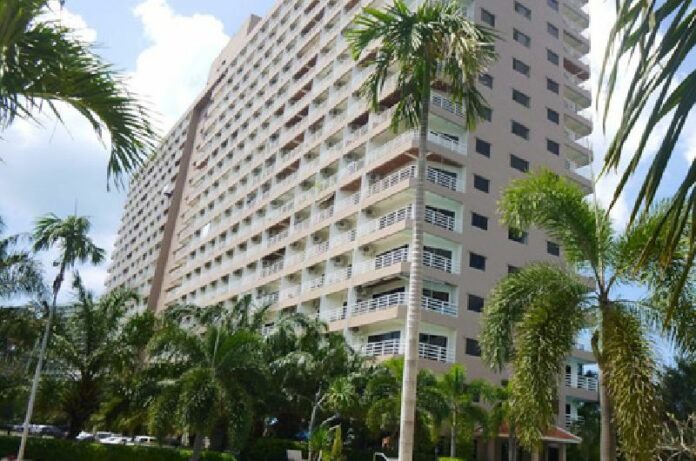
The View Talay Jomtien Condominium. Photo: Booking.com
PATTAYA — A Swedish man was found dead inside his condominium room near Jomtien beach in the early hours of Wednesday morning.
The 62-year-old Swede was found dead squatting in his bathroom on the 10th floor of the View Talay Condominium with his head in a bin and a golf bag over his neck.
That’s how he was found by Pattaya police officer Temtrong Rodsiri, who arrived on the scene at about 12:30am.
“I can not live without sleeping any longer!” read a note purportedly left behind and addressed to his friends and family. “I love Thailand and Thai people but have no power anymore.”
Khaosod English is withholding the deceased’s name until his family can be notified.
Bar owner Weawmanee Luangkrathok, 26, said she noticed the deceased, who drank there every evening, absent Tuesday night. She said that she asked the condo’s security guard to go up to his room and enter it with a spare key.
The man was believed to have been dead for approximately five to six hours. Police said they have not made a determination on the cause death and have taken the body for further examination.
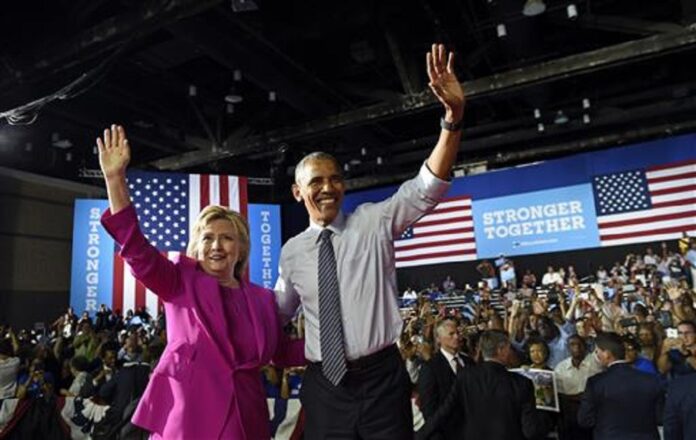
President Barack Obama and Democratic presidential candidate Hillary Clinton wave following a campaign event at the Charlotte Convention Center in Charlotte, N.C., Tuesday, July 5, 2016.
CHARLOTTE, North Carolina — President Barack Obama vigorously vouched for Hillary Clinton’s trustworthiness and dedication Tuesday, making his first outing on the campaign stump for his former secretary of state just hours after his FBI director blasted her handling of classified material.
Shirt sleeves rolled up in campaign form, Obama declared, “I’m ready to pass the baton.”
“I’m here today because I believe in Hillary Clinton,” he said. “I have had a front-row seat to her judgment and her commitment.”
The energetic Obama-Clinton appearance in North Carolina was a show of Democratic unity in a state Clinton is hoping to put back in the party’s column. But the moment wasn’t what her campaign and the White House imagined during the long primary season.
Shortly before the president and his would-be successor flew to Charlotte together, FBI Director James Comey announced he would not recommend charges against Clinton for her email practices but only after he presented a searing description of her “extremely careless” handling of classified information that ensured the matter won’t be going away.
The White House declined to comment on Comey’s findings, saying the investigation was not formally closed and it did not want to appear to be influencing prosecutors. Still, the timing of the trip pulled the president into a controversy he has at times tried to keep at arm’s length. His appearance with Clinton was a reminder that it was his appointee who declined to pursue criminal charges.
Yet Clinton and Obama did not veer from their display of lockstep unity. The duo flew to Charlotte together on Air Force One, and they rode to the rally together in Obama’s armored limousine, known as “The Beast.” Clinton shared photos of her grandchildren, Charlotte and newborn Aidan, with the president.
Welcomed by a screaming crowd of supporters, the president led chants of “Hillary!” as they stood onstage under banners reading “Stronger Together.” He declared that “there has never been any man or woman more qualified for this office than Hillary Clinton, ever. And that’s the truth. That’s the truth.”
Referring back to their own bruising primary battle in 2008, Obama said, “We may have gone toe to toe, from coast to coast, but we stood shoulder to shoulder for the ideals that we share.”
Clinton’s Republican rival didn’t let the Democratic duo’s outing go unanswered. As the rally began, Donald Trump released a lengthy statement casting the joint appearance as an example of a “rigged” political system.
“It was no accident that charges were not recommended against Hillary the exact same day as President Obama campaigns with her for the first time,” Trump said, later echoing the charges at a rowdy rally held across the state in Raleigh.
Clinton shot back early as she introduced the president, chiding Trump for once leading the questioning of the president’s birthplace.
She said Obama was a man that “I was honored to stand with in the good times and the bad times, someone who has never forgotten where he came from. And, Donald, if you’re out there tweeting, it’s Hawaii.”
Obama, too, got in a dig at Trump.
“Anybody can tweet but nobody actually knows what it takes” to be president, he said.
Later, Obama and Clinton dropped in unannounced at Midwood Smokehouse, a barbecue place in Charlotte. He offered a hug to a woman who tried to pay for his meal while Clinton chatted up a woman and her preschool-age child.
At Trump’s rally, which attracted a smaller but still enthusiastic crowd, Trump said Obama should be in Washington, dealing with the issues facing the nation, instead of out campaigning.
Republican Presidential candidate Donald Trump comments about his hair while speaking at a rally in Raleigh, N.C., Tuesday, July 5, 2016.
“We’ve got a person in the White House that’s having a lot of fun,” he said. “I watched them today. it’s like a carnival act. A lot of fun.”
The Clinton campaign hopes Obama can reassure voters about her experience, talent and character and speak to their questions about her honesty and trustworthiness, some of which stem from the email investigation.
The president cast the negative impressions of her as a result of her many years in the political spotlight. He also noted that he had benefited from Americans’ desire for a fresh face.
“Sometimes we take somebody who’s been in the trenches and fought the good fight and been steady for granted,” Obama said, as Clinton sat behind him. “As a consequence that means sometimes Hillary doesn’t get the credit she deserves. But the fact is Hillary is steady and Hillary is true.”
Likewise, Clinton said Obama doesn’t get the credit he deserves for overseeing the nation’s economic recovery. She shared memories of her four years in the administration, from crashing a meeting with the Chinese at a global climate summit to being in the Situation Room during the raid on Osama bin Laden
“He’s made difficult, even unpopular, decisions for the good of our country,” she said.
Obama and Clinton originally planned to make their first campaign appearance together in Wisconsin, a Democratic-leaning state where Clinton struggled in her primary fight with Bernie Sanders. Campaign aides viewed that as a way to forge Democratic unity after the primary and consolidate the party’s voters in a state Clinton needs to carry in November.
The June 15 rally was postponed due to the mass shooting at an Orlando nightclub. By the time the campaign and White House got around to rescheduling, Clinton aides said the landscape had shifted they are now far less worried about bringing along Sanders voters and more interested in using the president to rally voters in one of the most divided general election battlegrounds.
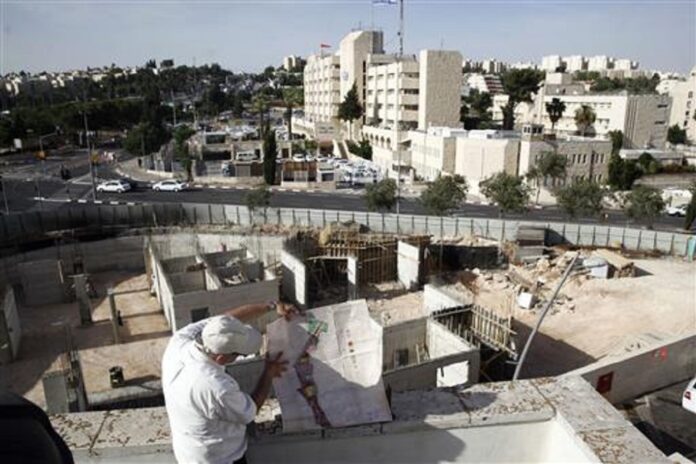
In this May 17, 2016 photo, Israeli lawyer Stephen Berman inspects a construction site on land owned by Palestinian Mohammad Abu Ta’a, in east Jerusalem.
JERUSALEM — Prime Minister Benjamin Netanyahu has authorized construction of hundreds of new homes in Jewish settlements in the West Bank and east Jerusalem, an Israeli official confirmed Tuesday.
The government has presented the move as a response to a series of deadly Palestinian attacks against Jewish settlers. The Palestinians have long viewed settlement construction as the biggest obstacle to the stalled peace process.
The official said construction would include 560 new homes in Maale Adumim, just outside Jerusalem, as well as nearly 200 in the city itself. The plan also called for over 600 new homes in an Arab neighborhood of east Jerusalem.
The official spoke on condition of anonymity because he was not authorized to discuss the matter with reporters.
Israel captured the West Bank and east Jerusalem in the 1967 war. Most of the world opposes settlement construction in these areas, where the Palestinians hope to establish an independent state.
U.N. Secretary-General Ban Ki-moon said the Israeli plans raise “legitimate questions” about the country’s long-term intentions. Palestinian official Hanan Ashrawi said Israel is “bent on destroying the viability, integrity and territorial contiguity of a future Palestinian state.”
U.S. State Department spokesman John Kirby criticized the steps announced by the Israeli government. He said they are “fundamentally undermining the prospects for a two-state solution” and are “counterproductive to the cause of peace in general.”
Palestinians have carried out dozens of attacks since September, killing 34 Israelis and two visiting Americans. Some 200 Palestinians were killed during the same period, most said by Israel to be attackers.
The Israeli military said a Palestinian attempted to stab a soldier in the West Bank on Tuesday before troops opened fire, wounding the attacker. No soldiers were wounded.
Also Tuesday, Israel’s Shin Bet security service said it has arrested two Palestinians from the Gaza Strip who allegedly smuggled money for the Hamas militant group.
It said the men, who held special permits allowing them to conduct business in Israel, were caught with thousands of euros hidden in their shoes destined for Hamas members in the West Bank.
Israel and Egypt imposed a blockade on Gaza in 2007 after Hamas ousted forces loyal to Palestinian President Mahmoud Abbas. The Palestinian leader now governs in the West Bank, while Hamas remains in control of Gaza.
Israel said the two businessmen revealed information about Hamas tunnels located under homes and mosques in Gaza. It also said they provided information about Hamas rocket launchers hidden in civilian areas.