31.6 C
Bangkok
Monday, June 29, 2026
Home Blog Page 2694

Bangkok Braces for Wet Weekend, Floods Feared in Thai South and East

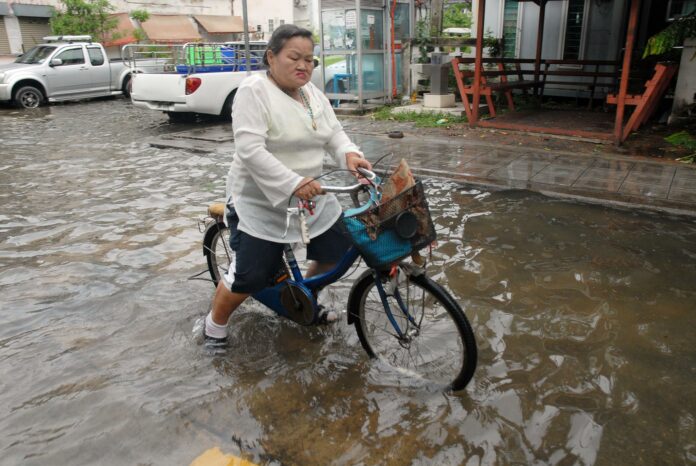
A woman cycles through Lat Phrao district after heavy rain in Bangkok Tuesday.

BANGKOK — Thunderstorms and showers will continue dousing much of the capital this weekend as nine provinces are on alert for floods, strong winds and landslides, emergency officials said Friday.

A warning has been issued for the five southwestern provinces of Phuket, Phang Nga, Krabi, Trang and Ranong by the Department of Disaster Prevention and Mitigation, along with the four eastern provinces of Chonburi, Rayong, Chanthaburi and Trat. Residents are warned to prepare for the worst as rain is expected to continue falling through Tuesday, according to state-run media.

The Meteorological Department echoed the warning Friday, saying Thailand faces more rain caused by a tropical depression weighing down the South China Sea.

It added that there will be more rain in most of the country on Friday and Saturday as a southwestern monsoon moves across the Andaman Sea.

Small boats are recommended to stay ashore from Friday to Wednesday as waves of up to two to three meters in height are expected in both the Andaman Sea and the upper part of the Gulf of Thailand.

Advertisement

Fort Battle: City Sits Down With Pom Mahakan For First Time

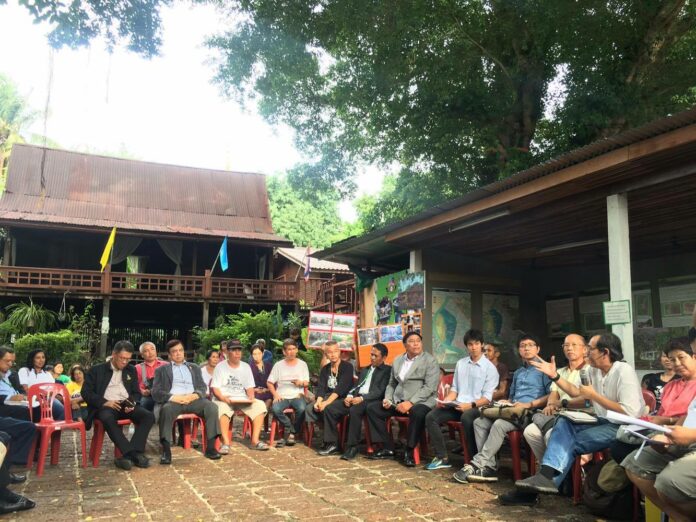
Residents, officials and others sit down at the first public hearing held in the 24-year history of conflict between local government and the community it has sought to evict from behind the walls of fort Pom Mahakan.

BANGKOK — After 24 years of trying to kick out a small community dug in behind the walls of a historic fort, City Hall sat down with them for the first time yesterday to talk about solutions.

The first public discussion over the unending conflict was arranged to find a way forward, given the Bangkok Metropolitan Administration’s last ultimatum for the 100-year-old community near Wat Saket to leave passed on April 30.

“At least today they promised they won’t break into the community to evict us at night,” community leader Thawatchai Woramahakhun said. “I have been sleeping not more than three hours since the eviction news came out. Now I can sleep better.”


Read: This Endangered Community Has Been Fighting Eviction 24 Years (Photos)


In 2005 the Supreme Court ruled the administration, or BMA, had the right to clear the homes and residents as they sat on public land. The city has said it wants to build a park on the site. But the more than 300 residents who have lived there for three generations asked authorities to share the space instead of erasing their historical community from the map.

Though no conclusion was reached yesterday, Thawatchai said he was pleased just to see an effort by authorities to reach out and talk about solutions directly with residents. He said for the past two decades, Pom Mahakan residents have only read about the city’s demands in the pages of newspapers.

One point of agreement in the discussion attended by a deputy provincial governor, Pom Mahakan residents, academics, media and concerned parties, was that developing the site should be an inclusive process.

What the law actually says though is a sticking point. Though City Hall and Pom Mahakan agreed in writing to share the land following the 2005 court verdict, a 1992 royal decree reclaiming the whole area remains in force.

Deputy Bangkok Gov. Aswin Kwanmuang said the government was compelled by duty to both execute the law and serve its residents. Aswin listened to proposed solutions but said he could not make any decisions.

“I need to pass it all on to Gov. Sukhumbhand [Paribatra],” he said. “We should be able to reach a solution in a few days.”

Community representatives were invited to further discussion at City Hall on Friday morning, but no conclusion was reportedly reached.


Related stories:

Pom Mahakan Fort People Ordered Out By April

Advertisement

UK Leader David Cameron to Resign After Brexit Humiliation

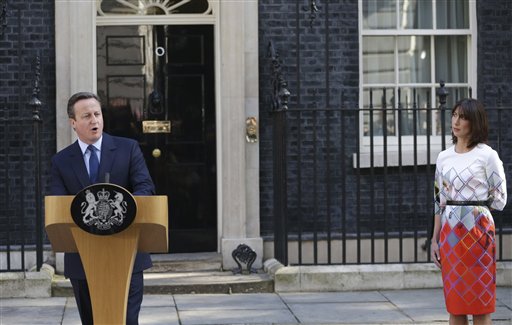
Britain's Prime Minister David Cameron speaks outside 10 Downing Street, London as his wife Samantha looks on Friday, June 24, 2016. Photo: Daniel Leal-Olivas / PA / Associated Press

LONDON  — It’s often said that David Cameron is a lucky politician who has seemed to coast through politics on instinct and charm during a career that has culminated in six years as British prime minister. On Thursday, his luck ran out.

In calling a referendum on Britain’s membership in the European Union, Cameron made a gamble that sank his career — and set his country on a course to leave an international alliance it joined more than 40 years ago. Speaking to assembled reporters outside his Downing Street office Friday, he said he would stay on for as long as was necessary for stability’s sake, but that he could not be the one to lead Britain out of Europe.

“I will do everything I can as prime minister to steady the ship over the coming weeks and months,” he said, “but I do not think it would be right for me to try to be the captain that steers the country to its next destination.”

Brexit was a rare but fateful miscalculation for a politician who has a reputation for thriving under pressure and astutely judging political risks.

“I think he’s actually been pretty stunned by the strength of the ‘leave’ cause,” Cameron biographer James Hanning told The Associated Press several days ahead of the referendum. “The golden rule is, never hold a referendum unless you’re confident of winning it, and I think he thought that the moderate voices would prevail by some distance.”

The referendum campaign was unexpectedly bitter and divisive, and was brought to a shocked halt when Labour lawmaker Jo Cox was shot and stabbed to death in the street last week. The news appeared to dampen the momentum of the “leave” movement, but in the end the Brexit vote prevailed.

“The British people have made a decision to take a separate path,” Cameron said Friday morning.

That decision was bitter news for Cameron, who called the referendum to puncture growing support for the anti-EU UK Independence Party and placate the strongly euroskeptic right wing of the Conservatives.

Victoria Honeyman, a lecturer in British politics at the University of Leeds, said Cameron had seen EU battles poison the leaderships of former Tory leaders John Major and William Hague and “feared a civil war in the Conservative Party.”

She said the referendum was about “defusing that time bomb” — but Cameron has “moved from having one ticking time bomb to having another ticking time bomb.”

When he promised the referendum, in 2013, Cameron said it would “settle this European question in British politics” once and for all.

He told voters he would forge a new deal between Britain and the EU that would make remaining an attractive prospect. At a Brussels summit in February, he won changes to welfare benefits that he said would reduce immigration and an exemption for Britain from the EU’s commitment to “ever-closer union” — a phrase that stirs images of a European super-state in some patriotic British hearts.

But many voters proved resistant to Cameron’s message that Britain is stronger, safer and more economically secure within the EU than it would be outside it.

The concessions he gained were dismissed as paltry by “leave” campaigners, who said they would do little to limit immigration from other EU nations because the bloc guarantees free movement among member states. It’s a subject that resonated with many voters, who have seen hundreds of thousands of people come to Britain over the past decade from new EU members in eastern Europe. (Hundreds of thousands of Britons also live in other EU countries, a less remarked-upon fact).

“I think he has underestimated the enduring nature and the strength of the euroskeptic support in the country and also the extent of the bitterness inside his own party,” Hanning said.

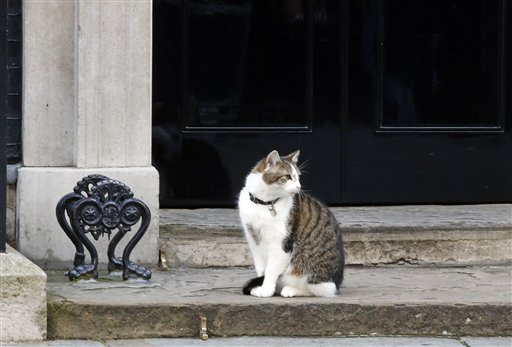
Larry the cat, the Chief Mouser to the Cabinet Office, the title of the official resident cat of the Prime Minister, sits on the steps of 10 Downing Street, the residence of Britain's Prime Minister David Cameron, in London, Friday, June 24, 2016. Photo: Alastair Grant / Associated Press
Larry the cat, the Chief Mouser to the Cabinet Office, the title of the official resident cat of the Prime Minister, sits on the steps of 10 Downing Street, the residence of Britain’s Prime Minister David Cameron, in London, Friday, June 24, 2016. Photo: Alastair Grant / Associated Press

Story: Jill Lawless and Raphael Satter

Related stories:

UK Pound Plunges as Referendum Results Point to EU Exit (Photos)

Polls Open in Britain’s Historic EU Referendum (Photos) 


Advertisement

Dhammakaya Defector Sees Standoff Continuing Years

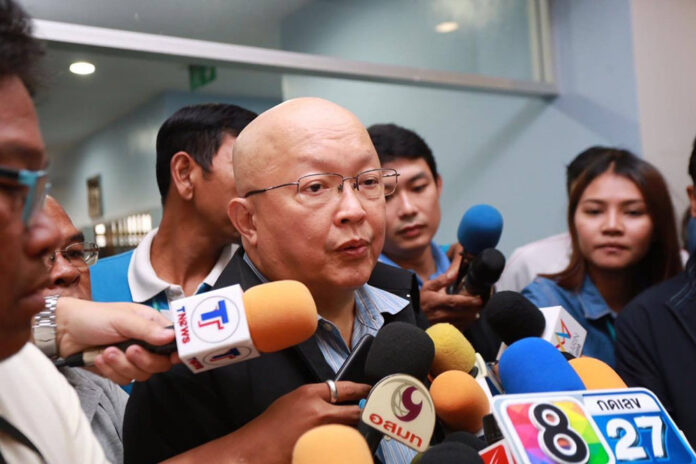
Mano Mettanando Laohavanich speaks to reporters May 22 at the Department of Special Investigation in Bangkok. The former Dhammakaya monk was advising the agency on its raid of the temple complex located north of the capital. Photo: Matichon

BANGKOK — If military government takes no action – or the wrong action – against the controversial abbot of the powerful Dhammakaya Buddhist sect, it could become a threat to the junta, said a prominent defector who spent nearly 20 years in the order.

Speaking at a discussion on Buddhism and politics nearly shut down by the authorities, Mano Mettanando Laohavanich said the organization in which he once served as a senior monk poses an existential threat to the junta known as the National Council for Peace and Order, or NCPO.

Read: Mass Charges Filed Against Dhammakaya Acolytes

“If the NCPO doesn’t do anything, this will become a threat to the military junta,” Mano, a lecturer at Thammasat University’s Chulabhorn International College of Medicine, told the audience Wednesday evening at the Foreign Correspondents’ Club of Thailand.

Wanted by the Department of Special Investigation on charges of accepting embezzled funds, Abbot Dhammachayo became a fugitive from justice when he failed to appear in response to a warrant issued for his arrest. An attempt by police to take him into custody last week ended quickly when his disciples blocked officers. The temple has said Dhammachayo is ill.

Mano, who was a Dhammakaya monk for 19 years before leaving in 1999, warned that a covert operation to capture the abbot of “the largest [Buddhist] organization Thailand has ever seen not associated with the government” could turn bloody.

“If the government uses excessive force, the government will be victimized and this could lead to the end of the NCPO,” Mano said.

The possibility of violence posed by sending commandos in at night is likely giving pause to junta leader Prayuth Chan-ocha, he said.

“I think Mr. Prayuth is thinking hard whether he will invade the community compound. There will be bloodshed at night time. I think that is a dream and too risky for a fragile military.”

Mano, who consulted with the DSI on its raid of the sprawling temple complex north of the capital, said any further raids should be conducted during the day and accompanied by journalists.

Mano, who accused the abbot of proclaiming himself to be primordial Buddha, or even God, criticized the sect for being obsessed with attracting maximum donations from followers as well as storing weapons. At one point Mano even compared the sect’s organizational structures to Hitler’s Third Reich and more.

“It’s like Star Wars together with The Matrix. When you have the two, you have Dhammakaya. Light and darkness. It must be true. And we live in the matrix.”

Mano said he had been willing to sacrifice his life for the sect until he saw orders for weapons procurement and confronted the abbot about it.

“He was trying to convince me he was primordial Buddha. He was God. I can work for a man but not God,” Mano said. “He wanted to conquer the world by creating the Vatican of Buddhism, Mecca of Buddhism.”

On Thursday, a temple spokesman wrote in response to a reporter’s inquiry that the discussion was one-sided opinion without basis in fact.

“What was discussed … last night was criticism without any evidence or proof,” wrote Phra Pasura Dantamano, who said his views were his own and not those of the temple.

“Why do we have to respond to all these false claims made without evidence? If that is so, anyone can just say anything. [Sulak] is someone who has personal bias against every institution, including Dhammakaya,” he wrote. “The moderator asked the audience to make a defense because they did not invite any speakers from Dhammakaya. This is obvious proof that this was a one-sided panel.

He went on to further criticize the club.

“I question the moral ethics and transparency of the FCCT for holding this panel. We would like to hear the response from the FCCT on these issues.”

Event organizers said including a temple representative was just not possible as it would have guaranteed it being shut down by police. As it stands, the club had to change the scope and title of the event after authorities said it should be canceled last week.

Regardless, speakers were told they could be held accountable if they were deemed to have broken any laws, according to club President Nirmal Ghosh.

Speaking Wednesday, Mano, who studied theology at Oxford, said the standoff could continue for months if not years. He added that he doesn’t think Dhammakhaya could survive post-Dhammachayo, who is 72, as it’s a “a cult of one person.”

Another speaker, Buddhist scholar Sulak Sivaraksa, described Dhammachayo as “evil,” and tainted by links to fugitive former premier Thaksin Shinawatra, who supported the temple.

“The man is evil,” said Sulak.

He also lashed out at junta leader Prayuth for not taking decisive action.

“They’re just like puppies,” Sulak said. He then turned to the plainclothes officers  monitoring the talk and instructed them to tell their commander, “Your boss is bloody no good.”

Vichak Panich, a meditation instructor and panelist however discounted fears of the Dhammkaya as emblematic of the fears harbored by the cultural establishment.

“If you think differently from the status quo, they will say you were hired by Thaksin,” Vichak said.

Advertisement

Suu Kyi Says Trust Must Precede Peace in Myanmar (Photos)

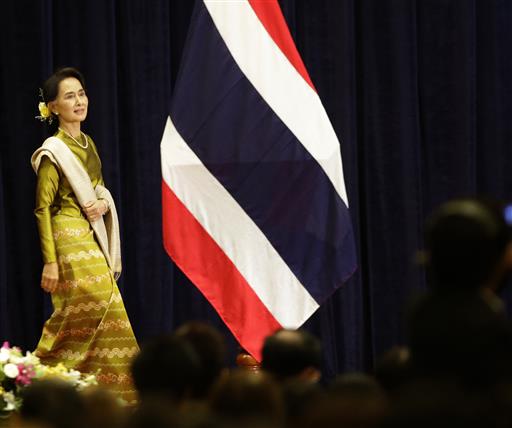
Myanmar's Foreign Minister Aung San Suu Kyi walks on to the stage before delivering a speech at the Foreign Ministry in Bangkok, Thailand, Friday, June 24, 2016. Photo: Sakchai Lalit / Associated Press

BANGKOK — Myanmar’s de facto leader Aung San Suu Kyi said Friday there must be trust between conflicting groups in the country before there can be full peace.

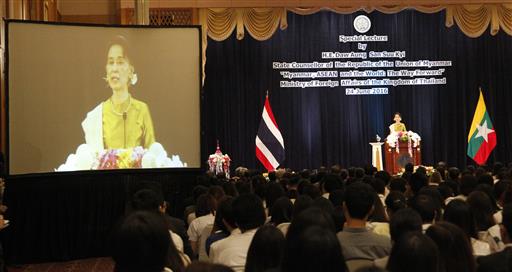
The Nobel Peace Prize laureate — officially called Myanmar’s state counsellor — was speaking to an invited audience of Thai students Friday, the second day of a three-day visit to Thailand.

Myanmar is still troubled with conflict in its remoter areas among ethnic armed groups fighting the army for greater autonomy. Her government is trying to bring the parties together for all-inclusive peace talks toward a permanent settlement, but decades of warfare and distrust make that difficult. No date has yet been set for the planned talks.

Suu Kyi said her government was working “to turn conflict into friendship, to turn conflict into mutual trust and understanding.

“Trust is the basis of any successful endeavor between different groups, different individuals, different countries,” she said.

Later Friday, Suu Kyi was to meet with Prime Minister Prayuth Chan-ocha and sign memorandums of understanding over the processing of and the treatment of Myanmar migrant workers in Thailand, who labor in menial jobs and often in exploitative conditions.

The government estimates there are 1.4 million Myanmar migrant workers in the country but advocates say the number is at least twice that.

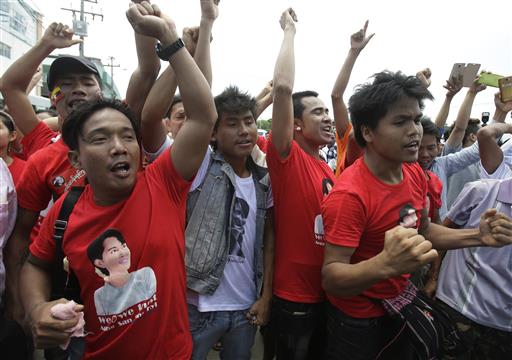
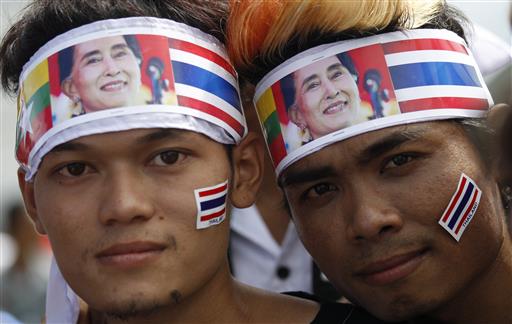
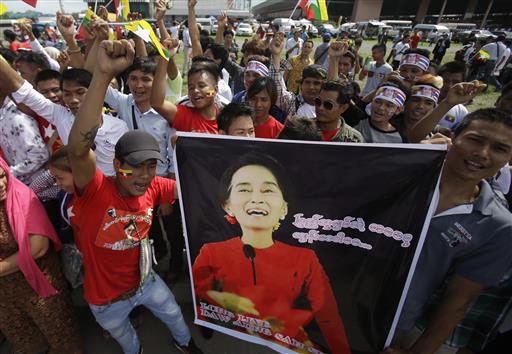
In a demonstration of her popular appeal, Myanmar de facto leader Aung San Suu Kyi received a rapturous welcome Thursday as she presided over a town hall-type meeting with some of the huge population of migrant workers from her homeland who eke out a living in Thailand.

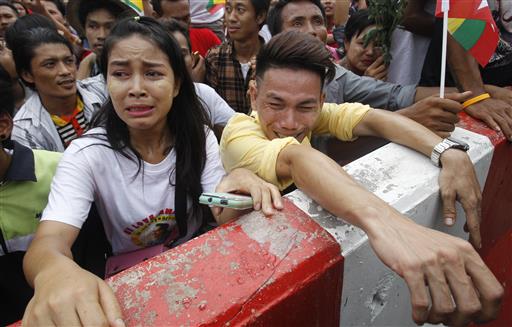
Her meeting with countrymen in the Thai port town of Mahachai, where many work, reprised a similar meeting in 2012 that drew tens of thousands. The numbers this time appeared to be lower, but the level of adulation was high, as the cheering crowd had to be held back from mobbing her.
Overshadowing her visit — though not addressed by her or her Thai hosts — is her government’s treatment of the Rohingya, a Muslim minority of about 1 million who generally have been deprived of citizenship under Myanmar law and are targets of discrimination and violence.

Suu Kyi spoke to several hundred people in a meeting hall for 20 minutes before stepping down from the stage in frustration at a faulty sound system to engage face-to-face with members of the audience, who gave her questions and comments about what she could do to help their often difficult lives.

A large crowd of several thousand waiting outside burst into cheers and song as she was leaving, after staying for the duration of her 45-minute meeting even as a heavy rain poured down on them.
Story: Jerry Harmer and Vicky Ge Huang
Related stories:
Advertisement

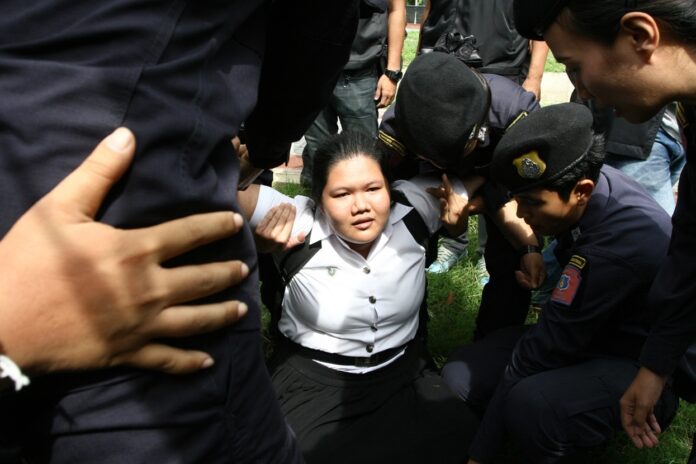
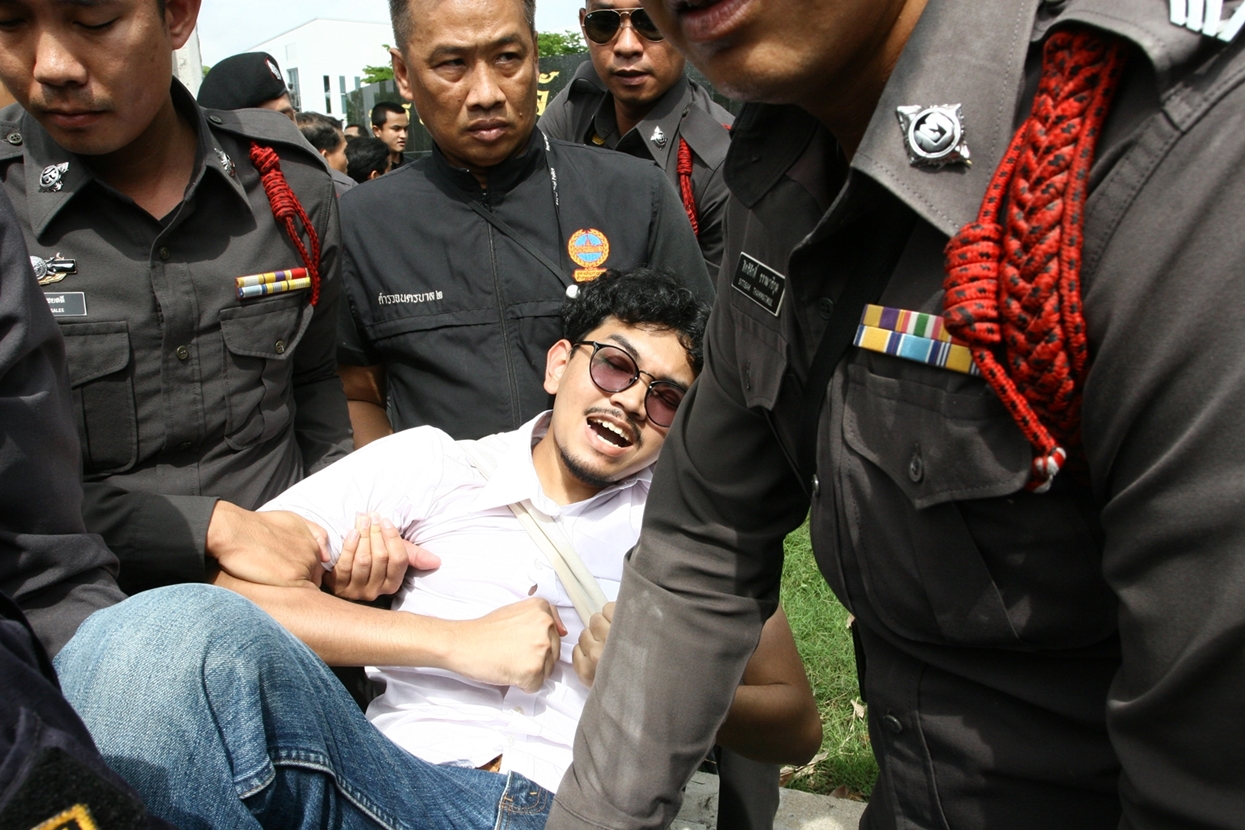
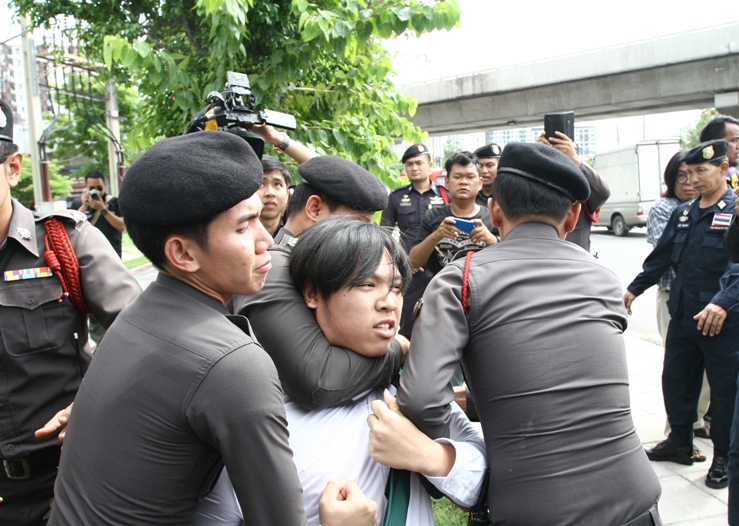
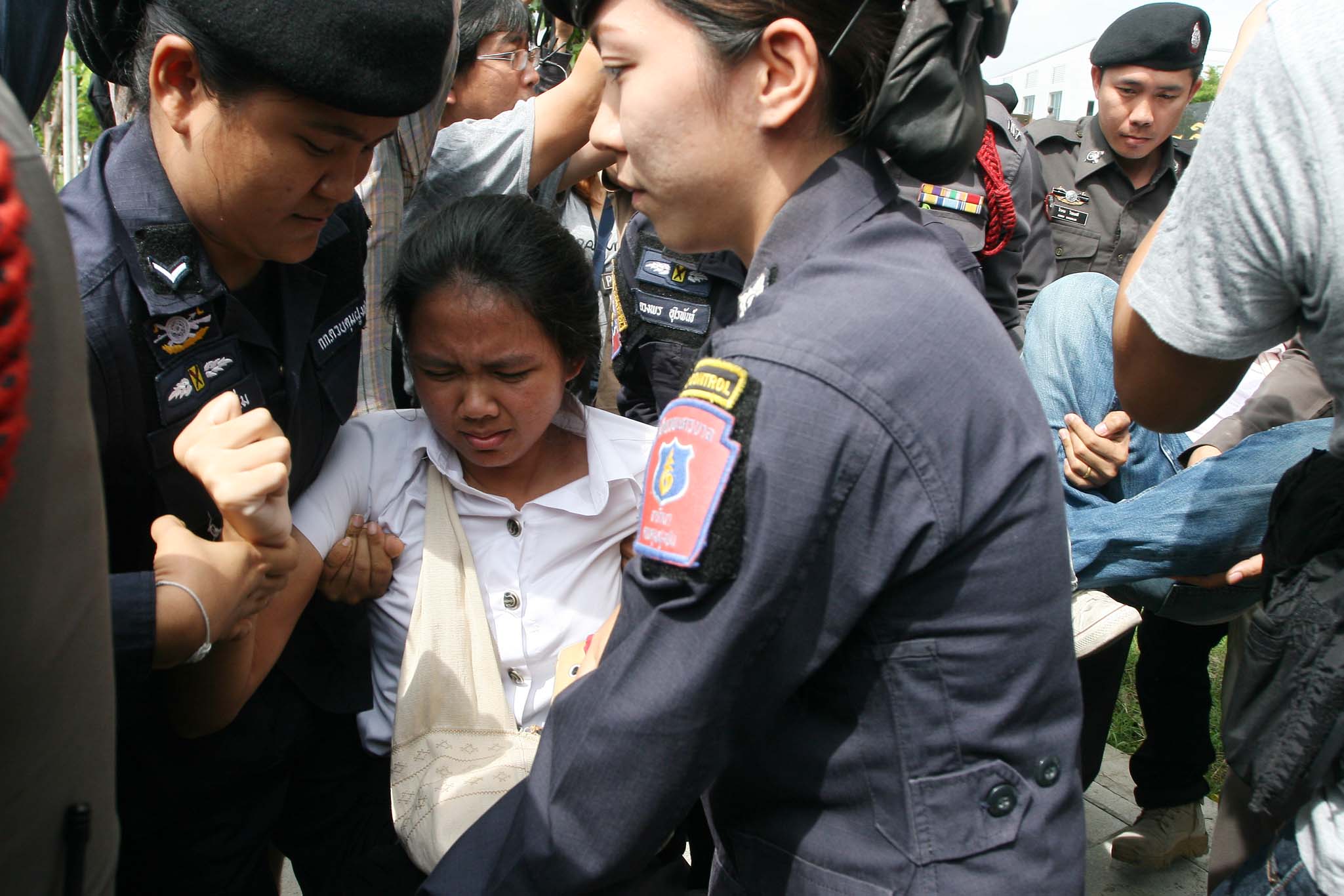
‘Vote No’ Campaigners to be Tried by Military

Security officers arrest activist Rangsiman Rome Thursday in the Bang Phli district of Samut Prakan province.

BANGKOK — Thirteen activists arrested Thursday for campaigning against the junta-backed constitution will stand trial before a military tribunal on charges of violating the ban on political protests.

In further evidence the regime is not tolerating any dissent in the run-up to the charter referendum on Aug. 7, all of the activists, including members of the New Democracy Movement, were brought to the martial court just before 2pm to hear the charges which could see them jailed up to two years.

Eight of those arrested will not seek or post bail in a challenge to the legitimacy of the case against them, according to one of the lawyers representing them. Instead they will ask the court to release them unconditionally.

“The eight do not accept the procedure. They insist that they do nothing wrong,” said Kumklao Songsomboon of Thai Lawyers for Human Rights, which is providing pro-bono legal counsel.

The eight include Rangsiman Rome, student leader of the New Democracy Movement, who a year ago was arrested for anti-junta activism and jailed for 12 days for refusing to post bail.

Meanwhile, the other five activists will post bail as required by court procedure, Kumklao said.

Security officers arrested the 13 campaigners southwest of Bangkok in Samut Prakan’s Bang Phli district yesterday evening while they were handing out leaflets urging the public to vote against the charter draft in the Aug. 7 referendum.

Police initially prevented lawyers from talking to the 13 activists, but relented when the attorneys insisted on their legal right to private counseling with suspects, Kumklao said.

On top of the ban on protests, the junta has imposed sweeping restrictions on the referendum, outlawing any campaign that uses “rude” or “misleading” remarks. Although the text of the law applies to both “Vote Yes” and “Vote No” camps, activists in the latter faction say they bear the brunt of the law’s harsh enforcement.

On Friday, ultraconservative activist and former politician Suthep Thaugsuban urged the public to vote yes in a video posted to his Facebook.


Related stories:

No Thais Can Monitor Vote Because Law Didn’t Say They Can, Commission Reasons

Critics: Keeping Public in Dark About Draft Charter Rejection Unfair

Redshirts Alarmed by Vague Restrictions on Charter Campaigns

Campaign Guideline Bans Campaigning Before Charter Vote

Advertisement

Indonesia Tries to Steer Convicted Militants to New Lives

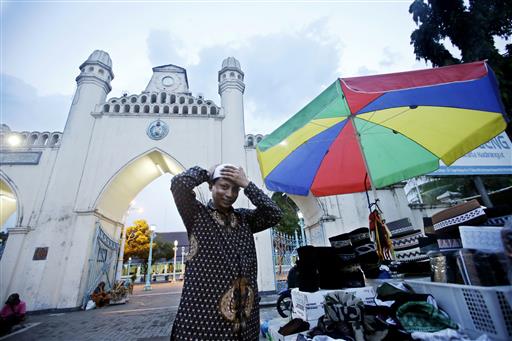
In this Monday, May 16, 2016 photo, Mahmudi Haryono, 40, who is also known by his militant alias "Yusuf Adirama" tries on a prayer cap as he arrives at a mosque for an evening prayer in Solo, Central Java, Indonesia. Photo: Achmad Ibrahim / Associated Press

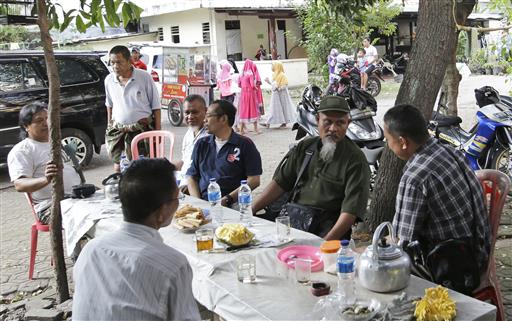
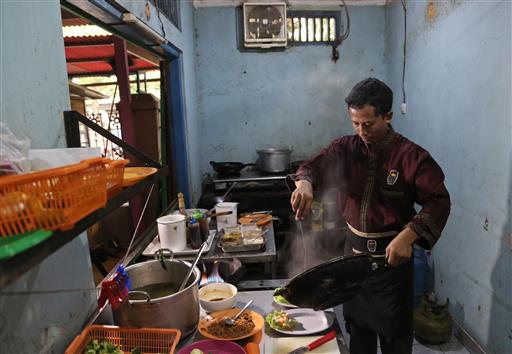
SOLO, Indonesia  — In the heart of Solo city, not far from the Islamic boarding school founded by the radical cleric who inspired the 2002 Bali bombings, the staff of an unremarkable-looking restaurant prepare for another day serving the humble staples of the Indonesian diet to hungry locals.

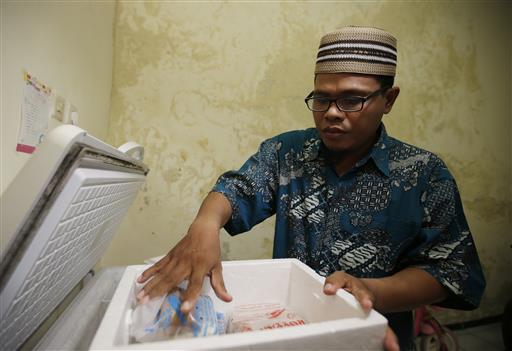
The manager, a slightly built man with quick lively gestures, darts about the narrow kitchen, dropping ingredients into sizzling hot pans to make the bistik and other fare that customers including the local police crave. With a wife and two children to support, he also runs a car hire business and a laundry service on the side.

One of the millions of small-time business owners that keep the world’s most populous Muslim nation ticking, 40-year-old Mahmudi Haryono is also a poster boy for the transformation of a bomb maker and jihadist into a productive member of society.

To be sure, his extensive jihadist history doesn’t inspire easy trust. It includes being a combatant with the Moro Islamic Liberation Front in the Philippines for three years, where he honed bomb making skills, and fighting in sectarian conflicts between Muslims and Christians in Indonesia. He was arrested less than a year after the 2002 Bali bombings that killed 202 people and convicted of hiding materials used to make the bombs.

“The fact is that I trained in the Philippines as a jihadist fighter to defend Muslims and I did jihad only when Muslims were oppressed in conflict regions. It was part of my past,” Haryono said in an interview. “Today, my priority in life is taking care of my family and business and preaching a path to help reform radical inmates.”

A private foundation has worked intensively with Haryono since his release from prison in 2009, and holds him up as an example of how hardened militants can be reformed. The need for such success stories is great in Indonesia, where several hundred men imprisoned for terrorism offenses have been paroled in the past several years, including 97 last year alone.

Since 2002, Indonesian authorities, with U.S. and Australian help, have vastly improved their intelligence gathering and counterterrorism operations. The imprisonment of nearly 800 militants and the killing of more than 100 in raids have weakened the groups under the Al-Qaeda-linked Jemaah Islamiyah network responsible for the Bali tragedy and dozens of other plots and attacks.

But efforts to de-radicalize militants in prison have been less successful, partly because the Islamic State group inspires them to hold to extremism. Two perpetrators of the IS-inspired Jan. 14 suicide bombing in the Indonesian capital had been released from prison shortly before the attack.

“We have to admit the de-radicalization programs by the non-state groups, and the government, are not enough,” said Taufik Andrie, executive director of Yayasan Prasasti Perdamaian, an institute that helps paroled militants and established the restaurant where Haryono works and now owns a stake in.

Andrie estimates that 40 percent of the more than 400 militants released as of December last year returned to their radical networks.

He said some of those people may want a normal life, but few Indonesians want to employ them, or even have them living in their neighborhoods, so they are drawn back to radical circles where they are welcomed as heroes.

“When they are released, they are on their own. For them, society is a second prison because of the stigmatization,” Andrie said.

In the Solo neighborhood of Ngruki, former militant Joko Purwanto, who uses the alias Handzollah, said he has slowly gained acceptance from the devout Muslim community that shunned him when he was released from prison two years ago.

The village of narrow lanes and tightly packed houses is dotted with shops selling hijabs and famously is home to the fundamentalist Al Mukmin Islamic boarding school founded by Abu Bakar Bashir, the aging spiritual leader of the Bali bombers, who is now languishing in prison for his role in funding a jihadist training camp in Aceh.

Handzollah, a former student at Al Mukmin, fought alongside Haryono and was arrested in a 2010 raid on Bashir’s training camp. After his release, he said, neighbors ignored his greetings, and at the mosque a worshipper called him a terrorist who should be ostracized.

“I responded by doing good,” the 41-year-old said. “I didn’t avoid them. Instead I tried to approach mainstream society.

“Gradually, they realized that I’ve changed.”

Nowadays, Handzollah is popular as a preacher and often travels. Numerous children from two wives are supported by one wife’s business making snack foods for restaurants and shops.

He now says violent jihad is not justifiable within Indonesia because Muslims aren’t under attack. In common with other parolees, he denounces IS for killing Muslims who reject its extreme interpretation of Islam.

“What I did in the past was a mistake. Many tenets of Islam were violated to do jihad, by doing bombing attacks in peaceful places like hotels, markets or other public areas that killed innocent people,” he said.

Prized for his skill in repairing weapons, Handzollah said IS supporters have attempted to recruit him since he left prison. He said he has persuaded at least 10 young men not to travel to Syria to join the IS group.

Like Haryono and other former Jemaah Islamiyah militants interviewed by The Associated Press, he still believes Indonesia should be governed by Islamic Shariah law, not a secular government, but says that goal should be achieved through peaceful methods.

Yet Handzollah does not unequivocally rule out a return to militancy.

“Of course the ideology of jihad remains inside me, because it’s part of Islam,” he said. “I believe in Shariah law and an Islamic state, so, if someone is able to convince me with certain arguments — but this is very unlikely to me now — it may make me go back” to violence.

For those who support de-radicalization efforts, Handzollah represents a form of success but also underlines a dilemma for the government: Will doing more to support released militants join mainstream society help prevent future attacks, or provide the cover for militants to rebuild and plot?

Brig. Gen. Hamidin, director of prevention at Indonesia’s counterterrorism agency, said there are limits to what the government can do. It can’t provide former radicals small-business loans, for example, since that could create a perception there’s a financial incentive for terrorism, he said. Instead, it plans to mentor released militants and help them get national ID cards, which are needed to apply for jobs, opening bank accounts and conducting other essential tasks.

Hamidin, who uses one name, says the government already has had some success. Government figures show that less than 10 percent of released militants have been re-arrested or killed in anti-terrorism operations. He concedes, however, that the number who returned to radicalism is much higher.

The recidivism figure doesn’t include those who joined IS in Syria, for instance. It’s not illegal for Indonesians to join conflicts abroad, though Parliament is considering a revamped law.

Andrie, from the institute, said it has been successful with most of the 30 men it has been involved with in the past five years. It finds ways to draw individuals into their communities and focuses on persuading them to repudiate violence, rather than trying to try change core beliefs such as support for a caliphate.

The group has learned on the job, including from its mistakes.

In one case, a paroled militant was provided with USD$500 (18, 000 baht) to start a T-shirt business. Soon the group discovered the venture had failed, partly because the business didn’t engage the man with regular people.

As for the T-shirts? They were emblazoned with either the face of Osama bin Laden or an AK-47 and given away within the man’s radical circle.

Story: Stephen Wright and  Niniek Karmini

Advertisement

On Anniversary of Democracy, Cops Intercept and Arrest Observers (Photos)

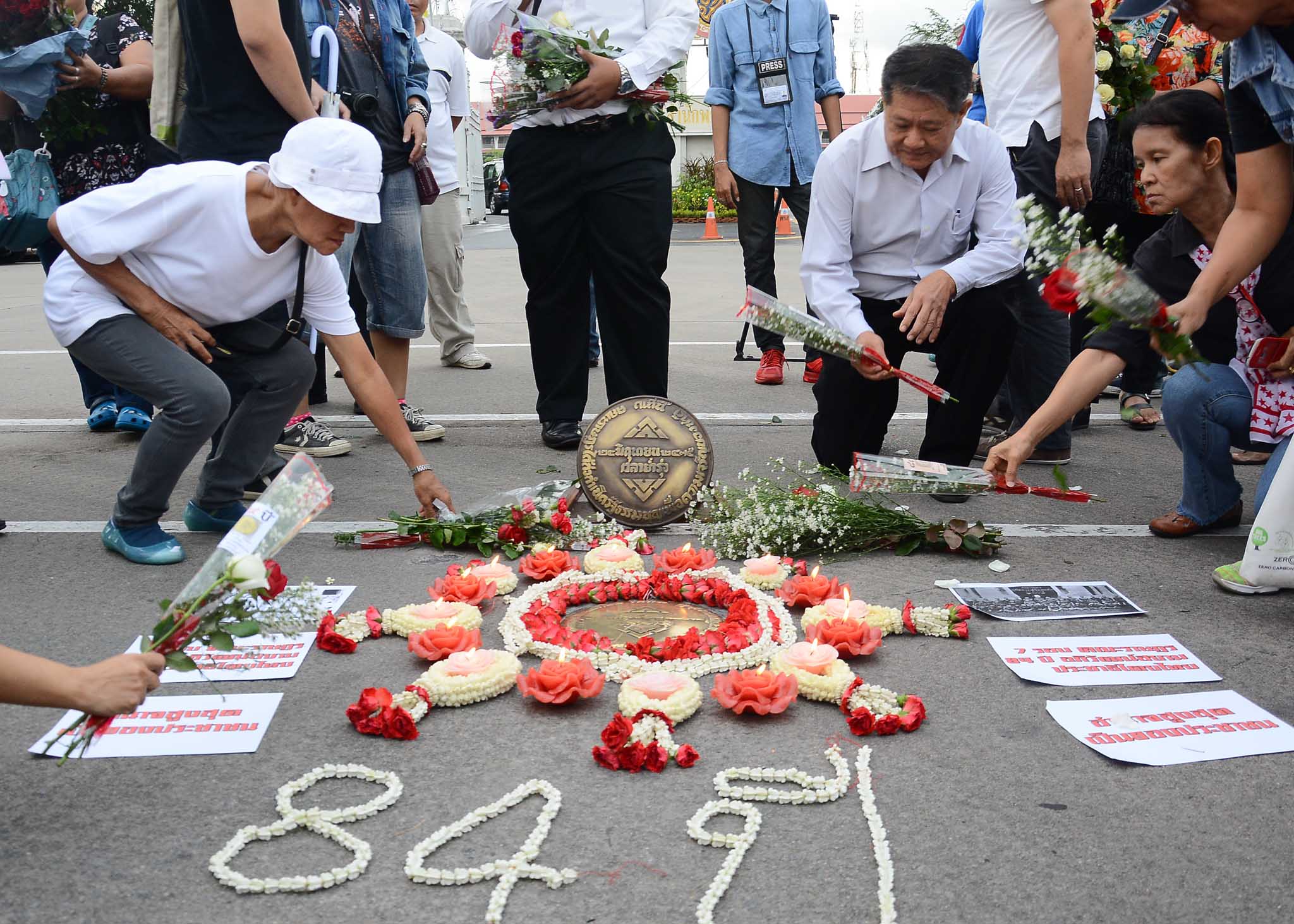
Members of Free Kasetsart were arrested Friday morning near the Defense of Constitution Monument where they were planning to commemorate the 84th anniversary of democracy.

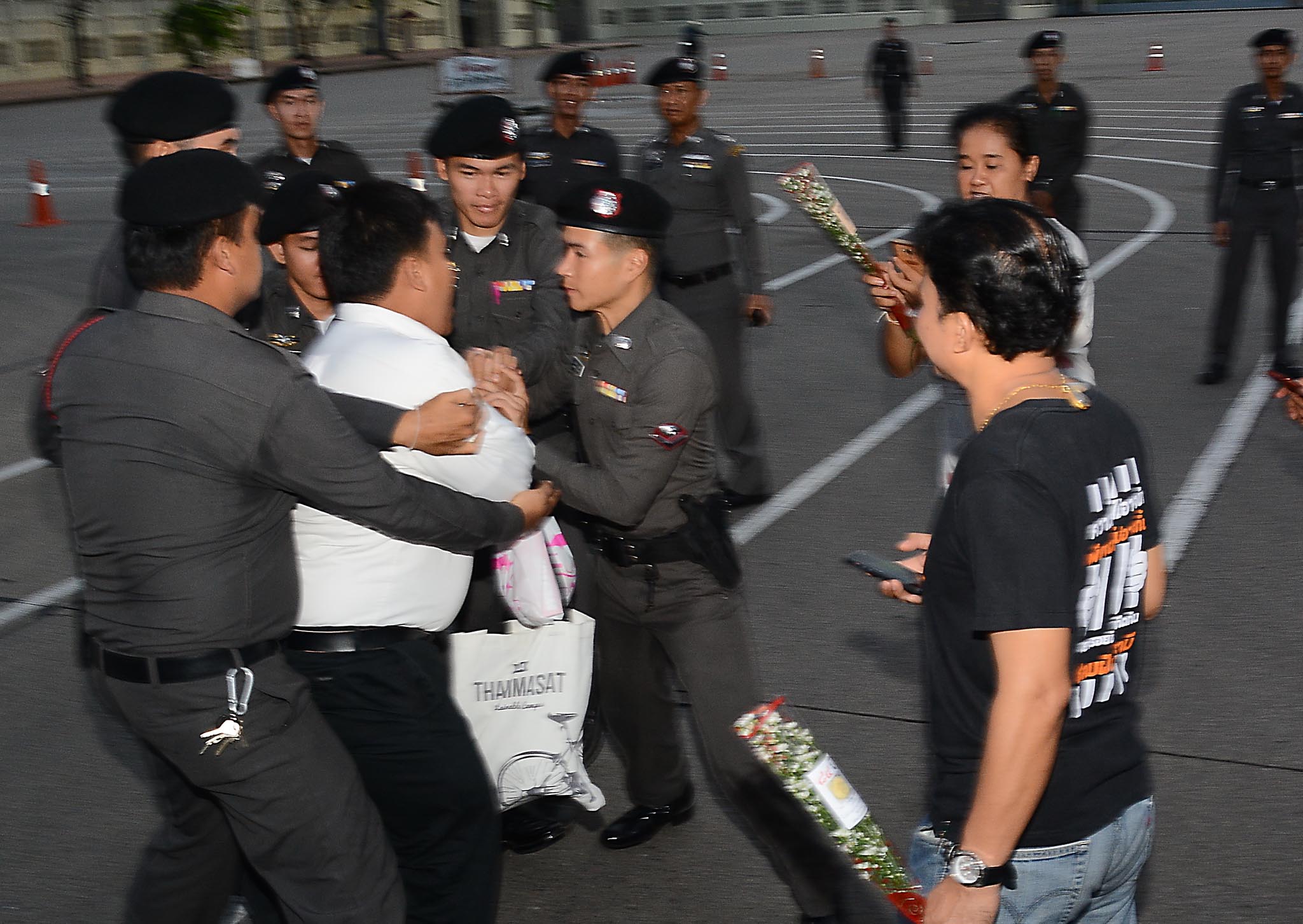
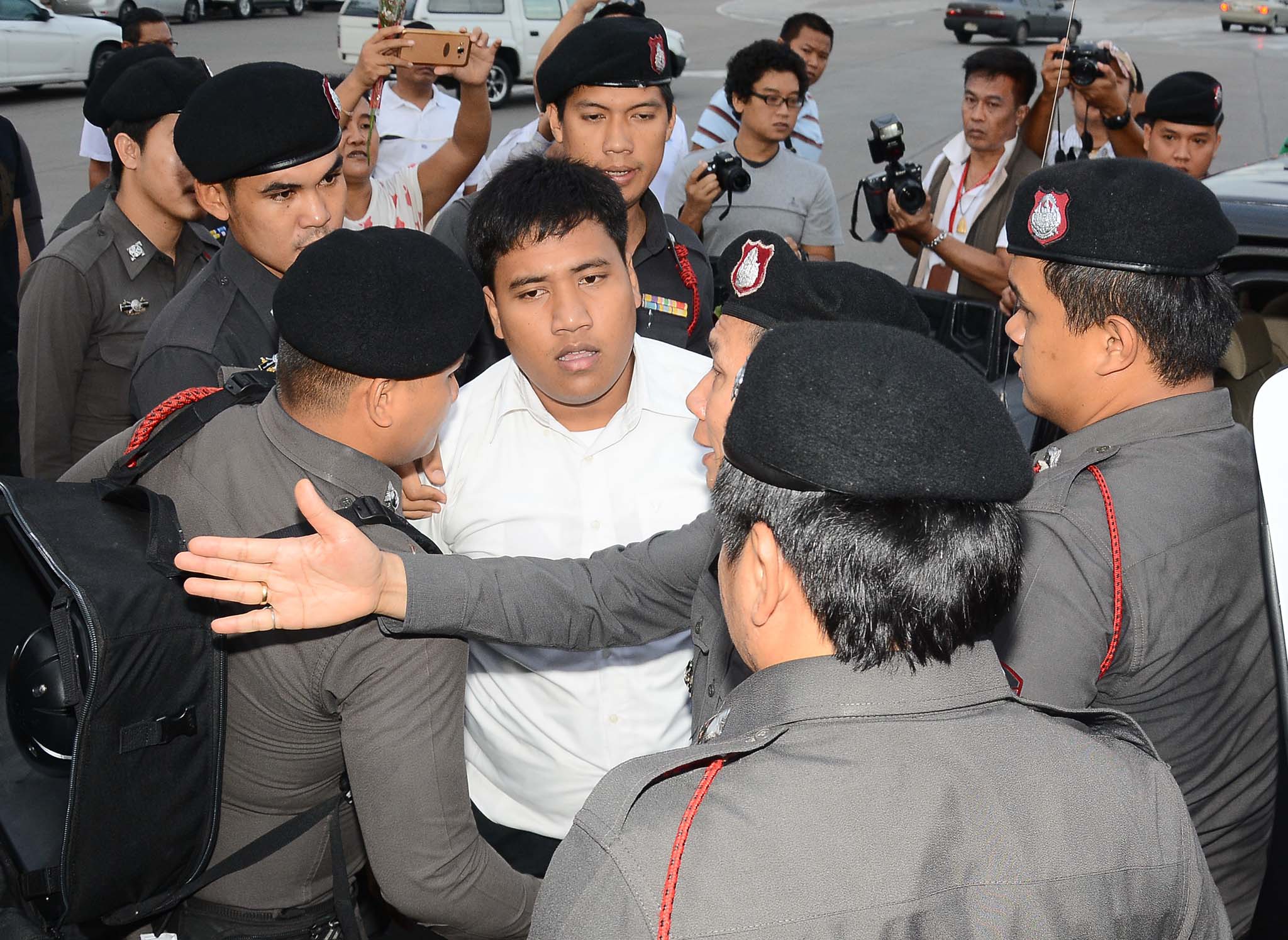
BANGKOK — Police this morning pre-emptively arrested activists en route to commemorate the 84th anniversary of democracy in Thailand.

The arrest of activists for recognizing an occasion once celebrated as a national holiday marks a further uptick in the junta’s suppression of its critics and comes a day after 13 others were arrested and charged for campaigning against the regime-backed draft constitution.

Police intercepted six members of the Free Kasetsart activist group as they departed Kasetsart University for the Defense of Constitution Monument in northern Bangkok, where they planned to mark the 84th anniversary of the revolution that replaced absolute monarchy with democracy.

All of the activists were taken to Bang Khen Police Station. It was unclear whether they would be charged with any crime. Since seizing power in May 2014, the military regime has outlawed any protests, and some violators of the ban have been sent to stand trial in martial court.

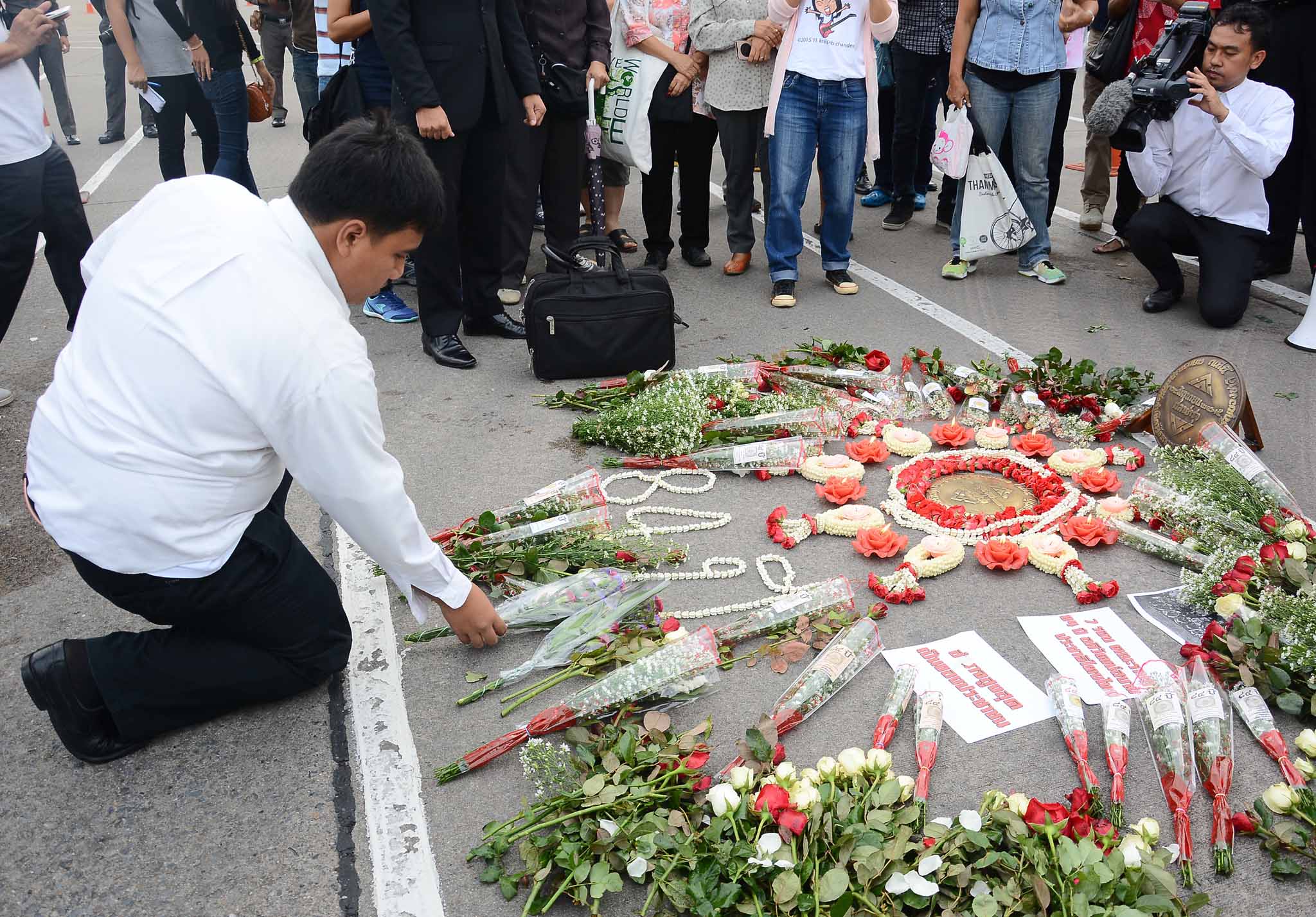
Across town, a memorial at the 1932 Revolution plaque in the Royal Plaza, was allowed to go ahead, albeit with some disruption.

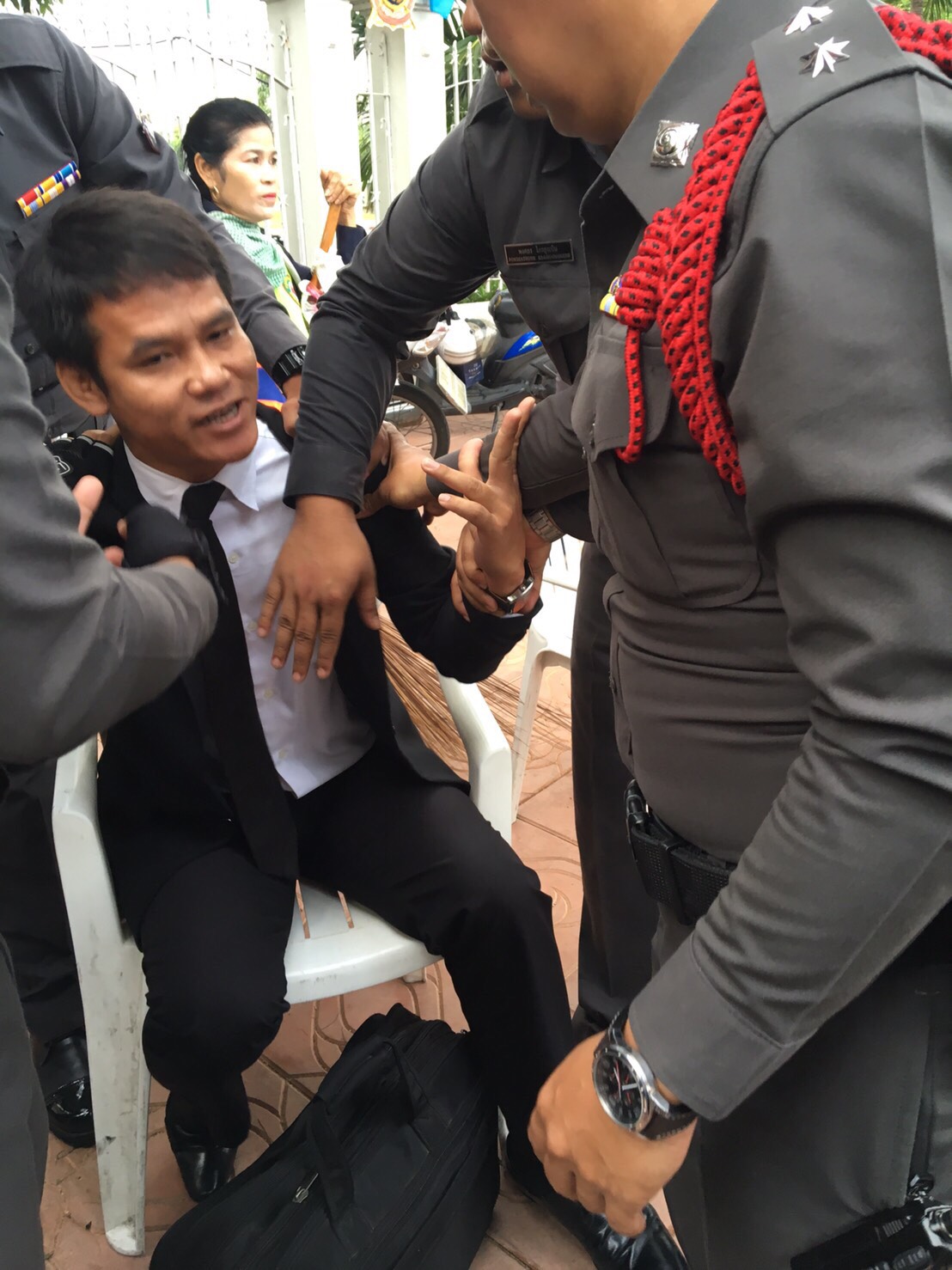
This morning’s gathering at the 1932 Revolution memorial was called by pro-democracy Sirawith “Ja New” Seritiwat, who police immediately detained upon his arrival. However, after pleading with the officers, he was let go and permitted to oversee the garland-laying ceremony.

Members of the New Democracy Movement arrested Thursday for campaigning against the draft charter were expected to be taken before a martial court today. They’ve been charged with violating the junta’s ban on political gatherings for handing out leaflets at a market urging people to vote no in the referendum set for Aug. 7.

In the royal plaza this morning, police intervened when an unidentified man in a black suit showed up and loudly berated the activists for honoring the 1932 Revolution. Officers who were standing guard nearby took the man away.

“Actually I wanted him to stay and say what he had to say. We are for democracy, so we respect his right to speak,” Sirawith said by telephone. “But police were afraid that there would be a scuffle, so they ‘invited’ him away.”

Staged by a group of Western-educated military officers and bureaucrats, the revolution of June 24, 1932, overthrew the royal government and heralded the beginning of parliamentary democracy in Thailand, then known as Siam.

Although June 24 was observed as National Day for decades, its significance began to wane as royalists won back their hold on power. In 1960, the palace-backed military regime abolished it, moving National Day to Dec. 5, the birthday of King Bhumibol Adulyadej.


Correction: Police said Friday they arrested 13 NDM activists on Thursday, not 10.

Advertisement

UK Pound Plunges as Referendum Results Point to EU Exit (Photos)

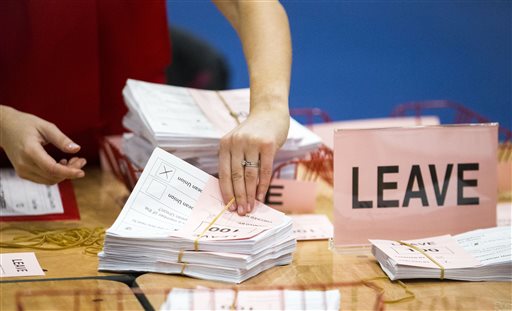
A teller counts ballot papers at the Titanic Exhibition Centre in Belfast, Northern Ireland, after polls closed in the EU referendum Thursday, June 23, 2016. Photo: Liam McBurney / PA / Associated Press

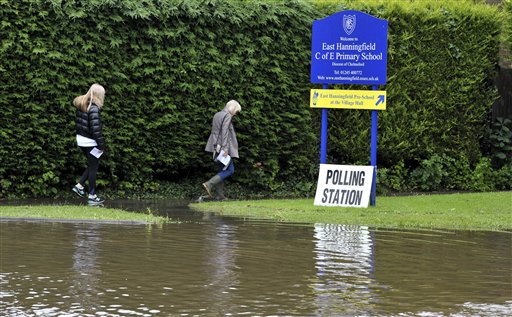
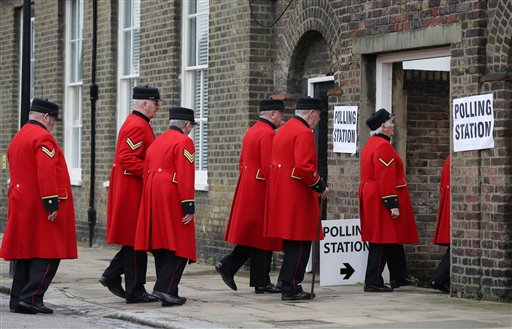
LONDON — Britain entered uncharted waters Friday after the country voted to leave the European Union, according to a projection by all main U.K. broadcasters. The decision shatters the stability of the project in continental unity forged after World War II in hopes of making future conflicts impossible.

The decision raises the likelihood of years of negotiations over trade, business and political links with what will become a 27-nation bloc. In essence the vote marks the start — rather than the end — of a process that could take decades to unwind.

The “leave” side was ahead by 51.7 percent to 48.3 percent with more than three-quarters of votes tally, making a “remain” win a statistical near-impossibility.

The pound suffered one of its biggest one-day falls in history, plummeting more than 10 percent in six hours, from about USD$1.50 to below USD$1.35, on concern that severing ties with the single market will hurt the U.K. economy and undermine London’s position as a global financial center.

But if it shocked the markets, the result delighted “leave” campaigners.

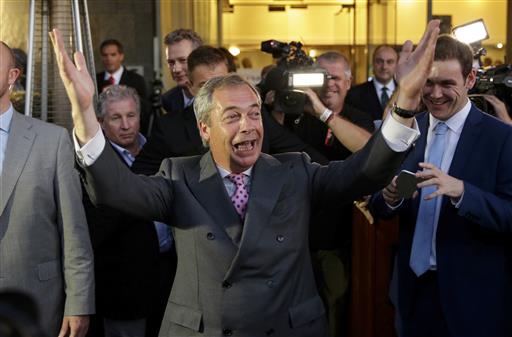
“The dawn is breaking on an independent United Kingdom,” U.K. Independence Party leader Nigel Farage said to loud cheers at a “leave” campaign party.

“Let June 23 go down in our history as our independence day!”

As results poured in, a picture emerged of a sharply divided nation: Strong pro-EU votes in the economic and cultural powerhouse of London and semi-autonomous Scotland were countered by sweeping anti-Establishment sentiment for an exit across the rest of England, from southern seaside towns to rust-belt former industrial powerhouses in the north.

“A lot of people’s grievances are coming out and we have got to start listening to them,” said deputy Labour Party leader John McDonnell.

With the result in favor of an EU exit, or Brexit, the U.K. becomes the first major country to decide to leave the bloc, which evolved in the ashes of the war as European leaders sought to build links and avert future hostility. Authorities ranging from the International Monetary Fund to the U.S. Federal Reserve and Bank of England warned a British exit will reverberate through a world economy that is only slowly recovering from the global economic crisis.

“The appeal of the anti-Establishment populist argument that we need to take back control of our borders and immigration … proved stronger than the economic risks that Brexit would entail,” said Tim Bale, a professor of politics at Queen Mary, University of London. “I think people are soon going to find out that the promise of the ‘leave’ campaign cannot possibly be realized.”

The vote is likely to cost Prime Minister David Cameron his job after the leader of the ruling Conservative Party staked his reputation on keeping Britain in the EU. Former London Mayor Boris Johnson was the most prominent supporter of the “leave” campaign and is now seen as a leading contender to replace Cameron.

Cameron promised the referendum to appease the right wing of his own party and blunt a challenge from the U.K. Independence Party, which pledged to leave the EU. After winning a majority in Parliament in the last election, Cameron negotiated a package of reforms that he said would protect Britain’s sovereignty and prevent EU migrants from moving to the U.K. to claim generous public benefits.

Critics charged that the reforms were hollow, leaving Britain at the mercy of bureaucrats in Brussels and doing nothing to stem the tide of European immigrants who have come to the U.K. since the EU expanded eastward in 2004. The “leave” campaign accuses the immigrants of taxing Britain’s housing market, public services and employment.

Those concerns were magnified by the refugee crisis of the past year that saw more than one million people from the Middle East and Africa flood into the EU as the continent’s leaders struggled to come up with a unified response.

Cameron’s efforts to find a slogan to counter the “leave” campaign’s emotive “take back control,” settled on “Brits don’t quit.” But the appeal to a Churchillian bulldog spirit and stoicism proved too little, too late.

The slaying of pro-Europe lawmaker Jo Cox a week before the vote brought a shocked pause to both campaigns and appeared to shift momentum away from the “leave” camp. While it isn’t clear whether her killer was influenced by the EU debate, her death aroused fears that the referendum had stirred demons it would be difficult to subdue.

The result triggers a new series of negotiations that is expected to last two years or more as Britain and the EU search for a way to separate economies that have become intertwined since the U.K. joined the bloc on Jan. 1, 1973. Until those talks are completed, Britain will remain a member of the EU.

Exiting the EU involves taking the unprecedented step of invoking Article 50 of the EU’s governing treaty. While Greenland left an earlier, more limited version of the bloc in 1985, no country has ever invoked Article 50, so there is no roadmap for how the process will work.

“It will usher in a lengthy and possibly protracted period of acute economic uncertainty about the U.K.’s trading arrangements,” said Daniel Vernazza, the U.K. economist at UniCredit.

The European Union is the world’s biggest economy and the U.K.’s most important trading partner, accounting for 45 percent of exports and 53 percent of imports.

In addition, the complex nature of Britain’s integration with the EU means that breaking up will be hard to do. The negotiations will go far beyond tariffs, including issues such as cross-border security, foreign policy cooperation and a common fisheries policy.

Among the biggest challenges for Britain is protecting the ability of professionals such as investment managers, accountants and lawyers to work in the EU.

As long as the U.K. is a member of the bloc, firms registered in Britain can operate in any other member state without facing another layer of regulation. It’s the same principle that allows exporters to ship their goods to any EU country free of tariffs.

Now that right is up for negotiation, threatening the City, as London’s financial heart is known, and its position as Europe’s pre-eminent financial center.

Many international banks and brokerages have long used Britain as the entry point to the EU because of its trusted legal system and institutions that operate in English, the language of international finance. Britain’s financial services industry is also surrounded by an ecosystem of expertise — lawyers, accountants and consultants— that support it.

Some 60 percent of all non-EU firms have their European headquarters in the U.K., according to TheCityUK, which lobbies on behalf of the financial industry. The U.K. hosts more headquarters of non-EU firms than Germany, France, Switzerland and the Netherlands put together.

“We believe this outcome has serious implications for the City and many of our clients’ businesses with exposure to the U.K. and the EU,” said Malcolm Sweeting, senior partner of the law firm, Clifford Chance. “We are working alongside our clients to help them as they anticipate, plan for and manage the challenges the coming political and trade negotiations will bring.”

JPMorgan Chase Chief Executive Jamie Dimon said earlier this month that a vote to leave would force his bank to move jobs to mainland Europe to ensure that it could continue to service clients in the EU. Other global businesses with customers in the rest of the EU will be in a similar situation.

The only question that remains is whether the dire economic predictions economists made during the campaign will come to pass.

“Uncertainty is bad for business,” Vernazza said. “A sharp fall in U.K. risky asset prices, delays to investment, disruption to trade, and a loss of business and consumer confidence mean the U.K. economy is more likely than not to enter a technical recession within two years.”

Story: Danica Kirka and Jill Lawless


Related stories:

Polls Open in Britain’s Historic EU Referendum (Photos)


Advertisement

Modern-Family Doc ‘Gayby Baby’ to Show in Sathorn

BANGKOK — A documentary about the children of gay parents that proved too controversial for Australian schools will show next month at an up-and-coming Sathorn dive bar.

“Gayby Baby” explores the lives of four children each raised by same-sex families with different backgrounds, including a punk-rock mom and a religious mom who regularly attends church to atone for what she believes is the sin of being gay.

Directed by Maya Newell, who was raised by lesbian parents, the Australian documentary was to be shown in schools in the state of New South Wales until being canceled by its education minister in August, sparking controversy and making headlines worldwide.

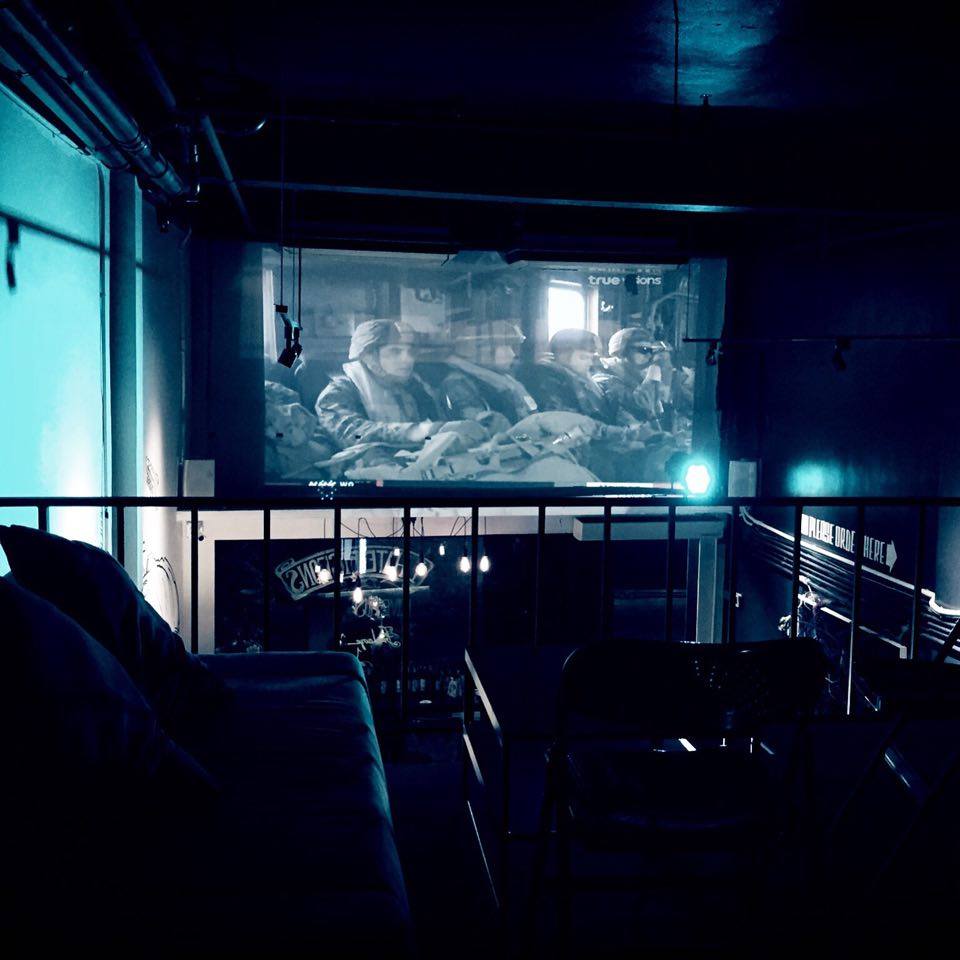
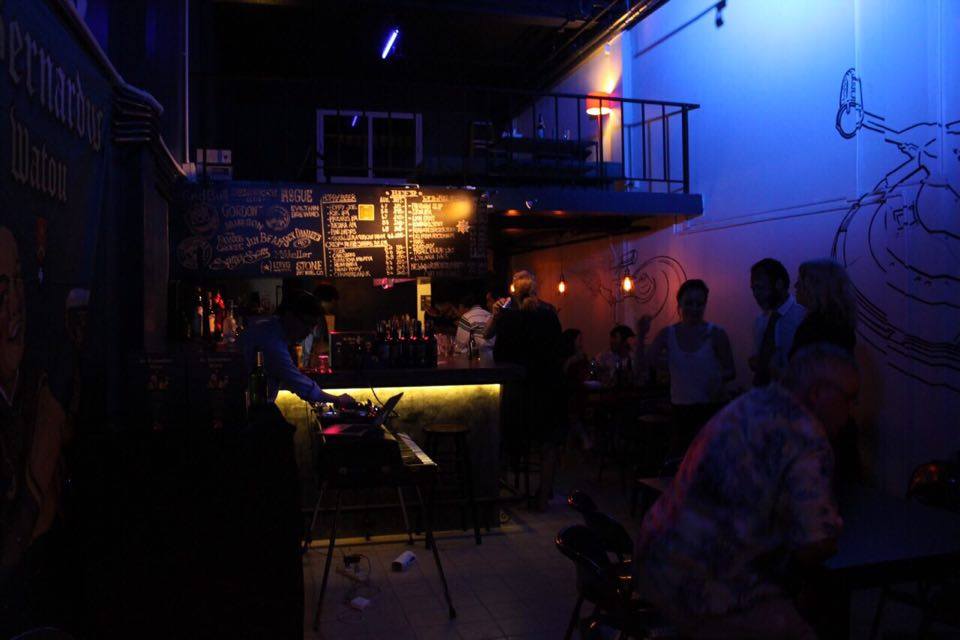
The 85-minute film will show at 8pm on July 7 at I Hate Pigeons. The oddly named bar opened in October on Soi Sribumphen, near Sathorn Soi 1, about a kilometer from MRT Lumphini.
Tomorn Sookprecha, an LGBT activist and writer, will lead a discussion in Thai after the movie.

Admission is 120 baht and includes a bottle of beer until its gone. Advance tickets are available online.

Photo: I Hate Pigeons / Courtesy

Advertisement

Hot News

LATEST NEWS

Bangkok
overcast clouds
31.6 ° C
32.2 °
31.6 °
63 %
4.7kmh
100 %
Mon
33 °
Tue
32 °
Wed
30 °
Thu
34 °
Fri
33 °