28.2 C
Bangkok
Wednesday, August 26, 2026
Home Blog Page 3366

Apple awarded 119 million dollars for Samsung patent infringement

LOS ANGELES (DPA) — A California jury handed down its verdict in the Apple-Samsung trial Friday afternoon, finding that Samsung infringed on two Apple patents.

They jury ordered Samsung to pay Apple 119.6 million dollars, far less than the 2.2 billion dollars Apple was seeking in damages for what it argued was Samsung's violation of four smartphone patents.

The jury also awarded Samsung 158,400 dollars in damages after finding that Apple had infringed on a Samsung camera folder patent, according to The Wall Street Journal.

Samsung had accused Apple of violating two of its patents for organizing photo albums and transmitting video over a wireless network.

Apple's case against Samsung covered smart phones and tablets, including the Galaxy S3. The Samsung charges encompassed recent Apple models such as the iPhone 5.

The eight jurors had been deliberating since Tuesday following a nearly month-long trial.

In a previous patent trial Apple was awarded more than 900 million dollars in damages from Samsung for patent violations.

Advertisement

Mother Denounces PCAD Guards' Brutal Assault On Her Son

BANGKOK — The family of an army colonel who was brutally assaulted by a group of anti-government militants has formally initiated legal action against the perpetrators.

Col. Witthawat Wattanakul, a staff officer at the Royal Thai Armed Force Headquarters, was taken to the hospital after he was beaten and shot by a group of "guards" working for the anti-government People's Committee for Absolute Democracy With the King As Head of State (PCAD) on Chaeng Wattana Road in the early morning of 25 April.

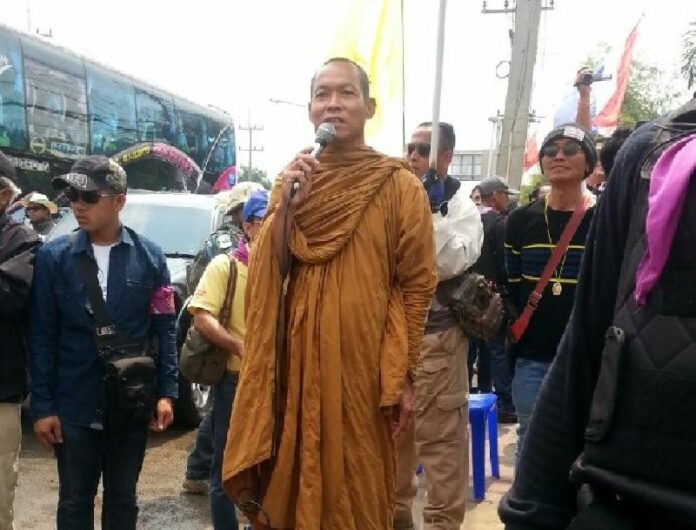
It is understood that the guards were under the command of Buddhist monk and hard-line PCAD leader Buddha Issara. 

PCAD representatives offered an apology and 50,000 baht to Col. Witthawat's family to help pay for his medical costs. A close aide to Buddha Issara claimed the incident was merely a "misunderstanding".

Today Col. Witthawat's family lodged a formal complaint with the police at Thoong Song Hong Police Station, urging authorities to arrest and prosecute the guards who assaulted Col. Witthawat.

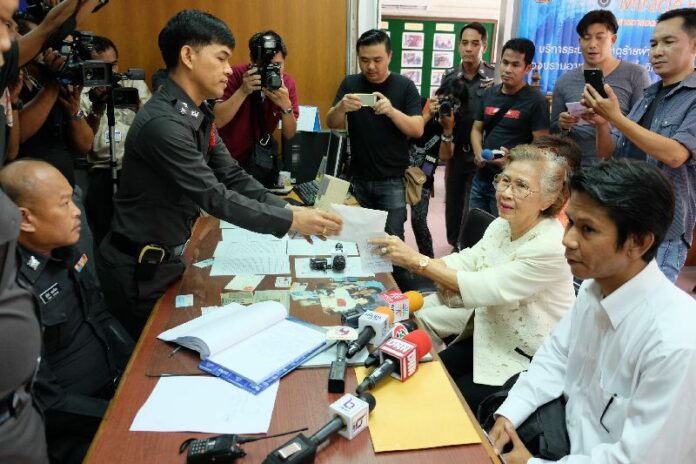
Speaking to reporters in a press conference at the police station, Col. Witthawat's mother Bang-onrat Wattanakul said she returned the compensation money to the PCAD because her son's life "cannot be bought with money".

Ms. Bang-onrat, 76, said she refused to accept the PCAD's apology and would only settle the matter through formal legal procedures.

"There is no need for an apology. I pardon all of the perpetrators, but the law is still inviolable," Ms. Bang-onrat said.

She continued, "This is not about politics, it is about my son getting beat up without a chance to defend himself. He has no opportunity to demand fairness. My son is a disciplined solider. He has no desire to take revenge," 

Ms Bang-onrat called on Buddha Issara to identify and send the perpetrators who assaulted her son to the police.

"If Buddha Issara is a true man, he has to accept whatever wrongdoing he has done," the colonel's mother said, "Please don't protect the wrongdoer. This country will not survive if wrongdoers are not punished."

She also denied the allegation put forth by several PCAD activists that Col. Witthawat was drunk or behaving aggressively prior to the attack. According to Ms. Bang-onrat, Col. Witthawat was simply trying to remove traffic cones that were blocking the road he was driving on, but the gesture was deemed aggressive enough by the group of PCAD guards stationed in a nearby checkpoint.

Ms. Bang-onrat claimed that Col. Witthawat heard several gunshots and realised that he was shot in his legs, so he attempted to run and seek shelter near the Royal Thai Armed Force Headquarters, where he works, but the PCAD militants caught up with him and beat him until they discovered a military ID card in his car.

The most serious injury Col. Witthawat has received was a wound from a wooden stick  that was swung at his head, narrowly missing his eyes, Ms. Bang-onrat said.

Ms. Bang-onrat also expressed outrage at the National Human Rights Commission's silence over the incident. "What are they doing? Innocent people are being harmed. Why is the [NHCR] not defending these people?" Ms. Bang-onrat complained.

She added, "I would like to thank the PCAD for merely beating up my son instead of murdering him and dumping his body into a river. It's already such a great mercy on their part. And I would like to warn all citizens not to go near PCAD-occupied areas unless they absolutely have to."

When a reporter asked whether her family will consider settling the matter outside the court, Ms. Bang-onrat replied that she will not comment on legal matters as she has already appointed a lawyer to handle the issue.

Col. Witthawat has not spoken to the press since he was admitted to hospital because of the attack, but Ms. Bang-onrat said her son has been making progress in his recovery.

Advertisement

OSCE observers released in eastern Ukraine as clashes continue

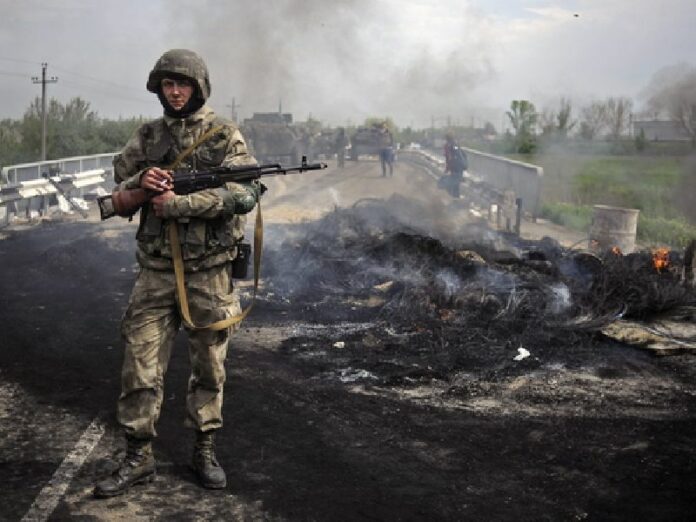
Ukrainian soldiers stay near of a checkpoint seized by them not far of Slaviansk, Ukraine, 02 May 2014. EPA

By Wolfgang Jung (DPA)

MOSCOW — Pro-Russian separatists in eastern Ukraine have released a team of military observers from the Organization for Security and Cooperation and Security in Europe (OSCE), the organization confirmed Saturday.

The seven observers – including German, Danish, Polish and Czech nationals – have been held in the city of Sloviansk since April 25, when they were detained by separatists who accused them of spying for NATO.

Upon their release, they were received by Thorbjorn Jagland, the Secretary General of the Council of Europe. Jagland is in Ukraine to oversee a joint human rights mission by his organization and the OSCE.

The group will travel to the eastern city of Donetsk, where the observers will board a plane to Berlin.

During negotiations, the rebels had said the observers would only be released on the condition that a prisoner exchange took place. The conditions of their release remain unclear.

The incident coincides with an increase in clashes between armed separatists and the Ukrainian military, which is carrying out a "counter-terrorism" offensive ordered by the leadership in Kiev to curb the unrest in the country's east.

The Ukrainian government has accused president Viktor Yanukovych of being behind the violent clashes that killed 46 people in the southern Ukrainian city of Odessa, the country's intelligence agency said on Saturday.

"The provocations that led to the unrest were financed by agents of Yanukovych's former government," said Yekaterina Kossareva of the Ukrainian intelligence agency SBU. Yanukovych is currently in exile in Russia.

Former Ukrainian premier Yulia Tymoshenko, meanwhile, blamed the Russian government for the unrest.

"Russia is using all means to destabilize Ukraine and to prevent the May 25 presidential election," Timoshenko said during an address in Odessa, adding that the Russian secret service was behind the clashes.

Polish Prime Minister Donald Tusk on Saturday referred to the clashes as an "undeclared war" on the part of Russia.

"What we are dealing with in the Ukraine is a war. But this is a new kind of war – a war that has not been declared," Tusk said in Warsaw.

"When there are dozens of casualties, arms are in use and helicopters are being shot down, then it is an armed conflict that has been organized not by protestors but by a nation state, namely Russia," Tusk said on Saturday in Warsaw.

Advertisement

Abhisit Urges Yingluck to Resign, Election Delay

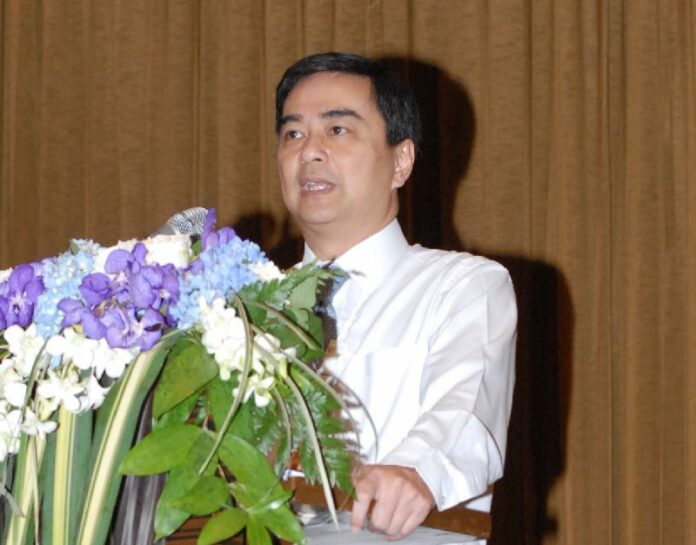
BANGKOK (DPA) — Thailand's main opposition leader called Saturday on the caretaker prime minister to resign to pave the way for a neutral government to preside over reforms and new elections as he presented a plan aimed at ending the country's political turmoil and deadlock.

Abhisit Vejjajiva, head of the Democrat Party and a former premier, said Yingluck Shinawatra should resign along with her cabinet before court rulings are handed down as early as this month. If found guilty of official misconduct, Yingluck could be dismissed along with all of her ministers, raising the possibility of escalated civil conflict.

"I see that we are heading for possible violence, a possible coup," Abhisit said as Thailand has been caught in months of sometimes violent demonstrations.

And initial reaction by at least one government minister to the proposal was negative.

"The resignation of the prime minister and the cabinet will not take place for sure," said Education Minister Chaturon Chaisaeng, a senior member of Yingluck's Pheu Thai Party. "Even if Yingluck resigned, I would not."

Abhisit's 10-point proposal calls for the Senate to appoint a neutral prime minister and interim government that would preside until new elections within about six months.

Voting is now scheduled for July 20 after a court annulled the results of February's elections, which were marred by protests, voting blockades, poll closures and a Democrat boycott.

Yingluck has been the target of street protests trying to topple her government for the past six months. The protest movement is demanding political reforms before any new elections.

Abhisit's proposal calls for the establishment of a council to draw up a reform agenda.

The reforms would be put to a referendum, which would be binding for the incoming elected government, Abhisit said.

"My proposal depends on Yingluck, who needs to decide on it before the pending court decisions," Abhisit said.

Yingluck – younger sister of former prime minister Thaksin Shinawatra, who was ousted in a 2006 coup and then convicted of abuse of power – is facing at least two critical legal challenges.

The Constitutional Court is to issue a verdict on allegations that she illegally transferred a national security official to make room for the advancement of a relative and political ally.

If she is found guilty, her entire cabinet may be disqualified from office.

She is also fighting charges of dereliction of duty before the National Anti-Corruption Commission in the mishandling of the government's rice-subsidy programme, a policy that helped propel her to office after the 2011 elections.

Her dismissal would likely bring out pro-government militants and lead to street violence, perhaps prompting a coup to restore order.

Advertisement

Afghan mudslide village declared mass grave

By Hafiz Ahmadi (DPA)

KABUL — The Afghan government on Saturday declared a north-eastern village a mass grave and suspended search and rescue operations, one day after it was hit by a mudslide in which the death toll ranged from 277 to more than 2,000 people.

The continuation of the search would be fruitless because no survivors would be found, Vice President Karim Khalili said after visiting mudslide victims in Ab-e-Barik in Badakhshan province.

"All our brothers and sisters who were under the tons of mud have died, and we pray for them," provincial Governor Shah Waliullah Adib said with Khalili in Faizabad, Badakhshan's capital.

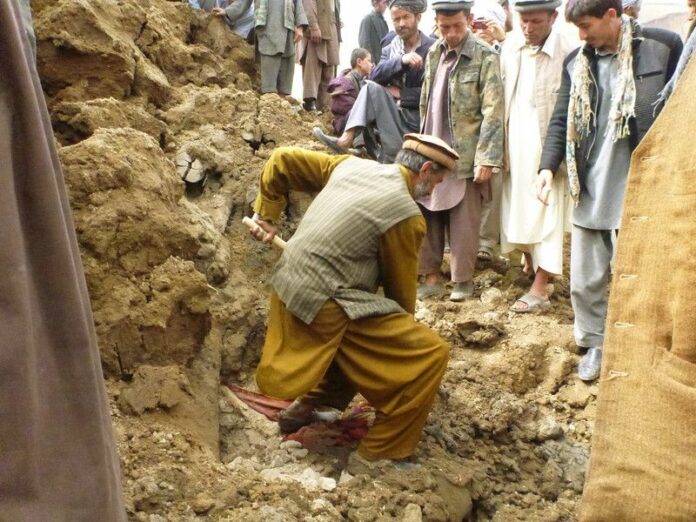
Survivors, soldiers, police officers and rescue workers had been working with shovels, picks and excavators to try to find those missing until rescue work was suspended Saturday afternoon.

The disaster occurred Friday when torrential rains caused a hillside to collapse and bury the entire village in mud.

Khalili, who heads the state-run emergency relief committee, gave the death toll as 277, but the deputy provincial governor said 300 families, or 2,000 to 2,100 people, were missing in the mud.

"The death toll is expected to increase," Gul Ahmad Bedar warned.

An initial mudslide hit a wedding party in Ab-e-Barik. Most of the victims died, however, when a second landslide struck while they were rushing to aid the initial victims, a tribal elder who is in the area to help the survivors said.

"There were two mudslides," Abdul Maroof Rasekh said by telephone from Ab-e-Barik. "A number of people died in the first incident, and the second one buried those who had came to help."

He said about 300 bodies had been pulled from the mud and more than 2,000 people were still missing.

"I saw quite a tragedy," Rasekh said. "Everyone has lost a member of [their] family … or friends."

Survivors are worried more could die from disease because their water is polluted, they are surrounded by mud and living out in the open, he said.

The government is dispatching aid to the survivors, Khalili said, adding that 230 tons of food, clothing, tents and medicine was on its way.

About 1,000 families lived in Ab-e-Barik. About 300 houses and large areas of farmland were buried in the mudslide while 700 families, or about 2,000 people, survived and were evacuated, said Fazluddin Ayyar, provincial police chief.

President Hamid Karzai's office declared a day of mourning for Sunday while the NATO-led International Security Assistance Force (ISAF) and the European Union offered to help.

"ISAF stands ready to provide assistance as requested to the Afghan authorities who are leading the rescue and recovery operations," said General Joseph Dunford, ISAF commander.

Advertisement

Political Conflict Exposes ‘Cracks’ in Media Freedom

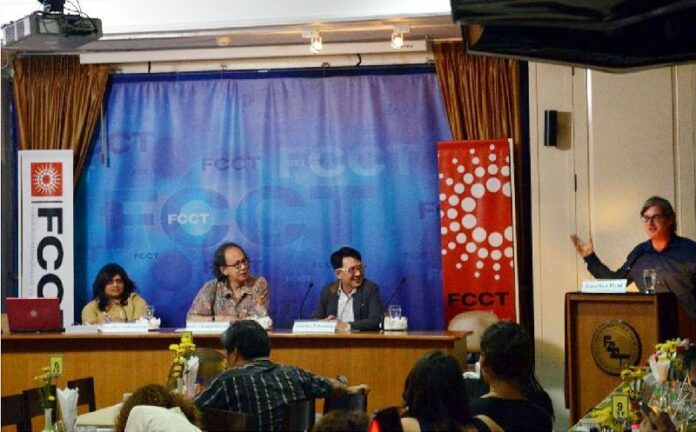
A panel discussion on press freedom hosted by The Foreign Correspondents' Club of Thailand, 30 April 2014.

BANGKOK — Thailand’s protracted political crisis has shined a spotlight on the capacity and credibility of the country’s media, experts say.

“Elections have provided a space in which we can actually look at the media for what it is,” Gayathry Venkiteswaran, Executive Director of the Southeast Asian Press Alliance, said in a panel discussion on press freedom hosted by Thailand’s Foreign Correspondent Club in a run-up to World Press Freedom Day on 3 May. 

According to Ms. Venkiteswaran, one of the most concerning trends exposed by Thailand’s recent turmoil is the alarming number of politically-fueled threats directed at media outlets.

“People should be debating, people should be asking questions, but they should not be threatening either the journalists or the messengers,” said Ms. Venkiteswaran.

Freedom of the press in Thailand is currently the worst its been in the past decade, according to Freedom House's 2014 report on press freedom around the world. 

The report, released this week, attributes the erosion of media freedom in Thailand “to increased physical harassment and attacks on journalists and media outlets by political activists, often in the context of political unrest and demonstrations.”

Since the most recent iteration of the country’s decade-long political struggle—broadly waged between pro and anti-Thaksin Thais—ignited at the end of last year, there have been a number violent attacks on news organizations and journalists.

In November, anti-government protesters harassed staff from two government-owned TV stations and physically attacked a German journalist at a rally organized by the People's Committee for Absolute Democracy With the King As Head of State (PCAD).

Anti-government PCAD protesters also stormed six television stations in December, demanding a speech by the group’s leader, Suthep Thaugsuban, be televised that night.

Most recently, a petrol bomb was thrown into the yard of an anti-government television show host in January, two grenades were thrown at a Thai PBS television station in February, a Redshirt radio station in Tak province was riddled by bullets in March, and an M79 grenade was launched at the office of the Thai-language newspaper, Daily News, several weeks ago.  

As a result, former editor of the Nation Media Group Kavi Chongkittavorn said that Thailand’s borders with Malaysia and Myanmar are no longer the country’s most combustible regions.

“Now, the conflict zone lives in the heart of Bangkok,” said Mr. Kavi.

Not only have there been a heightened number of threats and attacks over the past six months, but authorities have also largely failed to find and arrest those responsible for the violence.   

“Both sides, the Democrat Party and Pheu Thai, have failed in terms of impunity,” said Ms. Venkiteswaran. “There will be accumulated cases until we address that problem.”

Freedom House’s 2014 report also cites “partisanship and biased content at a number of media outlets” as a reason for the decline in Thailand’s press freedom, which may explain why news organisations in Thailand are a frequent target of politically-motivated attacks.

BBC’s Jonathan Head said he has seen Thai media has become increasingly polarized.

“People are listening to the media they like, so there is concentration of extreme views, and [they] never hear the other side,” said Mr. Head. 

According to Mr. Kavi, former editor of the Nation Media Group, Thai media is more involved in politics than ever before.

“Media has become the number one player in Thai political scene today,” said Mr. Kavi. “It used to be the monarchy, the army, the bureaucrats, politicians … this time the media is out in front.”

But Mr. Kavi said he worries that journalists in Thailand focus too heavily on the daily comments of prominent politicians, resulting in a 'he-said-she-said' style of reporting that lacks sufficient analysis of the broader conflict.

“[Reporters] will follow the speaker and focus on what they want to say, and what they have said, and then get the worst comment of the day,” said Mr. Kavi. “They will continue day in day out, without thinking about … whether [their reports] help fuel the political fire at the moment or help to find a solution.”

Journalists' ability to report freely in Thailand is also curbed by a number of legal statutes.  

Thailand’s lese majeste law, which outlaws any criticism of the monarchy—however oblique—can result in up to 15 years in prison per offense. Critics of the law say it is widely abused, particularly in times of political conflict.

The 2007 Computer Crimes Act has also been harshly criticized by advocacy groups like Reporters Without Borders and the Thai Journalists Association.

The legislation allows the government to arrest reporters for political reasons, as is currently the case with two journalists from Phuketwan news who are facing charges under the law for allegedly defaming the Royal Thai Navy by publishing an except from a Reuters report that alleged the navy’s involvement in the trafficking of Rohingya.

“Bringing charges under the controversial Computers Crimes Act in a defamation case is indicative of the critical state of freedom of information in Thailand and amounts to an attempt to gag the media,” said a Reporters Without Borders press release in December.

Ms. Venkiteswaran said the Southeast Asian Press Alliance is working on campaign to amend the Computer Crimes Act, and is monitoring the case of the two journalists from Phuketwan


For comments, or corrections to this article please contact:[email protected]

You can also find Khaosod English on Twitter and Facebook
http://twitter.com/KhaosodEnglish
http://www.facebook.com/KhaosodEnglish

Advertisement

Political Conflict Exposes ‘Cracks’ in Media Freedom

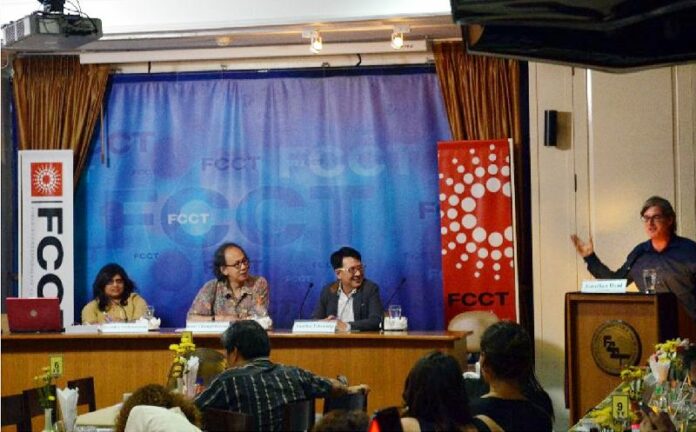
A panel discussion on press freedom hosted by The Foreign Correspondents' Club of Thailand, 30 April 2014.

BANGKOK — Thailand’s protracted political crisis has shined a spotlight on the capacity and credibility of the country’s media, experts say.

“Elections have provided a space in which we can actually look at the media for what it is,” Gayathry Venkiteswaran, Executive Director of the Southeast Asian Press Alliance, said in a panel discussion on press freedom hosted by Thailand’s Foreign Correspondent Club in a run-up to World Press Freedom Day on 3 May. 

According to Ms. Venkiteswaran, one of the most concerning trends exposed by Thailand’s recent turmoil is the alarming number of politically-fueled threats directed at media outlets.

“People should be debating, people should be asking questions, but they should not be threatening either the journalists or the messengers,” said Ms. Venkiteswaran.

Freedom of the press in Thailand is currently the worst its been in the past decade, according to Freedom House's 2014 report on press freedom around the world. 

The report, released this week, attributes the erosion of media freedom in Thailand “to increased physical harassment and attacks on journalists and media outlets by political activists, often in the context of political unrest and demonstrations.”

Since the most recent iteration of the country’s decade-long political struggle—broadly waged between pro and anti-Thaksin Thais—ignited at the end of last year, there have been a number violent attacks on news organizations and journalists.

In November, anti-government protesters harassed staff from two government-owned TV stations and physically attacked a German journalist at a rally organized by the People's Committee for Absolute Democracy With the King As Head of State (PCAD).

Anti-government PCAD protesters also stormed six television stations in December, demanding a speech by the group’s leader, Suthep Thaugsuban, be televised that night.

Most recently, a petrol bomb was thrown into the yard of an anti-government television show host in January, two grenades were thrown at a Thai PBS television station in February, a Redshirt radio station in Tak province was riddled by bullets in March, and an M79 grenade was launched at the office of the Thai-language newspaper, Daily News, several weeks ago.  

As a result, former editor of the Nation Media Group Kavi Chongkittavorn said that Thailand’s borders with Malaysia and Myanmar are no longer the country’s most combustible regions.

“Now, the conflict zone lives in the heart of Bangkok,” said Mr. Kavi.

Not only have there been a heightened number of threats and attacks over the past six months, but authorities have also largely failed to find and arrest those responsible for the violence.   

“Both sides, the Democrat Party and Pheu Thai, have failed in terms of impunity,” said Ms. Venkiteswaran. “There will be accumulated cases until we address that problem.”

Freedom House’s 2014 report also cites “partisanship and biased content at a number of media outlets” as a reason for the decline in Thailand’s press freedom, which may explain why news organisations in Thailand are a frequent target of politically-motivated attacks.

BBC’s Jonathan Head said he has seen Thai media has become increasingly polarized.

“People are listening to the media they like, so there is concentration of extreme views, and [they] never hear the other side,” said Mr. Head. 

According to Mr. Kavi, former editor of the Nation Media Group, Thai media is more involved in politics than ever before.

“Media has become the number one player in Thai political scene today,” said Mr. Kavi. “It used to be the monarchy, the army, the bureaucrats, politicians … this time the media is out in front.”

But Mr. Kavi said he worries that journalists in Thailand focus too heavily on the daily comments of prominent politicians, resulting in a 'he-said-she-said' style of reporting that lacks sufficient analysis of the broader conflict.

“[Reporters] will follow the speaker and focus on what they want to say, and what they have said, and then get the worst comment of the day,” said Mr. Kavi. “They will continue day in day out, without thinking about … whether [their reports] help fuel the political fire at the moment or help to find a solution.”

Journalists' ability to report freely in Thailand is also curbed by a number of legal statutes.  

Thailand’s lese majeste law, which outlaws any criticism of the monarchy—however oblique—can result in up to 15 years in prison per offense. Critics of the law say it is widely abused, particularly in times of political conflict.

The 2007 Computer Crimes Act has also been harshly criticized by advocacy groups like Reporters Without Borders and the Thai Journalists Association.

The legislation allows the government to arrest reporters for political reasons, as is currently the case with two journalists from Phuketwan news who are facing charges under the law for allegedly defaming the Royal Thai Navy by publishing an except from a Reuters report that alleged the navy’s involvement in the trafficking of Rohingya.

“Bringing charges under the controversial Computers Crimes Act in a defamation case is indicative of the critical state of freedom of information in Thailand and amounts to an attempt to gag the media,” said a Reporters Without Borders press release in December.

Ms. Venkiteswaran said the Southeast Asian Press Alliance is working on campaign to amend the Computer Crimes Act, and is monitoring the case of the two journalists from Phuketwan


For comments, or corrections to this article please contact: [email protected]

You can also find Khaosod English on Twitter and Facebook
http://twitter.com/KhaosodEnglish
http://www.facebook.com/KhaosodEnglish


Advertisement

Demand For Thai Dog Breed Soars Thanks To Botched Burglary

BANGKOK — Prices of the Thai Bang Kaew dogs have risen dramatically after news that a Bang Kaew guard dog helped deter a burglary attempt at the residence of a famous Thai actor.

The robber allegedly entered Chaiya Mitchai's estate in Wiset Chaicharn district, Ang Thong province, in the early morning of 29 April when the actor was away on a business trip. 

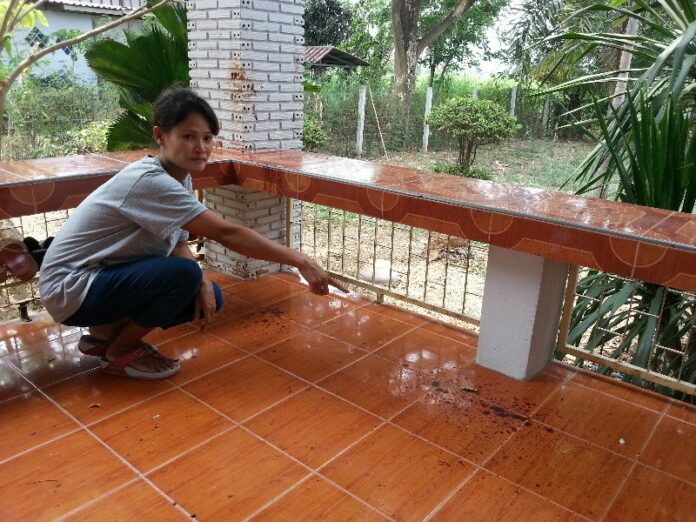
Mr. Chaiya said when he returned to his home, he found his male Bang Kaew dog— nicknamed Bai Tarn—waiting for him with bloodied wounds all over his body and jaws. 

Large splatters of blood were also found around Mr. Chaiya's courtyard, leading the police to believe that a burglar may have encountered the 5-year-old Bai Tarn in an attempt to break in. 

Mr. Chaiya said his other two Bang Kaews died of mysterious circumstances just a few days before the attempted burglary took place. He believes the burglar might have poisoned his dogs in preparation for the break-in. 

The actor also told reporters that Bai Tarn is now recovering from his wounds, but still appears to be traumatized by the experience.

"So I fed him a steak to cheer him up," Mr. Chaiya said.

The Bang Kaew breed is well-known among Thai homeowners for its aggressive nature toward strangers, but news of Bai Tarn's battle with the alleged burglar has spurred new demand for the breed, a number of dog breeders claim.

Prathum Kongcharoen, a Bang Kaew breeder in Pitsanulok province, said all of Bang Kaew puppies in his farm have been claimed by potential customers in recent days. 

A Bang Kaew puppy costs about 15,000 baht, he said, but the prices keep rising thanks to increasing demand at the moment.

The next litter of Bang Kaew puppies will not be available in the store until November, said Mr. Prathum, who has been selling Bang Kaews for nearly 30 years.

Due to their intelligence and territorial habit, Bang Kaews have always been immensely popular among rubber farm owners in the southern and eastern regions of Thailand, Mr. Prathum added.


For comments, or corrections to this article please contact: [email protected]

You can also find Khaosod English on Twitter and Facebook
http://twitter.com/KhaosodEnglish
http://www.facebook.com/KhaosodEnglish
Advertisement

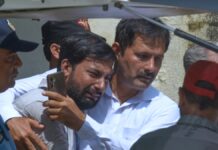
Assaulted Colonel's Family Snubs PCAD Monk's Apology

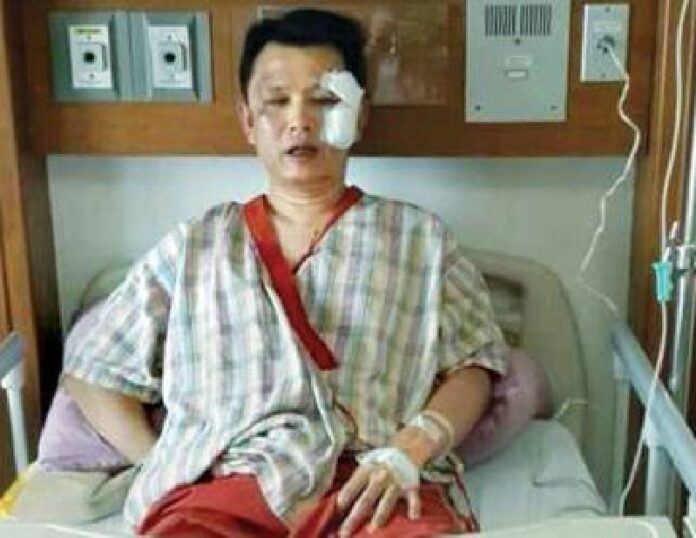
Col. Witthawat Wattanakul shortly after he was attacked by anti-government protest guards (image provided by the police)

BANGKOK – The family of an army colonel allegedly assaulted by anti-government militants has rejected the compensation money offered by the protesters

Col. Witthawat Wattanakul, a staff officer at the Royal Thai Armed Force Headquarters, was allegedly attacked in northern Bangkok on 25 April after he attempted to remove traffic cones set up by protesters near their rally site on Chaeng Wattana Road.

When Col. Witthawat got out of his vehicle and attempted to remove the cones, a group of anti-government guards reportedly brutally attacked him. One of the guards also fired a handgun at Col. Witthawat's feet, injuring him with bullet fragments, according to media reports.

Shortly after news of the incident surfaced, Buddhist monk and prominent anti-government protest leader Buddha Issara admitted that a group of overzealous guards attacked Col. Witthawat "due to misunderstanding."

Buddha Issara, who is a core leader of the People's Committee for Absolute Democracy With the King As Head of State (PCAD), recently arranged a ceremony with a group of high-ranking army officers to ask for forgiveness over the incident and offer 50,000 baht to help pay for Col. Witthawat's medical costs.

However, Col. Witthawat's family has not accepted the money and says they intend to pursue legal action against the PCAD guards, according to Pol.Col. Thanawat Wattanakul, a commander at Chokechai Police Station and the elder brother of Col. Witthawat.

The money will be returned to Buddha Issara by the army staff, Pol.Col. Thanawat said.

Pol.Col. Thanawat added that his family will organise a press conference in order to present CCTV footage of the attack to the press this Sunday.

Read More: Mysterious Military Leaflets Denounce PCAD Guards' 'Thuggery'


For comments, or corrections to this article please contact: [email protected]

You can also find Khaosod English on Twitter and Facebook
http://twitter.com/KhaosodEnglish
http://www.facebook.com/KhaosodEnglish

Advertisement

Redshirts Slam PCAD's Call For Royal Intervention

Buddha Issara

BANGKOK — A prominent Redshirt activist has denounced anti-government protesters' call for His Majesty the King to directly intervene in Thailand's ongoing political crisis.

Buddhist monk and anti-government activist Buddha Issara announced yesterday (1 May) that he would lead a demonstration to Hua Hin district of Prachuab Kiri Khan province, where the His Majesty's summer palace is located, on 16 May in a bid to "return the royal power" to the king.

Buddha Issara, who serves as a co-leader of the People's Committee for Absolute Democracy With the King As Head of State (PCAD), argued that the 2007 Constitution permits His Majesty the King to replace Prime Minister Yingluck Shinawatra with a new leader of his own royal discretion.  

According to the monk, the public can choose to "return" sovereign power to the king in accordance with Article 3 of the Constitution, which would grant him a legal basis for appointing his own Prime Minister.

Numerous legal experts and scholars have rejected this interpretation in the past, noting that Article 3 of the 2007 Constitution clearly states that His Majesty the King can only exercise sovereign power through the three branches of administrative, legislative, and judicial powers as a symbolic Head of State.

But Buddha Issara appears to be confident that his three-day rally in Hua Hin district from 16-18 May will be successful. 

"If Suthep and other PCAD leaders cannot close the game [against Ms. Yingluck]," Buddha Issara said, referring to PCAD sec-gen Suthep Thaugsuban, "They should turn to Article 3 and join the demonstration with us."

"I believe this method will not embarrass the leaders or the demonstrators," the monk said.

Weng Tojirakarn, a core leader of the United Front of Democracy Against Dictatorship (UDD), denounced Buddha Issara's plan for the march to Hua Hin in a press conference today, calling the move highly inappropriate.

According to Mr. Weng, the plan to "return the royal power" is simply a euphemism for forcing His Majesty the King to take sides in the conflict.

"The monarchy should remain above politics," Mr. Weng insisted.

The UDD leader also said that Buddha Issara's demands are essentially equivalent to an attempt to restore the system of Absolute Monarchy, in which the king can exercise executive power and appoint Prime Ministers at his own discretion.

"I want to ask Buddha Issara and his supporters whether they are in fact campaigning to restore the Absolute Monarchy," Mr. Weng said in the press conference.

His Majesty the King, who is recovering from his illness at Klai Kang Won Palace in Hua Hin district, has been silent on the anti-government protesters' call for a direct royal intervention into the current conflict.


For comments, or corrections to this article please contact: [email protected]

You can also find Khaosod English on Twitter and Facebook
http://twitter.com/KhaosodEnglish
http://www.facebook.com/KhaosodEnglish
Advertisement

Hot News

LATEST NEWS

Bangkok
overcast clouds
28.2 ° C
29.9 °
27.7 °
74 %
0.5kmh

98 %
Wed
30 °
Thu
36 °
Fri
33 °
Sat
27 °
Sun
28 °