27.5 C
Bangkok
Thursday, September 17, 2026
Home Blog Page 1976

Australian Lawmaker Says MH17 Was Her Most Emotional Time

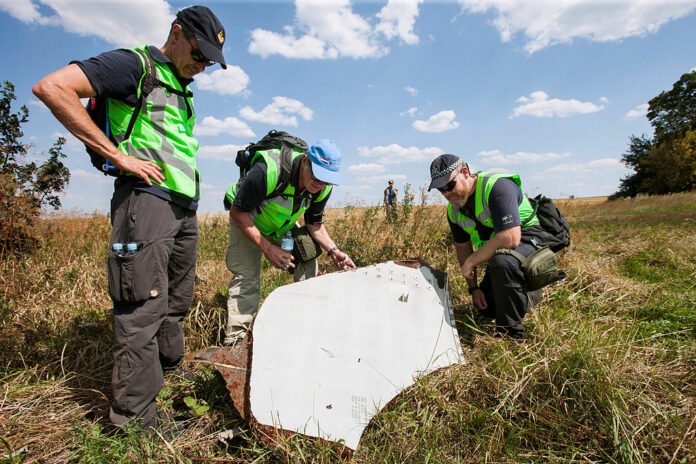
Dutch and Australian police officers investigate the Malaysian Airlines flight MH-17 crash site in 2014 in Ukraine. Photo: Ministerie van Defensie / Associated Press

CANBERRA, Australia — Australia’s former foreign minister on Tuesday described the shooting down of a Malaysia Airlines flight over Ukraine in 2014 as the most emotional time of her life.

Julie Bishop was reflecting on her five years as Australia’s first woman foreign minister after she quit the Cabinet following an unsuccessful bid last week to become prime minister.

Most of new Prime Minister Scott Morrison’s Cabinet was sworn in on Tuesday, including new Foreign Minister Marise Payne.

Bishop said she remained in contact with the families of the 38 Australian citizens and residents who were among the 298 people killed when a missile brought down Flight 17 on July 17, 2014.

“I don’t know that it was a defining moment, but it was the most emotional moment of my life,” Bishop told reporters.

“I want to ensure that the people for whom we fought do get justice. I have no doubt that Marise Payne and the highly professional team at the Department of Foreign Affairs and Trade will continue to fight for justice,” she added.

In May, a day after international prosecutors said they had unequivocal evidence of Russian involvement in the flight’s downing, Australia and the Netherlands announced they were holding Moscow legally responsible for its role in the missile attack.

The move put further strain on already tense relations between Russia and the West and opened a new legal front in the long-running process of apportioning blame for the missile strike.

A Dutch-led international team of investigators said they had strong evidence that the Buk missile system that brought down the Amsterdam to Kuala Lumpur flight came from a Russia-based military unit, the 53rd anti-aircraft missile brigade based in the Russian city of Kursk. It was the most explicit link between Moscow and the downing of the flight published by the investigators.

Bishop at the time called for international support for the Dutch-Australian legal initiative.

Russia denies involvement in the downing of the Boeing 777 that was flying 33,000 feet (about 10,000 meters) over war-ravaged eastern Ukraine when it was torn apart by a Buk missile fired from territory controlled by pro-Russian rebels.

Story: Rod McGuirk

Advertisement

Luksika Out of US Open Due to ‘Travel Woes’

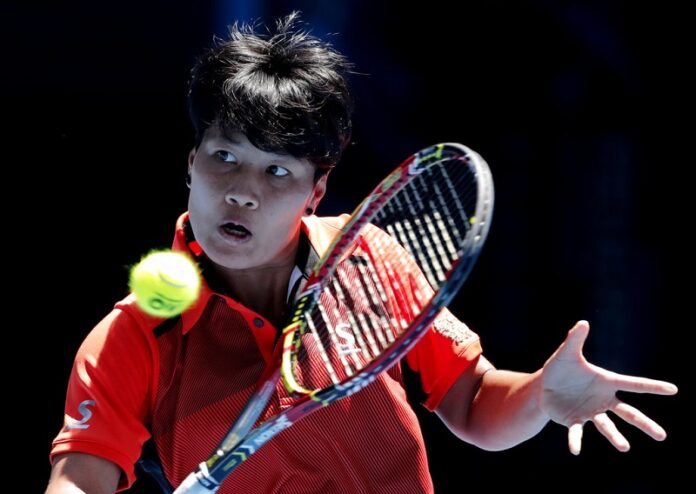
Thailand's Luksika Kumkhum plays a return shot to Switzerland's Belinda Bencic during their second round match at the Australian Open tennis championships in January in Melbourne, Australia. Photo: Vincent Thian / Associated Press

NEW YORK — We’ve all been there: A delayed flight or traffic jam or some other transportation issue prevents us from getting to work on time. In the case of a professional tennis player from Thailand ranked in the top 100, a too-long trip meant skipping the U.S. Open.

Luksika Kumkhum pulled out of the year’s last Grand Slam tournament on Sunday, a day before she was scheduled to face Sofia Kinen of the United States in a first-round match.

The official reason offered by the U.S. Tennis Association in a brief statement about the withdrawal was “travel difficulties.”

The 93rd-ranked Kumkhum has been competing at the Asian Games in Indonesia, finishing with the silver medal in mixed doubles on Saturday.

Kumkhum was replaced in the draw at Flushing Meadows by Madison Brengle, an American who lost in qualifying.

Advertisement

Cave Hero Widow Takes Same Airport Guard Job as ‘Sgt. Sam’

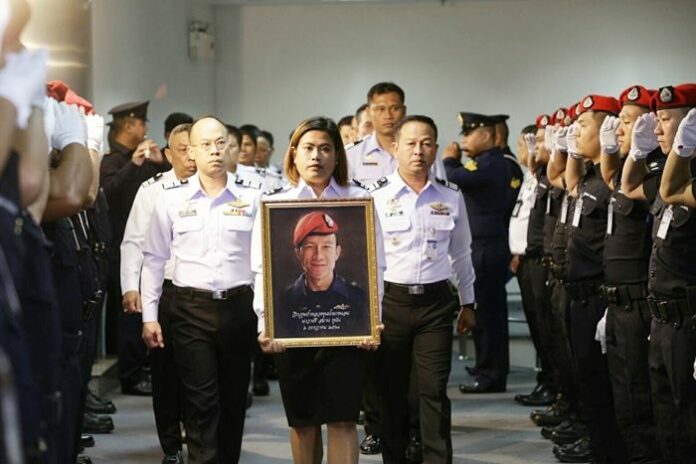
SAMUT PRAKAN — The widow of a retired Navy SEAL who died early July during a volunteer mission to rescue 13 people from a flooded Chiang Rai cave will take up the same job as her late husband.

Valeepoan Kunan, 40, will become a security guard at Suvarnabhumi Airport, the same job Lt. Cmdr. Saman “Sgt. Sam” Kunan took leave from to volunteer to save the Wild Boars, Airports of Thailand announced Monday.

The announcement came at an awards ceremony honoring 31 airport authority employees who volunteered for the cave rescue. Valeepoan also received an award.

Samarn Kunan, aka “Sgt. Sam,” died during a July 6 dive to resupply the route that would be used to later rescue the 13 boys and their football coach. The only fatality of the arduous operation, he was posthumously promoted and a statue is being erected in his honor at the site of the cave.

sgt sam
Photos: @Valeepoan_sinmongkolsup / Instagram

Related stories:

Wild Boars Ordain as Monks to Thank ‘Sgt. Sam’

King Promotes Fallen Rescue Hero

Chiang Rai Artist Offers 10M Baht for Cave Monument

Wife of ‘Sgt. Sam’ Mourns on Social Media

Crematorium for Cave Rescuer ‘Sgt. Sam’ Complete

‘Sgt. Sam,’ Cave Rescue Hero Who Wanted to ‘Bring Boys Home’

Advertisement

A Decade On, Libertine Outpost ‘Overstay’ Lives Up to Its Name

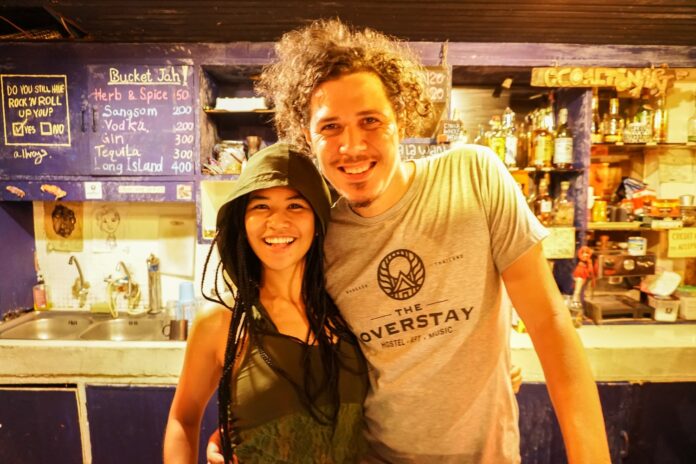
Pornpiroon ‘Fon’ Supannafai and Yuval Schwok.

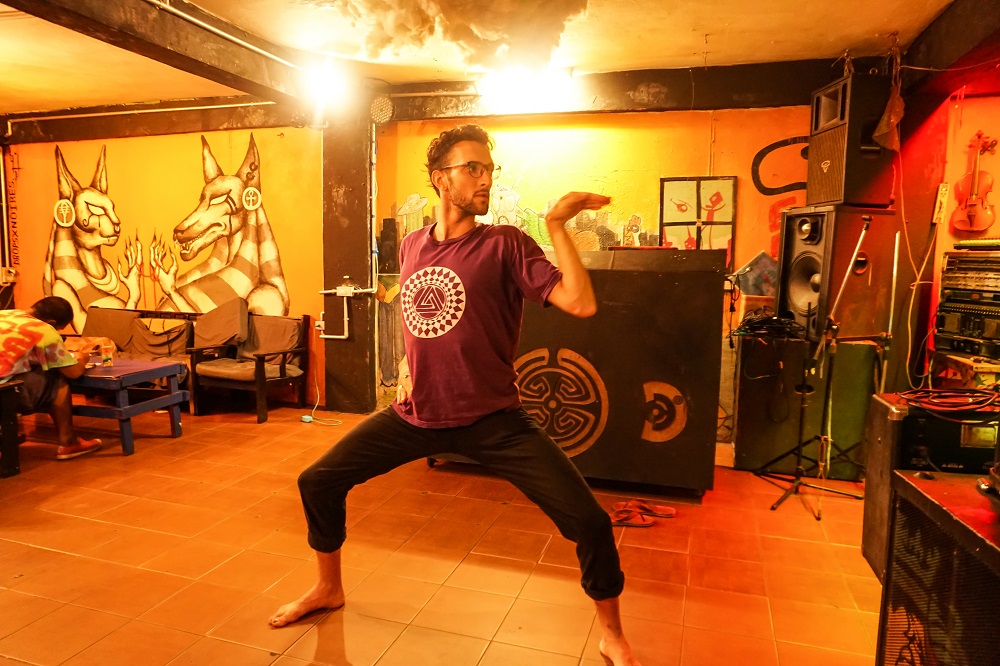
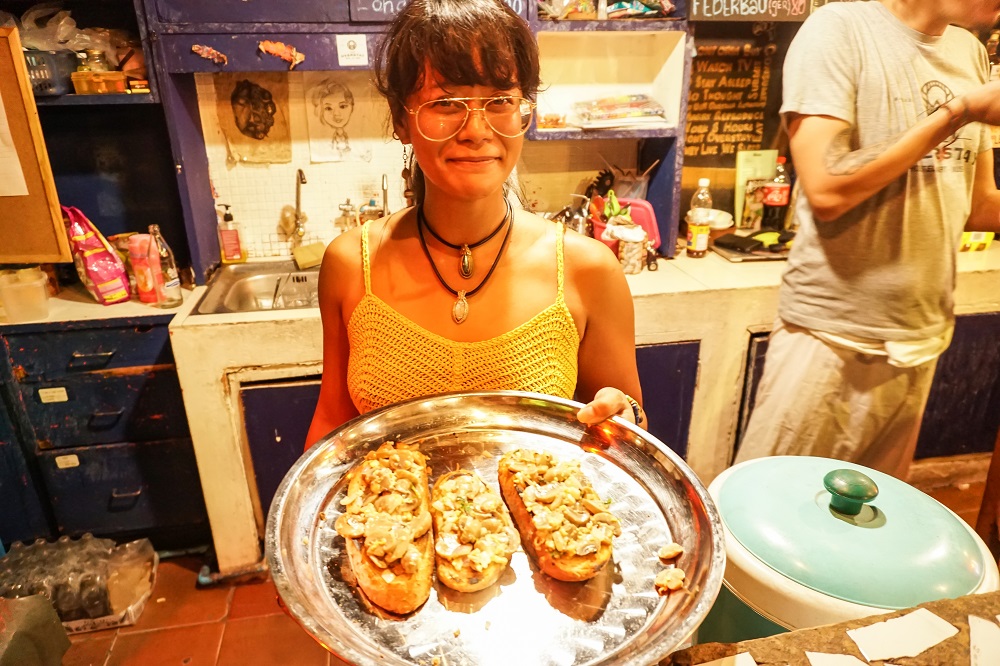
Inside a hostel sheltering sub-budget backpackers, an effeminate gay man slowly spreads his arms in tai chi movements. Across the room, other guests drink at the bar, chew on mushroom bruschetta and listen to Guerilla Poubelle blare from a laptop.

“It’s an anathippatai song,” the motley venue’s French owner explains in fluent Thai using a term some born to the language may not be familiar with for “anarchy.”

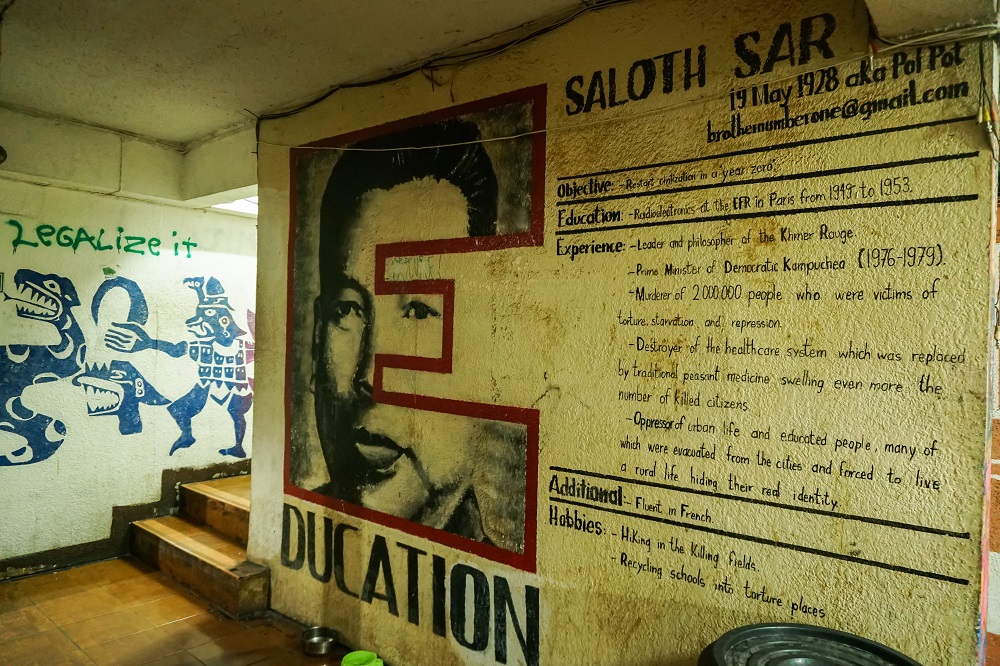
It’s a typical scene at The Overstay, a shophouse across the river in Pinklao where offbeat characters partake of the lifestyle boheme. For a decade, it’s been more than a place to crash, with five floors (and rooftop) given over to art, music, induced states of consciousness and everything underground they can think of.

Later this year it will throw itself a huge birthday party to celebrate 10 years with art exhibitions, short films, dozens of bands, Japanese rope bondage, wrestling and much more.

In 2008, Yuval Schwok took over two joined shophouses near Soi Charansanitwong 40, which at the time was a brothel called Virgin Club. Shrugging off the locals who said it was haunted, Schwok moved in and turned the place into a hostel.

A typical Tripadvisor review may use the words “worst hotel ever” and it has been called Bangkok’s “dirtiest, skuzziest” place to stay. But for those comfortable on the fringes of experience and, well, comfort, The Overstay offers one of the best hangouts for hippies and life-experience hunters.

DSC01746

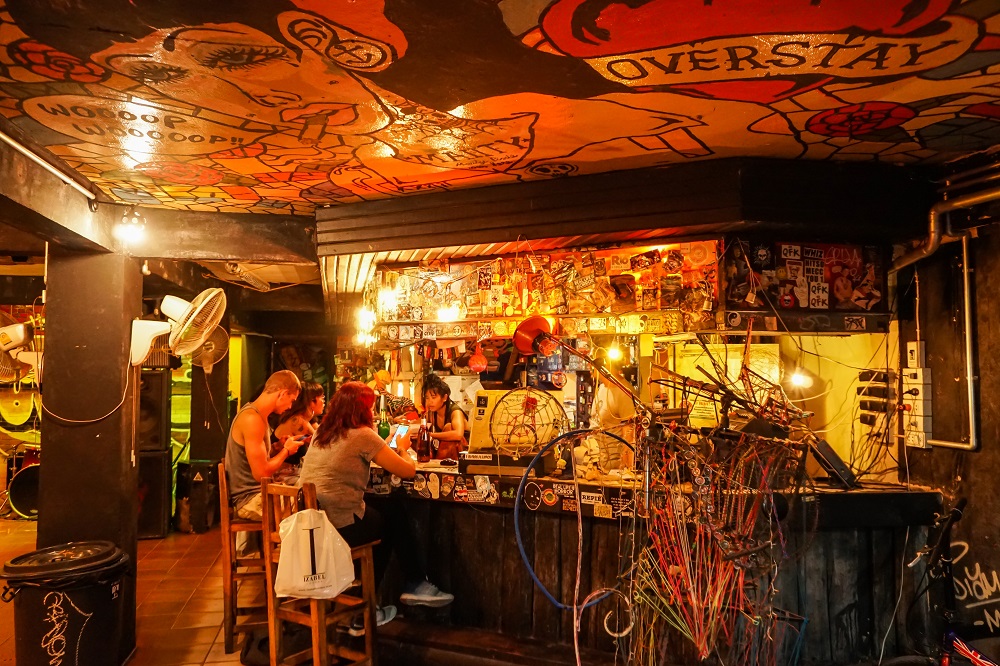
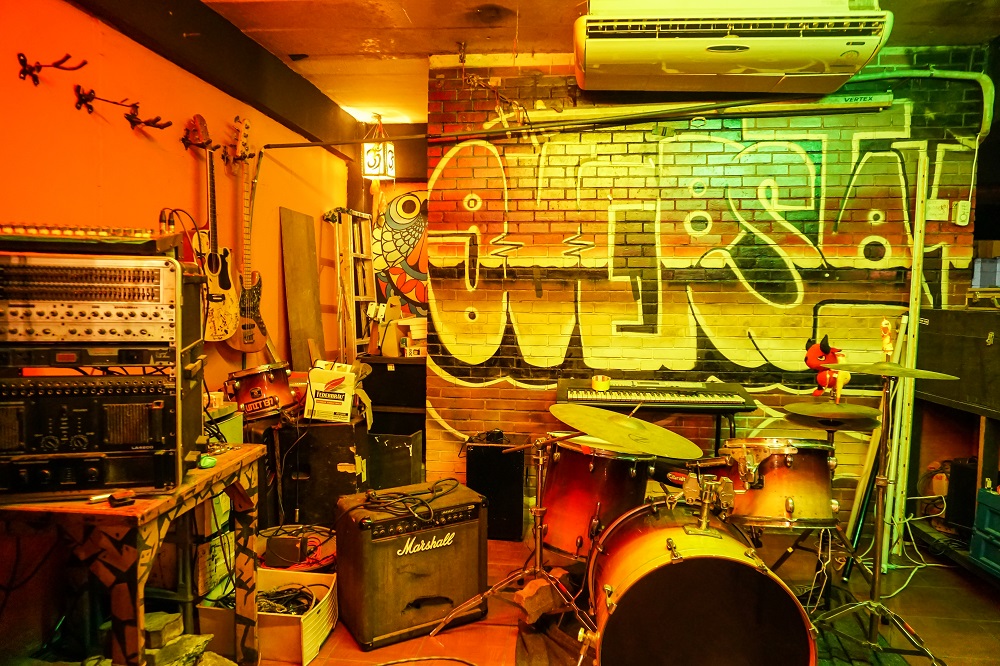
Walking in, guests are welcomed by the two bar dogs, Guinness and Amaretto, as well as a few indifferent cats curled on the pool table. Hostel guests fill the bar, chatting and drinking, not far from a musical space occupied by a drum set, instruments and speakers.

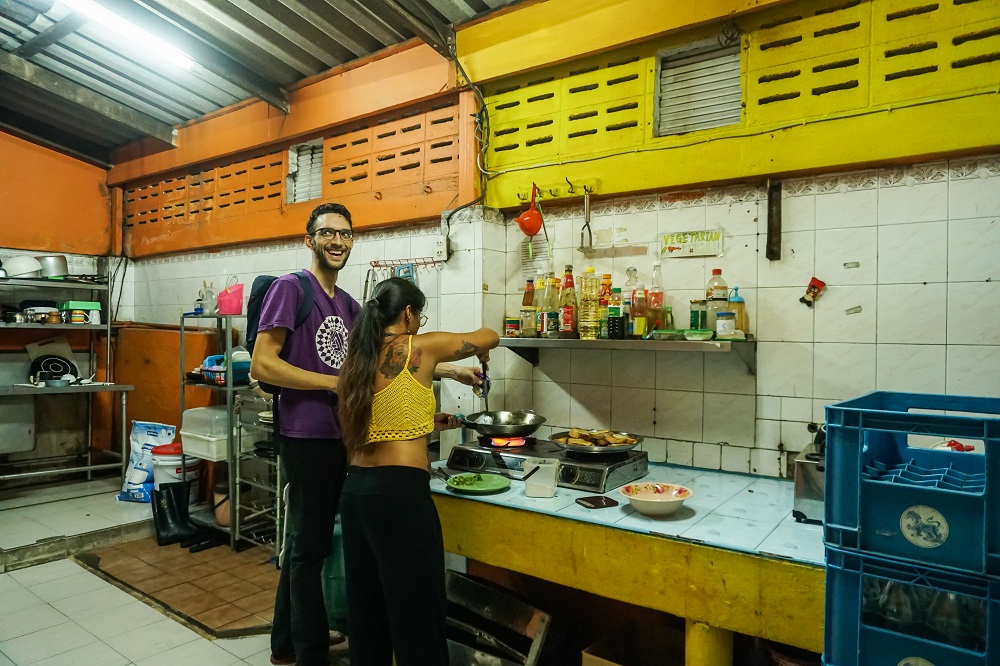
In the back are a few laundry machines and a vegetarian kitchen. No meat is allowed in the building.

The rooms are the cheapest in the city, so don’t expect comfort. They run 200 baht to 300 baht (sans air-conditioner) while a little air-cooled comfort runs 400 baht a night. Bunk up in a dorm for 125 baht per night.

The name of the hostel, a reference to that victimless crime of many underemployed foreigners, is not a coincidence. Like Thailand as a whole, some have stayed longer than intended.

“The longest stay? It’s this Chinese writer who stayed here for four months,” Yuval said as he led the way to the rooftop.

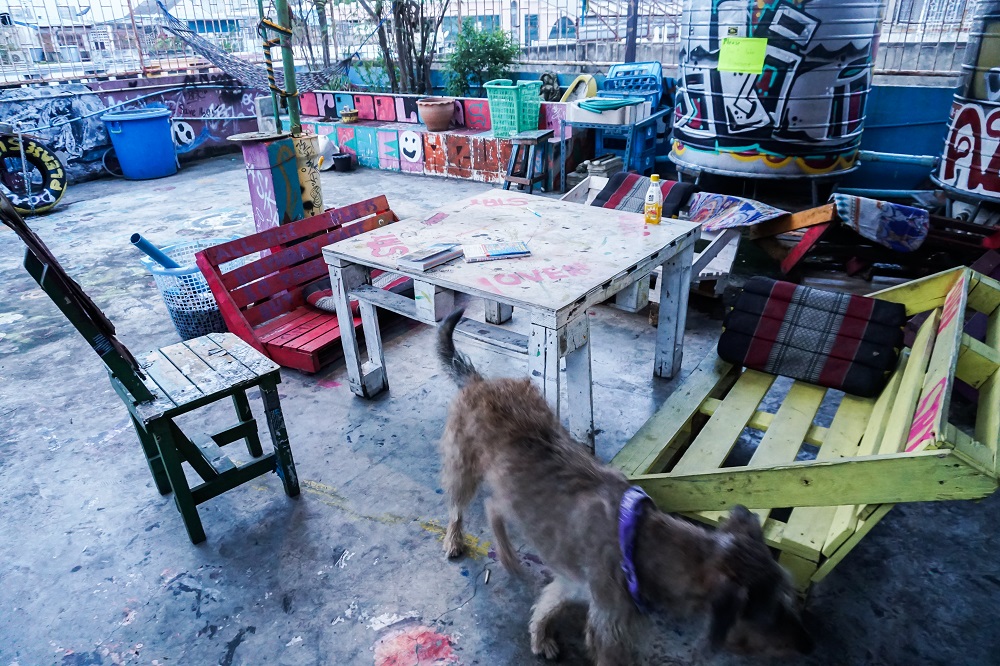
For the past decade, the venue has been a hub for travelers to keep in touch with all types of lifestyle and cultures. One day the rooftop might see people trying acro yoga poses, or revelers bombarding each other with colored powder on the Hindu festival of Holi.

There was even a head-shaving charity party for regulars to show solidarity with Yuval after police raided the place and he was shorn of his dreadlocks on his way to a few nights in jail. He was eventually acquitted of wrongdoing.

Volunteers and fellow travelers come by to help out in exchange for accommodation.

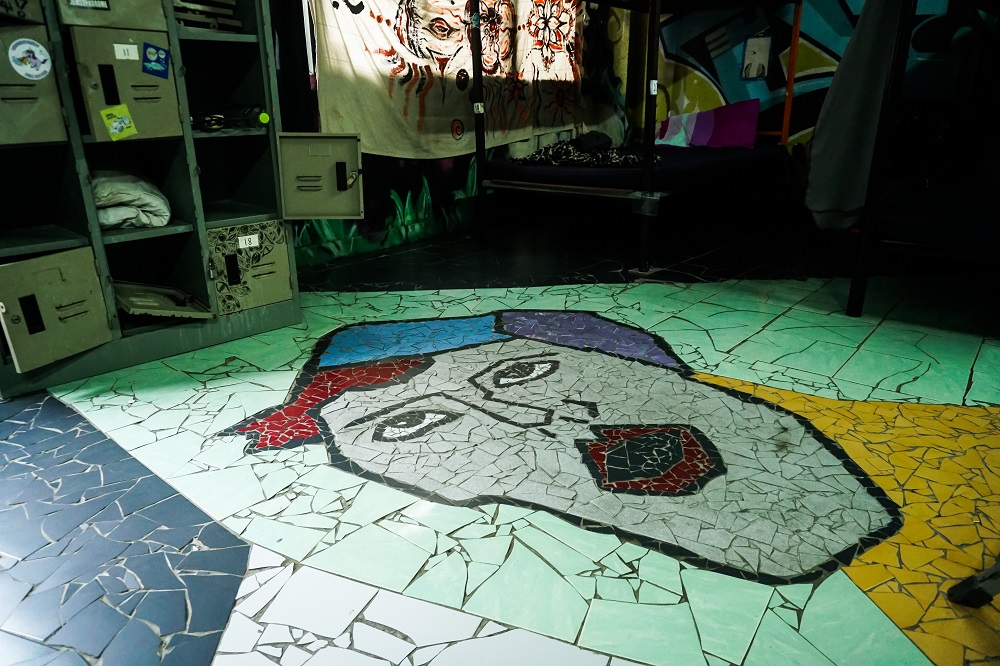
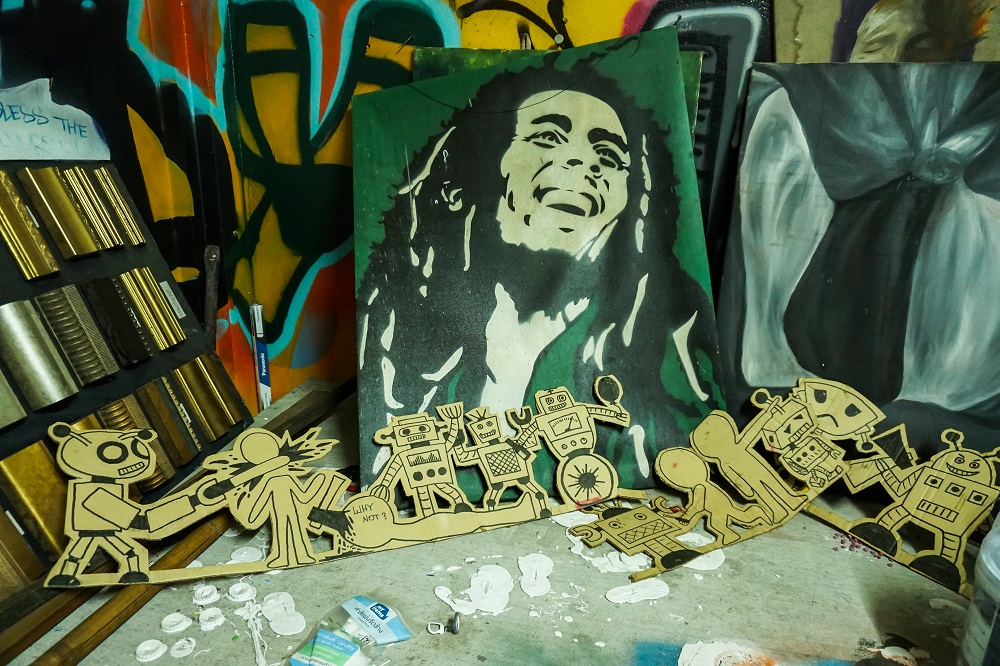
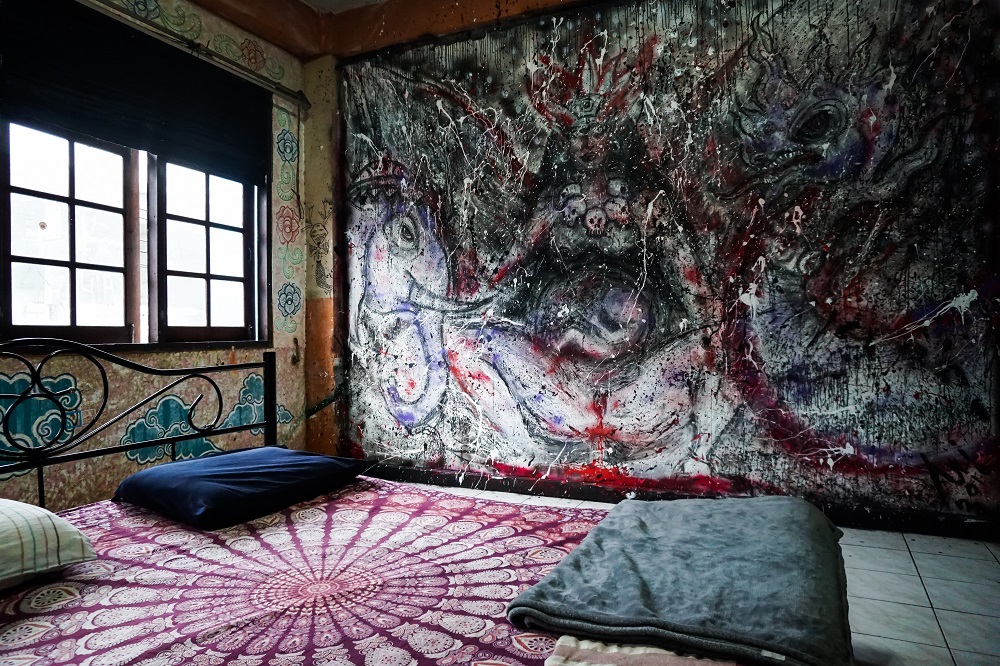
“Art is everywhere” can apply literally to the place. Like a mini mecca of street art, every wall is filled with murals, graffiti tags and scribbles. The floor of dorm room is a mosaic, and a painting of the Goddess of Death dominates a double-bed room.

DSC01696

“Our style is there is no style,” Yuval said.

The 33-year-old, Israeli-born Frenchman has lived in Bangkok over 12 years. Before The Overstay took over his life, he organized gigs at venues around the city.

Yuval’s underground connections helped bring in gigs such as a Myanmar punk band screaming to help empty stomachs and the reggae of Jamaican legend Johnny Osbourne. All kinds of music genres are welcome, from mor lam and hard rock to rap and world music.

“An old guy from Udon Thani flew here just to see D.O.A. playing,” said Pornpiroon “Fon” Supannafai, Yuval’s girlfriend, referring to the hardcore ‘80s group who performed last year.

Fon found out about the venue in 2010 when she was interning in Bangkok and followed her favorite band Srirajah Rockers to The Overstay.

Last year, Fon sold her bar in Khon Kaen and moved to work full-time as the hostel-venue’s manager as Yuval’s focus has been consumed by another dream.

He’s been preoccupied with a years-long project to refit a rice barge into a floating vessel of culture – think The Overstay but unmoored from terrestrial limitations. He calls it Bangkok Island. When it is finished next month, it will offer 500sqm of event space that can accommodate up to 350 people.

The two lovebirds plan to wed on the boat.

Find The Overstay near Soi Charansanitwong 40. Since the extended Blue Line MRT Bang Yi Khan station in front of the hostel is still unfinished, the nearest transpo remains a river boat to the Phra Pinklao pier, then a short taxi ride.

DSC01764DSC01752DSC01750DSC01742DSC01739DSC01728DSC01715DSC01698DSC01708

DSC01703

Related stories:

Ship Shape: Frenchman Refits Rice Barge Into Floating Stage

The Overstay Raided, 11 Foreigners Arrested

Advertisement

Junta Expected to Partially Ease Political Restrictions Today (Updated)

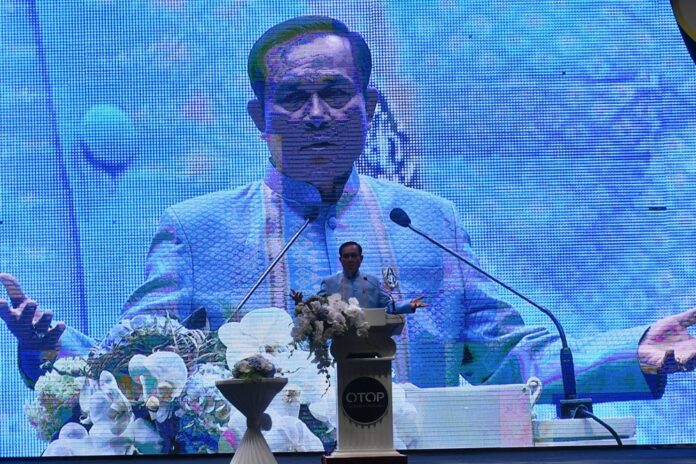
PM Prayuth Chan-ocha speaks earlier this month at a convention in Bangkok.

Update 5pm: Not today! Deputy junta leader Gen. Prawit Wongsuwan on Tuesday afternoon said it will take a few days to reach agreement, but it will go into immediate effect.

BANGKOK — The National Council for Peace and Order is meeting Tuesday to consider a partial lifting of political restrictions that have been in place over four years.

With elections possibly just six months away, Deputy Prime Minister Wissanu Krea-ngam on Monday detailed six points that could be eased, most of which involve organizing of political parties but did not include allowing any campaigning.

The possible elements include permitting political parties to hold congresses to recruit members, permitting politicians to discuss the designation of electoral constituencies; holding primary votes to choose candidates; forming a committee to select MP candidates; contacting and coordinating with party members; and selecting party leader and executive board members.

Asked by reporters if cabinet members would have to resign to take up positions in political parties, Wissanu said there is no legal restriction and junta leader cum Prime Minister Gen. Prayuth Chan-ocha could become the leader of a party while continuing to serve as caretaker prime minister.

Speaking this morning, deputy junta leader Gen. Thanasak Patimaprakorn said an announcement would be made later today and may include more than six areas. He said it come into effect as soon as next week and would be affected through the use of Prayuth’s absolute power under Article 44.

Elections officials have said a vote must be held under present law by May 2019. Feb. 24 has been raised as a likely day to stage what would be the first election general in five years.

Advertisement

UN Team: Myanmar Military Chiefs Should Face ‘Genocide’ Case

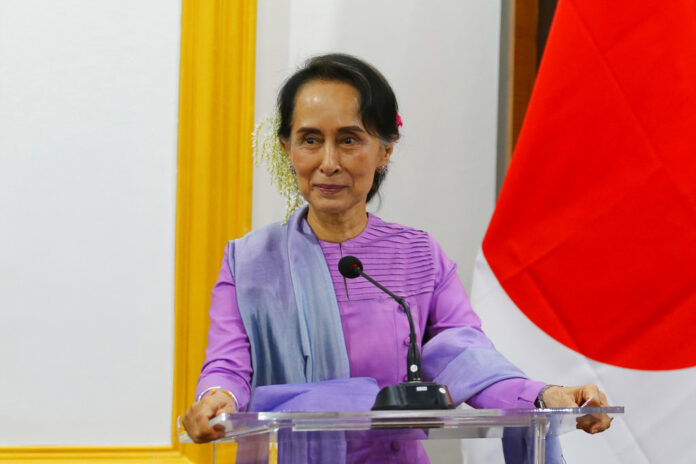
Myanmar's State Counselor and Foreign Minister Aung San Suu Kyi speaks to the media during a joint press conference with Japan's foreign minister Jan. 12, 2018. Photo: Hein Htet / Associated Press

GENEVA — Investigators working for the U.N.’s top human rights body said Monday that Myanmar military leaders should be prosecuted for genocide against Rohingya Muslims, taking the unusual step of identifying by name six of those it says were behind systematic crimes targeting the ethnic minority.

The call, accompanying a first report by the team of investigators, amounts to some of the strongest language yet from U.N. officials who have denounced alleged human rights violations in Myanmar since a bloody crackdown began last August.

The three-member “fact-finding mission” and their team, working under a mandate from the U.N.-backed Human Rights Council, meticulously assembled hundreds of accounts from expatriate Rohingya, as well as satellite footage and other information for the report.

“The military’s contempt for human life, dignity and freedom – for international law in general – should be a cause of concern for the entire population of Myanmar, and to the international community as a whole,” said fact-finding mission chair Marzuki Darusman, a former Indonesian attorney-general, at a news conference.

The council created the mission in March last year – nearly six months before a string of deadly rebel attacks on security and police posts set off a crackdown that drove Rohingya to flee into neighboring Bangladesh. More than 700,000 have fled in the past year.

The team compiled accounts of crimes including gang rape, the torching of hundreds of villages, enslavement, and killings of children – some before their eyes of their own parents. The team was not granted access to Myanmar and has decried a lack of cooperation or even response from the government, which received an early copy of the report.

The team cited a “conservative” estimate from aid group Reporters Without Borders that some 10,000 people were killed in the violence, but outside investigators have had no access to the affected regions – making a precise accounting elusive, if not impossible.

Above all, the investigators said the situation in Myanmar should be referred to the International Criminal Court, and if not, to a special tribunal. Last week, Myanmar’s government rejected any cooperation with the ICC, to which it is not a party.

China, a permanent member of the U.N. Security Council with veto power over whether the issue will be brought before the ICC, has been reticent about condemning Myanmar’s government during the crisis.

U.N. leaders, foreign government officials, and human rights watchers have for months cited evidence of genocide in Myanmar, and the United States late last year said that “ethnic cleansing” was occurring in the country also known as Burma. But few experts have studied the issue as in-depth, and in such an official way, as the fact-finding mission with a mandate from the 46-nation council.

The U.S. State Department, which has yet to declare a genocide in Myanmar, said the U.N. report added to a “growing body of information indicating widespread human rights abuses by the Burmese military and other security forces.” A spokesperson, who was not authorized to be quoted by name and requested anonymity, said the United States, with allies and partners, was exploring a “broad range of options” to ensure justice for victims and “appropriate consequences” for perpetrators.

The United Nations does not apply the word “genocide” lightly. The team’s assessment suggests the crimes against the Rohingya could meet the strict legal definition, used to highlight and condemn state-supported abuses in places like Bosnia, Rwanda and Sudan’s Darfur region.

Human rights watchers say that determining “genocidal intent” is perhaps the most difficult criteria to meet: In essence, it’s the task of assessing the mindsets of perpetrators to determine if ethnicity, race, religion or another attribute had motivated them.

“The crimes in Rakhine state, and the manner in which they were perpetrated, are similar in nature, gravity and scope to those that have allowed genocidal intent to be established in other contexts,” the report said, alluding to a region of Myanmar that is home for many Rohingya.

Adding into their assessment: The extreme brutality of the crimes; “hate rhetoric” and specific speech by perpetrators and military commanders; policies of exclusion against Rohingya people; an “oppressive context;” and the “level of organization indicating a plan for destruction.”

The investigators cited six Myanmar military leaders as “priority subjects” for possible prosecution, including Commander-in-Chief Min Aung Hlaing. A longer list of names is to be kept in the office of the U.N. human rights chief for possible use in future judicial proceedings. The United States and European Union have already slapped sanctions on some Myanmar military leaders, though Min Aung Hlaing is not among them.

“The main perpetrator, the people that we want the spotlight on, is the Tatmadaw,” said mission member Radhika Coomaraswamy, a Sri Lankan former U.N. undersecretary-general, referring to Myanmar’s military.

Christopher Sidoti, an Australian human rights expert, acknowledged that no “smoking gun” linked the six military leaders directly to orders to carry out genocide, but pointed to inferences of their role based on a strict chain of command in Myanmar.

They called for the creation of a special body, or “mechanism,” to keep watch on the still-evolving human rights situation in Myanmar. They said the United Nations’ own role in the country since 2011 should be reviewed to see if the world body did all it could to prevent such a crisis.

They also faulted Aung San Suu Kyi for not using her role as head of Myanmar’s government, nor her “moral authority” – she is a Nobel peace prize laureate – to stop the events in embattled Rakhine state.

U.N. Secretary-General Antonio Guterres is scheduled to give a briefing Tuesday during a Security Council commemoration of the anniversary of the violent crackdown on the Rohingya. Guterres also has described what happened in Myanmar as ethnic cleansing.

U.N. spokesman Stephane Dujarric told reporters Monday that Guterres urged all U.N. bodies and the international community to seriously consider the experts’ report recommendations. The determination of whether “a genocide” occurred must be made by “an international judicial body,” Dujarric said.

“The secretary-general has for a long time underscored the violations of human rights in Myanmar” and stressed “that accountability is essential for genuine reconciliation,” he said.

There was praise for the report from refugee camps in Cox’s Bazar, Bangladesh, that house hundreds of thousands of Rohingya from across the border.

“We are happy for this. If these army people are punished the world will take note of it. They are killers. They must be punished,” said Mohammed Hasan, 46, who lives in the Kutupalong refugee camp.

“They killed thousands, we have seen that. They torched our homes. That’s a fact. They raped our women. That’s not false,” he said.


Advertisement

China Struggles to Curb Its Reliance on US Buyers, Suppliers

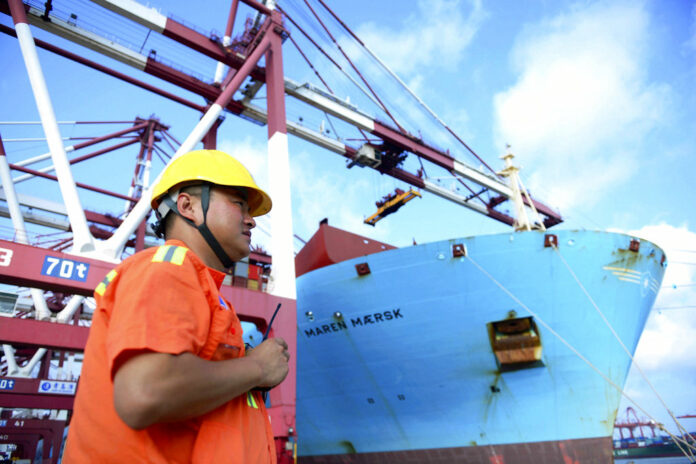
A worker stands near a container ship Aug. 8 at a port in Qingdao in eastern China's Shandong Province. Photo: Associated Press

BEIJING — Faced with plunging U.S. orders, surgical glove maker Ren Jiding is hunting for new markets amid Chinese government calls to reduce reliance on the United States. But none can absorb the 60 percent of his sales that went to American customers last year.

“Other countries import much less than the United States,” said Ren, a co-owner of Hongyeshangqin Medical Science and Technology Co., Ltd. in the eastern city of Zibo.

From medical products to smartphone chips to soybeans, Beijing is responding to President Donald Trump’s tariff hikes by pushing companies to trade more with other countries. But there are few substitutes for the United States as an export market and source of technology for industries including telecom equipment makers Chinese leaders are eager to develop.

Beijing has announced tariff cuts and other changes while rejecting U.S. demands to scale back plans such as “Made in China 2025,” which calls for state-led creation of Chinese champions in robotics, biotech and other fields. American leaders say those violate Beijing’s market-opening promises and might erode U.S. industrial leadership.

The response highlights the cost the ruling Communist Party is willing to pay in lost sales and jobs to stick to plans that are fueling conflict with Washington, Europe and other trading partners.

“China sees its technology and industrial policies as fundamental to its growth,” Tianjie He of Oxford Economics said in an email. “It is thus hard to see China’s leadership committing to significant changes.”

Trump has raised duties on a total of USD$50 billion of Chinese imports including ultrasound scanners and industrial components that Washington says benefit from improper policies. China retaliated with similar penalties.

The U.S. is poised to raise duties on $200 billion of imports including the gloves made by Ren’s company. Beijing has issued a list of American goods for retaliation.

The impact on China is “small and is containable, at least for the time being,” said Vincent Chan of Credit Suisse. He said the “worst case” outlook if all threatened U.S. tariff hikes go ahead would cut China’s growth by 0.2 percentage points this year and 1.3 percent in 2019.

Chinese leaders have tried to cushion the blow to their own economy by targeting American goods its importers can get from other countries – soybeans from Brazil, gas from Russia, cars from Germany and fish from Vietnam.

Beijing has promised to use revenue from the higher tariffs to help struggling exporters and has ordered banks to lend more freely to them.

The biggest jolt so far came from Beijing’s cancellation of orders for soybeans, the biggest American export to China at $21 billion last year. That hammered farm states that voted for Trump in the 2016 election. It also pushed up prices for Chinese farmers that use soybeans for animal feed and food processors that crush them for cooking oil.

That could be a windfall for Brazil. But China already is its top market and consumes two-thirds of the global supply. Chinese total imports last year of 95 million metric tons were 50 percent more than the South American giant’s entire exports.

“The Chinese can talk all they want about finding other sources of soybeans,” but 80 percent come from the United States, Brazil and Argentina, said Michael Cordonnier, president of Soybean & Corn Advisor, Inc., a U.S. research firm.

“If you want to import soybeans, it generally must be from one of those three countries,” said Cordonnier in an email.

Regulators also cut import duties on automobiles on July 1 but raised them on vehicles from the United States. That helps luxury brands that import from Germany and Japan.

Replacing markets for Chinese exporters that support tens of millions of jobs will be harder.

The United States bought $430 billion of China’s exports last year, or 20 percent of the $2.2 trillion total. The No. 2 market was the 28-nation European Union at $370 billion.

“We can’t afford to lose the U.S. market,” said David Hu, general manager of Sinohood Bags Factory Ltd. in the southeastern city of Yiwu.

Americans bought 40 percent of his canvas tote bags last year, including the most profitable customized versions with Christmas and other designs.

“What we export to Europe is lower-end products with lower prices,” said Hu. “We could explore the Indian, Vietnamese or Philippine markets. But the prices they offer would be too low.”

Chinese officials point to potential markets in the “Belt and Road,” a multibillion-dollar initiative led by President Xi Jinping to boost trade by building ports, railways and other infrastructure across Asia to Europe.

That has brought a flood of contracts to Chinese state-owned builders but complaints about costs have hurt its appeal. Prime Minister Mahathir Mohamad of Malaysia announced this month the cancellation of plans for Chinese-built projects including a $20 billion rail line.

“There is potential for development in areas such as central Asia, Eastern Europe, Africa and South America. But their problems are development imbalance and economic instability,” said Li Yong, a senior fellow at the China Association of International Trade, an industry group.

Local officials have met with exporters to exhort them to “diversify markets,” according to the state press.

Authorities in the central city of Jingzhou visited exporters to help with customs forms, financing and other details, the website China Industry and Commerce News said.

Ren, the surgical glove maker, said his 300-employee company was looking at Europe and developing countries but demand was sluggish.

Some companies are confident of keeping their U.S. market share. That reflects the possible success of official efforts to develop higher-tech goods instead of competing on price alone.

The general manager of Yihua Electronic Equipment Co. in southern China’s Guangdong said the tariffs should not affect sales of its digital soldering guns, one fifth of which are sold to the United States.

“With the 25 percent tariffs, ours still are cheaper than similar German- or Japanese-made products,” said the manager, who would give only his surname, Gou. “We are not producing something like shoes and clothing that could be easily replaced.”

Trump’s pressure is likely to backfire by encouraging Beijing to throw even more resources at nurturing its own technology creators.

China’s search for non-U.S. suppliers could help companies such as Taiwanese chipmaker MediaTek Inc. But redesigning a phone or network gear and then gaining regulatory and customer approval can take a minimum of three to five years.

“For now,” said He of Oxford Economics, “China remains technologically dependent on the U.S.”

Story: Joe McDonald

Advertisement

Facebook Bans Myanmar Military Chief, Others to Stop Hate

Mark Zuckerberg speaks during a keynote address in 2008. Photo: Brian Solis / Flickr

YANGON — Facebook said Monday that it is banning Myanmar’s powerful military chief and 19 other individuals and organizations from its site to prevent the spread of hate and misinformation.

The social media giant was heavily criticized for permitting itself to be used to inflame ethnic and religious conflict in the country, particularly against minority Rohingya Muslims. It has been accused of being lax in fighting online misinformation and manipulation in many countries, but Myanmar is one where it has been most closely tied to deadly violence.

Some 700,000 Rohingya have fled from Myanmar’s western state of Rakhine over the past year in response to a brutal counterinsurgency campaign by the military, which has been accused of massive human rights violations. Critics accuse the military of carrying out ethnic cleansing, or even genocide, an allegation denied by the government, which says it was responding to attacks on security forces.

Facebook said it also targeted pages and accounts that pretended to provide independent news and opinion, while covertly promoting messages of Myanmar’s military. It said it was deleting 18 Facebook accounts, one Instagram account and 52 Facebook pages.

A separate report by investigators working for the U.N.’s top human rights body, released Monday, charged that “Facebook has been a useful instrument for those seeking to spread hate, in a context where for most users Facebook is the internet.”

“Although improved in recent months, Facebook’s response has been slow and ineffective,” said the report by the Fact-Finding Mission on Myanmar, authorized by the U.N. Human Rights Council. “The extent to which Facebook posts and messages have led to real-world discrimination and violence must be independently and thoroughly examined.”

Four high-ranking officers and two military units targeted by Facebook were also put on a U.S. government blacklist earlier this month for human rights abuses. The sanctions block any property they own within the U.S. and prohibit U.S. citizens from engaging in transactions with them. The U.S. already maintains restrictions on visas, arms sales and assistance to Myanmar’s military. In June, the EU imposed similar sanctions on seven senior army and police officers, all of whom are on Facebook’s blacklist.

Six officers on Facebook’s list were also named in the U.N. human rights report, which said Myanmar’s top leaders should be prosecuted for genocide. Those it recommended as “priority subjects for investigation and prosecution” included top commander Senior Gen. Min Aung Hlaing.

In a statement, Facebook referred to the U.N. report, which it said “found evidence that many of these individuals and organizations committed or enabled serious human rights abuses in the country. And we want to prevent them from using our service to further inflame ethnic and religious tensions.” Discrimination against the Rohingya ran deep and wide even before the spread of Facebook.

Facebook has been under pressure for several months to take action on the problem, especially after civic and rights groups in Myanmar said in April that it had failed to adequately act against online hate speech that incited violence against the country’s Muslim minorities, neglecting to effectively enforce its own rules.

“The ethnic violence in Myanmar has been truly horrific,” Facebook said in its statement. “While we were too slow to act, we’re now making progress – with better technology to identify hate speech, improved reporting tools, and more people to review content.”

“We continue to work to prevent the misuse of Facebook in Myanmar – including through the independent human rights impact assessment we commissioned earlier in the year. This is a huge responsibility given so many people there rely on Facebook for information – more so than in almost any other country given the nascent state of the news media and the recent rapid adoption of mobile phones. It’s why we’re so determined to do better in the future.”

Yangon-based political analyst David Mathieson said that Facebook’s action, together with the damning U.N. report, force Myanmar’s military brass “into an isolation they’re not going to like.”

“They have to find alternative ways to communicate with the Myanmar population, because Facebook really is the internet for many people here. And Facebook just excommunicated the commander in chief from the worldwide web,” he told The Associated Press.

Story: Victoria Milko

Advertisement

Former Vietnamese Jailer Says He Respected Late Sen. McCain

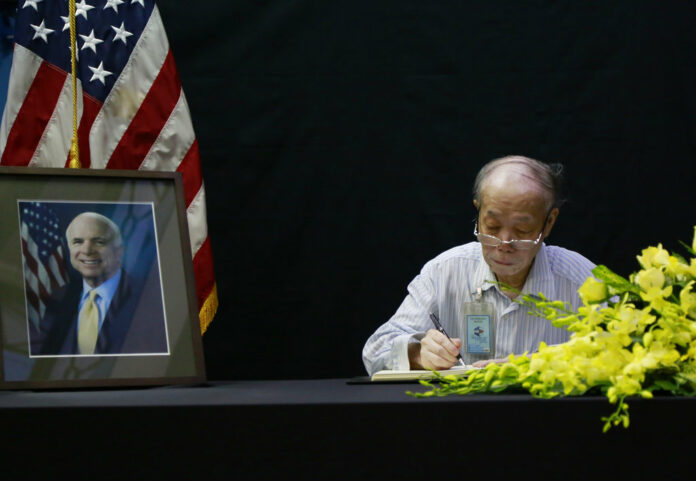
Pham Minh Chuc, an 81-year-old retiree, writes a book of condolences Monday for Senator John McCain in Hanoi, Vietnam. Photo: Tran Van Minh / Associated Press

HANOI — Sen. John McCain’s Vietnamese jailer said he respected his former inmate and felt sad about his death, as others in Vietnam paid their respects to the former U.S. Navy pilot who became a prisoner of war and later was instrumental in bringing the wartime foes together.

McCain’s Skyhawk dive bomber was shot down over Hanoi in 1967 and he was taken prisoner and held in the infamous “Hanoi Hilton” prison for more than five years.

Former Col. Tran Trong Duyet, who ran the prison at the time, said he met with McCain many times while he was confined there.

“At that time I liked him personally for his toughness and strong stance,” he told the newspaper Vietnam News, published by the official Vietnam News Agency.

“Later on when he became a U.S. senator, he and Sen. John Kerry greatly contributed to promote Vietnam-U.S. relations so I was very fond of him,” Vietnam News quoted Duyet as saying Sunday.

“When I learnt about his death early this morning, I feel very sad. I would like to send condolences to his family. I think it’s the same feeling for all Vietnamese people as he has greatly contributed to the development of Vietnam-U.S. relations,” Duyet was quoted as saying.

Duyet could not be reached for comment on Monday. McCain died of brain cancer on Saturday at age 81 in his home state of Arizona.

Meanwhile, scores of people in Hanoi paid their respects to McCain at the U.S. Embassy and at a monument by Truc Bach lake, where he landed after parachuting from his damaged plane.

Speaking to reporters after writing in a book of condolences, U.S. Ambassador Daniel Kritenbrink said McCain was “a great leader and real hero” who helped normalize relations between the former enemies.

“He was a warrior, he was also a peacemaker and of course he fought and suffered during the Vietnam War, but then later as a senator, he was one of the leaders who helped bring our countries back together and helped the United States and Vietnam normalize our relationship and now become partners and friends,” Kritenbrink said.

McCain and former Sen. Kerry played important roles in the normalization of bilateral relations in 1995.

The Vietnam News Agency said Prime Minister Nguyen Xuan Phuc and National Assembly Chairwoman Nguyen Thi Kim Ngan sent messages of condolence to McCain’s family and U.S. Senate leaders, while Foreign Minister Pham Binh Minh paid respects to McCain at the embassy.

Pham Gia Minh, a 62-year-old businessman who signed the condolence book at the embassy, said he witnessed Vietnamese civilians being killed by the U.S bombings of North Vietnam, including the Christmas bombing of Hanoi in 1972, but he admired McCain for overcoming the difficult past to build better ties between the two countries.

“War is losses and suffering,” he told the AP. “But the will of a brave nation is to go beyond that to look to the future. The Vietnamese people have that will and Mr. John McCain has that will. … We both have that will to overcome the painful past, overcome the misunderstanding to together build a brighter future.”

Hoang Thi Hang, a Hanoi resident who also signed the condolence book, said he had great respect for McCain’s compassion. “He had compassion for everyone, whether they were rich or poor, whatever their background. And that is important in life.”

The U.S. Embassy announced it will launch a McCain/Kerry Fellowship in which a young Vietnamese leader committed to public service will be chosen each year to travel to the U.S. on a study tour to deepen ties between the two peoples.

Story: Tran Van Minh

Advertisement

Isaan Granny Takes Sixth Grade Finals

YASOTHON — Kesorn Sookserm pressed her schoolgirl uniform, held up her yellow umbrella and pedaled off to school Sunday to sit for her sixth grade final exams, books and pencils in her basket.

Unlike her classmates who are a fraction of her age, Kesorn is 84.

Her story made waves today after a teacher at the testing facility spotted her leaving and gave pursuit, filming a short video clip of her returning home after the test.

“Before, my highest education was at the fourth-grade level. That’s all there was. I didn’t have the chances kids today have. When I came to learn, I had a lot of fun, and a lot of friends,” Kesorn says in the video.

The teacher, 30-year-old Wuttichai Suphap, caught up with her as she was exiting the Kum Keun Kaew Chanoopathum School. Kesorn takes classes at a local vocational ed office in the Keum Kaew district of Yasothon province, and her exam was held at the school.

“I was so surprised and impressed that granny is still working to improve herself, breaking the rules we have about education,” Wuttichai, a teacher at the school, said Monday in an interview. She’s not embarrassed to be sitting in class with people her grandchildren’s age.”

Wuttichai said he whipped out his phone and drove after Kesorn when he saw her.

“My kids and grandkids have jobs, so I didn’t want to bother them. I can come to school by myself, no problem,” Kasem says of her 2-kilometer commute by bicycle.

Kesorn’s vocational class has a couple of other seniors working toward their sixth grade certificates. She hangs out with the children in the school next door, her hair cut to primary school regulations.

“The teachers at the Office of the Non-Formal and Informal Education Center said she is really diligent in class, carefully reading each question, unlike some kids who come through and just rush through the tests,” Wuttichai said.

Kesorn has been teased by some of her friends and family for pursuing her education, saying that “she won’t get to use the knowledge anyway.” But she doesn’t listen to them.

“She’s determined and has a good attitude. I want kids these days to see how much she wants to learn. Education doesn’t end with age,” Wuttichai said.

What’s next for this plucky grandma? First she’ll have to endure the wait finding out if she passed Sunday’s test.
Advertisement

Hot News

LATEST NEWS

Bangkok
overcast clouds
27.5 ° C
28.3 °
25.9 °
84 %
2.3kmh
100 %
Wed
29 °
Thu
34 °
Fri
34 °
Sat
31 °
Sun
31 °