
































29.7 C
Bangkok
Monday, June 8, 2026
Home Blog Page 2284

Argentina Grassroots Movement Fights Violence Against Women

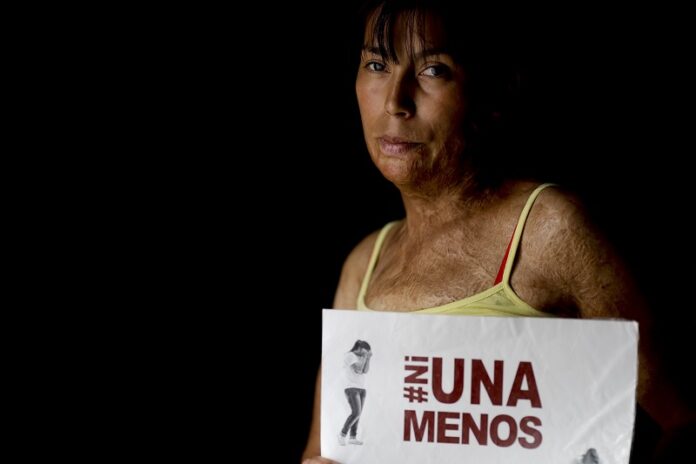
Maira Maidana poses for a portrait with the name of the women's movement "Not one Less" in Buenos Aires, Argentina. Photo: Natacha Pisarenko / Associated Press

BUENOS AIRES, Argentina — On Christmas Eve of 2011, Maira Maidana lit a candle to the patron saint of Argentina and closed her eyes in prayer – just like she did every time she feared a brutal beating by her partner.

But this time, instead of the usual blows, she felt her whole body catch on fire. When she turned around, she saw him staring at her with a bottle of alcohol in one hand. Ablaze, she ran to three faucets, but not a single drop of water came out.

Fifty-nine surgeries later, Maidana has finally found the courage to tell the truth about what happened to her that awful night. She says she owes that courage to a grassroots movement of tens of thousands of people across Argentina who have mobilized to fight violence against women. Called Ni Una Menos, or Not One Less, the movement has spread rapidly worldwide and now has branches in New York, Berlin, Italy, Brazil, Costa Rica, Ecuador and more.

“With Ni Una Menos, women are no longer hiding,” says Maidana, 29, who is scarred in her neck and chest and speaks in whispers. Maidana marched for hours during the latest Ni Una Menos protest earlier this month, holding a banner and beaming with pride.

“Before, we wouldn’t talk,” she says. “I don’t know if it was fear or shame, or feeling that justice was not on your side…I like it that it’s now out in the open.”

In 2016 alone, 254 Argentine women died from gender-based violence, according to a report released last month by the Supreme Court. That amounts to one woman killed every 34 hours. In 60 of those cases, the women had previously reported attacks, and some even had a restraining order.

Maidana feared the day would come when her partner would try to kill her.

They met in school in 2003, when he was 14 and she was 15. The first time he beat her up was in 2005. They were playing with schoolmates and he got jealous.

When they got back to her home, he punched her in the face. She went to school the next day with a bruise in one eye. A friend told her to break up with him, warning her that it would happen again and only get worse.

She was right. Over the course of the next eight years, he beat her up regularly, except when she was pregnant with their two children. He did drugs and would often come back home drunk or high.

When their children were young, they witnessed the fights. She would let him beat her up just so that he wouldn’t go after them. When he realized that Maidana no longer loved him, he threatened to kill himself. One day, he grabbed a kitchen knife and began cutting his wrists in front of the kids.

“I was scared,” she says. “The fear would not let me ask for help or escape.”

On the day he would set her on fire, she was helping her mother decorate a ballroom to celebrate her younger brother’s 17th birthday. His friends had been planning a hip-hop dance presentation, and she was excited about wearing a new white dress she had picked out with her partner.

But when he arrived back from work, he was drunk and no longer wanted to attend the party. She insisted, saying she had worked on the decorations the whole day. As soon as they arrived at the ballroom, he began telling her that her dress was too short. He was jealous and wanted to pick a fight.

Halfway through the party, he decided he wanted to leave. She gave in to avoid a scene in front of her family and friends. They called a cab and went back home with their two young children.

When they arrived, he asked his sister to lock the children in a room. He began screaming at Maidana.

The argument got heated. At one point, he threatened to leave her. But for the first time, after years of enduring his beatings, she confronted him and told him to go. She felt empowered.

It didn’t last.

One in three women worldwide has experienced physical or sexual violence, according to the United Nations. In most countries, fewer than 40 percent of those abused sought help of any sort.

In Argentina, there were 2,384 femicides between 2008 and 2016, according to La Casa del Encuentro, a local women’s rights group. While there are no accurate country-by-country numbers, violence against women in Costa Rica, Mexico and Guatemala is thought to be even higher, said Ada Rico, the head of La Casa del Encuentro.

The machismo culture is strong in Argentina, where women are often catcalled, hissed at and harassed on the street. Back in 2014, when he was the Mayor of Buenos Aires, Mauricio Macri said in a radio interview that “all women like to hear pickup lines,” among other sexist comments. He was heavily criticized, and since being elected Argentina’s president in 2015, he has pledged support for the Ni Una Menos movement and the protection of victims.

After she told her boyfriend to leave that night, Maidana went to the bathroom to remove her makeup. Then, with trembling hands, she lit a candle in the small altar to the Virgin of Lujan. It was about 2:45 a.m.

All of a sudden, she felt heat.

“I didn’t know what was going on,” she says. “I was in flames.”

Desperate, she tried the shower first, then the bathroom sink, and then the kitchen faucet. No water came out anywhere. He had either closed the taps or let the water run dry.

He followed her with a blanket in one hand and a bottle of alcohol in the other. The children heard her screaming.

She was on fire for maybe just minutes, but it seemed like hours. Finally, she ran to the garden and jumped into a kiddie pool filled with dirty water and mud. She felt like she was burning up inside.

Some minutes later, he told her the water was running again. She took a shower. By then, the ashes from her flowered dress – which she wore only to sleep because he complained about the cleavage – had melted into her charred chest.

He didn’t want to call an ambulance, but agreed to call police. He told them he was just a neighbor.

They took her to a small clinic, where she lost consciousness. Hours later, she was transferred to a hospital that treats severe burns.

She was at the hospital for four months, while her mother took care of her children. But one day, her partner picked them up from school. He kept them for more than 10 months, until Maidana got a lwyer’s help to bring them back home.

Even after dozens of surgeries and skin grafts, Maidana’s chest and parts of her face remained scarred. She had lost most of her hair, hearing in her right ear and sight in her left eye. She was down to 66 pounds (30 kilograms), less than half her usual weight, and looked skeletal. Her throat was badly damaged, and it was too painful to talk.

She slowly had to learn to eat and walk again with the help of her mother. Yet, fearing for her children’s lives, she never reported her boyfriend. Instead, she told family and police that she had doused herself with alcohol and set herself ablaze.

Her parents always doubted that she had tried to take her life. But she kept her story to herself – until the Ni Una Menos march.

Ni Una Menos was created by 20 artists, journalists and activists in 2015, after simmering outrage over a brutal spate of murders. The name came from a poem about a massacre of women in Ciudad Juarez by Mexican writer Susana Chavez, who was killed in 2011.

They began by organizing public readings about gender-based violence with family members of victims. But when Chiara Paez, a 14-year-old pregnant girl, was killed by her boyfriend in May 2015 and found buried in his family’s yard, they decided enough was enough.

The first call to protest started with a tweet by local radio journalist Marcela Ojeda: “Women: are we not going to raise our voices? THEY’RE KILLING US!” The public outcry that followed on social media inspired the first march on June 3, 2015.

The organizers thought it would be small. But on that day, millions of demonstrators flooded the streets of 70 cities across Argentina, demanding an end to the killings. The protests made headlines and prompted discussion throughout the country.

Maidana joined the march in front of the Congress building in Buenos Aires because she wanted to “feel alive” after so much pain. When she saw how the protests had united everyone, from women in strollers and schoolchildren to politicians from opposing parties, the tears began to roll down her cheeks. She embraced her mother and told her she was finally ready to tell the truth.

“I felt such an immense pain at seeing so many mothers, fathers, friends demanding justice for those girls who were gone,” she says. “And at the same time, I was demanding it for myself.”

The next day, she woke up and wrote a heartfelt letter thanking the demonstrators.

“I can’t stop crying,” she wrote. “Yesterday, I finally let out the anguish…Today, I’m thankful that I’m not just a banner, a photo, a name – and that I can fight for them. Today, I thank God that I can fight and scream: Not one less!”

The march grew quickly into a global movement, with the protest echoed by millions of women throughout Latin America. Argentine soccer star Lionel Messi joined the campaign with a message against femicides published on his Twitter account. During a visit to Buenos Aires, Michelle Obama praised the efforts by the Argentine women to fight against violence.

This year, Ni Una Menos helped organize a strike for International Women’s Day on March 8, drawing women from Thailand to Chile and Poland to South Korea. In some countries, members of Ni Una Menos have also joined forces with existing feminist movements, such as Vivas Nos Queremos in Mexico – We Want to Stay Alive.

Ni Una Menos’ demands range from the publishing of official statistics on sexual assaults and the protection of women to the inclusion of gender violence in school curricula. It has had some success. The Supreme Court announced that it would launch a task force to collect violence against women. Some months later, the government passed legislation to protect women who are verbally or physically abused on the streets. And the Reef clothing company ended the Miss Reef best buttocks contest, a 23-year-old summer tradition in the coastal city of Mar del Plata.

“Femicide is the tip of the iceberg, and it’s not solved with more police,” says Marta Dillon, a journalist and one of the founders of Ni Una Menos. “The movement seeks to be revolutionary.”

Argentina’s long tradition of feminist activism and its strong women have contributed to the movement’s success, Dillon said. She mentioned Evita Peron, the combative former first lady who helped get women the right to vote, and the human rights group Grandmothers of Plaza de Mayo.

Maidana is no longer with her boyfriend, but she has not yet garnered the courage to report him to the police. Still, she has kept the charred flowered dress she wore that night and the bottle of alcohol inside a plastic bag, in case one day she needs them as evidence.

“This is not something that is happening to one person,” she says. “It can happen to you, to your cousin, to your daughter. To everyone.”

Story: Luis Andres Henao, Debora Rey

Advertisement

Bangkok Buses to Finally Get Ticket Machines. Here’s How They Work.

A prototype Mangmoom card reader is displayed Thursday.

BANGKOK — Steely conductors rattling coin collectors and palming torn paper tickets may not be long for Bangkok’s buses.

Two types of ticketing systems will be installed on about 100 metro buses by October, according to the Bangkok Mass Transit Authority, or BMTA. One will sell bus tickets while the other will read the Mangmoom cards which one day will work for all of the capital’s public transportation.

The Transport Ministry said the machines would be installed on at least 800 of Bangkok’s roughly 2,600 buses by year’s end.

bus2
This prototype bus ticket machine only accepts coins.

Prototypes of the machines were shown Thursday at a contract-signing ceremony between BMTA and Cho Thavee Co. Ltd, which will lease the machines for the full bus fleet for five years at 1.6 billion baht.

The machines will become operable Oct. 1, the same date the government has promised to launch both the Mangmoom cards and welfare assistance cards that can be used by the registered poor to ride the bus gratis.

The card-reading machines will be able to read both cards, according to Phadet Praditphet, who oversees implementation of the common ticketing system.

The card readers will feed information to a monitor near the driver. They’ll be installed at both bus doors.

The second machine sells tickets for passengers who do not possess top-up cards. They will require commuters to select their destination and choose between child, adult and senior fares. The machine will accept all coins but not bills. It will print out barcoded tickets with details of passengers’ pick-up and drop-off points.

Automating ticketing is likely to make today’s bus conductors redundant, but acting BMTA director Somsak Hommuang said they would be kept on two years to instruct commuters on using the machines.

bus3
Mangmoom cards show Thursday at a news conference.

Phadet was unable to confirm when the multipurpose Mangmoon card would be operable across all transportation platforms.

He cited the same rationale – limited work hours – given by City Hall to explain why it could not install elevators at all BTS Skytrain stations within a year as ordered by the Supreme Court.

“We only have three to four hours a day after midnight to work on it,” he said. “And the old system is still being used, so it’s difficult and takes time.”

Phadet said he needed at least six months to install the system on each line. The most likely first candidate systems for the card are the Airport Rail Link, Purple Line, BTS skytrain and original MRT Blue Line.

Related stories:

Unified Transit Card Usable Between Few Stations at Launch

Final Extension of Free Bus And Train Service?

Hopes Snuffed For Single Transit Card Before 2017

House of Cards: MRT Rolls Out Yet Another Transit Fare Card

Advertisement

Phuket Vows Planespotting Beach Clean Up

Tourists pose for photos as a jet approaches on March 21, 2016, at Phuket’s Mai Khao Beach.

PHUKET — A beach famous not for its pristine white sands but screaming jet engines will get a much-needed cleaning following complaints from residents.

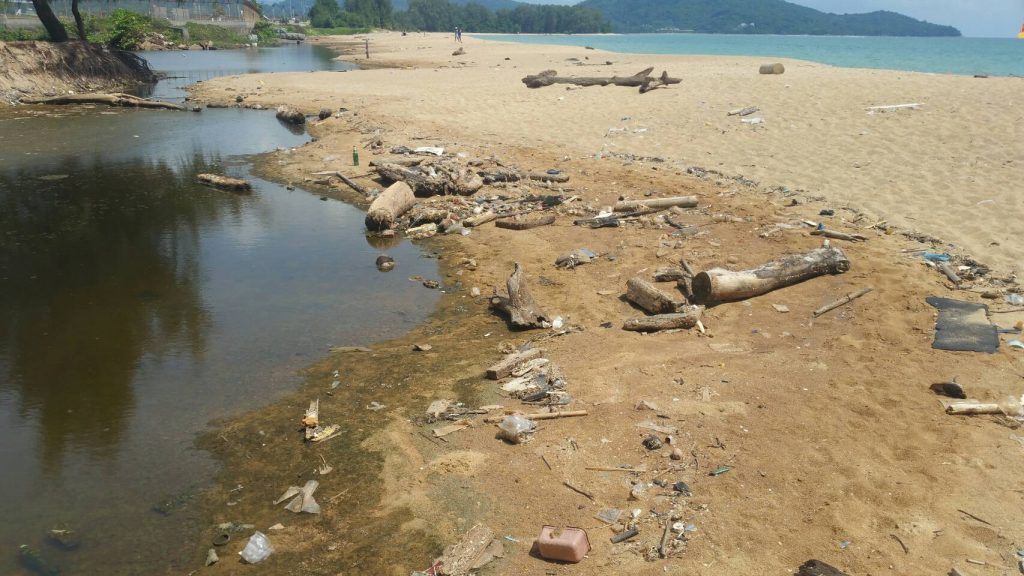
Countless people visiting Phuket’s Mai Khao Beach for an close-up encounter with landing passenger jets have left countless garbage, and on Tuesday local officials will visit the beach and remove it, according to Phuket Gov. Noraphat Plodthong.

Noraphat said the problem had gone ignored because of bureaucratic red tape. The beach sits in Sirinat National Park and is therefore off-limits to the jurisdiction of local authorities.

“As you know, it’s not easy for us to go onto national park land,” Noraphat said by telephone.

As the beach is near Phuket International Airport, beach-goers can see airplanes up close as they approach the runway, making the beach popular for photographers and planespotters.

But some residents complained to the media during the weekend that its fame has also brought trash left scattered over the area. Noraphat said the authorities are now aware of the complaints, hence tomorrow’s cleanup operation.

Noraphat, who was appointed to his position just two months ago, said public cleanliness would be one of his top priorities.

91461
Trashes at Mai Khao Beach on Sunday
Advertisement

Rescue Effort Fails to Save Wounded Dugong

A marine officer holds a dying dugong in his arms Sunday. The wounded male dugong beached onto Koh Phi Phi before dying that morning despite rescue efforts. Read: Rescue Effort Fails to Save Wounded Dugong

KRABI— A weak and wounded dugong who beached himself on Koh Phi Phi died in the arms of marine officials Sunday morning.

In the early hours of Sunday, the 44-kilogram dugong swam ashore with a stinking, rotting wound along his body. Residents quickly alerted marine officials, who treated the animals wounds and fed it antibiotics. It wasn’t enough to save the two-meter animal, who died a few hours later at 8:30am.

“We tried our best, but we couldn’t keep him alive,” local marine resources official Kongkiat Kittawattanawong said. “He was wounded by a sharp object across his back, most likely the propeller of a boat or fishing gear. He was sick for many days until he weakened so much that he couldn’t help himself.”

The dugong is undergoing autopsy to determine his exact cause of death. Kongkiat said that it was the 10th dugong to die along the Andaman Coast so far this year. Most have been killed by either boats or fishermen.

Dugongs are considered a vulnerable species, and their once-plentiful numbers around Thailand have crashed.

Once found abundantly in the waters off both coasts, the last known resident dugong in the Gulf of Thailand died in November 2016 just off Rayong province. The Andaman dugong population has dwindled to fewer than 200 animals.

IMG 8027 bsVFwka
Marine personnel hold the wounded dugong before it died Sunday on Koh Phi Phi.
IMG 8030 9mPa7dq
The male dugong is inspected for his wound across his back.
IMG 8031 TarC2Iu
A large wound is visible on the dugong’s back.

Related stories:

355 Threatened Marine Animals Killed in 2016

Task Force Weighed After 1,000-Year-Old Coral Stolen From Gulf Island

Giant Whale Killed by Boat Pulled Ashore in Prachuap Khiri Khan

Advertisement

Road Bomb Kills 6 Soldiers in Pattani

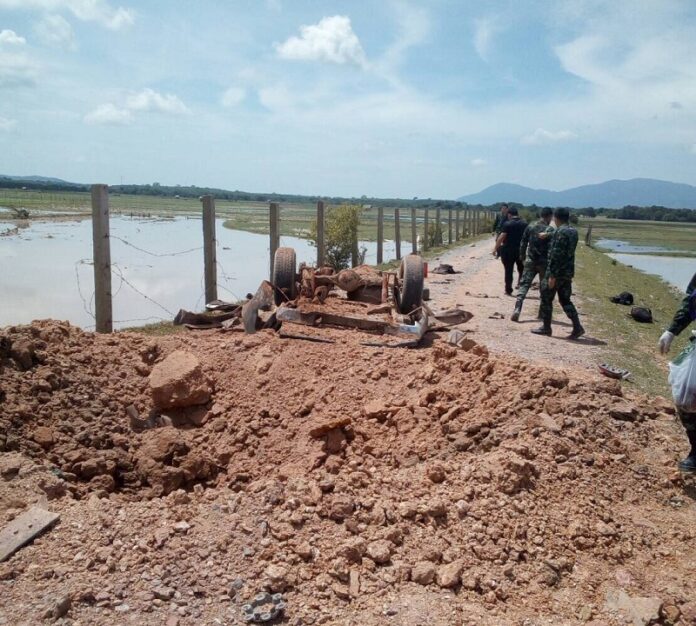
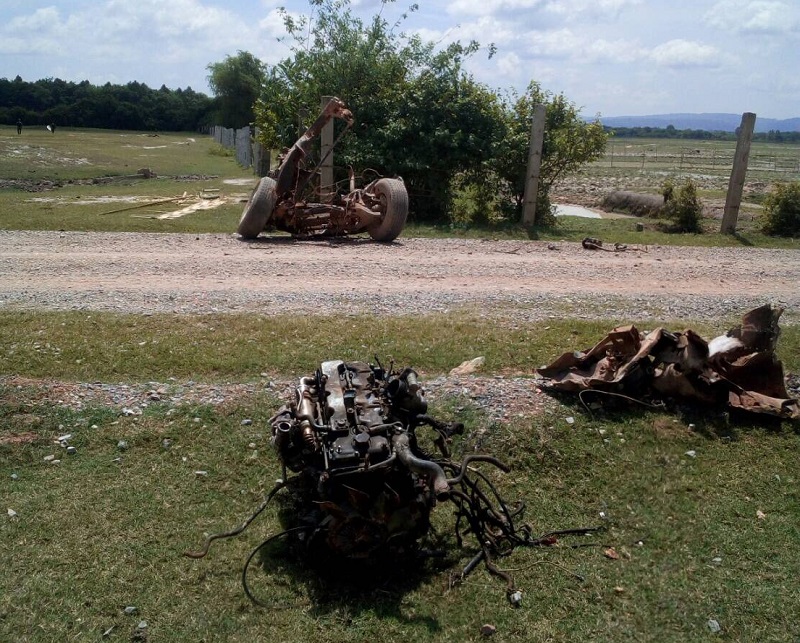
The remains of a pickup and crater left after a powerful bomb exploded Monday under a rural road in the southern border province of Pattani.

PATTANI — A powerful bomb hidden under a Pattani road killed six soldiers Monday.

Ten soldiers were patrolling on the pickup when the bomb, hidden beneath the road in a drainage pipe, exploded just before noon in Pattani’s Thung Yang Daeng district, according to a local police officer who did not give his name because he was not authorized to talk to the media.

Six soldiers were killed immediately while the other four were injured.

The area was ordered shut down for a search by ordnance disposal personnel.

truck
The remains of a pickup and crater left after a powerful bomb exploded Monday under a rural road in the southern border province of Pattani.
Advertisement

Joe Jonas & DNCE to Bring ‘Body Moves’ to Bangkok

Photo: DNCE / Facebook

BANGKOK — American singer Joe Jonas, formerly half of The Jonas Brothers, and his dance-oriented rock quartet will perform their first show in Bangkok this August.

Known for “Cake By The Ocean,” “Body Moves” and “Toothbrush,” the fashion-forward New York group DNCE will come to play Bangkok, organizer BEC-Tero Entertainment announced Monday.

Opening acts will include Japan’s Sekai No Owari and American MC Garrett Charles Nash, aka Gnash.

The concert will take place Aug. 10 at Muang Thai GMM Live House on the eighth floor of CentralWorld. Tickets are 1,500 baht and 2,500 baht. They go on sale June 25 at ThaiTicketMajor.

DNCE was founded in 2015 by Jonas and Jack Lawless, who drummed for Jonas Brothers. The quartet is signed to Republic Records and released its debut single “Cake By The Ocean” two years ago to commercial success.

Advertisement

Spanish Boy Band Serenades Thai Fans Before Concert

BANGKOK — The handsome Spanish muses of Dvicio will return to Thailand next month, and in the meantime sought to charm Thai fans by singing in Thai.

“Thai fans, this is a present for you. We hope you like it… We love you,” the pop-rocking band wrote Friday on Facebook.

In the posted video, lead singer Andres Ceballos wakes up in bed, shirtless. He wakes up and joins his mates to have a go at singing “Sak Wan Kong Daii Jer  (We’ll Meet Some Day),” still without having bothering to find a shirt. It’s a cover of a song by Saksit “Tor” Vejsupaporn, who collaborated on recent single “No Te Vas” with Dvicio.

The eyecandy boy band first visited in February 2016 for a fan meeting at which they sang Thai hit “Yoo Tor Loey Dai Mai (Please Stay Longer)” by the ukulele-strapping musician Singto Numchok.

In September, they posted another cover of a Thai hit, “Kon Mee Sanay (Charming Person)” by rock singer Pang Nakarin, but their version sounds more Spanish than anything else.

Dvicio formed in 2013 with five members: Andres, Martín Ceballos Sanchez, Nacho Gotor, Alberto Gonzalez and Luis Gonzalvo. They’ve released three albums and are best known for the songs “Paraiso,” “Enamorate” and “Casi Humanos.”

The band will play at 4pm on July 15 at GMM Live House on the eighth floor of CentralWorld. Tickets range from 1,900 baht to 4,900 baht and can be purchased online.

Advertisement

Look Out! More Beams Drop From Elevated Rail Site

Broken scaffolding below construction of the elevated Blue Line Extension as seen Sunday night. Photo: Matichon

BANGKOK — Metal scaffolding came raining down on a busy intersection Sunday night from an elevated rail station being built in the capital’s Bangkok Noi district.

Charan Sanitwong Road was closed several hours after metal scaffolding dropped from the future site of MRT Bang Khun Non, a future station on the western Blue Line extension. The debris fell at about 8pm and landed in three pieces in the middle of the intersection. No injuries were reported.

Contractor SH – UN, a joint venture between Sinohydro Co. Ltd. and Unique Engineering and Construction Co. Ltd, said it was inspecting the scene this morning.

When the Blue Line extension opens in 2020, MRT Bang Khun Non will sit between MRT Bang Sue and Tha Phra.

The incident happened just a week after a metal beam fell from an elevated construction site along the Dark Red Line heightened concerns about public safety.

Acknowledging the rise in accidents at the construction sites under its concession, the Mass Rapid Transit Authority, or MRTA, said Friday it would begin recording accidents under each contractor’s watch. It said that data would be weighed when considering bidding processes for the next three rail lines.

Deputy MRTA governor Pakapong Sirikantaramas blamed recent accidents on human error.

https://twitter.com/pchanpholngam/status/876474513277411328

https://twitter.com/pchanpholngam/status/876480486532567040

Advertisement

Sunny Break’s Over as Rainfall Returns

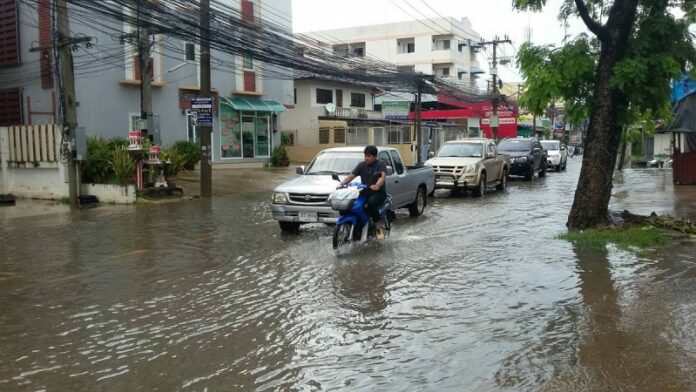
Heavy rains flood Khon Kaen city on Wednesday.

BANGKOK — The skies will darken again after a weeklong break with moderate to heavy rainfall expected into early next week.

There’s a 50 percent chance those in the capital will need umbrellas today, with the heaviest rain expected Wednesday. Expect highs of 35C and lows of 25C.

The northern and northeastern regions, as well as along the Andaman Coast in the south, will see a 60 percent chance of rain due to a low-pressure system and southwestern monsoon.

Online, people already coping with the change in weather are sharing their experiences using #Rain.

Related stories:

Bangkok to Take a Break From the Wet This Week

Wetpocalypse: Bangkok Floods Again (Photos)There’s a Storm Rising Over Bangkok Tonight

Sunshine and … Just Kidding More Rain All Week

Monsoon Now: Prepare to Get Wet

Flooded Areas Across Bangkok After Last Night’s Big Storm (Photos)

Monsoon Brings Spectacular but Dangerous Falls to National Park

Advertisement

News Agency Blames Short Circuit for Fire

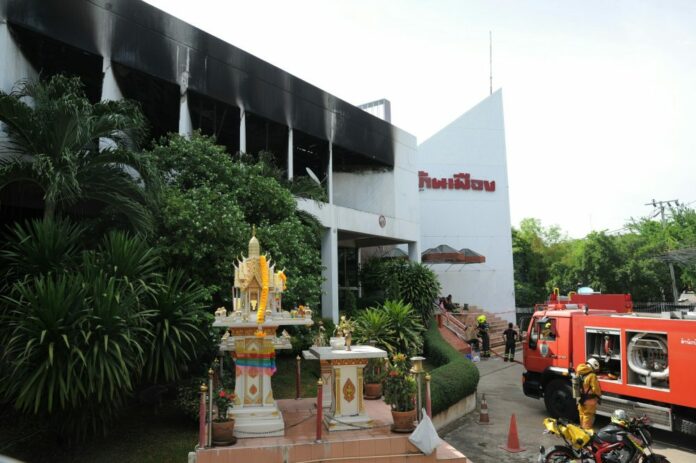
Upper-floor fire damage is visible Monday at the Banmuang news agency’s building Bangkok.

BANGKOK — An electrical malfunction is said to have caused a fire Monday morning at Banmuang newspaper’s offices in northern Bangkok, according to a report on its website.

The blaze broke out at about 7am at the third floor of the newspaper’s headquarters, which is located on Vibhavadi Rangsit Road. Large plumes of smoke could be seen from kilometers away. Firefighters spent over an hour to contain the fire, but no one was injured, the Banmuang article said.

It said the fire was most likely caused by a short circuit, and the building would be sealed off for three days for inspection. The extent of the damage was not disclosed and Banmuang staff could not be reached by telephone.

Founded in 1972, Banmuang was published daily until late 2016 when executives announced it would end print production and laid off related staff. The news company is now online only.

Advertisement

Hot News

LATEST NEWS

Bangkok
overcast clouds
29.7 ° C
31.6 °
28.8 °
81 %
3.7kmh
100 %
Mon
35 °
Tue
36 °
Wed
34 °
Thu
33 °
Fri
32 °