
































30 C
Bangkok
Friday, June 26, 2026
Home Blog Page 2672

Democrat Party Launches Anti-Charter Campaign? Wait a Minute!

Slick anti-charter posters featuring leaders in the Democrat Party appeared on Facebook on Thursday. The party disavows any knowledge of them.

BANGKOK — The Democrat Party appeared to launch a slick online campaign Thursday featuring its top leaders criticizing and opposing the draft charter promoted by the junta, complete with the party’s logo and branding, except for one catch. Reached for comment, a party leader said he has no clue where it came from.

“Someone faked it,” said deputy party leader Ongart Klampaiboon. “I think the Election Commission should look into it.”

The party was caught off guard, Ongart said, and has not met to discuss the matter.

“We can’t quite assess its intent,” said Ongart, who was featured in one of the posters.

“This draft charter contains a lot of language that should be amended, but Meechai [Ruchuphan, head charter drafter] instead asked us to accept it first then amend it later, despite the fact that after the scrutiny, it was found amending it would be very difficult or almost impossible,” read the poster attributed to comments Ongart made on May 14.

The quote, he said, was mostly accurate.

Other images and quotes come from the likes of party leader Abhisit Vejjajiva and deputy leader Nipit Intarasombat.

Asked who might be behind the campaign, such as members of the opposition Pheu Thai Party, the Redshirt movement, pro-democracy activists or even some elements within his own party, Ongart said didn’t know.

“We don’t want to guess. But using our logo is problematic,” he said, adding that each senior Democrat member featured in the posters must check if they’ve been misquoted in them.

It will be difficult for the party to meet and discuss the matter, as it has been illegal for them to do so since the May 2014 coup. Both sides of the political divide have criticized the charter going to public vote on Aug. 7 as undemocratic and regressive. However the military government has criminalized most forms of campaigning or criticizing it in public.

Rangsiman Rome, a student leader of the New Democracy Movement, or NDM, denied his group was behind it.

“We didn’t do it. It’s unrelated to NDM. I didn’t even know it existed until I saw it on the Facebook of Thanapol [Eawsakul],” said Rangsiman, referring to the editor of left-wing Same Sky Magazine, called Fah Diew Gan in Thai. “This reiterates that nobody really supports this charter draft, however.”

Thanapol said he just picked it up on Facebook and didn’t know who created the campaign.

He predicted in his own Facebook post however that the chances of the Vote No camp prevailing is very high, “as high as the chance of seeing the National Council for Peace and Order canceling the referendum.”


Related stories:

No More Than 22 Election Observers Expected Nationwide for Referendum

Regional Monitors In, International Monitors Out for Charter Vote

Redshirts Take Grievance Over Voting Watchdog Campaign to UN

No Thais Can Monitor Vote Because Law Didn’t Say They Can, Commission Reasons
 

Advertisement

IOC Strips 2012 Bronze Medal From Ukrainian Weightlifter

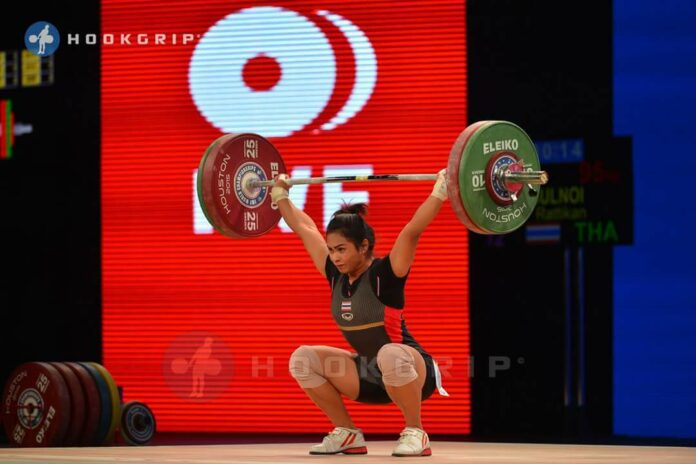
An undated file photo of Siripuch Gulnoi Photo: PookLook Siripuch Gulnoi / Facebook
LONDON  — A Ukrainian weightlifter was stripped of her bronze medal from the 2012 London Olympics on Wednesday, the first athlete formally disqualified by the IOC after the retesting of doping samples from the past two Summer Games.

Yulia Kalina, who finished third in the 58-kilogram division in London, tested positive for the steroid turinabol in reanalysis of her stored samples and was retroactively disqualified from the games, the International Olympic Committee said.

A three-man disciplinary panel stripped her of the medal and ordered her to return it.

The IOC asked the international weightlifting federation to revise the results and consider any further sanctions against Kalina, who could face a two-year ban.

The IOC recorded 55 positive results — 32 from Beijing and 23 from London — in the retesting program, which used enhanced techniques to catch cheats who escaped detection at the time. The Russian Olympic Committee has said 22 of the cases involved Russian athletes, including medalists.

The IOC stores Olympic doping samples for 10 years, allowing them to be reopened and reanalyzed when improved testing methods become available.

Kalina finished third behind gold medalist Li Xueying of China and Pimsiri Sirikaew of Thailand. Fourth-place finisher Siripuch Gulnoi of Thailand – who competed under the name of Rattikan Gulnoi – is in line to be bumped up to the bronze.

The latest retesting program targeted athletes who were in contention to compete at the upcoming Olympics in Rio de Janeiro, but has also been widened to cover many medalists.

IOC President Thomas Bach said Wednesday that further disqualifications will be announced once disciplinary procedures are completed, including hearings and testing of “B” samples.

“The majority of the cases have been dealt with on the IOC level and have been forwarded to the international federations,” Bach said in a telephone interview with The Associated Press and two other international news agencies. “The disciplinary commissions are working hard. We will know pretty soon.”

“If there are no surprises to the test results and the legal procedures, you can be sure wherever an infringement is proven there will be a sanction,” he said.

The International Weightlifting Federation reported last month that its sport had produced 20 positive cases. Four Olympic gold medalists from Kazakhstan and medalists from Russia, Ukraine, Azerbaijan and Belarus have already been provisionally suspended by the IWF.

Entire teams from Russia, Kazakhstan, Belarus and Azerbaijan could be barred from the Rio Olympics because three or more positive cases from each country were discovered during the retests. Each national federation faces a possible one-year ban.

Story: Stephen Wilson

Related stories:

Doping Allegations Cloud Badminton Star’s Olympic Dreams

Advertisement

Bangkok Governor Refuses to Step Down Despite Corruption Allegations

The ‘Bangkok Light of Happiness’ show seen Dec. 31 in front of Bangkok City Hall. The project turned scandalous for the 39 million baht it cost, and an investigation which found bid rigging and other irregularities.

BANGKOK — Sukhumbhand Paribatra said Wednesday he will stay on as governor of Bangkok despite being directly implicated in a 39 million-baht corruption scandal.

Two months after Sukhumbhand was identified along with eight other officials by the Auditor General as involved in collusion over an expensive lighting project, the two-term elected governor said he’ll only step down if the National Anti-Corruption Commission finds him guilty.

“I had to stop working once during the election, how many months more should I waste?” Sukhubhand said, referring to the five months in 2014 he was suspended from his job after he was found guilty of violating campaign law. “It’s not reasonable.”

The scandal started with an LED lighting installation displayed for a month during the new year holidays in front of City Hall. Called “Bangkok Light of Happiness,” it became controversial when taxpayers found out the Bangkok Metropolitan Administration spent 39 million baht of public funds on it.

In early May, the Office of Auditor General said the project was tainted by bid rigging. They also identified other irregularities, such as how City Hall used money from its emergency fund and hired a company with zero experience in such projects.

The head of the National Anti-Corruption Commission, Sansern Poljieak, said Wednesday his office is preparing witnesses and evidence in order to file charges against Bangkok officials.

Sukhumbhand has been twice elected to his post by popular vote as a member of the Democrat Party.

Correction: The previous headline of the article misstated that the Governor has been charged. In fact, no criminal charge has yet been filed against Sukhumbhand. 

Advertisement

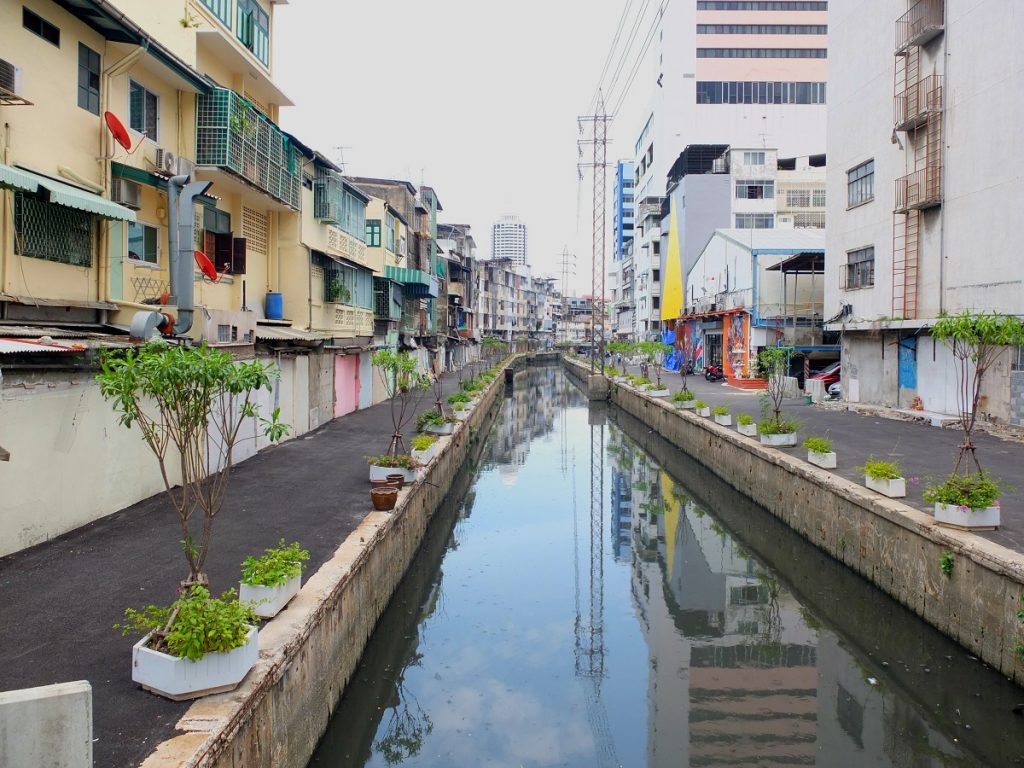
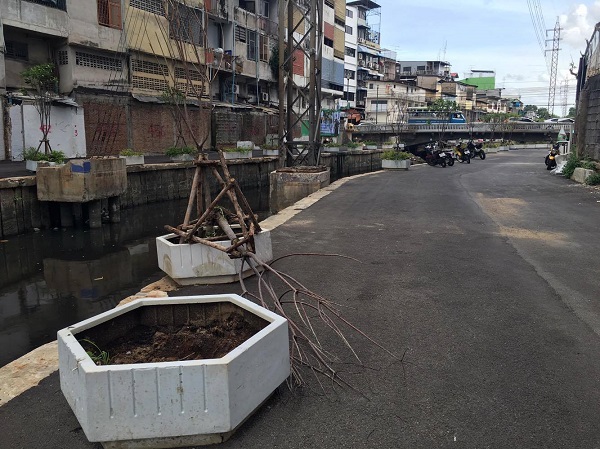
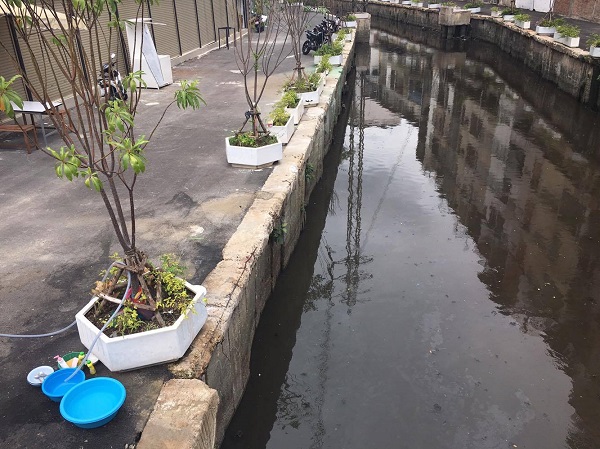
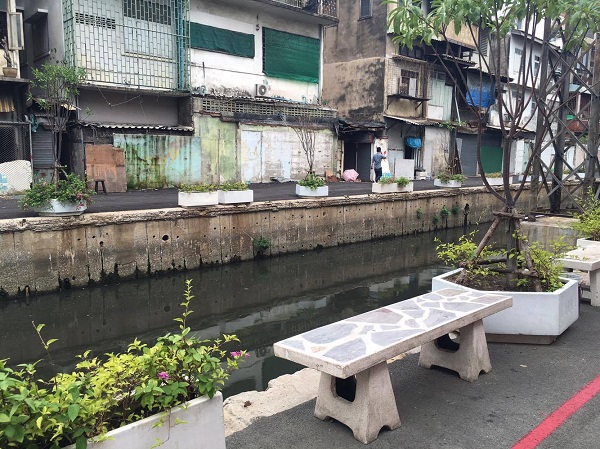
This is What Saphan Lek Looks Like Now (Video)

BANGKOK — It’s been over eight months since the labyrinth of cheap toys, games, and electronics that was Saphan Lek was hit by the wrecking ball.

The successful eviction of hundreds of stalls on Oct. 20, which had for decades squatted over a canal that was technically public property, was a significant victory in City Hall’s campaign to reclaim public space, usually at the expense of vibrant street markets.

As much as the move was criticized for bleaching Bangkok of its personality, authorities were also applauded for their promises the space would be developed into public recreational space, with the canal used for transportation.

Read : Vanishing Bangkok: What is the Capital Being Remade Into, And For Whom?

A few weeks after the demolition, things were looking good when City Hall used the spot to host a Loy Krathong Festival party on Nov. 25 to show off the cleared space.

But that turned out to be the last time Saphan Lek, named for the nearby “Iron Bridge,” welcomed guests since the demolition. As for the recreation space and canal taxis – no sign.

On a recent afternoon, some chairs and trees were visible along both sides of the canal the market used to sit over. Footpaths cleared along both sides for pedestrians and cyclists were unused. A homeless man covered himself in plastic to protect from the rain.

While the now very quiet area offered far less to see other than the run-down backsides of buildings, one thing the khlong today offers in abundance? Powerful odors to smell.

While it’s unclear what will become of the space, commerce has crept back toward the water in at least one building, which has opened its canal-facing side as a shop selling the kind of knick-knacks once covering the spot.

City Hall has not announced any further plans to develop the site, which is located not far from where finishing touches are being put on a new subway line cutting through the old quarter.

Saphan Lek

Saphan Lek

Saphan Lek

Saphan Lek


Related stories:

Vendors Revolt as BMA Moves to Demolish ‘Saphan Lek’

City Hall Denies Colluding With Developer to Demolish Saphan Lek

One-Year Reprieve Sought for Saphan Lek Market

Demolition Day: Dismantling of Saphan Lek Begins

Khlong Ong Ang Begins Life After Saphan Lek (Photos)

Advertisement

Doping Allegations Cloud Badminton Star’s Olympic Dreams

BANGKOK — Many hearts sank Wednesday when it became public that badminton sweetheart Ratchanok “May” Intanon might not participate in the upcoming Summer Olympic Games.

News that Ratchanok tested positive for a banned substance in April in China proved a disappointment for the prospects of one of the kingdom’s star athletes.

Her team said came as the result of a medical treatment; Ratchanok’s urine and blood samples have been sent to be tested again at a lab in Japan.

It’s unknown when those results will be available, but the Games’ opening ceremony will be held in three weeks.

Thana Chaiprasit, head of Thailand’s Olympic delegation, said the substance was a steroid injected to treat a knee injury. At the moment, Ratchanok’s name is still on the list of Thai athletes going to Rio De Janeiro.

Patama Leeswadtrakul, president of Thailand’s Badminton Association, couldn’t be reached for comment, nor could Rachanok’s manager, Kanisara Ngoen-srisook of the Baan Thongyod Badminton School.

Apichai Teeraratsakun, the badminton association’s deputy secretary, said a news conference about Ratchanok’s situation would be held some time next week.

If the test results came back positive, Ratchanok is expected to be banned for two to four years from the sport she has come to dominate.

Weerachai Wipatwit, the Badminton Association’s deputy secretary general, said the incident had nothing to do with Ratchanok being withdrawn as Thailand’s flag bearer at the Aug. 5 opening ceremony at the Maracana Stadium in Rio De Janeiro.

Thailand is sending 52 athletes, including 21-year-old Ratchanok, to the Rio games.

Ratchanok rose to the World’s No. 1 in the rankings for the first time in April for Women’s Singles. She was the first Thai badminton player to do so.

A number of nations have been tainted by doping charges before the Games even start. All but one Russian athlete has been banned from participating due to that nation’s massive doping scandal. On Wednesday, a Ukrainian weightlifter had her bronze medal taken away four years after the London Olympics.

Advertisement

Line Opens on NYSE Today After $1.1 Billion IPO

Line Corp. Chief Strategy and Marketing Officer Jun Masuda speaks at a March 24 news conference near Tokyo. Photo: Shizuo Kambayashi / Associated Press

NEW YORK — Investors looking to ride the mobile messaging craze — get in line.

The Japanese messaging app Line is set to begin trading on the New York Stock Exchange on Thursday and in Tokyo on Friday. Though little known in the United States, Line has enjoyed a quick surge to popularity in Japan, filling an important communications hole after a devastating earthquake and tsunami in 2011 damaged phone infrastructure. In its home country, Line has more users than Facebook or Twitter.

Even if you haven’t heard of Line, there’s no need to look further than your own smartphone to gauge the importance of mobile messaging. Chances are, you’re among the 900 million users of Facebook Messenger, or the billion-plus users of WhatsApp. You might also have Snapchat, WeChat, Viber or Kakao Talk.

In an age when we’re glued to smartphones around the clock and increasingly shun traditional phone conversations, chat is king. Companies are angling to get in on the messaging craze with automated “chat bots” offering to book your plane tickets, shop for tennis shoes or send the day’s weather report. Emoji, the tiny virtual stickers attached to — or sent instead of — text messages, have become their own language.

Since its founding five years ago, Line has surged to 218 million active users, even though it’s available only in a handful of countries. Line’s members use the app not just for messaging but to send each other cute cartoon “stickers” (think intricate emoji) or search for jobs or music. It also offers free voice calls and has been focusing on expanding to markets such as Thailand, Taiwan and Indonesia.

It’s not yet clear how well Line might do in Western markets, where Facebook’s Messenger and WhatsApp are among the most popular messaging options. In addition, Apple and Google are also working on sprucing up their messaging offerings.

Based on this week’s offering, though, there’s strong investor demand for Line. On Monday, Line’s initial public offering raised more than USD$1.1 billion, making it the biggest IPO in the U.S. so far this year, according to IPO research firm Renaissance Capital. Shares priced at 3,300 yen each, or USD$32.84 per U.S.-traded share, the top of the predicted range. That suggests strong demand. The offering values Line at nearly USD$7 billion.

Line has its headquarters in Tokyo, but is owned by Naver Corp., South Korea’s No. 1 search engine. Line’s stock debut in Tokyo and New York is a milestone event for a Korean internet industry that has typically seen little success outside the country, apart from some online games.

In South Korea, though, Line lags far behind Kakao Talk, which had a year’s head start. With Kakao already popular, Naver turned its efforts instead to Japan, where no dominant messenger app was present at the time. It grew Line into an international service, while Kakao remained largely a Korean one.

Even in China, where Line is blocked along with Kakao, Line is well known for its cute animal characters, such as Brown bear. Those mascots started initially as “stamps” that users send to express their emotion or to replace text. They have turned into merchandised items sold at Line Friend Stores in some Asian countries including China. In Seoul, Chinese tourists flock to Line shops and queue up to snap up Brown dolls and Sally cups.

Naver still owns a majority stake in Line after the IPO. Co-founder Lee Hae Jin, 48, is one of the wealthiest individuals in South Korea. Speaking to reporters after a forum in 2014, Lee said he was “seriously truly worried” whether Naver could win the competition with American or Chinese companies.

This week’s IPO shows it at least has a fighting chance.

Story: Barbara Ortutay, Youkyung Lee

Advertisement

ISIS’ Malay-Language Media Unlikely to Win Hearts, Minds in Deep South, Experts Say

The homepage as seen Wednesday of Al Fatihin, a Malay-language news site promoting radical Islamist violence.

BANGKOK — Even if it’s true the Islamic State is distributing newspapers in Thailand’s restive southern provinces, the group is unlikely to gain sway in the region, experts on the Deep South said Wednesday.

News the organization launched Malay-language media operations including a web site and newspaper said to be reaching the Thai provinces where Muslim separatists have battled for autonomy for over a decade, comes at a time the radical Islamist movement is reportedly intensifying operations in Southeast Asia.

According to Malaysian news agency Berita Harian, the newspaper called Al Fatihin (The Conqueror), is being handed out in Malaysia, Indonesia, Brunei, Singapore, the Philippines and southern Thailand. It also has a website at Alfatihin.com, which went offline at about 6pm Wednesday.

The 20-page paper was launched June 20 during the holy month of Ramadan, with a stated aim of rallying sympathizers in Southeast Asia to its cause, according to a paper written by researchers at Singapore’s Nanyang Technological Institute.

The paper said Al Fatihin is produced by an ISIS-linked publisher called Furat Media, and is “dedicated to the creation of Daulah Islamiyah (IS) in Southeast Asia” and “could also serve the larger Malay-speaking audience in the Philippines, Indonesia, Malaysia, Singapore, Brunei and Thailand.”

But people involved in the southern provinces say they haven’t heard of its distribution in Thailand so far.

“There’s no such thing. I have never seen any recruitment material by ISIS,” said Chamroon Den-udom, chairman of Southern Islamic Culture Foundation, which regularly hosts discussions between authorities and local activist groups.

Lt. Gen. Chalermpan Achalaboon, commander of the police force in the restive southern border provinces, shared the sentiment. “I can guarantee you, there is no such thing. None. If there is, our intelligence unit would have detected it already.”

Srisomphop Jitpiromsri, director of the Deep South Watch news agency, which tracks violence there, allowed that the newspapers could be distributed “on a personal level” though he’s not aware of it.

“I have never heard of news of ISIS in the region,” Srisomphop said. “I never heard anything about any recruitment or mobilization attempt. I’m only aware of such thing happening on the Malaysian side [of the border].”

The experts also believe that even if the claim were true, the group would have a hard time winning hearts and minds in the region.

Chamroon said he often talks to members of MARA Patani, an umbrella group of insurgent networks in the Deep South, and they told him they are unwilling to work with ISIS.

“MARA doesn’t want them. They don’t want to bring them here,” Chamroon, a former police commander, said. “These groups have problems with the Thai state, but it doesn’t mean that they support ISIS.”

Chamroon also said many separatist groups rely on support among Malaysian officials, and since ISIS has already declared war on Malaysia, it’s unlikely Thai insurgents would risk that relationship by embracing ISIS.

Another factor is a difference in ideology, Srisomphop said.

Muslim militants in the southern provinces of Pattani, Narathiwat and Yala are only intent on reviving the independent state of Patani, he said, which was annexed by Thailand in the early 20th century, not global jihad.

“The movement in the south focuses on local identity and history, unlike the global Islamic state that is being advocated in the Middle East,” Srisomphop said, adding that ISIS often launches attacks on Western targets, something that Thai separatists have never done.

He also said a recent survey conducted by his agency found that up to 90 percent of population in Pattani, Narathiwat and Yala “doesn’t agree” with ISIS.

Related stories

Govt Investigates Reports of ISIS in Deep South

Uighur, Chechen Militants in Thailand to Stage Attacks, Memo Warns

Moscow Warns That ISIS in Thailand to Attack Russian Targets

No Credible ISIS Threat, Thai Interpol Head Says

Advertisement

Report: Japan’s Emperor Akihito, 82, Considering Retiring

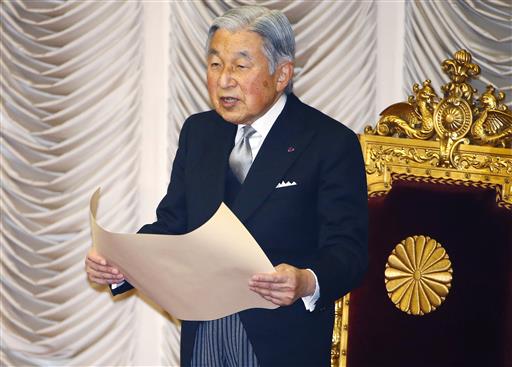
In this Jan. 4, 2016, file photo, Japan's Emperor Akihito reads a statement to formally open the ordinary diet session at the upper house of parliament in Tokyo. Photo: Shizuo Kambayashi / Associated Press

TOKYO  — Japan’s public television says Emperor Akihito has expressed his intention to retire and relinquish his title in the next few years.

NHK said the 82-year-old Akihito did not wish to remain emperor if he had to reduce his official duties. Akihito in recent years has referred to his old age, and the Imperial Household Agency has suggested cutting back on his duties.

The report Wednesday evening cited unidentified agency sources.

It was not known if his hopes to retire were related to his health or if he had a timeline to relinquish his title to Crown Prince Naruhito.

The Imperial law does not specify rules about the timing of succession.

The last succession from a living emperor was about 200 years ago.

Advertisement

Some Like it Rain: Storms Soak Bangkok. Not Gonna Stop. (Photos)

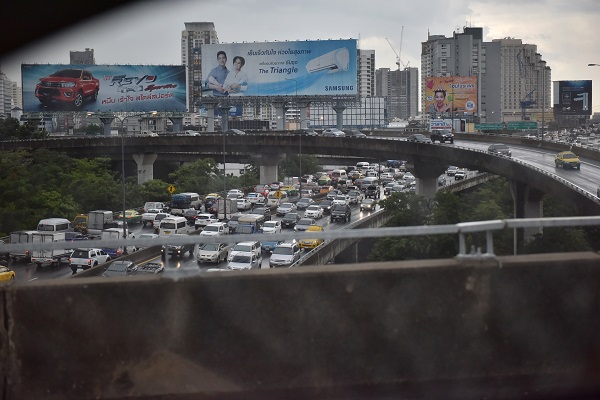
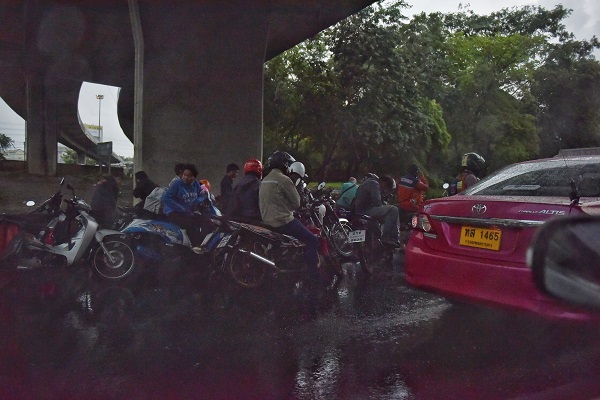
BANGKOK — Seasonal storms continue to pummel Bangkok, causing traffic mischief, mayhem and some damage throughout the capital on Wednesday.

Some unfortunate cars parked in a quiet little lane next to Wat Ratchabophit in the Dusit district were smashed when a large tree and utility pole came down in the fierce storm at about 2:30pm.

One of the vehicles belonged to Channel 3. Its rear window was shattered.

The weather downgraded traffic on Vibhavadi-Rangsit Road from the usual “bad” to “awful.” Flooding reportedly hit three major roads: Ngamwongwan, Pattanakarn and Srinakarin.

Forecasts call for dark skies and a lot more wet through the weekend, with some possible relief come Sunday.

raintree1

raintree2

201607131552228 20141219141612

201607131552226 20141219141612


Related stories:

Thonglor 10 Goes Dark As Storm Topples Huge Tree

Advertisement

Solar-Powered Plane Arrives in Egypt on Globe-Circling Trip

An experimental solar-powered airplane is seen after landing in Cairo, Egypt, Wednesday, July 13, 2016. Photo: Associated Press

CAIRO, Egypt — An experimental solar-powered airplane has arrived in Egypt as part of its globe-circling voyage.

The aircraft, Solar Impulse 2, flew out of the Seville airport in Spain on Monday and landed in Cairo on Wednesday. This leg of the trip had been expected to last about 50 hours and 30 minutes.

The flight, piloted by Swiss man Andre Borschberg, arrived in Seville on June 23 after an unprecedented three-day flight across the Atlantic.

The around-the-world voyage began in March 2015 in Abu Dhabi in the United Arab Emirates and is due to finish there, too.

The wings of Solar Impulse 2, which stretch wider than those of a Boeing 747, are equipped with 17,000 solar cells that power propellers and charge batteries. The plane runs on stored energy at night.

Advertisement

Hot News

LATEST NEWS

Bangkok
scattered clouds
30 ° C
32.2 °
30 °
80 %
2kmh
48 %
Fri
31 °
Sat
36 °
Sun
36 °
Mon
36 °
Tue
34 °