






























37.7 C
Bangkok
Thursday, June 25, 2026
Home Blog Page 1725

BTS Fails to Keep Accessibility Promises for 4th Year

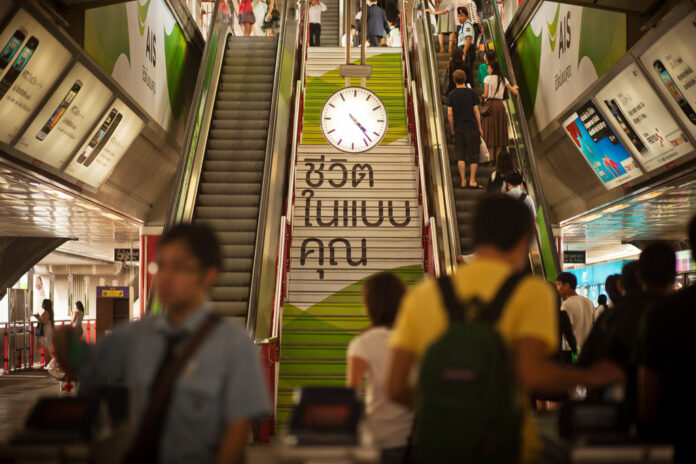
A file photo of stairs and escalators at BTS Siam. Photo: Nopphan Bunnag / Flickr

BANGKOK — The BTS Skytrain remains inaccessible to all commuters four years after a historic legal victory for disability activists.

Activist Manit Inpim this week accused the city of failing to do its job, saying he is unaware of any progress since 256 million baht was approved nearly eight months ago for construction of elevators at all exits of every station.

“I haven’t seen the latest situation, but I believe the installation is still not done,” he said this past week. Monday will mark five years since the Supreme Administrative Court gave the Bangkok Metropolitan Administration, or BMA, a one-year deadline to make stations throughout the elevated rail system accessible to commuters with disabilities.

Since then, years of inaction and delays have raised doubts about the BMA’s intent to comply with the court order and led the original litigants to go back to the courts.

Panurak Klannurak, the BMA’s newly appointed transport director, said by phone this week that they still haven’t found a contractor to do the work, and he doesn’t know when they will.

In May, the city promised the new elevators would be ready within four months of finding a contractor.

Every year since 2015, Khaosod English has checked in on the anniversary of the landmark 2015 court ruling. In 2016, city officials blamed infrastructure issues for missing the deadline but promised all work would be done that September. When 2017 began with no progress and more vague assurances, disability activists filed one of the kingdom’s first class-action lawsuits, which sought large compensatory damages. The lawsuit stalled, but by this time last year, nearly every station had at least one lift. It still fell short of the original high court ruling that the system be made accessible, as many elevators only connected one side of the street.

This past year has not been more encouraging to their cause.

Manit, who uses a wheelchair, shattered a glass elevator door at BTS Asok in March in a fit of rage after he was denied its use without filling out paperwork. A court-ordered joint-inspection of the rail network was carried out as part of the litigation, and the funds were approved for the additional elevators.

And going forward, it’s unclear the city will do better. When a new BTS extension to Samut Prakan opened last month, it didn’t take long for the public to be baffled by a wheelchair ramp at BTS Sai Luat that led to a ditch filled with weeds and rubbish.

Pakapong Sirikantaramas, the Mass Rapid Transit Authority governor, said in a phone interview Wednesday that the authority had talked to the owner of the land beside the elevator and had begun work expanding the ramp.

Manit said he doesn’t understand why the city continues to let such problems happen. He said his network inspected the construction work and submitted written suggestions to the authority six months before it opened.

“Why does BMA have to turn very simple things into something so complicated? This is how the people are thinking of them,” he said. “We’ve done enough work. Now it’s their responsibility to complete the work as promised. BMA has to act as an employer. It should take measures to accelerate the process.”

Ongoing efforts to force compliance by going back to the courts have stalled as well.

After winning administrative delays of the class action suit filed two years ago, the BMA convinced the civil court it should be heard in the administrative court, according attorney Sonthipong Mongkolsawas, who represents the plaintiffs. The case was dropped after the administrative court ruled it was not a venue for class actions.

About 430 commuters with disabilities responded by jointly suing the BMA in the administrative court for the same damages in a case that is ongoing.

On another front, Manit and five other activists sued the MRT subway in November over its lack of accessibility, demanding 16.8 million baht in compensation.

Related stories:

Transit Authority to Look Into BTS Wheelchair Ramp to Nowhere

City Hall Approves 256M Baht For BTS Elevators

Disabled Activist Rages After Denied Elevator at BTS Asok

BTS Class-Action Suit Back on Track After Year Delay

Three Years of Excuses Later, BTS Still Not Accessible

City Hall Challenge Delays Decision on BTS Accessibility Suit
Advertisement

Defending Champ Gone: Sharapova Ousts Wozniacki in Australia

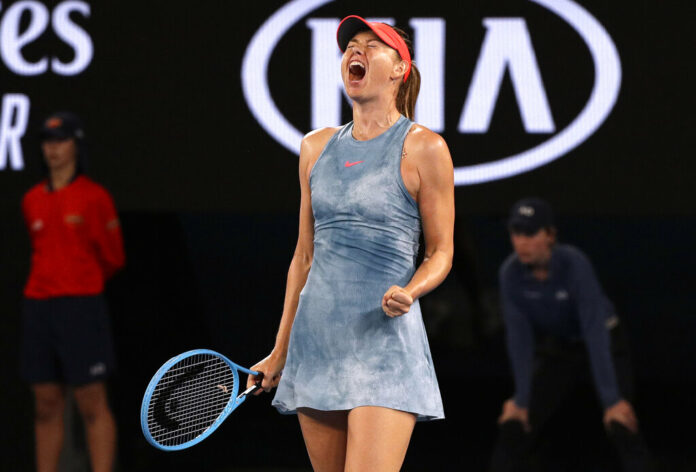
Russia's Maria Sharapova celebrates a point win over Denmark's Caroline Wozniacki during their third round match Friday at the Australian Open tennis championships in Melbourne, Australia. Photo: Kin Cheung / Associated Press

MELBOURNE, Australia — Maria Sharapova smacked a forehand winner – the sort she’s hit so many times, at so many key moments, over the years – to take control against defending champion Caroline Wozniacki at the Australian Open. Sharapova balled up her fists, shut her eyes, threw back her head and let out a yell.

She showed she’s ready to be a Grand Slam factor once again.

Sharapova grabbed the last four games to eliminate Wozniacki 6-4, 4-6, 6-3 in nearly 2½ hours Friday and reach the fourth round at Melbourne Park, building the statement-making victory with aggressive groundstrokes that gave her a 37-10 edge in total winners.

“I haven’t played many matches in the last year, especially against top players,” Sharapova said. “And these are the kinds of matches I train for.”

She cut her 2018 season short in September because of problems with her surgically repaired right shoulder.

Sharapova is seeded only 30th at Melbourne Park, where she won the 2008 title for one of her five Grand Slam trophies but hasn’t been past the quarterfinals since 2015.

The 31-year-old Russian missed the tournament in 2017 during a 15-month doping suspension that was triggered by a positive doping test during the previous year’s Australian Open.

Wozniacki was the No. 3 seed in Australia, a year after beating Simona Halep in the final to claim her first major championship.

Next for Sharapova is a matchup against Australia’s Ash Barty, who beat Maria Sakkari 7-5, 6-1 to equal her best showing at any major tournament.

“I know,” Sharapova said, “it’s going to be a tough crowd.”

No. 15-seeded Barty took two nearly years off from the tennis tour after the 2014 U.S. Open and played cricket during that time.

“Her story is phenomenal,” Sharapova said. “I know she took a little break and came back and just resurged.”

Against Wozniacki, Sharapova hung in there in a back-and-forth contest.

Wozniacki led 3-2 in the third set after holding at love. But Sharapova finally gained the upper hand with a break for a 4-3 lead, clinched with that big forehand she was so excited about.

After holding to go up 5-3, Sharapova broke yet again to end it, closing with a big cross-court backhand.

“The level was quite high,” Sharapaova said. “I knew I was going to get a tough match.”

Advertisement

Students Appalled by Haphazard Forced Cut (Video)

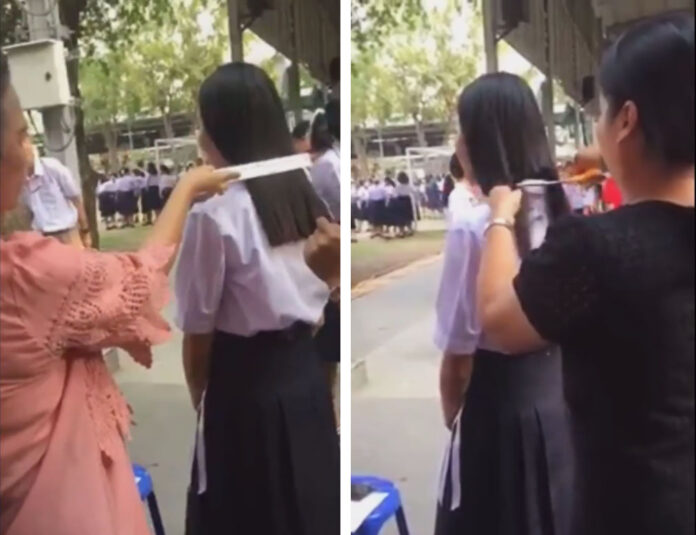
Kanchananukroh School teachers cut the hair of a Matthayom 4 student on Jan. 10 in Kanchanaburi.

KANCHANABURI — A teacher presses a ruler onto the nape of a student’s neck while the other crudely shears five inches of her straight locks off in a matter of seconds.

Kanchananukroh School in Kanchanaburi City was gaining viral infamy Friday not for its academics or athletics, but a haphazard haircut forced upon a student with hair deemed too long.

“Teachers warned her many times, but she didn’t get her hair cut according to the rules,” administrator Phawadee Jittamai said, defending the haircut. “We cut her hair according to the school rules in the student handbook. The student who posted the clip also damaged the school’s reputation and will have their behavior scores docked.”

Phawadee said the haircut happened Jan. 10 to a Matthayom 4, or Grade 10 student.

While it’s not uncommon for teachers to summarily enforce school dress codes, including hair cuts, rare footage of it happening combined with its crudity drew debate.

The video’s views exploded after it was posted to a popular Facebook page for hot topics to more than 650,000, with more than 3,000 people sharing it since Thursday afternoon.

Tanawat Wongchai, 20, a former student president at Chulalongkorn University and outspoken progressive, said schools should end such practices.

“We have to have to allow students to freestyle hair, which will eliminate this problem,” Tanawat said. “Although this student may have broken the rules, the teacher’s problem-solving method should not employ violence and violate student’s rights.”

Under Education Ministry rules, boys’ hair must be no longer than their hairline and girls’ must keep it no longer than the nape. Schools have the leeway to allow longer hair, but it must be tied up properly.

Still, both rules could be overridden by individual school rules.

“If dress codes and hair don’t have an effect on studies, then the rules should be updated to go with the times,” Tanawat said, referencing Bangkok Christian College’s recent uniforms-optional experiment.

“So strict about rules, but Thai education is one of the worst in the world,” Facebook commentator Rungsi Sutthimanus wrote.

Songyok Daf pointed out that the teachers in the clip are themselves violating the dress code by not wearing their official government khakis.

A graphic demanding teachers also follow dress codes by wearing their government-issued uniforms or receive no salary, first posted in 2013. Image: New Culture / Facebook

“Teachers dress however they want, let down their hair, wear casual dress and wear silk, like an MP’s wife,” Songyok wrote, attaching a graphic advocating teachers’ uniforms.

However, around a fourth of commenters sided with the time-worn practice, many saying it had happened to them. Some advocated for the girl to be expelled.

“In my day, they shorn my head so unevenly that I went home looking like a gecko. My mom said I deserved it because she already told me to cut my hair. These days people are so sensitive,” Sanong Kookratoke commented.

“Teachers, cutting their hair counts as violating their rights, so don’t bother,” Techaniti Prajakwong wrote. “If she was already warned and punished and still broke the rules, then just leave the school!”

Related stories:

Abusive ‘Buddhist Camp’ One of Top 10 Worst SOTUS Incidents of 2018

Meet the Unlikely Band Taking on University Tradition

Parties Stake Out Positions on ‘SOTUS’ Hazing

SOTUS 2018: Hazing Hits High Schools

Advertisement

Dangerous Art: Fame is Peril For Anonymous Artist Headache Stencil

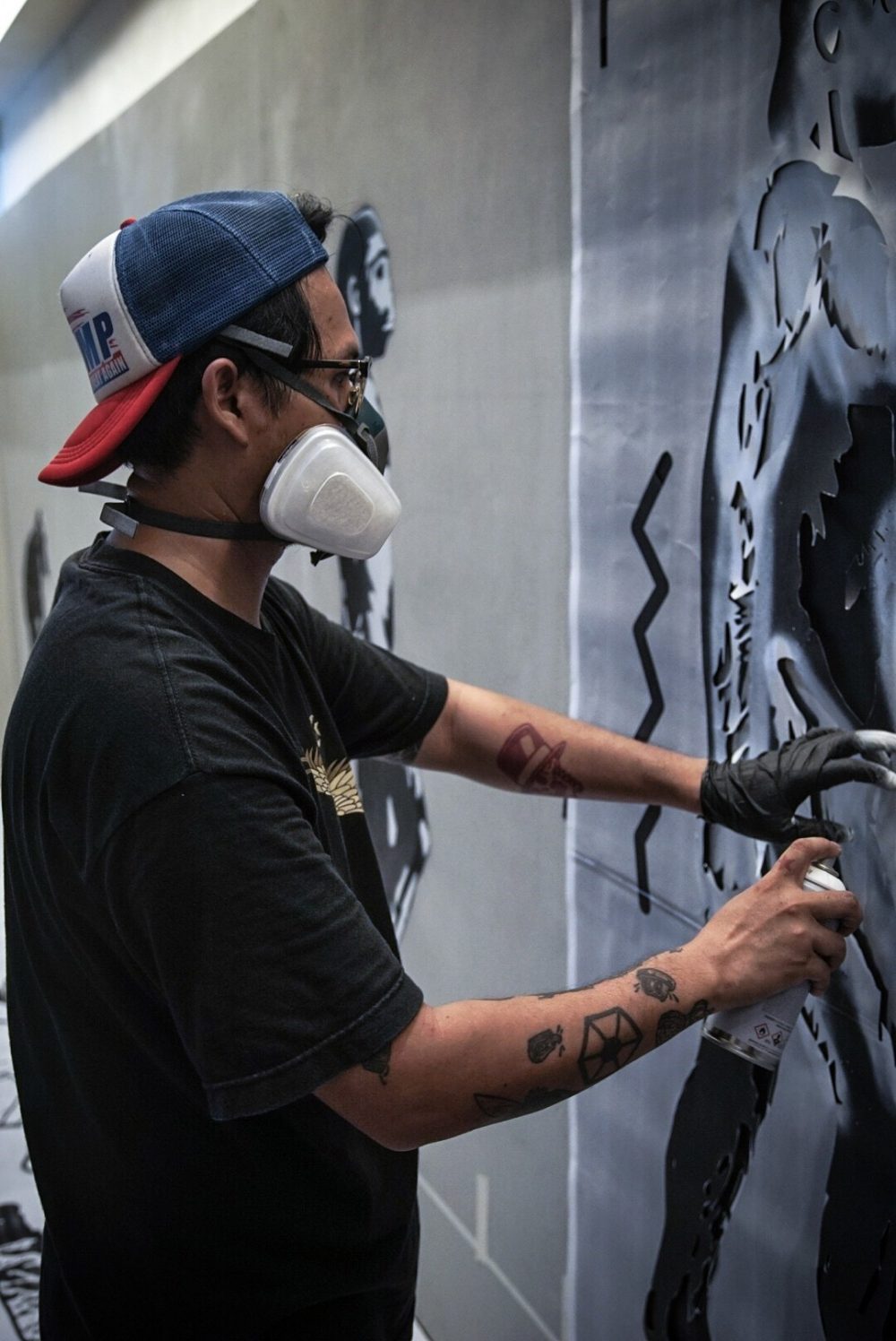
BANGKOK — A junta leader’s face appeared on an alarm clock over Sukhumvit Road. The mural, a challenge to the general then engulfed in scandal, lasted two days before it was painted over.

For the attention it got in the media, the work’s creator was awarded equal parts fame and peril. With security forces hunting him, he fled his own condominium which had been staked out by security forces.

“My life has changed forever since,” the artist, who creates his work anonymously, said in a recent interview. “Who would think that spraying on a wall, what I had done for four years, would put me in that much trouble?”

It’s been one year since Headache Stencil issued what he described as a wake-up call to the nation over corruption in the military government exemplified by junta deputy chairman Prawit Wongsuwan’s watch scandal.

In that time, fear of being hunted by the authorities hasn’t stopped the street artist from addressing other hot-button issues through his preferred format: stencil graffiti.

A black panther with a mute icon became the iconic image after a powerful mogul was accused of poaching a black panther. Crying eyes appeared beside the stump of a 50-year-old tree felled by the city.

“I read a lot of news and my work depends on what I’m into at the time,” he said, adding that he researches his topics beforehand. “I can’t be reckless. I gotta be responsible for what I do, especially when my works are shared on social media.”

Combining stencil works, political messages and a mysterious identity draws inevitable comparisons to another famous artist. But being called “Thailand’s Banksy” obviously doesn’t sit well with Headache Stencil.

“It’s flattering in a way. But if people call me that because they think I copy Banksy’s works, I don’t know what to say because in fact I don’t. So every time I’m about to do something, I gotta see if Banksy has done it already?”

OcpPByzM86DCU8Op utjhDReRkSyNJ8NOwY8ta 3U9IIflJigw3nDK0JUpxdZM7p3
A street mural depicting junta deputy leader Prawit Wongsuwan was up temporarily in February 2018 in Bangkok. Photo: Headache Stencil / Facebook

Whose Headache?

Agreeing to be interviewed by Khaosod English, Headache was comfortable in his own residence. He opened the fridge to fix an artificial lime juice with one hand while the other gripped a vape pen. Over a table covered with mirrored sheets that he uses to cut his stencils, Headache reminisced about his past and the international fame he earned overnight.

Headache is a “30-something” man born and raised in Bangkok. He discovered stencils during a university year when his roommate bought a second-hand photocopier. The walls of his university soon became the canvas for his “experiments.”

“I started calling myself [Headache Stencil] because I knew what I did is going to cause people headaches. I’ve been a troublemaker since I was a kid,” he said.

After graduating, Headache did not daub a wall with graffiti again until after the 2014 coup, when he was in Chiang Mai. Frustrated by bars and clubs being ordered shut early, Headache grabbed a spray can again to mock Gen. Prayuth Chan-ocha by likening the junta chairman to Dr. Evil of “Austin Powers” villainy.

There are always problems in our society that need to be solved, and I think I’ll never run out of things to talk about

A friend, also an artist, encouraged him to enter an international contest in Australia. He was selected to be one of 84 finalists, and the only one from Southeast Asia.

O1OnwEg0IAKx4HygTqSVhnwCefEnEvhJNXTujhQche6dm1U9zLfpbimom3IyzZmEGFzwsvUUG6QGQbI8S1nTbyhGzCEJe gSb GHoq64 ADng214RcsKh
A 2014 mural of Gen. Prayuth Chan-ocha as Dr. Evil.

Back home, Headache didn’t make any headlines until his alarm clock mural caught a reporter’s eye one morning.

The news went out and people learned about Headache Stencil. His Facebook followers leaped from a few hundred to more than 50,000.

Despite gaining a larger audience, the street artist still struggled to find a venue for his first exhibition this past July. He was rejected by many galleries.

“I understood them though. No one wanted trouble. Plus, it’s never a guarantee that my works could sell. Who would wanna buy political art?”

Eventually, his first exhibition, called Welcome to the Dark Side, found a home at Voice Space, the event hall of Voice TV, a broadcaster known for its critical reporting. Spanning the hall was a maze with graffiti art on the walls. The concept was meant to be a relatable metaphor for Thais and Thailand: trying to find a way out.

Fearing it being shut down by the authorities, Headache never announced the venue in advance and instead relied on word of mouth and social media.

SGm1Wl8Krv7VP0oBcrCT7M2sd86eOzOnFDAL Gy1OeDThc5ZoTKJpQoFXDcz1RXSR6T2TaJuSKMWbEh0jjy7RGqIBqWvkIcJrAOAitegJHXyi4u9vwePSNNUVhv2BfaCLWnLwZUi
Headache Stencil’s graffiti of a black panther. Photo: Headache Stencil / Facebook

‘Not Only Graffiti Anymore’

As Thai muralists like Alex Face, Rukkit and Mue Bon gain respect and commercial success, there’s been a surge of graffiti art in urban areas such as Bangkok, Chiang Mai and Khon Kaen.

The big change in attitudes toward graffiti was made clear when Bangkok’s old Charoen Krung district turned itself over to some of the world’s best muralists three years ago as part of the Bukruk Urban Arts Festival.

IMG 0976 e1547790043209
Photo: Headache Stencil / Facebook

“We used to be disgusting to people. But these days many of us have helped improve communities, we’re even given permission by the property owners to spray on their walls,” Headache said.

In March, at the peak of black panther outrage, a veterinary clinic offered space for 10 muralists to emblazon a 15-meter-by-3-meter wall to demand justice.

“It’s not only graffiti anymore. It’s street art. We make the neighborhood pretty, and we send out messages to the public.”

But life remains under military rule in a society controlled by the powerful and unaccountable. Even at home, talking privately, Headache struggles to answer some questions, pausing and restarting. He admits there are things he must be careful about.

“With the power and things that are unspeakable, it’s forced me to yoo pen,” Headache said, using Thai slang that means going with the flow to avoid conflict.

“How can I keep my ideology so I can continue to do what I do? … It’s like chess. If you’re captured, you’re out of the game. But if you take a step back sometimes, you can be a winner some day.”

OaC3eH Nd5RstnWa6Wt4rYPFALnCcnxsnIwkdegLcMFClaaO34 TDsz35hXV0S3OvMGi0OqBqP40ufOcFJCyiyM4NPds 7lqCgdYaUqO7j8FezXLOzuBCmLUJoDFyw0kUdVQhSkd
One of the most recent works by Headache Stencil depicts a student wearing a mask, following the heavy smog which clouds over Bangkok for more than a week. Photo: Headache Stencil / Facebook

Asked when, or if, junta leaves the power, what’s next for him, Headache said he would continue to hit other issues that have persisted a long time.

“[Prayuth] was not the first prime minister in the chair when I have seen problems in society. Actually, I’ve seen them through my life,” he said, mentioning corruption and canals jammed with trash.

“There are always problems in our society that need to be solved, and I think I’ll never run out of things to talk about,” he added.

Prostitution and drug issues are two topics that he’ll take on in an upcoming project at a gallery in Patpong (Check his Facebook page for details). Headache will also hold his second exhibition, Thailand Casino, Feb. 24 through the end of March at WTF Gallery and Cafe. The bar-gallery space is located on Soi Sukhumvit 51 and can be reached by foot from BTS Thong Lo.

Related stories:

Artist Mourns Felled Rain Tree Through Graffiti

Prawit Muralist Says Police ‘Hunting’ Him Then Vanishes

Watch Scandal Gets Bangkok Street Mural

Advertisement

Election Rally Fears Counterprotest to Instigate Violence

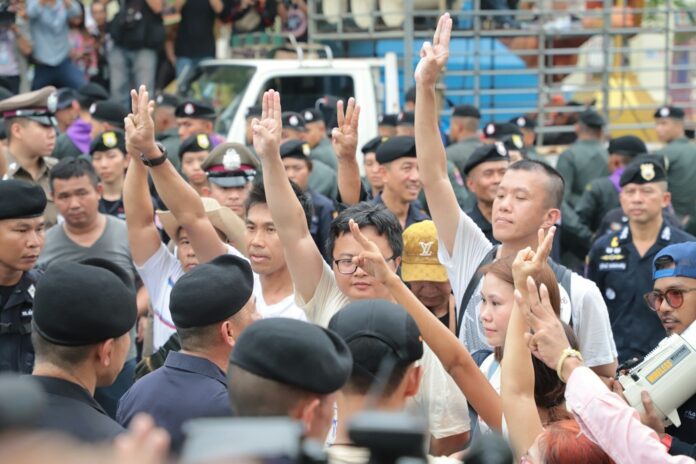
Pro-democracy protesters raise the anti-junta three finger salute on May 22, 2018.

Update: Pro-democracy leaders announced Friday afternoon that their rally would be moved down the road to Thammasat University.

BANGKOK — An organizer of tomorrow’s pro-democracy rally said Friday he fears clashes could break out after a counterprotest was announced for the same site.

The Democracy Monument protest to demand timely elections will be met by another gathering by a heretofore unknown group calling itself “Unity Before Election.” One of the leading pro-election activists has withdrawn from the rally, citing fears of violence, but campaigner Sirawith Seritiwat said the event would go ahead.

“We may adjust our activities and change our plans. We are discussing the matter,” Sirawith said in an interview. “We are looking for ways to avoid clashes.”

March 24 May Be Suitable for Election: Wissanu

Sirawith spoke hours after Nuttaa “Bow” Mahattana – the face of previous peaceful rallies calling for elections – said she would not attend Saturday’s protest.

“I have evaluated myself, as one of the leaders, and I believe I may not have the capability to ensure everyone’s safety,” Nuttaa wrote online.

The counterprotest was called by Facebook page “Unity Before Election,” which has only about 100 followers. It includes no means of contacting the page’s administrators.  

“No peace, no election. Join us in a show of force to end unrest,” the post said, adding that the rally would take place at 3pm at Democracy Monument – roughly the same time Sirawith’s protesters are set to gather.

It is unclear who’s behind the group. Junta spokesman Winthai Suvaree said he’s not aware of the group’s existence, while Chanasongkram Police Station chief Chakkrit Chosoongnoen described them as “members of the public.”

“They are not opposed to elections,” Col. Chakkrit, whose jurisdiction covers the monument, said by phone. “They simply want to see peace and order.”

Chakkrit said police would deploy more officers to keep the two protests in order.

But Sirawith believes the counterprotesters are agent provocateurs organized by the military to incite violence.

“From what I’ve heard, they are set up by the Internal Security Operation Command,” the activist said. “They are trying to draft people from the ranks to harass us.”

The past 14 years in Thailand have been marked by skirmishes between protesters of different ideologies, which have at times turned fatal. Citing the need to establish peace, the military seized power in May 2014 after months of street protests in the capital against the elected government.

Advertisement

Asia This Week in Photos: Cute Pandas, Smog and Aussie Open

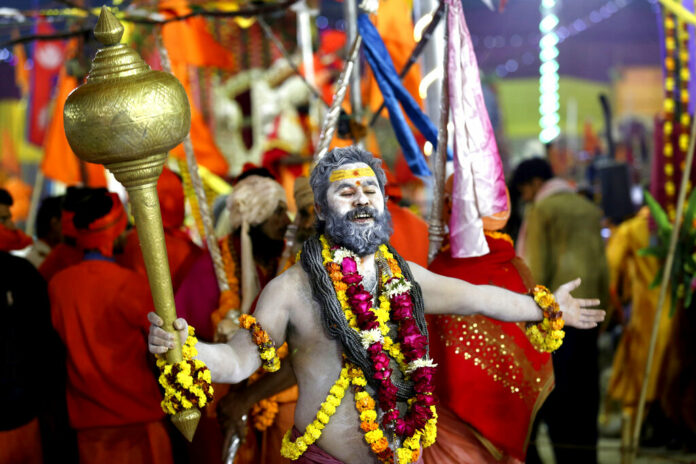
A Hindu holy man dances holding a mace Tuesday as he arrives for a ritualistic dip on auspicious Makar Sankranti day during the Kumbh Mela, or pitcher festival in Prayagraj, Uttar Pradesh state, India. Photo: Rajesh Kumar Singh / Associated Press

Top: A Hindu holy man dances holding a mace Tuesday as he arrives for a ritualistic dip on auspicious Makar Sankranti day during the Kumbh Mela, or pitcher festival in Prayagraj, Uttar Pradesh state, India. Photo: Rajesh Kumar Singh / Associated Press

A female panda, still unnamed after being born in a Malaysian zoo, celebrates her first birthday with an ice cake.

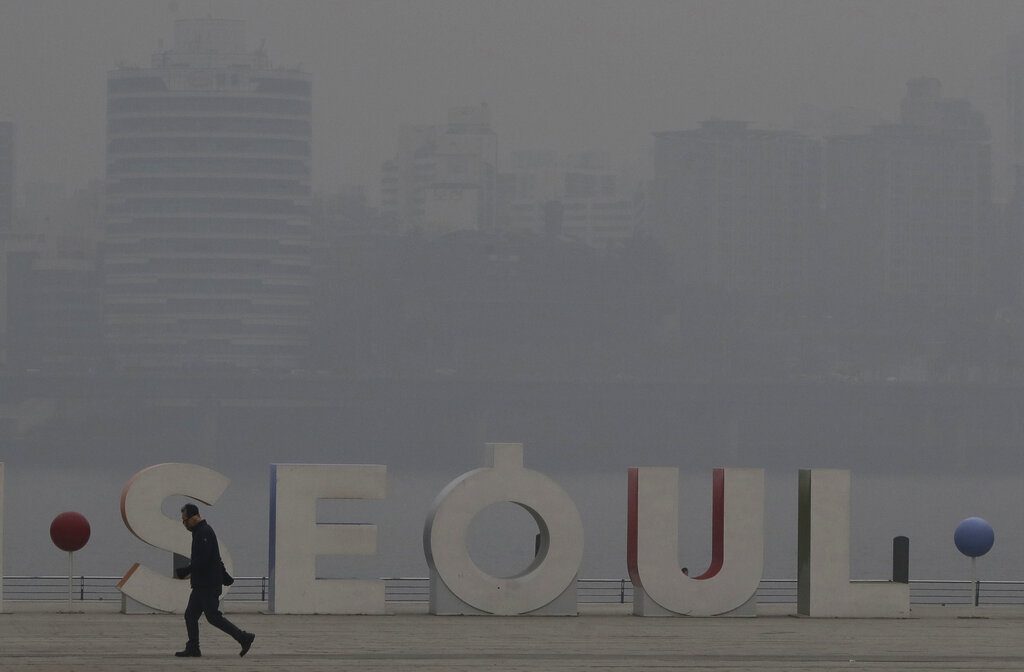
In other images from the Asia-Pacific region this week, a man wears a mask along the Han River in Seoul, South Korea, as unusually high levels of smog worsened by weather patterns engulf parts of Asia.

Kimono-clad women celebrate their 20th birthday on Coming of Age Day, a national holiday in Japan, with a ride on a roller coaster.

AP19016491301321
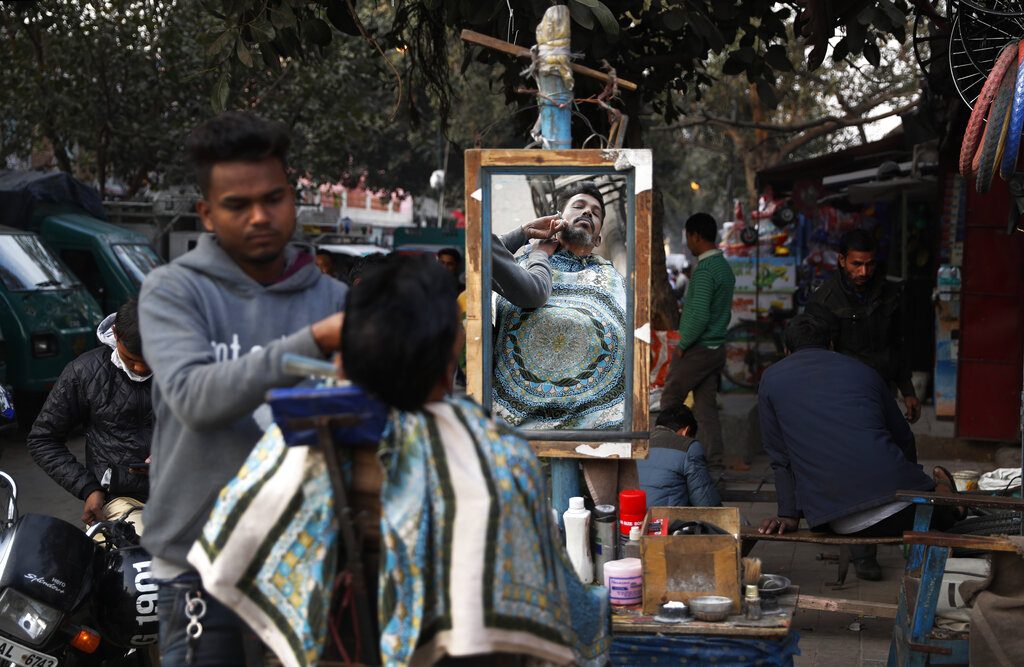
In this Wednesday, Jan. 16, 2019, file photo, an Indian man has his beard trimmed at a roadside barber shop in New Delhi, India. (AP Photo/Altaf Qadri, File)
AP19016462355029
In this Wednesday, Jan. 16, 2019, file photo, a pair of buffalos lock horns during a traditional buffalo fight held as part of Magh Bihu festivities at Boidyabori village, east of Gauhati, India. Magh Bihu is the harvest festival of the northeastern Indian state of Assam and is observed in the Assamese month of Magh, that coincides with January. (AP Photo/Anupam Nath, File)
AP19015324120710
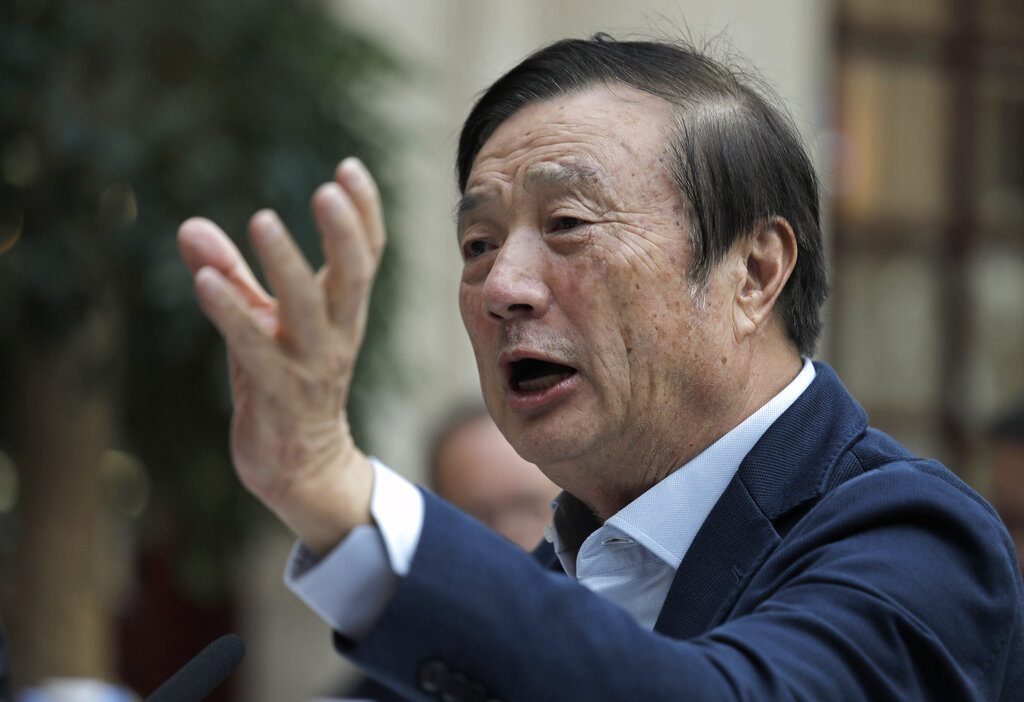
In this Tuesday, Jan. 15, 2019, file photo, Ren Zhengfei, founder and CEO of Huawei, gestures during a round table meeting with the media in Shenzhen city, south China’s Guangdong province. The founder of network gear and smart phone supplier Huawei Technologies said the tech giant would reject requests from the Chinese government to disclose confidential information about its customers. (AP Photo/Vincent Yu, File)
AP19015238193669
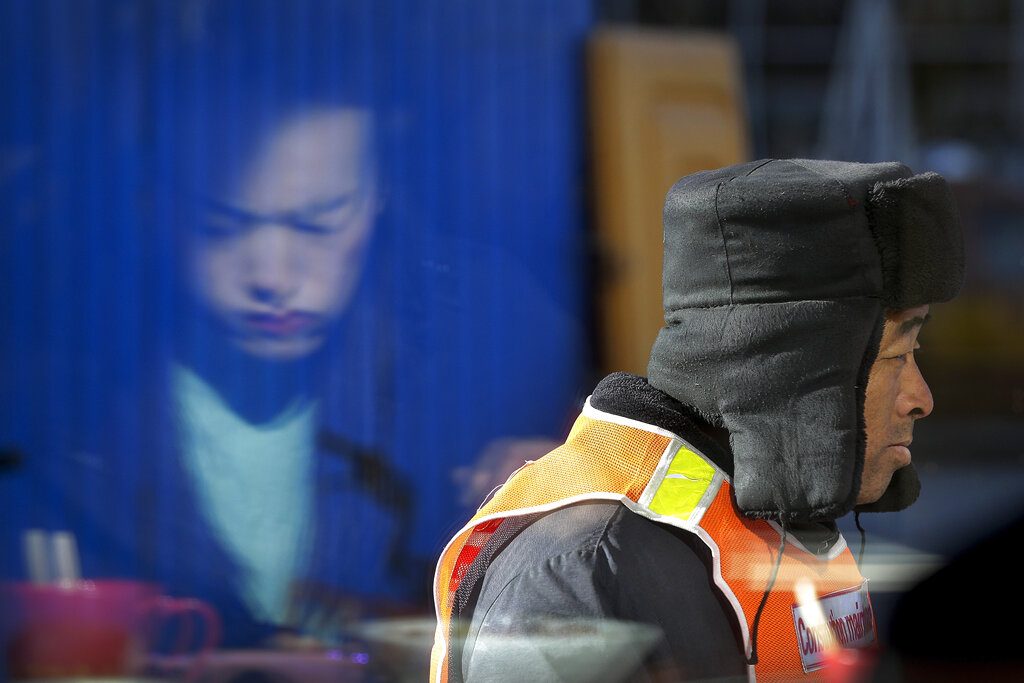
In this Tuesday, Jan. 15, 2019, file photo, a construction worker walks by a woman eating her lunch as she is reflected on a restaurant’s window in Beijing. China plans to slash taxes, step up spending and provide ample financing to private and small enterprises to help counter the country’s worst slowdown since the global financial crisis and the impact of a bruising trade war with the U.S. (AP Photo/Andy Wong, File)
AP19014304812226
In this Monday, Jan. 14, 2019, file photo, a man wearing a mask walks along the Han river at a park in Seoul, South Korea. Unusually high levels of smog worsened by weather patterns are raising alarm across Asia. (AP Photo/Lee Jin-man, File)
AP19014249440175
In this Monday, Jan. 14, 2019, file photo, kimono-clad women who celebrate turning 20 years old react as they ride a roller coaster following a coming of age ceremony at Toshimaen amusement park on Coming of Age Day, a national holiday, in Tokyo. (AP Photo/Koji Sasahara, File)
AP19014177983185
In this Monday, Jan. 14, 2019, file photo, a female panda (unnamed) born in a Malaysian zoo last year looks at her ice birthday cake on her first birthday at the National Zoo in Kuala Lumpur. She is the second offspring of giant pandas Liang Liang and Xing Xing, both on a 10-year loan to Malaysia since 2014. (AP Photo/Vincent Thian, File)
AP19013456529486
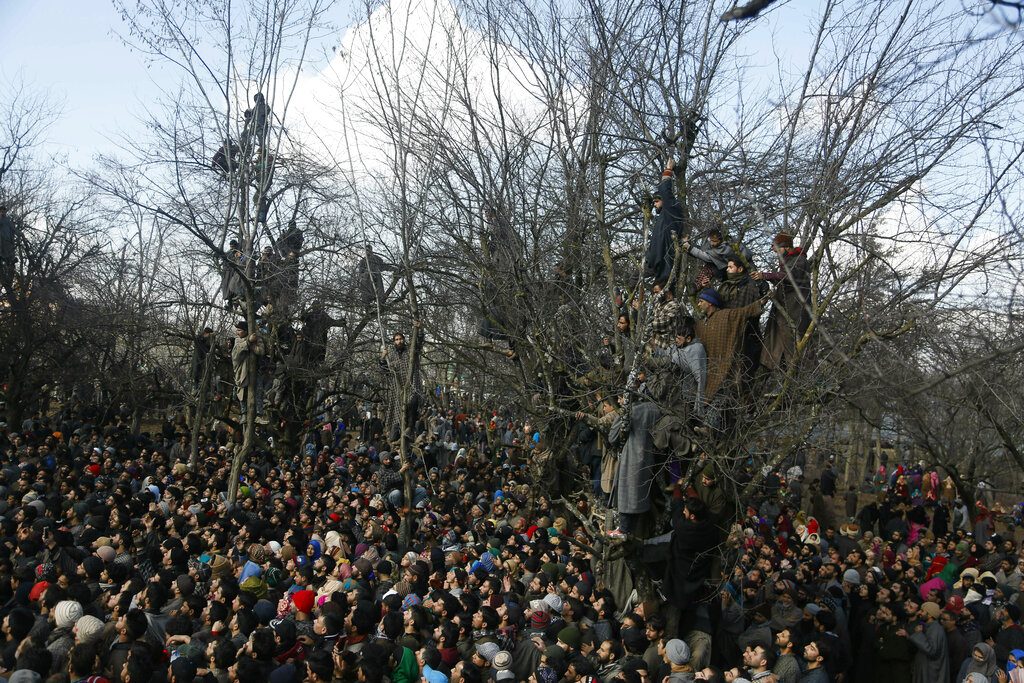
In this Sunday, Jan. 13, 2019, file photo, Kashmiri villagers attend the funeral of rebel commander Zeenatul Islam in Sugan village 61 kilometers (38 miles) south of Srinagar, Indian controlled Kashmir. Massive anti-India protests and clashes erupted in disputed Kashmir on Sunday, leading to injuries to at least 16 people after a gunbattle between militants and government forces overnight killed two rebels, police and residents said. (AP Photo/Mukhtar Khan, File)
AP19018065216614
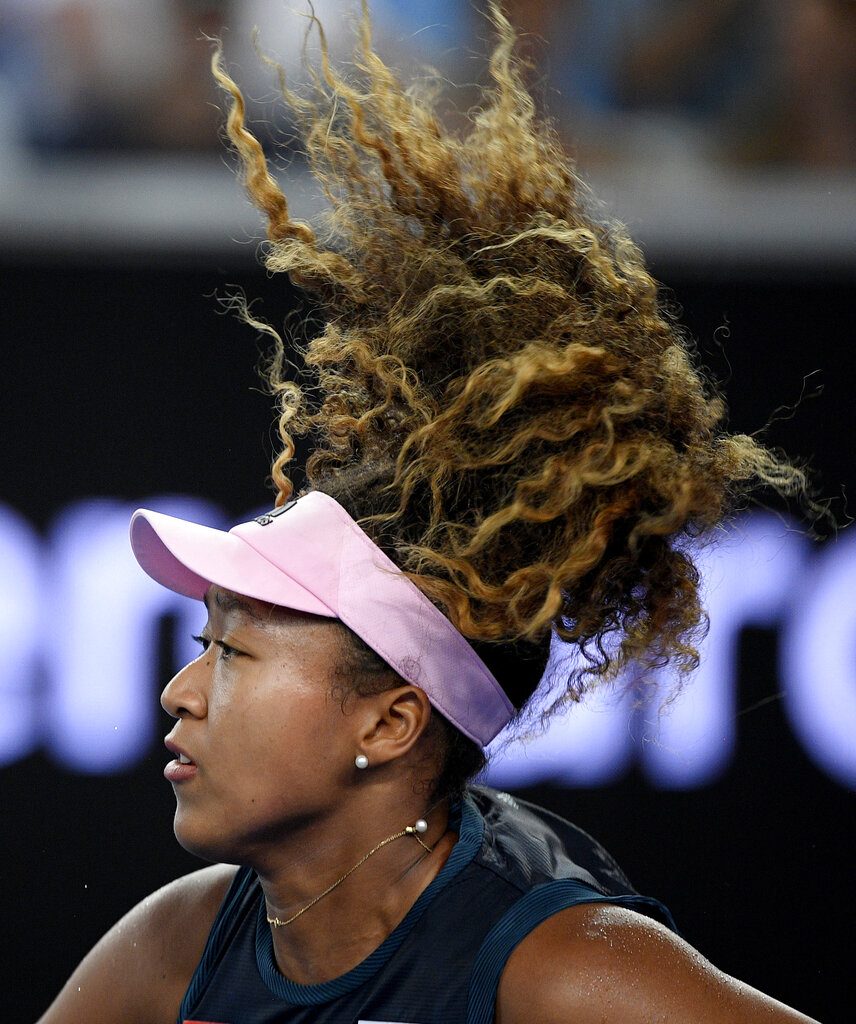
In this Thursday, Jan. 17, 2019, file photo, Japan’s Naomi Osaka serves to Slovenia’s Tamara Zidansek during their second round match at the Australian Open tennis championships in Melbourne, Australia. (AP Photo/Andy Brownbill, File)
AP19017284387845
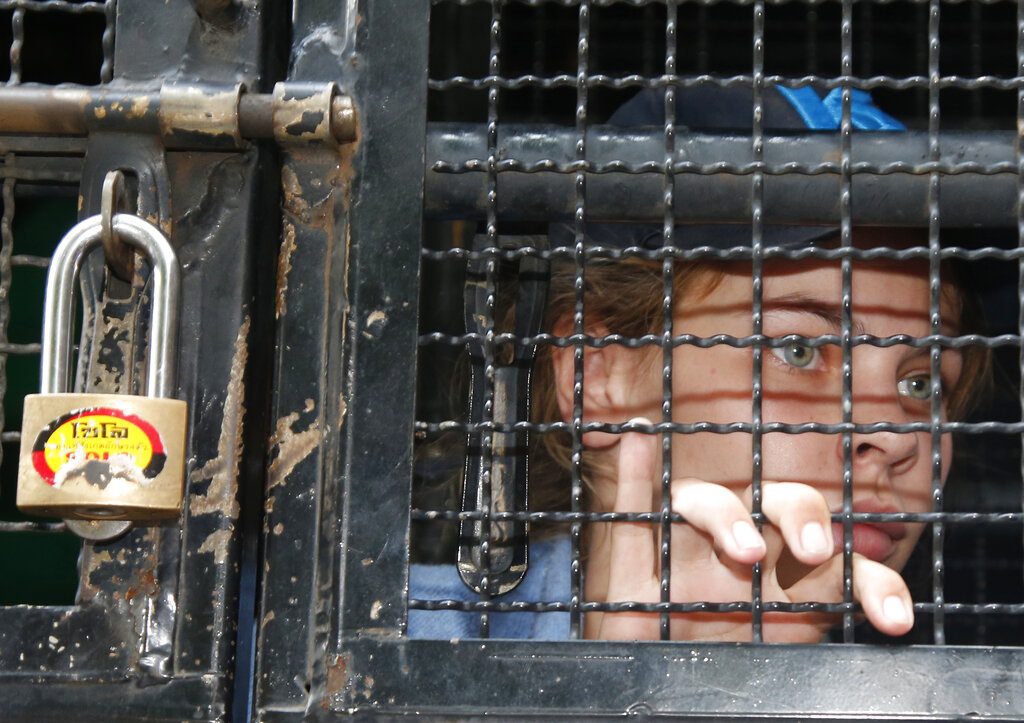
In this Thursday, Jan. 17, 2019, file photo, Belarusian model Anastasia Vashukevich sits in a van as she leaves the Immigration Detention Center for an airport for deportation in Bangkok, Thailand. Vashukevich who claimed last year that she had evidence of Russian involvement in helping elect Donald Trump president was deported from Thailand on Thursday, police said. (AP Photo/Sakchai Lalit, File)
AP19017101443382
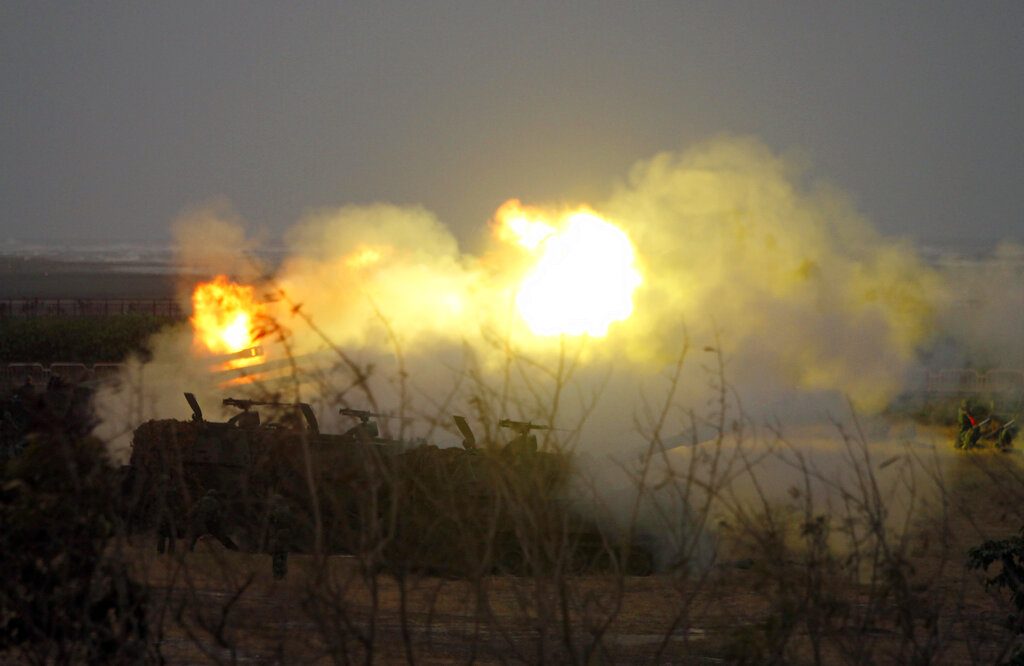
In this Thursday, Jan. 17, 2019, file photo, M110A2 self-propelled howitzers fire during a military exercises in Taichung, central Taiwan. Taiwan’s military has conducted a live-fire drill on Thursday to show its determination to defend itself from Chinese threats. (AP Photo/Chiang Ying-ying, File)
Advertisement

CP Foods Steps Forward to Encourage IFFO RS Standard to Suppliers

BANGKOK — Charoen Pokphand Foods PCL (CP Foods) has stepped further plan to encourage its fishmeal suppliers more undertake International Fishmeal and Fish Oil Organisation Responsible Supply (IFFO RS) standard to ensure non-IUU fishing throughout its supply chain.

The latest announcement by the European Commission to delist Thailand from the “Yellow Card” has underpinned all concerned sectors to strictly more on traceability. CP Foods also gears to encourage its fishmeal suppliers to take up IFFO RS standard to ensure their sustainable business.

Dr. Sujint Thammasart, DVM, Chief Operating Officer – Aquaculture Business of CP Foods, said the company will double number of fishmeal plant with IFFO RS certification by five suppliers this year. This plan will help improve not only manufacturing lines but also ensure traceability practices of raw materials come from legal sources.

“CP Foods further support our suppliers to willing accept IFFO RS standard to guarantee traceability that all materials come from legal fishing practices. This year we plan to double number of IFFO RS suppliers,” said Dr.Sujint.

Dr. Sujint added that IFFO RS standard requires that the raw materials particularly fish must come from legal sources with responsible fishing practices or fishing under Fishery Improvement Project (FIP), manufacturing process have to be certified Good Manufacturing Practices, and need to achieve traceability throughout the supply chain.

“A constructive progress for FIP in the Gulf of Thailand can be a guideline for other FIPs in the region, helping all of us to prevent illegal fishing, promoting sustainability and protecting endangered aquatic species in line with the Sustainable Development Goal 14 – Life below water,” he pointed.

Good practices from Thailand will be to CP Foods’ aquaculture operations across the world by expanding the scope of the Fishery Improvement Projct (FIP) from Thailand to international aquaculture operations such as Vietnam, the Philippines and India.

Last year, CP Foods India had worked together with selected fishery societies, major seafood companies and India’s Government to draft India’s first-ever action plan under Fishery Improvement Project (FIP) for preserving the Indian oil sardine stock in the West coast area.  Recently, the FIP for Indian oil sardine has been recognized and registered by FisheryProgress.org, the international accepted database for reporting information on the progress of global fishery improvement projects, under The Conservation Alliance for Seafood Solutions (CASS) guideline.

It is important to note that all fishmeal using in Thailand’s operations are already 100% certified by IFFO RS and totally come from the by-product of fish-processing plants.

Besides further progress in IFFO RS program, the company will continue to promote sustainable fisheries and human rights with Thai Government and relevant organizations through its initiatives and joint projects, including Thai Sustainable Fisheries Roundtable (TSFR), Fishermen’s Life Enhancement Center (FLEC) and Labour Voices by LPN, as well as international fisheries networks to clean up IUU fishing across the globe.

“The company will not compromise on the fight against illegal fishing to ensure traceability, sustainability and IUU-free supply chain to all of our stakeholders,” Dr. Sujint said.

Advertisement

Yemeni Players United for Football to Make Tournament Debut

Yemen players pose for a picture Monday during the AFC Asian Cup group D soccer match between Iran and Yemen at the Mohammed Bin Zayed Stadium in Abu Dhabi, United Arab Emirates. Photo: Nariman El-Mofty / Associated Press

ABU DHABI, United Arab Emirates — Civil war raging at home.

Football players who struggle to play or get paid.

A coach who never enters the country.

It was not a surprise Yemen exited the Asian Cup after losing all three games.

But just qualifying for the continental tournament for the first time was an achievement for a country in the grips of what the U.N. says is the world’s worst humanitarian crisis.

With Yemen’s domestic football league suspended since 2014, there are few chances for players. Most of the 23-man squad at the Asian Cup plays in Oman and Qatar, where most of the federation is based. Only nine players in the squad are based in Yemen.

“There is no league at home and that does affect the national team in many different ways, especially physically,” goalkeeper Mohammed Ayash told The Associated Press. “It makes it much harder for us to play against strong teams like Iran, with players who play in Europe.”

Football in Yemen is virtually non-existent apart from the occasional informal tournaments held in the capital Sanaa. Most clubs have little to no income, often leaving professional players needing to seek alternative employment.

Ayash, who found work in the oil industry before securing a move to Iraqi club Erbil last November, said divisions in Yemen are not reflected in the national team.

“The spirit is strong, we are together on this journey,” Ayash said. “If we were not united then we would never have been able to come here at all.”

Yemen benefited from the expansion of the Asian Cup from 16 to 24 teams. Qualification was clinched in March 2018 with a victory over Nepal in the Qatari capital of Doha. Yemen has not played home games since 2011 when anti-government protests broke out during the Arab Spring.

Abraham Mebratu, an Ethiopian coach, delivered qualification but left the job after being unable to get financial backing for tournament preparations. Jan Kocian, a Slovakian, is in charge.

Ranked 135 in the world by FIFA, Yemen was thrashed in its opening game at the Asian Cup 5-0 by Iran, which is 106 places higher. Games against Iraq and Vietnam also ended in defeat. Yemen left the United Arab Emirates with no points and no goals but with pride at just having participated.

“Our problem is that the players abroad in Qatar and Oman did not have time for preparation and the players in Yemen can’t play football as there are no league games there,” said Kocian, whose contract states that he does not enter Yemen. “When you have more time, you can do more.”

The greatest achievement may be giving fans at home and in the UAE a chance to cheer on their team in a major international tournament.

“I’m very happy to see people from Yemen in the UAE,” Kocian said. “For people in Yemen the situation is very bad, for those who stay there the life is very hard. But maybe with victory we can give a good representation of them in the Asian Cup.”

Story: John Duerden

Advertisement

Indonesian Presidential Candidates Spar Over Corruption

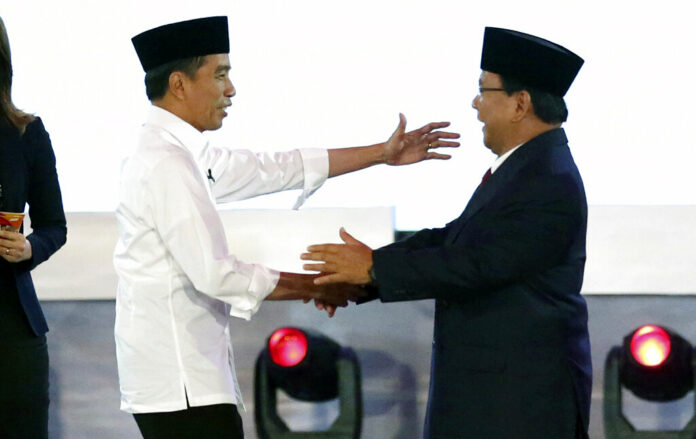
Indonesian President Joko Widodo, left, and his contender Prabowo Subianto, shake hands after a televised debate Thursday in Jakarta, Indonesia. Photo: Tatan Syuflana / Associated Press

JAKARTA — Indonesian President Joko Widodo accused his election rival of allowing corrupt candidates on his legislative ticket and failing to include women in senior positions.

Widodo and former Gen. Prabowo Subianto, along with their running mates, faced off Thursday in the first of five debates before the April 17 election. The debate focused on terrorism, human rights, corruption, and law and order.

Opinion polls show Widodo commanding 52 percent to 54 percent popular support and Subianto trailing with 30-35 percent. About 10 percent of voters are undecided and another 15 percent are considered swing voters, meaning the race has the potential to tighten.

Subianto, making his second bid for president after being narrowly defeated by Widodo in 2014, waffled when asked why his party has the highest number of candidates with corruption records.

“Maybe the corruption they did was not huge, maybe he or she just, what I mean is, the theft was indeed wrong, but the most important thing to be eradicated was a corrupter who stole trillions of rupiah (hundreds of millions of dollars) of state money, of people’s money,” he said.

Questioning Subianto’s opening statement of a commitment to empowering women, Widodo said he has nine women in important Cabinet positions but there are few the leadership of Subianto’s Gerindra party.

Subianto said his party has many female candidates and criticized the quality of decision-making by Widodo’s female ministers.

Widodo, the first Indonesian president from outside the country’s Jakarta elite, has made upgrading Indonesia’s infrastructure the signature policy of his five year-term.

In debating human rights, none of the candidates addressed Subianto’s involvement in human rights abuses during the dictator Suharto’s regime that ended two decades ago.

Story: Niniek Karmini

Advertisement

Belarusian Model Who Claimed Trump Info Arrested in Moscow

Thai Immigration police officers on Thuesday escort Belarusian model Anastasia Vashukevich, center, from the Immigration Detention Center towards a vehicle to take her to an airport for deportation in Bangkok. Photo: Sakchai Lalit / Associated Press

MOSCOW — A Belarusian model who claimed last year that she had evidence of Russian interference in the election of Donald Trump as U.S. president was arrested immediately upon her arrival in Moscow on Thursday following deportation from Thailand.

Moscow police said in a statement carried by Russian news agencies that Anastasia Vashukevich was detained in Moscow’s Sheremetyevo airport on charges of inducement to prostitution along with three people deported alongside her.

Vashukevich, who has been in a Thai prison since February last year, was given a suspended sentenced on Tuesday and ordered to be deported after she pleaded guilty to soliciting and conspiracy along with several co-defendants in a case related to holding a sex training seminar in Thailand.

Vashukevich, also known on social media as Nastya Rybka, earlier claimed to have recordings of Russian oligarch Oleg Deripaska talking about interference in the 2016 U.S. election, but never released them.

Deripaska is close to Russian President Vladimir Putin, and also had a working relationship with Paul Manafort, Trump’s former campaign manager who was investigated by special counsel Robert Mueller and convicted last year of tax and bank fraud.

Russian news agencies said that four of the seven people deported from Thailand who arrived in Moscow Thursday were detained, including Vashukevich and Alexander Kirillov, her mentor in the sex training business. They may face up to six years in prison if convicted on charges of inducement to prostitution.

In the early stages of their detention in Thailand, the sex training group sent a note to the U.S. Embassy via an intermediary seeking help and political asylum. Vashukevich indicated she would turn over the recordings she claimed to have if the U.S. could help secure her release, but she later withdrew the offer, suggesting that she and Deripaska had reached an agreement.

A public scandal erupted in early February last year when Russian opposition leader Alexei Navalny published an investigation drawing on Vashukevich’s social media posts suggesting corrupt links between Deripaska and a top Kremlin official, Deputy Prime Minister Sergei Prikhodko. The investigative report featured video from Deripaska’s yacht in 2016, when Vashukevich, who has also worked as an escort, was aboard.

On Wednesday in Washington, the U.S. Senate narrowly upheld a Treasury Department decision to lift sanctions from three companies connected to Deripaska.

The Treasury Department says the Russian companies have committed to separating from Deripaska, who will remain blacklisted as part of an array of measures announced in early April that targeted tycoons close to the Kremlin.

Deripaska was one of 24 Russian officials and tycoons faced with sanctions imposed by the United States as Washington stepped up its condemnation of Russia’s actions in recent years, including its 2014 annexation of Crimea, support for Syrian President Bashar Assad, hacking attacks and meddling in Western elections.

The metals tycoon controls a business empire with assets in aluminum, energy and construction and is worth $5.3 billion, according to Forbes magazine.

Story: Tanya Titova and Kaweewit Kaewjinda

Advertisement

Hot News

LATEST NEWS

Bangkok
overcast clouds
37.7 ° C
37.8 °
36.1 °
53 %
4.6kmh
92 %
Thu
38 °
Fri
37 °
Sat
36 °
Sun
36 °
Mon
37 °