




















28.1 C
Bangkok
Friday, September 11, 2026
Home Blog Page 1820

Opinion: A Land of Smiles So Easily Cracked by Conflict

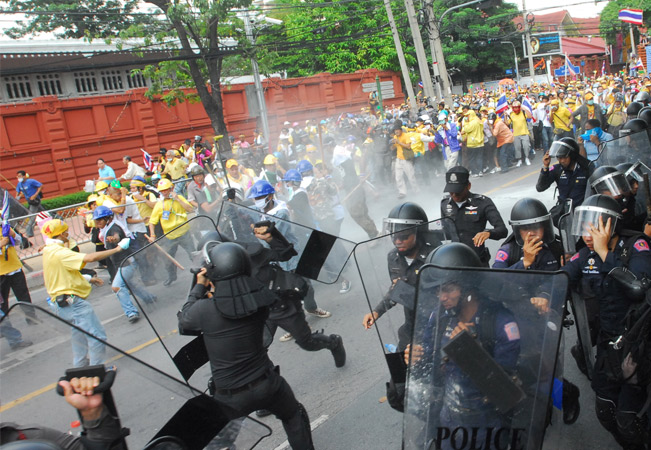
Riot police clash with protesters in front of the parliament on Oct. 7, 2008.

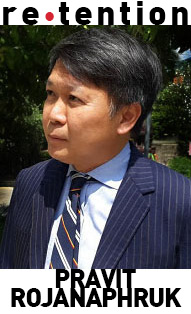
Re•tention: Pravit Rojanaphruk

A man was arrested Tuesday for killing his wife and her family of five in the northern province of Uttaradit. Another man arrested on the same day after killing his girlfriend after she ended their four-year-relationship and refused to be back with him – this time in the southern city of Hat Yai.

Using force to “end” unresolved conflicts – domestic or otherwise – is prevalent in Thailand.

All too often, men resorted to violence when their relationships turn sour. All too often, soldiers and some citizens resort to military coups in a bid to “solve” political conflicts.

All too often, censorship and self-censorship are used as replacements for discussing sensitive topics, particularly the monarchy.

This is a society in need of learning to deal with conflicts in a peaceful way. This is a society in need of learning to understand instead of forcing people to simply accept the brute force of power – military or otherwise.

Change can only come when Thai society recognizes that it is very bad at dealing with conflicts. On one hand, there is the myth of the Land of Smiles, where people coexist happily and in peace. On the other, when conflict avoidance no longer works, people resort to violence to suppress or kill the party of conflicts.

Many Thais tend to superficially avoid conflicts to the point where they do not know how to deal with them in a mature way when confronted with one.

Take Thai politics over the past dozen years, covering both the 2007 and the latest 2014 coups. What was it all about?

Was it just about Thaksin and Yingluck Shinawatra? Was it about suppression of anti-monarchist and republican sentiments? Was it about the military exploiting political conflicts for their own gain as they usurped power from the people twice in 12 years? Or was it about a society still deeply divided on what kind of political system best suits the country?

Discussing the role of the military junta is delicate enough, discussion the role of the monarchy in a critically way in Thailand without breaking the law is almost impossible.

How can we resolve conflicts and move forward as a nation then?

How can we move on as a nation when people in an open disagreement – such as the current call by a small number of demonstrators for an end to further postponements of the promised elections – are painted as troublemakers?

Just before the New Year, the Constitution Defense Monument – a monument marking the 1933 defeat of royalist rebels – was mysteriously removed and not reported by majority of the Thai press. It’s whereabouts are unknown and it could have simply been pulverized by now: yet another act of violence in trying to resolve historical conflicts.

What about the Deep South? It’s another failed spot for conflict resolution where so-called “peace talks” are heading nowhere, while deadly violence has flared up weekly for much of the past decade.

Many Thai Buddhists seem unwilling to find real solutions that would make Thai-Malay Muslims feel significantly more respected, such as allowing for elected governors on the three southernmost provinces of Pattani, Yala and Narathiwat.

Everywhere we look, Thais seem more adept at conflicts avoidance, to the point where when impossible to avoid, they don’t know how to deal with it peacefully and capably.

Without first admitting that we are so bad at conflict resolution and learning to resolve things peacefully, there won’t be any solution except more violence – domestic or national.
Advertisement

Myanmar Army Ordered to Take Offensive Against Arakan Army

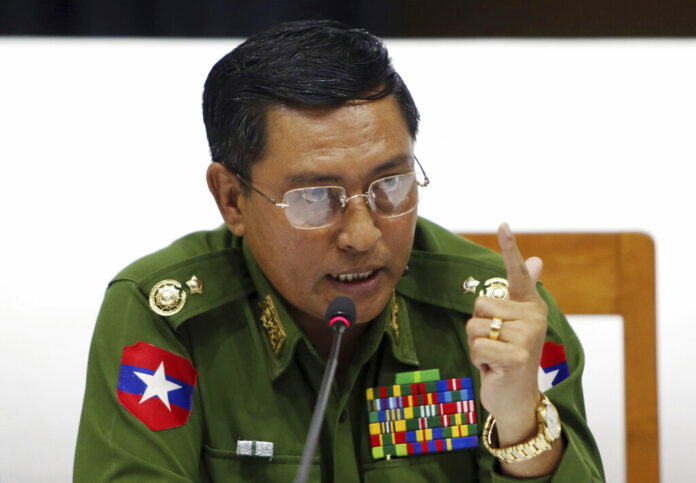
Maj. Gen. Soe Naing Oo, chairman of the Myanmar's military information committee, on Friday talks to journalists during a press conference at the Military Museum in Naypyitaw, Myanmar. Photo: Aung Shine Oo / Associated Press

NAYPYITAW — Myanmar’s military announced Friday that the Arakan Army, a Buddhist rebel group in Rakhine state, has been classified a terrorist organization after mounting a flurry of recent attacks.

The state earlier was the site of a brutal counterinsurgency campaign by the military against the Muslim Rohingya minority, causing more than 700,000 to flee to neighboring Bangladesh.

Military officers said at a news conference in the capital, Naypyitaw, that leader Aung San Suu Kyi ordered security forces to launch the offensive against the Arakan Army.

The insurgent group, which seeks autonomy from the central government, killed 13 police officers and wounded nine in attacks on Jan. 4. The moves to counter the rebels were decided at a Jan. 7 meeting at Myanmar’s presidential offices, the officers said.

Suu Kyi “said the Arakan Army is just a terrorist group and instructed us to defeat them effectively, quickly and clearly,” Maj. Gen. Nyi Nyi Tun, vice chairman of the Myanmar Military Information Committee, told reporters. A terrorist designation criminalizes a group and bans all communication with them.

He said Suu Kyi suggested that if she did not order the military to attack the Arakan Army, the international community would accuse her of religious prejudice for attacking the Muslim guerrillas of the Arakan Rohingya Salvation Army but not Buddhist rebels who committed similar actions with similar goals.

The military in Buddhist-majority Myanmar has been accused of ethnic cleansing, and even genocide, against the Muslim Rohingya. Its counterinsurgency campaign was triggered when a group of Rohingya guerrillas attacked security outposts in August 2017.

The officers said the military clashed with the Arakan Army 15 times in 2015, 26 times in 2016, 56 times in 2017 and 61 times in 2018, while the rebels also planted some mines. They said there have been at least eight armed encounters this year. The guerrillas are known to have trained in areas controlled by other ethnic rebel forces, especially in Kachin state.

The Arakan Army, founded in 2009, is estimated to have several thousand well-armed and organized uniformed members, in contrast to the ragtag and virtually dormant Rohingya guerrillas.

Myanmar’s military in December announced cease-fires in five areas where ethnic rebellions are active, but did not include Rakhine state because it had information that the Arakan Rohingya Salvation Army planned attacks, the officers said.

Brig. Gen. Zaw Min Tun said he believed that the fighting with the Arakan Army would not interfere with plans to repatriate Rohingya refugees from Bangladesh.

At U.N. headquarters in New York, Secretary-General Antonio Guterres spoke about his “enormous frustration with the lack of progress” by Myanmar’s government in creating conditions for the return of the more than 700,000 Rohingyas who fled to Bangladesh in 2017 and are living in “extremely difficult circumstances.”

“It is absolutely essential to create the conditions of confidence and trust,” he told a news conference. “It’s not only physical reconstruction, it’s a matter of reconciliation of communities and strong commitment by the government for that reconciliation of communities to be possible, and for the safety of the Rohingya population to be guaranteed.”

“Unfortunately, the truth is the situation on the ground has not been conducive to it. Things have been too slow,” he said. “One of the dramatic aspects when you fail in solving the root causes of the problem is that violence then tends to erupt again, and that’s what we have seen recently in Myanmar.”

“We insist in the need to create conditions for them to be willing to go back” to Myanmar, Guterres said.

One of first steps could be to solve the problem of the Rohingya who are internally displaced which would “give credibility” to future returns, he said.

Advertisement

Gunmen Kill 2 Monks in Southern Temple Attack

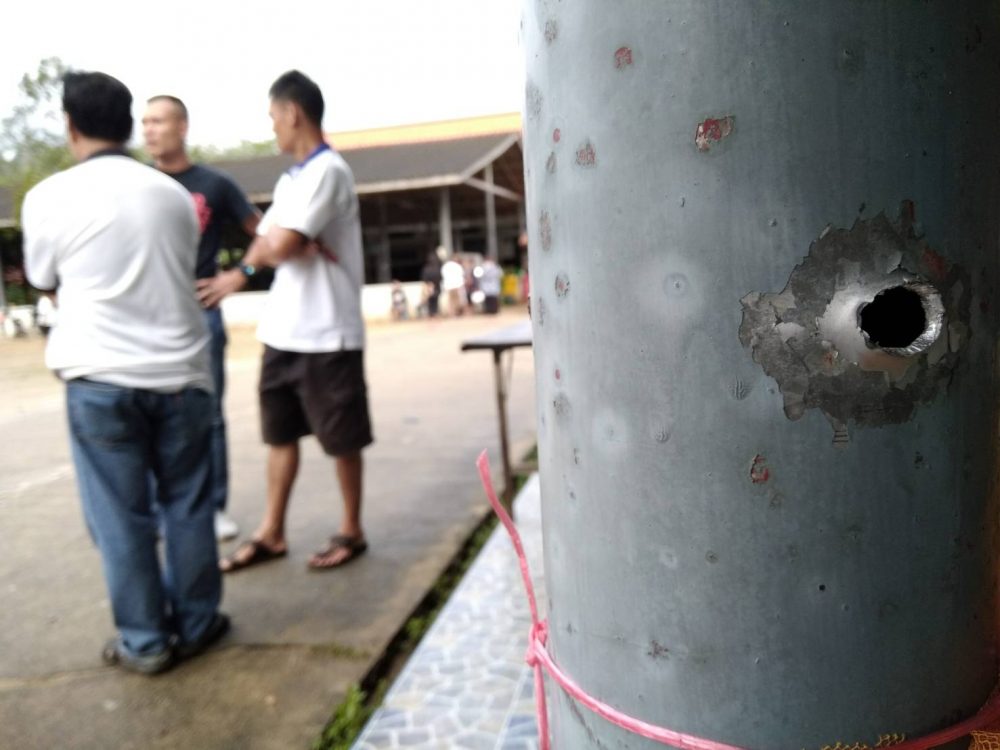
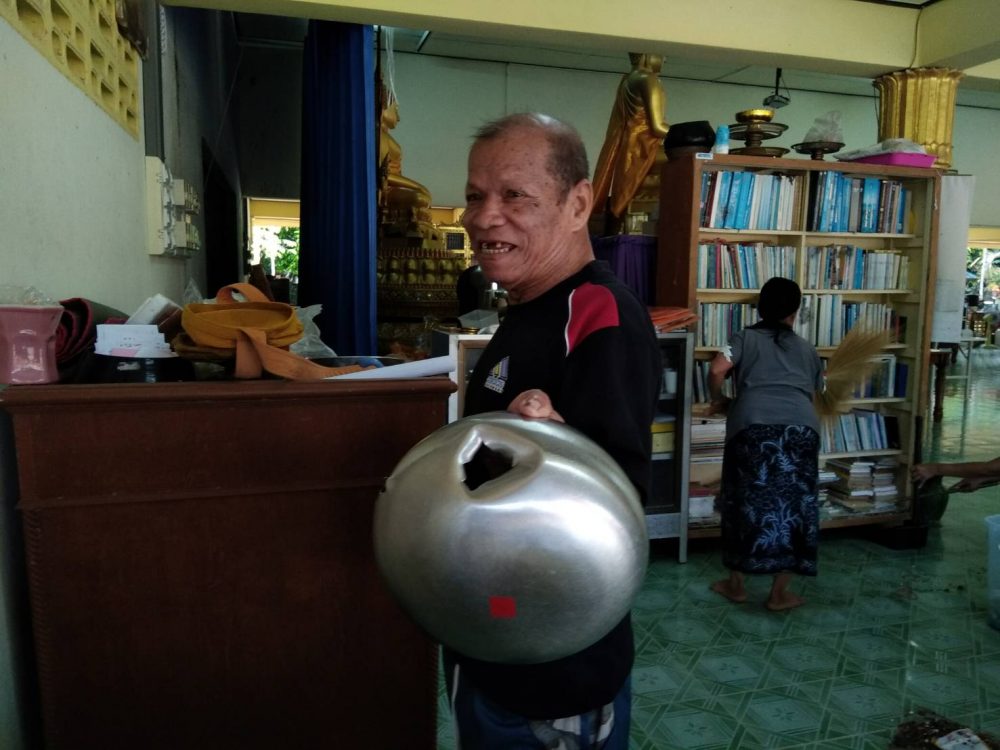
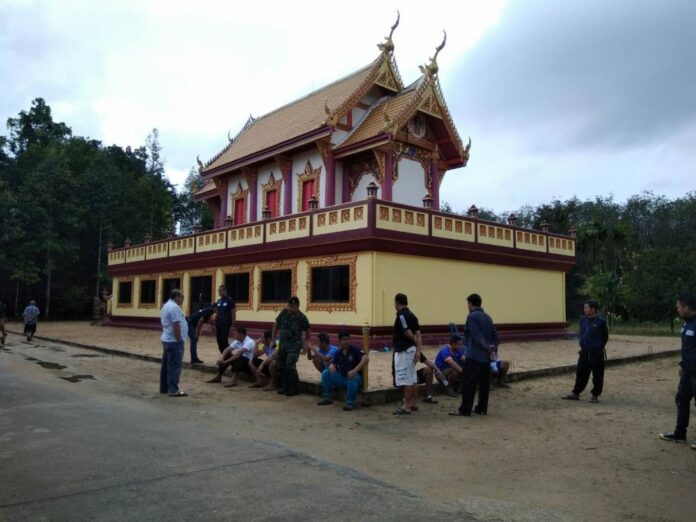
Authorities seen Saturday morning at the Rattana Nuphap Temple, hours after an attack that killed at least  two monks.

NARATHIWAT — Police on Saturday were still looking for the gunmen who attacked a temple in the Deep South, killing two Buddhist monks and injuring two others.

At about 8:30pm on Friday, an unknown number of gunmen attacked the monks at the Rattana Nuphap Temple in Narathiwat’s Su-ngai Padi district. The temple’s abbot, Prakru Prachote Rattananurak – also chief monk of the Sungai Padi district – died at the scene along with monk Phra Samu Auttapon Khun-ampai.

Another two monks were injured and sent for treatment.

The Army Area commander Lt. Gen. Pornsak Poolsawat ordered increased security measures at temples in the Deep South.

Government spokesman Puttipong Bunnakun said on Saturday morning that authorities are looking for the attackers.

Narathiwat is among the Deep South provinces, which have a major ethnic Muslim population.

1547867177766 e15478728136241547867181488 e1547872801753


Advertisement

Trump, NK Leader Kim Jong Un to Hold 2nd Summit

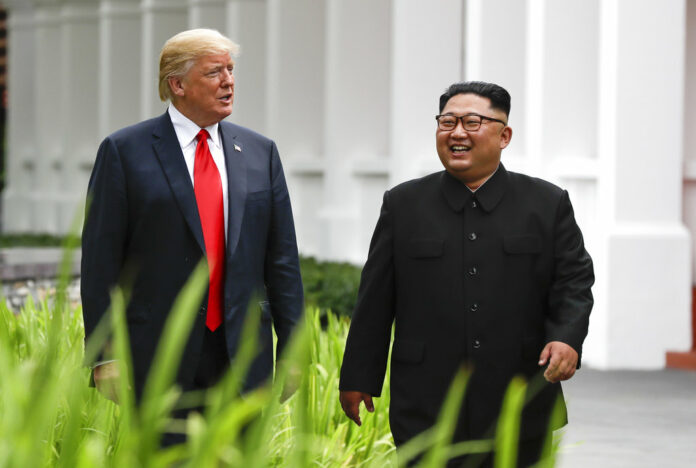
U.S. President Donald Trump, left, and North Korea leader Kim Jong Un walk from their lunch at the Capella resort on Sentosa Island in Singapore on June 12, 2018. (AP Photo/Evan Vucci)

WASHINGTON — President Donald Trump will hold a second summit with North Korean leader Kim Jong Un to try to broker a deal to coax the North to give up its nuclear weapons, the White House announced Friday.

U.N. Secretary-General Antonio Guterres said “it’s high time” for serious negotiations between the United States and North Korea to outline a roadmap for the denuclearization of the Korean peninsula. The U.N. chief told a news conference at U.N. headquarters in New York on Friday that a roadmap would allow both sides “to know exactly what the next steps will be, and to have predictability in the way negotiations take place.”

News of a second meeting with the reclusive North Korean leader came after Trump’s 90-minute meeting in the Oval Office with a North Korean envoy, Kim Yong Chol, who traveled to Washington to discuss denuclearization talks. Trump and Kim Jong Un are to meet near the end of February at a place to be announced later, said White House press secretary Sarah Huckabee Sanders.

“The United States is going to continue to keep pressure and sanctions on North Korea until we see fully and verified denuclearization,” Sanders said. “We’ve had very good steps and good faith from the North Koreans in releasing the hostages and other moves. And so we’re going to continue those conversations and the president looks forward to the next meeting.”

In May, North Korea released three American detainees and sent them home with Secretary of State Mike Pompeo after his meeting with the North Korean leader in Pyongyang.

The second summit signals stepped-up efforts by both countries to continue talks. Trump has exchanged letters with the North Korean leader amid little tangible progress on the vague denuclearization agreement reached at their first meeting last June in Singapore.

On Friday, Pompeo met with the North Korean envoy at a Washington hotel before the White House meeting, and the two had lunch together afterward.

Trump has spoken several times of having a second summit early this year. Vietnam has been considered as a possible summit venue, along with Thailand, Hawaii and Singapore.

Since their Singapore sit-down in June, several private analysts have published reports detailing continuing North Korean development of nuclear and missile technology. A planned meeting between Pompeo and the envoy, who is North Korea’s former spy chief, in New York last November was abruptly canceled. U.S. officials said at the time that North Korea had called off the session.

The special U.S. envoy for North Korea negotiations, Steve Biegun, is set to travel to Sweden for further talks over the weekend.

The talks have stalled over North Korea’s refusal to provide a detailed accounting of its nuclear and missile facilities that would be used by inspectors to verify any deal to dismantle them. The North also has demanded that the U.S. end harsh economic penalties and provide security guarantees before it takes any steps beyond its initial suspension of nuclear and missile tests.

Harry Kazianis, a North Korea expert at the Center for National Interest, said any talks between the two nations are a positive development, but the hard work of negotiating an agreement has only begun.

“Both nations must now show at least some tangible benefits from their diplomatic efforts during a second summit, or risk their efforts being panned as nothing more than reality TV,” Kazianis said.

As a possible first step, Kazianis said, North Korea could agree to close its nuclear centrifuge facility at Yongbyon in exchange for some relief from U.S. sanctions or a peace declaration ending the Korean War. The three-year war between North and South Korea ended in 1953 with an armistice, not a peace treaty.

“Such a deal allows both sides to come away with a much-needed win that can breathe new life into negotiations,” he said.

South Korea said it expects the second summit between Trump and Kim to be “a turning point in firmly establishing a permanent peace on the Korean Peninsula.”

Kim expressed frustration in an annual New Year’s address over the lack of progress in negotiations. But on a visit to Beijing last week, he said North Korea would pursue a second summit “to achieve results that will be welcomed by the international community,” according to China’s official Xinhua News Agency.

Kim’s latest trip to China, his fourth since last year, came as the North’s strongest ally has encouraged negotiations with the U.S. while at the same time arguing in favor of an immediate easing of sanctions.

The U.S. and North Korea seemed close to war at points during 2017. The North staged a series of weapons tests that brought it closer to its nuclear goal of one day being able to target anywhere on the U.S. mainland. The two sides then turned to insulting each other: Trump called Kim “Little Rocket Man” and North Korea said Trump was a “dotard.”

Independent analysts are highly skeptical that North Korea will easily abandon a nuclear arsenal constructed in the face of deep poverty and probably seen by Kim as his only guarantee of his government’s survival. But Retired Gen. Vincent Brooks, former U.S. commander of American and allied forces in South Korea, told “PBS Newshour” that he believes Kim is serious about getting rid of his nuclear weapons.

“I do. I think that the dance is going to be very important here, though, as we think about how we go from where we were to where we all want to be,” Brooks said. “First, we ought to take him (Kim) at his word. And it’s not an easy thing to accept, especially given the track record of North Korea.

“But this is a new leader in North Korea … and, indeed, there’s evidence that he’s serious about committing to what he said. For example, we’ve now gone 415 days without a strategic provocation, test or demonstration. I think that’s a signal by itself that Kim Jong Un has moved in a different direction.”

Advertisement

Prawit to Feed Sticky Rice to Chinese at ‘Record-Breaking’ Feast

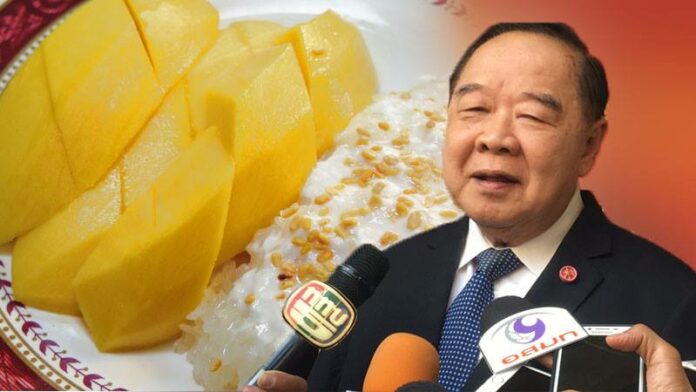
BANGKOK — The man behind a viral disparaging remark about Chinese tourists is scheduled to feed them five tons of mango sticky rice Sunday.

In an event titled “We Care For You,” deputy junta chairman Prawit Wongsuwan will inaugurate the feast of Thailand’s most famous dessert for 10,000 Chinese tourists, the government said Friday.

Officials also hope the event – held next to a lake in Muang Thong Thani – will break the Guinness World Record for the biggest sticky rice mango banquet ever. They said representatives from the reference book would be present.

The feast is co-hosted by multiple private and government entities, including the interim parliament, the tourism ministry, the tour companies association and Sino-Thai communities. Organizers said the event – which will be broadcast on state media – will give a good image of Thai hospitality.

Chinese arrivals, which were booming in early 2018, were stunted by a deadly ferry sinking in July which killed 47 Chinese tourists.

Gen. Prawit said at the time the ship was run by a Chinese firm and that the incident occurred because the “Chinese did it to the Chinese,” causing outrage on social media in China.

Although yearly arrivals for 2018 exceeded a historic milestone of 10 million in December, monthly arrivals were lower than during the same period last year.

Advertisement

Too Many Monkeys: Hua Hin to Sterilize 1,200 Macaques

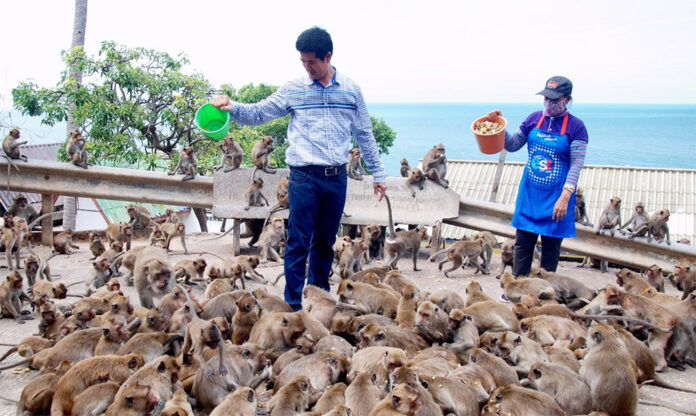
A tourist pours a bucket of slop onto a swarm of monkeys in Hua Hin in an undated photo. Photo: Matichon

HUA HIN — Hua Hin city will spend 1.2 million baht to sterilize 1,200 macaque monkeys in a bid to control their growing population.

Macaques at Khao Takiab, a mountain along the famous sea resort area of Hua Hin in Prachuap Khiri Khan province, are popular with tourists, who often feed and take photos with them.

The city of Hua Hin said the population of 3,000 macaques is too large, adding that they’re causing chaos in nearby communities.

It said that despite sterilizing 600 monkeys in the past two years, the population is still increasing.

Busaba Chokesuchart, vice mayor, City said Friday that the city will sterilize 1,200 monkeys this year, starting with 600 in February and another 600 in July.

It costs 1,000 baht to sterilize one monkey. Hua Hin City will also ask tourists to only feed monkeys at designated spots to maintain a clean and hygienic environment.

Advertisement

Bhumjaithai Woos Farmers With Weed, Thai Raksa Chart Blasts Junta

BANGKOK — While no one knows when the next election will be held, political parties have begun testing their messages in advance of the next poll.

The Bhumjaithai Party unveiled a policy platform Thursday meant to appeal to its heartland in the nation’s east while a Pheu Thai splinter party began marketing its ideas in Bangkok.

Announced in Buriram province, the home of its former influential leader, Bhumjaithai said it would support farmers growing up to six marijuana plants and set up a fund to facilitate a profit-sharing program for rice farmers.

The party, which has expressed a willingness to work with the military government, is led by Anuthin Charnwirakul. Anuthin expressed his readiness Thursday to serve as prime minister if elected.

The party said farmers and others in the industry could elect representatives to manage the rice fund to improve profit-sharing, said party sec-gen Saksiam Chidchob, the younger brother of former leader Newin Chidchob, who has withdrawn from politics.

The fund would be tasked with finding cheap loans for farmers, issuing insurance to their crops, determining export quotas and ensuring fair profits. A potential boon to farmers that may not sit well with other players in the industry, Saksiam said the scheme would see farmers get 75 percent of the profits with the rest going to mill operators, exporters and rice sack producers.

Also provocative is a party policy allowing farmers to legally grow and sell up to six marijuana plants for medical purposes. The secretary general said that with marijuana for medical purposes becoming legal, Thailand can learn from California, which has become the biggest legal marijuana market in the world.

He said one marijuana plant can yield up to 1 kilogram of buds per year worth about 70,000 baht.

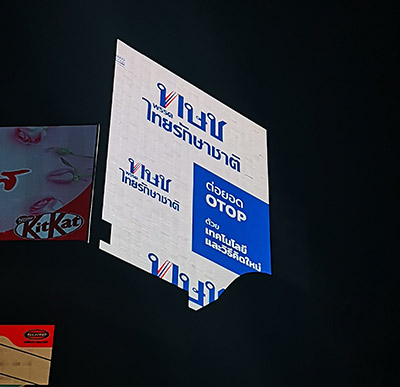
'Improving OTOP with technology and innovation,' says a sign promoting the Thai Raksa Chart Party that recently went up in Bangkok.
‘Improving OTOP with technology and innovation,’ says a sign promoting the Thai Raksa Chart Party that recently went up in Bangkok.

For palm oil producers, the party will support construction of power plants that utilize it to produce electricity. It also vowed to pass laws promoting biofuels from more diverse agricultural sources.

In education, the party said it will encourage learning online via smartphones. “If brothers and sisters can watch films, listen to music online with their smartphones, why can’t brothers and sisters learn on smartphones?” Saksiam said.

As for healthcare, the party said it would support better pay for community health volunteers and increase use of telemedicine to offer diagnoses and care without requiring travel to often inundated town and district hospitals.

Saksiam said over the past four decades, public health volunteers, also known as local doctors, have proven to be reliable but they need better compensation and support. He suggested a monthly compensation for public health volunteers ranging form 2,500 to 10,000 baht per month.

In Bangkok, the Thai Raksa Chart Party, which broke off from the Pheu Thai Party powerhouse of Thaksin Shinawatra, put up dozens of LCD campaign spots around the capital, including at the Victory Monument.

The ads present the party as heir to the now defunct Thai Rak Thai Party both in its uncannily similar party logo and slogan, “New Thinking. Do Anew. Dare to Change.” “New Thinking. Do Again” was once a slogan of Thai Rak Thai, a Pheu Thai predecessor that was dissolved by the courts following the 2006 coup that ousted Thaksin.

In a video released Thursday, party leader Preechapol Pongpanich criticized the military dictatorship as unaccountable and blamed it for the nation’s economic underperformance.

“Dictatorship often comes with a system called ‘lack of scrutiny,’ the party leader said.

Advertisement

Defense Ministry Defends New Lot of Chinese Tanks

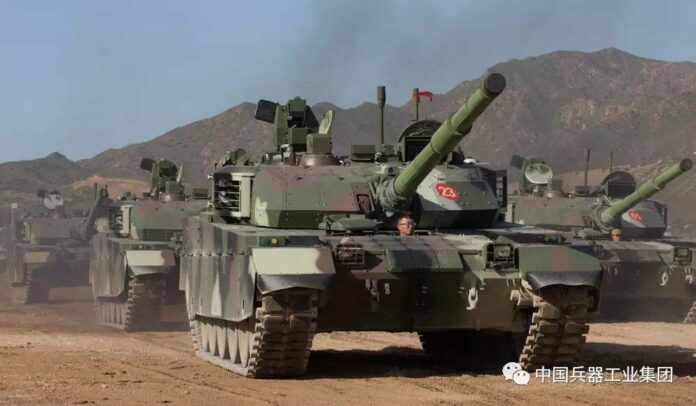
A file photo of VT-4 battle tanks delivered to Thailand in 2018. Photo: Norinco

BANGKOK — A transparency gadfly on Friday slammed the military’s latest purchase of 14 Chinese battle tanks as an unnecessary waste of money – a claim disputed by the defense ministry.

The 2.3 billion baht used to buy the VT-4 tanks could have been better spent on infrastructure and public health, Srisuwan Janya wrote in an online post. The new tanks will join a battalion of 39 Chinese-made tanks the army bought last year.

Srisuwan also questioned why the military has only relied on Chinese arms suppliers in recent years. Defense ministry spokesman Kongcheep Tantravanich said the People’s Republic offers the best deals.

“If we were to buy American tanks, they’d be twice as expensive,” Maj. Gen. Kongcheep said. “Who wouldn’t prefer Mercedes-Benz over Isuzu? But this is all we can afford. That’s what the armed forces want. They are being frugal.”

VT4inaction
A VT-4 battle tanks fires its cannon Jan. 24, 2018, during a demonstration in Saraburi province

The tank is powered by a turbocharged diesel engine, seats three and comes standard with a 125mm large-caliber gun augmented by an anti-aircraft heavy machine gun and anti-infantry machine gun, according to maker Norinco’s specs.

The purchase was announced Wednesday by the military just days after new army chief Apirat Kongsompong visited the Chinese defense minister in Beijing. Gen. Apirat said at the meeting that Thailand would work even more closely with the Chinese military throughout 2019.

In a statement, the army said its arsenal of US-made M-41s was now four decades old and must be replaced. The armed forces initially considered buying tanks from Ukraine, but broke the deal off due to conflict there, it added.

The 14 new tanks will come with thousands of rounds of ammunition, the army said. They are the latest weaponry Thailand has bought from China, following the purchase of missiles, armored vehicles and submarines.

In today’s interview, Kongcheep defended the dependence on Chinese arms.

“China is now at the forefront of military technology,” the spokesman said. “They even have AI. We should stop looking down on them.”

Related stories:

Admiral Behind Submarine Deal Defends Need for ‘Dream Weapon’

Advertisement

BTS Fails to Keep Accessibility Promises for 4th Year

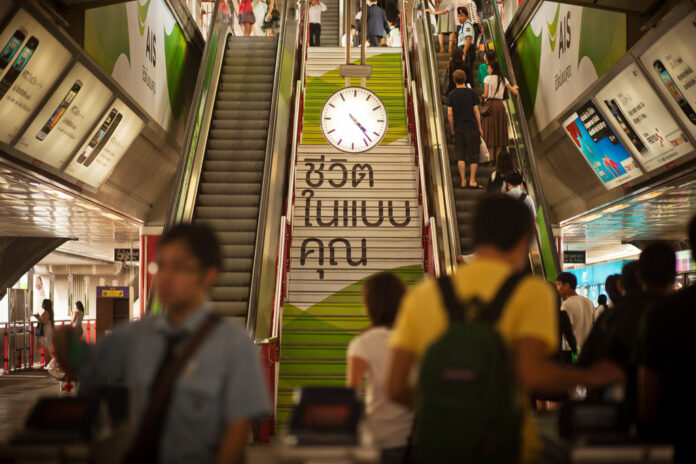
A file photo of stairs and escalators at BTS Siam. Photo: Nopphan Bunnag / Flickr

BANGKOK — The BTS Skytrain remains inaccessible to all commuters four years after a historic legal victory for disability activists.

Activist Manit Inpim this week accused the city of failing to do its job, saying he is unaware of any progress since 256 million baht was approved nearly eight months ago for construction of elevators at all exits of every station.

“I haven’t seen the latest situation, but I believe the installation is still not done,” he said this past week. Monday will mark five years since the Supreme Administrative Court gave the Bangkok Metropolitan Administration, or BMA, a one-year deadline to make stations throughout the elevated rail system accessible to commuters with disabilities.

Since then, years of inaction and delays have raised doubts about the BMA’s intent to comply with the court order and led the original litigants to go back to the courts.

Panurak Klannurak, the BMA’s newly appointed transport director, said by phone this week that they still haven’t found a contractor to do the work, and he doesn’t know when they will.

In May, the city promised the new elevators would be ready within four months of finding a contractor.

Every year since 2015, Khaosod English has checked in on the anniversary of the landmark 2015 court ruling. In 2016, city officials blamed infrastructure issues for missing the deadline but promised all work would be done that September. When 2017 began with no progress and more vague assurances, disability activists filed one of the kingdom’s first class-action lawsuits, which sought large compensatory damages. The lawsuit stalled, but by this time last year, nearly every station had at least one lift. It still fell short of the original high court ruling that the system be made accessible, as many elevators only connected one side of the street.

This past year has not been more encouraging to their cause.

Manit, who uses a wheelchair, shattered a glass elevator door at BTS Asok in March in a fit of rage after he was denied its use without filling out paperwork. A court-ordered joint-inspection of the rail network was carried out as part of the litigation, and the funds were approved for the additional elevators.

And going forward, it’s unclear the city will do better. When a new BTS extension to Samut Prakan opened last month, it didn’t take long for the public to be baffled by a wheelchair ramp at BTS Sai Luat that led to a ditch filled with weeds and rubbish.

Pakapong Sirikantaramas, the Mass Rapid Transit Authority governor, said in a phone interview Wednesday that the authority had talked to the owner of the land beside the elevator and had begun work expanding the ramp.

Manit said he doesn’t understand why the city continues to let such problems happen. He said his network inspected the construction work and submitted written suggestions to the authority six months before it opened.

“Why does BMA have to turn very simple things into something so complicated? This is how the people are thinking of them,” he said. “We’ve done enough work. Now it’s their responsibility to complete the work as promised. BMA has to act as an employer. It should take measures to accelerate the process.”

Ongoing efforts to force compliance by going back to the courts have stalled as well.

After winning administrative delays of the class action suit filed two years ago, the BMA convinced the civil court it should be heard in the administrative court, according attorney Sonthipong Mongkolsawas, who represents the plaintiffs. The case was dropped after the administrative court ruled it was not a venue for class actions.

About 430 commuters with disabilities responded by jointly suing the BMA in the administrative court for the same damages in a case that is ongoing.

On another front, Manit and five other activists sued the MRT subway in November over its lack of accessibility, demanding 16.8 million baht in compensation.

Related stories:

Transit Authority to Look Into BTS Wheelchair Ramp to Nowhere

City Hall Approves 256M Baht For BTS Elevators

Disabled Activist Rages After Denied Elevator at BTS Asok

BTS Class-Action Suit Back on Track After Year Delay

Three Years of Excuses Later, BTS Still Not Accessible

City Hall Challenge Delays Decision on BTS Accessibility Suit

Advertisement

Defending Champ Gone: Sharapova Ousts Wozniacki in Australia

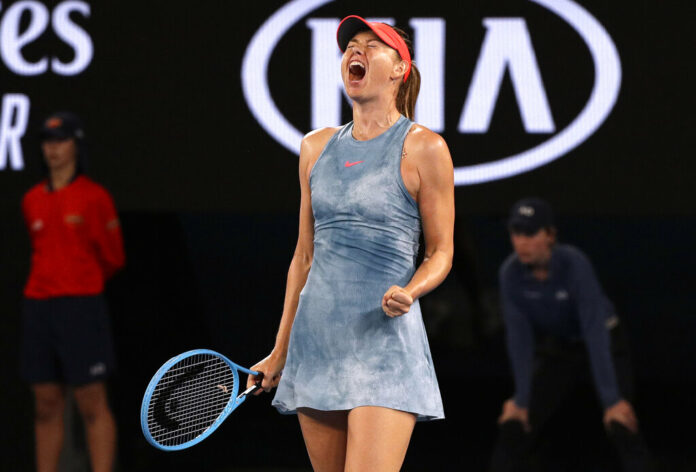
Russia's Maria Sharapova celebrates a point win over Denmark's Caroline Wozniacki during their third round match Friday at the Australian Open tennis championships in Melbourne, Australia. Photo: Kin Cheung / Associated Press

MELBOURNE, Australia — Maria Sharapova smacked a forehand winner – the sort she’s hit so many times, at so many key moments, over the years – to take control against defending champion Caroline Wozniacki at the Australian Open. Sharapova balled up her fists, shut her eyes, threw back her head and let out a yell.

She showed she’s ready to be a Grand Slam factor once again.

Sharapova grabbed the last four games to eliminate Wozniacki 6-4, 4-6, 6-3 in nearly 2½ hours Friday and reach the fourth round at Melbourne Park, building the statement-making victory with aggressive groundstrokes that gave her a 37-10 edge in total winners.

“I haven’t played many matches in the last year, especially against top players,” Sharapova said. “And these are the kinds of matches I train for.”

She cut her 2018 season short in September because of problems with her surgically repaired right shoulder.

Sharapova is seeded only 30th at Melbourne Park, where she won the 2008 title for one of her five Grand Slam trophies but hasn’t been past the quarterfinals since 2015.

The 31-year-old Russian missed the tournament in 2017 during a 15-month doping suspension that was triggered by a positive doping test during the previous year’s Australian Open.

Wozniacki was the No. 3 seed in Australia, a year after beating Simona Halep in the final to claim her first major championship.

Next for Sharapova is a matchup against Australia’s Ash Barty, who beat Maria Sakkari 7-5, 6-1 to equal her best showing at any major tournament.

“I know,” Sharapova said, “it’s going to be a tough crowd.”

No. 15-seeded Barty took two nearly years off from the tennis tour after the 2014 U.S. Open and played cricket during that time.

“Her story is phenomenal,” Sharapova said. “I know she took a little break and came back and just resurged.”

Against Wozniacki, Sharapova hung in there in a back-and-forth contest.

Wozniacki led 3-2 in the third set after holding at love. But Sharapova finally gained the upper hand with a break for a 4-3 lead, clinched with that big forehand she was so excited about.

After holding to go up 5-3, Sharapova broke yet again to end it, closing with a big cross-court backhand.

“The level was quite high,” Sharapaova said. “I knew I was going to get a tough match.”

Advertisement

Hot News

LATEST NEWS

Bangkok
overcast clouds
28.1 ° C
28.9 °
27.9 °
81 %
3.1kmh
100 %
Fri
33 °
Sat
35 °
Sun
33 °
Mon
31 °
Tue
31 °