31.6 C
Bangkok
Sunday, June 28, 2026
Home Blog Page 1841

Monk-Thief Alleged to Be Serial Temple Burglar

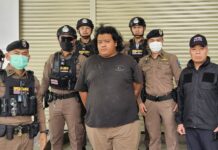
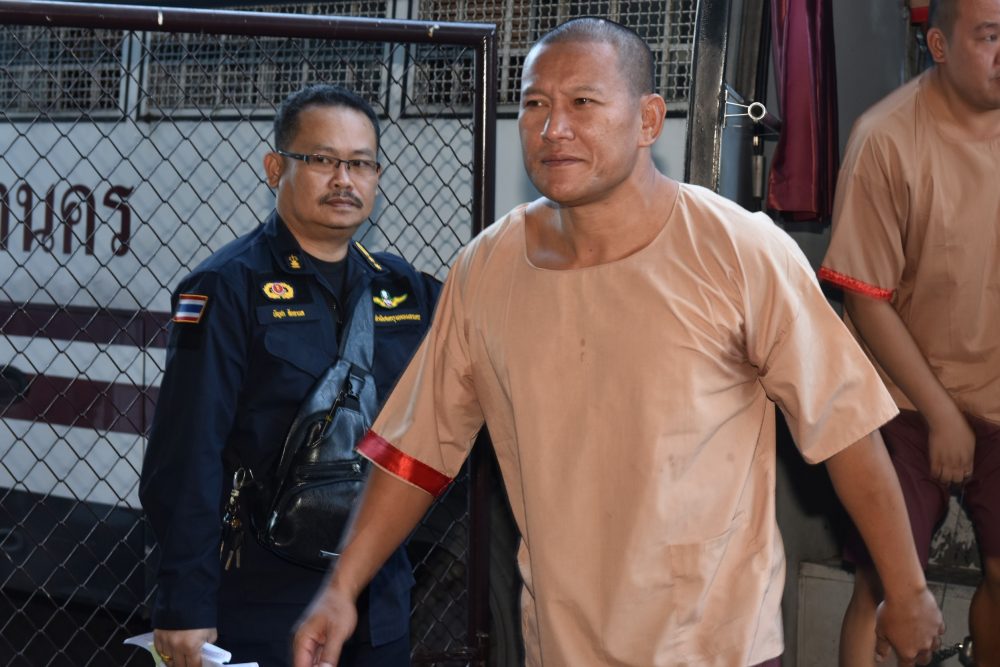
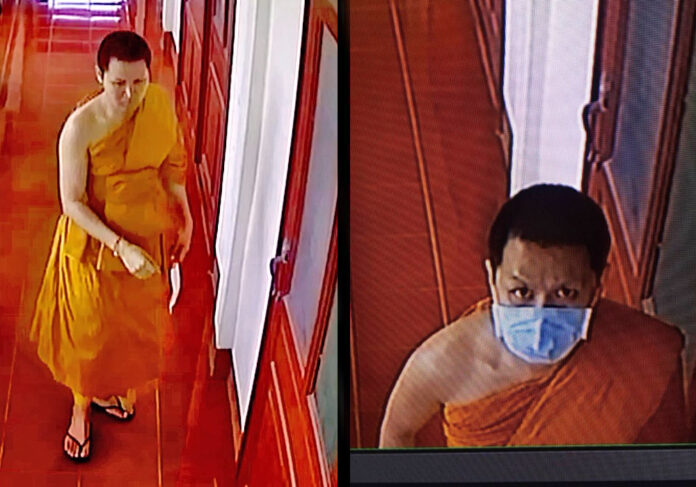
A Chiang Mai temple burglar police identified as Panupong Lakornsri, who has been a monk for most of his life, in still images taken from a security camera.

CHIANG MAI — By day he was a Chiang Mai monk. By night, police said, Panupong Lakornsri was a serial temple raider, who stole 230,000 baht in his latest burglary.

The 26-year-old man was arrested Tuesday, two days after he allegedly broke into the abbot’s room at Wat Ban Pong to steal while the temple was hosting a religious event. He was caught in the act by a security camera.

Police said he confessed to stealing 230,000 baht from the temple, located in the northern province’s Hang Dong district, and had already spent about 170,000 baht to pay off debts. He said he fled to a temple in Lampang province and voluntarily left the monkhood.

According to police, Panupong spent most of his life in an orange robe since being ordained about 20 years ago. They also said he’d robbed many temples in Chiang Mai and Bangkok to fund more material pursuits including a car and mobile phones.

Angry community members turned out to a staged police “reenactment” of Panupong’s alleged crime on Wednesday and had to be restrained from assaulting him.

He’s accused of going temple to temple, asking to join their religious events – when collections run high – as a pretense to sneak in and steal money.

Advertisement

Thai Entrepreneur Convicted in Bogus Bomb Detector Scam

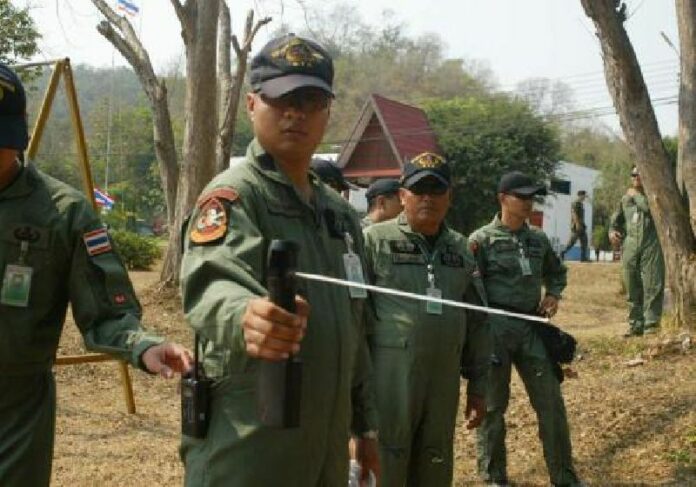
Soldiers in Pathani province display the GT200 in 2010.

BANGKOK — A court on Wednesday sentenced a businessman to nine years in prison for selling phony bomb detectors to a royal guard unit.

Sutthiwat Wattanaki was found guilty of selling eight so-called GT200 devices to the Royal Thai Aide-De-Camp Department in 2008. He was also fined 18,000 baht for the deal, which cost the state over 9 million baht.

The prosecutors said Sutthiwat’s company, called Ava Satcom Ltd., claimed the devices could detect explosive and narcotics materials from a distance. The royal bodyguards later realized they did not work as advertised and filed charges.

Made by a British firm whose owner was jailed for fraud in 2013, GT200s were sold at about 1 million baht each to clients in Thailand. Tests revealed the devices were ineffectual and based on USD$20 golf-ball finders bought in the United States.

Sutthiwat’s lawyer pledged to appeal. The defendant has posted a bond of 900,000 baht to secure bail.

It’s the third legal action judgment Sutthiwat and his firm. In August, a civil court ordered the company to compensate the royal guards for the fraudulent deal. Last week, a court also sentenced him to 10 years in prison for selling GT200 devices to the army at a price of 600 million baht.

Related stories:
Pyramid Cult Leader Appointed to Reform Public School Curriculum
Army’s 350 Mil Baht Airship Breaks Down Again After Re-launch
Defender of Fake Bomb Detector Appointed Top Forensic Science Job
Fake Bomb Detectors in Attacked Pakistani Airport Used By Thai Army

Advertisement

Starved of Funding, BACC Unable to Pay its Bills

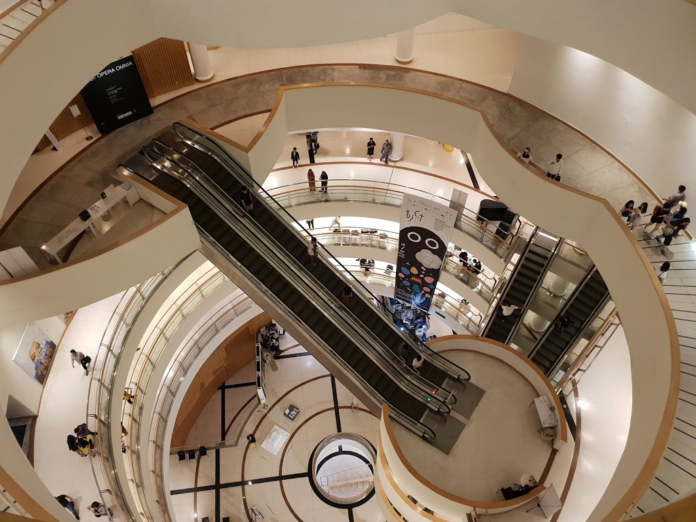
The Bangkok Art and Culture Centre interior in May.

BANGKOK — The director of a popular downtown public arts venue said City Hall has made good on its vow to defund the Bangkok Art and Cultural Centre, or BACC, by refusing to pay its utilities.

Director Pawit Mahasarinand said at a Wednesday news conference that the Bangkok Metropolitan Administration, which earlier this year tried turning the decade-old venue into a coworking space, is no longer paying the center’s electricity and water bills, which have come due.

“I don’t want to cause drama,” Pawit said, holding up a utility termination notice. “But this was sent to us this morning. So if you are going to go to the bathroom, you better hurry.”

Read: City to ‘Investigate’ Management of BACC

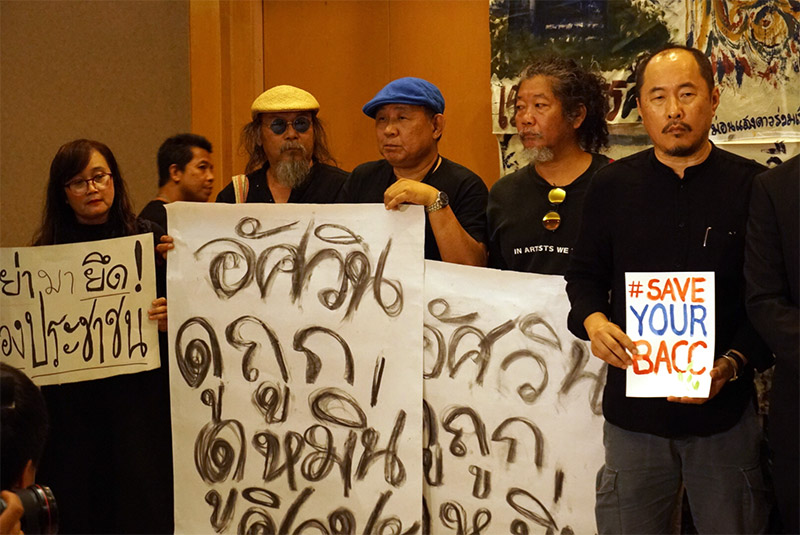
Supporters of the Bangkok Art and Culture Centre display signs Wednesday in Bangkok.

Pawit said City Hall’s Office of Culture, Sports and Tourism stopped paying the facility’s utility bills in July, not long after they backed down under public pressure from its bid to take over the arts center.

Today it owes 47,783 baht for two months’ worth of water. Pawit said monthly expenses for utilities alone amount to roughly 20,000 for water and 600,000 for electricity.

As a cost-saving measure, the venue may shave an hour off both ends of its opening and closing times.

“At this current rate of funding, the BACC can only be open until the middle of next year,” Pawit said.

At the last minute, a former deputy government instrumental to founding the BACC who now works in the prime minister’s office arrived with news. Puttipong Punnikanta said junta leader and prime minister Prayuth Chan-ocha would intervene.

“He said he understands the problem of the artist network and will find a way to fix it,” Puttipong said. “At first I didn’t think he would send me, but he urged me to come quickly. I have a personal connection to this place, since I was here since putting down the first brick.”

Though no city representatives were present, Bangkok Gov. Aswin Kwanmuang weighed in via a message posted online to reiterate that the city would not take over and the rationale for defunding it.

“The issue of managing the BACC ended months ago, as we listened to the public. Today, I reiterate that the city will not manage BACC affairs,” he wrote, blaming bureaucratic considerations for why it could not be subsidized by the government.

He detailed three times BACC funding was rejected by the interim assembly, once because of concerns it may not be legal.

“If the BACC wants to be subsidized by the city, then they have to proceed according to the law,” the governor wrote.

In May, Aswin proposed turning the arts and culture venue into a coworking space. He said the city would to take over its management because it was expensive to maintain, and would turn it into a coworking space to better serve the public.

Officials have denied a political motive, though as the most visible publicly supported arts venue, the BACC gives space to a broad range of perspectives, including some unlikely to please often-irascible authorities.

The city abandoned its takeover plan under intense public backlash but then cut off financial support by effectively reducing its budget to zero.

“I am managing this place, but I can’t speak for anyone if they have a hidden agenda about what they want to turn this place into,” Pawit said, later adding, “Back when we had an elected government, the city approved funding, but now, it doesn’t.”

Pawit said he has asked the tourism ministry to help find funding for next year and appealed for public donations to keep it open.

The center enjoys strong support from an influential demographic of Bangkok’s bourgeoisie, who Pawit appealed to for support.

“This place is built on your taxes. So if you don’t come visit, excuse me, you’re being dumb,” Pawit said. “I will make it so that even the motorcycle taxi drivers wanna walk in here.”

While the center’s contract with the city to use prime land at Pathumwan intersection expires in 2021, it’s ability to remain operational until then remains up in the air.

Related stories:
City to ‘Investigate’ Management of BACC
City Hall Won’t Take Over BACC – Won’t Fund it Either
Famed Artists Say No to City Hall Takeover of BACC
City Hall Signals Retreat on BACC Takeover Plan
The City Actually Wants to Turn BACC Into a ‘Coworking Space’
Take Risks, Include More: New Bangkok Art Center Head
Meet Bangkok’s New Governor: Aswin Kwanmuang
Caravaggio Exhibit Ignites Baroque Bangkok Drama

Advertisement

Laotian Drug Lord Gets Another Lifetime in Jail

Xaysana Keopimpha.
Xaysana Keopimpha.

BANGKOK — A court sentenced a Laotian drug lord to life in prison Wednesday after handing down his second guilty verdict in six months on narcotics charges.

Xaysana Keopimpha was convicted and sentenced by the Criminal Court along with a Thai codefendant, Choompol Panomprai, for conspiring to sell and distribute massive quantities of amphetamines in August 2016.

The sentence was reduced from death due to their cooperation with investigators, the court said.

A third man, Ratchapol Ratsapolpakorn, was acquitted of charges related to his alleged handling of money from their drug sales.

All three men were acquitted for another drug case involving selling more than 2.3 million pills of amphetamine.

Xaysana was arrested at Suvarnabhumi International Airport in 2017. He had been wanted for years for operating a transnational drug ring in Thailand and Laos.

In March, he received his first life sentence in a separate trial on related charges.

Xaysana Keopimpha arrives Wednesday to the Criminal Court in Bangkok.

Related stories:

Laotian Drug Lord Sentenced to Life in Prison

‘Benz Racing’ Charged For Lambo Link to Laos Drug Lord

‘Benz Racing’ Denies Having Connections to Laotian Drug Lord

‘Benz Racing’ Surrenders to Narcotics Cops

Soap Star’s Husband Investigated for Laundering Drug Money

Laotian ‘Drug Kingpin’ Arrested at Bangkok Airport

Advertisement

Small Hotels Guild Launches Pact With Airbnb

BANGKOK — Global room rental platform Airbnb announced an alliance Wednesday with a small hotels consortium.

Under the agreement signed today, hotels belonging to the Thai Boutique Accommodation Trade Association will be listed on Airbnb. It brings together two players in the lucrative hospitality industry seeking legal recognition in the face of an ongoing regulatory crackdown.

Airbnb representative Mike Orgill said the deal will raise visibility for hotels off the beaten path and promote local tourism, while the small hotels guild rep called on the military government to end its crackdown on unlicensed hotels.

“It will connect Thai hospitality with people around the world,” Orgill said at a news conference held at a hotel in a Phra Khanong arts district.

Read: In a First, Govt Official Stands by Airbnb Legality

Apart from being listed on the world’s best-known hospitality service, which says it served 1.6 million guests in Thailand in the past year, hotels in the trade association will also receive training and guidebooks from Airbnb on how to improve business, Orgill said.

Founded in 2016, the association represents over 50 “boutique hotels,” small-scale accommodations that tout their unique character and neighborhood interactions.

Association vice president Staporn Sirisinha said he hopes the partnership will encourage more tourists to stay in boutique hotels, which offer more experience than big chain hotels located in well known tourism areas.

“Tourism is no longer about demand and supply,” Sataporn said at the news conference. “It’s about passion and new discoveries.”

Such small independent hotels are being killed off by the military regime, Staporn complained, referring to a recent crackdown on small, unlicensed hotels and guesthouses in tourist hotspots including Chiang Mai, Phuket and Bangkok. Dozens have been closed down or threatened with closure as a consequence.

“This government is very confused with itself,” Staporn said. “They are not illegal businesses. They want to register and get legalized, but the rules are not accommodating at all. These people just want to have honest careers and become a bedrock of local economy.”

He cited personal experience in dealing with what he sees as unrealistic regulations. He once tried to turn an eight-room building into a guesthouse, but local officials refused to sign off on it because a corridor was less than 90 centimeters wide.

“Eighty percent of hotels and guesthouses [in popular areas] are considered illegal, so if they close them all down, they will be left with only 10 percent of accommodation,” Staporn said. “The government needs to be sincere about this.”

And there’s the unresolved question of Airbnb’s own legality. Condominium owners and some officials maintain Airbnb violates hotel and even immigration regulations, but the company insists it complies with the law.

In July, the company scored a symbolic win when it signed an agreement with a department under the Ministry of Interior Affairs, the first government agency to recognize Airbnb services as legal.

Orgill, who’s in charge of the San-Francisco based company in Southeast Asia, said it should be treated as a legal entity like other platforms such as Booking.com and Agoda. He said his company will continue to work with officials.

“There is a mismatch between [regulations] and the digital era,” he said. “The question is how do we bring them into the 21st century?”

Commenting on today’s cooperation between Airbnb and the boutique hotel guild, an urban planning expert urged caution, saying there are “two sides to the coin.”

In an interview, Tansorn Pornpanyapat, an assistant director of Chulalongkorn University’s urban design center, warned that while an influx of tourists can revitalize communities and boost their economies, they same boom can damage their character and sense of community.

He cited increasing gentrification of some quarters of the old city and the rush of development following extension of the metro and skytrain lines as examples.

“Communities should prepare what to do in the face of development,” Tansorn said. “I am not against development, but people in a community should prepare for it together. And Bangkok is very weak in this aspect.”

Related stories:

In a First, Govt Official Stands by Airbnb Legality

Airbnb Teases Major ‘Partnership’ With Thai Gov’t

Thai Law: Case Closed on Airbnb. Here’s Why it Won’t Matter.

Airbnb Launches New Features in Thailand, Remains Totally Illegal

Advertisement

World Leaders Laugh as Trump Boasts of His Achievements

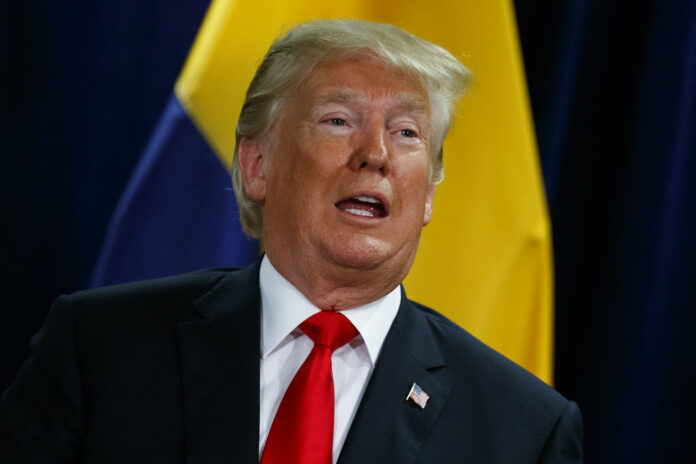
US President Donald Trump answers a reporters question about Supreme Court Justice nominee Brett Kavanaugh during a meeting with Colombian President Ivan Duque in September at the UN General Assembly. Photo: Evan Vucci / Associated Press

UNITED NATIONS — President Donald Trump got some laughter when he addressed world leaders on Tuesday. It wasn’t intentional.

The president was highlighting U.S. gains under his watch as he opened his address to the U.N. General Assembly. He said the American economy was “booming like never before” and that his administration has accomplished more in less than two years than almost any other administration.

His boast elicited laughter from the scores of heads of state and delegates in the audience for the speech.

Trump, who has long claimed that his predecessors’ weak leadership prompted other nations “to laugh” at the US. appeared flustered and responded, “I didn’t expect that reaction, but that’s OK.”

Later, as he was leaving the U.N., he told reporters that he had meant to be funny.

“Oh it was great, well, that was meant to get some laughter, so it was great,” he said.

In his speech, Trump said the U.S. is a “stronger, safer and richer country” than when he took office in January 2017. He said “we are standing up for America and for the American people, and we are also standing up for the world.”

A little further into his speech, German diplomats appeared bemused by Trump’s latest swipe at their country as he reiterated his criticism of Germany’s planned undersea gas pipeline from Russia.

After the president’s warning that “Germany will become totally dependent on Russian energy if it does not immediately change course,” cameras showed German Foreign Minister Heiko Maas gently shaking his head, while senior diplomats smiled.

Some in the audience also grumbled during Trump’s remarks when he said “we reject the ideology” of globalism. When Trump criticized socialism, a member of the Swedish delegation frowned with disapproval.

Advertisement

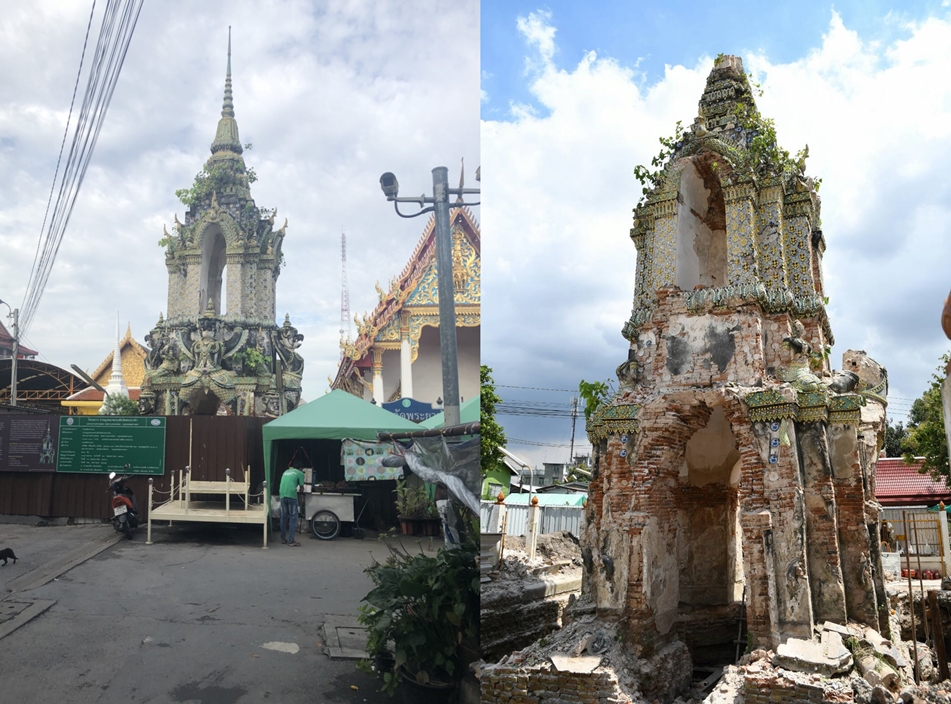
Bangkok Temple Bell Tower Collapses, Killing 1

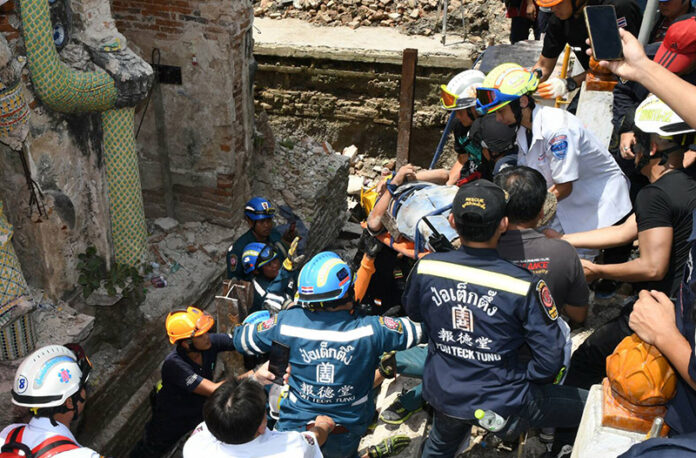
Rescue personnel lift an injured worker Tuesday from the debris of a collapsed temple bell tower in west Bangkok.

BANGKOK — A bell tower under renovation at an old Bangkok temple collapsed Tuesday, killing one and injuring 11.

Police on Wednesday said charges related to fatal negligence are being weighed against the head of construction at Wat Phraya Tham in the capital’s Bangkok Noi district, where the 15-meter tower’s spire fell onto workers while they were raising it at about 1:30pm.

Workers were trapped under the debris for about three hours before being taken to a hospital. Three people were seriously injured with one almost losing an arm.

The body of Suriyan Thongsai, 46, was discovered hours later after his relatives told rescue workers that he was missing. A preliminary autopsy found his neck, arms and legs broken.

According to district chief Nattapong Meephokkij, there were 20 people working at the tower when the accident happened, and those injured are being treated at a local hospital.

Capt. Peechaya Hawangju said an investigation to find out who was in charge was underway and no charges have been filed. He said results were expected within a couple of days.

Yadwana Prasertsom, the crew chief, said they were raising the base of the bell tower, which had been sinking into the ground. She said faulty equipment might have caused the tower to tilt too much to one side, toppling the top of the ornate structure and one of its statues.

Anek Siripanichgorn, an engineering expert, said the tower has been under renovation since May. He said the old structure of the tower could have made it more difficult to raise, but it was still unclear why some parts collapsed.

A team of engineers will investigate and determine if the work should continue or the tower torn down, he added.

The temple is believed to be about 300- to 400-year-old. The Fine Arts Department said the tower was added during the Rama II and has been renovated two times. The latest approved work was for fixing the foundation and raising it up where it had subsided into the ground. The contractor doing the work is Finesse Soil Testing.

Director general Anandha Chuchoti said the department would compensate families of the victims and the damage as the construction is under its authority.

An image shows the bell tower at a Bangkok temple before and after it collapsed on Tuesday.
Advertisement

Hospital Apologizes for Violent Treatment of Coma Patient

PHITSANULOK — After a clip of a nurse’s rough handling of a comatose, 90-year-old man went viral, the hospital went live online to apologize Tuesday night, but few observers seemed impressed.

In its live-streamed apology, Buddhachinaraj Hospital administrators said they would launch an internal review after a clip showing a nurse there push and pull the helpless patient was surreptitiously filmed and posted online.

“We have a process of care for patients, but in this case, we think something was unusually wrong with [the nurse],” head nurse Siriporn Siriwattanapaisal said.

Hospital directors Wisit Sathianwanatee, Aree Jesadayanmetha and Tomon Tongsri described what happened action as unacceptable, but said an ethics hearing would have to be held to determine the facts of the case.

The Nursing and Midwifery Council also went live online this morning to say that nurses in general are stressed and stretched thin.

“Nurses have to stay with patients 24 hours, so it’s probable that some conflicts will happen, especially if they are stressed or understaffed,” council secretary-general Angkhana Sariyapong said.

Based on reactions to both videos, viewers weren’t impressed.

“What kind of way to address an issue is this? Sounds like nurses making excuses for each other,” Kannika Panya wrote in reply.

The original post with the video of a nurse roughly tossing medical equipment onto the 90-year-old coma patient’s face, and then angrily jerking him toward her was first posted by user Paworna Ketuparn. It gained more than 8 million views since late Tuesday afternoon.

“Are these ethics of a nurse?” she wrote. “My dad was also sick with this disease, but my mom sat by him all the time. If she didn’t, I wonder if this would have happened.”

Advertisement

Bodies of Murdered Briton and Thai Wife Found

A wedding photo of Alan Hogg and Nhot Suddaen.

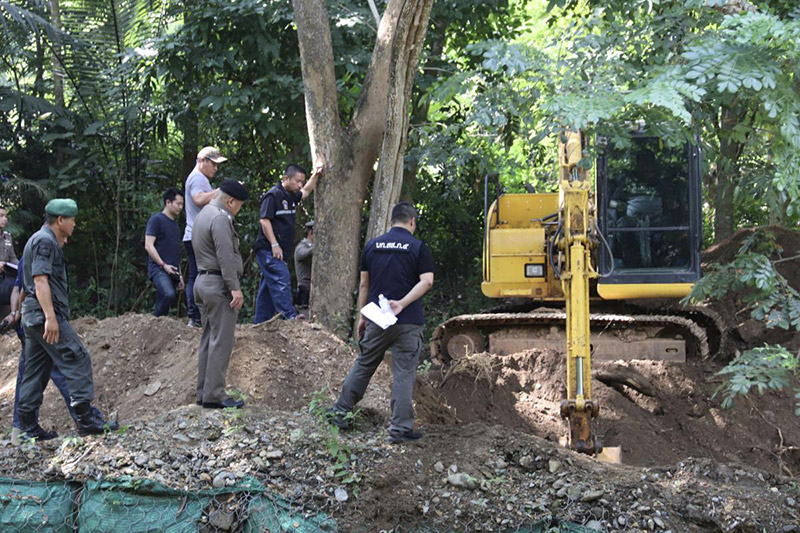
PHRAE — Police in Phrae province said Tuesday they have discovered the buried bodies of a missing British expatriate and his Thai wife, and have arrested the woman’s brother for allegedly ordering their murder.

Col. Manas Kerdsukho, provincial police commander, said the bodies of 64-year-old retired petroleum engineer Alan Hogg and his 61-year-old wife Nhot Suddaen were discovered on the property of their home. They had to be dug up by earth-moving equipment.

He said the killers had been traced after stealing the couple’s pickup truck, and that they had confessed after their arrest to being hired by Nhot’s brother to kill them.

Police then arrested the brother, who they said confessed to ordering the killing over a family dispute.

“He killed his own sister,” Manas said.

Thai officers stand by the area where the bodies of a murdered Briton and his Thai wife were found Tuesday in Phrae province. Photo: Daily News / Associated Press

The victims, who had been together for 30 years, had been dead for about a week, according to police.

Manas said Hogg was shot with a shotgun and Nhot died after being bludgeoned on the back of the head, shattering her skull.

The police officer said an issue that likely contributed to the murders was that Hogg would often buy assets using the names of his Thai family members, including his wife’s brother, who wanted to sell some of those assets. Because of legal restrictions on foreign ownership of land and companies, foreigners living in Thailand often have assets in the names of Thai relatives or associates.

“The deceased had a lot of money. And some of his assets are still in the suspect’s name,” Manas said.

The deceased couple had traveled back and forth between Thailand and the United Kingdom for a long time, but settled in Thailand in 2014, Manas said, adding that they have a daughter who lives in England.

Advertisement

Thai Police Hand Over 100 Kilos of Marijuana for Research

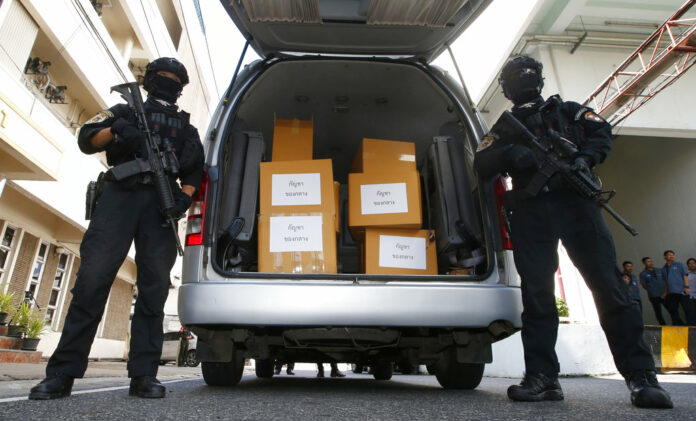
Thai policemen stand guard next to 100 kilograms of seized marijuana before a Tuesday news conference in Bangkok. Photo: Sakchai Lalit / Associated Press

BANGKOK — Police on Tuesday handed over around 100 kilograms of seized marijuana for medical research, as officials seek to produce pot-based medication.

Sophon Mekthon, chairman of the Government Pharmaceutical Organization, said researchers chose high-quality marijuana from police to conduct medical research, selecting from batches of seized imported marijuana and taking some local strains of cannabis that police had recently confiscated. He said the marijuana varied in quality and type so researchers could observe which characteristics are most suitable for medicinal purposes.

“The Government Pharmaceutical Organization intends to use marijuana, which is a plant that grows well in Thailand, for medical research and to develop it into medical marijuana extract and other pharmaceutical products of standardized quality,” Sophon said in a statement, adding that the organization hopes to make cannabis-based medicine available to a wide range of people to replace other types of medicine that carry high prices.

Read: Lawmakers Eye Article 44 to Speed Cannabis Law

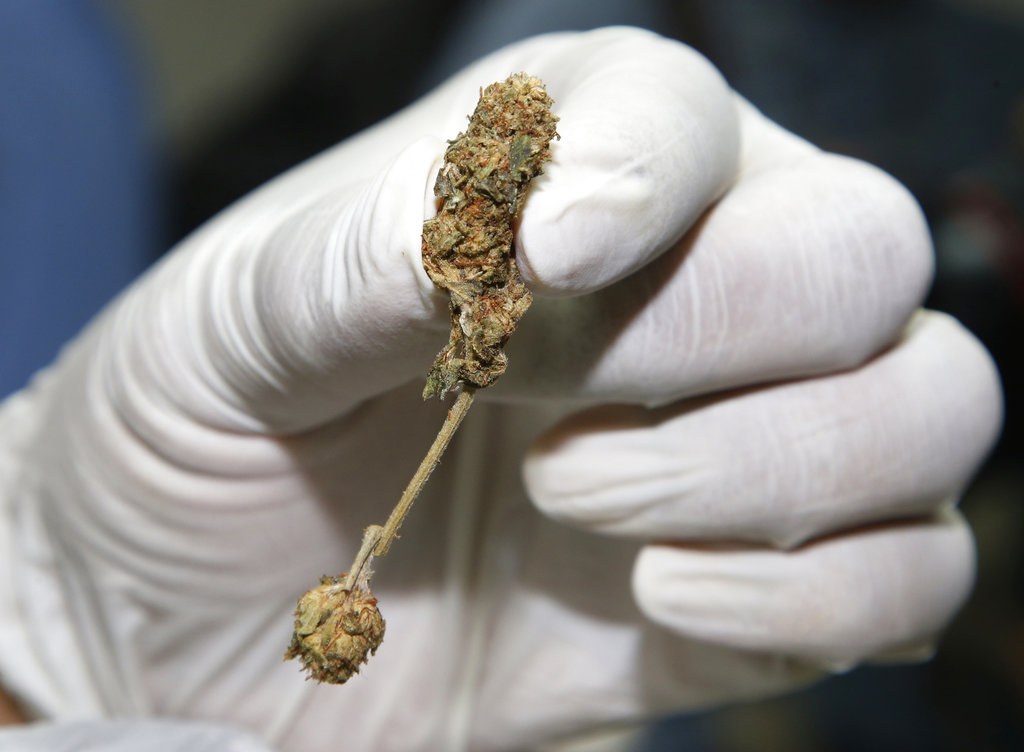
A police officer displays marijuana buds. Photo: Sakchai Lalit / Associated Press

Sophon said the roughly 100 kilograms of marijuana received Tuesday could produce around 10 to 15 liters of concentrated cannabis extract that can be used for research and as medicine.

“We will use it for medical purposes, and we will safely control it,” Sophon said. “It is not for recreational use.”

Marijuana is still illegal under Thai law, including testing on humans, but officials anticipate that legal amendments could soon be enacted.

The government’s legislative body has held multiple talks over whether marijuana should be taken off the list of illegal narcotics to allow research and production of medical marijuana.
The idea has faced little resistance, but officials have expressed fear there may not be enough time for legal amendments to be enacted under the current military government, with an election tentatively scheduled for February next year. To legalize the drug, officials have deliberated using a special legislative clause that the junta gave itself when it seized power in a 2014 coup.
Withoon Danwiboon, managing director of the Government Pharmaceutical Organization, said researchers would also look at the work of other study groups to choose and develop marijuana strains that are sturdy and can effectively produce enough of the chemical component that can be extracted for medicinal purposes.
He said there are plans to make various forms of marijuana-based pharmaceutical products such as sublingual drops, transdermal patches, suppositories, creams and capsules.

It’s the first time Thai police have officially handed over seized drugs to another government agency. Police typically burn all illegal narcotics that it seizes on June 26 every year, to mark International Day Against Drug Abuse and Illicit Trafficking.

Advertisement

Hot News

LATEST NEWS

Bangkok
overcast clouds
31.6 ° C
32.7 °
31.6 °
99 %
5.2kmh
100 %
Sun
30 °
Mon
34 °
Tue
33 °
Wed
31 °
Thu
29 °