30 C
Bangkok
Saturday, June 27, 2026
Home Blog Page 2150

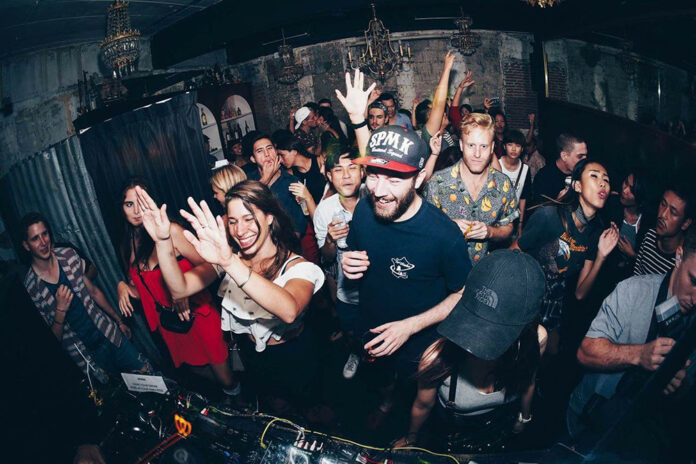
Return to Dark Bar: Underground Venue Back For a Night on Silom

Kontraband at Dark Bar. Photo: Tetsuya Ishikawa

BANGKOK — Bangkok nightlife was at a loss this year when famed underground venue Dark Bar succumbed to pressure from the authorities and closed down.

For three years, Dark Bar was little more than a tiny hole-in-the-wall club. It didn’t have the best decor, sound system or lighting – but the parties were legendary, with a deep-underground vibe and crowds always down to go ham.

Most importantly, it earned a rep with clubbers “in the know” as a place to go for serious after-hours partying, with crews such as Kontraband, Filthy Solid and Mela providing the beats into the wee hours.

Next week, Dark Bar owner Nodnuanwan “Nod” Tatong will try to road to conjure that nostalgia. While she won’t be opening a new venue, she’ll be doing the next best thing: a series of pop-up parties around Bangkok.

“The reason for this party is for a reunion with the dark family. No plans of opening a new one. Just a tour, hopping around,” Nodnuanwan said.

The Dark Bar crew will take over a space in Soi Silom 19. Providing the beats will be former Dark Bar DJs Sunju and Mela. How late the session goes, we’ll just have to wait and see.

Dark Bar on Tour #1 will start at 10pm on Dec. 8 on the second floor of Nineteens Up Bar. It’s reachable by taxi or foot from BTS Surasak. Entry is 250 baht.


Related Stories:

Rage, Rave at the Dying of the Dark Bar

Goodbye Dark Bar: Ekkamai Venue Another Nightlife Casualty

Advertisement

New Zealand Dairy Giant Fonterra to Pay Danone for Recall

A Fonterra milk powder factory in 2013 in Pahiatua, New Zealand. Photo: Steve Carle / Associated Press

CHRISTCHURCH, New Zealand — An arbitration tribunal has ordered New Zealand dairy giant Fonterra to pay Danone of France USD$125 million for recall costs stemming from a 2013 food scare.

The recall was made out of concerns, which proved later to be untrue, that some Fonterra products supplied to four Danone Nutricia baby formula plants in Asia were tainted by bacteria that can cause botulism.

Danone recalled products from eight regional markets.

Fonterra said Friday that it was disappointed over the ruling by an arbitration tribunal. It says its supplier agreement with Danone made it not liable for the recall costs.

Danone issued a statement welcoming the decision.

Fonterra is a cooperative owned by more than 10,500 farmers and enjoys a near monopoly on New Zealand milk. It is the world’s biggest dairy exporter.

The cooperative’s CEO, Theo Spierings, said in a statement that the 2013 recall was precautionary and that reviews by Fonterra and by the New Zealand government found no risk to the public or wrongdoing by the company.

“The decision to invoke a precautionary recall was based on technical information obtained from a third party, which later turned out to be incorrect,” it said.

Worries over product quality of infant formula are a strong concern in Asia, especially China, after repeated problems with safety violations in the dairy industry.

The 2013 scare affected sports drinks, protein drinks and other beverages in addition to formula sold in New Zealand, China, Australia, Thailand, Malaysia, Vietnam and Saudi Arabia. It was treated as a national emergency in New Zealand, where the dairy industry drives the economy.

The New Zealand government charged Fonterra with processing and exporting products in a way that failed to meet safety standards and then not notifying officials quickly enough when it learned of the lapses. The company pleaded guilty and was fined.

Advertisement

Redshirts Dispute Link to Rice Field Weapons Cache

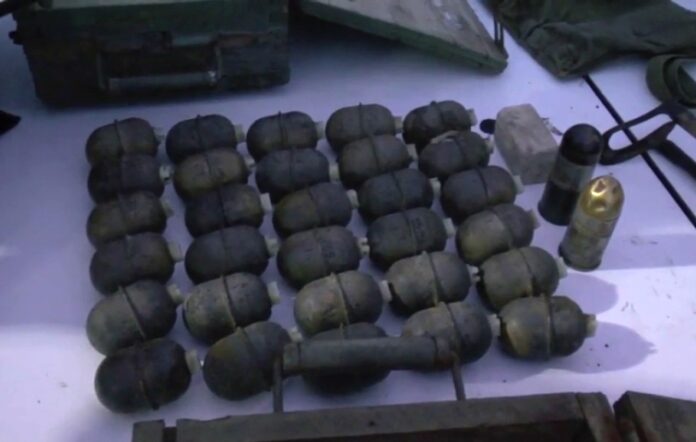
Hand grenades displayed by police Wednesday at a news conference in Chachoengsao province

BANGKOK — A top junta official said Friday that a weapons cache discovered recently by police could belong to a man believed to have died four months ago.

The stack, which consists of grenades and rifle rounds, was found in a rural area of Chachoengsao province. Deputy junta chairman Prawit Wongsuwan linked it to “hardcore” Redshirt activist Wutthipong “Ko Tee” Kochathmmakun, who went missing in July and is widely thought to have been abducted and murdered.

A Redshirt politico today accused the authorities of staging the discovery.

“It made me wonder if they made it up?” Weng Tojiarakarn, a co-leader of the Redshirts’ umbrella group, said in an interview. “Is it the work of the authorities?”

He also mocked the regime’s linking of the alleged stockpile to Ko Tee.

“I heard Ko Tee was dead,” Weng said. “Is his ghost haunting us now?”

Special Branch police deputy commander Chayapol Chatchaidet told reporters Wednesday that police were tipped off on Nov. 24 that a large cache of weapons was spotted in a rice field in Chachoengsao, a several hours drive east of Bangkok. He did not say why the discovery was only announced Wednesday.

Reached for comment Friday, the major general said there were too many details and documents for him to discuss the case over the phone. He maintained that the discovery was genuine.

Gen. Prawit, the junta’s No. 2, told reporters today that the armaments appeared to be from the same cache of weapons soldiers found in a residence linked to Ko Tee in March. At the time, authorities said Ko Tee’s network was stockpiling the arms as part of an assassination plot. Ko Tee himself denied the allegation.

Asked whether the weapons were intended to be used in some ongoing plot, Prawit said he didn’t know.

Weng, the Redshirt leader, said he suspects authorities are using the news to distract the public from the recent controversy over junta chairman Prayuth Chan-ocha’s berating of a local petitioner in Pattani and crackdown on protesters in Songkhla.

“They might intend to bury news that damage the prime minister,” Weng said.

He also stressed that even if the weapons did belong to Ko Tee’s network of self-avowed militants, his Redshirt organization and Ko Tee parted ways long ago.

“When he was alive, he already proclaimed himself as a rogue Redshirt. He had nothing to do with the UDD,” Weng said, referring to the United Front of Democracy Against Dictatorship

Advertisement

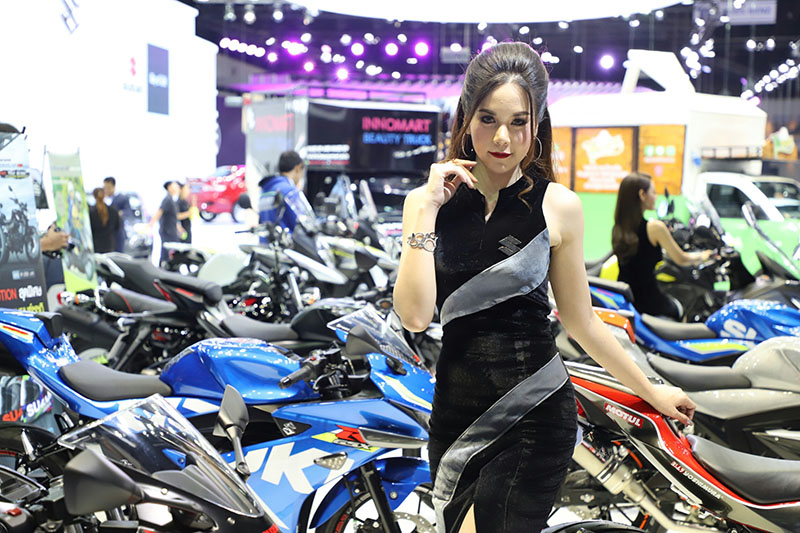
Motor Expo Opens With All Eyes on New Models (Cars Too)

BANGKOK — Motor Expo 2017 got underway Friday at Impact Muang Thong Thani, and with it a read of the cultural barometer that is how the promotional models are dressed.

A trend toward more conservative attire that saw promotional models, or pretties, cover up while the nation was in mourning has endured, with models eschewing overtly sexual clothing in favor of more demure evening gowns or casual wear.

This time last year, when Thailand had just entered mourning following the October 2016 death of King Bhumibol, the sexually charged and often scandalous pretties traded in their latex corsets for long black dresses. This past March, the models sought a balance between the two, wearing sci-fi cocktail dresses and lacy black gowns.

The revealing attire drew legions of amateur photographers who shared a symbiotic relationship with the models and were little interested in the vehicles on display. The open displays of female sexuality were long been a source of contention for the Culture Ministry, which regularly crusaded against the revealing outfits on the basis they damaged the nation’s reputation.

Motor Expo 2017 runs now through Dec. 11.

Related stories:

Models Cover Up to Unveil New Models at Motor Show (Photos)

Here’s What a Motor Show Looks Like Without Sexy Pretties (Photos)

Adult Star Fined for ‘Inappropriate’ Motor Show Dance

Govt Wants Less Sex, More ‘Thainess’ for Motor Show Pretties

พริตตี้ ๑๗๑๑๓๐ 0045 พริตตี้ ๑๗๑๑๓๐ 0013 พริตตี้ ๑๗๑๑๓๐ 0016 พริตตี้ ๑๗๑๑๓๐ 0004 พริตตี้ ๑๗๑๑๓๐ 0008 พริตตี้ ๑๗๑๑๓๐ 0017 พริตตี้ ๑๗๑๑๓๐ 0020 พริตตี้ ๑๗๑๑๓๐ 0027 พริตตี้ ๑๗๑๑๓๐ 0029 พริตตี้ ๑๗๑๑๓๐ 0031 พริตตี้ ๑๗๑๑๓๐ 0038 พริตตี้ ๑๗๑๑๓๐ 0026

Advertisement

Defense Will Try to Shift Focus to North Korea in Kim Murder

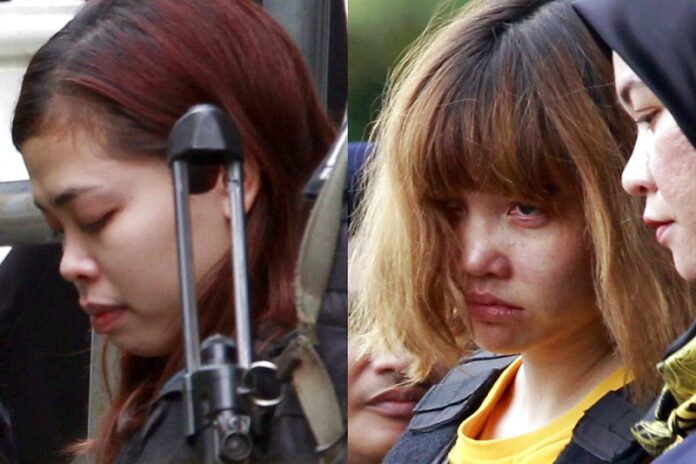
Indonesian suspect Siti Aisyah, left, and Vietnamese suspect Doan Thi Huong, both suspects in the killing of Kim Jong Nam, North Korean leader Kim Jong Un's estranged half brother, are escorted out of court by police officers last March in Sepang, Malaysia. Photo: Daniel Chan / Associated Press

SHAH ALAM, Malaysia — Malaysia’s high-profile trial of two women accused of killing the estranged half brother of North Korean leader has gone into recess until next year.

Indonesia’s Siti Aisyah, 25, and Vietnam’s Doan Thi Huong, 29, are accused of smearing a nerve agent on Kim Jong Nam’s face in a crowded airport terminal in Kuala Lumpur on Feb. 13. The two are the only suspects in custody, though prosecutors have said four North Koreans who have since fled the country were also involved.

Prosecutors have focused on proving the women’s guilt but shied away from scrutinizing any political motive behind the killing. Defense lawyers, who say their clients were duped into carrying out the attack, will look to shift that focus when the trial resumes Jan. 22.

Here’s a look at what’s been presented in court since the trial began two months ago.


The Victim

Kim Jong Nam was seen on airport security camera footage as he was approached by two women, who appear to smear something on his face. Footage showed Kim gesturing for help before he suffered seizures. He was dead within two hours.

Kim was carrying four diplomatic passports that identified him as Kim Chol, aged 46.

An autopsy showed the banned VX nerve agent was found on Kim’s face and in his eyes, blood, urine, clothing and bag. His organs were damaged, including part of his brain, both lungs, his liver and spleen. Doctors concluded the cause of his death was “acute VX nerve agent poisoning,” and ruled out contributing factors.

Police testified Kim was carrying eight international currencies, including $124,000. He also carried a drug known to be an antidote for nerve agents.

It is known that Kim Jong Nam, the eldest son of the family that has ruled North Korea since its founding, had been living abroad for years after falling out of favor. It is thought that he could have been seen as a threat to his brother Kim Jong Un’s rule.


The Defendants

The two young women face the death penalty if convicted, but under Malaysian law they can’t be sentenced to die if they didn’t have intent to kill. That is their defense.

The court has heard that traces of VX were found on the women’s clothing as well as on Huong’s fingernails. A government chemist testified that VX was a “strategic” choice of poison because it doesn’t evaporate quickly and a victim could be targeted without affecting the surroundings.

The chemist told the court that rubbing VX on a person’s eye would be the fastest way to kill because the eyes have no barrier like the skin. He said the palm is the least sensitive area and VX can be washed from the hand within 15 minutes of exposure — which could explain why the women weren’t affected.

Prosecutors contend the women knew they were handling poison and deliberately rushed to wash their hands after the attack. Security camera footage shows both holding their hands away from their bodies as they rush to separate restrooms.

Defense lawyers argued that the women didn’t flee the country nor discard their clothing, indicating they didn’t know they were handling poison. Furthermore, they point to the women’s contention that they thought they were playing a prank for a hidden camera show.

The defense says the men who hired the women for the prank show were actually North Korean agents who fled the country after the attack. North Korea has denied any involvement.


The North Koreans

Police have told the court that several North Korean men helped plot the attack, including a man one of the women says hired her to stage pranks. The four men left Malaysia on the day of the killing.

A police investigator identified the four as Hong Song Hac, Ri Ji Hyon, Ri Jae Nam and O Jong Gil. On Malaysia’s request, Interpol has issued arrest warrant for the men, who are believed to be back in Pyongyang, but North Korea is not a member of the organization.

Airport security footage played in the courtroom showed all four discarding their belongings and changing their outfits after the attack. They were then seen meeting North Korean Embassy official Hyong Kwang Song and Air Koryo official Kim Uk-Il in another part of the airport before flying out of the country.

The embassy and Air Koryo officials have told police it was their duty to assist North Korean citizens leaving the country. Those two and another North Korean police were seeking to question were allowed to leave the country in the days after the killing in exchange for the release of nine Malaysians stuck in Pyongyang.

The court heard that Hong Song Hac was the mastermind who orchestrated the operation on the ground.


What’s Next

When the trial resumes, defense lawyers will look to shift the focus onto the North Koreans.

Malaysian officials have never officially accused Pyongyang of involvement in Kim’s death and they have made it clear they don’t want the trial politicized.

The defense will start with the cross examination of the chief police investigator, whom they have described as the most important witness.

They are expected to question him about the role of North Korean chemist Ri Jong Chol, who was detained shortly after the killing but released due to lack of evidence and deported. Defense lawyers said Ri, who had used a North Korean Embassy car since 2015, was a key suspect as his house could have been where the nerve agent used in the killing was made.

Prosecutors have about a dozen more minor witnesses to call before they are expected to rest their case in March. The judge could then make a ruling by the second quarter of 2018.

If the judge finds there is no case against the women, they will be freed. If he rules otherwise, the defense will be called and the trial will continue for several more months.

Story: Eileen Ng

Advertisement

Myanmar’s Suu Kyi Visiting China Amid Crackdown Criticism

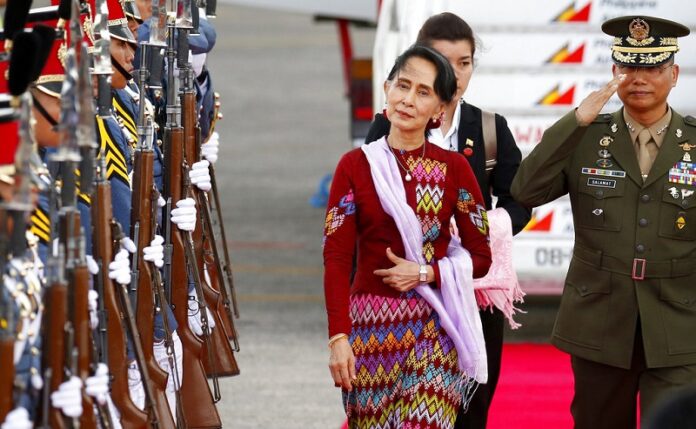
Myanmar leader Aung San Suu Kyi arrives last year at Clark International Airport, north of Manila, Philippines to attend the 31st ASEAN Summit and Related Summits in Manila. Photo: Bullit Marquez / Associated Press

BEIJING — Myanmar civilian leader Aung San Suu Kyi is visiting friendly neighbor China as international criticism over Myanmar’s persecution of Rohingya Muslims grows.

China has studiously avoided criticizing the crisis and Suu Kyi can be expected to receive a warm welcome when she meets with President Xi Jinping. During the visit that begins Friday, China will also likely push for the restart of a controversial dam project in northern Myanmar that has caused conflicts.

More than 620,000 Rohingya have fled Myanmar and poured into Bangladesh over the last few months amid a scorched earth campaign by Myanmar’s military that the United Nations and United States describe as “ethnic cleansing.”

China, a longstanding friend of Myanmar during the Southeast Asian country’s isolation from the West, has been helping shield it from criticism.

Advertisement

Japan’s Emperor Akihito to Abdicate on April 30, 2019

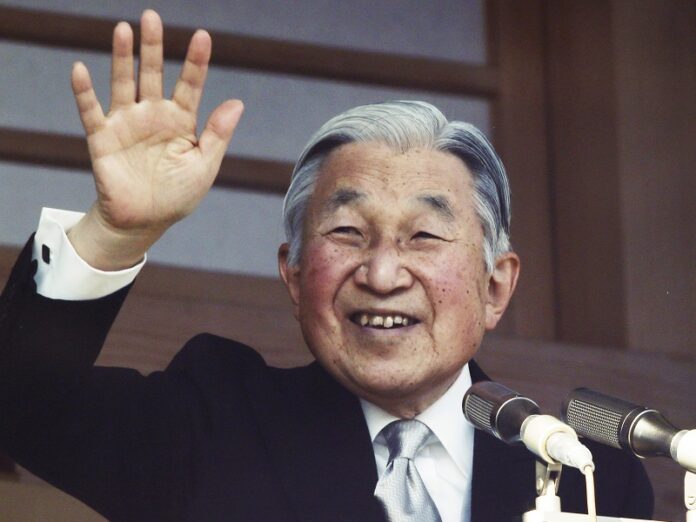
Japan's Emperor Akihito waves to well-wishers from a bullet-proofed balcony of the Imperial Palace during New Year's public appearance in 2016 in Tokyo. Photo: Koji Sasahara / Associated Press

TOKYO — Japan’s much admired Emperor Akihito plans to abdicate on April 30, 2019, at age 85 in the first such abdication from the Chrysanthemum Throne in about 200 years, the government said Friday.

Akihito’s elder son Crown Prince Naruhito will ascend the throne a day later, on May 1, 2019, beginning a new as yet unnamed era.

The decision was made Friday at a meeting of the Imperial House Council, which included politicians, judicial officials and imperial family members.

Akihito expressed his apparent wish to abdicate in 2016, citing his age and health.

Formal Cabinet approval of the decision is due on Dec. 8, Prime Minister Shinzo Abe told reporters.

“I feel deeply moved that the decision was made by the Imperial Household Agency making a major step toward an imperial succession,” Abe said.

Legislation allowing Akihito to abdicate within three years was enacted earlier this year.

His desire to leave the throne revived a debate about the country’s 2,000-year-old monarchy, one of the world’s oldest, as well as discussion about improving the status of female members of the shrinking royal population. The current male-only succession rules prohibit women from succeeding to the Chrysanthemum Throne and female members lose their royal status when they marry a commoner.

Akihito was 56 years old when he ascended the throne in January 1989 after the death of his father, Emperor Hirohito, beginning the Heisei Era. Naruhito will be 59 when he becomes emperor.

The emperor and his wife Empress Michiko, who was born a commoner, are an elegant, stately pair often seen making visits to disaster victims and carrying out other official duties.

The legislation for Akihito’s case was needed because the 1947 Imperial House Law does not provide for abdication. The last emperor to abdicate was Kokaku in 1817.

Story: Mari Yamaguchi

Advertisement

Pope Demands ‘Decisive Measures’ to Resolve Rohingya Exodus

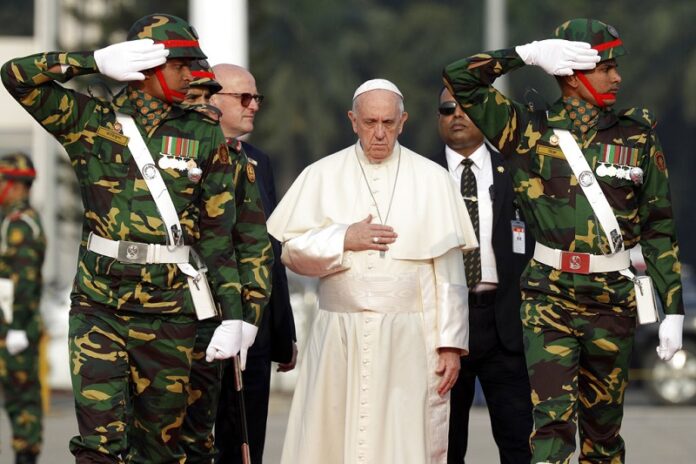
Pope Francis reviews a honor guard Thursday as he arrives at Dhaka's international airport, Bangladesh. Photo: Andrew Medichini / Associated Press

DHAKA, Bangladesh — Pope Francis demanded Thursday that the international community take “decisive measures” to resolve the causes of the mass exodus of Rohingya Muslims from Myanmar, breaking his recent silence over what the United Nations has declared to be a textbook case of “ethnic cleansing.”

Arriving in Bangladesh from Myanmar, Francis said it also was “imperative” for world governments to immediately provide assistance to help the Bangladeshi government cope with Asia’s worst refugee crisis in decades.

In a speech before Bangladesh President President Abdul Hamid, government officials and ambassadors from around the world, Francis praised Bangladesh’s sacrifice and generosity in welcoming in so many refugees “before the eyes of the whole world.” He didn’t identify the Rohingya by name, ethnicity or faith, referring only to “refugees from Rakhine state.”

But his words were sharp.

“None of us can fail to be aware of the gravity of the situation, the immense toll of human suffering involved, and the precarious living conditions of so many of our brothers and sisters, a majority of whom are women and children, crowded in the refugee camps,” he said.

“It is imperative that the international community take decisive measures to address this grave crisis, not only by working to resolve the political issues that have led to the mass displacement of people, but also by offering immediate material assistance to Bangladesh in its effort to respond effectively to urgent human needs.”

Francis, a tireless and fearless advocate for refugees, outcasts and society’s most marginal, had drawn criticism from human rights organizations and Rohingya themselves for having failed to speak out publicly about the Rohingya’s plight while he was in Myanmar.

Francis had remained silent out of diplomatic deference to his hosts, who consider the Rohingya as having illegally migrated from Bangladesh and don’t recognize them as one of Myanmar’s ethnic groups. More than 620,000 Rohingya have fled Myanmar and poured into Bangladesh refugee camps over the last few months amid a scorched earth campaign by Myanmar’s military.

The Vatican defended Francis’ silence in Myanmar, saying he wanted to “build bridges” with the predominantly Buddhist nation, which only recently established diplomatic relations with the Holy See. Spokesman Greg Burke said Francis took seriously the advice given to him by the local Catholic Church, which urged him to toe a cautious line and not even refer to the Rohingya by name. And he denied the pope would lose his moral authority as a refugee advocate for his silence, saying his public diplomacy didn’t negate what he had said previously or what he was saying to Myanmar officials in private.

Rohingya have faced persecution and discrimination in Myanmar for decades and are denied citizenship, even though many families have lived there for generations. Their plight worsened dramatically in August, when the army began what it called clearance operations in Rakhine state following attacks on security positions by a group of Rohingya militants.

Rohingya who are living in camps in Bangladesh have described indiscriminate attacks by Myanmar security forces and Buddhist mobs, including killings, rapes and the torching of entire villages.

Hamid, the Bangladesh president, accused Myanmar’s military of having committed “ruthless atrocities” against the Rohingya, whom he referred to by name, and, in his speech to Francis, demanded international help to return them safely to Myanmar.

“Our people welcomed them with open arms, sharing food, shelter and other basic needs,” he said. “Now, it is our shared responsibility to ensure for them a safe, sustainable and dignified return to their own home and integration with the social, economic and political life of Myanmar.”

The Rohingya crisis loomed large over Francis’ arrival in Dhaka, where huge banners with pictures of the pope and Hamid dotted billboards around town.

Security was tight and was of a particular concern after a Christian priest went missing in northern Bangladesh on Tuesday, and his family reported they received calls demanding money. Police said they were looking for the man but would not confirm if they believed he had been kidnapped.

The country’s leading English-language newspaper, The Daily Star, said in an editorial it felt “slightly let down” that the pope didn’t mention the Rohingya crisis specifically while in Myanmar.

“We remain hopeful that given Pope Francis’ legacy of standing up for the oppressed, he will speak out against the ongoing persecution of the Rohingya during this very important visit,” the paper added.

Francis won’t visit the refugee camps while in Bangladesh but will host an interfaith peace meeting on Friday in the garden of the Dhaka archbishops’ residence at which a small group of Rohingya is expected.

Francis’ first events Thursday in Muslim-majority Bangladesh were pure protocol: He visited the national martyrs’ memorial and signed a visitors’ book at the Bangabandhu Memorial Museum, located at the site where Bangladesh’s independence leader, Sheikh Mujibur Rahman, and 31 members of his family were killed in a 1975 military coup.

Francis then called on Hamid at the presidential palace, where he was led into the conference hall full of officials by toddlers and was given a miniature golden rickshaw as a gift.

On Friday, Francis ordains 16 new Bangladeshi priests in a Dhaka park, an unusual feature of a papal trip and evidence of what Francis upon arrival described as the freedom that the Catholic Church enjoys in Bangladesh to run its many schools and hospitals — a freedom that has brought three popes here, starting with Pope Paul VI in 1970, when it was East Bangladesh, and St. John Paul II in 1986.

The highlight of the day comes Friday afternoon with the interfaith peace prayer. Francis leaves on Saturday, after meeting with his priests, stopping in at the home where Mother Teresa used to stay when she visited Bangladesh, and hosting about 7,000 young people at a youth rally.

Story: Nicole Winfield

Advertisement

Toon’s Body Slams Into Bangkok Sunday

Toon Bodyslam gives a high-five to a child Saturday in Prachuap Khiri Khan province

BANGKOK — Rock star philanthropist “Toon Bodyslam,” who’s charity run has captivated millions nationwide, is due to set foot in the capital Sunday.

At about 3pm, Bodyslam frontman Artiwara “Toon” Kongmalai is set to arrive in the capital from the west via the Pinklao-Nakhornchaisri Road. He will cross the Thonburi Bridge and stop at Phramongkutklao Hospital, one of the beneficiaries of his run, before ending at the King Power duty free mall near Victory Monument. King Power is his largest corporate donor.

On Tuesday he will run from King Power to Siriraj Hospital.

Read: Despite Raft of Sponsors, Public Gives Most to Charity Run

Police will be deployed to escort him through the streets of downtown Bangkok, deputy metro commander Jirapat Phumjit told reporters Thursday.

Artiwara is on a mission to run from Thailand’s southernmost point to its northernmost reaches to raise money for 11 public hospitals. He has run more than 1,000 kilometers since he set out earlier this month and raised more than 355 million baht.

It’s the second time he’s lead a cross-country fundraising campaign. The event has become a national sensation and crowds of spectators have lined along roads to see the rock star.

So many people tried to take selfies with Artiwara that he’s twice halted his progress to rest after sustaining injuries organizers blamed on frequent stopping and squatting for photos.

Real-time updates on his progress can be followed online.

Correction: An earlier version of this article incorrectly stated that Toon Bodyslam will arrive on Tuesday. We regret the error. 

Advertisement

Pitch Ideas For Bangkok’s ‘Creative District,’ Get Funding

Photo: Creative District BK / Facebook

BANGKOK — People trying to counter food waste are among the first to seek support from an NGO looking to shape development of a rapidly gentrifying riverside community.

Abigail Smith of Thai-SOS Foundation, a small food rescue operation headquartered in the Bang Rak district, said Thursday that they hope to get help securing larger offices from the Creative District Foundation.

“We need a new building. We go through 1,800 kilos of food a day through a tiny kitchen with nine staff,” said Smith, the organization’s chief operations officer said. “You can’t hear yourself think in the tiny room, there’s no space to put down food and there’s even no space to park our trucks.”

Smith was among the first to respond to the foundation’s open call for grant proposals to develop the area at a Tuesday night event. Backed by proponents of Bangkok’s “creative economy” projects, the foundation is accepting pitches from residents seeking grants to develop the Charoen Krung area, a once neglected and depressed area that has seen an influx of new bars and restaurants.

The foundation played a key role in the Thailand Creative and Design Center, or TCDC, move to Charoen Krung to anchor the future it envisions for the neighborhood.

22886319 188242541739717 9171381944714437306 n
Photo: ThaiHarvest-SOS / Facebook

Architect Duangrit Bunnag, who recently opened a nearby riverside lifestyle attraction, said they want to hear from the public.

“We have no idea what we want to do,” Duangrit Bunnag, Creative District Foundation director said at an event Tuesday night. “We want you guys, the community, to tell us what you want. For my part, I would like our city to be a better place to live.”

So far, ideas range from environment activists seeking funds to train city workers how to properly cut important trees to Smith’s food rescue organization need for more space. Smith also said that the foundation could help her organization by identifying families in the community that need food donations.

In September, the two-year-old foundation reorganized as an NGO to enable it to find funding for community projects in the riverside area between the Bang Rak and Khlong San districts, an area it has dubbed the “Creative District.”

Rapid changes there have been met with rising rents, displacement of residents and all the typical hallmarks of gentrification.

At a town-hall meeting held Tuesday, the directors said they want to be a “backbone” for the local community to have better bargaining power with corporations who may be looking to buy up land for say, a private condo in the area.

“Gentrification can be both a good and bad thing,” said Thanan Lilaonitkul, a foundation director. “It can go wrong when people don’t get a chance to participate in what happens in their area.”

Image uploaded from iOS e1512038718153
Duangrit Bunnag at the Creative District
Town Hall Meeting Nov. 28.

The Creative District Foundation will hold bimonthly town hall meetings where residents can pitch their ideas for grants. The organization is also working on a baseline study of who lives in the area and how the land is used. The results and data will be published publically online in Thai and English in mid-2018.

“The quantitative data of baseline studies are necessary information in order to know what the area needs. Otherwise, development will be top-down without considering the people,” Thanan said. “Later, we’ll expand the report into qualitative studies where we ask locals about their identities and stories.”

The Creative District Foundation has supported various projects in the area, such as TCDC’s move to the Grand Postal Building, the Bukruk Urban Arts Festival, Atta Gallery and two of Duangrit’s projects: The Jam Factory and Warehouse 30.

Related stories:

Too Woke for Bangkok’s Malls? Check Out ‘Warehouse 30’ (Photos)

New Art Space ‘Warehouse 30’ Sees Saturday Soft Opening

TCDC Goes Postal, Set to Reopen in Historic Building by River

Advertisement

Hot News

LATEST NEWS

Bangkok
scattered clouds
30 ° C
31.6 °
30 °
81 %
2.4kmh
47 %
Fri
30 °
Sat
37 °
Sun
36 °
Mon
36 °
Tue
34 °