29.4 C
Bangkok
Tuesday, June 23, 2026
Home Blog Page 2251

Korean Man Falls to Death at Pattaya Condo

Police, emergency officials and onlookers at the scene where a Korean man fell to his death in Pattaya Thursday.

PATTAYA — A Korean man was found dead in front of a condominium early Thursday morning.

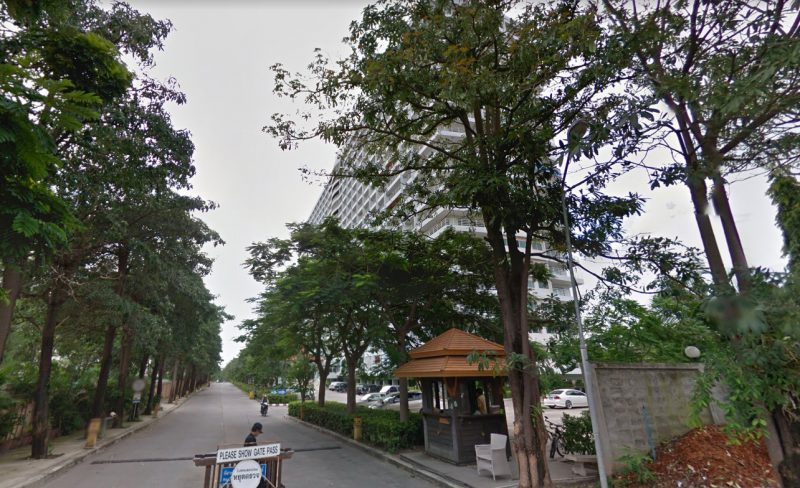
A 23-year-old Korean man, whose name has been withheld until his family can be notified, fell to his death at the View Talay 5 Condominium in Pattaya City at about 2am Thursday. Police have determined it was a suicide.

“From the CCTV footage, we saw that he walked from his room up to the roof on the 22nd floor alone, before jumping off,” Lt. Cpt. Kewaleesiri Phasukthanapaisal of Pattaya City said Thursday morning. “He was a student studying here and had an internship in the area,” she said.

The man had been staying on the 15th floor in a room where his friend was reportedly sleeping.

kor2 e1501734902857
View Talay 5 Condominium in Pattaya. Photo: Google
Advertisement

Man Teases Captive Black Bear, Gets Mauled

PHETCHABUN — A man was severely injured by a bear kept captive at a monastery on Wednesday.

Fon Promlad, 38, required nearly 1,000 stitches, after he was mauled by 6-year-old Asian Black Bear “Kaew” in Phetchabun province. Witnesses said he was teasing the animal before he was dragged down into a wild animal enclosure.

Fon was among other villagers who had arrived at the Luang Pu Lamai Monastery to adopt wild boars, which were kept in the same pit as the bear. Fon was allegedly teasing the bear with a stick as he waited for the animal caretakers to arrive when Keaw latched onto the man’s wrist and dragged him down, according to Phetchabun police chief Col. Sritanon Ruenmoon.

Fon was mauled for at least several minutes as the bear dragged him around, eventually dragging him into its cage, a video clip of the incident shows. Onlookers poke the bear with a stick and empty a bucket of water over it.

Wandee Yookansawad told police that Kaew is not usually aggressive. Sritanon said Kaew has since been relocated to the Khao Kho Wildlife Captive Breeding Centre.

A caretaker on site said the bear had been given to the temple at a young age.

Advertisement

Expert Says New Regulations Coerce Online Platforms to Self-Censor

Photo: Elise Amendola / Associated Press

BANGKOK — The final regulations written to facilitate the removal of online content under the new Computer Crime Act illustrate the government’s bid to extend its control to alternative media, a computer law expert said last week.

Kanathip Thongraweewong, an associate professor at Kasem Bundit University and the director of its Institute of Digital Media Law in Bangkok, said it’s not just the new rules but the process itself that will push the webmasters and independent platforms who’ve not fallen in line with the regime to adopt what he called compulsory self-censorship.

“The government is trying to control these channels used by the alternative media,” Kanathip said. “Because the mainstream media are already under their control.”

Read: Why Thailand Should Worry About an Improved(?) Computer Crime Act

The new rules come in the form of regulations to support the revised Computer Crime Act adopted earlier this year. They require platforms not only remove content deemed a threat to national security – a catch-all that has been applied to cases of royal defamation and government criticism – within 24 hours after a complaint is made.

As the mainstream media has – by hook or crook – gone along with censorship and toning down criticism of the junta, criticism and debate have migrated to disparate and distributed online platforms such as Facebook groups and web boards.

Under the original Computer Crime Act of 2007, publishers and internet service providers are accountable for illegal content posted by users of their systems.

In 2009, Prachatai news site was charged under the act for comments someone left on their website deemed defamatory to the monarchy. The Supreme Court in 2015 upheld a lower court ruling that sentenced editor Chiranuch Premchaiporn to eight months in jail. Her sentence was suspended and the site fined 20,000 baht.

The new rules seem on first reading to be less onerous, as they indicate hosts can avoid punishment if they follow certain guidelines.

But those guidelines leave little room for other than self-censoring and removing the content.

Weapon of Mass Disruption?

One problem, critics say of the new regulations, is that, as with the lese majeste law, anyone can file a complaint. They just have to make a police report and send a copy of it along with their removal request to the responsible provider or platform.

Any content deemed to cause panic, be related to “terrorism” or threaten national security and social stability must be taken down within 24 hours after the platform host receives the complaint.

That’s stricter than the rules for pornography, which require it be removed or made inaccessible within three days. Fraudulent or “distorted” information can remain online for seven days after a complaint has been filed.

Though responsible parties are not obligated to take action, they risk being held retroactively criminally liable if a court later decides the content was illegal.

“When the case proceeds to the court, it might be found not guilty,” Kanathip said. “But if they don’t remove it in the first place, and the court later decides to convict, they cannot use the excuse to exempt them from punishment.”

Thus, he said, content hosts are likely to remove everything upon request to protect themselves from possible legal jeopardy.

“And there is no measure for remedy if I’m bullied, in case the law is abused,” Kanathip said.

He said the regulation is counterproductive to the digital economy initiatives the military government is aggressively promoting.

For example, Kanathip said, imagine “if I sell skin cream online and my competitor files a complaint that my content is fraudulent. One year later, the court acquits me. But I already couldn’t sell my cream for the entire past year and there is no measure to seek compensation” for a wrongful claim.

The Computer Crime Act has been long criticized for being used to punish whistleblowers and suppress dissidents. Many activists and political commentators have been charged under the act.

The revised Computer Crime Act also expands the range of offensive content with another vague label by authorizing authorities to take down content deemed “against good morals,” even if it is not illegal in any other way.

The military government has repeatedly said it is not making an online power grab but trying to update the legal code to confront the challenges of the modern, hyperconnected world.

It said the changes to the Computer Crime Act were meant to return it to its original purpose: preventing and prosecuting cybercrimes.

But as with other digital policy measures put forward under the junta, the revised law increases mechanisms for government intrusion. Since seizing power in 2014, the military government has tried different approaches to gaining control of online speech, from threatening service providers to trying to wall off the country behind a firewall.

It has defended these measures as necessary to prosecute royal defamation cases, saying they pose a threat to national security.

Since 2014, a surge in royal defamation cases has seen citizens tried by the military and sentenced to record jail terms for their online activities. The army cyber unit has showed its commitment to crack down on such content, and telecommunications regulators have also shouldered the campaign by using a mostly unsuccessful carrot-and-stick approach to winning the cooperation of popular foreign platforms such as Facebook, YouTube and Google.

Correction: An earlier version of this article incorrectly stated that Kanathip Thongraweewong is a lecturer at Saint John’s University. While he was previously on that school’s faculty, he is now an associate professor at Kasem Bundit University, where he is also the director of its Institute of Digital Media Law.


Advertisement

Dhammajayo May Have Fled Thailand, DSI Chief Says

Dhammajayo preaches to his followers in a still image from a June 2, 2014, video. Image: YouTube / DMC Channel

BANGKOK — An influential monk wanted on money laundering charges may have left Thailand, according to the agency tasked with apprehending and prosecuting him.

The head of the Department of Special Investigation said Wednesday there was evidence that Dhammajayo, whose sprawling headquarters were raided on the junta’s order in February, might have fled to Europe. Authorities have long vowed to bring the 73-year-old charismatic Buddhist leader to justice, to no success.

“There is intelligence that Phra Dhammajayo used a natural border to escape Thailand [and made his way] to a country in Europe,” Col. Paisit Wongmuang told reporters. “His escape was helped by his followers, but we don’t know what country he is in.”

But Paisit stressed the report was unconfirmed and his department will try to verify the claim.

Dhammajayo is the spiritual leader of a Buddhist movement called Dhammakaya, whose esoteric teachings and focus on earthly wealth attract criticism from mainstream Buddhists. Its large base of support, largely among well-to-do Thais, may have also drawn suspicion from the military regime.

The monk was accused of accepting large donations of laundered money in 2016 and summoned to appear, but he refused, citing health issues. After months of inaction, the junta ordered security officers to besiege and search his headquarters temple, Wat Dhammakaya, in February. The elusive monk was not found.

A spokesman for the Department of Special Investigation said it is also possible Dhammajayo is hiding in Thailand.

“The intelligence points to both possibilities, in and out of the country,” Woranan Srilum said by phone.

He declined to say what possibility he believes to be more likely.

“I cannot give you my opinions,” Woranan said. “We have to have facts. As officials, we cannot express our opinions.”

Dhammakaya followers insist their spiritual leader did not know the donation money was tainted. They also say the charges are a politically motivated pretense for the junta to dismantle their movement.

Advertisement

A Look Into Voting Machines and Election Systems

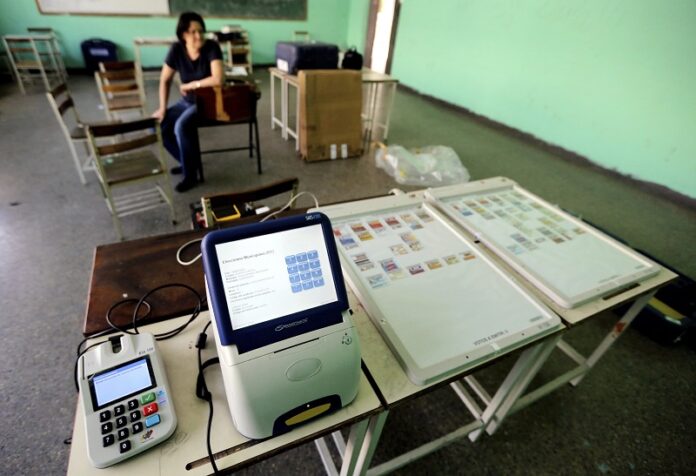
A member of the Venezuelan National Electoral Council waits for a voting machine to charge during the preparation of a polling station in 2013 in Caracas, Venezuela. Photo: Fernando Llano / Associated Press

Digital voting machines are in the spotlight in Venezuela, where the head of Smartmatic, a maker of election systems used in the country’s tumultuous constituent-assembly election, said Wednesday that the official turnout figure had been “tampered with.” The company’s CEO said the count was off by at least 1 million votes  possibly in either direction.

Tibisay Lucena, head of Venezuela’s National Electoral Council, dismissed that allegation as an “irresponsible declaration” that might lead to legal action. The government-stacked electoral council claims more than 8 million people voted in the election for a nearly all-powerful constituent assembly. Independent analysts have expressed doubts at that number.

Here’s a look at the technology and politics of voting machines and election systems.


Who Makes Voting Machines?

The voting-machine market is a speck in the prodigious tech sector. Iowa University computer scientist Douglas Jones estimates its annual revenues in the United States at less than $200 million  roughly what Google pulls in every day. It’s much harder to get reliable information about the fragmented global market for election systems.

The biggest U.S. player, ES&S, is private and has just 450 full-time employees. Because the U.S. voting landscape is so disperse and because it’s controlled largely at the county level, it’s not all that attractive to major corporations. One major player, ATM-maker Diebold, left the election-systems market a decade ago after computer scientists repeatedly identified vulnerabilities in its machines.

Although paperless machines that are essentially impossible to audit are still used in 14 U.S. states, the trend is toward optical-scan machines that record votes electronically but leave a paper record. The machines used in Venezuela, supplied by Smartmatic, produce a paper record for each voter.


Who Oversees Voting Systems?

The regulation of voting machines and tabulation systems varies by country. Usually, a national electoral authority certifies the voting technology used. Often, outside election observers sponsored by groups such as the Organization of American States monitor elections for irregularities.

In the U.S., individual states provide certification of voting equipment. The federal government plays only a loose coordinating role.


How Could Tampering Take Place?

Tampering is easiest when a voting system leaves no paper trail. That’s one reason researchers want the U.S. to move entirely to paper ballots. Paper can’t be remotely hacked, and makes it possible to audit election results after the fact.

Many advanced democracies require paper ballots, including Germany, Britain, Japan and Singapore. The Dutch moved this year to the complete hand-counting of ballots.

If all counting at the local level is transparent  and the chain of custody of ballots is closely observed and monitored by impartial observers and participants  it’s very difficult to tamper with an election even at the highest levels of government. An exception is if an outcome is extremely close.


Why Would a Voting Machine Company Publicly Acknowledge Tampering?

Blowing the whistle on a client might not seem very good for business. But an election-systems company might see no other option if it believes a government is making unrealistic claims about election turnout, as appears to be the case with Smartmatic in Venezuela.

Failing to speak out could make the company complicit in potential voter fraud. Sunday’s election was in Venezuela was internationally condemned as an unconstitutional power grab, and that criticism might have influenced Smartmatic’s decision.

Advertisement

Australian Gets 1 Year in Jail in Cambodia Surrogacy Case

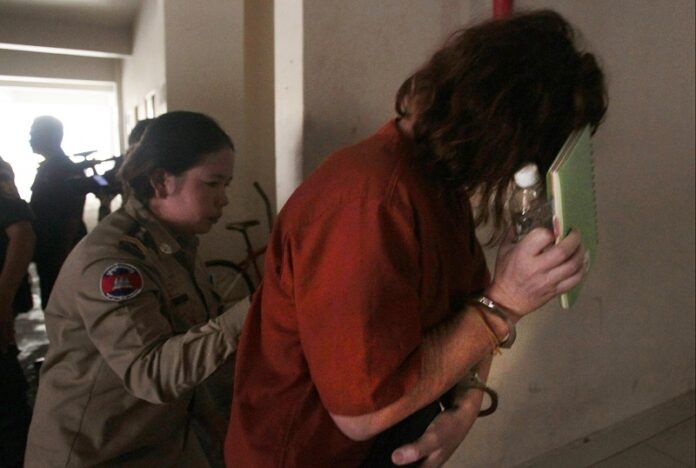
Tammy Davis-Charles, right, an Australian charged with providing commercial surrogacy services, hides her face as she enters the Phnom Penh Municipal Court in 2017 in Phnom Penh, Cambodia. Photo: Heng Sinith / Associated Press

PHNOM PENH — A Cambodian court has sentenced an Australian woman to one and a half years in prison for providing commercial surrogacy services in the country.

Cambodia banned commercial surrogacy last year after becoming a popular destination for would-be parents seeking women to give birth to their children.

Tammy Davis-Charles was arrested in November. She was convicted on Thursday and sentenced.

Advertisement

New York Psych Rockers ‘DIIV’ to Play Bangkok

BANGKOK — A dreamy quintet of Brooklyn indie rockers will make their way to Bangkok for a day and night of shoegaze and noise pop, organizer Have You Heard? announced Wednesday.

DIIV will top the lineup at #HYHBKK Weekend Noise with DIIV, playing their hits “Doused,” “Dopamine” and “How Long Have You Known” with fuzzy riffs and dreamy melodies.

Bangkok-based shoegazers Hariguem Zaboy, Cloud Behind, garage rockers Triggs & the Longest Day and alt-rock act Folk 9 will lend support.

Tickets are 1,300 baht and will be available online starting 10am on Aug. 4. The event will take place on Sept. 9 at the Link Asoke-Makkasan. The live music venue is located a few steps from MRT Phetchaburi.

DIIV was formed in 2011. It consists of Zachary Cole Smith, Andrew Bailey, Devin Ruben Perez, Colin Caulfield and Ben Newman.

Advertisement

‘Cheer Beer Ladies’ Face 500,000 Baht Fine for Facebook Live

A screencap of Janjira Jansakha's video.

SARABURI  — Three promotional models at a bar in Saraburi province were arrested for promoting alcohol over a Facebook Live stream, police said Wednesday.

Citing a controversial prohibition on acts which encourage others to drink, the women were charged with an offense that carries a penalty of up to 500,000 baht. The arrests on Monday came after authorities renewed their pledge to prosecute anyone who uses social media to promote alcohol consumption.

“Yes, this is part of the new policy, after deputy police commissioner Suwira [Songmetta] gave us the directives,” Saraburi police commander Chairat Thipchan said by phone. “In my jurisdiction, we saw the video, and it was a clear violation of the law, so we took action.”

The three suspects are Janjira Jansakha, Nanthida Punyamanote and Nantarika Pueakkliang. They work as so-called “cheer beer ladies,” attractive women whose job is to promote alcohol brands at venues and events.

Col. Chairat said police were prompted to take action after they saw a Facebook Live video in which Janjira and two others briefly urged viewers to come to their bar, called Bar Cony. Although most of the July 23 clip consists of the women chattering and teasing viewers, Janjira once mentions a “buy one Leo get one free” promotion before 9pm.

“You can come and get us drunk. We want to get drunk!” said Janjira, clad in a maid costume. “Hurry up and get here!”


Chairat said the 2008 alcohol law clearly bans “encouraging others to drink,” which includes offering discounts and other promotions.

“We are expanding the investigation to find out whether the bar owner … is also guilty,” the colonel said “But it’s clear that the suspects are guilty.”

The owner of Bar Cony said she was shocked to know police took legal action against three of her staff members for the video.

“At first police told me they would just give us a warning, but when I saw the news, it was way bigger than I understood,” said the owner, who declined to give her name because she “doesn’t want trouble with the police.”

She said the bar would pay the fines for the three women if they are found guilty. Boonrawd Brewery, the conglomerate which makes Leo beer, has contacted the bar to offer assistance, she added.

Alcohol regulators and police announced last month they would monitor social media to look for anyone who promotes booze or “encourages others to drink.”

A number of celebrity actors and singers were also charged for posing with alcohol beverage for alleged advertising purposes. The latest crackdown on booze pics resembles a previous attempt by the alcohol regulators in 2015.

Col. Chairat of Saraburi police said his unit will continue to prosecute any violators of the law.

“I believe every business operator knows what’s right and wrong. When they applied for permits, the Excise Department already told them about advertising laws,” Chairat said. “Yet they kept looking for loopholes.”
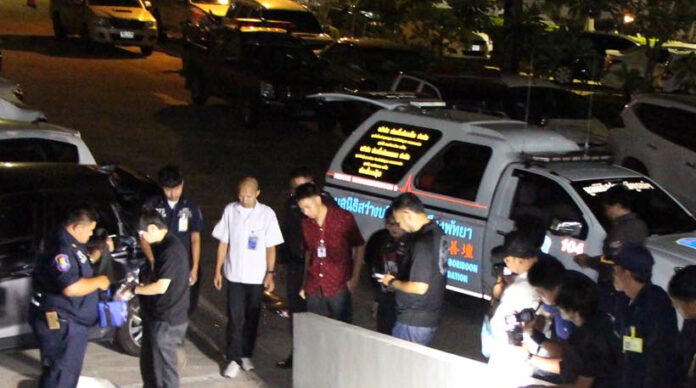
The Bar Cony owner said the three women charged under the law have taken a break from work because they are shocked and depressed about what happened.

She also questioned why police memos and mugshots of the three suspects were leaked to social media.

Advertisement

Storm Storms Into Bangkok as Millions Reel From Flooding

Gen. Prayuth Chan-ocha on a boat in a flooded area in Sakhon Nakhon Wednesday.

BANGKOK — A Wednesday afternoon storm heralded what could be a relatively wet week for the capital, though nothing to cause the level of devastation still being felt across much of the country, where severe flooding has killed 11 people.

Forty percent to 60 percent of Bangkok will see rain now through Sunday, with temperatures between 24C and 35C. Monday and Tuesday will see rainfall drop to 30 percent, according to state meteorologists.

The heaviest rain will hit eastern and southern provinces through Sunday, with three-meter waves expected across the Andaman Sea. Residents in the area should watch out for flash floods and refrain from sailing in small vessels.

Read: Massive Flooding Continues in 19 Provinces (Photos)

As promised, junta leader Prayuth Chan-ocha on Wednesday traveled to see the devastation in the northeastern province of Nakhon Sakhon, where the regional airport had reopened the day before. Nakhon Sakhon was among areas hardest hit by flooding since Friday. Prayuth said 50,000 baht would go to the families of every victim who died in the flooding and 230,000 baht for families who lost their homes. A budget of 35 million baht in government funds was set aside Monday for the crisis response.

More rainfall is expected in the north and northeast, where many of the 19 provinces were flooded, with a 60 percent chance of rain that will drop off come Monday.

Additionally the state weather department has advised travelers to Korea and Japan that Typhoon Noru will move into the area starting Thursday.

KIT 7702
Gen. Prayuth Chan-ocha presents a giant check for 50,000 baht to a man who lost a family member in the flooding Wednesday in Sakhon Nakhon province.

Related stories:

Prayuth to Visit Flooded Region as Death Toll Climbs

‘Sonca Storm’ Floods Sink Northeastern Towns

Advertisement

These 4 Germans to Bring ‘Happy’ Heavy Metal to Bangkok

Photo: Freedom Call Official / Facebook

BANGKOK — Is heavy metal sometimes, ya’know, just too heavy? Instead of being cast into a black pit of darkest darkness, ever thought it would be nice if the abyss just smiled back?

Pump your fists this September to a less nihilistic form (it’s called “happy metal”) when four German smiling metal soldiers stomp into the capital for a concert.

“We are a happy metal band, and we are making happy music,” frontman Chris Bay growled (joyously) in a November interview with Vice music channel Noisey.

Classifying their own music as “happy metal,” Freedom Call will shoot beams of positive energy live in Bangkok as they take concertgoers on a musical metal riot (of glee). Never heard of’em? Start by listening to “Metal is For Everyone,” “Hammer of the Gods,” or “Union of the Strong.”

They deny being Christian metal.

Tickets purchased online are 890 baht and will be sold for 990 baht at the door. The band will perform a 90-minute gig at 8:30pm on Sept. 9 at The Rock Pub, a rock-focused music bar on Phayathai Road which can easily be reached via BTS Ratchathewi exit No. 2.

Freedom Call was formed in 1998 by frontman Chris Bay. It has nine studio albums.

Advertisement

Hot News

LATEST NEWS

Bangkok
broken clouds
29.4 ° C
29.4 °
25.5 °
71 %
2.9kmh
60 %
Mon
29 °
Tue
38 °
Wed
37 °
Thu
36 °
Fri
37 °