

































30.2 C
Bangkok
Tuesday, June 9, 2026
Home Blog Page 2271

Land Can Now Be Transferred to a Company Tax-Free

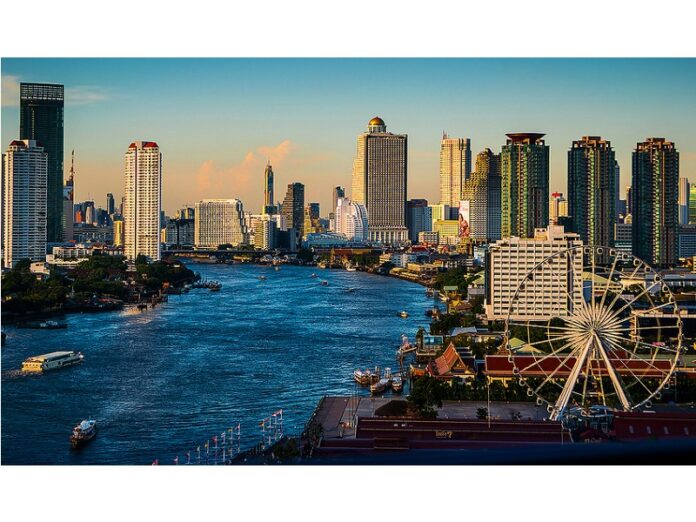
The Bangkok skyline in 2013.

If you own land and wish to transfer it to a company to pay for your shares in that company, you now do not have to pay personal income tax on the price of land received, according to a set of new laws – the latest of which was issued earlier this month.

The government enacted into law the Notification of the Director General of Revenue No. 5 on June 5, five months after passing Royal Decree No. 630 on Jan. 26 under the Revenue Code. Such a move was designed to exempt from paying income tax, special business tax and stamp duties those people who received income through the transfer of land and buildings to new companies with the intention of holding ordinary shares.

FFF 1 BRS 3
Wirot Poonsuwan

The land transfer will be exempt from income tax only when it meets conditions laid down in the Notification of the Director General of Revenue No. 4, signed into law on March 20, including the conditions that require the transfer of land to be made at market price, the transferring individual to hold a number of shares in the new company with value no less than the value of the land, and the individual not to subsequently sell the shares at a lower price than their book value.

The individual and the issuing company must also jointly certify the transfer of land as a registered share capital of the company before sending the certificates to both the local land registrar and the Director General of Revenue.

The state grants other privileges to encourage conversion of land into capital. A reduction of the land transfer fee from 2 percent to 0.01 percent of the appraisal value of the land (calculated on the appraisal value even though the transfer is made on market value) and an exemption of the 3.3 percent special business tax on the higher of the appraisal value. It also grants an exemption of the 0.5 percent stamp duty, calculated on the appraisal value or the sale and purchase price, whichever is higher.

Small-sized companies with paid-up capital not exceeding 5 million baht whose revenues from selling goods and services do not top 30 million baht in an accounting year and are registered as companies between Aug. 10, 2016 and this coming Dec. 31, will be given an additional tax break equal to 100 percent of their expenses.

This applies to set up the company and their accounting and auditing expenditure in addition to the regular full deduction of these expenses in the calculation of their taxable net income. In effect their tax cut amounts to 200 percent of the set up, accounting and auditing outlay – and this tax generosity runs for five financial years of the company consecutively.

Up to this point, you might start to wonder why the government is, all of a sudden, being so generous with these tax perks – the answer lies in its intention to urge individual taxpayers to carry on their businesses officially and systematically in the form of companies, to move from grey areas out to the open, improve transparency and boost the monitoring ability of the Revenue Department, which will all make for an increased tax collection.

Simultaneously, there has been an effort by the government to amend Section 49 bis of the Revenue Code, which stipulates that, however high the actual sale and purchase price of land is, the personal income tax of the seller will always be based on the appraisal value of the land, often substantially lower than the sale and purchase price.

A new Section 49 bis will likely switch from the appraisal value to an actual sale and purchase price as the base for calculating the income tax; there is a high degree of certainty this new law will soon be passed, even when no specific date has been forecast.

The prospect of this new law has created an opportunity for individuals, who own vast parcels of land with the intention to further sell them for a profit, to map out their tax planning by transferring land to companies, with the ultimate aim of minimizing the company’s income tax liability when the legal entity further sells the land for a profit. Tax privileges envisaged by Royal Decree No. 630 and the individual’s ability to transfer their land to the company at market price under the Notification of the Director General of Revenue No. 4 have been fully invoked.

Suppose the appraisal value of land fixed by the Treasury Department is 10,000 baht per square wa, it is not a strange phenomenon that market price of the land could triple that to 30,000 baht. After the land is transferred to the company at the market price of 30,000 baht, considered a high cost of land acquisition, the company further sells the land at an actual sale and purchase price of 35,000 baht, as the existing law requires a legal entity to do so.

The high cost leads to a low profit of 5,000 baht, which in turn is subject to less tax. Compared to another individual who did not embark on tax planning and did not transfer land to a company, his direct sale to a buyer at the actual sale and purchase price under the new Section 49 bis would be subject to personal income tax on the full basis of 35,000 baht. The tax planning thus spares the smart guy from a substantial amount of income tax at the expense of the state.

For credibility of the market value, at which a transfer of land is to be made pursuant to the Notification of the Director General of Revenue No. 4, an independent appraisal company approved by the Office of the Securities and Exchange Commission is sometimes engaged to carry out the appraisal work and determine market value.

Roughly speaking, when you apply for a credit at a commercial bank and offer land as security, the bank would fix the market value at about two times the appraisal value: the appraisal value of 10,000 baht per square wa would carry a market value of 20,000 baht at the bank. It is quite common for the non-bank private sector to fix the market value for a piece of land at three times its appraisal value at 30,000 baht or more. The appraisal company might give more or less, depending on several factors.

Tax authorities moved to counter the tide of the tax planning scheme: shorter than three months after the Revenue Department issued the Notification No. 4, it promulgated Notification No.5 on June 5 to abolish market value, at which a person must transfer land to a newly established company under the Notification No. 4. The new regulation instead requires the higher of the appraisal value or the cost of the individual acquiring the land, each naturally lower than the market price, to become the transfer price.

By way of illustration, for a plot of land with the appraisal value of 10,000 baht per square wa, the individual could have first acquired it for 15,000 baht – this cost of land acquisition must be used as the price, at which the individual transfers the land to the new company and turns it into the value of his stock and the cost of land acquisition by the firm. It is far lower than the market value of 30,000 baht, which is no longer relevant. When the company further sells the land at 35,000 baht, the low cost generates a higher profit of 20,000 baht to be used as the new basis of its corporate income tax under Notification No. 5, replacing the low 5,000 profit tax base in Notification No. 4. – the loopholes have been closed.

In actual fact, if we discard the complications and the cat-and-mouse game of tax planning in regard to individuals arranging to sell land going forward, the Royal Decree No. 630 is a good piece of regulation helping to ease small-sized entrepreneurs to start up a company with little cash upfront by converting dormant unproductive land into capital without any income tax burden. Those who wish to enjoy the privileges offered by this law need to hurry – the clock is ticking. New companies must be registered and land must be transferred to the company at the higher appraisal value or the original cost of acquisition no later than Dec. 31.

Wirot Poonsuwan is a practicing attorney and can be reached at [email protected]
Advertisement

Elephant, Naga-Shaped Leaves Lure Lotto Lovers (Photos)

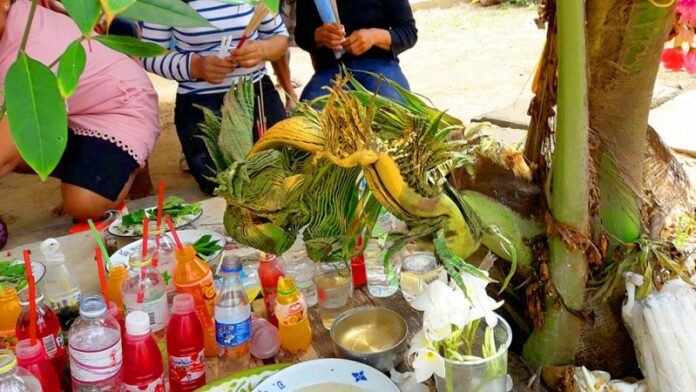
A coconut tree’s leaves shaped like a naga serpent Thursday in Surin province.

SURIN — With the bi-monthly lottery results coming out Saturday, as of Thursday residents of an Isaan province are turning to fauna-shaped flora for lucky numbers.

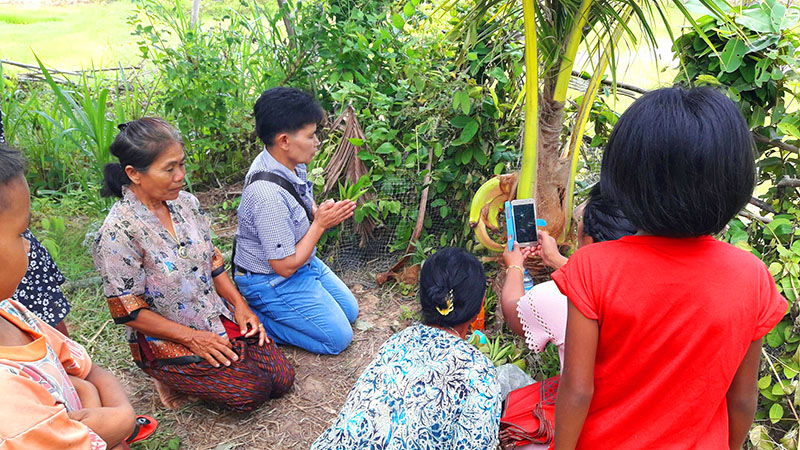
Young and old alike flocked to two magically-shaped coconut trees in the northeastern province since Thursday after news spread that leaves on two coconut trees were shaped in the form of the mythical naga serpent.

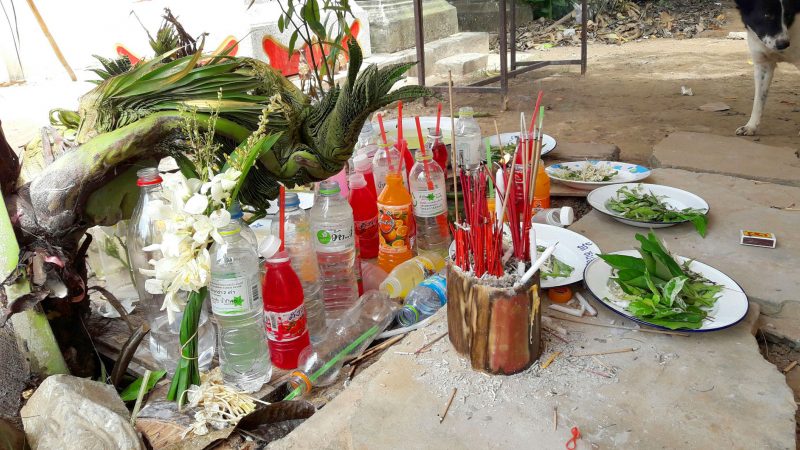
At Wat Nong Ma in Samrong Thap district, people offered the tree incense, fruit, soda and garlands hoping for extra luck. Some saw the number 47 in the leaves’ lining, others saw 50 or 250.

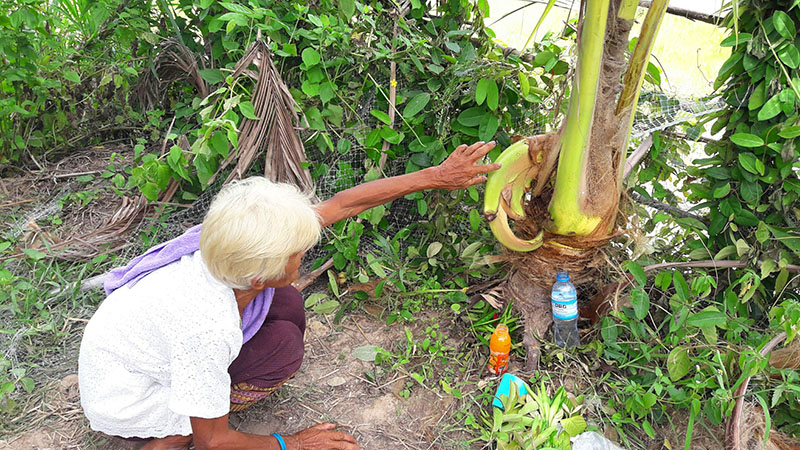
People also gathered in 65-year-old Mon Aengsook’s house in the same district for a coconut tree with leaves shaped like elephant tusks.

“Right before I found my tree like this, I had a dream I was hugging a woman, but I didn’t think much of it,” Mon said Thursday. “When I woke up and was digging a hole to plant chilies in by the pond, I saw that the coconut tree my son had planted five years ago had a branch shaped like elephant tusks.”

Mon ran to tell his neighbors, and the word spread. Locals hailed to his house to with offerings of incense and betel to rub a bit of luck off the leafy elephant tusks.

According to local animist, Buddhist and cultural beliefs, spotting elephants or seeings signs of naga are auspicious.

193862
Locals gather around to photograph a palm tree with a branch shaped in the form of a naga serpent.
193859 e1498811107165
Offerings to the naga coconut leaf at Wat Nong Ma in Samrong Thap district, Surin.
193858
The supposedly naga-shaped palm leaf.
193864
Surin residents examine the naga-shaped leaves.
193850
Locals gather around the tusk-shaped coconut tree leaf.
193846
A woman touches the palm growth shaped like an elephant’s tusks in Mon Aengsook’s house in Surin province.
193849
The elephant tusk-shaped coconut tree growth at Mon Aengsook’s house in Surin.

Related stories:

Lotto Lovers Look for Luck in ‘Magic’ Mango Tree

Dead Siamese Piglet Twins Set Lottery Fever Ablaze

‘Spirit Tree’ Trunks Inspire Lottery Numbers, Possess Woman (Photos)

Column of Bananas Worshipped for Lottery Luck (Photos)

Baby Golden Turtle Rubbed for Lucky Lottery Numbers

Advertisement

‘Graab My Car’ Celeb Gets Suspended Sentence for Assault

Acharanat “Nott” Ariyaritwikol apologizes to the media on Nov. 8, 2016, at a police station in Bangkok.

BANGKOK — The court on Friday convicted a former television host who punched a motorist and ordered him to prostrate in apology for damaging his car – an incident that drew widespread scorn on social media.

For the November assault which left his victim with a broken nose, Acharanat “Nott” Ariyaritwikol was initially sentenced to two years in jail, but the term was suspended on condition that he engaged in community service.

Read: TV Host Loses Job, Charged With Assault in #GraabMyCar Road Rage Incident

Speaking to reporters after the verdict, Acharanat thanked the court for the clemency and urged motorists to learn from his experience.

“I’d like to advise everyone to be patient and calm,” said the former television personality.

In November Acharanat punched a motorcyclist who struck his Mini Countryman on a Bangkok road, and then made him prostrate, or graab, in apology to his beloved car. The confrontation was captured on camera, and the footage quickly spread on social media, drawing nationwide shaming on Acharanat.

In light of the online outrage, GMM TV terminated his contract as a host and he was charged with assault.

Related stories:

Internet Boils Over With Scorn For #GraabMyCar

Advertisement

This Woman Eats Food, and Millions Tune in to Watch Her Do It

A live broadcast of Yang Soo-bin’s eating via Facebook on Wednesday at a restaurant in Bangkok Chinatown.

BANGKOK — Most people probably wouldn’t sit in front of their computers to watch someone eat for several minutes. But millions seem to be willing to see one Korean woman enjoy her meals again and again – so much so, that one of her videos has amassed more than 18 million views.

Yang Soo-bin said she doesn’t know why so many people like to watch her feasting on food, let alone why a country located thousands of miles away such as Thailand has garnered her strongest fan base.

“I want to know too,” the 22-year-old internet influencer said through an interpreter as she had lunch Wednesday in Bangkok’s Chinatown. “Korean fans recognized me as a famous figure. But for Thai fans, I can feel they really love me.”

The reason appears to be simple. Most people say watching Yang stimulates their appetite. But real fans said there is something more than that.

The 130-kilogram woman has qualities uncommon to Thai net idols: Soo-bin eats in a naturalistic way, honestly. Most importantly, she eats the way Thais can never do in public without being judged.

Fans say they are entertained by her expressiveness, loud slurping, open-mouth chewing and child-like finger-licking when she enjoys her food.

She’s discarding all the things deemed taboo by Thai etiquette.

SooBin1
A live broadcast of Yang Soo-bin’s eating via Facebook on Wednesday at a restaurant in Bangkok Chinatown.

“She uses her hands to eat. She tears food aggressively. She doesn’t have to sit and eat it politely,” wrote 25-year-old fan Thanyaporn Chandit.

Thanyaporn said the voracious way Soo-bin eats without caring about her appearance “soothes” her in some way. The fact that she doesn’t speak English and that her Thai is little beyond “Aroi” and “Im Laew” never matters.

“She doesn’t have to explain how the food tastes. She just eats,” Thanyaporn said. “If it’s delicious, she communicates through her voice and facial expressions.”

Soo-bin arrived in Thailand on Tuesday and started to appear on several mainstream media platforms. If it proved anything, it was that outside the arena of her fanbase, her eating enthusiasm still makes many Thais uncomfortable.

Conflict between her fans and the self-appointed culture police erupted anew with every Facebook livestream.

“She chews so loudly,” wrote Facebook user Direk Kambook.

“Seriously, if someone eats loudly like this next to you, isn’t it disgusting?,” wrote Facebook user Nufon-Non Nu-urai. “Thai culture doesn’t approve of this.”

DSCF1774
Yang Soo-bin eats Wednesday at a restaurant in Bangkok Chinatown.

“I was distressed to see those comments attacking her,” said Puangchomphu Meenuchanat, a fan from the northern province of Chiang Rai. “It’s just a different culture. For Koreans, eating like that means the food is delicious. It honors the cook.”

Puangchomphu said the slurping was one of the things verboten to Thai internet personalities.

“They will never film themselves without putting makeup on, as she often does,” said the 29-year-old fan. “They also focus more on commercialism and promoting goods. It’s boring.”

Despite how fans feel, Soo-bin does make some money with her mouth. Besides the revenue she gains from her widely viewed Facebook videos, Soo-bin’s first visit to Thailand in February happened because she was hired by a fast food brand. And just a few days ago, she launched a set of Line stickers of featuring herself speaking Thai expressions.

Superfan Puangchompu said it was about her candor.

“She never fakes her feelings,” Puangchomphu said. “I saw her in a program the other day, when there was a dish she didn’t like. She expressed it honestly.”

The Korean influencer, who is also a beauty blogger and entertainer, said she never imagined to make a living out of eating. Soo-bin said she never plans what she will do, rather, she just sets a camera to record and eats.

“I never talk to myself about how I will express,” she said. “It’s already a very happy question to ask myself daily, ‘What will I eat today?’”

Additional reporting Chayanit Itthipongmaetee

Advertisement

Koh Tao Cops Investigate ‘Suicide’ of Belgian Tourist

A Sept. 29, 2014, photo of Elise Dallemagne. Image: Elise Dallemagne / Facebook

KOH TAO — Surat Thani provincial police have ordered officers on Koh Tao to reopen an investigation into the death of a Belgian tourist previously ruled a suicide, police said Friday.

The move followed news reports that Elise Dallemagne, 30, might have been murdered – contrary to what the police concluded in April, when she was found dead by hanging. Dallemagne’s body was found April 27. She was the latest known foreigner to have died on Koh Tao, an island known for a string of traveler deaths since 2014 that have raised suspicions.

“After I saw the news, I ordered Koh Tao police to find more information about her death,” Deputy Surat Thani Police Commander Preecha Kladsawad said. “We want to find out whether she was really murdered, as the news reports said.”

Belgian media said Dallemagne last talked to her family on April 17 while vacationing on the island, 10 days before she was found hanged in the Tanote bay area. Police ruled at the time that she had committed suicide.

But one Belgian news website quoted her father as saying Dallemagne did not show any sign of depression which led him to believe she might have been murdered, while her mother was quoted as saying that Dallemagne’s body was “hung and half devoured by lizards” in middle of the jungle.

In a Wednesday email, a German reporter living on Koh Tao said he had eyewitness’ accounts that cast doubt on police explanation.

“We got knowledge by eye-witnesses that the body of Elise was wrapped up in old T-Shirts or some cotton and a fuel bottle was found in a nearby small bag, too,” wrote Sam Gruber, who works for a German-language news site Der Farang. “The mother confirmed our information and was told by police anyhow that her daughter has hanged herself up in the jungle.”

Gruber said he found it impossible to believe that Dallemagne committed suicide because she had already booked a travel to Bangkok prior to her disappearance.

The incident was not reported to the media at the time. Col. Preecha said this is standard procedure, though police usually publicize serious crimes through the media.

When a reporter reached out to Koh Tao police on Wednesday, two officers denied knowledge of the tourist’s death.

“I don’t remember any Belgians,” Lt. Col. Napha Senathip said.

Another officer said he had not seen any case with the name Elise Dallemagne and added that police do not always open investigations into foreigners’ deaths on the island. He also accused the media of portraying Koh Tao in a negative light.

“Sometimes, people just die on Koh Tao without [an investigation], because sometimes people just die,” Lt. Col. Chokchai Sutthimek said. “That said, the media should stop portraying Koh Tao as an ‘Island of Death,’ because that’s unethical journalism.”

Patrick Govaert, consul of the Embassy of Belgium in Bangkok, said in an email Thursday that the embassy was prohibited from confirming whether a tourist named Dallemagne had died in Thailand.

Preecha, the deputy provincial police commander, said he could not yet give an estimate about when the new inquiry would finish.

Gruber, the German reporter, also criticized the police for keeping Dallemagne’s death from the press.

“Why did police keep this case secret to this day? Without the mother’s cry for help none of us would ever have come to know about this tragic death?,” Gruber said in the email. “Was the intention of the police to silence the case in order to protect tourism in Thailand and especially not to allow a further revolt in the media about another female death on Koh Tao?”

Koh Tao’s reputation as an idyllic resort island took a dark turn after two British backpackers were found murdered there in September 2014. Two Burmese migrant workers were later convicted of killing the tourists and raping one of them, though many skeptics believe they were “scapegoats” framed by local influential families.

More foreign backpackers died on the small island in the following years. Police rarely informed the press about those deaths until word got out through social media.

Additional reporting Asaree Thaitrakulpanich

Related stories:

Search Called Off for Missing Russian Woman on Koh Tao

Injustice Echos From All Sides Two Years After Koh Tao Murders

Koh Tao Murders: Court Says DNA Trumps Other Flaws in Case

Advertisement

Photo Phriday: Polar Bears and Blistering Sun

Mr. Russky Sri Ayudhya, a Muay Thai-fighting polar bear, the mascot for the 120th anniversary of Russian-Thai relations, poses Thursday with university students at the Ministry of Foreign Affairs. Read: Celebrate 120 Years of Thai-Russian Relations at July Festival

Top: Mr. Russky Sri Ayudhya, a Muay Thai-fighting polar bear, the mascot for the 120th anniversary of Russian-Thai relations, poses Thursday with university students at the Ministry of Foreign Affairs. Read: Celebrate 120 Years of Thai-Russian Relations at July Festival

Activists protested and Muslims celebrated Eid al-Fitr, as the heat made everyone from farmers to policemen – even a Russian mascot – bear the sweltering sun this week. Find more on our Facebook, Twitter, YouTube and Instagram.

1498627581856 HxydcEj 1 e1498795920172
Thai Muslims celebrate Hari Raya, or Eid al-Fitr, Wednesday at Pak Bara Beach in Satun province.


19488525 1571438956208364 4713336050637688036 o e1498795970903
Friends of activist “Pai Dao Din” perform a “dab” move to show support for him Thursday in front of Khon Kaen Criminal Court, where he stood trial on lese majeste charge.


19575343 1571132829572310 9066120850132332741 o e1498796042606
A halo seen around the sun Thursday morning in Bangkok.


3 03BwKJ1 e1498796119507
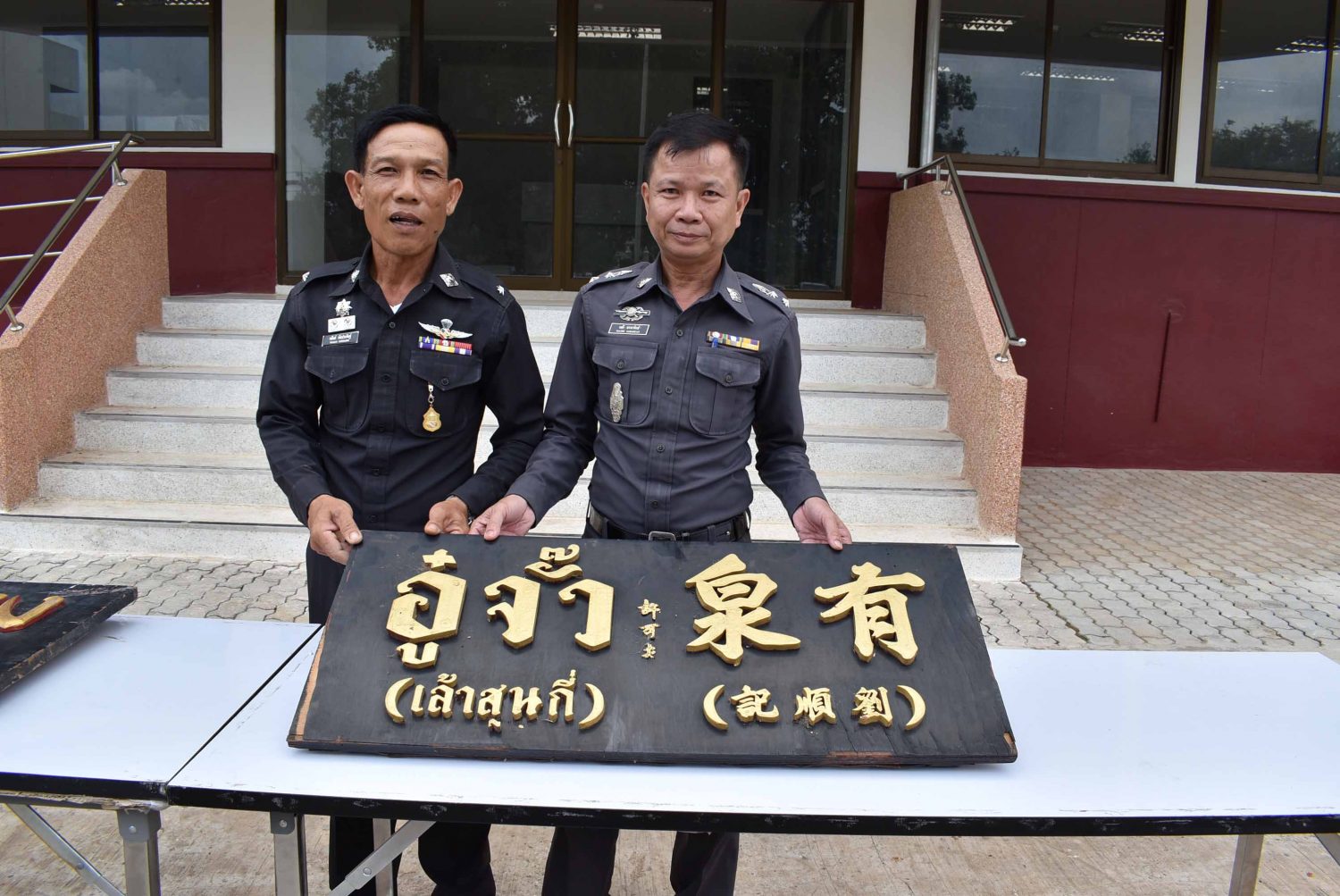
Police officers pose with the century-old sign of Lao Sun Kee grocery store on Tuesday. The century-old sign was stolen but returned through the mail. Read: Stolen Antique Shop Sign Returned to Owner


mallcop e1498539743240
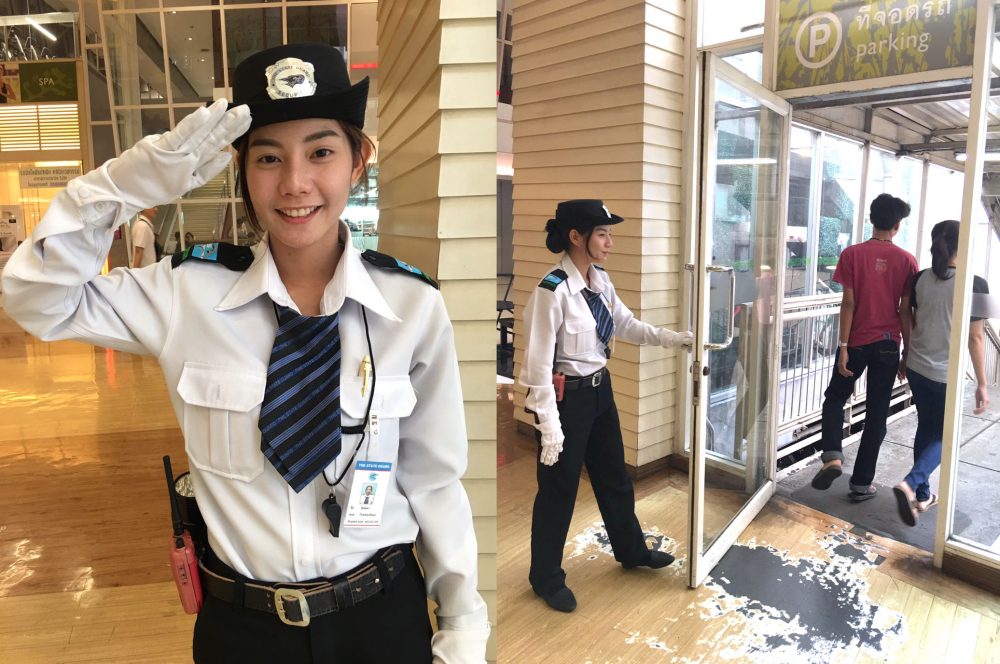
While many Bangkok university students take internships at companies or summer classes, Wanladar Kantaponjaruntorn, 21, instead opted to work as a security guard at Future Park Rangsit. Read: Meet the Uni Student Working as a Mall Cop


19477745 1568789216473338 6703391336333086950 o
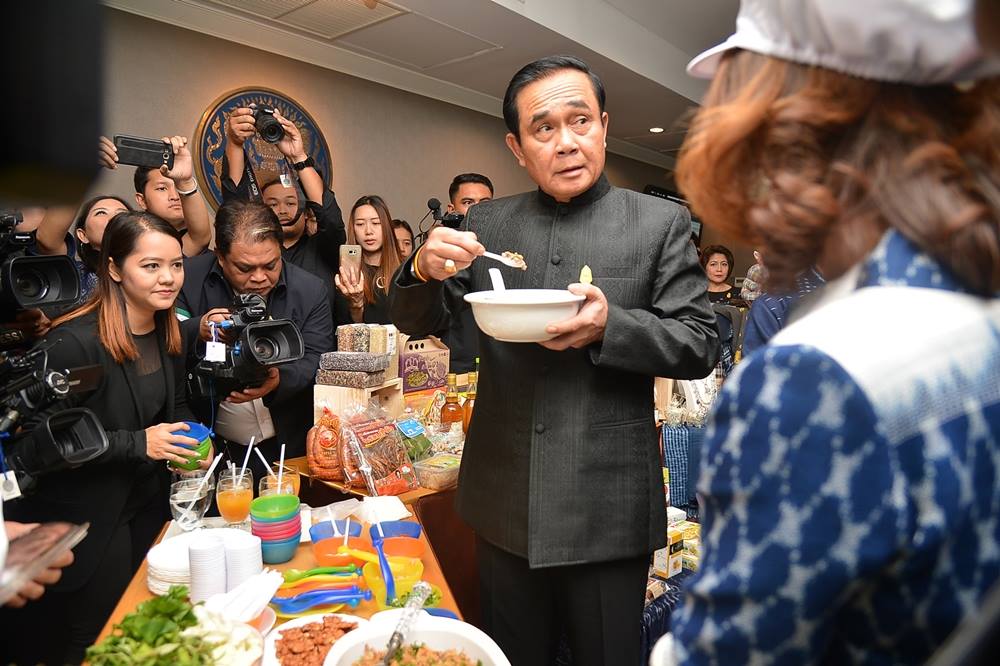
Junta chairman Prayuth Chan-ocha samples a dish of duck “laab” he cooked Tuesday at an exhibition about northeastern goods at Government House.


189822 e1498796326922
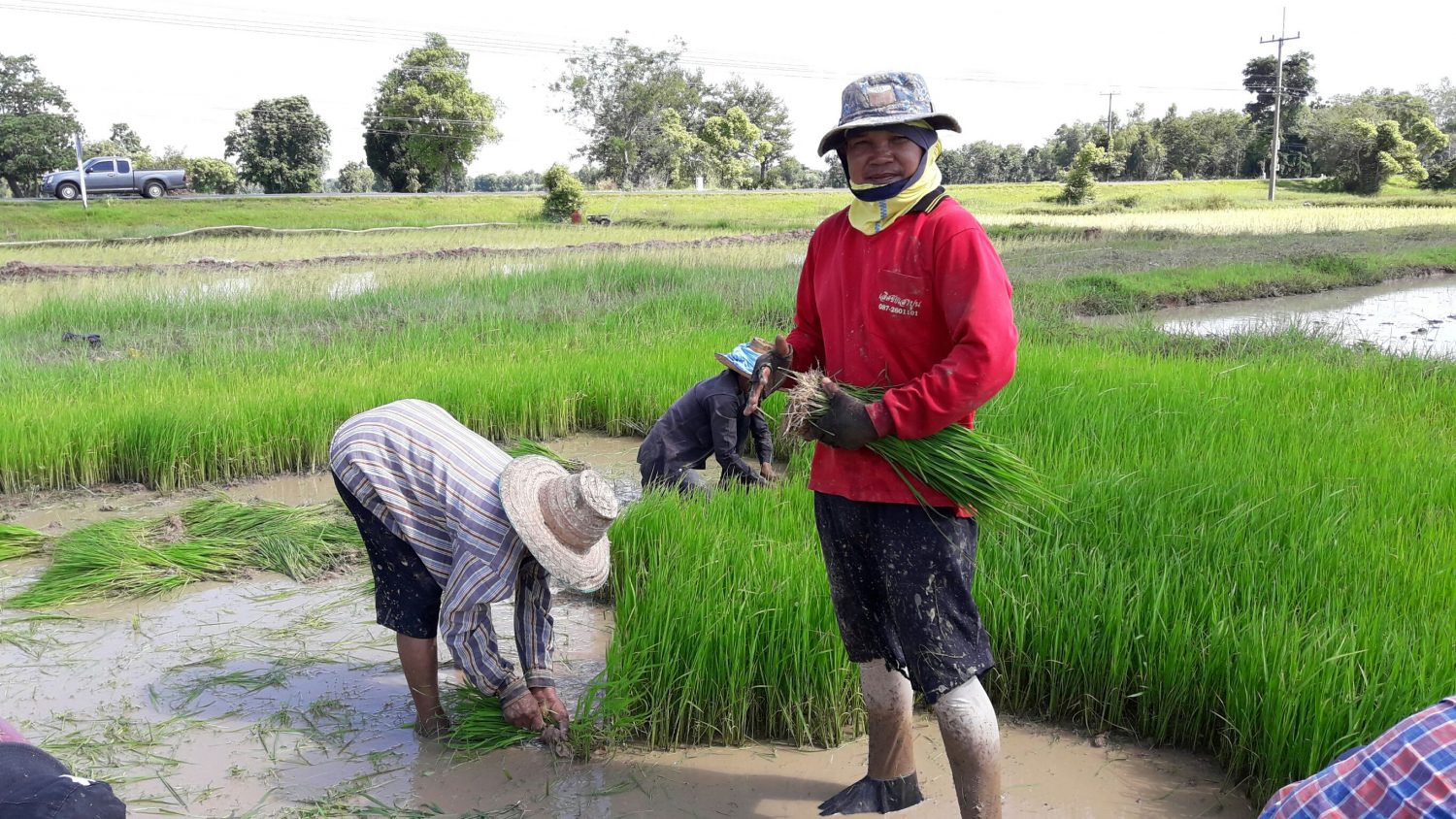
Narong Wawisai, 53, transplants rice from a paddy-sown field to a wet field Saturday in Surin province. Farmers have to transplant the rice due to the recent heavy rains.


Image uploaded from iOS 1 1
The Paradise Bangkok Molam International Band performs Wednesday night at Studio Lam in Bangkok.


19417267 1567679496584310 44915881335357811 o
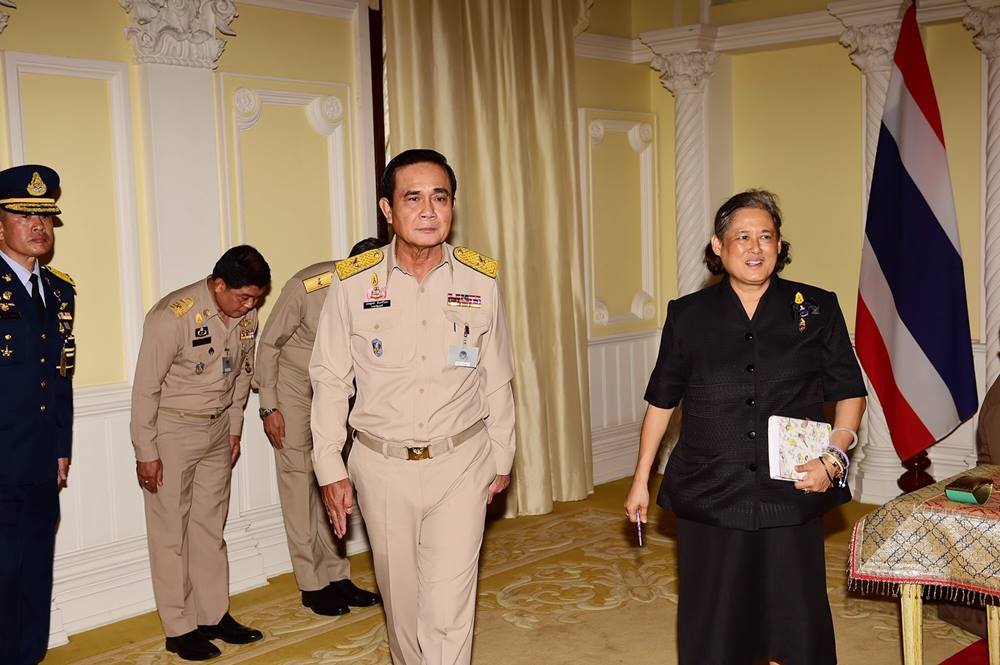
Princess Sirindhorn and junta chairman Prayuth Chan-ocha host a meeting Wednesday to discuss preparations for the late King Bhumibol’s cremation ceremony.


IMG 0133
Fans on July 23 dressed up in traditional Thai dresses for Britney’s first concert in Thailand. Read: Fans Unleash Inner Britneys at Thai Debut Concert (Photos)


19620225 1570090306343229 6655727853108528419 o
Junta chairman Prayuth Chan-ocha performs his weekly exercises during Workout Wednesday in front of Government House. Read: Politicos Urge Prayuth to Come Clean Over ‘Junta Party’

Related stories:

Photo Phriday: The Kids Have Style

Advertisement

Travel Ban Takes Effect but Less Chaos Expected

President Donald Trump speaks in 2017 at Snap-On Tools in Kenosha, Wisconsin. Photo: Kiichiro Sato / Associated Press

WASHINGTON — A scaled-back version of President Donald Trump’s travel bantook effect Thursday evening, stripped of provisions that brought protests and chaos at airports worldwide in January yet still likely to generate a new round of court fights.

The new rules, the product of months of legal wrangling, aren’t so much an outright ban as a tightening of already-tough visa policies affecting citizens from six Muslim-majority countries. Refugees are covered, too.

Administration officials promised that implementation this time, which started at 8 p.m. EDT (0000 GMT), would be orderly. Customs and Border Protection spokesman Dan Hetlage said his agency expected “business as usual at our ports of entry,” with all valid visa holders still being able to travel.

Still, immigration and refugee advocates are vowing challenge the new requirements and the administration has struggled to explain how they will make the United States safer.

Under the temporary rules, citizens of Syria, Sudan, Somalia, Libya, Iran and Yemen who already have visas will be allowed into the United States. But people from those countries who want new visas will now have to prove a close family relationship or an existing relationship with an entity like a school or business in the U.S.

It’s unclear how significantly the new rules will affect travel. In most of the countries singled out, few people have the means for leisure travel. Those that do already face intensive screenings before being issued visas.

Nevertheless, human rights groups on Thursday girded for new legal battles. The American Civil Liberties Union, one of the groups challenging the ban, called the new criteria “extremely restrictive,” ”arbitrary” in their exclusions and designed to “disparage and condemn Muslims.”

The state of Hawaii filed an emergency motion Thursday asking a federal judge to clarify that the administration cannot enforce the ban against relatives — such as grandparents, aunts or uncles — not included in the State Department’s definition of “bona fide” personal relationships.

Los Angeles City Attorney Mike Feuer met with customs officials and said he felt things would go smoothly.

“For tonight, I’m anticipating few issues because, I think, there’s better preparation,” he told reporters at Los Angeles International Airport on Thursday night. “The federal government here, I think, has taken steps to avoid the havoc that occurred the last time.”

Much of the confusion in January, when Trump’s first ban took effect, resulted from travelers with previously approved visas being kept off flights or barred entry on arrival in the United States. Immigration officials were instructed Thursday not to block anyone with valid travel documents and otherwise eligible to visit the United States.

Karen Tumlin, legal director of the National Immigration Law Center, said the rules “would slam the door shut on so many who have waited for months or years to be reunited with their families.

Trump, who made a tough approach to immigration a cornerstone of his election campaign, issued a ban on travelers from the six countries, plus Iraq, shortly after taking office in January. His order also blocked refugees from any country.

Trump said these were temporary measures needed to prevent terrorism until vetting procedures could be reviewed. Opponents noted that visa and refugee vetting were already strict and said there was no evidence that refugees or citizens of those six countries posed a threat. They saw the ban as part of Trump’s campaign promise to bar Muslims from entering the United States.

Lower courts blocked the initial ban and a second, revised Trump order intended to overcome legal hurdles. The Supreme Court on Monday partially reinstated the revised ban but exempted travelers who could prove a “bona fide relationship” with a U.S. person or entity. The court offered only broad guidelines.

In guidance issued late Wednesday, the State Department said the personal relationships would include a parent, spouse, son, daughter, son-in-law, daughter-in-law or sibling already in the United States. It does not include other relationships such as grandparents, grandchildren, aunts and uncles. On Thursday, the State and Homeland Security departments had both expanded the range of bona fide relationships to include fiancés.

Business or professional links must be “formal, documented and formed in the ordinary course rather than for the purpose of evading” the ban. Journalists, students, workers or lecturers who have valid invitations or employment contracts in the U.S. would be exempt from the ban. The exemption does not apply to those who seek a relationship with an American business or educational institution purely for the purpose of avoiding the rules.

Refugees from any country will face similar requirements. But the U.S. has almost filled its quota of 50,000 refugees for the budget year ending in September and the new rules won’t apply to the few remaining slots. With the Supreme Court set to consider the overall ban in October, the rules could change again.

The travel ban may have the largest impact on Iranians. In 2015, the most recently available data, nearly 26,000 Iranians were allowed into the United States on visitor or tourist visas. Iranians made up the lion’s share of the roughly 65,000 foreigners from the six countries who visited with temporary, or non-immigrant visas that year.

American journalist Paul Gottinger, said he and his Iranian fiancee applied for a visa nearly a year ago but are still waiting on a decision. Gottinger says they were to wed at a Japanese garden in his parents’ home state of Minnesota this month but postponed the ceremony until August because they had not yet received the visa.

Now, he expects they will have to delay again.

“Every twist and turn of the courts, we’re holding our hearts and our stomachs are falling to the floor,” he said by phone from Turkey.

The new regulations are also affecting the wedding plans of Rama Issa-Ibrahim, executive director of the Arab American Association of New York.

She is Syrian-American and had planned to get married this fall. While her father in Syria may be able to get a visa, her aunts and uncles may well be blocked.

“I would love for them to be at this wedding, and unfortunately, they aren’t going to be able to be here,” she said, adding that the ceremony would be postponed.

Story: Matthew Lee, Alicia A. Caldwell

Advertisement

Blogger Gets 10-Year Prison Term for Defaming Vietnam Govt

Prominent blogger Nguyen Ngoc Nhu Quynh, left, stands trial in June in the south central province of Khanh Hoa, Vietnam. Photo: Associated Press

HANOI — A prominent Vietnamese blogger was sentenced Thursday to 10 years in prison after being found guilty of distorting government policies and defaming the Communist regime in Facebook posts and in interviews with foreign media, her lawyer said.

Nguyen Ngoc Nhu Quynh, also known as “Mother Mushroom,” was sentenced at the end of a one-day trial in the south-central province of Khanh Hoa, lawyer Vo An Don said.

Her conviction related to the content of 18 articles on her Facebook page and interviews with foreign news outlets such as Voice of America and Radio Free Asia, Don said.

Read: Freedom Fighters: Prison Doesn’t Deter Vietnam’s Dissident Bloggers

Quynh, 37, co-founded a network of bloggers and is very popular in Vietnam. She has written about human rights, civilian deaths in police custody and the release of toxic chemicals by a Taiwanese-owned factory that killed thousands of fish in one of Vietnam’s worst environmental disasters.

Quynh, the single mother of two young children, maintained her innocence throughout the trial, her lawyer said.

“Nguyen Ngoc Nhu Quynh did not admit that she committed any crime, saying she has a right to freedom of expression,” Don said.

Don said the sentence was “too harsh and unjust” and that Quynh plans to appeal the verdict.

Quynh’s sentencing drew a stern rebuke from the United States, which said it was “deeply concerned” about her conviction and those of other peaceful protesters over the last year.

“The United States calls on Vietnam to release Mother Mushroom and all other prisoners of conscience immediately, and to allow all individuals in Vietnam to express their views freely and assemble peacefully without fear of retribution,” said State Department spokeswoman Heather Nauert.

Quynh was arrested in October when she was visiting a fellow activist in prison. International human rights groups including Human Rights Watch, Amnesty International and Sweden-based Civil Rights Defenders have called for her immediate release.

“The scandal here is not what Mother Mushroom said, but Hanoi’s stubborn refusal to repeal draconian, rights-abusing laws that punish peaceful dissent and tarnish Vietnam’s international reputation,” said Phil Robertson, Human Rights Watch’s deputy Asia director.

In a joint statement, Amnesty International and Civil Rights Defenders urged Vietnam “to refrain from criminalizing and prosecuting people for peacefully expressing the right to freedom of expression and to respect and protect the right to a fair trial.”

Responding to the calls for the blogger’s release, Foreign Ministry spokeswoman Le Thi Thu Hang said Quynh’s trial was held in accordance with Vietnamese law.

“Like other countries in the world, in Vietnam, all law-violating acts must be strictly dealt with in accordance with the regulations of Vietnamese law,” Hang said at a regular news briefing.

In March, Quynh received in absentia the International Women of Courage Award at the U.S. State Department, presented by first lady Melania Trump. Quynh was jailed at the time, and Vietnam said the award “was not appropriate and of no benefit to the development of the relations between the two countries.”

In 2015, Quynh was given the Civil Rights Defender of the Year award by the Swedish rights group.

According to Human Rights Watch, there are about 110 known political prisoners in Vietnam.

Vietnam denies it holds any political prisoners, saying only those who break the law are put behind bars.

Advertisement

Advertisers Squeezed by Govt Ultimatum to Facebook, YouTube, Netflix

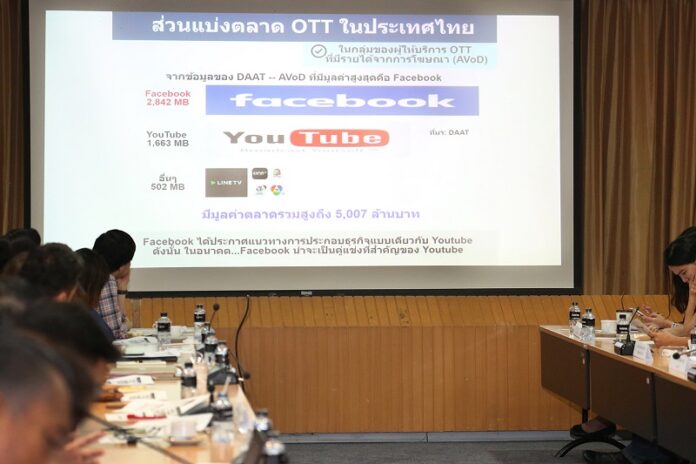
A presentation of the ‘over-the-top media’ market share in Thailand show at a May 25 meeting at the National Broadcasting and Telecommunications Commission. Photo: NBTC

BANGKOK — Telecommunication regulators called on top online advertisers Thursday to boycott three foreign platforms if they don’t register with the government by next month.

YouTube, Facebook and Netflix will be declared illegal in the kingdom unless they register with the National Broadcasting and Telecommunications Commission by July 22, said Nathee Sukonrat, chairman of its regulatory committee. Anyone who advertises with them after that point, he said, risks criminal charges.

“Supporting a business that doesn’t comply with the law will also affect the good governance of corporations,” he said after meeting with 47 domestic companies who account for the largest share of online broadcasting ad spending.

The commission said its regulations classify as broadcasters 14 online services which transmit video content via the internet, including Iflix, TrueVisions Anywhere, AIS Play and Line TV.

It cited a 2010 law it said requires they register with the government. One week ago on June 22, all so-called over-the-top, or OTT, media were given one month to enroll.

The Asia Internet Coalition, a trade association which counts Facebook among its members, responded today that it was deeply concerned about the policy. In a statement, it urged the NBTC to draft the new regulations transparently and openly in consultation with the public.

“The proposal to regulate ‘OTT services’ will adversely affect Thailand, create business uncertainty, slow economic growth and limit investment in Thailand’s growing digital sector,” it said.

Last month, the NBTC threatened legal action against Facebook for not removing content it deemed illegal. It later admitted that Facebook had not done so because the regulators failed to furnish necessary court warrants.

Read:  Facebook Threatened on Belief Govt Had Warrants it Didn’t

Arthit Suriyawongkul of the Thai Netizen Network said regulating online platforms in this way goes against the principles of the NBTC and the law it cited. Both were intended for allocating public resources, he said, such as managing limited radio and television frequencies, not regulating content. The internet, he points out, has no limited resources that call for regulation under the commission’s mandate.

“The NBTC commissioners have already turned themselves into content regulators for television,” he said. “Its use of power to regulate has been called into question. So it is worrying if they come to regulate online platforms.”

Five billion baht was spent to advertise on online video platforms in Thailand last year. Facebook received over half, with 2.8 billion baht in revenues, followed by YouTube who gained 1.6 billion baht.

As of today, a week after the policy was announced, all platforms had complied except the three largest multinational providers, two of which are top advertising earners: YouTube, Facebook and Netflix.

The NBTC decided yesterday to summon representatives of advertising associations to warn they could also face criminal charges if they paid to advertise with “illegal media.”

“I can’t say I disagree. It is the law. They didn’t ask for an opinion,” said Triluj Navamarat, chairman of the Media Agency Association. “The NBTC said if they don’t come to register, they will be considered illegal and those who advertise with them will also be guilty as supporters.”

However, Triluj believed the three companies will meet with Thai authorities by the deadline.

The move seems a new strategy for pressuring the internet companies the regime has been unable to influence through other means.

Today the regulator held yet another meeting with the companies which spend the most advertising on those online platforms. Among those summoned were Unilever, Colgate-Palmolive, Toyota, PTT and Thai Life Insurance.

Since the military government seized power in 2014, it has sought unsuccessfully to win cooperation from foreign internet firms to further its aims to rein in the internet. Requests for access to user data or content were roundly rejected.

In recent years the authorities have used the NBTC’s regulatory authority to achieve de facto censorship by suspending and shutting down broadcasters perceived as overly critical of military rule.

Online media have faced harsher control as well, as the internet remains the only relatively free platform for criticism and activism.

Earlier this month, the NBTC also summoned admins of top Facebook pages to solicit input from them as it devises rules to regulate them.

Net freedom advocate Arthit said he was unsure what will be the consequences for those who register. But if the NBTC deems online content providers to be broadcasters, it may regulate them under the same law it applies to television. That process can be politicized, as the law’s interpretation was stretched by a junta order to turn it into a tool of direct censorship.

“I think question is not why those three companies didn’t comply, but why the rest accepted these regulations, which is nothing different from the media bill we have been opposing,” he said. “They need to ask themselves, ‘What are they doing?’”

Related stories:

Controversial Coverage of ‘Murder Babes’ Raises Press Freedom Stakes

Facebook Threatened on Belief Govt Had Warrants it Didn’t

Facebook Stands by Policy as Govt Ultimatum Passes

Regime Threatens Facebook With Computer Crime Act

As Advertising Goes Dark, Industry’s Bad Year Turns Worse

Media Groups Criticize Shutdown of Voice TV in Rare Show of Solidarity

Advertisement

US Quietly Publishes Once-Expunged Papers on 1953 Iran Coup

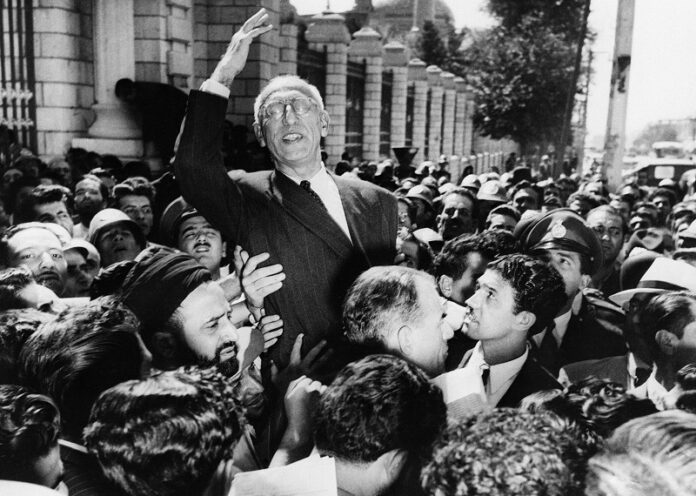
Sept. 27, 1951 file photo, Prime Minister Mohammed Mosaddegh rides on the shoulders of cheering crowds in reiterating his oil nationalisation views to his supporters. Photo: Associated Press

DUBAI, United Arab Emirates — Once expunged from its official history, documents outlining the U.S.-backed 1953 coup in Iran have been quietly published by the State Department, offering a new glimpse at an operation that ultimately pushed the country toward its Islamic Revolution and hostility with the West.

The CIA’s role in the coup, which toppled Prime Minister Mohammed Mosaddegh and cemented the control of the shah, was already well-known by the time the State Department offered its first compendium on the era in 1989. But any trace of American involvement in the putsch had been wiped from the report, causing historians to call it a fraud.

The papers released this month show U.S. fears over the spread of communism, as well as the British desire to regain access to Iran’s oil industry, which had been nationalized by Mosaddegh. It also offers a cautionary tale about the limits of American power as a new U.S. president long suspicious of Iran weighs the landmark nuclear deal with Tehran reached under his predecessor.

It exposes “more about what we know about this milestone event in Middle East history and especially U.S.-Iran history. This is still such an important, emotional benchmark for Iranians,” said Malcolm Byrne, who has studied Iran at the non-governmental National Security Archive at George Washington University. “Many people see it as the day that Iranian politics turned away from any hope of democracy.”

The 1,007-page report, comprised of letters and diplomatic cables, shows U.S. officials discussing a coup up to a year before it took place. While America worried about Soviet influence in Iran, the British remained focused on resolving a dispute over the nationalization of the country’s oil refinery at Abadan, at the time one of the world’s largest. Many also feared further instability following the 1951 assassination of Premier Ali Razmara.

“Nationalization of the oil industry possibly combined with further assassinations of top Iran officials, including even the shah, could easily lead to a complete breakdown of the Iran government and social order, from which a pro-Soviet regime might well emerge leaving Iran as a satellite state,” one undated CIA analysis from the report warned.

Iran 1953 Coup Cham
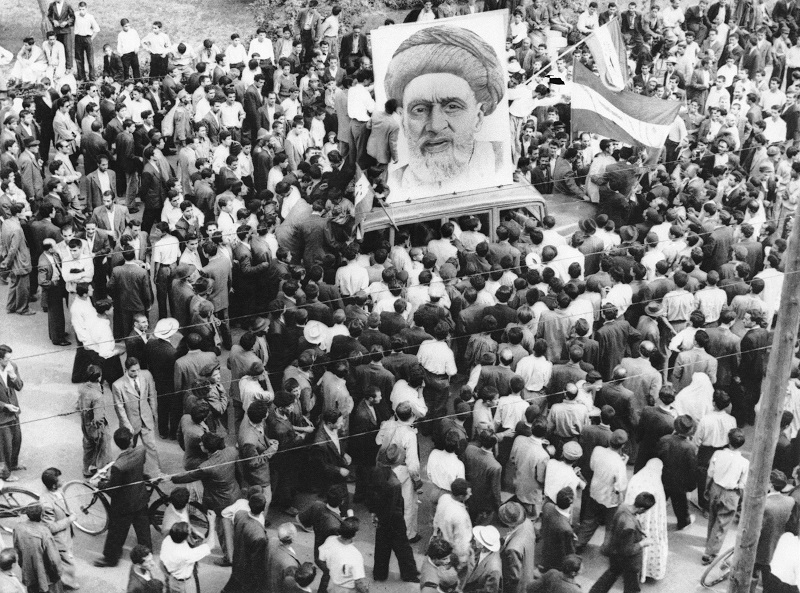
Dec. 13, 1951 file photo, crowds of supporters of Prime Minister Mossadegh gather around a huge portrait of Iranian Mullah Kashani, one of the powerful backers of Mossadegh’s regime, in Tehran. Photo: Associated Press

Out of that fear grew TPAJAX, the CIA codename for the coup plot. Papers show the CIA at one point “stockpiled enough arms and demolition material to support a 10,000-man guerrilla organization for six months,” and paid out $5.3 million for bribes and other costs, which would be equivalent to $48 million today. One CIA document casually refers to the fact that “several leading members of these (Iranian) security services are paid agents of this organization.”

The CIA also described hoping to use “powerfully influential clergy” within Shiite Iran to back the coup, something that would be anathema by the 1979 Islamic Revolution. It offers no definitive proof of that, though several documents show American officials in contact with Ayatollah Abol-Ghasem Kashani, an anti-British leader in the Iranian parliament who turned against Mosaddegh.

The agency faced problems, however, chief among them Shah Mohammad Reza Pahlavi himself. Diplomats and spies referred to him as a “weak reed” and “petulant.”

“His inability to take decisions coupled with his tendency to interfere in political life has on occasions been (a) disruptive influence,” the U.S. Embassy in Tehran warned in February 1953. Ultimately, his twin sister Princess Ashraf and a U.S. general helped convince him.

Mosaddegh was tipped off about the coup, and it appeared doomed as the shah fled to Baghdad and later Italy. But protests supporting the shah, fanned in part by the CIA, led to Mosaddegh’s fall and the monarch’s return.

The report fills in the large gaps of the initial 1989 historical document outlining the years surrounding the 1953 coup in Iran. The release of that report led to the resignation of the historian in charge of a State Department review board and to Congress passing a law requiring a more reliable historical account be made.

Byrne and others have suggested the release of the latest documents may have been delayed by the nuclear negotiations, as the Obama administration sought to ease tensions with Tehran, and then accelerated under President Donald Trump, who has adopted a much more confrontational stance toward Iran.

Byrne said the new administration needed just two months to agree to release the documents. “That kind of speed is unheard of in the government unless there is some sort of political foundation,” he said.

Die-hard opponents of Iran’s current government might look to 1953 as a source of inspiration. But the Americans involved in the coup acknowledged at the time they were playing with fire.

Widespread Iranian anger over the heavy-handed Western intervention lingered for decades, and fed into the 1979 revolution, when Iranians seized control of the U.S. Embassy and held those inside captive for 444 days. To this day Iran’s clerical leaders portray the U.S. as a hostile foreign power bent on subverting and overthrowing its government.

As President Dwight Eisenhower wrote in his diary in 1953, if knowledge of the coup became public, “We would not only be embarrassed in that region, but our chances to do anything of like nature in the future would almost totally disappear.”

Story: Jon Gambrell

Advertisement

Hot News

LATEST NEWS

Bangkok
overcast clouds
30.2 ° C
31.6 °
28.8 °
76 %
4.5kmh
100 %
Tue
34 °
Wed
34 °
Thu
35 °
Fri
31 °
Sat
31 °