31.1 C
Bangkok
Wednesday, July 1, 2026
Home Blog Page 2444

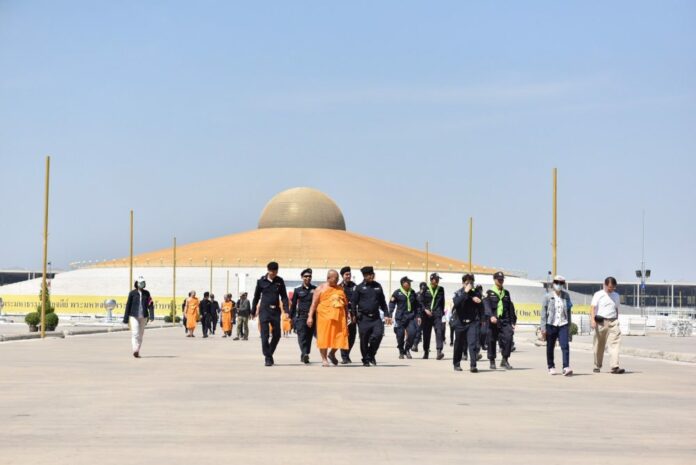
DSI Orders Wat Dhammakaya Vacated by 3PM Sunday

DSI officials search the compound of Wat Dhammakaya on Feb 19.

Update: Dhammakaya Supporters Defy Order to Leave; DSI to Withdraw Forces

BANGKOK — The Department of Special Investigation on Sunday issued an order instructing those without residence inside the controversial Dhammakaya Temple to leave the premises within 3pm.

Citing its need to “efficiently” search the area for the temple’s spiritual leader, who’s been charged with multi-million money laundering, the DSI said the sprawling complex must be vacated, and that any resistance could result in a one year jail term.

“Although in practice officials can search the buildings, outside individuals can still mingle in the area of the temple and continue to conduct their own activities,” said the statement. “Officials could not conveniently carry out their tasks, because people in the search area mostly look to the monks for instructions.”

Read: Live Updates From Day 2 of Wat Dhammakhaya Raid

The statement said everyone still inside Dhammakaya compounds who do not reside in the temple premises, must leave via any of the complex’s gates, where officials will set up checkpoints and ask for identification papers – ID cards for civilians, and temple documents for monks.

Those who do have residence were required to identify themselves at Gate 6 before 3pm, the statement said.

Dantamano Bhikkhu, a monk-spokesman of the temple, said via a private online message that the administration is still discussing what to do.

The DSI has been searching the sprawling temple complex in Pathum Thani province since Thursday, after a ruling junta declared the area a “controlled zone,” granting security officers authority to search buildings, make arrests and cut off any water or electricity supply as they see fit.

The search is related to an outstanding arrest warrant in which Dhammakaya’s former abbot, Dhammachayo, is accused of receiving millions of baht in donations that were embezzled from a cooperative union. The temple denied the allegations.

Leaders of the Dhammakaya sect also maintain that the 72-year-old abbot is too ill to meet with the police to discuss the charges, and deny any knowledge of his whereabouts.

Correction: This article previously stated that the DSI had ordered Wat Dhammakaya to be completely vacated by 3pm. The statement only requires those without residence to leave the premises. It also stated that the temple had to be vacated solely through Gate 6. The statement issued does not specify which gate must be used.

Related stories:

Dhammakaya Says Govt Siege Not ‘Buddhist Way’

Dhammachayo Removed as Abbot of Dhammakaya

Dhammakaya Defies Order to Halt Broadcasts

Deadline for Dhammakaya Abbot to Surrender Expires, Again

A Look Inside the Besieged Wat Dhammakaya

Yellow & Red Seen in Orange Folds of Dhammakaya Scandal

Advertisement

Angelina Jolie in Cambodia for Premiere of her New Film

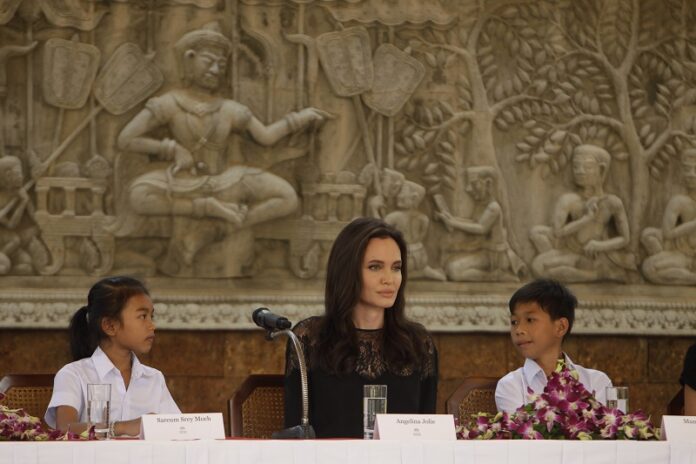
Hollywood actress Angelina Jolie sits with child actress Sareum Srey Moch, left, and actor Mun Kimhak, right, during a press conference Saturday in Siem Reap, Cambodia. Photo: Heng Sinith / Associated Press

SIEM REAP, Cambodia — Angelina Jolie said Saturday that she hopes her new film about Cambodia under the Khmer Rouge will help educate the world about the brutality of the 1970s regime and shed a light on the plight of young people in war zones today.

“First They Killed My Father” is based on author and human rights activist Loung Ung’s account of her survival as a child under the 1975-79 communist Khmer Rouge regime, believed to be responsible for the deaths of 1.7 million Cambodians from starvation, disease and execution.

Speaking at a news conference ahead of the film’s premiere, the actress-turned-director said she hopes the movie will “remind everybody that there are little Loung’s all around the world today” in various war zones and corners of the world.

“Her story is their story and so this is, in many ways, universal, and we hope that that is something that you think about as well,” said Jolie, who directed the film and co-wrote the screenplay with Loung.

Jolie has had an affinity for Cambodia since she began goodwill work for the U.N.’s refugee agency in 2001, and her eldest son, Maddox, 15, was adopted from the country. She also has established a foundation to promote social development in rural Cambodia.

However, the Hollywood superstar stressed that Cambodia’s history is not just the war.

“I hope that the young people, when they see this film, that yes, they will learn part of their history, but I hope they also see – I hope all of you see – that this is a country of talent and art and love and beauty,” Jolie said.

Maddox worked on the production of the movie, which was shot on location in Cambodia in late 2015 and early 2016. Jolie said that Maddox is very proud of his Cambodian heritage and that she and her children see Cambodia as their “second home.”

“The children are very close to the children who are in the film and, in fact, many of them are best friends,” she said. “So, they’re simply happy to be back with their friends. Maddox is happy to be back in his country.”

The film, a Netflix original production, will be shown on the streaming service later this year.

Jolie’s previous directorial projects include the 2015 marriage drama “By the Sea,” in which she starred alongside then-husband Brad Pitt, and the 2014 survival story “Unbroken.”

Advertisement

How to Live Under Military Rule? Yue Paen Do it!

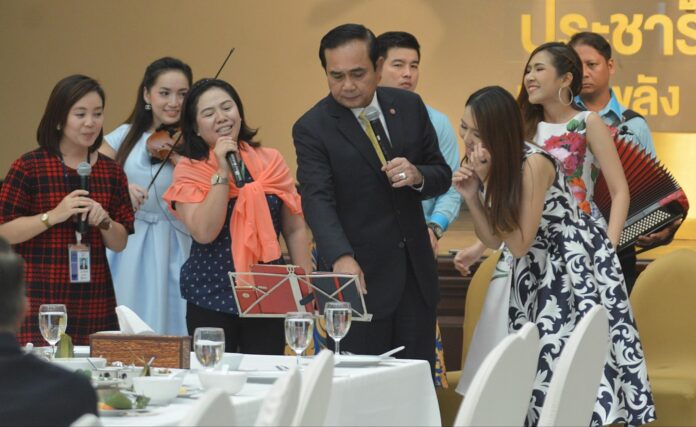
On the same day junta leader and Prime Minister Prayuth Chan-ocha boasted outrageously about his regime's successes, reporters joined him to karaoke a classic pop song Sept. 15 at Government House in Bangkok.

Retention

Arriving to interview TV host Nattakorn Devakula earlier this week about the suspension of his Voice TV news discussion show, I was ushered into a waiting room where another TV host was preparing for his program.

After exchanging pleasantries, the man said his program was also affected by the order a fortnight ago effectively censoring The Daily Dose program for discussing the roles and historical relationships between the courts and military.

“An order was given that we shall not utter the names of Prayuth and Prawit for a week as a punishment,” said the man, referring to junta leader Gen. Prayuth Chan-ocha and his deputy Gen. Prawit Wongsuwan.

He said this with an air of normalcy, as if talking about the weather, as he buried his attention into the notes on his computer. It’s as if such arbitrary censorship has become the most normal thing under Juntaland’s tropical sun, unworthy of being upset or angry about.

I asked why they were being punished, and whether the order was communicated directly from the junta. The co-host couldn’t pin down the reason for the punishment. He added that the message, or order, from the military was conveyed through Voice TV’s management.

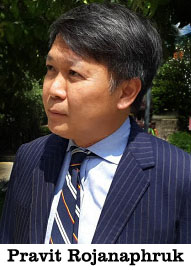
Pravit Rojanaphruk

Our conversation ended soon after Nattakorn came into the room to fetch me for our interview. The brief conversation with the host got me thinking about the recent popular notion of yue paen (อยู่เป็น). The words literally mean knowing how to live – or better still – how to survive. It is widely used by some of those unhappy with military rule over the past two and a half years as their guiding principle.

Protest against the military? Yue paen. Oppose the constitution? Yue paen. Call out the junta’s hypocrisy for self-dealing and graft? Yue paen.

Lie low, accept the military’s rule and rules as normal, and just wait for them to leave or self-destruct. This is how to avoid trouble from the armed men in uniforms who staged the 2014 coup.

Examining such ethos positively, yue paen is a based on the perception that it’s not worth risking’s one freedom and career to fight against entrenched military dictatorship and the powers that be. Some of them will say Thailand is not ready for democracy, or at least not ready or willing to oust Prayuth and his men.

These people are not coup apologists or Prayuth’s sycophants. They just think it’s not worth a fight or that it’s futile and reckless to resist. Instead, these people prefer to wait until the junta falls through its own undoing.

There are more traditional Thai sayings reflecting such ethos. Sayings such as “Do not use a stick to lift a log” or “When the current is strong, do not sail the boat to block it” come to mind.

So those who know how to live or survive continue to enjoy gossiping or verbally attacking Prayuth through their social media accounts set under pseudonyms.

People such as anti-junta activist Jatupat “Pai” Boonpattararaksa, in prison for two months now under lese majeste law for sharing a BBC biography of the new King on Facebook is probably a poster boy for not knowing how to live under the yue paen philosophy. Some of those who do not know how to live in Juntaland also fled the country and can be cited as other examples.

On the negative side, the yue paen ethos can be seen as a lame excuse for self-preservation if not cowardice by those against the junta. These people are just abandoning their duties as citizens as they reduced themselves to a mere docile population.

Personally I don’t know how to live, or at least try not to get used to life under the junta. I continue to regard the military regime as illegitimate and their orders as unlawful – although I try not to break them.

I don’t know how to live under military rule because ‘knowing how to live’ means living like what the junta would have wanted us to live – as a docile population ruled by an illegitimate regime.

In the end, whether you know how to live or not or stand somewhere in between, our collective decisions will affect the destiny of Thailand, for better or worse.

Ed. note: A portion of this column was unpublished due to concerns about the lese majeste law.

Advertisement

N. Korea and Malaysia Lock Horns Over Apparent Killing

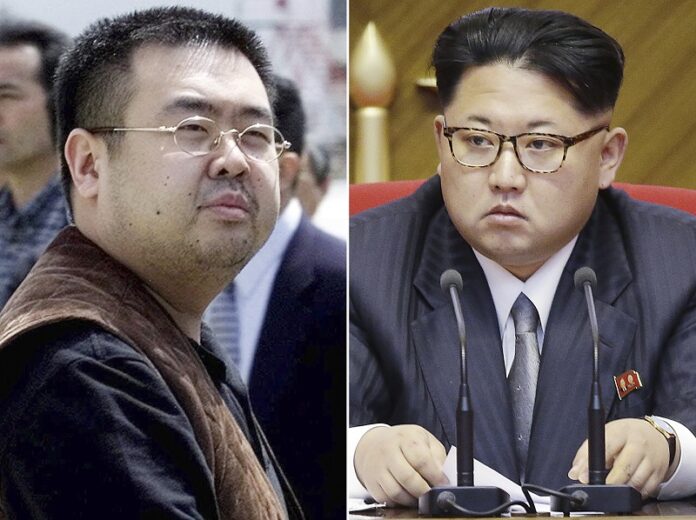
Kim Jong Nam, left, exiled half-brother of North Korea's leader Kim Jong Un, in Narita, Japan, on May 4, 2001, and North Korean leader Kim Jong Un on May 9, 2016, in Pyongyang, North Korea. Photo: Shizuo Kambayashi / Associated Press

KUALA LUMPUR — A dispute over custody of a slain North Korean’s body pushed two governments further apart Saturday as they tried to navigate the aftermath of what appeared to be the assassination of an outcast member of North Korea’s ruling elite.

Kim Jong Nam, who was 45 or 46 and had lived in exile for years, suddenly fell ill at the Kuala Lumpur airport on Monday as he waited for a flight home to Macau. Dizzy and in pain, he told medical workers at the airport he had been sprayed with a chemical. He died while being taken to a hospital.

Malaysia performed an autopsy Wednesday over the strong objections of North Korea, which asserted sovereignty over the body of its citizen and says it should have a say in what happens next.

A Malaysian official with knowledge of the investigation said medical workers started a second autopsy Friday night because results of the first one were inconclusive. He asked that his name not be used because he is not authorized to speak to the media.

Senior Malaysian police official Abdul Samah Mat denied the second autopsy had taken place, however. “No such thing as a second post-mortem,” he said when asked. He said the results of the first autopsy were not yet released.

Meanwhile, North Korea vowed to reject the results of any post-mortem. Speaking to reporters outside the morgue late Friday, Pyongyang’s ambassador said Malaysian officials may be “trying to conceal something” and “colluding with hostile forces.”

The intrigue over the case raises all sorts of questions about the mysterious death of Kim Jong Nam, but a lack of closure and a lingering sense of the unknown aren’t unusual when it comes to North Korea. While South Korea has blamed North Korea for a slew of notable assassinations or attempted killings in past decades, the North often denies involvement or simply doesn’t comment.

The death of Kim Jong Nam, the exiled half brother of North Korea’s powerful and mercurial ruler, has unleashed a torrent of speculation, tales of intrigue and explosive, unconfirmed reports from dueling nations.

Malaysia has arrested four people so far, the latest a man carrying an ID that identified him as 46-year-old Ri Jong Chol. He was picked up Friday night.

Authorities were still trying to piece together details of the case.

South Korea has accused its enemies in North Korea of dispatching a hit squad to kill Kim Jong Nam at the airport in Kuala Lumpur, saying two female assassins poisoned him and then fled in a taxi.

On Friday, Indonesia’s police chief said an Indonesian woman arrested for suspected involvement in the killing was duped into thinking she was part of a comedy show prank.

Indonesian police chief Tito Karnavian, citing information received from Malaysian authorities, told reporters in Indonesia’s Aceh province that Siti Aisyah, 25, was paid to be involved in “Just For Laughs” style pranks, a reference to a popular hidden camera show. He said she and another woman performed stunts which involved convincing men to close their eyes and then spraying them with water.

“Such an action was done three or four times and they were given a few dollars for it, and with the last target, Kim Jong Nam, allegedly there were dangerous materials in the sprayer,” Karnavian said. “She was not aware that it was an assassination attempt by alleged foreign agents.”

Malaysian police were questioning four suspects – Aisyah, another woman who carried a Vietnamese passport; a man they said is Aisyah’s boyfriend; and the North Korean man.

North Korea broke its silence on the case Friday night. Speaking to reporters gathered outside the morgue in Kuala Lumpur, North Korean Ambassador Kang Chol said Malaysia conducted the autopsy on Kim Jong Nam “unilaterally and excluding our attendance.”

“We will categorically reject the result of the post-mortem,” Kang said, adding that the move disregarded “elementary international laws and consular laws.”

Kang said the fact that Malaysia has yet to hand over the body “strongly suggests that the Malaysian side is trying to conceal something which needs more time and deceive us, and that they are colluding with the hostile forces towards us who are desperate to harm us.”

Malaysia is one of just a handful of countries to have full diplomatic ties with North Korea, with each country having an embassy in the other’s capital. Malaysia has also been a key place for quiet, semi-official “Track 2” diplomatic talks between North Korea and the United States.

Malaysia said Friday it wants DNA samples from Kim Jong Nam’s family as part of the post-mortem procedure and that officials were not yet willing to hand the body over to the North Koreans. Although Kim Jong Nam is believed to have two sons and a daughter with two women living in Beijing and Macau, police in Malaysia say none has come forward to claim the body or provide DNA samples.

“If there is no claim by next-of-kin and upon exhausting all avenues (to obtain DNA), we will finally then hand over the body to the (North Korean) embassy,” said Abdul Samah Mat, a senior Malaysian police official. He would not say how long that process might take.

Kim Jong Nam was estranged from his younger half brother, the North Korean leader Kim Jong Un. He reportedly fell out of favor with their father, the late Kim Jong Il, in 2001, when he was caught trying to enter Japan on a false passport to visit Tokyo Disneyland.

Story: Eileen Ng

Advertisement

Top Anti-Booze Crusader Removed From Post

Samarn Futrakul inspects a case of popsicles made from beer (seen in smaller picture) during a March 11, 2016, booze raid on a market near Lumpini Park. Photo: Matichon

BANGKOK — The official whose name is synonymous with stringent enforcement of anti-alcohol laws lost his job in a surprise ministry reshuffle announced Friday night.

After 10 years at the helm of the Alcohol Control Board, during which he introduced series of sweeping measures designed to cut alcohol sales and consumption, Samarn Futrakul was transferred to head a bureau dealing with sexually-transmitted diseases. His transfer followed a week of allegations that authorities were pressured by beer monopolies to silence Samarn.

Speaking by telephone Saturday morning, Samarn said he had heard about such speculation but could not say if it had any basis.

“I know as much as reporters do. I don’t know whether it’s true,” Samarn said. “But if it’s true, it will clearly indicate that the work that we have done is the right way. If it’s true, it means we affect their business and reduce their sales … if it’s true, it means the alcohol businesses feels shaken.”

Read: Regulator Shuts Down Booze Buffet; Threatens to Prosecute People Sharing Alcohol Pics

Samarn’s new post is heading the Bureau of AIDS, TB and STIs. He is replaced by Nipon Chinanonwait, who was transferred from a department that handles bug-borne diseases.

Samarn added that he is not upset by the move but he is concerned about unfinished works at the alcohol control department, like numerous lawsuits he had filed against violators of alcohol laws.

“It’s not a problem for me,” he said. “My only worry is the old works that I started there.”

A physician by trade and an avowed Buddhist by spirit, Samarn has said in previous media interviews he believes alcohol is both sinful and harmful. He is most well known for helping draft the draconian 2008 Alcohol Control Act, which prohibits any activities that “induce people to drink such alcoholic beverages either directly or indirectly.”

He also went after beer buffet, pre-mixed cocktails, instant beer, booze advertisements, beer gardens, and even threatened to prosecute anyone posting pictures of themselves drinking alcohol on social media.

Samarn’s most recent pledge to curb booze sales came last week, when he said he would ban major beer companies from showing their logos in their CSR events or using them in products not related to alcohol. Such practice is routinely done by both ThaiBev and Boonrawd Brewery, but Samarn called it a “subtle advertisement.”

Following his comment, advocates of anti-booze legislation told the media they were informed that the two monopolies are lobbying the Ministry of Health to remove Samarn from the post. Officials at the time denied the reports.

Samarn said he would let his successor work in the Alcohol Control Board without his involvement.

“My style is, whenever I am assigned to any work, I will be most committed to that work. I won’t interfere with other people’s works,” he said.

Related stories:

Make Notoriously Vague Booze Laws More Clear, Trade Group Urges

On Booze and Buddhism, Culture Warriors Grasp for a Past Already Passed

Don’t Brew Beer at Home (or in Toilet), Prayuth Says

Thailand Back to the Booze Ban Future

Advertisement

Coal Plant Protest Leaders Arrested

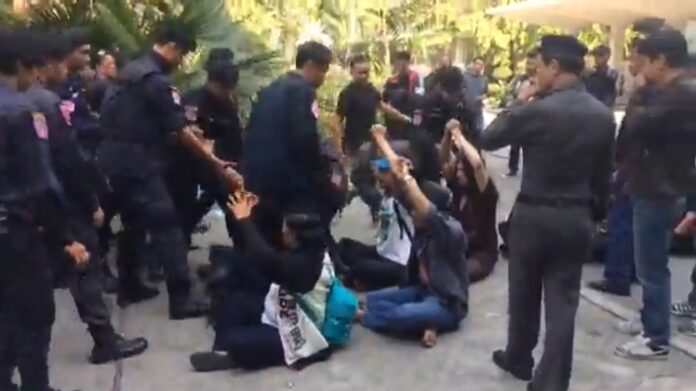
Screenshot of the footage of police Saturday arresting three leaders of an anti-coal protest in front of Government House. Image: The Energy Walk

BANGKOK — Police on Saturday apprehended three activists who led an overnight protest in front of the Government House against the regime’s plan to build a coal power plant in the south.

In a rare act of civil disobedience in more than two years since the ruling junta came to power, more than 100 protesters from Krabi province demanded the government scrap the project, citing fears of environmental and health damages, only to be told by junta chairman Prayuth Chan-ocha on Friday the construction will go ahead as planned.

After a night of rallying in front of the government’s seat of power, police at about 10am moved in and arrested three protest leaders and took them into custody. The arrested were Prasitthichai Nunual, Akaradej Chakjinda and mom luang Rungguna Kitiyakara.

Read: Gov’t Gives Green Light to Krabi Coal Plant, Activists Vow Resistance (Photos)

The rest of the protesters were being blockaded by scores of police officers. The protesters said they were willing to be arrested for their causes.

Junta chairman Prayuth said Friday there will be consequences for those who openly oppose the project; all acts of political protest have been banned since he took power in May 2014.

“I urge them not to enter Bangkok,” the general said. “Otherwise it will be illegal, and they will be prosecuted. As everyone knows, we prohibit this kind of movement.”

Protesters and environment groups say building a coal plant in the coastal province of Krabi would both affect the health of residents there and permanently damage ecology systems, but the government insisted one must be built in order to satisfy the nation’s energy needs.

Democrat leader Abhisit Vejjajiva, whose party commands a strong support in the south, also spoke out against the coal plant on Friday.

He told reporters the government should look for other alternative energy sources that are friendly to the environment and health instead of sticking to coal.

Related stories:

Krabi Coal Opponents Allege Gov’t Astroturfing

Advertisement

Spanish King’s Brother In Law to Serve 6 Years in Jail for Corruption

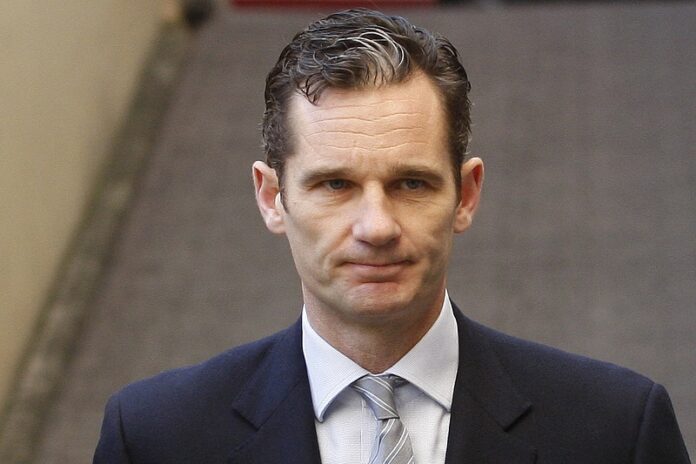
Inaki Urdangarin, the Duke of Palma and the husband of Spain's Princess Cristina arrives at the courthouse during a corruption trial in 2012 in Palma de Mallorca, Spain. Photo: Manu Mielniezuk / Associated Press

MADRID — In a wide-ranging tax fraud case that captivated Spain, Princess Cristina was found not guilty Friday of being an accessory to fraud but her husband was convicted and sentenced to more than six years in prison.

A panel of judges ruled that Cristina, the 51-year-old sister of King Felipe VI, will be required to pay nearly 265,000 euros (over USD $280,000) in fines because the court considers that she indirectly benefited from the fraud.

Her husband, Inaki Urdangarin, was found guilty of evading taxes, fraud and various other charges. He was sentenced to six years and three months in prison and a fine of 512,000 euros (USD $545,000).

Urdangarin, a 49-year-old former handball Olympic medalist, can still appeal the decision to the Supreme Court, but the public prosecutor announced Friday that it would request a hearing to decide whether he needs to await developments in jail. He is still free so far.

The trial centered on accusations that Urdangarin used his former title, the Duke of Palma, to embezzle about 6 million euros (USD $6.6 million) in public funds for the nonprofit Noos Institute.

The provincial court in Palma de Mallorca, in the Balearic Islands, found six other people in the trial guilty, including Urdangarin’s business partner and a former regional president of the Balearic Islands. Ten people in all, including Cristina, were absolved by the court.

In a country mired with corruption scandals in politics and business, Spaniards paid close attention to the “Noos case” since the first signs of Urdangarin’s involvement emerged six years ago. As the scandal unfolded, Former King Juan Carlos’ decision to abdicate the throne in 2014 was seen as an effort to allow his son Felipe to restore the monarchy’s credibility.

When his sister Cristina was indicted, King Felipe cancelled her titles of Duchess of Palma, granted by their father in 1997 on the occasion of her wedding. She and Urdangarin are no longer invited to any official events by the Royal House.

Felipe and Queen Letizia made no immediate comment Friday on the court’s rulings during a visit to a museum in Madrid with the Hungarian president. A spokesman for the Royal House told Spanish media they respected the courts’ independence.

Inigo Mendez de Vigo, the minister who speaks for Prime Minister Mariano Rajoy’s conservative government, said Friday that it “shows that nobody is above the law and that the rule of law works.”

The Noos Institute organized conferences and sports-related events. Among the companies used by the institute to hide funds was Aizoon, a real estate consulting company jointly owned by Cristina and Urdangarin that paid for family holidays and wine bills, according to court documents.

Urdangarin ran Noos Institute with a partner, Diego Torres, who was sentenced to 8 1/2 years in jail in Friday’s ruling. Torres’ wife and Cristina, for whom an anticorruption group was asking for 8 years of jail each, were absolved by the court.

A lawyer with Cristina’s defense team, Miquel Roca, said the princess was “satisfied for the acknowledgement of her innocence” but she was still convinced that her husband wasn*t guilty.

“If we believed in the judicial system when the princess was made to sit in the dock, I think citizens can trust in it when she’s absolved,” Roca told reporters in Barcelona.

The couple lived in a mansion in Barcelona for years with their four children but since the investigation started they moved the family to Switzerland. On Friday, reporters waited outside their house in Geneva, hoping in vain to get a glimpse of the couple.

Spaniards had been waiting for the judges’ verdict since the trial ended in mid-2016. On Friday, reactions in the street were mixed, with a some people still expressing doubts over whether the law in Spain is the same for everyone.

“I think the prosecutor wasn’t trying to prosecute the crime but rather to protect the alleged criminal,” said Miquel Puig, a 62-year-old economist in Barcelona.

Maite Mila, a 52-year-old lawyer, said she believed the princess “benefited from what her husband did.”

“We have to respect the decision of the justice but I think they did it wrong,” Mila said.

Story: Aritz Parra

Advertisement

Robot Probes Show Japan Reactor Cleanup Worse Than Expected

A remote-controlled
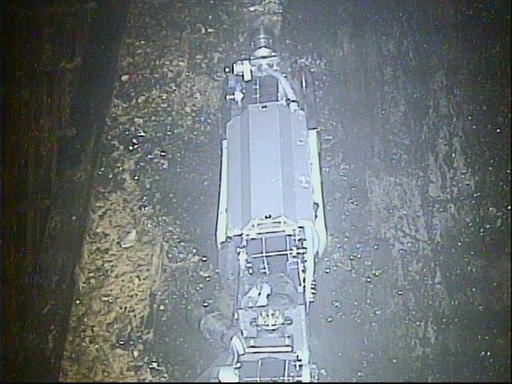
A remote-controlled "scorpion" robot inside the Unit 2 reactor's containment vessel at Fukushima Dai-ichi nuclear power plant in Okuma town, Fukushima prefecture, northeastern Japan. Robot probes sent to one of Japan's wrecked Fukushima nuclear reactors have suggested worse-than-anticipated challenges for the plant's ongoing cleanup. Photo: TEPCO / AP Photo.

TOKYO — Robot probes sent to one of Japan’s wrecked Fukushima nuclear reactors have suggested worse-than-anticipated challenges for the plant’s ongoing cleanup.

The plant’s operator Tokyo Electric Power Co. said the remote-controlled “scorpion” robot was sent into the Unit 2 reactor’s containment vessel Thursday to investigate the area around the core that had melted six years ago, but its crawling function failed while climbing over highly radioactive debris.

The robot, carrying a dosimeter, thermometer and two small cameras, transmitted some data and visuals but could not locate melted fuel — key information to determine how to remove debris out of the reactor. The robot was abandoned inside the vessel at a location where it won’t block a future probe.

Preliminary examinations over the past few weeks have detected structural damage to planned robot routes and higher-than-expected radiation inside the Unit 2 containment chamber, suggesting the need to revise robot designs and probes.

Similar probes are being planned for the two other melted reactors. A tiny waterproof robot that can go underwater will be sent to Unit 1 in coming weeks, but experts haven’t figured out a way to access badly torn Unit 3.

TEPCO needs to know the melted fuel’s exact location and condition and other structural damage in each of the three wrecked reactors to figure out the best and safest ways to remove the fuel.

Despite the incomplete probe missions, TEPCO stuck to its schedule to determine methods for the melted fuel removal this summer and start work in 2021, company spokesman Yuichi Okamura said.

TEPCO is struggling with the plant’s decommissioning, which is expected to last decades, following the 2011 earthquake and tsunami that led to the meltdown. Tens of thousands of residents had evacuated their homes, many of them still unable to return due to high radiation.

Earlier this month, another robot, designed for cleaning debris for the main “scorpion” probe, had to return midway through because two of its cameras became inoperable after two hours when its total radiation exposure reached a maximum tolerance of 1,000 Sievert — a level that can kill a human within seconds. The original duration planned for the robot was 10 hours, or 100 Sievert per hour.

Inadequate cleaning, high radiation and structural damage could limit subsequent probes, and may require more radiation-resistant cameras and other equipment, TEPCO officials said.

TEPCO officials said that despite the dangerously high figures, radiation is not leaking outside of the reactor.

Images captured from inside the chamber have showed damage and structures coated with molten material, possibly mixed with melted nuclear fuel, and part of a disc platform hanging below the melted core.

Story: Mari Yamaguchi

Advertisement

Puad Khee! Rose Tea is the New Laxative Trend

Photo: Terminal 21 Shopping Mall

BANGKOK — A specialist in alternative medicine Friday said people should take it easy with the pink-colored cups of tea which have spread online in photos recently.

Sudarat Chamnanna of Chao Phya Abhaibhubejhr Hospital, a hospital in Prachinburi province specializing in herbal medicine, said the rose tea trend, which is an old laxative remedy, should not have the strong effects some have reported and may not be pure.

“I don’t know what the formula of that rose tea is. They might put a laxative in it and added rose flavor,” she said.

The latest tea trend kicked off after a popular brand, Cha Tra Mue, released a rose tea drink on Feb. 1. Since then people have gone online to testify to its effect on their gut.

“Only a couple of gulps makes my stomach run,” wrote Facebook user Srdprang. “My friend said she drank the whole glass and had nothing left in her stomach.”

Others reported explosive results.

“I gotta surrender! I hardly poop, but [now] I have gone to the toilet four times!” @Aisassy tweeted.

Still others were unmoved.

“I had two glasses already,” @Anrmee4452442 tweeted. “I still haven’t pooped!”

Why are people rushing to loosen their bowels? Some think it will help them lose weight or detoxify. Does it work?

Rose tea has been used as a remedy for constipation and menstrual pain stretching from ancient China to pre-European North America. A cursory review could not find any clinical studies of its use as a laxative. A study for use in relieving menstrual pain by a university in Taiwan found it was safe to consume.

Photo: Cha Tra Mue / Facebook
Photo: Mowmeaw Chatchaya / Facebook
Photo: Kin Rai Dee Wa / Facebook


https://twitter.com/anrmee4452442/status/831465085889437697

Advertisement

Trump Praises His ‘Fine-Tuned Machine,’ Says Media Dishonest

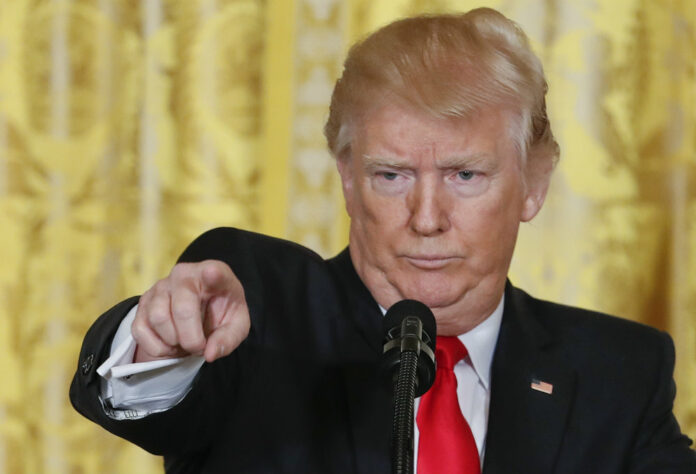
President Donald Trump points to a member of the media as he takes questions during a news conference at the White House in Washington Thursday. Photo: Pablo Martinez Monsivais / AP.

WASHINGTON — The leaks are real. But the news about them is fake. The White House is a fine-tuned machine. Russia is a ruse.

For its stunning moments and memorable one-liners, Donald Trump’s first solo news conference as president has no rivals in recent memory. For all the trappings of the White House and traditions of the forum, his performance was one of a swaggering, blustery campaigner, armed with grievances and primed to unload on his favorite targets.

In nearly an hour and a half at the podium, Trump bullied reporters, dismissed facts and then cracked a few caustic jokes – a combination that once made the candidate irresistible cable TV fodder. Now in office, he went even further, blaming the media for all but sinking his not-yet-launched attempt to “make a deal” with Moscow.

That matters, Trump said in one of his many improvisational asides, because he’d been briefed and “I can tell you … nuclear holocaust would be like no other.”

This was his and his aides’ attempt to get the boss his groove back. Trump used the event to try to claw his young administration back from the brink after a defeat in court and the forced resignation of his top national security adviser.

He taunted reporters and waved away their attempts to fact-check him in real time. He (incorrectly) touted his Electoral College total and repeatedly blasted his November opponent – somehow mentioning Hillary Clinton more than anyone else in his defense of his administration’s early days. He bragged that his White House is “a fine-tuned machine” and claimed “there has never been a presidency that has done so much in such a short period of time.”

If only the news media would give him credit. Over and over, he accused the political press of being dishonest and suggested that any negative coverage of his administration was “fake news.” He unloaded a torrent of grievances while positioning himself as the stand-in for the everyman, who, he declared, hates and distrusts reporters as much as he does.

“The press – the public doesn’t believe you people anymore. Now, maybe I had something to do with that. I don’t know. But they don’t believe you,” Trump charged. “But you’ve got to be at least a little bit fair, and that’s why the public sees it. They see it. They see it’s not fair. You take a look at some of your shows and you see the bias and the hatred.”

The hastily called news conference was not on the White House’s original schedule for Thursday, and some of Trump’s own aides were surprised when the president let slip at a morning meeting that he would hold the event in the East Room just hours later.

The performance was vintage Trump, a throwback to the messy, zinger-filled news conferences he held during the early stages of his campaign. And, when combined with a rally slated for Saturday in Florida, it appeared to be the start of a one-two punch meant to re-energize a president whose White House in recent days has been buffeted by crisis and paralyzed by dysfunction.

Yet it was a far cry from the “buck stops here” mantra popularized by Harry Truman and other presidents who believed that the ultimate responsibility for any White House struggles lay with the president himself. Trump was eager to assign blame elsewhere, ignoring the nation’s healthy economy and relative peace when he took office to say “to be honest, I inherited a mess, a mess, at home and abroad, a mess.”

He mostly blamed the media for his woes, rebuffing suggestions that he was undermining confidence in the press or threatening the First Amendment by trying to convince the nation that “the press honestly is out of control.”

“The press has become so dishonest that if we don’t talk about it, we are doing a tremendous disservice to the American people,” he said. “Tremendous disservice.”

Never before has a president stood in the White House and so publicly maligned the press or attacked reporters by name, according to presidential historians. Not even Richard Nixon in the days of Watergate.

“It was bizarre theater,” said Douglas Brinkley, a professor of history at Rice University. “He turned a presidential press conference into a reality TV show in which he can be the star and browbeat anyone who objects to him with the power of his office.”

But for Trump, it continued a defining theme and amplified his chief strategist Stephen Bannon’s decree that the media are “the opposition party.”

Trump had put claims of press prejudice at the center of his campaign in an unprecedented way and earlier this month falsely accused the media of refusing to cover terrorist attacks across the world. Though Thursday’s news conference was a messy, fact-challenged affair, it may well have been cheered by Trump supporters across the country who had packed arenas last year to jeer reporters and chant “tell the truth” at the press pen.

An Associated Press-GfK poll taken on the eve of the election revealed that 87 percent of Trump’s supporters saw the media as biased against him.

Trump retains support among Republicans, and solid majorities of Americans say he is following through on his promises and is viewed as a strong leader, according to a Gallup survey. But his overall job approval rating is much lower than those of past presidents at the same point in their administrations. According to a Pew Research Center survey, 39 percent of Americans approve of his job performance while 56 percent disapprove.

For all of Trump’s complaints, he appeared to delight in sparring with reporters in what was only his second news conference since last July. Several times he extended the event in order to field more questions.

Not that he answered them all. He dodged inquiries about his campaign’s links to Russia and talked down several reporters before they could finish their questions.

On one subject in the news, he did defend the national security adviser he recently fired.

But he also made a point of complimenting a softball inquiry about the first lady as “a very nice question.” He teased CNN reporter Jim Acosta for having the same last name as his new pick for labor secretary – Alexander Acosta, whose appointment was ostensibly the reason for the news conference – and said he asked his staff to make sure the men weren’t related.

There were startling moments aplenty.

He chided a Jewish reporter wearing a kippah for asking a question about anti-Semitism. He asked an African-American reporter whether she could help set up a meeting with the Congressional Black Caucus. He displayed a rare moment of introspection when he discussed his love for kids amid his “very, very hard” decision whether to potentially deport young immigrants who came to the United States illegally as children.

But mostly it was Trump’s bravado on display, as when he incorrectly asserted that his Electoral College victory had been the largest of any president since Ronald Reagan — and then simply dismissed a reporter’s attempt to correct him.

“Well, I don’t know, I was given that information,” said Trump. “But it was a very substantial victory, do you agree with that?”

Story: Jonathan Lemire

Advertisement

Hot News

LATEST NEWS

Bangkok
overcast clouds
31.1 ° C
31.1 °
30.5 °
75 %
5.7kmh
100 %
Wed
32 °
Thu
39 °
Fri
32 °
Sat
29 °
Sun
30 °