29.4 C
Bangkok
Saturday, June 6, 2026
Home Blog Page 2482

40 Students Injured as Bus Driver Dozes Off at Wheel

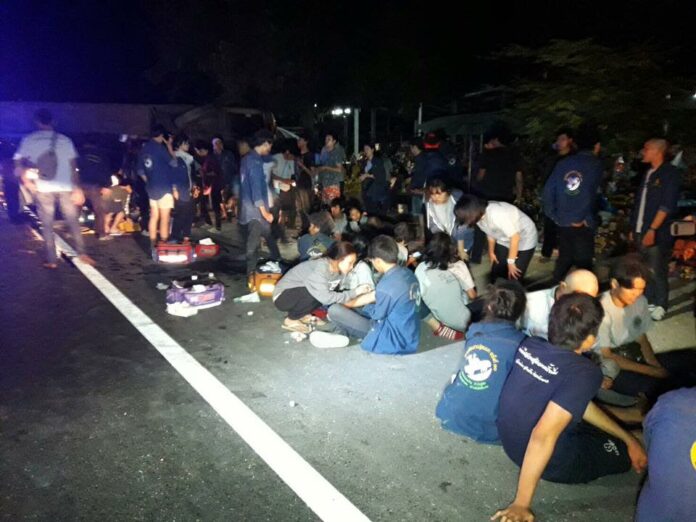
Students receive first aid after their bus crashed in Khamphaeng Phet city early Thursday morning.

KAMPHAENG PHET — At least 40 students were injured when their bus overturned and crashed early Thursday morning in Kamphaeng Phet city. The driver told police he fell asleep.

At about 4am, the Bangkok-bound bus was carrying almost 50 students from King Mongkut’s Institute of Technology Ladkrabang from a camp in Chiang Mai province when it left the road and crashed through a roadside statue shop.

Several students were seriously injured and taken to a hospital for treatment, according to Capt. Chakrapong Jainakrob of Kamphaeng Phet police.

Driver Banchoed Boonchan had not yet been charged as of Thursday morning, Chakrapong said. The 42-year-old driver told police he felt sleepy and nodded off since there was no backup driver.

Chakrapong said the bus was among four carrying approximately 200 students.

Debris of the shattered statues where the bus came to a stop Thursday morning.
Advertisement

Of Pokemon and Creepy Dolls: The Trendiest Trends of 2016

Sunday was both a national constitutional referendum and Pokemon Go’s first full day of release. Many chose to spend their day chasing Pokemon, as these players in Korat.

While the world churned, many of us kept busy finding new obsessions to keep us happy.

As the Year of the Monkey passes and past fads like craft beer and food trucks fade into memory to join the likes of donuts and charcoal food, new addictions emerged through our smartphones, wallets or stomachs.

1Haunted Child Dolls

It wasn’t new, and it didn’t stay long. But for a few weeks, one of the more bizarre fads to burn the psyche was everywhere.

Luk Thep, or child spirit dolls, were minor thing of 2015. When a budget airline announced they could fly as passengers, they exploded in the imagination and national media. Soon the dolls, which cost up to 100,000 baht and are consecrated with black magic, were everywhere and even drew international attention. Students brought them into classrooms, hotels banned them and before long young, female luk thep were being exploited as drug mules.

Fortunately the trend died after a few weeks. But this led to a new problem, as the life-like dolls – believed to contain a child’s soul – could not be thrown away. Those unsold or abandoned by their humans were abandoned at local temples like they were stray animals. Soon major temples such as Wat Phai Lom and Wat Sawang Arom in Nakhon Pathom province were stuck with up to 10,000 luk thep dolls.

2Pokemon Go

A powerful, imported drug cooked up in a San Francisco lab arrived mid-year to devastate communities nationwide.

Nothing hit the smartphone-toting youth of Thailand this year quite like Pokemon Go. When the GPS-powered, augmented-reality game launched in July, it was an instant hit and national productivity plummeted as millions discovered “outdoors,” a place where they could catch’em all.

Suddenly the under-35 world was divided between dedicated Pikachu hunters and anti-Pokemon Go haters who said “Get a life!” Feeling insecure about an obsession they couldn’t fathom, government officials were quick to take action – despite their inability to do anything about it – threatening to “ban” the game unless its maker obey their demands that certain locations be made Pokemon-free.

To the surprise of no one, the developer ignored them, but by that time the fad had faded almost as quickly as it came.

3Facebook Live

One of many Facebook live broadcasts on a live map.


It was a great year for couch potatoes, who no longer needed to go out to experience concerts or events only to meet friends complaining about traffic or the government.

Facebook launched its livestreaming service in March, and the nation didn’t look back.

Suddenly everyone was livestreaming what they were eating, dancing, seeing, playing, discussing or selling. It made everyone a reporter and drove huge online engagement, what today’s media calls “organic reach.” New media jumped on the bandwagon also, using it to bring audiences to street protests and swing-dance parties. Some reporters even combined their Pokemon and Facebook Live passions and called it “work.”

4Malls Grow Up, Go ‘Community’

Photo: The Commons / Thonglor

Love or hate them, a lot of us went to malls. But in response to changing tastes and shoppers suffering CentralBurnout, some developers are building more human spaces like the six community malls which opened in the capital. Massive investments went into spaces where mallrats can escape the same-old-same-old vibes to eat, drink and chill.

First there was The Commons on Soi Thonglor 17. The four-story complex skipped chains like KFC, McDonalds and Starbucks in favor of independent food artisans. Same down the street at Soi 4, where Maze Thonglor gained fame for fairy tale-themed bar Mocking Tales. Night owls got The Street Ratchada, a loft-style mall open 24 hours for late-studying students and after-party washouts feeding at Foodland’s Tuk la Dee. Bangkok’s nightlife got an upgrade with Beam, which is located in 72 Courtyard, also on Thonglor. Pet culture continued to spread, and Habito Mall on Soi Sukhumvit 77 opened in August as a trendy place for people and their fluffy buddies to roam. The #SlowLife set got the lush Naiipa Art Complex in the heart of Phra Khanong, where they can enjoy a quiet afternoon coffee under some shade.

5Goodbye Honey Toast, Hello Bingsu!

Photo: Snow Wish Bingsu Cafe’ / Facebook

History has proven that importing something sweet for sale at Siam Paragon is a surefire way to guarantee long queues and a feeding frenzy.

Our stomach were in for many treats this year. After digesting honey toast and drooling over Ben & Jerry’s ice-cream and Pablo Cheesetart, dessert lovers decided Korean-style shaved ice was the 2016’s Most Valuable Flavor.

It was a perfect storm combining our love of fads, Siam Paragon aircon, sweet things, social media and – most of all – craziness for anything Korean.

The Bingsu trend turned into a snowy-sweet treat blizzard also because it’s a dessert made for Instagram and Facebook feeds. Just look at it.

While Thai Bingsu offers the same strawberries, cheesecake, brownies and Oreo toppings found elsewhere, try some local flavors such as mango, durian and Thai tea.

Photo: Mama Bingsu / Facebook

Mongolia Says Dalai Lama Will Not be Allowed Future Visits

Dalai Lama speaks at the Janraiseg temple of Gandantegchinlen monastery in Ulaanbaatar, Mongolia. Photo: Ganbat Namjilsangarav / AP.

ULAANBAATAR, Mongolia — Mongolia’s foreign minister says the Dalai Lama will no longer be allowed to visit his country after a visit by the exiled Tibetan spiritual leader prompted protests from China and a suspension of talks on a major loan.

China’s foreign ministry said Wednesday that it “attached importance” to the Mongolian diplomat’s statement and hoped the country would “honor the commitment” it has made on the issue.

On Tuesday, the Mongolian newspaper Unuudur carried remarks by Foreign Minister Tsend Munkh-Orgil that the Dalai Lama would not be allowed to visit Mongolia even on religious grounds.

Beijing accuses the Dalai Lama of seeking to split Tibet from China.

Mongolia’s economy is heavily dependent on China. The countries are discussing a possible $4.2 billion loan by Beijing to deal with a recession.

Advertisement

At Least 26 Killed in Congo Protests, Rights Group Says

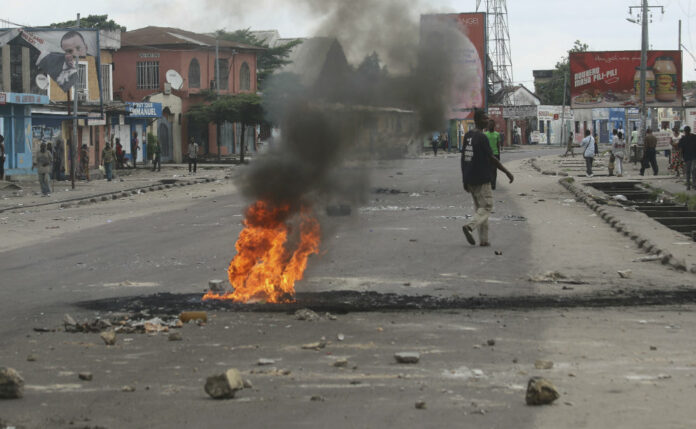
People walk near burning debris during protests in Kinshasa, Democratic Republic of Congo, Tuesday. Photo: John Bompengo / AP.

KINSHASA, Congo — Security forces in Congo have killed at least 26 demonstrators and arrested scores more amid protests against President Joseph Kabila’s hold on power, a rights group says.

Military and police forces were firing live bullets, raising fears that more people were killed in the first day after Kabila’s mandate expired, Human Rights Watch said. Its researcher Ida Sawyer said on Twitter late Tuesday that the killings took place in the capital, Kinshasa, the southern city of Lubumbashi and elsewhere. Residents told the group that Republican Guards were carrying out door-to-door searches and arresting youths.

Protesters burned the headquarters of the ruling party in Kinshasa.

Political talks between the ruling party and opposition, which stalled over the weekend, were expected to resume on Wednesday with mediators from the Catholic church.

Kabila, who took office in 2001 after his father’s assassination, is constitutionally barred from seeking another term, but a court has ruled that he can remain in power until new elections, which have been delayed indefinitely. They were meant to be in November, but the ruling party says it needs more time — until 2018, at least.

The leader of Congo’s largest opposition party, Etienne Tshisekedi, has urged peaceful resistance to what he called Kabila’s “coup d’etat.” In a statement posted on YouTube, he called the president’s actions “treason” and appealed to the Congolese people and the international community to no longer recognize Kabila’s authority.

The political impasse has fueled fears of widespread unrest in the vast Central African nation that has trillions of dollars’ worth of natural resources but remains one of the world’s poorest and most unstable countries.

The political negotiations that stalled over the weekend failed to reach an agreement on a date for new elections or the release of political prisoners. Both are key demands of the opposition parties, along with the dropping of criminal charges against opposition leader Moise Katumbi, who fled the country as authorities announced plans to try him. Katumbi’s supporters say the charges of hiring mercenaries are politically motivated, as he had been a leading presidential candidate.

Kabila’s government has tried to ease tensions by including some opposition figures. Shortly before Kabila’s mandate expired, the new opposition Prime Minister Sami Badibanga announced his new transition government.

Although a small part of the opposition, including Badibanga, took part in an earlier national dialogue mediated by the African Union, most of the opposition, including Tshisekedi, refused to take part and rejected an agreement signed in October.

People inside and outside Congo have feared a repeat of the dozens of deaths in September, when the opposition took to the streets after the electoral commission failed to schedule the presidential election.

In Kinshasa’s Matonge neighborhood on Tuesday, people played soccer in the street to block traffic as a form of protest amid the heavy police and military presence.

“Kabila has betrayed our country. He must leave,” said Jean-Marcel Tshikuku, a mechanic. “He announced a new government just at the end of his mandate. It’s an insult! We don’t want him anymore. We don’t want negotiations to resume. He must get out, that’s all.”

Story: Saleh Mwanamilongo. Carley Petesch and Krista Larson in Dakar, Senegal, contributed.

Advertisement

Thai Football Gets Cooler With New Look and Sound

BANGKOK — When Thai football wanted to update its image for the new year, it turned to an urban hipster with a rural heart to come up with something a little country, a little rock ‘n roll.

Days before being embroiled in some fiery hooligan drama, the Football Association of Thailand on Thursday dropped its new Thai League roadmap, a logo and new anthem composed by DJ Maft Sai, who’s credited with popularizing country music in the capital, and the guitarist from a rock band of legendary cool.

The association’s updated logo recalls an elephant, the national animal, and the letter T, presumably for Thailand. Designed by the same firm behind that of Chonburi F.C., it incorporates different colors to identify separate leagues.

The new anthem incorporates traditional Thai instrumentation with a modern rock sound. The musical fusion was made possible by Nattapon Siangsukon, who as DJ Maft Sai has toured the world with the Paradise Bangkok Molam International band; and Piyanart Jotikasthira, guitarist of beloved band Apartment Khunpa.

For 2017, 18 teams will compete in five leagues under the Thai League. Amateur teams can participate in the Thai Amateur Tournament which is considered the last tier.

Thai League new logos posted on Dec. 15. Photo: FA Thailand / Facebook.


Related stories:
Reward Offered For Hooligans Behind Thai Football Firestorm

Advertisement

Constitution Drafter Pushes for Executing Corrupt Politicians

A sign calls for former PMs Thaksin Shinawatra, at left, and his sister Yingluck Shinawatra to be jailed for corruption at a protest in New York City in September 2012. Image: PAD New England

BANGKOK — One of the drafters of Thailand’s new constitution made the case Wednesday that it was written to support sentencing corrupt politicians to death.

When the new constitution is royally endorsed and its supporting laws can be written, a member of the Constitution Drafting Committee said they should include a maximum punishment of the death penalty for corrupt politicians, a provision a former politico describes as “barbaric.”

“It’s not too harsh of a law, especially when you compare it to the Criminal Code, which has already had the death penalty for over 60 years now,” Norachit Sinhaseni said. ”The death penalty is already in effect for civil servants who take bribes.”

Norachit, who served as spokesman to the committee of junta-appointed drafters, said Wednesday that codifying capital punishment for politicians who “buy and sell their positions” is an appropriate solution to the nation’s problem of endemic corruption.

Kraisak Choonhavan, a political commentator and former Democrat Party MP, expressed strong opposition to the idea.

“It’s a very barbaric law. Using state power to execute politicians won’t decrease corruption,” he said. “Does corruption seem like something you should be executed for?”

Kraisak said the use of capital punishment was already questionable in Thailand’s unreliable criminal justice system, a fact that wouldn’t change when it was applied to politicians.

“What if you execute the wrong person? I don’t trust the Thai justice system. For example, look at the case of the Burmese killers in Koh Tao. That’s already suspicious,” he said.

But Norachit said existing law supports extending the death penalty to politicians.

“If it applies to civil servants, then why can’t it be applied to politicians?” Norachit said. “Buying and selling positions at the ministerial level creates much more severe damage than low-level civil servants doing the same thing.”

He added that it would serve the public interest.

“Citizens are always hearing news about politicians buying and selling their positions. It’s become Thailand’s problem. This is the solution,” Norachit said.

But Kraisak questioned whether the rigged justice system, in which the wealthy and powerful are sometimes not held accountable, should be trusted with meting out the ultimate punishment.

“Those with power can slip out of important cases,” he said. “There will insufficient investigation when the alleged corrupt politician is powerful. This is already something that we can see happening.”

He also said it would put Thailand at odds with international norms.

“Nowhere in the world … do politicians face the death penalty. Many countries have repealed capital punishment, except dictatorships such as China and Vietnam,” Kraisak said. “As a country, we have to ask, how many do we kill per year?”

Norachit said people should not be alarmed, as the death penalty would not be sought in every case but left up to the court’s discretion.

Those not executed “will be stripped of their position for life and unable to run for office,” he said.

Advertisement

Gov’t Payment System Offline As Hacktivists Focus Online Assault

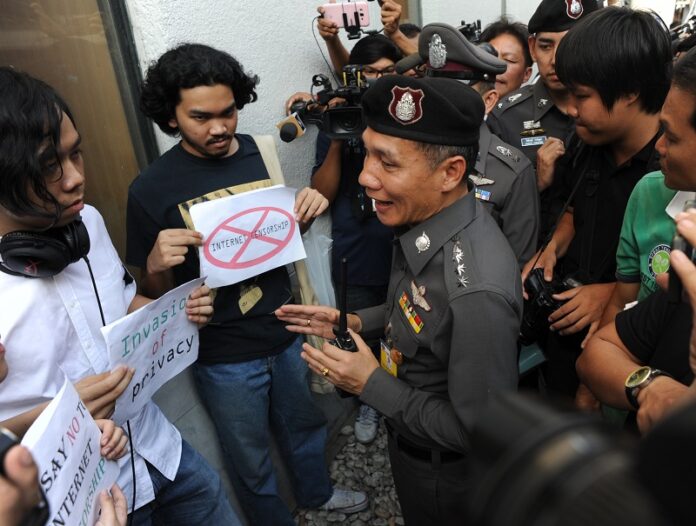
Police speak to activists protesting the new Computer Crime Act on Sunday at the Bangkok Art and Culture Centre.

BANGKOK — Online agitators escalated their attacks in protest of the new Computer Crime Act on Wednesday by targeting access to the military regime’s wallet.

The government’s payment and procurement system announced it had shut down its online system after it was listed as a target for hacktivists by the group coordinating a campaign of digital disobedience to the new cybercrime law which granted broader powers to authorities to intercept and censor content online.

In its announcement, the Comptroller General’s Department announced its network had failed as of Tuesday afternoon and its electronic system could no longer be accessed. Such systems are the platforms used for distributing funds nationwide and competitive bidding projects.

On the same day, hacktivist group Citizens Against Single Gateway announced attacks would intensify starting at 2pm on Wednesday. They made a single demand: Junta chief Prayuth Chan-ocha must use his absolute junta power under Article 44 to scrap the law, approved unanimously last week by his rubber-stamp legislature.

Asked why they were abandoning democratic methods to achieve their aims, the group replied that those methods weren’t respected in creating the law.

“It came illegally so it had to be gone by illegal way,” someone wrote in reply to an inquiry.

Read: Hackers Batter ThaiGov Online as Anger Over Cyberlaw Boils Over

Responding Tuesday, Prayuth said the attacks were illegal and dismissed those behind them as uninformed.

The law has also raised concern internationally. On Monday, the regional office of the U.N. High Commissioner on Human Rights issued a statement of concern, saying the amended Computer Crime Act posed a threat to online freedoms.

Foreign Ministry spokesman Sek Wannamethee dismissed those concerns, saying the new law was an improvement over the original, 2007 version and was intended to protect people from criminal cyber threats.

Since Monday, the Citizens Against Single Gateway group has brought down many key government sites including its central site and the Ministry of Digital Economy and Society. The Defense Ministry remained offline for a third day as of Wednesday afternoon.

The list of targets released Wednesday morning by the group included the central Government Procurement and Government Fiscal Management Information System and its regional systems.

“If any damage happens (from the attack), blame the decision of the government,” the group wrote Tuesday night on Facebook. “Don’t beg us. Beg Uncle Tu. Because we are just protecting the little online freedom that is left.”

Related stories:

Dismissive Prayuth Tells Hackers to Knock it Off

Computer Crime Act 2.0 Passes Unanimously

Single Gateway ‘Still Necessary,’ Deputy PM Prawit Says

‘Back Door’ in CCA Not Trojan Horse for Single Gateway, Drafters Say

New Cybercrime Regs Would Open Back Door to Censorship

Website Shutdowns Soar After King’s Death

Why Thailand Should Worry About an Improved(?) Computer Crime Act

Thailand’s Draconian Cyberlaws Tipping Toward Totalitarian

Computer Crime Act Has Issues, Google Tells Censorship Committee

Advertisement

Truck Pursued by Police Injures 18 in Ekkamai

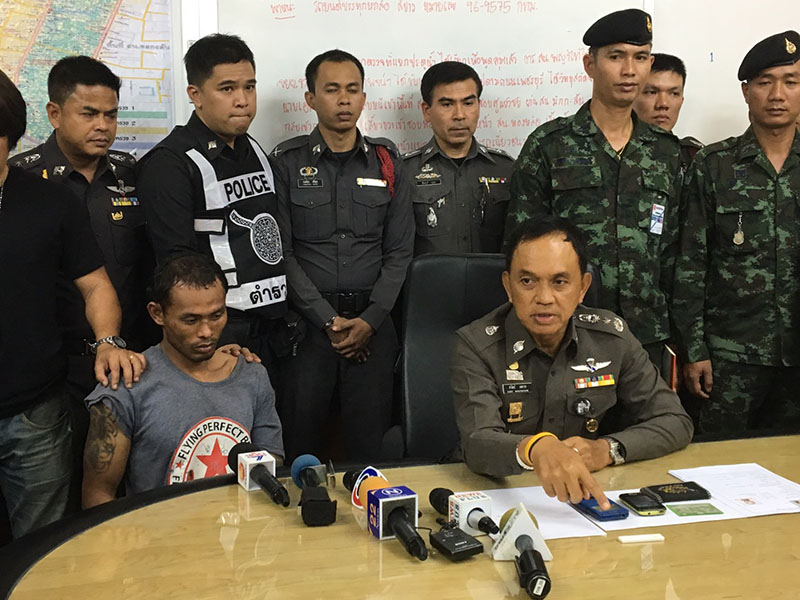
BANGKOK — A police pursuit ended with 18 people injured in the capital’s Ekkamai area after the driver of a delivery truck plowed through a roadblock and damaged dozens of cars Wednesday afternoon.

Police opened fire on the truck driven by Ekkapoj Yodsiri, 27, who they managed to arrest and take to the Thonglor Police Station for questioning.

No one was seriously injured, but more than 30 vehicles were damaged in the incident, which took place in front of the Big C store near Soi Ekkamai 8. Police temporarily closed Soi Sukhumvit 63 to traffic.

Police had been chasing Ekkapoj from the Phaya Thai district. They found a gram of meth, or ya ice, in his possession and said he confessed to being high for three days.

Ekkapoj was charged with reckless driving and drug possession, according to Lt. Col. Wasu Chueput of Thonglor Police Station.

Bangkok police chief Sanit Mahathavorn, seated at right next to the unidentified suspect, speaks to reporters Wednesday afternoon in Bangkok.


Advertisement

Death Sentence, Then Freedom for Olympic Shooter’s Wife

Guards escort Nitiwadee “Nim” Pucharoenyos, in black, into prison Monday after she was found guilty of plotting the 2013 murder of her husband, Olympic shooter Jakkrit “Ex” Panichpatikum.

BANGKOK — The family of slain athlete Jakkrit “Ex” Panichpatikum asked the court Wednesday to reconsider its decision to free his wife after she was sentenced to die for plotting his murder three years ago.

While the lower court found Nitiwadee “Nim” Pucharoenyos guilty of hiring an assassin to gun down her husband in 2013, the court of appeals ruled Tuesday that she posed no flight risk, and allowed her to walk free on a 1 million baht bond while it considers her appeal.

Read: Death Sentence for Wife of Slain Olympic Shooter

In response, a lawyer representing Jakkrit’s family filed a formal protest, arguing that she should not be freed. Boonrueng Uthairat said he also went to the courthouse to see for himself the court order freeing Nitiwadee because he couldn’t believe it.

“I am really surprised,” attorney Boonrueng told reporters at Bangkok’s Min Buri Court. “Because in my 30-year working experience, I have never seen any case where the Court of First Instance sentenced someone to death and the Appeals Court granted them bail.”

The case would be one for the books, he added.

Nitiwadee, a 40-year-old physician, was found guilty and sentenced to die Monday along with the middleman she hired to arrange Jakkrit’s assassination in October 2013. After spending a night in jail, she was freed Tuesday night. She was spirited away in a Mercedes-Benz without talking to reporters.

Nitiwadee’s mother, who publicly confessed to arranging the killing to protect her daughter from Jakkrit’s abuse, was acquitted by the court due to insufficient evidence.

Jakkrit was a champion shooter who competed in four Olympic games between 1996 and 2012.

Advertisement

3 Suspected Militants Killed in Indonesia, Bombs Found

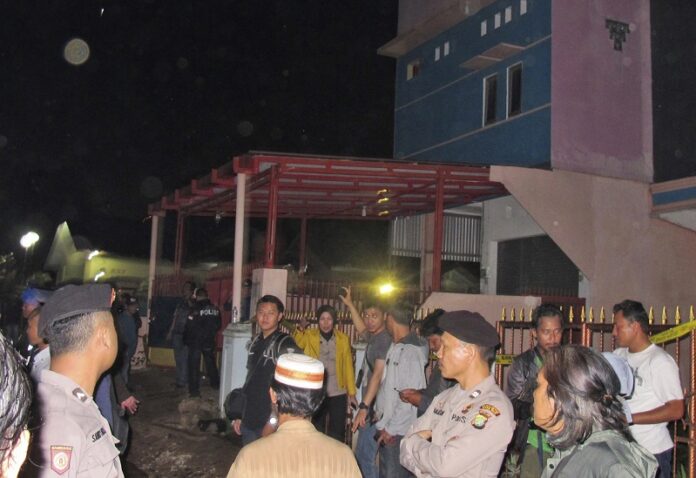
Officers stand guard around a house after it was raided by police Dec. 10 in Bekasi, West Java, Indonesia. Photo: Associated Press

JAKARTA — Indonesian police said they killed three suspected militants in a raid Wednesday on the outskirts of Jakarta and found several bombs which they are trying to defuse.

National Police spokesman Rikwanto told MetroTV that the residential neighborhood has been evacuated.

He said one person was arrested in the raid.

Police believe those involved in the plot are linked to several militants arrested Dec. 10 in another neighborhood on the outskirts of Jakarta who were planning a suicide bomb attack on a guard-changing ceremony at the presidential palace the next day.

Indonesia has carried out a sustained crackdown on Islamic militants since the 2002 Bali bombings that killed 202 people. But a new threat has emerged in the past several years from militants who have switched allegiance to the Islamic State group and from new recruits.

Advertisement

Hot News

LATEST NEWS

Bangkok
overcast clouds
29.4 ° C
29.4 °
29.4 °
77 %
3.9kmh
100 %
Sat
35 °
Sun
36 °
Mon
35 °
Tue
33 °
Wed
32 °