31.6 C
Bangkok
Friday, June 26, 2026
Home Blog Page 2664

FIFA Ethics Judges Open Case Against Worawi

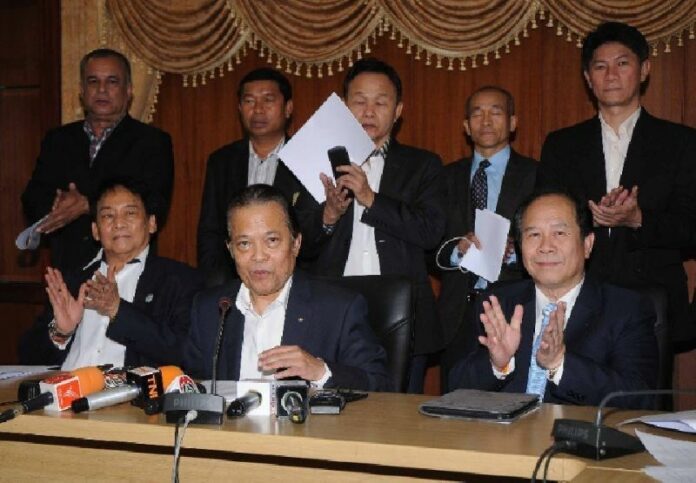
Former Thai Football Association President Worawi Makudi, seated at center, in a photo from Oct. 17, 2013, when he was elected to another term.

ZURICH — FIFA ethics judges have opened a case against former executive committee member Worawi Makudim who faces a four-year ban for alleged election forgery and other misconduct during his tenure as president of the Football Association of Thailand.

The FIFA ethics committee judging chamber said Makudi can request a hearing and submit evidence.

FIFA ethics prosecutors requested a ban of at least four years and a (885,000 baht) fine.

Charges against Makudi include “forgery and falsification,” and refusing to cooperate with investigators.

The case relates to Makudi’s 2013 re-election to lead the Thailand football federation.

Makudi was a member of FIFA’s tainted executive committee for 18 years until Asian federations voted him out in April 2015.

He was a longtime ally of former FIFA presidential candidate Mohamed bin Hammam.

Advertisement

Thailand Won’t Get Next Issue of ‘The Economist’

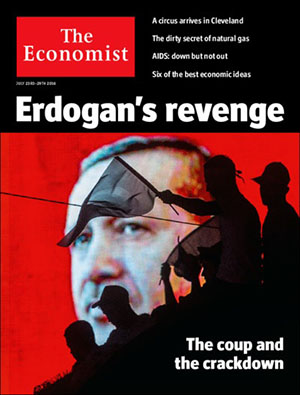
Cover photo for the July 23, 2016, edition of The Economist

BANGKOK — English-language weekly The Economist won’t distribute its next issue in Thailand, according to a note sent Friday to subscribers.

The periodical, which over the years has been censored and withheld in Thailand, said its July 23 edition would not be available, presumably due to articles about Thailand’s monarchy.

“Due to sensitive content in this week’s issue and the resulting potential risk to our distributors, we will not be distributing the July 23rd 2016 print edition of The Economist in Thailand,” said the email, copies of which were posted online.

Cover photo for the July 23, 2016, edition of The Economist

Although the email didn’t mention any specific problem, The Economist’s website shows two articles to be published July 23 that touch on the Royal Family, a taboo topic in Thailand, where any comment deemed critical toward the monarchy is punishable by up to 15 years in jail.

“I’ve been a member for many years. I kinda guessed [this would happen]. I can still find a way to read it elsewhere,” wrote former TV producer and subscriber Somkiat Onwimonin with an image of the email shared online.

The email referred inquiries to The Economist’s Asia-Pacific subscription center.

A staff member replied to a reporter’s inquiry Friday to say he was unaware of the news.

It’s a cyclical issue for The Economist, which occasionally runs analyses on a subject media throughout Thailand reflexively exercise self-censorship due to the political climate and fear of prosecution.

Previous editions of the magazine were either pulled from circulation by the publisher or local distributors because of articles concerning the monarchy.

The censorship isn’t restricted to The Economist. In April, Thai police banned any import and distribution of Marie Claire’s November, French-language edition, citing content that offended the Royal Family.

Related stories:

Facebook Blocks Thailand From Page Satirizing Monarchy

Thai Police Ban Controversial Book On Royal Succession

Govt Asks Facebook and YouTube to Help End Royal Defamation

Advertisement

Five Years of Political ‘Fear’ in Photos Open Saturday

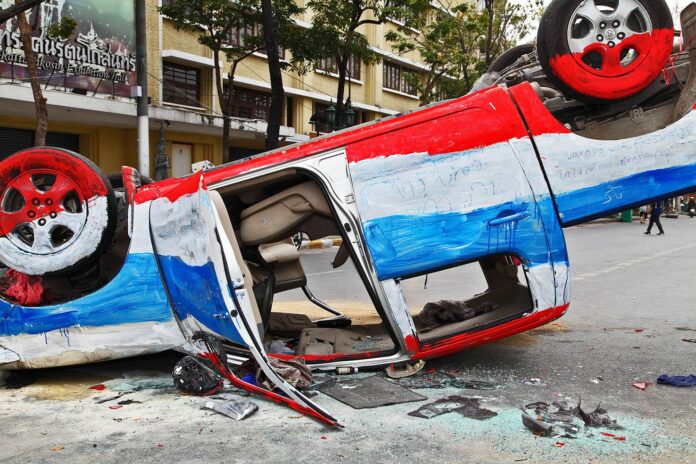
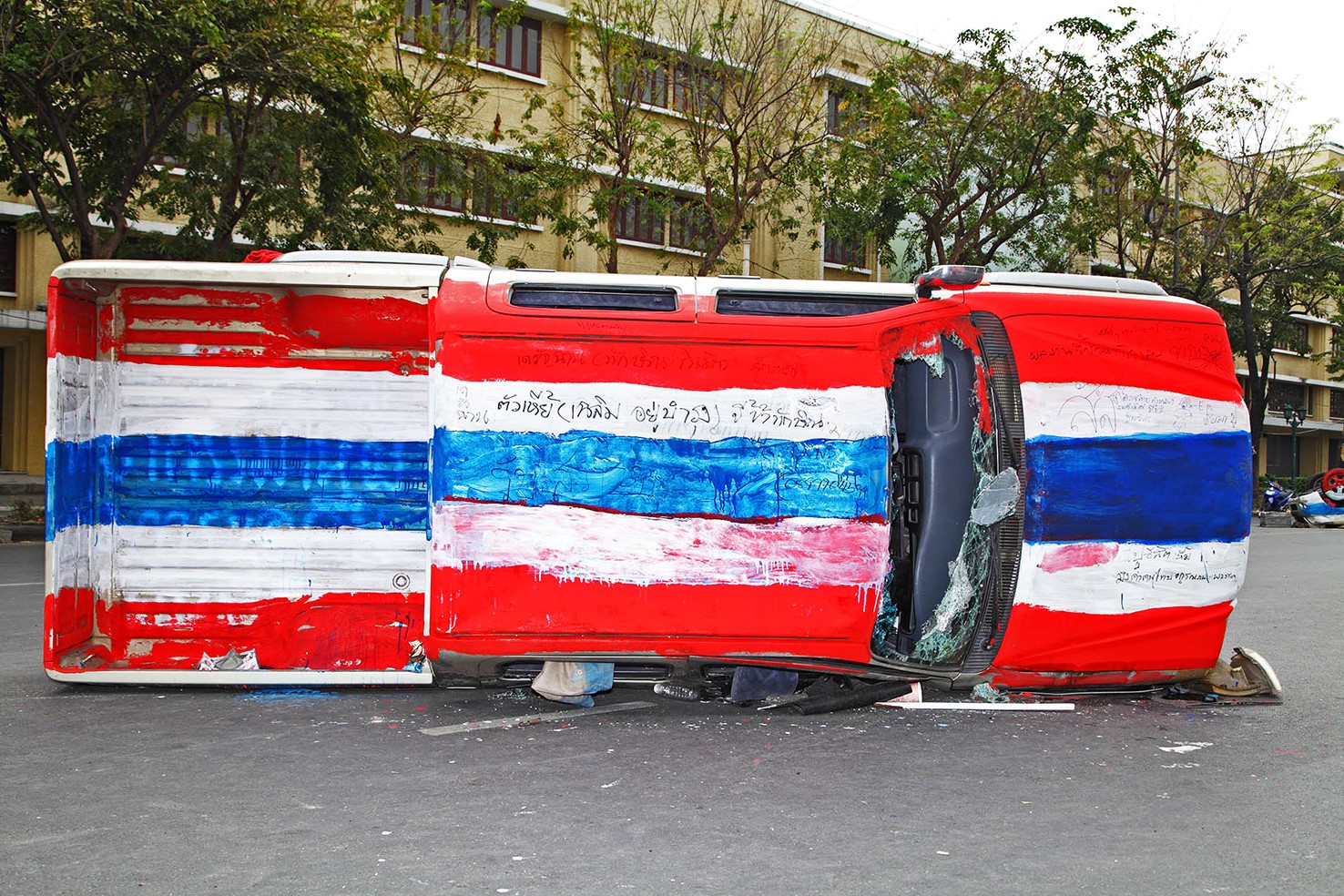
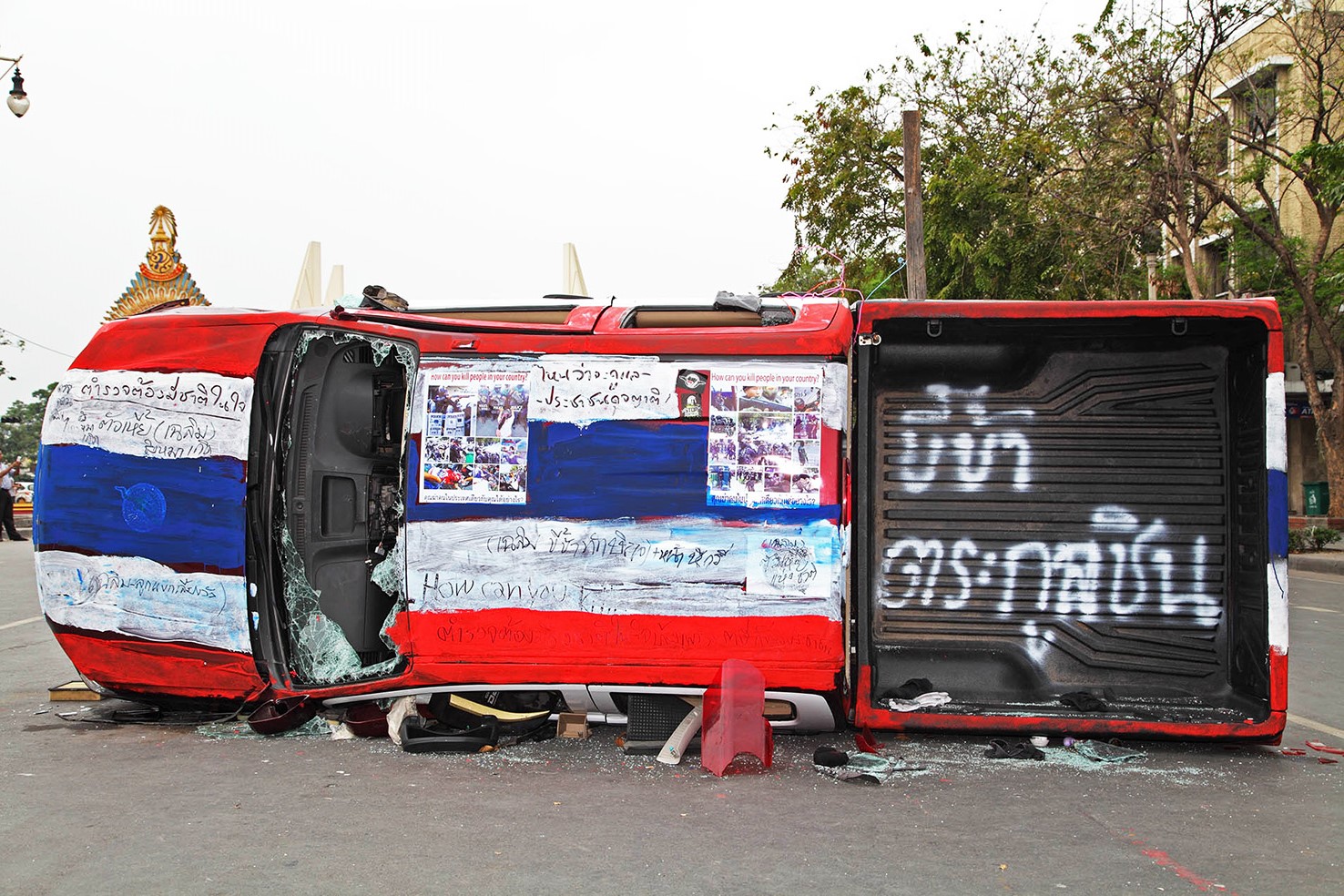
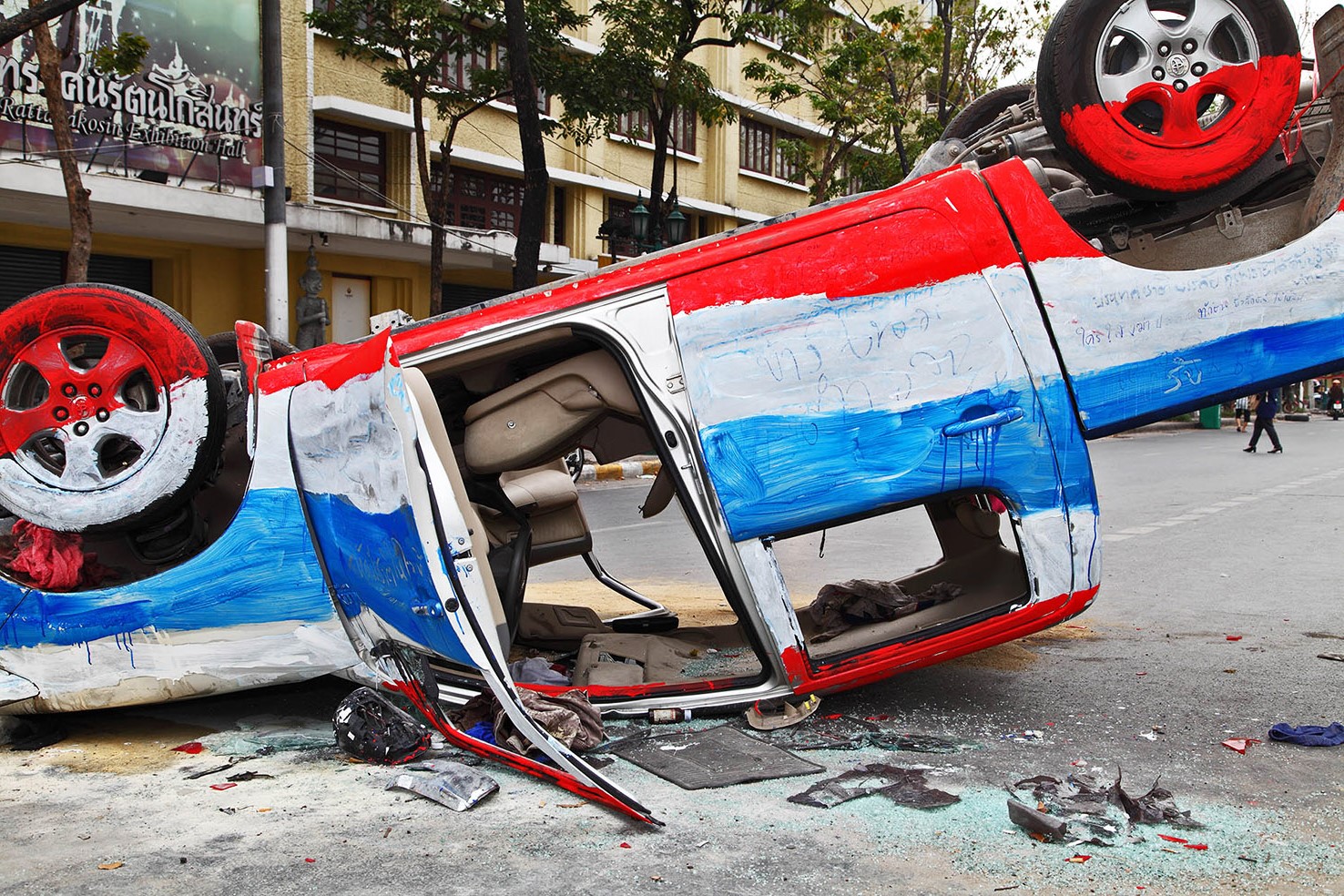
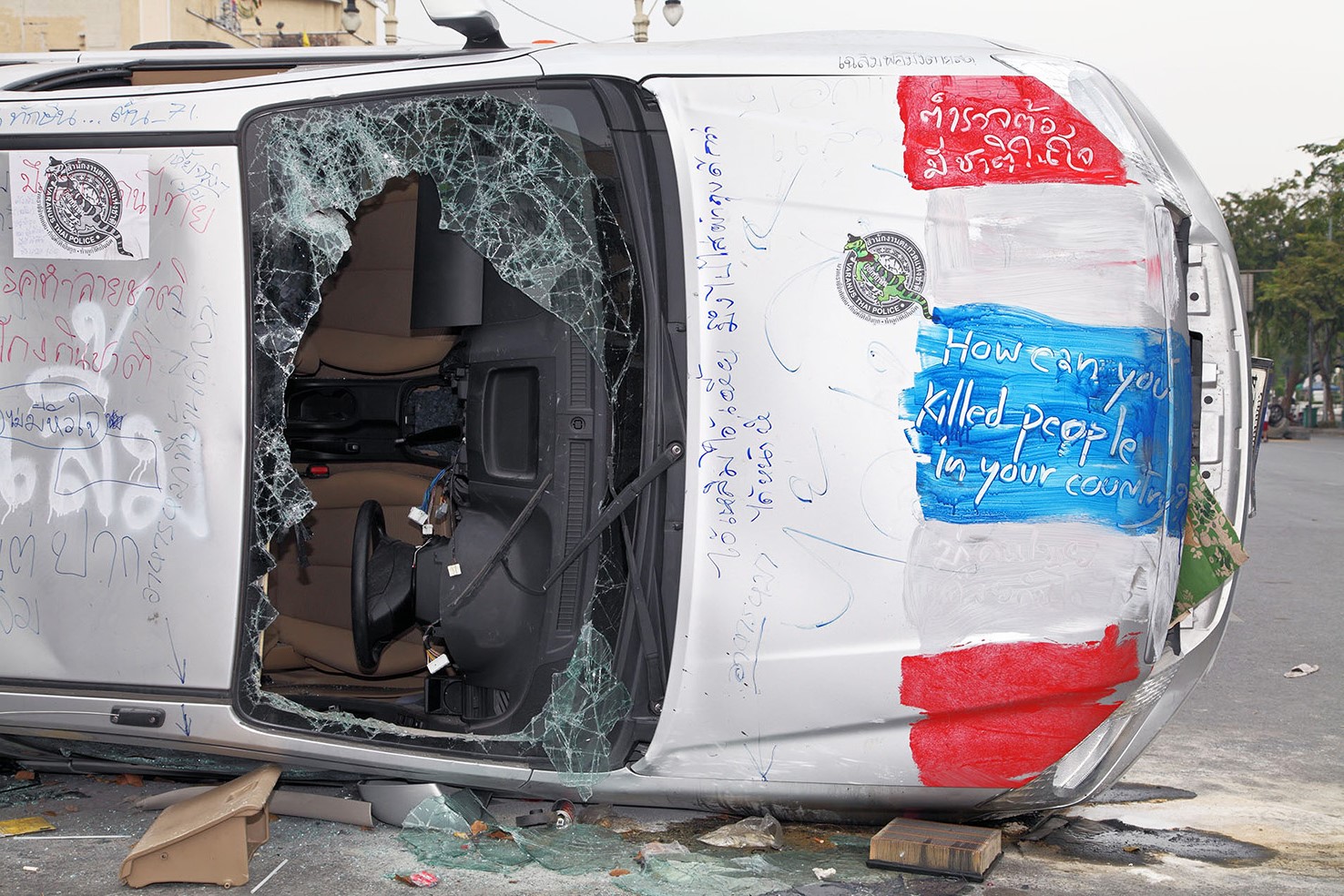
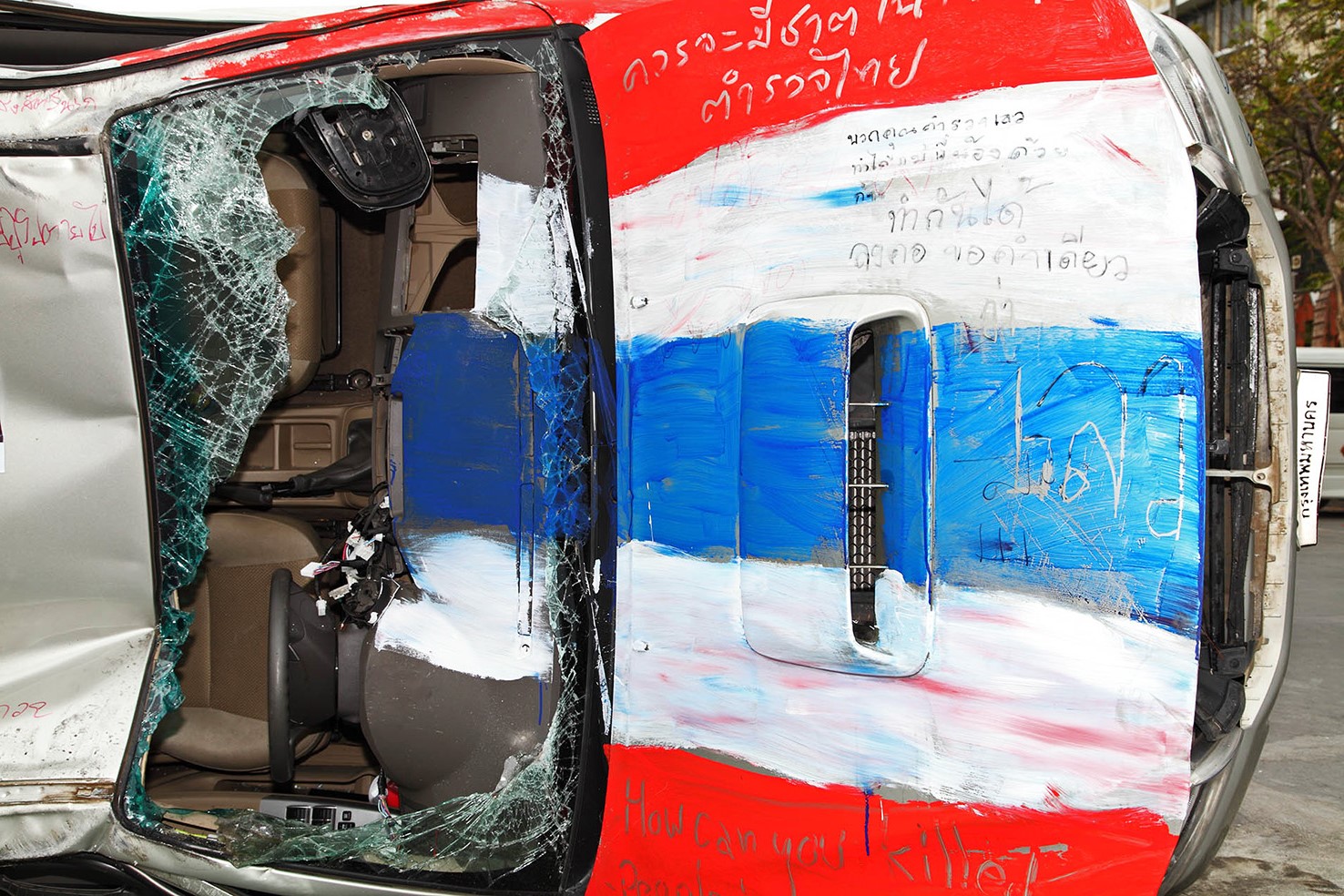
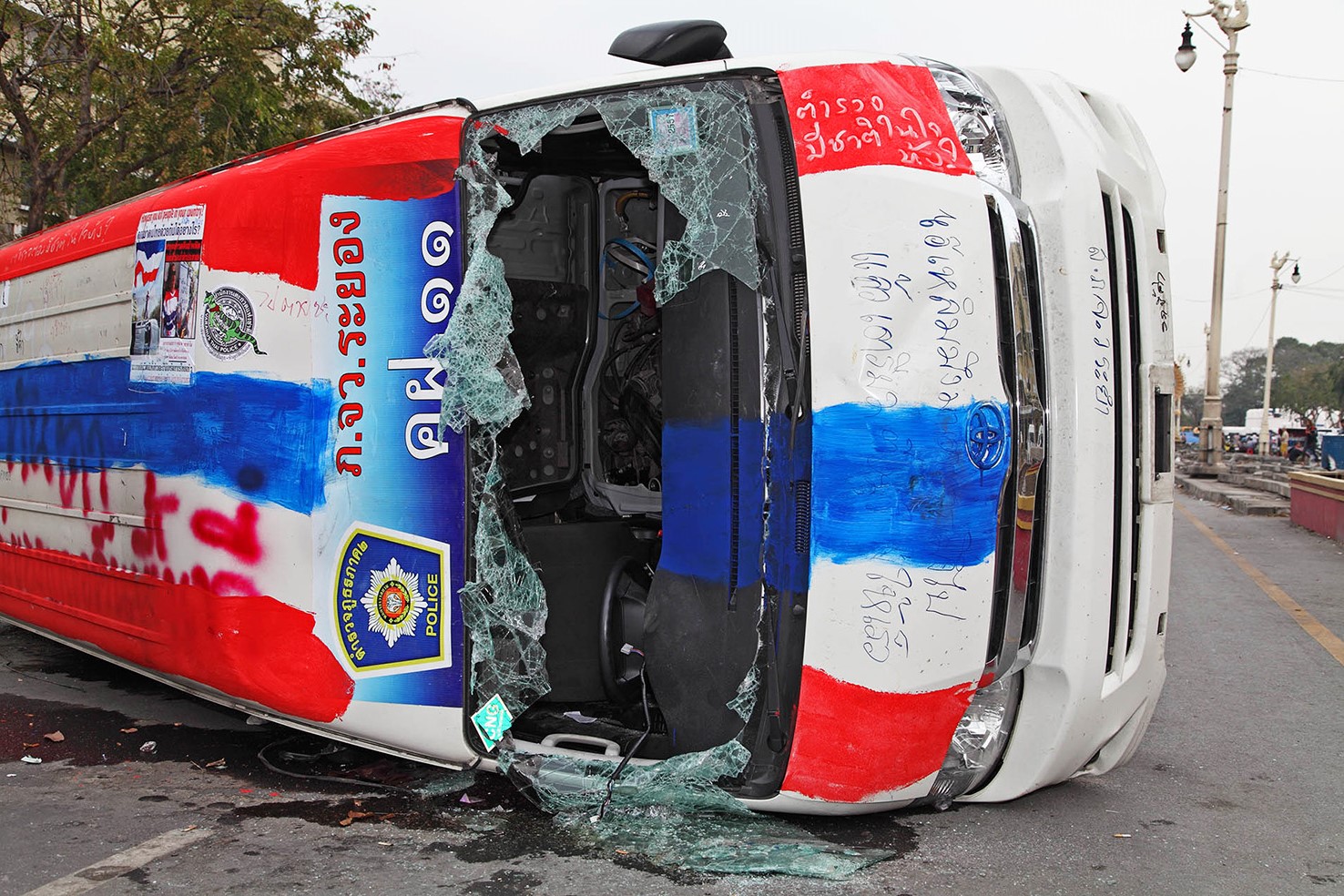
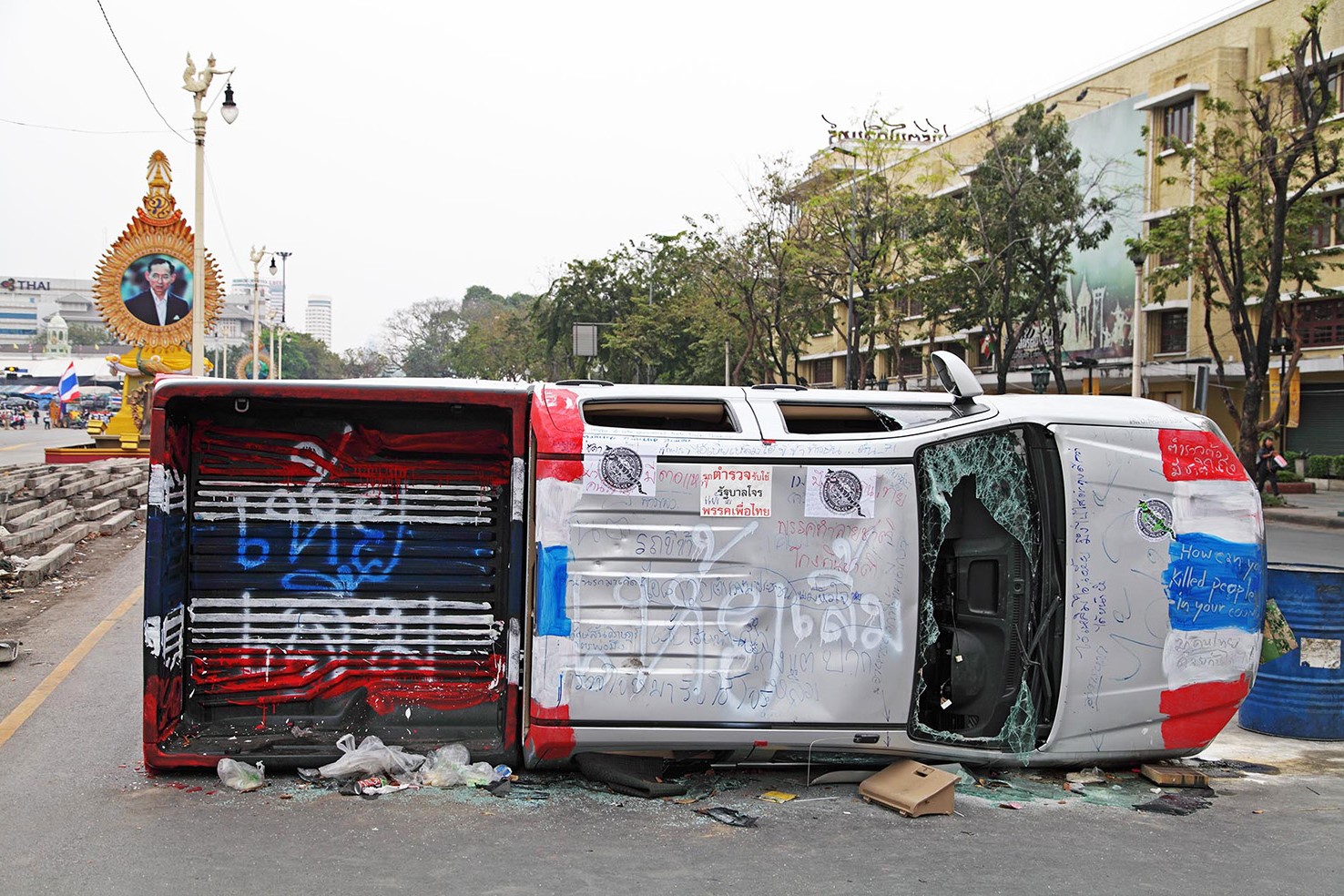
‘Ratchadamnoen Motor Show’ is part of Manit Sriwanichpoom’s ‘Fear’ exhibition opening Saturday at three Bangkok galleries. Photo: Manit Sriwanichpoom / Courtesy

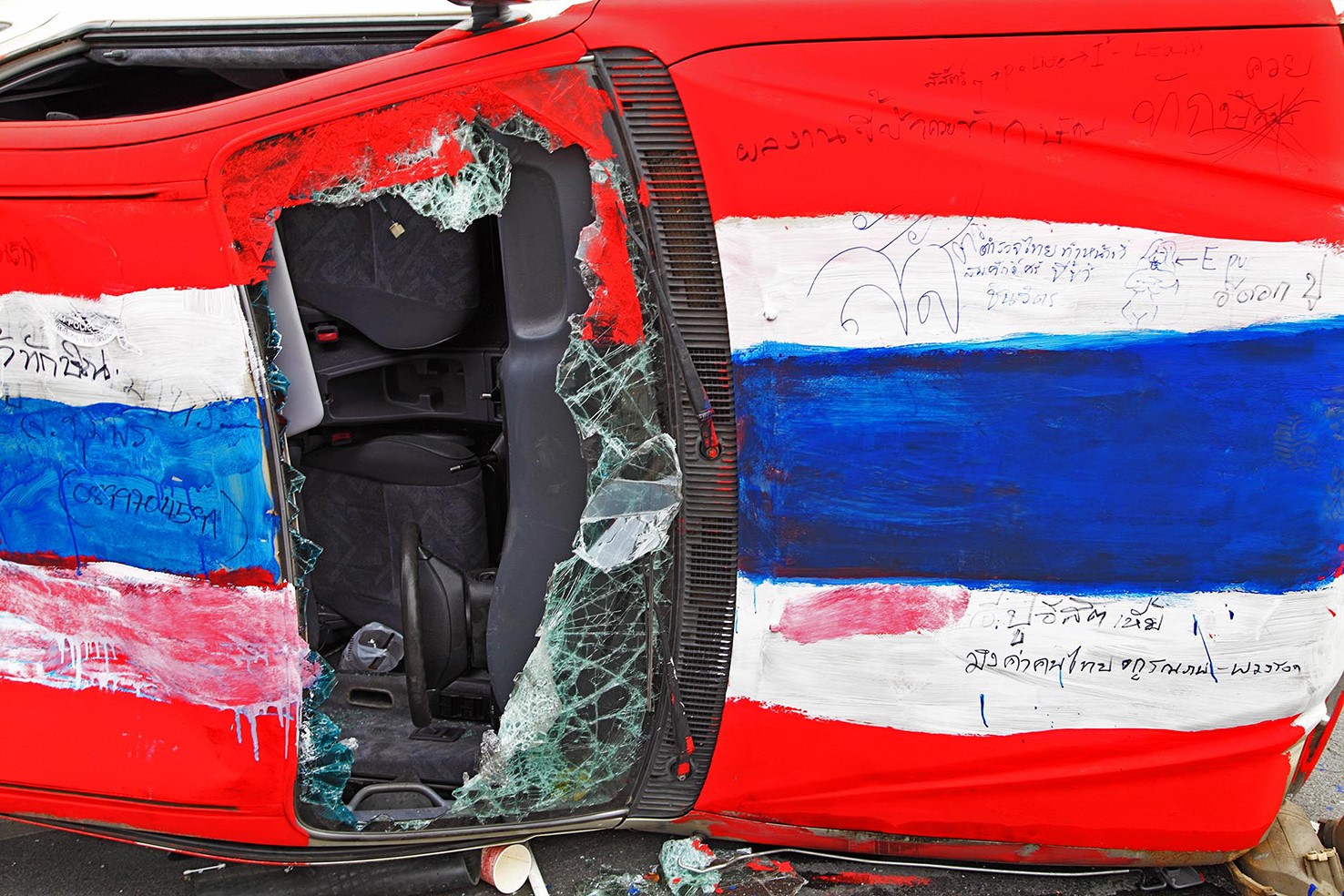
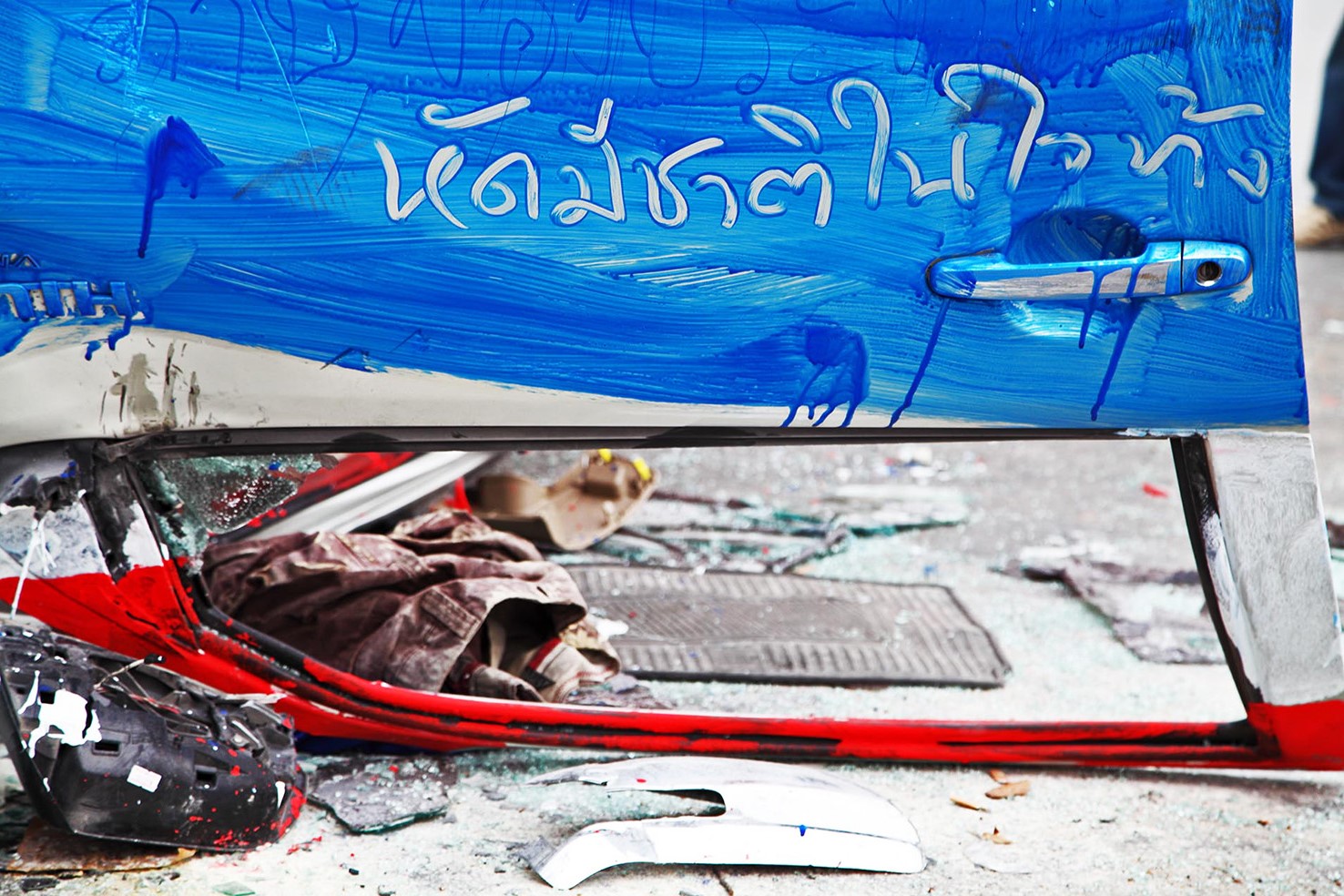
BANGKOK — Two years ago police vans became large canvases for anti-government protesters, who painted them with wrathful words and the colors of the flag.

Although such sights are now gone from Ratchadamnoen Avenue, they live on in the work of Manit Sriwanichpoom, who captured the turmoil which set the stage for the ongoing unrest of today.

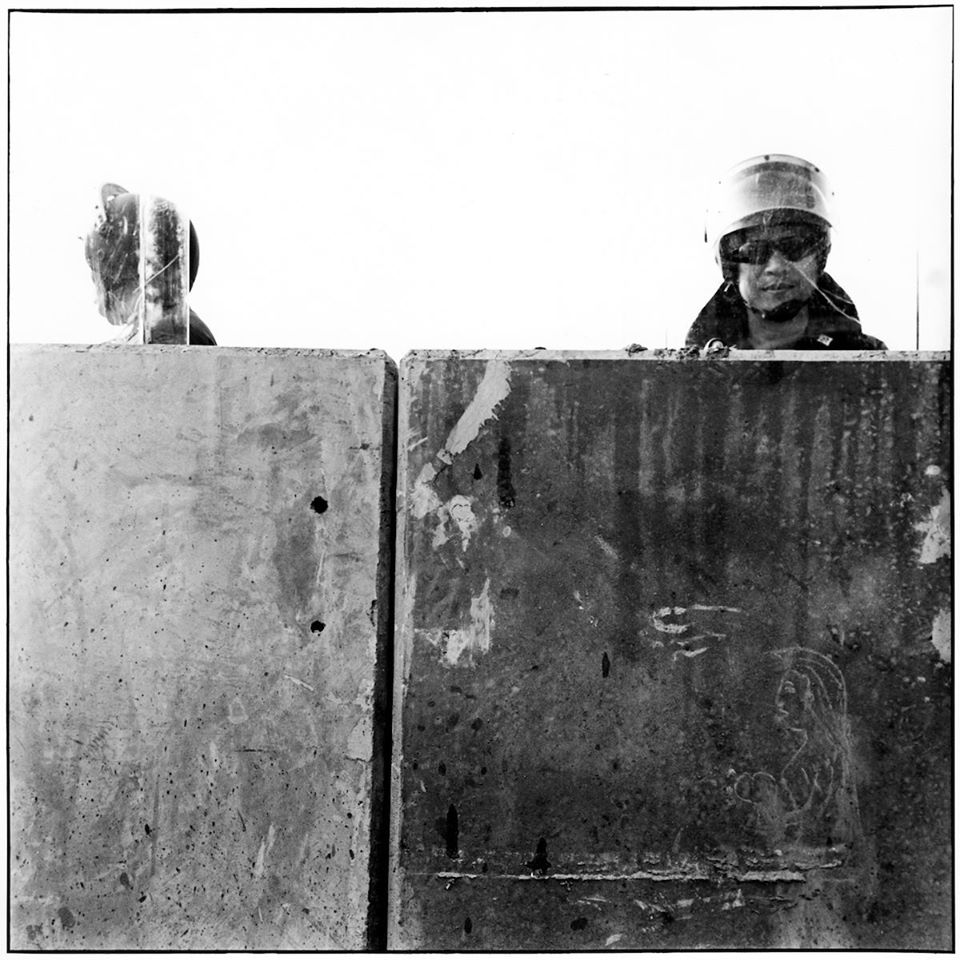
His recent collection, from the 2011 election up to March’s solar eclipse, are brought through Manit’s experienced lens in his latest exhibition “Fear” to reflect the unsaid terrors lying in the minds of his fellow citizens. It opens Saturday at three Bangkok venues including his own Kathmandu Gallery.

More than the 2014 street protests which precipitated the military coup d’etat, the collection includes various political issues which have ignited during the past five years.

“Transitions cause fear in Thailand such as coups, the upcoming referendum, and the royal succession,” said the 54-year-old photographer. “The most crucial fear can’t be talked about negatively or even positively, as it would be harmful to the speaker.”

Through capturing history in his photos, Manit poses questions on democracy in Thailand. For example, why is the memory of the PCAD’s seven-month occupation now fading? Why is Thailand still where it is more than 40 years after people rose up against military dictatorship in 1973? And why is the public haunted by the previous elected government’s rice subsidy program?

The way out? Manit doesn’t seem to offer one. He sounds just as hopeless about elected politicians’ ability to move the nation forward.

“Politicians from elections diminish democracy. Instead of solidifying democracy, the power given is abused to serve their own interests and scare people,” Manit said. “Real democracy requires people’s participation in every aspect and their right to inspect. Thailand is still far from that point, and elected governments never succeed in getting there.”

A photographer with over three decades experience, Manit doesn’t shy from stating his political views in his work. One entry in his iconic Pink Man series featured its eponymous man in a bright pink suit inserted into horrifying photos of the 1976 massacre of students to reflect surging consumerism.

Fear’s set of two video pieces and 10 series of photographs runs Saturday through Sept. 10 at three venues concurrently: Kathmandu Photo Gallery, H Gallery, Tang Contemporary Art.

It will also show in Singapore at Yavuz Gallery from July 30 to Sept. 18.

The opening reception party is from 6pm to 9pm on Saturday at Kathmandu Photo Gallery located on Pan Road just off lower Silom Road, across from the Hindu temple.

It’s reachable from BTS Surasak, Sala Daeng or MRT Silom.


Advertisement

Style or Sexism? Female Leaders Face Focus on Appearance

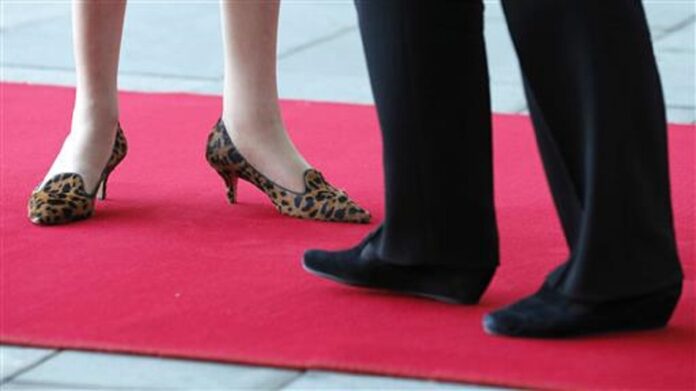
A close up of the shoes of German Chancellor Angela Merkel, right, and British Prime Minister Theresa May during a military welcoming ceremony at the chancellery in Berlin Wednesday, July 20, 2016, on May's first foreign trip after being named British Prime Minister. Photo by: Michael Sohn

LONDON — For Margaret Thatcher, it was handbags. For Theresa May, it’s shoes.

The new British prime minister likes to wear boldly patterned kitten heels, and the media is fascinated. May’s footwear has been analyzed, photographed and satirized. Photojournalists have captured her shoes in close-up alongside the stilettos of Scottish First Minister Nicola Sturgeon and the wedge heels of German Chancellor Angela Merkel.

The Sun tabloid greeted May’s victory in Britain’s Conservative leadership race with a front-page image of her leopard-print shoes and the headline “Heel, boys.”

Dozens of countries around the world have had women at the helm, including India, Pakistan, Bangladesh, Australia, New Zealand, Chile, Argentina, Norway, Denmark, Liberia and Canada. But female leaders are still scrutinized as much for style as for substance, and invariably compared to one another — a sign they are considered exceptions, rather than the rule.

“It’s easy to laugh off, but it trivializes the women,” said Jessica Smith, a doctoral researcher at Birkbeck, University of London who studies gender and political leadership.

Smith pointed out that May’s meeting with Sturgeon after Britain’s European Union referendum came at “a crisis point for Scottish-English relations, an incredibly important point, and if we just talk about what shoes the women are wearing, that sort of undermines any sort of message.”

May is hardly the only female politician to draw comment for her outfits — think of Hillary Clinton’s previous fondness for pantsuits or Merkel’s array of brightly colored blazers.

And, in Britain, sooner or later the comparisons get around to Thatcher.

Britain’s first female leader stamped her imprint on the country with her free-market policies, and played a global role in the final years of the Cold War. Britain’s Conservatives remain in her thrall, 26 years after she left office and three years after her death.

May — the U.K.’s second female prime minister — draws endless Thatcher comparisons. In newspapers, she’s “the new Maggie,” ”Maggie II” and “Maggie May.” The Times of London said May’s first appearance at prime minister’s question time was “pure, vintage Maggie.” Its editorial cartoon showed May clobbering opposition leader Jeremy Corbyn with a Thatcher-esque black handbag.

The Thatcher effect is not limited to the U.K. Both Merkel and U.S. Democrat presidential contender Clinton have been called an “Iron Lady,” Thatcher’s nickname.

Lynne Featherstone, a Liberal Democrat member of the House of Lords, thinks the comparisons are understandable, because “women who make it to the top have similar qualities.”

“To be a woman in politics … you tend to have to be better than average,” she said. “You don’t get there because you were at school with some bloke. The same network isn’t there that’s always helped men throughout history. So the women who make it into politics and then go up are generally pretty formidable. And those who make it to the very top are a phenomenal force.”

The ascent of forceful politicians like Merkel and May shows women can sometimes smash the glass ceiling to a country’s highest office. Once there, though, some think they still face a double standard.

Many feminists saw sexism at work in the debate over comments by Conservative lawmaker Andrea Leadsom, May’s rival for the party leadership, who suggested that being a mother made her a better leader than the childless May because it “means you have a very real stake in the future of our country.”

Male politicians’ parental status has rarely been an issue in election campaigns.

Others wince at the endless fascination with female politicians’ appearance.

The Sun’s fashion editor opined on May’s first day in office that the prime minister looked “approachable, not stuffy” in a collarless Amanda Wakeley coat, “quirky” shoes and “edgy chain necklace.”

Her predecessor David Cameron’s blue suits and black brogues did not get the same treatment.

The Metro newspaper made the point neatly by reversing the tables, describing the prime minister’s husband in the sort of language often applied to first ladies: “Stepping into the limelight as First Man, Philip May showcased a sexy navy suit with a flourish of pinstripe.”

May recently told the Daily Telegraph newspaper that “I have grown used to the focus on my clothes and my shoes.” She said she likes to dress soberly and “add a little bit of interest with footwear.”

Rosie Campbell, a Birkbeck professor who studies gender and politics, said May is one of a number of female politicians who have used their clothing cleverly, to send subtle signals of authority.

Thatcher became so associated with her no-nonsense handbags that it spawned a verb — to be “handbagged” is to be berated forcefully.

“We always think it’s a bit negative when women’s clothes are scrutinized — and mostly it can be,” Campbell said. “But I also think women use their dress — think about (former U.S. Secretary of State) Madeleine Albright and all her different brooches. Sometimes it can be a way of sending political messages.”

She noted that May wore bold, leopard-patterned shoes when she entered 10 Downing St. for the first time. “Did she put those on thinking that she was signaling something: I mean business?”

Unlike Thatcher, who once said “I owe nothing to women’s lib” and had few women in her government, May has been photographed in a “This is what a feminist looks like” T-shirt, and has worked hard to increase the number of women in the Conservative Party. She appointed women to senior roles in her Cabinet, including the home secretary, in charge of borders and security.

Women make up about 30 percent of Britain’s House of Commons, and about 20 percent of the U.S. Senate and House of Representatives. Some feminist campaigners say the focus on appearance will only change when there are as many women as men at all levels of politics.

“It is about numbers,” said Frances Saunders, founder of 50:50 Parliament, a group that seeks a better gender balance in British politics. “The more women we have in there, the less noticeable it would be. I think we’d all get rather bored commenting on their clothes.”

Story by: Jill Lawless

Advertisement

Kashmir Residents Struggle Under India Security Lockdown

SRINAGAR, India — Sheikh Naseer Ahmed is getting married, yet his home looks like anyone else’s. There are no floral or light decorations, no hustle and bustle. Only close relatives are invited to the modest meal that is being prepared.

His unusually humble nuptials reflect how ordinary life is muted in Srinagar, the urban heart of Indian-controlled Kashmir, as authorities attempt to quash protests against Indian rule.

An eerie silence engulfs downtown, home to half a million people. Shortly after dawn, police and paramilitary soldiers, in full riot gear and armed with automatic rifles, swiftly occupy the roads and streets. They set up checkpoints, and lay steel barricades and razor wire at all the entry and exit points.

Like much of the rest of Kashmir, the sprawling, densely populated neighborhoods have been under curfew since July 9, a day after Indian government forces killed a popular leader of the region’s largest rebel group. Yet public defiance has persisted, sparking deadly clashes between Kashmiris and Indian government forces that left dozens dead and hundreds injured. Separatist leaders have called general strikes.

Shops are shuttered and public movement restricted. Getting food and medicine is a struggle. Dozens of feasts and celebrations have been canceled.

Ahmed’s marriage date was fixed months back, with elaborate celebration plans. He intended to have more than 500 guests fed by 20 chefs cooking more than 500 kilograms of mutton and chicken for the multi-course Kashmiri meal known as wazwan. A principal part of Kashmiri marriage, the wazwan consists of seven to 20 dishes, and is accompanied by a religious ritual solemnizing the nuptial knot.

Those invitations, as well as mutton and chicken orders, have been canceled. The atmosphere is quite subdued. About two dozen women circled inside a hall to sing few traditional folk songs.

“How can we feast and celebrate when so many people are being killed?” Ahmed said in downtown neighborhood of Nowhatta, which houses the city’s historic main mosque of Jamia Masjid. “I’m just managing to solemnize my nuptial knot.”

At a nearby community hall, few hundred meters away from Ahmed’s modest three-story house, there are just two chefs at an open-air kitchen cooking 30 kilograms of mutton. The meal will be an ordinary, single meat dish and a vegetable.

“The entire population is undergoing a grind,” said Mohammed Munnawar, the head chef. “It feels sinful to pound and grind meat for rista,” or minced mutton balls.

“This is a peak marriage season here. But this how we’ve been doing it in these conditions,” Munnawar said.

After the Thursday’s wazwan, Ahmed, accompanied by four relatives, traveled 5 kilometers (3 miles) to another neighborhood in Srinagar to bring his bride home late Thursday night, after government troops had withdrawn from the pitch-dark streets. Under normal circumstances, the feasting would continue after the bride has been brought home, but this, as Ahmed said, was a “curfewed marriage.”

Restrictions and security lockdowns are nothing new for Kashmiris. The region witnessed months of clampdown during massive public uprisings against Indian rule in 2008 and 2010. Frequent separatist calls for shutdown and protests too are routinely met with security lockdowns.

Residents say they’ve figured out ways to mitigate the hardships of being prisoners inside their homes.

For fresh vegetables and milk, they must leave home before dawn and walk a few kilometers to reach farmers; they can be home by 6 a.m. They buy other essentials, and smokers can get cigarettes, at the home of a neighborhood grocery store owner who had stockpiled goods there.

But communication and information blackout has added to the hardships. Authorities suspended most cellular and internet services and temporarily banned newspaper publication to stop activists from organizing protests.

Life may be toughest for the sick. Not far from Ahmed, cancer patient Haleema Bano twice ran short of her medicine, but managed to get it.

Now, however, she’s due for her follow-up examinations. To get to the hospital, she will need her son’s help to walk a long distance, through a network of interior alleys away from police and paramilitary soldiers. She’s fearful.

“I don’t know how long this will go on,” said Bano as she wiped sweat from her 3-year-old granddaughter, sleeping next to her. “I don’t want my son to be in harm’s way.”

Her son, Reyaz Ahmed Bhat, said a cousin in a neighboring locality ran out of prescription medicine for chronic depression. Living on a roadside in the gaze of patrolling soldiers, his condition worsened as he could not even venture out of his home to take strolls.

“Sometimes he would become violent, hitting his head against the wall. Then he would go quiet for hours. His wife and parents and two little kids were so terrified,” Bhat said. “For three days he and his family suffered before his medicine could be organized.”

Kashmir’s fury at Indian rule is not something new. Its roots lie in a broken promise of referendum guaranteed shortly after India and Pakistan gained independence from Britain. The two countries were unable to resolve their competing claims on the stunning mountain territory divided between the archrivals.

The Indian side has seen several separatist movements since then, including a bloody armed rebellion launched in 1989 to demand independence or a merger with Pakistan. More than 68,000 people were killed in that uprising and the subsequent brutal military crackdown by hundreds of thousands of Indian forces deployed across the region.

But the latest rage surprised authorities, who did not expect rebel killings to be a trigger for a renewed public insurrection. The state administration has so far done little more than let the police and paramilitary quell the deadly unrest.

Yet every new killing has further enraged residents, sparking more protests and clashes. Separatist politicians, most of them under house arrest or inside police lockups, have channelized the uprising by repeatedly calling for protest demonstrations and strikes.

On Wednesday night, separatist politicians appealed to residents to stock up for a long struggle. The strike was relaxed Thursday and resumed Friday.

Earlier in the week at sunset, as soldiers in Nowhatta began to withdraw for the day, a group mostly of young men barraged them with stones and bricks. Soldiers responded with pepper gas and, tear gas, and threw stones as well.

The muezzin call for evening prayer from the nearby mosque established a sort of ceasefire. Both sides withdrew.

The next day is the same routine: Soldiers patrolling silent, deserted streets, and residents caged in their homes.

Story by: Ajhaz Hussain

Advertisement

Overruling Police, Military Indicts Activist’s Mother for Insulting Monarchy

Patnaree Chankij is escorted May 6 to a Bankok police station to hear a charge of lese majeste. Photo: Matichon

UPDATE: The military prosecutors agree to postpone indictment of Patnaree Chankij to Aug. 1

BANGKOK — Military court prosecutors Friday moved to indict a 40-year-old woman on a charge of royal defamation, despite a recent recommendation by police the case be dropped.

The decision means Patnaree Chankij, the mother of a high-profile activist and junta critic, will be tried by a military tribunal for not admonishing another party who sent allegedly offensive remarks about the the Royal Family through private chat.

Read: Activist’s Mother Defamed Monarchy With Her Silence, Police Say

“I just learned about this today,” said Arnon Nampha, a lawyer representing Patnaree, the mother of Sirawith Seritiwat, an activist whose criticism of the military regime persists despite several charges filed against him.

The decision came one week after investigators said no charges should be filed.

Arnon said the indictment meant Patnaree will have to go through a bail hearing at which the military judges may order her jailed to await trial. If found guilty, she faces up to 15 years in prison.

“I am trying to contact someone to post bail for her, but right now it’s still really chaotic,” said Arnon, who’s also an activist in the same group with Patnaree’s son. “We just knew about this just this morning.”

Her prosecution comes two weeks before a public referendum on a new constitution written by junta-selected drafters is held. The regime has aggressively attempted to suppress criticism of its controversial charter, and Patnaree’s son has openly campaigned against it in defiance.

Arnon said he was surprised military prosecutors took up the case even though police investigators already recommended no indictment in a July 14 order signed by national police chief Chakthip Chaijinda.

“It’s possible under the law that sometimes the prosecutor disagree with the police, but usually prosecutors will agree,” the lawyer said.

On May 6, Patnaree was arrested and charged with insulting the monarchy, a crime also known as lese majeste.

In the police report of Patnaree’s arrest, which was later circulated online, investigators said she didn’t raise any objection when someone sent critical remarks about the Royal Family to her over Facebook chat. Instead, police said, she responded with the word “jaa,” an acknowledgment similar to “uh-huh.”

Patnaree’s case marked a new precedent of what’s considered offensive to the monarchy under the military government, which has zealously prosecuted lese majeste cases since its royalist generals seized power in the May 2014 coup.

Related stories:

Activist’s Mother Catapulted into Political Fame and Fray

Wife of Foreign Critic of Monarchy Held Incommunicado

Military Denies Knowledge of Missing Anti-Monarchy Dissident

Facebook Blocks Thailand From Page Satirizing Monarchy

Advertisement

‘Crocodile Raft’ Throws Down Gauntlet With Epic Dare to Online Critics

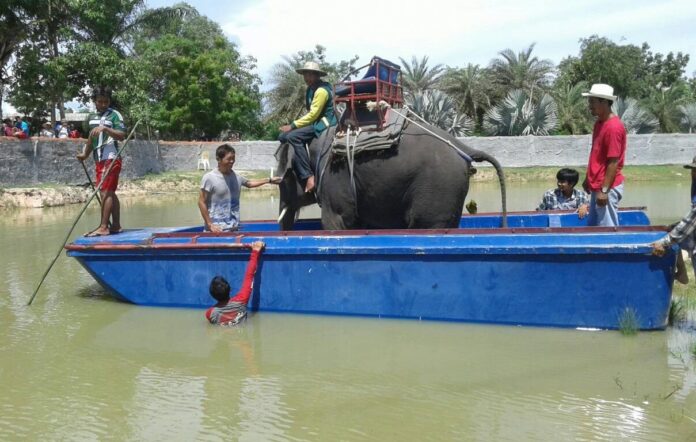
An elephant is used to load-test and demonstrate the nigh unsinkability of a raft Thursday used to float tourists in a pond of hungry crocodiles at Elephant Kingdom southeast of Bangkok in Chonburi province.

PATTAYA — A tycoon whose business involves pushing boatloads of tourists into a pond full of hungry crocodiles issued a hearty challenge Friday to those safety-obsessed naysayers on the internet.

If they come to his attraction and can make the raft sink within five minutes, he will hand over 5 million baht. If it doesn’t, they must publicize the fact online – and accept a free year’s membership to the attraction.

“They’re only good at writing, tapping on keyboards and criticizing me,” said Uthane Yangpraphakorn, owner of the Elephant Kingdom theme park near Pattaya. “That is not fair. They only use their fingers. I want them to come here and exercise their judgment for themselves!”

Chinese Tourists Tempt Fate For Crocodile-Baiting Fun

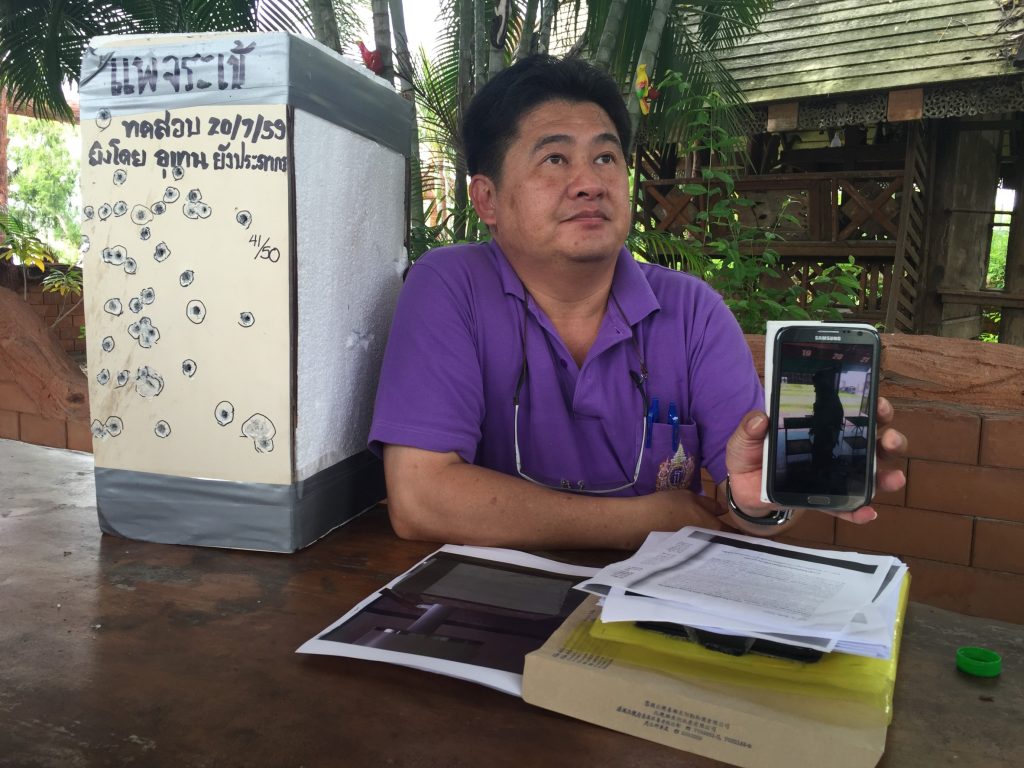
He issued his challenge after he personally demonstrated his raft’s robustness by unloading 40 rounds from a handgun into it, only half of which passed all the way through. He also loaded a small but heavy elephant onto the raft and had members of his staff beat it (the raft) with metal pipes to simulate a crocodile attack.

‘If you …  can sink my raft in five minutes, you get the money!’

Uthane said he made the dare to prove his crocodile-feeding adventure is safe, and authorities were wrong to order it shut down Sunday after videos of Chinese tourists hooting and hollering over frenzied croc feeding sessions went viral online.

According to Uthane, when officials from the Fishery Department inspected the site Thursday, he clearly demonstrated to them that his raft can carry 24 people, many more than its officially registered limit of 15 people.

Uthane’s family owns two other crocodile farms, including one in Samut Prakan where a trainer nearly died after being chomped in the head during a 2013 show.

Uthane Yangpraphakorn poses Thursday next to the bullet-riddled raft he fired 40 rounds into the day before to demonstrate just how impervious it is – only half went through it, he said.

He doesn’t expect internet critics to be convinced by his photos, so he wanted them to test it themselves.

“If you get together in a group of 17 people and can sink my raft in five minutes, you get the money!” Uthane said. “But if you cannot, you have to accept that it’s safe, and if you’re a real man, you should correct the news. That’s all I want. By the dignity of mankind, I ask you, if you prove that it’s safe, publish the results on your Instagram. That’s all I ask.”

Fight to Get License Back

Source: Apicha Phet Sawetwuttibarami / Facebook

Although the crocodile attraction at Elephant Kingdom had operated many years – 12, according to Uthane – the authorities only moved to suspend its operating license and review safety standards on Sunday after the images went viral.

Rewat Kongpradit, an official from the Fishery Department, said Thursday that he had instructed Uthane to submit detailed safety protocols, such as age restrictions, staff training, and the engineering specifications of the raft.

‘By the dignity of mankind, I ask you, if you prove that it’s safe, publish the results on your Instagram’

“All of these must be compiled, in order to be submitted to the director-general of the Fishery Department for consideration,” Rewat said.

Uthane said he would submit the documents by Monday, and he hopes it will be enough for the officials to restore his license.

The tycoon said he got the crocodiles from his father many years ago, so he came up with the idea of turning a profit from them. Uthane said all of the reptiles are properly licensed.

“So I had a pond full of elderly crocodiles, but I thought I could turn it into tourism, let the tourists feed them for us,” Uthane said. “We are a private company. We aren’t an NGO. We don’t get any donations. We have to do business!”

Advertisement

With a Stroke of His Pen, Prayuth Solves MRT’s ‘Missing Link’ Problem

A test train runs between the MRT Khlong Bang Phai and Talad Bang Yai stations on March 25 for the new Purple Line.
BANGKOK — What’s the shortest distance between two points? When it comes to two rail lines separated by a rail-less kilometer, it’s through the pen of junta chairman Prayuth Chan-ocha.

On Thursday, Prayuth exercised his absolute power to expedite the construction of a link between the Blue Line’s MRT Bang Sue and Purple Line’s new Tao Poon station, which for years has remained an intractable problem despite the imminent opening of the new line.

Neither passengers nor Prayuth were happy with the Mass Rapid Transit Authority announcement last month that people would have to ride a shuttle between the two stations until July 2017 – at the earliest. Therefore, he said that he was motivated to use his absolute power under Article 44 of the junta’s interim constitution to order the stations connected within four months.

At the heart of the order is the dissolution of the public-private partnership established to manage building the link as part of a further extension of the Blue Line. Prayuth’s order also indemnified any authorities from any legal responsibility.
Instead, the transit authority must negotiate revenue sharing and amend the contract to allow current Blue Line operator Bangkok Expressway and Metro PCL to also have a hand in the Blue Line extension.

That is intended to solve the problem of the kilometer-long missing link between Tao Poon and Bang Sue, a problem unresolved due to a battle over who would operate the link.

Regardless, when the Purple Line officially opens Aug. 6, passengers will have to get off the train and take the free shuttle, meaning their journey will still depend on traffic conditions.


Related stories:

New MRT Purple Line Will Connect to Blue Line, But Not Anytime Soon

Frustrated Mess When Thousands Queue for Free Purple Line Tickets (Photos)

Sign Up to Test Ride New MRT Purple Line

Trade in Those MRT Cards or Lose the Money

Imagine Bangkok 2016: Better city, less life?

Look Inside Thailand’s First Underwater Tunnel (Photos)

Advertisement

Bangkok’s Most Respectable Cat House Turns 4

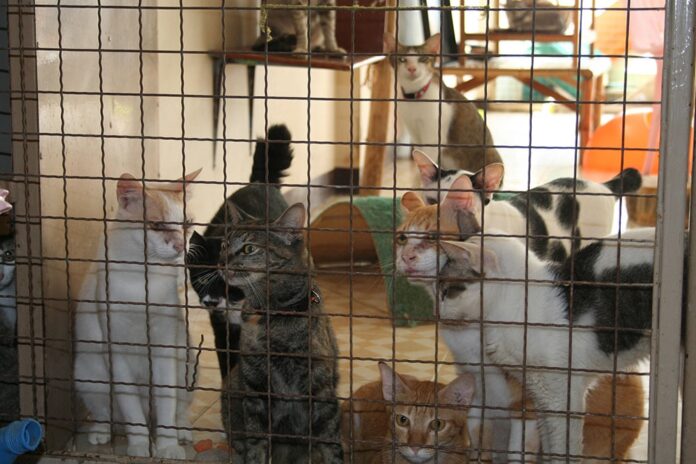
Cats ready for adoption peer out of one of the many full rooms at PAWS

BANGKOK — Inside an otherwise typical Bangkok shophouse are five floors of scurrying playful cats, many of whom have taken on surrogate parent roles to the even livelier kittens scampering under foot and paw.

Enter the home of PAWS to a meowing chorus of kitties roaming free or sticking their paws out of cages in an attempt to win attention.

In the middle of it all is Amy Baron, a computer programmer in one of her previous nine lives now dedicated to caring for these vulnerable animals. PAWS, founded as the Pet Animal Welfare Society, just celebrated its fourth anniversary last month.

Baron, 42, moved to Bangkok from her native California to pursue her dream of being a full-time animal volunteer, something financially unfeasible in the U.S.. After a former animal welfare group, Soi Cats and Dogs of Bangkok, shutdown in 2012, Amy took over its cat center to create PAWS.

PAWS’ mission? To humanely reduce the million-or-so number of soi cats in Bangkok.

Baron, who is given to occasional online rants about thoughtless people dumping unwanted or sick cats at her door, said though she faces many challenges, her work is far more rewarding than were she doing it back in the states.

Baron looks in on a room of adoptable cats at PAWS Bangkok

“One of the reasons I’ve stayed is that the challenge here is to stop the cats reproducing, not killing them, which is often the case in Western countries,” she said. “I wanted to work with cats without having to constantly put them down.”

Train kitty, a bipedal wonder and PAWS ambassador feline, perhaps best embodies her philosophy.

Literally run over by a train, Train Kitty’s injuries would normally lead to euthanasia. Instead he had both his left legs amputated and PAWS supported his rehabilitation. He now lives a happy and active life zipping around on two legs.

pawss 2
‘Callie’ a cat with two paralyzed hind legs poses for a photo

PAWS, located in the Phra Khanong district, provides minor operations such as desexing, tail amputations, community education and an adoption program.

Some people mistakenly think it’s a place to dump off unwanted or sick cats. That combined with what Baron said has been a slow time for adoptions means she’s packing a full cathouse.

Baron said PAWS has desexed about 3,400 cats in its attempt to reduce the soi cat population.

Having survived four years, PAWS is looking toward the future. Baron would like to bring in an in-house Thai vet and nurses. She hopes this might eventually attract international veterinary students to volunteer and learn from the Thai staff.

The reach of these ambitions are mostly limited by resources. Baron said PAWS runs on such a tight budget that she often has to supplement with her own money when donations don’t suffice.

Visits to PAWS are by appointment only.

Correction: A previous version of this story misidentified Baron’s home state. She is from California, not Oklahoma.


Advertisement

Brazil Nabs 10 IS Backers in Olympics Anti-Terror Swoop

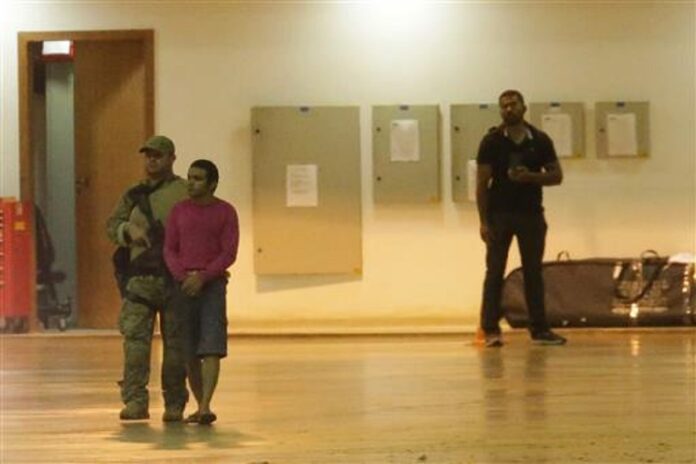
A federal police agent leads a handcuffed suspect who authorities say was arrested on terrorism-related charges in Brasilia, Brazil, Thursday, July 21, 2016. Photo: Associated Press

RIO DE JANEIRO — Ten Brazilians who pledged allegiance to the Islamic State militant group were arrested Thursday, authorities announced, describing them as “amateurs” who discussed on social media the possibility of staging attacks during next month’s Olympics.

Justice Minister Alexandre de Moraes said in the capital, Brasilia, that the 10 were being held on two terrorism-related charges and that two more people were being sought.

Authorities said any attack plan would have had little chance of coming to fruition, citing the group’s lack of resources and skills.

But officials and security experts argued that police were justified in being aggressive in light of “lone wolf” attacks staged in the U.S. and Europe by men with little or no training.

Moraes said police acted because the group discussed using weapons and guerrilla tactics to potentially launch an attack during the Olympics, which begin in Rio de Janeiro on Aug. 5. They will remain in police custody for at least 30 days.

“They were complete amateurs and ill-prepared” to actually launch an attack, Moraes said. “A few days ago they said they should start practicing martial arts, for example.”

He said that there were no specific targets for an attack, but that even disorganized groups have to be taken seriously.

The possibility of an attack is not so “far-fetched” even though Brazil has never been a target for terrorism, said Alex Kassirer, a counterterrorism analyst at Flashpoint, a New York-based intelligence group.

“The Olympics is a really unique opportunity to be able to target a concentration of all of the enemies in one area,” she said.

Kassirer pointed out the Islamic State group launched a channel in May on the messaging app Telegram to disseminate jihadi propaganda specifically in Portuguese. On Sunday, another channel vowed allegiance to IS, although its authenticity has not been determined, she said.

The arrests were made in 10 different states, including Sao Paulo and Parana in the southern part of the country, and it was not clear whether the suspects knew each other beyond their online contacts.

Moraes said authorities seized computers, cellphones and other equipment, but no weapons.

Authorities said the investigation that began in April showed the suspects had all been “baptized” as Islamic State sympathizers online but none had actually traveled to Syria or Iraq, the group’s stronghold, or received any training. Several were allegedly trying to secure financing from IS.

Investigators said none of the suspects was of Arab descent, but released no details on their religion. They were described as being between the ages of 20 and 40, except for one minor.

Newton de Oliveira, a professor and security specialist at Mackenzie Presbyterian University in Rio de Janeiro, applauded authorities for detecting the group, saying recent world events raised worries about terrorism during the sporting event.

But he cautioned it was hard to say how serious this threat was.

“It’s not clear whether we are talking about young people getting carried away or if they were going to move forward with actions,” Oliveira said.

The justice minister said one of the suspects communicated with a store in Paraguay via email in an alleged attempt to buy an AK-47 assault rifle, apparently the most concrete action taken toward a possible attack. The email communication was intercepted by police.

Brazilians are allowed to possess small firearms but must have a license and training to do so. Only members of the military may possess assault weapons like the AK-47, although those and other firearms are common in the country, especially in slums controlled by drug gangs.

Last week the top military aide for Brazil’s interim government said concerns over terrorism had “reached a higher level” after the truck attack that killed 84 people in Nice, France.

Officials did not raise the country’s terror alert level Thursday following the raids.

Security has emerged as the top concern during the Olympics, including violence possibly spilling over from Rio’s hundreds of slums. Authorities have said 85,000 police officers and soldiers will be patrolling during the competitions.

Story by: Mauricio Savarese, Adriana Gomez Licon

Advertisement

Hot News

LATEST NEWS

Bangkok
broken clouds
31.6 ° C
31.6 °
31.6 °
71 %
2.8kmh
83 %
Fri
36 °
Sat
36 °
Sun
37 °
Mon
37 °
Tue
36 °