
























33.3 C
Bangkok
Sunday, June 28, 2026
Home Blog Page 1838

Journalists Slam Pending Bangladesh Digital Security Law

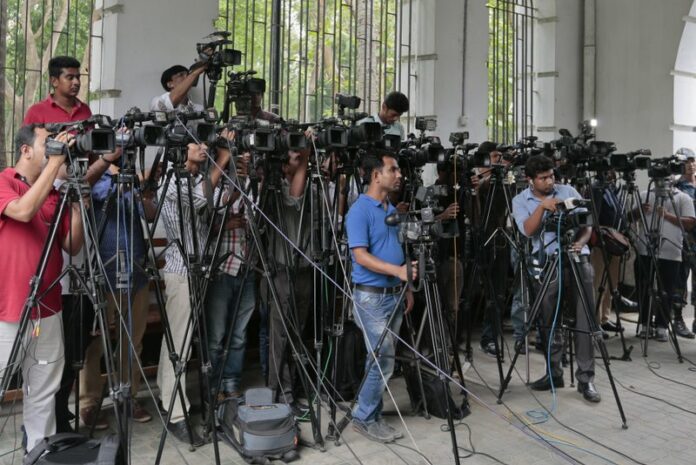
Photo: Associated Press

DHAKA — Journalists and human rights groups are demanding major amendments to a bill recently passed in Bangladesh’s Parliament, saying it will further choke constitutionally protected freedom of speech.

A powerful body of editors of leading newspapers and TV stations has officially protested the bill, called the Digital Security Act, and plans to form a human chain to protest Saturday in front of the national press club in Dhaka.

“We are moving toward a bad time. This law will hurt the media, democracy and freedom of expression,” said Khandakar Muniruzzaman, acting editor of the Bengali-language daily Sangbad and among those planning to participate in the protest Saturday.

Senior editors, journalist groups and human rights groups in and outside Bangladesh are echoing these concerns, demanding that lawmakers clarify sections of the bill they say could be wielded arbitrarily against government critics before the president signs it.

In Bangladesh, the president customarily signs anything passed by Parliament. He can send it back to Parliament, but if members think no changes are needed, it will go back to him for a signature. If the president does not sign it in six months, it automatically becomes law.

The bill would replace a previous information communication technology law, which was also criticized by journalists and human rights groups for its alleged use to crack down on dissent. Many editors and reporters have been sued for defamation under the law.

Observers say the bill is part of a broader campaign to silence critics in Bangladesh, and reflects a worrying trend in fledgling Asian democracies.

Journalists in Nepal are combating a similar law, part of an expansive rewriting of that country’s civil and criminal codes meant to define the parameters of Nepal’s new constitution.

Laws like the one recently passed in Nepal and the one pending in Bangladesh, where democracy was restored in 1990 after the military dictator was ousted, could make it more difficult for journalists to expose corruption.

Bangladesh’s Prime Minister Sheikh Hasina, who political opponents decry as an autocrat, defended the bill in Parliament last week, saying that it was meant to protect the country from propaganda.

“Journalism is surely not for increasing conflict, or for tarnishing the image of the country,” she said.

Bangladeshi journalists are taking particular umbrage with a section of the bill that authorizes up to 14 years in prison for gathering, sending or preserving classified information of any government using a computer or other digital device. The journalists say publishing such information is a way to hold officials accountable. The section evokes the sentiment of a British colonial-era law about protecting official secrets.

The bill would also authorize prison sentences of up to three years for publishing information that is “aggressive or frightening” and up to 10 years for posting information that “ruins communal harmony or creates instability or disorder or disturbs or is about to disturb the law and order situation.”

Government officials have listed incidents in recent years in which false social media posts about people disrespecting the Quran have incited violence.

Critics of the bill say existing criminal laws adequately address these concerns.

Fears of the broad reach of the bill extend beyond journalists.

Human Rights Watch said the law would be ripe for abuse, in part because it would empower police to search or arrest suspects without a court order.

“Bangladesh authorities have failed to address serious human rights violations, and when criticized, chosen to target the messenger,” spokeswoman Meenakshi Ganguly told The Associated Press.

“Bangladeshi journalists, already under pressure, will now worry about doing their job in exposing government failures,” she said.

Some critics say introducing such a law a few months before general elections, which are expected in December, could also target opposition activists and candidates.

Bangladesh’s main opposition Bangladesh Nationalist Party, or BNP, has said the bill is intended to silence its members. Party leader former Prime Minister Khaleda Zia, an archrival of Hasina, is currently in jail for corruption. Her supporters say her jailing is politically motivated, an allegation authorities have denied.

An election-time government is expected to be formed in mid-October that Hasina is supposed to head in line with the constitution, but the opposition says an election under Hasina could be rigged. The opposition wants a non-partisan caretaker government to oversee the elections.

The opposition says their activists are facing thousands of politically-motivated criminal charges, but police say they are following the law, without regard to suspects’ political affiliations.

Advertisement

That Time Thailand Tried Moving Angkor Wat to Bangkok

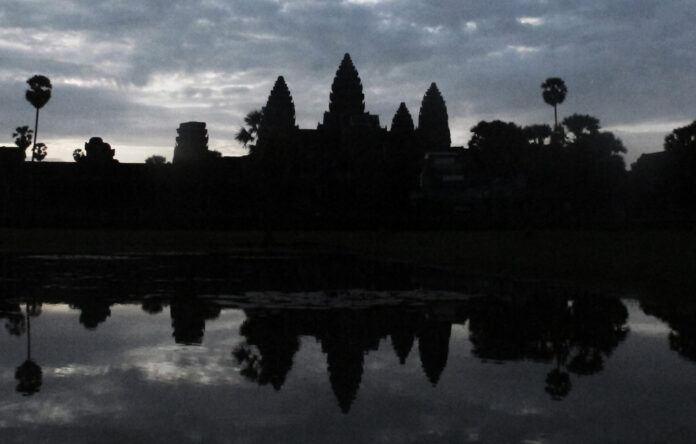
Image: vivanTY.c / Flickr

BANGKOK — Thailand is often accused by Cambodians of stealing their cultural heritage, from Khon to the Preah Vihear temple. But all these disputes pale in comparison to Thailand’s attempted theft of Angkor Wat.

Speaking at a Thursday panel, Khmer expert and historian Santi Pakdeekham recounted the bizarre and ambitious project that has been mostly forgotten today, which, had it succeeded, would have relocated parts of the nearly millennium-old temple – the world’s largest religious structure – next to where CentralWorld now stands in Bangkok.

The plot to steal Angkor Wat was hatched by King Rama IV in 1859, a year before French explorer Henri Mouhout’s journey to the massive temple that brought it to the world attention.

“His royal wish was to have the temple dismantled,” said Santi, who teaches at Sri Nakarinwiroj University.

In an order passed by the monarch, Siamese troops were to travel to Angkor and disassemble parts of the site so they can be rebuilt at Wat Pathum, which now sits between two major shopping mall complexes in Bangkok’s Siam area.

Another imitation Angkor Wat was also to be reassembled in Phetchaburi province, where the king had a palace built on a mountain.

Explaining the king’s motive, Santi said Khmer culture was deeply intertwined with Thailand’s monarchy, which recognizes itself as descended from the once-powerful Khmer Empire. In one instance, King Narai insisted to Portuguese emissaries that his dynasty could be traced back to the rulers of Angkor.

“[The monarchs] see themselves as coming from there and have since tried to return to conquer the land of their ancestors and claim suzerainty,” Santi said at Matichon Academy.

Incidentally, Santi noted, the province where Angkor is located is known as Siemreap, meaning “the defeat of Siam,” a result of Siamese king Chairachathirat’s failed campaign to re-conquer Angkor in the 16th century.

Sadly for King Rama IV – and luckily for Cambodia – his plan to dismantle Angkor Wat fell apart.

The expedition was ambushed by what was described in royal chronicle as “300 Khmer goons” on the way to Angkor which killed the group leader, Phra Suphanphisarn, and one of his sons, Santi said.

Upset by the failure, Rama IV tried to launch another expedition, only to be dissuaded by his advisors that the task was very difficult and those structures were meant to be there.

As a consolation and show of Thai power over Cambodia, a miniature Angkor Wat was built inside the Emerald Buddha Temple in Bangkok. Rama IV didn’t get to see it, however; he died a year before it was completed in in 1868.

Any claims Thailand had over Angkor ended when French forces invaded and seized Cambodia as its protectorate just before the turn of the 20th century.

Advertisement

Chiang Mai Zoo Celebrates Panda Mama’s Birthday

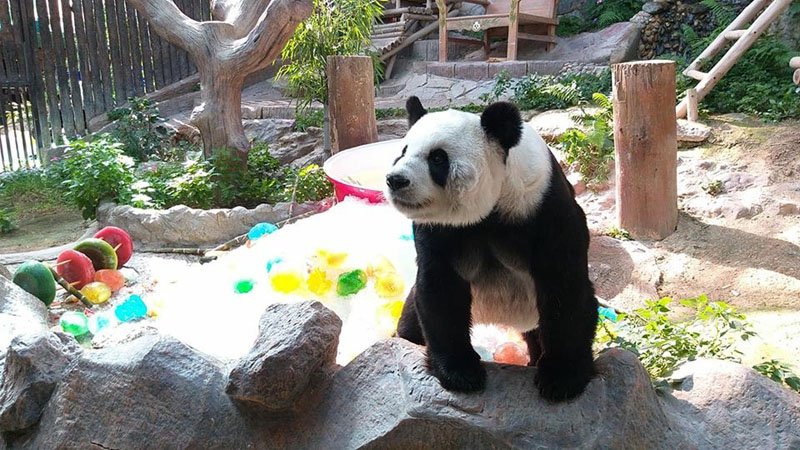
CHIANG MAI — Thai and Japanese fans turned out to sing Happy Birthday to panda Lin Hui, who celebrated turning 17 with a buffet of colorful shaved ice topped with bamboo, apples, carrots, grapes, watermelon, pumpkin and sweet potatoes.

Lin Hui celebrated birthday along with her caretakers and fans at the Chiang Mai Zoo, where its director announced they will attempt to get her pregnant during the next breeding season running January to May.

“She’s still strong, but in terms of human years she’s around 45,” said Wuttichai Muangman, Chiang Mai Zoo director. “Still, she has a chance of getting pregnant and giving birth to a new member of the family, to create happiness for Thais and boost Chiang Mai tourism.”

Akimi Tanaka travelled from Japan to give Lin Hui a fruit basket.

“I love everything to do with pandas. It’s hard to explain, but they are so cute and amazing. That’s why I travel all over the world, including to the panda family in Thailand,” Tanaka said.

91357

Lin Hui’s caretakers hid more snacks in a gift box decorated with a panda pattern and red bow that was hung over her exhibit in an effort to get her to sniff out the goodies inside.

Chuang Chuang, Lin Hui’s mate, got treats but not a wrapped present. He and Lin Hui went straight for snacking on the apples and carrots.

Lin Hui was gifted by China in 2003 as a diplomatic show of friendship. Born Sept. 28, 2001, at the Giant Panda Breeding Research Base in Chengdu to parents Pan Pan and Tang Tang, Lin Hui gave birth to Lin Ping on May 27, 2009, through artificial insemination. Lin Ping was sent to China in 2013 to find a mate.

Coverage of Lin Hui and Lin Ping’s pregnancies and health are occasional subjects of national fascination. In the late noughties, panda fever reached an all-time high, with a 24/7 cable channel tracking their every move and elephants painted to resemble them.

Lin Hui is multicultural. Her Thai name is Thewi and her regional Lanna name is Kam-oei.

Screen Shot 2018 09 28 at 12.27.36 PM FEF4E52E D179 452F B282 7D038CDB1A8D B567A71C 7FC0 4853 9629 4788E51A6F81 0824C0CF 8418 488D BACC AF03C9A64CA1 6A7C66B7 6926 4C41 B321 AC0F4590720A 2331615

Related stories:

Chiang Mai Zoo Celebrates Panda HBD

Chinese Report Success in Breeding Captive Giant Pandas

Heartthrob Panda ‘Nervous’ In Her Chinese New Home

Advertisement

Malaysia, Cambodia Offer 2 Asian Narratives of Change at UN

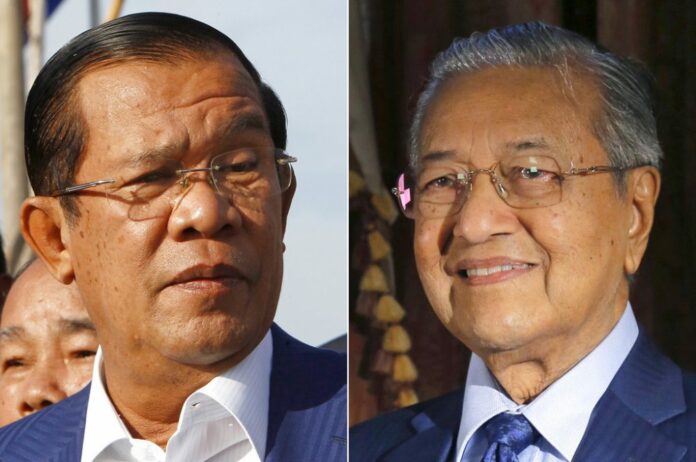
In this combination of two photos showing Cambodian Prime Minister Hun Sen, left, in Phnom Penh, Cambodia, on Aug. 1, 2018, and Malaysia's Prime Minister Mahathir Mohamad in Putrajaya, Malaysia, on Aug. 13, 2018. Photo: Associated Press

UNITED NATIONS — Two veteran Southeast Asian leaders appearing at the United Nations on Friday present a microcosm of a dynamic region enjoying rapid economic growth but struggling to fan away egregious human rights problems that follow it like a bad smell.

On the one hand is Malaysia’s Mahathir Mohamad, who at the grand old age of 93 has shed his authoritarian past, ousted a rival accused of massive corruption through democratic change, and re-entered the international stage with vigor.

On the other is Cambodia’s Hun Sen, who has ruled his nation with a combination of political guile and brute force for three decades, and comes to New York having won all the seats in an election after outlawing his main political opposition.

It was ever thus with the 10-member Association of Southeast Asian Nations, an unwieldy mix of democracies and autocracies where politics struggles to keep pace with social change.

It’s a grouping that carefully balances its relations between the United States and China but typically has few answers to international criticism over gross rights violations in its midst as it abstains from interfering in the affairs of its member states.

This year, ASEAN is shadowed by accusations of genocide perpetrated by the military in Myanmar against Rohingya Muslims. It’s a rare instance in which the Western world and majority-Islamic nations have been united in outrage.

That has spoiled what had been one of the region’s democratic transition success stories. Just two years ago, Myanmar’s Aung San Suu Kyi, a Nobel laureate and former political prisoner, received a hero’s welcome when, after a historic election victory, she became the first civilian leader of her nation in five decades to address the General Assembly. This year she is notably absent and has sent a government minister in her place.

But two other familiar Southeast Asian icons are here – and their respective journeys are a telling reflection of the competing forces in their region — the popular desire for more democratic accountability and the resistance of entrenched leaders to change in political structures that they have dominated for decades.

Mahathir is returning to the U.N. after a gap of 15 years. It’s the culmination of a comeback remarkable for more than just the Malaysian prime minister’s age.

Angered by a graft scandal at the state investment fund, Mahathir emerged from political retirement and joined the opposition he had persecuted during his first, 22-year stint as leader. In the process he toppled a former protégé and the party at whose helm Mahathir oversaw the rapid development of his young country in the 1980s and 1990s while concentrating power under his increasingly authoritarian rule.

Where once he was an archetype of “Asian values” — a paternalistic view of government that prioritized economic progress over individual rights — now he’s showcasing Malaysia as a mature democracy that upholds the primacy of the rule of law.

The still-sprightly Mahathir is promising to hand over the reins of power within two years to Anwar Ibrahim, who had challenged Mahathir’s rule two decades previously and was subsequently convicted and imprisoned for years on charges of sodomy that were widely regarded as politically motivated.

Contrast Malaysia’s political renaissance with Cambodia’s descent into autocracy under Hun Sen.

He’s been in power for half of his 66 years and extended his rule last month after his party’s walkover election win. The government-influenced courts had dissolved the only credible opposition party last year, and Hun Sen says he intends to stay in office for 10 more years.

On the eve of Hun Sen’s appearance before General Assembly, a U.N. special rapporteur told the world body’s Human Rights Council that the elections had consigned Cambodia’s democracy to history for the next five years. Hun Sen’s party won every single parliamentary seat prompting rapporteur Rhona Smith to conclude: “The country is therefore de facto a single party state.”

With the possible exception of the 1997 coup that Hun Sen launched against a co-premier that brought fighting to the streets of Phnom Penh, that marks a nadir in Cambodia’s politics since its democracy was established on the back of internationally-endorsed peace accords in 1991 and massive United Nations support.

Members of the outlawed opposition party are set to protest outside U.N. Headquarters when Hun Sen speaks Friday.

While the setbacks to human rights and democracy in Cambodia and Myanmar have drawn stiff criticism from the West, and from activists inside Southeast Asia itself, the wider trend lines suggest that authoritarianism is on the upswing in the region.

Democracy has been eroded in the Philippines by the strongman tendencies of its popularly elected leader Rodrigo Duterte; Thailand has been under military rule since 2014, and elections next year are unlikely to end the army’s sway over politics. The opposition in Singapore has never had a sniff of power, and Vietnam and Laos have been under one-party rule since 1975. Only in Malaysia and the region’s largest nation, Indonesia, does democracy appear entrenched or in the ascendant.

U.S. engagement with ASEAN, which was pushed hard by the Obama administration, has slipped under President Donald Trump. That’s less a result of the region’s democratic backsliding than Washington’s withdrawal from Trans-Pacific Partnership free trade deal and diminished diplomatic bandwidth, as the under-staffed State Department focuses on pressing concerns like North Korea and Iran.

But both U.S. and China still view ASEAN as strategically important. It lies at a crossroads of sea lanes crucial for global trade, and with its growing markets is a crucible of investment opportunities. Southeast Asia has generally prospered over the past five decades and it remains one of the fastest-growing regions of the world, with GDP rising on average by more than 5 percent.

That will likely continue. What remains uncertain is whether Southeast Asia’s politics keep pace with the trend toward openness and connectivity among its 600 million people, or whether it resists those changes.

That’s to say, will it follow the transformative example of Mahathir, or the defensive crouch of Hun Sen?

Story: Matthew Pennington

Advertisement

Arr! Anti-Junta Party Barred From Meeting Because Pirate

Sombat Boonngamanong and his team at Friday event.

BANGKOK — Officials on Friday kicked out a group of pro-democracy politicians and election hopefuls from an elections conference, citing their inappropriate outfits.

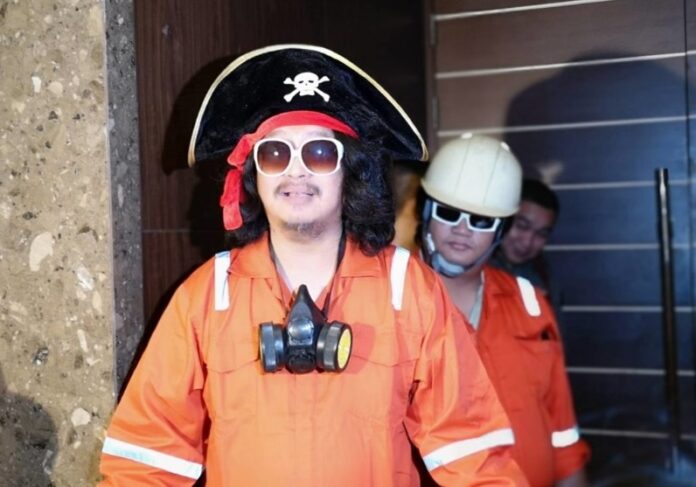
Sombat Boonngamanong and his team, who showed up wearing in pirate hats and repairman costumes, had to spend the rest of the meeting outside the ballroom where 84 registered parties and 59 political groups were briefed on voting process by the Election Commission. Sombat protested his expulsion.

“I wasn’t causing any unrest,” Sombat told reporters at Centara Convention Center in northern Bangkok. “If I’m impolite, how is it impolite? Can someone explain to me in practical way?”

Explaining his choice of costumes, Sombat said his team want to “repair” the country after four years of military rule. The commission said today’s event was suits or dress shirts.

He added, “From now on, when I meet the EC, I may dress up in a tuxedo.”

Known for eye-catching publicity stunts and flash mobs, Sombat is one of the activists opposed to military rule seeking to contest in the next election, now slated for February.

But while others, like the Commoners and Future Forward parties, were registered without any problem, election registrars refused to approve Sombat’s party name – the Grean Party, which roughly translates to Trolling Party – citing inappropriate language.

Sombat, who was arrested in June 2014 for organizing anti-junta resistance, said he has submitted a new name he hopes election officials will endorse.

At the conference, Pheu Thai Party sec-gen Phumtham Wechayachai told reporters he hopes the junta will lift its ban on campaigning soon.

Advertisement

Luang Cave Complex Re-Opens to Public

Rescue personnel on June 28 walk out of the entrance to a cave complex where it's believed that 12 soccer team members and their coach went missing. Photo: Sakchai Lalit / Associated Press

Update Nov. 15: The cave complex opens to the public starting November 15. An earlier version of the story stated that the complex would open to the public December 1.

CHIANG RAI —
The complex of the northern cave where an epic 17-day rescue enraptured the world will re-open to the public later this year.

The parks department announced Thursday that the Luang Khun Nam Nang Non Cave complex will officially re-open to tourists starting in Nov. 15.

The public can enter the complex from 8:30am through 5pm every day.

Visitors will be able to access the Khun Nam Nang Non Goddess Shrine and ascend to the Doi Pha Mhee viewpoint as well as visit an emerald-colored water pool located near the cave’s entrance.

The cave’s interior, where 12 boys and their football coach became trapped by flooding, will remain off limits as officials and expert teams take a year to an exploration mission, according to Chongklai Worapongsathorn, deputy director of the national parks department.

It is not known yet when the public will be allowed inside the cave.

Related stories:

Luang Cave to be Turned Into ‘Living Museum’

Advertisement

SEC Seeks to Oust Tesla CEO Elon Musk Over Go-Private Tweet

Tesla CEO and founder of the Boring Company Elon Musk speaks at a news conference in June in Chicago. Photo: Kiichiro Sato / Associated Press

DETROIT — U.S. securities regulators are asking a federal court to oust Tesla Inc.’s Elon Musk as chairman and CEO, alleging in a complaint that he committed securities fraud with false statements about plans to take the company private.

The Securities and Exchange Commission says in the complaint filed Thursday that Musk falsely claimed in an Aug. 7 statement on Twitter that funding was secured to go private at $420 per share, a substantial premium over the price at the time.

The complaint filed in U.S. District Court in Manhattan says that Musk had not discussed or confirmed key deal terms including price with any funding source. It also asks for an order enjoining Musk from making false and misleading statements along with repayment of any gains as well as civil penalties.

“Corporate officers hold positions of trust in our markets and have important responsibilities to shareholders,” Steven Peikin, co-director of the SEC’s Enforcement Division, said in a statement. “An officer’s celebrity status or reputation as a technological innovator does not give license to take those responsibilities lightly.”

An SEC press release says the agency asked the court for a “bar prohibiting Musk from serving as an officer or director of a public company.”

Musk, in a statement issued by Tesla, called the SEC action unjustified. “I have always taken action in the best interests of truth, transparency and investors. Integrity is the most important value in my life and the facts will show I never compromised this in any way,” the statement said.

The complaint alleges that Musk’s tweet harmed investors who bought Tesla stock after the tweet but before accurate information about the funding was made public.

Ousting Musk, who has a huge celebrity status with more than 22 million Twitter followers, would be difficult and could damage the company. He’s viewed by many shareholders as the leader and brains behind Tesla’s electric car and solar panel operations.

Peter Henning, a law professor at Wayne State University and a former SEC lawyer, said it’s the first fraud case involving use of social media by the CEO of a public company. Musk and Tesla didn’t fully disclose details of the plan in the Aug. 7 tweet or in later communications that day as required, he said.

“You can’t make full disclosure in 280 characters,” he said, referring to the length limit of a tweet.

Musk, he said, is among the highest-profile CEOs in recent memory that the commission has gone after with this stiff of a penalty threat.

Joseph Grundfest, a professor at Stanford Law School and former SEC commissioner, said Musk will likely want to settle before trial so that he could conceivably stay on as CEO, with some constraints such as prohibiting him from making public statements without supervision. But Musk also could agree to step down as CEO and instead take another title, such as chief production officer.

The Wall Street Journal, citing people familiar with the matter, reported that Musk had been close to settling with the SEC but that he and his lawyers decided at the last minute to fight the case. Tesla did not immediately respond to a request for comment on the report.

“One possibility could be to appoint someone as a monitor over all of his communications. He wouldn’t be able to tweet or post anything directly without the approval of a chaperone,” Grundfest said. “He is not going to be able to remain as CEO with no conditions. That is not on the table.”

Grundfest also said that the challenge for the SEC is to “appropriately discipline Musk while not harming Telsa’s shareholders.”

According to the complaint, Musk met with representatives of a sovereign investment fund for 30 to 45 minutes on July 31 at Tesla’s Fremont, California, factory. Tesla has identified the fund as Saudi Arabia’s Public Investment Fund, which owns almost 5 percent of the company.

Fund representatives expressed interest in taking Tesla private and asked about building a factory in the Middle East, Musk told the SEC. But at the meeting, there was no discussion of a dollar amount or ownership stake for the fund, nor was there discussion of a premium to be paid to Tesla shareholders, the complaint said. Musk told the SEC that the lead representative of the fund told him he would be fine with reasonable terms for a go-private deal.

“Musk acknowledged that no specific deal terms had been established at the meeting and there was no discussion of what would or would not be considered reasonable. Nothing was exchanged in writing,” the complaint stated.

The SEC alleged in the 23-page complaint that Musk made the statements using his mobile phone in the middle of a trading day. That day, Tesla shares closed up 11 percent from the previous day. Musk has said that he posted the go-private tweet while driving to the airport and that no one reviewed it.

The statements, the complaint said “were premised on a long series of baseless assumptions and were contrary to facts that Musk knew.” Later in the month, Tesla announced that the go-private plan had been scrapped.

Shares of Tesla plunged nearly 12 percent to $270.90 in after-hours trading after falling just under 1 percent during regular trading hours Thursday.

In its complaint, the SEC said that Musk’s statements hurt short sellers, investors who borrow a company’s stock betting that it will fall. Then they buy the shares back at a lower price and return them to the lenders, pocketing the profit.

In August, more than $13 billion worth of Tesla shares were being “shorted” by investors, the complaint said, as the stock was under pressure due to questions about Tesla’s finances and Musk’s erratic behavior.

Mark Spiegel, a short-seller and constant Musk critic, applauded the SEC for pursuing what he predicted would be easy for the government to prove.

“Musk has a long history of easily proven lies,” Spiegel said. “This is just the first one that he is being held accountable for.”

Spiegel also echoed the concerns of corporate governance experts who have lambasted Tesla’s board for being too beholden to a CEO that they are supposed to oversee.

“They should have fired him a long time ago. Will they now? I don’t know,” Spiegel said.

There was no indication of that in a joint statement issued late Thursday by Tesla and its board.

“Tesla and the board of directors are fully confident in Elon, his integrity, and his leadership of the company,” the statement said.

Musk also failed to notify the Nasdaq stock exchange, on which Tesla shares are traded, before releasing the go-private tweet. Nasdaq rules require notification of plans to release “material information” at least 10 minutes before the release, according to the SEC complaint. The tweet forced Nasdaq to suspend trading of Tesla shares oon Aug. 7 for about 90 minutes.

Story: Tom Krisher and Alexandra Olson

Advertisement

Believe it or Not, Mangmoom Cards Coming to Buses: Official

BANGKOK — Although they’ve yet to materialize as promised, Mangmoom cards will definitely work on buses after yet another delay of five months, a Bangkok transport official said Friday.

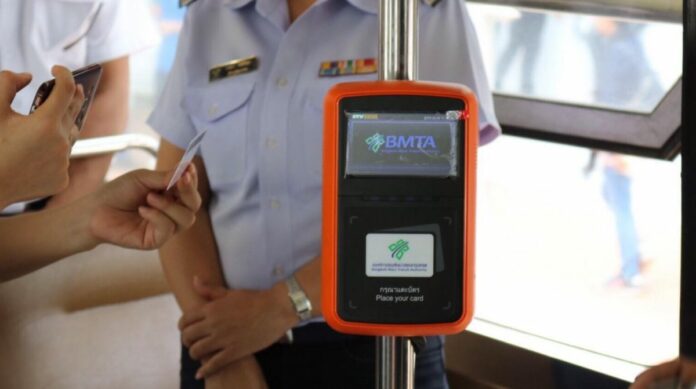
The wait for what’s hoped to be a universal public transport card is dragging on once again due to compatibility issues that Prayoon Choygeo of the Bangkok Mass Transit Authority said could be solved by March. The cards were first announced eight years ago.

He said software for E-ticket machines, now installed on 800 buses, must be upgraded to support the card, the specifications of which the department has requested from the Mass Rapid Transit Authority for testing.

Mangmoom cards were launched on the MRT Blue and Purple lines in June, with promises they would also work on Airport Rail Link and buses by October, according to Transport Minister Arkhom Termpittayapaisith. It has since been continually postponed.

Two weeks ago, the airport train’s chief Suthep Panpeng said its card readers’ software also needs an upgrade. He expects Mangmoom to work on the Airport Rail Link by the end of this year.

The BTS in August teased the possibility of accepting the cards but said negotiations would take time.

Getting all the new machines to be compatible with both Mangmoom and government-issued welfare cards has been problematic.

According to Prayoon, 300 buses with the E-tickets machines now support the welfare cards while the other 500 will be ready by Oct. 15. He added that 1,800 more buses will be equipped with the machines and ready to go by November.

Related stories:

Mangmoom Cards Creep Forward, Minus a Few Legs

Advertisement

Cop Behind Foreigner Crackdown Gets Top Immigration Job

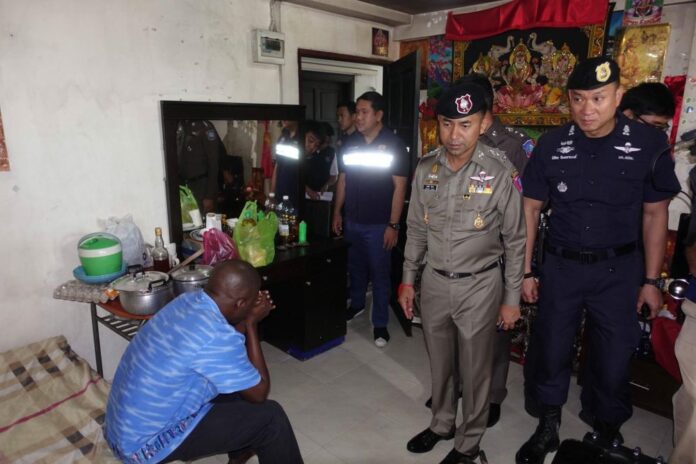
Maj. Gen. Surachet Hakpan, second from right, inspects a room during the 13th "Black Eagle" raid in Bangkok on Nov. 21, 2017.

BANGKOK — Over at Thailand’s Immigration Bureau, the word is out: Bad guys out, Big Joke in.

A police commander whose favorite pastime involves rounding up foreigners on expired visas was appointed Thursday to lead the bureau, which processes more than 35 million people through Thailand’s borders and ports of entry annually.

Maj. Gen. Surachet “Big Joke” Hakpan, will replace Sutthipong Wongpin in the annual reshuffle announced by the police force, which will also see more than 200 others moved into new posts. His predecessor, Sutthipong, will head the metro police.

The appointments are effective Monday.

Despite his relatively junior rank as deputy tourism police commander, Surachet was one of the most visible faces of the police, having taken charge of many high-profile cases such as a crackdown on transnational boiler room scams and prosecution of netizens accused of insulting junta chairman Prayuth Chan-ocha online.

But he’s perhaps most well known for the numerous “Black Eagle” raids – later renamed to the less racially charged “Operation X-Ray Outlaw Foreigners” – which targets foreigners working or living without proper visa documents.

Surachet, 45, could not be reached for comment Friday.

The police major general also stirred controversy recently when he rejected an allegation from a British tourist that she was raped on Koh Tao. Surachet suggested to the media she made up the story to file a fraudulent insurance claim.

Advertisement

Tragic Bangkok House Fire Kills 2 Girls, Father

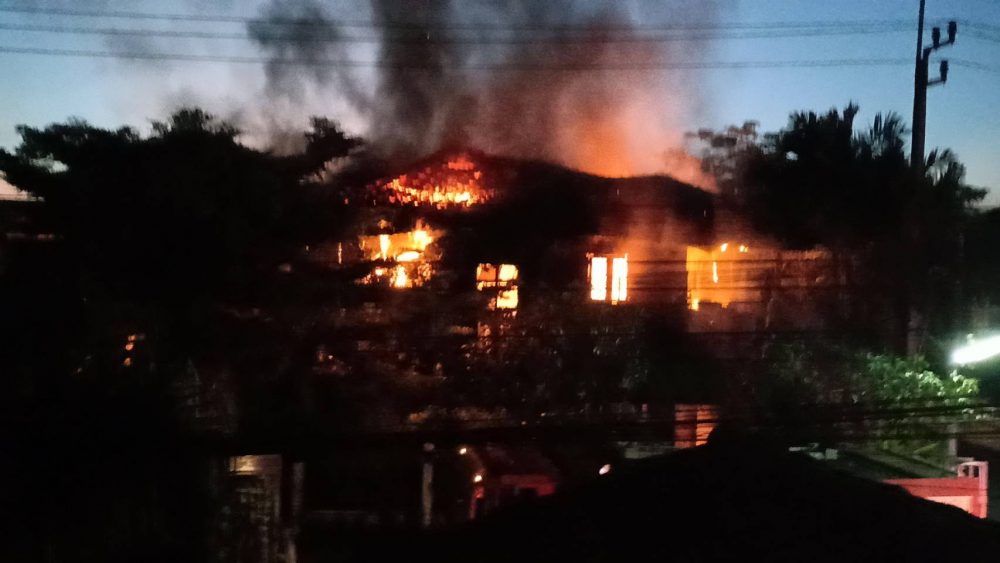
BANGKOK — The father of two teenage girls killed in a house fire in eastern Bangkok succumbed to his injuries and died this morning.

The three, part of a four-member family living in the capital district of Nong Chok, died after the fire broke out at about 5:30am on Thursday.

It took firemen roughly 30 minutes to put out the blaze, after which the bodies of teenage sisters Tharawee Phokanit and and Nitharawee Phokanit, 16 and 13 respectively, were found on the second floor. Their father, Chatchai Phokanit, and mother, Kanyawee Sujipong, suffered burns and were taken to a hospital.

Chatchai died this morning at the hospital.

Police haven’t determined the cause of the fire; however, they suspect a short circuit on the first floor might have sparked it before flames ascended to the second floor.

415208 e1538106794724

Advertisement

Hot News

LATEST NEWS

Bangkok
overcast clouds
33.3 ° C
36.6 °
33.3 °
65 %
4.5kmh
100 %
Sun
33 °
Mon
33 °
Tue
34 °
Wed
30 °
Thu
29 °