




















27.5 C
Bangkok
Wednesday, September 16, 2026
Home Blog Page 1961

Junta Defends BNK48 Frontwoman’s Appearance on Gov’t Show

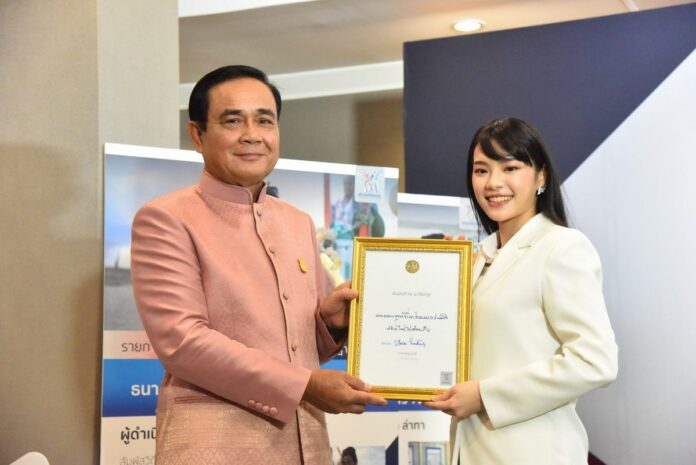
Gen. Prayuth Chan-ocha hands Cherprang Areekul a certificate on Sept. 4 for appearing on a government show.

BANGKOK — A new gig on behalf of the military regime has drawn accusations that a girl group and pop-culture juggernaut is in bed with tyranny.

Growing rancor over a BNK48 member hosting one of the military government’s TV shows prompted the junta leader and his No. 2 to speak out in defense of its lead performer, who has become an object of scorn to some opposed to military rule.

“Bad people” were the words Gen. Prayuth Chan-ocha used Tuesday to describe critics of BNK48 frontwoman Cherprang Areekul.

“I feel so sorry for her. How is it bad that she’s helping the nation? … Don’t give up against bad people, people without virtue and morals, ” Prayuth said. “Sometimes, I talk and people don’t listen. They’re bored of my face, or I speak too harshly. So I’m getting girls to talk instead.”

Last week it was announced that Cherprang would host an episode of government show “Walk Forward Together Thailand,” or “Dern Naa Prathet Thai,” a vehicle promoting its policies and personalities.

A number of pro-democracy responded online by criticizing her for “collaborating” with those who’ve been in power since leading the 2014 coup.

Pro-democracy activist Rangsiman Rome Friday disparaged Cherprang for what he said was conscious collaboration.

“It is not too much to hope that Cherprang does not associate with dictatorship,” Rangsiman wrote. “Cherprang knows for sure that what she is doing is boosting the dictatorship’s image.”

Her episode promoting government education policy will air Saturday. The episode joins other complaints about all the promotional messaging being done by the government at a time when civilian politicians face jail time for campaigning or even meeting.

Deputy junta leader and defense minister, Gen. Prawit Wongsuwan, Monday called out Rangsiman, despite saying he did not have time to listen to BNK48’s music because he is too busy answering reporters’ questions.

“How can he limit her rights? She can do what she wants, it’s her right.” Prawit said Monday, smiling. “Rome can limit others’ rights?”

While Cherprang has drawn fire from the pro-democracy camp for appearing on government TV, other A-list celebs have faced less ire for doing the same, incliuding Nittha “Mew” Jirayungyurn and Nadech Kugimiya. Nadech’s appearance last month, in which discussed the dangers of loan sharks in the Isaan dialect, was watched by 5.5 million viewers, while Mew’s discussion of tourism drew 6 million two weeks later.

“Not only do Thai stars not have a political stance, never acting as a voice for the citizens, … stars like Film Thanaphad, Mew Nittha, Bee Namthip and especially Cherprang BNK are cozying up to the dictators, saying that they’re ‘so honored,’ how much they want to improve the nation and how happy they are,” wrote Karn Pongpraphapan, an activist peer of Rangsiman’s who spares no spice in his social media roasts. “Dicks! Dumbasses!”

Exiled academic and government critic Pavin Chachavalpongpun even weighed in.

“I see people saying Cherprang is getting bullied online…but collaborating with dictators is bullying citizens,” he said.

Naturally, this drew some clapbacks.

“Some people are so educated but are worthless, unable to differentiate anything, using their professor position to bark in front of their screens,” Thai Post’s Plew Seengeun wrote in a column. “All 29 members of BNK48 have such pure hearts. You feces-hearted professor, if you don’t support them, just leave them alone!”

Of course, not everyone agreed that appearing on a government show is tantamount to treason against democratic principles. Especially, as some have pointed out, when someone is a young star who may have little option to say no without damaging their career.

Sarinee Achavanuntakul, an independent writer and journalist who won praise for declining to do work for the junta, said her situation couldn’t be compared to that of Cherprang.

“All members of BNK48 have contracts with their company and cannot choose what jobs they take on. None of their jobs they accept or refuse are personal choices,” she wrote. “Hiring idols to act as a loudspeaker for the government is nothing new.”
Advertisement

Cops Stumped by Bangkok Underpass Drowning

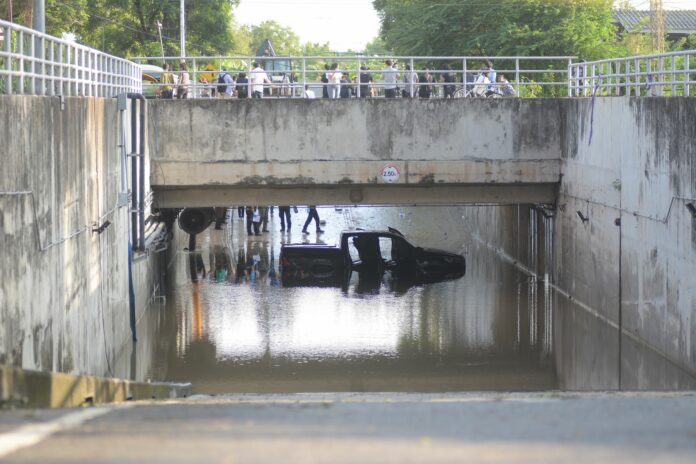
A pickup truck is submerged Sep. 6 in a Bangkok underpass where its driver drowned the night before.

BANGKOK — Police vowed justice for a woman who drowned in a Bangkok underpass last week despite not being sure what caused it – or who to hold accountable.

Broken pumps, cracked pipes, hidden springs, construction standards and more have all been considered as investigators seek to explain the death of 41-year-old Phanumas Sae-tae last week in Bangkok’s Prawet district after she got stuck attempting to drive through.

After meeting Tuesday, officials said that despite weighing a variety of possible causes, including damage to the underpass and an underground spring discovered nearby, they’ve yet to determine what triggered the flash flood.

Deputy Gov. Chakkapan Phiewngam said Monday that construction of the underpass was funded by Golden Nakara, a housing development on land owned by the state railway. The underpass sits just inside the gated community, and residents use it to pass under tracks to reach their homes.

He said that although City Hall is not responsible for the privately built underpass, he ordered all district chiefs to inspect the safety standards of those in their areas as a precaution.

It was around midnight when Phanumas drove her pickup truck into the underpass. Police assume she was confident her vehicle could ford the meter-deep water, but its engine cut out just as the water level shot up, submerging the truck and drowning her.

A friend she placed an emergency call to that night told police Phanumas could not swim.

The underpass, said to be built 12 years ago, is about 100 meters long and four meters deep.

Prawet district chief Thanasit Metpanmuang said an underground spring was found near the underpass, which was still flooded Monday afternoon despite continuous pumping. The roadway will remain shut until the authorities determine the cause and fix it.

Blueprints provided by Italian-Thai Development, a major national construction firm, were being studied today. The investigation is set to resume tomorrow once the water has been drained.

Deputy Bangkok police chief Maj. Gen. Sompong Chingduang vowed to prosecute whoever was responsible for a tragedy that “shouldn’t have happened.” He said the responsible party could be charged with fatal negligence.

According to Sompong, preliminary investigation suggests a drainage pipe connecting the underpass to the sewage system cracked and failed. Changes in its pressure might have caused murky water meant for release in a nearby canal to reverse back into the underpass.

He said further investigation is needed to see if the fractures were due to faulty construction or other factors, such as the trains which run over it. Suspicions have also fallen on nearby construction of the Airport Rail Link line.

Originally thought to be caused by storms that night, the flooding was not due to rainfall. Thanasit said only 16.4 millimeters fell Wednesday. He also said the housing complex’s water pump was broken and had to be turned off, but it was unclear if that contributed to flooding.

Phanumas’ death under circumstances familiar to many has prompted discussion about what to do if one becomes trapped in a similar fashion.

The underpass where Phanumas drowned can be seen just through a gate leading into the Golden Nakara housing development.

Advertisement

Muslim Political Bloc’s New Party Open to Backing Prayuth

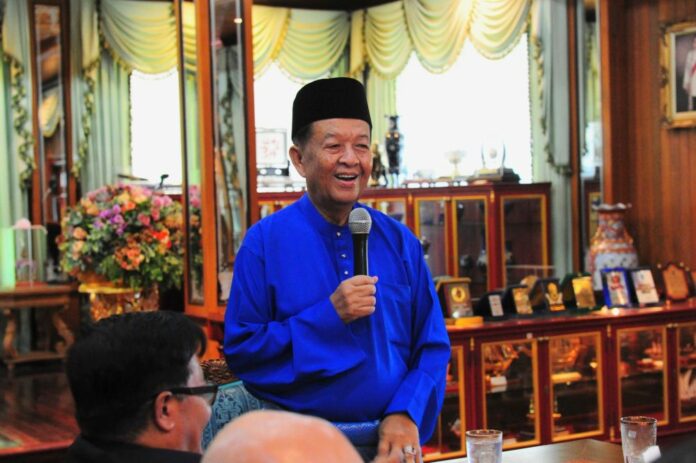
Photo: Wan Muhamad Nor Matha / Facebook

BANGKOK — A new party led by a Muslim politician said it is open to supporting the return of junta leader Gen. Prayuth Chan-ocha after elections slated for next year.

The Prachachart Party, led by a 74-year-old founder of a southern bloc of Muslim politicians, broke from the Pheu Thai Party earlier this year and hinted they may launch a party. Today they followed through by announcing they will register it with the Election Commission on Wednesday.

Spokesman Najmuddin Umar said the party, which held a meeting Sept. 1, seeks solutions to the separatist unrest that has plagued the Deep South for going on 15 years. It plans to field candidates all across the country.

Read: Cracks Appear in Post-Yingluck Pheu Thai Party

Najmudin, a former Pheu Thai MP for Narathiwat province, said the new party would push for a peaceful way to resolve conflicts in the deep south. “We will adhere to non-violence and talk to those with differing views.”

The party draws from the ranks of Wadah, a coalition of southern Muslim pols who’ve traded allegiances many times over during its long history. For the past decade, it was firmly Pheu Thai.

Najmudi said that if Prayuth’s returns as PM by respecting the rules of the junta-designed constitution, the party may support his candidacy.

“If, in the future, he competes under a democratic system, then we have no problem with him,” Najmudin said.

The party spokesman added that the Prachachart Party doesn’t perceive anyone enemies. He said the party wants to field candidates in 175 constituencies nationwide and hopes to gain 1.5 party list seats and 20 MPs that would enable it to propose legislation.

Wan Muhamad, or Wan Nor, was a minister of agriculture and cooperatives during the Thaksin Shinawatra administration and served as his deputy prime minister in 2004. He was also speaker of the House of Representatives and president of the National Assembly between 1996 and 2000. He’s seen as a religious moderate sincere about cultivating a greater role for Muslims in society.

The party will launch with seven former MPs from the Deep South.

Pro-democracy activist Sirawith Serithiwat, aka Ja New, attended the Sept. 1 meeting as an interested observer. He said that although it aims to represent the whole nation, its focus appears to be on its stronghold in the south.

“It’s a challenge for the party to prove that it’s a party for everyone, and multicultural,” Sirawith said.

Najmudin said nearly half of the party’s 36-member executive board are not Muslim, however, including well-known newspaper columnist Nitipoom Navaratna, who serves as deputy leader.

Advertisement

Act Now! Up to 16 Bangkok Monuments Unclaimed

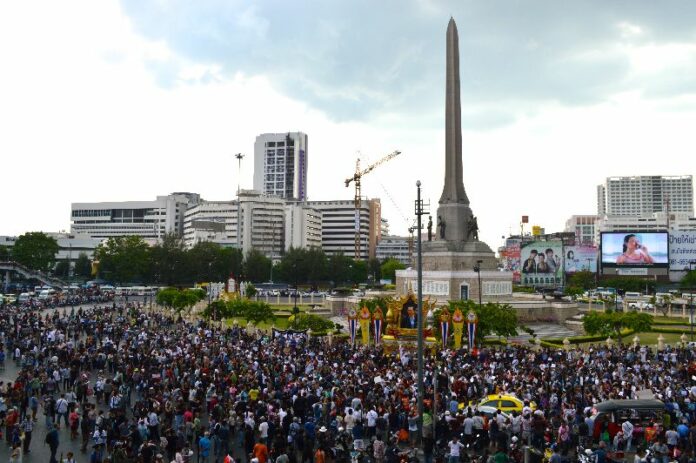
Anti-Coup Protest in Victory Monument, 25 May 2014.

BANGKOK — Not one, but up to 16 memorials and monuments in Bangkok stand in legal limbo over which agency is responsible for them, a city official said Tuesday.

The stunning revelation came a day after the government called upon metropolitan authorities to settle the ownership question of Victory Monument.

But not all hope is lost. Ending weeks of debate, city planning department chief Sakchai Boonma said his agency will step in and take responsibility for the 16 unclaimed monuments, hand in hand with the fine arts department, which manages Thailand’s historic sites.

“City Planning Department will be the chief agency responsible for maintenance,” Sakchai said. “But if you want to do something that affects the structure of the monuments, you will have to seek permission from the Fine Arts Department.”

The unlikely debate over who owns one of Bangkok’s most iconic landmarks began several months ago when a district chief proposed building a museum and pedestrians tunnels beneath the Victory Monument but didn’t know which agency oversees the memorial.

Adding to the confusion, the Treasury Department said Monday that not only is the ownership of Victory Monument in question, but that of a total of 16 monuments across Bangkok have no settled agency to oversee them. They include Democracy Monument on Ratchadamnoen Avenue and King Taksin Statue on Bangkok’s western side.

The confusion comes because many monuments were built on areas carved from public roads – which fall under the Highways Department – creating a legal limbo that remains unsettled.

In today’s interview, city planning department chief Sakchai acknowledged the legal debate over the 16 monuments, but said his office plans to take care of them all.

“It probably falls to our agency,” Sakchai said.

He added that City Hall will soon call a meeting with all relevant departments to inform them of his agency’s decision. After that, a report will be made to the government that the question has been settled.

Advertisement

Meet the Unlikely Band Taking on University Tradition

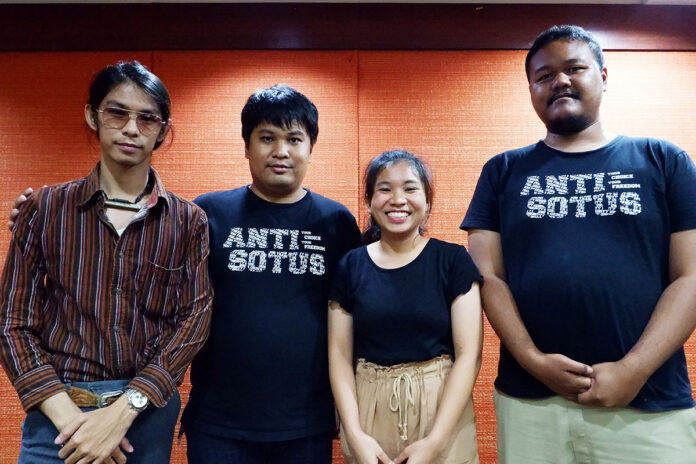
From left, Anti Sotus admins Pitawat ‘Man’ Chawsithan, Keerati ‘A’ Panmanee, Peerada ‘Gib’ Nuruk, and Kollawach ‘F’ Doklumjiak.

Top: From left, Anti Sotus admins Pitawat ‘Man’ Chawsithan, Keerati ‘A’ Panmanee, Peerada ‘Gib’ Nuruk, and Kollawach ‘F’ Doklumjiak.

BANGKOK — Keerati was forced to cut cards out of paper and rehearse a cheer performance – for five hours a day, five days a week, including some weekends. This continued for three months, all for the pleasure of his upperclassmen.

The mindless tasks that dragged on and consumed his life took a toll on him and his classmates subjected to the same debasement. Some cried constantly and grew depressed. Others didn’t have time to study and suffered academically. Their seniors would give the freshmen additional work if their friends didn’t show up to help, and they started turning on each other.

“We wasted so much time,” Keerati said of the project, which was to prepare for an annual performance in a school stadium. “We didn’t create anything productive, and we developed no skills. If you didn’t join in, everyone called you selfish.”

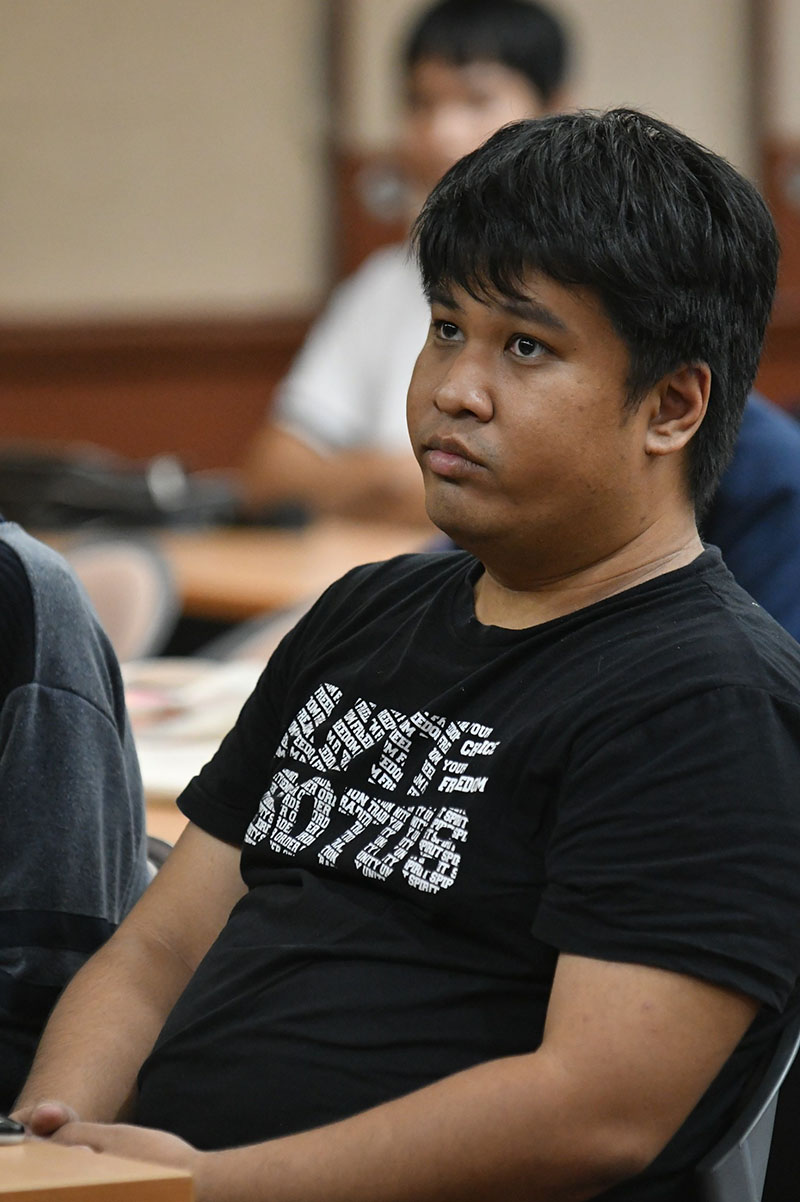
Today, Keerati “A” Panmanee is the elected head of a group opposed to this and other forms of abusive behavior that fall under the umbrella of university hazing, through Facebook, where they call attention to degrading and sometimes harmful incidents on the Anti Sotus page, they advocate against its oft-cited creed of SOTUS, or Seniority, Order, Tradition, Unity and Spirit.

The freshmen welcoming activities, held for months as the school year opens, supposedly foster a camaraderie between an entire year of students, the kind not usually seen at foreign universities outside of fraternities and sororities. Like those “Greek” organizations, they are also networking opportunities to forge strong ties that can pay off with helpful connections after graduation.

Seriously degrading or abusive activities such as forcing students to touch each other’s genitals or be burned by candles end up making news, but many SOTUS activities involve little more than forced singing and communal crafting. But even the relatively benign activities involve humiliation and verbal abuse.

I’m proud when I can convince someone who doesn’t understand, who was messaging me to flame me, to see what they are doing is infringing on others’ rights

Keerati is one of the founders of the seven-year-old anti-SOTUS group. Articulate and handy in English, the 28-year old stands out as the jovial figure among the dozen or so volunteer activists, most of whom are students or recent graduates.

They say that the kind of physical assaults once common in SOTUS-related rites have declined as awareness increases.

“We don’t want to claim 100 percent credit, but in the almost seven years we’ve been operating, a lot of SOTUS has disappeared,” Keerati said in an interview before a Sunday discussion panel they hosted at Thammasat University. Unlike many anonymous online advocacy pages, the Anti Sotus crew like to get out and show their faces. “The physically violent kind, like the spleen-bursting, has no more public space. If they do it, they have to hide it.”

Read: Students to Be Prosecuted for Bursting Spleen of Underclassman

The legal brains of the team is law student Pitawat “Man” Chawsithan, 22, who attended Ramkhamhaeng University and St. Theresa International College. He knows the ins-and-outs of what constitutes a crime and monitors ongoing legal cases.

โซตัส 180910 0010
Keerati Panmanee.

“A lot of the times, universities try to cover up the abuse or convince the victim not to press charges as if the students are children, even though their attackers are already too old to be called that,” he said. “Sometimes they look for a legal loophole where they say they got consent to assault the freshman. But that can’t be used, because assault is wrong anyway.”

Man would look at home on a campus from the 1970s, with long hair, leather belts and dark glasses. On Sunday, he was especially animated in discussing three third-year students facing prosecution for beating a Rajamangala University of Technology Krungthep freshman until his spleen burst.

“They filed a criminal case and everything. For me, this is the first serious criminal prosecution of SOTUS, and a first great step,” Man said, saying the three men had posted bail while awaiting trial.

‘Gray Area’

Although the physical abuse may still happen out of sight, Keerati insists that verbal and emotional abuse still defines SOTUS and remains rampant.

“We’re talking about coercive pressuring of students, like forcing them to participate in activities they don’t want to, paying a fee to fund said activities and outright lying to them that it’s mandatory,” Keerati said. “Some people think this is a ‘gray area’ and not that wrong. But it is, and it’s being challenged.”

SOTUS defenders say the activities foster a sense of teamwork and membership, with freshmen cooperating to complete projects or show respect to their seniors by singing songs, dancing, participating in team games and so on.

Defense minister Prawit Wongsuwan infamously said in November after the death of a military cadet that he, too, endured physical punishment while he was in the academy.

“But I didn’t die,” Prawit said.

Keerati said that the benefits are overblown, sentimental and outweigh the costs.

“Their visions are built on romantic dreams. They want to see everyone crying and being friends while contributing to some national event, but you can’t force that,” he said. “Even more, they want freshmen to obey without critical thought, and to wai someone one year older like you wai your grandmother.”

Read: Parties Stake Out Positions on ‘SOTUS’ Hazing

And SOTUS activities that involve prostrating on the ground en masse, he added, are insensitive to those with different beliefs.

“Thai people don’t understand that people of different religions can’t wai and graab [prostrate] to everything,” he said. “It’s these kinds of mass activities that are designed without diversity in mind.”

Keerati says minds can be changed. He recalled convincing a SOTUS advocate that what they were doing was abusive after three days dialog over Facebook chat.

“I’m proud when I can convince someone who doesn’t understand, who was messaging me to flame me, to see what they are doing is infringing on others’ rights,” Keerati said.

โซตัส 180910 0024
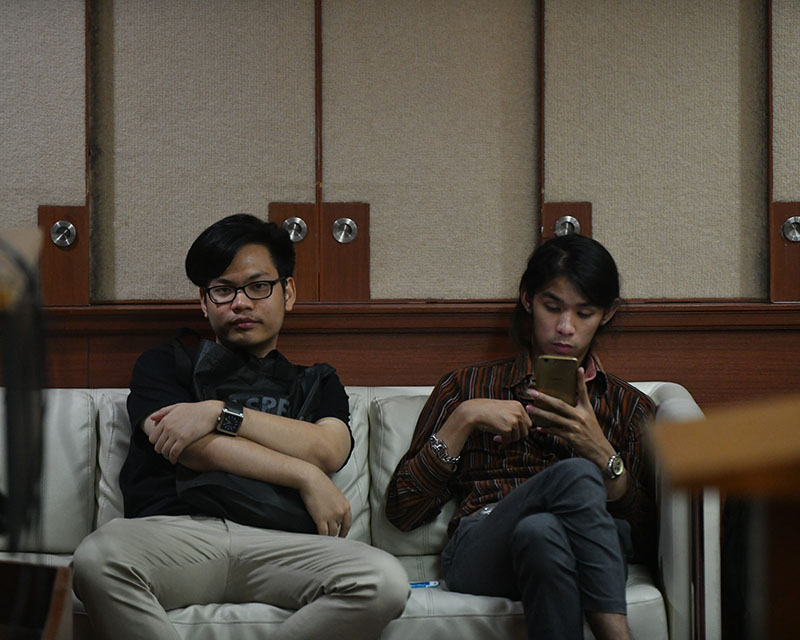
Anti Sotus admins Suebsakul Sirikaew and Pitawat Chawsithan.

Empty Pockets

While eating with his fellow admins Sunday before their talk at Thammasat, one of them stood up and whooped in delight: Someone had just donated 2,000 baht, more than they had been expecting. The entire operation, Keerati said, is run on donations and volunteerism.

“Usually we don’t have funding, so the most we can do is continue to run our Facebook page,” he said.

Sunday’s event at Thammasat University, their fourth annual meeting, cost them nearly 7,000 baht. They paid 3,800 baht to use a third-floor meeting room and about 3,000 baht to bring in admins who live outside of Bangkok. Donations didn’t cover the costs, meaning they had to reach into their own pockets.

Keerati hopes that with extra funding, the group could hold talks about SOTUS at more universities, as well produce infographics about hazing abuses at various universities.

Keerati himself went to Kasetsart University, which along with Maejo University is known for some of the most intense hazing. At the SOTUS hazing at Maejo each year, freshmen are made to crawl through water for an entire night.

Keerati finds out about things that happen there thanks to a network of tipsters he calls the “Rebels of Maejo.”

“If we could, I would like to work with foundations and groups that could help us intervene at more universities,” he said. “I’d also like to pay our spies, who volunteer at their own risk to expose what’s happening at their own unis or assemble donations for SOTUS victims.”

Related stories:

Students to Be Prosecuted for Bursting Spleen of Underclassman

‘Past the Point of Saying Sorry,’ Says Family of Spleen-Ruptured Student

Uni Student Beaten Until Spleen Bursts in Hazing Ritual

SOTUS 2018: Hazing Hits High Schools

Parties Stake Out Positions on ‘SOTUS’ Hazing

Black Panther Death Ignited Young ‘T’Challa’ Activists

Advertisement

German Man Stabbed in Neck Near BTS Mo Chit

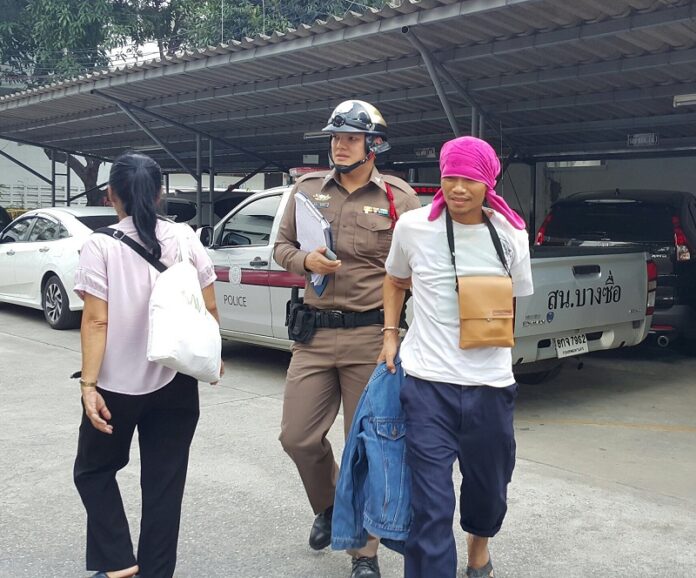
A police officer Tuesday leads away a man accused of stabbing a German man near BTS Mo Chit.

BANGKOK — A German man was stabbed in the neck Tuesday afternoon at a bus stop near BTS Mo Chit.

In what appeared to be a random act of violence, a Thai man, identified as Winai Homniam, 41, ran up to 63-year-old Peter Specht as he and his wife were waiting for a taxi at about 2pm and stabbed him in the neck with a pocket knife, according to police.

Witnesses told police that Winai walked away and pretended he was waiting for a bus after the attack. He was captured by motorcycle taxi drivers nearby.

Specht’s wound was not deep and he was treated at a nearby hospital.

Col. Wiradol Tabtimdee, Bang Sue police chief, said Wednesday they still couldn’t establish a motive, but Winai’s relatives were being questioned to see if he has a history of mental illness.

He added that Winai seemed normal to him during an interrogation and told him he did not intend to stab Specht. A preliminary drug test on him also came back negative.

Winai is reportedly a security guard. Wiradol said Specht frequently travels to Thailand because of his Thai wife and that he is about to move to live here.

Update: This article has been updated with additional information

Advertisement

Trump to Mark 17 Years Since 9/11 at Pennsylvania Field

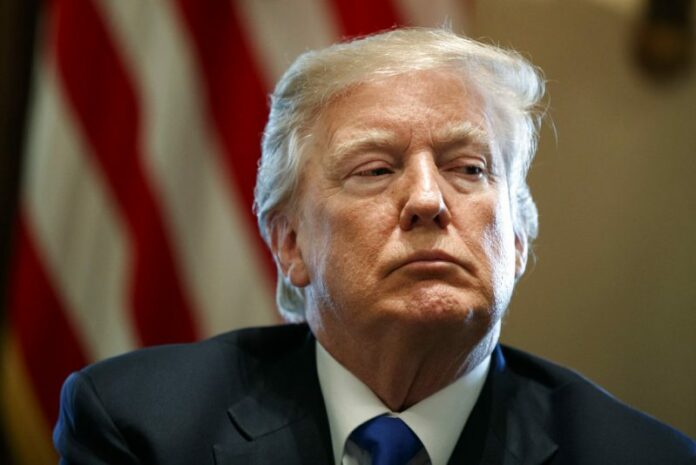
President Donald Trump listens in January during a meeting with lawmakers on immigration policy in the Cabinet Room of the White House in Washington. Photo: Evan Vucci / Associated Press

WASHINGTON — President Donald Trump is marking 17 years since the worst terrorist attack on U.S. soil by visiting the Pennsylvania field that became a Sept. 11 memorial.

Trump and his wife, Melania, were participating in Tuesday’s somber remembrance in Shanksville. It’s where hijackers crashed a California-bound commercial airliner on Sept. 11, 2001, after the 40 passengers and crew members learned what was happening and attempted to regain control of the aircraft. Everyone on board was killed.

Nearly 3,000 people died on 9/11 when other airplanes were flown into New York’s World Trade Center and the Pentagon in an attack planned by al-Qaida leader Osama bin Laden. Nearly a decade later, bin Laden was killed in May 2011 during a U.S. military operation ordered by President Barack Obama.

Trump, a New York native making his first visit as president to the Shanksville site, will focus on honoring the many lives that were lost that day.

“Certainly the focus will be on remembering that horrific day and remembering the lives that were lost, and certainly honoring the individuals who were not only lost that day, but also put their lives of the line to help in that process,” White House press secretary Sarah Huckabee Sanders said.

Trump observed the solemn anniversary for the first time as president last year. He and the first lady led a moment of silence at the White House accompanied by aides and administration officials at the exact time that hijackers flew the first of two airplanes into the World Trade Center’s Twin Towers.

The president also participated in the Pentagon’s Sept. 11 observance last year. Vice President Mike Pence will represent the administration there on Tuesday.

Trump was in his Trump Tower penthouse – 4 miles (6.5 kilometers) from the World Trade Center – during the 2001 attacks. He has a mixed history with Sept. 11, often using the terrorist strikes to praise the response of New Yorkers to the attack but also making unsubstantiated claims about what he did and saw that day. He has also accused fellow Republican George W. Bush, who was president on Sept. 11, of failing to keep Americans safe.

Trump has said when talking about Muslims that “thousands of people were cheering” in Jersey City, New Jersey, situated across the Hudson River from lower Manhattan, as the towers collapsed. There is no evidence in news archives of mass celebrations there by Muslims.

Trump has also said he lost “hundreds of friends” in the attack on New York City. He has not provided any names but has mentioned knowing a Roman Catholic priest who died while serving as a chaplain to the city fire department.

Story: Darlene Superville

Advertisement

Report: Chinese Building Projects Narrowing Economic Gaps

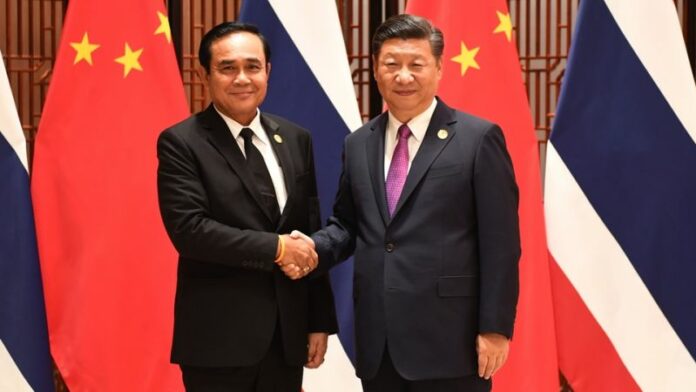
Prime Minister Gen. Prayuth Chan-ocha with Chinese President Xi Jinping on Sept. 4, 2017, at the BRICS summit in Xiamen, China.

BEIJING — A wave of Chinese-financed railways and other trade links in Africa and Asia that have prompted worries about debt and Beijing’s ambitions is reducing politically dangerous inequality between regions within countries, a multinational group of researchers said Tuesday.

The study led by AidData at the College of William & Mary in Virginia strikes a positive note at a time when governments from Washington to Moscow to New Delhi are uneasy about Beijing’s “Belt and Road” initiative.

The study of 3,485 projects in 138 nations across Asia, Africa, Latin America and the Middle East in 2000-14 found they led to a more equal distribution of economic activity by improving access to jobs and markets. It said that helps reduce economic differences that “elevate the risk of violent unrest.”

“Western pundits and politicians often claim that Beijing is a reckless, self-serving or sinister actor,” said AidData’s executive director, Bradley C. Parks, in an email. But by helping to spread economic activity more evenly, “Beijing’s investments address one of the root causes of instability around the globe and thus make it easier for Western powers to tackle other global threats and crises.”

The report stressed it focused on only one aspect of Chinese financing. The overall impact is “a more complex question,” it said, noting other research has found corruption and environmental damage linked to Chinese projects.

Leaders in Africa, South Asia and other regions welcome Chinese projects including “Belt and Road,” President Xi Jinping’s signature foreign policy initiative, but face complaints about costs. It calls for expanding trade by building railways, ports and other infrastructure across a vast arc of 65 countries from the South Pacific through Asia to Africa and Europe.

Governments including Nepal, Sri Lanka and Thailand have scrapped or scaled back projects due to high costs or complaints too little work goes to local companies. Most projects are built by Chinese contractors and financed by Chinese bank loans at market interest rates.

In Kenya, President Uhuru Kenyatta’s government faces protests and a strike by filling station operators after imposing a 16 percent tax on fuel this month to repay construction costs. Kenya’s payments to Chinese banks are due to triple in 2019 from this year’s level.

Kenya is “gradually sinking deeper” into “Chinese debt-trap diplomacy,” wrote commentator Jaindi Kisero in the Daily Nation newspaper.

Beijing suffered a public blow last month when Malaysia canceled Chinese-built projects, including a USD$20 billion railway. Its prime minister said the Southeast Asian country couldn’t afford them.

Chinese officials have released few financial details but deny “Belt and Road” and other projects lead to debt problems.

“People’s livelihoods and economic development have been boosted,” said a Cabinet official, Ning Jizhe, at an Aug. 28 news conference. “No ‘debt trap’ has been created.”

Other governments worry Beijing is trying to gain strategic influence by creating a trading and financial network centered on China, the world’s second-largest economy.

AidData’s first report in 2013 focused on Chinese financing to Africa. The group includes researchers from Harvard University, Germany’s Heidelberg University and other schools and research institutes.

They reported last year China was close to matching the scale of U.S. grants and loans to developing countries. But they said Beijing’s financing served its own economic interests and provided little benefit to recipients.

“Belt and Road” was formally launched in 2012 but also includes Chinese-financed projects begun before that.

For their latest report, researchers made a list of projects from news reports, government statements and research by academics and non-government organizations.

Some 43 percent were infrastructure such as roads, railway, bridges, ports, airports, power grids, cellphone towers and fiber optic cable lines. Another 42 percent were services including hospitals, schools and sewers.

To measure economic impact, the researchers looked at changes in nighttime use of lights across cities and rural areas. That was based on satellite images from the U.S. National Oceanic and Atmospheric Administration.

Those changes “correlate strongly with traditional measures of welfare down to the village level,” the report said.

Projects financed by Beijing might produce a bigger payoff because Chinese companies work faster and often complete projects within months, while traditional Western-backed projects can require years, Parks said.

Also, they often focus on linking inland areas with ports, which increases export revenue, in contrast to traditional projects that connect areas within the same country, he said.

The ruling Communist Party has financed building projects abroad since the 1960s, when it paid for a railway to carry copper from Zambia in southern Africa across Tanzania to the port of Dar-es-Salaam.

Lending boomed following rapid Chinese economic growth in the 1990s.

In the 15 years through 2014, Beijing lent or gave $354.4 billion in Africa, Asia and elsewhere, equal to nearly 90 percent of the $394.6 billion from the United States, according to AidData. But it said only 23 percent of Chinese spending counted as aid by international standards, compared with 93 percent of U.S. spending.

Story: Joe McDonald

Advertisement

3 More Arrested Over Black T-Shirts, Lawyer Says

A screencap of a video published by the Organization for a Thai Federation.

BANGKOK — Three more people are believed in custody for possessing black T-shirts linked to an underground republican group, a civil rights lawyer said Tuesday.

The three are most likely being held at the Bangkok Remand Prison, according to Pavinee Chumsri of Thai Lawyers for Human Rights. Another woman has also been held at an army base since Thursday.

“We believe their arrests might be connected,” Pavinee said by phone, adding that she’s slated to visit the three men in prison this afternoon to find out about their case.

She said the three men, who requested not to be identified by name, were arrested by the police’s Crime Suppression Division some time ago. They were reportedly charged with inciting sedition and ordered jailed until trial.

Division commander Maitree Chimcherd said he had no knowledge of any such arrests.

“We haven’t arrested anyone,” Maj. Gen. Maitree said. “Is it the military?”

A woman, identified by her family as Wannapha, has been held without legal counsel at the 11th Army Circle base since Thursday after soldiers raided her home looking for a black T-shirt she recently bought.

Military officials said Monday the T-shirts bear an emblem used by a group called Organization for a Thai Federation, which seeks to establish a federal republic in part of Thailand.

The group condemned the arrests as an effort to intimidate its supporters.

The organization is one of two known anti-monarchy radical Redshirt groups, though they differ in their methods. One calls for gradual reforms that would lead to establishing a unitary state republic, while the other advocates armed uprising to replace the monarchy with a federalist government. The two groups have an adversarial relationship.

Related stories:

Black Shirt Arrests Part of Crackdown on Republicans, Official Says

Advertisement

All Luxury Watches Returned to ‘Friend,’ Prawit Says

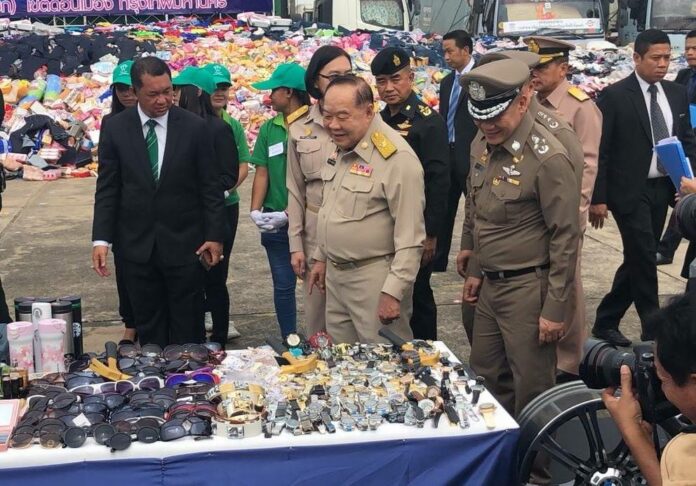
Gen. Prawit Wongsuwan on Sep. 3 checks out counterfeit brandname watches confiscated by police in Bangkok.

BANGKOK — Anti-corruption activists were unswayed by a deputy junta leader’s claim Monday that he returned 25 undeclared luxury watches to a friend.

In the clearest indication that Gen. Prawit Wongsuwan will not submit the two dozen watches for examination by the National Anti-Corruption Commission, Prawit told reporters Monday he no longer had them.

“The watches are not mine because I borrowed them and wore them for 10 years,” Prawit said. “I have now returned them all.”

Read: Anti-Junta Activist Reports Being Ambushed Outside Home

Anti-corruption activist Srisuwan Janya said Tuesday that Prawit’s statement does not absolve him of having failed to declare them among his assets as required by law.

Srisuwan said he would petition the commission Wednesday as he believes Prawit violated Article 103 of the Anti-Corruption Act, which forbids politicians and state officials from accepting gifts valued at over 3,000 baht.

Some of the watches cost over 1 million baht, with a combined value estimated in the tens of millions of baht.

Pro-democracy activist Ekachai Hongkangwan, who has staged more than 30 protests against Prawit on the mystery watches which came to public attention during a photo shoot in December, said that Prawit should be duly investigated.

“By borrowing them, it already means he accepted some benefits. Abroad, there are companies renting luxury watches, and it costs money to borrow them. You can’t led this slide,” said Ekachai, who has been physically assaulted several times in the street since he began protest Prawit. He said he will demand the commission take action against Prawit.

Prawit has been under the cloud of scandal since keen-eyed viewers spotted the first Richard Mille watch, estimated to be worth 3 million baht, on his wrist while sitting for a portrait with the new cabinet.

In the following days and weeks, a review of previous photos found him sporting dozens of expensive watches.

He’s previously said that he borrowed the timepieces from an unidentified friend, while those close to him believed it came from a former schoolmate who had since died.

Advertisement

Hot News

LATEST NEWS

Bangkok
overcast clouds
27.5 ° C
28.8 °
25.9 °
82 %
3kmh
99 %
Wed
27 °
Thu
33 °
Fri
31 °
Sat
32 °
Sun
29 °