






















30 C
Bangkok
Monday, June 29, 2026
Home Blog Page 2188

US Declaration Of ‘Ethnic Cleansing’ in Myanmar on Way

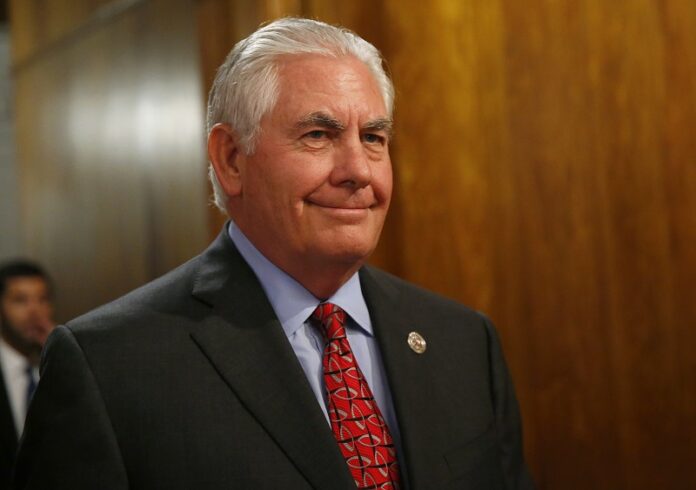
U.S. State Secretary Rex Tillerson arrives for a courtesy call on Philippine President Rodrigo Duterte in August at Malacanang Palace in Manila, Philippines. Photo: Bullit Marquez / Associated Press

WASHINGTON — The Trump administration moved toward a condemnation of “ethnic cleansing” against Myanmar’s Rohingya Muslims, as officials were preparing a recommendation for Secretary of State Rex Tillerson to unequivocally use the term for the first time. Angry lawmakers on Tuesday demanded an immediate denunciation as they explored a new, tougher U.S. policy.

“My bosses have said it appears to be ethnic cleansing. I’m of that view as well,” said Patrick Murphy, a senior U.S. diplomat for Southeast Asia, while adding that the final call wasn’t his to make.

Tillerson could receive the recommendation to adopt such terminology as a matter of policy as early as this week, officials familiar with the process told The Associated Press. He would then decide whether to follow the advice of his agency’s policy experts and lawyers, which would raise pressure on the U.S. government to consider new sanctions on a country that had been lauded for its democratic transition.

At a Senate hearing Tuesday, lawmakers pressed Murphy and other administration officials to hastily clarify their view of the brutal crackdown on Muslims in Rakhine State that has caused more than 600,000 refugees to flee to Bangladesh. But U.S. officials have been weighing several factors for their policy toward the country also known as Burma, including concerns about undermining the civilian government led by Nobel Peace laureate Aung San Suu Kyi for the last 18 months.

Democratic Sen. Tim Kaine was among those calling for a clear determination “with dispatch.” Republican Sen. Bob Corker, chairman of the Senate Foreign Relations Committee, emphasized it “may be time for a policy readjustment.” Other lawmakers in both houses of Congress have proposed new U.S. penalties on the military, which retains significant power in Myanmar and is blamed for the violence.

The U.S. officials, who weren’t authorized to speak publicly on the internal process and requested anonymity, told the AP the State Department won’t make a call yet on whether crimes against humanity have occurred in Myanmar. Such a determination would be even more detrimental to Myanmar’s military, as it could force the U.S. to push harder for legal accountability.

According to the United Nations Office on Genocide Prevention, “ethnic cleansing” isn’t recognized as an independent crime under international law, unlike crimes against humanity and genocide. It surfaced in the context of the 1990s conflict in the former Yugoslavia, when a U.N. commission defined it as “rendering an area ethnically homogeneous by using force or intimidation to remove persons of given groups from the area.”

Nevertheless, Murphy stressed that “a determination of ethnic cleansing will not change our pursuit of full accountability.” The issue also is sensitive because President Donald Trump will make his first official trip to Asia next month and hasn’t spoken about the crisis.

Human rights groups accuse security forces of launching a scorched-earth campaign in late August as they responded to Rohingya insurgent attacks. Amnesty International alleges that hundreds of Rohingya men, women and children have been systematically killed.

Senators of both parties expressed outrage over the atrocities  and frustration at Washington’s inability to stop them. They questioned whether former President Barack Obama prematurely lifted sanctions against the armed forces as a reward for an end to decades of direct military rule.

“The military control Burma today,” Sen. Ben Cardin, the panel’s top Democrat, said. “That’s unacceptable, that’s why we imposed sanctions, because of military control. Sanction relief was given for what? So people can be ethnically cleansed?”

Murphy said the U.S. has limited leverage with Myanmar’s military. He described broad sanctions and more targeted measures as under consideration, but worried about hurting Myanmar’s vulnerable citizens. Administration officials also fret that punishing Myanmar too forcefully could undermine Suu Kyi’s government and push her country away from the United States and toward China.

Before the latest refugee exodus, roughly 1 million Rohingya lived in Myanmar. The Buddhist majority believes they migrated illegally from Bangladesh, although many Rohingya families have lived in Myanmar for generations. They were stripped of their citizenship in 1982.

Calls for a U.S. determination of “ethnic cleansing” have intensified, as the United Nations and leading Western governments have used the term. Six weeks ago, U.N. human rights chief Zeid Ra’ad al-Hussein said it “seems a textbook example of ethnic cleansing.” French President Emmanuel Macron echoed that opinion, as have leaders of many in the Muslim world.

U.S. officials have been more reticent. Tillerson, who last week said that perpetrators will be held to account for atrocities, has referred to the violence as “characterized by many as ethnic cleansing.” U.N. envoy Nikki Haley told the Security Council last month it was “a brutal, sustained campaign to cleanse the country of an ethnic minority.”

“We are not shying from the use of any appropriate terminology,” Murphy told reporters later Tuesday, without revealing what the formal review would conclude.

The recent violence already has prompted Washington to curtail already restricted ties with Myanmar’s military. Two months ago, the U.S. stopped waiving visa restrictions to allow members of Myanmar’s military to visit  a policy that Murphy said would also apply to commander in chief Gen. Min Aung Hlaing. The State Department announced Monday that units and officers involved in Rakhine operations are ineligible for U.S. assistance, and rescinded invitations for senior security forces to attend U.S.-sponsored events.

Some Democratic and Republican lawmakers want tougher action, such as financial sanctions against military officials complicit in rights abuses. Restrictions on military-owned businesses that hold large stakes in Myanmar’s economy are also a possibility.

“Here we have this horrific instance, and we have virtually no voice, no pressure,” said Democratic Sen. Jeff Merkley, who is set to travel to Myanmar soon.

Story: Matthew Pennington
Advertisement

Viewing Guide to Thursday’s Royal Cremation

BANGKOK — A year of sorrow, planning and preparation will culminate Thursday with an event not seen in seven decades – the funeral of a king.

From delicate Thai craftsmanship expressing complex beliefs and rich historical tradition informing five days of ceremony, Thursday’s cremation will prove one of the most significant events in modern Thai history.

Access all Our Royal Funeral Coverage Here: Royal Funeral For #KingBhumibol Live Blog

As well-known royalist and palace expert Tongthong Chandransu said:

“There can be no other event to unite Thais and make us feel we are in the same big family as this one.”

With the complex rites come a lot of questions. To help readers, wherever they are, witness and understand this event, Khaosod English has put together some practical answers.

Watch: Virtual Thailand – Enter the Crematorium of King Rama IX

meru
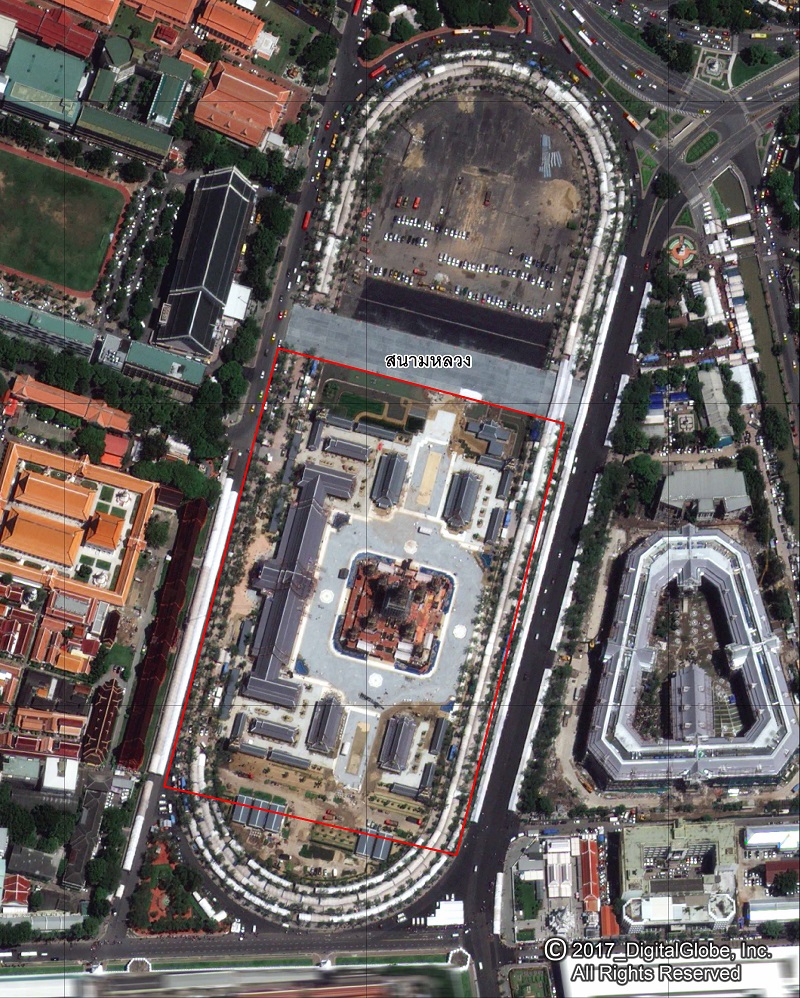
A satellite image from late September shows a bird’s-eye view of Sanam Luang area where the Royal Crematorium is temporarily constructed. Photo: Geo-Informatics and Space Technology Development Agency

How Can People Witness the Ceremony?

The area where the cremation will take place in and around the Sanam Luang offers 150,000sqm to accommodate 200,000 people. The main viewing area around the crematorium and adjacent streets was to accommodate 40,000 people, but the authorities Tuesday were looking to free up space for 70,000 spectators.

Although people have already begun camping outside the area, they won’t be allowed inside until 5am on Wednesday. They are not allowed to bring chairs or mats and will have to be present to physically secure their spots.

That said, the government expects more than 250,000 spectators, so expect surrounding roads such as Ratchadamnoen Avenue to be occupied as well.

A full-dress rehearsal for the cremation procession was held Saturday.

How to Watch from Home?

The national TV pool will broadcast all the parades and merit-making rituals of the five-day ceremony. Thursday it will broadcast all day on all channels.

Khaosod English will have five reporters in the field livestreaming and live-blogging throughout the day.

Update: All funeral coverage will be streamed in English on the official website and Facebook.

Public broadcaster Thai PBS has already created feeds for their planned live broadcasts:

Replica
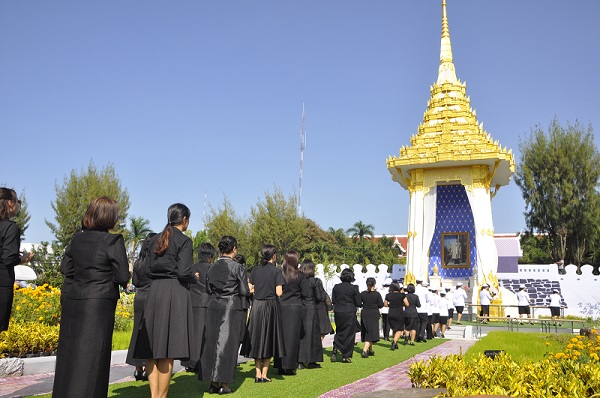
People line up to rehearse sandalwood offerings Monday in front of a crematorium replica in Nakhon Ratchasima province.

4:30pm Wednesday

Tune in an hour before a royal merit-making ceremony will be held in the Dusit Maha Prasat Throne Hall at the Grand Palace in preparation for moving the royal urn to the crematorium. The ceremony begins at 5:30pm.

6am / Afternoon Thursday

Starting at 7am, the royal urn will be transported in a procession from the Dusit Maha Prasat Throne Hall to the crematorium. After midday, the live broadcast will continue via the second link above.

5:30pm Thursday

Hours before the 10pm cremation, His Majesty King Vajiralongkorn will perform a symbolic version at 5:30pm during which time people will be able to approach the urn to leave offerings.

Flowers
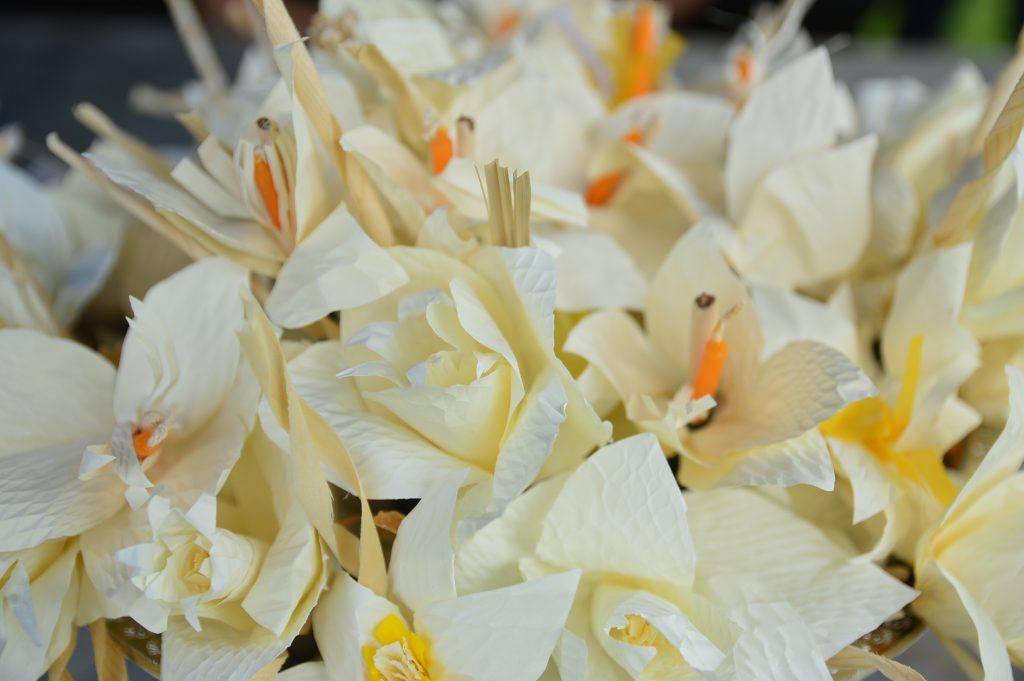
Sandalwood fragrance is believed to lead the souls of the deceased to heaven.

Outside of Bangkok?

To allow people a chance to personally pay homage to the late king for the last time, the military government made Thursday a public holiday and the Labour Ministry encouraged employers to let people take the day off. Many businesses, including all 7-Eleven stores, have announced they will close for part or all of the day.

Read: What’s Closed in Bangkok During the Royal Funeral (Updated)

Those not going to the Sanam Luang can visit one of 85 crematorium replicas nationwide – eight in Bangkok – to make funerary offerings of sandalwood flowers. The flowers will be burned with fire that was lit seven days earlier by King Rama X and distributed throughout the realm. Sandalwood is burned because its fragrant aroma is believed to help lead souls of the deceased to heaven.

Those who want to go must wear formal black clothes and shoes.

Overseas?

Ceremonies will be held at Thai diplomatic missions and temples worldwide. In some countries, special venues were booked for people to offer sandalwood flowers such as the Kursalon Hubner music hall in Vienna, Austria; the Namba Midosuji Hall in Osaka, Japan; and Mumbai’s Coomaraswamy Hall in India.

A database of venues is available online in Thai.

What Does the Ceremony Symbolize?

By tradition, Thai kings are divine beings. After his death, the cremation of King Bhumibol is the last step to return him to heaven.

Tongthong Chandransu, a royalist academic known for his expert palace knowledge, explains the idea comes from Thailand’s two major spiritual currents.

In Buddhism, it takes many reincarnations to achieve enlightenment. As the current Buddha many revere was neither the first nor last, it means a new Bodhisatva or enlightened figure could come at any time.

“If you look at the royal manner of King Rama IX, you will see he was very much a Bodhisattva,” Tongthong said at a recent discussion of the funeral. “He was born to accumulate merit and barami so that one day he can be reborn as a Buddha.”

What is the Royal Crematorium?

dogs
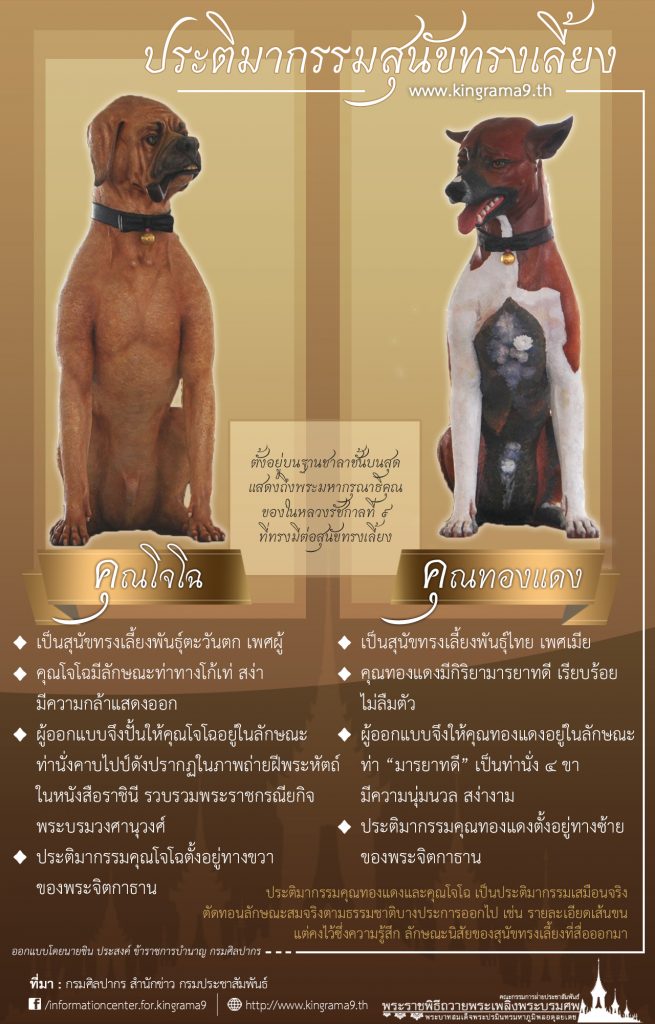
Statue of the king’s beloved dogs Cao Cao, at left, and Tongdaeng are installed atop his funeral pyre.

The royal cremation tradition can be traced back to around 600 years ago. When the king died, merit-making rites were followed by a cremation ceremony in an elaborate, temporary crematorium.

Read: Retro Report: Looking Back at Cremation of King Rama VIII (Photos)

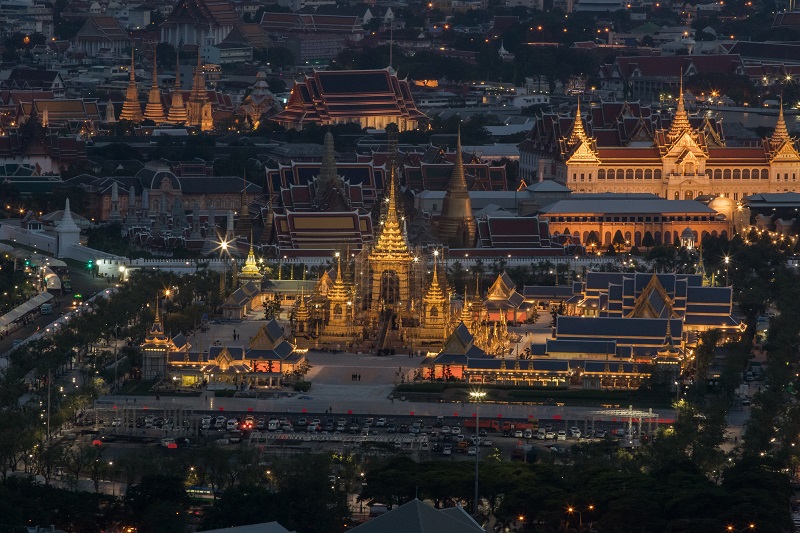
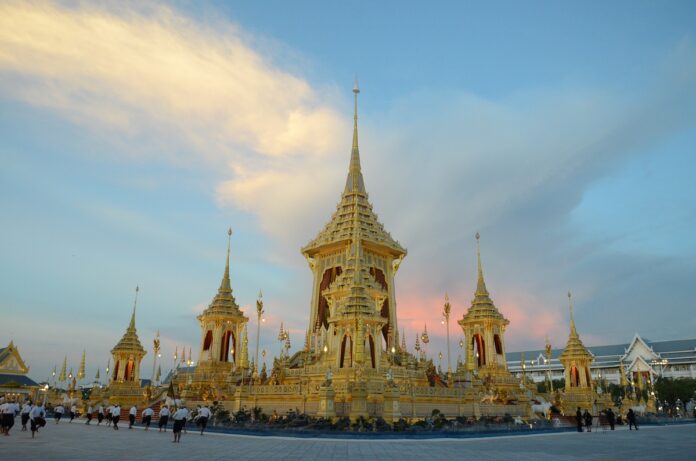
The 50-meter high Royal Crematorium, where the urn will be burned atop the pyre, is modeled after the mythical Mt. Meru which sits at the center of Buddhist and Hindu cosmology. The version built over eight months in the Sanam Luang is, like the original, surrounded by water and magical creatures.

“Farangs asked me what were we doing,” Tongthong said. “I simply told them we are building heaven.”

How Much was Spent?

Tongthong said this is the most popular question asked by foreign media. His answer is simple: he does not know. But he personally thinks it is priceless.

Cabinet resolutions show approval of 3 billion baht for the funeral.

Ballet
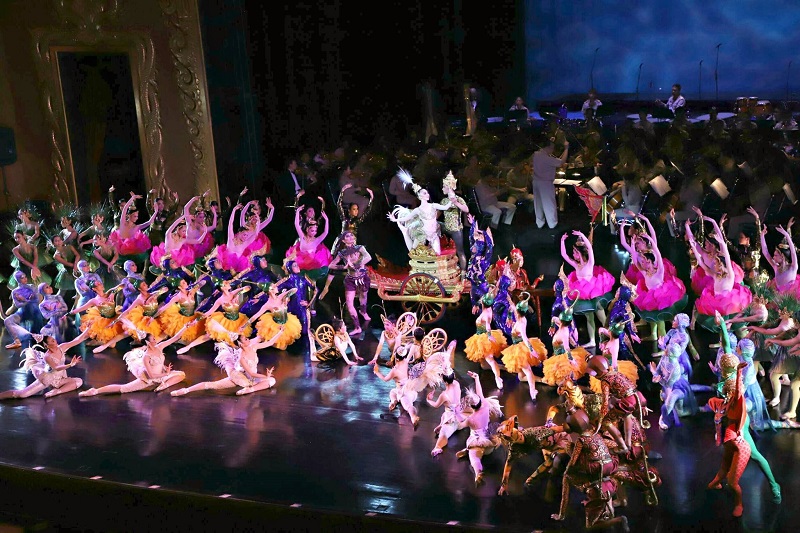
Performers rehearse Friday for Manohra Ballet, a Thai-style ballet co-composed by King Bhumibol, at the National Theatre.

Why Are Performances Set for Thursday Night?

As per tradition, public performances will mark the end of public mourning. They are meant to pay final tribute to the late king by manifesting his greatness. The shows will run 12 hours from 6pm on Oct. 26 to 6am the next morning.

Before the crematorium, more than 300 masked performers will stage classical Khon drama.

The public can watch shadow plays, puppet shows, ballets and orchestral performances performed by thousands of artisans on three open-air stages in the Sanam Luang.

Those at home can see the Khon and shadow play performances on Channel 9 MCOT, Channel 5, TNN24, Spring News, Voice TV, Nation TV, Amarin TV, PPTV and TGN.

Dramas and puppet shows will show on Channel 3, Thai PBS, Thairath TV, New TV, Workpoint, Now26, True4u and Parliament TV.

NBT, Channel 7, Channel 8, Mono TV, One Channel, GMM25 and Bright TV will show ballet and orchestras playing music composed by King Bhumibol.

What Will Happen to the Crematorium?

As per tradition, the crematorium is temporary. It will be open for the public to visit Nov. 2-30 before being dismantled.

“Somebody asked can we keep it for a year or at least three months? My answer is absolutely no,” Tongthong said. “Since ancient times, it is considered a bad omen to leave a crematorium in the center of the city for long.”

In the past, some parts of the crematorium have gone to be used at temples and hospitals.

พระเมรุ30กย 1
The Royal Crematorium at Sanam Luang as seen on Sept. 30.

What Will Happen to the King’s Remains?

The collection of royal relics and ashes (the king’s bones and ashes) will take place at 8am on Friday and can be watched online.

The Royal Reliquary Urn containing his bones will go to the Dusit Maha Prasat Throne Hall at the Grand Palace, while the royal ashes are transferred in a cone-shaped container to the Phra Sri Rattana Chedi in Wat Phra Kaew, or the Temple of the Emerald Buddha.

A royal merit-making ceremony for the royal relics is scheduled for 5:30pm on Saturday. Thai PBS will have that too. At 10:30am on Sunday, they’ll be taken to be enshrined in the Heavenly Abode of the Chakri Maha Prasat Throne Hall within the Grand Palace.

Later that day, at 5:30pm, the royal ashes will be enshrined in two final resting places: Wat Rajabopidh and Wat Bovoranives.

Advertisement

Deluge Forces Popular Doi Inthanon Waterfall to Close (Video)

CHIANG MAI — Thousands of tourists at Doi Inthanon National Park were let down Tuesday after its highest waterfall was declared off limits due to a sudden surge of runoff and flash flooding.

Fearing visitors may be swept away by the torrent, authorities this morning announced the park’s Maeya Waterfall would be closed after water levels reached 175 millimeters – the highest of the year – according to park chief Rung Hiranwong.

Motorists were advised to be cautious of heavy rains and slippery roads.

The country’s highest mountain and popular tourist attraction Monday saw more than 5,000 visitors as temperatures fell to between 10C and 16C.

Advertisement

Gone But Not Lost, King Bhumibol Remains Everywhere (Photos)

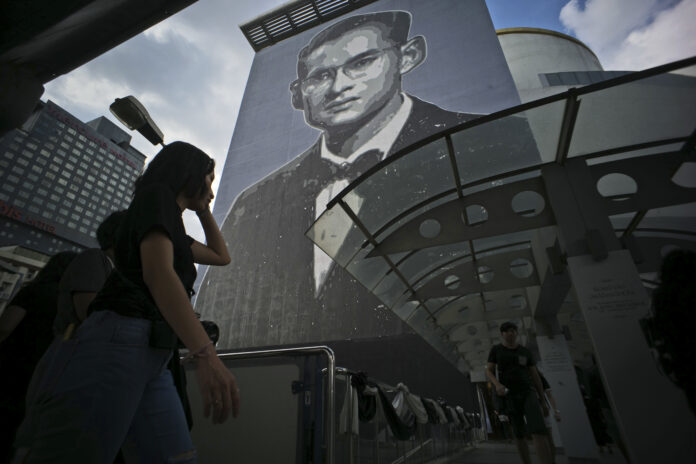
In this Oct. 17 photo, an image of the late Thai King Bhumibol Adulyadej covers the side of a building in Bangkok. Photo: Charles Dharapak/ Associated Press

BANGKOK — Thailand’s King Bhumibol Adulyadej watched over his kingdom for 70 years — and he continues to do so a year after his death.

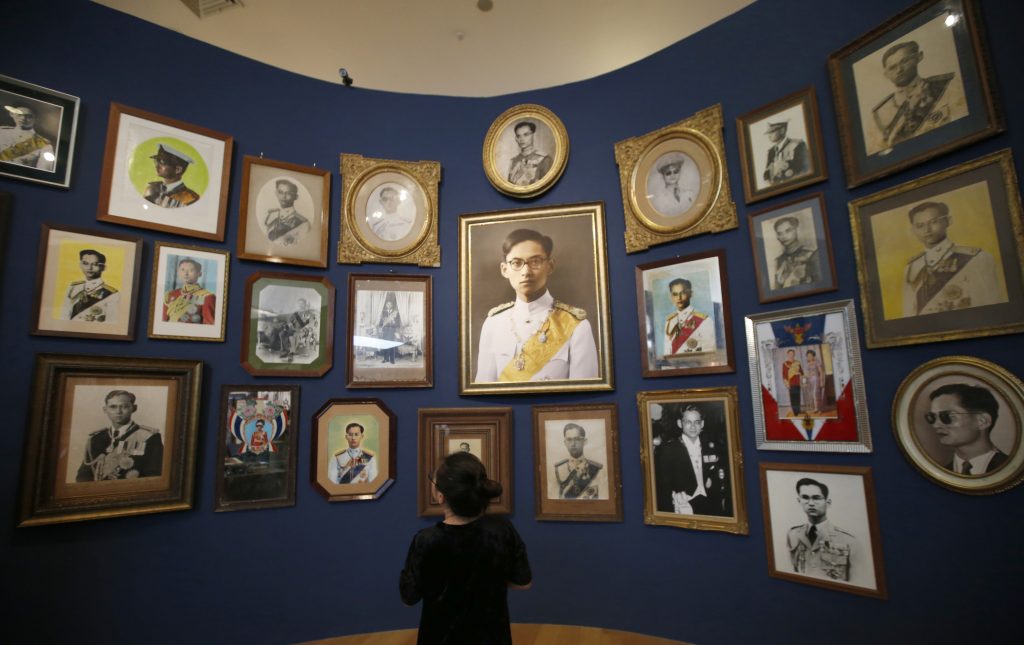
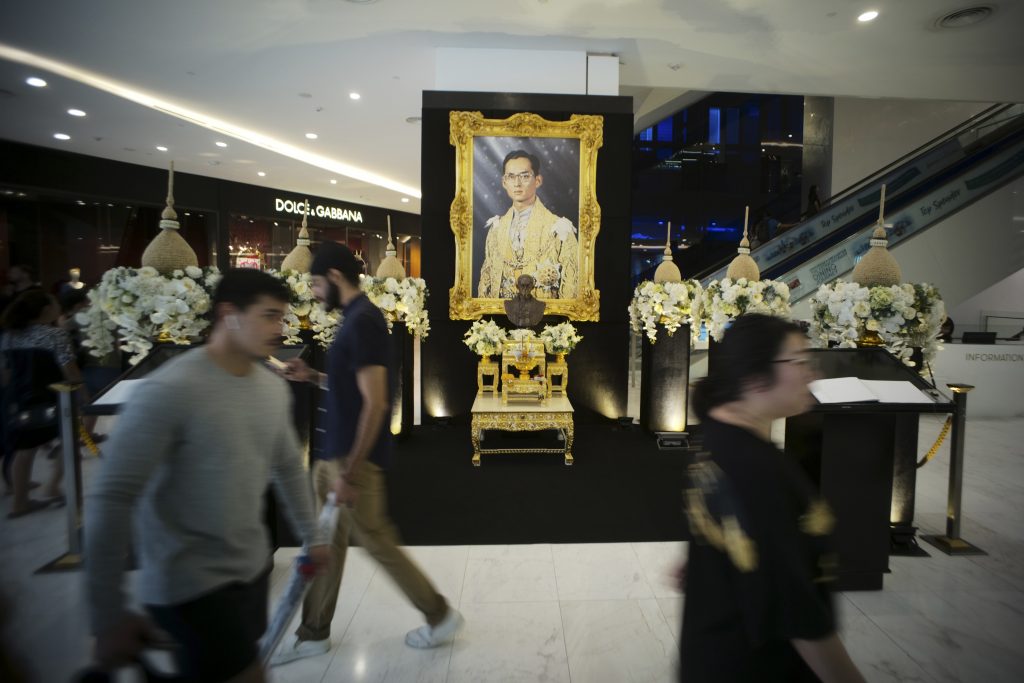
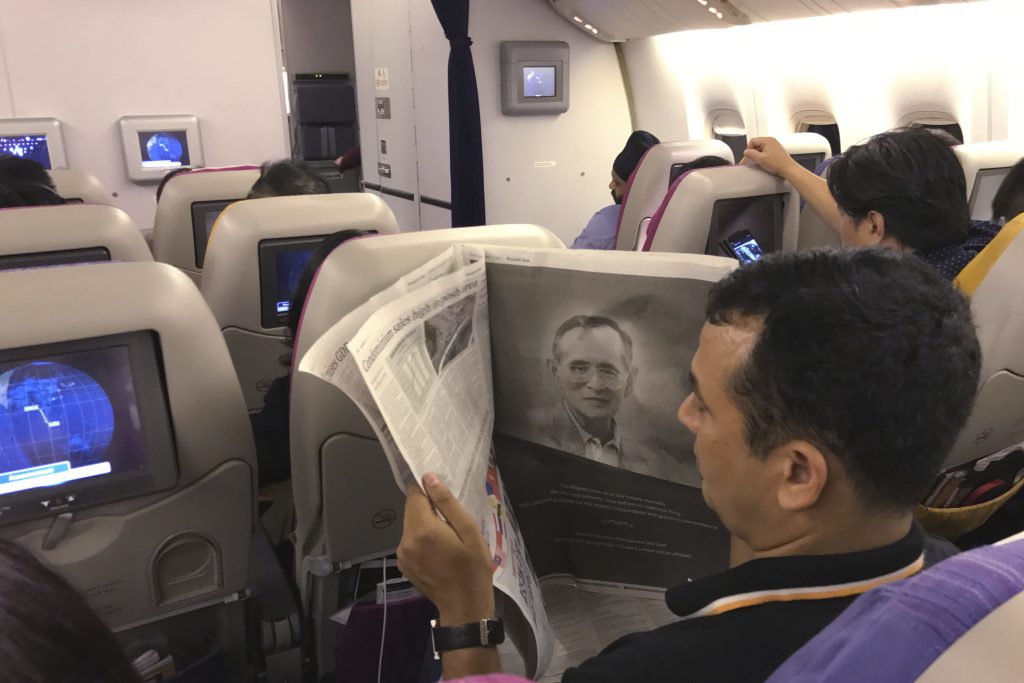
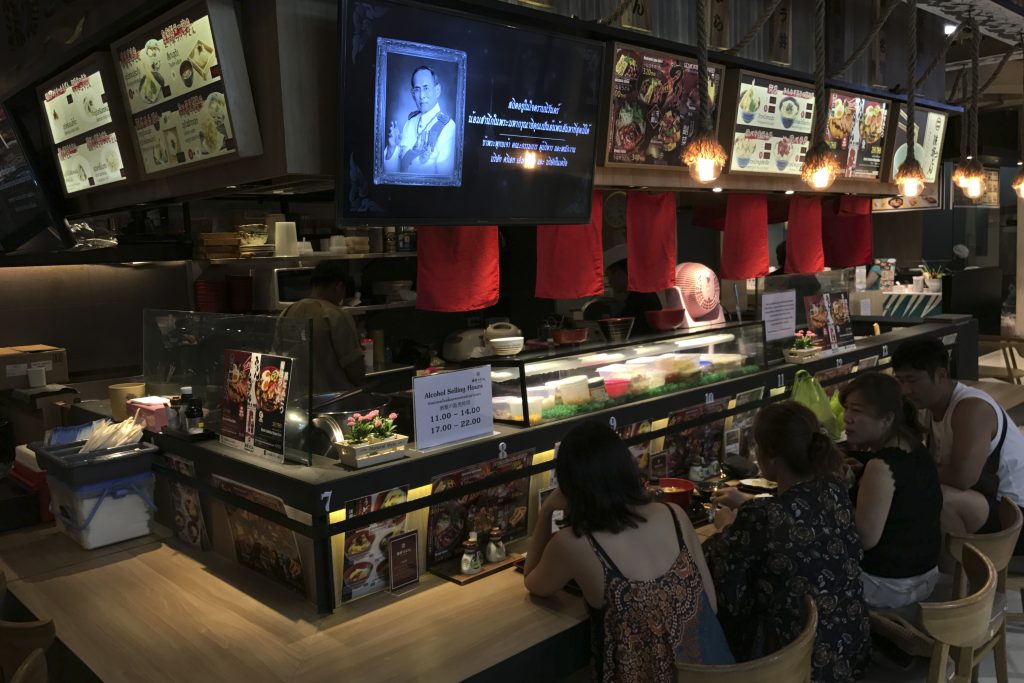
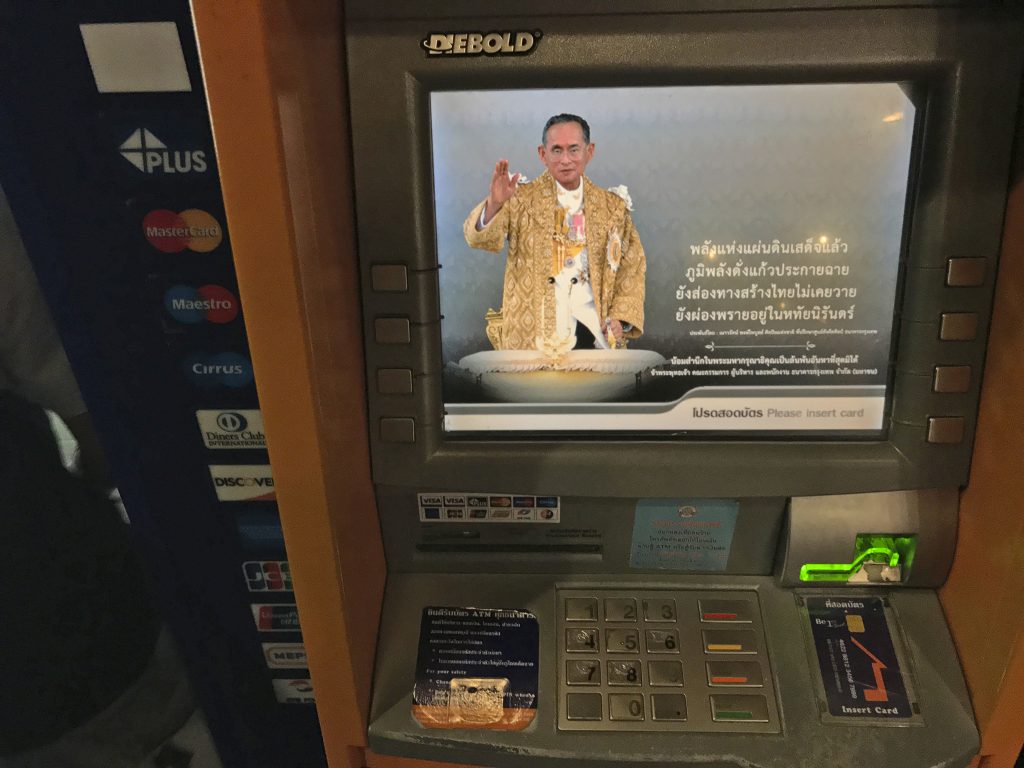
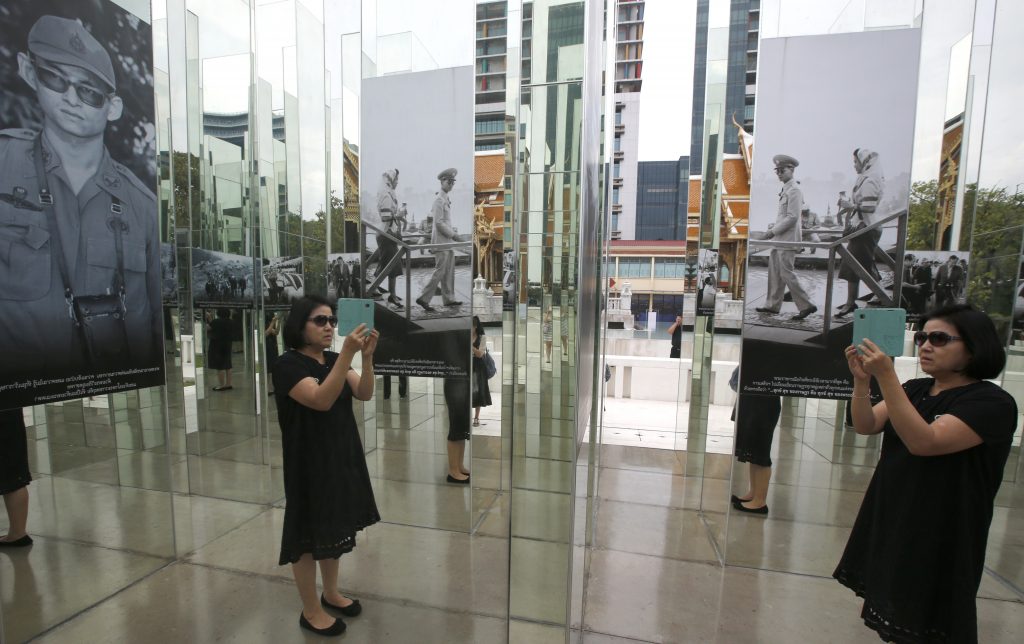
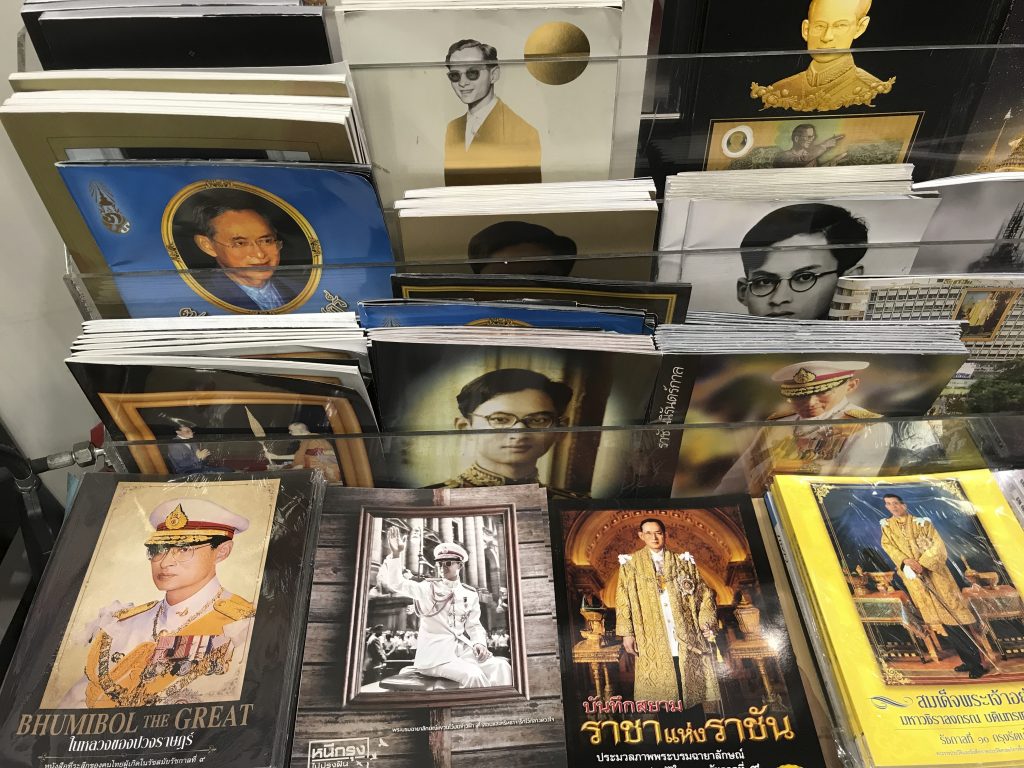
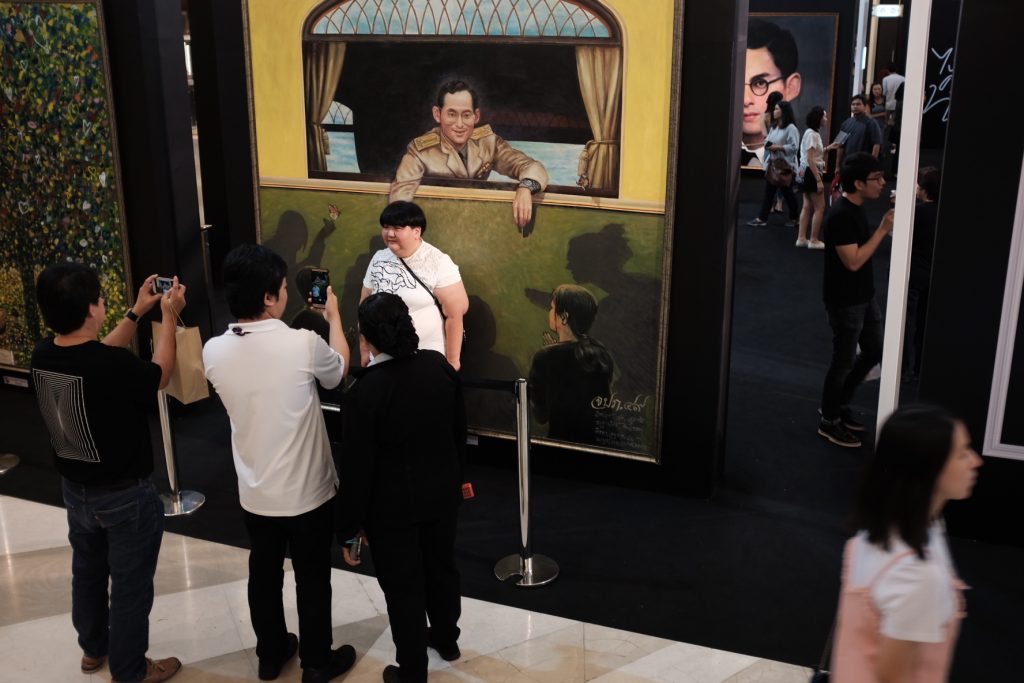
As Thailand prepares for his cremation ceremony Thursday, Bhumibol’s image is omnipresent across the country in messages commemorating his life and mourning his death. Photos of a monarch many Thais loved like a father can be found everywhere from billboards to ATM screens, from full-page tributes in national newspapers to commemorative books in street-side markets, from shrines in shopping malls to exhibits in art galleries.

As the text next to one image read: “In the hearts of all Thais he will forever remain the leading bright light.”

AP17296557941753
A visitor looks at a photo exhibition of Thailand’s late King Bhumibol Adulyadej on Sept.14 in Bangkok. Photo: Sakchai Lalit / Associated Press
AP17296558078980
Shoppers walk past on Oct. 21 a shrine with a book to write tributes for the late Thai King Bhumibol Adulyadej set up in a shopping mall in Bangkok. Photo: Charles Dharapak/ Associated Press
AP17296558844971
Passenger reads a newspaper on Oct. 13 with a full page tribute to the late Thai King Bhumibol Adulyadej at Bangkok’s international airport. Photo: Charles Dharapak/ Associated Press
AP17296558659327

An image of the late Thai King Bhumibol Adulyadej is seen Oct. 17 on a screen at a Japanese restaurant in Bangkok.Photo: Charles Dharapak/ Associated Press
AP17296558199915

The image of the late Thai King Bhumibol Adulyadej is seen Oct. 17 on an ATM machine in Bangkok. Photo: Charles Dharapak/ Associated Press
AP17296558282938

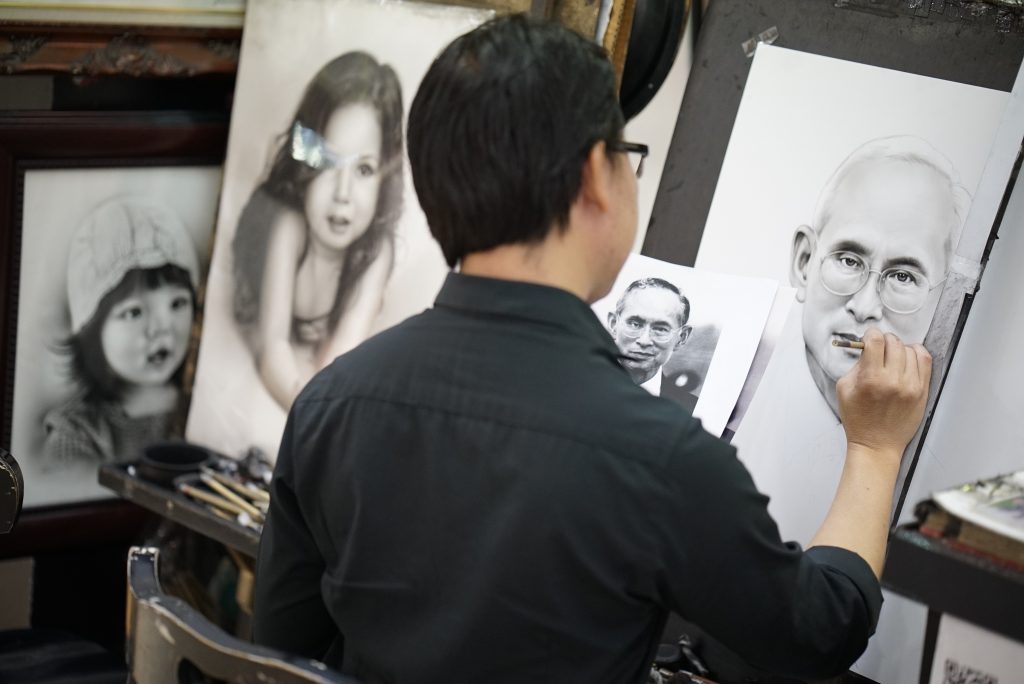
An artist copies a photograph of the late Thai King Bhumibol Adulyadej on Oct. 17 in Bangkok. Photo: Charles Dharapak/ Associated Press
AP17296558452314
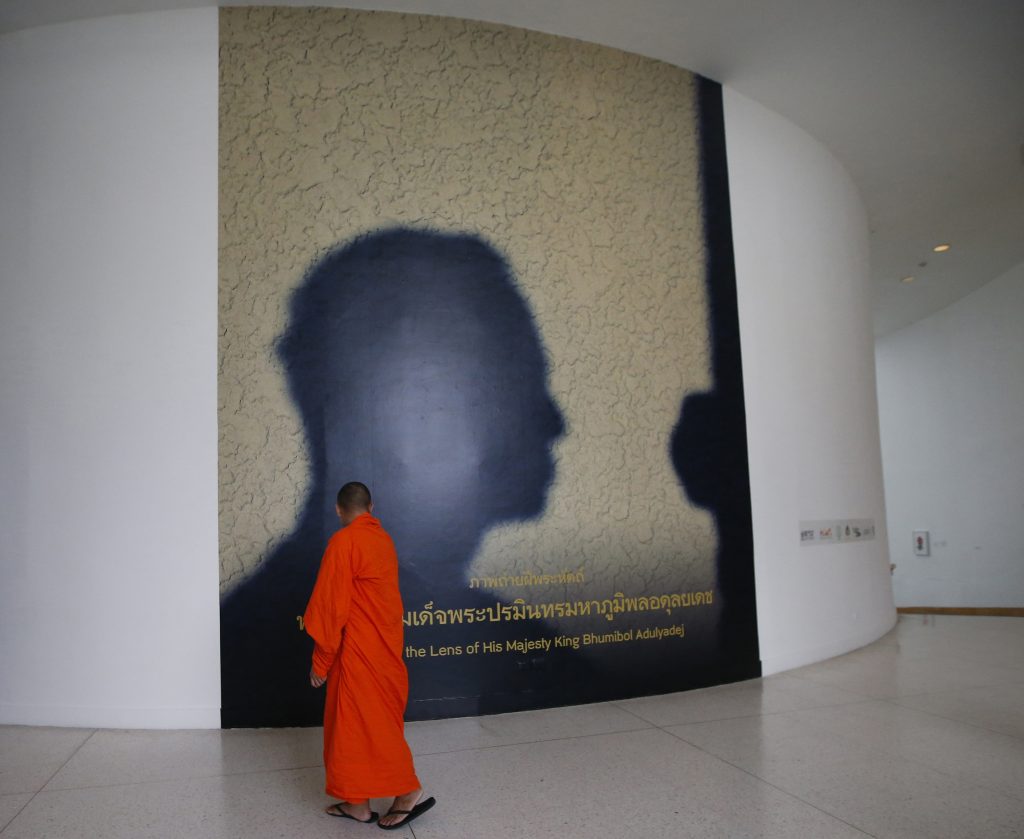
A Buddhist monk walks past a self-portrait of the late Thai King Bhumibol Adulyadej on Sept. 14 at an exhibition in Bangkok. Photo: Sakchai Lalit/ Associated Press
AP17296558371732
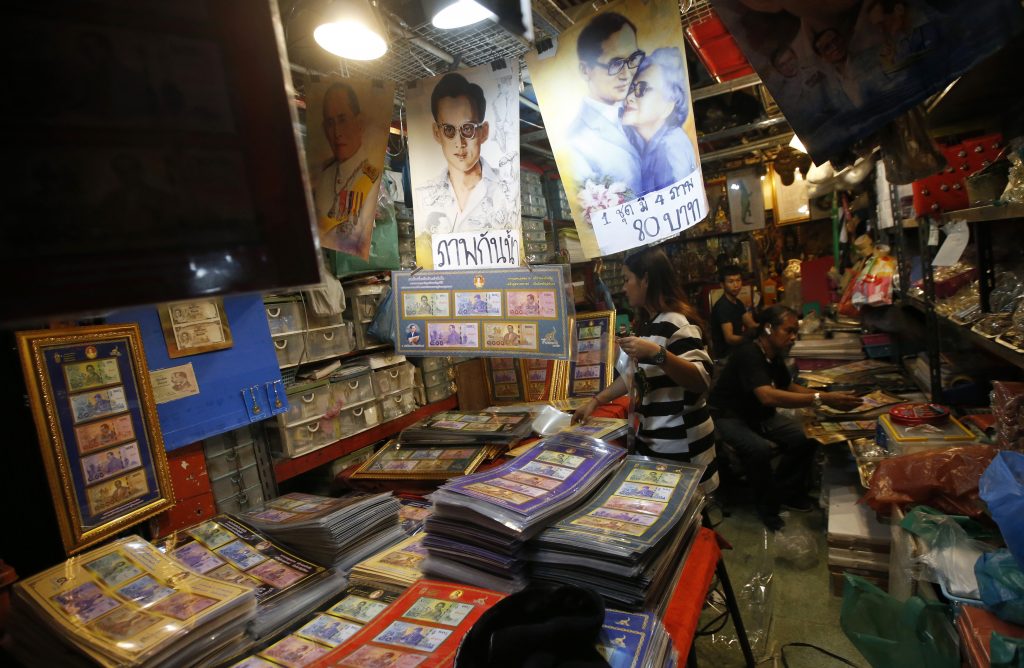
A vendor sells posters and other souvenirs bearing the image of the late Thai King Bhumibol Adulyadej on Oct. 12 in Bangkok. Photo: Sakchai Lalit/ Associated Press
AP17296558910359
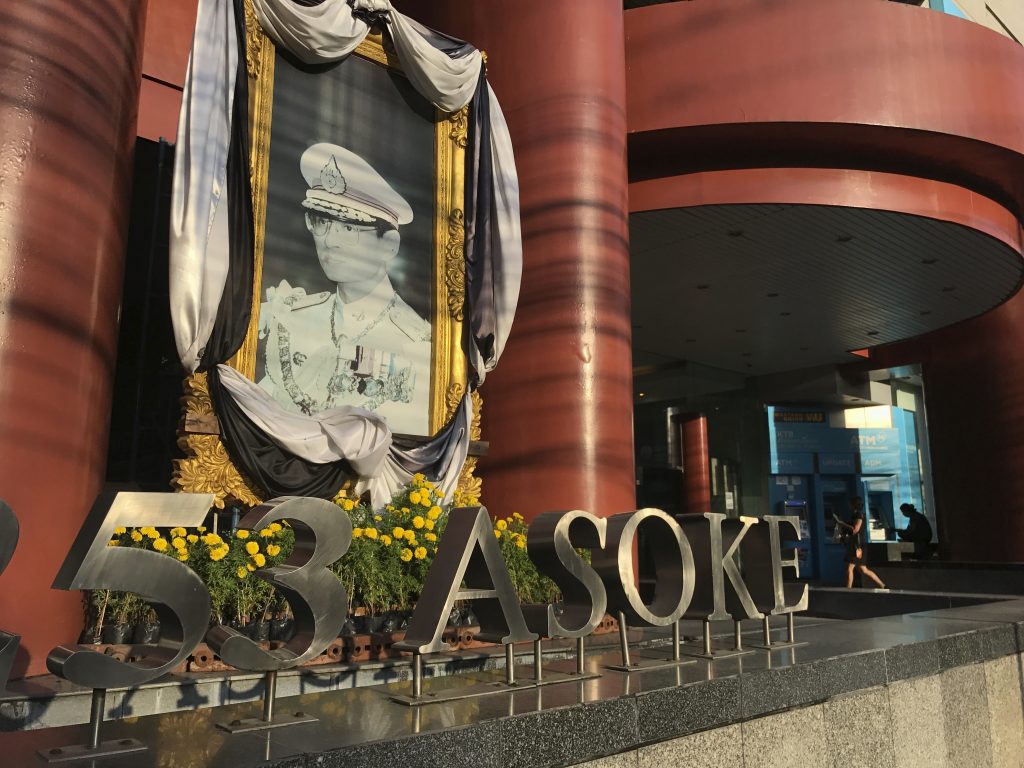
A large portrait of the late Thai King Bhumibol Adulyadej is draped with black and white cloth on Oct. 19 outside of an office building in Bangkok. Photo: Charles Dharapak/ Associated Press
AP17296558992948
A visitor is reflected in a mirror as she takes a picture of a large photo of late Thai King Bhumibol Adulyadej on Oct. 13 at Siriraj Hospital, where the king died, in Bangkok. Photo: Sakchai Lalit/ Associated Press
AP17296558700727
Commemorative books and magazines bearing the image of the late Thai King Bhumibol Adulyadej are displayed Oct. 7 at a bookstore in Bangkok. Photo: Charles Dharapak/ Associated Press
AP17296557999375
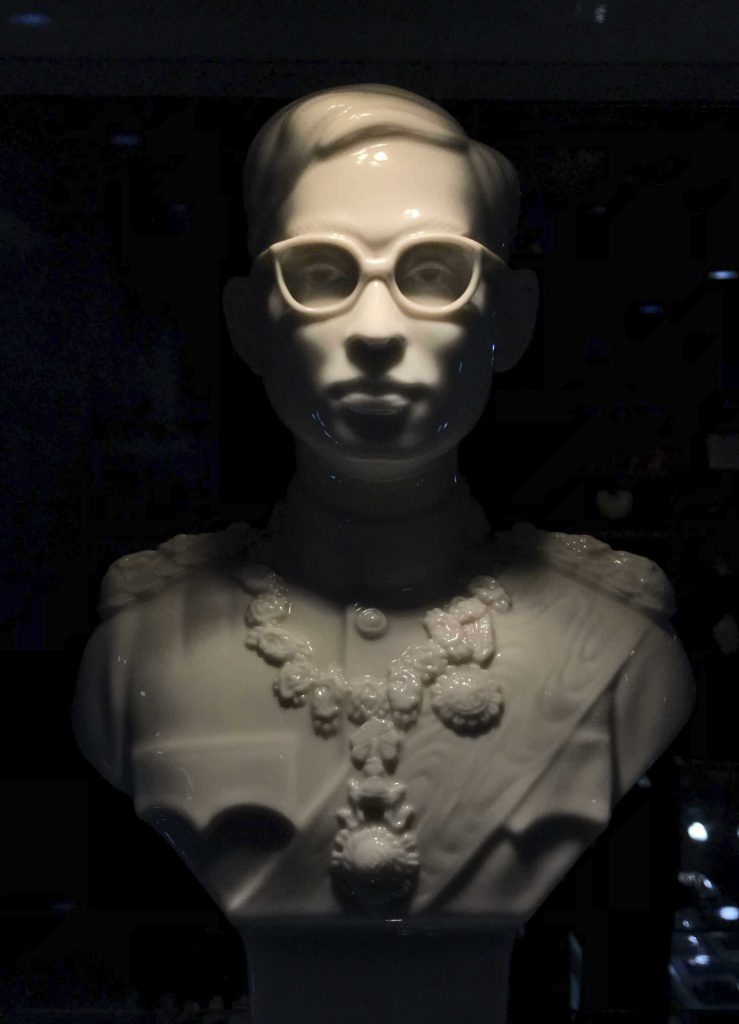
A bust of Thailand’s King Bhumibol Adulyadej is displayed on Oct. 7 in a shop window in Bangkok. Photo: Ted Anthony/ Associated Press
AP17296558746551
Visitors pose at an exhibit of paintings of the late Thai King Bhumibol Adulyadej Oct. 8 at a shopping mall in Bangkok. Photo: Ted Anthony/ Associated Press
AP17296558338039
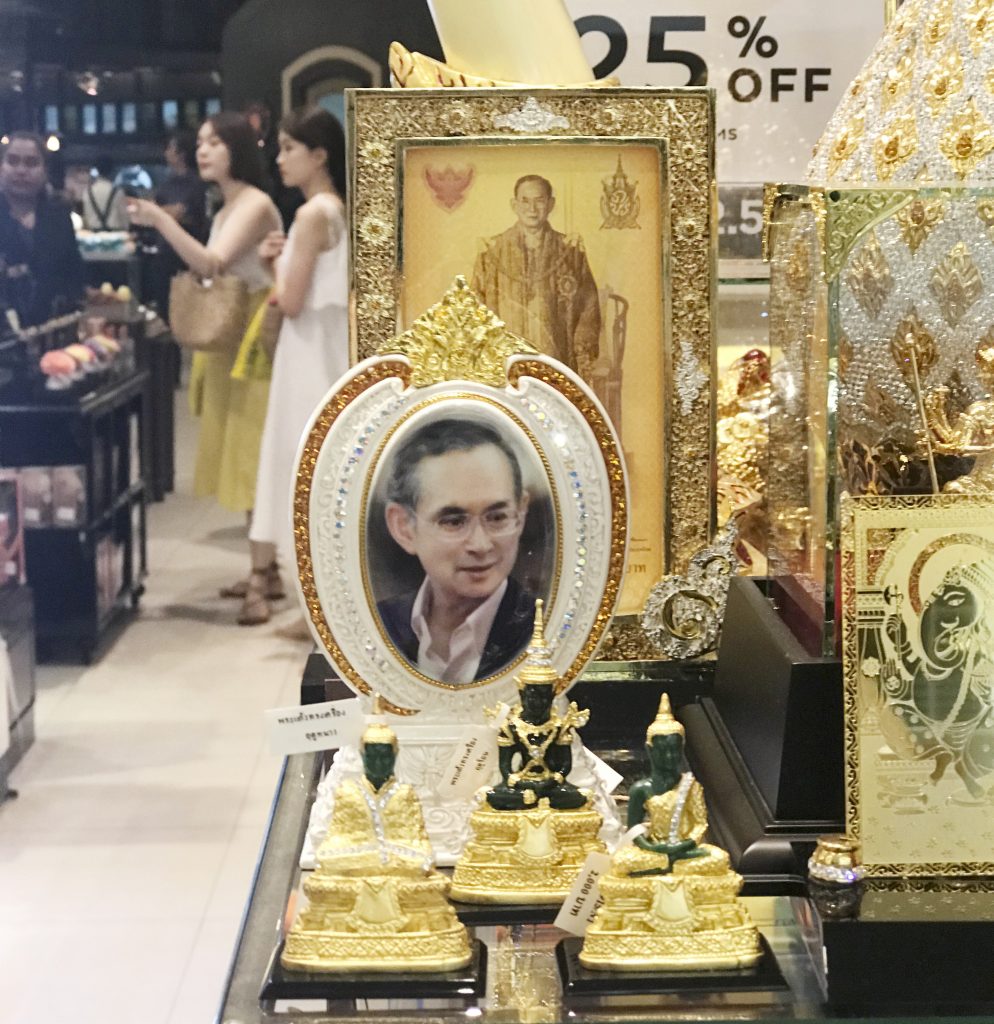
A framed image of the late Thai King Bhumibol Adulyadej is displayed Oct. 22 alongside images of Buddha at a shopping mall in Bangkok. Photo: Ted Anthony/ Associated Press
AP17296559066193
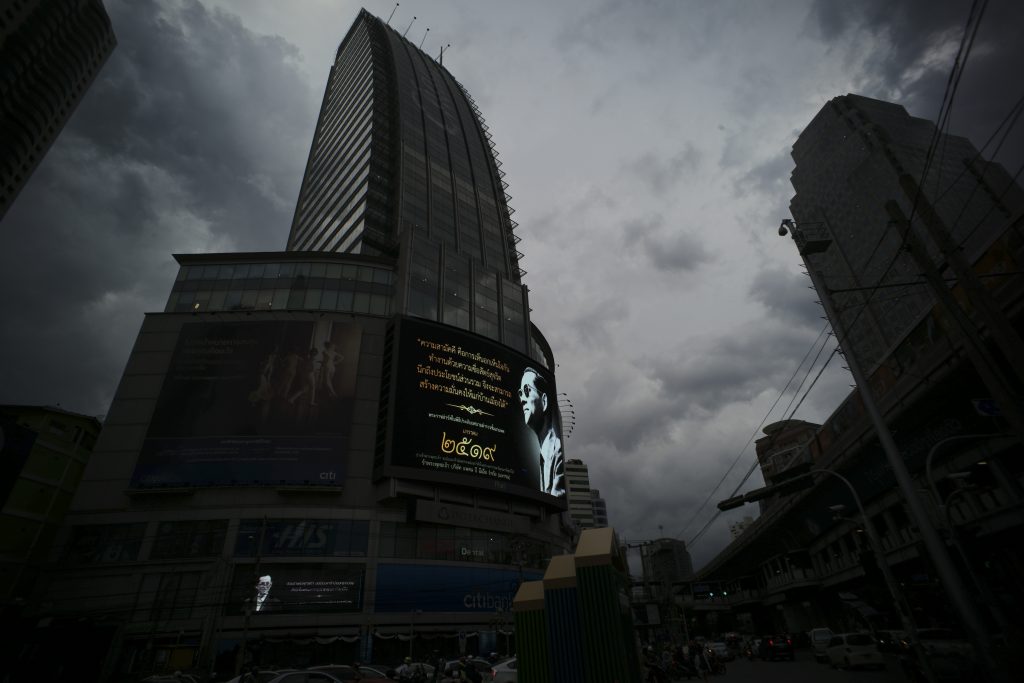
Images of the late Thai King Bhumibol Adulyadej are projected Oct. 17 on electronic billboards above an intersection in Bangkok. Photo: Charles Dharapak/ Associated Press
AP17296558670806
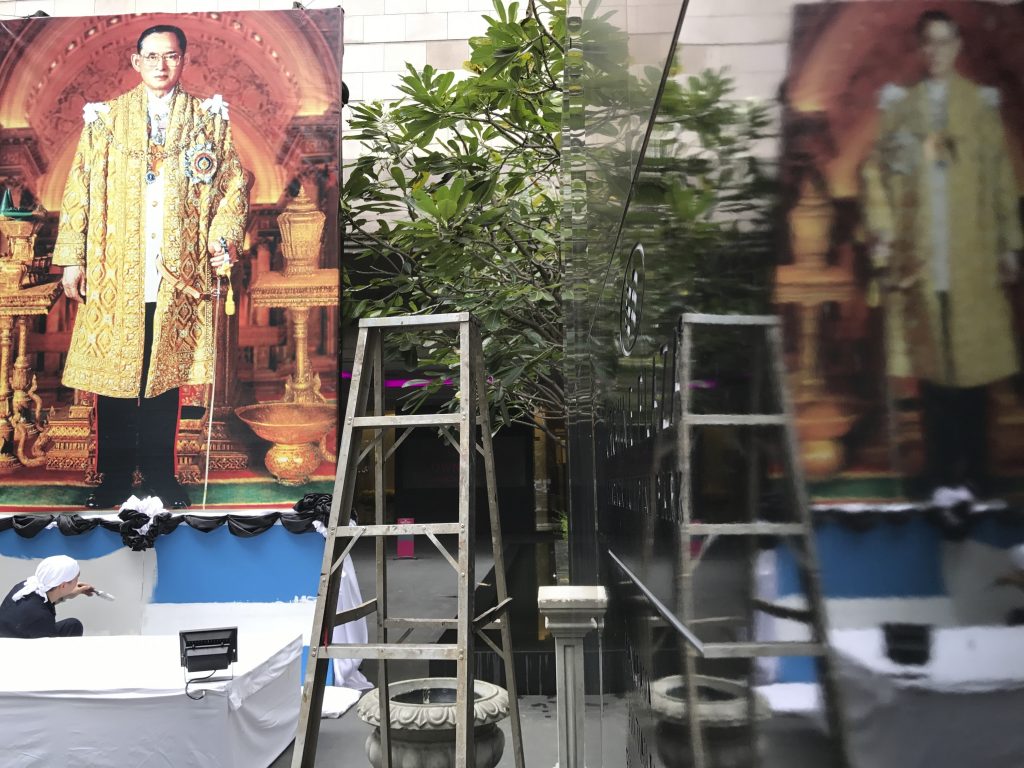
A worker paints a stand bearing a portrait of the late Thai King Bhumibol Adulyadej on Oct. 12 in front of a hotel in Bangkok. Photo: Charles Dharapak/ Associated Press
Advertisement

Today is First Day of Thai Winter: Meteorologists

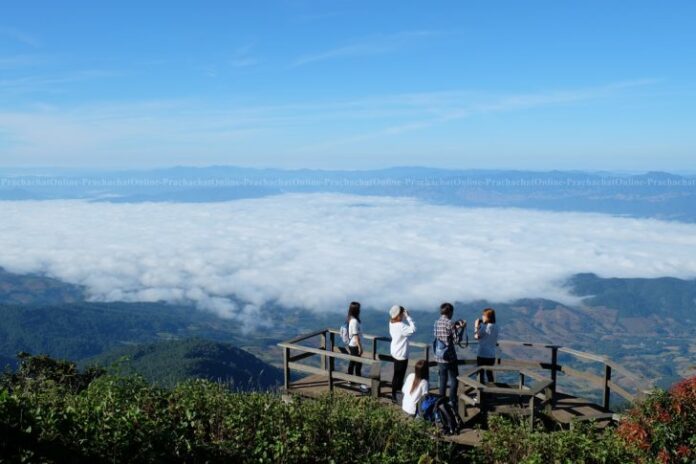
A file photo of Doi Inthanon in Chiang Mai. Photo: Prachachat

BANGKOK — Thailand officially entered the winter season Tuesday.

State meteorologists declared that Tuesday was the official start of the cool season based on weather conditions – cooler temperatures and less rain are forecast – and the reversal of prevailing winds to blow northeast.

Top government meteorologist Wanchai Sakudomchaisaid said the year’s coldest temperatures would hit in the back half of December and persist through January, falling to average lows of 20C in Bangkok. Average highs in the capital will be 30C.

That means the cool season will be marginally cooler than that of last year, which saw average lows of 21C, Wanchai said.

Residents should continue to be vigilant for flash floods resulting from October’s heavy downpours. The nation should expect to be buffeted by cool winds and some rain in November and December.

Frost and mist are expected on mountaintops in the north and northeast of the country.

The Thai Meteorological Department decides which day winter begins each year. In 2016, it began Oct. 30 and ended March 3.

Advertisement

New Welfare Cards a Boost For Rich or Poor?

BANGKOK — For many commuters, 300 baht buys five long-haul BTS rides. For Chum Chompho, it means over a month’s supply of rice, instant noodles, soap and toothpaste for her entire family.

The 66-year-old Nakhon Ratchasima native was among 11.6 million indigent Thais to get one-size-fits-all welfare cards with allowances for travel expenses, groceries, school supplies and agricultural goods.

But one week after the last batch of cards were distributed in the capital, problems and concerns have been raised about their efficiency and sustainability, with criticism the welfare program was designed to benefit the rich at the expense of the poor.


‘Poor Cards’

Officially called welfare cards, they are more casually and commonly known as cards for the poor. They function like debit cards but can only be used at registered stores with special card readers.

The cash limit renews monthly and cannot be accrued. Cardholders can add money to the balance if it insufficient to cover an expense.

Since Oct. 1, many registered grocery stores in the 70 provinces where the cards were distributed have seen big crowds flock to their shops.

But with the rollout came problems and confusion. Residents in some distant rural communities had difficulty finding registered shops. Some cardholders didn’t know how much money they had. Others didn’t use them for goods but simply bartered them for cash.

Due to additional technology that will allow them to be used on public transportation in the capital – including the BTS and MRT rail systems – residents of Bangkok and six nearby provinces didn’t get their cards until last week.

Missing the Mark?

Komsan Chan-on of the Four Regions Slum Network said this illustrates the government’s failure to understand how low-income Thais, over half a million of which are registered in Bangkok, actually live.

“The urban poor use songthaew, motorbikes or boats,” he said. “A homeless man who carries a bag into a BTS [station] will just be chased off by a security guard.”

That holds true for Sophawadee Phuipin, a 45-year-old seamstress who works out of her home. The only time she goes out, she explained while queuing to register for the program a few months back, is to get her two daughters to and from school. The free buses were perfect for three passengers.

In the northeastern province Nakhon Ratchasima, Somying Luedkratok said she wants the government to take the travel credit she can’t use – no buses or trains pass her community –  and let her use it for groceries.

Enough people shared Somying’s complaint to get the Finance Ministry to say it might consider increasing the credit for supplies.

For laborers who travel provinces to province for seasonal work, typically in agriculture or construction, Komsan said the monthly cash limit was not enough.

“With the free train service, laborers could move whenever they wanted. They could go to Chiang Mai. And then if there was no demand, they could move to Chonburi,” he said. “Giving them a quota of 500 baht to move to find work … it’s not welfare, it’s control.”


Money Talks

Though the cards have been generally met with gratitude, many welfare recipients said they preferred the cash offered under previous junta welfare programs for its flexibility.

“If they are really poor, it’s better to give them cash,” said Somchai Jitsuchon of the Thailand Development Research Institute, or TDRI. “Small amounts of money can make a difference if they have real needs.”

The new policy was devised after two junta handouts in recent years drew complaints it was engaging in the same populist, hearts-and-minds policies it criticized the elected government for pursuing. The move to welfare debit cards with allocated budgets came in response to that criticism.

But a few hundred baht is not going to raise recipients from poverty, and economists and social workers agree the real agenda was to stimulate the economy in response to a slump in consumer spending.

“The government borrows the hands of the poor to pass money to the capitalists,” Komsan said.

It did not take long for a perpetual government gadfly to file a petition against it. Two weeks ago, Srisuwan Janya, a lawyer and transparency crusader, petitioned the government to end the program, saying it was designed to only benefit the few tycoons who sell all consumer goods.

Land Taken, Card Given

After the junta seized power from the elected government in 2014, it launched a draconian campaign of land seizures framed as reclamation of public space and forest. But in many conflicted areas, land ownership has a complicated history.

Three years ago, hundreds of soldiers poured onto Rieng Kongthum’s property in the south, chopped down her rubber trees and banned her from her own home. The land had been declared part of a national park many years back, after she had bought it.

The 80-year-old woman now lives in a temporary roadside hut. Her grandchildren had to drop out of school and take jobs at a restaurant due to the loss of rubber plantation income. For the past year, she has joined a movement to travel nearly 800 kilometers to the capital four times to ask the government to return the land where she lived and grew rubber trees for 35 years.

In previous years she received cash disbursements under a previous welfare program. As for the new cards, she disagrees with the decision to stop distributing money for a simple reason – she does not know what to do with it.

“I don’t know how to use it,” she said on a recent afternoon in Bangkok, where she had traveled to seek help after her land was taken. “I will have to wait for my grandchildren to help me out.”

Despite saying no one would be left behind by its development plans, the government has actually enacted policies counter to that principle which hurt people like Rieng, according to the director of Chulalongkorn University’s Social Research Institute.

Prapas Pintobtang said, besides offering short-term help, policy-makers should not forget that their resource allocation decisions are one of the main causes of poverty, such as massive land seizures for property that will be given over to commercial use..

“Some are made poor by government megaprojects,” he said. “You have seen them move people out by the Article 44 to create the special economic zone.”

Lifting the Poor or Boosting Bottom Lines?

The welfare card program is much more expensive than the free transportation program, and economists say that it makes sense when seen as a massive stimulus program.

Instead of 2 billion baht annually for the free bus and train services, the government committed 50 billion baht for the welfare program.

The Thai Chamber of Commerce predicted on Oct.5 that the welfare cards would inject 10 billion baht into cash circulating the economy.

While that in itself is a positive indicator, the activist who advocates slum-dwellers nationwide said it perpetuates disparities rather than empowers low-income citizens.

“Will it increase number of the poor?” Komsan said. “Possibly, if the GDP continues to be built by a few tycoons, based on inequality.”

Related stories:

Welfare Cardholders May Get 800 Baht For Staples

Poorest Thais to Get 2,750 Baht Cash Cards

700,000 Ineligible for Junta Welfare Program

Confusion Over Benefits as Poorest Thais Register for Junta Welfare

Final Extension of Free Bus And Train Service?

Stricter Junta Welfare Program Unclear on Benefits

Gov’t Approves 3,000 Baht for Thailand’s Poorest

 
Advertisement

King Advises Against Excessive Funeral Restrictions

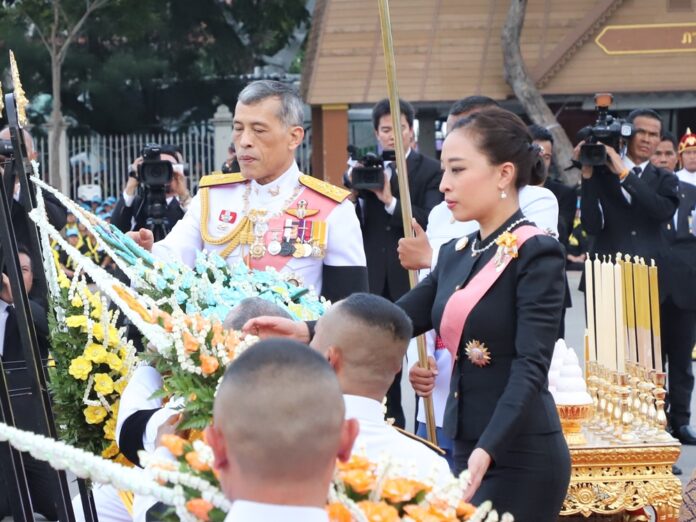
King Vajiralongkorn and his daughter Princess Bajrakitiyabha attend a ceremony Sunday to mark Chulalongkorn Day

BANGKOK — King Vajiralongkorn has urged the authorities to make sure their regulations for viewing the cremation of his father are not too strict, a government spokesman said Sunday.

The king’s statement comes as officials are tightening already stringent security measures limiting public access to the event and rules for the historic ceremony set to take place Thursday.

Virtual Thailand: Enter the Crematorium of King Rama IX

The monarch said the authorities should ensure those restrictions are not so strict they made the public “uncomfortable,” government spokesman Lt. Gen. Sansern Kaewkamnerd said Sunday

King Vajiralongkorn, who inherited the throne after his father King Bhumibol died in October 2016, also asked authorities to open more space to the public at the funerary grounds of Sanam Luang so that they can witness the ceremony, Sansern said.

Bangkok police commander Chanthep Sesawech said he had not personally received any directives from the king, but added that police are already opening more spaces. Mourners can now stake out spots along the northern walls of the Grand Palace, Chanthep said.

“The Bangkok Metropolitan Police’s task is to take care of the people who are gathering at Sanam Luang in all aspects, from traffic to their wellbeing,” the lieutenant general said.

In recent days, additional rules have been issued banning colorful umbrellas, eyeglasses and hand fans. Selfie sticks are prohibited outright. Mourners are also discouraged from shouting “Long Live the King!” as the procession passes.

On Sunday, officials added one more item to the list of banned accessories: colorful phone cases. The public is advised to only bring somber ones.

Mourners are welcome to view the elaborate funerary procession, which has not taken place since 1950 after the previous monarch died, but they are subject to a long list of rules and dress codes. For instance, women will be required to wear skirts that cover their knees and up. Sleeveless dresses and tight clothing are not allowed.

Related stories:

3 Media Agencies Sanctioned For Streaming Practice Parade

Advertisement

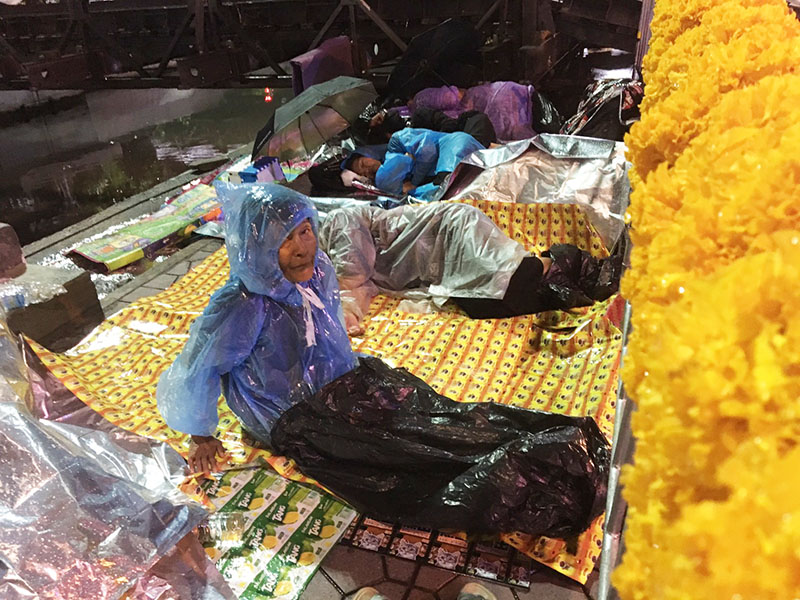
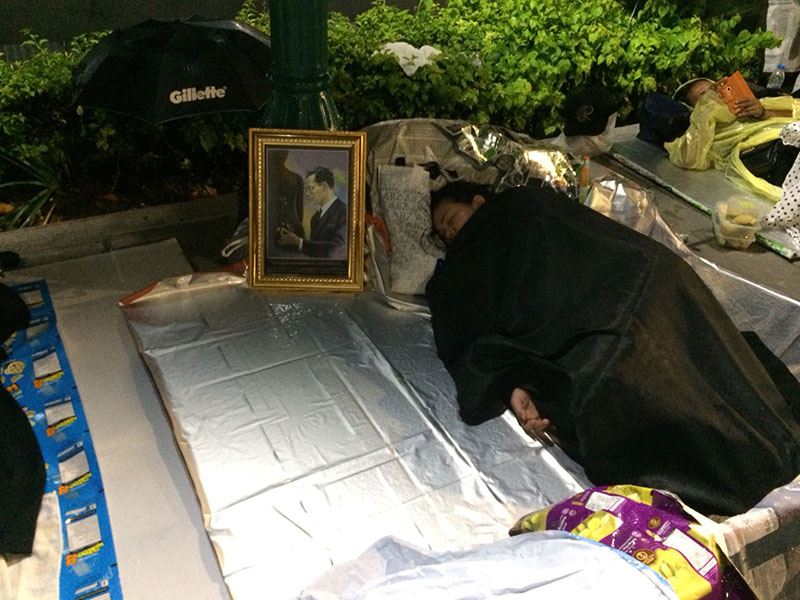
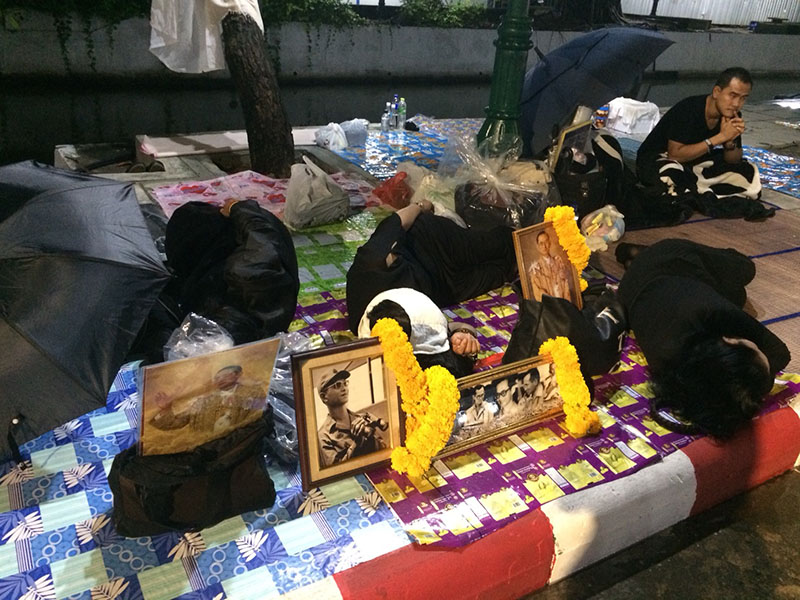
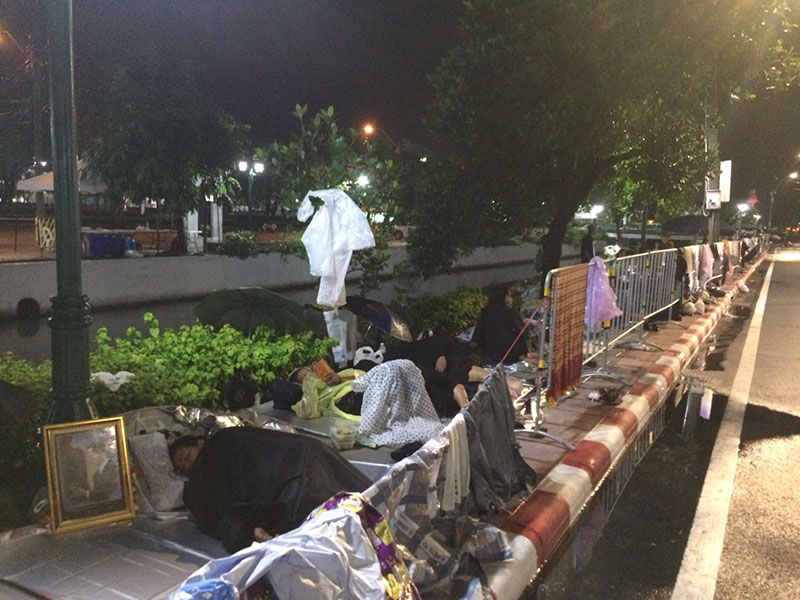
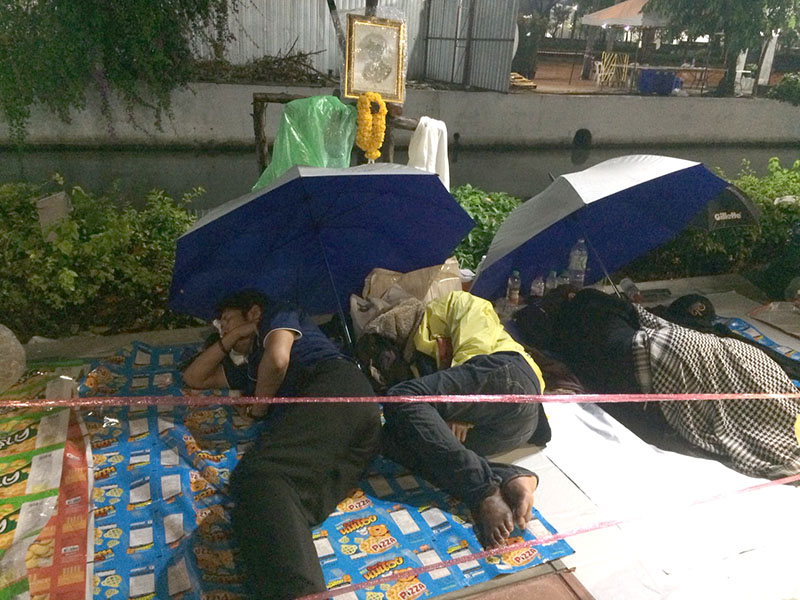
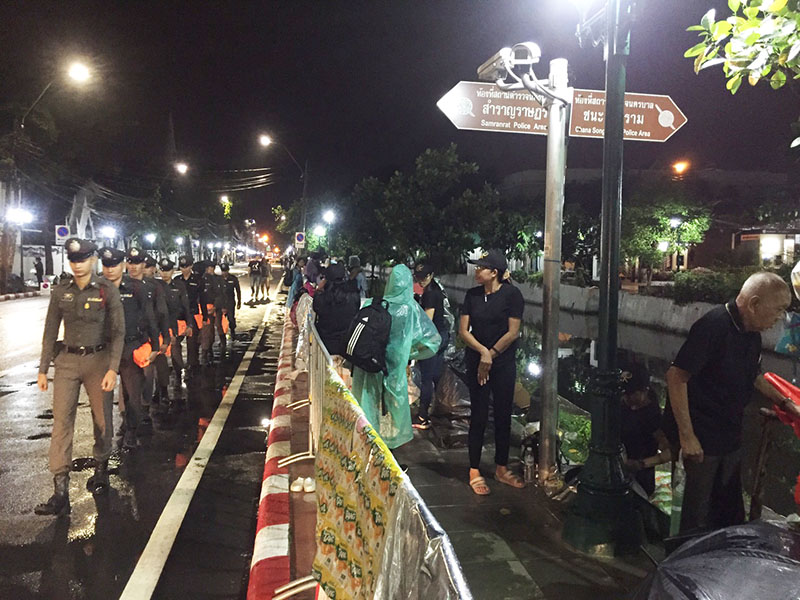
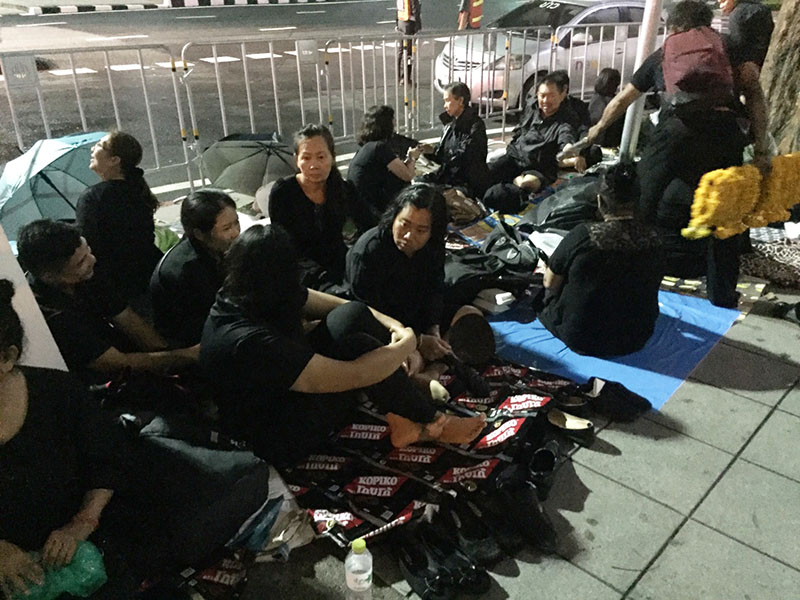
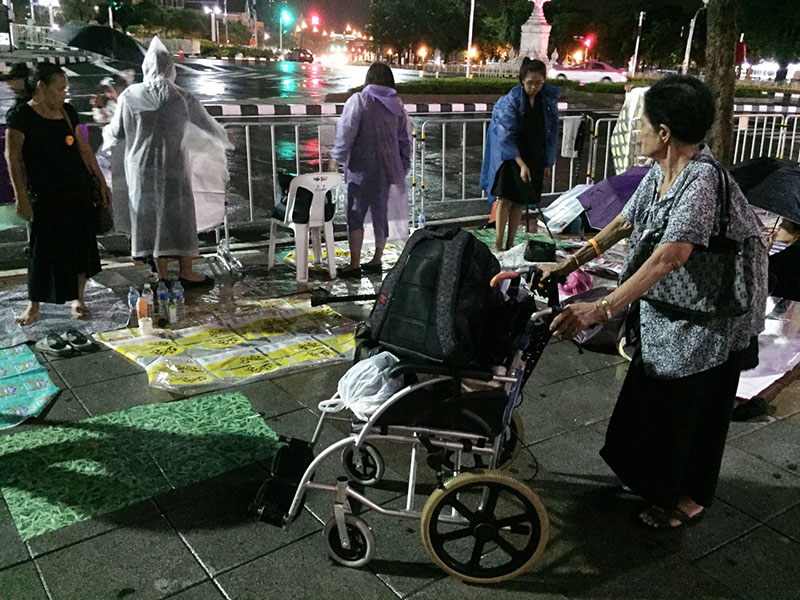
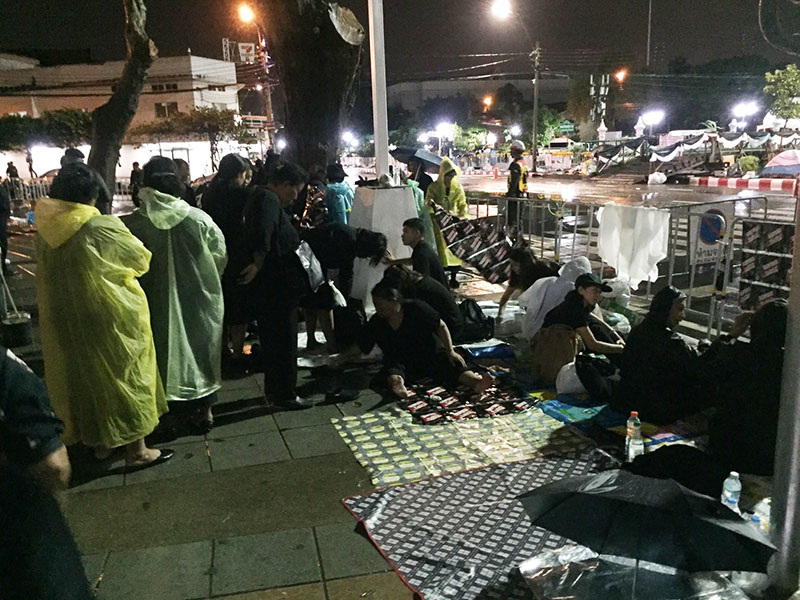
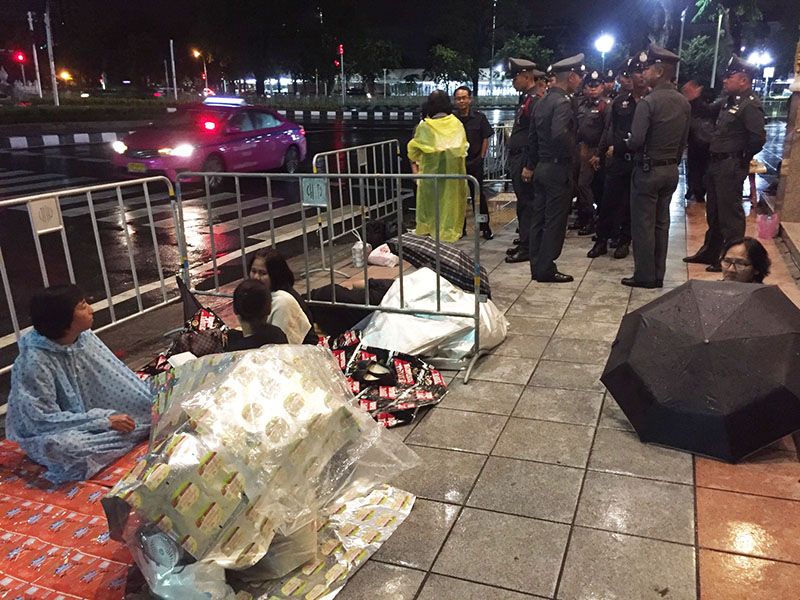
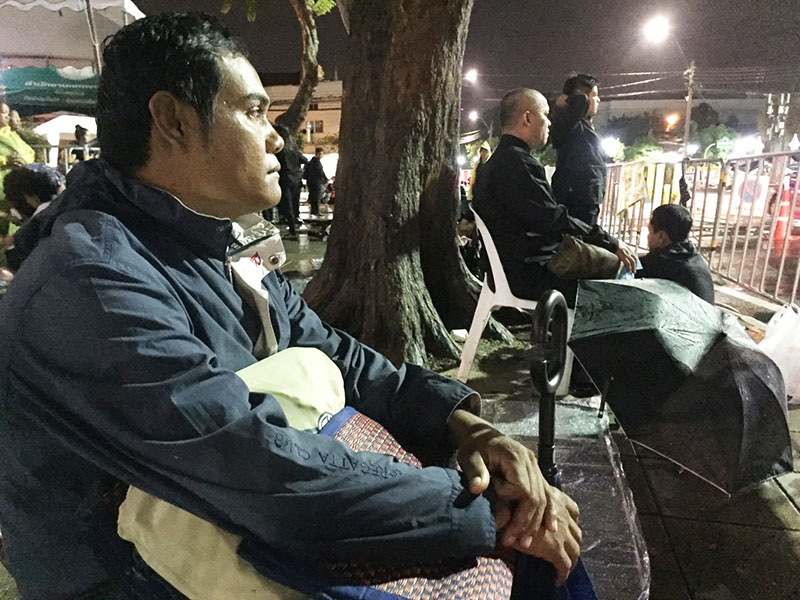
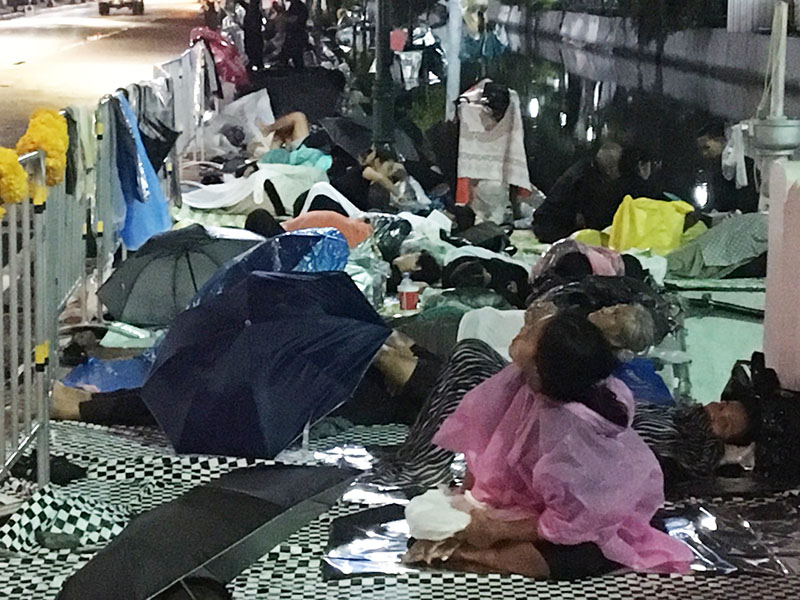
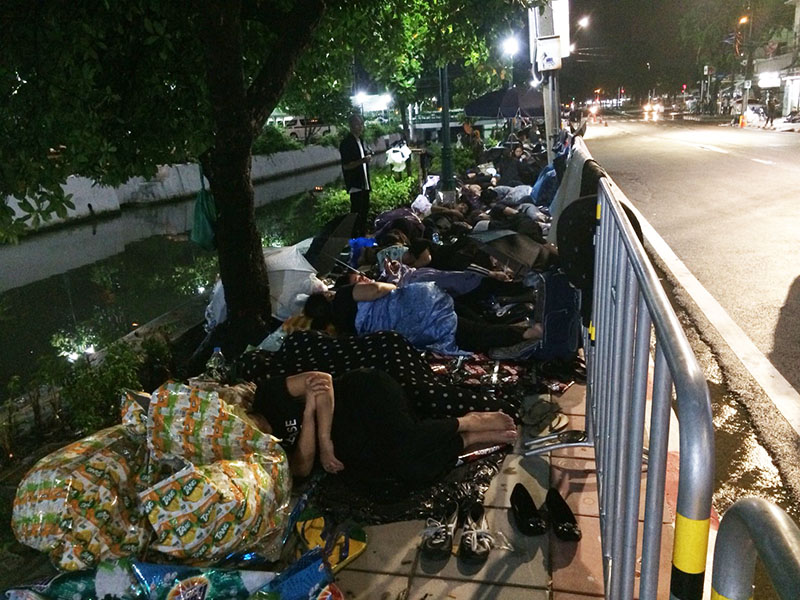
Mourners Brave Wet Night For Spot at Sanam Luang

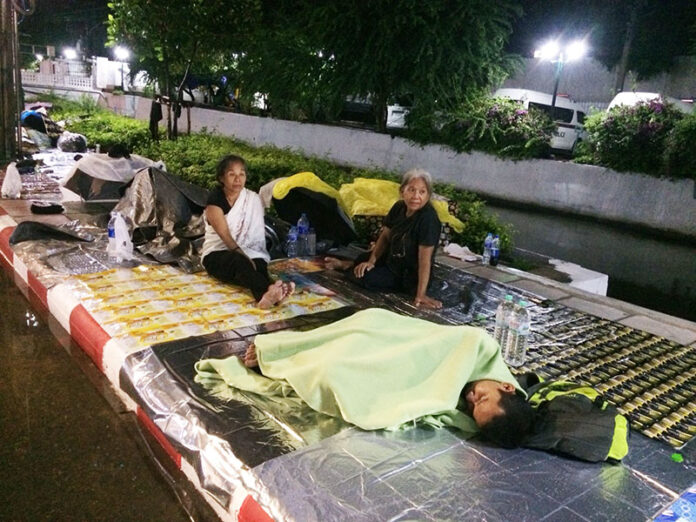
People sleep and sit on plastic tarps early Tuesday morning near the Grand Palace.

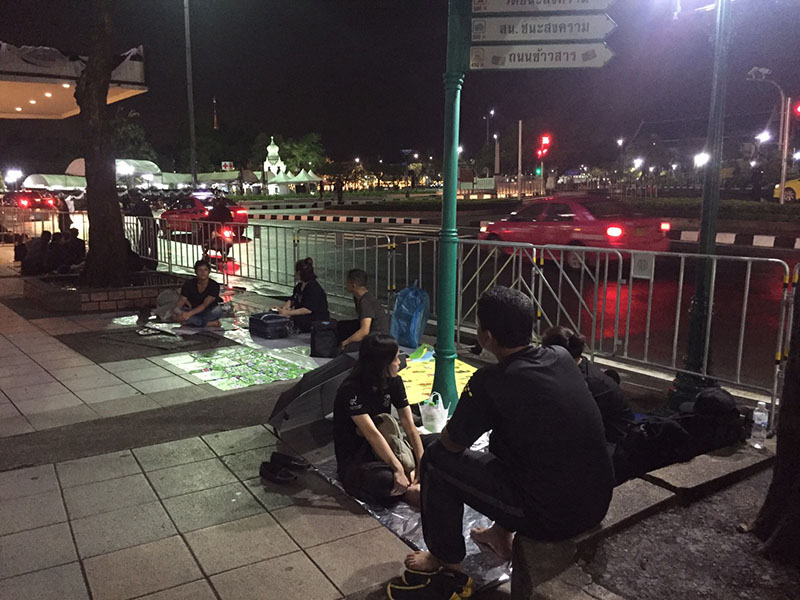
BANGKOK — It was a wet Tuesday morning for the first people to camp overnight in the Sanam Luang area three days before the funeral for King Rama IX.

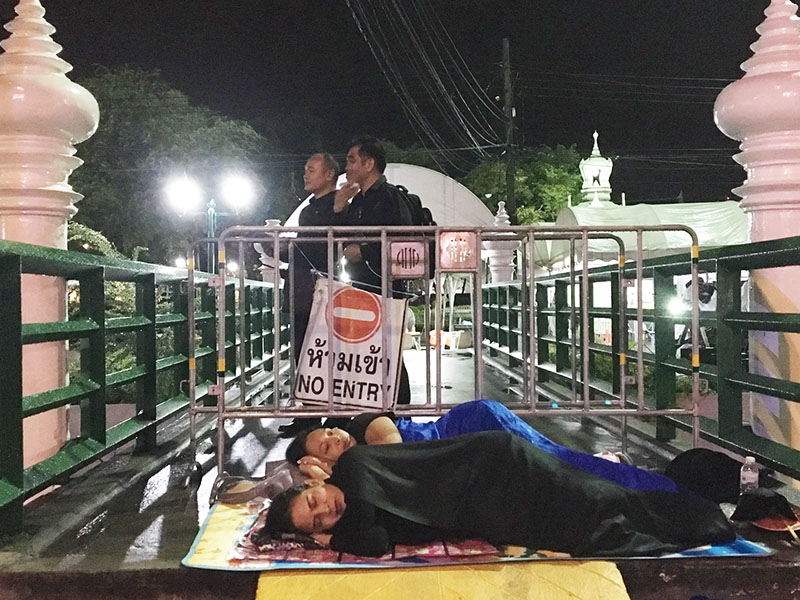
Mourners who arrived to camp last night were laid out beneath the falling rain on plastic tarps on sidewalks in the area around the royal palace to secure camping spots for the royal funeral.

The rain deterred few. Some had umbrellas or raincoats – tents or temporary shelters are not allowed.

Watch: Virtual Thailand – Enter the Crematorium of King Rama IX

Mourners camped on the roads around Thammasat University’s Tha Prachan Campus, in front of the Defense Ministry on Ratchadamnoen Nai Road and in front of the Royal Hotel on Ratchadamnoen Klang Road.

Large crowds have gathered in recent days to watch funeral procession rehearsals. The crematorium complex, which will be used for the funeral, was officially completed Oct. 18 after eight months of construction.

S 7938058 S 7938060 S 3473491 S 3473488 S 7938057 S 3473492 S 3473490 S 16253094 S 38830161 S 16253111 S 16253105 S 16253103 S 16253100 S 16253099 S 16253098

Related stories:

Thousands Gather For Practice Cremation Procession (Photos)

Virtual Thailand: Enter the Crematorium of King Rama IX

Here Are the Foreign Dignitaries Coming to Royal Funeral

Advertisement

Hong Kong Activist Joshua Wong Freed on Bail Pending Appeal

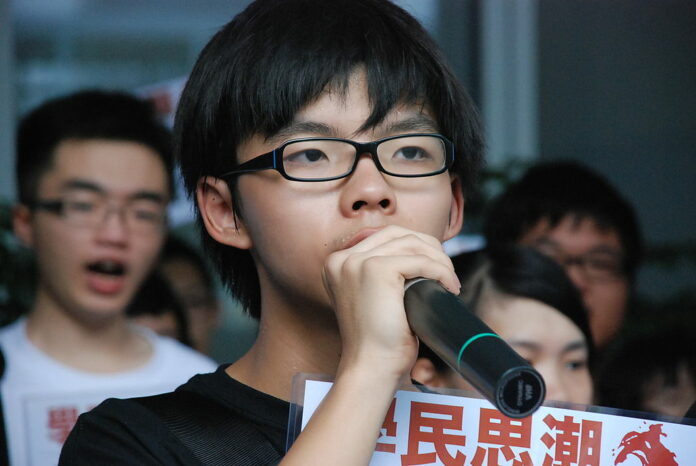
Joshua Wong in a July 2012 photo. Photo: Voice of America / Public Domain

HONG KONG — Hong Kong’s highest court freed pro-democracy activists Joshua Wong and Nathan Law on bail Tuesday pending an appeal of their prison sentences after they were convicted of sparking massive protests in 2014.

The two were granted bail by the Court of Final Appeal, according to a post on their political party’s Facebook page and local media reports.

In August, the two were given prison sentences for their involvement in an unlawful assembly that kicked off the “Umbrella Movement” protests.

The two had been originally been given more lenient sentences that allowed them to avoid prison but the justice secretary requested that the courts review those punishments.

The move sparked fears that authorities were undermining the semiautonomous Chinese city’s independent judiciary, underlining concerns among residents that Beijing is clamping down on dissent.

Following the review, Wong, 21, was given six months and Law, 24, received eight months. They were among student leaders who spearheaded the protests against Beijing’s decision to restrict elections, which brought major thoroughfares in Hong Kong to a standstill for 79 days.

Local broadcaster RTHK reported that Judge Geoffrey Ma required each to post 50,000 Hong Kong dollars (USD $6,400) for their bail, surrender their travel documents and report to police once a week. Their appeals will be heard Nov. 7.

Dozens of supporters and a large press pack waited outside the courthouse for the pair to appear.

Wong gained fame for his prominent role in the Hong Kong protests while still a teenager. Law was elected last year to the legislature, becoming the city’s youngest-ever lawmaker, and then was disqualified from office after a government legal challenge over irregularities in his oath.

A third student leader, Alex Chow, who was also convicted and imprisoned in the same case is not appealing.

Story: Kelvin Chan

Advertisement

US Diplomat Apologizes After Indonesia General Denied Entry

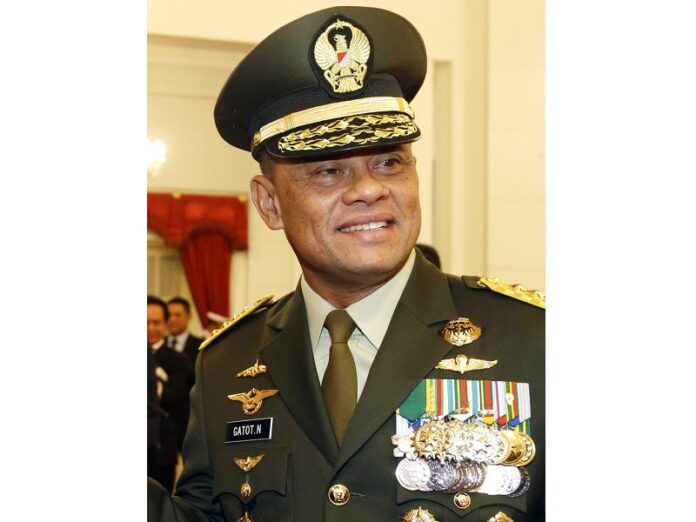
Indonesian Armed Forces Chief Gen. Gatot Nurmantyo pose for a photo after his swearing-in ceremony at the presidential palace in 2015 in Jakarta, Indonesia. Photo Achmad Ibrahim / Associated Press

JAKARTA — A U.S. diplomat apologized to Indonesia’s government Monday after the top Indonesian general was prevented from traveling to Washington, but a Jakarta official said the country expected a complete explanation.

Erin McKee, deputy U.S. ambassador to Indonesia, did not explain why Gen. Gatot Nurmantyo was prevented from boarding a flight to the U.S. but said the matter had been resolved.

In Washington, Department of Homeland Security spokesman Dave Lapan said Gatot was unable to board his flight due to delays arising from “U.S. security protocols.” The issue with his boarding approval was quickly resolved by U.S. authorities and he was rebooked on another flight but chose not to travel.

McKee met Monday with Indonesia Foreign Minister Retno Marsudi and said she apologized. U.S. Ambassador Joseph Donovan also offered an apology, according to a statement Sunday from the embassy. He is currently visiting a remote part of Indonesia.

Relations between the U.S. and Indonesia, the world’s most populous Muslim nation, are generally friendly. Indonesia’s military has a checkered human rights record, but Nurmantyo has not been accused of rights abuses.

“We deeply regret the inconvenience that this incident caused and we apologize,” McKee told reporters.

“There are absolutely no issues with his ability to travel to the United States. We welcome him. The embassy is working very hard to understand what happened,” she said.

Marsudi said Indonesia still expects the U.S. to provide a more complete explanation.

“I’ve said that it was not enough. We still need an explanation of why the incident happened,” she told reporters.

Nurmantyo and his wife had planned to leave Indonesia on Saturday but were told by their airline shortly before departure that U.S. customs would deny their entry, according to military spokesman Wuryanto, who goes by one name.

Nurmantyo had been invited by Gen. Joseph Dunford, chairman of the U.S. Joint Chiefs of Staff, to attend a conference in Washington on countering extremist organizations.
Wuryanto said that Nurmantyo, his wife and an entourage of four officials had U.S. visas and that Nurmantyo last visited the U.S. in February 2016.
Lapan, the homeland security spokesman, said the U.S. government “is dedicated to ensuring that all persons traveling to the United States are screened and properly vetted. We regret that the passenger and his wife were inconvenienced.”

Advertisement

Hot News

LATEST NEWS

Bangkok
overcast clouds
30 ° C
35 °
30 °
52 %
7.3kmh
100 %
Mon
30 °
Tue
34 °
Wed
32 °
Thu
32 °
Fri
31 °