26.6 C
Bangkok
Friday, July 3, 2026
Home Blog Page 2437

DSI Detects Dhammajayo’s Phone Signal

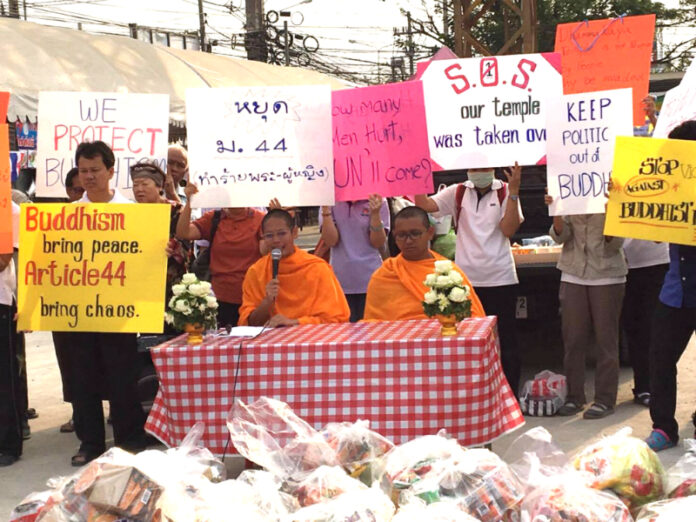
Dhammakaya monks and followers protest the use of the junta’s self-granted absolute power to search the temple last month in front of Wat Dhammakaya.

PATHUM THANI — The Department of Special Investigation, or DSI, said Saturday it is verifying whether a signal believed to have come from the fugitive former abbot at the center of their siege on a sprawling temple complex north of the capital was genuine.

The agency’s director said the signal picked up one week was an outgoing call from inside the temple to a hospital in the Rama IX area at 4am on Feb. 18, two days after the DSI gained entry to Dhammajayo’s room and found nothing but pillows in a human shape.

Read: Inside Wat Dhammakaya, Defenders Say Morale and Mistrust Run High

Director Paisit Wongmuang said he had ordered a search of the area where the signal was found, Matichon reported, as it may not have been used by Dhammajayo himself.

Paisit insisted the operation is not targeting the temple or faith, but only limited to arresting the temple’s 72-year-old spiritual leader, who is wanted for allegedly accepting 1.4 billion baht of donations embezzled from a credit union.

Infowars

By coordinating with the telecommunications authority, DSI on Friday cut phone and internet signals inside the temple area to prevent its followers from communicating and coordinating on social media.

“They use social media to give out false information,” said DSI deputy director Col. Songsak Raksaksakul. “It prevent officials from doing their duties effectively.”

Songsak said they will evaluate the situation daily to decide when phone and internet service inside the temple area should be restored.

Dhammakaya representatives responded Friday saying the DSI was overreacting and impinging on their rights. They demanded the government to restore communications access and let society make up its mind through information from both sides.

The siege began Feb. 16 after junta chairman Prayuth Chan-ocha used Article 44 to declare the temple a restricted area in which authorities could act with impunity, free of legal accountability.

The confrontation continued Saturday with military and police blocking entrances to the temple.

Dhammakaya’s monks and its followers continued to rally for the order to be revoked, and demanding the authorities open the temple’ entrances as normal.

The National Office of Buddhism on Friday said the temple claimed no one knows the whereabouts of the abbot, who they said has not been seen in a long time.

Related stories:

Dhammakaya Monks Confront Soldiers Trying to Enter Unfinished Hospital

Inside Wat Dhammakaya, Defenders Say Morale and Mistrust Run High

Dhammakaya Bans Three TV Stations For ‘Biased Reporting’

Old Grievances Flare on Social Media Over Dhammakaya’s Divisiveness

Cops and Monks Clash at Wat Dhammakaya

DSI Orders Wat Dhammakaya Vacated by 3PM Sunday

Live Updates From Wat Dhammakhaya Raid

Junta Declares Dhammakaya Temple Controlled Area, Police Move in

Dhammachayo Removed as Abbot of Dhammakaya

Deadline for Dhammakaya Abbot to Surrender Expires, Again

Advertisement

Legislature Offers Alternative Facts to Excuse ‘No-Shows’

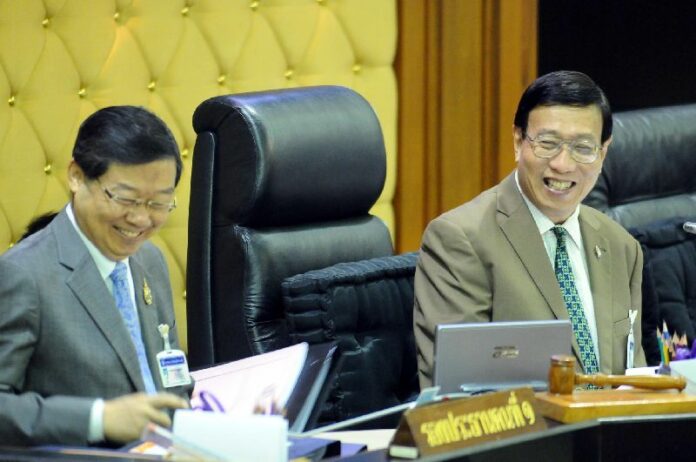
The chairman (R) and deputy chairman (L) of the NLA at a meeting that granted the legislature the power to impeach political office holders, 25 Sept 2014.

BANGKOK — To prove seven lawmakers were not derelict in their duties, the legislature Friday distributed a set of alternative information to compete with that published by a watchdog earlier this month.

Statistics handed out by the acting parliament secretariat showed the members missed hundreds of votes in a year’s time, redefining the scope of its own by-laws to conclude only four failed to meet the body’s participation requirements. In contrast, the original iLaw report which called them out for being no-shows earlier this month covered two three-month periods in 2016.

Regardless, the deputy leader of the National Legislative Assembly restated its position that no one would lose their jobs because all had permission not to appear.

Read: No-Shows to Retain Their Jobs on Legislature

The Feb. 5 iLaw report examined the first two quarters of 2016 because the legislature’s regulations require members to participate in over one-third of all votes or be removed.

After arguing that the men, including the younger brother of the head of the ruling junta, had leave not to appear, the body’s leadership on Thursday began asserting iLaw’s information was wrong.

They followed that up today by giving out records for the entire year, a period not covered by the iLaw report and seemingly unrelated to what’s covered in the by-laws.

Their data showed only four of the seven failed to participate in enough of 1,264 votes: head of the Council of State Distat Hotrakitya (214), Commander-in-Chief of the Royal Thai Navy Adm. Na Areenit (230), Budget Bureau Director Somsak Chotrattanasiri (387) and Royal Thai Air Force commander ACM Chom Rungsawang (398).

201609281314091 20030315183328
Prayuth Chan-ocha poses for photo with his brother Preecha Chan-ocha on Sept. 28, 2016, at Government House

In iLaw’s report, Gen. Preecha Chan-ocha, brother of junta chairman Prayuth Chan-ocha, had the worst record with five votes in the first quarter and only one in the second. He looked better in the broader set of data released today with 428 votes throughout 2016.

The other two members called out by iLaw, Federation of Thai Industries chairman Supant Mongkolsuthree and Navy Adm. Pallop Tamisanon, were said to have voted 656 and 646 times respectively.

Assembly Vice President Peerasak Porjit said Preecha and Pallop have been attending more frequently since they retired in September.

Alternative Data

On Friday, Peerasak repeated comments made a day earlier by himself and the assembly president that iLaw’s numbers were incorrect.

They made claims about the report that were demonstrably false. Peerasak alleged it claimed some members had taken leave for more than 300 days, when the report explicitly counted the number of roll-call votes, not days met.

iLaw fired back Thursday night, calling on the legislature itself to carefully study the report to avoid making incorrect statements.

“Information appeared in that article was not about ‘meeting days,’ but ‘number of voting participation times,’” the group wrote on its Facebook page.

The group also asked the assembly to make public participation records for all 250 members and their applications for taking leave. They questioned whether more members might have failed to meet the participation requirements.

Either way, Peerasak said three members of the interim parliament would sit on another committee to examine evidence and rule whether any members violated ethical standards.

They were given 30 days to complete their work.

Related stories:

No-Shows to Retain Their Jobs on Legislature

Gadfly Spurs Inquiry into No-Show Lawmakers’ Excuses

Prayuth’s Brother a No-Show on Legislature, Collects Salary Anyway

Advertisement

Giraffe Birth Cam Too Raunchy for YouTube

HARPURSVILLE, New York — The owner of a New York zoo planning to livestream a giraffe giving birth says the video feed was briefly removed from YouTube because animal rights activists labeled it sexually explicit.

Animal Adventure Park started streaming video Wednesday of 15-year-old April in her enclosed pen at the zoo in Harpursville, 130 miles northwest of New York City. But owner Jordan Patch says YouTube removed the feed early Thursday after someone reported it was explicit and contained nudity.

In a video posted on the zoo’s Facebook page, Patch blamed “a handful of extremists and animal rights activists” for interrupting the stream from the “giraffe cam.” The live stream resumed on YouTube later Thursday morning.

April is expected to give birth to her fourth calf in the coming days.

Advertisement

First Station of Stalled BTS Green Line to Open April 1

A rendering of BTS Samrong. Image: Mrta-greenline.net

BANGKOK — After recently announcing it lacked the funds to launch a nearly completed extension to the BTS Sukhumvit Line, City Hall will go forward with a scaled-down plan: open just one station.

For the first time in five years, the Skytrain will soon push into Samut Prakan with the addition of one more station – BTS Samrong – which Bangkok Gov. Aswin Kwanmuang announced will open April 1.

Located at Soi Sukhumvit 80, the station is the first of nine stymied by a financial shortfall to extend the popular rail service 13 kilometers toward the Gulf of Thailand.

Read: Green Line Going Nowhere for at Least Two Years

Riding past BTS Bearing to Samrong will be free until 2018.

Construction is completed on the entire Green Line extension but for electrical and communications systems. However, City Hall said late last month it may not run for two years due to funding issues.

In that context comes the plan to turn on its first station. Test runs start in March, and fares will be waived until all nine stations are operational, Aswin said.

He hopes total system ridership will increase to a million per day once both the southern and northern portions of the Green Line extensions are in service.

After BTS Samrong the train will stop at Pu Chao Saming Prai, Erawan Museum, Navy Academy, Samut Prakan City Hall, Srinakarindra, Phrak Sa, Sai Luad and terminate at the Kheha Samut Prakan housing projects. The terminal will include a nearly 3 hectare parking lot that can hold 1,200 vehicles.

Advertisement

New Book Catalogs Lese Majeste Cases – But May Not Win Converts

'Room for Rent: No. 112'

Someone goes to prison after a stranger records them criticizing the monarchy. Someone else is turned in by their own brother for remarks made in the privacy of their home. An elderly man goes to prison for scrawling graffiti in a men’s restroom at a shopping mall.

A new book presents readers these and other cases in a brief but disturbing anthology of 22 lese majeste cases from the past decade. The 10 writers who contributed to the short volume, published in Thai by a legal reform group, seeks to put human faces to these cases. But depending on one’s political perspective, “Room for Rent: No. 112,” either reads as a cautionary tale or litany of deserved sufferings.

Since May 2014, Thailand under the military junta has seen the prosecution of more than 60 new lese majeste cases. The book, published by the Internet Law Reform Dialogue, or iLaw, details some of these new cases but includes older ones as well.

The writers note in the preface that they do not expect to change everyone’s mind about the law but at least get them to see the 22 suspects and convicts as human.

The slim volume is filled with dramatic accounts. It’s worth noting, as the preface explains, that some of the names have been changed and that – other than in two cases – no family names are revealed. This says a lot about the enduring stigma lingering over anyone charged or convicted of the controversial crime, prosecution of which often entails the refusal to grant bail and the use of secret trials. The maximum punishment is 15 years in prison, per offense. Except for a few famous cases, readers can’t be sure if the names used in the stories are real, as the writers do not specify one way or the other.

Brother Against Brother, Passenger Against Driver
Among the more disturbing accounts of lese majeste cases is the one against a man identified as Yutthapoom. His brother claims the man said abusive words against the king when the king’s image appeared on TV one evening, and he found in their home a CD on which his brother had written something defamatory against the monarchy. Yuttahpoom denied all charges. Despite testimony from their mother that there was deep-rooted bad blood between the two, the plaintiff’s admission they were in conflict and the court’s inability to prove whose handwriting was on the disc, Yutthapoon ended up spending 11 months and three weeks in prison before the case was dismissed in September 2013.

“This case added to the climate of fear about peacefully debating [the monarchy] in Thai society. It pushed everything related to the king to become so sensitive that it couldn’t even be uttered between family members,” the book notes on page 99.

Then there’s Bangkok taxi driver Yuthasak, who ended up being charged after he made what was deemed a critical comment against the monarchy in a verbal debate with a passenger. The passenger recorded the conversation and Yutthasak was subsequently arrested soon after the May 2014 coup. Pleading guilty, he was given a reduced sentence in August 2014 from five to two and a half years. Another cautionary tale.

Famous Cases
More familiar names such as Somyot Prueksakasemsuk and Tom Dundee are included in the anthology. In an attempt to humanize Somyot, a former editor of pro-Redshirt magazines, the writer approached the story through the travail of Somyot’s son fighting in vain for his dad. All is well except the chapter failed to mention that Somyot was originally sentenced to 10 years in prison – it was just reduced Monday to seven – for articles he claimed were not written by him and were based on fictitious characters construed by the judges as a reference to the Thai monarchy. You don’t get away with fiction in Thailand under the law.

As for famous Redshirt singer Tom Dundee, 58, aka Thanat Thanawatcharanon, the story was told through his new wife. It ends with her learning he’d been sentenced in June to seven and a half years for comments made at a Redshirt rally, saying she will wait until his love is freed. Thanat is serving two lese majeste sentences, a combined 10 years and 10 months. The chapter didn’t fail to capture the eccentricity of the sentence which includes judges’ order that Thanat planted trees in honor of the king after completing his time in prison.

Military Court
Updating the cases to the present, the book notes how since the coup, military courts have been used against those charged under the lese majeste law and the impact of speed-up justice processes under the military. Several cases in the book noted how those charged under the law were very quickly conducted, many in secret, if those accused confessed.

The chance of being granted bail by the military court prove to be more difficult. If you are wrongly charged, be prepared to spend a period in remand prison. This happened to Jaruwan, who was accused of breaking the law through her Facebook posts despite the lack of clear evidence. She was arrested in the months after the coup, on February 2015. It took 85 days of jail time before military court judges dismissed the case. The writer noted that in a country where tens of millions use Facebook to communicate and express themselves, “this could have happened to any Facebook user”.

Missing Argument
There’s no shortage of humanizing the lese majeste prisoners in the book. Will readers become sympathetic if they are royalists who support the law? It is doubtful. If you are a die-hard ultra-royalist you will naturally defend the lese majeste law as necessary and what happened to these 22 people in the book will read more like a deserving result for the bad karma they made against the revered monarchic institution.

Tear-jerking narration abounds in the book but less so sound arguments making the case for the right to free expression. Perhaps it was the author’s conscious choice, as the closest we get comes from third parties.

“We only have different thinking [about the monarchy]. Different thinking doesn’t cause people to die. It only induces intelligence,” the book quotes either Tom Dundee or Thanat.

No matter what one thinks of the lese majeste law and prisoners of conscience, the book is a valuable record on the impact of the law under Article 112 of the Criminal Code. Posterity, decades if not centuries from now, may remember it as exotic and disturbing, like accounts of slavery read about in centuries past and far away.

Intentionally or not, a note of stoic acceptance despite a long sentence was recorded on page 112 of the 168-page book which was funded by Germany’s Heinrich Boll Foundation. It was the voice of lese majeste convict who goes by the name of Charnvit. The 60-year-old man was sentenced to 6 years in prison in December 2015 for penning and distributing leaflets deemed as attacking the monarchy.

When asked by the writer after learning about his fate, Charnvit who regarded writing political leaflets as a “political operation” that citizens should produced replied: “Never mind. It’s not that different inside [the prison] or outside. The only difference is the size of the cage.”


Advertisement

A Look at Those Who Built What They Will Never See

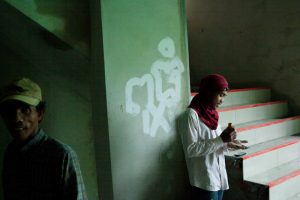
An image from the Behind Tin Walls exhibition. Photo: Visarut Sankhum / Courtesy

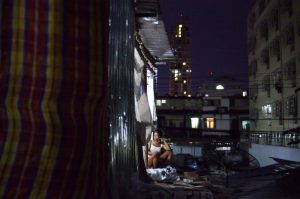
BANGKOK — The hands raising Bangkok’s luxurious spires live in a parallel world of tin-roof shanties, a glimpse of which will be available at an exhibition opening next week.

“Migration in Thailand reaffirms that nation-state is something imaginary and awkward,” photojournalist Visarut Sankhum wrote in an email. “Economic migrants reflect how capitalism works: cheapest cost to gain maximum profit. This causes violations of human rights.”

Read: Sex, Drugs, Boredom Tattooed Under Skin of Bangkok’s New Spire (Photos)

Currently studying a master’s degree in Chiang Mai, Visarut explored three different construction camps in the capital, where most workers were Cambodian. He illustrated the contrasts between their poor living conditions and the luxury skyscrapers they build to reflect social inequity in his lens.

“I always believe that humans are equal and migrants deserve to live and work legally and be treated equally,” he wrote. “Although there’s only one campsite that was in bad condition, it’s worth telling the story to the public to confirm that there are humans who have to live in such conditions to build the houses, residences and [city] for us to live in.”

The opening reception starts at 7pm on March 3, and the exhibition runs for six weeks at the Foreign Correspondents’ Club of Thailand on the top floor of the Maneeya building, which is linked by skywalk through BTS Chit Lom’s exit No. 2.

All photos courtesy Visarut Sankhu

IMG 4696 IMG 8051

Visarut

IMG 8175

Advertisement

Oscars Still Lagging in Female And Minority Representation

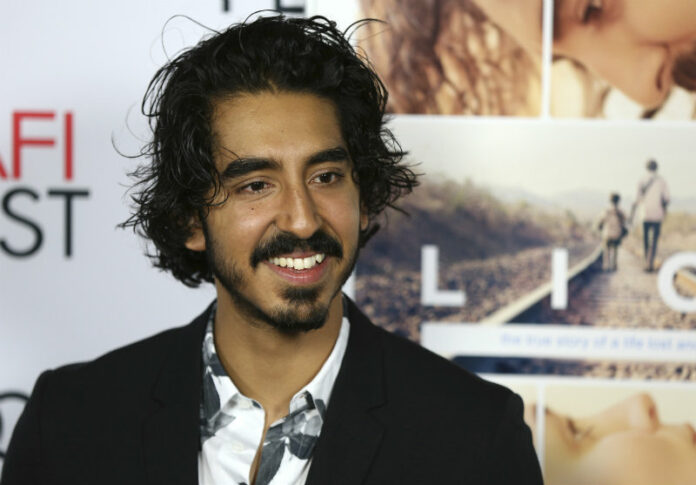
FILE - Dev Patel arrives at the premiere of "Lion" during the AFI Fest at the TCL Chinese 6 Theatres in Los Angeles on Nov. 11, 2016. Photo: Rich Fury / AP.

LOS ANGELES — The 2017 Oscar nominations were a banner year for black nominees both in front of and behind the camera, but other nonwhite groups and women were largely left out of the running. As #OscarsSoWhite creator April Reign said, her hashtag was never about just black actors, but all communities marginalized in Hollywood including Asians, Latinos, and women.

“We still have work to do,” said Gil Robertson, president of the African American Film Critics Association.

This year, the sole non-black acting nominee of color was British-Indian actor Dev Patel for his supporting performance in “Lion.” It’s been over 13 years since another Indian — Ben Kingsley — was nominated. Kinglsey is also the only person of Asian/Indian descent to be nominated for best actor (two nominations, one win). The lead actress category is even bleaker for Asian women. You have to go back to 1935 to find the only nominee.

Latinos, too, have been missing from the acting nominations for years. Demian Bichir was the last Latino best actor nominee in 2012. In the supporting category, you have to look to 2004 and Benicio del Toro’s nomination for “21 Grams.” Del Toro also won in the category in 2001 for “Traffic” — the only actor to ever win for a Spanish-speaking role.

The last time a lead actress of Latino descent was nominated was Colombian actress Catalina Sandino Moreno in 2005 for “Maria Full of Grace.”

“We just have to keep on doing good films and if in the United States these get picked up and they get a little bit of attention, well, it’s great,” said Mexican actor and director Gael Garcia Bernal. “But at the same time, it’s something that is not in our hands. We need to just make good films.”
Supporting actor nominee Mahershala Ali hopes that people of color can become part of the fabric of entertainment in a “real and organic way.”
Behind the camera, after a three year stretch of Mexican filmmakers winning best director, this year none were nominated. The only Latino nominee in any category this year is Rodrigo Prieto, who was nominated for best cinematography for “Silence.” If he wins, it will be the fifth year in a row that a Latino has won that prize.

Asians behind the camera were a little more represented. “La La Land’s” Ai-ling Lee became the first Asian sound editing nominee. And “La La Land’s” Tom Cross, who is half-Vietnamese, is up for the editing award. Toshio Suzuki is nominated for best animated feature for “The Red Turtle,” as is Joanna Natasegara for best documentary short for “The White Helmets.” This past year, the academy also gave Jackie Chan an honorary Oscar.

“It’s not about the awards, it’s about the creators, the actual birth of those stories,” said Patel.

Women, too, are a minority in Hollywood. For women behind the camera, things have gotten worse overall, despite some strides, including “Jackie” composer Mica Levi becoming the first women to be nominated for original score.

However, it’s been seven years since there was a female best director nominee when Kathryn Bigelow won for “The Hurt Locker.” Before Bigelow, there had been only three female directing nominees in the history of the awards.

Only one woman was nominated in any screenwriting category, Allison Schroeder for “Hidden Figures,” down from three last year, and, once again, no women were nominated for cinematography.

Other categories experienced similar drops, save an increase in nominations for women in the sound editing and sound mixing categories, thanks to “La La Land’s” Ai-ling Lee.

Overall representation of women in Oscar-nominated behind-the-scenes categories fell two percent, according to a recent report from the Women’s Media Center.

But this isn’t surprising to those who follow the industry year round.

“This year is similar to previous years where we don’t have enough women in many of the positions behind the scenes,” said Melissa Silverstein, the founder and publisher of the Women and Hollywood blog. “It’s wonderful to see a lot of female producers whose films are nominated for best picture, but again this illuminates how difficult it is for women to rise to the top of the business and to be taken seriously at this level.”

And it’s not just a box office issue, Silverstein says. It’s also about prestige.

“When money is there, there are fewer women. When prestige is there, there are fewer women,” she said. “This has not changed and I don’t see this changing on the horizon. At the Oscars we just notice it a lot more.”

Story: Lindsey Bahr

Advertisement

Tiger Temple to Reopen 9 Months After Raid

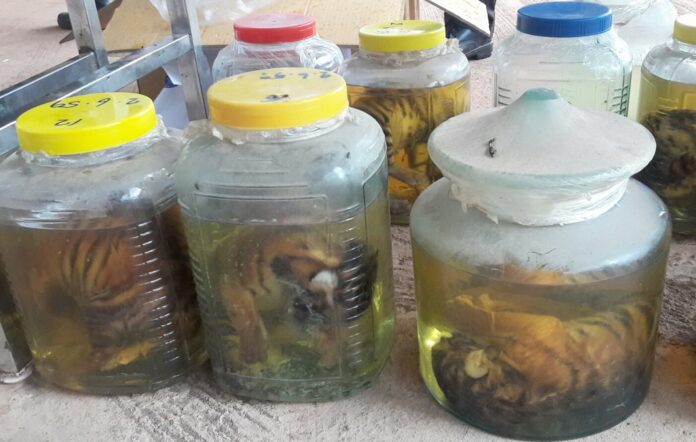
Jars containing dead tiger babies found June 2 during a raid on the Tiger Temple in Kanchanaburi province.

BANGKOK — Armed with a zoo permit and a brand new set of tigers, the people behind the infamous Tiger Temple plan to reopen for business in March.

Eight months after officials raided and shut down the temple, where they discovered a grotesque operation where tiger parts were harvested for magic amulets and energy drinks, a new zoo is set to open right nearby under a different name in March. Meanwhile a criminal case against those operating the temple on trafficking charges appears to be going nowhere.

Adisorn Noochdamrong, a national park official who led the June raid on the so-called Tiger Temple, said the project is perfectly legal, as the zoo was registered two months before the police operation began.

Read: Horrible Discovery in Tiger Temple: Dozens of Dead Tiger Kittens (Photos)

It’s also marketed as a Tiger Temple, where tourists can pay to interact with 105 big cats when it opens. Adisorn said it won’t be the animals rescued from the former venue, but rather tigers transferred from another commercial zoo in Nakhon Nayok province.

“They have the right to do that,” said Adisorn, a former deputy director of national park department who now serves as the ministry’s ombudsman.

At least one tour company is already selling tours for a “Breakfast with Monks & Tigers” at the site for 10,550 baht for one person.

“They are re-opening,” Tony Clark, an employee of Thailand Tour Centers, said by telephone. “It’ll be at the same place.”

Clark said the tours will start some time after March 1, adding that he expects most of the clients will be foreign tourists.

For over a decade the Tiger Temple profited handsomely by charging foreigners to visit more than 100 tigers kept without any permit. Animal rights activists had long accused it of abusing and trafficking to overseas buyers the very animals it claimed to protect.

Paper Tiger Prosecution
Although the Tiger Temple and the upcoming zoo are separate entities, the link between the two was undisputed. A legal rep for the controversial temple announced last April that it was seeking permission to open a zoo under the auspices of Tiger Temple Co., which would be run by a disciple appointed by Tiger Temple abbot Phra Wisutthisarathen.

The zoo permit was granted two months before wildlife officials finally raided the temple, officially known as Wat Pha Luang Ta Bua Yanasampanno, to shut it down following years of complaints.

The raid also confirmed activists’ worst fears with shocking discoveries of tiger and other animal parts used to make commercial products. Among the gruesome discoveries were cured tiger pelts, claws used to make magic amulets, tiger-based energy drinks and dozens of bottles containing dead tiger cubs.

Abbot Phra Wisutthisarathen, known locally as Luang Ta Chan, and his associates were charged with illegally selling and possessing protected animals. They have repeatedly denied the allegations and have remained free while the case stalls.

Adisorn, who was in charge of the case until his transfer last month, said the cases have yet to reach the prosecutor’s office and blamed the police.

“For example, when we followed up on the case, it turned out some suspects that we named among the accused were missing from the case file compiled by the investigators,” he said. “So we had to protest and show them documents, and they had to spend more time revising the case file.”

No Longer Wild
A report on National Geographic suggests that those behind the Tiger Temple’s offshoot zoo operation are distancing themselves from the scandals; the zoo company earlier this month changed its name from Tiger Temple Co. Ltd. to Golden Tiger (Thailand) Co. Ltd.

Adisorn said he doesn’t know whether the company paid any money to the owners of Mali Sarika, the Nakhon Nayok zoo providing the tigers for the new facility.

Though he said the transfer is legal, Adisorn cast doubt on claims the zoo will open in March. Construction is not finished, he said, and wildlife officials will have to inspect whether it can actually accommodate that many tigers.

“We have to first see whether it’s in accordance with our regulations,” Adisorn said.

As for the tigers seized from the Tiger Temple in June, he said they are bound to live out of their days in captivity.

All of the tigers are currently housed at breeding stations run by national park authorities. None will be released to the wild because they were held in the Tiger Temple for so long they can’t survive in the wild.

“It will very difficult for them to feed and fend for themselves,” Adisorn said.

Related stories:

Tiger Temple Volunteers Deny Knowing of Abuses

Abbot of 22 Years Denies Knowing Tiger Temple’s Terrible Secrets

Officials Hunt for Abbot of Tiger Temple

Bottles of Real Tiger Labeled ‘Energy Booster’ Discovered in Tiger Temple

Conservation Rhetoric Falls Apart as 1,000 Magic Tiger Amulets Seized From Monk (Photos)

Lion, Tiger Pelt, More Wildlife Discovered Inside ‘Tiger Temple’

Horrible Discovery in Tiger Temple: Dozens of Dead Tiger Kittens (Photos)

Officers Enter Tiger Temple to Begin Removing Tigers

Another Showdown as Tiger Temple Blocks 1,000 Wildlife Officers

Advertisement

Snatch and Stash: Police Find Brit’s Trove of Stolen Goods on Phuket

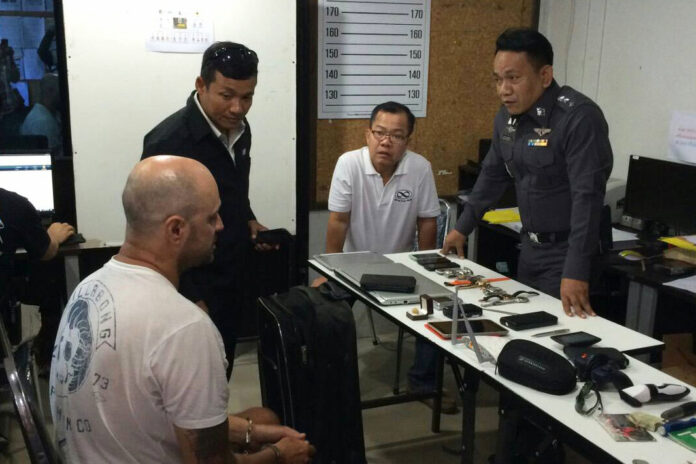
Charlie Machin at the Choeng Thale Police Station Friday morning.

PHUKET — A British man was arrested Friday on suspicion of preying on other foreign tourists to accumulate a hoard of stolen goods at his island residence.

Police arrested Charlie Machin, 53, at 1am at his rented house in the island’s Thalang district after police identified him as a suspect in the burglary of another foreign man’s home.

“He’s a tourist who regularly enters and exits Thailand. We received complaints about various items being continually stolen in our area and traced them back to him,” police Lt. Col. Sa-ard Wongwianjun said Friday.

One of the items stolen was an iPhone 6. Police used its GPS to track it to Machin’s residence where they took him into custody.

A search of the dwelling turned up the missing smartphone, as well as other allegedly stolen goods including an iPad, Canon camera, Macbook, two brown wallets, four passports, ring of keys, portable hard drive, black messenger bag, Yamaha motorbike and another iPhone 6.

Sa-ard said Machin has confessed to stealing some of the stockpiled loot.

But that wasn’t all. After he was brought to the station, Machin told police he in fact had many more stolen goods hidden in his house. After conducting a second search, police had recovered a total 53 items.

Only a few items had been reclaimed so far.

“One of the obstacles we’re now facing is that his victims were other tourists, and many have already gone home, so they can’t reclaim their items,” Sa-ard said.

Police said anyone who suspects the Briton may have gaffled their goods can inquire at the Choeng Thale Police Station.

According to Sa-ard, Machin will be charged with theft.

Advertisement

Southern Bombing Case Goes to Army Prosecutors

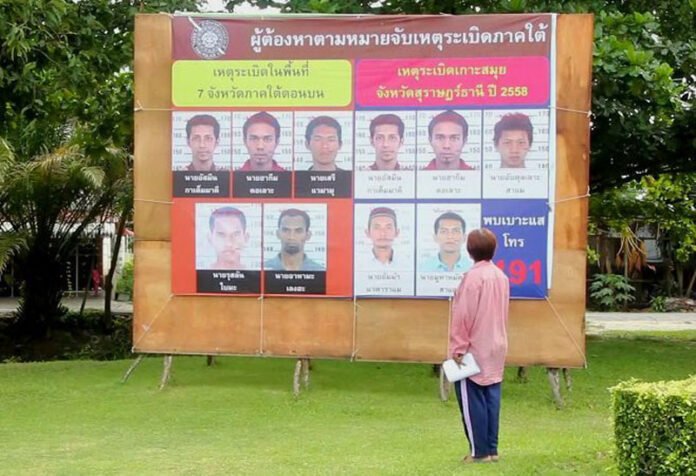
Police in Nakhon Si Thammarat province on Sept. 15 installed a large sign showing photos of the suspects in connection to the bomb and arson attacks during Mother’s Day holidays to urge people to help giving useful information. It also includes photos of suspects from the 2015 bombing of a Koh Samui shopping mall.

NAKHON SI THAMMARAT — Police wrapped up their case Thursday against 10 suspects in last year’s bomb and arson attacks in the southern provinces, though most remain at large.

Nearly seven months after a series of explosions hit the southern region during the Mother’s Day holidays, police submitted their case to military prosecutors. Only two suspects have been captured and police are still hunting eight others, the head investigator said. All hail from the southernmost border provinces.

Held since September without charge under the junta’s special authority, were two men from Pattani province: Muhammad Muhi, 21, and Abdulkadir Saleah, 33.

In November, Muhammad reportedly told a military court in Nakhon Si Thammarat he was involved in planting a series of bombs in Phuket province over several days in August.

Heading the police effort is Srivara Ransibrahmanakul, who said police decided to move forward with cases and recommend prosecution of all 10 suspects linked to 16 incidents.

The spree of violence began Aug. 10 and continued through Aug. 12. Bombs hit seven provinces, killing four people and injuring a dozen others. All suspects identified by police were from the southern border provinces and some had known histories with the separatist movement there.

Though separatist group BRN claimed responsibility for the attack a month later, police have consistently denied the attacks had any connection to the insurgency movement, an escalation of which coincided with last year’s attacks.

On Thursday, police asked the military court for three more arrest warrants based on information they said Muhammad provided.

Advertisement

Hot News

LATEST NEWS

Bangkok
overcast clouds
26.6 ° C
26.6 °
26.6 °
90 %
2.1kmh
100 %
Fri
33 °
Sat
30 °
Sun
30 °
Mon
30 °
Tue
29 °