




























28.3 C
Bangkok
Sunday, June 21, 2026
Home Blog Page 2498

Army Chief Shrugs Off Cyber Assault; Sites Remain Down

An image created as part of a campaign by Chulalongkorn University students who Thursday launched the Free Internet Society of Thailand activist group.

BANGKOK — There are only two ways to deal with those opposed to the Computer Crime Act, according to the army chief. First, try to make them understand. If they don’t, then prosecute them.

Army chief Chalermchai Sittisart on Friday played down the effects of this week’s online attacks on the government, saying they resulted in little damage. He warned the attackers, who he described as mostly youths, that it was not worth losing their futures if caught and punished.

“The junta website was also attacked but was not damaged much,” Chalermchai said at an army event in Bangkok. “It only slowed the site down a little bit.”

The attackers were being tracked down and would be prosecuted under the law, he added.

Online opposition group Citizens Against Single Gateway has continued to call for such attacks throughout the week. They demanded junta chief Prayuth Chan-ocha use his absolute power to cancel the law recently passed despite significant opposition on the grounds of privacy and online freedoms.

While much of the methods are believed to be typical denial-of-service attacks, members of the group have also posted documents they claim prove they have penetrated servers belonging to government agencies, police and the military. Most of the data seemed to consist of staff information.

The group announced it would expose details about army spending at 8pm on Friday.

Traffic police on Thursday confirmed their site had been hacked and was offline until they could fix the problem. The Defense Ministry site, among those attacked since Monday, has remained down all week.

At a conference on the controversial law held Friday at Chulalongkorn University, a lawyer who helped write it said people’s lives will be the same, and possibly better, when it comes into effect in March or April.

“Starting then, the court will dismiss all defamation cases being tried under the Computer Crime Act,” Paiboon Amonpinyokeat said.

Paiboon has maintained throughout the process of rewriting the 2007 cybercrime law that its most problematic section was improved to prevent it from being misused to prosecute online defamation cases. Rights activists and experts say it is still vague and ripe for abuse.

Right activists at the forum said passage of the Computer Crime Act 2.0 was another illustration of problems with the junta-appointed legislature.

Arthit Suriyawongkul of the Thai Netizen Network said the law ultimately places the burden on the courts to decide what is illegal or not, which compromises the supposed separation of powers between the three branches of government.

“We put most of our hopes on law enforcement and the courts,” he said  “Why didn’t we write it more precise in the first place?”

A prominent journalist said the law reflects the thinking behind hundreds of laws being drafted by the military regime.

“It reflects the idea of centralization,” Prasong Lertratanawisute said Friday. “If we can’t defeat this idea, then we have to continue holding forums like this every time they issue a new law.”

Related stories:

Gov’t Payment System Offline As Hacktivists Focus Online Assault

Dismissive Prayuth Tells Hackers to Knock it Off

Computer Crime Act 2.0 Passes Unanimously

Single Gateway ‘Still Necessary,’ Deputy PM Prawit Says

‘Back Door’ in CCA Not Trojan Horse for Single Gateway, Drafters Say

New Cybercrime Regs Would Open Back Door to Censorship

Website Shutdowns Soar After King’s Death

Why Thailand Should Worry About an Improved(?) Computer Crime Act

Thailand’s Draconian Cyberlaws Tipping Toward Totalitarian

Computer Crime Act Has Issues, Google Tells Censorship Committee
Advertisement

Regulator Shuts Down Booze Buffet; Threatens to Prosecute People Sharing Alcohol Pics

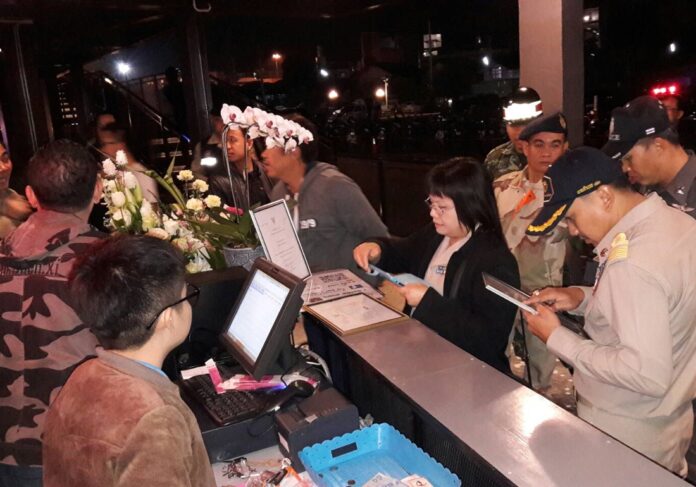
Security officers raid a bar Tuesday in Chiang Rai city for offering a 190 baht all-you-can-drink happy hour special.

BANGKOK — Thailand’s top anti-alcohol crusader is back, and he wants the internet to know even unintentionally promoting alcohol can lead to prosecution.

Following a yearlong media hiatus, Alcohol Control Board director Samarn Futrakul this week shut down a bar advertising all-you-can-drink packages on social media and warned Thursday that any netizen who encourages people to drink could face the same charges, no matter their intentions.

“Just by showing names and brands, whether directly or indirectly, people who post those photos are at risk of violating the same provision,” Samarn said by telephone.

Read: Thai Bar Chides Legal Overreach of Anti-Alcohol Crusader

The provision he referred to is Section 32 of Alcohol Control Act, which bans the display of names or trademarks of alcohol to “induce people to drink such alcoholic beverage either directly or indirectly.”

Samarn’s comments came after he alerted police officers in Chiang Rai province on Tuesday to arrest the owners of a bar offering a happy hour promotion in which customers could drink all they could at the low price of 190 baht. Women didn’t pay anything to drink before 8pm.

Samarn seized headlines for his prohibitionist fervor late last year until he faced a backlash for going too far.

He said Q-Bar violated the law by engaging in alcohol sales promotions and inducing others to drink, criminal offenses under sections 30 and 32, respectively.

The former charge carries a maximum penalty of 10,000 baht fine, while punishment for the latter is much harsher: one year in prison and 500,000 baht fine, along with an additional penalty of 50,000 baht per day offenders remain out of compliance.

Samarn, whose is a physician, said he wanted Q-Bar prosecuted as an example for people on the internet who publicly share photos of alcohol and urge others to drink.

Asked whether this extends to snapping photos of Singha beer at a party and sharing them on Instagram with a caption saying how awesome the beer tastes, Samarn said yes.

“If you don’t set it to private, and it’s out in the public, it’s considered media,” the regulator said. “Because even if I’m not friends with you, I can see your post.”

Whether or not the courts would convict, Samarn wants fear of prosecution to weigh on the minds of drinkers.

He said police can arrest and prosecute any booze-sharing netizens if they wish, and though the court may eventually acquit them on the grounds of insufficient evidence, it’s not worth risking the ire of the law.

“At least members of the public will waste their time going to court to defend themselves and prove they didn’t intend any wrongdoing,” Samarn said. “So I want to warn you: Don’t share that kind of post.”

His warning echoes his previous attempt to prosecute 30 celebrities in 2015 on violation of Section 32 for advertising a new line of Chang Beer on their Instagram accounts. At the time Samarn maintained that anyone posting pictures of alcohol would likewise be prosecuted.

The investigation eventually went quiet.

Samarn, who has said he believes drinking is sinful, also took took further steps to restrict booze sales, such as banning certain words from advertisements, arresting people for making cocktails and threatening to ban the popular beer gardens which open seasonally for open-air drinking.

It appeared the prohibitionist went too far with the last campaign. Growing criticism peaked when junta chairman Prayuth Chan-ocha publicly chided Samarn in November 2015, and he has kept a low profile since.

Related stories:

Make Notoriously Vague Booze Laws More Clear, Trade Group Urges

National Boozebuster Notifies Thailand Pre-Mixed Cocktails are Illegal

On Booze and Buddhism, Culture Warriors Grasp for a Past Already Passed

Thailand Back to the Booze Ban Future

Yes, Beer Pics Were Advertisements, Woonsen Concedes

Booze Regulator Warns Public on ‘Instant Beer’

Thai Bar Chides Legal Overreach of Anti-Alcohol Crusader

Advertisement

355 Threatened Marine Animals Killed in 2016

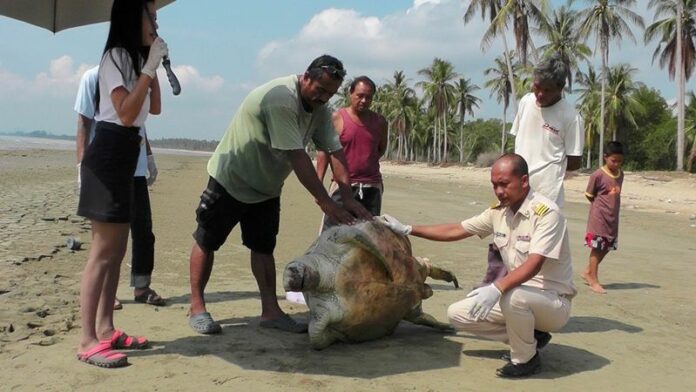
A marine official examines the body of a century-old green sea turtle which died after eating trash off the coast of Chumphon province in May 2016.

BANGKOK — It was a bad year for marine life, officials said Thursday.

In a year that saw the last known member of a manatee-like species die in the gulf, officials have been unable to halt the decline of vulnerable species, 355 of which have died since January in a 10 percent increase over 2015.

“The reason for their deaths are largely the same old reasons which can’t be solved, such as sickness and injury from both natural and man-made causes,” said Pinsak Suraswadi, director of the Marine and Coastal Resources Department. “Man-made causes include eating trash and injury from fishermen’s boats.”

The 355 dead marine animals included 11 dugongs, 180 sea turtles and 164 dolphins and whales.

Late last month the bruised and battered body of the last known dugong, identified by marine biologists as DU-391, was found off the coast of Rayong. No. 391 refers to the fact it was the 391st dead dugong to be found.

About the same number of sea turtles died in the gulf and Andaman Sea, while most dugongs died in the gulf. Twice as many dolphins and whales died in the Gulf of Thailand than the Andaman Sea.

Beached dolphins also had little chance of survival once they flopped ashore.

“Most beached dolphins that people find are severely sick, so their chance of surviving is virtually zero. Only sick dolphins swim to shallow waters near the coast,” Pinsak said.

Beached whales were often found as carcasses, but most beached sea turtles were rescued, Pinsak said.

Pinsak also said that for the past three years his department has been training coastal locals on how to proceed when finding an injured or beached marine animal. Pinsak said that this program helped rescue an increased 10 percent of marine animals, and the program would continue.

Related stories:

Giant Whale Killed by Boat Pulled Ashore in Prachuap Khiri Khan

Huge, Friendly Whale Shark Joins Sea Cleaning Crew (Photos)

Whale Sharks Spotted off Krabi

Advertisement

Cambodia Seizes Ivory, Cheetah Bones Shipped from Mozambique

A cheetah stretches in 2012 in the plains of the Masai Mara, Kenya. Photo: Carine06 / Flickr

PHNOM PENH — Cambodia has made one of its biggest seizures ever of smuggled animal parts, including more than a ton of ivory, a wildlife protection group said Thursday.

The Wildlife Alliance said 1.3 metric tons of ivory, 10 cheetah skulls and 82 kilograms (180 pounds) of cheetah bones, and 137 kilograms (301 pounds) of pangolin scales were found Dec. 16 concealed in three containers shipped from Mozambique.

The group said in a statement that another shipment of illicit ivory by the same company was intercepted in Vietnam in October.

Wildlife Alliance said Cambodia has made 19 seizures of ivory and rhino horn from six African countries since 2014.

A major international conference on wildlife trafficking was held last month in Vietnam, one of the major transit points and consumers of trafficked ivory and rhino horns.

The pangolin is considered the world’s most heavily trafficked mammal, sought for its meat, eaten as a delicacy, and for its scales, which are used in traditional medicine.

Advertisement

Pope Probes Order of Malta Ouster Over Old Condom Scandal

Pope Francis exchanges gifts with President of Malta, Marie Louise Coleiro Preca, left, and her husband Edgar, right, Saturday during a private audience at the Vatican. Photo: Claudio Peri / Associated Press

VATICAN CITY — Pope Francis launched an investigation Thursday into the ouster of a top official at the Order of Malta, the ancient aristocratic religious order, amid evidence that Francis’ own envoy to the group engineered the removal without his blessing over a years-old condom scandal.

Albrecht von Boeselager, a high-ranking official in the order for three decades, was removed as grand chancellor Dec. 8 after he refused to resign.

One charge against him concerned a program that the order’s Malteser International aid group had worked several years ago with other aid groups to help sex slaves in Myanmar. The trafficked women had been forced to work as prostitutes and were given condoms to protect themselves from AIDS, two people familiar with the case said.

An internal investigation was conducted and von Boeselager admitted he knew about the condoms, which were distributed by other aid programs, not his. The Vatican was informed, Malteser International’s participation in the program ended and an ethics committee was launched to ensure that future projects adhered to Catholic Church teaching, the officials said.

Church teaching opposes artificial contraception. However, some Catholic priests and nuns in Africa and elsewhere have condoned the use of condoms to prevent the spread of AIDS. Francis himself has said that “avoiding pregnancy is not an absolute evil” when, for example, women are at risk of the Zika virus.

In a statement, von Boeselager said he had been asked to resign during a Dec. 6 meeting attended by Francis’ ambassador to the order, the conservative Cardinal Raymond Burke. During the meeting, the order’s grand master indicated that the request to resign “was in accordance with the wishes of the Holy See.”

However, no such request was ever made. Von Boeselager said since his ouster, the Holy See has written to the order “confirming that such a wish was never raised.”

By naming an independent commission to look into the case, Francis appears to be seeking an objective assessment of von Boeselager and his ouster without the input of Burke, who has been among Francis’ fiercest critics.

Burke is one of four cardinals who have publicly questioned Francis’ flexible approach to whether civilly remarried Catholics can receive Communion. Burke is a hard-liner on the issue, as well as on the absolute prohibition on the use of artificial contraception.

Francis removed him as the Vatican’s supreme court justice in 2014 and named him to be the patron of the Order of Malta, an ancient Catholic order that runs hospitals and clinics around the world and has an army of volunteers who respond to natural disasters and war zones.

Burke had conveyed to the Order of Malta’s governing council on Dec. 6 that Francis wanted von Boeselager to resign, the two people familiar with the case said. They spoke on condition of anonymity because they weren’t authorized to speak about internal meetings.

Burke warned that if von Boeselager wasn’t removed, the Vatican would take over the order’s properties, they said.

On Dec. 15, a new grand chancellor was elected, John Edward Critien.

In his statement, von Boeselager said he still considers himself the duly elected grand chancellor, albeit one who has been impeded from doing his job because of an ouster that violated the order’s legal norms on several fronts. He said he has always felt bound by the teachings of the church and rejected the “liberal” label that his opponents have given him.

“To contrive an accusation that I do not acknowledge the church’s teaching on sexuality and the family, based on the sequence of events in the Malteser International Myanmar project, is absurd,” the statement said.

The pope’s five-member commission of inquiry is made up of Order of Malta members who have close ties to the German-born von Boeselager. Francis also named a trusted Jesuit canon lawyer as a member.

The knights trace their history to the 11th century with the establishment of an infirmary in Jerusalem that cared for people of all faiths making pilgrimages to the Holy Land.

Story: Nicole Winfield

Advertisement

Officials say Fingerprints Tie Tunisian to Berlin Attack

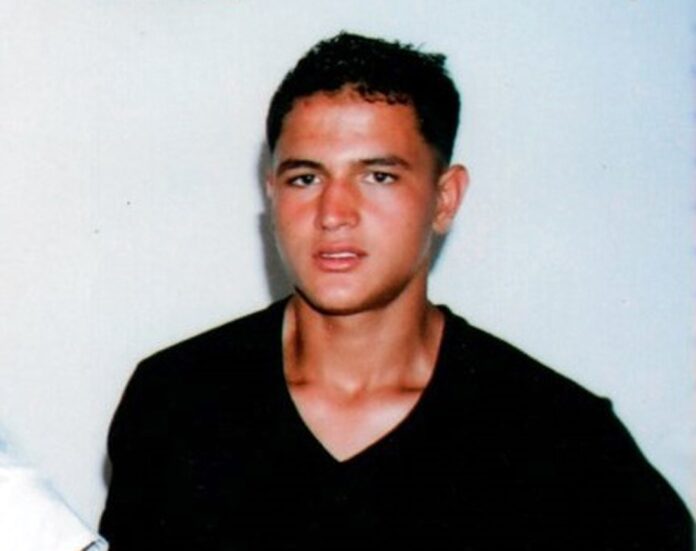
This undated picture provided by Najoua Amri on Thursday, Dec. 22, 2016, shows the fugitive Tunisian suspected in Berlin's deadly Christmas market attack, Anis Amri, posing at his parents' house in Oueslatia, central Tunisia. (Courtesy Najoua Amri to AP)

BERLIN — German officials presented mounting evidence Thursday that Anis Amri was behind the wheel of a truck that smashed into a Christmas market in Berlin, killing 12, as authorities across Europe pressed ahead with their feverish manhunt for the 24-year-old Tunisian, who has evaded capture since the attack.

Police raided properties in Berlin and the western state of North Rhine-Westphalia where Amri is believed to have spent time. They also swooped on a bus in the southwestern city of Heilbronn after receiving a tip that turned up nothing.

Police: Truck Attack That Killed 12 in Berlin ‘Intentional’

No arrests were made, said Frauke Koehler, a spokeswoman for federal prosecutors.

Even so, investigators were increasingly confident that Amri carried out the rampage after finding his fingerprints in the cab of the truck that had been hijacked shortly before Monday’s attack.

“We can tell you today that there are additional indications that this suspect is with high probability really the perpetrator,” Interior Minister Thomas de Maiziere said after visiting the Federal Criminal Police Office along with Chancellor Angela Merkel.

“Fingerprints were found in the cab, and there are other, additional indications that suggest this,” he told reporters. “It is all the more important that the search is successful as soon as possible.”

German authorities have been on the defensive after it emerged that Amri had been considered a potential threat for months, subjected to surveillance and put in pre-deportation detention in August only to be released again due to paperwork problems.

The fact that the attack is alleged to have been carried out by a man who came to Germany seeking asylum last year also prompted fresh criticism of Merkel’s decision to allow hundreds of thousands of migrants into the country without thorough security checks.

While police have noted that most migrants are law-abiding, a number of high-profile crimes, including the New Year’s Eve assaults in Cologne and several violent attacks over the summer have stoked anti-migrant feeling in Germany. Two attacks in July, along with the truck attack in Berlin, were claimed by the Islamic State group.

“We have made great efforts in recent years to better prepare for terrorist threats,” Merkel told reporters. “This makes me confident that we will withstand the test that we now face.”

While members of Merkel’s party have called for tighter asylum laws and a crackdown on potential extremists in the wake of the attack, the chancellor appealed once more for calm.

“I want to say how very proud I’ve been in recent days that the great majority of people have reacted soberly,” she said.

At the site of the bloodbath, Berliners made a show of defiance. Vendors reopened their stalls at the Christmas market next to the Kaiser Wilhelm Memorial Church even as police placed concrete blocks by the roadside to provide extra security.

In tribute to the victims, organizers decided to do without festive music and bright lights. Berliners and visitors placed candles and flowers at a makeshift shrine for the victims .

Berlin’s state Health Ministry raised the number of injured in the attack to 56, saying some victims went to hospitals on their own.

The agency said 12 people were being treated for severe injuries, with some still in critical condition. Another 14 people with less-serious injuries remained hospitalized and 30 others had been discharged.

German authorities have offered a reward of 100,000 euros ($105,000) for information leading to Amri’s arrest, but they warned he could be “violent and armed.”

In Tunisia, Amri’s brothers spoke to The Associated Press, urging him to surrender to authorities. “Whether he did it or not, I ask him to report to the police. We are suffering because of him,” said Abdelkader Amri.

Another brother, Walid, said Amri may have been radicalized in prison in Italy, where he went after leaving Tunisia in the wake of the 2011 Arab Spring uprisings.

Italy’s Justice Ministry confirmed reports that Amri was repeatedly transferred among Sicilian prisons for bad conduct, with prison records saying he bullied inmates and tried to spark insurrections. He served 3½ years for setting a fire at a refugee center and making threats, among other things — but Italy apparently detected no signs that he was becoming radicalized.

Amri’s mother, Nour El Houda Hassani, insisted he had shown no signs of radicalization and questioned whether he was really the market attacker. Speaking in the central Tunisian town of Oueslatia, she said poverty drove Amri to steal and to travel illegally to Europe.

“I want the truth to be revealed about my son,” she said. “If he is the perpetrator of the attack, let him assume his responsibilities and I’ll renounce him before God. If he didn’t do anything, I want my son’s rights to be restored.”

Advertisement

Christmas Day Bomb Plot Foiled, 5 Detained in Australia

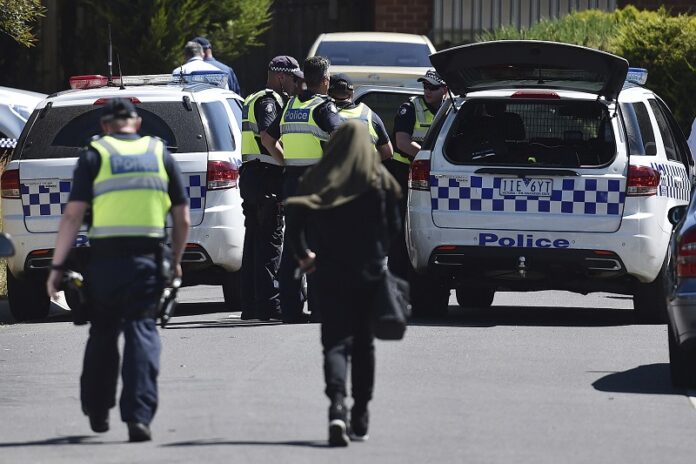
Police accompany a woman as they attend the scene where a house was raided on Friday at Meadow Heights in Melbourne, Australia. Photo: Julian Smith / AAP Image via AP

CANBERRA, Australia — Police in Australia have detained five men suspected of planning a series of Christmas Day bomb attacks in the heart of the country’s second-largest city, officials said Friday.

The suspects had been inspired by the Islamic State group and planned attacks on Melbourne’s Flinders Street train station, neighboring Federation Square and St. Paul’s Cathedral, Victoria state Police Chief Commissioner Graham Ashton said.

The arrests came after a truck smashed into a Christmas market in Berlin on Monday, killing 12 people. A manhunt is underway for the person behind that attack, which prompted increases in security around the world.

Two of seven people initially arrested in raids Thursday night and Friday morning in Melbourne — a 26-year-old man and a 20-year-old woman — were released without being charged, police said.

Five men between the ages 21 and 26 remained in custody and would be charged later Friday with preparing a terrorist attack. They were not identified but police said four were born in Australia and the fifth was Egyptian-born with Egyptian and Australian citizenship.

Police had been watching the alleged plotters for some time, and believed they were preparing to use explosives, knives and a gun, Ashton said.

Police believed the threat had been neutralized through the raids on five Melbourne premises, he said.

Prime Minister Malcolm Turnbull said: “This is one of the most substantial terrorist plots that have been disrupted over the last several years.”

“Islamist terrorism is a global challenge that affects us all. But we must not be cowed by the terrorists,” Turnbull told reporter.

“We will continue to go about our lives as we always have. What these criminals seek to do is to kill. But they also seek to frighten us, to cow us into abandoning our Australian way of life. They want to frighten Australians. They want to divide Australians. They want us to turn on each other. We will not let them succeed,” he added.

Since Australia’s terrorist threat level was elevated in September 2014, the government says there have been four extremist attacks and 12 plots foiled by police.

Australian Federal Police Commissioner Andrew Colvin said the plotters had moved very quickly from a plan to develop a capability to attack.

“In terms of events that we have seen over the past few years in Australia, this certainly concerns me more than any other event that I’ve seen,” Colvin said.

“We believe that we have removed the bulk of this particular cell, this group,” he said.

Victoria state Premier Daniel Andrews said there will be extra police on the streets of Melbourne on Christmas Day to make the public feel safe.

About 400 police officers were involved in the raids.

Ashton described those arrested as “self-radicalized” and inspired by Islamic State propaganda.

Story: Rod McGuirk

Advertisement

Free Expressways, Motorways for One Week

A Si Rat Expressway toll plaza in 2012. Photo: David McKelvey / Flickr

BANGKOK — Drive through toll booths like a bandit for one week to celebrate the new year.

The cabinet approved exempting tollway fees in and around the capital city including Route  7 (Bangkok – Chonburi Motorway), Route 9 (Bang Pa-In – Bang Phli Motorway), the Si Rat Expressway and more.

No tolls will be collected for seven days from midnight Dec. 29 through midnight Jan. 4.

Advertisement

Renowned Photographer Axed for Plagiarizing Royal Photos

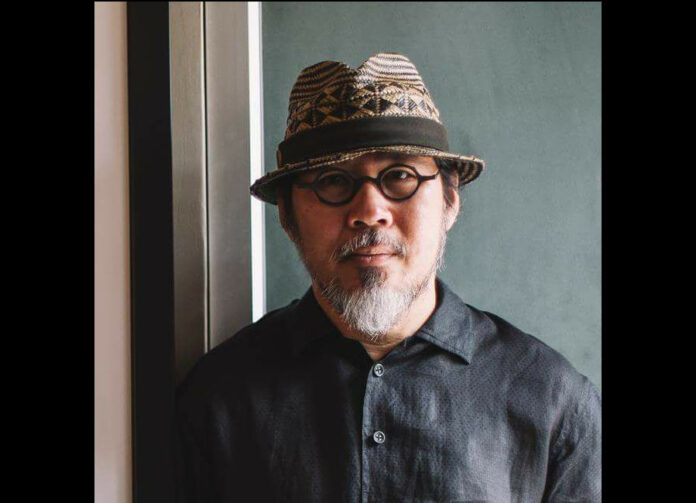
Photo: Anuchai Secharunputong / Facebook

BANGKOK A man’s suspicion over a photo he saw at a fair earlier this month led to the outing of a world-renowned photographer for plagiarizing photos of the royal family.

The Royal Photographic Society announced Wednesday it had kicked out Anuchai Secharunputong after being found guilty of plagiarizing a series of photos from the 60th anniversary of King Bhumibol’s accession to the throne a decade ago. Anuchai was accused of using the photos without consent and adding his own watermarks.

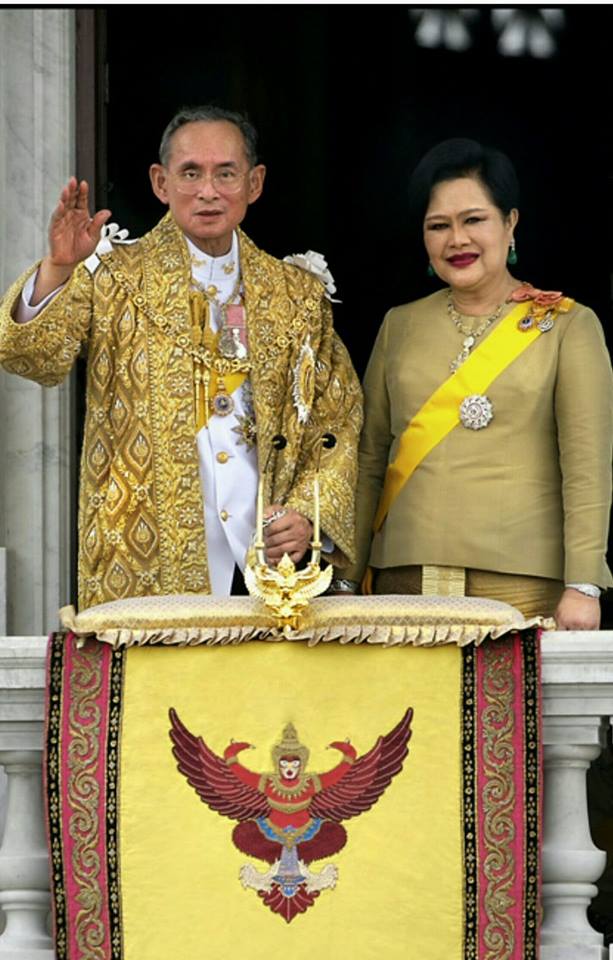
One of the most popular pictures shows King Bhumibol waving and standing next to Queen Sirikit on June 9, 2006, at the Ananta Samakhom Throne Hall. Anuchai, 51, admitted last week the photo wasn’t his and apologized.

He said it happened when he was assigned to retouch some photographs which he then passed off as his own.

“A friend who I respect warned me that the [photo] was his. Therefore, to avoid conflict regarding the picture, I must declare I retouched the photo and [it] belongs to Rachot Visalarnkul,” Anuchai wrote.

The controversy began on the Pantip forum, where a man who went to an annual photo fair earlier became suspicious about a framed picture he thought to be Anuchai’s hanging in a Sony booth.

A famous photo of King Bhumibol and Queen Sirikit from June 9, 2006, at the Ananta Samakhom Throne Hall was at the center of a controversy over a photographer who claimed it as his own.

That struck him as odd because he knew Anuchai shot on a Canon camera. A staffer told him Anuchai did not take the photo.

Kittisak Panmanee, a former photographic society member involved in the 2006 celebrations, then confirmed Anuchai was not one of the two photographers who could have taken the image. Rachot was.

Anuchai’s work has been recognized by many advertising distinctions including the Cannes Lion, Clio Awards, Andy Awards and Asia-Pacific Advertising Festival.

Advertisement

Calls for Justice Answered by Social Media in 2016

Justice is a rare commodity susceptible to malleable laws, uniforms, wealth and family connections.

But the rise of social media in recent years, for all its flaws, has given the public a powerful tool to draw attention to their grievances and sometimes prompt action by occasionally indifferent authorities.

Got scammed by a resort or hotel? Out them on Pantip. Some meth methods to your van driver’s road rage? Post a clip to YouLike. Police not taking your assault claim seriously? Get a hashtag trending.

In many cases netizens simply post videos, images or stories publicly onto Facebook and wait for them to go viral, drawing attention to the latest outrageous crimes or injustices. The social pressure proves effective when organizations risk losing face by not taking action.

Here are some of the year’s stories you probably wouldn’t have heard about were it not for social media.

1
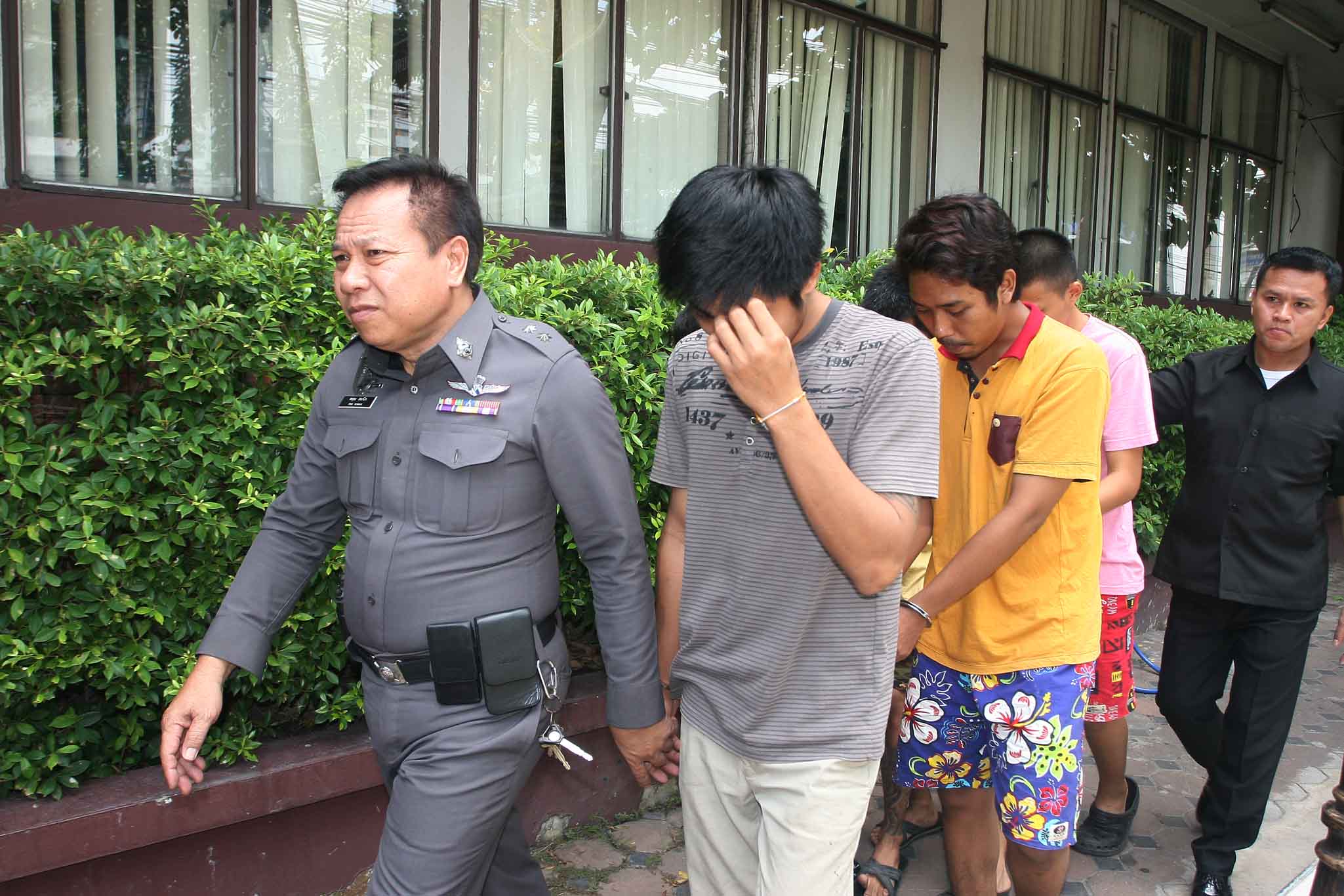
Police on May 3 escort six of the suspects to criminal court where the judges ordered them to be remanded.

When six men allegedly murdered a disabled street vendor in broad daylight, police allowed them to go to the hospital instead of arresting them. Four of the suspects were sons of police officers, but when horrifying video of the abject cruelty of what happened that day went viral, they were quickly arrested, charged and jailed to await trial.

2
Rescue workers on March 16 show caning marks on a 4-year-old girl’s body who was reportedly beaten by her stepfather and mother in Pathum Thani province.

Domestic violence remains all too common. While the majority of such crimes are believed to go unreported and unpunished, videos or images of such sometimes end up online of things like a man stomping a 7 year old, a mother beating her daughter and a teacher disfiguring his student. The ensuing outrage forces the authorities to take action. Whether justice is served remains open for debate.

3
Image: Karen Humor / Facebook

Tired of the potholes in a road near her home in Tak province, a 22-year-old Karen woman took a bath in one and shared the photos online. It worked. Suddenly her road maintenance issue was a national issue, and the officials who ignored complaints vowed to take action.

4
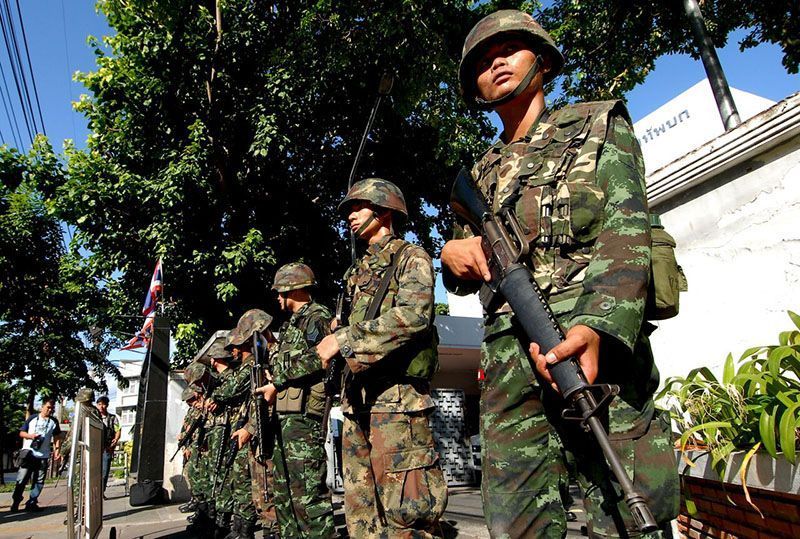
Soldiers posted outside an army auditorium where civilians were being brought in for ‘attitude adjustment’ one day after the coup on May 23, 2014, in Bangkok.

The military is a powerful institution that sometimes seems above the law. But this year a video of a drill sergeant caning a recruit prompted an investigation, and another video showing a colonel threatening a family in the Deep South led to his abrupt transfer.

5
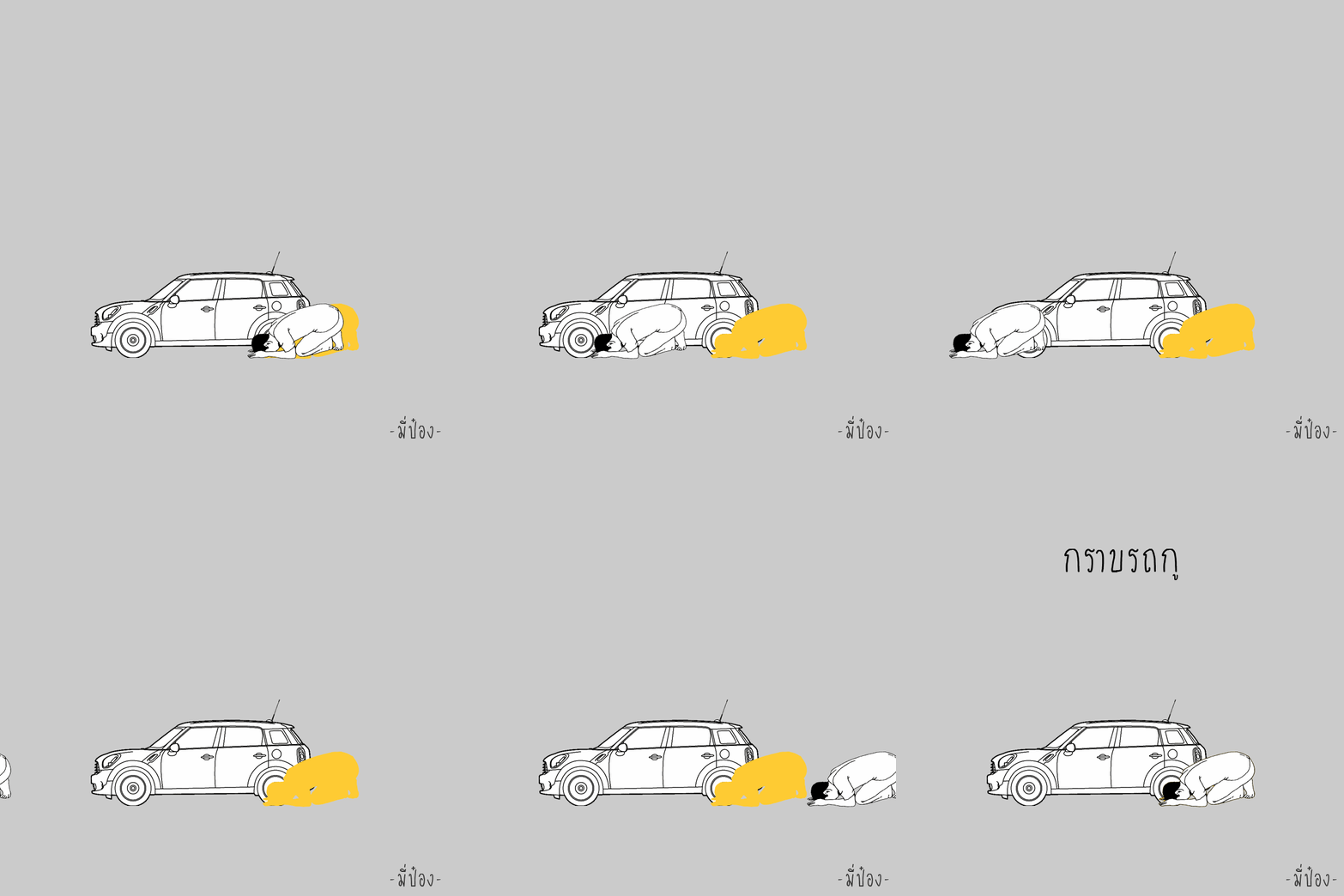
Mudasir Slatasoh, a political science student at Prince of Songkhla University, posted this animated gif with the words ‘Graab my car.’

Road rage, arrogant celebrities and smartphone cameras: a recipe for a perfect social media storm. That’s exactly what happened when television host Acharanat “Nott” Ariyaritwikol punched a motorcyclist who struck his Mini Countryman on a Bangkok road, and then made him prostrate, or graab, in apology to his beloved car. Society’s near-universal shaming cost Nott his job and saw him charged with assault.

6
A pre-censored photo said to show Saroj going to meet boy at Terminal 21 posted by Troll Students of Suankularb

Instead of complaining to school administrators about the child pornography their science teacher was tweeting, a group of students at Suan Kularb, the kingdom’s oldest and most prestigious all-boys public school, exposed him as a predator who actively sought out sex with underage boys. Their evidence against him included screenshots of him boasting of sex with minors and going to a meeting they arranged at a shopping mall. Saroj was suspended, put under investigation and charged with sexually abusing minors.

7
The singer of famous Korean boy band Ok Taec-yeon, being refused by a Bangkok taxi driver in a Dec. 14, 2014 file photo. Photo: Ok Taec-yeon / Twitter

Meanwhile, viral videos exposing the explosively violent road rage incidents involving bad taxi drivers – a perennial topic – seemed to win swifter responses than filing complaints to the bureaucracy.

8
Dead cats discovered Aug. 16 in the east Bangkok apartment of Panuwat Singhsahat.

Animal abuse has been a reliable trigger for social media rage for some years. But thanks to a stronger animal welfare law and internet-based animal rights activists, police have no longer shrugged it off or issued limp fines. A former politician was charged with shooting a “7-Eleven dog,” and most notoriously, police arrested a motorcycle taxi who smashed at least nine kittens to death thanks to tips from online cat lovers. Panuwat Singhsahat was sentenced to 18 months in jail for animal cruelty.

9
Jenphop Viraporn walks to his family car on Nov. 14 as he leaves the Ayutthaya Provincial Court.

Two graduate students were on their way to their university north of Bangkok – one to complete his dissertation and the other to apply for a pilgrimage to India – when their car was rear-ended at a speed of 200kph by millionaire businessman Jenphop Viraporn. Moments later they were burned alive when their car burst into flames. It looked as though police would let Jenphop off the hook until social media began seething after the lead investigator went on national television to clumsily defend the decision not to test his sobriety. National police took over, suspended the officers involved, and now Jenphop is on trial.

Hot News

LATEST NEWS

Bangkok
overcast clouds
28.3 ° C
33.3 °
28.3 °
77 %
3.3kmh
100 %
Sun
32 °
Mon
38 °
Tue
37 °
Wed
37 °
Thu
37 °